Birds in Hymns – Awake, Thou Careless World, Awake

Heaven and earth shall pass away: but my words shall not pass away. (Luke 21:33 KJV)

Words: Jo­hann Rist, Neu­er Him­lische Lied­er son­der­bahr­es Buch (Lün­e­burg: 1651), p. 248 (Wach’ auf, wach’ auf, du sich’re Welt);
trans­lat­ed from Ger­man to Eng­lish by Ca­ther­ine Wink­worth, Cho­rale Book for Eng­land (Lon­don: Long­man, Green, Long­man, Ro­berts and Green, 1863), num­ber 27.
Music: Com­pos­er un­known.
Johann Rist (1607-1667)

Awake, Thou Careless World, Awake
For the Music

Awake, thou careless world, awake!
That final judgment day will surely come;
What Heav’n hath fixed time cannot shake,
Time never more shall sweep away thy doom.
Know, what the Lord Himself hath spoken
Shall come at last and not delay:
Though Heav’n and earth shall pass away,
His steadfast Word can ne’er be broken.

Awake! He comes to judgment, wake!
Sinners, behold His countenance
In beauty terrible, and quake
Condemned beneath His piercing glance.
Lo! He to whom all power is given,
Who sits at God’s right hand on high,
in fire and thunder draweth nigh,
To judge all nations under Heaven.

Bird Caught in a Snare

Bird Caught in a Snare

Awake! thou careless world, awake!
For none can tell how soon our God shall please
That suddenly that day should break?
No human wisdom fathoms depths like these.
O guard thee well from lust and gree;
For as the bird is in the snare,
Or ever of its foe aware,
So comes that day with silent speed.

Yet He in love delayeth long
The final day, and grants us space
To turn away from sin and wrong,
And mourning seek in time His help and grace.
He holdeth back that best of days,
Until the righteous shall approve
Their faith and hope, their constant love;
So gentle us-ward are His ways!

But ye, O faithful souls, shall see
That morning rise in love and joy,
Your Savior comes to set you free,
Your Judge shall all your bonds destroy:
He, the true Joshua, then shall bring
His people with a mighty hand
Into their promised father-land,
Where songs of victory they shall sing.

Rejoice! the fig tree shows her green,
The springing year is in its prime,
The little flowers afresh are seen,
We gather strength in this great time;
The glorious summer draweth near,
When all this body’s earthly load,
In light that morning sheds abroad,
Shall was as sunshine pure and clear.

Arise, and let us night and day
Watch for our Lord, and study o’er His Word,
And in the Spirit ever pray,
That we be ready when His call is heard;
Arise, and let us haste to meet
The Bridegroom standing at the door,
That with the angels evermore
We too may worship at His feet.


Go to more Hymns – CLICK HERE


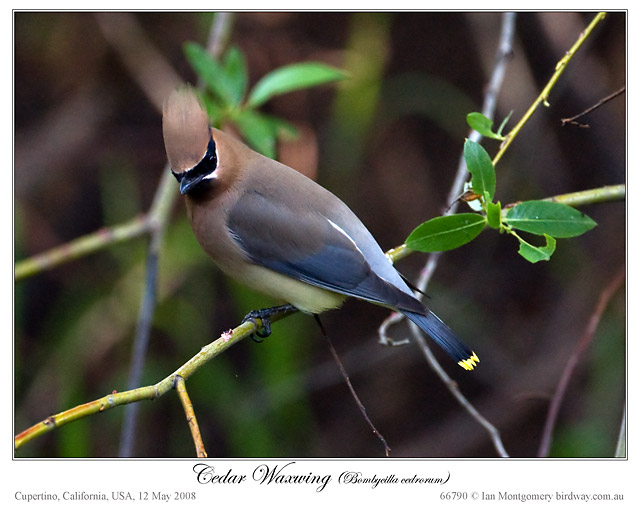
Ian’s Bird of the Week – Cedar Waxwing

Cedar Waxwing (Bombycilla cedrorum) by Ian

Cedar Waxwing (Bombycilla cedrorum) by Ian

Ian’s February 9, 2009 Newsletter

An American birder once said to me something to this effect: “you’re so lucky in Australia, all our North American birds are so drab by comparison”. It may be the case that American Parrots are thin on the ground since the sad demise of the Carolina Parakeet, but I think, nonetheless, that there are lots of fascinating American birds, and I’ve expressed regret in the past for the lack of Woodpeckers in Australia, for example. Here is one that is exotic by any standards, the Cedar Waxwing, and is quite common across the United States and, in summer, southern Canada.

This bird was one of a flock in a small reserve (McClellan Ranch Park) on the edge of Cupertino in the Bay Area last May. Waxwings are very partial to berries and range widely looking for food. The get their name from red, waxy tips to the secondaries, but these are often indistinct or missing, and are not visible in the photograph.

There are three species of Waxwings, the other two being the Japanese Waxwing and the (Bohemian) Waxwing of Western North America and northern Eurasia. The Bohemian Waxwing, slightly larger than the Cedar one, occasionally makes it to the British Isles in winter from northern Scandinavia and I remember seeing some once as a teenager in a suburban street in Dublin in the early 1960s. They looked very exotic to me then too.

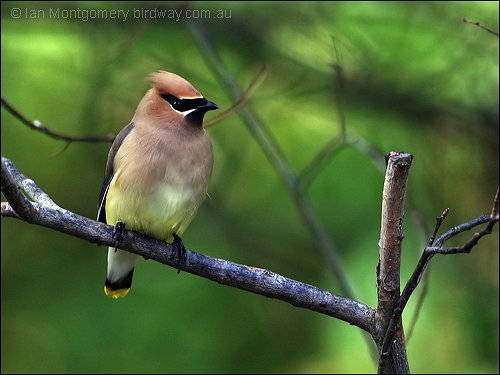
Cedar Waxwing (Bombycilla cedrorum) by Ian

Cedar Waxwing (Bombycilla cedrorum) by Ian

Here in North Queensland, we have felt very helpless watching the rain deluging down while terrible bush fires have raged in Victoria. The website has benefitted, though, from my being confined to home. In the past week I’ve updated the galleries for Wrens (http://www.birdway.com.au/troglodytidae/index.htm), Mockingbirds (http://www.birdway.com.au/mimidae/index.htm), Tits and Chickadees (http://www.birdway.com.au/paridae/index.htm), Cormorants and Shags (http://www.birdway.com.au/phalacrocoracidae/index.htm), and Grebes (http://www.birdway.com.au/podicipedidae/index.htm).

Best wishes,
Ian

Ian Montgomery, Birdway Pty Ltd,
454 Forestry Road, Bluewater, Qld 4818
Phone: +61-7 4751 3115
Preferred Email: ian@birdway.com.au
Website: http://birdway.com.au


Japanese Waxwing (Bombycilla japonica) ©Wikipedia

Japanese Waxwing (Bombycilla japonica) ©Wikipedia

Lee’s Additions:

Cedar Waxwings have a diet of “fruit, flower petals, and insects.” They sometimes pass fruit back and forth and have been known to become very intoxicated by eating too many ripe berries. They are about 7 in (17.8 cm) long with a wingspan of 11-12.25 in (27.9-31.1 cm). Both the Bohemian and Cedar have a yellow trim on their tails, whereas, the Japanese waxwing has a red-trimmed tail.

See (Info and Sounds):

Bombyacillidae – Waxwings
Cedar Waxwing – WhatBird.com
Bohemian Waxwing – WhatBird.com
Japanese Waxwing – Wikipedia

Updated – More Species Pages

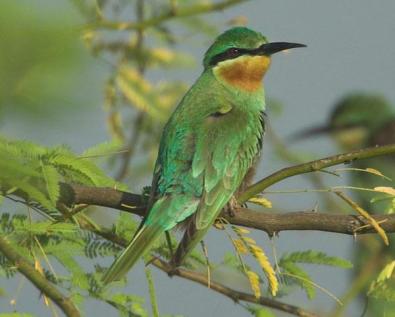
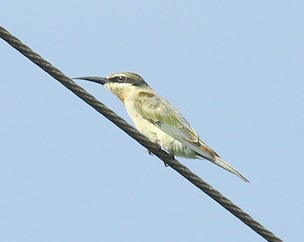
Blue-tailed Bee-eater (Merops philippinus) by Nikhil Devasar

Blue-tailed Bee-eater (Merops philippinus) by Nikhil Devasar

I have updated several more pages for the species:

Jacanidae – Jacanas

Meropidae – Bee-eaters

Tinamidae – Tinamous

On the slides, a “©” copyright symbol indicates a photo from the web and a “by” indicates one of the photographers with links on our sidebar. Please visit their sight to see many more fantastic shots.

As I obtain more photos of the missing species they will be added.

Bird Name Challenges

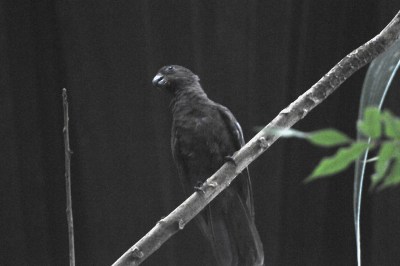
Seychelles Black Parrot is actually Lesser Vasa Parrot (Coracopsis nigra) by Bob-Nan

Seychelles Black Parrot is actually Lesser Vasa Parrot (Coracopsis nigra) by Bob-Nan

As I have been working, behind the scenes to obtain photos for the Birds of the World pages, it has been a challenge to match the birds up with their new names. Apparently the I.O.C. (International Ornithological Congress) has a goal to standardize the English names of birds. That is a good thing, but it has problems.

Fantastic photographers (see sidebar-Photographers) have given their permission to use their photos, but the titles they use, don’t always coincide with the new names. So the progress has been slow trying to match the two together. It is not their fault, but changes just keep occurring. When all is said and done, when you link to a photo of theirs and the name is not the same as you clicked, not to worry. I have done my best to match them up properly. Many also give the Scientific name which is a great aid. I have had to “Google” many of the old names to try to come up with the correct new one.

An article puts all of the Naming in good perspective. “New Standard Bird Names – do we need them?” by Sumit K. Sen, from the Birds of India website does that. Here is just one his thoughts:

Bird renaming it seems is not a task, but a passion. Year after year birds are renamed by whoever has the ability to get anything printed. Some birds are particularly at risk and go through name changes as fast as their numbers decline. The only relief for them may be extinction – but that may still not be ‘name-change’ relief for us. We may suddenly be told that it was not a yuhina that went extinct – but was an epornis all the time! I am still waiting for someone to propose that the Dodo is entirely inappropriate (especially as there are some suggestions that the etymology of the word ‘dodo’ may have derogatory connotations associated with it) and the bird should certainly be called a ‘Mauritius Flightless Pigeon’ and we will soon learn that ‘as dead as a Mauritius Flightless’ is more appropriate usage over ‘as dead as a dodo’. It is coming, believe me!

Madagascar Bee-eater is the Olive Bee-eater (Merops superciliosus) by Bob-Nan

Madagascar Bee-eater is the Olive Bee-eater (Merops superciliosus) by Bob-Nan

You will find his comments interesting. In the mean time, the birds have been merrily doing what God told them to do, and that is reproduce and fill the earth. Luckily, they do not wear name tags that have to be replaced every so often to keep up with their new names.

Bring out with you every living thing of all flesh that is with you: birds and cattle and every creeping thing that creeps on the earth, so that they may abound on the earth, and be fruitful and multiply on the earth. (Genesis 8:17 NKJV)

Ian’s Bird of the Week – Varied Sittella

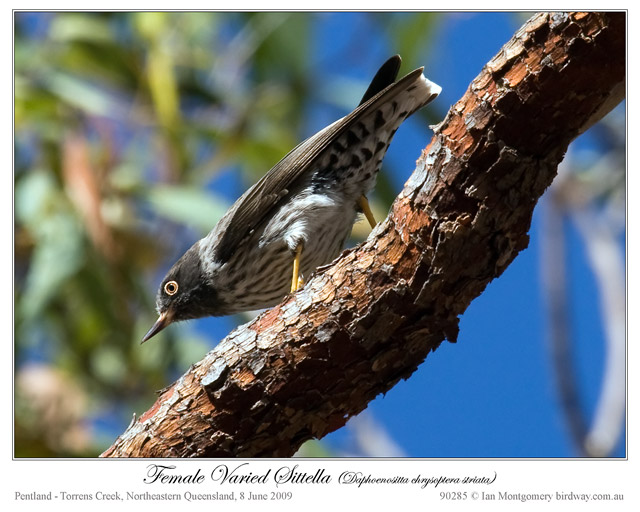
Female Varied Sittella  (Daphoenositta chrysoptera) by Ian

Female Varied Sittella (Daphoenositta chrysoptera) by Ian

Like the Australian Ringneck of last week, here is another variable species that occurs in easily recognizable races in different regions of mainland Australia: the Varied Sittella. I updated the Sittella gallery on the website on Saturday to include the southern ‘Black-capped Sittella’ and the nominate ‘Orange-winged Sittella’ that I’d recently photographed in South Australia and Victoria. Then, on Monday, when camping with friends in White Mountains National Park between Charters Towers and Hughendon, we came across the northeastern race, the ‘Striated Sittella’, so I’ve added 5 photos of this race to the gallery (http://www.birdway.com.au/neosittidae/varied_sittella/index.htm).
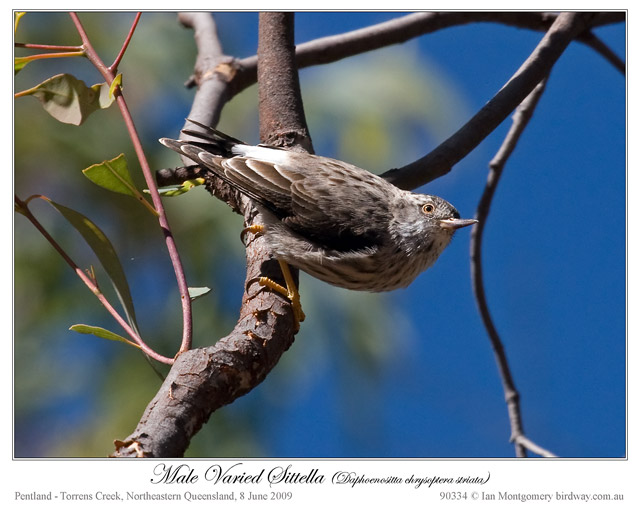
The first photo, the rather dapper-looking, left-facing bird with a dark head is a female Striated Sittella, while the drabber, right-facing bird is a male. Unlike other birds in which drabber males are characteristic of reproductive role reversals, that isn’t the case here, and, to add to the confusion, in some races of Sittellas the male is the smarter one and in one race (the White-headed) both genders are similarly smart.

Male Varied Sittella  (Daphoenositta chrysoptera) by Ian

Male Varied Sittella (Daphoenositta chrysoptera) by Ian

Sittellas are tiny (11 – 13 cm./4.3 – 5 in. long) and usually hang around (literally) in small groups in the upper branches of trees, so are easily overlooked. They are most easily detected when they fly chattering frantically from one tree to another, and when they do so their pale wing bars (white in some races, orange in others) and stubby appearance are distinctive. They search for insects and spiders in bark and timber and not only are they proficient at hanging upside down, but it is their preferred mode of locomotion and, unlike treecreepers, they work their way downwards from the crowns of trees.

If you are familiar with the Nuthatches () of Eurasia and North America, you’ll already have been struck by the resemblance, and the name Sittella is derived from Sitta, the name of the Nuthatch genus. The similarity is due to convergent evolution as the two groups are not closely related. The family name for Nuthatches is Sittidae, while the Sittellas have their own family, the Neosittidae, or new Sittidae. There are only two species, the Varied Sittella of Australia and the Black Sittella of New Guinea.

The five flavours of the Sittellas are, starting with the nominate race and working clock-wise around Australia:

  • The Orange-winged Sittella – Most of NSW and Victoria;
  • The Black-capped Sittella (pileata) – South Australia and Southern Western Australia;
  • The White-winged Sittella (leucoptera) – Northern Western Australia, the Northern Territory and Northwestern and Central Queensland;
  • The Striated Sittella (striata) – Northeastern Queensland;
  • The White-headed Sittella (leucocephala) – Central and Southeastern Queensland and Northeastern NSW.

There are now representatives of all these races except the White-headed on the website (http://www.birdway.com.au/neosittidae/varied_sittella/index.htm).
Best wishes,
Ian

Ian Montgomery, Birdway Pty Ltd,
454 Forestry Road, Bluewater, Qld 4818
Phone: +61-7 4751 3115
Website: http://birdway.com.au


Lee’s Additions:
These newsletters are not necessarily in the correct order as Ian wrote them. I am still catching up.
They are similar to our “nuthatches” but not in the same family or do they build their nest the same. “The feet of the Varied Sitella are small but with very long toes for clinging onto branches. They move in spirals down trees, searching for food, and even hang below branches.” from the first article listed below.
Birds in the Backyards – Varied Sittella from Australia has the best information.

SITTELLAS Neosittidae from the Bird Families of the World, has some information.

The Internet Bird Collection has several videos of the Varied Sittella. All taken by Geoffrey Dabb (Videos used with his permission)

*

Birds of the Bible – In The Branches

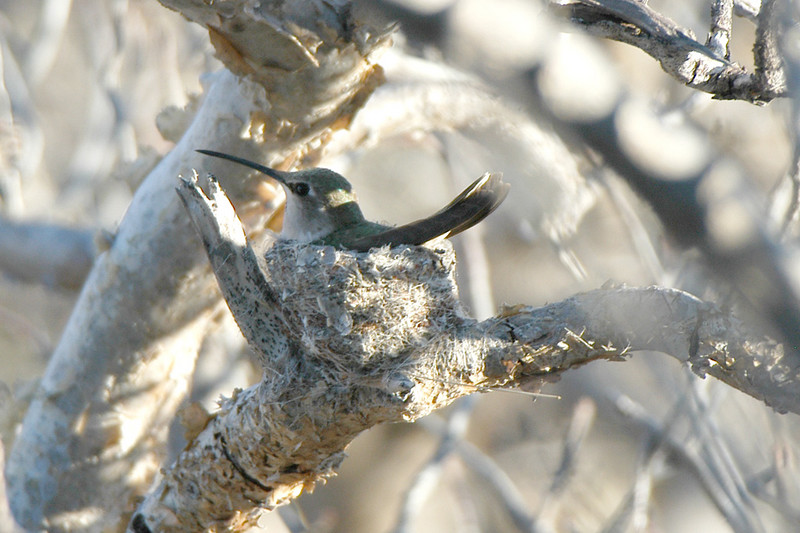
Costa's Hummingbird on Nest (Calypte costae) by Bob-Nan

Costa’s Hummingbird on Nest (Calypte costae) by Bob-Nan

While going through some of the photos of the latest photographers that gave permission to use their photos, I kept seeing so many of the birds in the trees and on branches. With not to much difficulty, I found quite a few verses that tell of the birds in the branches or the trees.

The trees and branches are referred to as:
1.) A home for the birds, a place to sing and where the birds make their nests.

(10-12) He sends the springs into the valleys; They flow among the hills. They give drink to every beast of the field; The wild donkeys quench their thirst. By them the birds of the heavens have their home; They sing among the branches. (17)Where the birds make their nests; The stork has her home in the fir trees.(Psalms 104:10-12,17 NKJV)
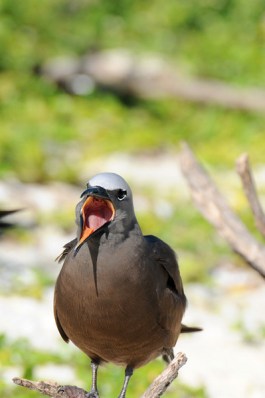
Brown Noddy (Anous stolidus) by Bob-Nan2

Brown Noddy (Anous stolidus) by Bob-Nan2

2.) A place where birds of every sort dwell and in its shadow.

On the mountain height of Israel I will plant it; and it will bring forth boughs, and bear fruit, and be a majestic cedar. Under it will dwell birds of every sort; in the shadow of its branches they will dwell. (Ezekiel 17:23 NKJV)

3.) They make their nests in its boughs.

(6) All the birds of the heavens made their nests in its boughs; Under its branches all the beasts of the field brought forth their young; And in its shadow all great nations made their home.
(13) On its ruin will remain all the birds of the heavens, And all the beasts of the field will come to its branches– (Ezekiel 31:6,13 NKJV)

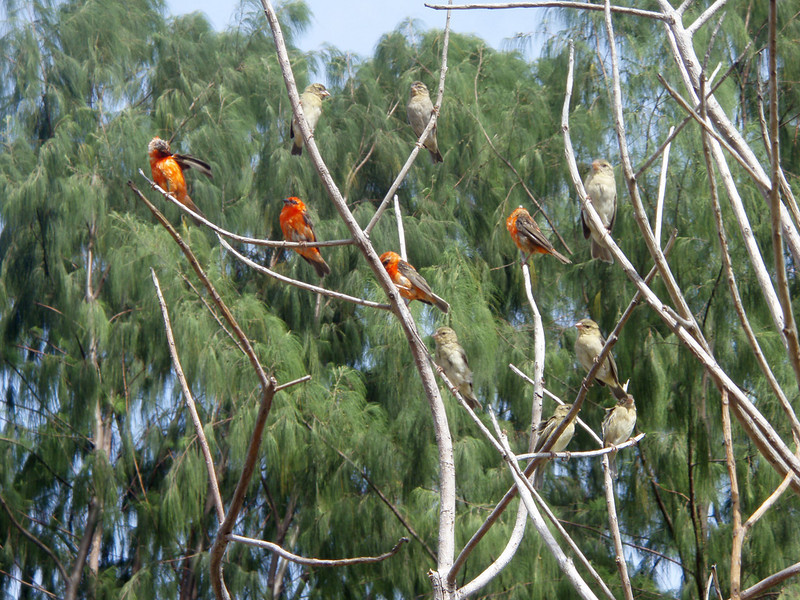
Red Fody (Foudia madagascariensis) by Bob-Nan

Red Fody (Foudia madagascariensis) by Bob-Nan

4.) The birds of the heavens dwelt in its branches then had to leave when it was chopped down.

Its leaves were lovely, Its fruit abundant, And in it was food for all. The beasts of the field found shade under it, The birds of the heavens dwelt in its branches, And all flesh was fed from it. “I saw in the visions of my head while on my bed, and there was a watcher, a holy one, coming down from heaven. He cried aloud and said thus: ‘Chop down the tree and cut off its branches, Strip off its leaves and scatter its fruit. Let the beasts get out from under it, And the birds from its branches. Nevertheless leave the stump and roots in the earth, Bound with a band of iron and bronze, In the tender grass of the field. Let it be wet with the dew of heaven, And let him graze with the beasts On the grass of the earth. (Daniel 4:12-15 NKJV)
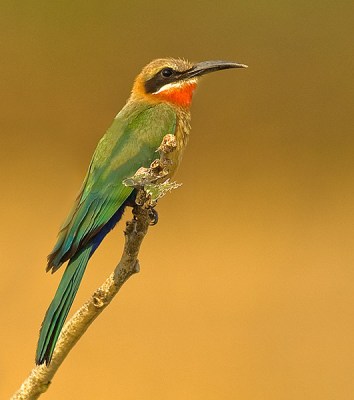
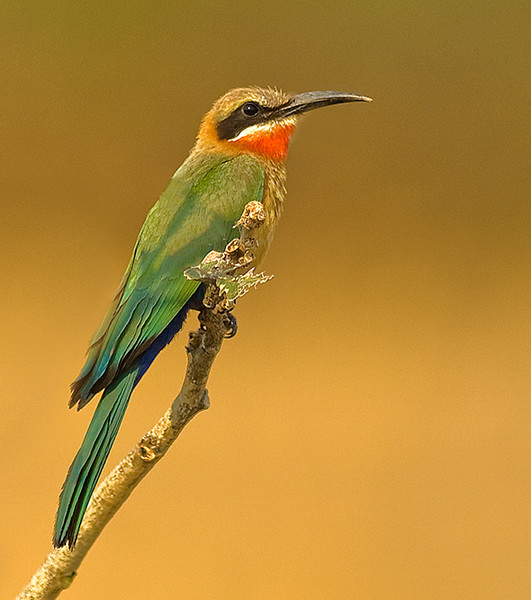
White-fronted Bee-eater (Merops bullockoides) by Africaddict

White-fronted Bee-eater (Merops bullockoides) by Africaddict

5.)  The branches were their home.

whose leaves were lovely and its fruit abundant, in which was food for all, under which the beasts of the field dwelt, and in whose branches the birds of the heaven had their home–(Daniel 4:21 NKJV)

6.) Warnings were given about the nest with young and the mother bird.

If a bird’s nest happens to be before you along the way, in any tree or on the ground, with young ones or eggs, with the mother sitting on the young or on the eggs, you shall not take the mother with the young; you shall surely let the mother go, and take the young for yourself, that it may be well with you and that you may prolong your days. (Deuteronomy 22:6-7 NKJV)

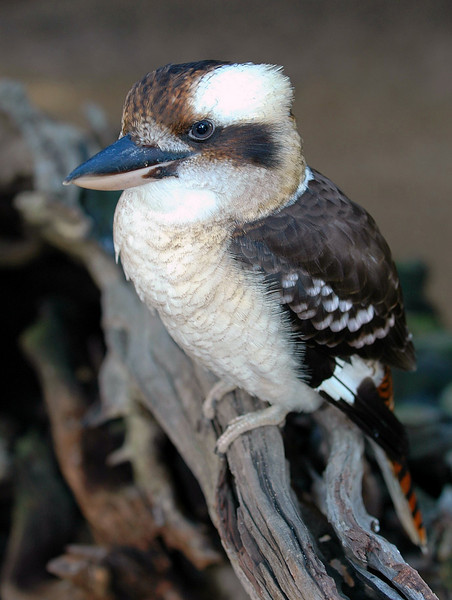
Laughing Kookaburra (Dacelo novaeguineae) by Africaddict

Laughing Kookaburra (Dacelo novaeguineae) by Africaddict

7.) Most have heard of the parable of the mustard seed and again the birds find a place for their nest and shade.

Another parable He put forth to them, saying: “The kingdom of heaven is like a mustard seed, which a man took and sowed in his field, which indeed is the least of all the seeds; but when it is grown it is greater than the herbs and becomes a tree, so that the birds of the air come and nest in its branches.” (Matthew 13:31-32 NKJV)
Then He said, “To what shall we liken the kingdom of God? Or with what parable shall we picture it? It is like a mustard seed which, when it is sown on the ground, is smaller than all the seeds on earth; but when it is sown, it grows up and becomes greater than all herbs, and shoots out large branches, so that the birds of the air may nest under its shade.” (Mark 4:30-32 NKJV)
Then He said, “What is the kingdom of God like? And to what shall I compare it? It is like a mustard seed, which a man took and put in his garden; and it grew and became a large tree, and the birds of the air nested in its branches.” (Luke 13:18-19 NKJV)

8.)  All of the above verses were used as illustrations of some important point. But the verses below are of great promise to those who have accepted the Lord Jesus Christ (the true vine). We know that if we abide in Him by not only taking Him as our Savior, but then living for Him, that He will meet our needs and gives great joy. What a promise!

I am the true vine, and My Father is the vinedresser. Every branch in Me that does not bear fruit He takes away; and every branch that bears fruit He prunes, that it may bear more fruit. You are already clean because of the word which I have spoken to you. Abide in Me, and I in you. As the branch cannot bear fruit of itself, unless it abides in the vine, neither can you, unless you abide in Me. “I am the vine, you are the branches. He who abides in Me, and I in him, bears much fruit; for without Me you can do nothing. If anyone does not abide in Me, he is cast out as a branch and is withered; and they gather them and throw them into the fire, and they are burned. If you abide in Me, and My words abide in you, you will ask what you desire, and it shall be done for you. By this My Father is glorified, that you bear much fruit; so you will be My disciples. “As the Father loved Me, I also have loved you; abide in My love. If you keep My commandments, you will abide in My love, just as I have kept My Father’s commandments and abide in His love. “These things I have spoken to you, that My joy may remain in you, and that your joy may be full. (John 15:1-11 NKJV)

If you have questions about accepting the Lord as Saviour, see:

Wordless Birds or e-mail me at – Lee@Leesbird.com

Two new Photographers added

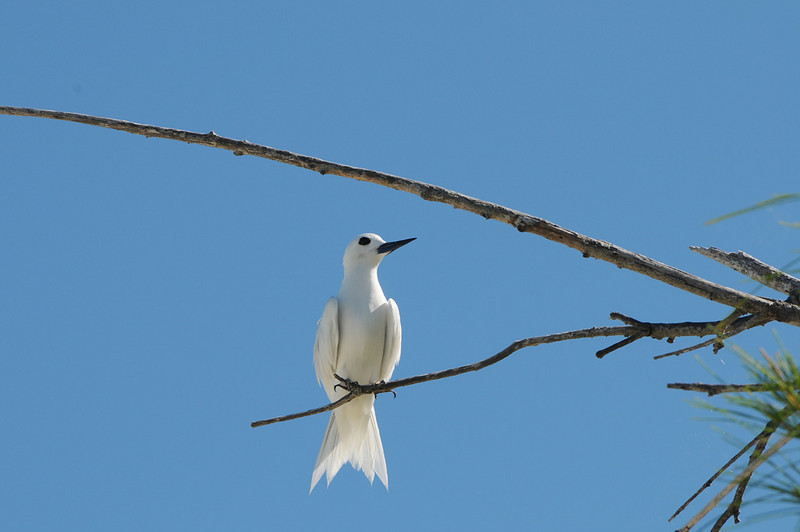
Fairy Tern (Sternula nereis) by Bob & Nan

Fairy Tern (Sternula nereis) by Bob & Nan

Today I received the permission to use the photos from two sets of great photographers.

Bob and Nan have their gallery at: http://bob-nan.smugmug.com/

They have traveled quite extensively, at least by their photo gallery. They have galleries for Serengeti; South Georgia; Brooks Fall – Alaska; Baja, California; Tanzania; Greenland and Canada; Africa; Antarctica, plus other places. There are many photos to check out on their site.

Carmine BeeEater (Merops nubicus or nubicoides) by Marc at Africaddict

Carmine BeeEater (Merops nubicus or nubicoides) by Marc at Africaddict

Also, Marc Mol from Sydney, Australia has given permission to use his photos also. He has the Africaddict Gallery at http://africaddict.smugmug.com/

Marc gets around a lot also with galleries for: Sydney; Florida & Everglades; Zambia; Maldives; Italy; Dunk Island, Australia; Cairns; Africa Overland; South America Overland, plus other places.

Their photos will be a great help with the Birds of the World pages here. Thank you so much, Bob & Nan and Marc.

I trust these fine photographers, plus the one’s who have already given permission, will keep up the great photos. With 10,340 birds out there waiting to have their pictures taken, all the these photographers will be busy.

You make springs gush forth in the valleys; they flow between the hills; they give drink to every beast of the field; the wild donkeys quench their thirst. Beside them the birds of the heavens dwell; they sing among the branches. (Psalms 104:10-12 ESV)

Ian’s Bird of the Week – Black Swan

 Western Australian stamp, in 1854

Western Australian stamp, in 1854

Here’s a famous Australian icon, or perhaps I should say, Western Australian Icon – the Black Swan appears on the state coat of arms, reflecting Perth’s original name as the Swan River Settlement. The first Western Australian stamp, in 1854, was a Penny Black, but featured a Black Swan and not Queen Victoria. I first became aware of it as junior stamp collector in Ireland when Australia issued a stamp celebrating the centenary of this stamp. Living in a land of white swans, I found the idea of a black swan bizarre.

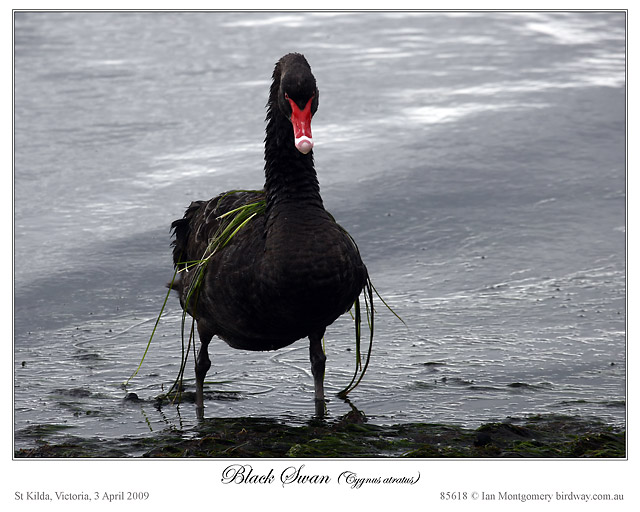
Black Swan (Cygnus atratus) by Ian

Black Swan (Cygnus atratus) by Ian

Anyway, I photographed this bird emerging festooned in sea grass in St Kilda in Melbourne. Black Swans are almost exclusively vegetarian, and feed by dabbling, grazing or, like this one, upending. When it first emerged, it made a languid effort to remove some of the sea grass, looking as if it was adjusting its boa, as in the first photo. It then seemed to decide it wasn’t worth the effort and came out of the water still draped in green.

Black Swans betray their evolutionary affinity with white ones, by having white flight feathers, though these are usually only visible – and then strikingly so – in flight. In fact, the Black Swan is though to be very closely related to both the Mute Swan http://www.birdway.com.au/anatidae/mute_swan/index.htm of Eurasia and the Black-necked Swan of South America (the only other one of the 6 or 7 species of swan that isn’t entirely white). With a length of up to 140cm/55in, a wingspan of up to 200cm/79in and a weight of up to 9kg/20lbs, the Black Swan is rather small by Swan standards – the corresponding figures for the largest, the Mute Swan, are 160cm/64in, 240cm/95in, and 15kg/33lbs.

Black Swan (Cygnus atratus) by Ian

Black Swan (Cygnus atratus) by Ian

The Black Swan is widespread and abundant throughout mainland Australia and Tasmania, except in the top end of the Northern Territory and Cape York. It is also common in New Zealand, where it was introduced.

I’ve been adding marsupials to the Other Wildlife section on the website including:
Northern Brown Bandicoot
Koala
Brushtail Possum
Ringtail Possum and
Musky Rat-Kangaroo

Best wishes,
Ian

Ian Montgomery, Birdway Pty Ltd,
454 Forestry Road, Bluewater, Qld 4818
Phone: +61-7 4751 3115
Preferred Email: ian@birdway.com.au
Website: http://birdway.com.au


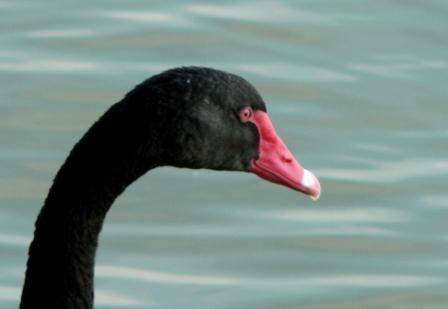
Black Swan Face by Lee at Lake Morton

Black Swan Face by Lee at Lake Morton

Lee’s Additions:

It was interesting to find out from Ian that the Black Swan is also down in Australia. We watch them all the time here when we are at Lake Morton in Lakeland, FL. I love the coloring on their beak. It is red with a white stripe around it. Also, the Swan is one of the birds mentioned in the Bible in the list of birds not to eat.

The little owl, and the great owl, and the swan, (Deuteronomy 14:16 KJV)

They have short legs and do not spring from the water to take flight. They run on the surface for about 15-20 feet while beating their wings to get airborne.

Interesting Links:

Black Swan – Wikipedia

Black Swan with cygnets by Craig’s Bird Watching and Nature Blog

Jacanas – Jacanidae Family

Comb-crested Jacana (Irediparra gallinacea) by Ian's Birdway

Comb-crested Jacana (Irediparra gallinacea) by Ian's Birdway

Jacanas or Jaçana are in the Jacanidae family of the CHARADRIIFORMES order. Their family is unique in that the Lord especially adapted them to feed among lily pads of the shallow freshwater wetlands throughout the tropical zone. They have long toes and claws that help distribute their weight over the lily pads. As they walk around on the pads, they look like they are “walking on water.” “They are found around the world, with two in the New World (Northern and Wattled), two in Africa (Africa and Lesser), the Madagascar in Madagascar, two in Asia (Pheasant-tailed and Bronze Winged) and the Comb-crested in Australasia. They are sometimes known as a “lily-trotter” or “Jesus birds.”

The females are larger that the males and the males take responsibility of the incubation of the eggs. Some of the Jacana females mate with up to 4 males and then leave them to sit on the eggs. She does help in the feeding of the newbies.

Their diets consist mainly of insects, other invertebrates and seeds picked from the floating vegetation or the water’s surface. Most do not migrate except the Pheasant-tailed Jacana which travels from the north of its range into peninsular India and southeast Asia.

I was surprised that the Purple Gallinule was not in the same Order, but they are in the GRUIFORMES order, not the CHARADRIIFORMES order. We watch the Purple Gallinules often here and they also have big feet like the Jacana’s.

Check out A Noisy, Bird-Brained Harem from Creation Moments. It tells how one of the four males tries to get attention for himself.

Of old hast thou laid the foundation of the earth: and the heavens are the work of thy hands. (Psalms 102:25 KJV)

*

This slideshow requires JavaScript.

*

Birds of the Bible – Migration

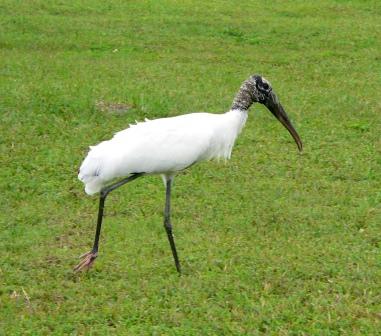
Wood Stork by Lee

Wood Stork by Lee

Even the stork in the sky Knows her seasons; And the turtledove and the swift and the thrush Observe the time of their migration; But My people do not know The ordinance of the LORD. (Jeremiah 8:7 NASB)

That time of the year is approaching and for some birds, it has already started. What? Migration. The birds have been busy all spring and summer having babies, feeding them, raising them, training them, and now it is time to go elsewhere. That is, if they are the kind of bird that migrates. Why do the migrate? Most because of food sources or to stay warm. The hardy “residents” will stay behind and “hold down the fort” so to say.

God has put the instinct in them when they were created to know to “migrate.” Depending on which version of the Bible your read, the stork:

  • knoweth her appointed times
  • is conscious of her fixed times
  • know when it’s time to fly away for the winter and when to come back
  • know when it is time to return
  • knows her seasons

And the dove and swallow and crane (depending on version):

  • observe the time of their coming
  • Observe the time of their migration
  • keep to the times of their coming
  • know when it’s time to migrate
  • watch the time of their coming

For those of us down here in Florida, we get excited because we will finally get to observe some birds as they pass by or as they get here for the winter “vacation.”

Please check out these previous articles about migration. I think you will find them very interesting:

Interesting Things – Amazing Bird Migration
Interesting – Migration and Mechanics of Flight
Pacific Golden Plover
Birds of the Bible – Hawk Migration
A Lesson from the Stork
Too Much Knowledge?
Bird Migration Mistakes – released today
Not a bird, but:
Interesting Things – Dragonflies II

Updated Below: 10-15-09

Migrating Storks from Europe circling the hot air thermals over the Sinai to gain altitude before crossing the Red Sea and continuing on their migration into Africa by dell09875

*

Bird Migration Mistakes

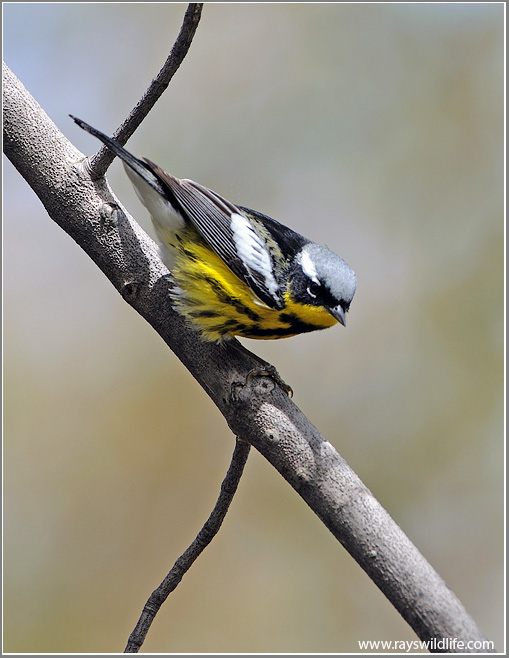
Magnolia Warbler by Ray

For I consider that the sufferings of this present time are not worthy to be compared with the glory that is to be revealed to us. For the anxious longing of the creation waits eagerly for the revealing of the sons of God. For the creation was subjected to futility, not willingly, but because of Him who subjected it, in hope that the creation itself also will be set free from its slavery to corruption into the freedom of the glory of the children of God. For we know that the whole creation groans and suffers the pains of childbirth together until now. (Rom 8:18-22 NASB)

Confused Birds – http://www.creationmoments.net/radio/listen.php?t=476
“Birds that make mistakes in navigation are called vagrants.”
Copyright © 2009 Creation Moments • All Rights Reserved

See: Vagrant Eastern Wood-Warblers

California Vagrant Birds – a set on Flickr