His Eye Is On The Sparrow

His Eye Is On The Sparrow – by a j mithra

A j mithra has done it again. This time he has really made a fantastic video. With help and permission from Jim Greeninger (musician), and our Videographers Keith Blomerley and Nick Talbot, Denise Russell (technical assistance) and Lee (helped get the pieces). The sounds of the birds were put together by a j mostly from sounds from xeno-canto.

I hope you will enjoy this video and praise the Lord for His watch care over the Sparrows and all of His Creation. To see the words go to Birds in Hymns – His Eye Is On The Sparrow.

Look at the birds of the air, for they neither sow nor reap nor gather into barns; yet your heavenly Father feeds them. Are you not of more value than they? (Matthew 6:26 NKJV)

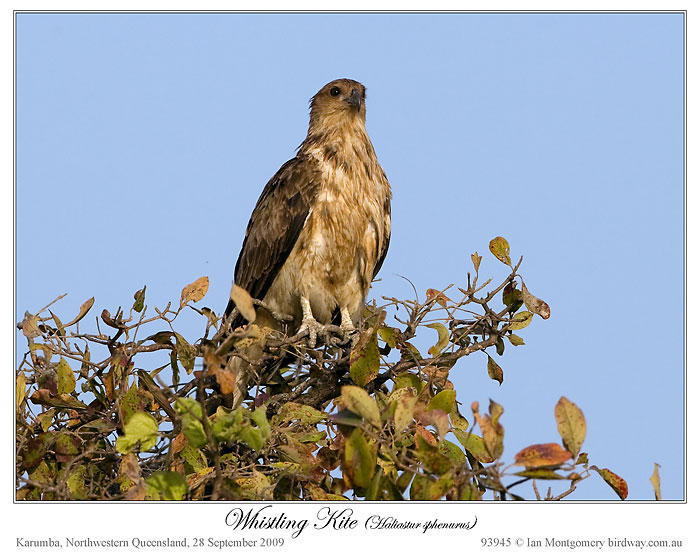
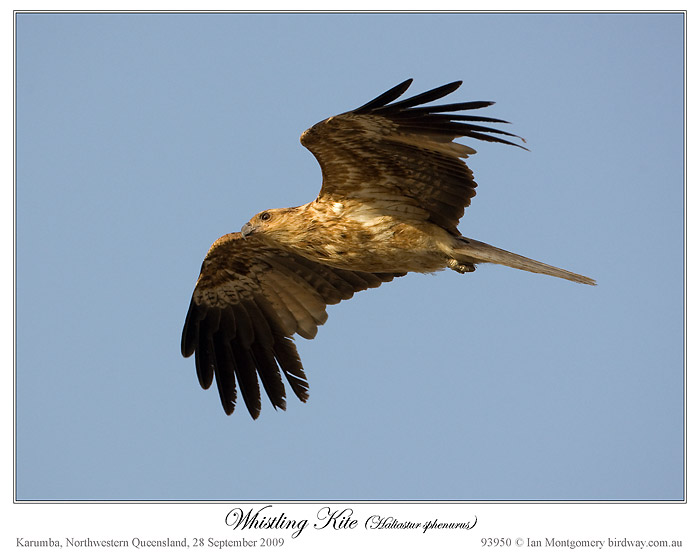
Ian’s Bird of the Week – Whistling Kite

Whistling Kite (Haliastur sphenurus) by Ian

Whistling Kite (Haliastur sphenurus) by Ian

Ian’s Bird of the Week – Whistling Kite  ~ by Ian Montgomery

I’ve just revised the eagle, hawk and allies galleries (Acciptridae http://www.birdway.com.au/accipitridae/index.htm ) on the website with the new format, larger image sizes and regional indices with different background colours. Eagles and hawks attract great interest generally and are the most popular targets for internet searches on the website. They’re also popular with birders and are a challenge to identify in flight, so a good place to start is the widespread and common Whistling Kite – the one we probably check most often to make sure it isn’t something more unusual like a Square-tailed Kite or Little Eagle.

Whistling Kite (Haliastur sphenurus) by Ian

Whistling Kite (Haliastur sphenurus) by Ian

At 50-60cm/20-24in in length and with a wingspan of about 1.2m/47in, the Whistling Kite is just one of about a dozen Australian species of raptors in this size range and with colours in varying shades of coffee. So, leaving size and beverages aside, identification relies on other features particular underwing pattern, relative sizes and shapes of wings and tail and style of flight. As you can see in the first two photos, Whistling Kites have distinctive wing patterns, with the most notable feature being the contrasting outer very dark primaries*, very pale 3 or 4 inner primaries and very dark secondaries. The resulting pattern is a white spot on the trailing edge of the wing and a pale right-angle formed by the leading under-wing coverts and the pale primaries. This is diagnostic: other raptors have pale patches – windows or bull-eyes – but usually in the ‘palm’ of the hand or the leading edge and lack an abrupt right-angle.

Whistling Kite (Haliastur sphenurus) by Ian

Whistling Kite (Haliastur sphenurus) by Ian

*The primary flight feathers, usually numbering 9 -11 inmost species of birds (except Grebes, Storks and Flamingos – 12 –  and Ostriches – 16) and are attached to the ‘hand’ part of the wing (metacarpals and phalanges of the large second digit). The secondaries, very variable in number, are attached to the ulna of the ‘forearm’ between the ‘elbow’ (not obvious in birds as the humerus is short and thick for attachment of the large pectoral muscle) and the ‘wrist’ – the forward-pointing angle in the middle of the leading edge.

Whistling Kite (Haliastur sphenurus) by Ian

Whistling Kite (Haliastur sphenurus) by Ian

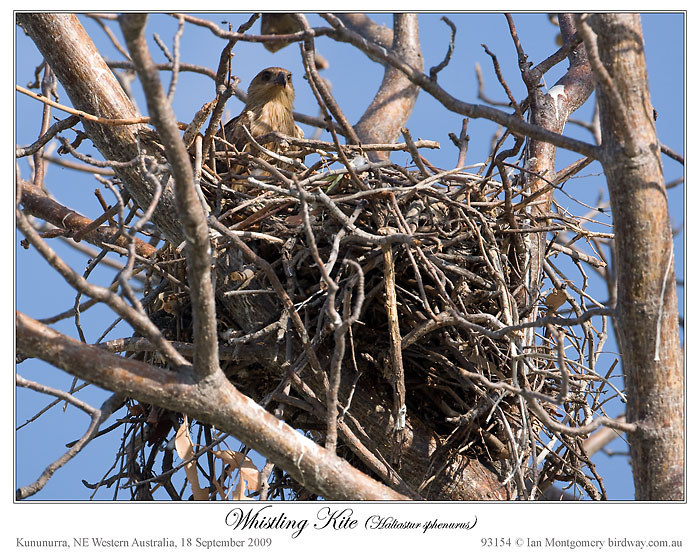
The tail of the Whistling Kite is characteristic too: long, latte coloured and paddle-shaped with a rounded and you can see in the first that the Whistling Kites swivel the tail like a paddle for steering. Most other raptors have darker tails with barring – the Whistling Kite has faint, barely visible bars. Whistling Kites glide with horizontally curved – rather than flat or angled wings – a bit like seagulls one draws as a kid and have a rather floppy untidy flight. When perched, they usually do so in an upright stance, rather like a Brown Falcon, as in the third photo. They build a typical raptor nest – bulky, with large sticks – high in a tree and re-used so that it gets very large after a number of years.

The Whistling Kite gets its name from its distinctively un-raptor-like call. Its is common throughout Australia except in the driest areas of western South Australia and eastern Western Australia. They take live prey including fish, so they are frequenty found near both fresh and salt water, but also feed on carrion and are often seen cruising along highways, along with Black Kites, Brahminy Kites and Wedge-tailed Eagles, looking for road-kills. Their only close relative is the Brahminy Kite, and these two species comprise (globally) the genus Haliastur.

Back at the website, I’ve applied the new format to the Cockatoos and Estrildid Finches, both also popular targets:
Best wishes,
Ian

Ian Montgomery, Birdway Pty Ltd,
454 Forestry Road, Bluewater, Qld 4818
Phone: +61-7 4751 3115
Preferred Email: ian@birdway.com.au
Website: http://birdway.com.au

Lee’s Addition:
Ian has been working hard on his website and it is really looking good. Ian, I like the new format. Click on his links for some really nice photographs of birds and other critters. Birdway.com.au
From his site, “28 May 2010: this site contains more than 5,000 photos of 1,234 bird species in the wild – 596 of these are on the main Australian list of Christidis & Boles, 2008 – and 83 photos of 23 species of reptiles and Australian mammals.”

And the vulture, and the kite after his kind; (Leviticus 11:14 KJV)

The Kite is a member of the Accipitridae Family and has 250 members. They are in the Accipitriformes Order. The family has Kites, Hawks, Eagles, and their allies. The Kite is also one of the Birds of the Bible and is in the “unclean” list of birds not to be eaten.

*

The Hummingbird – The believing believer..

The Hummingbird – The believing believer.. – by a j mithra

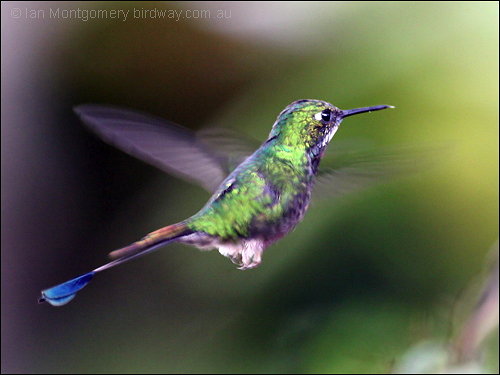
BootedRacket-tail(Ocreatus underwoodii)  by Ian

Booted Racket-tail (Ocreatus underwoodii) by Ian

Number 1500 is ‘PHOS’ which means LIGHT in Greek.. Number 1500 is YHVH (10x5x6x5), which means GOD in Hebrew…

Maybe the Hummingbird knew this, that’s why it visits about 1500 flowers everyday for nectar…..

What about us? Do we seek THE LIGHT at least once a day?

Then spake Jesus again unto them, saying, I am the light of the world: he that followeth me shall not walk in darkness, but shall have the light of life. (John 8:12)

The size of one of the curtains of the Tabernacle is 1260 square cubits…
The heartbeat of the Hummingbird is 1260 per minute..

This identical number of 1260 which is the area of one of the curtain of the Tabernacle and the heart beat of the hummingbird seems to convey a divine message.. Maybe the Hummingbird’s heart beats for the Lord?

For whom does our heart beat?

It has to feed every ten minutes, and would die if it starves for a few hours. But still, the Hummingbird has the energy to fly 500 miles nonstop to cross the Gulf of Mexico during migration….

If GOD can provide so much energy for a tiny little bird, will HE not strengthen us to cross every gulf in our lives?

After all, HE has created us in HIS own image…

With GOD our limited energy turns unlimited…

And he said unto me, My grace is sufficient for thee: for my strength is made perfect in weakness…….. (Psalm 2Corithians 12:9)

The more sugar we take, the more the chances of turning into a Diabetic… The Hummingbird feeds every ten minutes on nectar and drinks almost double its weight of nectar in a day.. Yet, it isn’t a Diabetic! Its cos, it burns its energy through its 53 per minute wing beat…

The word of the LORD is sweeter than honey… THE WORD is our LORD… Well, are we a Spiritual Diabetic? So much of GOD’S WORD enters our system but, we don’t seem to exercise… Do we?

How sweet are thy words unto my taste! yea, sweeter than honey to my mouth! (Psalm 119:103)

The Hummingbird gets attracted towards RED color.. Maybe it knows that its creator, the Rose of Sharon is RED….

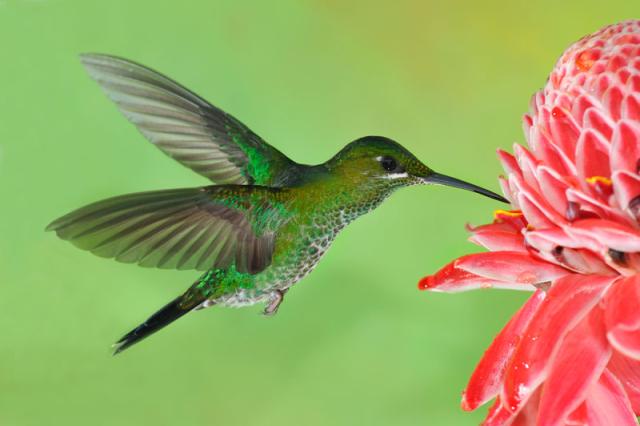
Green-crowned Brilliant (Heliodoxa jacula) Reinier Munguia

Green-crowned Brilliant (Heliodoxa jacula) Reinier Munguia

We all know that RED in a traffic signal means, Stop right away… RED color can also mean Danger..

For years together, we have been seeing Bloody RED on the cross. But, the question is, have we stopped sinning yet?

And I said unto him, Sir, thou knowest. And he said to me, These are they which came out of great tribulation, and have washed their robes, and made them white in the blood of the Lamb. (Revelation 7:14)

Moses used Hyssop’s stem for purification of sacrifices in the Tabernacle… David prayed to GOD to cleanse all his sins with Hyssop..

Did the Hummingbird choose Hyssop’s nectar to live holy? Cos, it gets its favorite nectar from the flowers of Hyssop.

What do we choose to live holy?

Purge me with hyssop, and I shall be clean: wash me, and I shall be whiter than snow. (Psalm 51:7)

With my whole heart have I sought thee: O let me not wander from thy commandments. (Psalm 119:10)

GreenVioletear (Colibri thalassinus) Reinier Munguia

GreenVioletear (Colibri thalassinus) Reinier Munguia

The tree of Life has twelve fruits in store for us. Hyssop-the Hummingbird’s favorite is a twelve inch spiked flower for which, the Hummingbird migrates 500 miles… The Bird seems to ask, “How far do you people run for those twelve wonderful fruits of the Tree of Life?”…

It made me think hard about it… What about you?

In the midst of the street of it, and on either side of the river, was there the tree of life, which bare twelve manner of fruits, and yielded her fruit every month: and the leaves of the tree were for the healing of the nations. (Revelation 22:2)

When it faces danger or if its frightened or if its confused, the Hummingbird immediately flies upward…..

In our dark times or in times of trouble, whom and where do we look for help? Do we look up to GOD instantly or do we look up to HIM when we find no other way?

My voice shalt thou hear in the morning, O LORD; in the morning will I direct my prayer unto thee, and will look up. (Psalm 5:3)

The eyes of Hummingbirds are attuned to wave lengths of light which is outside the visible range of human…

Tuning our spiritual eyes to the wave length of THE LIGHT unseen is FAITH…

Well, it is time for us to go for an eye check-up to check if we can see the unseen..

And he that doubteth is damned if he eat, because he eateth not of faith: for whatsoever is not of faith is sin. (Romans14:23)

Your’s in YESHUA,
a j mithra

Please visit us at: Crosstree


Lee’s Addition:

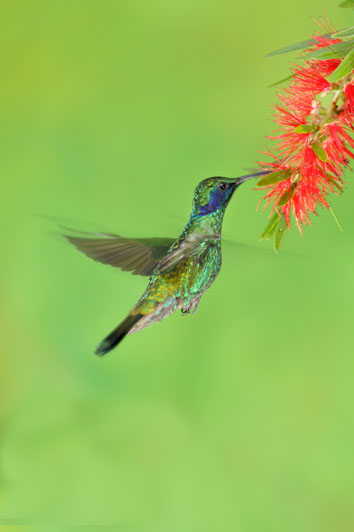
Hummingbirds are in the Trochilidae Family of the Apodiformes Order. There are 338 members of the family and not all are called hummingbirds.

Green-and-white Hummingbird (Leucippus viridicauda) by Keith

The Mountain Bluebird – The Zealous Bridegroom..

The Mountain Bluebird – The Zealous Bridegroom.. – by a j mithra
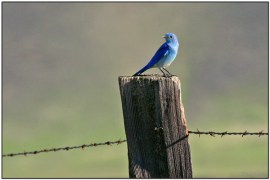
Mountain Bluebird (Sialia currucoides) by Daves BirdingPix

Mountain Bluebird (Sialia currucoides) by Daves BirdingPix

The Mountain Bluebird is a common inhabitant of open areas, such as ranchlands, in the Western parts of America. Mountain Bluebirds are a monogamous breed. The males of this specie have been known to assertively guard their mates from other unattached males. When the male mountain bird has to go away to collect food it makes sure that it stays in contact with the female bird by calling out and engaging in various visual displays.

The Mountain Bluebird is known for its strange feeding behavior. In fact their feeding behavior is so unusual that it makes the Mountain Bluebird quite distinguishable from the other species of bluebirds. Mountain bluebirds like to hover low around open fields where they hunt for their food. Upon seeing an insect the hovering birds quickly briefly drops to the ground to snatch their prey and then return to their flight or go to a perch.

Even when seemingly resting on a perch mountain bluebirds are actually usually on the lookout for insects and when they spot one again suddenly briefly drops to the ground to catch the insect before returning to the perch to feed. This strange behavior is called ground sallying. Though other bluebirds hover above ground at times they do not do this as often as mountain bluebirds does.

Mountain Bluebird (Sialia currucoides) by Ian Montgomery

Mountain Bluebird (Sialia currucoides) by Ian Montgomery

The mountain bluebirds diet is primarily made up of insects although they do eat berries too. Insects that mountain bluebirds like to feed on include beetles, weevils, ants, wasps, bees, cicadas, flies, caterpillars, grasshoppers, katydids, and crickets. Mountain bluebirds do eat berries but not as much as other species of bluebirds. They eat more berries during winter since insects are harder to find. The varieties of berries they most prefer to eat come from mistletoe, juniper and hackberry plants.

Mating season starts with the male Mountain bluebird singing loudly on treetops to attract female mountain bluebirds. The mating song though serves another purpose, which is to mark of his territory and warn other male birds nearby. The male bluebird begins its song at dawn just as the sun rises and continues until a female mountain bluebird is spotted.

Our praises would announce our neighbors of the authority JESUS has over our lives…

It is easy to say, “if God be with us, who can be against us”, but the question is, do you think that our Lord would dwell among our silence?

Our Lord dwells among praises and not silence; which means, our praises in the morning invites the presence of the Lord, so that His goodness and mercy would follows us all through the day..

Did you announce your neighbors about the authority JESUS has over your life? Do we praise Him until we spot HIS presence? Or just praise Him for the sake of it? Remember, God has created us to just praise, praise and praise….

This people have I formed for myself; they shall show forth my praise. (Isaiah 43:21)

Once the male bird sees a female mountain bluebird it starts exhibiting various kinds of behaviors as it tries to attract the female bird and entice it to look at the available nesting cavities in the area, so that the female bird can choose one in which to lay eggs.

Some mating behaviors of the male mountain bluebird include flicking its wing(s) open at a moderate pace, poking its head in and out of a nest hole again and again, and perching on the side of a nest showing off with a wing-wave. When a female mountain bluebird is interested it will follow the male bird into the nesting cavities and even enter some of them to inspect those offered. It isn’t until both birds go inside one nesting cavity several times though that they are considered to be paired. They, of course use the nesting cavity that they had entered several times. After choosing the nesting site the female mountain bluebird promptly begins to build the nest….

In the most sensational courting display, our Lord Jesus Christ hung on the cross And poured every single drop of blood, to attract us, His mate…

In spite of this amazing gift of salvation, how many of us really follow Him…

The female Mountain Blue bird follows the male several times, inside one nesting cavity before it builds its nest..

If Eve had been with Adam, she wouldn’t have sinned…

The day she left Adam and went around the garden, she fell into satan’s snare..

Do we, the bride follow Jesus, our eternal bridegroom?

..: let the bridegroom go forth of his chamber, and the bride out of her closet. (Joel 2:16)
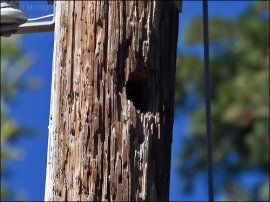
Mountain Bluebird (Sialia currucoides) by Ian Montgomery nest

Mountain Bluebird (Sialia currucoides) by Ian Montgomery nest

It is the female mountain bluebird bird that chooses the nesting site and builds the nest. Throughout the entire process the male also keeps himself busy staying close by to guard the female mountain bluebird. They do help sometimes by bringing some nesting material to the female bird but they do not actually participate in the placement of the material on the nest itself. The male mountain bluebird stays attentive during the entire nest building process and stays close by to guard its mate from other unattached males. Male mountain bluebirds are known to be zealous in protecting their mate.

During this time the male also collects food and feeds it to the female bird while spends most of her time just building the nest. This behavior is called mate-feeding.

Like these male birds, Jesus, our Bridegroom is so zealous that He is busy staying close by to guard us and guide us in all that we do for His glory…

Of the increase of his government and peace there shall be no end, upon the throne of David, and upon his kingdom, to order it, and to establish it with judgment and with justice from henceforth even for ever. The zeal of the LORD of hosts will perform this. (Isaiah9:7)

Like these female birds, we the bride, are given the responsibility of building the nest, which is the kingdom of the Lord…

He feeds those who are hungry and quenches those who are thirsty, this privilege is only for the bride, who work on building the Bridegroom’s kingdom…

No weapon that is formed against thee shall prosper; and every tongue that shall rise against thee in judgment thou shalt condemn. This is the heritage of the servants of the LORD, and their righteousness is of me, saith the LORD. (Isaiah 54:17)

Bluebirds are held in very high esteem. This is shown in the many times it is mentioned in poetry and prose. Bluebirds are often depicted as a symbol of love, happiness and renewed hope. As another sign of peoples high regard for the bluebird the Mountain Bluebird was chosen as the state bird of both Idaho and Nevada…

Jesus holds us in very high esteem that is the reason He bought us by His blood…

God expects us to show the love which He showed on the cross of Calvary..

In fact, He sees us the symbol of love, happiness and hope…

That is why He calls us as His love…

He brought me to the banqueting house, and his banner over me was love. (Song of Solomon 2:4)

Have a blessed day!

Your’s in YESHUA,
a j mithra

Please visit us at: Crosstree


The Mountain Bluebird is part of the Turdidae Family which includes not only the Bluebirds but also Thrushes, Geomalia, Omao, Kamao, Puaiohi, Olomao, Solitaires, Veery, Blackbirds, Cochoa, Fruithunter, Shortwings and Alethes, for a total of 184 members. They are Passerines.

The Fairy-bluebirds are in the Irenidae Family.
Island Scrub Jays – The Ultimate Home-makers

Island Scrub Jays – The Ultimate Home-makers – by a j mithra

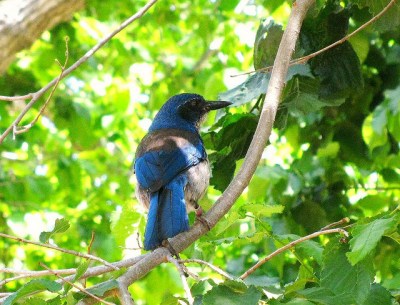
Island Scrub Jay (Aphelocoma insularis) ©WikiC

Island Scrub Jay (Aphelocoma insularis) ©WikiC


Island Scrub Jays are monogamous and may stay with a mate for their entire lives. Unlike some Aphelocoma species, the Island Scrub Jay is not a cooperative breeder, meaning that pairs do not rely on other related jays to help them raise their young…

Divorce has become the order of the day…
Spouses getting separated for flimsy reason, sometimes for no reason has become a fashion..
Even churches encourage divorce..
But,through these birds, GOD shows us that HE has created every spouse to mate for life..

It hath been said, Whosoever shall put away his wife, let him give her a writing of divorcement: But I say unto you, That whosoever shall put away his wife, saving for the cause of fornication, causeth her to commit adultery: and whosoever shall marry her that is divorced committeth adultery. (Mathew 5:31,32)

And most importantly Kids are gifts from GOD..
HE trusts is us that we would take care of these gifts and that is the reason HE has given us kids..
How well do we take care of them?
Or do we rely on some one else to raise them for us?

For if a man know not how to rule his own house, how shall he take care of the church of God? (1Timothy 3:5)

Both the male and the female help build nests three to 25 feet high in trees and shrubs. They use small oak branches that they break off trees and they never use sticks that fall to the ground These branches form the cup of the nest, which the parents line with grass and small roots…

We need to provide a home filled with love and care for our kids and not a house of luxury…

Females lay 3 to 5 eggs in a nest that they incubate for about 20 days. While the female sits on the eggs, the male spends his time hunting and defending the nest from snakes, hawks, foxes, and other Island Scrub Jays.

The male is also responsible for bringing the female food so she can be with the eggs as long as possible each day.

Husbands, love your wives, even as Christ also loved the church, and gave himself for it; (Ephesians 5:25)

Observations suggest that the more time parents spend near their nest, the higher their chances of defending their young ones against nest predators….

Now a days parents spend more time in their offices than with their kids..
The excuse is that they are working hard to give a comfortable future..
But, we parents cannot protect our children if we don’t spend time with them..
How can we claim that GOD has created us in HIS own image when we fail to protect our kids the way HE protects us?
It is time for us to learn from these Island Scrub Jay

s about how to spend time with our children so as to defend them from predators…

Do we have that learning spirit?

Your’s in YESHUA,
a j mithra

Please visit us at: Crosstree


Island Scrub Jays are in the Corvidae Family which has Crows, Jays, Magpies, Treepies, Rooks and Ravens in it. They are in the Passeriformes Order.

*

Birds of the Bible – The Bat?

And the stork, the heron after her kind, and the lapwing, and the bat. All fowls that creep, going upon all four, shall be an abomination unto you. (Leviticus 11:19-20 KJV) and
And the stork, and the heron after her kind, and the lapwing, and the bat. (Deuteronomy 14:18 KJV)

Townsends Big-eared Bat from Wikipedia

These verses show up at the end of the list of “unclean birds.” I have heard people say or write that since the Bat is not a bird, that make the Scriptures incorrect and not true. Let’s look at this a little closer. For one thing, the following verses go on to mention “fowls that go upon all fours” and other critters that are not birds. “Fowl” in the Bible refers to being covered with wings and that includes birds, bats, insects, and others that fly.

Here is what some of the commentators say about these verses.

Gill – “and the bat; a little bird which flies in the night, Aben Ezra says; Kimchi (s) describes it a mouse with wings, which flies in the night, and we sometimes call it the “flitter mouse”; it is a creature between a fowl and a beast; and, as Aristotle says (t), it partakes of both, and is of neither; and it is the only fowl, as Pliny (u) observes, that has teeth and teats, that brings forth animals, and nourishes them with milk. It is a creature so very disagreeable, that one would think almost there was no need of a law to forbid the eating of it; and yet it is said by some to be eatable, and to be eaten, as Strabo (w) affirms, yea, to be delicious food. It is asserted (x), that there is a sort of them in the east, larger than ordinary, and is salted and eaten–that there are bats in China as large as pullets, and are as delicate eating.”

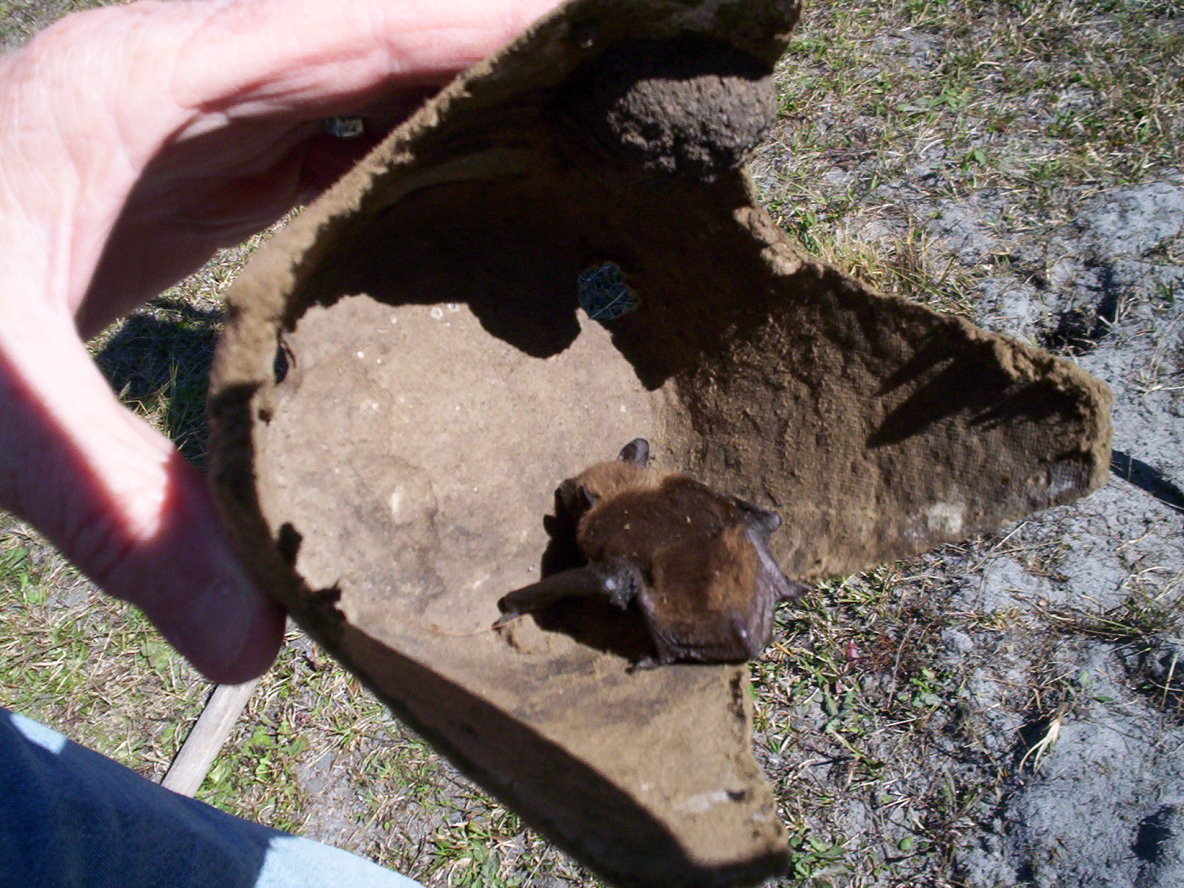
Dan holding a bat at Avon Park AF Range

Clarke – “The bat – עטלף  atalleph, so called, according to Parkhurst, from עט  at, to fly, and עלף  alaph, darkness or obscurity, because it flies about in the dusk of the evening, and in the night: so the Septuagint νυκτερις, from νυξ, the night; and the Vulgate vespertilio, from vesper, the evening. This being a sort of monster partaking of the nature of both a bird and beast, it might well be classed among unclean animals, or animals the use of which in food should be avoided.” “Lev 11:20  All fowls that creep – Such as the bat, already mentioned, which has claws attached to its leathern wings, and which serve in place of feet to crawl by, the feet and legs not being distinct; but this may also include all the different kinds of insects, with the exceptions in the following verse.”
JFB – “the bat — the great or Ternat bat, known in the East, noted for its voracity and filthiness.” Lev 11:20  All fowls that creep, etc. — By “fowls” here are to be understood all creatures with wings and “going upon all fours,” not a restriction to animals which have exactly four feet, because many “creeping things” have more than that number. The prohibition is regarded generally as extending to insects, reptiles, and worms.”

Here are some interesting facts about the bat (not a bird) from Wikipedia:

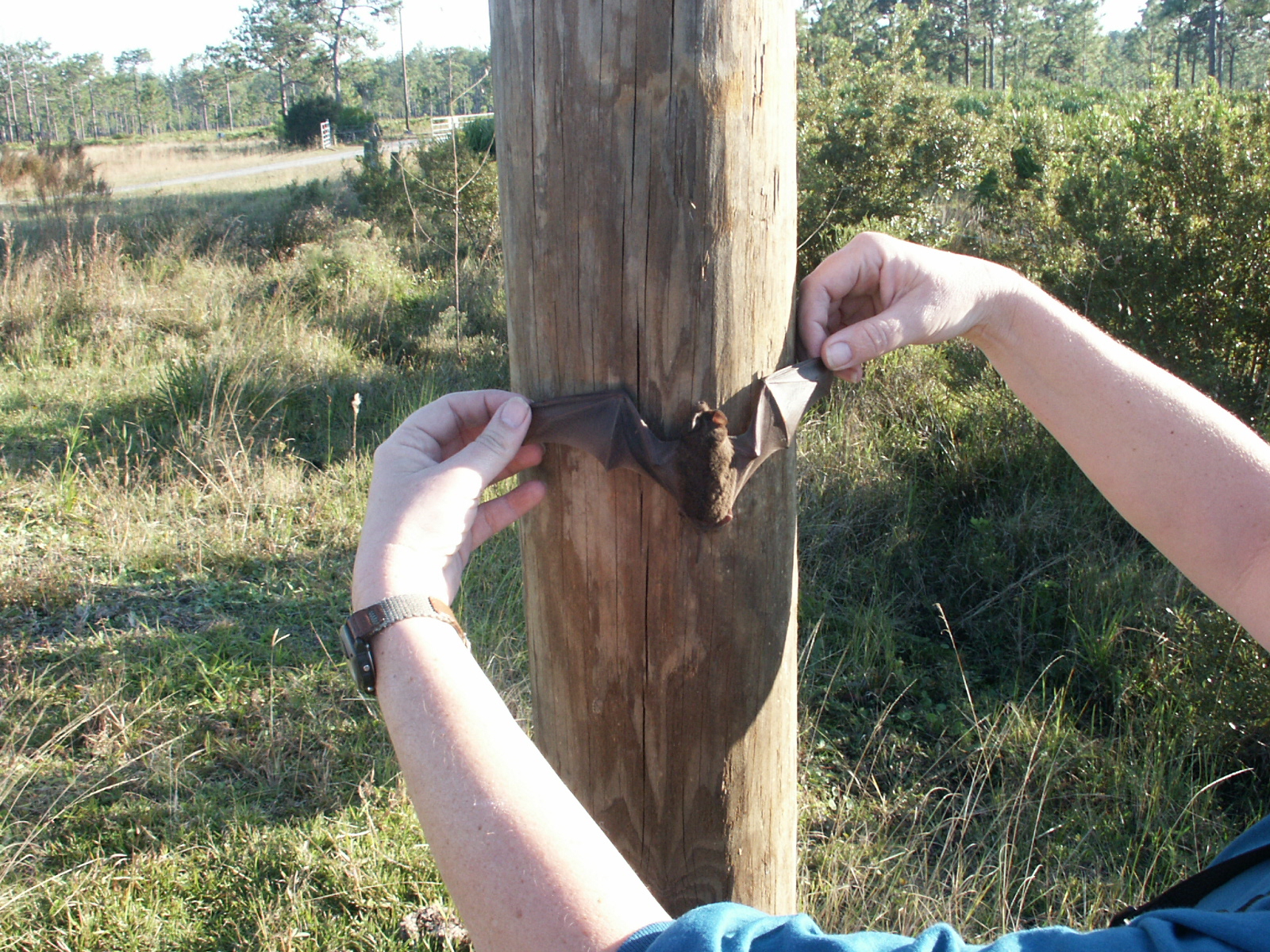
1) Bats are flying mammals in the order Chiroptera (pronounced /kaɪˈrɒptərə/). The forelimbs of bats are webbed and developed as wings, making them the only mammals naturally capable of true and sustained flight. By contrast, other mammals said to fly, such as flying squirrels, gliding possums and colugos, glide rather than fly, and only for short distances. Bats do not flap their entire forelimbs, as birds do, but instead flap their spread out digits, which are very long and covered with a thin membrane or patagium. Chiroptera comes from two Greek words, cheir (χείρ) “hand” and pteron (πτερόν) “wing.”

Fruit Bat at Avon Park AF Range

2) There are about 1,100 bat species worldwide. About seventy percent of bats are insectivores. Most of the rest are frugivores, or fruit eaters. A few species feed from animals other than insects. Bats are present throughout most of the world and perform vital ecological roles such as pollinating flowers and dispersing fruit seeds. Many tropical plants depend entirely on bats for the distribution of their seeds.
3) Bats range in size from Kitti’s Hog-nosed Bat measuring 29–33 mm (1.14–1.30 in) in length and 2 g (0.07 oz) in mass,[4] to the Giant Golden-crowned Flying-fox, which has a wing span of 1.5 m (4 ft 11 in) and weighs approximately 1.2 kg (3 lb).
4) Bat echolocation is a perceptual system where ultrasonic sounds are emitted specifically to produce echoes. By comparing the outgoing pulse with the returning echoes the brain and auditory nervous system can produce detailed images of the bat’s surroundings. This allows bats to detect, localize and even classify their prey in complete darkness. At 130 decibels in intensity, bat calls are some of the most intense airborne animal sounds.
5) The finger bones of bats are much more flexible than those of other mammals. One reason is that the cartilage in their fingers lacks calcium and other minerals nearer the tips, increasing their ability to bend without splintering. The cross-section of the finger bone is also flattened compared to the circular cross section that human finger bones have, and is very flexible. The skin on their wing membranes has more elasticity and so can stretch much more than other mammals. The wings of bats are much thinner than those of birds, so bats can manoeuvre more quickly and more accurately than birds. It is also delicate, ripping easily. However the tissue of the bat’s membrane is able to regrow, such that small tears can heal quickly.
6) The teeth of microbats resemble insectivorans. They are very sharp to bite through the hardened armor of insects or the skin of fruit.
7) Mammals have one-way valves in veins to prevent the blood from flowing backwards, but bats also have one-way valves in arteries.
8) One species of bat has the longest tongue of any mammal relative to its body size. This is beneficial to them in terms of pollination and feeding their long narrow tongues can reach deep into the long cup shape of some flowers. When their tongue retracts, it coils up inside their rib cage.

God has graciously created the Bat to fulfill its role in doing His will. He has given it exactly what it needs. To some, it may seem a contradiction, but to those of us who believe in creation, there is no conflict.

Below is something we read recently from Comments on Here and Hereafter by Bob Jones, Sr., p. 79-80.

“The animals and fowls decided to have a battle, so the story goes. The animals lined up one one side and the fowls on the other. In the crowd was a little bat. The animals came upon the bat, and he dropped his wings, showed his teeth and said, ‘I am an animal.’ the fowls came upon the bat. He stretched his wings and said, ‘I am a fowl.’ I have known people like the bat. Whatever crowd they are in, that is what they are. They are like the chameleon. They are colored by their surroundings. God’s people, instead of being affected by their surroundings, should affect their surroundings. A good, consecrated Christian who will be faithful to his trust will have some influence upon his environment.”

Ian’s Bird of the Week – Splendid Fairy-wren

Splendid Fairywren (Malurus splendens) by Ian Montgomery


Ian’s Bird of the Week – Splendid Fairy-wren  ~  Ian Montgomery

Newsletter – 5/25/10

It has been about 4 years since a Fairy-wren featured as Bird of the Week. It’s not for nothing that the Superb Fairy-wren made the list (No. 78) in David Chandler and Dominic Couzens’s ‘100 Birds to See before You Die’, so let’s rectify that with the Splendid Fairy-wren.

Splendid Fairywren (Malurus splendens) by Ian Montgomery

Splendid Fairywren (Malurus splendens) by Ian

All the male Fairy-wrens are stunningly beautiful and some of their names reflect that: Superb, Splendid and Lovely before getting to more prosaic names like Purple-crowned and Variegated. Maybe the bird-namers should have consulted the thesaurus. Mine includes (under splendid): spiffy, ritzy, glorious, lavish, swanky and sublime; ‘imperial’ might fit the Purple-crowned well. Anyway, the Splendid lives up to its name, as you can see in the first photo, even if ‘splendid’ has connotations of grand, perhaps inappropriate for a tiny bird 14cm/5.5in in length, much of which is tail.

It’s not as well known as the Superb, which occurs in all the southeastern Australia capitals from Brisbane to Adelaide via Hobart, but the Splendid rules supreme in Perth. As addition, it has wide range throughout Australia east of the Great Divide with three distinct races in eastern, central and western Australia. The one in the first and second photos is the eastern race melanotus, photographed in southwestern Queensland, identifiable by it cobalt- rather than violet-blue colour, paler cheek patch, narrow breast band and black back – visible in the second photo – with the latter giving this race its other name of Black-backed Fairy-wren. Incidentally, Fairy-wrens are unrelated to Northern Hemisphere wrens and together with the grasswren and emu-wrens comprise the Australo-Papuan family Maluridae.
Splendid Fairywren (Malurus splendens) by Ian Montgomery

Splendid Fairywren (Malurus splendens) by Ian

The third photo shows a male of the nominate western race in transition from non-breeding to breeding plumage. Fairy-wrens, like some very colourful ducks such as the Mallard, shed their bright colours in the non-breeding plumage and acquire the ‘eclipse’ plumage. This is similar to that of the female, though eclipse male fairy-wrens are often subtly different from females and young birds. In the case of Splendid Fairy-wrens, the eclipse male is distinguishable from the female by having a dark rather than tan bill, greyish rather than tan eye-ring, dark lores (between the eye and the bill) and blue wings.

Best wishes,
Ian

Links: Fairywrens


Ian Montgomery, Birdway Pty Ltd,
454 Forestry Road, Bluewater, Qld 4818
Phone: +61-7 4751 3115
Preferred Email: ian@birdway.com.au
Website: http://birdway.com.au


Lee’s Addition:The Splendid Fairywren is in the Maluridae Family which includes the 29 Australasian Wrens (Fairywren, Emu-wren, and Grasswren). They are in the Passeriformes Order.

Great are the works of the LORD; They are studied by all who delight in them. Splendid and majestic is His work, And His righteousness endures forever. He has made His wonders to be remembered; The LORD is gracious and compassionate. (Psalms 111:2-4 NASB)

The Thirsty Sandgrouse…

The Thirsty Sandgrouse… – by a j mithra

Chestnut-belliedSandgrouse (Pterocles exustus) by Nikhil Devasar

Chestnut-belliedSandgrouse (Pterocles exustus) by Nikhil Devasar

The Sandgrouse are a unique set of birds found only in Africa and Eurasia. The relationship of these birds to other groups has been one of the most hotly debated issues over a period of centuries.

They are primarily ground-feeding birds of deserts, scrub, and grasslands, recalling small long-winged grouse — indeed, one of the most desert-loving of all species.

Its beautifully patterned underparts provide fine camouflage amongst its pink & white rocky habitat.

But sandgrouse share several attributes of pigeons, including their long wings and the practice of making long flights daily between breeding or feeding grounds, and pools of water at which they drink.

A sandgrouse could be described as the busiest eater in the bird world. It needs to find several seeds every second to get enough food to survive. To sustain these sorts of feeding rates, it exploits areas with superabundant seed banks. The grouse peck up each seed individually, and look like little sewing machines when feeding. Each bird will consume between 5,000 and 80,000 seeds a day. Some seeds are so small that it takes 5,000 to make up just one gram.

Now the parable is this: The seed is the word of God. (Luke8:11)

Painted Sandgrouse (Pterocles indicus) by Nikhil Devasar

Painted Sandgrouse (Pterocles indicus) by Nikhil Devasar

How many seeds did we eat today? A full crop (up to 24ml volume) of this small bird could hold between 3 000 and 40 000 seeds, depending on seed size. How much are we filled with the word of GOD?

These birds are the busiest eaters of the Avian world…
We too are so busy that we hastily read a chapter from the Bible before we leave home…
Some of us are even more busy that we don’t find time to read the Bible at all …
We do you know the meaning of the word BUSY?
B (being) U (under) S (satan’s) Y (yoke)
Are you BUSY (Being under satan’s yoke)?

Or

BUSY (Being under Savior’s yoke)?
JESUS said, “For my yoke is easy, and my burden is light.” (Mathew 11:30)

One special feature of sandgrouse is their long flights to water holes in desert and semi-desert country where not only do they drink, but during breeding they wet their belly feathers to carry water to the chicks. The male’s belly feathers are specially adapted to hold up to 15-20 ml of water. The nests may be over 25 miles distant, and it may take several trips, but adults carry enough water back to their chicks so that they survive.. (Video of a Pin-tailed Sandgrouse soaking its belly feathers)

By far the best way to see sandgrouse is to await their arrival at waterholes. The flocking behavior helps them avoid predation because not only are individuals in a flock more difficult for a predator to catch, but because some members can always be on the lookout for danger while others drink. The Burchell’s Sandgrouse (Pterocles burchelli) in the Kalahari desert has been known to fly over 100 miles each day to water…

Are you thirsty?
You are so privileged, that you don’t have to move even one step for water…
Just call JESUS, the Living Water, HE will not only quench your thirst but, let the Living Water flow from you…

For I will pour water upon him that is thirsty, and floods upon the dry ground: I will pour my spirit upon thy seed, and my blessing upon thine offspring: (Isaiah 44:3)

He that believeth on me, as the scripture hath said, out of his belly shall flow rivers of living water. (John 7:38)

Have an overflowing day!

Your’s in YESHUA,
a j mithra

Please visit us at: Crosstree

Dodo Bird – Not A Failure

Dodo (Raphus cucullatus) Extinct by Wikipedia

Dodo (Raphus cucullatus) Extinct by Wikipedia

The dodo (Raphus cucullatus) was a flightless bird endemic to the Indian Ocean island of Mauritius. Related to pigeons and doves, it stood about a meter (3 feet) tall, weighing about 20 kilograms (44 lb), living on fruit, and nesting on the ground.

The dodo has been extinct since the mid-to-late 17th century.[1] It is commonly used as the archetype of an extinct species because its extinction occurred during recorded human history and was directly attributable to human activity.

The dodo bird … an example of survival of the fittest

*

When The Robins Came – by Dorothy (Dot) Belle Malcolm

When The Robins Came – by Dorothy (Dot) Belle Malcolm

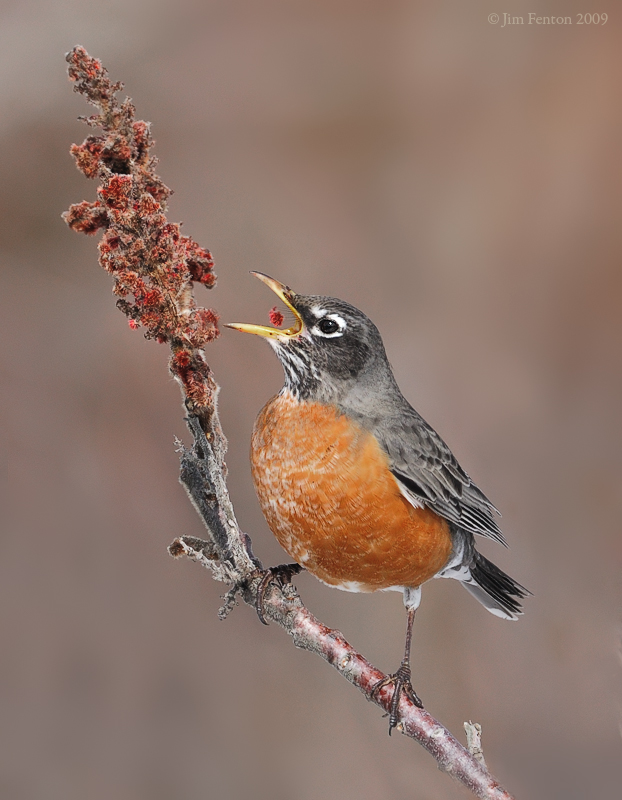
Robin Eating by Jim Fenton

Robin Eating by Jim Fenton

They came one day – loudly – uninvited – wildly flying thru the branches of the neighbor’s camphor tree, and were scattered over the ground as if it were a race to see who could eat the most. But primarily they were in the tree.

For days their noisy, frantic activity continued, usually in the mornings. Then when it seemed they had moved on to somewhere else, I saw they were back again.

Only this time in a tree near where I was cleaning up from the effects of winter’s cold. And they were oh so loud and gave no heed to me. I felt they were having much fun. They delighted in flicking decaying leaves around in search of wormy treasures.

In their colors of black and orange and yellow bills, they appeared fresh, strong, and each feather perfect. In their foraging, they would skitter, bob, stop still, stand proudly, with heads held up. They looked like strong healthy sentinels.

What joy seemed to be theirs, scattering leaves over the stone pathways. At first, I blamed the squirrels for the mess, but soon realized that was a wrong assumption. When they left, and I observed the mess, I thought they had not been taught good manners. After all they were visitors – shouldn’t they have cleaned up after themselves?

When I saw no more for a few days, I was sorry to have thought badly of their manners. After all, did I not greatly enjoy their antics? For you see, I had much to savor until they hopefully return next Spring.

Imagine how let down I felt by their supposed absence. I recalled their wild flights, beautiful fresh colors, proud looks and flicking up of the leaves. Oh how happy I was in a few days to be rewarded by the sight of a lone robin and hear it’s voice. Was it left behind I wondered – why did it appear to be alone? No, no, not at all, for in a couple days a goodly group appeared. I knew they were not here to stay though. When they return next year they will have an open invitation to my yard, trees, leaves, and all the rest. Let them be loud, wild, and messy. I shall not speak of bad manners again.

You will show me the path of life; In Your presence is fullness of joy; At Your right hand are pleasures forevermore. (Psalms 16:11 NKJV)
Look at the birds of the air: they neither sow nor reap nor gather into barns, and yet your heavenly Father feeds them. Are you not of more value than they? (Matthew 6:26 ESV)

Dorothy, Dottie as we know her at church, is a friend who likes to garden and provide for the needs of birds. When she told me of this true story, I had asked her if I could produce it here. Thanks, Dottie, I hope the readers enjoy it as much as I do and look forward to more observations of yours to share.

See her – Return of the Robins

*

Fusion Unplugged by Boat-tailed Grackles

Boat-tailed Grackle (Quiscalus major) by Dan'sPix

Fusion Unplugged by Boat-tailed Grackles by a j mithra

Well I see a j mithra has been busy again. He has produced another YouTube with the birds. This time he has used the Boat-tailed Grackles. Hope you enjoy watching it.

*

Birds of the Bible – Hair Like Eagles’ Feathers

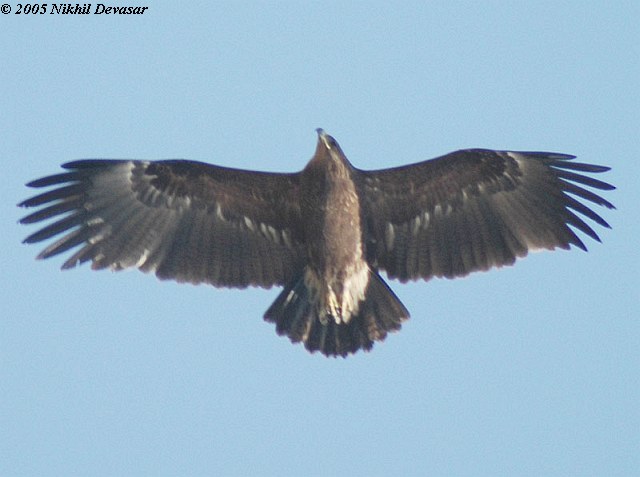
That very hour the word was fulfilled concerning Nebuchadnezzar; he was driven from men and ate grass like oxen; his body was wet with the dew of heaven till his hair had grown like eagles’ feathers and his nails like birds’ claws. (Daniel 4:33 NKJV)

Greater Spotted Eagle (Aquila clanga) by Nikhil

Greater Spotted Eagle (Aquila clanga) by Nikhil

I have wanted to include this verse in a Birds of the Bible article, but just never got to it. Last night our pastor mentioned this verse again in his message and I decided to use it for this weeks blog. Plus, Dan is teaching the Book of Daniel in our Sunday School class.

Many times the birds mentioned in the Bible are listed as “clean or unclean” or as an “object lesson” to teach some truth. This time the mention of Eagle feathers and birds’ claws are used as a description of a man’s appearance and there is a lesson to be learned here.

So, who was this man? It is actually a very important king, King Nebuchadnezzar of Babylon. The information about the King is found throughout the book of Daniel. To make the story short, the king had a dream and wanted an interpretation of that dream. Not only did he want his dreams interpreted, but he wanted the interpreter to tell him what the dream was about. The wise men and others told the king that was impossible, so the king commanded to kill them. Daniel prayed to God that He would reveal the dream and it’s interpretation to him so he could tell it to the King. God answered that prayer and Daniel was able to reveal it to King Nebuchadnezzar.

Long nails like a bird's claws

Long nails like a bird’s claws

King Nebuchadnezzar was the first world ruler and God had given the king great power. Later on, the king’s pride takes over and he thinks he has made this kingdom and does not give God the credit. He even has a great statue made of himself and demands that all fall down and worship him.

Back to making this short. In Daniel chapter 4 the king has another dream and Daniel (Belteshazzar) prays for revelation and again interprets the dream. Daniel 4:9 to 4:18 tells the dream. (Birds are mentions several times in it.) Then Daniel interprets the dream in Daniel 4:19-33. Basically, the Most High is going to let the king learn humility and get rid of the pride that he has.

The king spoke, saying, “Is not this great Babylon, that I have built for a royal dwelling by my mighty power and for the honor of my majesty? (Daniel 4:30 NKJV)

For seven years will his kingdom be departed from him. He will be out in the field, “eating grass like oxen” and “until you know that the Most High rules in the kingdom of men, and gives it to whomever He chooses.” It is during this time that his hair will grow like “eagles’ feathers and his nails like birds’ claws.”

Did King Nebuchadnezzar learn his lesson?

And at the end of the time I, Nebuchadnezzar, lifted my eyes to heaven, and my understanding returned to me; and I blessed the Most High and praised and honored Him who lives forever: For His dominion is an everlasting dominion, And His kingdom is from generation to generation. All the inhabitants of the earth are reputed as nothing; He does according to His will in the army of heaven And among the inhabitants of the earth. No one can restrain His hand Or say to Him, “What have You done?” At the same time my reason returned to me, and for the glory of my kingdom, my honor and splendor returned to me. My counselors and nobles resorted to me, I was restored to my kingdom, and excellent majesty was added to me. Now I, Nebuchadnezzar, praise and extol and honor the King of heaven, all of whose works are truth, and His ways justice. And those who walk in pride He is able to put down. (Daniel 4:34-37 NKJV)