If Dogs Could Fly: More than Wings are Needed for Flying High!
~ by James J. S. Johnson
And God said, Let the waters bring forth abundantly the moving creature that hath life, and fowl that may fly above the earth in the open firmament of heaven. (Genesis 1:20)
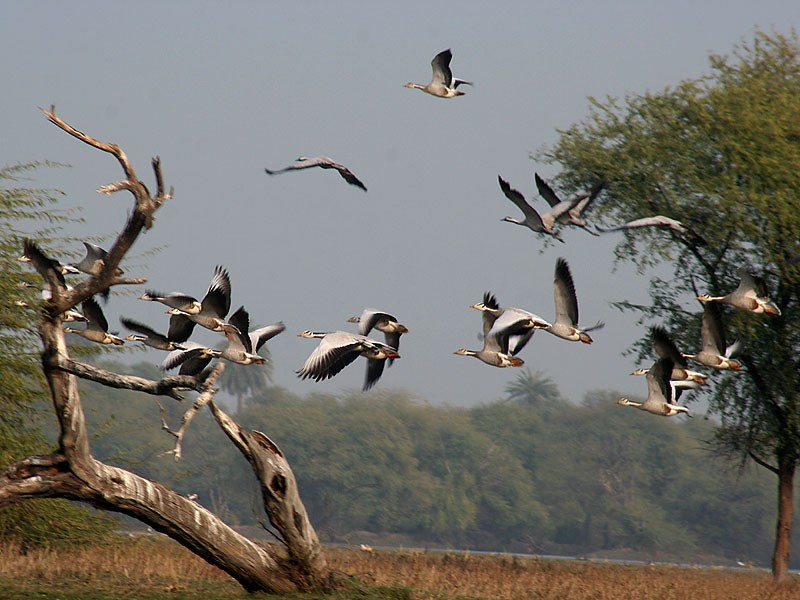
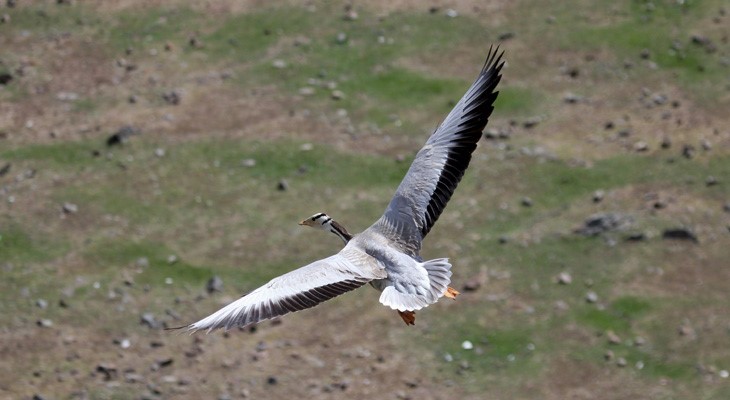
God made wings for animals – like birds, insects, and bats – to fly. (In the case of penguins, they fly underwater!) But it takes more that wings to fly high: ask a Bar-headed Goose (Anser indicus), who migrates over the Himalayas!
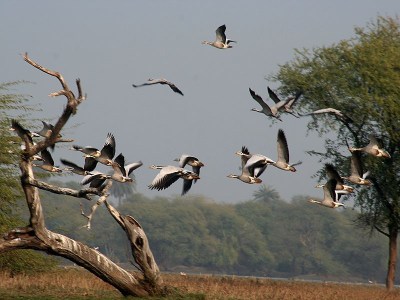
Bar-headed Goose (Anser indicus)
But what about dogs – and humans?
If dogs were meant to fly—apart from aircraft—they would have bodies designed for heavier-than-air flying. Also, for dogs to fly at altitudes so high that oxygen is a problem, they need bodies designed for breathing at thin-air elevations. These facts are illustrated by an amazing German shepherd, Antis, who flew combat missions, during 1940-1945, at altitudes up to 16,000 feet.(1)
But who was Antis, and how did he survive flying in oxygen-starved altitudes?
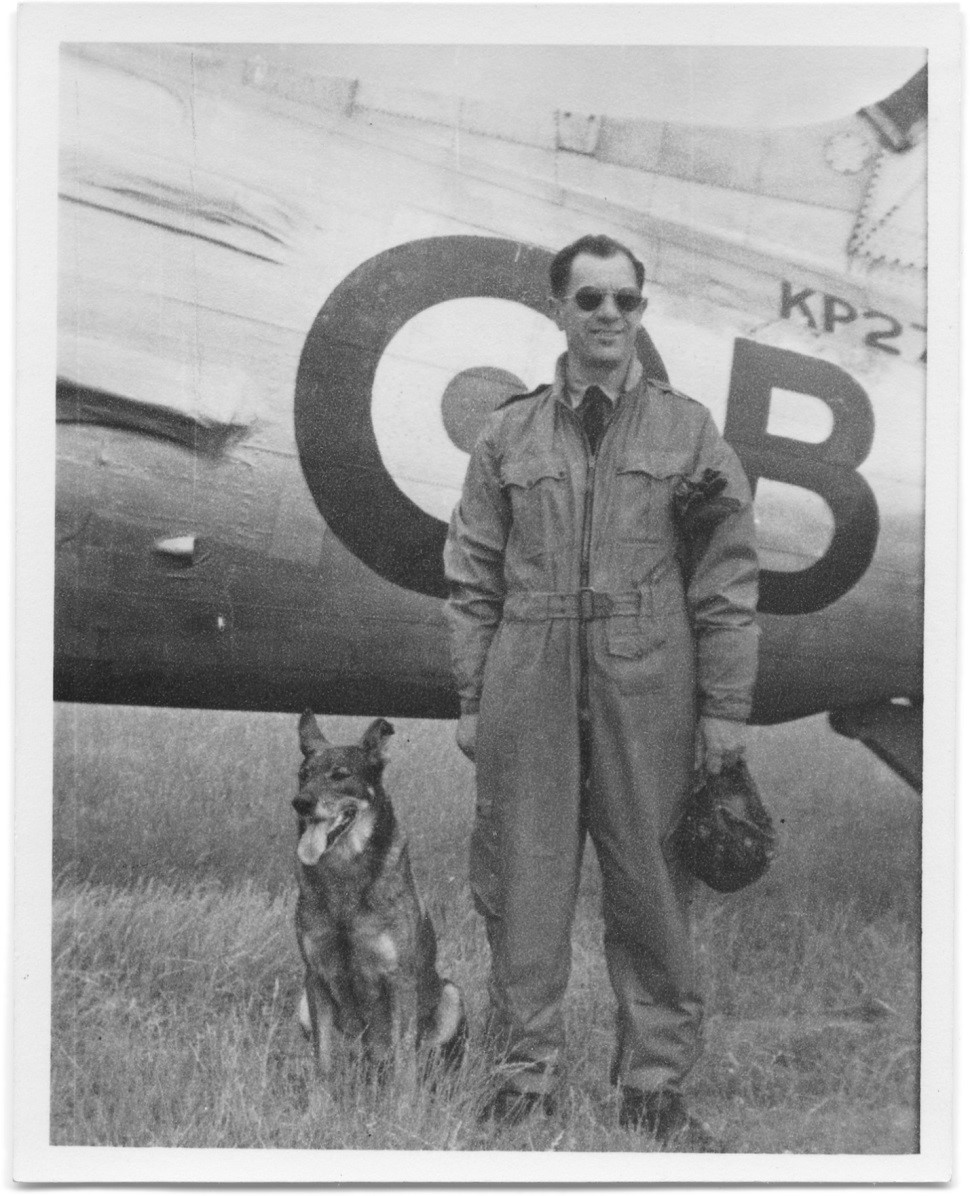
Antis was an Alsatian German shepherd, rescued as a starved-almost-to-death newborn puppy, by a Czechoslovakian pilot named Václav “Robert” Bozdĕch. Robert flew during World War II, first for France, and later for England—as part of the Royal Air Force’s 311 (Czechoslovack) Squadron. (In fact, how Robert smuggled Antis from France through Gibraltar into England is itself an amazing adventure.)
British Air Ministry regulations prohibited dogs flying on combat missions, of course, but Antis hated to be “grounded” if that meant being separated from Robert. During June 1941 Antis took matters into his own paws, quietly disappearing when Robert readied for a bombing mission over Bremen, a German port city (known for its strategic military activities). Antis quietly hid inside the Vickers Wellington bomber where Robert served as turret gunner.
Wellington bombers flew at altitudes as high as 16,000 feet, so air crews wore oxygen masks, to compensate for the oxygen-thin air at that high altitude. But no one had equipped Antis for such oxygen-thin conditions! Robert concerned himself with the crew’s mission, bombing Bremen’s oil refinery, till his attention was distracted by someone nudging his elbow: Antis!
Antis must have somehow crept aboard the aircraft and stowed away, being careful to remain hidden until [Robert’s airplane] was almost over her target. Recovering from the shock, Robert tried to take in all that he was seeing. His dog’s flanks were heaving, his lungs desperate for breath, which was very likely why he’d alerted Robert to his presence. They were climbing to 16,000 feet and Antis was having increasing trouble breathing in the thin, oxygen-starved atmosphere. (1)
How could Robert save Antis?

WWII pilot Václav “Robert” Bozdĕch — and his faithful dog, Antis
Antis needed to inhale concentrated oxygen, immediately, but so did Robert, at least until the plane descended to a lower elevation.
Taking a massive gasp himself, Robert unstrapped the oxygen mask from his face, bent, and pressed it firmly over his dog’s muzzle. He watched anxiously as the dog took a few deep breaths of life-giving oxygen, before eventually his breathing seemed to settle down to something normal.(1)
Meanwhile Robert busied himself with his duties as turret gunner, wearing the spare radio headset, since his oxygen mask strappings contained his usual headset.
The mask contained [Robert’s] main radio pickup, and he could only imagine that he and his dog were going to have to share oxygen for the remainder of the flight. A few moments later he heard a squelch of static in his earpiece, signifying that someone was coming up on the air [intercom]. “Robert, have you gone to sleep down there?” Capka, their pilot, queried. “No. Why?” Robert replied. “Sounds like you’re snoring your head off. What’s going on if you’re not snoozing?”(1)
It was Antis’ canine breathing that was being broadcast through the airplane’s intercom, due to the microphone attached to the oxygen mask. Meanwhile, the flight became more hazardous.
They began their bombing run at 15,000 feet, an altitude where the dog needed the oxygen. Robert had no option but to continue operating without it, for he couldn’t keep switching the mask with his dog. He needed his hands free to operate the guns. At first he seemed to cope just fine, but then his heart started to race and beads of sweat were breaking out on his forehead.(1)
Antiaircraft fire exploded nearby, bombs dropped from Robert’s plane, and Messerschmitt fighters tried to shoot the British Wellington fighter-bomber out of the night sky. But, eventually (at the successful close of the mission, thanks to God’s providence), Robert and his air crew mates – and Antis — successfully returned to their home base. Of course, Antis’ stowaway antics were by then no secret. Wing Commander Josef Ocelka, 311 Squadron’s commanding officer, liked Antis—but sharing an oxygen mask during future bombing raids was unacceptable. The solution? A doggie oxygen mask, specially tailored for Antis.
[Antis’ oxygen mask] consisted of a standard pilot’s mask, cut and modified to suit a German shepherd’s long and slender snout, as opposed to the flatter, boxier face of a human. The mask attached to his head with a special set of straps that ran around the back of his thick and powerful neck, with extra fastenings latching on to his collar. Antis didn’t particularly like the thing, but he proved happy enough to wear it so long as Robert was wearing his.(1)
Antis continued to have many death-defying adventures, during the war, as Robert’s loyal dog. But, thanks to his canine oxygen mask, at high elevations Antis no longer needed to share an oxygen mask with Robert.
Obviously, Antis was not born with the capacity to survive oxygen-starved altitudes without the help of an oxygen mask—and it requires purposeful design and clever engineering to equip dogs like Antis for such high-altitude conditions.
And so we can (and should) marvel at the creative genius and technical problem-solving that achieved a solution to Antis’ need for high-altitude oxygen. But what about animals—like many high-flying birds—that have no such oxygen mask? How can they survive elevations like 15,000 (or higher) without an oxygen mask?

Bar-headed Goose
What kind of birds, soaring or migrating, fly at such oxygen-scarce altitudes?
High fliers include Bar-headed Geese, which cross the Himalayas at heights up to 29,500 feet [9,000 m] as they travel between the mountain lakes of central Asia and their winter homes along the Indus [River] valley, India. A flock of 30 Whooper Swans en route from Iceland to western Europe was logged by a pilot at 27,000 feet [8,230 m]. Mallards have reached 21,000 feet [6,400 m], Bar-tailed Godwits 19,865 feet [6,000 m] and White Storks 15,750 feet [4,800 m] on migration.(2)
Some birds, amazingly, can even soar at 36,000 feet (~11,000 meters)!
How can we know that?
A combination of empirical science (i.e., direct observation) and forensic science (physical remains that show causality events).

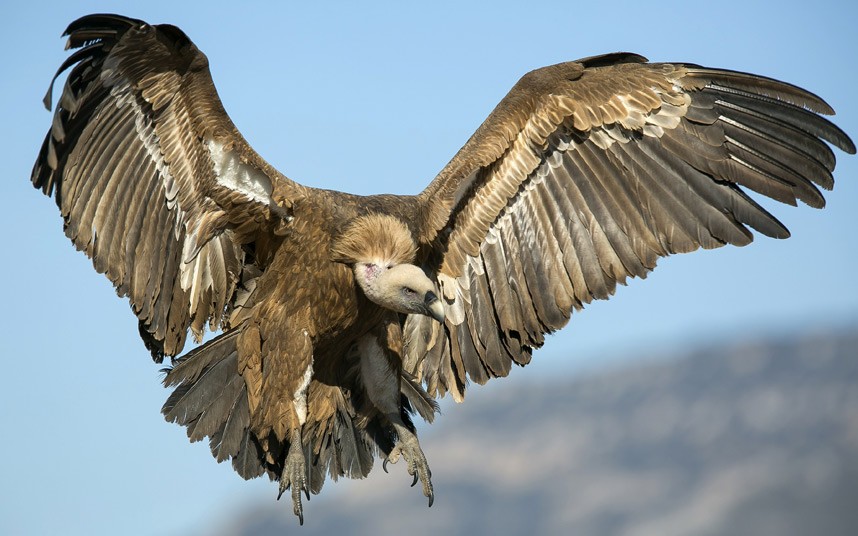
Rupell’s Griffon ©Telegraph
Specifically, a griffon-vulture, called the Rüpell’s Griffon, collided with an airplane, at that altitude, over Côte d’Ivoire, Africa.
On November 1973, an aircraft collided with a bird at a good 11000 m [meters] above the Ivory Coast in Africa. The bird wrecked one of the aircraft’s engines, though the plane managed to land without further mishap. Feather remains in the wrecked engine showed that the bird was a Rüppel’s Vulture.(3)
And other high-flying migrants are known to fly the friendly skies as well:
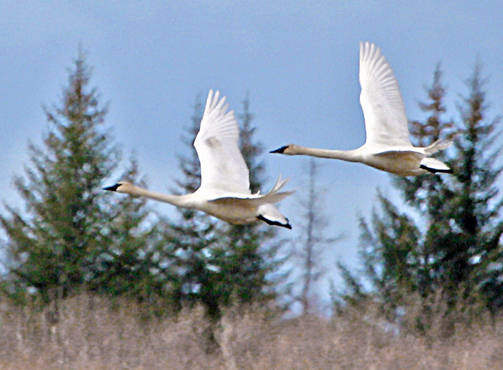
The impact of even a single goose on a jet airliner can be disastrous … [so] observers south of Canada’s Winnipeg airport monitor the northward progress of Lesser Snow Geese and warn air-traffic controllers of their approach. If necessary, the airport can be closed down for hours, or occasionally days, during the peak of [their] migration.(4)

But what difference does it make, to us, when the atmosphere is oxygen-scarce? How are air-breathing humans and animals affected when the oxygen is “thin”?
The highest-lying permanent settlements, in the Andes and in Tibet, are situated at just above 5000 m. [16,400 feet]. Not even people belonging to these mountain communities would be able to survive more than a few hours in the oxygen-deficient air above 8000 m. [26,200 feet]. The oxygen content of the air is about 21%, independent of altitude, in the troposphere; the oxygen pressure consequently decreases in parallel with the decreasing air pressure at increasing altitude. At 6000 m [20,000 feet] the oxygen pressure is only half what it is at sea-surface level; at 8000 m [26,200 feet] it is a third of that[,] and at 10,000 m [32,800 feet] only a quarter. The ability of birds to stay alive at high altitudes is explained by the [comprehensive] fact that they have a more efficient respiratory system than mammals.(5)
But how are birds able to breathe in such oxygen-starved conditions?
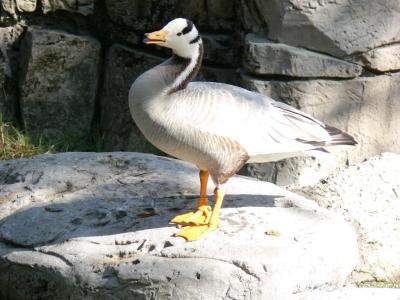
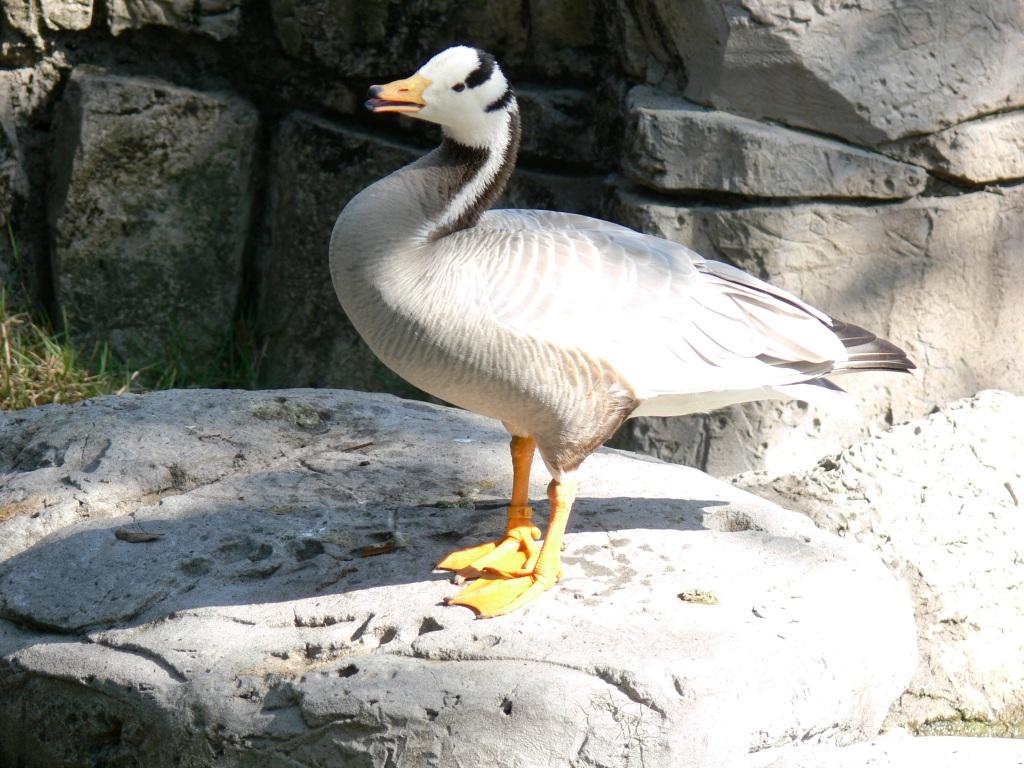
Bar-headed Goose (Anser indicus) by Lee LPZ
What they have—thanks to their Creator—is much more efficient that Antis’ custom-made oxygen mask!
A bird’s lungs function according to the through-flow principle: the inspired [inhaled] air collects in the bird’s posterior air-sacs and flows through the lungs to the anterior air-sacs before it passes back out. In the lungs the blood is oxygenated by fine air capillaries, where air and blood flow in opposite directions. Owing to this counterflow, the oxygenated blood that leaves the bird lung acquires a higher oxygen concentration than that corresponding to the oxygen pressure in the expired [exhaled] air.(5)
Also, bird hearts are proportionately larger to their bodies than those of mammals—from 0.8 to 1.5% of its total body mass, compared to mammals (averaging around 0.6%), enabling speedy blood transport and intensive oxygen renewal.(5)
So, is the “flow-through principle” basically all that there is, to why birds can breathe at higher altitudes, — or is it even more complicated than that?
In fact, the technical aspects of how oxygen is acquired and consumed, by high-flying birds, is more marvelous than is easy to describe, as this succinct-yet-technical summary indicates:
Birds that fly at high altitudes must support vigorous exercise in oxygen-thin environments. … [There is an interactive combination of bioengineering] characteristics that help high fliers [to] sustain the high rates of metabolism needed for flight at [such] elevation. Many traits in the O2 transport pathway distinguish birds in general from other vertebrates. These include enhanced gas-exchange efficiency in the lungs, maintenance of O2 delivery and oxygenation in the brain during hypoxia, augmented O2 diffusion capacity in peripheral tissues and a high aerobic capacity. … The distinctive features of high fliers include an enhanced hypoxic ventilator response, an effective breathing pattern, larger lungs [proportionately speaking], hæmoglobin with a higher O2 affinity, further augmentation of O2 diffusion capacity in the periphery and multiple alterations in the metabolic properties of cardiac and skeletal muscle. These unique specializations improve the uptake, circulation and efficient utilization of O2 during high-altitude hypoxia. High-altitude birds also have larger wings than their lowland relatives[,] to reduce the metabolic costs of staying aloft in low-density air. High fliers are therefore unique in many ways ….(6)
If all of that sounds complicated it is because it is – very complicated. But in order for birds to successfully fly at high elevations it was necessary for God to design and install bioengineering features that would succeed in such thin air. And, because God did not provide such physiologies for dogs – such as Alsatian German Shepherds (like Antis) – it was needful for Antis to have his own oxygen mask, for those times when Antis flew in oxygen-scarce altitudes.
So, three cheers for the East Wretham fitters, who custom-fit a canine oxygen mask, for Antis’ high-altitude breathing! Also, proper credit is surely due to Vickers-Armstrongs (Aircraft) Ltd., the manufacturer of the Wellington bomber that Robert and Antis flew in.
Yet how much moreso should we cheer and extol our Creator-God, for how He designed and constructed high-flying birds,(7) with respiratory physiologies that need no manmade airplanes or oxygen masks! Yes, “the heavens declare the glory of God”(8) — and so do the birds he made to fly in those skies, even the skies that are so high that others, flying there, need oxygen masks!
References
- Damien Lewis, The Dog Who Could Fly (New York, NY: Simon & Schuster, 2015), pages 178-180, 187.
- Jonathan Elphick, ed., Atlas on Bird Migration: Tracing the Great Journeys of the World’s Birds (Buffalo, NY: Firefly Books, 2011), page 23.
- Thomas Alerstam, Bird Migration (New York, NY: Cambridge University Press, 1993), page 276.
- Elphick, Atlas of Bird Migration, page 123.
- Alerstam, Bird Migration, page 277.
- Graham R. Scott, “Elevated Performance: The Unique Physiology of Birds that Fly at High Altitudes”, Journal of Experimental Biology, 214(15):2455-2463 (August 2011); Douglas L. Altshuler & Robert Dudley, “The Physiology and Biomechanics of Avian Flight at High Altitude”, Integrative and Comparative Biology, 46(1):62-71 (2006).
- Job 39:26.
- 8. Psalm 19:1.

Bar-headed Goose (Anser indicus) ©Fair Use credit: Bruce Moffat Photography
Bar-headed Goose (Anser indicus)
*
James J. S. Johnson
Orni-Theology
*







 Lee's Birdwatching Adventures Plus