Birds of the World – Discolor Birds

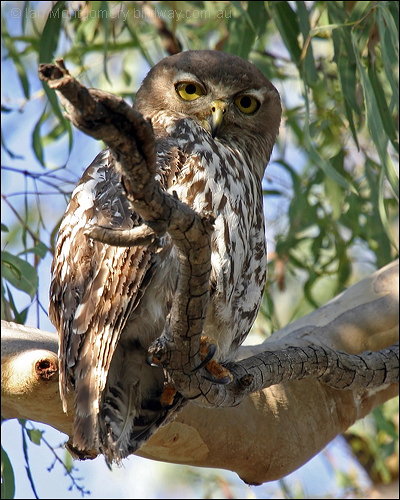
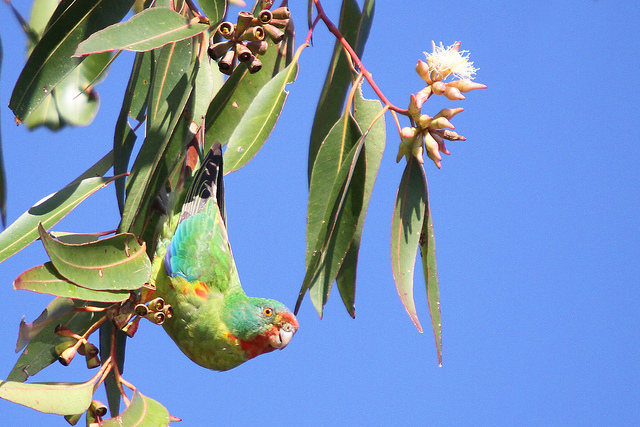
Swift Parrot (Lathamus discolor) ©© marj k

Swift Parrot (Lathamus discolor) ©© marj k

While working on the new updates for the IOC 2.10 Version, I kept noticing the word “color” in the scientific names as I sorted and resorted the Excel spreadsheet. This is a second of the “color” articles. There are concolor, bicolor, tricolor, unicolor, quadricolor, versicolor, decolor, sitticolor, nocticolor, etc. Those will come later. For now, let’s see what the “discolor” birds are.

According to the Free Dictionary, “discolor” means:

dis·col·or  (ds-klr)

v. dis·col·oreddis·col·or·ingdis·col·ors

v.tr.

To alter or spoil the color of; stain.

v.intr.

To become altered or spoiled in color.

Also – discolor – lose color or turn colorless; cause to lose or change color; change color, often in an undesired manner
Webster’s Revised Unabridged Dictionary, published 1913 by C. & G. Merriam Co.

Species with “discolor”:

Swift Parrot (Lathamus discolor) Bird roosting with head on back by Nick Talbot

Swift Parrot (Lathamus discolor) by Nick Talbot

Swift Parrot (Lathamus discolor) by NickT

Cuckoo Roller (Leptosomus discolor) from Wikipedia

Cuckoo Roller (Leptosomus discolor) from Wikipedia

Cuckoo Roller (Leptosomus discolor) ©WikiC – Video IBC
____ (Leptosomus discolor discolor) IBC
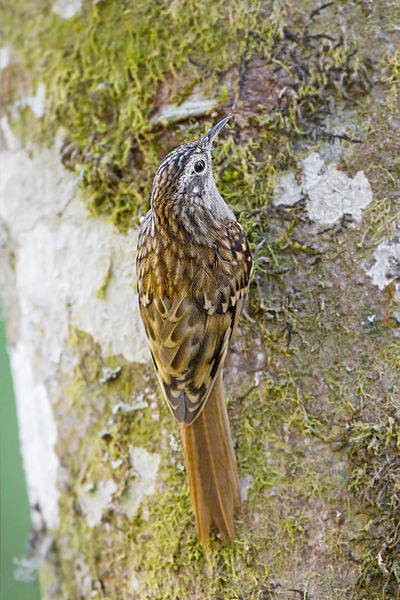
Brown-throated Treecreeper (Certhia discolor) ©WikiC

Brown-throated Treecreeper (Certhia discolor) ©WikiC
Brown-throated Treecreeper (Certhia discolor) ©WikiC

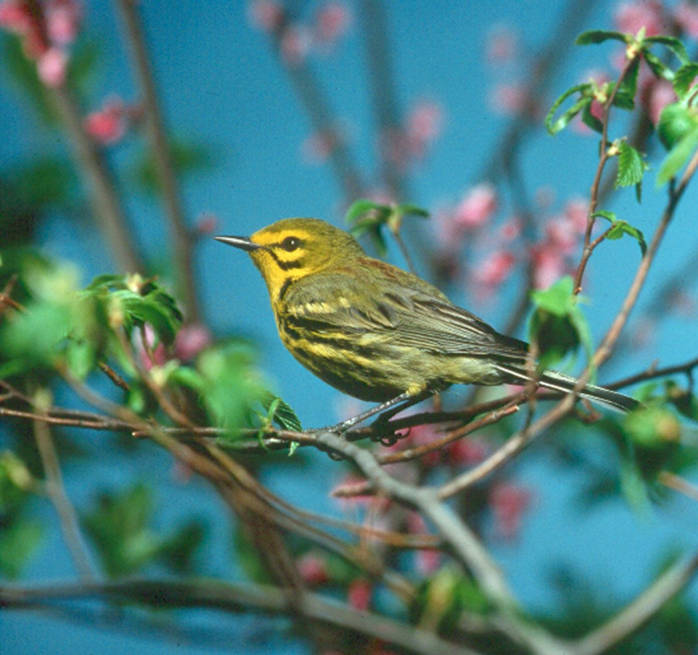
Prairie Warbler (Dendroica discolor) ©USFWS

Prairie Warbler (Dendroica discolor) ©USFWS

Prairie Warbler (Dendroica discolor) ©WikiC – Video IBC
____ (Dendroica discolor discolor) None

Subspecies with “discolor”:

Light-crowned Spinetail (Cranioleuca albiceps) – Video by Keith Blomerley
____ (Cranioleuca albiceps albiceps)
____ (Cranioleuca albiceps discolor) IBC
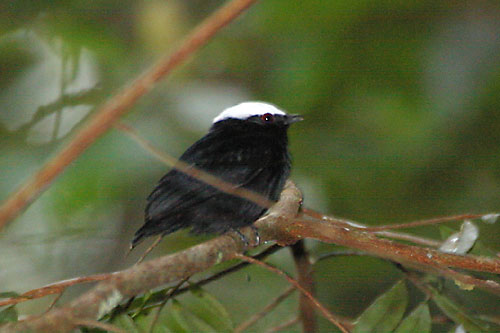
White-crowned Manakin (Dixiphia pipra) by ©AGrosset

White-crowned Manakin (Dixiphia pipra) by ©AGrosset

White-crowned Manakin (Dixiphia pipra)
____ (Dixiphia pipra discolor) None

 Little Shrikethrush (Colluricincla megarhyncha) ©WikiC

Little Shrikethrush (Colluricincla megarhyncha) ©WikiC

Little Shrikethrush (Colluricincla megarhyncha) ©WikiC
____ (Colluricincla megarhyncha discolor) None
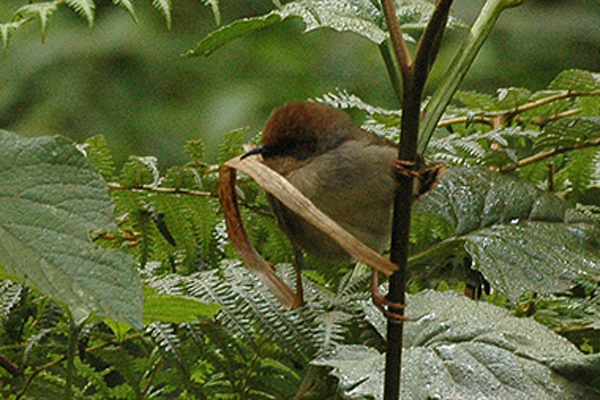
Chubb's Cisticola (Cisticola chubbi) by Tom Tarrant

Chubb’s Cisticola (Cisticola chubbi chubbi) by Tom Tarrant

Chubb’s Cisticola (Cisticola chubbi) by Tom Tarrant – Video IBC
____ (Cisticola chubbi discolor) None

Rusty Sparrow (Aimophila rufescens) IBC – Video IBC
____ (Aimophila rufescens discolor)

Red-throated Ant Tanager (Habia fuscicauda) by Michael Woodruff

Red-throated Ant Tanager (Habia fuscicauda) by Michael Woodruff

Red-throated Ant Tanager (Habia fuscicauda) by M Woodruff – Video IBC
____ (Habia fuscicauda discolor)

As you can see by most of these birds with “discolor” in their name, have a sort of “washed-out” look. Not a very distinct color. I am sure that the Lord created them this way to help them blend in with their surroundings. Protection is important. These thoughts sort of remind me of several verses:

Ye are the salt of the earth: but if the salt have lost his savour, wherewith shall it be salted? it is thenceforth good for nothing, but to be cast out, and to be trodden under foot of men. (Matthew 5:13 KJV)

And when the chief Shepherd shall appear, ye shall receive a crown of glory that fadeth not away. (1 Peter 5:4 KJV)

*

See: Birds of the World

The Gospel Message

*

Nuggets Plus – The Mirror’s Reflection

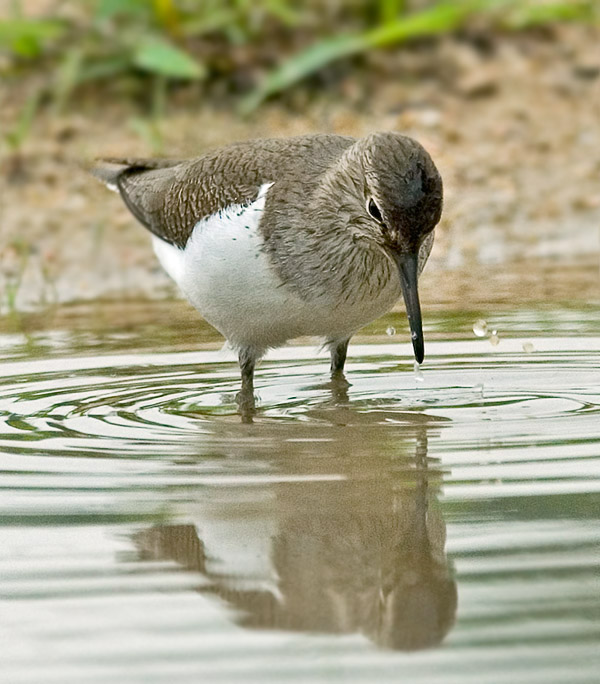
Common Sandpiper (Actitis hypoleucos) by W Kwong

Common Sandpiper (Actitis hypoleucos) by W Kwong

“A bird — most often but not always a beautiful male cardinal attaclks a window day after day and won’t stop. Invariably …people worry about it injuring itself. Rarely does a serious physical injury result but it is a possibility. Psychological injury is another matter: the bird is clearly frustrated.

Nuggets Plus

Nuggets Plus

This is territorial behavior. Male birds establish personal homelands, in the case of songbirds one to ten acres in size. Then they spend much of their time announcing their hegemony, inviting in willing female partners through song and coincidentally defending their yard against other males.

Ornithologists who study territorial behavior find that they can plot the borders of these small kingdoms with great accuracy. Males in adjacent bailiwicks know their mutual borders as though a fence separated them.

The window the bird is attacking serves as a mirror and the bird, not schooled in physics, doesn’t understand that its anatiomorphic image the other side of that glass isn’t real. (That technical word means the same size and shape but reversed like two gloves. Mirrors do that. The only time you see an exact copy of yourself is when you look into two mirrors that meet at right angles.)” (Edited) From the July 7, 2003 issue of The Buffalo News

We look in the mirror to check our appearance.

  • What do we observe?
  • As a Christian, are we seeing a new creation or
  • Do we still look like we did before accepting the Lord?

For if anyone is a hearer of the word and not a doer, he is like a man observing his natural face in a mirror; for he observes himself, goes away, and immediately forgets what kind of man he was. But he who looks into the perfect law of liberty and continues in it, and is not a forgetful hearer but a doer of the work, this one will be blessed in what he does.
(James 1:23-25 NKJV)

Have a Blessed Day!

*

See also: Mirror Test on Magpies

Personally, I see a very creative Creator at work here, not convergent evolution.

*

More Nuggets Plus

*


Birds of the World – Concolor Birds

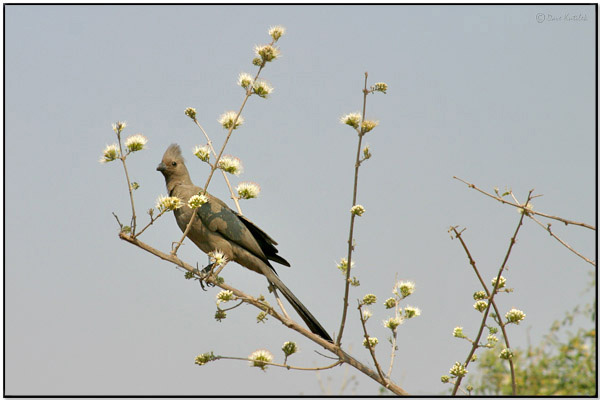
Grey Go-away-bird (Corythaixoides concolor) by Daves BirdingPix

Grey Go-away-bird (Corythaixoides concolor) by Daves BirdingPix

While working on the new updates for the IOC 2.10 Version, I kept noticing the word “color” in the scientific names as I sorted and resorted the Excel spreadsheet. This is a first of the “color” articles. There are bicolor, tricolor, unicolor, quadricolor, versicolor, decolor, sitticolor, nocticolor, etc. Those will come later. For now, let’s see what the “concolor” birds are.

According to the Free Dictionary, “concolor” means:

Con´col`or
a. 1. Of the same color; of uniform color.
Webster’s Revised Unabridged Dictionary, published 1913 by C. & G. Merriam Co.

Species and their subspecies with “concolor”:

Sooty Falcon (Falco concolor) ©WikiC

Sooty Falcon (Falco concolor) ©WikiC

Sooty Falcon (Falco concolor)

Uniform Crake (Amaurolimnas concolor) IBC
____ (Amaurolimnas concolor concolor †)

Grey Go-away-bird (Corythaixoides concolor) See Above – Video IBC
____ (Corythaixoides concolor concolor)

Dusky Crag Martin (Ptyonoprogne concolor) ©WikiC

Dusky Crag Martin (Ptyonoprogne concolor) ©WikiC

Dusky Crag Martin (Ptyonoprogne concolor) IBC
____ (Ptyonoprogne concolor concolor) IBC

Grey Longbill (Macrosphenus concolor) – Video IBC

Nilgiri Flowerpecker (Dicaeum concolor) ©WikiC

Nilgiri Flowerpecker (Dicaeum concolor) ©WikiC

Nilgiri Flowerpecker (Dicaeum concolor) IBC

Sao Tome Grosbeak (Neospiza concolor) IBC

Blue Seedeater (Amaurospiza concolor) IBC
____ (Amaurospiza concolor concolor)

Subspecies with “concolor”:

Amazonian Barred Woodcreeper (Dendrocolaptes certhia) by Kent Nickell

Amazonian Barred Woodcreeper (Dendrocolaptes certhia) by Kent Nickell

Amazonian Barred Woodcreeper (Dendrocolaptes certhia)
____ (Dendrocolaptes certhia concolor) – Video IBC

Unicolored Jay (Aphelocoma unicolor)
____ (Aphelocoma unicolor concolor) – Video IBC
____ (Aphelocoma unicolor unicolor)

Indochinese Green Magpie (Cissa hypoleuca concolor) ©WikiC

Indochinese Green Magpie (Cissa hypoleuca concolor) ©WikiC

Indochinese Green Magpie (Cissa hypoleuca)
____ (Cissa hypoleuca concolor)

Black Bulbul (Hypsipetes leucocephalus) WikiC

Black Bulbul (Hypsipetes leucocephalus) WikiC

Black Bulbul (Hypsipetes leucocephalus)
____ (Hypsipetes leucocephalus concolor)

Yellow-bellied Bush Warbler (Cettia acanthizoides)
____ (Cettia acanthizoides concolor) IBC

Singing Cisticola (Cisticola cantans) juvenile ©WikiC

Singing Cisticola (Cisticola cantans) juvenile ©WikiC

Singing Cisticola (Cisticola cantans) IBC
____ (Cisticola cantans concolor)

Plain Laughingthrush (Garrulax davidi)
____ (Garrulax davidi concolor)

Grey-breasted Spiderhunter (Arachnothera modesta) IBC – Video WikiC
____ (Arachnothera modesta concolor)

Red-collared Widowbird (Euplectes ardens)
____ (Euplectes ardens concolor) – Video IBC

For every beast of the woodland is mine, and the cattle on a thousand hills. I see all the birds of the mountains, and the beasts of the field are mine. If I had need of food, I would not give you word of it; for the earth is mine and all its wealth. (Psalms 50:10-12 BBE)

Other than the Indochinese Green Magpie, the “concolor” makes sense in that the birds are pretty well just plain birds with very little color variation. As the definition above said they are of the same or uniform color. Even though we may think these “concolor” birds are a bit dull or plain, their Creator knows all about them and cares for them. How about us?

Look at the birds of the air, for they neither sow nor reap nor gather into barns; yet your heavenly Father feeds them. Are you not of more value than they? (Matthew 6:26 NKJV)

*
Birds of the World

Update to the IOC 2.10 Version Completed

Hen (Northern) Harrier (Circus cyaneus) by J Fenton

Hen (Northern) Harrier (Circus cyaneus) by J Fenton

On October 18, 2011, the IOC released the Version 2.10 list of World Bird Names. I have been busy behind the scene again updating all the Birds of the World pages here to reflect that change. It is now complete.

The IOC World Bird List 2.10 contains 10,466 species classified in 40 Orders, 233 Families (including 5 Incertae Sedis) and 2234 Genera. They added 18 species, changed the name of 23 birds and made 28 changes to the taxonomy.

The birds, mostly from splits, added were:

Sira Curassow (Pauxi koepckeae)

Northern Harrier (Circus hudsonius)

Cape Verde Buzzard (Buteo bannermani)

Oberholser’s Fruit Dove (Ptilinopus epius)

Sula Fruit Dove Ptilinopus mangoliensis

Everett’s Scops Owl Otus everetti

Negros Scops Owl (Otus nigrorum)

Mexican Barred Owl (Strix sartorii)

Salim Ali’s Swift (Apus salimalii)

Blyth’s Swift (Apus leuconyx)

Cook’s Swift (Apus cooki)

Magdalena Antbird Myrmeciza palliata

Urrao Antpitta (Grallaria urraoensis)

Tablas Drongo (Dicrurus menagei)

Moheli Bulbul (Hypsipetes moheliensis)

Saipan Reed Warbler (Acrocephalus hiwae)

Pagan Reed Warbler (Acrocephalus yamashinae)

Bornean Spiderhunter (Arachnothera everetti )

The Northern Harrier – Hen Harrier above is one of those splits. When J Fenton took the photo it was called a Northern Harrier (Circus cyaneus). Now the Hen Harrier has taken the Circus cyaneus Scientific name and the subspecies (Circus hudsonius) is now the Northern Harrier (Circus hudsonius). Confused? Don’t feel bad. I have no idea whether that photo is of a Hen or Northern Harrier. Which ever it is, Jim or James took a  great photo of a Hen or Northern Harrier. 

Such is the naming of the birds today. I have to update my pages every time the IOC releases another Version. As I have said many times on this blog, Adam had it a lot easier and got “first dibs” at naming them after their Creator presented them to Adam.

Out of the ground the LORD God formed every beast of the field and every bird of the air, and brought them to Adam to see what he would call them. And whatever Adam called each living creature, that was its name. So Adam gave names to all cattle, to the birds of the air, and to every beast of the field. But for Adam there was not found a helper comparable to him. (Genesis 2:19-20 NKJV)

Barking Boobook (Ninox connivens) by Ian

Barking Owl (Barking Boobook) (Ninox connivens) by Ian

English Names Updates for IOC Version 2.10

Previous Name               Scientific Name         New Name

Northern Harrier – Circus cyaneus – Hen Harrier
Grey-hooded Gull – Chroicocephalus cirrocephalus – Grey-headed Gull
Maroon-chinned Fruit Dove – Ptilinopus subgularis – Banggai Fruit Dove
Barred Owl – Strix varia – Northern Barred Owl
Rufous Boobook – Ninox rufa – Rufous Owl
Powerful Boobook – Ninox strenua – Powerful Owl
Barking Boobook – Ninox connivens – Barking Owl
Donaldson-Smith’s Nightjar – Caprimulgus donaldsoni – Donaldson Smith’s Nightjar
Fork-tailed Swift – Apus pacificus – Pacific Swift
Himalayan Goldenback – Dinopium shorii – Himalayan Flameback
Common Goldenback – Dinopium javanense – Common Flameback
Lesser Goldenback – Dinopium benghalense – Black-rumped Flameback
Greater Goldenback – Chrysocolaptes lucidus – Greater Flameback
Crimson-backed Goldenback – Chrysocolaptes stricklandi – Crimson-backed Flameback
Somali Boubou – Laniarius (erlangeri) nigerrimus – Black Boubou
Stresemann’s Bush Crow – Zavattariornis stresemanni – Stresemann’s Bushcrow
Cricket Longtail – Spiloptila clamans – Cricket Warbler
Comoros Bulbul – Hypsipetes parvirostris – Grand Comoro Bulbul
Donaldson-Smith’s Sparrow-Weaver – Plocepasser donaldsoni – Donaldson Smith’s Sparrow-Weaver
Quail-Finch – Ortygospiza – 3 species Quailfinch
Colombian Brush Finch – Arremon basilicus – Sierra Nevada Brush Finch
Phelps’s Brush Finch – Arremon perijanus – Perija Brush Finch
Buffy-flanked Brush Finch – Arremon phaeopleurus – Caracas Brush Finch
Venezuelan Brush Finch – Arremon phygas – Paria Brush Finch

The Birds of the World are all listed here according to the IOC Version 2.10. You can find the following helps to help locate these birds:
Indexes

Orders

Families
Families – Alphabetical (Scientific)
Families – Alphabetical (English)
Families – Taxonomic (Scientific – English)
Families – Taxonomic (English – Scientific)

Species 
First Name of Bird
Last Name of Bird

(Tip* – Use Control+F on your keyboard to use Find or Search when looking for a specific bird in the lists.)

*

Interesting Things – The Weaver Bird

Lesser Masked Weaver (Ploceus intermedius) by Bob-Nan

Lesser Masked Weaver (Ploceus intermedius) by Bob-Nan

And God blessed them, and God said unto them, Be fruitful, and multiply, and replenish the earth, and subdue it: and have dominion over the fish of the sea, and over the fowl of the air, and over every living thing that moveth upon the earth. (Genesis 1:28)

Intelligence – as much as is needed and no more – is generously found throughout the creation. So we cannot say that intelligence alone makes humans special.

Consider the weaverbird. The weaverbird nest consists of woven strips of fiber and grass. Using beak and feet, the male weaverbird uses both loops and knots to weave his hanging nest. Then the nest must be inspected by a prospective mate. If she doesn’t like the nest’s construction, she will turn down the hopeful mate. The male must then tear down his work and start over. Some males have been observed constructing and tearing down their nests two dozen times before finding a prospective mate who is satisfied with his work. Some weaverbirds actually build huge cities of nests protected by a woven roof. One roof over a weaverbird city was 15 feet across!

SmileyCentral.com

Human intelligence spans much more than animal intelligence. However, what sets us apart from animals is the fact that our Creator made us to have a special relationship with Him. And even when Adam and Eve placed their will above God’s Word, He still loved us enough to pay the highest price to restore us to Himself. Jesus Christ lived in perfect obedience to God for us and then suffered the penalty of our disobedience against God. In His resurrection from the dead, all those who embrace Christ in faith receive the promise of being made new creations again – beginning right here in this life! That’s the wide gulf between humans and animals!

Prayer:
Dear Father, I thank You that You have given me being and life, and that when I was lost in sin, You still sought me out with Your gospel. Help me to truly live as Your new creation in Christ. For His sake. Amen.
Notes:
Science Digest, Aug. 1983. p. 73.

©Creation Moments 2011


Lee’s Addition:

Thought you might enjoy watching the weaver birds at work. Most of the Weaver Birds belong to the Ploceidae – Weavers, Widowbirds Family. Some of the Old World Sparrows – Passeridae Family have Weavers.
*

*

Wordless Birds

*

Birds of the World – Vermilion Cardinal

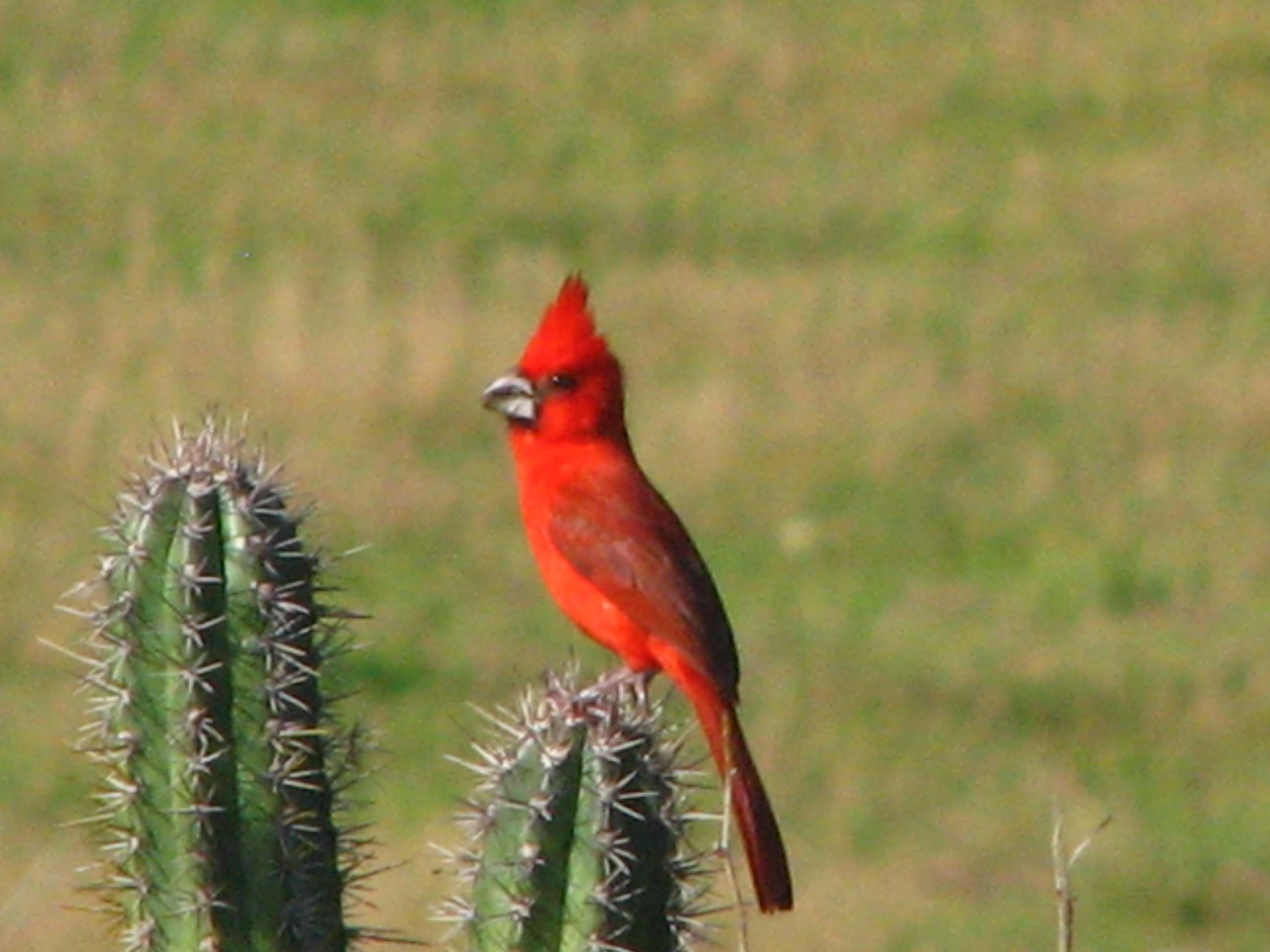
Vermilion Cardinal (Cardinalis phoeniceus) ©WikiC

Vermilion Cardinal (Cardinalis phoeniceus) ©WikiC

Why is Your apparel red, And Your garments like one who treads in the winepress? (Isaiah 63:2 NKJV)

The Cardinalis genus of the Cardinalidae – Grosbeaks, Saltators & Allies Family includes three species. Oswaldtanager of YouTube caught a great video of the Vermilion Cardinal (Cardinalis phoeniceus) and I wanted to share it. These are only found in  Colombia and Venezuela.

*

*

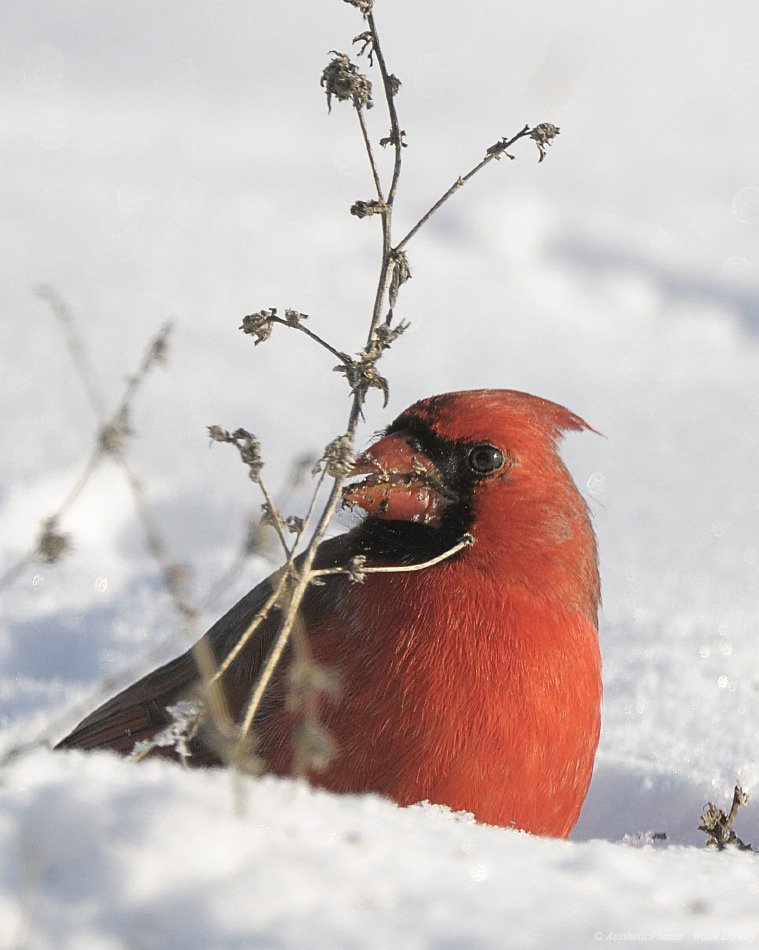
Here in the United States, we get to see the Northern Cardinal (Cardinalis cardinalis)

Northern Cardinal by Aestheticphotos

Northern Cardinal (Cardinalis cardinalis) by Aestheticphotos

and the Pyrrhuloxia (Cardinalis sinuatus). These are the other two genus members.

Pyrrhuloxia (Cardinalis sinuatus) ©WikiC

Pyrrhuloxia (Cardinalis sinuatus) ©WikiC

These are robust, seed-eating birds with strong bills. They are typically associated with open woodland. The sexes usually have distinctive appearances; the family is named for the red plumage (colored cardinal like the color of a Catholic cardinal’s vestments) of males of the type species, the Northern Cardinal.

The Cardinals or Cardinalidae are a family of passerine birds found in North and South America. The South American cardinals in the genus Paroaria are placed in another family, the Emberizidae.

Paroaria
Red-crested Cardinal (Paroaria coronata) by DavesBP – Video
Red-cowled Cardinal (Paroaria dominicana)– Video 
Red-capped Cardinal (Paroaria gularis) by DavesBP-Video by Keith
Masked Cardinal (Paroaria nigrogenis)
Crimson-fronted Cardinal (Paroaria baeri)
Yellow-billed Cardinal (Paroaria capitata) – Video

And they stripped Him and put a scarlet robe on Him. (Matthew 27:28 NKJV)

See:

Birds of the World

*

Nuggets Plus – Digestion and Meditation

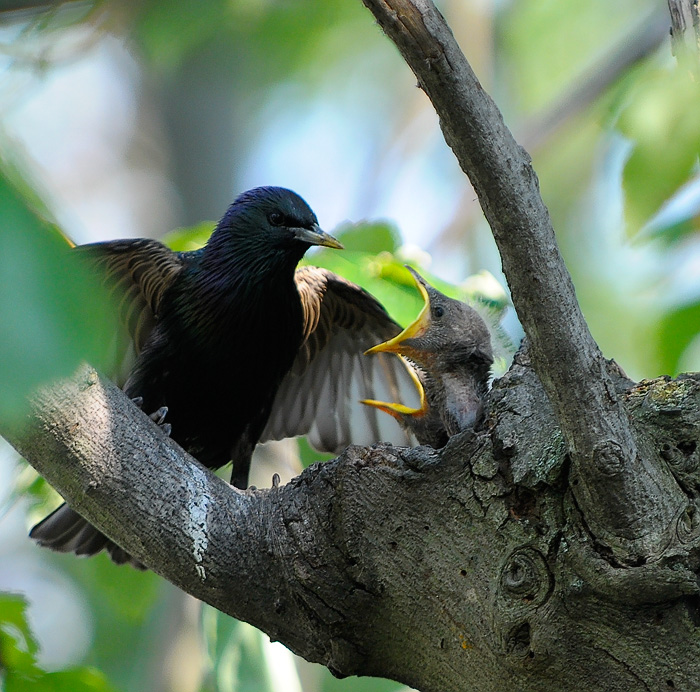
Common Starling (Sturnus vulgaris) at Nest by Anthony747

Common Starling (Sturnus vulgaris) at Nest by Anthony747

A crop (or croup sometimes called a craw) is a thin-walled expanded portion of the alimentary tract used for the storage of food prior to digestion that is found in many animals, including gastropods, earthworms, leeches, insects, birds, and even some dinosaurs.

Nuggets Plus

Nuggets Plus

As with most other organisms that have a crop, the crop is used to temporarily store food. Not all birds have a crop. In adult doves and pigeons, the crop can produce crop milk to feed newly hatched birds.

Scavenging birds, such as vultures, will gorge themselves when prey is abundant, causing their crop to bulge. They subsequently sit, sleepy or half torpid, to digest their food. Most raptors have one; like falcons, hawks, eagles and vultures but owls do not.

Cows eat grasses and then spend time digesting their food. (See Video)

When we read God’s Word, do we digest it and meditate on what we have read?

I rejoice at thy word, as one that findeth great spoil. (Psalms 119:162 KJV)
Thy words were found, and I did eat them; and thy word was unto me the joy and rejoicing of mine heart: for I am called by thy name, O LORD God of hosts. (Jeremiah 15:16 KJV)
Let the words of my mouth, and the meditation of my heart, be acceptable in thy sight, O LORD, my strength, and my redeemer. (Psalms 19:14 KJV)

*

Interesting Things – Tool-Using Animals

SmileyCentral.com

So God created man in his [own] image, in the image of God created he him; male and female created he them. (Genesis 1:27)

Evolution devalues humanity. It tries to find the most unflattering way to describe human beings to try to counter the Bible’s claim that they were created in God’s image.

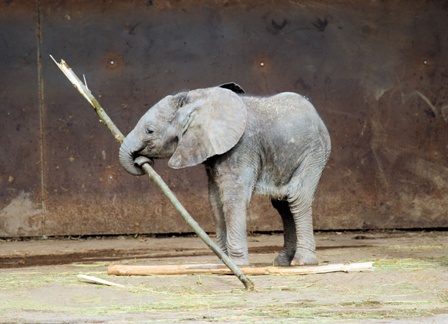
Baby Elephant with Tool ©©

Baby Elephant with Tool ©©

For generations, evolutionists said that the humans’ use of tools was all that made them different from animals. Creationists who objected, saying there was obviously more of a difference than that, were ignored as unscientific. It wasn’t so long ago that evolutionists scoffed at creationists who showed them that there are animals who use tools – and, therefore, the evolutionists’ definition was wrong.

Elephants often take sticks in their trunks to scratch their backs. Galapagos Woodpecker Finch (edited) use cactus spines, held in their beaks, to probe insects out of cracks in trees.

Chimpanzees even use sticks as levers to move heavy objects. They also make tools out of sticks by shaping them to the right size to poke into termite nests. The stick full of termites they pull out of the nest offers them a tasty snack. West African chimps actually use stones as hammers to crack nuts. So today, evolutionists recognize that some animals not only use tools, but also make them! Only now they claim that animals who use tools prove their theory. Which only goes to show that evolution is not science that can be disproved. It is a faith that will be believed even when the facts contradict it. The facts say that there is an unbridgeable difference between humans and animals.

Prayer:
Lord, I thank You for making animals. I ask that You would help all who are working to teach Christian young people that they are Your creations and not glorified animals. Show me my part in filling this need. Amen.
Notes:
“Tool-wielding beasts.” Science Digest, Aug. 1983. p. 107.

Lee’s Addition:

*

* More Interesting Things

*

Birdwatching at Lake Morton – October 21, 2011

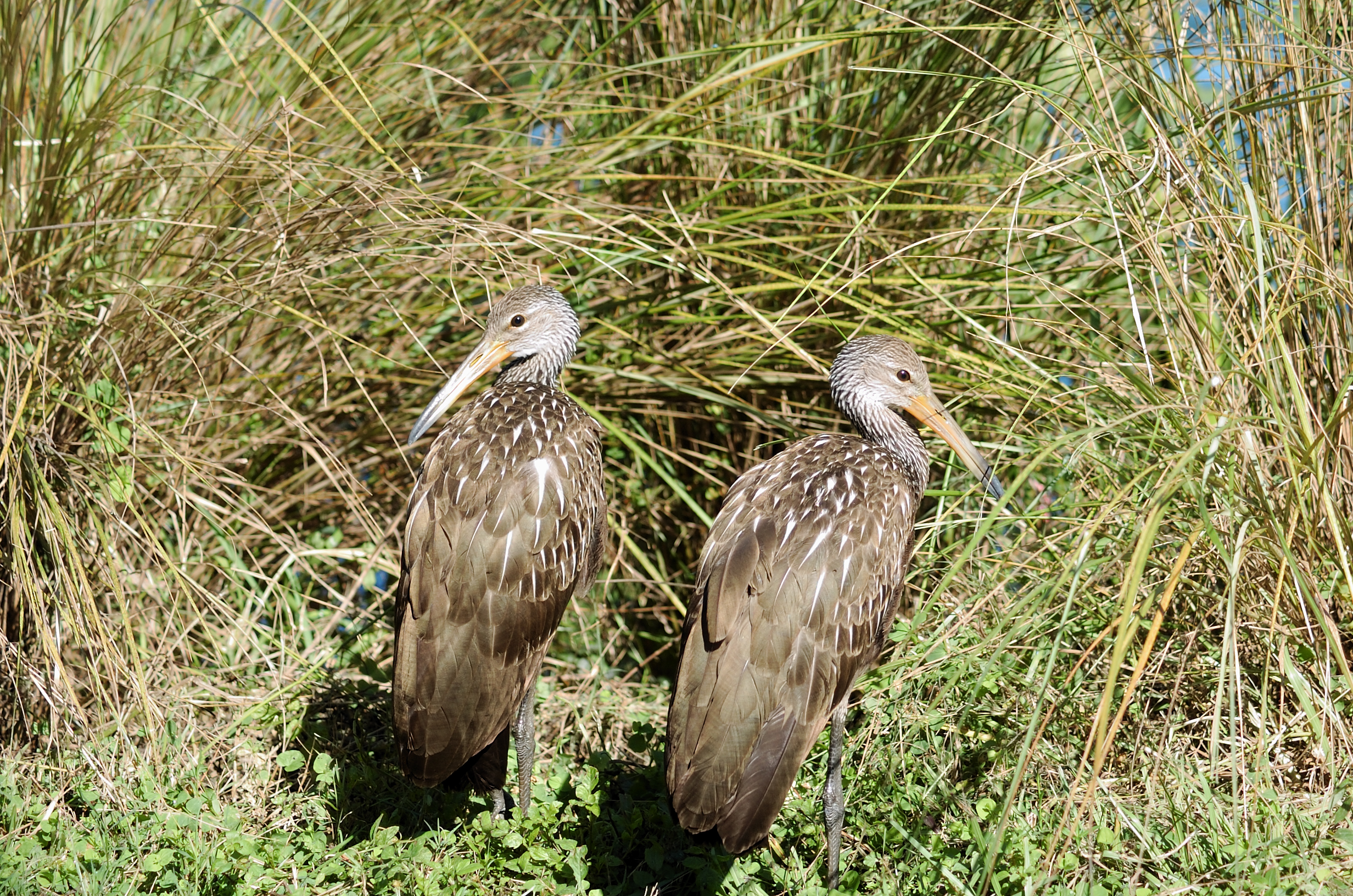
Limpkin (Aramus guarauna) Juveniles by Dan at Lake Morton

Limpkin (Aramus guarauna) by Dan at Lake Morton

Today Dan and I went by Lake Morton for just a short while. We were on our way to have lunch and do some shopping. It was a great day without a cloud in the sky. The temperature was a pleasant 63° (17.2º C).

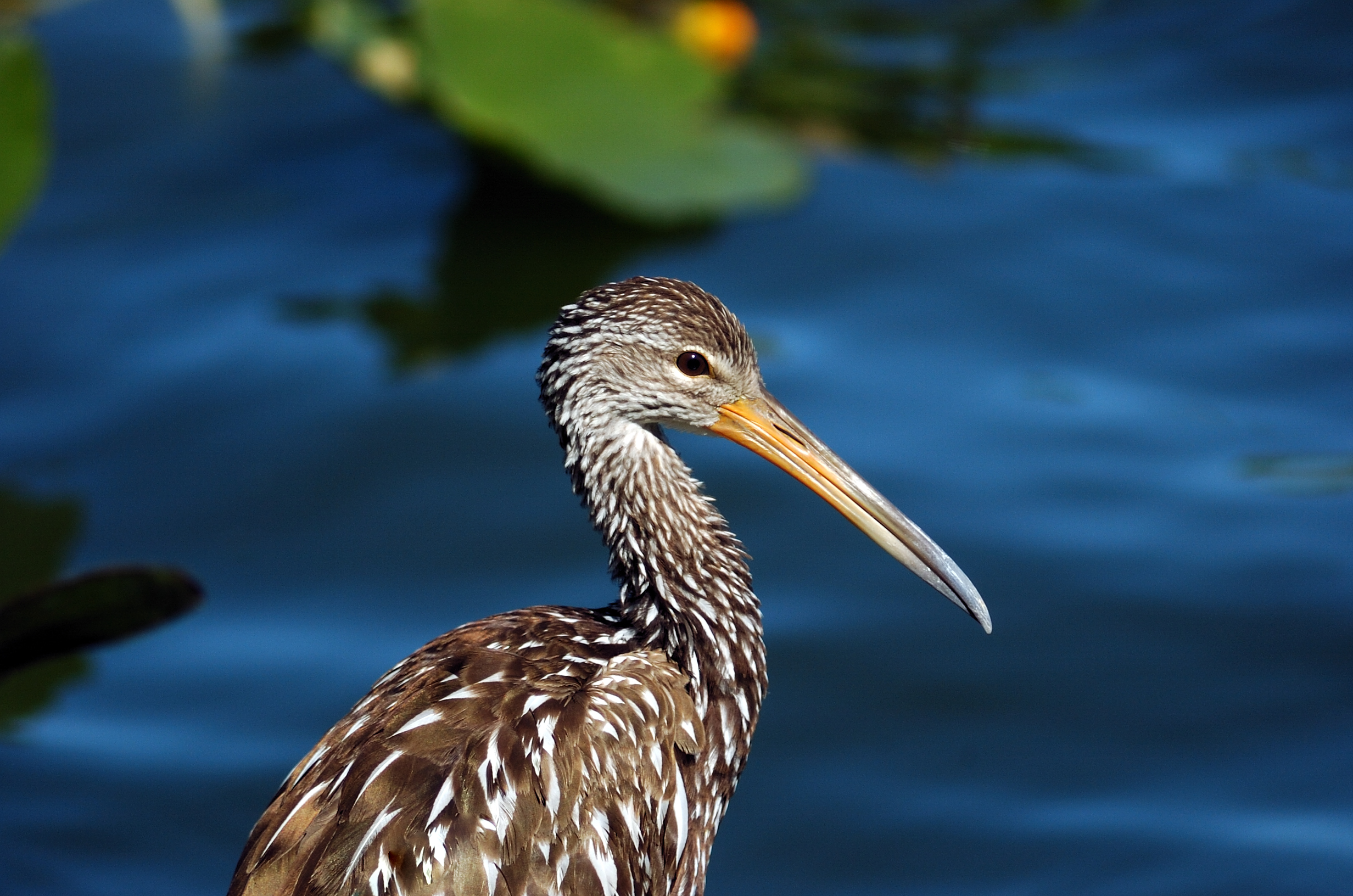
When we were last there, there were 5 young Limpkins and I want to see how they had grown. We spotted 4 of them sunning themselves. They have lost that fuzz on their heads and the spots are becoming quite distinguished. Dan took a great picture of one of them closeup.

Limpkin (Aramus guarauna) Juvenile by Dan at Lake Morton

Limpkin (Aramus guarauna) by Dan at Lake Morton

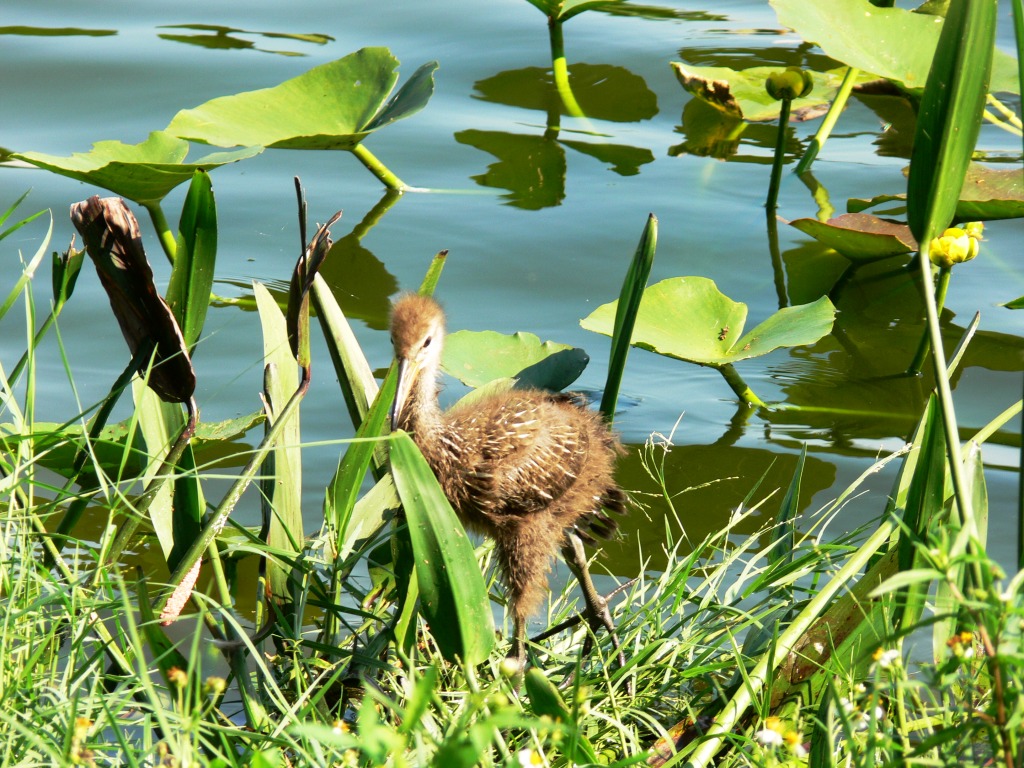
I can tell by their faces that they are still young. Here is a photo of one when it still had its fuzz.

Limpkin baby taken 9-12-11 by Lee

Limpkin (Aramus guarauna) baby taken 9-12-11 by Lee

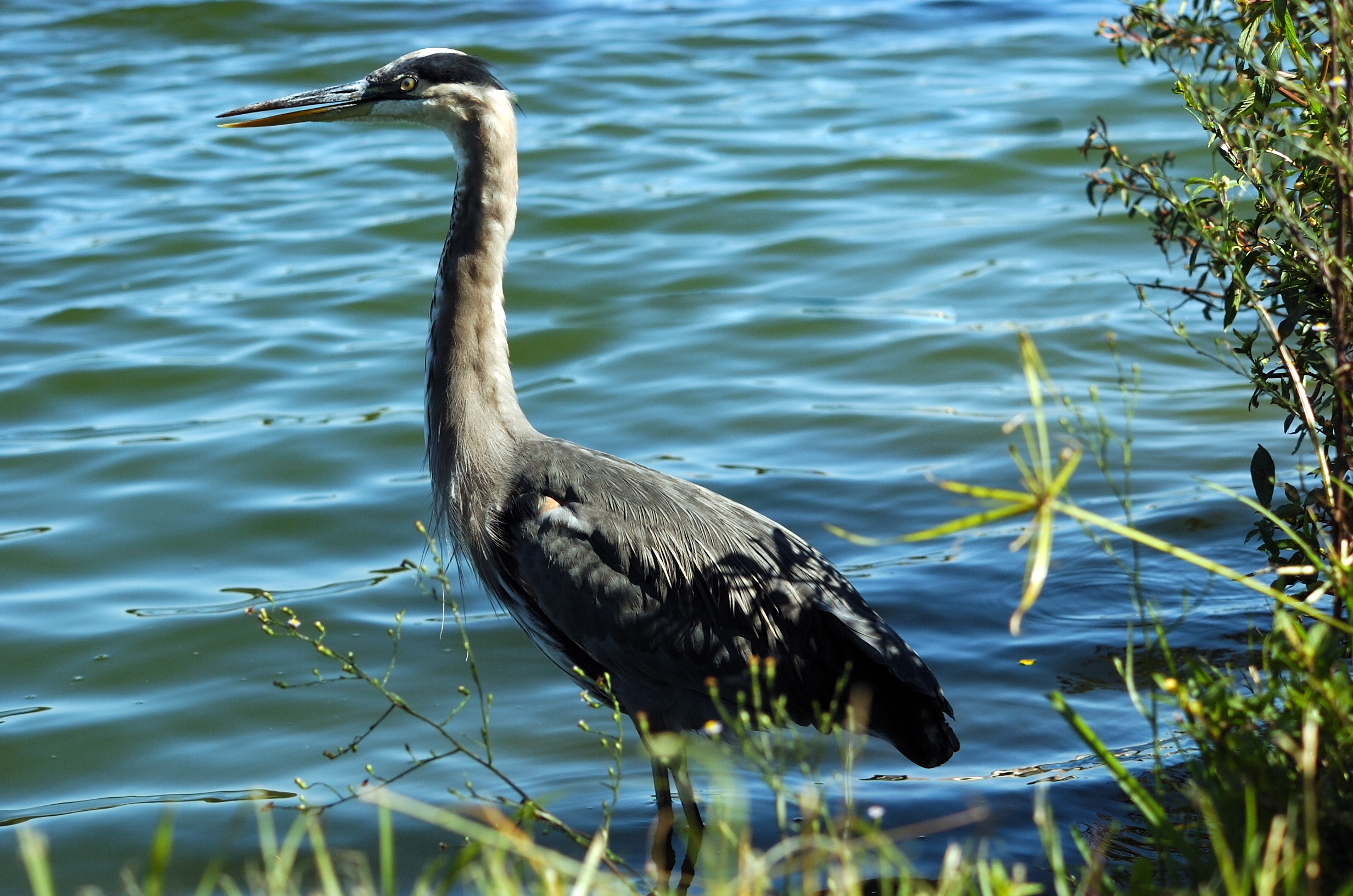
A Great Blue Heron decided to be friendly and came walking toward me while I was feeding some of the ducks. When I tossed him some food, he ate it and kept coming closer. I kept tossing it food and it kept coming closer. What a delight! If I were brave, I would have tried to hand feed him (or her). As I have said in other blogs, this is only one of two places we feed the birds in this area.

Great Blue Heron (Ardea herodias) by Dan at Lake Morton

Great Blue Heron (Ardea herodias) by Dan at Lake Morton

What did we see today? Besides the 4 Limpkin youngsters and the Great Blue Heron, we spotted Black and Turkey Vultures, a Great Egret, Anhingas, more Great Blue Herons and a Snowy Egret. Those were seen on the way to Lake Morton in Lakeland. At the lake we saw 15-20 Coots (they are back), 3 Wood Storks, 15-20 Mallards, 10 “Aflac” Ducks, Muscovy Ducks, a Great Egret, Laughing Gull, 7 Mute Swans, 2 Black Swans, Boat-tailed Grackle and 10 Ring-necked Ducks (they are back). Our winter visiting birds are finally returning.

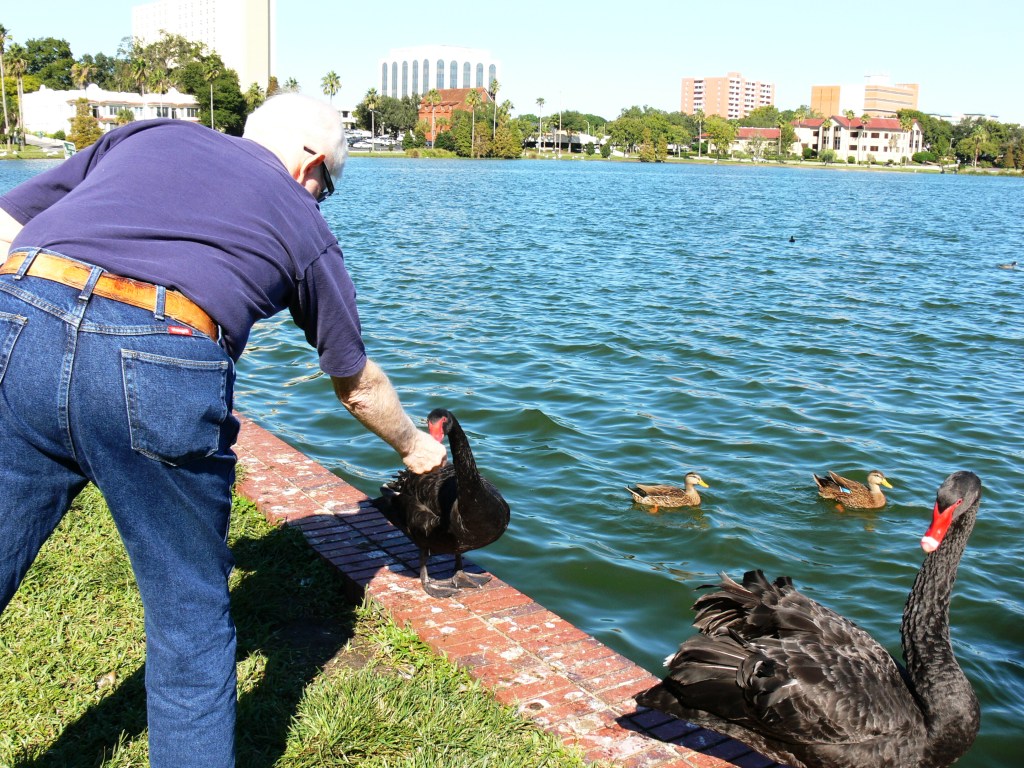
 Dan feeding a Black Swan at Lake Morton

Dan feeding a Black Swan at Lake Morton

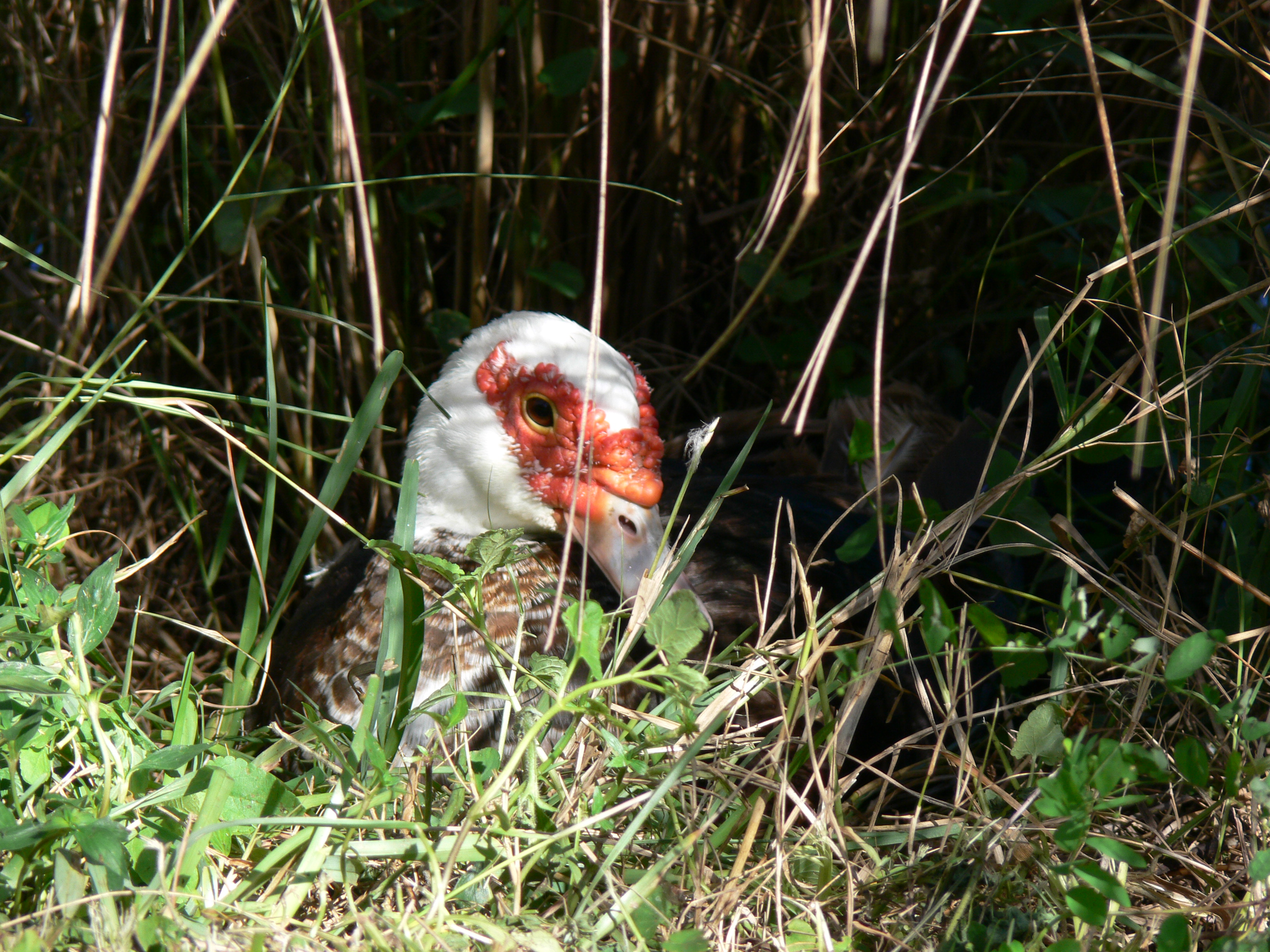
I caught Dan feeding one of the Black Swans. Then I found a Muscovy Duck sitting on a nest with the male standing guard in front. To me, they seem “not so pretty”, but the Lord created all the birds and I am sure His Eye is on the Muscovy as well as it is on the Sparrow.

Muscovy Duck (Cairina moschata)

Muscovy Duck on nest at Lake Morton by Lee

I know all the birds of the mountains, And the wild beasts of the field are Mine. (Psalms 50:11 NKJV)

What a perfect day for birding and even though we weren’t there long, the Lord let us see His Creation again, up close and enjoy them.

This was the LORD’s doing; It is marvelous in our eyes. This is the day the LORD has made; We will rejoice and be glad in it. (Psalms 118:23-24 NKJV)

*

Birds of the Bible – The Law Of The Birds

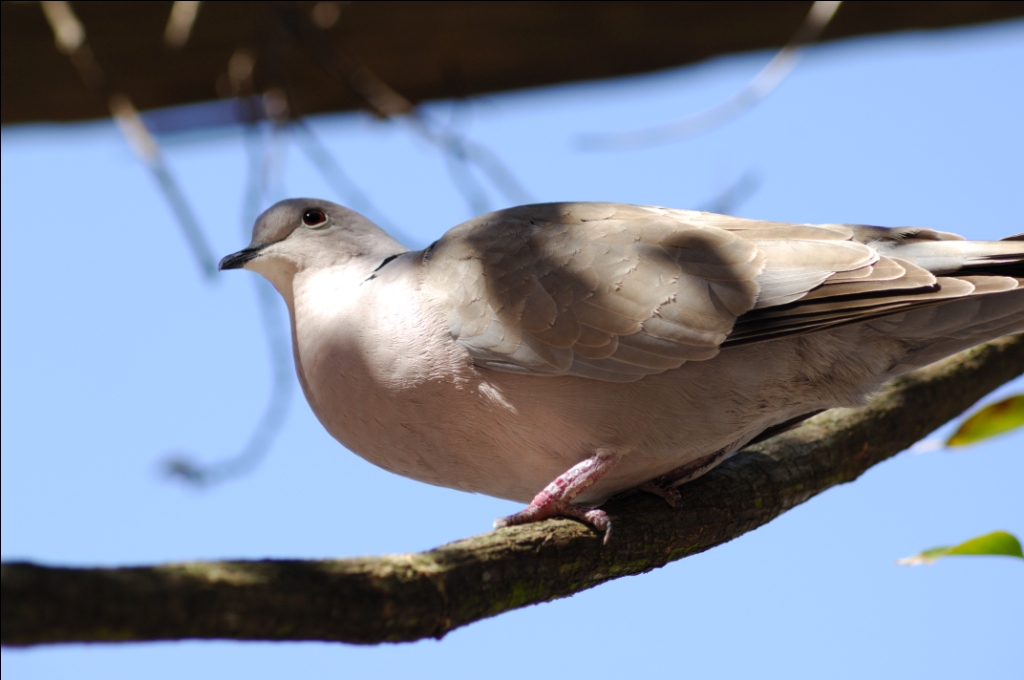
Eurasian Collared Dove (Streptopelia decaocto) by Dan

Eurasian Collared Dove (a “clean” bird) by Dan

This is the law of the animals and the birds and every living creature that moves in the waters, and of every creature that creeps on the earth, to distinguish between the unclean and the clean, and between the animal that may be eaten and the animal that may not be eaten. (Leviticus 11:46-47 NKJV)

The phrase “law of the animals and the birds” caught my eye while looking at Leviticus 11. We have written other articles on the “Clean and Unclean” birds in this chapter, but I like the way the verse is worded in the NKJV. See Clean vs Unclean and Deuteronomy 14:11-18 Visualized. In those articles the birds were named whether clean or unclean.

This “law of the birds” was given to the Israelites for instruction on which birds could be eaten and which were to be avoided as cuisine. But why were they selected and what significance does this have today for Christians? Here are some of the commentator’s remarks on this verse.

Long-eared Owl (Asio otus) by Derek

Long-eared Owl (an “unclean” bird) by Derek

Believer’s Bible Commentary – “In giving this law concerning clean and unclean creatures, God was teaching lessons concerning His holiness and the necessity for His people to be holy as well (vv. 44-47).
In Mark 7:18-19, the Lord Jesus declared all foods to be ceremonially clean. And Paul taught that no food should be refused if it is received with thanksgiving (1Tim_4:1-5). However, even that would not include foods that are contaminated, culturally unacceptable, or digestively disagreeable to a person.”

So we know it was to teach God’s holiness and for the people to be holy. Also stated by:

Bible Knowledge Commentary – c. Summary and theological conclusion (Lev 11:41-47)
“The whole set of food laws is summarized by the repetition of selected examples (Lev 11:41-43). As God’s people were to distinguish between clean and unclean animals, so God had distinguished between them and other nations. These food regulations were to serve as a perpetual reminder of the holiness of God and His grace in choosing Israel (Lev 11:45).”

Wild Turkey (Meleagris gallopavo) by Lee at LPZoo

Wild Turkey (a “clean” bird) by Lee at LPZoo

The practical applications for today are given in several of the commentaries such as:

Matthew Henry’s Condensed Commentary – “These laws seem to have been intended,
1. As a test of the people’s obedience, as Adam was forbidden to eat of the tree of knowledge; and to teach them self-denial, and the government of their appetites.
2. To keep the Israelites distinct from other nations. Many also of these forbidden animals were objects of superstition and idolatry to the heathen.
3. The people were taught to make distinctions between the holy and unholy in their companions and intimate connexions.
4. The law forbad, not only the eating of the unclean beasts, but the touching of them. Those who would be kept from any sin, must be careful to avoid all temptations to it, or coming near it. The exceptions are very minute, and all were designed to call forth constant care and exactness in their obedience; and to teach us to obey. Whilst we enjoy our Christian liberty, and are free from such burdensome observances, we must be careful not to abuse our liberty. For the Lord hath redeemed and called his people, that they may be holy, even as he is holy. We must come out, and be separate from the world; we must leave the company of the ungodly, and all needless connexions with those who are dead in sin; we must be zealous of good works devoted followers of God, and companions of his people.”

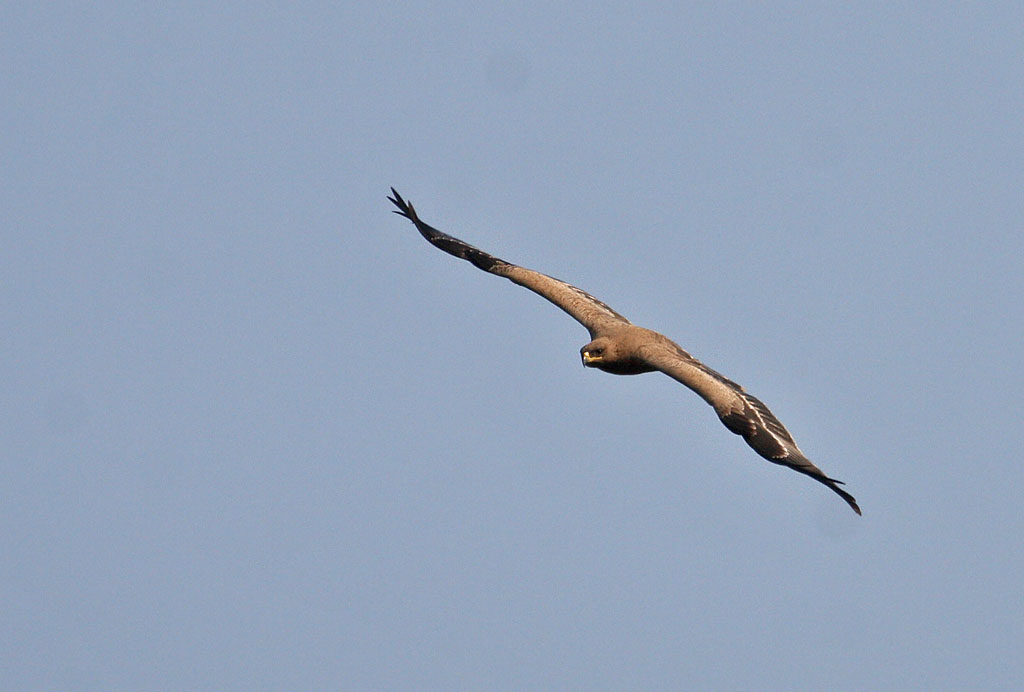
Steppe Eagle (Aquila nipalensis) by Peter Ericsson

Steppe Eagle (an “unclean” bird) by Peter Ericsson

Through The Bible With J Vernon McGee – CLASSIFICATION OF CLEAN AND UNCLEAN MADE BY A HOLY GOD
“It is God who makes the sharp distinction between the clean and the unclean. Holiness in little things is essential. This is the real test of God’s man. The acid test of any life of any of God’s people is this. God says, “I am your Lord. I am holy. Be ye holy.”
My friend, you must make the decision as to whether you are going to walk with God and for God in this contaminated world. This is the lesson for us from his chapter of the clean and the unclean.”

We are told in Scripture that the birds can teach us:

But now ask the beasts, and they will teach you; And the birds of the air, and they will tell you; (Job 12:7 NKJV)
Who teaches us more than the beasts of the earth, And makes us wiser than the birds of heaven? (Job 35:11 NKJV)

Maybe we should watch and observe things about them and also comprehend truths taught about them from the God who created them.

Whether it is pleasing or displeasing, we will obey the voice of the LORD our God to whom we send you, that it may be well with us when we obey the voice of the LORD our God.” (Jeremiah 42:6 NKJV)

*

Birds at the Ladies Retreat

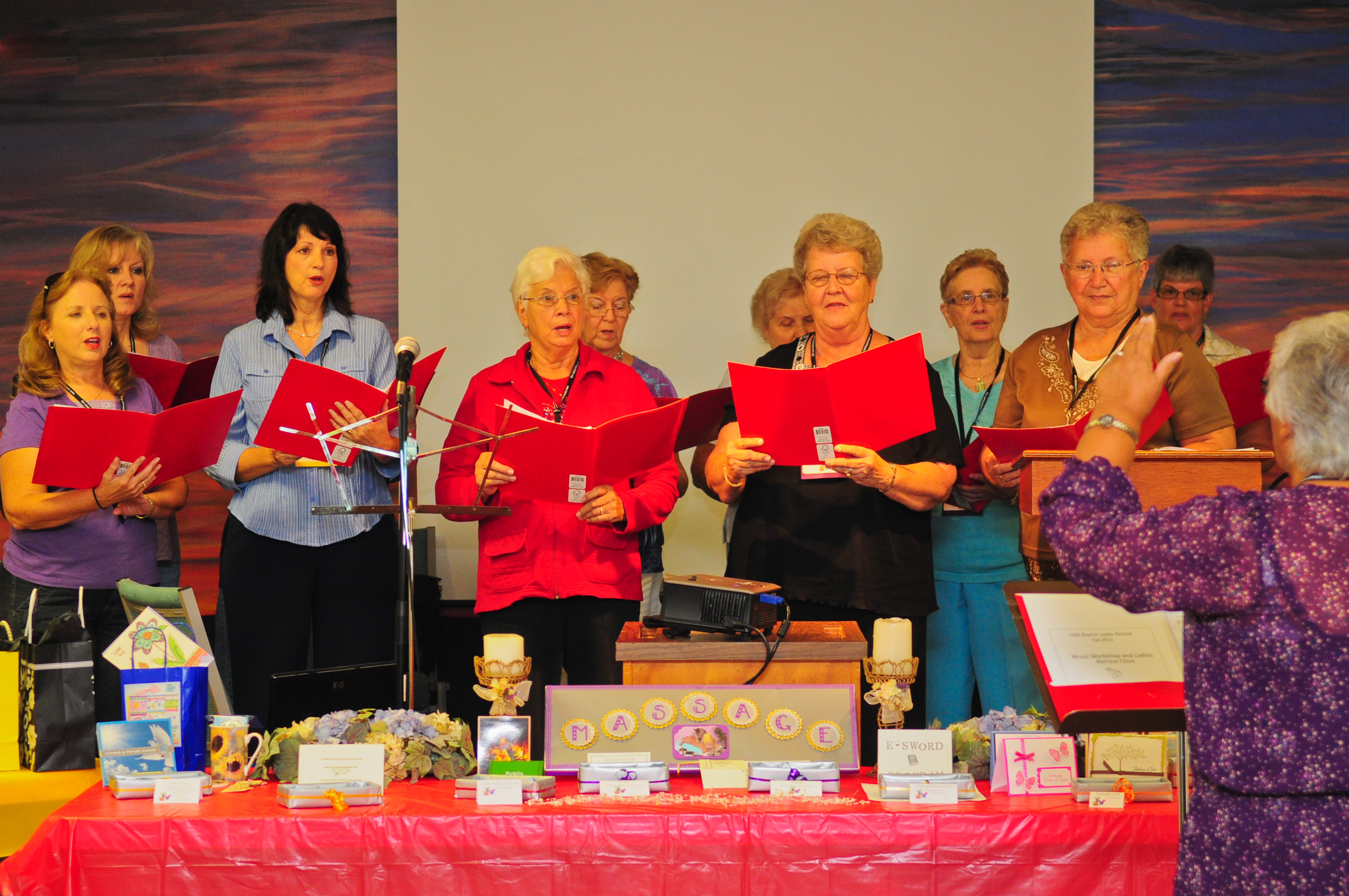
Singing - Broken and Spilled Out

Retreat Choir

We had our Ladies Retreat this last week-end. I got involved in it and became one of the coordinators. Jill, our pastor’s wife, was the other one. We have spent hours preparing for it over the last month or so. For me, I have had to depend on my other writers and an occasional article from me to keep this blog up. Now maybe we will get articles out a little more frequent.

Having then gifts differing according to the grace that is given to us, (Romans 12:6a KJV)

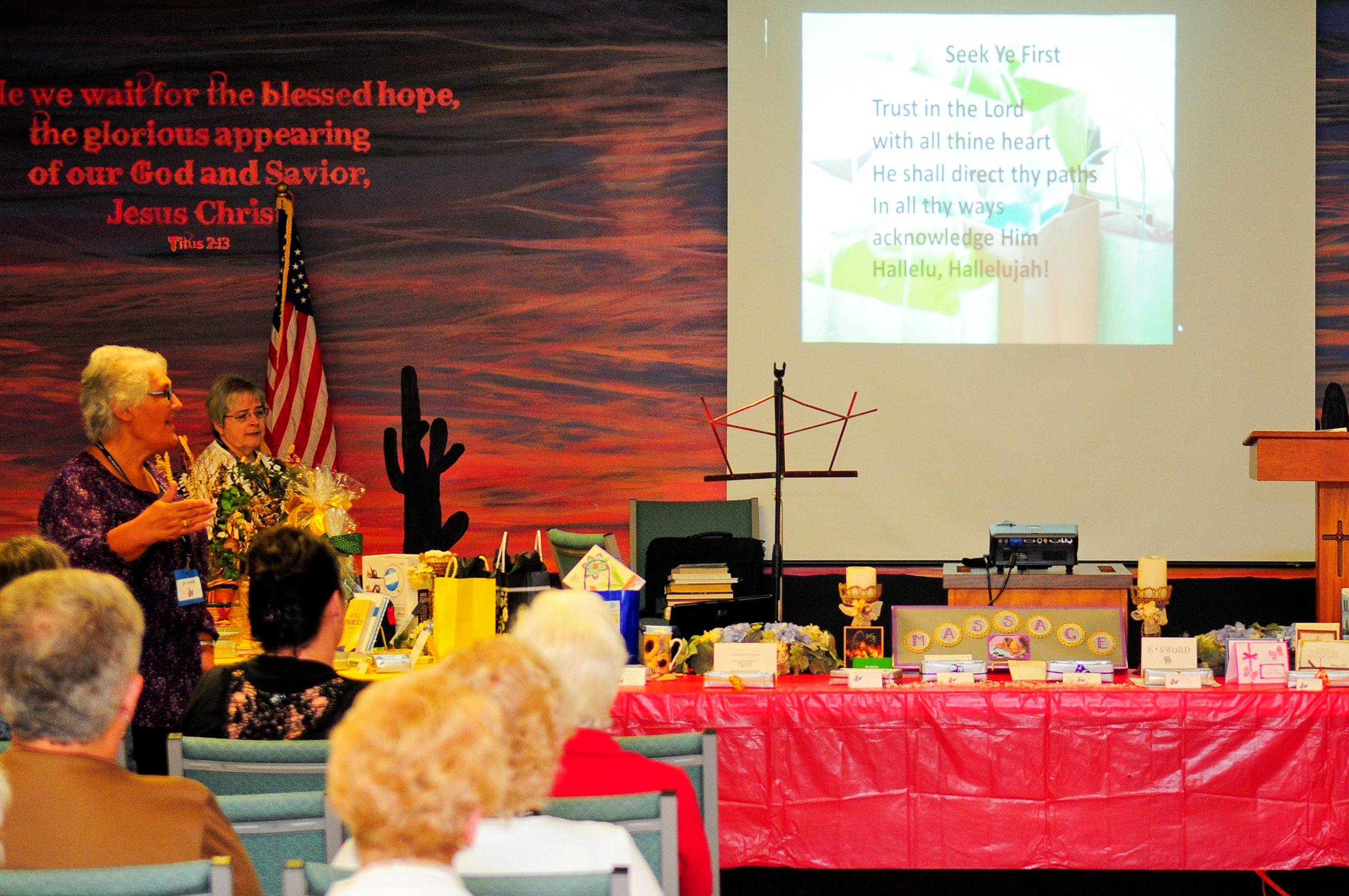
Our theme was “God Gives Good Gifts.” The retreat was Friday afternoon through late afternoon on Saturday and almost 80 ladies attended. The Lord blessed us with great weather (we had 6 inches the week-end before), lots of sweet fellowship, laughs, singing, testimonies, exercises, and challenges from His Word during three General Sessions.

There were workshops to choose from breadmaking, couponing, birdwatching (me), parenting, scrapbooking, card making, singing, Bible study with e-Sword (me), prayer journaling, organizing, how to handle trials, and make-up inside and out, all with a Christian emphasis. We have many gifted ladies in our church.

Ladies Retreat - Singing

Ladies Retreat - Singing

So how did birds show up at the Retreat? On Friday afternoon while not feeling well, I was told to go put my feet up for awhile and rest. I did, but my view from my lounge chair looked straight out at the lake. A Great Egret was fishing along the bank. Then, I taught a workshop on Saturday about Birdwatching. I shared birding tips and how and why to make lists. Binoculars were brought and we learned about them and how to properly adjust them to their eyes.

During my devotional on “Discover Your Gifts,” I had plenty of bird photos in my Powerpoint. They were all different and pointed out that as they are different, all of us are different, but the Lord uses those differences for His glory. They were challenged to find or discover their talents, gifts, and abilities. The other two devotionals by Jill and Lisa, our other speakers, challenged the ladies to “Develop”  and then to “Demonstrate” those gifts.

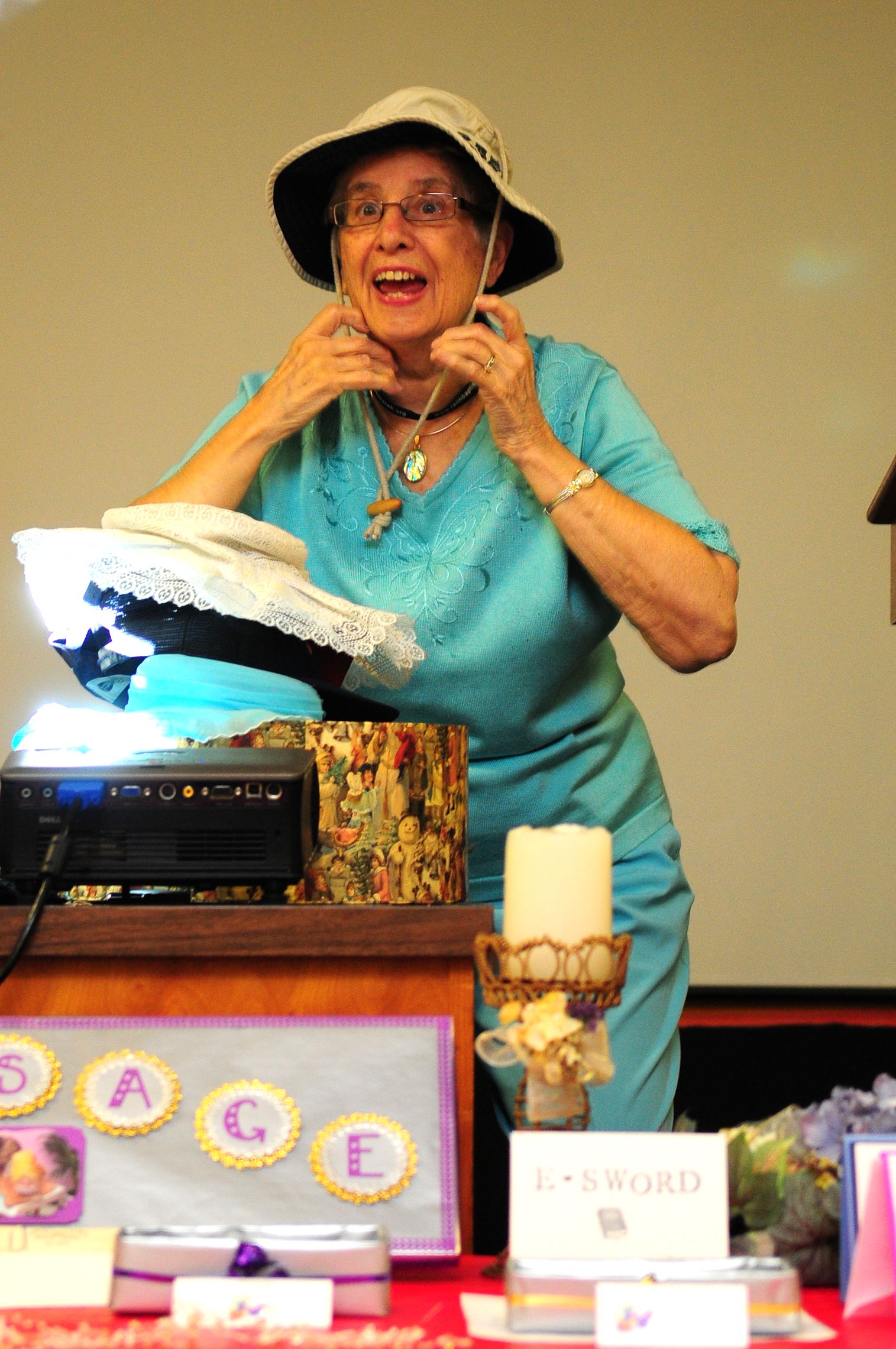
Ladies Retreat - Skit

Helen's - Too Many Hats

We had many others that talked about prayer, trials, gave testimonies, opportunities to serve, and even the skits left you with a challenge. The singing was sweet and the specials were fantastic. Kathy sang one of my favorites, “His Eye Is On The Sparrow,” just before my devotional.

It was a very good retreat, and even though I came home physically drained, my heart and spirit were totally filled up and over-flowing with blessings. God DOES Give GOOD Gifts.

Of course, the greatest gift of all:

For the wages of sin is death; but the gift of God is eternal life through Jesus Christ our Lord. (Romans 6:23 KJV)

More articles about the Retreat:

Article in the Fountain – Our Church Blog

Related Posts in the Fountain:

God Gives Good Gifts: A Ladies’ Retreat
Ladies’ Retreat – Workout Time & Break-Making Workshop
Ladies’ Retreat – Scrapbooking & Encouragement Through Card-Making
Ladies’ Retreat – Parenting & Prayer Journaling
Ladies’ Retreat – Couponing & Organization Workshops
Ladies’ Retreat – Joy in Trials & Singing Workshop
*

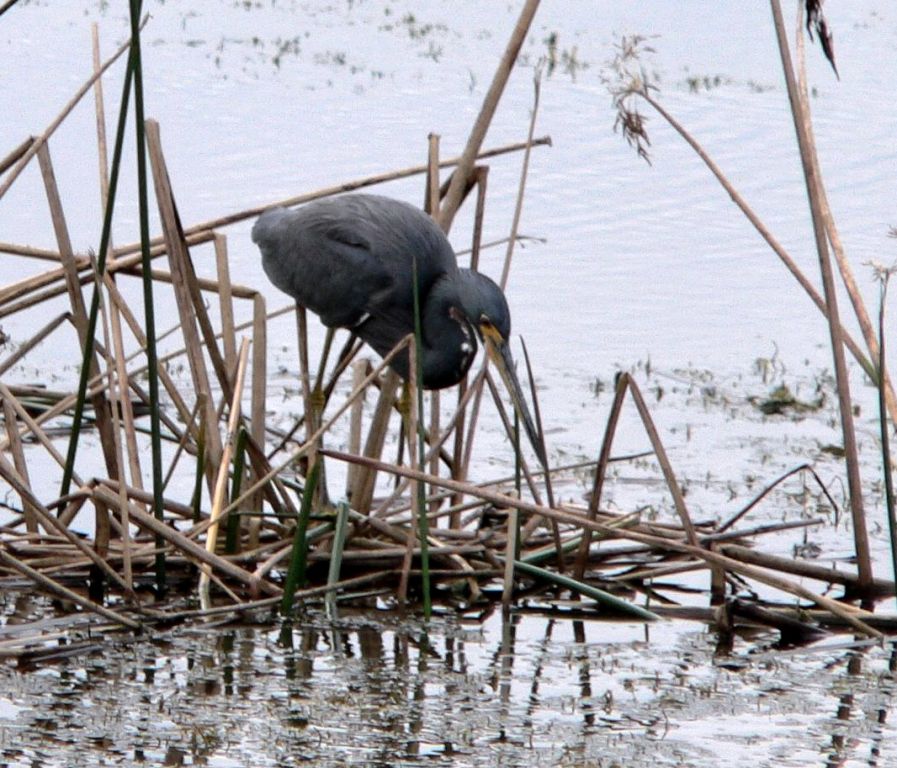
Nuggets Plus – Herons – Patiently Waiting

Heron Waiting For Lunch by Lee at Viera Wetlands

Heron Waiting For Lunch by Lee at Viera Wetlands

Nuggets Plus – Herons – Patiently Waiting ~ by Lee

Nuggets Plus

Nuggets Plus

The Heron family
Has very patient members.
They wait very still with
Their head and neck
Poised for action.
Then at the right time,
They grab their opportunity..

Are we as patient
As the Herons
Or do we run ahead of the Lord?

Wait on the LORD: be of good courage, and he shall strengthen thine heart: wait, I say, on the LORD.
(Psalms 27:14 KJV)

For more Nuggets Plus – Click Here

*