Background Sounds

Rufous-fronted Prinia (Prinia buchanani) by Nikhil D

Rufous-fronted Prinia (Prinia buchanani) by Nikhil D

We are trying something new. At the top of the sidebar there is now a place to click to listen to background sounds of birds as you view this blog. It can be turned on and off as you desire. If you were to watch a video or recording, the background sound can be stopped. Our goal is to change the recording periodically and as we can get permission for recordings.

As always, this is a work in progress. We would like your comments on this. Yes, No, or whatever. Let us know by leaving a comment.

Birds of the Bible – Leaving the Ark

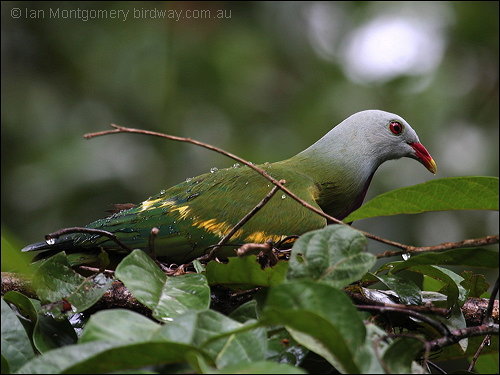
Wompoo Fruit-Dove (Ptilinopus magnificus) by Ian

Wompoo Fruit-Dove (Ptilinopus magnificus) by Ian

In my reading this week, I read something that I had overlooked before. We know that the animals, birds and all critters came to Noah two by two to be placed in the safety of the Ark.

And of every living thing of all flesh, two of every sort shalt thou bring into the ark, to keep them alive with thee; they shall be male and female. Of fowls after their kind, and of cattle after their kind, of every creeping thing of the earth after his kind, two of every sort shall come unto thee, to keep them alive. (Genesis 6:19-20 KJV)

We have written about that before in Birds of the Bible – Foundation #3 when the critters went in and Foundation #4 when they came off. What I discovered is that the attitudes or instincts of them changed when they came off.

Noah let the Raven out and it didn’t come back, but the dove did because it didn’t find a resting place for it’s feet.

But the dove found no place to set her foot, and she returned to him to the ark, for the waters were still on the face of the whole earth. So he put out his hand and took her and brought her into the ark with him. (Genesis 8:9 ESV)

Then 7 days later Noah let the dove out again and this time returned with an olive leaf.

He waited another seven days, and again he sent forth the dove out of the ark. And the dove came back to him in the evening, and behold, in her mouth was a freshly plucked olive leaf. So Noah knew that the waters had subsided from the earth. (Genesis 8:10-11 ESV)

Some commentators had this to say:

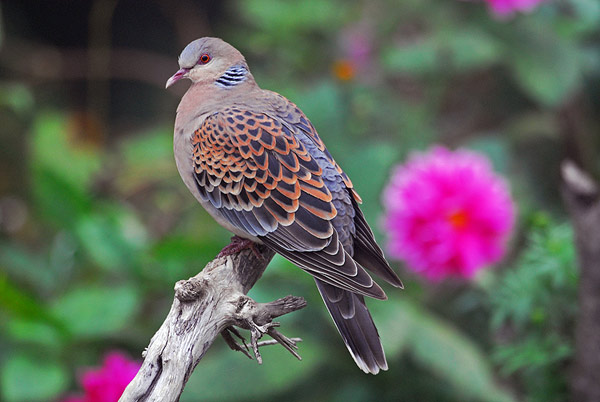
Oriental Turtle Dove (Streptopelia orientalis) by Nikhil

Oriental Turtle Dove (Streptopelia orientalis) by Nikhil

then he put forth his hand and took her, and pulled her in unto him into the ark: she hovered about it, and got near the window, which Noah opened and took her in; which may represent the gracious reception sensible souls meet with from Christ, who apply to him; he kindly embraces them, and they find room in his heart and affections, fullness of everything they want, and security from all danger.” (Gill)

“And as Noah put forth his hand, and took the dove, and pulled her in to him, into the ark, so Christ will graciously preserve, and help, and welcome, those that fly to him for rest.” (Matthew Henry)

What I noticed and believe is that the Dove did not fear Noah and allowed itself to be brought back in twice. The dove returned needing shelter, but also not wary of the humans on board. This lack of fear demonstrated by the dove may help explain why the animals, birds and other critters had no problem coming to Noah to be loaded on board the Ark in the first place. Of course, God brought them there, as we know, but the lack of fear may have made it easier for them to get them in.

Now, watch what happens in Genesis 9:1-3:

And God blessed Noah and his sons and said to them, “Be fruitful and multiply and fill the earth. The fear of you and the dread of you shall be upon every beast of the earth and upon every bird of the heavens, upon everything that creeps on the ground and all the fish of the sea. Into your hand they are delivered. Every moving thing that lives shall be food for you. And as I gave you the green plants, I give you everything. (Genesis 9:1-3 ESV)

Right there that lack of fear ended.

Today, those of us who love to go bird or critter watching know about that fear they have of us. Because of that fear, they are able to steer clear of being trapped, caged, or eaten. Do we fear satan enough that we steer clear of his traps, cages, and falling prey to him?

To me it is amazing that no matter how many times we read over a passage of Scripture, the Lord allows us see new things to help us grow and appreciate our Creator and Savior even more. Never tire of re-reading a passage of God’s Word. His Word is alive just as He is.

Interesting Things! – Techy Ants

SmileyCentral.com

High-Tech Ants

Then God saw everything that He had made, and indeed it was very good. So the evening and the morning were the sixth day. (Genesis 1:31)

Ant - Wikipedia

Ant - Wikipedia

Why do ants like electricity and why can they sense microwaves? If evolution were true, how would ants evolve a love for electricity in only the short time that man has been producing it? For what purpose would they have evolved the ability to sense microwave radiation long before man was using it?

It has been well established that ants like to build their nests around electrical equipment. They are often found around electrical meters. They are famous for building their nests around airport runway lights. They seem to be particularly fond of electrical relays. No one knows why. Now we learn that unlike any other multicelled creatures, they can survive inside a running microwave oven, perhaps enjoying your food as it cooks! How can they do this? It seems that ants can detect the invisible wave pattern of microwaves inside the oven. These patterns leave some areas of the oven low in microwave radiation while other areas are high in radiation. Ants simply avoid those areas where the radiation is strong enough to kill them. Incidentally, you can see these patterns by lining the tray on the floor of your microwave oven with marshmallows. You will notice that some will become very cooked while others are barely touched by the microwaves.

If evolution were true, how would ants develop the ability to deal successfully with conditions that did not exist? It makes more sense to conclude that our Creator, Who knows the future, made the ants as He did for reasons we still must discover.

References: Science Frontiers, 1-2/00, p. 2, “Ants Like Microwaves.”
©2010 Creation Moments, Inc.

Interesting Things – Increasingly Tangled Tree of Life

SmileyCentral.com

The Increasingly Tangled Tree of Life

All things were made through Him, and without Him nothing was made that was made. (John 1:3)

Researchers studying genetics have concluded that the evolutionary tree of life does not reflect the facts of biochemistry.

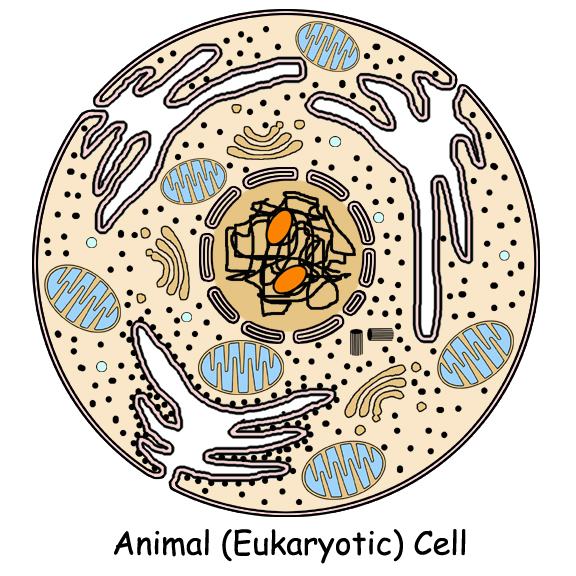
By the 1960s, biochemists had concluded that living things could be grouped into two distinct types based on their basic structures and genetic information. Eukaryotes have one or more cells and a true nucleus. Prokaryotes have smaller cells with no true nucleus. They are so different from eukaryotes that researchers concluded that they must have developed separately from non living matter. By the late 1970s, a third type of life was recognized – the archaea. Archaea favor extreme environments such as undersea vents. Their biochemistry is unlike prokaryotes or eukaryotes. According to evolutionists, life may have had to develop from non-living material three times. Further, to explain the biochemistry of these three types of creatures, biochemists have to assume that at points these separate types had to exchange genetic material with each other, and with a fourth, unknown and extinct type of living thing!

One logical conclusion of this new evolutionary approach is that life had to arise from non-life many times. Yet, modern biochemistry still has not explained how life could arise from non-life even once. However, this is exactly the pattern we might expect if all living things are the product of a wise Creator Who used similar designs to solve similar problems.

References: Scientific American, 2/00, pp. 90-95, “Uprooting the Tree of Life.”
©2008 Creation Moments, Inc.

Listen to article – Click Here

In the beginning God created the heaven and the earth. (Genesis 1:1 KJV)

He is Risen! Happy Easter

Therefore doth my Father love me, because I lay down my life, that I might take it again. No man taketh it from me, but I lay it down of myself. I have power to lay it down, and I have power to take it again. This commandment have I received of my Father. (John 10:17-18 KJV)

Now if Christ be preached that he rose from the dead, how say some among you that there is no resurrection of the dead? But if there be no resurrection of the dead, then is Christ not risen: And if Christ be not risen, then is our preaching vain, and your faith is also vain. (1 Corinthians 15:12-14 KJV)

For more about Christ’s Resurrection – Please See:

Wordless Birds

Gospel Message

*

(Photo taken from an e-Mail)

Birds of the Bible – Cormorant II

And the pelican, and the gier eagle, and the cormorant, (Deuteronomy 14:17 KJV)

In the first Birds of the Bible – Cormorant, it was mentioned that they are one of the “unclean birds” not to be eaten, they have their own desalination system, and that they have been used for centuries in the Orient to catch fish for fishermen. Now, let’s look into some more facts about this family of birds.
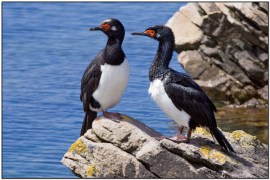
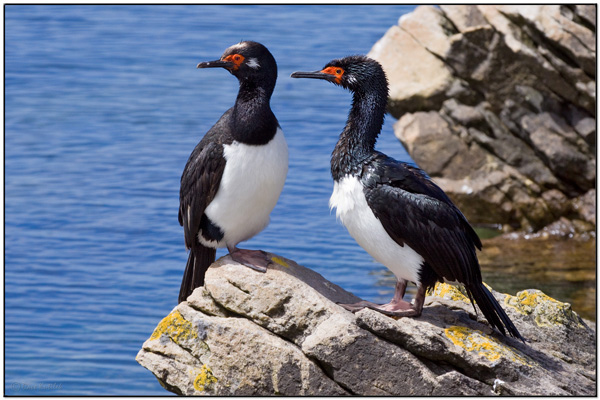
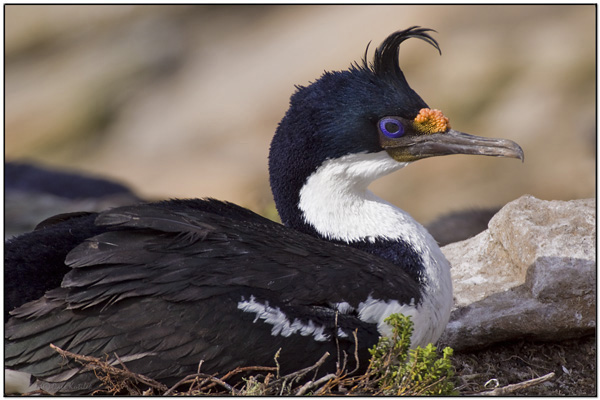
Rock Shag (Phalacrocorax magellanicus) by Daves BirdingPix

Rock Shag (Phalacrocorax magellanicus) by Daves BirdingPix

There are 36 Cormorants are in the Phalacrocoracidae Family of the Pelicaniformes Order. The family includes the Microcarbo genus (5) which has the Little Pied, Reed, Crowned, Little, and Pygmy Cormorants. The Phalacrocorax genus (21) includes Cormorants and Shags. The Leucocarbo genus (10) are all called Shags except for the Guanay Cormorant.

“There is no consistent distinction between cormorants and shags. The names “cormorant” and “shag” were originally the common names of the two species of the family found in Great Britain, Phalacrocorax carbo (now referred to by ornithologists as the Great Cormorant) and P. aristotelis (the European Shag). “Shag” refers to the bird’s crest, which the British forms of the Great Cormorant lack. As other species were discovered by English-speaking sailors and explorers elsewhere in the world, some were called cormorants and some shags, depending on whether they had crests or not. Sometimes the same species is called a cormorant in one part of the world and a shag in another, e.g., the Great Cormorant is called the Black Shag in New Zealand (the birds found in Australasia have a crest that is absent in European members of the species).” Apparently, they are just appearing after “their kind.” There is variation in size, names and colors, but they are all related.

And God created great whales, and every living creature that moveth, which the waters brought forth abundantly, after their kind, and every winged fowl after his kind: and God saw that it was good. And God blessed them, saying, Be fruitful, and multiply, and fill the waters in the seas, and let fowl multiply in the earth. (Genesis 1:21-22 KJV)
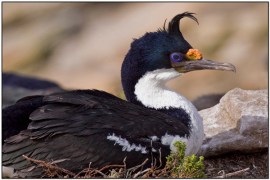
King Shag (Leucocarbo albiventer) by Daves BirdingPix

Cormorant” is a contraction derived from Latin corvus marinus, “sea raven”. Cormorants and shags are medium-to-large seabirds. They range in size from the Pygmy Cormorant (Phalacrocorax pygmaeus), at as little as 45 cm (18 in) and 340 g (12 oz), to the Flightless Cormorant (Phalacrocorax harrisi), at a maximum size 100 cm (40 in) and 5 kg (11 lb). The majority, including nearly all Northern Hemisphere species, have mainly dark plumage, but some Southern Hemisphere species are black and white, and a few (e.g. the Spotted Shag of New Zealand) are quite colorful. Many species have areas of coloured skin on the face (the lores and the gular skin) which can be bright blue, orange, red or yellow, typically becoming more brightly colored in the breeding season. The bill is long, thin, and sharply hooked. Their feet have webbing between all four toes, as in their relatives.

They are coastal rather than oceanic birds, and some have colonised inland waters – indeed, the original ancestor of cormorants seems to have been a fresh-water bird. They range around the world, except for the central Pacific islands.
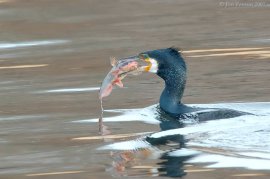
Great Cormorant (Phalacrocorax carbo) by J Fenton

Great Cormorant (Phalacrocorax carbo) by J Fenton

All are fish-eaters, dining on small eels, fish, and even water snakes. They dive from the surface, though many species make a characteristic half-jump as they dive, presumably to give themselves a more streamlined entry into the water. Under water they propel themselves with their feet. Some cormorant species have been found, using depth gauges, to dive to depths of as much as 45 metres.

After fishing, cormorants go ashore, and are frequently seen holding their wings out in the sun. All cormorants have preen gland secretions that are used ostensibly to keep the feathers waterproof.

Cormorants are colonial nesters, using trees, rocky islets, or cliffs. The eggs are a chalky-blue colour. There is usually one brood a year. The young are fed through regurgitation. They typically have deep, ungainly bills, showing a greater resemblance to those of the pelicans’, to which they are related, than is obvious in the adults.”

The Cormorants and Shags are another of the Lord’s fantastic creations from an All-powerful Creator.

Some quotes from Wikipedia

Visit the Cormorant Page
Doves and Pigeon Pages Updated

Wompoo Fruit-Dove (Ptilinopus magnificus) by Ian

Wompoo Fruit-Dove (Ptilinopus magnificus) by Ian

Though ye have lien among the pots, yet shall ye be as the wings of a dove covered with silver, and her feathers with yellow gold. (Psalms 68:13 KJV)

I have been working away updating the Doves and Pigeon pages. Since the Dove and the Pigeon are Birds of the Bible and we recently did an article about their eyes and voice, “Birds of the Bible – Dove’s Eyes and Voice,” figured it was time to update those pages. Please check the following links for information on the Doves and Pigeons:
The main Doves and Pigeons page

Dove and Pigeon Photos

Dove and Pigeon Videos

Columbidae Family page

I am not finished as there are 321 Pigeons and Doves in the family and it will take quite awhile to round up photos for them. Stay posted as more photos are added. I am very thankful for all the photographers and videographers who have given their permission to use their photographs.

Birds of the Bible – Swan Loyalty

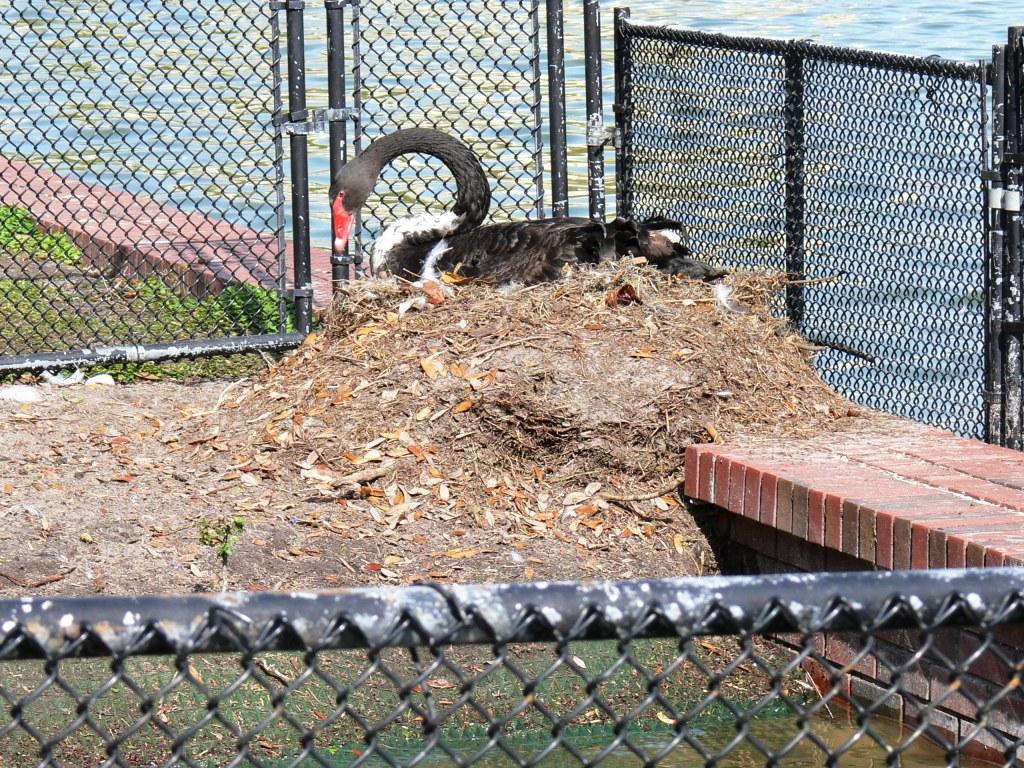
Black Swan nest at Lake Morton

Black Swan nest at Lake Morton

Dan and I went to Lake Morton in Lakeland. The Swans were building nest all over the place. When we were there several months back, one of the couples was just starting their nest. Now it is quite huge and they have even put a fence around it.

Swans are one of the Birds of the Bible listed in Deuteronomy 14:16 and Leviticus 11:18 as being one of the unclean birds that the Israelites were not to eat.

And the swan, and the pelican, and the gier eagle (Leviticus 11:18 KJV)

Here is an excerpt about the Swans and their loyalty to each other. This is from Creation Moments:
(I Corinthians 7:10) “Now to the married I command, yet not I but the Lord: A wife is not to depart from her husband.”

“Most water fowl are faithful to one mate over long periods of time. However, the swan is a champion of marital fidelity.

Mute Swan on Nest at Lake Morton

Mute Swan on Nest at Lake Morton

In North America, they are called Whistling Swans or Tundra Swans. Another member of the same species is usually found in Europe and Asia, where it is called Bewick’s Swan. Researchers report that each has a unique pattern of yellow and black on its bill, making individuals easy to identify. This allowed researchers to trace their lives over many years.

These beautiful creatures have relatively long life spans. One individual was traced for 26 years. Typically laying four eggs in nesting season, they breed for most of their lives. They are highly territorial. In a face-off for food or nesting area, the largest male is usually the winner. When there is a disagreement, the males face each other while their mates cheer them from the sidelines. Single swans enjoying a nice discovery of food are often driven off by couples. Couples are faithful for life. Researchers say that they have recorded no cases of divorce among successfully reproducing couples. Nor do they report any case of marital infidelity among swans. If a mate is lost, the survivor often takes over a year to settle down with another mate. In one case a survivor waited for six years.

Marital fidelity is also God’s instruction to humans. Today many factors are allowed to challenge marital fidelity. Often infidelity before or after marriage is portrayed as simply normal. But if swans can manage fidelity, we humans have no excuse for infidelity.”

For more information, go to the Birds of the Bible – Swans Page
Experts stunned by swan ‘divorce’ at Slimbridge wetland
Bewick’s Swans aka Tundra Swans

Interesting Things – Anna’s Hummingbird

SmileyCentral.com

New Avian Speed Champion Discovered

Which doeth great things past finding out; yea, and wonders without number. (Job 9:10)

“A peregrine falcon diving toward its prey reaches a relative speed of 200 body- lengths per second. This is close to the 207 body-lengths that the space shuttle travels as it enters our atmosphere. Thus, the peregrine falcon was thought to easily be the fastest dare-devil bird on Earth.

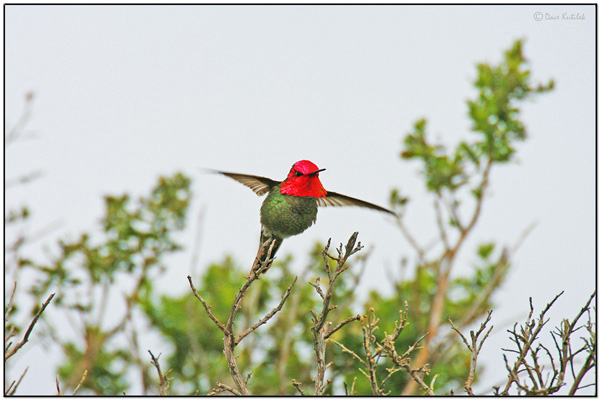
Anna's Hummingbird by Dave's BirdingPix

Anna's Hummingbird by Dave's BirdingPix

Scientists have now discovered that a little pink male hummingbird called Anna’s Hummingbird is the real Top Gun among the birds. As part of its mating ritual, a male hummingbird will try to impress a female with his speed and acrobatics. First, the male will fly up to about 90 feet above the ground. Then, he begins a power dive. As he nears the female, he pulls up, ascending again. During that near-miss pull-up he experiences more than nine times the force of gravity. His relative speed during descent is 385 body-lengths per second. That’s almost twice the peregrine falcon’s relative speed, it’s faster than the space shuttle entering the Earth’s atmosphere and is more than twice the relative speed of a jet fighter running with afterburners!

The wonders of God’s creation are still being discovered, and Creation Moments still loves to make them known to our listeners. But God’s greatest wonder is His love for us though His Son, Jesus Christ. We are thankful that this wonder is revealed to us in the Bible.

Prayer: Father, I give You thanks for the wonders You create, but I especially give You thanks for the wonder of salvation. Amen.

References: Science News, 7/4/09, p. 7, Susan Millius, “Hummingbird pulls Top Gun stunts.”

From Creation Moments ©March 24, 2010

Interesting Things – Birds’ Unique Leg Structure Says No Evolution

SmileyCentral.com

“Birds’ Unique Leg Structure Says No Evolution

And God created great whales, and every living creature that moveth, which the waters brought forth abundantly, after their kind, and every winged fowl after his kind: and God saw that it was good. (Genesis 1:21 KJV)

Countless television programs, museums, textbooks, and popular articles tell us that the birds evolved from dinosaurs. It now appears that this claim is even less credible!

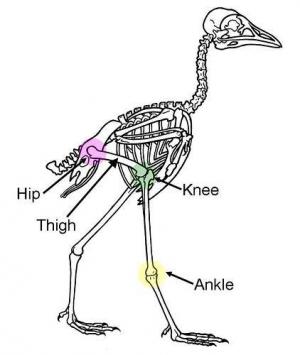
Bird Structure

Bird Structure

Researchers at Oregon State University have made a fundamental discovery about how birds breathe. Unlike other land animals, birds have immovable thigh bones, and they walk and run by bending their knees. All other land creatures can move both their thigh bone as well as bend their knees to walk and run. This included the dinosaurs and other theropods from which birds supposedly evolved. Birds need twenty times as much oxygen as cold-blooded animals. To supply this need, birds are designed with unique lungs and supporting musculature. Researchers found that if birds had the usual muscle structures and could move their thighs, their high-performance lungs would collapse. Even the evolutionists at Oregon State University said that this makes it unlikely that birds evolved from dinosaurs, and they added that birds appear earlier in the fossil record than the theropods from which they supposedly evolved!

There are other transition problems associated with bird evolution that are seldom mentioned. For example, reptiles are cold-blooded and birds are warm blooded; yet, this major transition has seemingly been overlooked.

Of course, the Bible has always taught that birds were specially made by God and did not evolve from any other creature.

Prayer: Lord, You have designed all things well. Do not let Your people be fooled by those who deny Your works. Amen.

References: Oregon State University (2009, June 9), “Discovery Raises New Doubts About Dinosaur -Bird Links. Science Daily. Retrieved June 16, 2009, from http://www.sciencedaily.com/ releases/2009/06/090609092055.htm.”

From Creation Moments ©March 22, 2010

To see more interesting things – CLICK HERE

Birds of the Bible – Fowl (Birds) of Every Wing

In the mountain of the height of Israel will I plant it: and it shall bring forth boughs, and bear fruit, and be a goodly cedar: and under it shall dwell all fowl of every wing; in the shadow of the branches thereof shall they dwell. (Ezekiel 17:23 KJV)

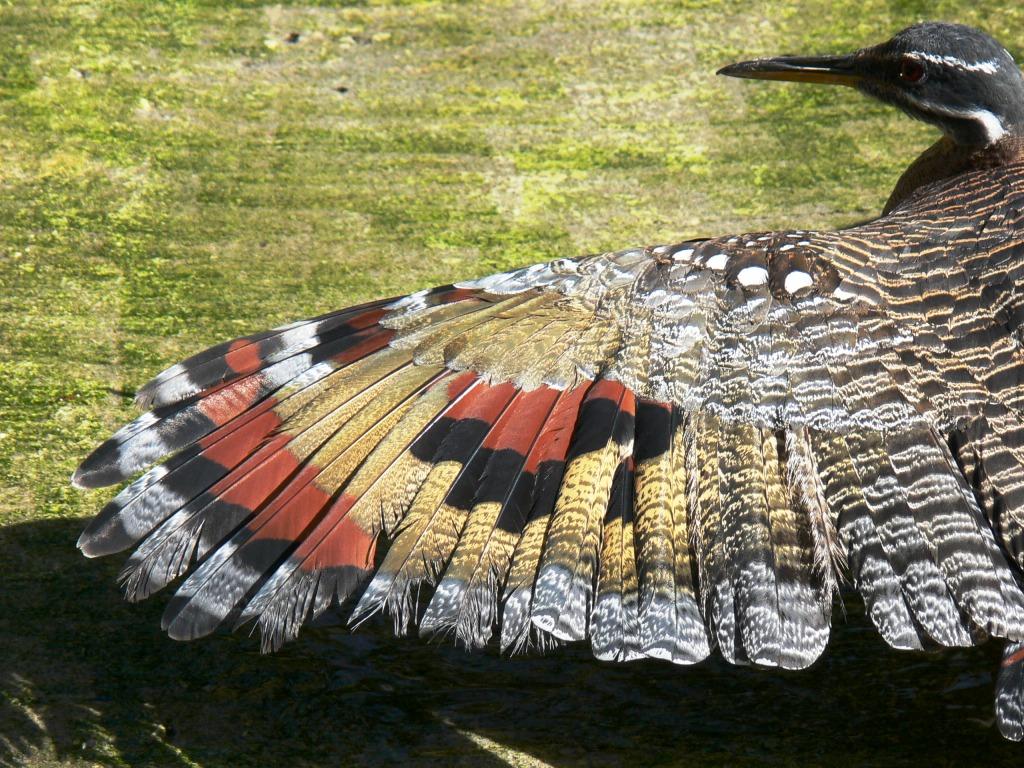
Sunbittern (Eurypyga helias) Left Wing by Lee at Lowry Park Zoo

Sunbittern (Eurypyga helias) Left Wing by Lee at Lowry Park Zoo

The phrase “Fowl (or Birds) of Every Wing” caught my interest. Remembering the article I recently wrote about the Sunbittern with it’s beautiful wings, I thought that might be neat to show some of the other bird’s fancy wings. Also, since I have been busy updating the Birds of the World pages, I thought that showing different birds from around the world would be interesting for you. But, first, what is that verse referring to anyway?

Adam Clarke’s Commentary on the Bible summarized Ezekiel 17:23 as a future prophecy referring to Christ,
“In the mountain of the height of Israel – He shall make his appearance at the temple, and found his Church at Jerusalem.
Shalt bring forth boughs – Apostles, evangelists, and their successors in the Gospel ministry.
And bear fruit – Multitudes of souls shall be converted by their preaching.
And under it shall dwell all fowl of every wing – All the nations of the earth shall receive his Gospel.
In the shadow of the branches thereof shall they dwell – Trust in him alone for salvation, and be saved in their trusting.”

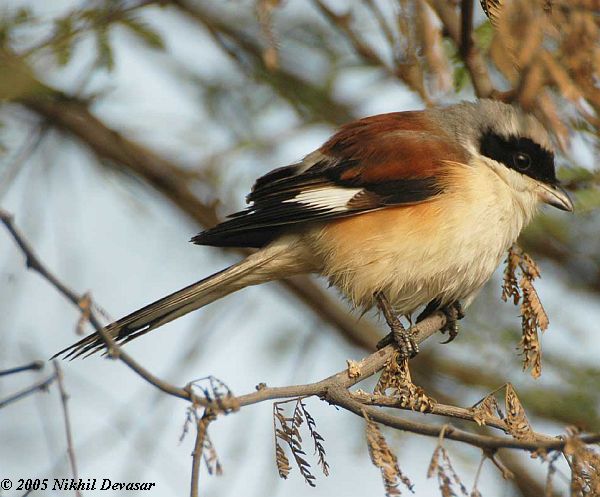
Bay-backed Shrike (Lanius vittatus) by Nikhil Devasa

Bay-backed Shrike (Lanius vittatus) by Nikhil Devasa

“But it left room for the sovereignty of God, who would bring down the high tree and exalt the low tree, who would dry up the green tree and make the dry tree to flourish. His grace would take the little forgotten branch of the house of David and raise it up in Israel upon the mountain of His power, where He would cause it to become a goodly cedar, bearing fruit, and sheltering all that would seek the protection of its shadow. All the powers of the earth should know the word and the works of Jehovah.” (John Darby’ Synopsis)

“Both the Jews and Gentiles will be gathered into it.” (Geneva Bible Translation Notes)

and under it shall dwell all fowl of every wing; in the shadow of the branches thereof shall they dwell; by whom are designed converted sinners of all sorts, and of all nations, Jews and Gentiles; compared to birds, because weak, defenceless, and timorous; exposed to danger; and wonderfully delivered; are subject to wander and go astray; and for their chirping and warbling notes: now these may be said to “dwell” under the “shadow” of the “branches” of this “goodly cedar”, Christ and his church; that is, under the ministration of the word and ordinances, which is a very delightful and refreshing shadow, a very safe and fruitful one, Son_2:3; and here saints choose to dwell, and determine to abide and continue, as it is their interest and happiness so to do; and what a flocking and tabernacling of these birds here will there be in the latter day, where they will chirp and sing in the height of Zion? Isa_66:4; compare with this Mat_13:32; where our Lord is thought by some to allude to this passage.” (John Gill’s Exposition)

House Sparrow (Passer domesticus) Female by Nikhil

House Sparrow (Passer domesticus) Female by Nikhil

under it … all fowl — the Gospel “mustard tree,” small at first, but at length receiving all under its covert (Mat_13:32); the antithesis to Antichrist, symbolized by Assyria, of which the same is said (Eze_31:6), and Babylon (Dan_4:12). Antichrist assumes in mimicry the universal power really belonging to Christ.” (Jamieson, Fausset, and Brown)

“under it … all fowl — the Gospel “mustard tree,” small at first, but at length receiving all under its covert (Mat_13:32); the antithesis to Antichrist, symbolized by Assyria, of which the same is said (Eze_31:6), and Babylon (Dan_4:12). Antichrist assumes in mimicry the universal power really belonging to Christ.” (Life Application Study Bible)

There are other commentaries I could quote, but these are sufficient to understand that these “fowl of every wing” represent those who from around the world have accepted or will accept Christ the Lord as their Savior. (Gospel Message) We have shelter and refuge under this tree. There was a tree of life in the Garden of Eden, but access to it was forbidden because of sin, but two verses in Revelation speak of future access to that tree.

He that hath an ear, let him hear what the Spirit saith unto the churches; To him that overcometh will I give to eat of the tree of life, which is in the midst of the paradise of God. (Revelation 2:7 KJV)
Blessed are they that do his commandments, that they may have right to the tree of life, and may enter in through the gates into the city. (Revelation 22:14 KJV)

All commentary quotes are from e-Sword which is a free Bible program. More of the “Fowl of Every Wing” will be covered in future Birds of the Bible.

Sandhill Crane “Colt” Birdwatching

Sandhill Crane "colts"

Sandhill Crane "colts"

Our neighbor called 4 or 5 days before telling us that the Sandhill Cranes here in the community were sitting on a nest. Then Sunday afternoon (3/14/10) she called again to tell us that they were walking with the babies (born that morning). So these little Sandhill Crane “colts” are only a day old.

“Sandhill breeding habitat is marshes and bogs in central and northern Canada, Alaska, part of the midwestern and southeastern United States, Siberia and Cuba. They nest in marsh vegetation or on the ground close to water. The female lays two eggs on a mound of vegetation, but it is rare that both chicks hatch and grow to independence. Cranes mate for life; both parents feed the young, calledcolts“, who are soon able to feed themselves. The colts are taught to fly over many weeks when they run and dance with their parents. Dancing is a significant component in the education of young cranes. The Sandhill Crane does not breed until it is two to seven years old, and the average generation time is 12.5 years. It can live up to 25 years in the wild; in captivity it has been known to live more than twice that span. Mated pairs stay together year-round and migrate south as a group with their offspring.” (Wikipedia) This pair is here year-round. Been in our backyard many times.

I know all the birds of the hills, and all that moves in the field is mine. (Psalms 50:11 ESV)

Thought you might enjoy seeing them. Dan walked over and took these photos.

This slideshow requires JavaScript.

*