Birds of the Bible – Names of Birds II

White-tailed Hawk (Buteo albicaudatus) by Daves BirdingPix

White-tailed Hawk (Buteo albicaudatus) by Daves BirdingPix

In the first Names of Birds, I covered the English names of birds. This time the scientific names are going to be looked at, especially the second one. (The first part of the scientific name is the bird’s genus or group) “Birds normally have a scientific name and a common name. The scientific name is usually Latin-bases and is agreed upon by biologists across the world. The common name will vary by region, culture, and language.” (birding.com) No matter what the bird is called in different countries or by different ornithology groups, the scientific name refers to one specific bird. Birds do migrate many miles and spend time in many countries. This naming system helps keep from having the same bird counted numerous times in lists.

As I have worked with the list of the Birds of the World, I have observed similarities in the naming of the birds. For instance, “alba” is the second part of all of these birds–Western Great Egret, White Cockatoo, Sanderling, White Tern, White Wagtail, African Spoonbill, Phoenix Petrel, Western Barn Owl. Could you figure out what color they all are?
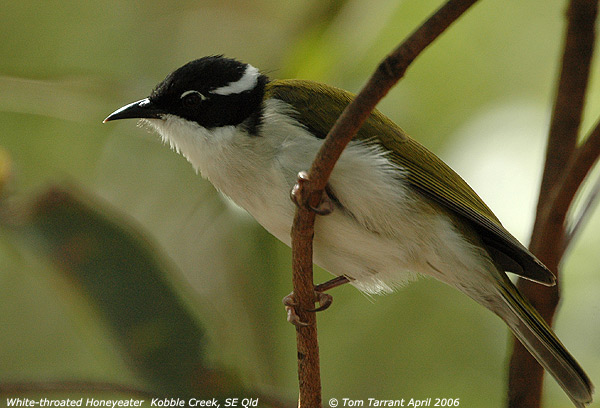
White-throated Honeyeater (Melithreptus albogularis) by Tom Tarrant

White-throated Honeyeater (Melithreptus albogularis) by Tom Tarrant

How about “albicauda“–White-tailed Shrike-Tyrant, White-tailed Blue Flycatcher, White-tailed Lark, White-tailed Hawk? Or “albogularis“–White-throated Jacamar, Rufous-banded Honeyeater, White-throated Pewee, White-throated Canary, White-throated Laughingthrush, White-throated Screech Owl, White-throated Honeyeater, White-throated Francolin, White-throated Caracara, White-throated Treerunner, White-spotted Fantail, White-throated Seedeater, White-throated Kingbird, White-chested White-eye? That last group was not all “white-throated,” in name, but they have white throats.

We know that Adam named the birds and other critters as the Scripture tells us:

Out of the ground the LORD God formed every beast of the field and every bird of the air, and brought them to Adam to see what he would call them. And whatever Adam called each living creature, that was its name. So Adam gave names to all cattle, to the birds of the air, and to every beast of the field. But for Adam there was not found a helper comparable to him. (Genesis 2:19-20 NKJV)

Blue-throated Bee-eater (Merops viridis) by Ray

Blue-throated Bee-eater (Merops viridis) by Ray

Did Adam use scientific names? I doubt it. Adam didn’t have to go though all this. Today the ornithologist (those who study birds) use this method of naming along with a common name in whatever language they speak.

Thought you might find it interesting to see some of the species’ second scientific names:
Colors:
albus/alba, white; cf albino, ater/atra, matt black, brachy-, short (Greek), brunne-, brown, caeruleus, blue, canus, grey, chloro-, green or yellow (Greek), cinerea-, grey or ash-coloured; cf cinders, crocus, cyan, blue, erythro-, red (Greek), flava, yellow, fuscus/fusca, dusky, guttatus, speckled or spotted, haema-, blood-red (Greek); cf haemoglobin, leuco-, white (Greek), lineatus, lined or striped, livia, blue-grey, longi-, long, luteus/lutea, yellow, major, greater, mega-, great (Greek), melas, black (Greek); cf melanistic, minor, lesser, niger/nigra, glossy black; cf negro, punctatus, spotted; cf punctuation, pusilla, tiny, rosea, rosy, ruber, red, rufus/rufa, red, striatus/striata, striped, versicolor, many-collored, varied, viridis, green, albogularis – White-throated
Countries:
abyssinicus, africana, americana, angolensis, antarctica,
Characteristics:
cauda, tail, –cephalus, head (Greek), –ceps, capped, headed, cilla, tail, collis, neck,  cristatus, crested, dactyl, finger or toe (Greek), frons, front, i.e. forehead, –gularis, throat, –ops, eye, –opsis, face, ptera, wing (Greek), –rhynchos, bill (Greek), –rostris, bill, torquatus, collared

Names are important and have meaning. Christ was named long before He was born. It was foretold.

Now all this was done, that it might be fulfilled which was spoken of the Lord by the prophet, saying, Behold, a virgin shall be with child, and shall bring forth a son, and they shall call his name Emmanuel, which being interpreted is, God with us. (Matthew 1:22-23 KJV)
After this manner therefore pray ye: Our Father which art in heaven, Hallowed be thy name.  (Matthew 6:9 KJV)
And in his name shall the Gentiles trust. (Matthew 12:21 KJV)
And Jesus came and spake unto them, saying, All power is given unto me in heaven and in earth. Go ye therefore, and teach all nations, baptizing them in the name of the Father, and of the Son, and of the Holy Ghost: Teaching them to observe all things whatsoever I have commanded you: and, lo, I am with you alway, even unto the end of the world. Amen.
(Matthew 28:18-20 KJV)

(Some information from Scientific bird names explained)
Birdwatching at Lake Hollingsworth-June 1st

Birdwatching at Lake Hollingsworth-June 1st

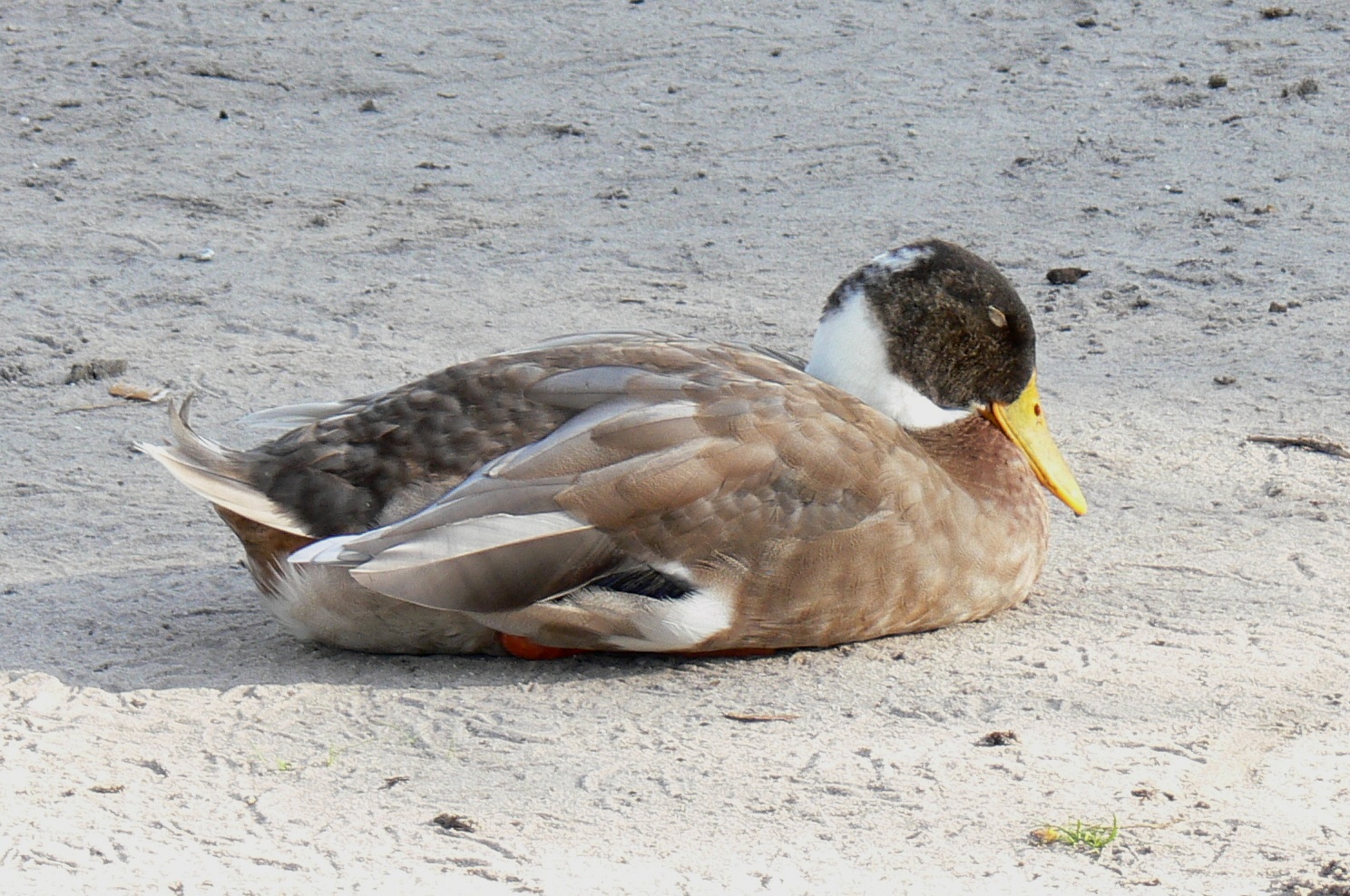
Lake Hollingsworth Mallard

Lake Hollingsworth Mallard

Dan and I finally got a chance to go birdwatching on Tuesday. It is the first time in awhile since we have been out and about here in Polk County, FL. We loaded the cameras, binocular, and of course something to feed the critters with. The only place around here we do that is at Lake Hollingsworth and Morton in Lakeland. So we chose Lake Hollingsworth as our main destination.

As we ride, I start my list of what we see. On the ride over there I spotted Fish Crows, Sandhill Cranes, a Great Blue Heron, some Ospreys at their nest, a White Ibis, about 20 Cattle Egrets checking out some cows, two Mourning Doves, four Boat-tailed Grackles and a Blue Jay. If we saw nothing at the lake, I would have been content with those.

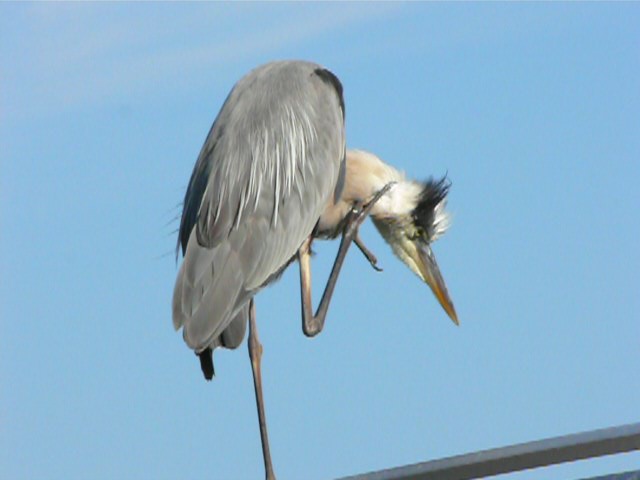
Great Blue Heron at Lake Hollingsworth

Great Blue Heron at Lake Hollingsworth

We spent about an hour looking around and feeding the gang. It was around 79° and mostly clear. A nice day. Near the parking lot is where the hungry beggars hang out. Waiting! I was surprised to see most of them snoozing. Pull out treats, and they come alive. After feeding the Mallards, White Ibises, Boat-tailed Grackles and a Gull, I did a short walk (legs weren’t working good) to the little dock where we watched a Great Blue Heron preening. I kept getting closer and closer, but he kept right on and only looked at me once. I got several videos of him.

We also observed a Green Heron for some time. Don’t see them out and about like this one. Looking at his coloration, we think he is most likely a juvenile.

The rest of the birds spotted were Red-winged Blackbirds, Common Grackles, Anhingas, Ospreys, Blue Jays, and Common Moorhens with three babies. On the way back at the parking lot, six Geese were protecting a gosling.

Green Heron Lake Hollingsworth

Green Heron Lake Hollingsworth

We decided to do lunch in Bartow, but had some spare time before they opened so went to the Mary Holland Park there. 86° by then. It is a small park but we managed to see – Boat-tailed Grackles, Opreys, Cardinals, Blue Jay, Great Egret, Mourning Dove, three White Ibises, heard a Red-Shouldered Hawk and a Red-bellied Woodpecker.

All together we spotted or heard 22 species. Not bad for an easy birdwatching adventure. Trust you have a great adventure the next time you are out enjoying God’s birds that He has created.

So God created great sea creatures and every living thing that moves, with which the waters abounded, according to their kind, and every winged bird according to its kind. And God saw that it was good. (Genesis 1:21 NKJV)

[

*

This slideshow requires JavaScript.

*

Birds of the Bible – The Bat?

And the stork, the heron after her kind, and the lapwing, and the bat. All fowls that creep, going upon all four, shall be an abomination unto you. (Leviticus 11:19-20 KJV) and
And the stork, and the heron after her kind, and the lapwing, and the bat. (Deuteronomy 14:18 KJV)

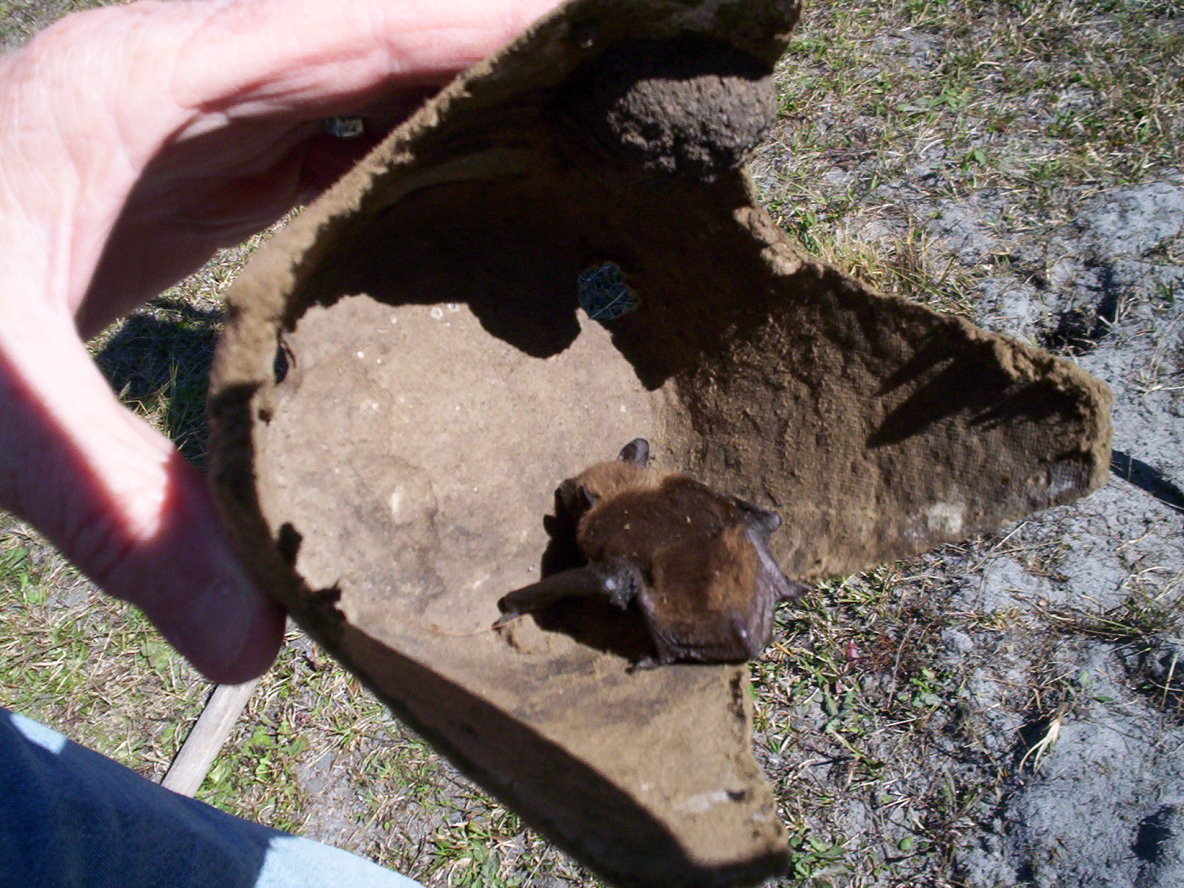
Townsends Big-eared Bat from Wikipedia

These verses show up at the end of the list of “unclean birds.” I have heard people say or write that since the Bat is not a bird, that make the Scriptures incorrect and not true. Let’s look at this a little closer. For one thing, the following verses go on to mention “fowls that go upon all fours” and other critters that are not birds. “Fowl” in the Bible refers to being covered with wings and that includes birds, bats, insects, and others that fly.

Here is what some of the commentators say about these verses.

Gill – “and the bat; a little bird which flies in the night, Aben Ezra says; Kimchi (s) describes it a mouse with wings, which flies in the night, and we sometimes call it the “flitter mouse”; it is a creature between a fowl and a beast; and, as Aristotle says (t), it partakes of both, and is of neither; and it is the only fowl, as Pliny (u) observes, that has teeth and teats, that brings forth animals, and nourishes them with milk. It is a creature so very disagreeable, that one would think almost there was no need of a law to forbid the eating of it; and yet it is said by some to be eatable, and to be eaten, as Strabo (w) affirms, yea, to be delicious food. It is asserted (x), that there is a sort of them in the east, larger than ordinary, and is salted and eaten–that there are bats in China as large as pullets, and are as delicate eating.”

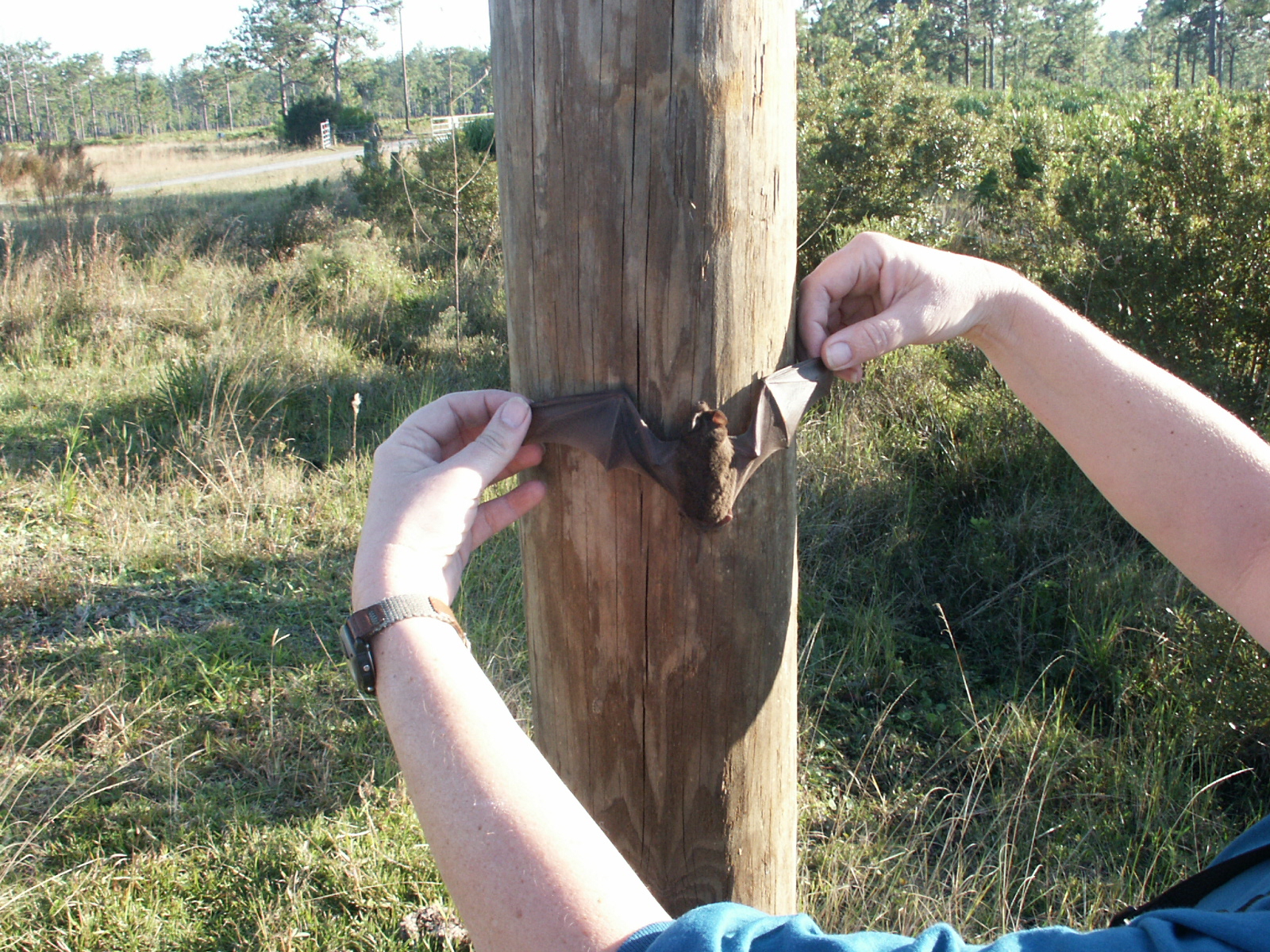
Dan holding a bat at Avon Park AF Range

Clarke – “The bat – עטלף  atalleph, so called, according to Parkhurst, from עט  at, to fly, and עלף  alaph, darkness or obscurity, because it flies about in the dusk of the evening, and in the night: so the Septuagint νυκτερις, from νυξ, the night; and the Vulgate vespertilio, from vesper, the evening. This being a sort of monster partaking of the nature of both a bird and beast, it might well be classed among unclean animals, or animals the use of which in food should be avoided.” “Lev 11:20  All fowls that creep – Such as the bat, already mentioned, which has claws attached to its leathern wings, and which serve in place of feet to crawl by, the feet and legs not being distinct; but this may also include all the different kinds of insects, with the exceptions in the following verse.”
JFB – “the bat — the great or Ternat bat, known in the East, noted for its voracity and filthiness.” Lev 11:20  All fowls that creep, etc. — By “fowls” here are to be understood all creatures with wings and “going upon all fours,” not a restriction to animals which have exactly four feet, because many “creeping things” have more than that number. The prohibition is regarded generally as extending to insects, reptiles, and worms.”

Here are some interesting facts about the bat (not a bird) from Wikipedia:

1) Bats are flying mammals in the order Chiroptera (pronounced /kaɪˈrɒptərə/). The forelimbs of bats are webbed and developed as wings, making them the only mammals naturally capable of true and sustained flight. By contrast, other mammals said to fly, such as flying squirrels, gliding possums and colugos, glide rather than fly, and only for short distances. Bats do not flap their entire forelimbs, as birds do, but instead flap their spread out digits, which are very long and covered with a thin membrane or patagium. Chiroptera comes from two Greek words, cheir (χείρ) “hand” and pteron (πτερόν) “wing.”

Fruit Bat at Avon Park AF Range

2) There are about 1,100 bat species worldwide. About seventy percent of bats are insectivores. Most of the rest are frugivores, or fruit eaters. A few species feed from animals other than insects. Bats are present throughout most of the world and perform vital ecological roles such as pollinating flowers and dispersing fruit seeds. Many tropical plants depend entirely on bats for the distribution of their seeds.
3) Bats range in size from Kitti’s Hog-nosed Bat measuring 29–33 mm (1.14–1.30 in) in length and 2 g (0.07 oz) in mass,[4] to the Giant Golden-crowned Flying-fox, which has a wing span of 1.5 m (4 ft 11 in) and weighs approximately 1.2 kg (3 lb).
4) Bat echolocation is a perceptual system where ultrasonic sounds are emitted specifically to produce echoes. By comparing the outgoing pulse with the returning echoes the brain and auditory nervous system can produce detailed images of the bat’s surroundings. This allows bats to detect, localize and even classify their prey in complete darkness. At 130 decibels in intensity, bat calls are some of the most intense airborne animal sounds.
5) The finger bones of bats are much more flexible than those of other mammals. One reason is that the cartilage in their fingers lacks calcium and other minerals nearer the tips, increasing their ability to bend without splintering. The cross-section of the finger bone is also flattened compared to the circular cross section that human finger bones have, and is very flexible. The skin on their wing membranes has more elasticity and so can stretch much more than other mammals. The wings of bats are much thinner than those of birds, so bats can manoeuvre more quickly and more accurately than birds. It is also delicate, ripping easily. However the tissue of the bat’s membrane is able to regrow, such that small tears can heal quickly.
6) The teeth of microbats resemble insectivorans. They are very sharp to bite through the hardened armor of insects or the skin of fruit.
7) Mammals have one-way valves in veins to prevent the blood from flowing backwards, but bats also have one-way valves in arteries.
8) One species of bat has the longest tongue of any mammal relative to its body size. This is beneficial to them in terms of pollination and feeding their long narrow tongues can reach deep into the long cup shape of some flowers. When their tongue retracts, it coils up inside their rib cage.

God has graciously created the Bat to fulfill its role in doing His will. He has given it exactly what it needs. To some, it may seem a contradiction, but to those of us who believe in creation, there is no conflict.

Below is something we read recently from Comments on Here and Hereafter by Bob Jones, Sr., p. 79-80.

“The animals and fowls decided to have a battle, so the story goes. The animals lined up one one side and the fowls on the other. In the crowd was a little bat. The animals came upon the bat, and he dropped his wings, showed his teeth and said, ‘I am an animal.’ the fowls came upon the bat. He stretched his wings and said, ‘I am a fowl.’ I have known people like the bat. Whatever crowd they are in, that is what they are. They are like the chameleon. They are colored by their surroundings. God’s people, instead of being affected by their surroundings, should affect their surroundings. A good, consecrated Christian who will be faithful to his trust will have some influence upon his environment.”

Dodo Bird – Not A Failure

Dodo (Raphus cucullatus) Extinct by Wikipedia

Dodo (Raphus cucullatus) Extinct by Wikipedia

The dodo (Raphus cucullatus) was a flightless bird endemic to the Indian Ocean island of Mauritius. Related to pigeons and doves, it stood about a meter (3 feet) tall, weighing about 20 kilograms (44 lb), living on fruit, and nesting on the ground.

The dodo has been extinct since the mid-to-late 17th century.[1] It is commonly used as the archetype of an extinct species because its extinction occurred during recorded human history and was directly attributable to human activity.

The dodo bird … an example of survival of the fittest

*

Birds of the Bible – Hair Like Eagles’ Feathers

That very hour the word was fulfilled concerning Nebuchadnezzar; he was driven from men and ate grass like oxen; his body was wet with the dew of heaven till his hair had grown like eagles’ feathers and his nails like birds’ claws. (Daniel 4:33 NKJV)

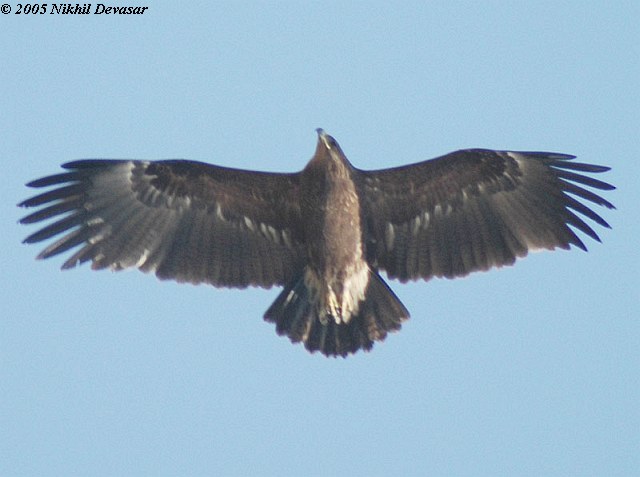
Greater Spotted Eagle (Aquila clanga) by Nikhil

Greater Spotted Eagle (Aquila clanga) by Nikhil

I have wanted to include this verse in a Birds of the Bible article, but just never got to it. Last night our pastor mentioned this verse again in his message and I decided to use it for this weeks blog. Plus, Dan is teaching the Book of Daniel in our Sunday School class.

Many times the birds mentioned in the Bible are listed as “clean or unclean” or as an “object lesson” to teach some truth. This time the mention of Eagle feathers and birds’ claws are used as a description of a man’s appearance and there is a lesson to be learned here.

So, who was this man? It is actually a very important king, King Nebuchadnezzar of Babylon. The information about the King is found throughout the book of Daniel. To make the story short, the king had a dream and wanted an interpretation of that dream. Not only did he want his dreams interpreted, but he wanted the interpreter to tell him what the dream was about. The wise men and others told the king that was impossible, so the king commanded to kill them. Daniel prayed to God that He would reveal the dream and it’s interpretation to him so he could tell it to the King. God answered that prayer and Daniel was able to reveal it to King Nebuchadnezzar.

Long nails like a bird's claws

Long nails like a bird’s claws

King Nebuchadnezzar was the first world ruler and God had given the king great power. Later on, the king’s pride takes over and he thinks he has made this kingdom and does not give God the credit. He even has a great statue made of himself and demands that all fall down and worship him.

Back to making this short. In Daniel chapter 4 the king has another dream and Daniel (Belteshazzar) prays for revelation and again interprets the dream. Daniel 4:9 to 4:18 tells the dream. (Birds are mentions several times in it.) Then Daniel interprets the dream in Daniel 4:19-33. Basically, the Most High is going to let the king learn humility and get rid of the pride that he has.

The king spoke, saying, “Is not this great Babylon, that I have built for a royal dwelling by my mighty power and for the honor of my majesty? (Daniel 4:30 NKJV)

For seven years will his kingdom be departed from him. He will be out in the field, “eating grass like oxen” and “until you know that the Most High rules in the kingdom of men, and gives it to whomever He chooses.” It is during this time that his hair will grow like “eagles’ feathers and his nails like birds’ claws.”

Did King Nebuchadnezzar learn his lesson?

And at the end of the time I, Nebuchadnezzar, lifted my eyes to heaven, and my understanding returned to me; and I blessed the Most High and praised and honored Him who lives forever: For His dominion is an everlasting dominion, And His kingdom is from generation to generation. All the inhabitants of the earth are reputed as nothing; He does according to His will in the army of heaven And among the inhabitants of the earth. No one can restrain His hand Or say to Him, “What have You done?” At the same time my reason returned to me, and for the glory of my kingdom, my honor and splendor returned to me. My counselors and nobles resorted to me, I was restored to my kingdom, and excellent majesty was added to me. Now I, Nebuchadnezzar, praise and extol and honor the King of heaven, all of whose works are truth, and His ways justice. And those who walk in pride He is able to put down. (Daniel 4:34-37 NKJV)

Snowflake and the Eye

Snowflake and the Eye by Ian Juby

Ian Juby has made another “Rant.”  This one is about evolutionist’s claim about how the eye is poorly designed and that there is no intelligent designer that made it. He does these spoofs because of some of the unintelligent remarks made by evolutionists.

He, like those of us here, believe that we have a very Intelligent Designer called the Creator. We believe the Lord Jesus is this creator. The birds we write about sure enjoy their Intelligently Designed eyes.

and to make all see what is the fellowship of the mystery, which from the beginning of the ages has been hidden in God who created all things through Jesus Christ; (Ephesians 3:9 NKJV)

Below is his “rant” and we have many of Ian Juby’s videos in the Complete Creation by Ian Juby in our Plus Section under the Creation Topics

Reminiscing in South Florida

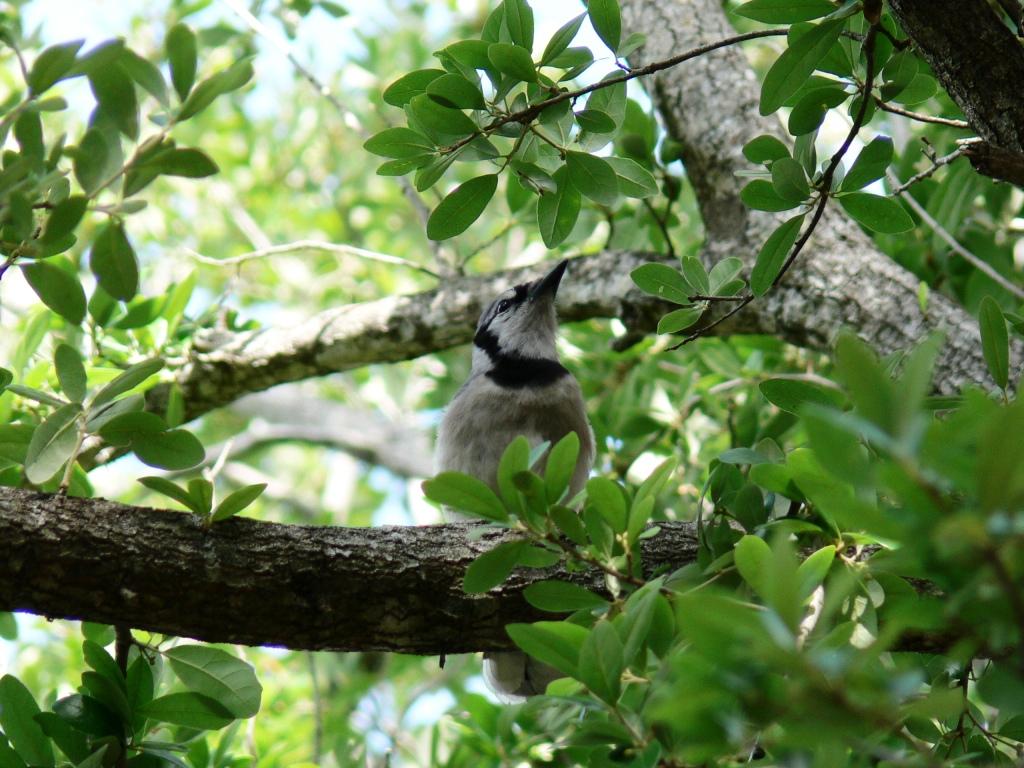
Blue Jay in tree at Hampton Pines

Blue Jay in tree at Hampton Pines

Reminiscing can be fun. We went to Miami this week to visit our friend after his surgery, but also took time to visit our old stomping grounds in the Fort Lauderdale area. We lived in Tamarac for 18 years, so had things to see and do.

We always enjoyed going to the beach to feed the Sea Gulls. Well, when we got to Lauderdale-by-the-Sea, there was not one gull in sight. We only saw Pigeons, a Boat-tailed Grackle and 2 Eurasian Collarded Doves. While driving, a 4 bird squadron of Brown Pelicans flew over. So much for the beach this time of the year.

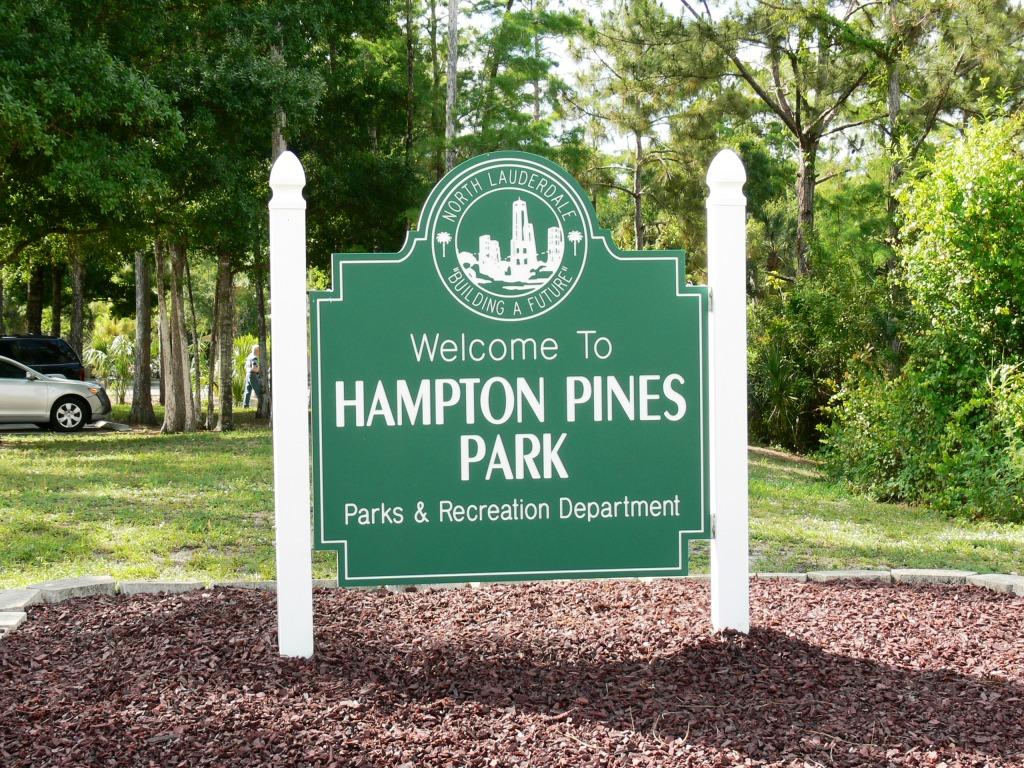
Hampton Pines Pk Sign

Hampton Pines Pk Sign

We then drove to the Hampton Pines Park in North Lauderdale. “It is a 32 acre natural woodland park containing native bald cypress and slash pines.” (It took a beating from Hurricane Wilma and many trees were blown down. This was according to a very nice grounds keeper we were talking with.) That is where I first became a real birdwatcher. There was a lady naturalist there who taught about the birds. We became friends (can’t remember her name now and the office was closed) and she sort of took me “under her wing.” I learned to have “soft eyes” (not stare at a certain spot, but softly watching the trees to catch movement), to listen for the birds (birding by ear), watch for evidences that a bird has been there (like droppings of fish bones and other things), and many other tips. Like many of our readers, I saw birds, but never really became aware of them until she revealed those and many other tips. I am sure she was the beginning of great hobby for me. I am thankful for the Lord bringing her into my life, for her and to Hampton Pines Park for having hired her.

Hampton Pines

Hampton Pines

While we were there we recorded only these birds: 7 Blue Jays carrying on with their alarm calls, Mourning Doves, Red-bellied Woodpeckers, Great Egret, Mockingbird, and 2 male Cardinals. We were only there about 20 minutes. Also saw 2 squirrels, which we fed before we saw the sign not to feed them. We also saw 2 lizards (I guess), one was about 18 inches and the other darker one was about 12 inches.

Since our house we lived in was only about a mile or so away, we went by it and took a few pictures of it and the pond across the street. There was a female Boat-tailed Grackle sitting at the top a bush (much taller than when we sold in 1995) in the yard. Used to have lots of feeders in the backyard. As my birding skills improved, I recorded many birds in our yard, around and in that pond.

Yes, it was fun to reminisce about when I learned to bird watch and to see the old homestead.

I remember the days of old; I meditate on all Your works; I muse on the work of Your hands. (Psalms 143:5 NKJV)

*

This slideshow requires JavaScript.

*

Best Local Playgrounds: Hampton Pines Park

City of North Lauderdale – Parks and Recreation

*

Birds of the Bible – Uniquely Created – Tools

Many birds have built in “tools” such as the way their beaks are designed or their feet, or wings, etc. Some use things as tools as shown below in the articles and the video.

How Nature Works: White-winged Crossbill Feeding Technique from CornellLab of Ornithology. (Last statement gives credit to evolution, but we believe they were uniquely created with this ability by the Lord.)

Rooks Reveal Remarkable Tool Use It appears that Rooks (Crow related) have been given intelligence by their Creator to figure out how to use things as tools.

Also, New Caledonian Crows themselves are able to use tools.

The list goes on and on of the uniquely created ways birds use their built in or external “tools.” “The Tool-Using Bird” (Vulture) and “Animals That Make and Use Tools” by Creation Moments.

What kind of tools (gifts) has the Lord given you to use. Are you using them in the way that He intended for you to use them.

Having then gifts differing according to the grace that is given to us, let us use them: if prophecy, let us prophesy in proportion to our faith; (Romans 12:6 NKJV)

As each one has received a gift, minister it to one another, as good stewards of the manifold grace of God. (1 Peter 4:10 NKJV)

Interesting Articles and Videos:
Adaptation and ecology: the marvelous fit of organisms to their environment” by Dr. Gary Parker

Woodpecker Finch using a stick as a tool. YouTube by firpeace

Animals Using Tools YouTube by ronesh (Bird Fishing)

*

Birds in Hymns – Updated

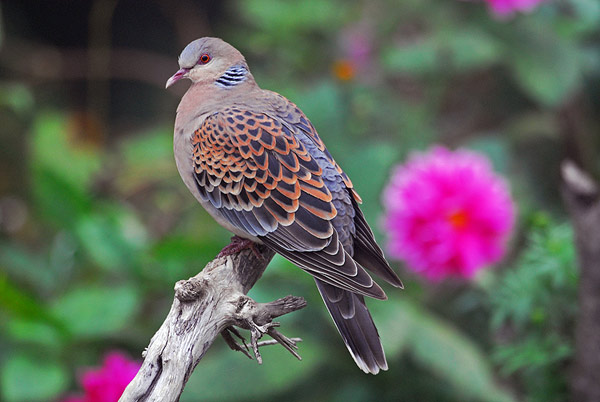
Oriental Turtle Dove (Streptopelia orientalis) by Nikhil

Oriental Turtle Dove (Streptopelia orientalis) by Nikhil

While updating the Birds in Hymns page, I had to read through the hymns to find the references to the birds. What struck me, is the depth of the writings of these hymn writers. Many of these were written in the 1,700 and 1,800s. These are not the shallow words of today, but are filled with great doctrinal truths, praise and worship for our Savior.

We here on the blog use the birds that God has created to teach you about them, but also to make applications that will help us with our lives. That is how many of the birds are used in Scripture, to learn from them by way of illustrations of truths to help make us better Christians or to become Christians.

I will sing of the mercies of the LORD forever; With my mouth will I make known Your faithfulness to all generations. (Psalms 89:1 NKJV)

Below are just some of the examples I pulled out. Time spent reading through the hymns, will be a blessing to you.

Jesus, Holy, Undefiled by Emily M. Shapcole wrote these words:

Now the little birds arise,
Chirping gaily in the skies;
Thee their tiny voices praise,
In the early songs they raise.

Thou, by Whom the birds are fed,
Give to me my daily bread;
And Thy holy Spirit give,
Without Whom I cannot live.

Speed For Thy Life by Fanny Crosby

Speed for thy life to the mountain,
Fly like a bird to its nest,
Fly to the arms of the Savior:
There is thy only rest.

There Seems A Voice In Every Gale by Amelia A. Opie

The birds, that rise on quivering wing,
Proclaim their Maker’s praise,
And all the mingling sounds of spring
To Thee an anthem raise.

This is My Father’s World by Maltbie B. Babcock

This is my Father’s world, the birds their carols raise,
The morning light, the lily white, declare their Maker’s praise.
This is my Father’s world: He shines in all that’s fair;
In the rustling grass I hear Him pass;
He speaks to me everywhere.

Yes, God is Good by John H. Gurney

The merry birds prolong the strain,
Their song with every spring renewed;
And balmy air, and falling rain,
Each softly whispers, “God is good.”

Jesus, I Come by William T. Sleeper

Out of unrest and arrogant pride,
Jesus, I come, Jesus, I come;
Into Thy blessèd will to abide,
Jesus, I come to Thee.
Out of myself to dwell in Thy love,
Out of despair into raptures above,
Upward for aye on wings like a dove,
Jesus, I come to Thee.

Let Him Come In by C. W. Ray

To thy barred and bolted door,
Gently as a wooing dove,
Jesus comes as oft before,
Pleading in His tender love.

Refrain

Let Him in; let Him in;
Sinner, why not make Him room?
Let Him in; let Him in;
Lest He never more may come.

See ~ Wordless Birds

More ~ Birds in Hymns

*

Birds of the Bible – Uniquely Created Sound

When the Lord created the birds, He gave each a unique design which includes not only their appearance, but also the sounds they make. Below is an interesting video about the sounds of the different birds. It is a little lengthy (9 min.) but well worth watching.

The Language of Birds by LabofOrnithology

The flowers appear on the earth; the time of the singing of birds is come, and the voice of the turtle is heard in our land; (Song of Solomon 2:12 KJV)

Each of the bird’s songs and sounds help them to communicate with one another, and with other species. Many times one bird, like a Blue Jay, will sound an alarm that warns all of the birds of an impending danger. Lots of birds singing is a sign that all is well in that area.

Just as the Lord uniquely gave each bird a separate song or sound, the Lord has given each of us in the church separate unique abilities and talents. One may be the preacher, one the song leader, teachers, choir or orchestra members, sound and video workers, baby sitters, ushers, etc. We all are different, but when all of those abilities are brought together, like all of those birds in the rain forest that make beautiful music together, we worship and serve the Lord jointly.

Thy hands have made me and fashioned me: give me understanding, that I may learn thy commandments. (Psalms 119:73 KJV)

Now therefore ye are no more strangers and foreigners, but fellowcitizens with the saints, and of the household of God; And are built upon the foundation of the apostles and prophets, Jesus Christ himself being the chief corner stone; In whom all the building fitly framed together groweth unto an holy temple in the Lord: In whom ye also are builded together for an habitation of God through the Spirit. (Ephesians 2:19-22 KJV)

*

Pigeons and Their Pecking Order

Hill Pigeon (Columba rupestris) by Nikhil Devasar

Hill Pigeon (Columba rupestris) by Nikhil Devasar

The April 7th issue of NatureNews has an interesting article called, “Airborne pigeons obey the pecking order.” According to the studies they did on flying pigeons that were strapped with tiny GPSs, they change directions by responding to the leaders, not just any member of the flock.

“”It is the first study demonstrating hierarchical decision-making in a group of free-flying birds,” says Tamás Vicsek, a biophysicist at Eötvös Loránd University in Budapest who led the study…”

Another interesting thing they found out was, “Although pigeons have an almost 340º field of view, the researchers found that the birds at the front of a flock tended to make the navigational decisions. Moreover, birds responded more readily to a leader’s movements if the leader was on their left side. These findings concur with previous work that indicated that social cues entering a bird’s left eye receive preferential processing in the brain2.”

The article is very interesting and worth reading. Of course, I don’t agree with the last sentence of the article because they give the credit to evolution. We believe that the Lord created the pigeons with this ability from the first day they were created.

Hast thou not known? hast thou not heard, that the everlasting God, the LORD, the Creator of the ends of the earth, fainteth not, neither is weary? there is no searching of his understanding. (Isaiah 40:28 KJV)

Who are these that fly as a cloud, and as the doves to their windows? Isa 60:8

Doth the hawk fly by thy wisdom… (Job 39:26a) God was asking Job about the hawk, but it could be any bird including the pigeon.

To read the complete article – Click Here

*

Birds of the Bible – Swans II

And the swan, and the pelican, and the gier eagle, (Leviticus 11:18 KJV)

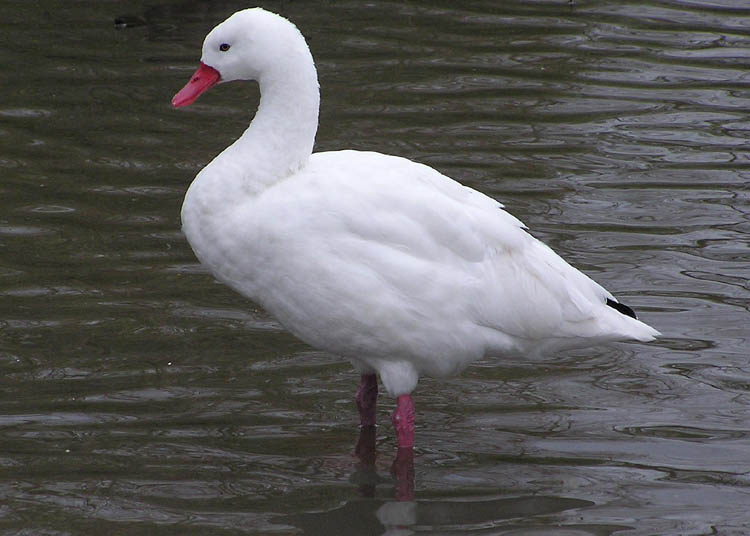
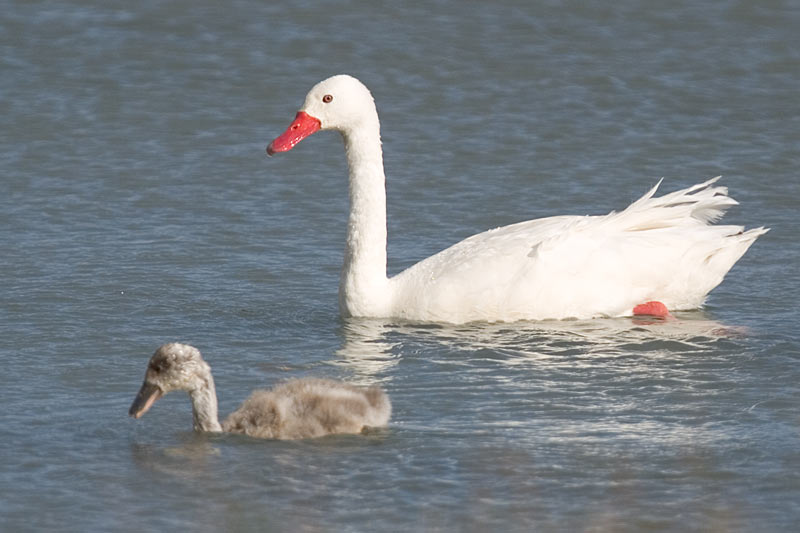
Coscoroba Swan (Coscoroba coscoroba) ©Wikipedia

Coscoroba Swan (Coscoroba coscoroba) ©Wikipedia

Swans have been written about before with Birds of the Bible – Swan I and Swan Loyalty. Because of the Lord’s amazing creation of the birds, there is always more to find out about them. In the first Swan blog it was mentioned that there are 6 Swans in the Anatidae family. Well, that is incorrect. There are 6 swans in the Cygnus genera (division of a family), but there is another genera called Coscoroba. This genera has only one swan, the Coscoroba Swan. So, there are 7 Swans.

The Coscoroba has the ones who study birds (taxonomist and others) in a quandary. They are not sure if it is a swan, duck or goose. “Externally, the body, head and legs appear to be more like a goose than a swan. As an example, their body is much smaller in comparison to other species of swans; the largest species average double the weight and have a wingspan at least 40% larger. Since they are smaller in size compared to other swan species, coscoroba swans require shorter distance to lift off from the ground or water. In contrast to other species of swan, coscoroba swans have a shorter neck and longer legs. Another feature that distinguishes coscoroba swans from other species is that feathers cover their facial skin, instead of bare skin extending from the bill to the eye. This species also lacks the characteristic basal knob found on all other five species of swans. Compared to other swans, the bill of a coscoroba swan is smaller and more resembles the bill of a duck.” (Animal Facts, Woodland Park Zoo)

They went on to say that it sounds more like a goose, doesn’t carry young on back like swans and that their young look more like young whistling ducks. Considering that the Anatidae family consists Ducks, Geese, and Swans, sounds like they are all in the same “created kind” for sure. They have been doing as they were command by God to:

And God blessed them, saying, “Be fruitful and multiply, and fill the waters in the seas, and let birds multiply on the earth. (Genesis 1:22 NKJV)

Coscoroba Swan (Coscoroba coscoroba) ©Arthur Grosset

Coscoroba Swan (Coscoroba coscoroba) ©Arthur Grosset

The Coscoroba Swan lives mainly in the southern part of South America and prefers shallow areas of lagoons, swamps, ponds, or areas with lots of vegetation. They are between 34.6-45.2 inches and males can be as much as 11.9 pounds and the female 10 pounds. “Inside the bill, there are serrated comb-like structures called lamellae, which help filter food. When eating, swans scoop up water and food, hold it in their mouth and squeeze out the water through the lamellae.”

They are all white except for the 6 black feathers at the tips of their wings. Speaking of flying, here are some interesting facts. (When migrating, the flock maintains visual contact as much as possible and will call out to each other to stay united during inclement weather or poor lighting conditions. During migrations, coscoroba swans may fly with flamingos or black-necked swans (C. melanocoryopha). Migration routes may take place at extreme elevations; researchers have noted swans flying at elevations of 26,277 feet (8,000 m). These high altitudes allow the birds to take advantage of stronger air currents. Additionally, swans almost always fly in a V-formation to save energy, as the bird in front creates a slipstream for the bird behind it to fly through.” (Animal Facts)

There are many more fascinating facts about these swans and the others, but these should help you appreciate Our Lord’s love and care for His Creation.

Hast thou not known? hast thou not heard, that the everlasting God, the LORD, the Creator of the ends of the earth, fainteth not, neither is weary? there is no searching of his understanding. (Isaiah 40:28 KJV)

See:
Coscoroba Swans Avian Web (Nice Photos)

Wordless Birds

*