Interesting Things – Increasing Numbers Want Equal Time for Creation

Increasing Numbers Want Equal Time for Creation – from Creation Moments

Deceit is in the heart of those who devise evil, but counselors of peace have joy. (Proverbs 12:20)

A few years ago, a news release revealed the result of a poll on what Americans prefer to have taught in public schools about origins. The poll was done for an organization that favors a dogmatic teaching of evolution. The news release stated only that a huge majority of Americans, 83 percent, favor the teaching of evolution in the public schools. We at Creation Moments were led to investigate this poll more closely since this poll result runs contrary to other recent polls.

SmileyCentral.com

The professional polling organization polled 1,500 people about whether creation or evolution should be taught in the public schools. Indeed, 83 percent said they believe that the theory of evolution should be taught in the public schools. However, what was not included in the popular reporting of the poll was that 79 percent of those polled said that creation should also be taught in the schools. Only 20 percent of those polled felt that evolution only should be taught. Clearly, Americans prefer both creation and evolution presented to the students so that they can make up their own minds. Equally notable is that almost half of those polled agreed with the statement that evolution is “far from being proven to be scientific.”

While the statement that 83 percent of those polled favor evolution being taught is true, it leaves out the most important part of the poll’s findings. Clearly, ordinary people want to hear about God’s creation.

Prayer: Dear Father, help us never to be deceived by the forces of darkness. Amen.

References: Christian News, 4/3/00, p. 2.,  Creation Moments ©2010

Peterson Field Guide Videos Updated

Below are some of the latest updated Peterson Field Guide Videos. These 2010 versions have been updated on the following pages. The videos are very informative and well done.

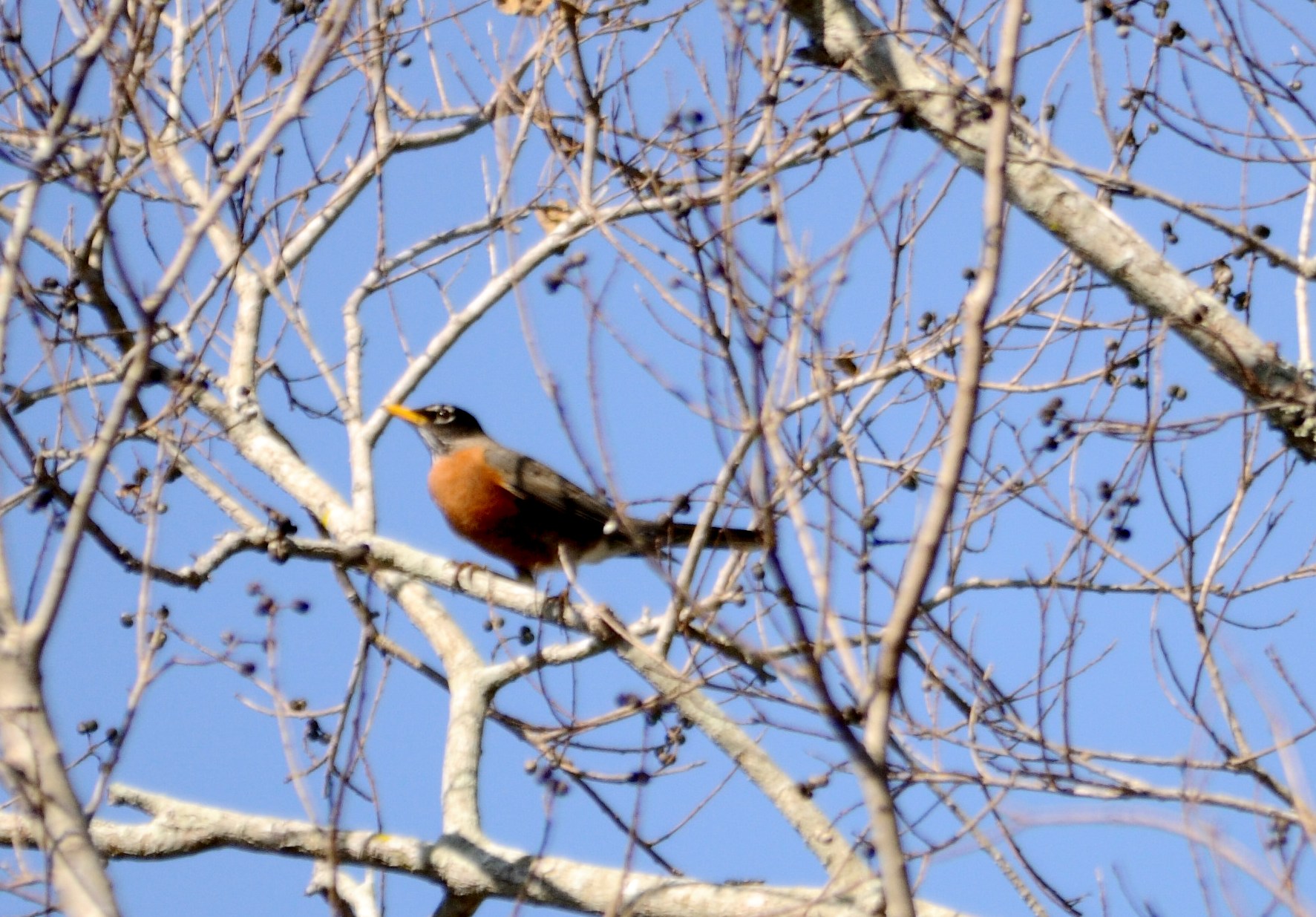
American Robin by Dan

Greater Roadrunner

Flycatchers

Finches

Common Loon

Bald Eagle

Atlantic Puffin

American Robin

Ducks, Geese, Swans

Birds of the Bible – Church Camp In Philippines

Wanted to share some information on what the Lord has done through this website. This will be a two part article. I just heard about some of the results of a church camp that took place a few weeks ago. The ECBF Junior camp in Daraitan, Tanay, Philippines. Below is a video they just released on YouTube.

I got involved when Myra left a comment on our site at Birdwatching From A Christian Perspective. She asked permission to use some of the material for an upcoming camp. Of course, permission was granted and we have communicated several times since then through comments and e-mails.

I’ve asked her to do a write-up about the camp and that will be in Part II. Here are some things that I have learned through our contacts. I am sure Myra won’t mind me sharing these.

“I learned about birdwatching from an American missionary several years ago.  I didn’t know it was possible to birdwatch where I live — Taytay,  Rizal, a rather crowded town east of Manila. The missionary said they could birdwatch where they live which was not far from where I live. So have been a casual birdwatcher ever since.  I watch butterflies too.”, by Myra
Then as camp grew near, she sent me a partial section of the camp manual. When I received it, I wept from the knowledge that the Lord was using my small efforts on this blog to help others around the world. Here is part of that manual:

Let’s Be Bird Watchers!

Bakit mabuting libangan ang bird watching?

“Ang ibon at mga hayop ay marunong pa sa iyo, Sa kanila ay magtanong at ikaw ay matututo.” Job 12:7
Masdan ninyo ang mga ibon: hindi sila naghahasik ni nag-aani o kaya’y nagtitipon sa bangan. Gayunman,pinakakain sila ng inyong Amang nasa langit. Hindi ba’t higit kayong mahalaga kaysa mga ibon. (Mateo 6:26)
Sapagkat ang buhay ay higit na mahalaga kaysa pagkain, at katawan kaysa pananamit. Isipin na lang ninyo ang mga uwak: hindi sila naghahasik ni nag-aani man; wala silang bangan ni kamalig, gayunma’y pinakakain sila ng Diyos. Gaano pa kayo – higit kayong mahalaga kaysa mga ibon. (Lucas 12:23-24 )
Para maging birdwatcher:

  • Look around – magmasid.
  • Look for birds that are common near you. Where? Sa ibabaw ng mga poste, sa mga linya ng kuryente, sa mga parke, sa garden spots ng resort o subdivision.
  • Listen! Each bird has the own different note or song: Psalm 104:12(birds sing) ; Ecclesiastes 12:4 (birds make sounds); Song of Solomon 2:12 (birds have voices)
  • Some birds -maganda ang boses
  • Some birds- sintonado / malakas / masakit sa tenga ang boses
  • Some birds- madaldal.
  • Some birds- madakdak.

After you find birds to watch, observe them.
How? Take note of their:

  • Colors
  • Size (Tiny, Small, Medium, Large, Very Big)
  • Sounds
  • Beak (Pahaba, deretso lang, naka-curve, matulis, etc.)
  • Posture (hukot, deretso, laging nakatingala)
  • Wings (mahaba, maiksi, matulis, pabilog, etc.)
  • Tail (long, short, patulis, parang fork, parang pamaypay, etc.

Movements. What are they doing? Kumakain / naghahanap ng makakain / gumagawa ng pugad / may dala-dalang damo. Malikot, sa lupa naglalakad, sa bukid nakatayo , nakatayo sa ibabaw ng kalabaw

Assignment: Use some of your free time during this camp to bird watch. Describe below some of the birds you see or hear.

Like many of you, I can not read much of it, but they could and so can our Omnipresent and Omniscient Creator who knows all languages.

One more excerpt from her email I received this morning and then you can see how their camp went.

“There are a few pictures in the video that show us under some trees on a hill. That’s where I asked the kids to be absolutely silent for ten minutes and just try to listen to as many bird calls as possible. I heard at least five bird calls coming from all directions and so did many of the kids. One of the staff said those ten minutes took away months of stress. You helped in more ways than you thought you did!”

Listen to this, O Job; Stand still and consider the wondrous works of God. (Job 37:14 NKJV)

Heard, But Not Seen

Caught Dan on the Boardwalk trying to find a bird

Caught Dan on the Boardwalk trying to find a bird

Yesterday Dan and I went birdwatching at the Mosaic Peace River Park in Homeland, FL. It was a gorgeous morning and the temperature was around 73° when we got there around 10 am. While we were getting our gear out a Northern Cardinal landed nearby. I aimed my camera and realized I had not taken the lens cap off yet. By the time I did remove it, you guessed it, he flew away into the trees. That was the story of our trip. The birds were “heard, but not seen.”

For those that may be new to birdwatching, when a bird is heard even though not seen, it can be counted on your list. Some are not aware of that fact. The problem is, knowing what the birds sound like. I was sorry yesterday that I had not spent enough time practicing hearing sounds. My list would have been much longer. Where we were has a boardwalk winding between the trees and ends up at the Peace River. Other than that Cardinal and the ones flying way overhead, no birds were seen. Yet, our list included 16 species.

I have decided to test you some and help you learn. Below are the sounds of some of the birds we heard, but I won’t  ID until later in the article.

Sound #1

Sound #2

Sound #3

Sound #4

Sound #5

So, have you figured them all out. They are fairly common to this area of the US. To help you out, here is a link to their photos:
Bird #1 ~ ~ Bird #2 ~ ~ Bird #3 ~ ~ Bird #4 ~ ~ Bird #5

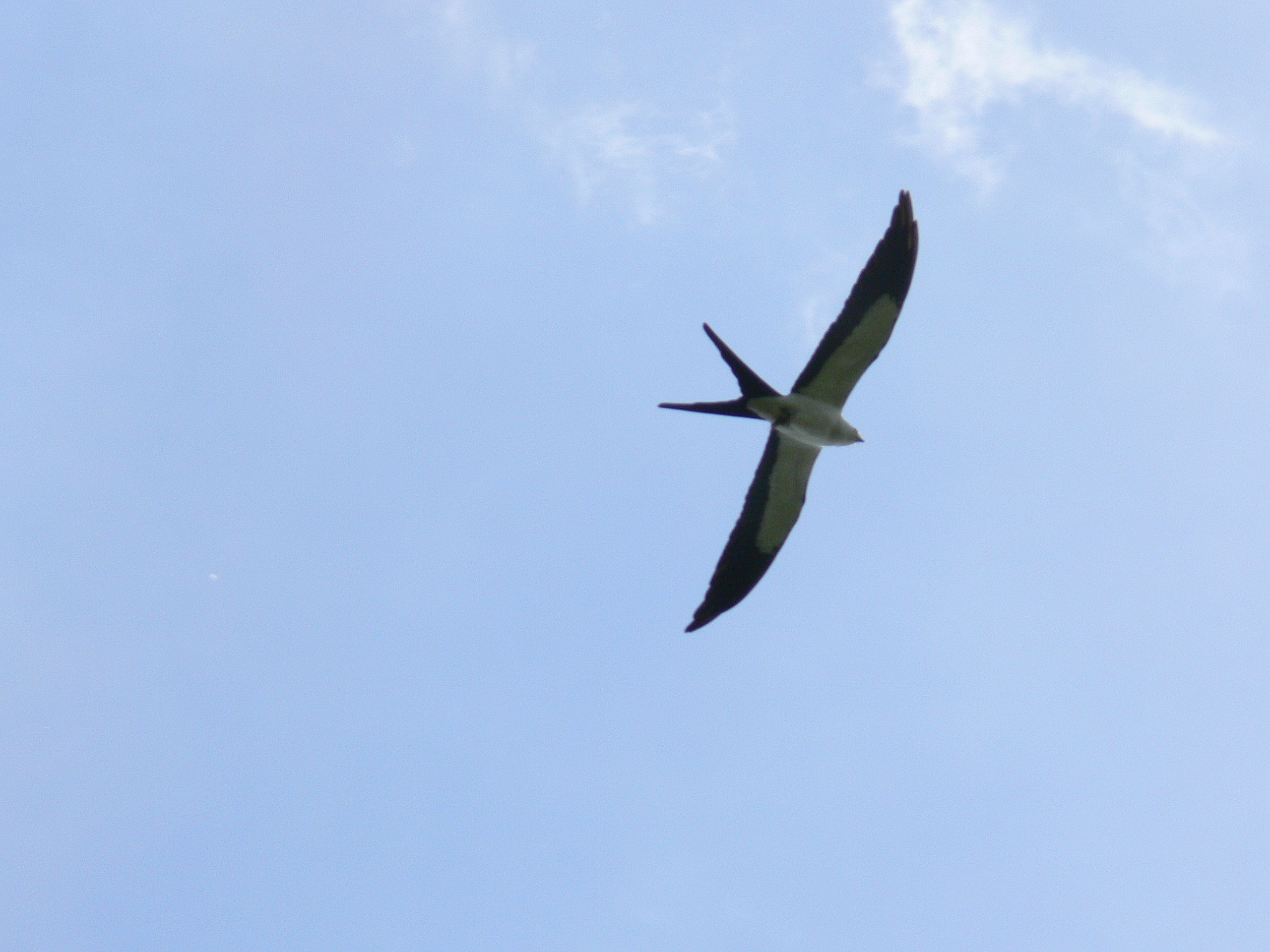
Swallow-tailed Kite - the one bird I got a photo of as it flew overhead

Swallow-tailed Kite – the one bird I got a photo of as it flew overhead

That Bird #5 had given me a test of my memory. I wrote down on my list “squeeky wheel bird.” I knew I had heard it before and planned to look it up when we got home. Luckily, on the way back to the car, we met a group of birdwatchers from Martin county Audubon. We compared lists, which is normal for birdwatchers, and then I asked about the “squeeky wheel bird” and they gave me it’s name right off. (I should have been birding with them) I checked out my recordings at home and sure enough, that is what it was.

All the sound recording came from xeno-canto.org and there are numerous other places to find the sounds of birds. Birding by Ear Basics from About.com/Birds has good tips. Cornell Lab of Ornithology is one of the best for seeing and hearing the birds.

We hear the birds and know they are there even though we do not see them. In the Christian realm, we do not see the Lord in person today, but we know He is alive and speaks to us through the things He has created and most of all by His Word.

He who is of God hears God’s words; …” (John 8:47a NKJV)

Now to the King eternal, immortal, invisible, to God who alone is wise, be honor and glory forever and ever. Amen. (1 Timothy 1:17 NKJV)

For since the creation of the world His invisible attributes are clearly seen, being understood by the things that are made, even His eternal power and Godhead, so that they are without excuse, (Romans 1:20 NKJV)

*

Birds of the Bible – Little Brown Jobs

An interesting video from YouTube by SmellLikeDirt caught my interest. Take a look and then I’ll comment on it.

*

The Sparrow has been written about before, but it is always nice to find out something else new about them. We know that the Lord created all the birds, but it seems as though the Sparrow just doesn’t get the attention like the more colorful birds. After watching the video, I trust you saw how God has provided for them to keep their species alive.

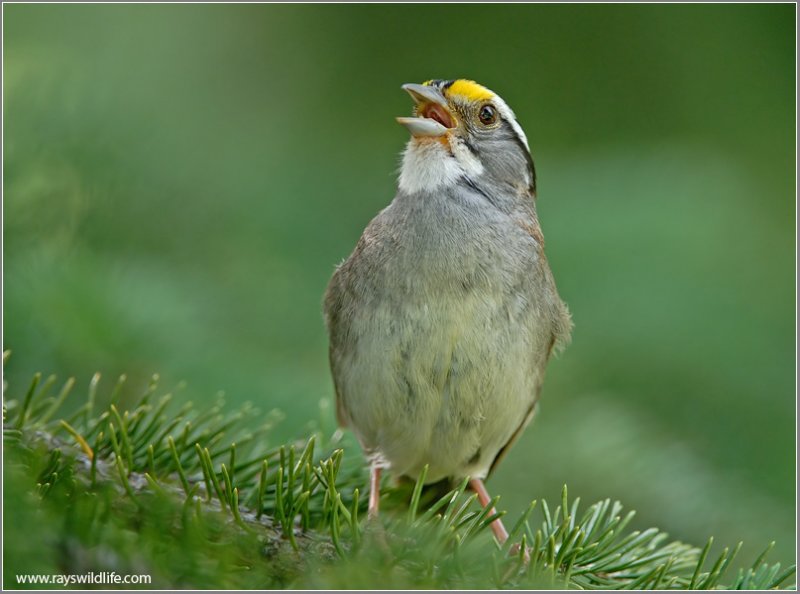
White-throated Sparrow by Ray

It is interesting about the behavior patterns of the different patterns of coloration. The White-throated Sparrow is a passerine bird of the American sparrow family Emberizidae. The White-throated Sparrow is 17 cm (6.75 inches) in length with a wingspan of 23 cm (9 inches) Typical weight is 26 grams (0.91 oz).

There are two adult plumage variations known as the tan-striped and white-striped forms. On the white-striped form the crown is black with a white central stripe. The supercilium is white as well. The auriculars are gray with the upper edge forming a black eye line.

On the tan form, the crown is dark brown with a tan central stripe. The supercilium is tan as well. The auriculars are gray/light brown with the upper edge forming a brown eye line. Both variations feature dark eyes, a white throat, yellow lores and gray bill. There is variation and some individuals may show dark lateral stripes of each side of the throat.

Most of us are just average people and sometimes may feel like you are not that important to others. But God loves us, even more than the sparrows and He hasn’t forgotten them.

Are not five sparrows sold for two copper coins? And not one of them is forgotten before God. (Luke 12:6 NKJV)

It’s true that the Sparrows are looked down on and sometimes just called, “Little Brown Jobs,” but they are created the way God wanted them in His plan for them. As Christians, not everyone can be the leader or the one in the “lime-light.” If that were true, then where would the followers be?

For in fact the body is not one member but many. If the foot should say, “Because I am not a hand, I am not of the body,” is it therefore not of the body? And if the ear should say, “Because I am not an eye, I am not of the body,” is it therefore not of the body? If the whole body were an eye, where would be the hearing? If the whole were hearing, where would be the smelling? But now God has set the members, each one of them, in the body just as He pleased. (1 Corinthians 12:14-18 NKJV)

See also:

Sparrows

*

Background Sounds

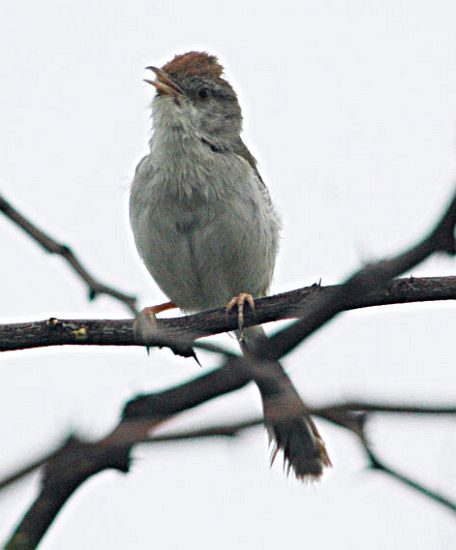
Rufous-fronted Prinia (Prinia buchanani) by Nikhil D

Rufous-fronted Prinia (Prinia buchanani) by Nikhil D

We are trying something new. At the top of the sidebar there is now a place to click to listen to background sounds of birds as you view this blog. It can be turned on and off as you desire. If you were to watch a video or recording, the background sound can be stopped. Our goal is to change the recording periodically and as we can get permission for recordings.

As always, this is a work in progress. We would like your comments on this. Yes, No, or whatever. Let us know by leaving a comment.

Birds of the Bible – Leaving the Ark

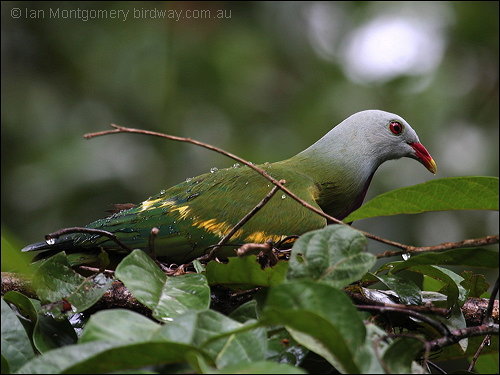
Wompoo Fruit-Dove (Ptilinopus magnificus) by Ian

Wompoo Fruit-Dove (Ptilinopus magnificus) by Ian

In my reading this week, I read something that I had overlooked before. We know that the animals, birds and all critters came to Noah two by two to be placed in the safety of the Ark.

And of every living thing of all flesh, two of every sort shalt thou bring into the ark, to keep them alive with thee; they shall be male and female. Of fowls after their kind, and of cattle after their kind, of every creeping thing of the earth after his kind, two of every sort shall come unto thee, to keep them alive. (Genesis 6:19-20 KJV)

We have written about that before in Birds of the Bible – Foundation #3 when the critters went in and Foundation #4 when they came off. What I discovered is that the attitudes or instincts of them changed when they came off.

Noah let the Raven out and it didn’t come back, but the dove did because it didn’t find a resting place for it’s feet.

But the dove found no place to set her foot, and she returned to him to the ark, for the waters were still on the face of the whole earth. So he put out his hand and took her and brought her into the ark with him. (Genesis 8:9 ESV)

Then 7 days later Noah let the dove out again and this time returned with an olive leaf.

He waited another seven days, and again he sent forth the dove out of the ark. And the dove came back to him in the evening, and behold, in her mouth was a freshly plucked olive leaf. So Noah knew that the waters had subsided from the earth. (Genesis 8:10-11 ESV)

Some commentators had this to say:

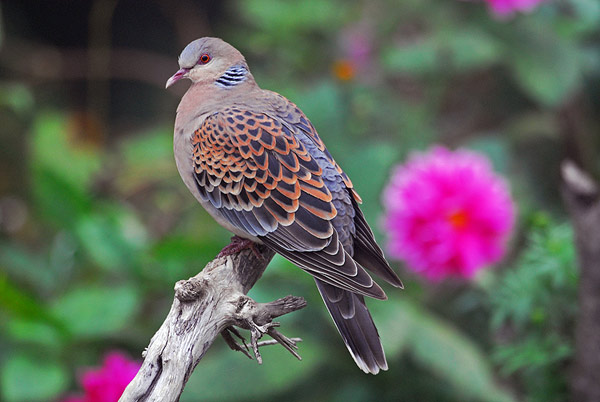
Oriental Turtle Dove (Streptopelia orientalis) by Nikhil

Oriental Turtle Dove (Streptopelia orientalis) by Nikhil

then he put forth his hand and took her, and pulled her in unto him into the ark: she hovered about it, and got near the window, which Noah opened and took her in; which may represent the gracious reception sensible souls meet with from Christ, who apply to him; he kindly embraces them, and they find room in his heart and affections, fullness of everything they want, and security from all danger.” (Gill)

“And as Noah put forth his hand, and took the dove, and pulled her in to him, into the ark, so Christ will graciously preserve, and help, and welcome, those that fly to him for rest.” (Matthew Henry)

What I noticed and believe is that the Dove did not fear Noah and allowed itself to be brought back in twice. The dove returned needing shelter, but also not wary of the humans on board. This lack of fear demonstrated by the dove may help explain why the animals, birds and other critters had no problem coming to Noah to be loaded on board the Ark in the first place. Of course, God brought them there, as we know, but the lack of fear may have made it easier for them to get them in.

Now, watch what happens in Genesis 9:1-3:

And God blessed Noah and his sons and said to them, “Be fruitful and multiply and fill the earth. The fear of you and the dread of you shall be upon every beast of the earth and upon every bird of the heavens, upon everything that creeps on the ground and all the fish of the sea. Into your hand they are delivered. Every moving thing that lives shall be food for you. And as I gave you the green plants, I give you everything. (Genesis 9:1-3 ESV)

Right there that lack of fear ended.

Today, those of us who love to go bird or critter watching know about that fear they have of us. Because of that fear, they are able to steer clear of being trapped, caged, or eaten. Do we fear satan enough that we steer clear of his traps, cages, and falling prey to him?

To me it is amazing that no matter how many times we read over a passage of Scripture, the Lord allows us see new things to help us grow and appreciate our Creator and Savior even more. Never tire of re-reading a passage of God’s Word. His Word is alive just as He is.

Interesting Things! – Techy Ants

SmileyCentral.com

High-Tech Ants

Then God saw everything that He had made, and indeed it was very good. So the evening and the morning were the sixth day. (Genesis 1:31)

Ant - Wikipedia

Ant - Wikipedia

Why do ants like electricity and why can they sense microwaves? If evolution were true, how would ants evolve a love for electricity in only the short time that man has been producing it? For what purpose would they have evolved the ability to sense microwave radiation long before man was using it?

It has been well established that ants like to build their nests around electrical equipment. They are often found around electrical meters. They are famous for building their nests around airport runway lights. They seem to be particularly fond of electrical relays. No one knows why. Now we learn that unlike any other multicelled creatures, they can survive inside a running microwave oven, perhaps enjoying your food as it cooks! How can they do this? It seems that ants can detect the invisible wave pattern of microwaves inside the oven. These patterns leave some areas of the oven low in microwave radiation while other areas are high in radiation. Ants simply avoid those areas where the radiation is strong enough to kill them. Incidentally, you can see these patterns by lining the tray on the floor of your microwave oven with marshmallows. You will notice that some will become very cooked while others are barely touched by the microwaves.

If evolution were true, how would ants develop the ability to deal successfully with conditions that did not exist? It makes more sense to conclude that our Creator, Who knows the future, made the ants as He did for reasons we still must discover.

References: Science Frontiers, 1-2/00, p. 2, “Ants Like Microwaves.”
©2010 Creation Moments, Inc.

Interesting Things – Increasingly Tangled Tree of Life

SmileyCentral.com

The Increasingly Tangled Tree of Life

All things were made through Him, and without Him nothing was made that was made. (John 1:3)

Researchers studying genetics have concluded that the evolutionary tree of life does not reflect the facts of biochemistry.

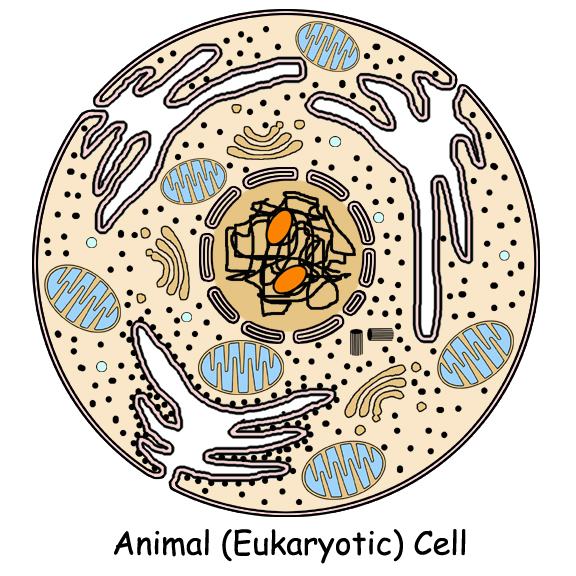
By the 1960s, biochemists had concluded that living things could be grouped into two distinct types based on their basic structures and genetic information. Eukaryotes have one or more cells and a true nucleus. Prokaryotes have smaller cells with no true nucleus. They are so different from eukaryotes that researchers concluded that they must have developed separately from non living matter. By the late 1970s, a third type of life was recognized – the archaea. Archaea favor extreme environments such as undersea vents. Their biochemistry is unlike prokaryotes or eukaryotes. According to evolutionists, life may have had to develop from non-living material three times. Further, to explain the biochemistry of these three types of creatures, biochemists have to assume that at points these separate types had to exchange genetic material with each other, and with a fourth, unknown and extinct type of living thing!

One logical conclusion of this new evolutionary approach is that life had to arise from non-life many times. Yet, modern biochemistry still has not explained how life could arise from non-life even once. However, this is exactly the pattern we might expect if all living things are the product of a wise Creator Who used similar designs to solve similar problems.

References: Scientific American, 2/00, pp. 90-95, “Uprooting the Tree of Life.”
©2008 Creation Moments, Inc.

Listen to article – Click Here

In the beginning God created the heaven and the earth. (Genesis 1:1 KJV)

He is Risen! Happy Easter

Therefore doth my Father love me, because I lay down my life, that I might take it again. No man taketh it from me, but I lay it down of myself. I have power to lay it down, and I have power to take it again. This commandment have I received of my Father. (John 10:17-18 KJV)

Now if Christ be preached that he rose from the dead, how say some among you that there is no resurrection of the dead? But if there be no resurrection of the dead, then is Christ not risen: And if Christ be not risen, then is our preaching vain, and your faith is also vain. (1 Corinthians 15:12-14 KJV)

For more about Christ’s Resurrection – Please See:

Wordless Birds

Gospel Message

*

(Photo taken from an e-Mail)

Birds of the Bible – Cormorant II

And the pelican, and the gier eagle, and the cormorant, (Deuteronomy 14:17 KJV)

In the first Birds of the Bible – Cormorant, it was mentioned that they are one of the “unclean birds” not to be eaten, they have their own desalination system, and that they have been used for centuries in the Orient to catch fish for fishermen. Now, let’s look into some more facts about this family of birds.
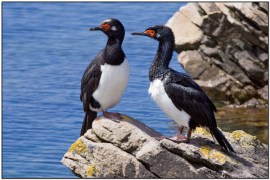
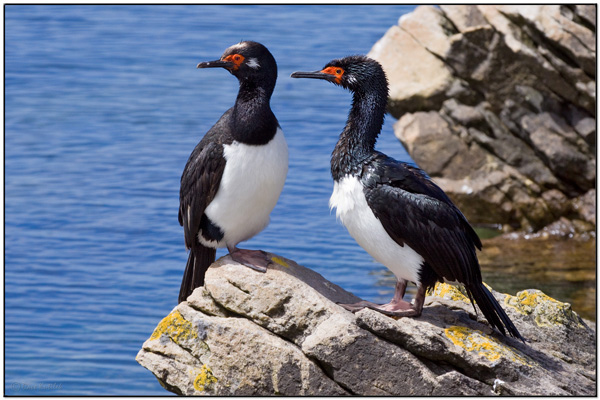
Rock Shag (Phalacrocorax magellanicus) by Daves BirdingPix

Rock Shag (Phalacrocorax magellanicus) by Daves BirdingPix

There are 36 Cormorants are in the Phalacrocoracidae Family of the Pelicaniformes Order. The family includes the Microcarbo genus (5) which has the Little Pied, Reed, Crowned, Little, and Pygmy Cormorants. The Phalacrocorax genus (21) includes Cormorants and Shags. The Leucocarbo genus (10) are all called Shags except for the Guanay Cormorant.

“There is no consistent distinction between cormorants and shags. The names “cormorant” and “shag” were originally the common names of the two species of the family found in Great Britain, Phalacrocorax carbo (now referred to by ornithologists as the Great Cormorant) and P. aristotelis (the European Shag). “Shag” refers to the bird’s crest, which the British forms of the Great Cormorant lack. As other species were discovered by English-speaking sailors and explorers elsewhere in the world, some were called cormorants and some shags, depending on whether they had crests or not. Sometimes the same species is called a cormorant in one part of the world and a shag in another, e.g., the Great Cormorant is called the Black Shag in New Zealand (the birds found in Australasia have a crest that is absent in European members of the species).” Apparently, they are just appearing after “their kind.” There is variation in size, names and colors, but they are all related.

And God created great whales, and every living creature that moveth, which the waters brought forth abundantly, after their kind, and every winged fowl after his kind: and God saw that it was good. And God blessed them, saying, Be fruitful, and multiply, and fill the waters in the seas, and let fowl multiply in the earth. (Genesis 1:21-22 KJV)
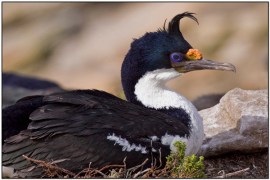
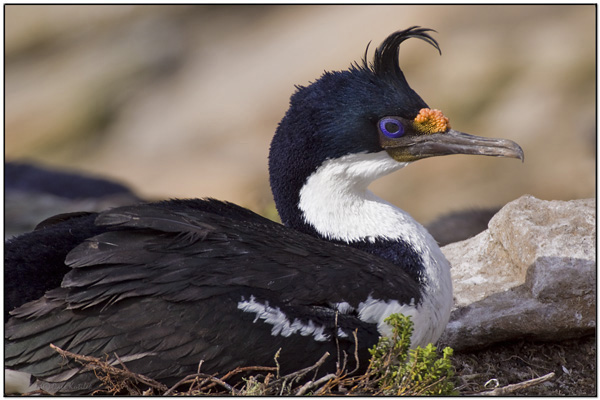
King Shag (Leucocarbo albiventer) by Daves BirdingPix

Cormorant” is a contraction derived from Latin corvus marinus, “sea raven”. Cormorants and shags are medium-to-large seabirds. They range in size from the Pygmy Cormorant (Phalacrocorax pygmaeus), at as little as 45 cm (18 in) and 340 g (12 oz), to the Flightless Cormorant (Phalacrocorax harrisi), at a maximum size 100 cm (40 in) and 5 kg (11 lb). The majority, including nearly all Northern Hemisphere species, have mainly dark plumage, but some Southern Hemisphere species are black and white, and a few (e.g. the Spotted Shag of New Zealand) are quite colorful. Many species have areas of coloured skin on the face (the lores and the gular skin) which can be bright blue, orange, red or yellow, typically becoming more brightly colored in the breeding season. The bill is long, thin, and sharply hooked. Their feet have webbing between all four toes, as in their relatives.

They are coastal rather than oceanic birds, and some have colonised inland waters – indeed, the original ancestor of cormorants seems to have been a fresh-water bird. They range around the world, except for the central Pacific islands.
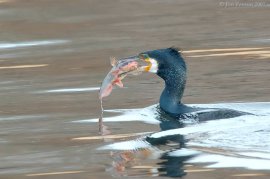
Great Cormorant (Phalacrocorax carbo) by J Fenton

Great Cormorant (Phalacrocorax carbo) by J Fenton

All are fish-eaters, dining on small eels, fish, and even water snakes. They dive from the surface, though many species make a characteristic half-jump as they dive, presumably to give themselves a more streamlined entry into the water. Under water they propel themselves with their feet. Some cormorant species have been found, using depth gauges, to dive to depths of as much as 45 metres.

After fishing, cormorants go ashore, and are frequently seen holding their wings out in the sun. All cormorants have preen gland secretions that are used ostensibly to keep the feathers waterproof.

Cormorants are colonial nesters, using trees, rocky islets, or cliffs. The eggs are a chalky-blue colour. There is usually one brood a year. The young are fed through regurgitation. They typically have deep, ungainly bills, showing a greater resemblance to those of the pelicans’, to which they are related, than is obvious in the adults.”

The Cormorants and Shags are another of the Lord’s fantastic creations from an All-powerful Creator.

Some quotes from Wikipedia

Visit the Cormorant Page

Doves and Pigeon Pages Updated

Wompoo Fruit-Dove (Ptilinopus magnificus) by Ian

Wompoo Fruit-Dove (Ptilinopus magnificus) by Ian

Though ye have lien among the pots, yet shall ye be as the wings of a dove covered with silver, and her feathers with yellow gold. (Psalms 68:13 KJV)

I have been working away updating the Doves and Pigeon pages. Since the Dove and the Pigeon are Birds of the Bible and we recently did an article about their eyes and voice, “Birds of the Bible – Dove’s Eyes and Voice,” figured it was time to update those pages. Please check the following links for information on the Doves and Pigeons:
The main Doves and Pigeons page

Dove and Pigeon Photos

Dove and Pigeon Videos

Columbidae Family page

I am not finished as there are 321 Pigeons and Doves in the family and it will take quite awhile to round up photos for them. Stay posted as more photos are added. I am very thankful for all the photographers and videographers who have given their permission to use their photographs.