Birds of the Bible – Swan Loyalty

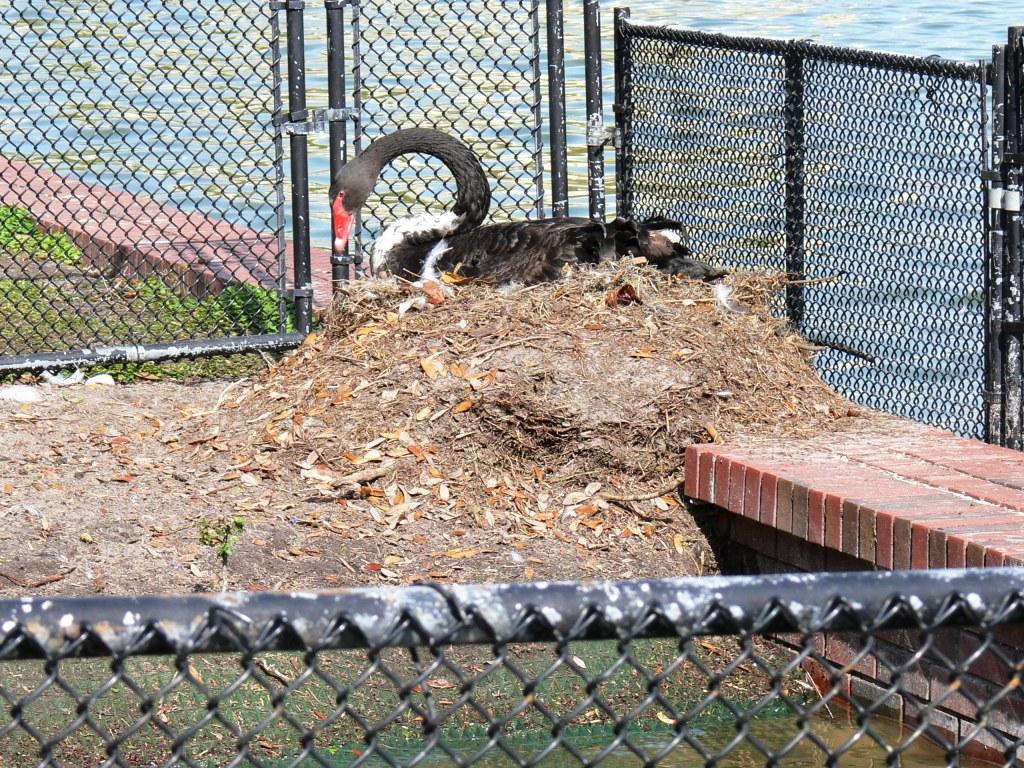
Black Swan nest at Lake Morton

Black Swan nest at Lake Morton

Dan and I went to Lake Morton in Lakeland. The Swans were building nest all over the place. When we were there several months back, one of the couples was just starting their nest. Now it is quite huge and they have even put a fence around it.

Swans are one of the Birds of the Bible listed in Deuteronomy 14:16 and Leviticus 11:18 as being one of the unclean birds that the Israelites were not to eat.

And the swan, and the pelican, and the gier eagle (Leviticus 11:18 KJV)

Here is an excerpt about the Swans and their loyalty to each other. This is from Creation Moments:
(I Corinthians 7:10) “Now to the married I command, yet not I but the Lord: A wife is not to depart from her husband.”

“Most water fowl are faithful to one mate over long periods of time. However, the swan is a champion of marital fidelity.

Mute Swan on Nest at Lake Morton

Mute Swan on Nest at Lake Morton

In North America, they are called Whistling Swans or Tundra Swans. Another member of the same species is usually found in Europe and Asia, where it is called Bewick’s Swan. Researchers report that each has a unique pattern of yellow and black on its bill, making individuals easy to identify. This allowed researchers to trace their lives over many years.

These beautiful creatures have relatively long life spans. One individual was traced for 26 years. Typically laying four eggs in nesting season, they breed for most of their lives. They are highly territorial. In a face-off for food or nesting area, the largest male is usually the winner. When there is a disagreement, the males face each other while their mates cheer them from the sidelines. Single swans enjoying a nice discovery of food are often driven off by couples. Couples are faithful for life. Researchers say that they have recorded no cases of divorce among successfully reproducing couples. Nor do they report any case of marital infidelity among swans. If a mate is lost, the survivor often takes over a year to settle down with another mate. In one case a survivor waited for six years.

Marital fidelity is also God’s instruction to humans. Today many factors are allowed to challenge marital fidelity. Often infidelity before or after marriage is portrayed as simply normal. But if swans can manage fidelity, we humans have no excuse for infidelity.”

For more information, go to the Birds of the Bible – Swans Page
Experts stunned by swan ‘divorce’ at Slimbridge wetland
Bewick’s Swans aka Tundra Swans

Interesting Things – Anna’s Hummingbird

SmileyCentral.com

New Avian Speed Champion Discovered

Which doeth great things past finding out; yea, and wonders without number. (Job 9:10)

“A peregrine falcon diving toward its prey reaches a relative speed of 200 body- lengths per second. This is close to the 207 body-lengths that the space shuttle travels as it enters our atmosphere. Thus, the peregrine falcon was thought to easily be the fastest dare-devil bird on Earth.

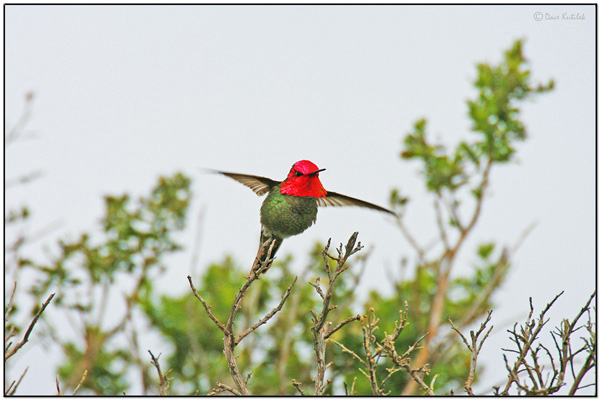
Anna's Hummingbird by Dave's BirdingPix

Anna's Hummingbird by Dave's BirdingPix

Scientists have now discovered that a little pink male hummingbird called Anna’s Hummingbird is the real Top Gun among the birds. As part of its mating ritual, a male hummingbird will try to impress a female with his speed and acrobatics. First, the male will fly up to about 90 feet above the ground. Then, he begins a power dive. As he nears the female, he pulls up, ascending again. During that near-miss pull-up he experiences more than nine times the force of gravity. His relative speed during descent is 385 body-lengths per second. That’s almost twice the peregrine falcon’s relative speed, it’s faster than the space shuttle entering the Earth’s atmosphere and is more than twice the relative speed of a jet fighter running with afterburners!

The wonders of God’s creation are still being discovered, and Creation Moments still loves to make them known to our listeners. But God’s greatest wonder is His love for us though His Son, Jesus Christ. We are thankful that this wonder is revealed to us in the Bible.

Prayer: Father, I give You thanks for the wonders You create, but I especially give You thanks for the wonder of salvation. Amen.

References: Science News, 7/4/09, p. 7, Susan Millius, “Hummingbird pulls Top Gun stunts.”

From Creation Moments ©March 24, 2010

Interesting Things – Birds’ Unique Leg Structure Says No Evolution

SmileyCentral.com

“Birds’ Unique Leg Structure Says No Evolution

And God created great whales, and every living creature that moveth, which the waters brought forth abundantly, after their kind, and every winged fowl after his kind: and God saw that it was good. (Genesis 1:21 KJV)

Countless television programs, museums, textbooks, and popular articles tell us that the birds evolved from dinosaurs. It now appears that this claim is even less credible!

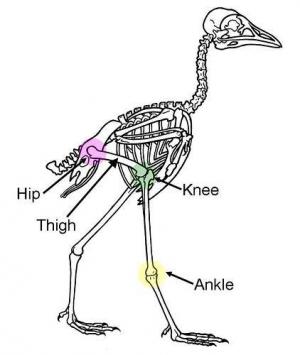
Bird Structure

Bird Structure

Researchers at Oregon State University have made a fundamental discovery about how birds breathe. Unlike other land animals, birds have immovable thigh bones, and they walk and run by bending their knees. All other land creatures can move both their thigh bone as well as bend their knees to walk and run. This included the dinosaurs and other theropods from which birds supposedly evolved. Birds need twenty times as much oxygen as cold-blooded animals. To supply this need, birds are designed with unique lungs and supporting musculature. Researchers found that if birds had the usual muscle structures and could move their thighs, their high-performance lungs would collapse. Even the evolutionists at Oregon State University said that this makes it unlikely that birds evolved from dinosaurs, and they added that birds appear earlier in the fossil record than the theropods from which they supposedly evolved!

There are other transition problems associated with bird evolution that are seldom mentioned. For example, reptiles are cold-blooded and birds are warm blooded; yet, this major transition has seemingly been overlooked.

Of course, the Bible has always taught that birds were specially made by God and did not evolve from any other creature.

Prayer: Lord, You have designed all things well. Do not let Your people be fooled by those who deny Your works. Amen.

References: Oregon State University (2009, June 9), “Discovery Raises New Doubts About Dinosaur -Bird Links. Science Daily. Retrieved June 16, 2009, from http://www.sciencedaily.com/ releases/2009/06/090609092055.htm.”

From Creation Moments ©March 22, 2010

To see more interesting things – CLICK HERE

Birds of the Bible – Fowl (Birds) of Every Wing

In the mountain of the height of Israel will I plant it: and it shall bring forth boughs, and bear fruit, and be a goodly cedar: and under it shall dwell all fowl of every wing; in the shadow of the branches thereof shall they dwell. (Ezekiel 17:23 KJV)

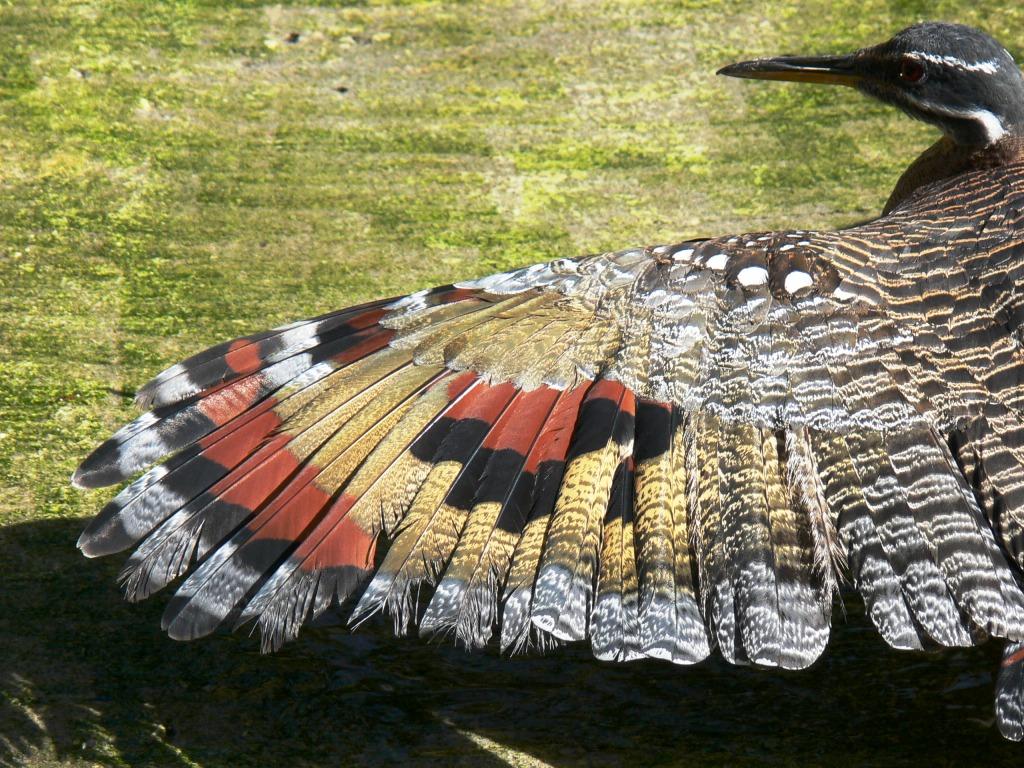
Sunbittern (Eurypyga helias) Left Wing by Lee at Lowry Park Zoo

Sunbittern (Eurypyga helias) Left Wing by Lee at Lowry Park Zoo

The phrase “Fowl (or Birds) of Every Wing” caught my interest. Remembering the article I recently wrote about the Sunbittern with it’s beautiful wings, I thought that might be neat to show some of the other bird’s fancy wings. Also, since I have been busy updating the Birds of the World pages, I thought that showing different birds from around the world would be interesting for you. But, first, what is that verse referring to anyway?

Adam Clarke’s Commentary on the Bible summarized Ezekiel 17:23 as a future prophecy referring to Christ,
“In the mountain of the height of Israel – He shall make his appearance at the temple, and found his Church at Jerusalem.
Shalt bring forth boughs – Apostles, evangelists, and their successors in the Gospel ministry.
And bear fruit – Multitudes of souls shall be converted by their preaching.
And under it shall dwell all fowl of every wing – All the nations of the earth shall receive his Gospel.
In the shadow of the branches thereof shall they dwell – Trust in him alone for salvation, and be saved in their trusting.”

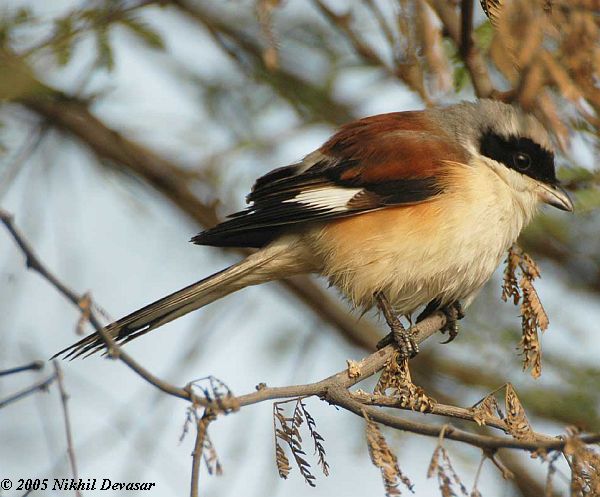
Bay-backed Shrike (Lanius vittatus) by Nikhil Devasa

Bay-backed Shrike (Lanius vittatus) by Nikhil Devasa

“But it left room for the sovereignty of God, who would bring down the high tree and exalt the low tree, who would dry up the green tree and make the dry tree to flourish. His grace would take the little forgotten branch of the house of David and raise it up in Israel upon the mountain of His power, where He would cause it to become a goodly cedar, bearing fruit, and sheltering all that would seek the protection of its shadow. All the powers of the earth should know the word and the works of Jehovah.” (John Darby’ Synopsis)

“Both the Jews and Gentiles will be gathered into it.” (Geneva Bible Translation Notes)

and under it shall dwell all fowl of every wing; in the shadow of the branches thereof shall they dwell; by whom are designed converted sinners of all sorts, and of all nations, Jews and Gentiles; compared to birds, because weak, defenceless, and timorous; exposed to danger; and wonderfully delivered; are subject to wander and go astray; and for their chirping and warbling notes: now these may be said to “dwell” under the “shadow” of the “branches” of this “goodly cedar”, Christ and his church; that is, under the ministration of the word and ordinances, which is a very delightful and refreshing shadow, a very safe and fruitful one, Son_2:3; and here saints choose to dwell, and determine to abide and continue, as it is their interest and happiness so to do; and what a flocking and tabernacling of these birds here will there be in the latter day, where they will chirp and sing in the height of Zion? Isa_66:4; compare with this Mat_13:32; where our Lord is thought by some to allude to this passage.” (John Gill’s Exposition)

House Sparrow (Passer domesticus) Female by Nikhil

House Sparrow (Passer domesticus) Female by Nikhil

under it … all fowl — the Gospel “mustard tree,” small at first, but at length receiving all under its covert (Mat_13:32); the antithesis to Antichrist, symbolized by Assyria, of which the same is said (Eze_31:6), and Babylon (Dan_4:12). Antichrist assumes in mimicry the universal power really belonging to Christ.” (Jamieson, Fausset, and Brown)

“under it … all fowl — the Gospel “mustard tree,” small at first, but at length receiving all under its covert (Mat_13:32); the antithesis to Antichrist, symbolized by Assyria, of which the same is said (Eze_31:6), and Babylon (Dan_4:12). Antichrist assumes in mimicry the universal power really belonging to Christ.” (Life Application Study Bible)

There are other commentaries I could quote, but these are sufficient to understand that these “fowl of every wing” represent those who from around the world have accepted or will accept Christ the Lord as their Savior. (Gospel Message) We have shelter and refuge under this tree. There was a tree of life in the Garden of Eden, but access to it was forbidden because of sin, but two verses in Revelation speak of future access to that tree.

He that hath an ear, let him hear what the Spirit saith unto the churches; To him that overcometh will I give to eat of the tree of life, which is in the midst of the paradise of God. (Revelation 2:7 KJV)
Blessed are they that do his commandments, that they may have right to the tree of life, and may enter in through the gates into the city. (Revelation 22:14 KJV)

All commentary quotes are from e-Sword which is a free Bible program. More of the “Fowl of Every Wing” will be covered in future Birds of the Bible.

Sandhill Crane “Colt” Birdwatching

Sandhill Crane "colts"

Sandhill Crane "colts"

Our neighbor called 4 or 5 days before telling us that the Sandhill Cranes here in the community were sitting on a nest. Then Sunday afternoon (3/14/10) she called again to tell us that they were walking with the babies (born that morning). So these little Sandhill Crane “colts” are only a day old.

“Sandhill breeding habitat is marshes and bogs in central and northern Canada, Alaska, part of the midwestern and southeastern United States, Siberia and Cuba. They nest in marsh vegetation or on the ground close to water. The female lays two eggs on a mound of vegetation, but it is rare that both chicks hatch and grow to independence. Cranes mate for life; both parents feed the young, calledcolts“, who are soon able to feed themselves. The colts are taught to fly over many weeks when they run and dance with their parents. Dancing is a significant component in the education of young cranes. The Sandhill Crane does not breed until it is two to seven years old, and the average generation time is 12.5 years. It can live up to 25 years in the wild; in captivity it has been known to live more than twice that span. Mated pairs stay together year-round and migrate south as a group with their offspring.” (Wikipedia) This pair is here year-round. Been in our backyard many times.

I know all the birds of the hills, and all that moves in the field is mine. (Psalms 50:11 ESV)

Thought you might enjoy seeing them. Dan walked over and took these photos.

This slideshow requires JavaScript.

*

Updating to the IOC World Bird List 2.4 version

Yellow-rumped Warbler (Dendroica coronata) by Anthony747

Yellow-rumped Warbler (Dendroica coronata) by Anthony747

For the last week, I have been working on updating the Birds of the World section to the new IOC World Bird List 2.4 version, which came out on March 7th. Not knowing that they update about every three to four months, the list was getting way behind. I had started updating to 2.3 when 2.4 came out. So, to get every thing straight, I am changing all pages to the new version without any comments of what specifically changed.

Here is an overview of the changes:

Version 2.4 (March 7, 2010) – The IOC World Bird List 2.4 contains 10,384 species classified in 39 Orders, 222 Families (+7 Incertae Sedis) and 2202 Genera.

Updates include:
SPECIES:
ADDED to Master List: 25, including 4 splits of Yellow-rumped Warbler complex (Myrtle Warbler, Audubon’s Warbler, Black-fronted Warbler, Goldman’s Warbler)
DELETED from Master List: 7

English Names: 23 changes
Ranges: 28 changes
Taxonomy: 46 changes including 9 changes of Genera including 5 overdue ones for African greenbuls following Johansson et al (2007), and 1 change of Family (African stone partridges Ptilopachus to Odontophoridae).

So far my Indexes and the Order pages are complete, and I am working on the Family pages. “I’m on it!”

Updated 3/20/10: Just finished updating all the pages to the new 2.4 Version, I think. If you find an error, please leave a comment. Thanks.

Interesting Things – Ark, No Meat, Creator, Plus

SmileyCentral.com

While checking out Answers with Ken Ham, I found these interesting articles. Hope you find them informative.

Animals on the Ark–here Kitty, Kitty? (Jan 11, 2010)

Animals–no sin . . . no meat? (Mar 10, 2010)

Creator–where did He come from? (Jan 13, 2010)

Green-crowned Brilliant (Heliodoxa jacula) Reinier Munguia

The hummingbird-God’s Tiny Miracle! (Apr 5, 2007)

Bird brained-it could be a compliment! (Oct 9, 2009)

It’s a transition–NO, it’s a bird! (Aug 31, 2006)

Birds of the Bible – Dove’s Eyes and Voice

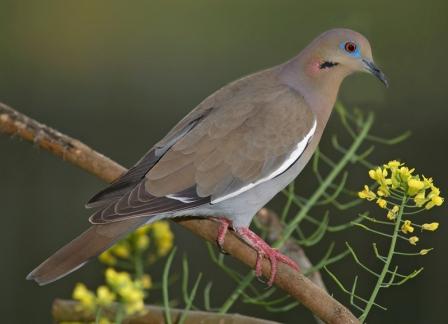
White-winged Dove by Reinier

Here are some interesting thoughts about the Eyes and Voice of a Dove. We had an Eurasian Collared Dove land in our yard today. What a lovely bird, with such a soft color. I always enjoy watching them.

White-winged Dove (Zenaida asiatica) Eye up close by Reinier

The Eyes of A Dove:

How beautiful you are, my darling, How beautiful you are! Your eyes are like doves.” (Song of Solomon 1:15 NASB)

Solomon is describing his love with terms that today we do not hear in that connection. How romantic to have your eyes compared to a dove’s eyes. At first it seems rather weird, but when you know what dove’s eyes actually look like, you realize that they ARE very beautiful.

Then she describes Solomon.

His eyes are like doves Beside streams of water, Bathed in milk, And reposed in their setting. (Song of Solomon 5:12 NASB)

John Gill’s Exposition of the Whole Bible says of this verse, referring to the meekness of Christ:
his eyes are like “doves’ eyes”; not fierce and furious, but loving and lovely; looking upon his people, under all their trials and afflictions, with sympathy and concern, to deliver them out of them: and like the eyes of doves. ”

The Voice of A Dove:
Then in chapter 2, Solomon goes on to use the dove again to describe her voice.

“Come, my shy and modest dove– leave your seclusion, come out in the open. Let me see your face, let me hear your voice. For your voice is soothing and your face is ravishing.” (Song of Solomon 2:14 MSG)

“It is fixed: She is stripped, she is carried away, And her handmaids are moaning like the sound of doves, Beating on their breasts.” (Nahum 2:7 NASB)

Audio by Andrew Spencer of Mourning Dove’s song.

John Gill’s Exposition of the Whole Bible says, “as with the voice of doves, tabering upon their breasts; mourning like doves, inwardly and secretly, not daring to express their sorrow more publicly, because of their enemies; but knocking and beating upon their breasts, as men do upon tabrets or drums, thereby expressing the inward grief of their minds; see Eze_7:16.”

Audio of Mourning Dove beating its wings by Andrew Spencer

Sounds are from Xeno-canto.org


See the Dove and Pigeons Page

Doves are in the Columbidae Family of the Columbiformes Order


Birds in Hymns – Yes, God is Good

Praise the LORD; for the LORD is good: sing praises unto his name; for it is pleasant. (Psalms 135:3 KJV)

Words: John H. Gur­ney, Psalms and Hymns for Pub­lic Wor­ship (Lon­don: 1851), based on Eliz­a­beth L. C. Fol­len’s lyr­ics in Hymns for Child­ren (Bos­ton, Mass­a­chu­setts: 1825).

Music: Tru­ro, from Psalm­o­dia Evan­gel­i­ca, by Thom­as Will­iams, 1789 (MI­DI, score). Al­ter­nate tune:
•Williams, from Tem­pli Car­mi­na, be­fore 1890 (MI­DI, score)

Yes, God is good; in earth and sky,
From ocean depths and spreading wood,
Ten thousand voices seem to cry,
“God made us all, and God is good.”

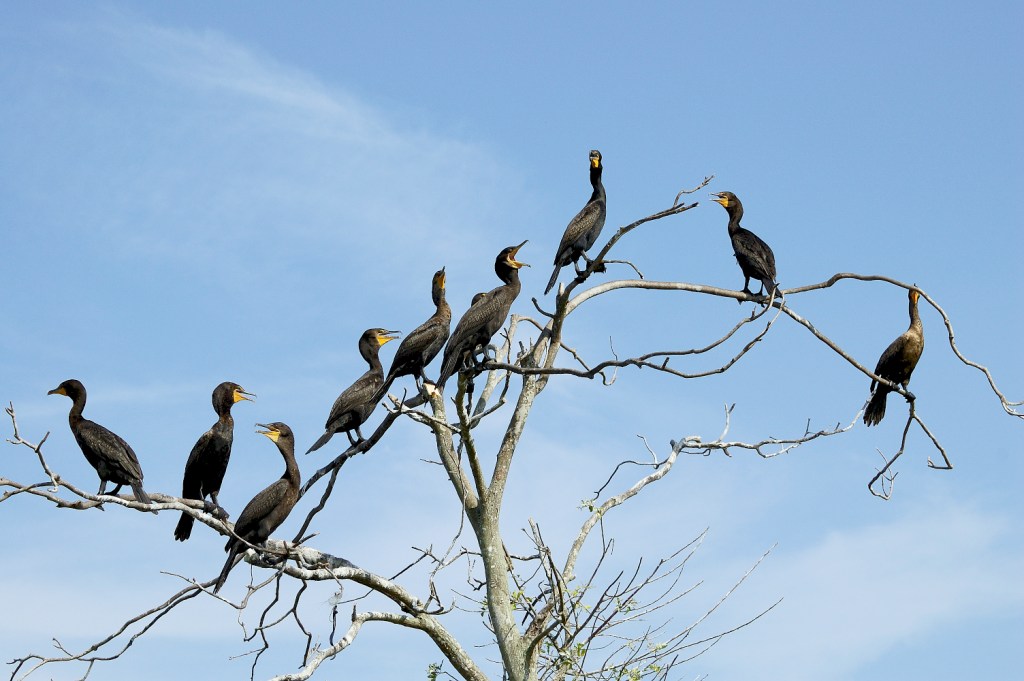
Double-crested Cormorant (Phalacrocorax auritus) at Lake John Rookery, Lakeland, FL By Dan

Double-crested Cormorant (Phalacrocorax auritus) at Lake John Rookery, Lakeland, FL By Dan

The sun that keeps his trackless way
And downward pours his golden flood,
Night’s sparkling hosts, all seem to say,
In accents clear, that God is good.

The merry birds prolong the strain,
Their song with every spring renewed;

And balmy air, and falling rain,
Each softly whispers, “God is good.”

I hear it in the rushing breeze;
The hills that have for ages stood,
The echoing sky and roaring seas,
All swell the chorus, God is good.

Yes, God is good, all nature says,
By God’s own hand with speech endued;
And man, in louder notes of praise,
Should sing for joy that God is good.

For all Thy gifts we bless Thee, Lord,
But chiefly for our heavenly food;
Thy pardoning grace, Thy quickening word,
These prompt our song, that God is good.

Most information from The Cyber Hymnal

See ~ Wordless Birds

More ~ Birds in Hymns

*

Birds in Hymns – Mighty God, While Angels Bless Thee

For God is the King of all the earth: sing ye praises with understanding. (Psalms 47:7 KJV)

Words: Ro­bert Ro­bin­son, 1774.
Music: Autumn by Fran­çois H. Bar­thé­lé­mon, 1785
Al­ter­nate tune: Wellesley by Liz­zie S. Es­ta­brook, 1878

Mighty God, While Angels Bless Thee

Mighty God, while angels bless Thee,
May a mortal sing Thy Name?
Lord of men as well as angels,
Thou art every creature’s theme.
Lord of every land and nation,
Ancient of eternal days.
Sounded through the wide creation
Be Thy just and endless praise.

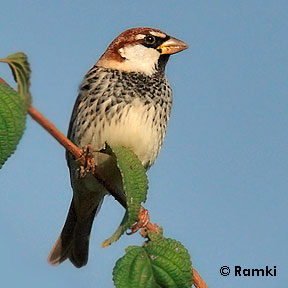
Spanish Sparrow (Passer hispaniolensis) by Nikhil Devasar

Spanish Sparrow (Passer hispaniolensis) by Nikhil Devasar

For the grandeur of Thy nature,
Grand beyond a seraph’s thought;
For the wonders of creation,
Works with skill and kindness wrought.
For Thy providence, that governs,
Through Thine empire’s wide domain,
Wings an angel, guides a sparrow,
Blessèd be Thy gentle reign.

For Thy rich, Thy free redemption,
Bright, though veiled in darkness long,
Thought is poor, and poor expression;
Who can sing that wondrous song?
Brightness of the Father’s glory,
Shall Thy praise unuttered lie?
Break, my tongue, such guilty silence!
Sing the Lord Who came to die.

From the highest throne of glory
To the cross of deepest woe,
All to ransom guilty captives;
Flow my praise, forever flow!
Reascend, immortal Savior;
Leave Thy footstool, take Thy throne;
Thence return, and reign forever,
Be the kingdom all Thine own!


See Video of Hymn by pipeorgan8

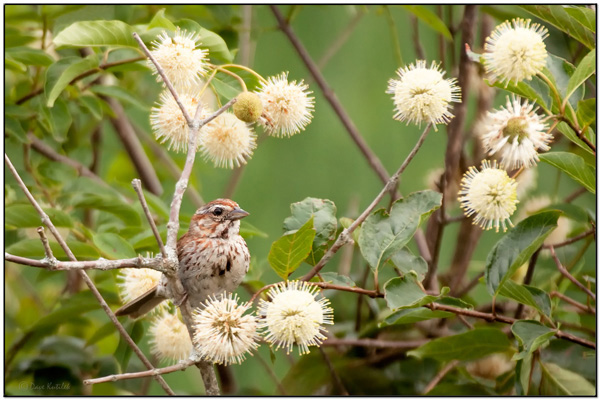
Song Sparrow in white flowers by Daves BirdingPix

Song Sparrow in white flowers by Daves BirdingPix

Ro­bert Ro­bin­son, (1735-1790)

“Robinson’s wi­dowed mo­ther sent him at age 14 to Lon­don, to learn the trade of bar­ber and hair dress­er. How­ev­er, his mas­ter found he en­joyed read­ing more than work. Con­vert­ed to Christ at age 17, Ro­bin­son be­came a Meth­od­ist min­is­ter. He lat­er moved to the Bapt­ist church and pas­tored in Cam­bridge, Eng­land. He wrote a num­ber of hymns, as well as on the sub­ject of the­ol­o­gy. His lat­er life was ev­i­dent­ly not an ea­sy one, judg­ing from a well known sto­ry about his hymn Come, Thou Fount of Ev­ery Bless­ing. One day, he en­count­ered a wo­man who was stu­dy­ing a hymn­al, and she asked how he liked the hymn she was hum­ming. In tears, he re­plied, Madam, I am the poor un­hap­py man who wrote that hymn ma­ny years ago, and I would give a thou­sand worlds, if I had them, to en­joy the feel­ings I had then.” (CyberHymnal)

*

More Birds in Hymns

See ~ Wordless Birds
Most information from The Cyber Hymnal – Mighty God, While Angels Bless Thee

*

Birds in Hymns – I Am His, and He Is Mine

The LORD hath appeared of old unto me, saying, Yea, I have loved thee with an everlasting love: therefore with lovingkindness have I drawn thee. (Jeremiah 31:3 KJV)

Author: George Wade Robinson, 1838-1877 – Its melody is lively and upbeat. Born in Ireland, Robinson was educated at Dublin’s Trinity College, and later at New College in London. Later he became a pastor in Dudley.

Music: Everlasting Love, James Mountain, 1843-1933 – The melody of “I am His, and He is Mine” was written under the name “Everlasting Love” by James Mountain in 1876. The melody of this hymn was written because the composer was about to publish a first edition of his hymnal, Hymns of Con­se­cra­tion and Faith. He took the words of Robinson’s hymn.

I Am His, and He Is Mine

Loved with everlasting love, Led by grace that love to know;
Spirit, breathing from above, Thou hast taught me it is so!
Oh, this full and perfect peace! Oh, this transport all divine!
In a love which cannot cease, I am His, and He is mine;
In a love which cannot cease, I am His, and He is mine.

Carolina Wren (Thryothorus ludovicianus) by Quy Tran

Carolina Wren (Thryothorus ludovicianus) by Quy Tran

Heav’n above is softer blue, Earth around is sweeter green!
Something lives in ev’ry hue Christless eyes have never seen:
Birds with gladder songs o’erflow, Flow’rs with deeper beauties shine,
Since I know, as now I know, I am His, and He is mine;
Since I know, as now I know, I am His, and He is mine.

Things that once were wild alarms Cannot now disturb my rest;
Closed in everlasting arms, Pillowed on the loving breast.
Oh, to lie forever here, Doubt, and care, and self resign,
While He whispers in my ear, I am His, and He is mine;
While He whispers in my ear, I am His, and He is mine.

His forever, only His; Who the Lord and me shall part?
Ah, with what a rest of bliss Christ can fill the loving heart!
Heav’n and earth may fade and flee, Firstborn light in gloom decline;
But while God and I shall be, I am His, and He is mine;
But while God and I shall be, I am His, and He is mine.

ICR Devotionals just covered this song.
Stanza 1 – Everlasting Love
Stanza 2 – Appreciating God’s Creation
Stanza 3 – His Everlasting Arms
Stanza 4 – While God and I Shall Be

Updated 3/13/2010

Most information from The Cyber Hymnal

See ~ Wordless Birds

More ~ Birds in Hymns

*

Birds of the Bible – Pleasant to the Sight

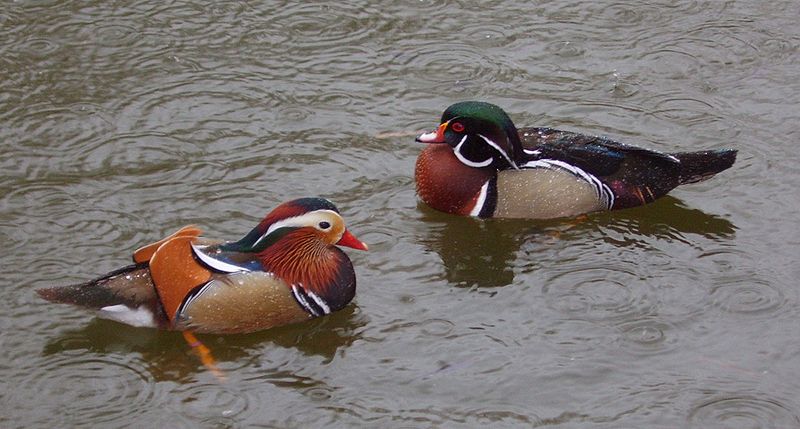
ANS-Anat Wood Duck and Mandarin Duck

And out of the ground made the LORD God to grow every tree that is pleasant to the sight, and good for food; the tree of life also in the midst of the garden, and the tree of knowledge of good and evil. (Genesis 2:9 KJV)

While searching for articles about birds I came across this article. The quote below is also appropriate for birds. I believe many of them definitely qualify as “pleasant to the sight.”

“The answer that came to my mind was suggested by Genesis 2:9, where we read that God created fruit trees not only good for food but also “pleasant to the sight.” We normally expect to find aspects of beauty as well as utility in the artifacts of human creation; how much more should we expect beauty to abound in the handiwork of God! Even creationists seem to forget that God is not only the Great Engineer, but the Great Artist as well.

Unfortunately, just like the engineering marvels of God have been corrupted by mutations and other effects of the bondage to corruption occasioned by our sin (Romans 8:18-20), so its beauty has been marred. The God whose faithful care daily sustains what He has made will not leave it so. But with the creation that “groaneth in travail,” we also wait for that time when “they shall not hurt nor destroy in all my holy mountain, but the earth shall be full of the knowledge of the Lord as the waters cover the sea” (Isaiah 6:11).” (From, Nature’s Challenge to Evolutionary Theory, by Gary Parker, Ed.D., ICR)

Thought you might enjoy seeing some “Pleasant to the Sight” birds. It was hard to narrow the choices down. These are from the Non-Passerines. Used the Passerines last week.

*

This slideshow requires JavaScript.

*