Birdwatching Trip – Lake Hollingsworth 7-29-08

Today we went birdwatching again at Lake Hollingsworth in Lakeland. From previous post, you can see we go there often. I especially like the fact that it has an asphalt walkway around the lake. Those who know me, know that after my back surgery two years ago my legs were messed up. Makes it nice to have a level place to walk. Anyway, today when Dan suggested going, I jumped at the chance. I have been so busy fixing this new website up, that I hadn’t been out birdwatching.
When we got there, I was immediately “attacked” by the local geese and ducks. They have been well trained to expect “treats” from people. With bread in hand, I could not feed them fast enough for their liking. The geese (not sure what kind) started pecking at me and pulling my clothes and nipping at me. It actually was quite comical. We all survived and went on down the walkway.
Here is what we observed: The Geese, Mallards and their families, White Ibises, Common Moorhens and their babies, Purple Gallinules and their juveniles, Pigeons, Boat-tailed Grackles, Anhingas hanging out to dry, Limpkins and three babies, Redwing Blackbirds and their juveniles, Ospreys, Great Egrets, Tri-colored Herons, a Little Blue Heron, a Tern, and some Fish Crows.
It was one of our “cooler” days with a light breeze. About 84 degrees when we started. We have been having some much-needed rain lately and the lake was up quite a bit since our last trip there.
P.S. I’ll be glad when you up north will send your birds back down to us. We miss seeing our “winter visitors.”

Hope you enjoy the photos. I was just a birdwatcher today and Dan was our photographer. So the photos are better, even though he hasn’t worked on them yet.

This slideshow requires JavaScript.

Birdwatching Trip – J. N. “Ding” Darling NWR – July 15, 2008

We went to J. N. “Ding” Darling NWR on Sanibel Island, FL. It was an overcast and sometimes rainy day, we enjoyed birdwatching anyway. Here is what we saw:
Limpkin, Reddish Egret prancing around trying to scare up a meal, White Ibis, Cardinals-male and female, Red-bellied Woodpecker, Yellow-crowned Night-Heron – first up close, raccoon, Mourning Dove, Ground Doves, Blue Jays, Snowy Egrets, Little Blue Heron, Great Blue Heron, Great Egrets, Osprey, a new life bird-Magnificent Frigatebird, Double-crested Cormorants, Anhingas, Alligator, Rosette Spoonbills resting, and a Black-crowned Night-Heron. We then drove to the split between Sanibel and Captiva. There was a Great Blue Heron standing on the rocks behind a fisherman. People were walking up and taking its picture, and he didn’t move. I think he wanted that man to feed him. It must have been to windy for him to do his own fishing. The gulls and osprey were flapping hard and going nowhere in the wind. They were suspended in air.
The Lord made a great day, even though the weather could have been better (from a camera’s perspective.)

The photos in the slideshow are mostly what I took. The much better ones are Dan’s.

This slideshow requires JavaScript.

*

Birds of the Bible – Pelicans

The pelican is in the Pelecanidae family which includes Pelicans, Cormorants, Gannets, etc. We have the American White and Brown Pelicans here in the U.S.
  • The White Pelican (62″ with a 108″ wingspan) is larger than the Brown (48″ with a 84″ wingspan).
  • They both fly with neck tucked.
  • Both have very large bills (White-yellow, Brown-dark) with a throat pouch.
  • The Brown Pelican feeds by plunging from air into the water and also glides low over the water.
  • The White Pelican feeds while swimming and upending to catch fish.
  • The sexes are similar in both White and Brown Pelicans

Brown Pelican flying low, by Ray's Wildlife Photography

The pelican is again listed in the “unclean” list.

And the swan, and the pelican, and the gier-eagle,(Leviticus 11:18 KJV)
And the pelican, and the gier-eagle, and the cormorant, (Deuteronomy 14:17 KJV)
Psalm 102 which is a “prayer of the afflicted” is telling about a heart smitten, groaning bones, basically he is “out of order.”
I am like a pelican of the wilderness: I am like an owl of the desert.
(Psalms 102:6 KJV) Most pelicans live near water and owls live in trees.
In spite of his affliction, the Psalm writer concludes with:
Of old hast thou laid the foundation of the earth: and the heavens are the work of thy hands. They shall perish, but thou shalt endure: yea, all of them shall wax old like a garment; as a vesture shalt thou change them, and they shall be changed: But thou art the same, and thy years shall have no end. (Psalms 102:25-27 KJV)
American White Pelican, by Dan's Pix

American White Pelican, by Dan's Pix

What a great promise. It amazes me sometimes when I “birdwatch the Scriptures,” what treasures are associated with them.

Photos are by permission of Dan’s Pix and Ray’s Wildlife Photography

Brown Pelicans Dive for their food.

American White Pelicans swim along and feed, upending themselves as they do. This video was taken at Lake Hollingsworth.

Birds of the Bible – Herons


CLASS – AVES, Order – PELECANIFORMES, Family – Ardeidae – Herons, Bitterns


Here in central Florida we can see many Herons, such as the:
(Click link for photo)
Great Blue Heron (L46″ Wingspan72″)
Little Blue Heron (L24 Wingspan 40″)
Tri-colored Heron (L26 Wingspan 36″)
Green Heron (L18″ Wingspan 26)
Black-crowned Night Heron (L25″ Wingspan 26″)
Yellow-crowned Night Heron (L24″ Wingspan 42″)

Around the World the Ardeidae family includes Herons(41), Egrets(7) and Bitterns(12). From Thayer Birding Software, “Most herons nest in dense or dispersed colonies; a few species, including most bitterns, are solitary. Nests are platforms of interlocked sticks in trees or piles of vegetation in reeds or on the ground, built mainly or entirely by the female of material brought by the male.” Most of the Herons rest and fly with their necks in an “S” curve. They can be seen along or in the edges of water fishing. Many stand perfectly still looking in the water and then thrust with a quick movement to either spear or catch their prey. Herons amaze me in how perfectly still they stand and wait. They seem so patient to me. Herons are on the “unclean” list of birds found in Leviticus 11:19 and Deuteronomy 14:18. Because they are so “patient” and “wait,” it reminds me of:

Rest in the LORD, and wait patiently for him: fret not thyself because of him who prospereth in his way, because of the man who bringeth wicked devices to pass. (Psalms 37:7 KJV)
And so, after he had patiently endured, he obtained the promise. (Hebrews 6:15 KJV)
The eyes of all wait upon thee; and thou givest them their meat in due season (Psalms 145:15 KJV
And of course our great verse from last week:
But they that wait upon the LORD shall renew their strength; they shall mount up with wings as eagles; they shall run, and not be weary; and they shall walk, and not faint. (Isaiah 40:31 KJV)

Hymns mention “waiting” and being “still” and “patient. Here is a favorite:

Be Still, My Soul by Katharina von Schlegel,
1697-Trans. By Jane L. Borthwick, 1813-1897

Be still, my soul: the Lord is on thy side;
Bear patiently the cross of grief or pain;
Leave to thy God to order and provide;
In ev’ry change He faithful will remain.
Be still, my soul: thy best, thy heav’nly Friend
Thro’ thorny ways leads to a joyful end.

Be still, my soul: thy God doth undertake
To guide the future as He has the past.
Thy hope, thy confidence let nothing shake;
All now mysterious shall be bright at last.
Be still, my soul: the waves and winds still know
His voice who ruled them while He dwelt below.

Be still, my soul: the hour is hast’ning on
When we shall be forever with the Lord,
When disappointment, grief, and fear are gone,
Sorrow forgot, love’s purest joys restored.
Be still, my soul: when change and tears are past,
All safe and blessed we shall meet at last.

*

Updated 1/20/2015

Interesting Things – Communication

Interesting Things from Smiley Central
Some more interesting articles from Creation Moments:

Do Birds Truly Make Music?
Dueling Birdsongs
How to Speak Crow
Listening to Plant

Hornbills That Understand Monkey
Learn to Speak Bee

For more articles from Creation Moments, go to the Radio Transcript Archives and enter the word, “communication,” for more.

Updated: Aug 4

Birds of the Bible – Ossifrage

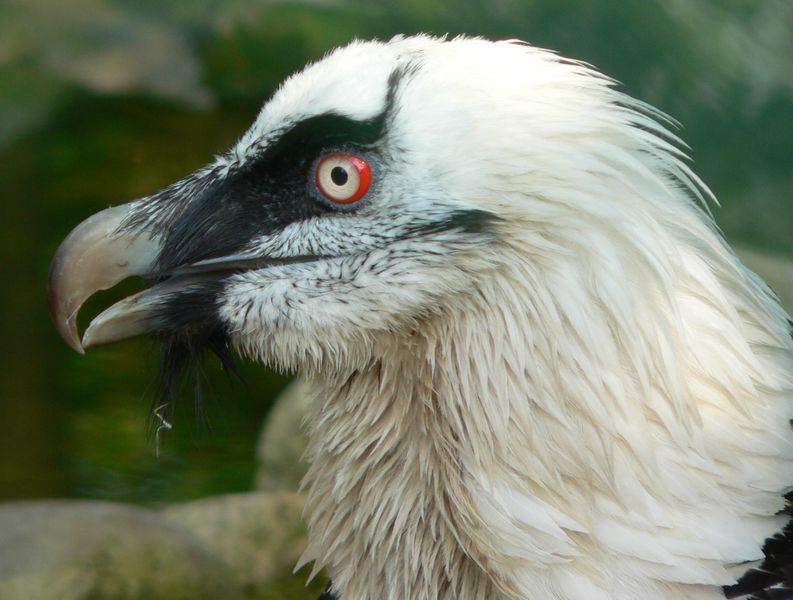
Lammergeier

This week’s bird is only mentioned twice in the Bible and is in the list of “unclean birds.” Mainly the King James Version (KJV DBY WBS YLT) mentions it, most other versions call it a bearded vulture, vulture, or a variety of other birds. What is an Ossifrage anyway. Here is what I found out.

And these are they which ye shall have in abomination among the fowls; they shall not be eaten, they are an abomination: the eagle, and the ossifrage, and the osprey, (Leviticus 11:13 KJV)

But these are they of which ye shall not eat: the eagle, and the ossifrage, and the osprey, (Deuteronomy 14:12 KJV)

Here is what Nave’s Topical Bible has to say about a Vulture:
  • A carnivorous bird Lev_11:14; Deu_14:13
  • Sometimes translated Falcon Job_28:7
  • Sometimes translated Kite Isa_34:15
From the Holman Bible Dictionary (Online) – OSSIFRAGE
“(ahss ssi frayge) English applies ossifrage to three birds: the bearded vulture; the osprey; and the giant petrel. Other translations identify the bird as a black vulture (REB) or vulture (NAS, NIV, NRSV).
Compact Oxford English Dictionary (New Edition) calls it a
1. lammergeier. or 2. Archaic An osprey.”

From Wikipedia

“Unlike most vultures, the Lammergeier does not have a bald head. This huge bird is 95-125 cm (37-49 inches) long with a 235-280 cm (91-110 inches) wingspan, and is quite unlike most other vultures in flight due to its large, narrow wings and long, wedge-shaped tail. It weighs between 5 and 7 kg (11 and 15 lbs).”

“The Bearded vulture is the only animal that feeds almost exclusively on bone (70-90%). In Crete, the shepherds call it the “Bone-eater”, as they have watched the bird breaking bones in a very characteristic way, since the old times.

The bird throws the larger bones from a height on to rocky slopes in order to break them, and immediately descends after them in a characteristic spiral way. If the bone does not break the first time, the method is repeated many times until the bone finally breaks.
The bird then eats the bone pieces starting with the bone marrow. The smaller bones are swallowed whole, as the birds gastric fluids are so strong that they can digest bone easily.
This dietary habit seems odd, but once bones have been digested, they are a nutritious and easily storable type of food; in addition, the bird faces minimal competition for this type of food.“ The full article can be found at: Bearded vulture (Gypaetus barbatus)
Ossifrage - Lammergier

Ossifrage – Lammergier

Pictures are of Bartgeier and a Lammergeier by Anthony S

Birds of the Bible – Eagles II

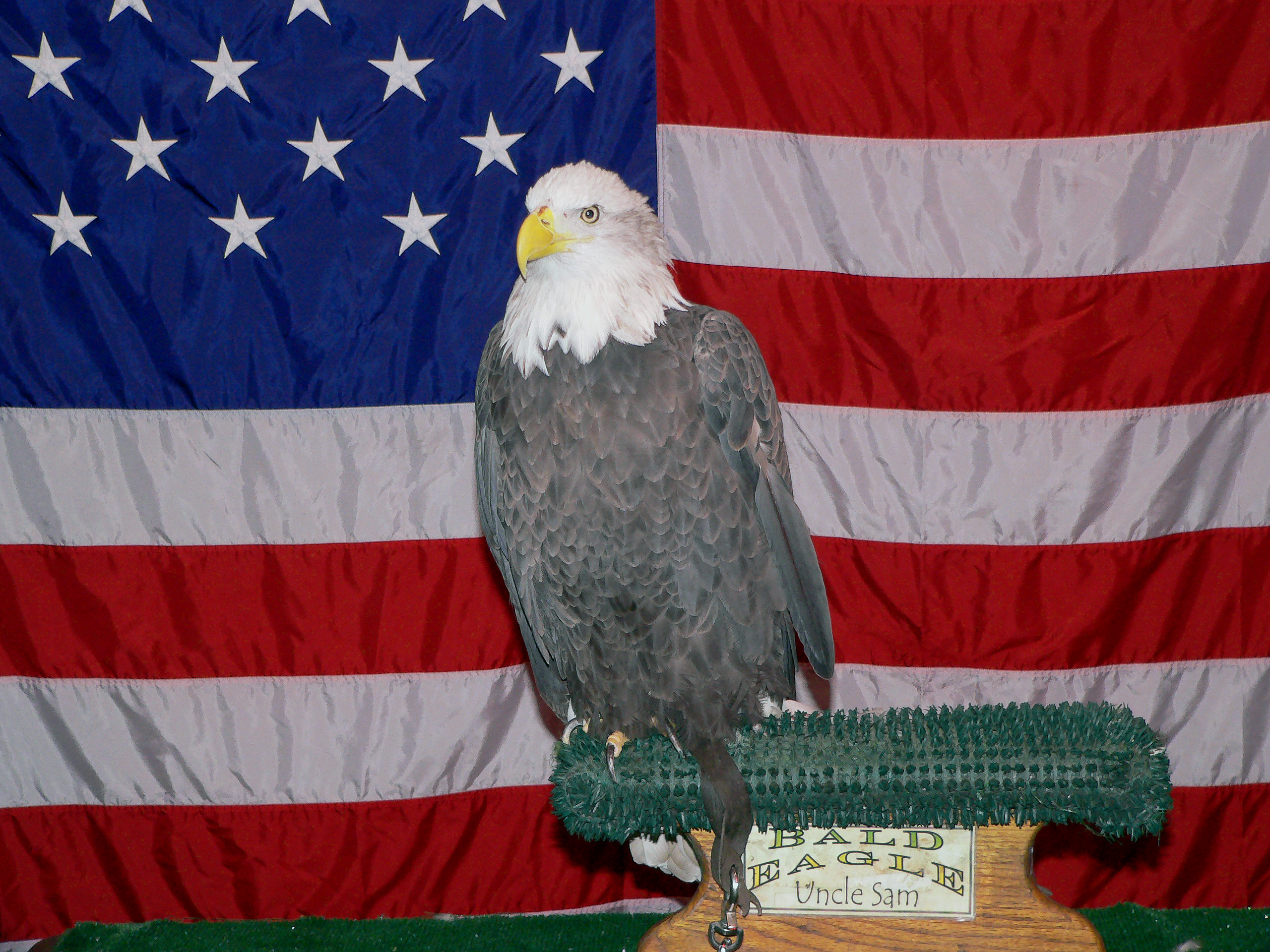
Uncle Sam - Bald Eagle taken at Titusville Birding Festival

Uncle Sam – Bald Eagle taken at Titusville Birding Festival

Since today is the Fourth of July, what better bird to feature than our Bald Eagle. I have decided to re-post the Birds of the Bible-Eagles, with a few updates. Here in North America we have the Bald Eagle (our National symbol) and the Golden Eagle. The Bald Eagle’s “bald spot” doesn’t appear until they are 4 or 5 years old and develop a white head and tail. The Bald Eagle is only in North America. In Israel you might see a Short-toed Eagle, Great or Lesser Spotted Eagle, Steppe, Imperial, Golden, Booted, or Bonelli’s Eagle.

I love to watch an eagle flying; it stops me in my tracks. We are lucky here in Polk County to have many this time of the year. (Update: It’s now Summer and most have gone north until Fall.) Stay alert and also visit the South Lake Howard Nature Center to see a pair sitting either on the tower or at the nest. Ask most anyone there and they will point out the nest. (Update: They did not produce any eaglets this spring, but the nest is still there.)

Eagle on Tower Near Lake Howard and Eagle in Nest at Lake Howard Nature Park.

  • Job 9:26 – “Like an eagle swooping on its prey.”
  • Pro 30:19 – “The way of an eagle in the air”
  • Jer 49:22 – “fly like the eagle, and shall spread his wings”
  • Hab 1:8 – “They fly as the eagle that hastens to eat.”
  • Pro 23:5 –“They fly away like an eagle toward heaven.”
  • A great eagle with great wings, long-winged, full of feathers
  • As an eagle stirreth up her nest, fluttereth over her young, spreadeth her wings, taketh them, beareth them on her wings
  • From thence she seeketh the prey, and her eyes behold afar off

An African Eagle

“Birds display a wide range of patterns in flight. Swifts and swallows use a fast, gliding motion. Ducks and geese have sustained, powerful flight. Birds of prey such as eagles and falcons usually catch their targets by swooping from high in the sky, capturing their victims after a swift dive—which may reach speeds of 250 kilometers an hour (165 mph). As the bird swoops to the ground, it spreads its powerful wings to act as a brake.” (“Created to fly,” Creation 16(3), June 1994)

Click link to see a Bald eagle hovering and landing on rock.
Bald Eagle hovering and landing

For those of us in the “older generation,” Job 9:25-26 (NKJV) reminds us that we need to stay active for our Lord because our life passes by swiftly. “Now my days are swifter than a runner; They flee away, they see no good. They pass by like swift ships, Like an eagle swooping on its prey.”

A few more facts about eagles:

  • Eagles are mentioned in hymns such as:
    They That Wait Upon the Lord –“They shall mount up with wings as eagles:”
    The Mercy Seat – “Ah, there on eagle wings we soar,”
    Art Thou Afraid? – “On eagles’ wings they mount, they soar, Their wings are faith and love,”
  • In Israel, the eagle is the largest bird and has an eight foot wing span.
  • There are at least 25 verses in the Bible that mention the eagle.
  • The eagle is an “unclean” bird.

Today may be Independence Day here in the United States, but there is One we should never declare our Independence from, because:

Have you not known? Have you not heard? The everlasting God, the LORD, The Creator of the ends of the earth, Neither faints nor is weary. His understanding is unsearchable. He gives power to the weak, And to those who have no might He increases strength. Even the youths shall faint and be weary, And the young men shall utterly fall, But those who wait on the LORD Shall renew their strength; They shall mount up with wings like eagles, They shall run and not be weary, They shall walk and not faint. (Isaiah 40:28-31 NKJV)

Birds of the Bible – Cormorant

Double-crested Cormorants, by Dan, Lake John Rockery in Lakeland

Last week’s Bittern blog mentioned Isaiah 34:11,

“But the cormorant and the bittern shall possess it; the owl also and the raven shall dwell in it: and he shall stretch out upon it the line of confusion, and the stones of emptiness.”

That verse, along with Leviticus 11:17 and Zephaniah 2:14, put the cormorant on the “unclean” list and predicts of the destruction of Nineveh, where only the animals and birds will inhabit the city. Again, God has created and provided for another interesting bird kind.
We have the Double-crested Cormorant in this area at our many lakes. Here in North America, we have the Brandt’s, Neotropic, Great, Red-faced and Pelagic Cormorants. Worldwide there are 36 species. A very close relative see here is the Anhinga. Many of the cormorants live and fly over the oceans.
An interesting article from Institute for Creation Research, “Water, Water Everywhere … And Not A Drop To Drink,” by Donna L. O’Daniel, mentions the Double-Crested Cormorant in, “Avian Salt Glands

“But seabirds have their own desalinization systems to deal with excess salt taken in by drinking seawater and feeding in the ocean, in the form of glands that lie inshallow depressions in or above the eye sockets….
The avian salt gland has made it possible for seabirds not only to exist but to maintain homeostasis in an otherwise hostile environment. Truly, ‘the salt gland is one of the most effective ion transport systems known.’ But how did such a system arise? There are only two possible explanations for the origin of avian salt glands: Either they evolved along with the birds themselves, or they were created within the birds by God as He spoke the feathered creatures into existence (Genesis 1:21).”

Double-crested Cormorants, by Dan, Lake John Rockery in Lakeland

Another article From Creation Matters – Volume 8, Number 1 January / February 2003 states:
Let the Birds of the Heavens Tell You
“Domesticated cormorants have been used for centuries in the Orient to catch fish for human consumption (Hoh and Leachman, 1998). Several families in China, carry out a brisk fishing business by letting these highly skilled, winged fishers do their work for them. With a wood block on a long bamboo pole, the human fisherman brings back his cormorant from the water as it delivers a freshly caught fish in its beak. Such fishing was better years ago, but recently one of the fishermen reported catching anywhere between 10 pounds and 100 pounds in a day by using cormorants.”


Back to Birds of the Bible

Birds of the Bible – Bittern


CLASS – AVES, Order –PELECANIFORMES, Family – Ardeidae – Herons, Bitterns


In North America we have theAmerican (23” with a 42-50” wingspan) and Least Bittern (11-14” with a 16-18” wingspan). Both dwell in marsh or wetland habitats and are very difficult to find. God has designed them with plumage and behavior (standing very still with the head pointing up) that helps camouflage them. They eat frogs, small fish, snakes and bugs, etc.
The bittern is an interesting find in the Bible.

I will also make it a possession for the bittern, and pools of water: and I will sweep it with the besom of destruction, saith the LORD of hosts. (Isa 14:23)

Again judgment is being given and the names of the new inhabitants are given. Only the birds will dwell there.

But the cormorant and the bittern shall possess it; the owl also and the raven shall dwell in it: and he shall stretch out upon it the line of confusion, and the stones of emptiness. (Isa 34:11)
Ninevah will be barren and the bittern and pelican will be singing from the vacant windows. The herds shall lie down in her midst, Every beast of the nation. Both the pelican and the bittern Shall lodge on the capitals of her pillars; Their voice shall sing in the windows; Desolation shall be at the threshold; For He will lay bare the cedar work. (Zep 2:14)

American Bittern Picture with permission from Gramps (Les)
A YouTube of a Bittern. I do not know the language, but it shows how the Bittern is camouflaged so well.

Family#26 – Ardeidae

*