Birds Are Wonderful: V, W, and X !

BIRDS  ARE  WONDERFUL  . . .  V,  W,  and  X !

Dr. James J. S. Johnson

Jesus said: “Therefore I say to you, do not worry about your life, what you will eat or what you will drink . . . Is not life more than food, and the body more than clothing? Look at the birds of the air, . . . your heavenly Father feeds them. Are you not of more value than they?”   (Matthew 6:25-26)

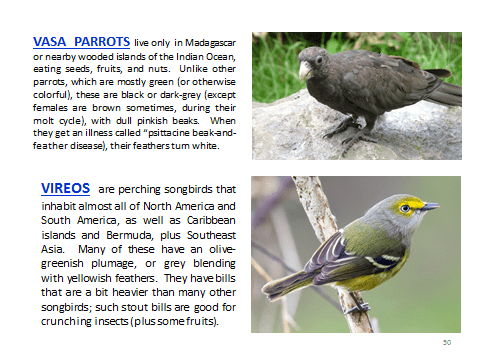
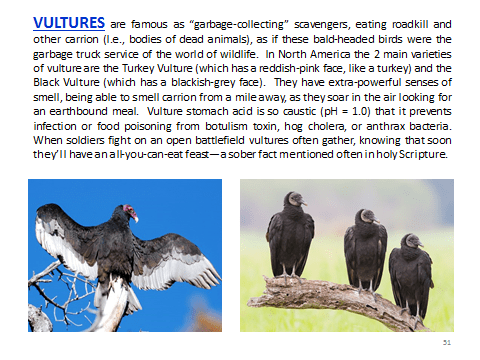
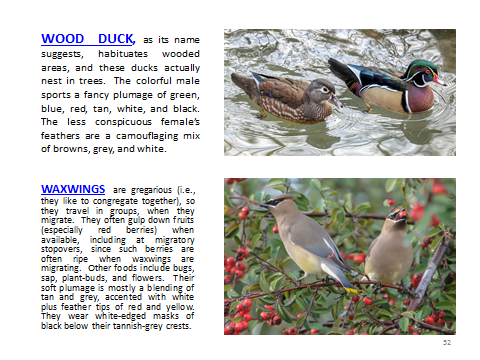
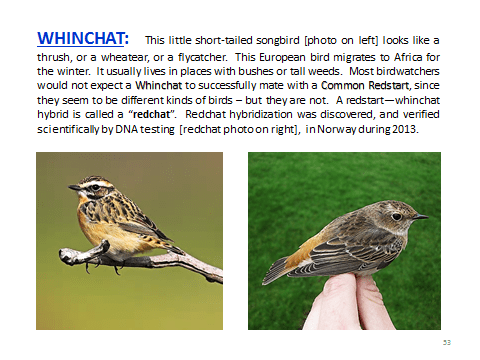
For ushering in this year of our Lord 2020,  below follows the eighth installment of alphabet-illustrating birds of the world, as part of this new series (“Birds Are Wonderful  —  and Some Are a Little Weird*).  The letter V is illustrated by Vasa Parrot, Vireos, and Vultures.  The letter W illustrated by Wood Duck, Waxwings, and Whinchat.  The letter X illustrated by Xavier’s Greenbul, Xingus Scale-backed Antbird, and Xantus’s Hummingbird.

“V” BIRDS:   Vasa Parrot, Vireos, and Vultures.

BAW-VasaParrot-Vireo

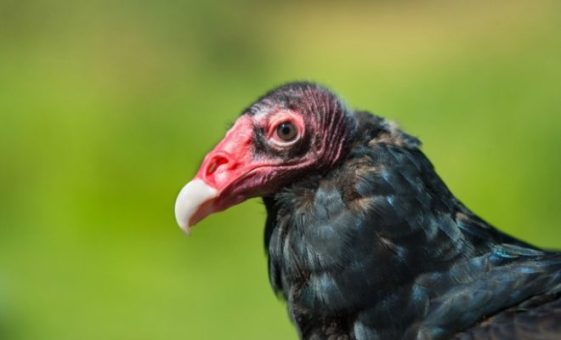
BAW-Vulture

“W” BIRDS:  Wood Duck, Waxwings, and Whinchat.

BAW-WoodDuck-WaxwingsBAW-Whinchat

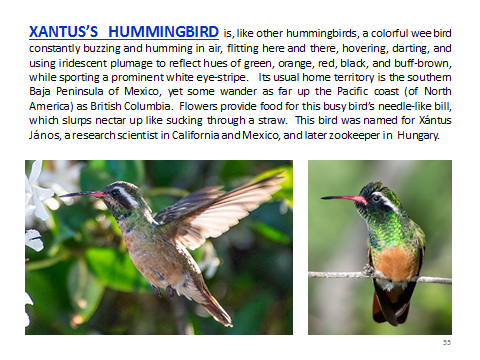
“X” BIRDS:  Xavier’s Greenbul, Xingus Scale-backed Antbird, and Xantus’s Hummingbird.

BAW-XavierGreenbul-XingusScalebackedAntbirdBAW-XantusHummingbird

Birds are truly wonderful — some are gracefully beautiful, like  Xantus’s Hummingbird, — and some, like the Vultures, are fascinatingly unusual, if not also a little weird!  (Stay tuned for more, D.v.)


* Quoting from “Birds Are Wonderful, and Some Are a Little Weird”, (c) AD2019 James J. S. Johnson   [used here by permission].

Vulture-turkey.TexasHillCountry

Birds Are Wonderful: S, T, and U !

BIRDS  ARE  WONDERFUL  . . .  S,  T,  and  U !

Dr. James J. S. Johnson

Jesus said: “Therefore I say to you, do not worry about your life, what you will eat or what you will drink . . . Is not life more than food, and the body more than clothing? Look at the birds of the air, . . . your heavenly Father feeds them. Are you not of more value than they?”   (Matthew 6:25-26)

HAPPY NEW YEAR!!!

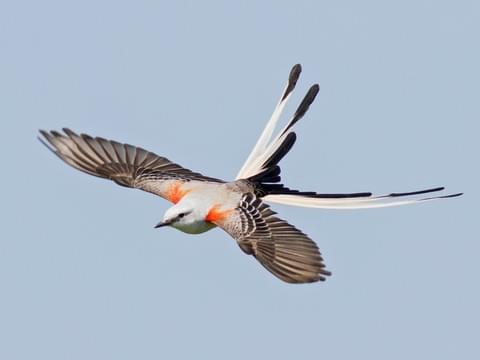
For ushering in the year of our Lord 2020,  below follows the seventh installment of alphabet-illustrating birds of the world, as part of this new series (“Birds Are Wonderful  —  and Some Are a Little Weird*).  The letter S is illustrated by Scissor-tailed Flycatcher, Stork, and Starling.  The letter T illustrated by Turkey, Trumpeter Swan, and Turnstone.  The letter U illustrated by Ural Owl, Udzungwa partridge, and Umbrellabird.

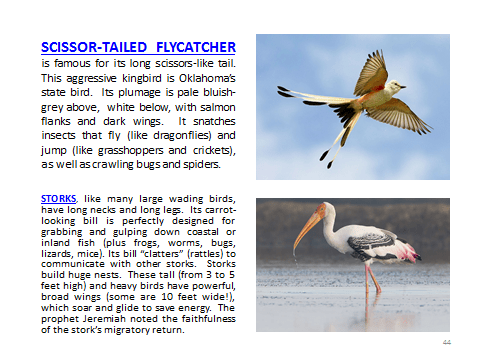
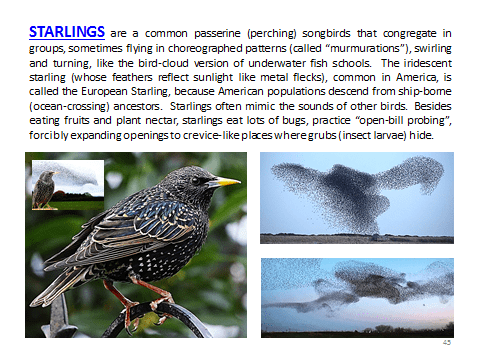
“S” BIRDS:   Scissor-tailed Flycatcher, Storks, and Starlings.

BAW-Scissortail-Stork

BAW-Starling

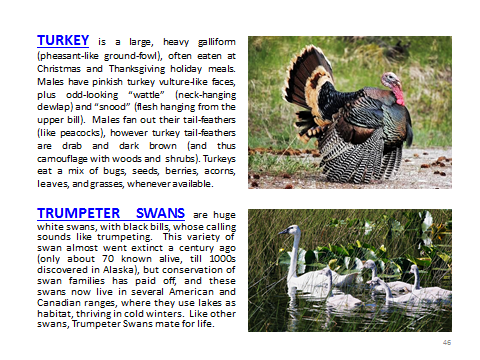
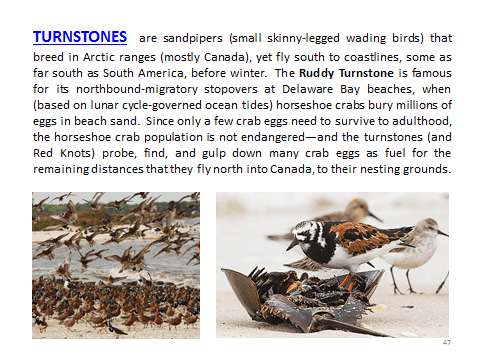
“T” BIRDS:  Turkey, Trumpeter Swan, and Turnstone.

BAW-Turkey-TrumpeterSwanBAW-Turnstone

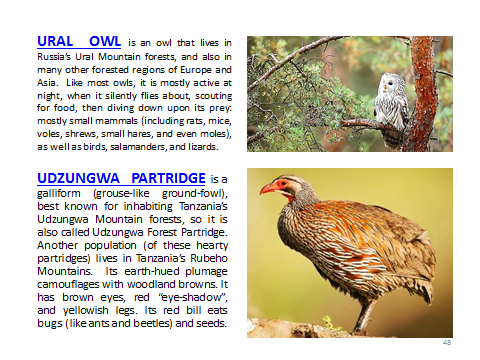
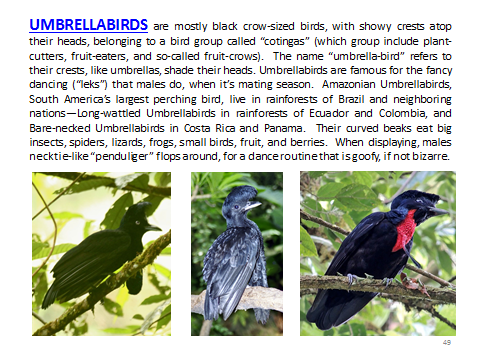
“U” BIRDS:  Ural Owl, Udzungwa Partridge, and Umbrellabird.

BAW-UralOwl-UdzungwaPartridge

BAW-Umbrellabird

Birds are truly wonderful — some are gracefully beautiful, like the Scissor-tailed Flycatcher — and some, like the bizarre-displaying Umbrellabird, are fascinatingly unusual, if not also a little weird!  (Stay tuned for more, D.v.)


* Quoting from “Birds Are Wonderful, and Some Are a Little Weird”, (c) AD2019 James J. S. Johnson   [used here by permission].

Scissortail-in-flight.Cornell

Scissortail in flight (Cornell Lab photo)


Birds Are Wonderful: P, Q, and R !

BIRDS  ARE  WONDERFUL  . . .  P,  Q,  and  R !

Dr. James J. S. Johnson

Jesus said: “Therefore I say to you, do not worry about your life, what you will eat or what you will drink . . . Is not life more than food, and the body more than clothing? Look at the birds of the air, . . . your heavenly Father feeds them. Are you not of more value than they?”   (Matthew 6:25-26)

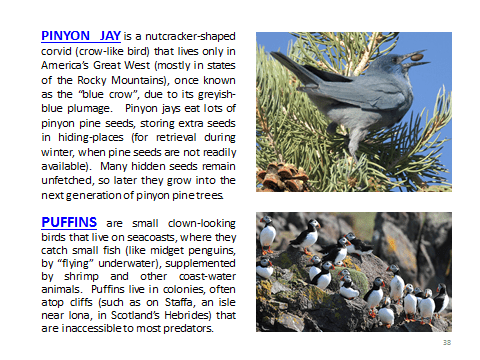
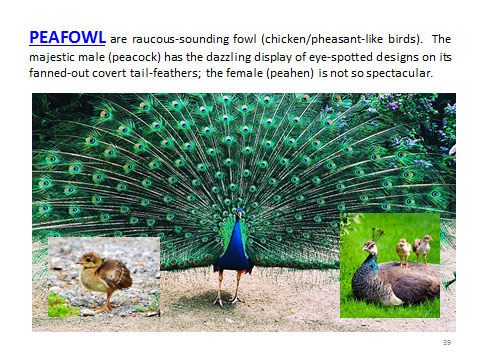
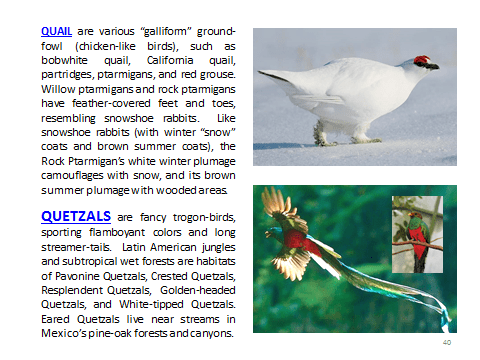
For ushering in the year of our Lord 2020,  below follows the sixth advance installment of alphabet-illustrating birds of the world, as part of this new series (“Birds Are Wonderful  —  and Some Are a Little Weird*).  The letter P is illustrated by Pinyon Jay, Puffins, and Peafowl.  The letter Q  illustrated by Quail, Quetzal, and Queen Carola’s Parotia.  The letter L illustrated by Rhea, Raven, and Roadrunner.

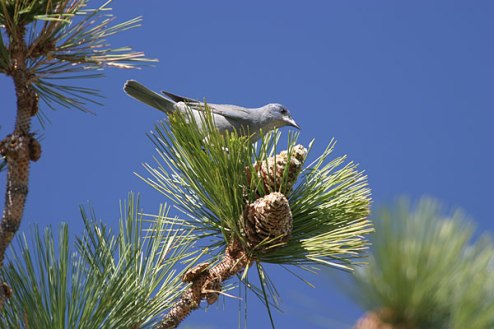
“P” BIRDS:   Pinyon Jay, Puffins, and Peafowl.

BAW-PinyonJay-Puffins

BAW-Peafowl

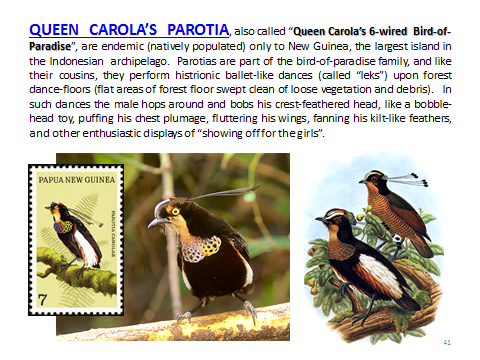
“Q” BIRDS:  Quail, Quetzal, and Queen Carola’s Parotia.

BAW-Quail-QuetzalBAW-QueenCarolasParotia

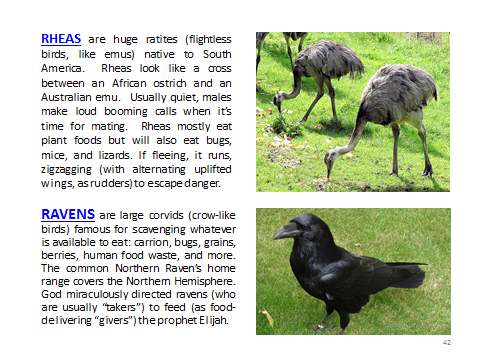
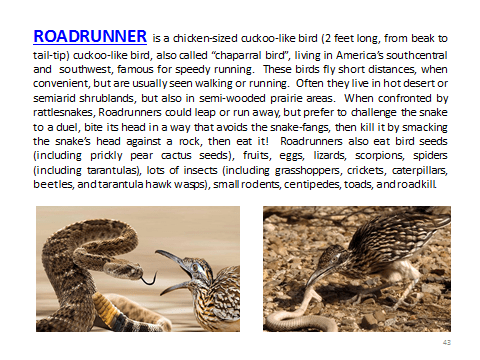
“R” BIRDS:  Rhea, Raven, and Roadrunner.

BAW-Rhea-RavenBAW-Roadrunner

Birds are truly wonderful — and some, like the Peacock and Quetzal, are exquisitely beautiful, while others, like the rattlesnake-killing Roadrunner, are fascinatingly unusual, if not also odd-looking!  (Stay tuned for more, D.v.)


* Quoting from “Birds Are Wonderful, and Some Are a Little Weird”, (c) AD2019 James J. S. Johnson   [used here by permission].

PinyonJay-PinyonPine.CaganSekercioglu


Birds Are Wonderful: M, N, and O !

BIRDS  ARE  WONDERFUL  . . .  M,  N,  and  O !

Dr. James J. S. Johnson

Jesus said: “Therefore I say to you, do not worry about your life, what you will eat or what you will drink . . . Is not life more than food, and the body more than clothing? Look at the birds of the air, . . . your heavenly Father feeds them. Are you not of more value than they?”   (Matthew 6:25-26)

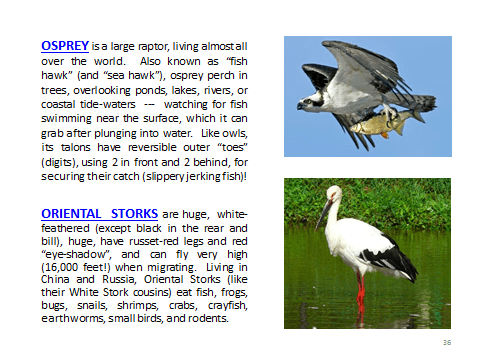
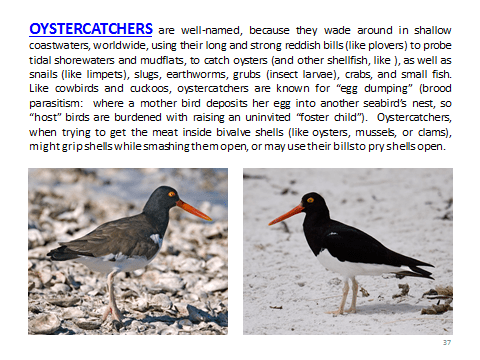
For welcoming in the year of our Lord 2020,  below follows the fifth advance installment of alphabet-illustrating birds of the world, as part of this new series (“Birds Are Wonderful  —  and Some Are a Little Weird*).  The letter M is illustrated by Magpies, Magnificent Frigatebird, and Motmots.  The letter N  illustrated by Nightingale, Needle-billed Hermit, and Nighthawk (also called “Nightjar”).  The letter O illustrated by Osprey, Oriental Stork, and Oystercatcher.

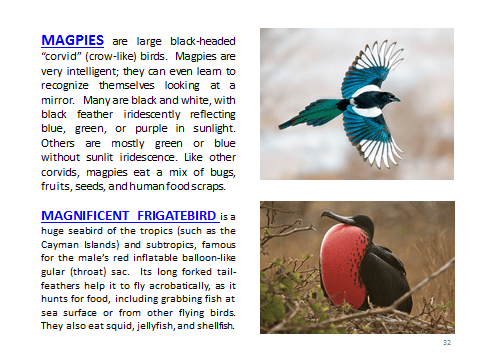
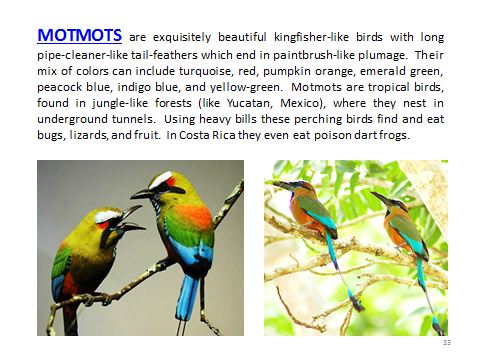
“M” BIRDS:   Magpies, Magnificent Frigatebird, and Motmots.

BAW-Magpie-MagnificentFrigatebirdBAW-Motmots

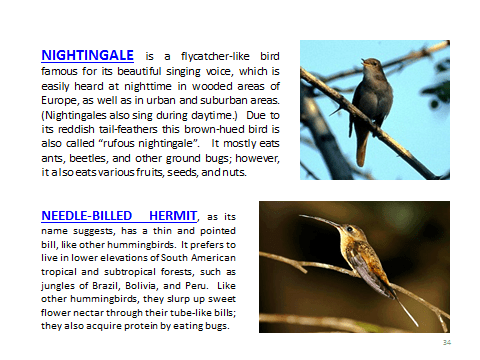
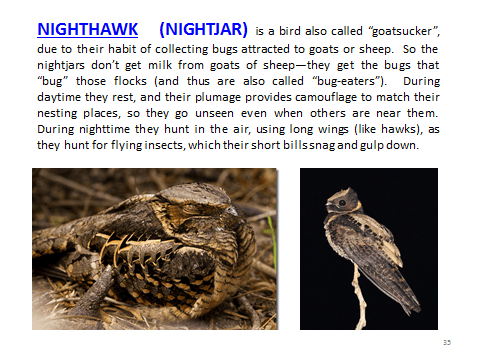
“N” BIRDS:  Nightingale, Needle-billed Hermit, and Nighthawk.

BAW-Nightingale-NeedlebilledHermitBAW-Nighthawk

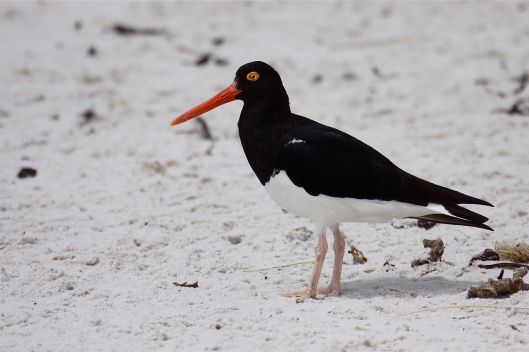
“O” BIRDS:  Osprey, Oriental Stork, and Oystercatcher.

BAW-Osprey-OrientalStorkBAW-Oystercatcher

Birds are truly wonderful — and some, like the “egg-dumping” Oystercatcher, are a little bit odd, if not also weird!  (Stay tuned for more, D.v.)


* Quoting from “Birds Are Wonderful, and Some Are a Little Weird”, (c) AD2019 James J. S. Johnson   [used here by permission].

BAW-MagellanicOystercatcher-white-sand


Birds Are Wonderful: J, K, and L !

BIRDS  ARE  WONDERFUL  . . .  J,  K,  and  L !

Dr. James J. S. Johnson

Jesus said: “Therefore I say to you, do not worry about your life, what you will eat or what you will drink . . . Is not life more than food, and the body more than clothing? Look at the birds of the air, . . . your heavenly Father feeds them. Are you not of more value than they?”   (Matthew 6:25-26)

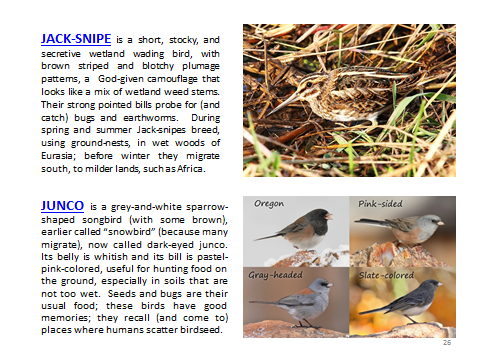
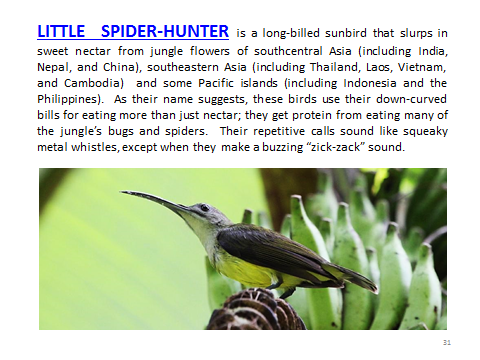
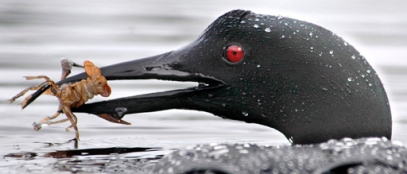
For ushering in the year of our Lord 2020,  below follows the fourth advance installment of alphabet-illustrating birds of the world, as part of this new series (“Birds Are Wonderful  —  and Some Are a Little Weird*).  The letter J is illustrated by Jack-Snipe, Junco, and Jackdaw.  The letter K  illustrated by Kiwi, Kites, and King of Saxony Bird-of-Paradise.  The letter L illustrated by Loons, Loggerhead Shrike, and Little Spider-Hunter.

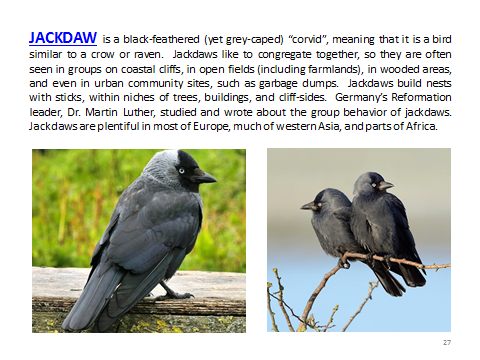
“J” BIRDS:   Jack-Snipe, Junco, and Jackdaw.

BAW-JackSnipe-JuncoBAW-Jackdaw

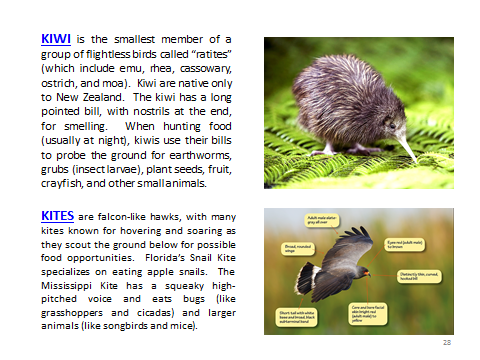
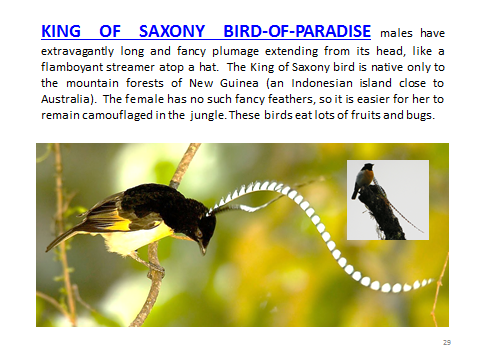
“K” BIRDS:  Kiwi, Kites, and King of Saxony Bird-of-Paradise.

BAW-Kiwi-KitesBAW-King-o-Saxony-Bird-o-Paradise

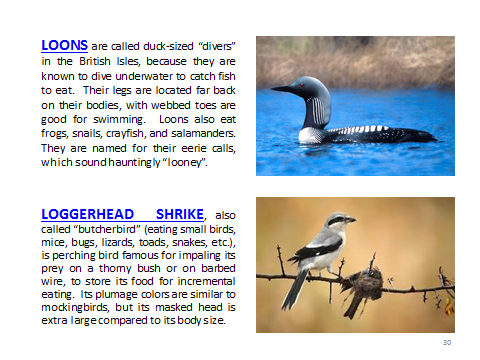
“L” BIRDS:  Loons, Loggerhead Shrike, Little Spider-Hunter.

BAW-Loons-LoggerheadShrikeBAW-LittleSpiderHunter

Birds are truly wonderful — and some, like the King of Saxony Bird-of-Paradise, are a little bit extravagant-looking, if not also weird!  (Stay tuned for more, D.v.)


* Quoting from “Birds Are Wonderful, and Some Are a Little Weird”, (c) AD2019 James J. S. Johnson   [used here by permission].

Loon-with-crayfish.USFWS

Birds Are Wonderful: G, H, and I !

BIRDS  ARE  WONDERFUL  . . .  D,  E,  and  F !

Dr. James J. S. Johnson

Jesus said: “Therefore I say to you, do not worry about your life, what you will eat or what you will drink . . . Is not life more than food, and the body more than clothing? Look at the birds of the air, . . . your heavenly Father feeds them. Are you not of more value than they?”   (Matthew 6:25-26)

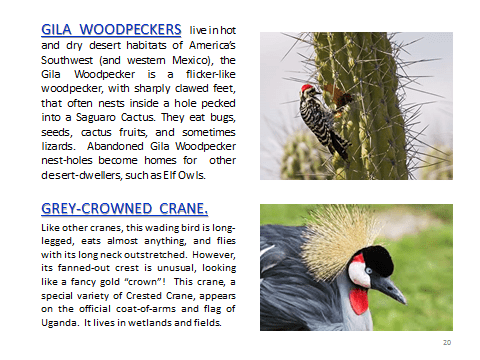
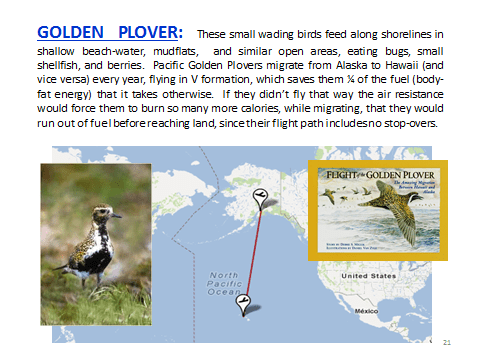
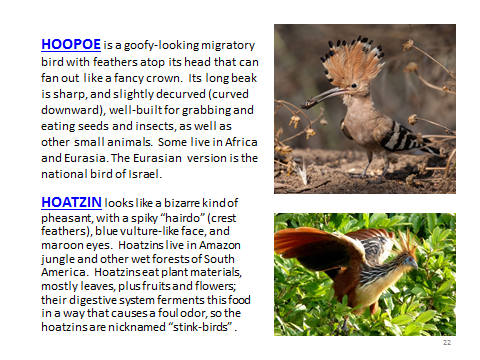
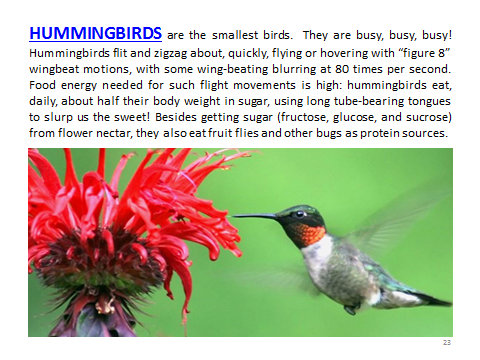
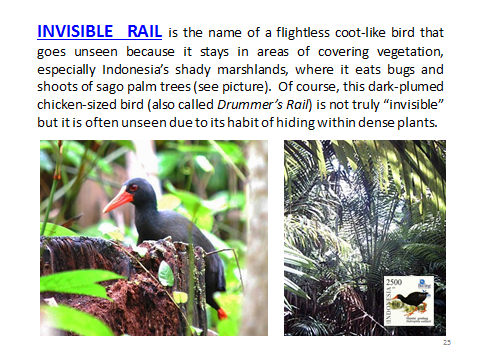
For ushering in the year of our Lord 2020,  below follows the third advance installment of alphabet-illustrating birds of the world, as part of this new series (“Birds Are Wonderful  —  and Some Are a Little Weird*).  The letter G is illustrated by Gila Woodpecker, Grey-Crowned Crane, and Golden Plover.  The letter H  illustrated by Hoopoe, Hoatzin, and Hummingbird.  The letter I illustrated by Iceland Gull, Ibis, and Invisible Rail.

“G” BIRDS:   Gila Woodpecker, Grey-Crowned Crane, and Golden Plover.

BAW-GilaWoodpecker-Grey-CrownedCrane

BAW-GoldenPlover

“H” BIRDS:  Hoopoe, Hoatzin, and Hummingbird.

BAW-Hoopoe-Hoatzin

BAW-Hummingbirds

“I” BIRDS:  Iceland Gull, Ibis, and Invisible Rail. 

BAW-IcelandGull-IbisBAW-InvisibleRail

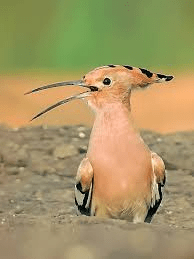
Birds are truly wonderful — and some, like Hoopoe, are a little bit goofy-looking, if not also weird!  (Stay tuned for more, D.v.)


* Quoting from “Birds Are Wonderful, and Some Are a Little Weird”, (c) AD2019 James J. S. Johnson   [used here by permission].

Hoopoe-wikipedia


Birds Are Wonderful: D, E, and F !

BIRDS  ARE  WONDERFUL  . . .  D,  E,  and  F !

Dr. James J. S. Johnson

Jesus said: “Therefore I say to you, do not worry about your life, what you will eat or what you will drink . . . Is not life more than food, and the body more than clothing? Look at the birds of the air, . . . your heavenly Father feeds them. Are you not of more value than they?”   (Matthew 6:25-26)

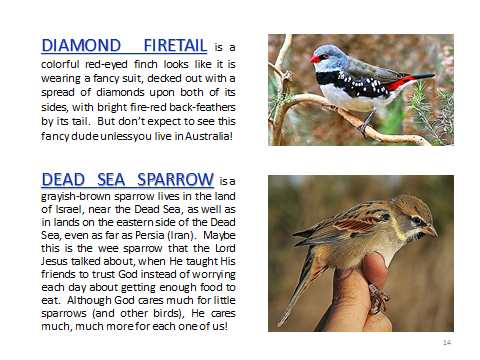
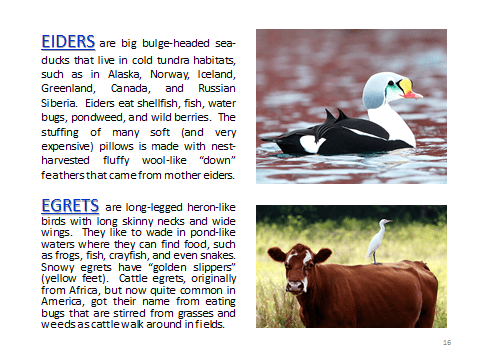
For ushering in the year of our Lord 2020,  below follows the second advance installment of alphabet-illustrating birds of the world, as part of this new series (“Birds Are Wonderful  —  and Some Are a Little Weird*).  The letter D is illustrated by Diamond Firetail, Dead Sea Sparrow, and Doves.  The letter E  illustrated by Eiders, Egrets, and Edible-Nest Swiftlet.  The letter F illustrated by Flamingos, Flamebacks, and Frogmouths.

“D” BIRDS:   Diamond Firetail, Dead Sea Sparrow, and Doves.

BAW-DiamondFiretail-DeadSeaSparrow

BAW-Doves

“E” BIRDS:  Eiders, Egrets, and Edible-Nest Swiftlet.

BAW-Eiders-Egrets

BAW-EdibleNestSwiftlet

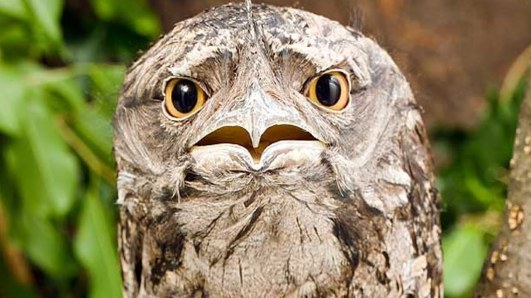
“F” BIRDS:  Flamingos, Flamebacks, and Frogmouths. 

BAW-Flamingo-Flameback

BAW-Frogmouths

Birds are truly wonderful — and some, like Edible-Nest Swiftlets and Frogmouths, are a little bit weird!  (Stay tuned for more, D.v.)


* Quoting from “Birds Are Wonderful, and Some Are a Little Weird”, (c) AD2019 James J. S. Johnson   [used here by permission].

Frogmouth-tawny


Birds Are Wonderful: A, B, and C !

BIRDS  ARE  WONDERFUL  . . .  A, B, and C !

Dr. James J. S. Johnson

Jesus said: “Therefore I say to you, do not worry about your life, what you will eat or what you will drink . . . Is not life more than food, and the body more than clothing? Look at the birds of the air, . . . your heavenly Father feeds them. Are you not of more value than they?”   (Matthew 6:25-26)

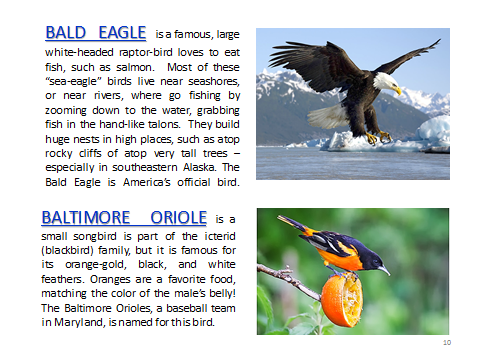
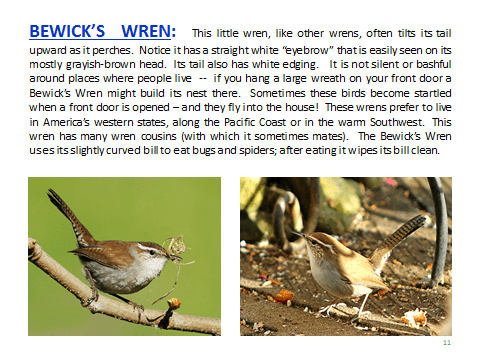
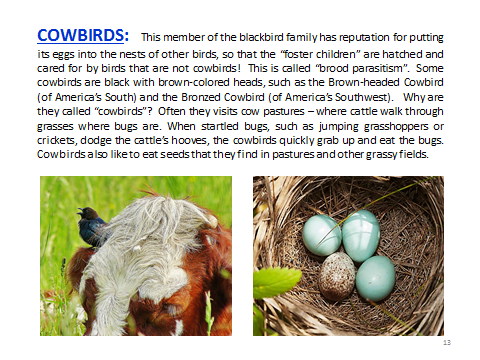
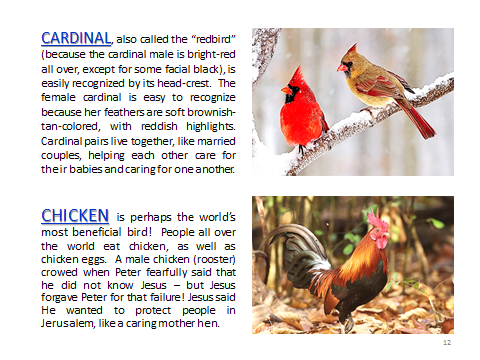
For ushering in the new year  —  the year of our Lord 2020  —  below follows the first installment of alphabet-illustrating birds of the world, as part of this new series (“Birds Are Wonderful  —  and Some Are a Little Weird*).  The letter A is illustrated by Anhinga, Andean Condor, and Arctic Tern.  The letter B  illustrated by Bald Eagle, Baltimore Oriole, and Bewick’s Wren.  The letter C illustrated by Cardinal, Chicken, and Cowbirds.

“A” BIRDS:   Anhinga, Andean Condor, and Arctic Tern.

BAW-Anhinga-AndeanCondor

BAW-ArcticTern

“B” BIRDS:  Bald Eagle, Baltimore Oriole, and Bewick’s Wren.

BAW-BaldEagle-BaltimoreOriole

BAW-BewicksWren

“C” BIRDS:  Cardinal, Chicken, and Cowbirds. 

BAW-CowbirdsBAW-Cardinal-Chicken

Birds are truly wonderful — and some, like cowbirds, are a little bit weird!  (Stay tuned for more, D.v.)


* Quoting from “Birds Are Wonderful, and Some Are a Little Weird”, (c) AD2019 James J. S. Johnson   [used here by permission].

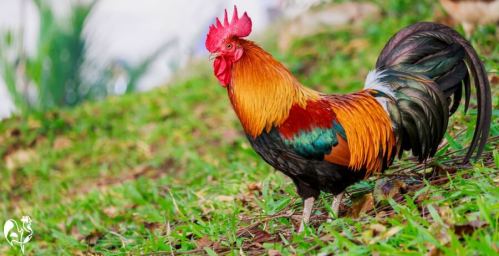
Rooster-RaisinghappyChickens.com-photo

Birdwatching is the right thing to do!

Appreciating  birds  (including,  but  not  limited  to,  Birdwatching)  is  the  right  thing  to  do!

Dr. James J. S. Johnson

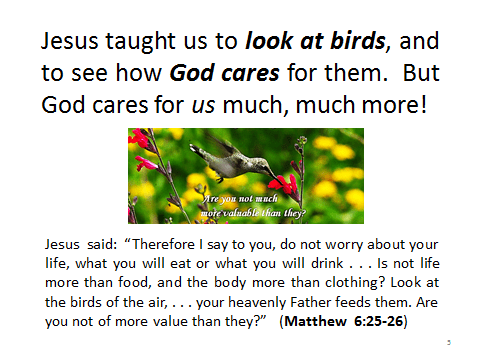
birds-Matthew6.25-26 Now begins a new Leesbird.com series (D.v.), on “Birds Are Wonderful! — And Some Are a Little Weird“.*

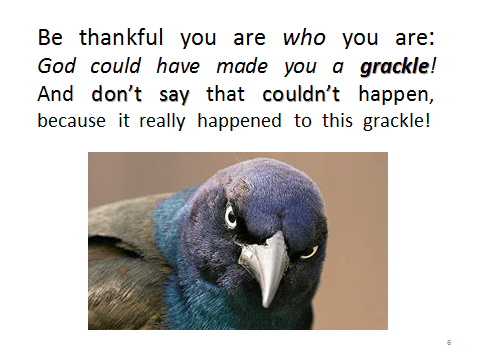
In this series we will learn to appreciate a variety of birds, while appreciating our great God Who made all those birds — and while also realizing that our great God made each of us who we are, though He could have made us otherwise!birds-grackle.could-have-been-you

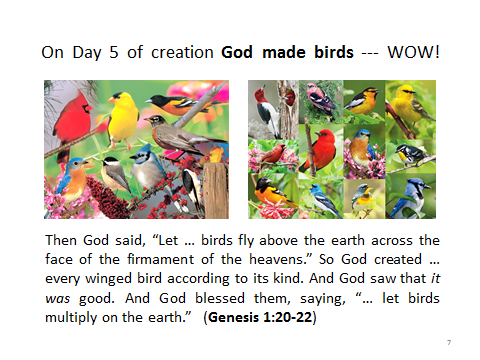
Of course, birds began on Day 5, so birds are older than the human race — by 1 day  — since God made the original human pair (Adam & Eve) on Day 6 of Creation Week.

birds-Genesis1.20-22Stay tuned!

* Quoting from “Birds Are Wonderful, and Some Are a Little Weird”, (c) AD2019 James J. S. Johnson   [used here by permission].


Redwing Pond

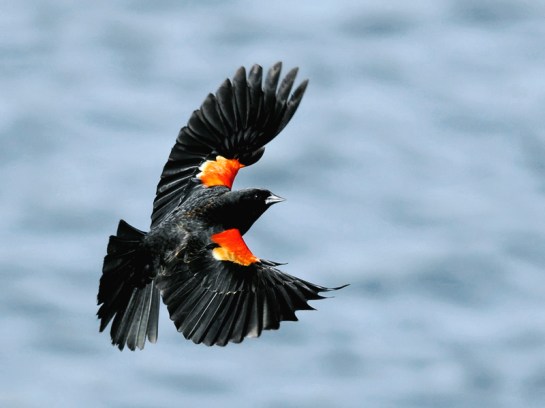
Redwinged-Blackbird.TrekNatureRedwinged Blackbird male in flight  (Trek nature photo)

Redwing Pond was named for its redwinged blackbirds, which loved the pondshore’s cattails.

Dr. James J. S. Johnson

Can the rush grow up without mire? can the flag grow without water?  (Job 8:11)

Wetlands are defined by their mix of hydrophilic plants (such as “rush” and “flags” and cattails), wetland hydrology, and hydric soils.  And redwinged blackbirds love cattails.

redwing-blackbir-atop-cattail.EvergreenStateCollege-photo

Redwinged Blackbird male atop cattail (Evergreen State College photo)

Those cattails look like corny dogs on stalks!

Birdwatching at Staffa: Puffins, Shags, & more

Birdwatching at Staffa, near Iona: Puffins, Shags, and Herring Gulls

Dr. James J. S. Johnson

Let them give glory unto the Lord, and declare his praise in the islands.  (Isaiah 42:12)

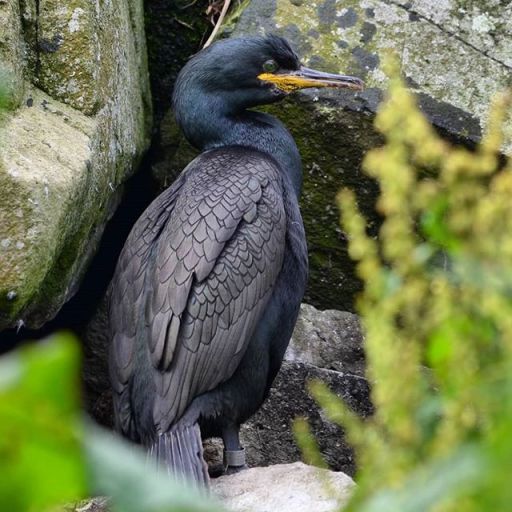
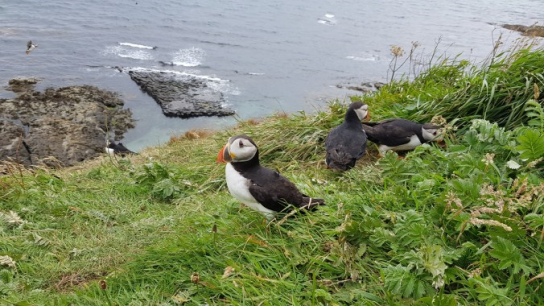
The three birds that I recall most, from visiting the island of Staffa (Inner Hebrides, just north of Iona) were Herring Gulls (a very common seagull),  Shags (a yellow-mouthed but otherwise all-black cormorant), and those cute and colorful (and comically clown-like) Atlantic Puffins, a couple of which settled (after some aerial arcing) not much more than a yard (i.e., meter) form where I was standing, upon the grassy cliff-side of the pasture-topped island.

Shag-Staffa.PublicInsta-[hoto

SHAG  at  STAFFA   (Public Insta photo credit)

Below is a limerick I wrote to recall my observations at the Isle of Staffa (same island that has Fingal’s Cave, made famous by Felix Mendelssohn’s overture written in AD1829), a small uninhabited island north of Iona (where I ate some of the best sea scallops, after soaking my feet in the cold Sound of Iona tidewaters!), in the Inner Hebrides archipelago on the western side of Scotland (July 19th AD2019).  Norse Vikings were reminded of staves (plural of “staff”) when they saw the upright timber/log-like columns (contiguous pillars) of basalt there  —  hence the name “Staffa“.

BIRDWATCHING  FROM  CLIFF-EDGE  ATOP  STAFFA  ISLAND,  NORTH  OF  IONA  (INNER  HEBRIDES)

Herring gulls, puffins, and shags,

Launch from cliff-edge grass and crags;

Flying low — then a splish!

Success!  Caught a fish!

Herring gulls, puffins, and shags.

Herring gulls, of course, I first observed during my boyhood days (in elementary school).  But shags and puffins are not seen in the parts of America where I have lived, so seeing them at Staffa was quite a privilege!

Puffins-Staffa.Mull-n-IonaRangerService

PUFFINS at STAFFA   (Mull & Iona Ranger Service)


POST-SCRIPT:   Puffins, gulls, and shags  —  as noted (in the limerick, above)  —   enjoy eating fish, from the sea-waters that wash ashore coastal rocks and beaches of the Hebrides.   Meanwhile, to consider what humans enjoy eating, when visiting Scotland’s Highlands and Hebrides,  check out “When in Scotland, Eat Well!”  —  posted at https://rockdoveblog.wordpress.com/2019/07/29/when-in-scotland-eat-well/  .


Of Cormorants and Anhingas

Of Cormorants and Anhingas

Dr. James J. S. Johnson
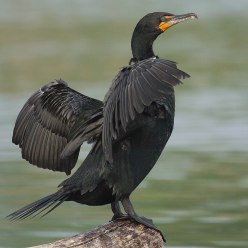
Cormorant-Doublecrested.WikipediaAnhinga-perching.Wikipedia

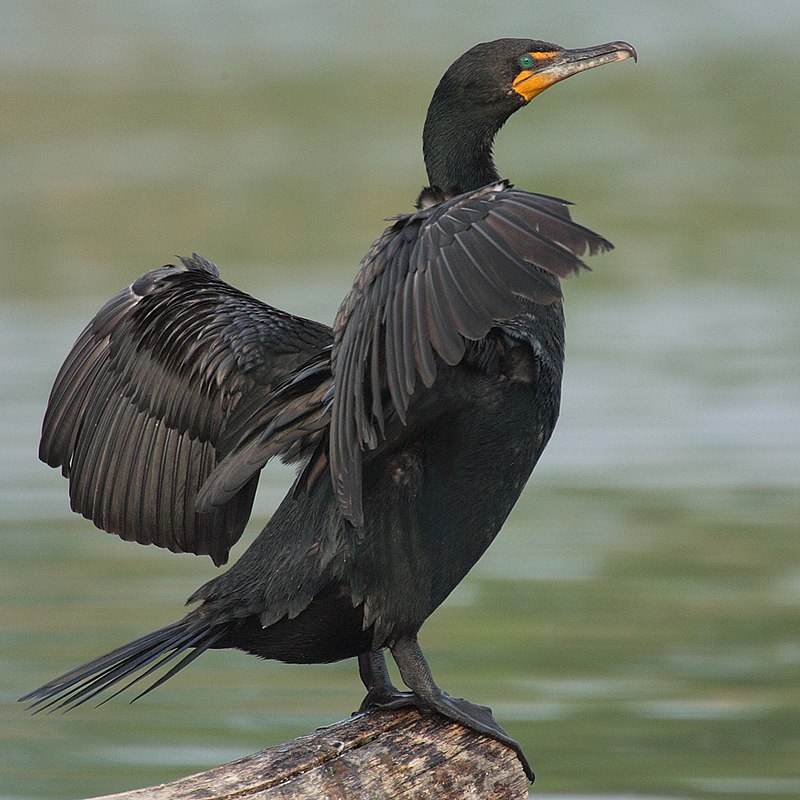
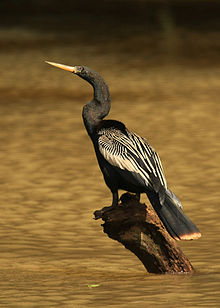
Double-crested Cormorant (L) & Anhinga (R)  / both Wikipedia images­

­But the cormorant and the bittern shall possess it; the owl also and the raven shall dwell in it . . . . (Isaiah 34:11a)

Cormorants and bitterns (the latter being a type of heron) are famous to frequently waterways, preying on fish and other aquatic critters. Yet there is another large waterbird that resembles a cormorant, the anhinga.

CORMORANT VERSUS ANHINGA

Cormorants and Anhingas are frequently confused. They are both [fairly big, i.e., bigger than a crow, almost as large as a goose] black birds that dive under the water to fish.  Both must dry their feathers in the sun [because their feathers are not 100% waterproofed].

The differences are easy to see. The Anhinga’s beak is pointed for spearing [i.e., stabbing] fish, while the Cormorant’s beak is hooked for grasping its prey.  The Cormorants’ body remains above the surface when swimming [unlike the “snake-bird” appearance of a swimming Anhinga, which swims mostly underwater, with only its head and neck emergent].  It [i.e., the Cormorant] lacks the Anhinga’s slender [snake-like] neck, long tail, and white wing feathers.

[Quoting Winston Williams, FLORIDA’S FABULOUS WATERBIRDS: THEIR STORIES (Hawaiian Gardens, Calif.: World Publications, 2015), page 4.]

By the way, this photography-filled waterbird book [i.e., Winston Williams’ FLORIDA’S FABULOUS WATERBIRDS: THEIR STORIES] was recently given to me by Chaplain Bob & Marcia Webel, of Florida, precious Christian friends (of 45+ years) who are also serious birdwatchers.
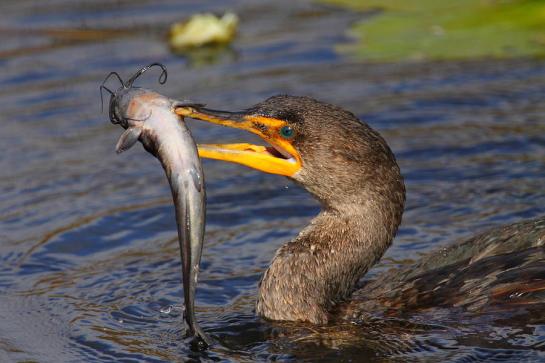
Cormorant-Doublecrested-fishing.Bruce-J-Robinson-photo

Double-crested Cormorant fishing (Bruce J. Robinson photograph)

Of course, there are different varieties of cormorants [e.g., Neotropic Cormorant, Brandt’s Cormorant, Pelagic Cormorant, Great Cormorant, etc.], as Winston Williams observes [ibid., page 4], but the cormorant that you can expect to see in Florida is the Double-crested Cormorant (Phalacrocorax auritus), so called due to white tufted feather “crests” during breeding season.  Mostly piscivorous [i.e., fish-eating], cormorants will also eat small crustaceans [e.g., shellfish like crayfish] and amphibians [e.g., frogs], often about one pound of prey daily. These cormorants range over America’s Lower 48 states, especially in the Great Lakes region.

It is the American Anhinga (Anhinga anhinga), however, that is properly nicknamed “Snake-bird” (and a/k/a “American Darter” or “Water Turkey”), due to its mostly-submerged-underwater hunting habit.  It eats fish almost exclusively, though it can and sometimes does eat crustaceans (e.g., crabs, shrimp, crayfish) or small aquatic vertebrates (e.g., frogs, newts, salamanders, turtles, snakes, and even baby crocodiles).
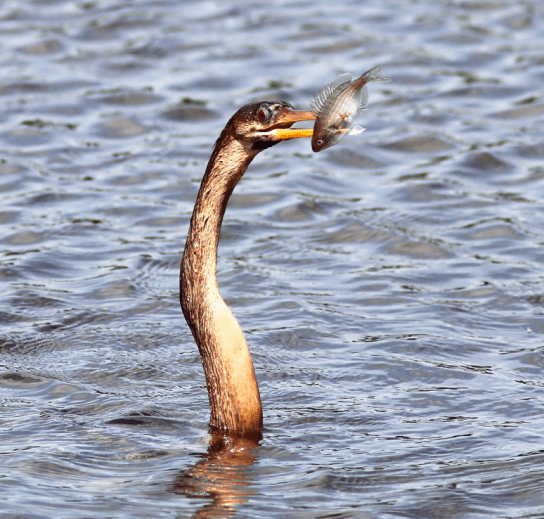
Anhinga-piscivore.PhilLanoue-photo

ANHINGA with fish (Phil Lanoue photo)

America’s Anhinga is a cousin to other darters (a/k/a “snake-birds”) of other continents, such as the Indian Darter, African Darter, and Australian Darter. The term “darter” refers to the piercing dart-like impalement technique that these birds use, for acquiring and securing their prey, just before ingestion.   Worldwide, darters like in tropical climes or in regions with almost-tropical weather.

In the Orient, for many generations, cormorants have been harnessed to catch fish for human masters. [See “’C’ Is for Cardinal and Cormorant:  ‘C’ Birds, Part 1”, posted at https://leesbird.com/2016/05/18/c-is-for-cardinal-and-cormorant-c-birds-part-1/ .]

Also, cormorant feathers have been used, historically, for stuffing Viking pillows. [See “Viking Pillows were Stuffed for Comfort:  Thanks to Ducks, Geese, Eagle-Owls, Cormorants, Seagulls, and Crows!”, posted at https://leesbird.com/2018/04/30/viking-pillows-were-stuffed-for-comfort-thanks-to-ducks-geese-eagle-owls-cormorants-seagulls-and-crows/ .]

Now it is time for a limerick, about an Anhinga:

TABLE  MANNERS  &  TECHNIQUE  (ANHINGA  STYLE)

Wings spread out, the bird had one wish:

To dive, stab, flip up, and eat fish;

Without cream of tartar,

Fish entered the darter!

‘Twas stab, gulp!  —  no need for a dish!

><> JJSJ