Birds of the Bible – Trees and Birds

Eagle in Tree on a windy day by Dan

These were the visions of my head while on my bed: I was looking, and behold, A tree in the midst of the earth, And its height was great. The tree grew and became strong; Its height reached to the heavens, And it could be seen to the ends of all the earth. Its leaves were lovely, Its fruit abundant, And in it was food for all. The beasts of the field found shade under it, The birds of the heavens dwelt in its branches, And all flesh was fed from it. (Daniel 4:10-12 NKJV)

What an interesting passage. Actually, this was part of the vision or dream that Nebuchadnezzar had and he is revealing it to Daniel. He is looking for an explanation for it. (See Daniel 4:19 + for the interpretation)

Daniel gives him the interpretation in the rest of the Chapter 4, but I want to concentrate on the tree and the birds. I have seen so many photos and witnessed birds enjoying themselves in the trees. The Lord created them all and provides for the tree, the beast, the birds, and us.

The trees provide food (fruit and seeds), leaves give shade for the animals and birds, the limbs provide a resting place, especially for birds, but I have seen a few leopards and koalas resting on them also.

Verse like:

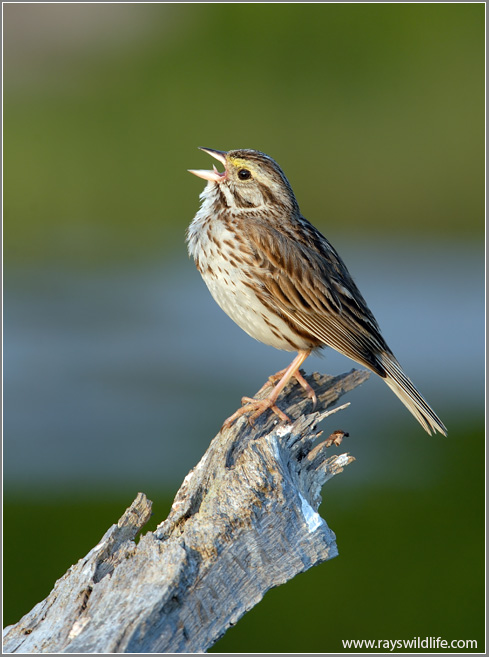
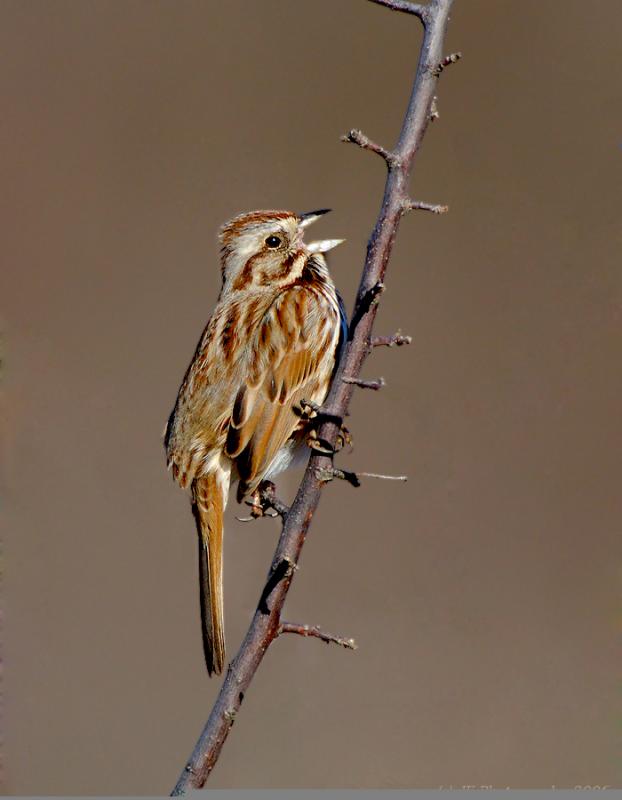
Savannah Sparrow singing by Ray

Savannah Sparrow singing by Ray

By them the birds of the heavens have their home; They sing among the branches. (Psalms 104:12 NKJV)

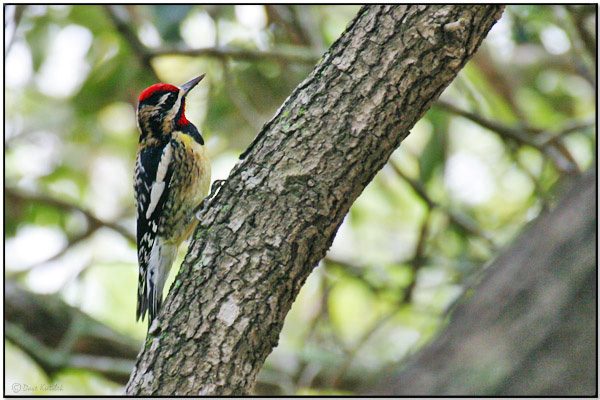
Yellow-bellied Sapsucker (Sphyrapicus varius) by Daves BirdingPix

Yellow-bellied Sapsucker (Sphyrapicus varius) by Daves BirdingPix

The trees of the LORD are full of sap, The cedars of Lebanon which He planted, (Psalms 104:16 NKJV) (Many birds like the sap – Sapsuckers for one)

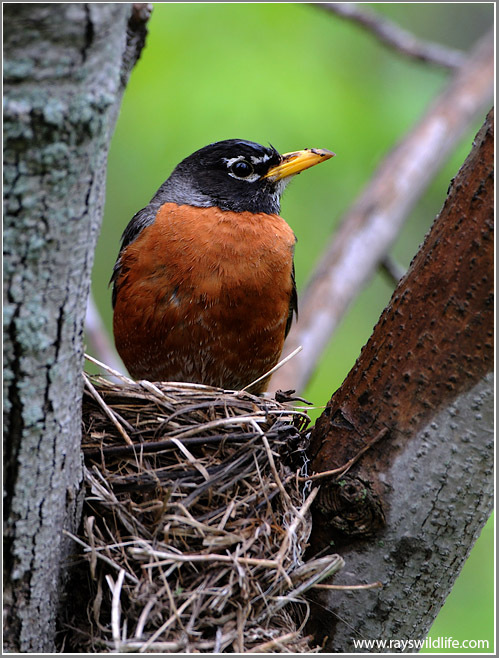
American Robin (Turdus migratorius) in nest by Ray

American Robin (Turdus migratorius) in nest by Ray

Where the birds make their nests; The stork has her home in the fir trees. (Psalms 104:17 NKJV)

And Jesus said to him, “Foxes have holes and birds of the air have nests, but the Son of Man has nowhere to lay His head.” (Matthew 8:20 NKJV)

Another parable He put forth to them, saying: “The kingdom of heaven is like a mustard seed, which a man took and sowed in his field, which indeed is the least of all the seeds; but when it is grown it is greater than the herbs and becomes a tree, so that the birds of the air come and nest in its branches.” (Matthew 13:31-32 NKJV)

Cedar Waxwing on Cedar Tree at Birdwatchers Digest.

Also he spoke of trees, from the cedar tree of Lebanon even to the hyssop that springs out of the wall; he spoke also of animals, of birds, of creeping things, and of fish. (1 Kings 4:33 NKJV)

*

Our Great Creator has wonderfully designed so many things to work together to provide for each other. Birds need trees and trees need birds. He is worthy of our praise and thanksgiving. And don’t you just enjoy watching the birds in the trees?

For His merciful kindness is great toward us, And the truth of the LORD endures forever. Praise the LORD! (Psalms 117:2 NKJV)

Yes, they shall sing of the ways of the LORD, For great is the glory of the LORD. (Psalms 138:5 NKJV)

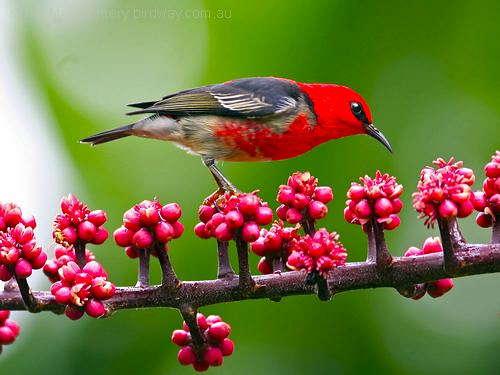
Scarlet Myzomela (Myzomela sanguinolenta) by Ian

Scarlet Myzomela (Myzomela sanguinolenta) by Ian

Great is our Lord, and mighty in power; His understanding is infinite. (Psalms 147:5 NKJV)

For the LORD your God is God of gods and Lord of lords, the great God, mighty and awesome, who shows no partiality nor takes a bribe. (Deuteronomy 10:17 NKJV)

*

Birds of the Bible – Where Did They Go?

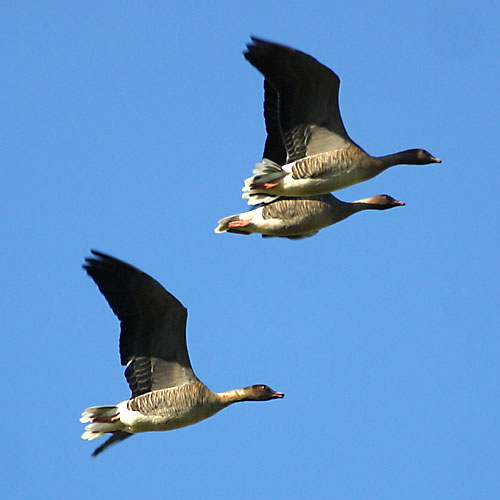
Pink-footed Goose (Anser brachyrhynchus) ©Arthur Grosset

Pink-footed Goose (Anser brachyrhynchus) ©Arthur Grosset

Where did they go? I was wondering that a little over a week ago when we drove 50 miles to Orlando. I keep a small notebook and write down the birds we see as Dan drives. As cross into each county, I start my list for that county by drawing a line, putting the time, temperature if I know it, and what the sky looks like. Other than a Turkey Vulture or Black Vulture in each county, nothing was flying. We saw a few grackles, a Mockingbird, and a few Fish Crows. Coming back, one county I wrote “none” on my notebook. Normally here in Central Florida, we see birds around the ponds and lake. Nothing that day.

The next day, we drove 50 the other direction to Tampa to go to the Lowry Park Zoo. I knew those birds would be there. They are captive. I had the same results. One or two birds, but nothing flying. When I attended church the next day, I had several people tell me that they hadn’t seen any birds at their feeders and wondered if I knew why. I didn’t and don’t have a clue.

I am curious if it is that way up north when the birds start their migrations. You see them one day and then not the next. Our summer birds seem to be here year-round, or at least I thought so.

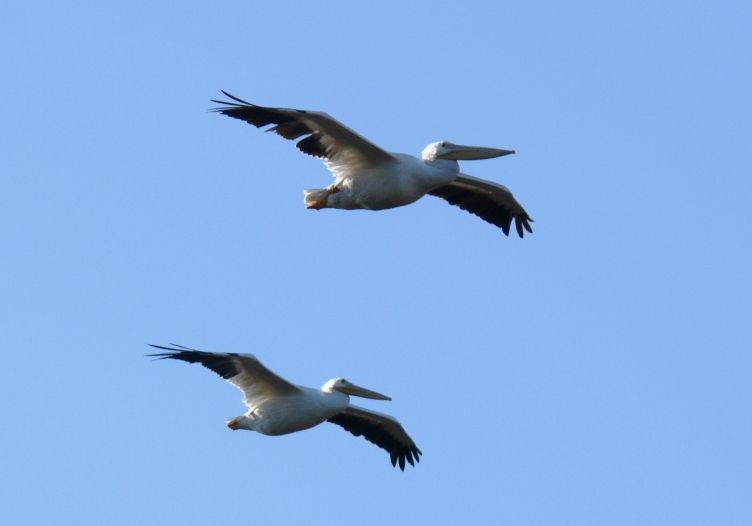
American White Pelican (Pelecanus erythrorhynchos) by Lee

American White Pelican (Pelecanus erythrorhynchos) by Lee

All of that reminded me of the verses in Jeremiah:

I beheld, and indeed there was no man, And all the birds of the heavens had fled. (Jeremiah 4:25 NKJV)

I will take up a weeping and wailing for the mountains, And for the dwelling places of the wilderness a lamentation, Because they are burned up, So that no one can pass through; Nor can men hear the voice of the cattle. Both the birds of the heavens and the beasts have fled; They are gone. (Jeremiah 9:10 NKJV)

That also caused me to think about this past summer. Where did it go? Where did those days and hours go that I had so many plans for. I especially thought I would work on this blog while the birds were gone north for the summer. Well, guess what? Here it is Autumn and it didn’t happen. In fact I am busier now than before they left. I was putting out about one article a day and now struggle to get one out every few days.

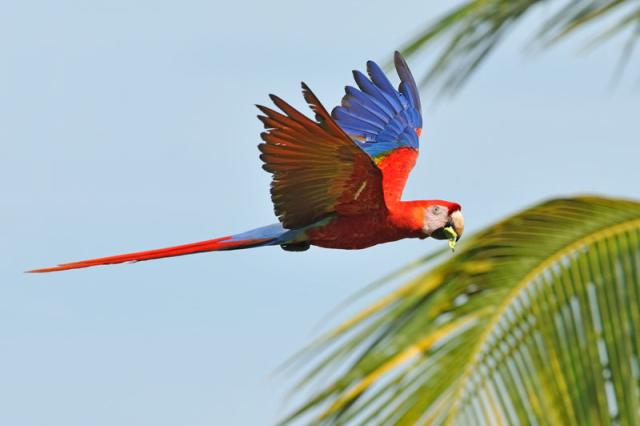
Scarlet Macaw (Ara macao) Reinier Munguia

Scarlet Macaw (Ara macao) Reinier Munguia

Do these verses cause you also to consider where time goes?

Indeed, You have made my days as handbreadths, And my age is as nothing before You; Certainly every man at his best state is but vapor. Selah (Psalms 39:5 NKJV)

Come now, you who say, “Today or tomorrow we will go to such and such a city, spend a year there, buy and sell, and make a profit”; whereas you do not know what will happen tomorrow. For what is your life? It is even a vapor that appears for a little time and then vanishes away. Instead you ought to say, “If the Lord wills, we shall live and do this or that.” (James 4:13-15 NKJV)

This post is just a “rambling” post, but I’m sure most of those who visit here that have blogs have felt the same way at times. I don’t want to just put a post up just for the sake of putting one up. I prefer for it to mean, instill or teach something.

ActiveLink

ActiveLink for today

Seems like lately, everything vies for my time. I have been on Weight Watchers since January (lost 30 lbs so far) and now even they are after my time. They recently released “ActiveLink” which monitors our movements. Sitting at a computer for hours, does not movement make. So now I have to get up and, ugh, exercise every so often or at least walk around. It will be worth it, but it takes “TIME.” That isn’t the only thing I have added lately. I am in new Ladies Bible Study and now I have “homework.” Time, time, time, where does it go?

Can you relate to any of this? I would venture to say many of you can. Oh, but isn’t the Lord great? When we do get time to see his fantastic creation, especially His birds, don’t they bring joy to you?

See also:

Birds of the Bible

Birds of the Bible – Birds of the Air

Wordless Birds

*

Birds of the Bible – Bluebirds

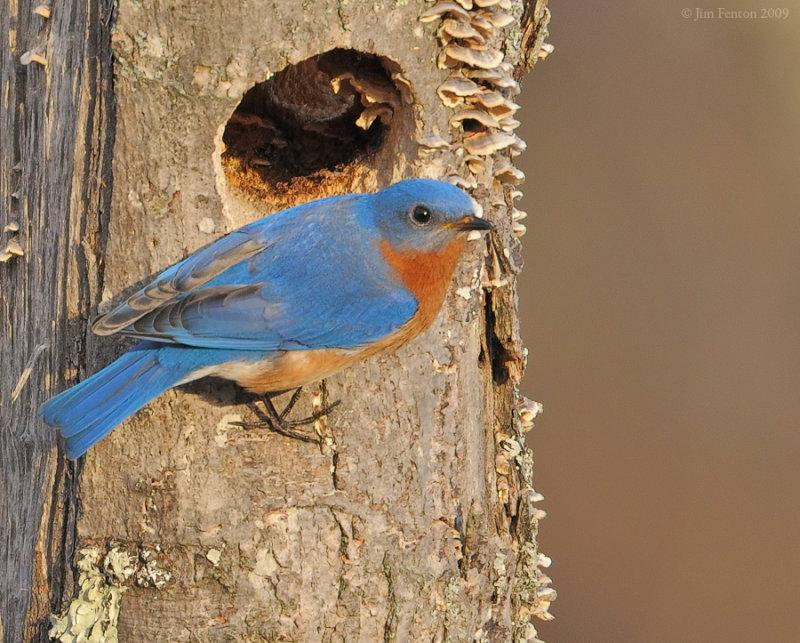
Eastern Bluebird (Sialia sialis) by J Fenton

Eastern Bluebird (Sialia sialis) by J Fenton

Cranes know when it’s time to move south for winter. And robins, warblers, and bluebirds know when it’s time to come back again. But my people? My people know nothing, not the first thing of GOD and his rule. (Jeremiah 8:7 MSG)

As far as I know, the only Version of the Bible (English) that used the word “bluebirds is the Message. It is not a version I use, but that verse makes for chance to write about the Bluebirds. In many of the other versions, “Thrush” is used. Bluebirds are in the Turdidae – Thrushes Family. There are three species; the Eastern, Western and Mountain Bluebirds. In a completely different family, the Irenidae – Fairy-bluebirds Family you will find the Asian and Philippine Fairy-bluebirds. These are not “thrushes” per se.

This verse has been written about in Birds of the Bible – Thrush and Thrushes II. It mentions that the birds know more about migration than the people know that much about God and His dominion.

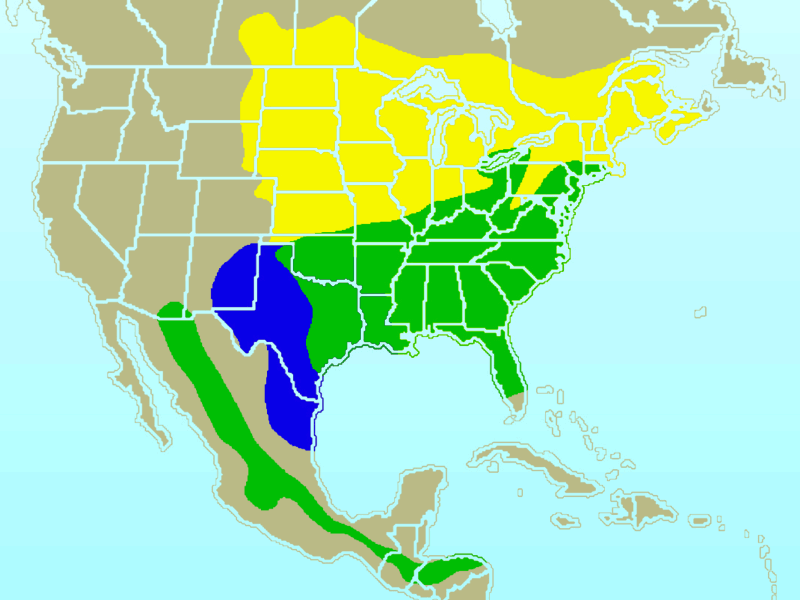
Do the Bluebirds migrate? Only the Eastern Bluebird. Here is their range map. Yellow is summer, blue – winter and green is year round. The summer breeding range extends as far north as the Pacific Northwest, British Columbia, and Montana. The northern Western Bluebirds can migrate to the southern parts of the range; southern birds are often permanent residents. The mountain bluebird is migratory. The Mountain Bluebird range varies from Mexico in the winter to as far north as Alaska, throughout the western U.S. and Canada. Northern birds migrate to the southern parts of the range; southern birds are often permanent residents. Some birds may move to lower elevations in winter.

Eastern_Bluebird-rangemap rangemap Y-Sum B-win G-yr rnd

Eastern Bluebird rangemap Y-Sum B-win G-yr rnd ©WikiC

So, not so sure that was a good choice of birds to use especially since they aren’t even anywhere near the Middle East. Nevertheless they are beautiful birds that the Lord has created for His pleasure and our enjoyment. The majority of their diet is “insects and other invertebrates. The remainder of the bird’s diet is made up of wild fruits. Favored insect foods include grasshoppers, crickets, katydids, and beetles. Other food items include earthworms, spiders, millipedes, centipedes, sow bugs and snails. (Eastern) Bluebirds are very helpful with pest control in the territory surrounding the nest.”

Mountain Bluebird (Sialia currucoides) by Daves BirdingPix

Mountain Bluebird (Sialia currucoides) by Daves BirdingPix

All three of them are cavity dwellers or nest box residents. They are all territorial and “Bluebirds can typically produce between two and four broods during the spring and summer (March through August in the Northeastern United States). Males identify potential nest sites and try to attract prospective female mates to those nesting sites with special behaviors that include singing and flapping wings, and then placing some material in a nesting box or cavity. If the female accepts the male and the nesting site, she alone builds the nest and incubates the eggs.”

“The bluebirds are a group of medium-sized, mostly insectivorous or omnivorous birds in the genus Sialia of the thrush family (Turdidae). Bluebirds are one of the few thrush genera in the Americas. They have blue, or blue and red, plumage. Female birds are less brightly colored than males, although color patterns are similar and there is no noticeable difference in size between sexes.

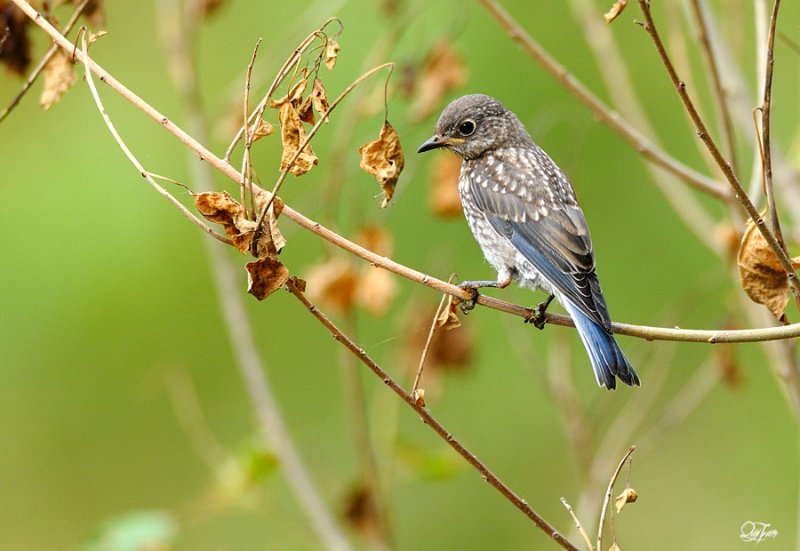
Western Bluebird (Sialia mexicana) juvenile by Quy Tran

Western Bluebird (Sialia mexicana) juvenile by Quy Tran

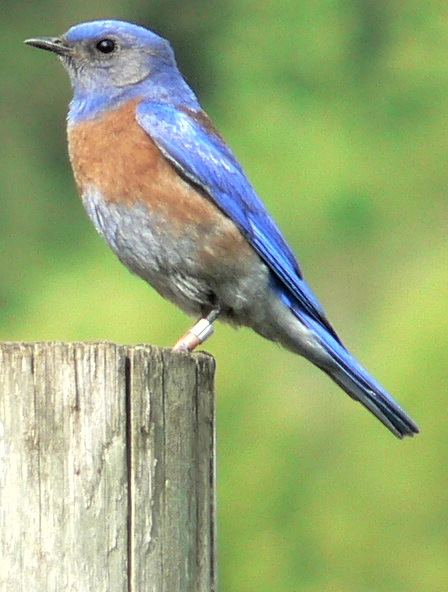
Western Bluebirds are sometimes confused with other bluebirds, however they can be distinguished without difficulty. The Western Bluebird has a blue (male) or gray (female) throat, the Eastern Bluebird has an orange throat, and the Mountain Bluebird lacks orange color anywhere on its body.

Western Bluebird (Sialia mexicana) ©WikiC

Western Bluebird (Sialia mexicana) ©WikiC

I know all the birds of the hills, and all that moves in the field is mine. (Psalms 50:11 ESV)

See:

Birds of the Bible

Birds of the Bible – Thrushes

Eastern, Western, Mountian Bluebirds – Wikipedia

Wordless Birds

*

Birds of the Bible – Smith’s Sparrow

Song Sparrow (Melospiza melodia) by J Fenton

Song Sparrow (Melospiza melodia) by J Fenton

While looking up the word “birds” in the Dictionary section of my e-Sword program, there is an “i” symbol that shows on the tab of the name of a dictionary. That “i” indicates that there is information about your search word. The Smith’s Bible Dictionary had an “i” so I investigated it. This is what I saw:

Birds
        Birds. See Sparrow.

So when I went there, this interesting definition of “sparrow” was found and I wanted to share it with you.

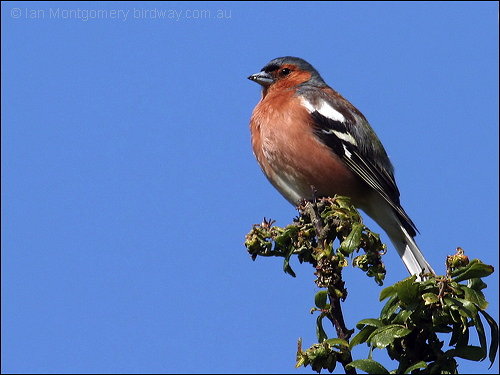
Eurasian Chaffinch (Fringilla coelebs) by Ian

Eurasian Chaffinch (Fringilla coelebs) by Ian

Sparrow

Sparrow. (Hebrew, tzippor, from a root signifying to “chirp” or “twitter”, which appears to be a phonetic representation of the call-note of any passerine (sparrow-like) bird). This Hebrew word occurs upwards of forty times in the Old Testament. In all passages, except two, it is rendered by the Authorized Version indifferently as “bird” or “fowl,” and denotes any small bird, both of the sparrow-like species and such as the starling, chaffinch, greenfinch, linnet, goldfinch, corn-bunting, pipits, blackbird, song-thrush, etc. In Psalm 84:3, and Psalm 102:7, it is rendered “sparrow.”

Corn Bunting (Emberiza calandra) ©WikiC

Corn Bunting (Emberiza calandra) ©WikiC

Yea, the sparrow hath found an house, and the swallow a nest for herself, where she may lay her young, even thine altars, O LORD of hosts, my King, and my God. (Psalms 84:3 KJV)

I watch, and am as a sparrow alone upon the house top. (Psalms 102:7 KJV)

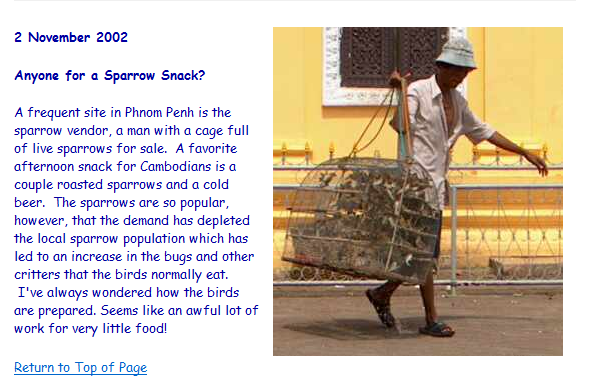
Anyone for a Sparrow Snack?

The Greek, stauthion, (Authorized Version, “sparrow”), occurs twice in the New Testament, Matthew 10:29; Luke 12:6-7. (The birds above mentioned are found in great numbers in Palestine, and are of very little value, selling for the merest trifle, and are, thus, strikingly used by our Saviour, Matthew 10:20, as an illustration of our Father’s care for his children. — Editor).

Are not two sparrows sold for a farthing? and one of them shall not fall on the ground without your Father. (Matthew 10:29 KJV)

Are not five sparrows sold for two farthings, and not one of them is forgotten before God? But even the very hairs of your head are all numbered. Fear not therefore: ye are of more value than many sparrows. (Luke 12:6-7 KJV)

Blue Rock Thrush (Monticola solitarius) by Nikhil Devasar

Blue Rock Thrush (Monticola solitarius) by Nikhil Devasar

The blue thrush, (Petrocossyphus cyaneus), is probably the bird to which the psalmist alludes in Psa_102:7, as “the sparrow that sitteth alone upon the house-top.” It is a solitary bird, eschewing the society of its own species, and rarely more than a pair are seen together. The English tree-sparrow, (Passer montanus), is also very common, and may be seen in numbers on Mount Olivet, and also about the sacred enclosure of the mosque of Omar. This is, perhaps, the exact species referred to in Psalm 84:3.

Yea, the sparrow hath found an house, and the swallow a nest for herself, where she may lay her young, even thine altars, O LORD of hosts, my King, and my God. (Psalms 84:3 KJV)

House Sparrows visiting National Aviary Parrot Show by Lee

House Sparrows visiting NA Parrot Show Outside

Dr. Thompson, in speaking of the great numbers of the house-sparrows and field-sparrows in troublesome and impertinent generation, and nestle just where you do not want them. “They stop your stove — and water-pipes with their rubbish, build in the windows and under the beams of the roof, and would stuff your hat full of stubble in half a day, if they found it hanging in a place to suit them.”

(I added the verses to make it easier and also the “blue thrush, (Petrocossyphus cyaneus)” could not be found. Photos also inserted.)

The Blue Rock Thrush (Monticola solitarius) is a species of chat. This thrush-like Old World flycatcher was formerly placed in the family Turdidae. It is now found in the Muscicapidae family.

Sparrows are found in two families today. The Family – Emberizidae – Buntings, New World Sparrows & Allies and the Family – Passeridae – Old World Sparrows, Snowfinches.

*

Smith’s Bible Dictionary, originally named A Dictionary of the Bible, was a 19th century Bible dictionary containing upwards of four thousand entries that became named after its editor, William Smith. Its popularity was such that condensed dictionaries appropriated the title, “Smith’s Bible Dictionary”.

The original dictionary was published as a three volume set in 1863, in London and Boston, USA. This first edition was followed in 1893 by an expanded four volume version which was published in the United States as A dictionary of the Bible comprising its antiquities, biography, geography, and natural history, edited by Smith and J. M. Fuller.

The original publications are now in the public domain; some derivative, commercial versions are still in copyright.

*

Birds of the Bible – Patient Herons

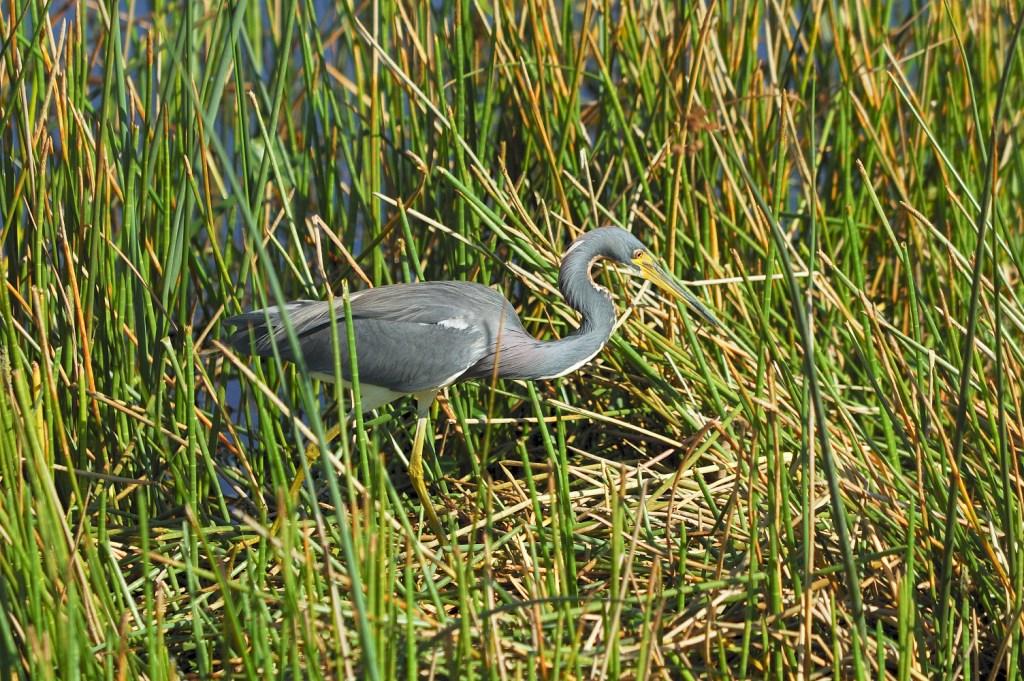
Tricolored Heron at Vierra Wetlands, Vierra, FL

Tricolored Heron at Vierra Wetlands, Vierra, FL

I watch Great Blue Herons, Great Egrets, Cattle Egrets, Little Blue Herons, Tricolored Herons and Green Herons which are quite common in our area. They are all in the same family and all seem to have a characteristic of being very patient. Have you just sat and watched them? When you are out birdwatching it is a habit of those in the Ardeidae – Herons, Bitterns Family to stand very still and wait for some food to swim by or to lean over and strike a pose. They freeze other than a side-to-side movement of their neck.

Herons are mentioned twice in the Bible, and only in a list of unclean birds to not eat. Leviticus 11:19 and Deuteronomy 14:18.

the stork, the heron after its kind, the hoopoe, and the bat. (Leviticus 11:19 NKJV)

the stork, the heron after its kind, and the hoopoe and the bat. (Deuteronomy 14:18 NKJV)

Here is a video of a Great Egret at Lake Parker looking for something in a tree. I strung three short videos together. Taken back in 2008.

The Herons are so patient it reminds me that I need to be more patient. So, here are some of the verses in Scripture that tell us to be patient or to wait:

Rest in the LORD, and wait patiently for Him; Do not fret because of him who prospers in his way, Because of the man who brings wicked schemes to pass. (Psalms 37:7 NKJV)

…I waited patiently for the LORD; And He inclined to me, And heard my cry. (Psalms 40:1 NKJV)

The end of a thing is better than its beginning; The patient in spirit is better than the proud in spirit. (Ecclesiastes 7:8 NKJV)

And a servant of the Lord must not quarrel but be gentle to all, able to teach, patient, (2 Timothy 2:24 NKJV)

Black-crowned Night Heron (Nycticorax nycticorax) ©WikiC

Black-crowned Night Heron (Nycticorax nycticorax) ©WikiC

Here’s a good one for us and the heron when he catches his fish:

And so, after he had patiently endured, he obtained the promise. (Hebrews 6:15 NKJV)

And then one of my favorite passages that has to with waiting, even though the Eagle is mentioned instead of the Heron.

Have you not known? Have you not heard? The everlasting God, the LORD, The Creator of the ends of the earth, Neither faints nor is weary. His understanding is unsearchable. He gives power to the weak, And to those who have no might He increases strength. Even the youths shall faint and be weary, And the young men shall utterly fall, But those who wait on the LORD Shall renew their strength; They shall mount up with wings like eagles, They shall run and not be weary, They shall walk and not faint. (Isaiah 40:28-31 NKJV)

Other links:

Birds of the Bible 

Birds of the Bible – Herons

Ardeidae – Herons, Bitterns Family

*

Birds of the Bible – Job 38 – 39

Common Ostrich (Struthio camelus) Memphis Zoo by Lee

Common Ostrich (Struthio camelus) Memphis Zoo by Lee

Dan and I have been reading through Job for our devotions. Today was Job 38 and 39. Wow! All of Job’s “friends” have been trying to persuade Job how wrong and unrighteous he is and Job has been trying to figure out why he is being punished, yet defending his righteousness.

Finally in Job 38, God speaks. Job has been asking to speak to God about his situation. (From the Today in the Word, Vol II, Day 28) “So, when Job finally gets the audience with the Lord that he requested, he is not the one asking the questions!  Instead, like a prosecuting attorney, the Lord fires off the questions and informs Job ‘You will answer me’ (38:3). God challenges Job’s insinuation that He wasn’t administering justice fairly. This interrogation covers Job 38 and 39, but it could be paraphrased in this one penetrating question: ‘Were you present at creation?’ ”

If you haven’t read Job lately and especially Chapter 38 and 39, it worth reading.

Northern Raven (Corvus corax) by Ray

Northern Raven (Corvus corax) by Ray

Anyway, within those two chapters, God mentions the Raven and the Ostrich.

Can you hunt the prey for the lion, or satisfy the appetite of the young lions, when they crouch in their dens or lie in wait in their thicket? Who provides for the raven its prey, when its young ones cry to God for help, and wander about for lack of food? (Job 38:39-41 ESV)

Then in the next chapter God tells about the Ostrich that He created:

The wings of the ostrich wave proudly, but are they the pinions and plumage of love? For she leaves her eggs to the earth and lets them be warmed on the ground, forgetting that a foot may crush them and that the wild beast may trample them. She deals cruelly with her young, as if they were not hers; though her labor be in vain, yet she has no fear, because God has made her forget wisdom and given her no share in understanding. When she rouses herself to flee, she laughs at the horse and his rider. (Job 39:13-18 ESV)

Both of these birds have been covered in other Birds of the Bible articles, but just wanted to share them with you again. We know that God provides for the birds and He has promised to provide for His own, Christians. He also, makes birds different, at His will. Who are we to question His knowledge and wisdom. The same is true with us who know the Lord. He gives each of us different talents and abilities. We are not to question why He made us thus.

Birds of the Bible

Birds of the Bible – Ravens

Birds of the Bible – Ostrich

The Gospel Message

*

Birds of the Bible – Jeremiah 8:7

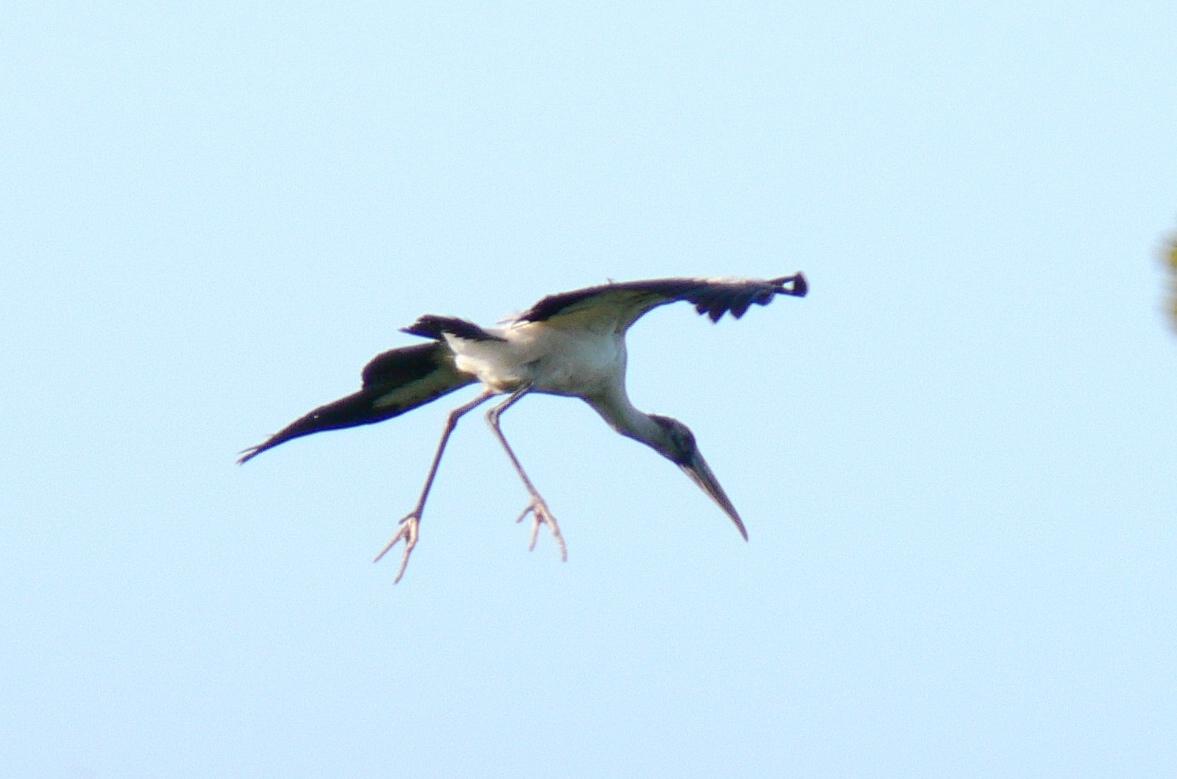
Wood Stork with landing gear down

Wood Stork with landing gear down

Jeremiah 8:7 has been used in several Birds of the Bible articles before. See Birds of the Bible:

So what else can be found out about that verse? Those of you that follow this blog know that I enjoy digging into the Bible with my e-Sword program. It is a free program that can be downloaded. It has different versions of the Bible that can be downloaded free or some with a small fee. Also available are dictionaries, commentaries, maps, notes, references and STEP additions. For the price, FREE, it is hard to beat. There are also links to other sites to get even more add-ons. Check out their LINKS page. Two favorites of mine are the ESS and the Bible Support sites.

The Bible tells us to study the Bible and we should. I try to read several chapters every day and meditate on what I read. Then along with that I like to dig deeper into Scripture and mine some great promises and truths out. Then other times, like this article, I am just digging out the birds mentioned in the different versions of this verse. I don’t endorse every version I have loaded on my e-Sword, but I do like to compare all of them.

But continue thou in the things which thou hast learned and hast been assured of, knowing of whom thou hast learned them; And that from a child thou hast known the holy scriptures, which are able to make thee wise unto salvation through faith which is in Christ Jesus. All scripture is given by inspiration of God, and is profitable for doctrine, for reproof, for correction, for instruction in righteousness: That the man of God may be perfect, throughly furnished unto all good works. (2 Timothy 3:14-17 KJV)

Well, back to Jeremiah 8:7. Here’s the verse:

Yea, the stork in the heaven knoweth her appointed times; and the turtle and the crane and the swallow observe the time of their coming; but my people know not the judgment of the LORD. (Jeremiah 8:7 KJV)

Using the “Compare” mode, let’s see which birds are mentioned. Most mention the Stork, Turtle or Turtle-dove, Swallow, and the Crane. It is referring to them having the knowledge to know when to migrate, but “but my people know not the rules of the LORD.” (ESV) See the other articles for more details.

*

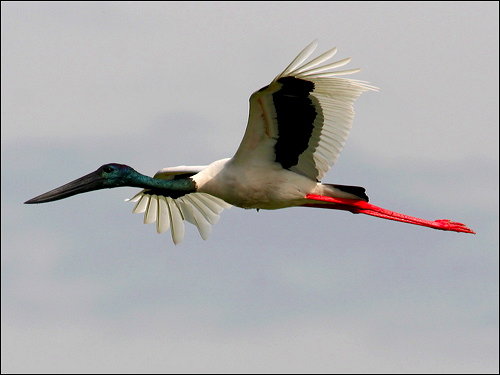
Black-necked Stork (Jabiru) (Ephippiorhynchus asiaticus) by Ian

Black-necked Stork (Jabiru) (Ephippiorhynchus asiaticus) by Ian

The H####’s are from Strong’s Hebrew and Greek Dictionaries. Using the KJV+ for the numbers.
H2624
חסידה
chăsı̂ydâh
khas-ee-daw’
Feminine of H2623; the kind (maternal) bird, that is, a stork: – X feather, stork.

Stork or storks – every version except two – DRB (kite), MSG (see bottom)
*

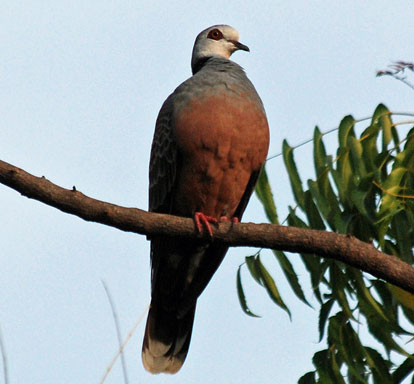
Adamawa Turtle Dove (Streptopelia hypopyrrha) ©WikiC

Adamawa Turtle Dove (Streptopelia hypopyrrha) ©WikiC

H8449
תּר תּור
tôr tôr
tore, tore
Probably the same as H8447; a ring dove, often (figuratively) as a term of endearment: – (turtle) dove.

Dove, Turtle, Turtle-doves, Mourning Doves – same family, no problem
*

Welcome Swallow (Hirundo neoxena) by Ian

Welcome Swallow (Hirundo neoxena) by Ian

H5693
עגוּר
‛âgûr
aw-goor’
Passive participle (but with active sense) of an unused root meaning to twitter; probably the swallow: – swallow.

Swallow – most versions
Swift – instead of Swift – ERV, NASB, NAS77, NIV, NIrV
Swift and Swallow – NKJV
The Swift and the Swallow both behave alike in some ways even though they are not in the same family. I even confuse them at times.
*

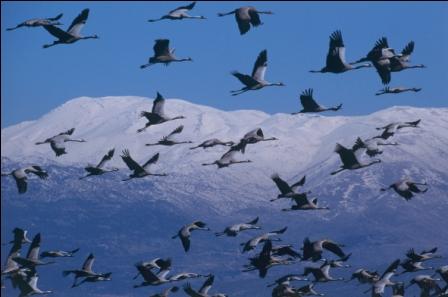
Crane Migration over Israel

Crane Migration over Israel

H5483
סס סוּס
sûs sûs
soos, soos
From an unused root meaning to skip (properly for joy); a horse (as leaping); also a swallow (from its rapid flight): – crane, horse ([-back, -hoof]).
Now we see where two different birds could be used. From here on the different versions begin to differ.

Crane – Most use Crane, but here are some of the differences
Sparrows – APB, Brenton
Thrushes – CEV, ERV, ECB, GNB, LITV, NAS77, NASB
Quite a difference in the birds here.
*

Eastern Bluebird (Sialia sialis) by S Slayton

Eastern Bluebird (Sialia sialis) by S Slayton

I saved the most interesting translation till last. Actually, it is a paraphrase and not a true translation. It does give me three more named birds. So far I haven’t seen them anywhere else, so for now they will not get their own page.

Cranes know when it’s time to move south for winter. And robins, warblers, and bluebirds know when it’s time to come back again. But my people? My people know nothing, not the first thing of GOD and his rule. (Jeremiah 8:7 MSG)

Does it matter if there is a difference in these versions? Yes and no. Yes, the Bible should be translated as close to the original as possible. No, in the sense that all these birds were given the knowledge to migrate by the Lord. And the truth of people not knowing the truth about God and what He wants for their lives. The birds obey, man doesn’t.

See More Birds of the Bible

Thought:

The method I used to study this verse can be applied to any verse or passage you wish to dig into. I used the Strong’s Hebrew and Greek because, of course, I have no clue as to what those word are. But using those help me/you understand the meaning of the word as it was originally written or as close as we can get to it. As our language has changed over the years, our meanings have also changed. It helps to read other versions when studying the Bible. I know some don’t agree and I won’t go there. The Lord has many truths to find in His Word. Maybe you like plants or animals, or like to study one person at a time, or a promise and the different ways it is presented, whatever. Study.

Gospel Message

*

Birds of the Bible – Descending Like A Dove

When I have my devotions, I sit in a chair by the window that faces the bird feeders. So while reading, I notice the birds busily getting their daily quota of my seed. I have been reading currently through the Gospels and keep coming upon when Jesus was baptized and the “Spirit of God descended like a dove?” That phrase is in all four Gospels; Matthew 3:16; Mark 1:10, Luke 3:22 and in John 1:32.

I have 3 or 4 Mourning Doves and a group of 9-11 Eurasian Collared Doves that come to eat quite frequently at about the time I am reading. So I have been noticing them more lately. They sort of flutter down to the feeders. The Red-winged Blackbirds and the Boat-tailed Grackles seem to sail in and then put on their brakes to land. The few House Sparrows don’t seem to flutter like the Doves either.

When He had been baptized, Jesus came up immediately from the water; and behold, the heavens were opened to Him, and He saw the Spirit of God descending like a dove and alighting upon Him. (Matthew 3:16 NKJV)

Barnes says – “The Spirit of God – See Mat_3:11. This was the third person of the Trinity, descending upon him in the form of a dove, Luk_3:22. The dove, among the Jews, was the symbol of purity of heart, harmlessness, and gentleness, Mat_10:16; compare Psa_55:6-7. The form chosen here was doubtless an emblem of the innocence, meekness, and tenderness of the Saviour. The gift of the Holy Spirit, in this manner, was the public approbation of Jesus Joh_1:33, and a sign of his being set apart to the office of the Messiah. We are not to suppose that there was any change done in the moral character of Jesus, but only that he was publicly set apart to his work, and solemnly approved by God in the office to which he was appointed.”

Pulpit Commentary – “The dove-Spirit on Christ. “Descending like a dove, and lighting upon him.” Comparing the accounts given by the evangelists, it still remains uncertain whether what was seen by John actually had the form of a dove, or hovered or brooded as a descending bird does. But for our fixed associations, and the familiar comments, we should be more willing to see that the brooding, resting, abiding of the Spirit on Jesus, is the thing intended to be set prominently before us by the figure. It will be safer, perhaps, to fix attention on both the explanations.”

Doves in Israel

Doves in Israel ©©

And immediately, coming up from the water, He saw the heavens parting and the Spirit descending upon Him like a dove. (Mark 1:10 NKJV)

Matthew Henry – “(2.) He saw the Spirit like a dove descending upon him. Note, Then we may see heaven opened to us, when we perceive the Spirit descending and working upon us. God’s good work in us is the surest evidence of his good will towards us, and his preparations for us. Justin Martyr says, that when Christ was baptized, a fire was kindled in Jordan: and it is an ancient tradition, that a great light shone round the place; for the Spirit brings both light and heat.”

Bible Knowledge Comm. – “Second, He saw the Spirit descending on Him like a dove, in a visible dovelike form, not in a dovelike way (cf. Luk_3:22). The dove imagery probably symbolized the Spirit’s creative activity (cf. Gen_1:2). In Old Testament times the Spirit came on certain people to empower them for service (e.g., Exo_31:3; Jdg_3:10; Jdg_11:29; 1Sa_19:20, 1Sa_19:23). The coming of the Spirit on Jesus empowered Him for His messianic mission (cf. Act_10:38) and the task of baptizing others with the Spirit, as John predicted (Mar_1:8).”

J Vernon McGee – “Mark 1:10-11 – Here we see the Trinity brought together in a very definite way. We see the Lord Jesus, the second Person of the Godhead; the Spirit of God who descends like a dove upon Him—the Spirit is the third Person of the Godhead; and the voice from heaven saying, “Thou art my beloved Son” is that of the Father, the first Person of the Godhead. So the Trinity is brought to our attention. And this, by the way, is heaven’s seal upon the Person and dedication of Jesus.   You will notice that things are happening very fast here. He is the Servant. John the Baptist is the one who introduces Him, and then God the Father identifies Him and puts His seal upon Him. Next the temptation will initiate Him.”

Mourning Dove (Zenaida macroura) by Quy Tran

Mourning Dove (Zenaida macroura) by Quy Tran

And the Holy Spirit descended in bodily form like a dove upon Him, and a voice came from heaven which said, “You are My beloved Son; in You I am well pleased.” (Luke 3:22 NKJV)

Life Application Study Bible – “Luke 3:21-22 – Theologians have long been troubled by Jesus’ allowing himself to be baptized by John. After all, this baptism was for sinners. Why, then, did Jesus do it? He did it because he is both God and human—he underwent baptism and even death as only a human could; he lived a sinless life and rose from the dead as only God could. This baptism by John in the Jordan River was another step in his identification with us sinful people; and the arrival of the dove signifies God’s approval. Now Jesus would officially begin his ministry as God’s beloved Son walking the dusty roads of Israel. When you are hurting, depressed, broken, remember: You have a Savior who understands your humanity. When you sin, remember: He has paid the price for your disobedience.

This is one of several places in Scripture where all the members of the Trinity are mentioned—Father, Son, and Holy Spirit. In the traditional words of the church, the one God exists in three persons but one substance, coeternal and coequal. No explanation can adequately portray the power and intricacy of this unique relationship. There are no perfect analogies in nature because there is no other relationship like the Trinity.

Gill – “like a dove upon him; either in the form of a dove, or this corporeal form, whatever it was, descended and hovered on him as a dove does:”

I did not know Him; but that He should be revealed to Israel, therefore I came baptizing with water.” And John bore witness, saying, “I saw the Spirit descending from heaven like a dove, and He remained upon Him. I did not know Him, but He who sent me to baptize with water said to me, ‘Upon whom you see the Spirit descending, and remaining on Him, this is He who baptizes with the Holy Spirit.’ And I have seen and testified that this is the Son of God.” (John 1:31-34 NKJV)

Ironside – “Then John says, “This is he of whom I said, After me cometh a man which is preferred before me: for he was before me. And I knew him not” (vv. 30-31a). Evidently he had been out in company where Jesus was, but he did not understand that this was the Messiah until now. He “knew him not: but that he should be made manifest to Israel, therefore am I come baptizing with water. And John bare record, saying, I saw the Spirit descending from heaven like a dove”-you see this event takes place after the baptism, which is not referred to here, but is mentioned in other Gospels-”I saw the Spirit descending from heaven like a dove, and it abode upon him. And I knew him not: but he that sent me to baptize with water, the same said unto me, Upon whom thou shalt see the Spirit descending, and remaining upon him, the same is he which baptizeth with the Holy Ghost” (vv. 31-33). The great work that John was sent to do was nearing an end. Now here is the climax: “I saw and bare record that this is the Son of God.” Did John really know that? Yes, he did-“I saw, and bare record that this is the Son of God” (v. 34). Do you know that, dear friend? Have you trusted Him for yourself? Oh, if you have never trusted Him before, won’t you come to God, owning your sin? “Behold the Lamb of God, which taketh away the sin of the world.”

*** From the above remarks from the different commentaries and the four verses, it seems that the Dove descending on Christ and resting there is for several reason. John the Baptist had been told to look for that sign so that he would know who the Messiah was. Also, the verse help reveal the work of the Trinity, especially the Holy Spirit (our Dove). And most important of all, those verse point to Our Savior or “the Lamb of God, which taketh away the sin of the world.” I trust you know Him as your personal Savior.

The next time I watch a Dove landing, I am sure what I have just gleaned from these writers and my reading of the Bible will bring to mind Jesus’ baptism and the how the Holy Spirit descended like a Dove and God speaking from heaven, confirming that He is the Son of God.

Quotes are from my e-Sword program.

See ~ Birds of the Bible – Doves

Sharing The Gospel

*

Video by  CherokeePhoenix

*

I know these are not Doves, but Gulls, but they remind me of the Dove’s landings at my feeders.

*

Birds of the Bible – Water-hen or Water hen

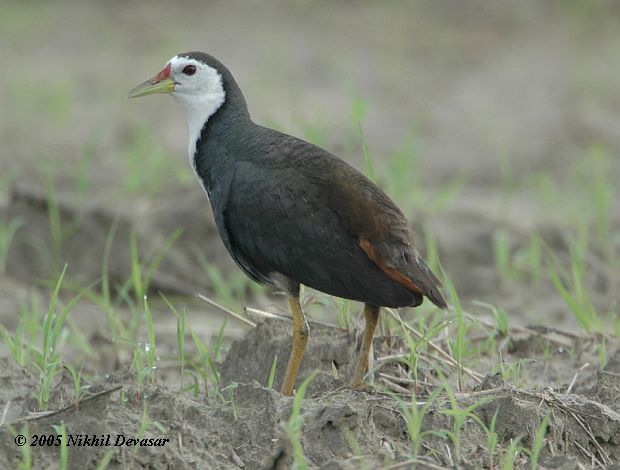
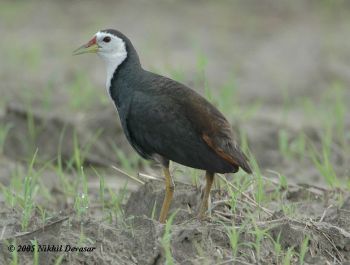
White-breasted Waterhen (Amaurornis phoenicurus) by Nikhil Devasar

White-breasted Waterhen (Amaurornis phoenicurus) by Nikhil Devasar

Leviticus 11:18
(BBE) And the water-hen and the pelican and the vulture;
(ERV) water hens, pelicans, carrion vultures,
(ISV) water-hen, pelican, carrion,
(MSG)  water hen, pelican, Egyptian vulture,
(NRSV) the water hen, the desert owl, the carrion vulture,

(ABP+) and the purple-legged stork, and pelican, and swan
CAB(i) 18 and the red-bill, and the pelican, and swan,
(Brenton) and the red-bill, and the pelican, and swan,
(Bishops) The Backe, the Pellicane, the Pye,

(Geneva) Also the redshanke and the pelicane, and the swanne:
(Vulgate) si ambulans per viam in arbore vel in terra nidum avis inveneris et matrem pullis vel ovis desuper incubantem non tenebis eam cum filiis
(KJV) And the swan, and the pelican, and the gier eagle,
Deuteronomy 14:16
(BBE) The little owl and the great owl and the water-hen;

(Bishops) The litle Owle, the great Owle, nor the Redshanke.
(Geneva) Neither the litle owle, nor the great owle, nor the redshanke,
(KJV)  The little owl, and the great owl,  and the swan,
(Vulgate) herodium et cycnum et ibin

Adam Clarke’s Commentary: “The swan – תנשמת tinshemeth. The Septuagint translate the word by πορφυριωνα, the porphyrion, purple or scarlet bird. Could we depend on this translation, we might suppose the flamingo or some such bird to be intended. Some suppose the goose to be meant, but this is by no means likely, as it cannot be classed either among ravenous or unclean fowls. Bochart thinks the owl is meant.”

Companion Bible Notes: “swan, not our swan: it is variously rendered “ibis”, “heron”, and “pelican”.

Gill: “Leviticus 11:18
And the swan,…. This is a bird well known to us, but it is a question whether it is intended by the word here used; for though it is so rendered in the Vulgate Latin, it is differently rendered by many others: the Targums of Jonathan and Jerusalem call it “otia”, which seems to be the same with the “otus” of Aristotle (n), who says it is like an owl, having a tuft of feathers about its ears (from whence it has its name); and some call it “nycticorax”, or the owl; and here, by Bochart (o), and others, the owl called “noctua” is thought to be meant; and with which agrees the account some Jewish writers give of it, as Aben Ezra and Baal Hatturim, who say it is a bird, which every one that sees is astonished at it, as other birds are at the owl, are frightened at the sight of it, and stupefied. But as the same word is used Lev_11:30 among the creeping things, for a mole, what Jarchi observes is worthy of consideration, that this is “calve (chauve) souris” (the French word for a bat), and is like unto a mouse, and flies in the night; and that which is spoken of among the creeping things is like unto it, which hath no eyes, and they call it “talpa”, a mole. The Septuagint version renders it by “porphyrion”, the redshank; and so Ainsworth; and is thought to be called by the Hebrew name in the text, from the blowing of its breath in drinking; for it drinks biting, as Aristotle says (p):”

Jamieson Fausset Brown: the swan — found in great numbers in all the countries of the Levant. It frequents marshy places – the vicinity of rivers and lakes. It was held sacred by the Egyptians, and kept tame within the precincts of heathen temples. It was probably on this account chiefly that its use as food was prohibited. Michaelis considers it the goose.
McGee:
Leviticus 11:13-19

CLEAN AND UNCLEAN FLYING CREATURES (IN THE AIR)
On the birds there are no visible markers like there are on the fish and the animals. But they seem to have in common that they are all unclean feeders. For the most part, they feed on dead carcasses of animals, fish, and other fowl.

A list of unclean birds of Palestine is given. This is another point that reveals that the Mosaic system was intended for the nation Israel and also for the particular land of Palestine. Some of these birds sound strange to us. They fall into the family of the eagles and the hawks, the vultures and the ravens, the owls and cormorants, and the swans and pelicans. They don’t even sound appetizing. They are the “dirty birdies” because of their feeding habits. Now remember, some people eat some of these birds today. I can’t say I would like any of them, but whether we eat them or don’t eat them makes no difference—meat will not commend us to God. The point is that it was teaching Israel to make a distinction. They had to make a decision about what was clean and unclean.

The lesson for us today is that we must make decisions about our conduct and our profession. We have to make the decision about whether to accept Christ or not, whether to study the Word of God or not, whether to walk in a way pleasing to God or not. That is the application for us today.

This section throws some light on the experience of Elijah. He was fed by the ravens—dirty birds. Elijah did not eat the ravens, but they fed him. This was a humbling experience for this man of God who obeyed God in every detail.

MHCC:
Leviticus 11:1-47

These laws seem to have been intended, 1. As a test of the people’s obedience, as Adam was forbidden to eat of the tree of knowledge; and to teach them self-denial, and the government of their appetites. 2. To keep the Israelites distinct from other nations. Many also of these forbidden animals were objects of superstition and idolatry to the heathen. 3. The people were taught to make distinctions between the holy and unholy in their companions and intimate connexions. 4. The law forbad, not only the eating of the unclean beasts, but the touching of them. Those who would be kept from any sin, must be careful to avoid all temptations to it, or coming near it. The exceptions are very minute, and all were designed to call forth constant care and exactness in their obedience; and to teach us to obey. Whilst we enjoy our Christian liberty, and are free from such burdensome observances, we must be careful not to abuse our liberty. For the Lord hath redeemed and called his people, that they may be holy, even as he is holy. We must come out, and be separate from the world; we must leave the company of the ungodly, and all needless connexions with those who are dead in sin; we must be zealous of good works devoted followers of God, and companions of his people.

***

Well, those are some of the remarks by the different commentaries. It seems there is no real set answer as to whether the Waterhen or Water-hen was the intended bird. The list of Unclean and Clean birds was for the Israelites and not us today. It is not even for them today. Why write about them, because it is interesting. To me, it comes down to a decision on their part and ours today whether we want to obey the Word of God.

….for the LORD your God is testing you to know whether you love the LORD your God with all your heart and with all your soul. You shall walk after the LORD your God and fear Him, and keep His commandments and obey His voice; you shall serve Him and hold fast to Him. (Deuteronomy 13:3-4 NKJV)

Most of the birds seem to have a diet that would cause eating that bird to make people sick or to die. Not all of them are in that category. It could be that they were not to eat a specific bird because they were few in number at that time and it could have caused them to go extinct. (That happens today.) It comes to obedience. That said, let’s see what a Water Hen really is.

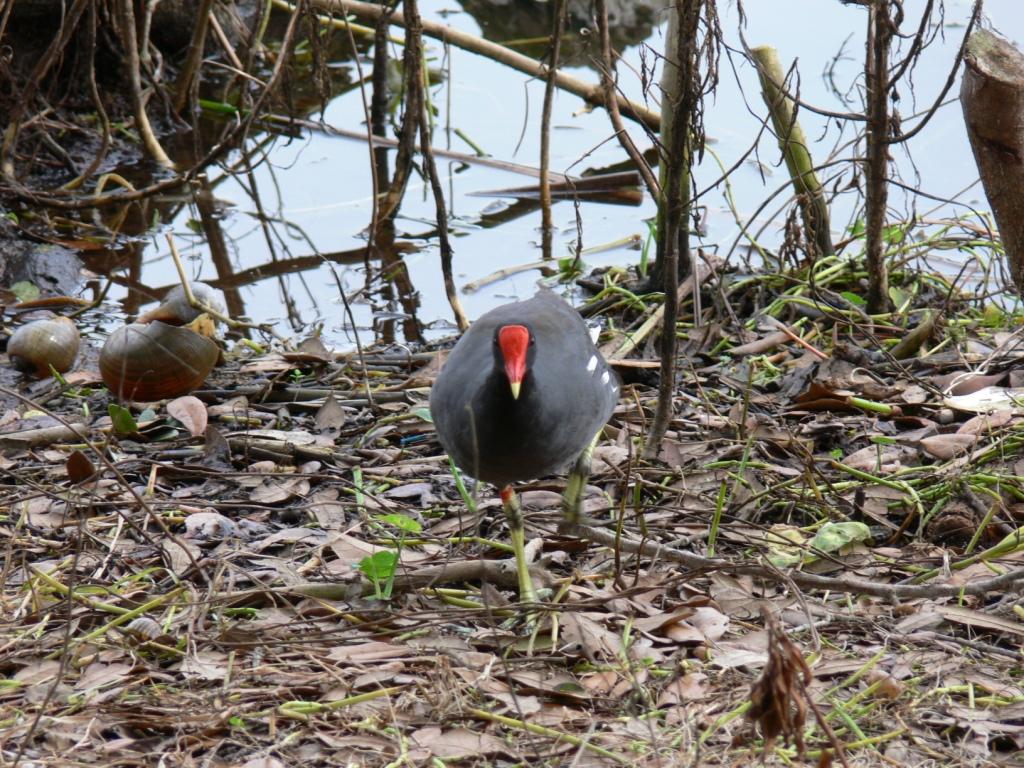
Common Moorhen (Gallinula chloropus) by Lee

Common Moorhen (Gallinula chloropus) by Lee

Water-hen or Waterhens are in the Rallidae – Rails, Crakes & Coots Family. According to Wikipedia’s article on the Waterhen:

Waterhen may refer to any of the following:

Black Crake (Amaurornis flavirostra) ©WikiC

Black Crake (Amaurornis flavirostra) ©WikiC

The adult Black Crake is 19–23 cm long with a short tail and long toes. As its name implies, the adult has mainly black plumage, with a brown olive tone on the wings and upperparts which is rarely detectable in the field. The eye is red, the bill is yellow, and the legs and feet are red, duller when not breeding.

The sexes are similar, but the male is slightly larger. Most males, but only 10% of females, have a hooked upper mandible. The immature bird has brown upperparts and a dark grey head and underparts. Its bill is greenish yellow, and its feet and legs are dull red. The downy chicks are black, as with all rails.

The Black Crake is extremely aggressive when breeding and will attack birds of many species, but especially other rails. It will attack and kill rails of species as large as itself.

The nest is a deep neat bowl made from wetland plants and built by both sexes in marsh vegetation or on the ground in a dry location. The nest is also sometimes constructed up to 3 m high in a bush.

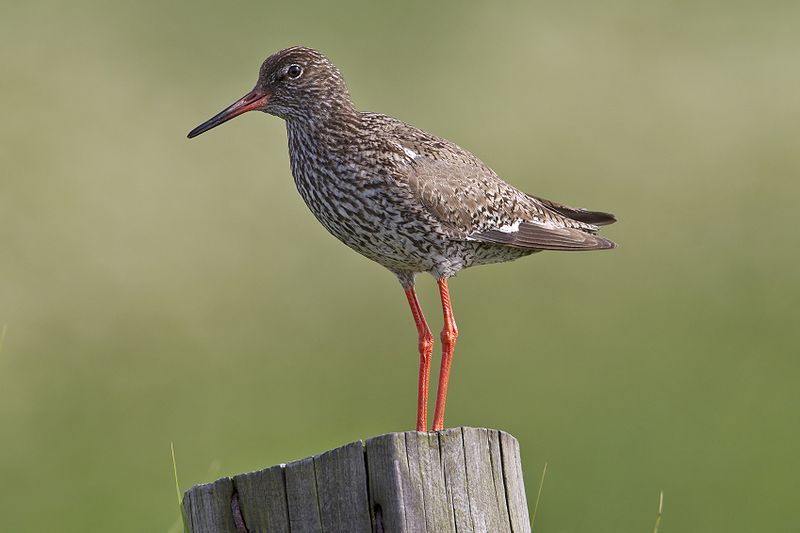
If it was a Redshank(e), then we have a completely different bird in a different family, the Scolopacidae – Sandpipers, Snipes. If so, that would mean I would have to make yet another “Bird of the Bible” category. Humm!
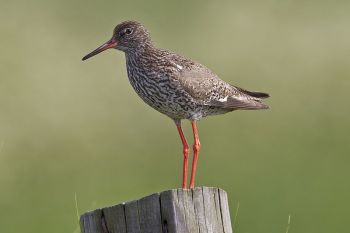
Common Redshank (Tringa totanus) ©WikiC

Common Redshank (Tringa totanus) ©WikiC

Of the three last bird pictures here, they do all have something red. The Moorhen has a red beak and the other two have red legs. You realize that these names are today’s name. They do change over the years. What ever bird this verse applies to, it has been enjoyable for me to investigate it. It has caused me to be in God’s Word, search the Commentaries, and check out the many birds the Lord created. And I trust you have benefited from it also and you might even dig around and find more about these verses.

And I get to add another Bird of the Bible page.

Birds of the Bible – Waterhen

All Birds of the Bible articles.

*

Introduction to Birds of the Bible For Kids

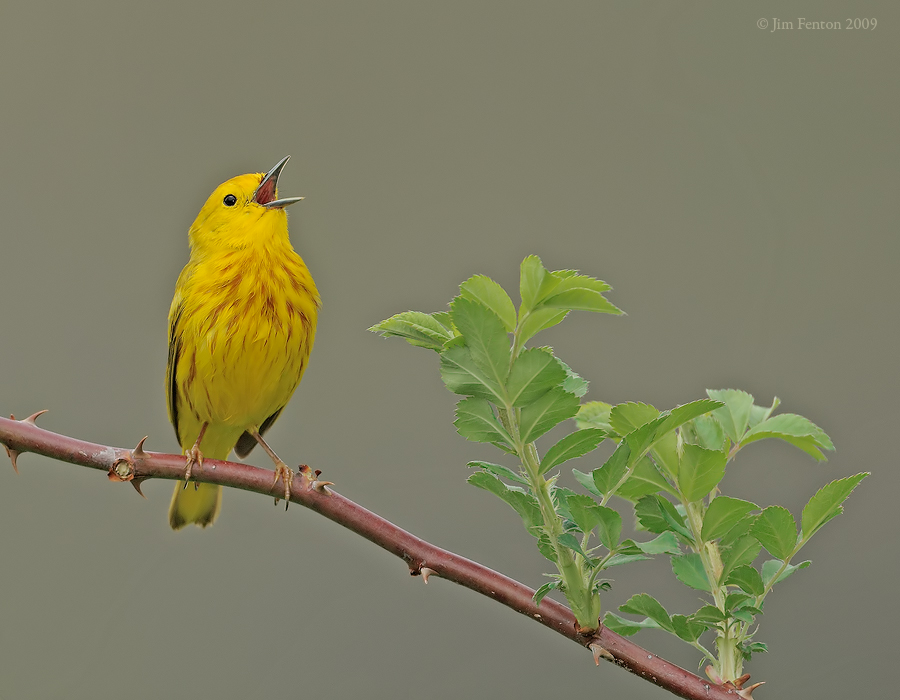
American Yellow Warbler (Dendroica aestiva) singing by J Fenton

American Yellow Warbler (Dendroica aestiva) singing by J Fenton

We just opened this site up today. It is in the beginning and we will be adding many things about the birds in the Bible and other birds that are not named in the Bible, but the Lord made all the birds.

On Day Five (5) of creation, the birds were created. They didn’t just happen. They were designed by God and each one is different. Each one was given just what it needs to live, eat, and make more birds.

Genesis 1:20-23 NKJV
(20) Then God said, “Let the waters abound with an abundance of living creatures, and let birds fly above the earth across the face of the firmament of the heavens.”
(21) So God created great sea creatures and every living thing that moves, with which the waters abounded, according to their kind, and every winged bird according to its kind. And God saw that it was good.
(22) And God blessed them, saying, “Be fruitful and multiply, and fill the waters in the seas, and let birds multiply on the earth.”
(23) So the evening and the morning were the fifth day.

I know there are some big words in those verses, but the bold letters help find important words.

Did you see the “let birds multiply”? That doesn’t mean they do math. It means that they were to have baby birds, then the baby could grow up and have more baby birds. Then there would be lots of birds.

We will be telling you more soon. Come back and find out about the many birds in the bible.

See:

Bible Birds

Wordless Birds

*
What you just read is the first Bible Birds article for the Birds of the Bible For Kids blog that I just released just a few minutes ago. I have wanted to have a “Kids” blog since day one of this one, but it just didn’t happen. I even reserved the site for it four years ago when Lee’s Birdwatching Adventures Plus was started here on WordPress. (It is now in the Kid’s Section of the main blog)

As the idea to add the Bible Birds articles grew. I even placed a page there for it, but then pulled it back. The children, kids, or young people need their own site with links for them.

After talking to many of our Sunday School teachers, school teachers, and kids workers (young and retired), I launched this new website. Some of those people have offered suggestions and some are actually going to write some articles for it. Mr. Baron (aka Golden Eagle) has agreed to help. He is a Christian school teacher and teaches the Bible and science. Enjoys teaching about creation and is a enthusiastic beginning birdwatcher. I will introduce more as they write their articles and stories.

All of this has been said so that you will know that the new site will have the same standard as this one does. It is Birdwatching From A Christian Perspective. We trust you will let your children and young people enjoy the new site knowing that we will not present anything contrary to Scripture. We believe God’s Word is the Final Authority in our lives and about our lives. Also, as parents or grand-parents, that you will stop by to find something to share with your “kids” or “grand-kids.”

Thank you to all who have been coming to this site. Your visits are appreciated and hope that we are giving you articles worth your time reading and thinking about. May you enjoy learning about and seeing many of the fantastically created birds that the Lord made.

And God saw every thing that he had made, and, behold, it was very good. And the evening and the morning were the sixth day. (Genesis 1:31 KJV)

*
(Updated – 10-5-14)

Birds of the Bible – Gathering of Vultures or Eagles

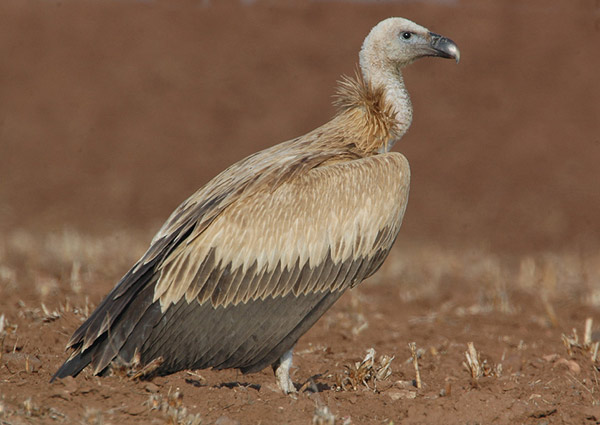
Griffon Vulture (Gyps fulvus) by Nikhil Devasar

Griffon Vulture (Gyps fulvus) by Nikhil Devasar

Today while I was doing my reading of Scripture in the ESV (English Standard Version), I came across this portion:

So, if they say to you, ‘Look, he is in the wilderness,’ do not go out. If they say, ‘Look, he is in the inner rooms,’ do not believe it. For as the lightning comes from the east and shines as far as the west, so will be the coming of the Son of Man. Wherever the corpse is, there the vultures will gather. “Immediately after the tribulation of those days the sun will be darkened, and the moon will not give its light, and the stars will fall from heaven, and the powers of the heavens will be shaken. Then will appear in heaven the sign of the Son of Man, and then all the tribes of the earth will mourn, and they will see the Son of Man coming on the clouds of heaven with power and great glory. And he will send out his angels with a loud trumpet call, and they will gather his elect from the four winds, from one end of heaven to the other. (Matthew 24:26-31 ESV)

In verse 3 of chapter 24, the disciples had asked the Lord to “Tell us, when will these things be, and what will be the sign of your coming and of the end of the age?” He was telling of future events in answer to that question, when right in the middle of that dialog, He said, “Wherever the corpse is, there the vultures will gather.” What? Where did that come from? So, here we are trying to figure out that saying.

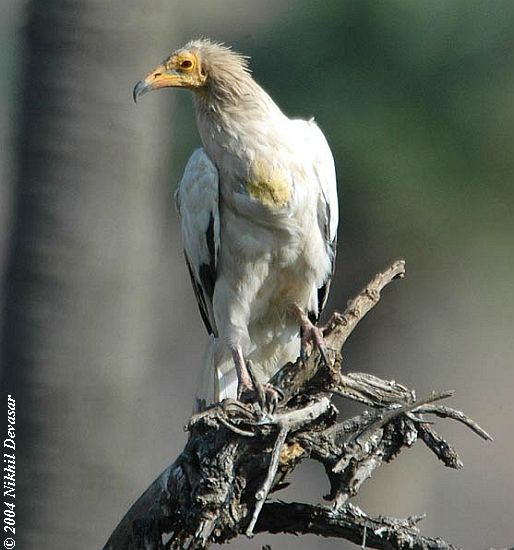
Egyptian Vulture (Neophron percnopterus) by Nikhil

Egyptian Vulture (Neophron percnopterus) by Nikhil

Using my e-Sword program and searching for “vulture” in the ESV, the search shows that verse and Luke 17:37 saying the same thing.

And they said to him, “Where, Lord?” He said to them, “Where the corpse is, there the vultures will gather.” (Luke 17:37 ESV)

This time the vulture statement is preceded by this:

Whoever seeks to preserve his life will lose it, but whoever loses his life will keep it. I tell you, in that night there will be two in one bed. One will be taken and the other left. There will be two women grinding together. One will be taken and the other left.” And they said to him, “Where, Lord?” He said to them, “Where the corpse is, there the vultures will gather.” (Luke 17:33-37 ESV)

Using the Compare mode, the verses have either Eagles, Vultures, or Buzzards showing up. Reading the MSG’s version, it is starting to make some sense even before the commentaries are used.

The Arrival of the Son of Man isn’t something you go to see. He comes like swift lightning to you! Whenever you see crowds gathering, think of carrion vultures circling, moving in, hovering over a rotting carcass. You can be quite sure that it’s not the living Son of Man pulling in those crowds. (Matthew 24:27-28 MSG)

Believer’s Bible Commentary – 24:27 Christ’s Advent will be un mistakable—it will be sudden, public, universal, and glorious. Like the lightning, it will be instantly and clearly visible to all.
24:28 And no moral corruption will escape its fury and judgment. “For wherever the carcass is, there the eagles will be gathered together.” The carcass pictures apostate Judaism, Christendom, and the whole world system that is leagued against God and His Christ. The eagles or vultures typify the judgments of God which will be unleashed in connection with the Messiah’s appearing.

Life Application Study Bible – Matthew 24:24-28 – In times of persecution even strong believers will find it difficult to be loyal. To keep from being deceived by false messiahs, we must understand that Jesus’ return will be unmistakable (Mar_13:26); no one will doubt that it is he. If you have to be told that the Messiah has come, then he hasn’t (Mat_24:27). Christ’s coming will be obvious to everyone.

Matthew Poole’s Commentary – That phrase, Wheresoever the carcass is, there will the eagles be gathered together,  is a proverbial speech, signifying that it will need no great labour to bring things together which are naturally joined by an innate desire either of them to the other; so that it is applicable in more cases than one.

Bearded Vulture (Gypaetus barbatus) ©WikiC

Bearded Vulture (Gypaetus barbatus) ©WikiC

Matthew Henry – Christ foretells the rapid spreading of the gospel in the world. It is plainly seen as the lightning. Christ preached his gospel openly. The Romans were like an eagle, and the ensign of their armies was an eagle. When a people, by their sin, make themselves as loathsome carcasses, nothing can be expected but that God should send enemies to destroy them. It is very applicable to the day of judgment, the coming of our Lord Jesus Christ in that day, 2Th_2:1. Let us give diligence to make our calling and election sure; then may we know that no enemy or deceiver shall ever prevail against us.

F B Meyer – It is a matter of literal fact that there was compressed into the period of the Jewish War an amount of suffering perhaps unparalleled. Josephus’ history of the period abounds in references to these false Christs who professed themselves to be the Messiah.

J Vernon McGee – Matthew 24:28 – This is the most difficult verse to understand in the entire Olivet Discourse. After speaking of His coming in glory like lightning out of heaven, then to speak of carrion-eating birds seems strange indeed. But I believe it refers to Christ’s coming in judgment, because Revelation 19 tells us about an invitation that went out to the birds to come together for a great banquet, “And I saw an angel standing in the sun; and he cried with a loud voice, saying to all the fowls that fly in the midst of heaven, Come and gather yourselves together unto the supper of the great God; That ye may eat the flesh of kings, and the flesh of captains, and the flesh of mighty men, and the flesh of horses, and of them that sit on them, and the flesh of all men, both free and bond, both small and great. And I saw the beast, and the kings of the earth, and their armies, gathered together to make war against him that sat on the horse, and against his army” (Rev_19:17-19). The birds that feed on carrion seem to be agents of divine judgment. When the Lord comes again, He will come in judgment.

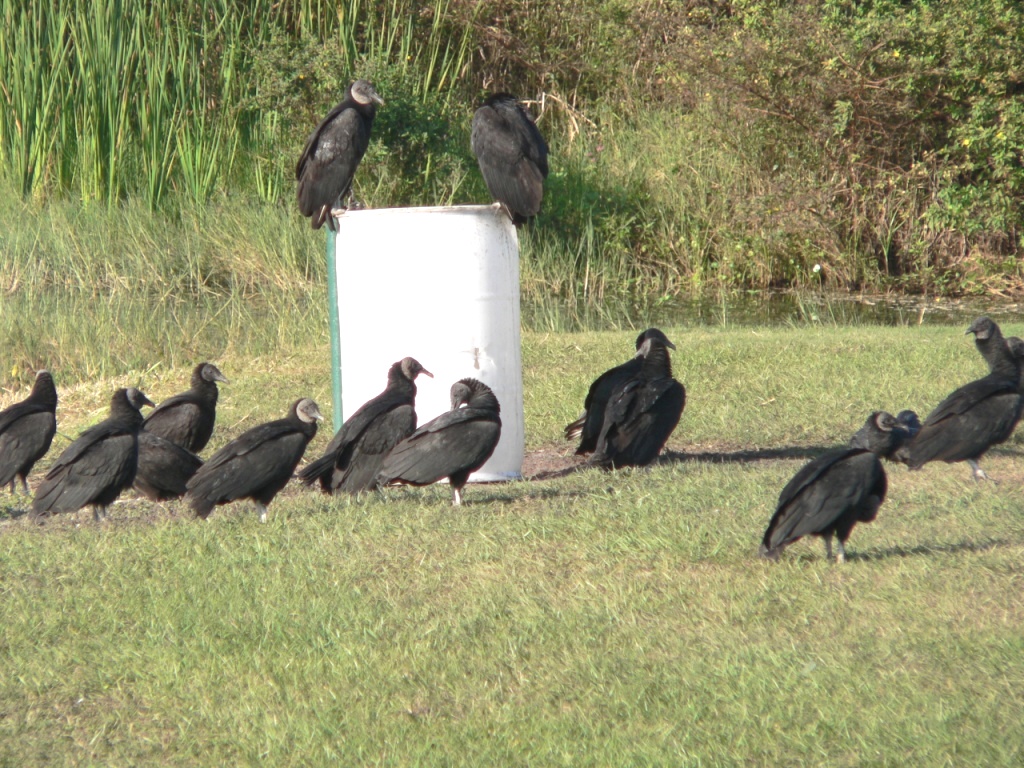
Black Vultures at Saddle Creek by Lee

Black Vultures at Saddle Creek by Lee

This is only a few of the remarks. There are all kinds of interpretations of this verse and those surrounding it. Only a few were chosen to give a variety of the meaning. Whatever it is, apparently birds of prey will be there at the judgment. Maybe this will make you curious and encourage you to dig into the commentaries and do a little study. e-Sword is a very handy free Bible study tool.

The Vulture is of course a scavenger bird along with the Eagles and the Buzzards. There are other references to the Vulture in the Bible and therefore it is a Bird of the Bible.

See:

*

Birds of the Bible – Silly Dove

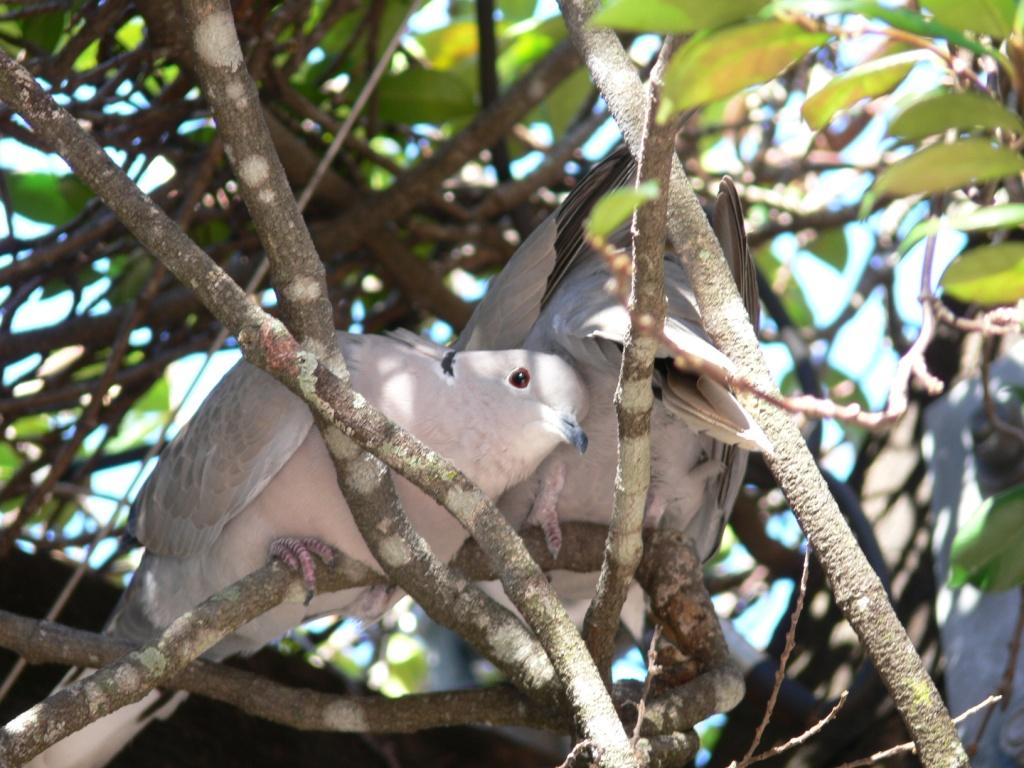
Eurasian Collared Dove (Streptopelia decaocto) by Lee

Ephraim is like a dove, silly and without sense, calling to Egypt, going to Assyria. (Hosea 7:11 ESV)

I came across this verse yesterday in my reading of Scripture. Hadn’t noticed it before, at least that I recall. So what it is this about a “Silly Dove”? After checking Wikipedia, nothing showed up that indicates silliness. Then it was off to Cornell’s About Birds, still nothing indicating a silly dove. Even checked their PigeonWatch, no luck. (Doves and Pigeons are in the same family, Columbidae) At a dove hunting site, they indicated that they were easy to flush out to either shoot or capture.

Now it is time for e-Sword to help figure this out. Putting Hosea 7:11 in the compare mode revealed most of the versions used “silly”, but a few other words show up such as; mindless, foolish, senseless, decoyed, easily deceived.

The second part of the verse says the dove is “without sense.” Again here are some of the other translations; without understanding, not having a heart or heartless, without wisdom, fluttering back and forth, lacking sense, clueless, easily tricked.

When the commentaries were checked out, then the verse started making more sense. In context, Ephraim is being called the “silly dove” because of their trying to depend on others instead of God. God is trying to get them to turn back to Him, but they are “easily deceived.” Are people not like that today? They would rather search out other philosophies (like evolution) or religions instead of turning to their Creator God.

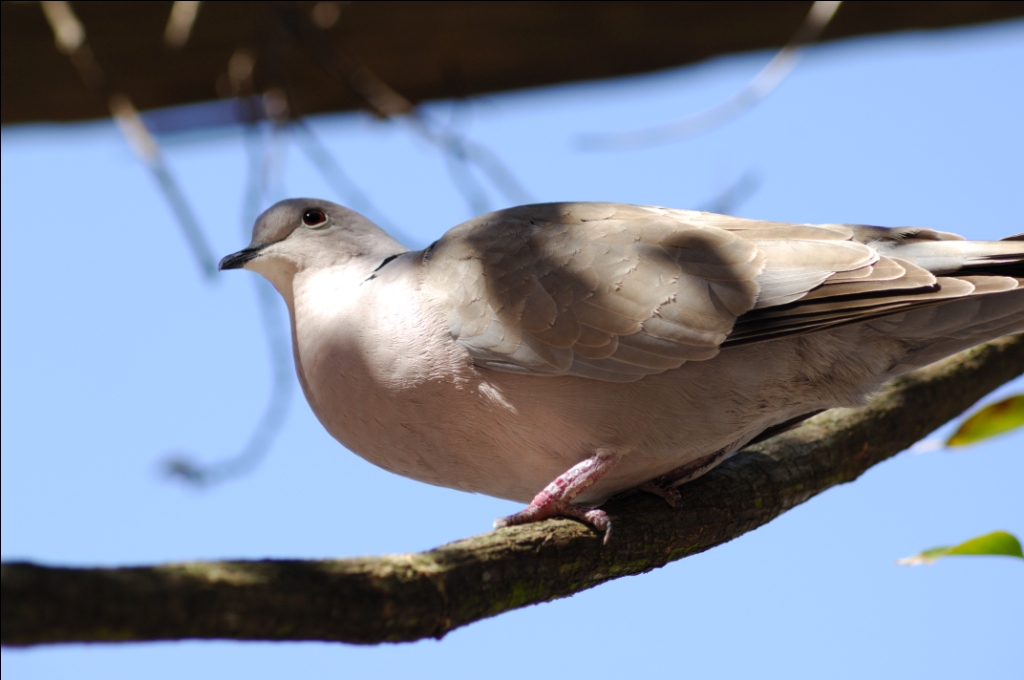
Eurasian Collared Dove (Streptopelia decaocto) by Dan

Eurasian Collared Dove (Streptopelia decaocto) by Dan

Comments from the Commentaries:

(JFB)
like a silly dove — a bird proverbial for simplicity: easily deceived.
without heart — that is, understanding.
call to Egypt — Israel lying between the two great rival empires Egypt and Assyria, sought each by turns to help her against the other. As this prophecy was written in the reign of Hoshea, the allusion is probably to the alliance with So or Sabacho II (of which a record has been found on the clay cylindrical seals in Koyunjik), which ended in the overthrow of Hoshea and the deportation of Israel (2Ki_17:3-6). As the dove betrays its foolishness by fleeing in alarm from its nest only to fall into the net of the fowler, so Israel, though warned that foreign alliances would be their ruin, rushed into them.

(Believer’s Bible Commentary) Ephraim flew like a silly dove . . . to Egypt and Assyria for help, but God would catch the dove in a net and punish the people.

Ephraim also is like a silly dove without heart – A bird that has little understanding; that is easily snared and taken; that is careless about its own young, and seems to live without any kind of thought. It has been made, by those who, like itself, are without heart, the symbol of conjugal affection. Nothing worse could have been chosen, for the dove and its mate are continually quarrelling.

(Exposing the Word) A Silly Dove- unstable, flitting from one hope to another. God stands trying to catch them in the snare accord to verse 12.

(Geneva Translation Notes) That is, without all judgment, as those that cannot tell whether it is better to cleave only to God, or to seek the help of man.

(Haydock) Decoyed. Hebrew, “stupid,” chap. iv. 11. The dove is the only bird which is not grieved at the loss of its young. (St. Jerome) — It returns to the same nest, though repeatedly robbed, forgetting past dangers. (Theodoret) — Thus Israel is not reclaimed, though idolatry has so often proved its ruin. — Egypt. Jeroboam had returned thither, and at his return brought about a division of the kingdom, 3 Kings xi. 40. Osee, the last king, applied to Sua, and this provoked the Assyrians to destroy the kingdom. They pretended that it was tributary to them, after Phul had been invited to assist Manahem for a thousand talents, 4 Kings xv. 19., and xvii. 4. Thus was a worldly policy confounded.

(John Wesley Explanatory Notes) Like a silly dove – Ephraim is now become like the dove in weakness and fear, as well as in imprudence and liableness to be deceived. Without heart – Without either discretion or courage. To Assyria – Instead of going to God, who alone can help.

(J Vernon McGee) This is another interesting illustration. If you have ever been dove hunting, you know that if a dove has a nest with eggs or little ones in it she will act as if she has a broken wing and actually let you get very close to her. She tries to lure you away from her nest. Actually, that is not a very smart move on the part of the dove for two reasons. When a dove lets you get that close to her, you know there is a nest nearby. Secondly, she endangers her own life.

Now here was Ephraim. She refused to run to God for help. So first she ran down to Egypt for help. When Egypt wouldn’t give her the help she wanted, she went up to Assyria and asked for help. She went back and forth like a silly dove. What a picture!

(Life Application Study Bible) Israel’s King Menahem had paid Assyria to support him in power (2Ki_15:19-20); King Hoshea turned against Assyria and went to Egypt for help (2Ki_17:4). Israel’s kings went back and forth, allying themselves with different nations when they should have allied themselves with God.

Mourning Dove by Reinier Munguia

Mourning Dove by Reinier Munguia

The explanation I like the best comes from Dr. Joe Temple about the Dove. This is his understanding of it. I know I am quoting much, but it makes great sense.

The Innocent Dove

Hosea 7

11 Ephraim also is like a silly dove without heart: they call to Egypt, they go to Assyria.

Here Ephraim is compared to a silly dove. A better word for silly would be innocent . Ephraim was innocent enough to think that Egypt and Assyria could come to her rescue when the chastening hand of God was resting upon her. Oftentimes Hosea had seen a dove ensnared because of its innocence, because it was not wary of that that would ensnare it. He recognized that characteristic of the dove and he said, “Ephraim is just like that.”

Go with me to the New Testament and notice the Lord Jesus Christ not only told us to be bird watchers, but He was a bird watcher Himself, for He noticed the characteristics of the dove and brought one of those characteristics to the attention of the people to whom He was speaking. This needs to be emphasized for us today. Notice, Matthew, chapter 10, verse 16. He said to His disciples:

Matthew 10

16 Behold, I send you forth as sheep in the midst of wolves: be ye therefore wise as serpents, and harmless as doves.

Notice: “…harmless as doves.” A better word for harmless is innocent . The reason that He said that is that He wanted us to be wise concerning the things of God and simple and innocent concerning the things that are evil. I think that one of the biggest lies that the Devil is telling Christian people today, particularly Christian parents, is that their children must not be too protected, for if they are, they will not know how to handle themselves in a world that is full of sin. The Devil is suggesting to people today that Christian people need to be familiar with all of the sinful things that are going on in the world so that they will know how to react when they face them.

I don’t believe that. I believe your children can be grounded in the Word of God so that they live by princiiples that are applicable to any situation in any generation, and I believe you can be likewise. I always respond to the suggestion that we need to know about sin so that we know how to react to it with a statement that a man from another generation made when he said, “You don’t have to go through the sewer to know how dirty it is. All you need to do is go down to the sewage plant and you will know. Go where the sewer comes out.” The devil would have us believe we have to be involved in order to know what is going on. We don’t. Remember the dove. Christ said, “I am sending you out into the world which is full of wolves, ready to pounce on you, but I want you to be wise as serpents and innocent as doves.”

Links:

Cool Pigeon Facts – Cornell

Mourning Dove – All About Birds

Wordless Birds

*