Toco Toucan (Ramphastos toco) ©WikiC
I know all the birds of the mountains, And the wild beasts of the field are Mine. (Psalms 50:11 NKJV)
While working on the Ramphastidae Family yesterday, I decided to share some of the beauty the Lord created in this group of birds. These are the Toucans, Toucanets, and Aracaris. They are just so appealing to see and wonder how the Lord comes up with so many designs and colors in His Creation. This family definitely show such variety.
This morning while reading my latest Acts & Facts, there was an article about Diversity by Dr. James J. S. Johnson, who did our guest article this week,( Bird Brains, Amazing Evidence of God’s Genius). Both are very interesting articles worth reading. But I want to quote Dr. Johnson about variety.
Two words summarize the answer: life and variety. Even in this after-Eden world, cursed and groaning as it is under the weight of sin and death, we still see a prolific and diversified creation.
Why did God design earth’s biodiversity the way that He did?
God loves life. God is the essence and ultimate origin of all forms and levels of life.1
God loves variety. God’s nature is plural, yet one, and He is the Creator of all biological diversity anywhere and everywhere on earth.2
This family catches your eye and causes a second look. Toco Toucans are familiar to many, and some of the others. (Even Toucan Sam is the cartoon mascot for Froot Loops breakfast cereal). We had the privilege to meet “Gracie” a retired Chestnut-mandibled Toucan at the National Aviary. (National Aviary – Hospital, Breeding, and Kitchen Areas) Needless to say, that is the closest I have been to a Toucan.

Gracie the retired Chestnut-mandibled Toucan petted by Lee
The Ramphastidae Family has 5 or 6 genera, depending on sources, with Toucanets in the Aulacorhynchus and Selenidera, Mountain Toucans in the Andigena genus, Aracaris are Pteroglossus with the Saffron Toucanet added by some, and the Typical Toucans belong to the Ramphastos genus. The “Toucan” name of this bird group is derived from the Tupi word tukana, via Portuguese. They have large colorful and brightly marked bills.
Toucans range in size from the Lettered Aracari (Pteroglossus inscriptus), at 130 g (4.6 oz) and 29 cm (11.5 inches), to the Toco Toucan(Ramphastos toco), at 1.5 lb (680 g) and 29 inches (63 cm). Their bodies are short (of comparable size to a crow’s) and compact. The tail is rounded and varies in length, from half the length to the whole length of the body. The neck is short and thick. The wings are small, as they are forest-dwelling birds who only need to travel short distances.
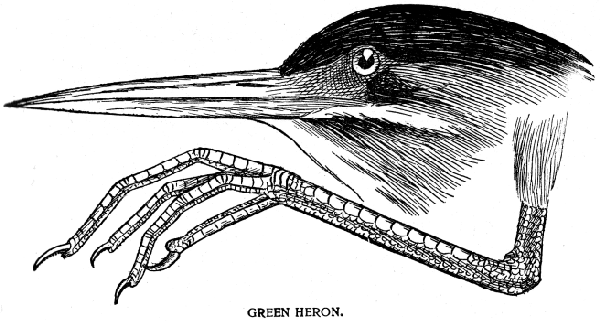
The legs of the toucan are strong and rather short. Their toes are arranged in pairs with the first and fourth toes turned backward. The majority of toucans do not show any sexual dimorphism in their coloration. However, the bills of female toucans are usually shorter, deeper and sometimes straighter, giving more of a “blocky” impression compared to male bills. The feathers in the genus containing the largest toucans are generally black, with touches of white, yellow, and scarlet. The underparts of the araçaris (smaller toucans) are yellow, crossed by one or more black or red bands. The toucanets have mostly green plumage with blue markings.
Toucans are native to Southern Mexico, Central and South America, and the Caribbean region. They generally live in tropical and sub-tropical regions. They make their nests in tree hollows and holes excavated by other animals such as woodpeckers—the toucan bill has very limited use as an excavation tool.
They mainly eat fruit, but will eat insects and small lizards if they become available. However, in their range, toucans are the dominant frugivores, and as such play an extremely important ecological role as vectors for seed dispersal of fruiting trees.
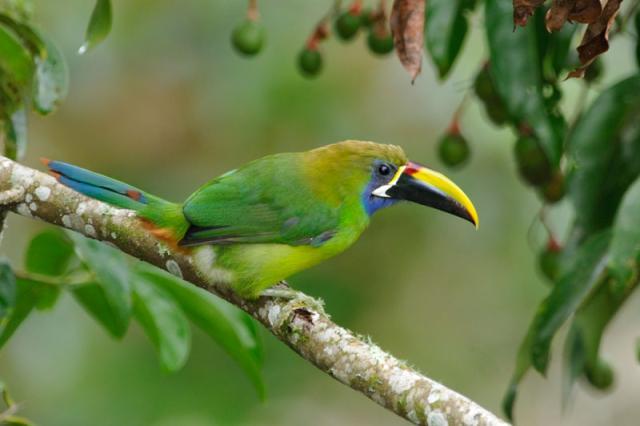
Emerald Toucanet (Aulacorhynchus prasinus) by Reinier Munguia
Toucanets
The green toucanets are birds from the genus Aulacorhynchus in the toucan family. They are native to Mexico, and Central and South America. All are found in humid forests and woodlands in highlands, but a few also occur in adjacent lowlands. They are relatively small toucans, 12–17 in (30–44 centimetres) long, with colorful, mainly green, plumage. They are typically seen in pairs or small groups, and sometimes follow mixed species flocks.
Wagler’s Toucanet (Aulacorhynchus wagleri)
Emerald Toucanet (Aulacorhynchus prasinus)
Blue-throated Toucanet (Aulacorhynchus caeruleogularis)
White-throated Toucanet (Aulacorhynchus albivitta)
Black-throated Toucanet (Aulacorhynchus atrogularis)
Groove-billed Toucanet (Aulacorhynchus sulcatus)
Chestnut-tipped Toucanet (Aulacorhynchus derbianus)
Tepui Toucanet (Aulacorhynchus whitelianus)
Crimson-rumped Toucanet (Aulacorhynchus haematopygus)
Yellow-browed Toucanet (Aulacorhynchus huallagae)
Blue-banded Toucanet (Aulacorhynchus coeruleicinctis)

Yellow-eared Toucanet (Selenidera spectabilis) ©WikiC
Selenidera is a bird genus containing six species of dichromatic toucanets in the toucan family Ramphastidae. They are found in lowland rainforest (below 1,500 metres or 4,900 feet) in tropical South America with one species in Central America.
All the species have green upperparts, red undertail-coverts and a patch of bare blue or blue-green skin around the eye. Unlike most other toucans, the sexes are different in color. The males all have a black crown, nape, throat and breast and an orange/yellow auricular streak. The females of most species have the black sections in the male replaced by rich brown and a reduced/absent auricular streak,
Saffron Toucanet (Pteroglossus bailloni)
Yellow-eared Toucanet (Selenidera spectabilis)
Guianan Toucanet (Selenidera piperivora)
Golden-collared Toucanet (Selenidera reinwardtii)
Tawny-tufted Toucanet (Selenidera nattereri)
Gould’s Toucanet (Selenidera gouldii)
Spot-billed Toucanet (Selenidera maculirostris)

Many-banded Aracari (Pteroglossus pluricinctus) by Kent Nickel
Aracari
An aracari or araçari is any of the medium-sized toucans that, together with the Saffron Toucanet, make up the genus Pteroglossus. They are brightly plumaged and have enormous, contrastingly patterned bills. These birds are residents in forests and woodlands in the Neotropics.
Green Aracari (Pteroglossus viridis)
Lettered Aracari (Pteroglossus inscriptus)
Red-necked Aracari (Pteroglossus bitorquatus)
Ivory-billed Aracari (Pteroglossus azara)
Brown-mandibled Aracari (Pteroglossus mariae)
Black-necked Aracari (Pteroglossus aracari)
Chestnut-eared Aracari (Pteroglossus castanotis)
Many-banded Aracari (Pteroglossus pluricinctus)
Collared Aracari (Pteroglossus torquatus)
Stripe-billed Aracari (Pteroglossus sanguineus)
Pale-mandibled Aracari (Pteroglossus erythropygius)
Fiery-billed Aracari (Pteroglossus frantzii)
Curl-crested Aracari (Pteroglossus beauharnaesii)

Plate-billed Mountain Toucan (Andigena laminirostris) by Michael Woodruff
Mountain Toucans
Andigena, the mountain toucans, is a genus of birds in the Ramphastidae family. They are found in humid highland forests in the Andes of South America, ranging from Bolivia to Venezuela. These medium-sized toucans all have olive-brown upperparts, a black crown, yellow rump, blue-grey underparts and a red vent.
Grey-breasted Mountain Toucan (Andigena hypoglauca)
Plate-billed Mountain Toucan (Andigena laminirostris)
Hooded Mountain Toucan (Andigena cucullata)
Black-billed Mountain Toucan (Andigena nigrirostris)

Keel-billed Toucan (Ramphastos sulfuratus) ©WikiC
Toucans
Ramphastos is a genus of toucans, tropical and subtropical near passerine birds from Mexico, and Central and South America, which are brightly marked and have enormous, often colourful, bills.
This genus comprises the largest toucans, ranging from 17 to 24 in (42 to 61 centimetres) in length. All have black wings, tails and thighs, but the color of the remaining plumage depends on the exact species involved. All the species are basically fruit-eating, but will take insects and other small prey. They are arboreal and nest in tree holes laying 2–4 white eggs. They are essentially resident birds, but may take part in minor, local movements (e.g., to lower altitudes in the winter).
Green-billed Toucan (Ramphastos dicolorus)
Channel-billed Toucan (Ramphastos vitellinus)
Citron-throated Toucan (Ramphastos citreolaemus)
Choco Toucan (Ramphastos brevis)
Keel-billed Toucan (Ramphastos sulfuratus)
Toco Toucan (Ramphastos toco)
White-throated Toucan (Ramphastos tucanus)
Yellow-throated Toucan (Ramphastos ambiguus)
Enjoy the variety of these beautiful birds that have been placed here for their benefit and our enjoyment by their Creator. Clicking the links will reveal some that are at various websites besides the ones here.
And let the beauty of the LORD our God be upon us, And establish the work of our hands for us; Yes, establish the work of our hands. (Psalms 90:17 NKJV)
Splendor and majesty are before him; strength and beauty are in his sanctuary. (Psalms 96:6 ESV)
(Wikipedia and other internet sources)
See Also:
Toucan – Ramphastidae Family
Toucans (Ramphastidae) – IBC
Toucan – Ramphastidae – Wikipedia
- Genus Aulacorhynchus—green toucanets (6–15 species)
- Genus Selenidera—dichromatic toucanets (6 species)
- Genus Andigena—mountain toucans (4 species)
- Genus Pteroglossus—araçaris (14 species, incl. Saffron Toucanet)
- Genus Ramphastos—Typical toucans (about 8 species)
*