
The Phoebe or Birds Illustrated by Color Photography, 1897
From col. J. G. Parker. Jr. Copyrighted by
Nature Study Pub. Co., 1897, Chicago.
THE PHOEBE
(RELOCATED – CLICK HERE)
The Phoebe or Birds Illustrated by Color Photography, 1897
From col. J. G. Parker. Jr. Copyrighted by
Nature Study Pub. Co., 1897, Chicago.
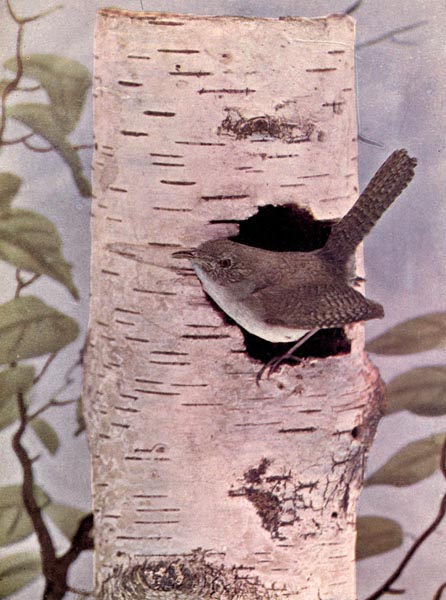
The House Wren for Birds Illustrated by Color Photography, 1897
From col. F. M. Woodruff. Copyrighted by
Nature Study Pub. Co., 1897, Chicago.
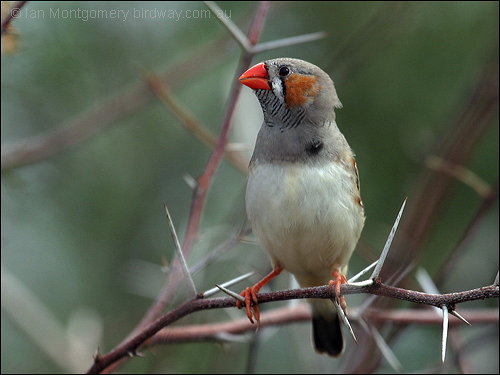
Zebra Finch (Taeniopygia guttata) by Ian
More of Him… ~ by ajmithra
When female Zebra Finches
have no option,
but to mate with an ugly male,
they tend to lay larger-than-normal eggs.
The researchers say,
that the females
are compensating
for the lack of its
genetic fitness of the father,
by giving their offspring
an egg containing
extra nutrients
and
more space to grow..
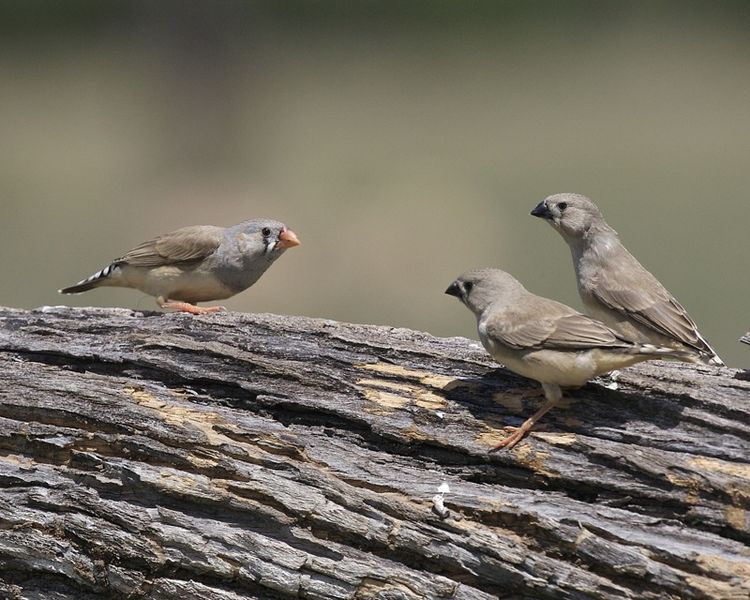
Zebra Finch (Taeniopygia guttata) ©WikiC Female -2 young
Jesus too compensated
on the cross of Calvary,
so that we may
never feel weak again
and
we may have more of HIM
and less of I…
He must increase, but I must decrease. (John 3:30 KJV)
Have a blessed day!
Your’s in YESHUA,
a j mithra
Please visit us at:
*
More of a j mithra’s Articles:
*
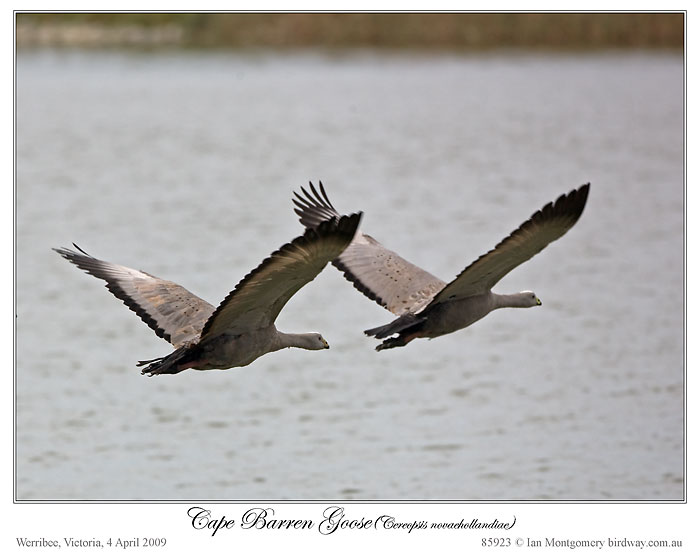
Cape Barren Goose (Cereopsis novaehollandiae) by Ian
Stop flying solo… ~ by a j mithra
The linear flight formations of migratory birds are called echelons.
The V and the J structures are typical and are the most readily recognized flock echelons…
There are two well-supported and complementary explanations for why birds fly in formation.
These explanations have been backed by a variety of studies..
We as believers are on a journey, migrating to heaven..
How much energy do we conserve?
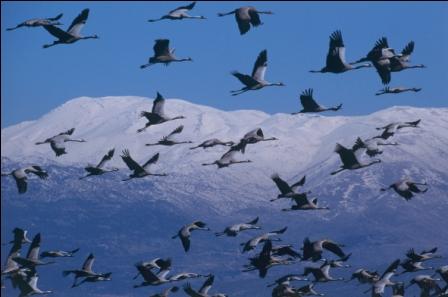
Crane Migration over Israel
First of all,
to heaven?
Unless we communicate with fellow believers we will not be able to migrate as a group
and unless we migrate as a group we will not be able to conserve energy..
Cos, GOD’s presence is mightier in corporate worship…
After all, GOD said that
For where two or three are gathered together in my name, there am I in the midst of them. (Matthew 18:20 KJV)
Lets stop solo flight and start migrating as a crowd…..
Your’s in YESHUA,
a j mithra
Please visit us at:
*
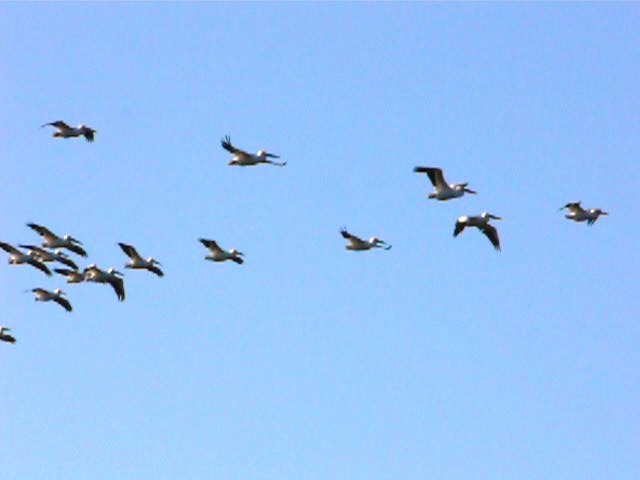
White Pelicans on the Wing at Circle B Bar Reserve by Lee
Why do geese fly in a V shape?
More of a j mithra’s Articles:
*

The Ruby-throated Humming Bird or Birds Illustrated by Color Photography, 1897
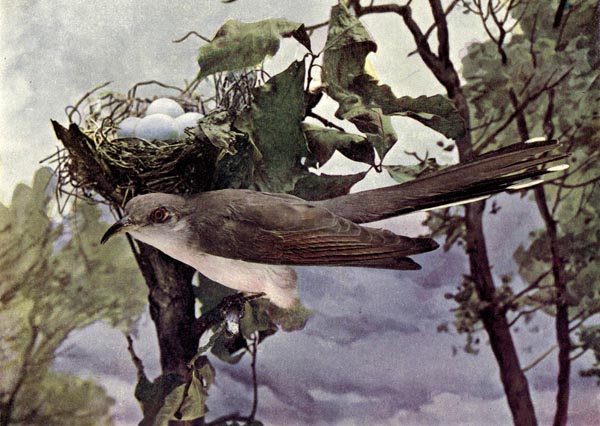
Yellow-billed Cuckoo for Birds Illustrated by Color Photography, 1897
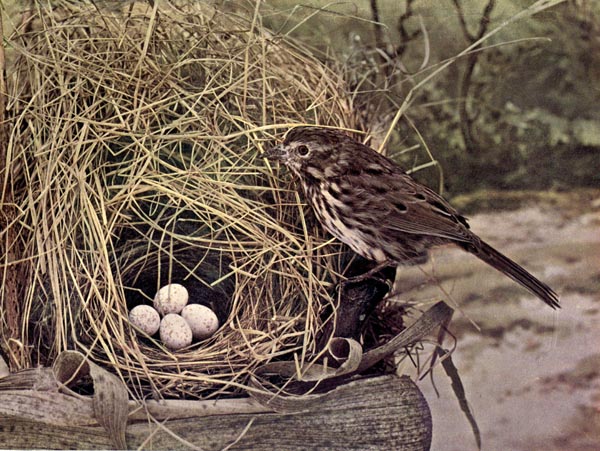
The Song Sparrow for Birds Illustrated by Color Photography, 1897
Bluebird Fathers – Protective and Teachers ~ From Creation Moments (Re-post)

Eastern Bluebird (Sialia sialis) by S Slayton
PROTECTIVE, TEACHING FATHERS
And, ye fathers, provoke not your children to wrath: but bring them up in the nurture and admonition of the Lord. (Ephesians 6:4)
The first scientific studies that showed essential differences between males and females were not well received by some. Many Christians have resisted the teachings that men and women are by nature the same. Christians have traditionally understood the Bible to teach that males and females each have essential, honorable, but different roles to play.
Unfortunately, many Christians have been unsure how to describe those roles. As we study the scriptural portrayal of the family, especially in Ephesians chapter 5, a picture begins to emerge. All the scriptural examples of motherhood and fatherhood can be distilled into one basic idea. What we call a healthy maternal instinct and a healthy desire on the part of the male to protect and prevent danger are only two sides of the same coin.
An example of what this means was recently discovered in bluebirds. Scientists have found that bluebird fathers offer their nestling daughters twice as much food as their sons. Of course, the sons are never allowed to go hungry. Scientists were puzzled by this until someone suggested that by doing this, father bluebird was teaching his daughters, by example, how to select a mate. Female bluebirds are very fussy about selecting a mate. One of the most important things they look for in a mate is the ability to provide plenty of food for the next generation.
In an age of declining parenting skills, it’s good to be reminded that our Creator has given human parents instruction in His Word.
Prayer:
Dear Father, I thank You that You are a perfect Father. Fill Christian parents among us with love and patience. Most of all, fill them with the instruction of Your Word so that they may teach their children about You in both word and deed. In Jesus’ Name. Amen.
Notes:
K.A. Facklemann. 1992. “Bluebird Fathers Favor Pink Over Blue.” Science News, Jan. 4, p. 7.
*
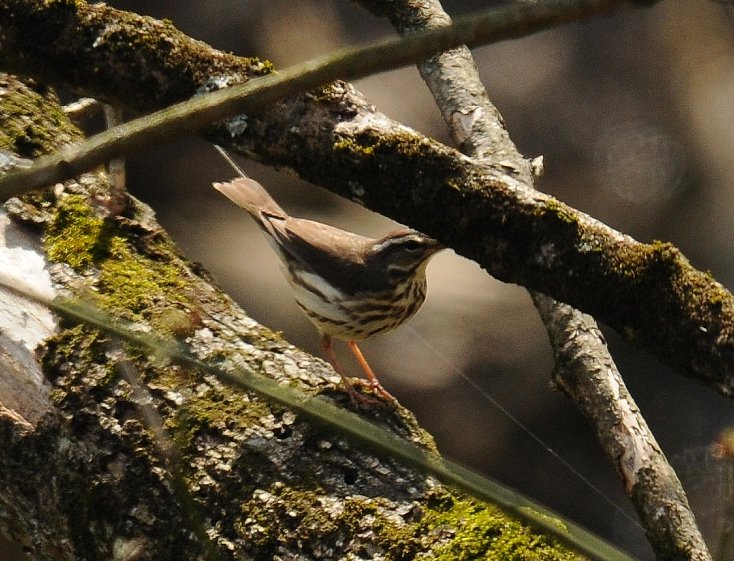
Louisiana Waterthrush (Parkesia motacilla) ©WikiC
The Louisiana and Northern Waterthrushes – The flowing worship and the formal worship.. ~ by a j mithra
The Louisiana and Northern Waterthrushes
are very similar species
whose breeding ranges overlap slightly.
Their songs and their habitats, while similar,
differ significantly.
The pitch of the beginning notes
of the Louisiana’s song usually descend,
just as does the hilly stream
that is its preferred habitat.
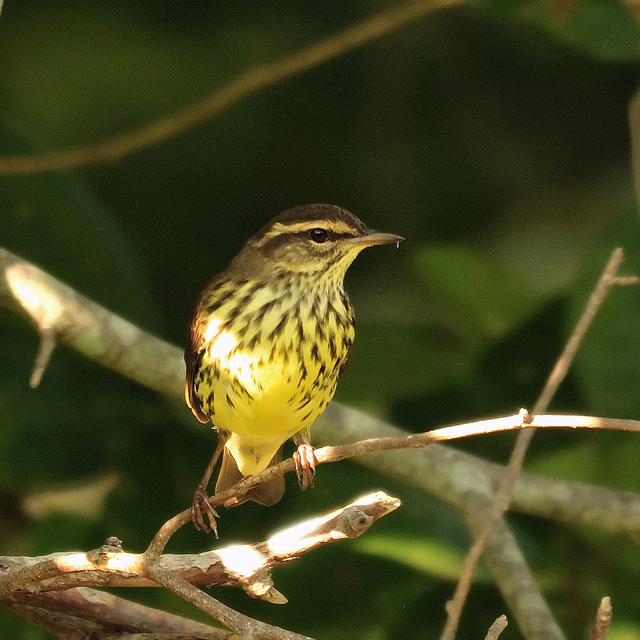
Northern Waterthrush (Parkesia noveboracensis) ©hjhipster
The Northern Waterthrush prefers
bogs and waters that are flat,
just as its beginning notes stay
on the same pitch.
What sort of worship life
do we lead?
Cos, when the Living Water flows
from within us,
our worship too would flow
like the Living Water.
When our life is stagnant
our worship too would turn
stale and stagnant…
Its time for us to switch on the
Search light to check,
if we have a flowing worship
or a formal worship…
Remember,
when worship flows
blessing follows…
“Whoever believes in me,
as the Scripture has said,
Out of his heart will flow rivers of living water. (John 7:38)
Yours in YESHUA,
a j mithra
Please visit us at:
Crosstree
See more of a j’s articles here:
Also:
Waterthrushes – Wikipedia
Northern Watherthrush – All About Birds
Louisiana Waterthrush – All About Birds
Parulidae – New World Warblers
*
Dan and I have been off on a trip to the mountains of Tennessee and made some interesting stops along the way. Haven’t always had an internet connection to be able to post new articles. Put the blog on “auto-pilot” before we left. (PS – We just got home and I thought I released this 2 days ago.)
We stopped at the Jacksonville Zoo in Florida to do some birdwatching. Have lots of photos to go through, but thought I would share a video I took of the Cape Thick-knee, as they call it. One reason I enjoyed these birds is because of the size of their eyes to their heads. They were so friendly and quite vocal. This is just one of the times they were “sounding off.”
Checked with Wikipedia to see what they say about the Thick-knee. It is actually the Double-striped Thick-knee (Burhinus bistriatus). They are related to the stone-curlews. They are in the Burhinidae Family which has ten species of Thick-knees and Stone-curlews. According to the Chicago Zoo, their Cape Thick-knee is the Double-striped and Wikipedia says it is the Striped Thick-knee. I am not sure if what we saw is the one or two striped bird, so we will call it the Cape.
It is a resident breeder in Central and South America from southern Mexico south to Colombia, Venezuela and northern Brazil. It also occurs on Hispaniola and some of the Venezuelan islands, and is a very rare vagrant to Trinidad, Curaçao and the USA.
This is a largely nocturnal and crepuscular species of arid grassland, savanna, and other dry, open habitats. The nest is a bare scrape into which two olive-brown eggs are laid and incubated by both adults for 25–27 days to hatching. The downy young are precocial and soon leave the nest.
The Double-striped Thick-knee is a medium-large wader with a strong black and yellow bill, large yellow eyes, which give it a reptilian appearance, and cryptic plumage. The scientific genus name refers to the prominent joints in the long greenish-grey legs, and bistriatus to the two stripes of the head pattern.
The adult is about 46–50 cm long and weighs about 780-785 g. It has finely streaked grey-brown upperparts, and a paler brown neck and breast merging into the white belly. The head has a strong white supercilium bordered above by a black stripe. Juveniles are similar to adults, but have slightly darker brown upperparts and a whitish nape.
Double-striped Thick-knee is striking in flight, with a white patch on the dark upperwing, and a white underwing with a black rear edge. However, it avoids flying, relying on crouching and camouflage for concealment. The song, given at night, is a loud kee-kee-kee.
There are four subspecies, differing in size and plumage tone, but individual variation makes identification of races difficult.
The Double-striped Thick-knee eats large insects and other small vertebrate and invertebrate prey. It is sometimes semi-domestcated because of its useful function in controlling insects, and has benefited from the clearing of woodlands to create pasture.
See also:
Burhinidae – Stone-curlews, Thick-knees
Spotted Thick-knee – Wikipedia
Double-striped Thick-knee – Wikipedia
Cape Thick-knee – Chicago’s Brookfield Zoo
*

Summer Yellow-Bird for Birds Illustrated by Color Photography, 1897

