Birds of the Bible – Roseate Spoonbill

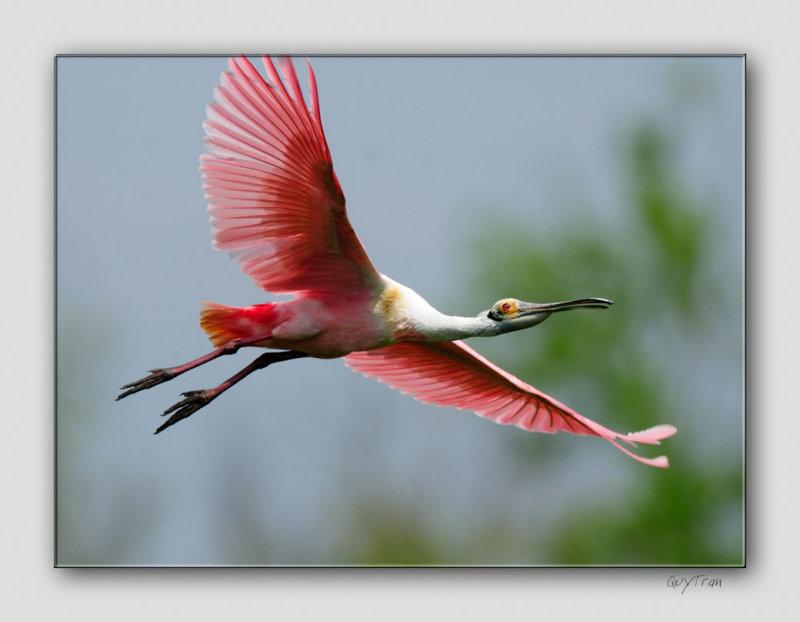
Roseate Spoonbill (Platalea ajaja) by Quy Tran

Roseate Spoonbill (Platalea ajaja) by Quy Tran

Birds of the Bible – Roseate Spoonbill

The Roseate Spoonbill is a member of the Threskiornithidae – Ibises, Spoonbills Family. We see them quite often in this area, especially in the Fall and Winter time.  I am always thrilled when we come upon them in our birdwatching adventures. Their cousins, Ibises, are a Bird of the Bible.

Then God said, “Let the waters abound with an abundance of living creatures, and let birds fly above the earth across the face of the firmament of the heavens.” So God created great sea creatures and every living thing that moves, with which the waters abounded, according to their kind, and every winged bird according to its kind. And God saw that it was good. And God blessed them, saying, “Be fruitful and multiply, and fill the waters in the seas, and let birds multiply on the earth.” So the evening and the morning were the fifth day. (Genesis 1:20-23 NKJV)

Since the Lord created all the birds, this is one of His neater creations, at least in my opinion. Their spoon-shaped bill is sort of unique to the birds. There are actually five other Spoonbills besides the Roseate.

The Roseate Spoonbill is 28–34 in (71–86 cm) long, with a  47–52 in (120–133 cm) wingspan and a weigh 2.6–4.0 lb (1.2–1.8 kg). The legs, bill, neck and spatulate bill all appear elongated. Adults have a bare greenish head (“golden buff” when breeding) and a white neck, back, and breast (with a tuft of pink feathers in the center when breeding), and are otherwise a deep pink. The bill is grey. There is no significant sexual dimorphism.

Like the American Flamingo, their pink color is diet-derived, consisting of the carotenoid pigment canthaxanthin. Another carotenoid, astaxanthin, can also be found deposited in flight and body feathers. The colors can range from pale pink to bright magenta, depending on age and location. Captive Spoonbill are fed their normal diets, plus some include juices made from carrots.

Unlike herons, spoonbills fly with their necks outstretched. They alternate groups of stiff, shallow wingbeats with glides.

Spoonbills feeding in a pond by the school. Cloudy day. Not the best, but you can see their eating behavior. Taken by me.

This species feeds in shallow fresh or coastal waters by swinging its bill from side to side as it steadily walks through the water, often in groups. The spoon-shaped bill allows it to sift easily through mud. It feeds on crustaceans, aquatic insects, frogs, newts and very small fish ignored by larger waders. In the United States a popular place to observe Roseate Spoonbills is “Ding” Darling National Wildlife Refuge in Florida. (Also at Circle B Bar Reserve as you can see by the list below of some of my sighting on e-Bird) Roseate Spoonbills must compete for food with Snowy Egrets, Great Egrets, Tricolored Herons, and American White Pelicans.

We came upon a group of them roosting at Ding” Darling National Wildlife Refuge. It was the first time I had seen that many in one place and so close to us.
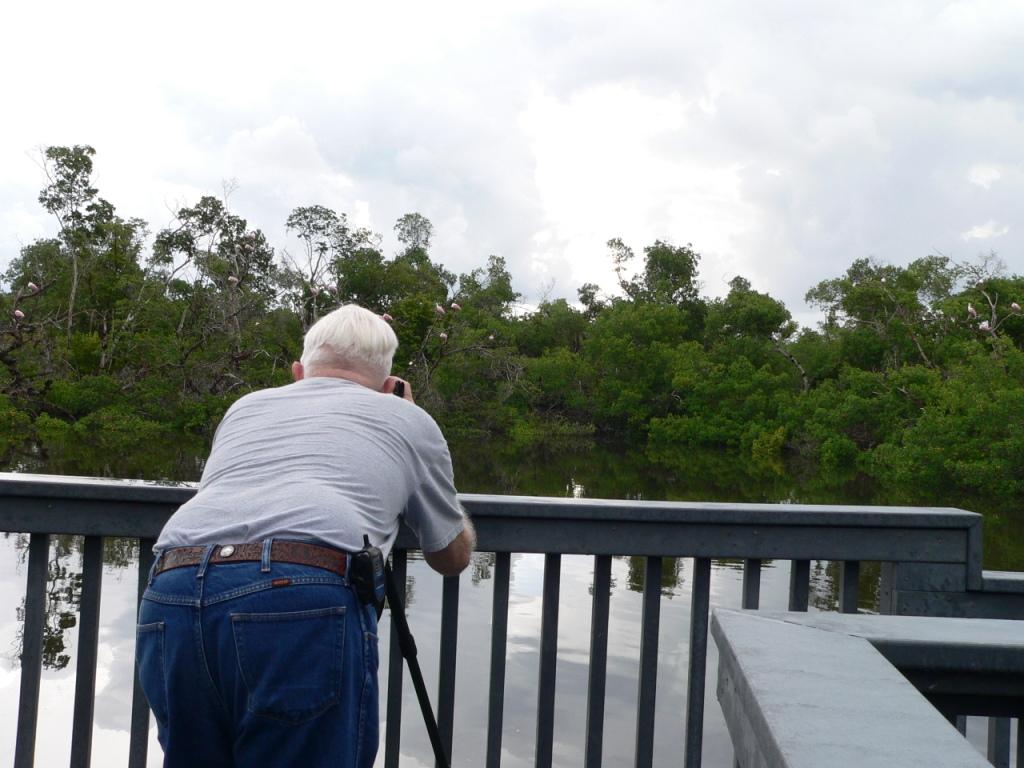
Enlarge - Count at least 20 Spoonbills

Roseate Spoonbills at Ding Darling NWR – Dan at work.

The Roseate Spoonbill nests in shrubs or trees, often mangroves, laying 2 to 5 eggs, which are whitish with brown markings. Immature birds have white, feathered heads, and the pink of the plumage is paler. The bill is yellowish or pinkish.

Here is one I caught in a tree at Circle B Bar Reserve:
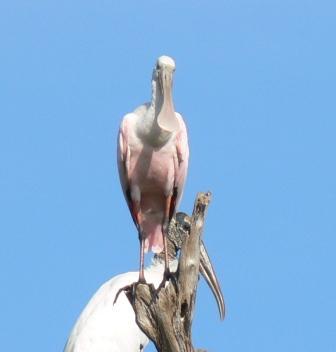
Roseate Spoonbill and Wood Stork by Lee

Roseate Spoonbill and Wood Stork by Lee

What prompted writing about one of the bird friends I always enjoy seeing, is an article about the Roseate Spoonbill in one of my latest additions of BirdWatching. It’s a great magazine and I am not condemning it. I am used to “reading around the evolutionary influences” in articles about birds. But I was offended by this remark, “It’s hard not to look at the Roseate Spoonbill in the Everglades and think, ‘What happened here:’ Amid the herons and cormorants, the spoonbill seems like an evolutionary hiccup, a failed experiment.

One, the Roseate Spoonbill is far from an “evolutionary hiccup!” It hasn’t evolved, it was created by a loving all knowing Creator, that knew exactly what He was doing. Two, it definitely was not a “failed experiment.” The way the bill is designed and the sensitivity of its touch is amazing. The Lord promised to provide for all His creatures as well as His own people. Nor are we “hiccups.” We are all created by him, but there are differences and varieties in the birds just as there is in our talents and abilities.

I know all the birds of the mountains, And the wild beasts of the field are Mine. (Psalms 50:11 NKJV)

Look at the birds of the air, for they neither sow nor reap nor gather into barns; yet your heavenly Father feeds them. Are you not of more value than they? (Matthew 6:26 NKJV)

All the birds of the heavens made their nests in its boughs; Under its branches all the beasts of the field brought forth their young; And in its shadow all great nations made their home. (Ezekiel 31:6 NKJV)

(Wikipedia and other internet resources consulted)

See:

Birds of the Bible

Birds of the Bible – Ibises

Bible Birds – Ibises

Birds of the Bible – Isaiah 34:11

Birds of the World – Threskiornithidae – Ibises, Spoonbills

World – Life Observations – Roseate Spoonbill

  Location Date
1 Roseate Spoonbill Corpus Christi 8-Nov-01
2 Roseate Spoonbill Circle B Bar Reserve 9-Feb-07
3 Roseate Spoonbill Viera Wetlands 20-Nov-07
4 Roseate Spoonbill Merritt Island NWR–Black Point Wildlife Dr. 22-Nov-07
5 Roseate Spoonbill Circle B Bar Reserve 10-May-08
6 Roseate Spoonbill Lake John Rookery 15-May-08
7 Roseate Spoonbill J. N. Ding Darling NWR 15-Jul-08
8 Roseate Spoonbill Circle B Bar Reserve 1-Nov-08
9 Roseate Spoonbill 6 Circle B Bar Reserve 28-Nov-08
10 Roseate Spoonbill 16 Merritt Island NWR–Black Point Wildlife Dr. 20-Jan-09
11 Roseate Spoonbill 3 Circle B Bar Reserve 24-Feb-09
12 Roseate Spoonbill 4 Circle B Bar Reserve 10-Mar-09
13 Roseate Spoonbill 15 Circle B Bar Reserve 24-Oct-09
14 Roseate Spoonbill 15 Circle B Bar Reserve 23-Dec-09
15 Roseate Spoonbill 5 Hillsborough 4-Feb-10
16 Roseate Spoonbill 1 MacDill AFB 31-Jan-11
17 Roseate Spoonbill 1 Lake Parker Park 7-Jan-12
18 Roseate Spoonbill 3 Circle B Bar Reserve 16-Jan-12
19 Roseate Spoonbill 2 Picnic Island Beach 24-Jan-12
20 Roseate Spoonbill 1 Lake Hollingsworth 26-Jan-12
21 Roseate Spoonbill 3 MacDill AFB 16-Aug-12
22 Roseate Spoonbill 3 Circle B Bar Reserve 10-Nov-12

*

Birds in Christmas Hymns – Christmas Brings Joy To Every Heart (Re-post)

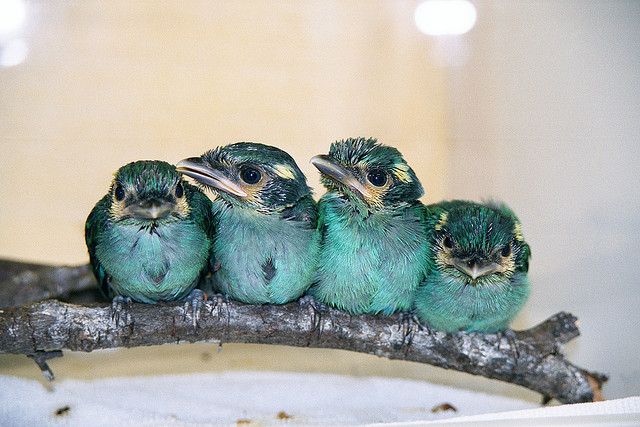
Long-tailed Broadbill (Psarisomus dalhousiae) babies ©©coracii

Long-tailed Broadbill (Psarisomus dalhousiae) babies ©©coracii

Rejoice in the Lord always. Again I will say, rejoice! (Philippians 4:4 NKJV)

Birds in Christmas Hymns

Birds in Christmas Hymns

Words by Bern­hardt S. In­ge­mann (1789-1862), 1840 (Julen har bragt velsignet bud); trans­lat­ed from Dan­ish to Eng­lish by Ce­cil Cow­drey.

Music: Christ­mas Brings Joy, Christ­oph E. Weyse (1774-1842), 1841

Christmas Brings Joy To Every Heart

Christmas brings joy to every heart,
Sets old and young rejoicing,
What angels sang once to all on earth,
Oh, hear the children voicing.
Bright is the tree with lights aglow,
Like birds that perch together,
The child that holdeth Christmas dear
Shall keep these joys forever.

Joy comes to the all the world today,
To halls and cottage hasting,
Come, sparrow and dove, from roof tree tall,
And share our Christmas feasting.
Dance, little child, on mother’s knee,
The lovely day is dawning,
The road to paradise is found
The blessèd Christmas morning.

Once to this earth our Savior came,
An infant poor and lowly,
To open for us those gardens fair
Where dwell His angels holy.
Christmas joy He bringeth us,
The Christ child King of heaven,
“To every little child,” He saith,
“Shall angel wings be given.”

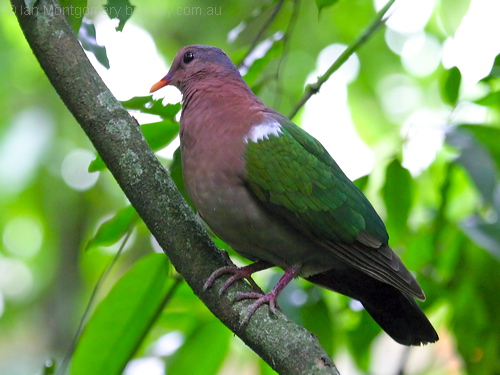
Emerald Dove by Birdway

Most information from The Cyber Hymnal

See ~ Christmas Gospel Presentation

More ~ Birds in Hymns

*

Birds In Christmas Hymns – This Endris Night (Re-post)

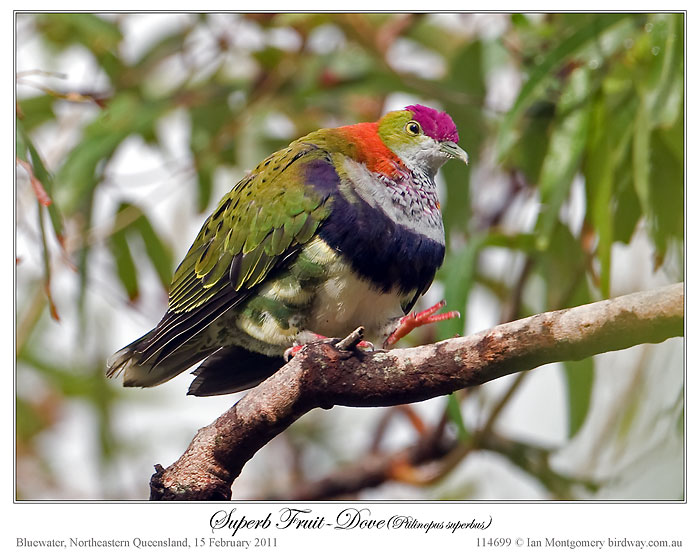
Superb Fruit Dove (Ptilinopus superbus) by Ian

Superb Fruit Dove (Ptilinopus superbus) by Ian

And she brought forth her firstborn son, and wrapped him in swaddling clothes, and laid him in a manger; because there was no room for them in the inn. (Luke 2:7 KJV)

Words & Music: 15th Century –  This Endris Night

Birds in Christmas Hymns

Birds in Christmas Hymns

This Endris Night

This endris night I saw a sight
A star as bright as day;
And ever among a maiden sung,
Lullay, by by, lullay.

This lovely lady sat and sung,
And to her Child did say:
My Son, my Brother, Father, dear,
Why liest Thou thus in hay?

My sweetest bird, thus ’tis required,
Though Thou be King veray;
But nevertheless I will not cease
To sing, By by, lullay.

The Child then spake in His talking,
And to his mother said:
“Yea, I am known as Heaven-King,
In crib though I be laid.

For angels bright down to Me light:
Thou knowest ’tis no nay:
And for that sight thou may’st delight
To sing, By by, lullay.

“Now, sweet Son, since Thou art a king,
Why art Thou laid in stall?
Why dost not order thy bedding
In some great kingès hall?

Methinks ’tis right that king or knight
Should lie in good array:
And then among, it were no wrong
To sing, By by, lullay.

“Mary mother, I am thy Child,
Though I be laid in stall;
For lords and dukes shall worship Me,
And so shall kingès all.

Ye shall well see that kingès three
Shall come on this twelfth day.
For this behest give Me thy breast
And sing, By by, lullay.

“Now tell, sweet Son, I Thee do pray,
Thou art my Love and Dear—
How should I keep Thee to Thy pay,
And make Thee glad of cheer?

For all Thy will I would fulfill—
Thou knowest well, in fay;
And for all this I will Thee kiss,
And sing, By by, lullay.

“My dear mother, when time it be,
Take thou Me up on loft,
And set Me then upon thy knee,
And handle me full soft.

And in thy arm thou hold Me warm,
And keep Me night and day,
And if I weep, and may not sleep,
Thou sing, By by, lullay.

“Now sweet Son, since it is come so,
That all is at Thy will,
I pray Thee grant to me a boon,
If it be right and skill,—

That child or man, who will or can
Be merry on my day,
To bliss Thou bring—and I shall sing,
Lullay, by by, lullay.

___

Some of the archaic terms require explanation:
This endris night: The other night, a few nights ago
Veray: True
Light: Alight
No nay: Undeniable
Methinks: I think
Pay: Satisfaction
Fay: Faith
Boon: Favor
Skill: Reasonable

*

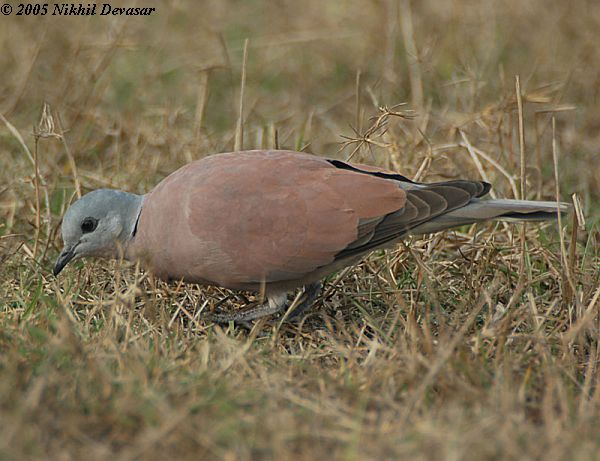
Red Turtle Dove (Streptopelia tranquebarica) by Nikhil Devasar

Red Turtle Dove (Streptopelia tranquebarica) by Nikhil Devasar

More Birds in Hymns

See ~

Christmas Gospel Presentation

Wordless Birds

Most information from The Cyber Hymnal – – This Endris Night

*

Did Dinosaurs Turn into Birds?: New Answers DVD 1 – Answers in Genesis

Painted Whitestart (Myioborus pictus) ©WikiC

Painted Whitestart (Myioborus pictus) ©WikiC

God created the great sea monsters and every living creature that moves, which the waters brought forth abundantly, according to their kinds, and every winged bird according to its kind. And God saw that it was good (suitable, admirable) and He approved it. (Genesis 1:21 AMP)

Here is an interesting link to Answers in Genesis about the “beginning of birds.” It is a 5 minute video by David Menton, Ph.D.

Did Dinosaurs Turn into Birds?: New Answers DVD 1 – Answers in Genesis.

From the Answers Weekly

*

Birdwatching Eagles on Communications Tower

Third to arrive

Third to arrive

Doth the eagle mount up at thy command, and make her nest on high? (Job 39:27 KJV)

But they that wait upon the LORD shall renew their strength; they shall mount up with wings as eagles; they shall run, and not be weary; and they shall walk, and not faint. (Isaiah 40:31 KJV)

Last night we went on my first birdwatching adventure since my eye surgery. After an article was shown to me, by a friend, we had to check it out. And it is only about 3 miles from our house.

Here is the article’s link: Eagles Making a Home on Sheriff’s Communications Tower

First Eagle Chased off by Grackle-crop

First Eagle Chased off by Grackle

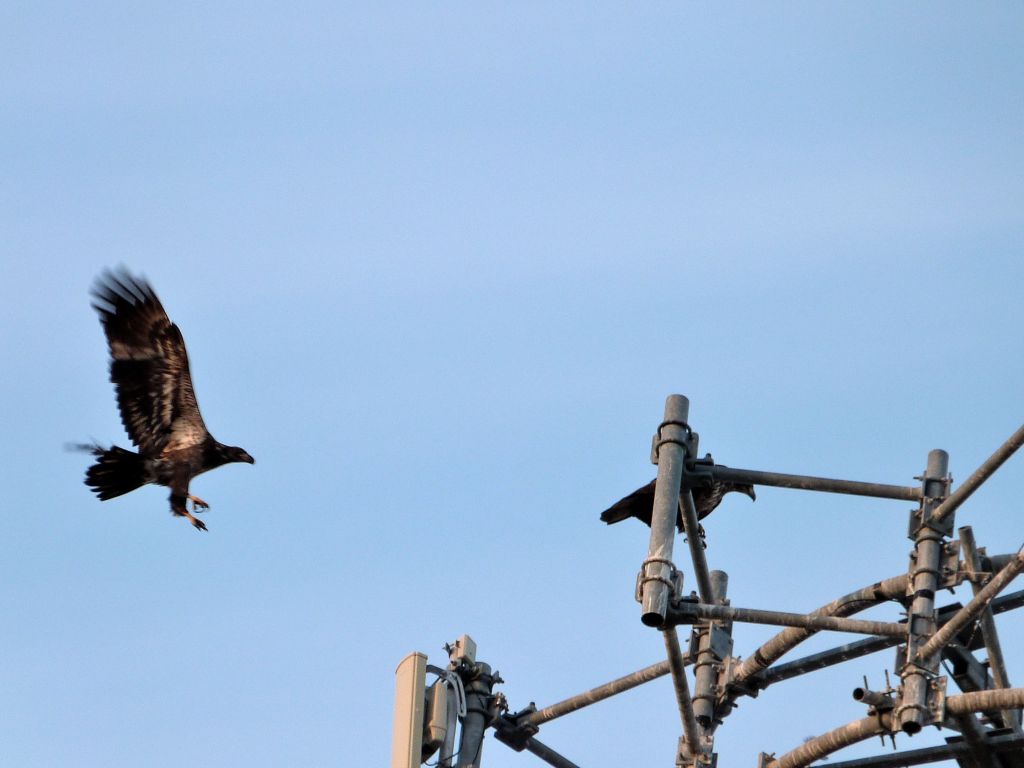
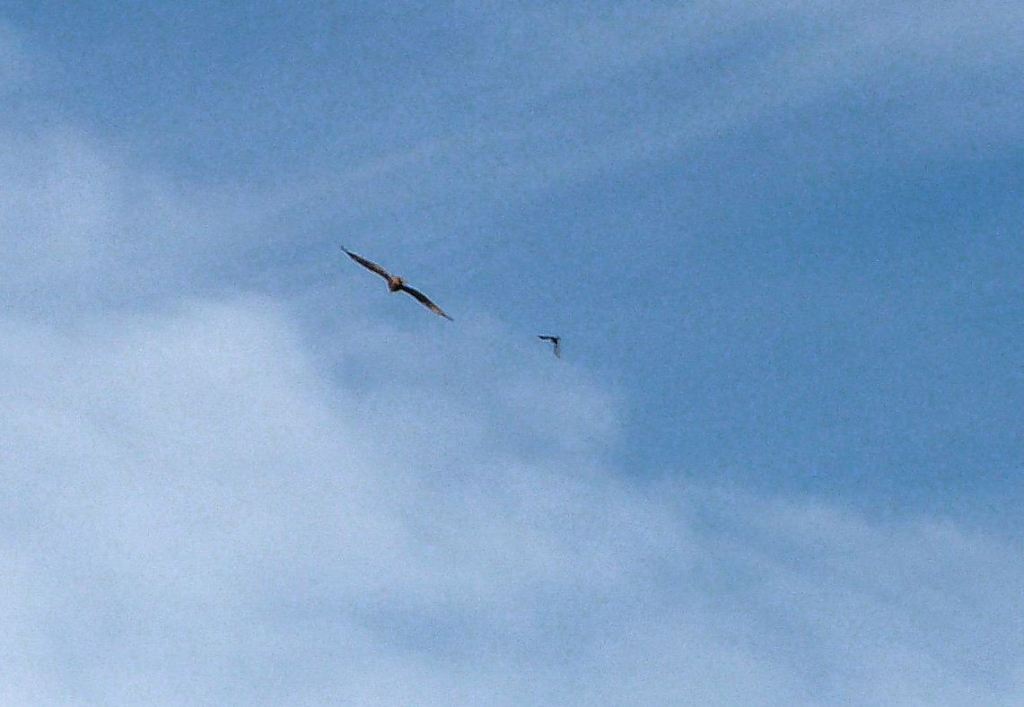
We arrived around 4:30 pm and we had other birdwatchers coming to see the event. At first there were quite a few Boat-tailed Grackles up on the tower. When the first young Eagle arrived, they promptly chased him off.

When the second Eagle came in, he landed and the Grackles decided it was time to leave. From there on, the mostly young eagles came in one or two at a time. Wow! I have never seen that many Bald Eagles together at one time. By the time we left there were 25 that had come to the tower. When one landed, as the article said, they would start greeting each ofter. The lady standing by us keep coming up with stories they might be telling, like; “How was your day?”, “You should see the large fish that I caught”, “Went over to …..” It was fun.

 The setting Sun

The setting Sun

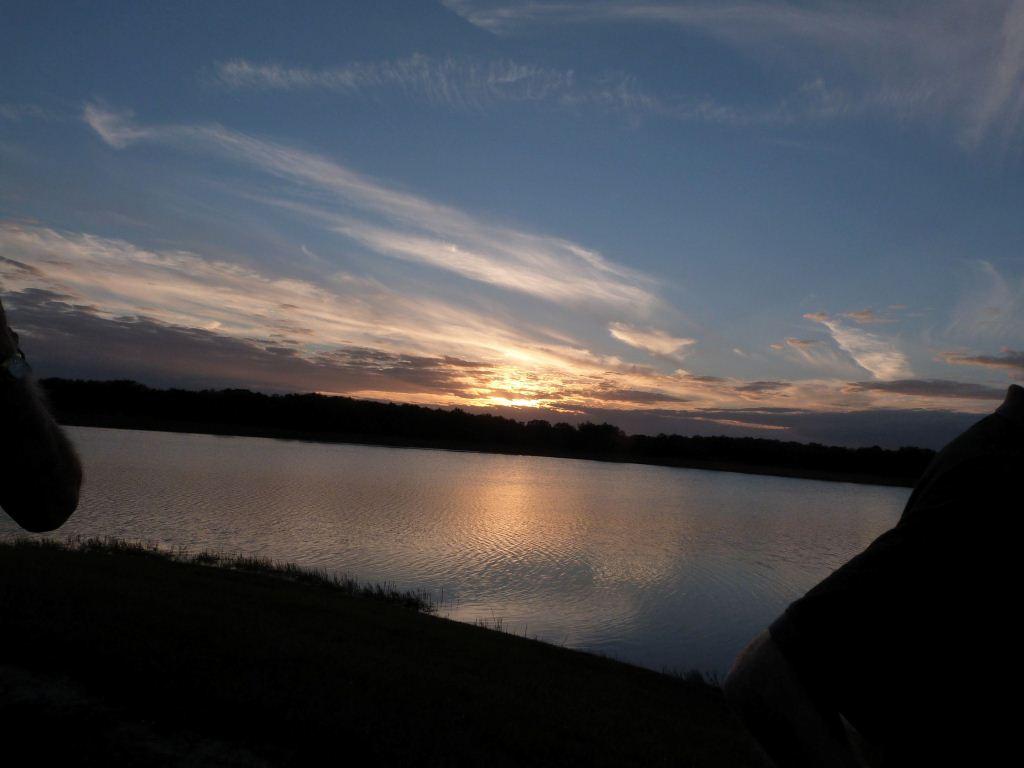
We also saw 2 Sandhill Cranes, 12 Lesser Scaups on the pond, 2 Killdeer, 4 White Ibises flying by and of course the Grackles. It was a nice evening and we watched the sun set over the pond.

The Tower with 20 Bald Eagles

The Tower with 20 Bald Eagles

And they answered and said unto him, Where, Lord? And he said unto them, Wheresoever the body is, thither will the eagles be gathered together. (Luke 17:37 KJV)

The tower is 190 feet tall and we were standing back quite a bit. I know my eye is blurry, but considering how zoomed in these photos are, I think they are not bad. Shot several videos trying to get the sound of their greetings, but every one was talking during them. We were all as excited as the Eagles to see each other and have their chats.

What an event.

Here is the tower as we saw it without the aid of the camera.

The Tower without zoom

The Tower without zoom

Bald Eagles are of course one of our Birds of the Bible with at least 34 verses mentioning them. They belong to the Accipitridae – Family (Kites, Hawks & Eagles).

I will have more photos and video later.

*

Is Eagle’s Weight Our Weight?

Steller's Sea Eagle (Haliaeetus pelagicus) by Lee at NA

Steller’s Sea Eagle (Haliaeetus pelagicus) by Lee at NA

Is Eagle’s Weight Our Weight? ~ by a j mithra

The strike force
of the eagle’s talon
is as powerful
as twice the force
of a rifle bullet…

Pound for pound,
an eagle’s wing
is much more stronger
than the wing of an airplane.
An eagle can kill
a young deer
and fly away with it.
These are some of the
amazing facts
about the Eagle..

We all want to fly high
like an Eagle..
Isn’t it?

We wouldn’t mind
waiting for a bus
or wait in a que
at a Cinema theatre,
or wait for a long time
in a bank..
But,
do we really take time
to wait at the feet
of the LORD?

But they that wait upon the Lord shall renew their strength; they shall mount up with wings as eagles; they shall run, and not be weary; and they shall walk, and not faint. (Isaiah 40:31)

Have a Blessed day!

Your’s in YESHUA,
a j mithra

Please visit us at: Crosstree

ajmithra21

*

See more of a j’s articles

*

Fly Light…

Mallards flying off by Ian

Mallards flying off by Ian

Fly Light… ~ by a j mithra

Do birds carry
heavy or light luggage
when they fly?
Never,
cos,
they know that
its easier to fly light
without excess weight…

Though we wait
on the LORD,
we still are not able to
fly high over the storm..

Why?
Is it cos
we carry all the junk like

  • fears and tears,

and,

  • anger and pain?

LETS FLY LIGHT
FOR THE LIGHT…

Therefore seeing we also are surrounded with so great a cloud of witnesses, let us lay aside every weight, and the sin which does so easily ensnare us, and let us run with patience the race that is set before us, (Hebrews 12:1)

Have a Blessed day!

Your’s in YESHUA,
a j mithra

Please visit us at: Crosstree

ajmithra21

*

See more of a j’s articles

*

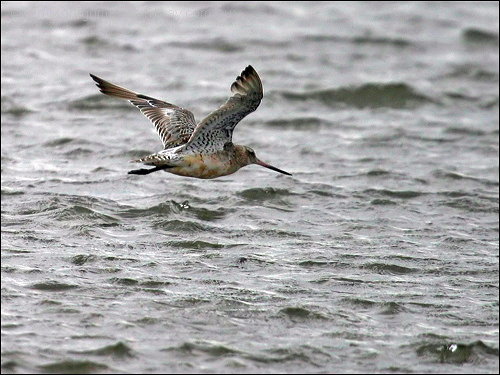
Bar-tailed Godwit’s Self – Control..

Bar-tailed Godwit (Limosa lapponica) by Nikhil Devasar

Bar-tailed Godwit (Limosa lapponica) by Nikhil Devasar

Bar-tailed Godwit’s Self – Control.. ~ by a j mithra

With the help of satellite tracking,
researchers found that,
Bar-tailed Godwits made
the longest non-stop flight
of any bird…

A female bar-tailed Godwit,
flew nonstop for eight days
and covered 7,242 miles
from Alaska to New Zealand….

These birds use
the air’s low pressure
to help them migrate
and they take advantage
of the 500 to 800 miles
of strong tailwinds
of the low pressure..

Many a time,
when we face low pressure
in life,

  • we feel down and out,
  • weak and weary,
  • distracted and disturbed

all along our life’s journey….

All because,
we don’t have the
fruit of self-control..

We also fail to realize that the low pressure
is the launching pad
on our quest to top…

Bar-tailed Godwit (Limosa lapponica) by Ian

Bar-tailed Godwit (Limosa lapponica) by Ian

Look at the price this little bird had paid
to do what no one else could do!

  • She didn’t eat or drink,
  • she didn’t shop or sleep

during her journey..
GOD paid a priceless price
for all our sins..
But,
what price are we going to pay
to reach our destiny?

  • This bird neither slept
  • nor supped for eight long days..

Do we have that self-control,

  • to fast at least once a week?
  • to keep wake all night
  • and pray for at least once a month?

GOD IS IN NEED OF PEOPLE TO STAND AT THE GAP
AND PLEAD FOR ALL THOSE DYING SOULS..
HELLOOOOO….
IS ANYONE LISTENING?

And every man that striveth in the games exerciseth self-control in all things. Now they [do it] to receive a corruptible crown; but we an incorruptible. (1Corinthians 9:25 (A S V))

Have a blessed day!

Yours in YESHUA,
a j mithra

Please visit us at:
Crosstree

ajmithra21

*

See More of aj’s articles

*

Happy Thanksgiving – Turkey

The Fountain re-published this article I wrote back in 2009 and decided to re-post it here also. (with editing) Happy Thanksgiving, 2012!

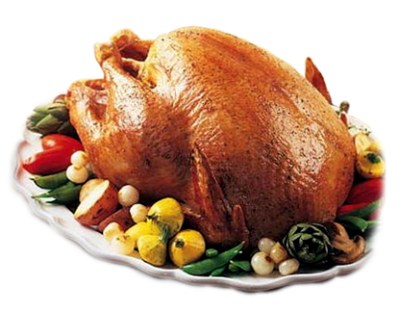
Today, many of us here in the United States ate turkey on Thanksgiving Day. Luckily, many turkeys will survive our holiday and continue to roam around. Here locally in Polk County, Florida, I see a “rafter” of turkeys (name for a group of turkeys – incorrectly called a “gobble” or “flock”) from time to time. Near Bartow I have seen them many times in rafters up to 11 turkeys. Near Circle B Bar Reserve, I have seen other groups up to 8 turkeys.

Wild Turkey (Meleagris gallopavo) by Daves BirdingPix

Wild Turkey (Meleagris gallopavo) by Daves BirdingPix

The domestic turkey is a descendant of the Wild Turkey and features prominently in the menu of the Canadian and U.S. holidays of Thanksgiving and that of Christmas in many countries.

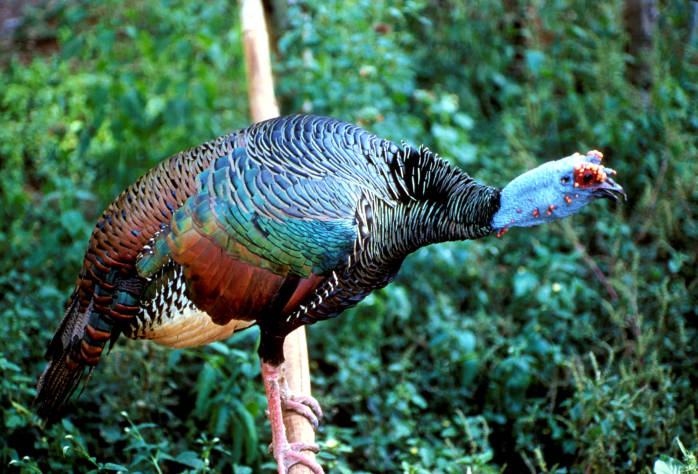
The Turkey is in the Galliformes Order and in the Phasianidae (Pheasants, Fowl & Allies) Family. There are two turkeys – Wild Turkey – Meleagris gallopavo and the Ocellated Turkey – Meleagris ocellata. The Wild is native to North American forrests and the Ocellated is native to the Yucatan Peninsula forrests. They are relatives of the Grouse family. Both Turkeys have a “distinctive fleshy wattle that hangs from the underside of the beak and a fleshy protuberance (flap of skin) that hangs from the top of its beak called a snood.” Turkeys are the heaviest member of the Galliformes order. The females are smaller and duller than the males. The male weighs from 11-24 lbs (5-11 kg) [record=38lbs] and measures 39-49 in (100-125 cm). They also have from 20,000-30,000 feathers.

 Ocellated Turkey (Meleagris ocellata) ©USFWS

Ocellated Turkey (Meleagris ocellata) ©USFWS

Congressional Proclamations from CreationWiki.
“The United States Congress set December 18, 1777, as a day of thanksgiving on which the American people “may express the grateful feelings of their hearts and consecrate themselves to the service of their divine benefactor” and on which they might “join the penitent confession of their manifold sins . . . that it may please God, through the merits of Jesus Christ, mercifully to forgive and blot them out of remembrance.” Congress also recommends that Americans petition God “to prosper the means of religion for the promotion and enlargement of that kingdom which consisteth in righteousness, peace and joy in the Holy Ghost.'”[1]
Congress set November 28, 1782, as a day of thanksgiving on which Americans were “to testify their gratitude to God for his goodness, by a cheerful obedience to his laws, and by promoting, each in his station, and by his influence, the practice of true and undefiled religion, which is the great foundation of public prosperity and national happiness.”

Giving thanks always for all things unto God and the Father in the name of our Lord Jesus Christ; (Ephesians 5:20 KJV)

See:
WhatBird’s Wild Turkey
Wikipedia’s Wild Turkey and Ocellated Turkey
Video of an Ocellated Turkey and a Wild Turkey displaying on Internet Bird Collection