Come, ye children, hearken unto me: I will teach you the fear of the LORD. (Psalm 34:11 )
Evolutionary naturalism paints the picture of life as if it were a haphazard series of accidents that just barely resulted in a range of living things that just manage to survive. This fanciful picture destroys our sense of wonder over the sophisticated engineering designs in nature.
Consider the mystery of flight, for example. Some evolutionists suggest that perhaps birds are descended from lizards that fell out of trees a lot. Other evolutionists say that birds came from lizards who grew wings, not for flight but to chase down and catch insects. Yet, they have little to say about the fact that we humans have come by most of our sophisticated knowledge about flight from studying the birds.
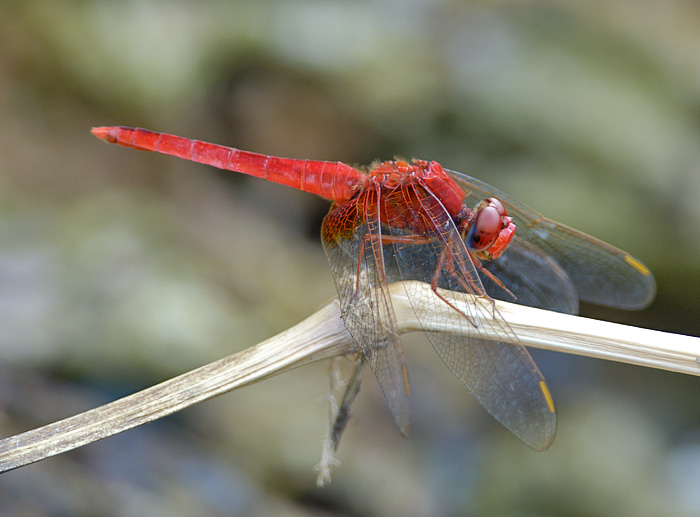
Then there is the problem, for the evolutionist, of how flight accidentally evolved so many times for so many creatures. Scientists studying the dragonfly are learning even more secrets of flight. Our best high-performance aircraft can barely lift themselves off the ground. However, the dragonfly can lift 15 times his own weight into the air. Scientists have learned that this is because the dragonfly’s wings are designed to create little whirlwinds over their top surfaces. These whirlwinds are the secret to creating incredible lifting power. Ways are now being planned to apply this secret to new aircraft designs.
The engineering excellence found in nature and from which we have learned so much even in this day of interplanetary probes is not witness to a mindless process of evolution, but to a wise and mindful Creator.
Prayer:
Father, it seems a shame that humans learned about flight from the dragonfly and fail to see a witness to You. Yet, I know that I don’t learn from You as I should, either. Forgive me for Jesus’ sake and make me a better learner. Amen.
Out of the ground the LORD God formed every beast of the field and every bird of the sky, and brought them to the man to see what he would call them; and whatever the man called a living creature, that was its name. (Genesis 2:19 NASB)
While working on the new updates for the IOC 2.10 Version, I kept noticing the word “color” in the scientific names as I sorted and resorted the Excel spreadsheet. This is a third of the “color” articles. There are concolor, discolor, bicolor, tricolor, unicolor, quadricolor, quinticolor, multicolor, versicolor, nocticolor, coelicolor, decolor, fumicolor, niscolor, schisticolor, subunicolor, sitticolor.
In the subspecies (ssp.) there are a few additional “colors” that show up – arenicolor, caelicolor, caerebicolor, cervinicolor, deserticolor, ruficolor, terricolor. For now, let’s see what the subspecies “color” birds are. Most have just only one or two birds with that “color” name. Where a photo of the subspecies could not be found, the nominate bird is shown.
arenicolor = aren, sand + color
Bar-tailed Lark (Ammomanes cinctura arenicolor) by Keith Blomerley
The Bar-tailed Lark (Ammomanes cinctura) is a species of lark in the Alaudidae family. It is found in Afghanistan, Algeria, Cape Verde, Chad, Egypt, Iran, Iraq, Israel and Palestine, Italy, Jordan, Kuwait, Lebanon, Libya, Mali, Malta, Mauritania, Morocco, Niger, Oman, Pakistan, Saudi Arabia, Sudan, Syria, Tunisia,and Yemen. Its natural habitat is hot deserts.
I do not know Latin, nor what Scientific words mean, but I have a copy of the Latin Vulgate on my e-Sword Program. I decided to look up these words and see what I might find. While searching for “aren” I found the word “harenam” which translates to “sand.”
How precious also are thy thoughts unto me, O God! how great is the sum of them! If I should count them, they are more in number than the sand: when I awake, I am still with thee. (Psalms 139:17-18 KJV)
caelicolor = sky blue + color
“caeli” translates to “heaven” in most verses.
The heavens are thine, the earth also is thine: as for the world and the fulness thereof, thou hast founded them. (Psalms 89:11 KJV)
caerebicolor = caer (blue) + bicolor (Having two colors)
(Couldn’t figure this one out in Latin)
Blue Dacnis (Dacnis cayana, ssp caerebicolor)
Blue Dacnis (Dacnis cayana) by Dario Sanches
Velvet Flycatcher (Myiagra hebetior) also known as Dull or Lesser Shining Flycatcher
The Dull Flycatcher (Myiagra hebetior) is a species of bird in the Monarchidae family. It is endemic to Papua New Guinea. Its natural habitats are subtropical or tropical moist lowland forests and subtropical or tropical moist montanes.
cervinicolor = cervix (neck) + color
“cervi” translates to “neck” in most verses. (cervis = stiff-necked)
He who is often rebuked, and hardens his neck, Will suddenly be destroyed, and that without remedy. (Proverbs 29:1 NKJV)
Shining Flycatcher (Myiagra alecto) by Ian (closest to Velvet I could find)
Velvet Flycatcher (Myiagra hebetior cervinicolor)
deserticolor = desert + color
“deserti” translates to “desert” or “wilderness“.
Indian Scops Owl (Otus bakkamoena) pair by Nikhil Devasar
Indian Scops Owl (Otus bakkamoena deserticolor) – Video IBC
“A medium (smaller than the Collared) sized scops owl with large conspicuous ear-tufts. Sandy grey-brown, spotted and mottled dark brown and black. There is also a rufous phase. Underparts light grey-buff. Has a distinct nuchal collar and also a second collar on nape. Eyes are dark brown.” (Delhibird)
“The Common Miner (Geositta cunicularia) is a passerine bird of South America, belonging to the ovenbird family. It is a ground-dwelling bird which feeds on insects and seeds. It has about 9 different subspecies, some of which may be better treated as separate species.
It is 14 to 16 cm long with a fairly long, slightly downcurved bill. The plumage varies geographically but is basically brown above and pale below with a streaked breast, pale stripe over the eye, dark edge to the ear-coverts and pale rufous bar across the wing. The tail is dark with a buff base and variable amounts of buff on the outer feathers. The trilling song is often given in flight and also varies geographically.” (Wikipedia)
Chinese White-browed Rosefinch (Carpodacus dubius deserticolor) Video by Keith Blomerley
The Chinese White-browed Rosefinch (Carpodacus dubius) is a true finch species (family Fringillidae). It is one of the rosefinches that might belong in the genus Propasser.
It is found in China and Tibet. Its natural habitats are temperate forests and temperate shrubland.
ruficolor = rufilata (Latin), rufus, reddish + color
“rufi” translates to “red” or “Rufus“-a name.
In the first chariot were red horses; and in the second chariot black horses; (Zechariah 6:2 KJV)
in quadriga prima equi rufi et in quadriga secunda equi nigri (Zechariah 6:2 Vulgate)
“The Thekla Lark, Galerida theklae, breeds in Iberia, northern Africa, and sub-Saharan Africa from Senegal to Somalia. It is a sedentary species. This is a common bird of dry open country, often at some altitude. It nests on the ground, laying two to six eggs. Its food is weed seeds and insects, the latter especially in the breeding season.
This is a smallish lark, slightly smaller than Skylark. It has a long spiky erectile crest. It is greyer than Skylark, and lacks the white wing and tail edged of that species.” (Wikipedia)
terricolor = terr- (dry land) or (land, earth, ground) + color
“terr+” brought up “3,147 verses found, 3547 matches” (Needless to say, I did not check them all out.) “terra” translates as above, “earth”, “land”, “ground.”
In the beginning God created the heaven and the earth. (Genesis 1:1 KJV)
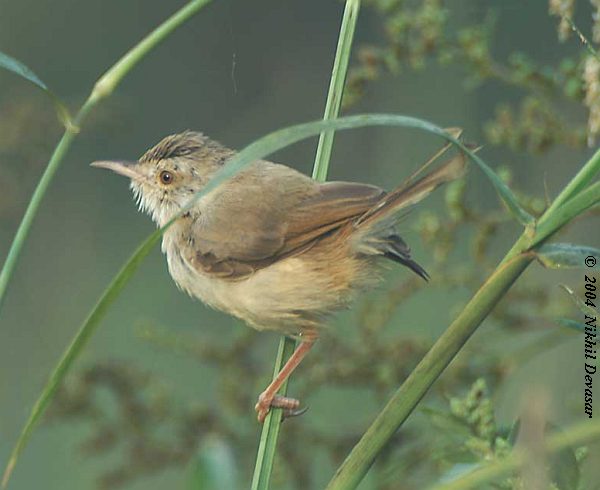
“The Plain Prinia, or the Plain, or White-browed, Wren-Warbler[2] (Prinia inornata) is a small warbler in the cisticola family. It is a resident breeder from Pakistan and India to south China and southeast Asia. It was formerly included in the Tawny-flanked Prinia, Prinia subflava (Gmelin, 1789), resident in Africa south of the Sahara. The two are now usually considered to be separate species.
This skulking passerine bird is typically found in wet lowland grassland, open woodland, scrub and sometimes gardens. The Plain Prinia builds its nest in a shrub or tall grass and lays 3-6 eggs.”
The White-browed Sparrow-Weaver (Plocepasser mahali; Afrikaans: Koringvoël) is a predominantly brown, sparrow-sized weaver found throughout central and northcentral southern Africa. It is found in groups of two to eleven individuals consisting of one breeding pair and nonreproductive individuals. P. m. terricolor is found towards the center of the White-Browed Sparrow-Weaver’s range, occurring predominantly in eastern Botswana.
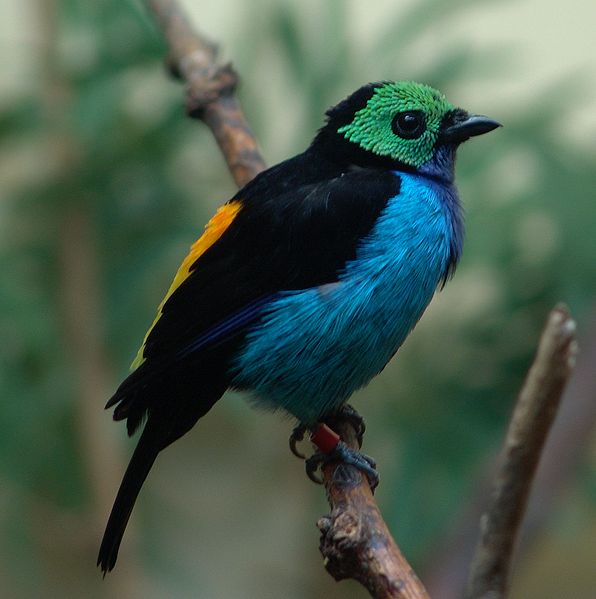
I trust that you were not bored, but enjoyed the Latin lesson thrown in. I am always curious as to how they come up with these Scientific Names. It was interesting to find out some of these meanings. In the mean time we have seen some birds that the Lord created that we probably have never seen before. I love that Paradise Tanager the most, but the others are great also.
Spirit of God, that moved of old
Upon the waters’ darkened face,
Come, when our faithless hearts are cold,
And stir them with an inward grace.
Thou that art power and peace combined,
All highest strength, all purest love,
The rushing of the mighty wind,
The brooding of the gentle dove.
Come, give us still Thy powerful aid,
And urge us on, and make us Thine;
Nor leave the hearts that once were made
Fit temples for Thy grace divine.
Nor let us quench Thy sev’nfold light;
But still with softest breathings stir
Our wayward souls, and lead us right,
O Holy Ghost, the Comforter.
And I will bring the blind by a way that they knew not; I will lead them in paths that they have not known: I will make darkness light before them, and crooked things straight. These things will I do unto them, and not forsake them. (Isaiah 42:16 KJV)
Cecil F. Alexander Born-Early April 1818 in Redcross, County Wicklow, Ireland. Died on October 12, 1895 in Londonderry, Northern Ireland. She was Buried at the City Cemetery, Londonderry, Northern Ireland.
Alexander’s husband was William Alexander, bishop of Derry and Raphoe, and later the Anglican primate for Ireland. Cecil and her sister founded a school for the deaf, and she set up the Girls’ Friendly Society in Londonderry. Cecil Alexander wrote about 400 hymns in her lifetime.
Geystliche Gesangk Buchleyn (actually a hymn book, maybe)- No information
We hail thee, glorious summer,
We welcome thee today,
With all thy flowery legions
And all thy songbirds gay.
The happy rills to meet thee
With merry laughter run;
While woodland banners greet thee,
Beneath a smiling sun.
Refrain
We hail thee, joyous summer! We welcome thee today! With all thy flowery legion, And all thy songbirds gay.
We hail thy smile of gladness
O Summer fair and sweet;
O let us lay all sadness
And sighing at thy feet.
The woodland ways are ringing
With many a merry lay;
Oh let us join in singing
With nature’s choir today.
We hail thee, joyous summer! We welcome thee today! With all thy flowery legion, And all thy songbirds gay.
O Summer, thou hast brought us
A message sweet and fair;
O Summer, thou hast taught us
Of Heaven’s brooding care.
Thy gleaming skies of glory
Watch o’er the world in love;
They tell a glad, sweet story
Of summer lands above.
We hail thee, joyous summer! We welcome thee today! With all thy flowery legion, And all thy songbirds gay.
Thus hath the Lord GOD shewed unto me: and behold a basket of summer fruit. (Amos 8:1 KJV)
Alice J. Cleator, Born in Andreas, Isle of Man, England and died April 27, 1926 in Cleveland, Ohio.
Cleator’s family evidently emigrated to America in the 1870’s. She was living in Claridon, Ohio, in 1880, & Geauga County, Ohio, in 1900, 1910, & 1920. She taught school in New York City, retiring some time before 1915.
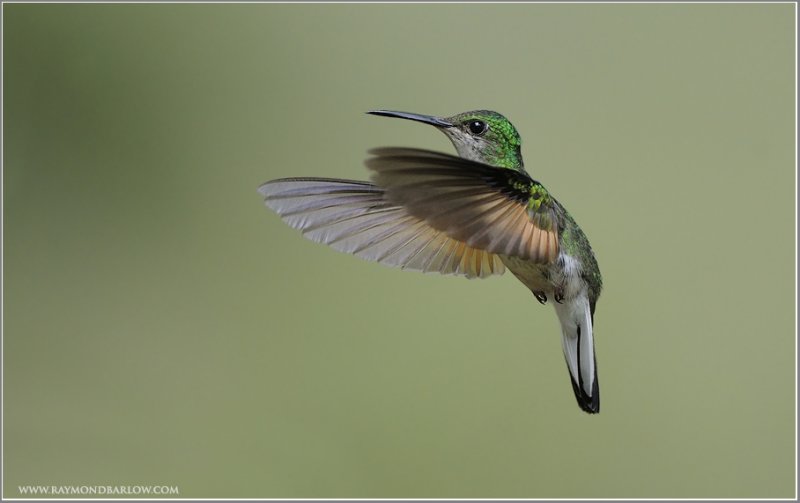
Stripe-tailed Hummingbird (Eupherusa eximia) Female by Raymond Barlow
The heavens declare the glory of God; and the firmament sheweth his handywork. (Psalms 19:1 KJV)
Words by Henry Ware Jr. (1794-1843), 1822
Music – Bethlehem by Gottfried W. Fink (1783-1846)
All Nature’s Works His Praise Declare
All nature’s works His praise declare, to whom they all belong;
There is a voice in every star, in every breeze a song.
Sweet music fills the world abroad with strains of love and power;
The stormy sea sings praise to God, the thunder and the shower.
To God the tribes of ocean cry, and birds upon the wing;
To God the powers that dwell on high their tuneful tribute bring.
Like them, let us the throne surround, with them loud chorus raise,
While instruments of loftier sound assist our feeble praise.
Great God, to Thee we consecrate our voices and our skill;
We bid the pealing organ wait to speak alone Thy will.
Lord, while the music round us floats may earth born passions die;
O grant its rich and swelling notes may lift our souls on high!
Praise ye the LORD. Praise ye the LORD from the heavens: praise him in the heights. (Psalms 148:1 KJV)
Henry Ware, Jr was born April 21, 1794 in Hingham, Massachusetts, Died on September 25, 1843 in Framingham, Massachusetts and was buried in Mount Auburn Cemetery, Cambridge, Massachusetts.
Son of a Unitarian minister, Ware attended Harvard and became an assistant teacher at Exeter Academy in New Hampshire. In 1815, the Boston Unitarian Association licensed him to preach, and in 1817, he was ordained and became pastor of the Second Church in Boston, Massachusetts. He was Professor of Pulpit Eloquence and Pastoral Care at the Harvard Divinity School, 1829-1842. He also edited the Christian Disciple (later renamed the Christian Examiner), and ran the Society for Religious Improvement at Harvard University (his father was on the faculty there, as well). A two volume Memoir and a four volume Works were published three years after his death. Ware wrote this hymn for a service dedicating a new organ (see the last stanza).
Gottfried W. Fink was born onMarch 8, 1783, Sulza on the Ilm, Thuringia and died on August 27, 1846, Leipzig, Germany.
Fink sang as a chorister at Naumburg, and studied theology at Leipzig (1804-8). He became a Professor of Music at Leipzig in 1842. He is remembered for his writings on music history and theory, and his collections of secular and religious songs.
And one cried unto another, and said, Holy, holy, holy, is the LORD of hosts: the whole earth is full of his glory. (Isaiah 6:3 KJV)
Words by Ann T. Gilbert (1782-1852), 1827 (originally, “Spared to Another Spring”).
This hymn appeared, unattributed, in the American School Hymn Book, by Asa Fitz, 1854, and is sometimes incorrectly ascribed to Fitz. The version below was published in the 1882 Collection by Godfrey Thring.
Music: Swabia by Johann M. Spiess (1715-1772) – arranged by William H. Havergal, 1847
Great Giver of All Good
Great Giver of All Good,
To Thee our thanks we yield
For all the beauties of the wood,
Of hill, and dale, and field.
Ten thousand various flowers
To Thee sweet offerings bear, And joyous birds in woodlands bowers
Sing forth Thy tender care.
The fields on every side
The trees on every hill,
The glorious sun, the rolling tide,
Proclaim Thy wonders still.
But trees, and fields, and skies
Still praise a God unknown;
For gratitude and love can rise
From living hearts alone.
These living hearts of ours
Thy holy Name would bless;
The blossoms of the thousand flowers
Would please the Savior less.
While earth itself decays,
Our souls can never die;
O tune them all to sing Thy praise
In better songs on high.
By them shall the fowls of the heaven have their habitation, which sing among the branches. (Psalms 104:12 KJV)
Ann T. Gilbert was the daughter of Isaac Taylor, who at the time of her birth was a London engraver. Her father subsequently became a Congregational minister, living first at Colchester, then at Ongar. In 1813, she married the Rev. Joseph Gilbert, classical and mathematical tutor at the Congregational College, Masborough (near Rotherham), Yorkshire. From Masborough they moved to Hull, and later Nottingham.
Johann M. Spiess taught music at the Gymnasium in Heidelberg, Germany, and played the organ at St. Peter’s Church and (1746-1772) at Berne Cathedral.
Nuggets Plus – Caddisfly – The Healer ~ by ajmitha
Nuggets Plus
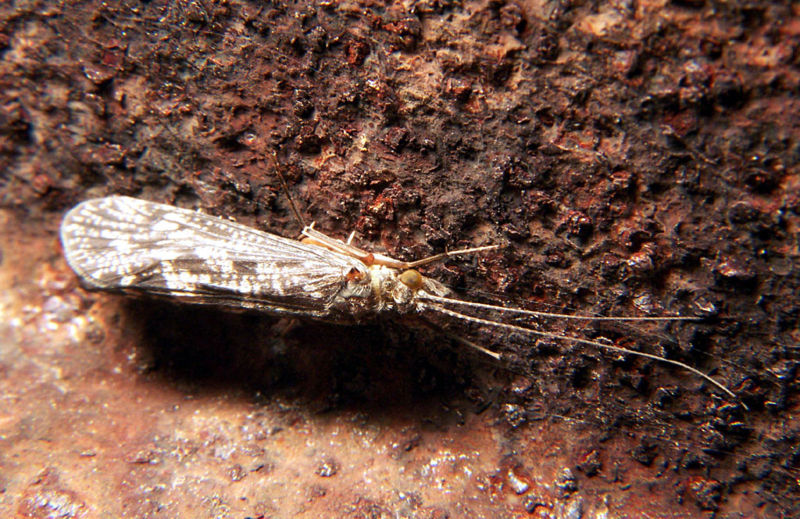
Caddisfly’s silk Is sticky when wet and this silk Make a valuable adhesive tape used to suture wounds.. When we get wet with the Living Water, We have to suture wounds and not create wounds… By the way, Is our life creating wounds, Or suturing wounds? Remember, Though we hurt Jesus, He still heals… He expects us to be like Him… Do we heal and not hurt?
He healeth the broken in heart, and bindeth up their wounds. (Psalm 147:3)
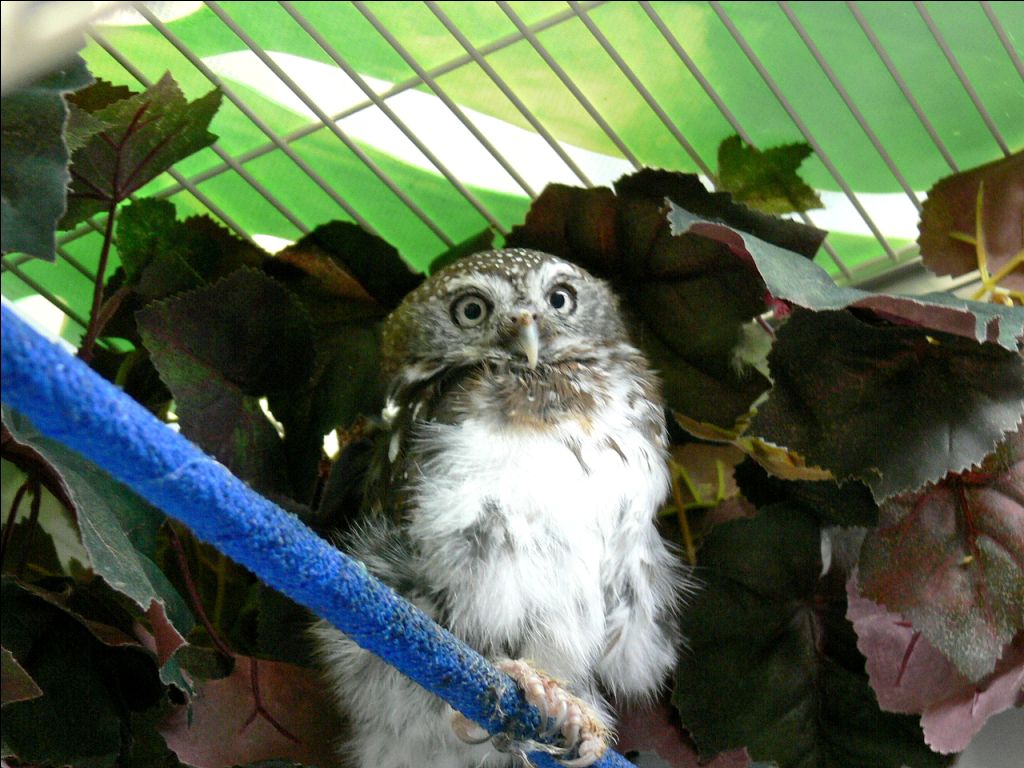
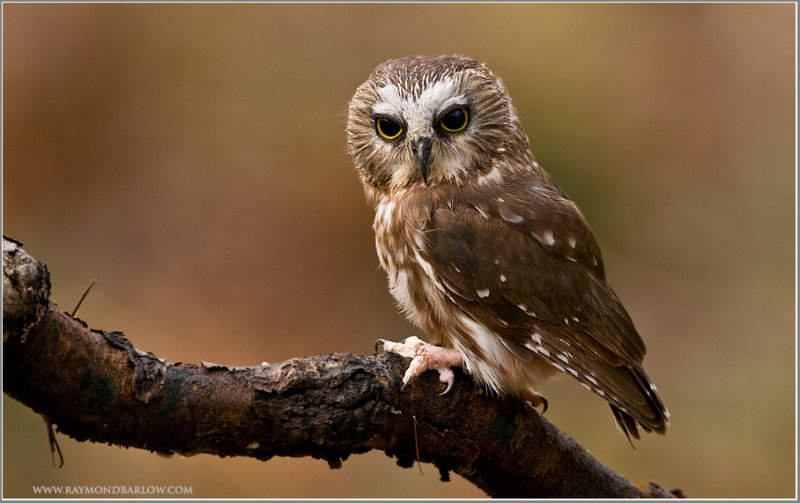
Northern Saw-whet Owl (Aegolius acadicus) (captive) by Raymond Barlow
When I did the first Birds of the Bible – Owls back in March of 2008, this blog was only a month old. Wow! I have always enjoyed the video that I included in it and have placed it here for those who have not seen it. The Burrowing Owls would definitely qualify as Little Owls. Since that article, we have added great photographers, videographers and writers. Trust this article on just the “Little Owls” will be helpful and a blessing as we look into the Birds of the Bible.
The Little Owl is mentioned in Leviticus 11:17 and again in Deuteronomy 14:16. As you can see by the following list of verses, that it is translated as “little” in many of them. These two verses are from the list of unclean birds that the Israelites were not to eat. See Birds of the Bible – Clean vs. Unclean
And the little owl, and the cormorant, and the great owl, (Leviticus 11:17 KJV)
little owl,H3563… (Leviticus 11:17 KJV+)
H3563 gives this definition: כּוס, kôs, koce
From an unused root meaning to hold together; a cup (as a container), often figuratively a lot (as if a potion); also some unclean bird, probably an owl (perhaps from the cup like cavity of its eye): – cup, (small) owl. Compare H3599. (Strong’s Hebrew and Greek Dictionaries)
The little owl, and the great owl, and the swan, (Deuteronomy 14:16 KJV)
The little owl,H3563… (Deuteronomy 14:16 KJV+) Same word used again.
Here are the results of searchs in e-Sword looking for “owl” or “owls” to find which ones used “little owl.” These are the different translations and only those two verses used “little owl.”
Leviticus 11:17
and the little owl, and the cormorant, and the great owl, (ASV)
And the little owl, and the cormorant, and the great owl, (AKJV)
And the little owl and the cormorant and the great owl; (BBE)
the little owl, the cormorant, the short-eared owl, (ESV)
little owls, cormorants, great owls, (GW)
and the little owl, and the cormorant, and the great owl; (JPS)
And the little owl, and the cormorant, and the great owl, (KJV)
and the little owl, and the cormorant, and the eared owl; (LITV)
and the little owl, and the cormorant, and the eared owl; (MKJV)
and the little owl and the cormorant and the great owl, (NAS77)
and the little owl and the cormorant and the great owl, (NASB)
the little owl, the fisher owl, and the screech owl; (NKJV)
and the little owl, and the cormorant, and the great owl; (RV)
And the little owl, and the cormorant, and the great owl, (Webster)
and the little owl, and the cormorant, and the great owl, (YLT)
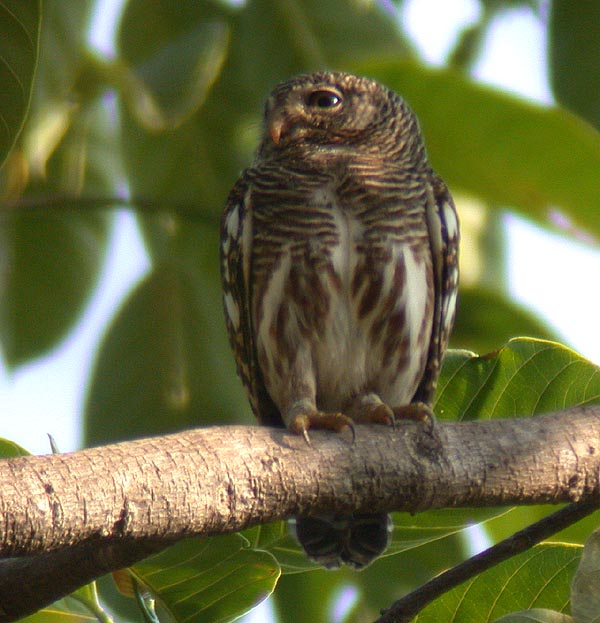
Asian Barred Owlet (Glaucidium cuculoides) by Peter Ericsson
Deuteronomy 14:16
The little owl, the great owl, the horned owl, (AMP)
the little owl, and the great owl, and the horned owl, (ACV)
The little owl, and the great owl, and the swan, (AKJV)
The little owl and the great owl and the water-hen; (BBE)
little owls, great owls, white owls, (ERV)
the little owl and the short-eared owl, the barn owl (ESV)
little owls, great owls, barn owls, (GW)
he little owl, the great owl, the horned owl, (ISV)
the little owl, and the great owl, and the horned owl; (JPS)
The little owl, and the great owl, and the swan, (KJV)
the little owl, and the eared owl, and the barn owl, (LITV)
the little owl, and the great owl, and the swan, (MKJV)
the little owl, the great owl, the white owl, (NAS77)
the little owl, the great owl, the white owl, (NASB)
the little owl, the screech owl, the white owl, (NKJV)
the little owl, and the great owl, and the horned owl; (RV)
The little owl, and the great owl, and the swan, (Webster)
the little owl, and the great owl, and the swan, (YLT)
Now that it is established that the “Little Owl” is a Bird of the Bible, what are some of the Little Owls that we can see today? What Order and Family do they belong? Let’s see what can be discovered.
To begin with, there are two Families of Owls in the Strigiformes Order. The Barn Owls, which are mentioned in the Bible, are in the Tytonidae Family and the rest of the Owls are in the Strigidae Family. That is where we will go to find the “little owls.” There are presently 206 species in the family, and they range from smallest (the smallest owls in the world; the Northern Pygmy Owl and the Elf Owl) to the largest Great Grey Owl (61 to 84 cm (24 to 33 in), averaging 72 cm (27 in) for females and 67 cm (26 in) for males.)
Little Owl (Athene noctua) by Nikhil Devasar
The Northern Pygmy Owl (Glaucidium californicum) and the Elf Owl (Micrathene whitneyi) would both be considered “little owls.”
There actually is a Little Owl (Athene noctua) which is resident in much of the temperate and warmer parts of Europe, Asia east to Korea, and north Africa. It is not native to Great Britain, but was first introduced in 1842,and is now naturalised there. It was also successfully introduced to the South Island of New Zealand in the early 20th century. The Little Owl is a small owl, 9-10.8 in (23-27.5 cm) in length. The adult Little Owl of the most widespread form, is white-speckled brown above, and brown-streaked white below. It has a large head, long legs, and yellow eyes, and its white “eyebrows” give it a stern expression. This species has a bounding flight like a woodpecker. The call is a querulous kee-ik. (Wikipedia)
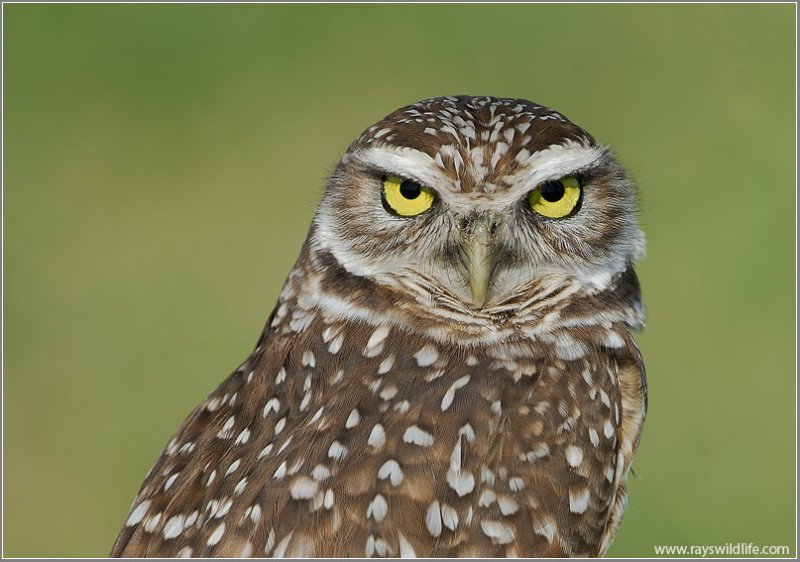
Burrowing Owl (Athene cunicularia) by Raymond Barlow
Our Burrowing Owl (Athene cunicularia), seen here in Florida, is 10 in tall and can be quite comical as this video shows. Their necks are quite limber.
The Elf Owl lives the cactus in a desert. The elf owl migrates to Arizona and New Mexico in the spring and summer. In the winter, it is found in central and southern Mexico. Elf Owls feed mainly on insects and therefore occupy habitats with a ready supply of these. Agaves and ocotillos are ideal places for foraging as moths and other insects may sleep in their flowers. Elf owls are known to eat scorpions, somehow managing to cut off the stinger. They are often seen chasing after flying insects.
The Northern Pigmy Owl is native to Canada, the United States, Mexico, Guatemala and Honduras. Pygmy owls are purportedly “sit-and-wait” predators, though they in fact hunt somewhat actively, moving from perch to perch with short flights, and pursuing prey at all levels of forest structure. They swoop down on prey; they may also catch insects in flight. They eat small mammals, birds and large insects, and may take a variety of other vertebrates and invertebrates. Mountain Pygmy Owls occasionally take prey species the same size or larger than themselves.
The other owl in the Athene genus are the Spotted Owlet (Athene brama). The Forest Owlet (Heteroglaux blewitti) is 9 in/23 cm.
Costa Rican Pygmy Owl (Glaucidium costaricanum) by Michael Woodruff
These are mostly small owls, and some of the species are called “owlets”. Most pygmy owl species are nocturnal and hunt mainly large insects and other small prey.
Little Owls in other genera are:
Long-whiskered Owlet (Xenoglaux loweryi)
Boreal Owl (Aegolius funereus) Northern Saw-whet Owl (Aegolius acadicus) by Ray
Unspotted Saw-whet Owl (Aegolius ridgwayi)
Buff-fronted Owl (Aegolius harrisii)
The beast of the field shall honour me, the dragons and the owls: because I give waters in the wilderness, and rivers in the desert, to give drink to my people, my chosen. This people have I formed for myself; they shall shew forth my praise. (Isaiah 43:20-21 KJV)
We should all praise the Lord for the fantastic way He has created His birds.
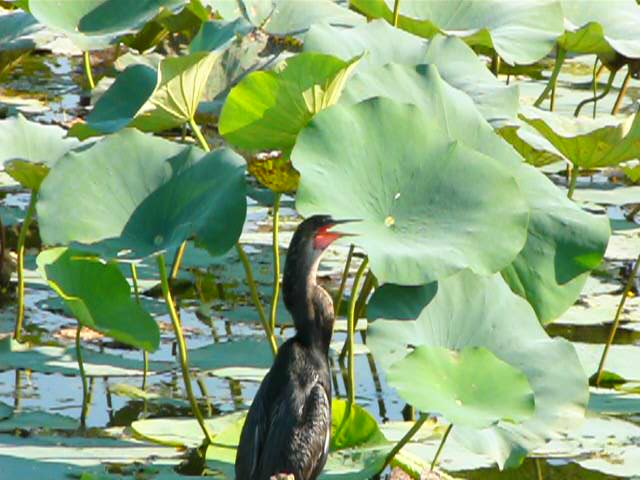
Anhinga (Anhinga anhinga) at Lake Hollingsworth by Lee
Birds were created with many fantastic abilities. Many like to compare those capabilities with human characteristics, but God has given unique and different ways to the many orders of animals, plants, birds, fish, humans, etc. There are somethings a bird cannot do, that we as humans can.
Formed By Him
Birds don’t sweat! There are no sweat glands located in birds. We can perspire though through the skin to help reduce their our heat. Our avian friends have core body temperatures that exceed most mammals for their size. Their body temperatures range from 104-111 degrees F (40-44 degrees C).
All flesh is not the same flesh, but there is one kind of flesh of men, another flesh of animals, another of fish, and another of birds. (1 Corinthians 15:39 NKJV)
Here is a video I recently took of an Osprey cooling off. We were at Lake Hollingsworth in Lakeland, FL.
“In warm weather, a bird gets rid of excess body heat through its respiratory (breathing) system, which collects warm, moist air from its internal overheated tissues and expels it through its lungs… In stepping up its breathing rate from ordinary breathing to panting, a bird increases the flow of air over the most surfaces of its mouth, pharynx, bronchi, and possibly its air sacs.” (Encyclopedia of North American Birds)
But now ask the beasts, and they will teach you; And the birds of the air, and they will tell you; (Job 12:7 NKJV)
The Lord created the animals and birds and then gave man dominion over them. That “dominion” includes learning about them so we can better understand all about their abilities, traits, behaviors, etc. This helps us protect them where possible and to appreciate the Creative Hand of the Lord. I sit back amazed at the omnipotence and omniscience of the Lord. When we observe the birds and learn about them, there is no way they “just happened.”
As for us? The same applies:
I will praise thee; for I am fearfully and wonderfully made: marvellous are thy works; and that my soul knoweth right well. (Psalms 139:14 KJV)
While working on the update to the IOC Version 2.10, I noticed that of the 233 pages for the Families of Birds of the World, I do not have a photo for the top of the Family page of the Hyliota – Hyliotas Family. I have written all of my great photographers and videographers to see if they have a photo. So far, none has sent me one that I can use with permission. I have written several others who have photos on the internet, but so far no permission there either. (Update 11/5/11 Just got permission from Dave Appleton to use his Southern Hyliota. The Family page now has a picture at the top. Thanks Dave.)
I can link to photos on other sites, but to put that photo here, I need permission.
If this bird is so rare, then what is it? My curiosity has taken over and while awaiting a photo, decided to find out about those 4 birds. Here are some of those findings:
Genus Hyliota – hyliotas. Basal Passerida with no known relatives, perhaps somewhat closer to Promeropidae (sugarbirds) (from Internet)
None of the books I own, which cover birds around the world, mention the Hyliota. Humm!
This is the total of Wikipedia’s articles on the family:
“Hyliota is a genus of passerine bird. Formerly regarded as Old World warblers in the Sylviidae family, they are now often regarded as a family in their own right, the Hyliotidae.” Humm! Not much there.
Let’s see what it says about the individual birds in the family:
The Southern Hyliota (Hyliota australis) is a species of Old World warbler in the Sylviidae family. It is found in Angola, Cameroon, Democratic Republic of the Congo, Kenya, Malawi, Mozambique, South Africa, Tanzania, Uganda, Zambia, and Zimbabwe. Its natural habitats are subtropical or tropical dry forests and dry savanna. (No photo)
The Yellow-Bellied Hyliota (Hyliota flavigaster) is a species of Old World warbler in the Sylviidae family. It is found in Angola, Burkina Faso, Burundi, Cameroon, Central African Republic, Republic of the Congo, Democratic Republic of the Congo, Ivory Coast, Ethiopia, Gabon, Gambia, Ghana, Guinea, Guinea-Bissau, Kenya, Malawi, Mali, Mozambique, Nigeria, Rwanda, Senegal, Sierra Leone, Sudan, Tanzania, Togo, Uganda, and Zambia. Its natural habitat is subtropical or tropical dry forests. (No photo)
The Usambara Hyliota (Hyliota usambara) is a species of Old World warbler in the Sylviidae family. It is found only in Tanzania.
Its natural habitats are subtropical or tropical moist lowland forests, subtropical or tropical moist montanes, and plantations. It is threatened by habitat loss. (No Photo)
The Violet-Backed Hyliota (Hyliota violacea) is a species of Old World warbler in the Sylviidae family. It is found in Benin, Cameroon, Central African Republic, Republic of the Congo, Democratic Republic of the Congo, Ivory Coast, Equatorial Guinea, Gabon, Ghana, Guinea, Liberia, Nigeria, Rwanda, Sierra Leone, and Togo. Its natural habitats are subtropical or tropical dry forests and subtropical or tropical moist lowland forests. (No photo, but they have a drawing. Aha!)
According to the IOC Worldbirdnames.org website, where the IOC Version 2.10 comes from:
“Move Hyliotas from the Sylviidae to their own family Hyliotidae, a basal lineage of the Passerida without known modern relatives ”
From the Internet Bird Collection (IBC), which still has the Hyliotas in the Sylviidae Family,:
“Genus has in the past been placed variously with the Old World flycatchers (in family Muscicapidae), with the monarch-flycatchers (Monarchidae) or with the batises and wattle-eyes (Platysteiridae); although plumage resembles that of some muscicapid flycatchers of genus Ficedula, and nest is like that of platysteirids, the nestling mouth spots, the unspotted juvenile plumage and behaviour are all typical of present family. Proposed race marginalis (S Tanzania and Mozambique) considered inseparable from barbozae. Two subspecies recognized.” That quote was put by all four species of Hyliotas. Seems no one knows exactly where they belong.
Here is the best photo on the internet that I can find of the Southern Hyliota.
Seems to be a bit of a mystery bird. So little is said about it on the internet and so few pictures of them are available. When their DNA was tested after trying to figure out where to place it, here is the abstract from the US National Library of Medicine – National Institutes of Health:
“Abstract
The African genus Hyliota includes three or four species of warbler-like birds of uncertain phylogenetic affinities, as it has historically been placed in different avian families that are now known to represent unrelated lineages: Malaconotidae (bush-shrikes), Platysteiridae (batises and wattle-eyes), Muscicapidae (Old World flycatchers) and Sylviidae (Old-World Warblers). To assess the affinities of Hyliota we sequenced a mitochondrial protein-coding gene (ND2, 1018bp) and a nuclear intron (myoglobin intron-2, 685bp). Our analyses suggest that all previous hypotheses concerning the affinities of Hyliota are erroneous. Instead, Hyliota represents a basal branch in the Passerida radiation with no close relatives. Our results, which also include analyses of relationships among other of other atypical songbird genera, lend support to an African origin of the Passerida songbird radiation.” (Italics mine)
One thing is for sure, the Lord knows all about them since He created them. Maybe they are a “kind” of their own.
So God created great sea creatures and every living thing that moves, with which the waters abounded, according to their kind, and every winged bird according to its kind. And God saw that it was good. (Genesis 1:21 NKJV)
I know all the birds of the mountains, And the wild beasts of the field are Mine. (Psalms 50:11 NKJV)
*
This page will be updated, if and when photos are made available. If anyone has a photo of any of these birds and would be willing to give permission for it to be used, please leave a comment.
While working on the new updates for the IOC 2.10 Version, I kept noticing the word “color” in the scientific names as I sorted and resorted the Excel spreadsheet. This is a second of the “color” articles. There are concolor, bicolor, tricolor, unicolor, quadricolor, versicolor, decolor, sitticolor, nocticolor, etc. Those will come later. For now, let’s see what the “discolor” birds are.
Also – discolor – lose color or turn colorless; cause to lose or change color; change color, often in an undesired manner Webster’s Revised Unabridged Dictionary, published 1913 by C. & G. Merriam Co.
As you can see by most of these birds with “discolor” in their name, have a sort of “washed-out” look. Not a very distinct color. I am sure that the Lord created them this way to help them blend in with their surroundings. Protection is important. These thoughts sort of remind me of several verses:
Ye are the salt of the earth: but if the salt have lost his savour, wherewith shall it be salted? it is thenceforth good for nothing, but to be cast out, and to be trodden under foot of men. (Matthew 5:13 KJV)
And when the chief Shepherd shall appear, ye shall receive a crown of glory that fadeth not away. (1 Peter 5:4 KJV)
“A bird — most often but not always a beautiful male cardinal attaclks a window day after day and won’t stop. Invariably …people worry about it injuring itself. Rarely does a serious physical injury result but it is a possibility. Psychological injury is another matter: the bird is clearly frustrated.
Nuggets Plus
This is territorial behavior. Male birds establish personal homelands, in the case of songbirds one to ten acres in size. Then they spend much of their time announcing their hegemony, inviting in willing female partners through song and coincidentally defending their yard against other males.
Ornithologists who study territorial behavior find that they can plot the borders of these small kingdoms with great accuracy. Males in adjacent bailiwicks know their mutual borders as though a fence separated them.
The window the bird is attacking serves as a mirror and the bird, not schooled in physics, doesn’t understand that its anatiomorphic image the other side of that glass isn’t real. (That technical word means the same size and shape but reversed like two gloves. Mirrors do that. The only time you see an exact copy of yourself is when you look into two mirrors that meet at right angles.)” (Edited) From the July 7, 2003 issue of The Buffalo News
We look in the mirror to check our appearance.
What do we observe?
As a Christian, are we seeing a new creation or
Do we still look like we did before accepting the Lord?
For if anyone is a hearer of the word and not a doer, he is like a man observing his natural face in a mirror; for he observes himself, goes away, and immediately forgets what kind of man he was. But he who looks into the perfect law of liberty and continues in it, and is not a forgetful hearer but a doer of the work, this one will be blessed in what he does.
(James 1:23-25 NKJV)









 s-k
s-k l
l
 r)
r)