The Egyptian Plover is a localised resident in tropical sub-Saharan Africa. It breeds on sandbars in large rivers. Its two or three eggs are not incubated, but are buried in warm sand, temperature control being achieved by the adult sitting on the eggs with a water-soaked belly to cool them.
If the adult leaves the nest, it smoothes sand over the eggs, though if it is frightened the job may be hasty…
The adults cool the chicks in the same way as with the eggs.
When I read this, the three young men inside the furnace came to my mind..
When Shadrach, Meshach and Abednego were thrown into the furnace for no fault of theirs, down came the Pillar of cloud to stroll with them..
Is it to cool them from the heat?
When thou passest through the waters, I will be with thee; and through the rivers, they shall not overflow thee: when thou walkest through the fire, thou shalt not be burned; neither shall the flame kindle upon thee. (Isaiah 43:2)
But now, O LORD, thou art our father; we are the clay, and thou our potter; and we all are the work of thy hand. (Isaiah 64:8 KJV)
Birdwatching is not the only thing taking up my time these days. If you read the following article about our upcoming Ladies Retreat, you will discover another of my “adventures.” Just when you think you have discovered all your gifts and talents, the Lord gives you a new challenge and then He helps you accomplish that new task.
I can do all things through Christ which strengtheneth me. (Philippians 4:13 KJV)
The Fountain is our church blog, Faith Baptist Church in Winter Haven. That is where this whole adventure of doing The Birds of the Bible blogs got started. And then this site.
The Lord is gracious and is helping us get the retreat ready. I knew our church was loaded with ladies with various gifts and talents. Much more than mine. Many have stepped up and are presenting workshops and talks, plus doing the many behind the scene projects. I praise the Lord for everyone who is helping and for all the ladies who will be attending.
God does give good gifts through abilities and a desire to use those. To me also, one of the Lord’s Gift is His Creation of all these birds we get to watch and observe.
The LORD is my strength and my shield; my heart trusted in him, and I am helped: therefore my heart greatly rejoiceth; and with my song will I praise him. (Psalms 28:7 KJV)
Just received an interesting article from the Birdwatching Magazine Newsletter. Research has been going on about how the Hummingbird produces sound by the way they spread their tail. The vibrations send out sounds that they use for courtship. “As a diving bird spreads its tail, the motion exposes the tail feathers to air, causing it to flutter like a flag in the breeze and generate sound. This so-called aerodynamic flutter can be hazardous to airplanes, but in hummingbirds it produces a species-specific sound essential to courtship.”
Dan and I finally found a little time to go birdwatching, and since I was sore from a fall, decided to just go to Lake Hollingsworth and Lake Morton in Lakeland, Florida. Neither require a lot of walking, but we can always find something worth looking at. Both lakes had some great finds.
Lake Hollingsworth had the usually Mallards, White Ibises, Boat-tailed Grackles, Common Moorhens, “Aflac” Ducks being fed by a couple of ladies. We heard several Blue Jays, Red-bellied Woodpecker, and a Red-shouldered Hawk. A flock of about 50 Fish Crows made their noisy flight over and around for several minutes. We also saw a Great Egret, Osprey, Wood Storks, Great Blue Herons, Cormorant, Limpkin and a Purple Gallinule.
The best find was to watch an Anhinga trying to stay cool. I video taped the bird vibrating its throat. Birds do not have sweat glands, so this is one of the ways they cool down. It actually wasn’t too hot, 79°, but the humidity was at 85%. We all were warm. Below is some of that video.
And he cried and said, Father Abraham, have mercy on me, and send Lazarus, that he may dip the tip of his finger in water, and cool my tongue; for I am tormented in this flame. (Luke 16:24 KJV)
After that we drove about a mile north to Lake Morton. Again, the birds were gathered around a family feeding them. (These are the only two places we go locally where they feed wildlife.) This time the Mallards, White Ibises, and Boat-tailed Grackles were joined by 8 Wood Storks, Gulls, and Common Grackles. Also spotted were Mute Swans, a Black Swan, Wood Ducks, Red-bellied Woodpecker, some sort of Tern and a Snowy Egret showing off his yellow feet.
The prize here was finding a family of Limpkins. The mom, dad, and 5 juveniles were in the tall grass by the lake. Tried to get photos through the grass, but as you know, that can be a challenge. I turned my camera on to video and took the following:
All in all, the Lord provided a great day for birdwatching and let His creation of birds be seen. What would life be like without the neat things the Lord has provided to make our journey so enjoyable. All we have to do is look around us and observe.
I am not worthy of the least of all the mercies, and of all the truth, which thou hast shewed unto thy servant…” (Genesis 32:10a)
How would you like to be a dental hygienist for a crocodile? That’s how the crocodile bird makes his living.
Of course, you do need to know that the crocodile bird doesn’t show up to do his work with any drills or needles. He and the crocodile are on good terms with each other. After eating, the crocodile climbs the river bank and relaxes with his mouth open. The little crocodile bird enters the crocodile’s mouth to clean up the scraps that are left. While the crocodile bird makes most of his living as sort of a crocodile dental hygienist, he also helps keep the crocodile free of pesky insects that lodge in his skin.
The crocodile also receives one other service from the crocodile bird. Whenever the bird senses approaching danger, he gives his sharp warning call and flies off. The crocodile, now warned, can quickly roll over into the water where virtually no animal can get the best of him.
This is but one of many unlikely cooperative arrangements that we find in the plant and animal kingdoms. Every one of these relationships speaks for a Creator and against the idea that either these creatures, or their cooperation, evolved naturally. Evolutionists have written whole books on the subject. Yet they don’t seem satisfied that they have explained how these relationships could develop through evolution. We agree that they have no explanation. Nor are they likely to find one as long as they deny a Creator who cares for His creation.
Prayer:
Father, because of the innocent suffering and death of Your Son, Jesus Christ, I know that Your love for me is certain and sure. I thank You for this. In Jesus’ Name. Amen.
The “Crocodile Bird” is actually the “Egyptian Plover, Pluvianus aegyptius, is a wader, the only member of the genus Pluvianus. Formerly placed in the pratincole and courser family, Glareolidae, it is now regarded as the sole member of its own monotypic family”, Pluvianidae – Egyptian Plover. This Plover is in the Charadriiformes – Shorebirds & Allies Order that has 19 families including other Plovers, Painted Snipes, Jacanas, Oystercatchers, Sanderpiper, Snipes and related birds.
It is also sometimes referred to as the Crocodile Bird because it is famous for its symbiotic relationship with crocodiles (National Geographic 1986). According to a story dating to Herodotus, the crocodiles lie on the shore with their mouths open, and the plovers fly into the crocodiles’ mouths so as to feed on bits of decaying meat that are lodged between the crocodiles’ teeth. This is questioned by some. One from Harvard talks about Symbiosis as a fact.
The Egyptian Plover is a localised resident in tropical sub-Saharan Africa. It breeds on sandbars in large rivers. Its two or three eggs are not incubated, but are buried in warm sand, temperature control being achieved by the adult sitting on the eggs with a water-soaked belly to cool them. If the adult leaves the nest, it smooths sand over the eggs, though if it is frightened the job may be hasty.
The chicks are precocial, and can run as soon as they are hatched and feed themselves shortly afterwards. The adults cool the chicks in the same way as with the eggs. The chicks may drink water from the adult’s belly feathers. The adults bury the chicks in the sand temporarily if danger threatens.
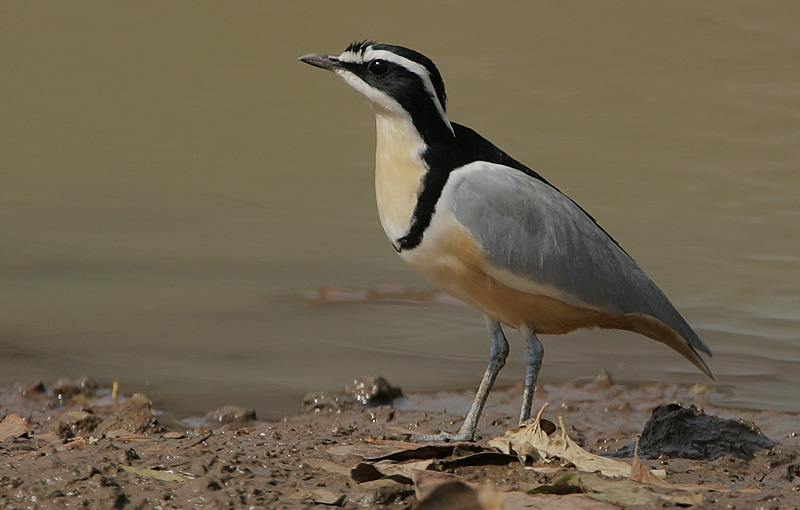
Egyptian Plover is a striking and unmistakable species. The 19-21 cm long adult has a black crown, back, eye-mask and breast band. The rest of the head is white. The remaining upperpart plumage is blue-grey, and the underparts are orange. The longish legs are blue-grey.
In flight, it is even more spectacular, with the black crown and back contrasting with the grey of the upperparts and wings. The flight feathers are brilliant white crossed by a black bar. From below, the flying bird is entirely white, apart from the orange belly and black wing bar. After landing, members of a pair greet each other by raising their wings in an elaborate ceremony that shows off the black and white markings. The sexes are similar, but juveniles are duller and the black marking are intermixed with brown.
Just for fun, watch these two videos about the “crocodile bird.”
The video below was to me as a link in an e-mail. It was posted by vurtrunner in Full HD High Speed. It is worth showing again here and especially since it is a Bird of the Bible. What an awesome shot. The way the feet open up at the last seconds amazed me. Another interesting thing is the way he is so steadfast and aims right for his target. Thanks, Pastor Pete, for sending the link.
Therefore, my beloved brethren, be ye stedfast, unmoveable, always abounding in the work of the Lord, forasmuch as ye know that your labour is not in vain in the Lord. (1 Corinthians 15:58 KJV)
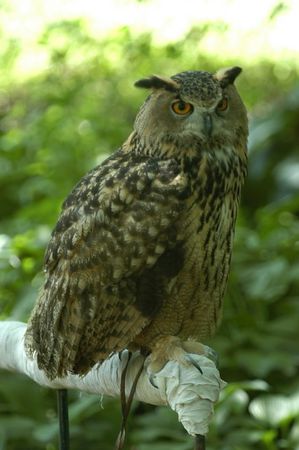
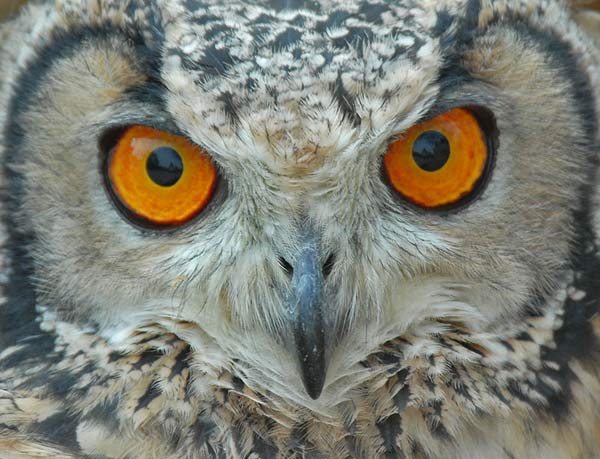
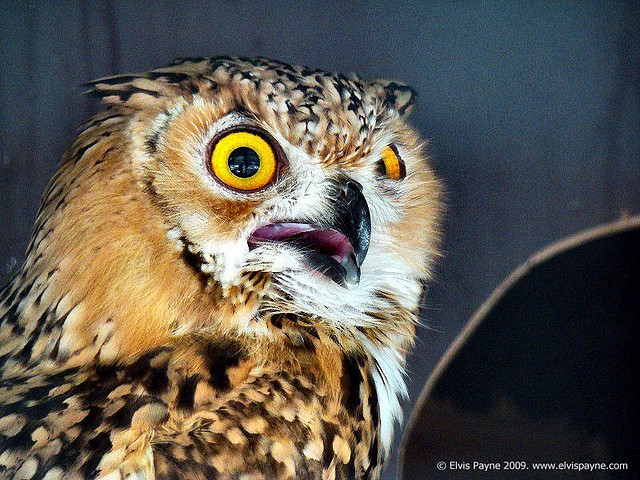
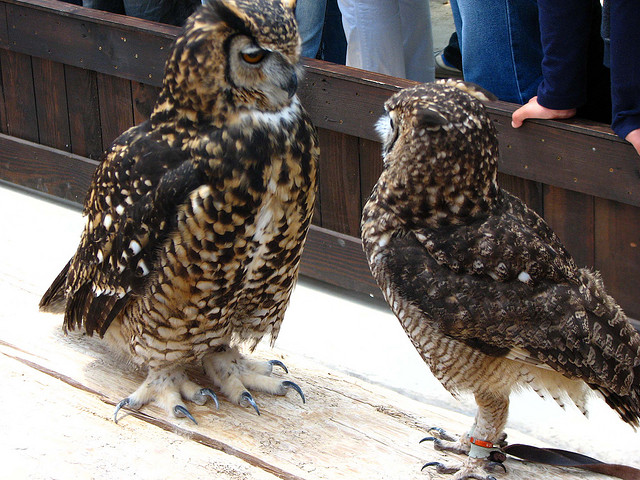
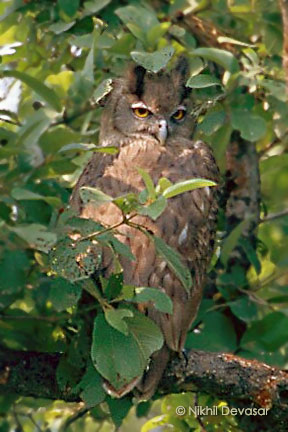
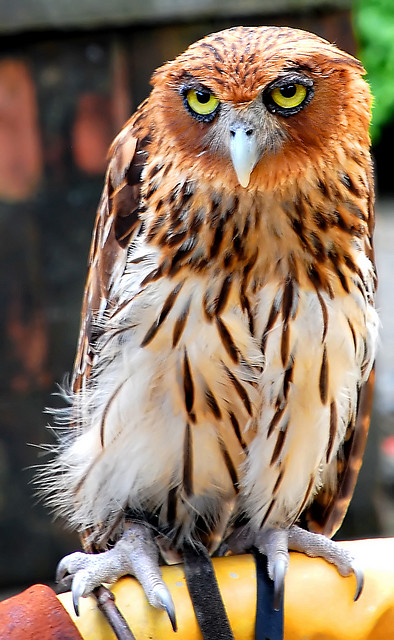
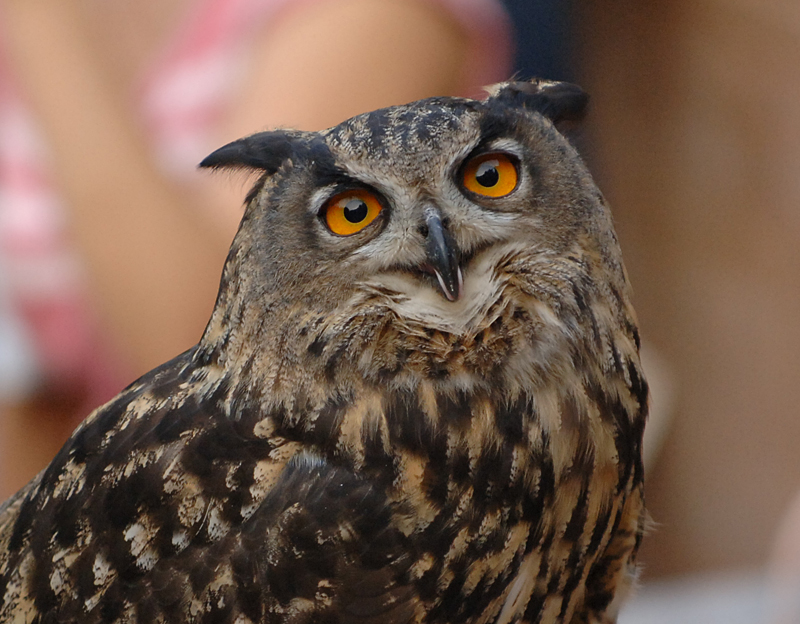
There are actually 15 Eagle-Owl in the world and the video did not say which one this one is. Looking at the photos I can find, most likely this is an Eurasian Eagle-Owl. The Eagle-Owls are the Eurasian Eagle-Owl, Indian, Pharaoh, Cape, Spotted, Greyish, Fraser’s, Usambara, Spot-bellied, Barred, Shelley’s, Verreaux’s, Dusky, Akun, and Philippine Eagle-Owl. They are in the Stringidae Family of the Strigiformes Order. Also, the Eagle-Owls are in the genus Bubo, which also included the horned owls (Snowy Owl, Great Horned Owl, Lesser Horned Owl) and one fish owl (Blakiston’s Fish Owl). “This genus, depending on definition, contains about one or two dozen species of typical owls (family Strigidae) and is found in many parts of the world. Some of the largest living Strigiformes are in Bubo. Traditionally, only owls with ear-tufts were included here, but that is no longer the case.” (Wikipedia)
The beast of the field shall honour me, the dragons and the owls: because I give waters in the wilderness, and rivers in the desert, to give drink to my people, my chosen. (Isaiah 43:20 KJV)
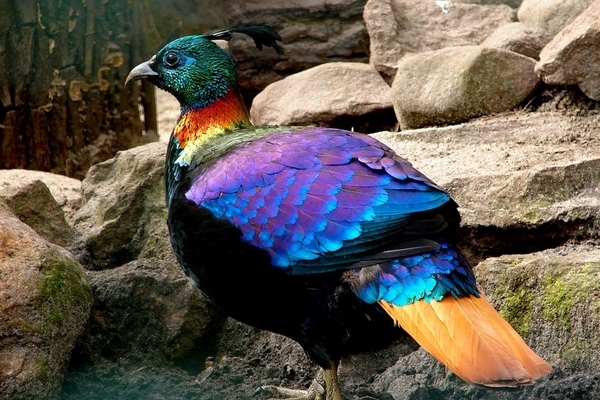
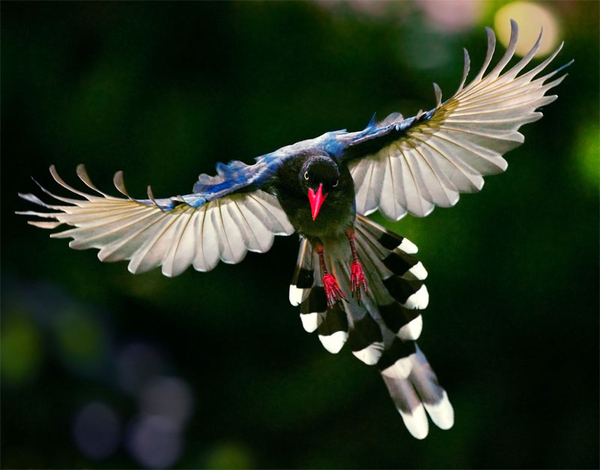
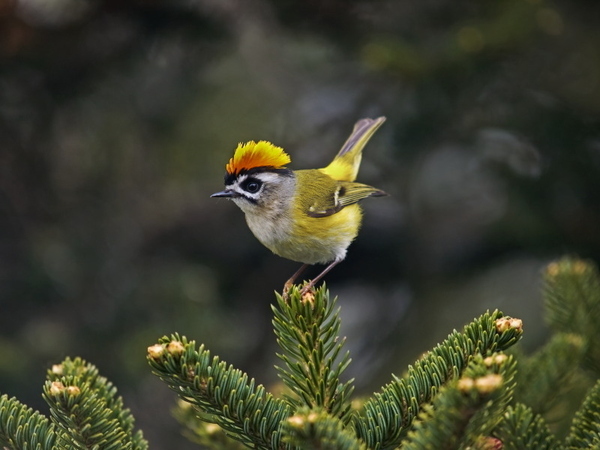
The following photos are from an e-mail I received. It has arrived many times from various friends. I don’t know who the photographers are and trust that they do not mind them being presented here.
What I do know is that these very unusual birds have a very Imaginative Creator. For His pleasure He created these kinds of birds and for our enjoyment also. The titles are from the e-mail and maybe #12 is some sort of Bird of Paradise or in that family (I think). Enjoy the photos and God’s Creative Hand at work.
Praise ye the LORD. I will praise the LORD with my whole heart, in the assembly of the upright, and in the congregation. The works of the LORD are great, sought out of all them that have pleasure therein. His work is honourable and glorious: and his righteousness endureth for ever. He hath made his wonderful works to be remembered: the LORD is gracious and full of compassion. (Psalms 111:1-4 KJV)
1. Himalayan Monal
************
2. Formosan Magpie
************
3. Flamecrest
************
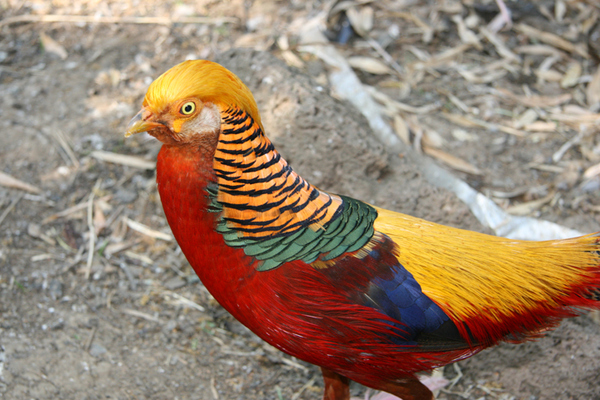
4. Golden Pheasant
************
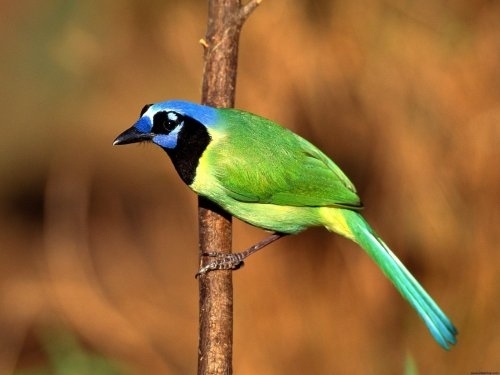
5. Green Jay
************
6. Kingfisher
************
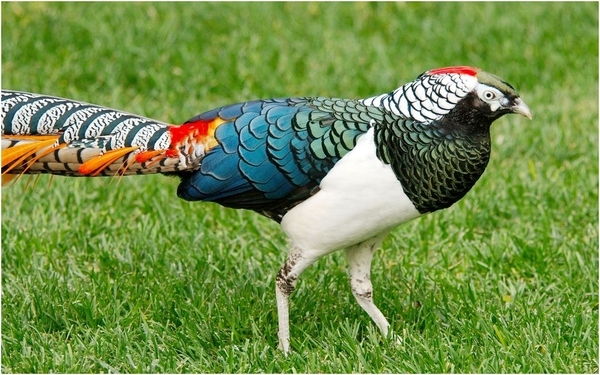
7. Lady Amherst's Pheasant
************
8. Bleeding Heart Pigeons
************
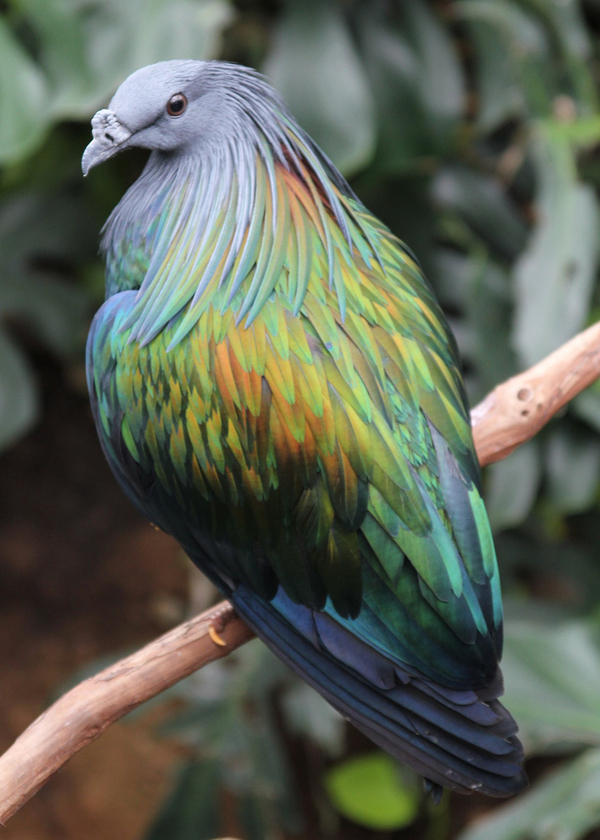
9. Nicobar Pigeon
************
10. Quetzal
************
11. Winson's Bird Of Paradise
************
12. No Idea What Bird This Is, But It's Totally Rad
************
13. Peacock
************
14. Sup, Polish Chicken
************
When I have time, I will update the names, if I can find them. My time is short and these names will have to suffice for now. If you know the exact names or who the photographers might be so they get proper credit, please leave a comment. Thanks, Lee
*
Created kinds are organisms representing or descended from those originally created by God about 6,000 years ago. Organisms within a created kind generally interbreed and produce only more organisms of their own kind “within the limits of preprogrammed information, but with great variation.”15 Organisms that can interbreed are of the same created kind, since God designed organisms to reproduce “after their kind.” Due to loss of information and other factors, however, some organisms lose the ability to interbreed. Created kinds correspond roughly to the family level of the current classification taxons but may vary from order to genus level.
Although evolutionists imbue taxonomic classification with evolutionary implications—believing that the taxonomic groupings roughly depict common ancestry— taxonomy is really nothing more than a useful bookkeeping system to sort and group organisms according to their shared characteristics.
I know there is research going on by the Creationist to try to find out what were the original “kinds”, but I am just going to show the different passages in Scripture that talk about “kinds” and specifically those that refer to the “birds or fowls”
The first mention of the “Kinds” is in Genesis, of course. We start of with Genesis 1:21:
And God created great whales, and every living creature that moveth, which the waters brought forth abundantly, after their kind, and every winged fowl after his kind: and God saw that it was good. (Genesis 1:21 KJV)
This took place on the fifth day of creation. Believer’s Bible Commentary says this:
“1:20-23 The fifth day saw the waters stocked with fish and the earth stocked with bird-life and insects. The word translated birds means “flying ones” and includes bats and probably flying insects.”
The kinds are again mentioned when Noah was told to keep alive the birds after their kind during the global flood, they board in Genesis 7:14, and then again these kinds are mentioned as they come off the Ark.
Of the birds after their kind, of animals after their kind, and of every creeping thing of the earth after its kind, two of every kind will come to you to keep them alive. And you shall take for yourself of all food that is eaten, and you shall gather it to yourself; and it shall be food for you and for them.” Thus Noah did; according to all that God commanded him, so he did. (Genesis 6:20-22 NKJV)
they and every beast after its kind, all cattle after their kind, every creeping thing that creeps on the earth after its kind, and every bird after its kind, every bird of every sort. And they went into the ark to Noah, two by two, of all flesh in which is the breath of life. (Genesis 7:14-15 NKJV)
So Noah went out, and his sons and his wife and his sons’ wives with him. Every animal, every creeping thing, every bird, and whatever creeps on the earth, according to their families, went out of the ark. (Genesis 8:18-19 NKJV)
Most of the versions use “kind or families” and “birds or fowls.” As we continue through Scripture we arrive at the “eat or do not eat” list of birds in Leviticus 11 and Deuteronomy 14. Let’s see what is here:
Leviticus 11:14 has the Kite and Falcon after its kind (ACV) and these are in two different Orders and two different Families today: Accipitriformes (order) – Accipitridae (family) and Falconiiformes (order) – Falconidae (family). Other versions have the Vulture which is in the Accipitriformes, but the Catharidae family. The Buzzard is mentioned in the GW version, but again, it is Accipitridae family. These are today’s divisions, but yet they are all placed next to each other and could have come from the same original kind. Leviticus 11:16 does the same with the terms for “kind”, but this time with the Hawk. It again is in the Accipitriformes (order) – Accipitridae (family).
The different versions use the terms; after its or his kind, likened to it, the like to it, of that sort, all types.
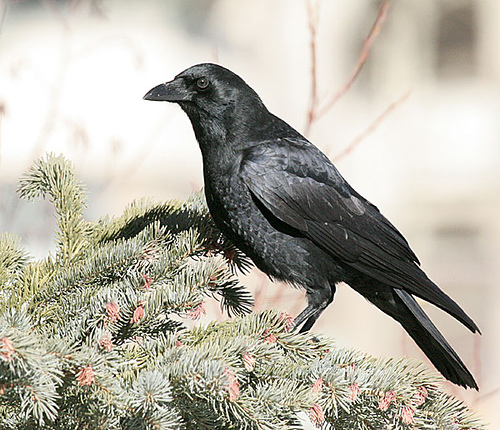
Chihuahuan Raven (Corvus cryptoleucus)Raven (Corvus corax) by Kent Nickell
Levitcus 11:15 mentions the Raven after its kind. These are the Corvidae Family of birds which are in the Passeriformes (Songbirds) Order. This family includes the Crows, Jays, Treepies, etc., and the Ravens way down at the bottom of the list. (Which has nothing to do with importance)
Leviticus 11:19 does the same, but has the “Heron after his, her or its kind” (depending on the version) Egrets, Herons, and Bitterns make up the Ardeidae Family of the Pelicaniformes Order.
The list in Deuteronomy 14:13-18, covers the same birds and basically says the same things.
There is one interesting reference in the DRB (1899 Douay-Rheims) in Leviticus 11:19 and Deut. 14:18. Look at the verse:
The heron, and the charadroin according to its kind, the houp also, and the bat. (Leviticus 11:19 DRB)
The bittern, and the charadrion, every one in their kind: the houp also and the bat. (Deuteronomy 14:18 DRB)
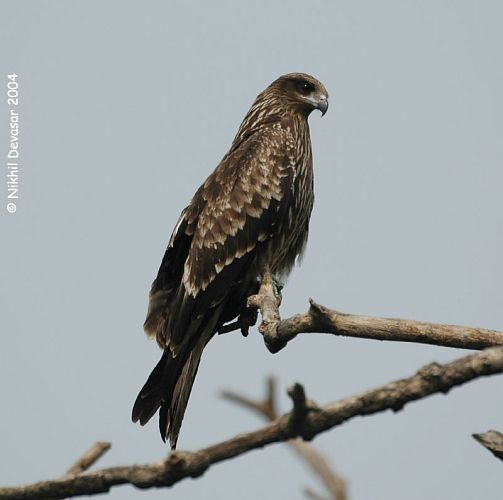
Northern Lapwing (Vanellus vanellus) by Nikhil Devasar
Some of the other versions mention the Lapwing and the Hoopoe, but not with “their kinds.” What caught my interest here is that there is an Order and a Family with a name similar to “charadrion.” The Charadriiformes Order has a Family called Charadriidae and guess what bird is in that family? The Lapwing! I loaded the Vulgate into my e-Sword, not because I know Latin, but all the birds are given a Common Name and a Scientific Name, which most times is Latin or similar. For instant the – Northern Lapwing (Vanellus vanellus) or a Black-headed Lapwing (Vanellus tectus). Here is Lev 11:19 and Deut 14:18:
erodionem et charadrion iuxta genus suum opupam quoque et vespertilionem
(Leviticus 11:19 Vulgate)
onocrotalum et charadrium singula in genere suo upupam quoque et vespertilionem (Deuteronomy 14:18 Vulgate)
I also see the word “genus” and “genere” which could refer to what we call today a genus or genera. (Told you I don’t know Latin.)
James is the only New Testament place where “every kind of” birds is again listed. In this reference all birds no matter what Family or Order are included. See Birds of the World.
For every kind of beasts, and of birds, and of serpents, and of things in the sea, is tamed, and hath been tamed of mankind: (James 3:7 KJV)
I know parts of this blog has been somewhat technical as far as the Taxonomy of birds, but the birds are mentioned in the Bible and I enjoy trying to find out about them. The Bible also says:
All scripture is given by inspiration of God, and is profitable for doctrine, for reproof, for correction, for instruction in righteousness: (2 Timothy 3:16 KJV)
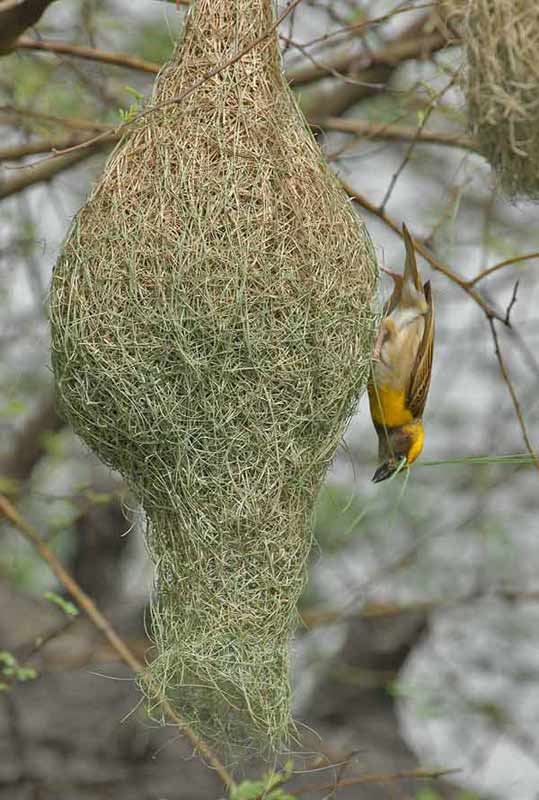
Baya Weaver (Ploceus philippinus) by Nikhil Devasar
Baya Weaver – The Model Church ~ by a j mithra
The Baya Weaver (Ploceus philippinus) is a weaverbird found across South and Southeast Asia. These are sparrow-sized (15 cm) and in their non-breeding plumage, both males and females resemble female house sparrows. They have a stout conical bill and a short square tail.
Non-breeding males and females look alike, dark brown streaked fulvous buff above, plain (unstreaked) whitish fulvous below, eyebrow long and buff coloured, bill is horn coloured and no mask. Breeding males have a bright yellow crown, dark brown mask, blackish brown bill, upper parts are dark brown streaked with yellow, with a yellow breast and cream buff below.
Baya Weaver (Ploceus philippinus) by MAMuin
Baya Weavers are social and gregarious birds. They forage in flocks for seeds, both on the plants and on the ground. Flocks fly in close formations, often performing complicated maneuvers. Their calls are a continuous chit-chit-… sometimes ending in a wheezy cheee-eee-ee that is produced by males in a chorus. A lower intensity call is produced in the non-breeding season.
Feeding together and flying together and singing together?
The church needs to take a leaf out from the lifestyle of these birds..
Is it not important, to be together as a one? We say that Christ is the head of the church. But how can Christ be the head of disintegrated choirs in disintegrated churches and indifferent individuals who make disoriented families?
These birds feed together…
How many Christian families spend time together in reading and meditating the Bible?
How many Christian families live together?
These birds even fly together performing complicated maneuvers…
How are our maneuvers as a team?
We are supposed to be the army of Jesus, but sadly each one facing different directions…
These birds sing together in chorus..
How do our family and church worship the Lord?
Do we sing in unity as one?
Its time for us to check ourselves and try learn to live like these birds…
Behold, how good and how pleasant it is for brethren to dwell together in unity!
It is like the precious ointment upon the head, that ran down upon the beard, even Aaron’s beard: that went down to the skirts of his garments; As the dew of Hermon, and as the dew that descended upon the mountains of Zion: for there the LORD commanded the blessing, even life for evermore. (Psalm 133:1-3 KJV)
Baya Weaver (Ploceus philippinus) by Nikhil Devasar
Flocks of these birds are found in grasslands, cultivated areas, scrub and secondary growth and they are best known for their hanging retort shaped nests woven from leaves. These nest colonies are usually found on thorny trees or palm fronds and the nests are often built near water or hanging over water where predators cannot reach easily.
They are widespread and common within their range but are prone to local, seasonal movements mainly in response to rain and food availability.
Christ is mindful of us even unto death..
He did think of you and me even as He wore the crown of thorns…
These birds remind me of Psalm 23:2
He maketh me to lie down in green pastures: he leadeth me beside the still waters.
These birds choose to live in the grasslands and build their nests with green leaves over fresh water bodies…
The Lord is our Shepherd and the Living Water..
No doubt about it…
But, the question is, do we let Him makes us lie down in green pastures and lead us beside still waters?
If the answer is yes, then how come our soul is weak, weary and thirsty?
Lets seek His presence, for He is the God of abundance…
Thou wilt shew me the path of life: in thy presence is fulness of joy; at thy right hand there are pleasures for evermore. (Psalm 16:11)
Baya Weaver (Ploceus philippinus) 3 Male building by Nikhil Devasar
The nest of the Baya Weaver bird is an engineering marvel…
These dull looking birds have a most interesting breeding season…
The breeding season of the Baya Weavers is during the monsoon..
The breeding condition is initiated by environmental characters such as day length and comes to an end after summer although this termination is not influenced by short day length as in temperate birds…
They nest in colonies typically of up to 20-30, close to the source of food, nesting material and water. Baya Weavers are best known for the elaborately woven nests constructed by the males. These pendulous nests are retort shaped, with a central nesting chamber and a long vertical tube that leads to a side entrance to the chamber. The nests are woven with long strips of paddy leaves, rough grasses and long strips torn from palm fronds. Each strip can be between 20–60cm in length. A male bird is known to make up to 500 trips to complete a nest.
Our Lord Jesus Christ made just one trip to the earth and is now building a mansion for us…
In my Father’s house are many mansions: if it were not so, I would have told you. I go to prepare a place for you. (John 14:2)
The birds use their strong beaks to strip and collect the strands, and to weave and knot them while building their nests. The nests are often built hanging over water from palm trees and often suspended from thorny Acacias and in some cases from telephone wires. Although thorny trees are preferred, they may sometimes use avenue trees in urban areas. Nests are often located on the eastern side of the tree where they are believed to provide shelter from the Southwest Monsoon, however late breeders are more likely to build their nests in other orientations relative to the trunk of the nest tree..
How do these birds know where and when to build their nests?
How do these birds know the direction where the nest has to be placed?
Is it cos they look up to God the directions in life?
A Meteorological expert knows about the weather…
A Botanist knows about the plants and trees…
A Hydrologist knows about water…
But how do these birds know about the season, the tree and the water?
Want to know everything under the sky? Just follow the following verses…
Evil men understand not judgment: but they that seek the LORD understand all things. (Proverbs 28:5)
The young lions do lack, and suffer hunger: but they that seek the LORD shall not want any good thing. (Psalm 34:10)
This male Baya Weaver is working on his nest. This is by Wondersf, which is one of the videographers who has given us permission to use his videos. Khong Tuck Khoon lives in Malaysia.
The males take about 18 days to construct the complete nest with the intermediate “helmet stage” taking about 8 days. The nests are partially built before the males begin to display to passing females by flapping their wings and calling while hanging from their nests.
When I read the above passage I was reminded of the famous picture of the cross where I read the following quote..
I asked Jesus how much He loved me
He answered “this much”
Then He stretched out His arms and died for me
The females inspect the nest and signal their acceptance of a male. Once a male and a female are paired, the male goes on to complete the nest by adding the entrance tunnel. Males are almost solely in charge of nest building, though their female partners may join in giving the finishing touches, particularly on the interiors. So much so, that even a snake would never be able to enter its nest. Females may modify the interiors or add blobs of mud.
Studies have shown that nest location is more important than nest structure for the female, when it selects the nest and mate…
When we build our lives above the Living Water, the serpent would never be able to enter our homes…
Instead we would walk over them..
Behold, I have given you authority to tread on serpents and scorpions, and over all the power of the enemy, and nothing will injure you. “Nevertheless do not rejoice in this, that the spirits are subject to you, but rejoice that your names are recorded in heaven. (Luke 10:19,20)
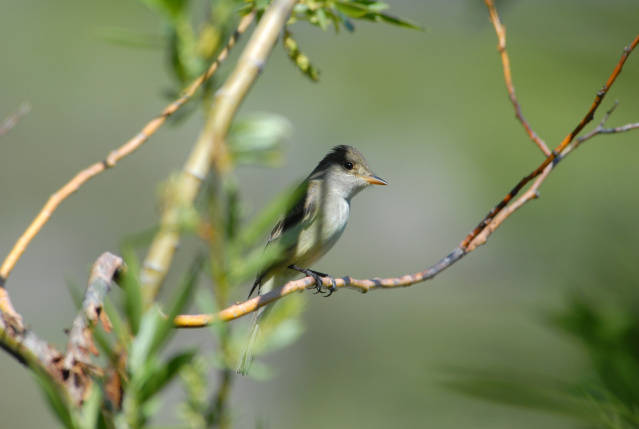
Willow Flycatcher songs are innate, not learned like those of most songbirds. Young Willow Flycatchers reared in captivity with Alder Flycatcher tutors sang typical Willow Flycatcher songs.
Daniel was put to test, But, he chose not to defile himself with the portion of king’s meat or the wine..
No matter where God places you, never try to be like others…
Though God has created each one of us In His image, there still isn’t anyone like you…
You are God’s unique creation…
Please read Daniel Chapter one…
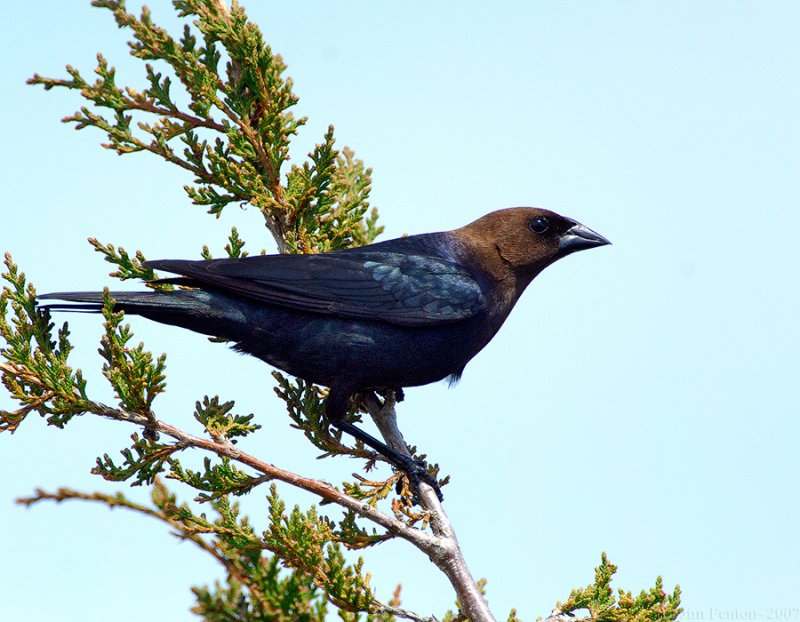
Brown-headed Cowbird (Molothrus ater) by J Fenton
If a Brown-headed Cowbird lays its eggs in the nest of a Willow Flycatcher, the flycatcher may bury the Cowbird eggs in the nest lining, or even build a completely new nest over the top of the first one…
How do you respond when satan tries to hatch his ideas in your life?
Do you receive them or reject them like these birds?
Remember, his place is not beside you, but, under the sole of your feet…
Don’t let satan sit in your life..
Just bury him under your feet…
“And the God of peace shall bruise Satan under your feet shortly. The grace of our Lord Jesus Christ be with you. Amen.”Romans 16:20
*
Below is an interesting video sent to me by e-mail.
*
*
For the wrath of God is revealed from heaven against all ungodliness and unrighteousness of men, who hold the truth in unrighteousness; Because that which may be known of God is manifest in them; for God hath shewed it unto them. For the invisible things of him from the creation of the world are clearly seen, being understood by the things that are made, even his eternal power and Godhead; so that they are without excuse: (Romans 1:18-20 KJV)
In whom we have redemption through his blood, even the forgiveness of sins: Who is the image of the invisible God, the firstborn of every creature: For by him were all things created, that are in heaven, and that are in earth, visible and invisible, whether they be thrones, or dominions, or principalities, or powers: all things were created by him, and for him: And he is before all things, and by him all things consist. (Colossians 1:14-17 KJV)
Here is a link to a very interesting blog from eNature about hurricanes and birds. With Hurricane Irene coming along the coast many will be wondering about the welfare of the birds.
While searching for other articles about birds in the storm or hurricane, I found this YouTube produced by Pastor Mark L Johnson of Liberty Hill Baptist Church. It has a great message.
Also, remember:
…Be merciful to me, O God, be merciful to me, for in you my soul takes refuge; in the shadow of your wings I will take refuge, till the storms of destruction pass by. (Psalms 57:1 ESV)
Consider the ravens: for they neither sow nor reap; which neither have storehouse nor barn; and God feedeth them: how much more are ye better than the fowls?
(Luke 12:24 KJV)
Why should I feel discouraged, why should the shadows come,
Why should my heart be lonely, and long for heaven and home,
When Jesus is my portion? My constant friend is He:
His eye is on the sparrow, and I know He watches me;
His eye is on the sparrow, and I know He watches me.



 How would you like to be a dental hygienist for a crocodile? That’s how the crocodile bird makes his living.