The dodo (Raphus cucullatus) was a flightless bird endemic to the Indian Ocean island of Mauritius. Related to pigeons and doves, it stood about a meter (3 feet) tall, weighing about 20 kilograms (44 lb), living on fruit, and nesting on the ground. The dodo has been extinct since the mid-to-late 17th century.[1] It is commonly used as … Continue reading
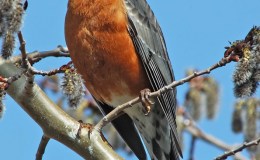
When The Robins Came – by Dorothy (Dot) Belle Malcolm
When The Robins Came – by Dorothy (Dot) Belle Malcolm They came one day – loudly – uninvited – wildly flying thru the branches of the neighbor’s camphor tree, and were scattered over the ground as if it were a race to see who could eat the most. But primarily they were in the tree. … Continue reading
Fusion Unplugged by Boat-tailed Grackles
Fusion Unplugged by Boat-tailed Grackles by a j mithra Well I see a j mithra has been busy again. He has produced another YouTube with the birds. This time he has used the Boat-tailed Grackles. Hope you enjoy watching it. *
Birds of the Bible – Hair Like Eagles’ Feathers
That very hour the word was fulfilled concerning Nebuchadnezzar; he was driven from men and ate grass like oxen; his body was wet with the dew of heaven till his hair had grown like eagles’ feathers and his nails like birds’ claws. (Daniel 4:33 NKJV) I have wanted to include this verse in a Birds … Continue reading
Ian’s Bird of the Week – Cattle Egret
Ian’s Bird of the Week – Cattle Egret by Ian Montgomery At a time when wildlife populations are generally under pressure, here is a success story about a species of bird, the Cattle Egret, that has undergone a spectacular world-wide expansion in range over the past century of or so. In the 19th century, the … Continue reading
I Don’t Show Off – The Great Horned Owl
I Don’t Show Off – The Great Horned Owl – by a j mithra Great Horned owls can fly silently because the ends of their flight feathers don’t have barbules, those tiny hooks that most all other bird feathers have. When birds fly, the rubbing barbules is what makes the noise… If GOD has not … Continue reading
Snowflake and the Eye
Snowflake and the Eye by Ian Juby Ian Juby has made another “Rant.” This one is about evolutionist’s claim about how the eye is poorly designed and that there is no intelligent designer that made it. He does these spoofs because of some of the unintelligent remarks made by evolutionists. He, like those of us … Continue reading
Reminiscing in South Florida
Reminiscing can be fun. We went to Miami this week to visit our friend after his surgery, but also took time to visit our old stomping grounds in the Fort Lauderdale area. We lived in Tamarac for 18 years, so had things to see and do. We always enjoyed going to the beach to feed … Continue reading
Birds of the Bible – Uniquely Created – Tools
Many birds have built in “tools” such as the way their beaks are designed or their feet, or wings, etc. Some use things as tools as shown below in the articles and the video. How Nature Works: White-winged Crossbill Feeding Technique from CornellLab of Ornithology. (Last statement gives credit to evolution, but we believe they … Continue reading
Ian’s Bird of the Week – Striped Honeyeater
Ian’s Bird of the Week – Striped Honeyeater – by Ian Montgomery I’ve been slow to produce this week’s bird as I’ve been burning the midnight oil rewriting the home page of the website – more about that later. Last week we had the Southern Bookbook from a rewarding evening of spotlighting at Trafalgar Station … Continue reading
Long-wattled Umbrellabird – The Dawn Dancer..
Long-wattled Umbrellabird – The Dawn Dancer.. – by a j mithra The Long-wattled Umbrellabird (Cephalopterus penduliger) is large bird that got its name because of its head feathers, which resemble an Elvis Presley hair-do that can be opened like an umbrella surrounding the bird’s head in all directions. The first half of the name comes … Continue reading
Birds in Hymns – Updated
While updating the Birds in Hymns page, I had to read through the hymns to find the references to the birds. What struck me, is the depth of the writings of these hymn writers. Many of these were written in the 1,700 and 1,800s. These are not the shallow words of today, but are filled … Continue reading

