Birds of the Bible – God’s Commands and Promises To Them – Part I

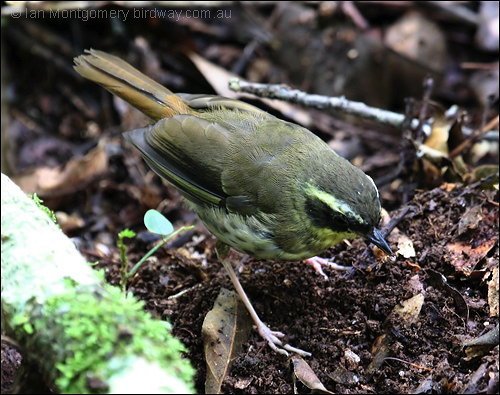
Yellow-throated Scrubwren (Sericornis citreogularis) by Ian

Yellow-throated Scrubwren (Sericornis citreogularis) by Ian

I have been searching through my e-Sword Bible program for God’s Commands and Promises that relate to birds. Here are some of my findings. I have used not only the Bible, but also like to use the Topical Bibles, like Naves and Torrey’s, which are in the Dictionary section. Recently more Bible versions, Dictionaries, Commentaries and other information was added to my program. The Bible Support, which I recently discovered, is loaded with additions to add to the e-Sword program. Just like the program, these are free also. (You can buy special versions and commentaries, etc.)

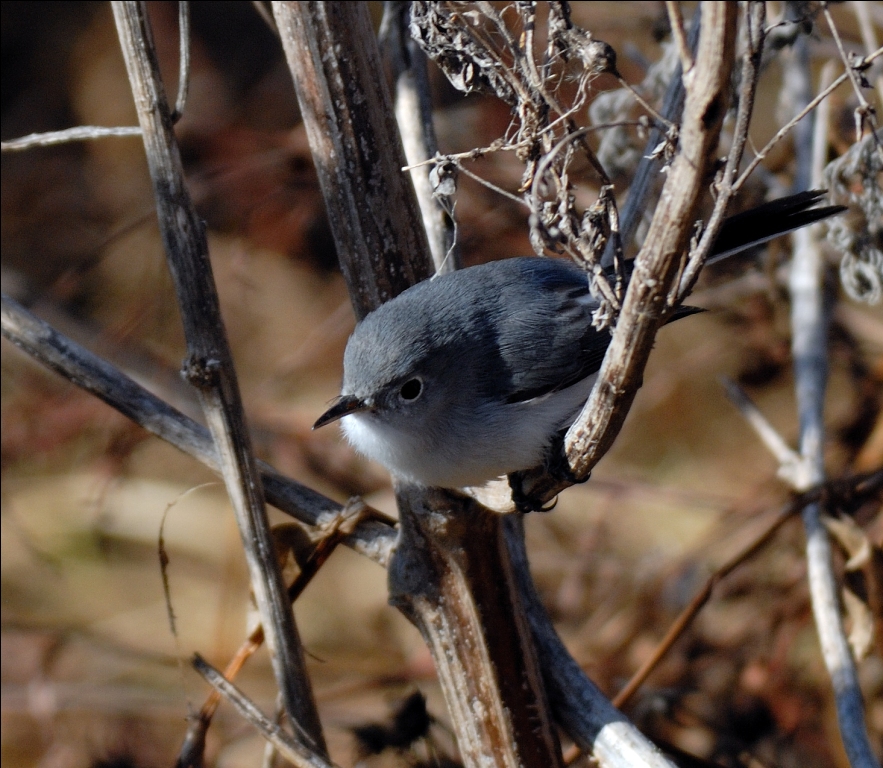
Blue-gray Gnacatcher by Dan at Circle B Bar Reserve

Blue-gray Gnacatcher by Dan at Circle B Bar Reserve

And God blessed them, saying, “Be fruitful and multiply, and fill the waters in the seas, and let birds multiply on the earth. (Genesis 1:22 NKJV)

Starting in Genesis, we see God, through the LORD, creating the birds and then giving them a command. Be fruitful and multiply. This was not a do it if you want command, it was a direct command from God. Have the birds done so? Look around you and answer that for yourself.

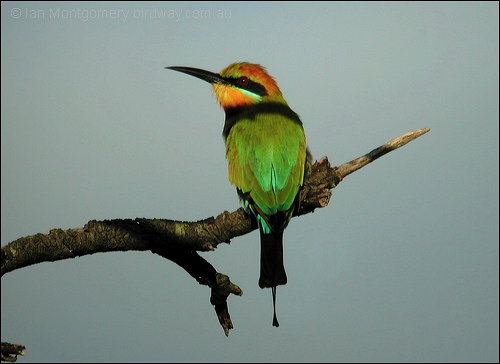
Rainbow Bee-eater (Merops ornatus) by Ian

God also told Adam and Eve the same thing; to multiply, but He also gave them dominion over the birds.

Then God blessed them, and God said to them, “Be fruitful and multiply; fill the earth and subdue it; have dominion over the fish of the sea, over the birds of the air, and over every living thing that moves on the earth. (Genesis 1:28 NKJV)

You have made him to have dominion over the works of Your hands; You have put all things under his feet, All sheep and oxen— Even the beasts of the field, The birds of the air, And the fish of the sea That pass through the paths of the seas.
(Psalms 8:6-8 NKJV)

When the Flood came, God told Noah that the birds and other critters would come to him that they may be kept alive. Dominion here means to be responsible for them. Adam was told to provide food for his family and the animals.

Of the birds after their kind, of animals after their kind, and of every creeping thing of the earth after its kind, two of every kind will come to you to keep them alive. (Genesis 6:20 NKJV)

also seven each of birds of the air, male and female, to keep the species alive on the face of all the earth. (Genesis 7:3 NKJV)

So He destroyed all living things which were on the face of the ground: both man and cattle, creeping thing and bird of the air. They were destroyed from the earth. Only Noah and those who were with him in the ark remained alive. (Genesis 7:23 NKJV)

Bring out with you every living thing of all flesh that is with you: birds and cattle and every creeping thing that creeps on the earth, so that they may abound on the earth, and be fruitful and multiply on the earth. (Genesis 8:17 NKJV)

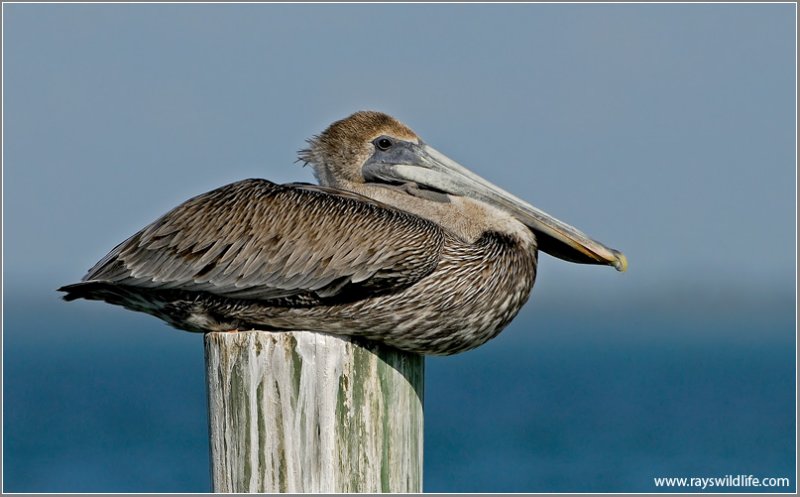
Brown Pelican (Pelecanus occidentalis) by Ray

Brown Pelican (Pelecanus occidentalis) by Ray

The above verses give not only God’s commands to the birds, but He also promised to keep them alive during the Flood. God did not fail to keep those promises. It is said of Abraham in Romans chapter 4:

No distrust made him waver concerning the promise of God, but he grew strong in his faith as he gave glory to God, fully convinced that God was able to do what he had promised. (Romans 4:20-21 ESV)

We will cover more of the commands and promises of God to the birds (and us) in future Parts. God loves the birds and especially us.

For God so loved the world, that he gave his only Son, that whoever believes in him should not perish but have eternal life. (John 3:16 ESV)

*

Nuggets Plus ~ Grasshopper – Self Shredder…

Grasshopper ©WikiC

Grasshopper ©WikiC

Grasshopper – Self shedder..

~ by ajmithra

Nuggets Plus

Nuggets Plus

In one leap it can jump
twenty times its length..
But,
to acheive this,
the Grasshopper
has to shed his skin
many times…
Wanna jump ahead of others?
Shed your “YOU”,
your identity
and
be like CHRIST…

If so be that ye have heard him, and have been taught by him, as the truth is in Jesus:
That ye put off concerning the former conversation the old man, which is corrupt according to the deceitful lusts;
And be renewed in the spirit of your mind;

For more Nuggets Plus, Click Here

*

Introducing – Nuggets Plus

Nuggets Plus

Nuggets Plus

We are introducing “Nuggets Plus” to our articles by ajmithra. We were chatting the other day, via Yahoo, and decided to use some of aj’s short little Nuggets of Truth that he has already written. He said that they were not all about birds and I reminded him that the Last Word of this blog’s name is “PLUS.” It was named that way so that other articles of interest could be added like creation or other animals, flowers, sunsets, etc.

A J Mithra, ajmithra as he prefers, lives in India and has been a regular contributor for several years. He has about 150 of these already written and will start posting them regularly. They are short, but have a “nugget of God’s Truth” tucked away in each of them. We may have our other writers add to them. Who knows the future, other than our Lord?

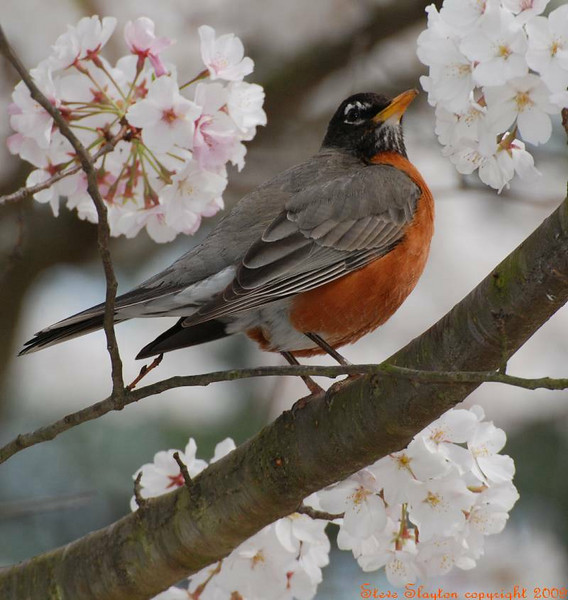
American Robin (Turdus migratorius) by S Slayton

American Robin (Turdus migratorius) by S Slayton

American Robin – Singing Slayer..

American Robin
is the first among birds
to sing at dawn
and
the last in the evening
and
they band together
to drive the predator away!
Wanna drive the devil?
Worship at dawn
and at dusk
and together in trouble…
Worship the LORD your God, and his blessing will be on your food and water. I will take away sickness from among you, (Exodus 23:25)

For more Nuggets Plus, Click Here

*

Birds of the Bible – Created Kinds

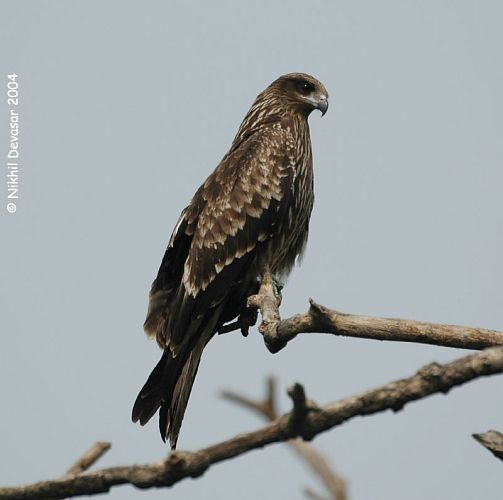
Black Kite (Milvus migrans) by Nikhil Devasar

Black Kite (Milvus migrans) by Nikhil Devasar

An interesting “News To Note” from Answers in Genesis reported on an article from BBC: “Species count put at 8.7 million” The following paragraphs are what prompted this blog.

Created kinds are organisms representing or descended from those originally created by God about 6,000 years ago. Organisms within a created kind generally interbreed and produce only more organisms of their own kind “within the limits of preprogrammed information, but with great variation.”15 Organisms that can interbreed are of the same created kind, since God designed organisms to reproduce “after their kind.” Due to loss of information and other factors, however, some organisms lose the ability to interbreed. Created kinds correspond roughly to the family level of the current classification taxons but may vary from order to genus level.
Although evolutionists imbue taxonomic classification with evolutionary implications—believing that the taxonomic groupings roughly depict common ancestry— taxonomy is really nothing more than a useful bookkeeping system to sort and group organisms according to their shared characteristics.

I know there is research going on by the Creationist to try to find out what were the original “kinds”, but I am just going to show the different passages in Scripture that talk about “kinds” and specifically those that refer to the “birds or fowls

The first mention of the “Kinds” is in Genesis, of course. We start of with Genesis 1:21:

And God created great whales, and every living creature that moveth, which the waters brought forth abundantly, after their kind, and every winged fowl after his kind: and God saw that it was good. (Genesis 1:21 KJV)

This  took place on the fifth day of creation. Believer’s Bible Commentary says this:
“1:20-23 The fifth day saw the waters stocked with fish and the earth stocked with bird-life and insects. The word translated birds means “flying ones” and includes bats and probably flying insects.”

The kinds are again mentioned when Noah was told to keep alive the birds after their kind during the global flood, they board in Genesis 7:14, and then again these kinds are mentioned as they come off the Ark.

Of the birds after their kind, of animals after their kind, and of every creeping thing of the earth after its kind, two of every kind will come to you to keep them alive. And you shall take for yourself of all food that is eaten, and you shall gather it to yourself; and it shall be food for you and for them.” Thus Noah did; according to all that God commanded him, so he did. (Genesis 6:20-22 NKJV)

they and every beast after its kind, all cattle after their kind, every creeping thing that creeps on the earth after its kind, and every bird after its kind, every bird of every sort. And they went into the ark to Noah, two by two, of all flesh in which is the breath of life. (Genesis 7:14-15 NKJV)

So Noah went out, and his sons and his wife and his sons’ wives with him. Every animal, every creeping thing, every bird, and whatever creeps on the earth, according to their families, went out of the ark. (Genesis 8:18-19 NKJV)

Most of the versions use “kind or families” and “birds or fowls.” As we continue through Scripture we arrive at the “eat or do not eat” list of birds in Leviticus 11 and Deuteronomy 14. Let’s see what is here:

Leviticus 11:14 has the Kite and Falcon after its kind (ACV) and these are in two different Orders and two different Families today:  Accipitriformes (order) – Accipitridae (family) and Falconiiformes (order) – Falconidae (family). Other versions have the Vulture which is in the Accipitriformes, but the Catharidae family. The Buzzard is mentioned in the GW version, but again, it is Accipitridae family. These are today’s divisions, but yet they are all placed next to each other and could have come from the same original kind. Leviticus 11:16 does the same with the terms for “kind”, but this time with the Hawk. It again is in the Accipitriformes (order) – Accipitridae (family).

The different versions use the terms; after its or his kind, likened to it, the like to it, of that sort, all types.

Chihuahuan Raven (Corvus cryptoleucus)Raven (Corvus corax) by Kent Nickell

Chihuahuan Raven (Corvus cryptoleucus)Raven (Corvus corax) by Kent Nickell

Levitcus 11:15 mentions the Raven after its kind. These are the Corvidae Family of birds which are in the Passeriformes (Songbirds) Order. This family includes the Crows, Jays, Treepies, etc., and the Ravens way down at the bottom of the list. (Which has nothing to do with importance)

Leviticus 11:19 does the same, but has the “Heron after his, her  or its kind” (depending on the version) Egrets, Herons, and Bitterns make up the Ardeidae Family of the Pelicaniformes Order.

The list in Deuteronomy 14:13-18, covers the same birds and basically says the same things.

There is one interesting reference in the DRB (1899 Douay-Rheims) in Leviticus 11:19 and Deut. 14:18. Look at the verse:

The heron, and the charadroin according to its kind, the houp also, and the bat. (Leviticus 11:19 DRB)
The bittern, and the charadrion, every one in their kind: the houp also and the bat. (Deuteronomy 14:18 DRB)

Northern Lapwing (Vanellus vanellus) by Nik

Northern Lapwing (Vanellus vanellus) by Nikhil Devasar

Some of the other versions mention the Lapwing and the Hoopoe, but not with “their kinds.” What caught my interest here is that there is an Order and a Family with a name similar to “charadrion.” The Charadriiformes Order has a Family called Charadriidae and guess what bird is in that family? The Lapwing! I loaded the Vulgate into my e-Sword, not because I know Latin, but all the birds are given a Common Name and a Scientific Name, which most times is Latin or similar. For instant the – Northern Lapwing (Vanellus vanellus) or a Black-headed Lapwing (Vanellus tectus). Here is Lev 11:19 and Deut 14:18:

erodionem et charadrion iuxta genus suum opupam quoque et vespertilionem
(Leviticus 11:19 Vulgate)
onocrotalum et charadrium singula in genere suo upupam quoque et vespertilionem (Deuteronomy 14:18 Vulgate)

I also see the word “genus” and “genere” which could refer to what we call today a genus or genera. (Told you I don’t know Latin.)

James is the only New Testament place where “every kind of” birds is again listed. In this reference all birds no matter what Family or Order are included. See Birds of the World.

For every kind of beasts, and of birds, and of serpents, and of things in the sea, is tamed, and hath been tamed of mankind: (James 3:7 KJV)

I know parts of this blog has been somewhat technical as far as the Taxonomy of birds, but the birds are mentioned in the Bible and I enjoy trying to find out about them. The Bible also says:

All scripture is given by inspiration of God, and is profitable for doctrine, for reproof, for correction, for instruction in righteousness: (2 Timothy 3:16 KJV)

Previous articles here include:
Birds of Bible – Foundation #2
Birds of Bible – Foundation #3
Birds of Bible – Foundation #5

*

Baya Weaver – The Model Church

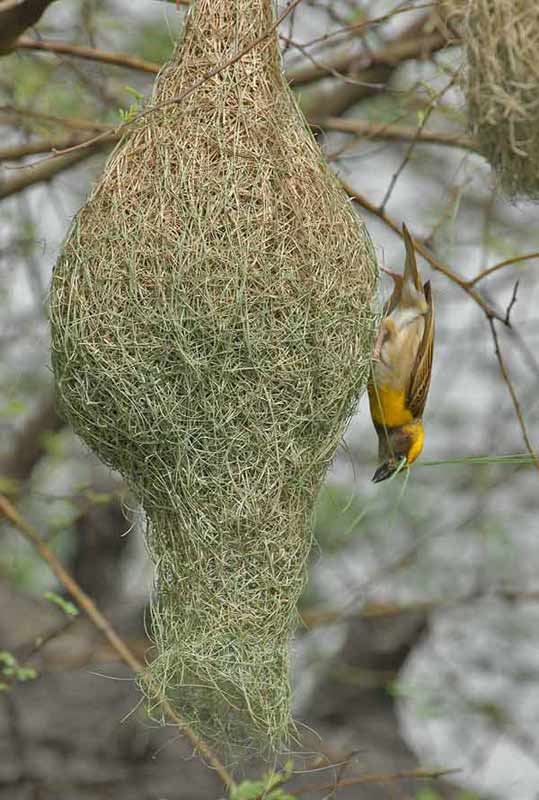
Baya Weaver (Ploceus philippinus) by Nikhil Devasar

Baya Weaver (Ploceus philippinus) by Nikhil Devasar

Baya Weaver – The Model Church ~ by a j mithra

The Baya Weaver (Ploceus philippinus) is a weaverbird found across South and Southeast Asia. These are sparrow-sized (15 cm) and in their non-breeding plumage, both males and females resemble female house sparrows. They have a stout conical bill and a short square tail.

Non-breeding males and females look alike, dark brown streaked fulvous buff above, plain (unstreaked) whitish fulvous below, eyebrow long and buff coloured, bill is horn coloured and no mask. Breeding males have a bright yellow crown, dark brown mask, blackish brown bill, upper parts are dark brown streaked with yellow, with a yellow breast and cream buff below.

Baya Weaver (Ploceus philippinus) by MAMuin

Baya Weaver (Ploceus philippinus) by MAMuin

Baya Weavers are social and gregarious birds. They forage in flocks for seeds, both on the plants and on the ground. Flocks fly in close formations, often performing complicated maneuvers. Their calls are a continuous chit-chit-… sometimes ending in a wheezy cheee-eee-ee that is produced by males in a chorus. A lower intensity call is produced in the non-breeding season.

Feeding together and flying together and singing together?
The church needs to take a leaf out from the lifestyle of these birds..
Is it not important, to be together as a one? We say that Christ is the head of the church. But how can Christ be the head of disintegrated choirs in disintegrated churches and indifferent individuals who make disoriented families?

These birds feed together…

  • How many Christian families spend time together in reading and meditating the Bible?
  • How many Christian families live together?

These birds even fly together performing complicated maneuvers…

  • How are our maneuvers as a team?
  • We are supposed to be the army of Jesus, but sadly each one facing different directions…

These birds sing together in chorus..

  • How do our family and church worship the Lord?
  • Do we sing in unity as one?

Its time for us to check ourselves and try learn to live like these birds…

Behold, how good and how pleasant it is for brethren to dwell together in unity!

It is like the precious ointment upon the head, that ran down upon the beard, even Aaron’s beard: that went down to the skirts of his garments; As the dew of Hermon, and as the dew that descended upon the mountains of Zion: for there the LORD commanded the blessing, even life for evermore. (Psalm 133:1-3 KJV)

Baya Weaver (Ploceus philippinus) by Nikhil Devasar

Baya Weaver (Ploceus philippinus) by Nikhil Devasar

Flocks of these birds are found in grasslands, cultivated areas, scrub and secondary growth and they are best known for their hanging retort shaped nests woven from leaves. These nest colonies are usually found on thorny trees or palm fronds and the nests are often built near water or hanging over water where predators cannot reach easily.

They are widespread and common within their range but are prone to local, seasonal movements mainly in response to rain and food availability.
Christ is mindful of us even unto death..
He did think of you and me even as He wore the crown of thorns…

These birds remind me of Psalm 23:2

He maketh me to lie down in green pastures: he leadeth me beside the still waters.

These birds choose to live in the grasslands and build their nests with green leaves over fresh water bodies…
The Lord is our Shepherd and the Living Water..
No doubt about it…
But, the question is, do we let Him makes us lie down in green pastures and lead us beside still waters?
If the answer is yes, then how come our soul is weak, weary and thirsty?
Lets seek His presence, for He is the God of abundance…

Thou wilt shew me the path of life: in thy presence is fulness of joy; at thy right hand there are pleasures for evermore. (Psalm 16:11)

Baya Weaver (Ploceus philippinus) 3 Male building by Nikhil Devasar

Baya Weaver (Ploceus philippinus) 3 Male building by Nikhil Devasar

The nest of the Baya Weaver bird is an engineering marvel…
These dull looking birds have a most interesting breeding season…
The breeding season of the Baya Weavers is during the monsoon..
The breeding condition is initiated by environmental characters such as day length and comes to an end after summer although this termination is not influenced by short day length as in temperate birds…

They nest in colonies typically of up to 20-30, close to the source of food, nesting material and water. Baya Weavers are best known for the elaborately woven nests constructed by the males. These pendulous nests are retort shaped, with a central nesting chamber and a long vertical tube that leads to a side entrance to the chamber. The nests are woven with long strips of paddy leaves, rough grasses and long strips torn from palm fronds. Each strip can be between 20–60cm in length. A male bird is known to make up to 500 trips to complete a nest.

Our Lord Jesus Christ made just one trip to the earth and is now building a mansion for us…

In my Father’s house are many mansions: if it were not so, I would have told you. I go to prepare a place for you. (John 14:2)

The birds use their strong beaks to strip and collect the strands, and to weave and knot them while building their nests. The nests are often built hanging over water from palm trees and often suspended from thorny Acacias and in some cases from telephone wires. Although thorny trees are preferred, they may sometimes use avenue trees in urban areas. Nests are often located on the eastern side of the tree where they are believed to provide shelter from the Southwest Monsoon, however late breeders are more likely to build their nests in other orientations relative to the trunk of the nest tree..

  • How do these birds know where and when to build their nests?
  • How do these birds know the direction where the nest has to be placed?

Is it cos they look up to God the directions in life?

  • A Meteorological expert knows about the weather…
  • A Botanist knows about the plants and trees…
  • A Hydrologist knows about water…

But how do these birds know about the season, the tree and the water?
Want to know everything under the sky? Just follow the following verses…

Evil men understand not judgment: but they that seek the LORD understand all things. (Proverbs 28:5)
The young lions do lack, and suffer hunger: but they that seek the LORD shall not want any good thing. (Psalm 34:10)

This male Baya Weaver is working on his nest. This is by Wondersf, which is one of the videographers who has given us permission to use his videos. Khong Tuck Khoon lives in Malaysia.

The males take about 18 days to construct the complete nest with the intermediate “helmet stage” taking about 8 days. The nests are partially built before the males begin to display to passing females by flapping their wings and calling while hanging from their nests.

When I read the above passage I was reminded of the famous picture of the cross where I read the following quote..

I asked Jesus how much He loved me
He answered “this much”
Then He stretched out His arms and died for me

The females inspect the nest and signal their acceptance of a male. Once a male and a female are paired, the male goes on to complete the nest by adding the entrance tunnel. Males are almost solely in charge of nest building, though their female partners may join in giving the finishing touches, particularly on the interiors. So much so, that even a snake would never be able to enter its nest. Females may modify the interiors or add blobs of mud.

Studies have shown that nest location is more important than nest structure for the female, when it selects the nest and mate…

When we build our lives above the Living Water, the serpent would never be able to enter our homes…

Instead we would walk over them..

Behold, I have given you authority to tread on serpents and scorpions, and over all the power of the enemy, and nothing will injure you. “Nevertheless do not rejoice in this, that the spirits are subject to you, but rejoice that your names are recorded in heaven. (Luke 10:19,20)

Have a blessed day!

Your’s in YESHUA,
a j mithra

Please visit us at:
Crosstree

ajmithra21


Lee’s Addition:

The Baya Weaver is in the Ploceidae – Weavers, Widowbirds Family of the Passeriformes (Songbirds) Order.

Here’s an amazing video to watch. It’s about 3 minutes long, but shows the weaving going on by the bird. By 

See also:
Birds the Engineers… by ajmithra
Master Builder’s Master Builders by ajmithra
*

Willow Flycatcher – The Solitary Singer

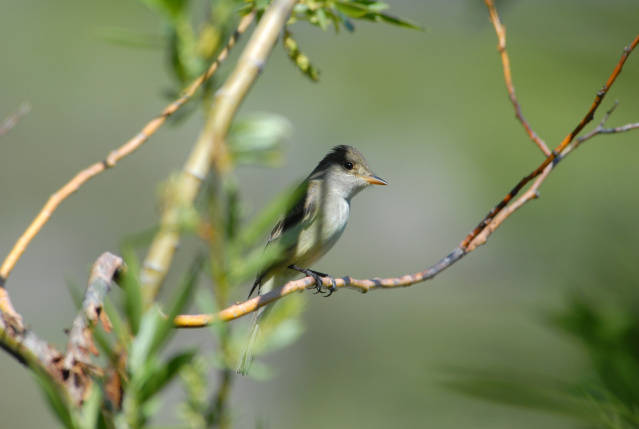
Willow Flycatcher (Empidonax traillii) ©USFWS

Willow Flycatcher (Empidonax traillii) ©USFWS

Willow Flycatcher songs are innate, not learned like those of most songbirds. Young Willow Flycatchers reared in captivity with Alder Flycatcher tutors sang typical Willow Flycatcher songs.

Daniel was put to test, But, he chose not to defile himself with the portion of king’s meat or the wine..

  • No matter where God places you, never try to be like others…
  • Though God has created each one of us In His image, there still isn’t anyone like you…
  • You are God’s unique creation…

Please read Daniel Chapter one…

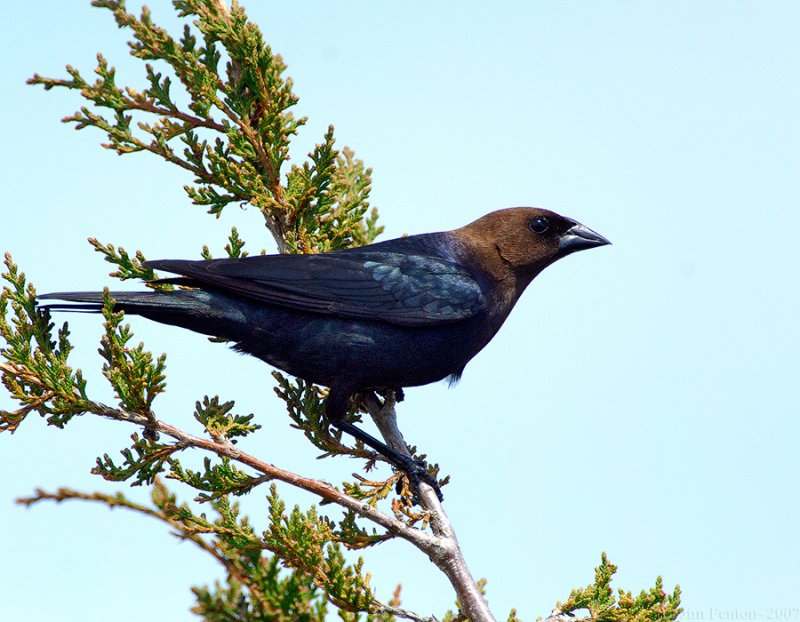
Brown-headed Cowbird (Molothrus ater) by J Fenton

Brown-headed Cowbird (Molothrus ater) by J Fenton

If a Brown-headed Cowbird lays its eggs in the nest of a Willow Flycatcher, the flycatcher may bury the Cowbird eggs in the nest lining, or even build a completely new nest over the top of the first one…

How do you respond when satan tries to hatch his ideas in your life?

  • Do you receive them or reject them like these birds?
  • Remember, his place is not beside you, but, under the sole of your feet…
  • Don’t let satan sit in your life..
  • Just bury him under your feet…
“And the God of peace shall bruise Satan under your feet shortly. The grace of our Lord Jesus Christ be with you. Amen.”Romans 16:20

Have a blessed day!

Your’s in YESHUA,
a j mithra

Creation Calls — Are You Listening?

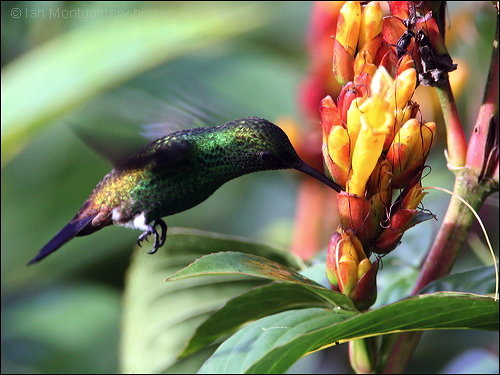
Scintillant Hummingbird (Selasphorus scintilla) by Ian

Scintillant Hummingbird (Selasphorus scintilla) by Ian

Creation Calls — are you listening? Music by Brian Doerksen

*
Below is an interesting video sent to me by e-mail.
*

*

For the wrath of God is revealed from heaven against all ungodliness and unrighteousness of men, who hold the truth in unrighteousness; Because that which may be known of God is manifest in them; for God hath shewed it unto them. For the invisible things of him from the creation of the world are clearly seen, being understood by the things that are made, even his eternal power and Godhead; so that they are without excuse: (Romans 1:18-20 KJV)

In whom we have redemption through his blood, even the forgiveness of sins: Who is the image of the invisible God, the firstborn of every creature: For by him were all things created, that are in heaven, and that are in earth, visible and invisible, whether they be thrones, or dominions, or principalities, or powers: all things were created by him, and for him: And he is before all things, and by him all things consist. (Colossians 1:14-17 KJV)

*

Wordless Birds

*

Birds of the Bible – Birds For Nehemiah

Chickens and Roosters by Maji

Chickens and Roosters by Maji

Now what was prepared at my expense for each day was one ox and six choice sheep and birds, and every ten days all kinds of wine in abundance. Yet for all this I did not demand the food allowance of the governor, because the service was too heavy on this people. (Nehemiah 5:18 ESV)

As I have continued reading through the Old Testament, I came across another mention of birds. This time in Nehemiah.

In Nehemiah 5:18, Nehemiah is providing for around 150 people daily. The cost is one ox, six choice sheep and fowls or birds and wine. He is personally providing for them from his own wealth. As Governor, he could have required these provision be provided for by the people, but Nehemiah knows that the people are over-burdened already.

This is the only mention of birds in the book and this time they are being eaten. That means several things.

1) These would have been “clean” birds and on the “do eat” list. This will be speculation on my part, but most likely they were birds like chickens, turkeys, ducks, quinea fowl, pheasants, quail or something along that line.

After hunting for traditions, searching for birds, and clearing the legal hurdles, the dinner eventually included: chicken, turkey, duck, goose, muscovy duck, mallard, pigeon, dove, pheasant, partridge, quail, guinea fowl, sparrow… (from an article about finding kosher birds in Israel today)

2) They were being prepared for at least 150 people daily – (5:17)

The different versions give these clues:
Various – “Fowls”, “fowls were prepared for me”, “birds”
Brenton – “a goat”
CEV – “lots of chickens were prepared.”
GNB – “many chickens”
ERV – “different kinds of birds”
ISV – “various kinds of poultry was prepared for me” or

Not sure where that “goat” came from. This seems like a simple verse telling about eating birds, that is true, but it is in the Bible, and this is the Birds of the Bible series. So when verses are found with them, they are written about.

All scripture is given by inspiration of God, and is profitable for doctrine, for reproof, for correction, for instruction in righteousness: That the man of God may be perfect, throughly furnished unto all good works. (2 Timothy 3:16-17 KJV)
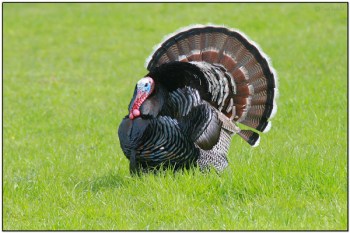
Wild Turkey (Meleagris gallopavo) by Daves BirdingPix

Wild Turkey (Meleagris gallopavo) by Daves BirdingPix

Nehemiah, an exile, was the Cupbearer for King Artaxerxes. He tells the king about the problems of the broken wall, and ruins in Jerusalem. After praying, he ask permission to go and rebuild the walls. The King gives permission and even provides some supplies. Nehemiah then goes to Jerusalem for around 12 years. God uses him to encourage the returned exiles and rebuild the city. The people are poor and Nehemiah not only meets his own needs, but also feeds others from his own wealth. This relieves the burden of feeding him as is the custom for those in power.

Here are some of the comments from some of the commentaries. Nehemiah had many good qualities and is a good example.

(Matthew Henry’s Commentary on the Whole Bible)2. More particularly, observe here, (1.) How little Nehemiah received of what he might have required. He did the work of the governor, but he did not eat the bread of the governor (Neh_5:14), did not require it, Neh_5:18. So far was he from extorting more than his due that he never demanded that, but lived upon what he had got in the king of Persia’s court and his own estate in Judea: the reason he gives for this piece of self-denial is, Because the bondage was heavy upon the people. He might have used the common excuse for rigour in such cases, that it would be a wrong to his successors not to demand his dues; but let them look to themselves: he considered the afflicted state of the Jews, and, while they groaned under so much hardship, he could not find it in his heart to add to their burden, but would rather lessen his own estate than ruin them. note, In our demands we must consider not only the justice of them, but the ability of those on whom we make them; where there is nothing to be had we know who loses his right. (2.) How much he gave which he might have withheld. [1.] His servants’ work, Neh_5:16. The servants of princes think themselves excused from labour; but Nehemiah’s servants, by his order no doubt, were all gathered to the work. Those that have many servants should contrive how they may do good with them and keep them well employed. [2.] His own meat, Neh_5:17, Neh_5:18. He kept a very good table, not on certain days, but constantly; he had many honourable guests, at least 150 of his own countrymen, persons of the first rank, besides strangers that came to him upon business; and he had plentiful provisions for his guests, beef, and mutton, and fowl, and all sorts of wine. Let those in public places remember that they were preferred to do good, not to enrich themselves; and let people in humbler stations learn to use hospitality one to another without grudging, 1Pe_4:9.
III. He concludes with a prayer (Neh_5:19): Think upon me, my God, for good. 1. Nehemiah here mentions what he had done for this people, not in pride, as boasting of himself, nor in passion, as upbraiding them, nor does it appear that he had occasion to do it in his own vindication, as Paul had to relate his like self-denying tenderness towards the Corinthians, but to shame the rulers out of their oppressions; let them learn of him to be neither greedy in their demands nor paltry in their expenses, and then they would have the credit and comfort of their liberality, as he had. 2. He mentions it to God in prayer, not as if he thought he had hereby merited any favour from God, as a debt, but to show that he looked not for any recompence of his generosity from men, but depended upon God only to make up to him what he had lost and laid out for his honour; and he reckoned the favour of God reward enough. “If God do but think upon me for good, I have enough.” His thoughts to us-ward are our happiness, Psa_40:5. He refers it to God to recompense him in such a manner as he pleased. “If men forget me, let my God think on me, and I desire no more.”

Chukar Partridge (Alectoris chukar) by Ian

Chukar Partridge (Alectoris chukar) by Ian

(Chuck Smith) “Now Nehemiah was a beautiful example unto the people in that he did not take a salary from the people. He did not take of their taxes, but he supported himself completely all the while that he was there. Not exacting taxes upon the people in order that he might live a luxurious kind of life. The governors that had been there before him all lived off of the people, but Nehemiah lived off of his own resources, showing really that his heart was in his office. It was not just a job; it was a real calling of his heart. And he even fed his guests, and he had 150 people eating at his table everyday. So it took one oxen, a half a dozen sheep and all to feed all of these people that came. But he took all of that out of his own pocket.”

(Believer’s Bible Commentary) “5:14-19 A short account of Nehemiah’s twelve-year tenure as governor closes chapter 5. He supported himself rather than charge the people with his maintenance. He did not take advantage of his position to acquire land or feather his nest for the future. His time was devoted to making Jerusalem safe for his brothers, not to building his own personal fortune. He supplied his own table and welcomed strangers to share his hospitality. He did all this because he feared God. If God kept track of his sacrifices, that was sufficient for Nehemiah.”

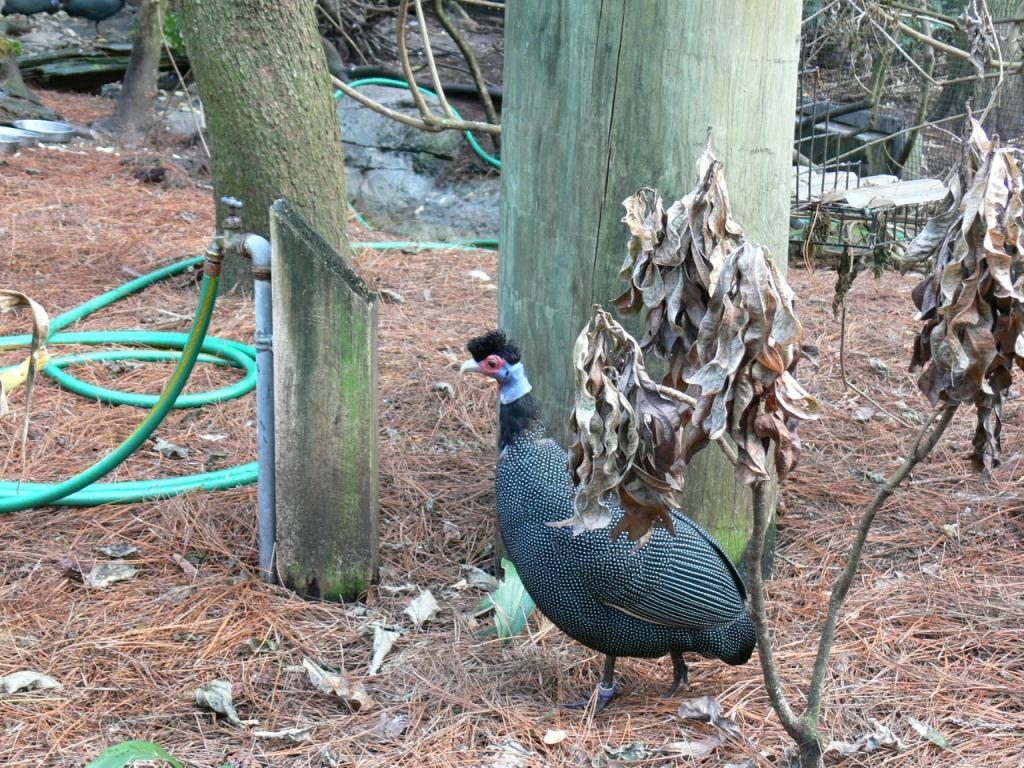
Crested Guineafowl (Guttera pucherani) by Lee at LPZoo

Crested Guineafowl (Guttera pucherani) by Lee at LPZoo from Kenya

(Treasury of Scriptural Knowledge)
“Nehemiah 5:18
one ox: This was food sufficient for more than two hundred men. Bp. Pococke says that the bey of Tunis had daily twelve sheep, with fish and fowls, soups, oranges, eggs, onions, boiled rice, etc., etc. His nobles dined with him; after they had done, the servants sat down; and when they had finished, the poor took what was left. Here the bey’s twelve sheep are equal to Nehemiah’s one ox and six choice sheep; and probably the mode of living between the two was nearly alike. It is still the practice in the East to calculate the expenses of the table, not by the money paid, but by the provisions consumed by the guests.
required: Neh_5:14-15
because the bondage: Psa_37:21, Psa_37:26″

(Wesley) “Nehemiah 5:18 Required not – But bore it out of my own estate: which was very considerable, his office in the Persian court being a place of great profit.”

(K & D) “Neh_5:18
“And that which was prepared for one (i.e., a single) day was one ox, six choice (therefore fat) sheep, and fowls; they were prepared for me, i.e., at my expense, and once in ten days a quantity of wine of all kinds.” The meaning of the last clause seems to be, that the wine was furnished every ten days; no certain quantity, however, is mentioned, but it is only designated in general terms as very great, לְהַרְבֵּה. זֶה וְעִם, and with this, i.e., notwithstanding this, great expenditure, I did not require the bread of the Pechah (the allowance for the governor, comp. Neh_5:14), for the service was heavy upon the people. הָעֲבֹדָה is the service of building the walls of Jerusalem. Thus Nehemiah, from compassion for his heavily burdened countrymen, resigned the allowance to which as governor he was entitled.”

(John Gill’s Exposition) “Nehemiah 5:18 Now that which was prepared for me daily was one ox and six choice sheep,…. Or fat ones; of beef and mutton a considerable quantity, abundantly sufficient for his guests and servants, and shows what a good table he kept:

also fowls were prepared for me; what number is not said:

..yet for all this required not I the bread of the governor; the salary that used to be given him, but did this at his own expense, out of his own estate in Judea; or what he had got by his office as cupbearer to the king of Persia, the salary of which perhaps was continued:

because the bondage was heavy upon the people; the tribute of the king of Persia, and their labour and expense in building the walls of the city.”
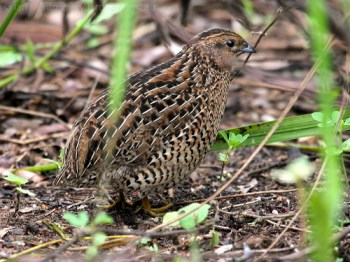
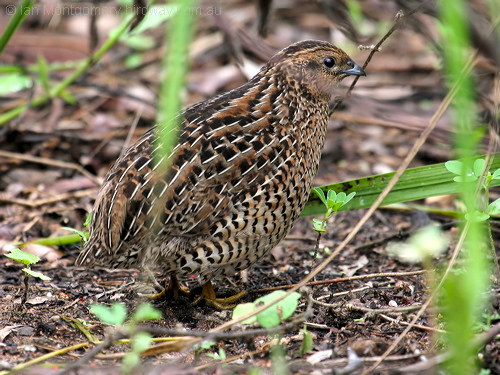
Brown Quail (Coturnix ypsilophora) by Ian

Brown Quail (Coturnix ypsilophora) by Ian

(Guzik Commentary) “2. (17-18) Nehemiah’s example of generosity.

And at my table were one hundred and fifty Jews and rulers, besides those who came to us from the nations around us. Now that which was prepared daily was one ox and six choice sheep. Also fowl were prepared for me, and once every ten days an abundance of all kinds of wine. Yet in spite of this I did not demand the governor’s provisions, because the bondage was heavy on this people.

a. And at my table were one hundred and fifty Jews and rulers: Nehemiah not only did not take when he could have; he also gave when he didn’t have to. He received a lot of food from the king’s provisions, which he could have sold for his own profit. Instead, he gave them away to be the example of generosity – feeding as many as 150 people regularly.

b. Yet in spite of this I did not demand the governor’s provisions: Nehemiah could have taken more (the governor’s provisions), but he didn’t. Therefore, Nehemiah was an example for what he did not take and for what he did not keep.

c. Because the bondage was heavy on this people: Nehemiah, in his own life, lived the way he told the nobles and rulers to live – to not take personal advantage of another’s need. He did what every godly leader must do: he never expected more of his followers than he expected of himself.”

Most of these birds come from the Galliformes Order
See also Birds of the Bible:
Chickens/Hens/Roosters
Doves and Pigeons
Partridge
Peacocks
Quails
Sparrows
*
Birds of Encouragement

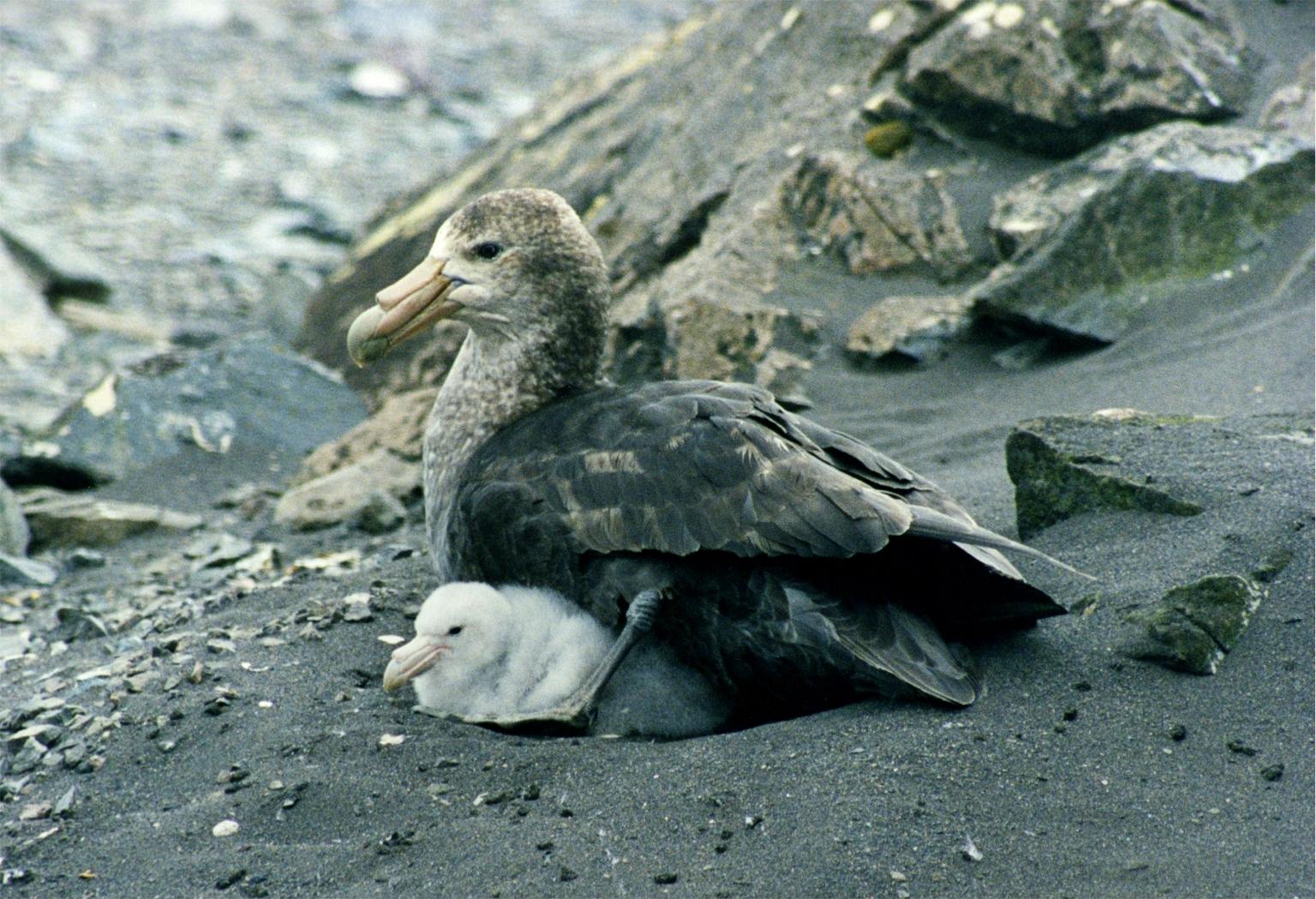
Giant Petrel with chicks

Giant Petrel with chicks WikiC

With all the turmoil going on, it’s time to bring out the Birds of Encouragement again. As you look around right now, it seems that many things of discouragement abound. Our American stock prices are falling speedily as are other countries stocks. People are starving and the bad guys won’t even let the food get to the ones who need it. London is burning up because of violence, etc., etc., etc. The worst thing I read this week was this article http://sanfrancisco.ibtimes.com/articles/193371/20110805/china-dead-baby-pill-stamina-booster-cannibal-placenta.htm . How far will human depravity go? How long will people try to do what is “right in their own eyes?”

Where do you look for encouragement? If you put your trust in money, it has a way of disappearing. If you think your home or business is secure, it could go up in smoke. If you think you have plenty to eat, famines and starvation could come. What do you do when all around you is falling apart?

Consider the ravens, for they neither sow nor reap, which have neither storehouse nor barn; and God feeds them. Of how much more value are you than the birds? (Luke 12:24 NKJV)

Comparing all the versions, they either say “consider”, “contemplate”, “Look at”, or “Give thought to.” They don’t have stocks, or houses, or businesses, or storehouses, YET, they are fed. By who? God.

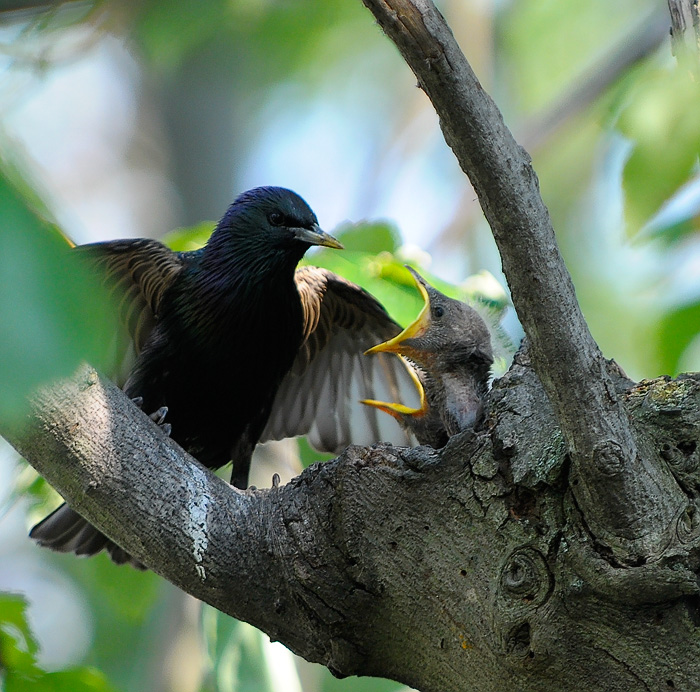
Common Starling (Sturnus vulgaris) at Nest by Anthony747

Common Starling (Sturnus vulgaris) at Nest by Anthony747

The Bible says we are of more value than the birds. If God takes care of them, will He not much more take care of us? But maybe you don’t believe that there is a God. You may just think you got here by chance. That you just got here through millions of years of chance. If so, then this promise will not mean much to you. You will just be “toughing it out” on your own.

For those of us who believe in God as the Creator, and that He has sent His Son to be our Savior, we know that all of these things that are happening are in His control. We also know that He cares about every aspect of our lives, whether we have food, and clothes. We also know that:

Life is more than food, and the body is more than clothing. (Luke 12:23 NKJV)

That passage, Luke 12:23-31, also tells us to:

Consider the lilies, how they grow: they neither toil nor spin; and yet I say to you, even Solomon in all his glory was not arrayed like one of these. If then God so clothes the grass, which today is in the field and tomorrow is thrown into the oven, how much more will He clothe you, O you of little faith? “And do not seek what you should eat or what you should drink, nor have an anxious mind. For all these things the nations of the world seek after, and your Father knows that you need these things. But seek the kingdom of God, and all these things shall be added to you. (Luke 12:27-31 NKJV)

We do not worship birds or lilies, but we are to look at how they are provided for and that God is willing and able to provide for us also. BUT, we are to seek God, not ignore Him or deny that He exists.

A friend sent me this photo from an email and I apologize for not giving proper credit, but it fits perfectly here.

Under His Wings - (Dove - photographer unknown)

Under His Wings - (Dove - photographer unknown)

Keep me as the apple of Your eye; Hide me under the shadow of Your wings, (Psalms 17:8 NKJV)
How precious is Your lovingkindness, O God! Therefore the children of men put their trust under the shadow of Your wings. (Psalms 36:7 NKJV)
He shall cover you with His feathers, And under His wings you shall take refuge; His truth shall be your shield and buckler. (Psalms 91:4 NKJV)
Assuredly, I say to you, all these things will come upon this generation. “O Jerusalem, Jerusalem, the one who kills the prophets and stones those who are sent to her! How often I wanted to gather your children together, as a hen gathers her chicks under her wings, but you were not willing! See! Your house is left to you desolate; (Matthew 23:36-38 NKJV)

Our pastor recently preached a sermon called “Kicking The Props Out From Under You“. This is a link to the audio of that message.

Our Savior, Jesus Christ, loves you and wants to become your own personal Savior also.

For God so loved the world, that he gave his only begotten Son, that whosoever believeth in him should not perish, but have everlasting life. (John 3:16 KJV)

*

Created to Fly

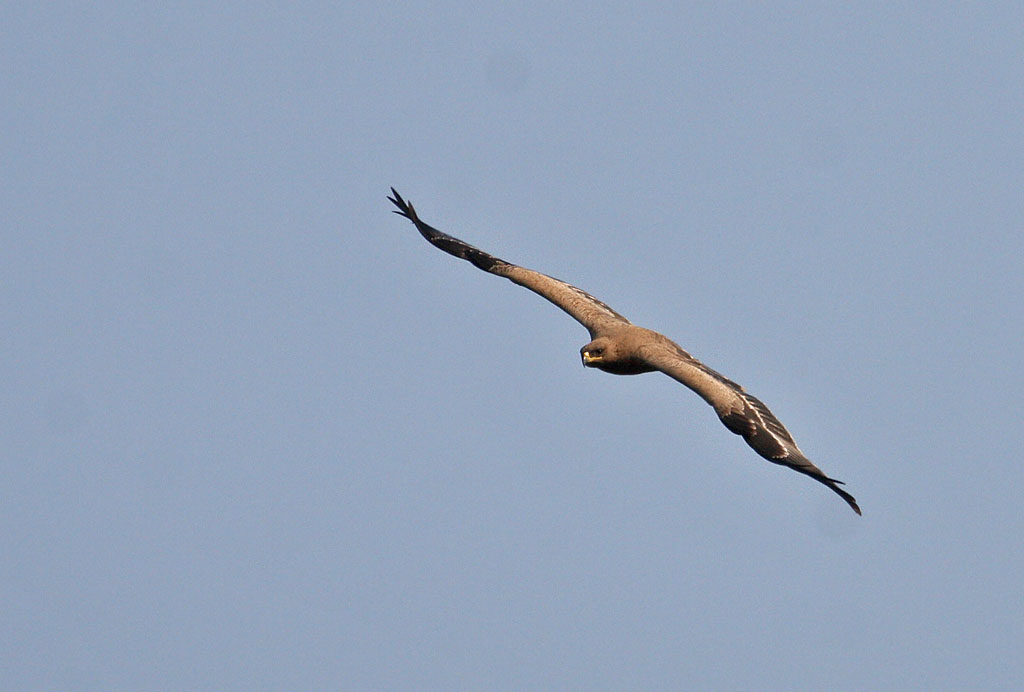
Steppe Eagle (Aquila nipalensis) by Peter Ericsson

Steppe Eagle (Aquila nipalensis) by Peter Ericsson

But ask now the beasts, and they shall teach thee; and the fowls of the air, and they shall tell thee:…Who knoweth not in all these that the hand of the Lord hath wrought this? (Job 12:7, 9)

Here are some excerpts from the Fit for Flight article by Brian Thomas, at the Institute for Creation Research. It is in the August Acts and Facts. To see the whole article, Click Here.

“Birds, for example, were clearly designed for flight and were not formed by any purposeless natural process. The ancient book of Job stated as much: Job 12:7, 9 – above)

  • Some of the required parts for flying birds are visible from the outside, such as wings and an aerodynamic body shape. Other characteristics are less obvious, but equally important.
  • Anything that flies must have a specific power-to-weight ratio.
  • A bird’s center of mass is toward the front, in between its wings.
  • A small but crucial feature on many birds is the alula feather.
  • There are many more specific, required features, like retractable landing gear and horizontal stabilizers, not to mention damage repair mechanisms.”
“And this does not even take into account the beauty of bird flight, bird songs, or their various colorful feathers, which constitute art that demands an Artist who can blend high flights of imagination with the most intricate engineering quality.Surely the great Creator deserves credit for His fantastic handiwork!”

Please check out the article, “Fit for Flight” and also check out the other Acts and Facts articles.

*

Birds of the Bible – Ibises

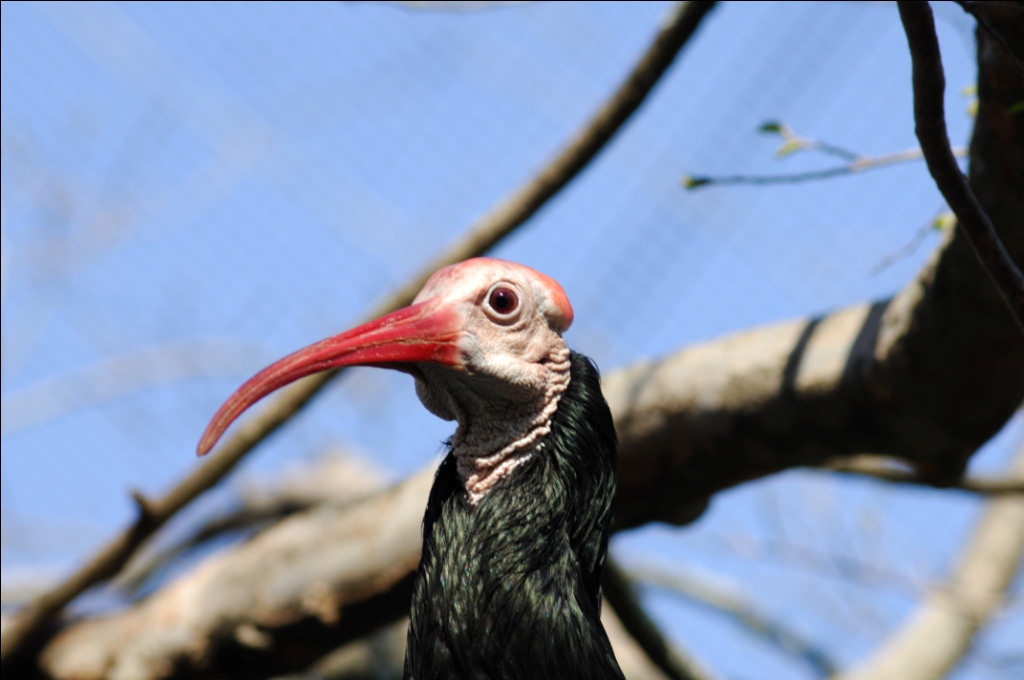
Southern Bald Ibis (Geronticus calvus) by Dan at LPZoo

Southern Bald Ibis (Geronticus calvus) by Dan at LPZoo

and for a long time birds and hedgehogs, and ibises and ravens shall dwell in it: and the measuring line of desolation shall be cast over it, and satyrs shall dwell in it. (Isaiah 34:11 Brenton)

While working on Birds of the Bible – Isaiah 34:11, I was pointing out how the different versions of the Bible translated that verse. One of the birds that appeared in those verses was the Ibis. After searching through e-Sword, “Ibis/Ibises” showed up in four different Scriptures. The Ibis is being added as a Bird of the Bible and will have it’s own page, Ibises.

Of course the Isaiah 34:11 verse, quoted above, has “ibises” in the Brenton and the ABP+ (Apostolic Bible Polyglot w/Strongs Numbers).
(ABP+) Birds, and hedgehogs, and ibises, and crows shall dwell in her; and [shall be put upon her cord a surveying of desolation]; and satyrs shall live in her.
(Brenton) and for a long time birds and hedgehogs, and ibises and ravens shall dwell in it: and the measuring line of desolation shall be cast over it, and satyrs shall dwell in it.

Leviticus 11 and Deuteronomy 14 both have the list of clean and unclean birds that the Israelites were to observe.

Leviticus 11:17
(ABP+) And long-eared owl, and cormorant, and ibis,
(Darby) and the owl, and the gannet, and the ibis,
(DRB) The screech owl, and the cormorant, and the ibis.
(ISV) owl, cormorant, ibis,

Deuteronomy 14:16
(ABP+) and heron, and swan, and ibis,
(Darby) the owl, and the ibis and the swan,

There is one other reference to an “ibis” and that is in the GNB (Good News Bible) which I totally disagree with its translation.
(GNB) Who tells the ibis when the Nile will flood, or who tells the rooster that rain will fall?

Here is what the verse says in several other translations:
(KJV) Who hath put wisdom in the inward parts? or who hath given understanding to the heart?
(NASB) “Who has put wisdom in the innermost being Or given understanding to the mind?
(ESV) Who has put wisdom in the inward parts or given understanding to the mind?

The way it reads, there is no mention of a any kind of a bird or an ibis.

Wikipedia has this to say about the Ibis (edited) “The ibises (collective plural ibis; classical plurals ibides and ibes) are a group of long-legged wading birds in the family Threskiornithidae of the Pelicaniformes Order.
They all have long down curved bills, and usually feed as a group, probing mud for food items, usually crustaceans. In Florida, they probe around in yards looking for insects or whatever. Most species nest in trees, often with spoonbills or herons.
The word ibis comes from Greek and Latin, and probably from the Ancient Egyptian. According to Josephus, Moses employed ibes against serpents during a desert campaign into Ethiopia in his early life. Pliny the Elder also recounted, “The Egyptians invoked [ibes] against the serpents.”

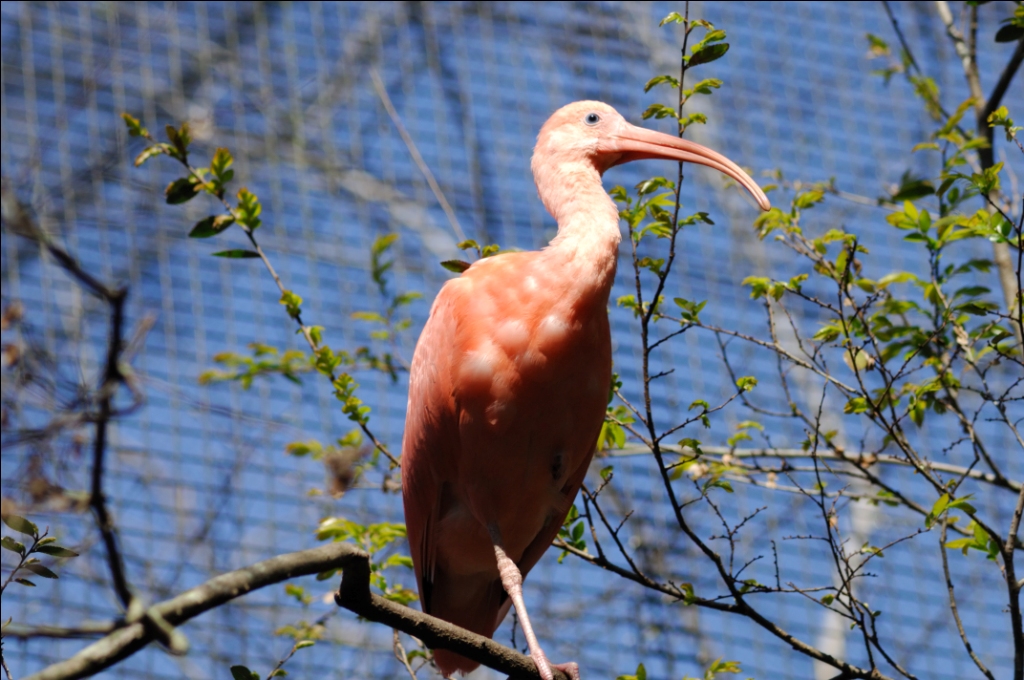
Scarlet Ibis (Eudocimus ruber) by Dan at LPZoo

Scarlet Ibis (Eudocimus ruber) by Dan at LPZoo

In culture

The Sacred Ibis was an object of religious veneration in ancient Egypt, particularly associated with the god, Thoth. At the town of Hermopolis, ibises were reared specifically for sacrificial purposes and in the Serapeum at Saqqara, archaeologists found the mummies of one and a half million ibises and hundreds of thousands of falcons.
According to local legend in the Birecik area, the Northern Bald Ibis was one of the first birds that Noah released from the Ark as a symbol of fertility, and a lingering religious sentiment in Turkey helped the colonies there to survive long after the demise of the species in Europe. (Not found in Scripture)
The mascot of the University of Miami is an American White Ibis. The ibis was selected as the school mascot because of its legendary bravery during hurricanes. The ibis is the last sign of wildlife to take shelter before a hurricane hits and the first to reappear once the storm has passed.  By the same token, the short story The Scarlet Ibis used the hearty bird’s appearance and untimely demise inland to foreshadow one of the central character’s death.
The Sacred Ibis is the unit symbol of the Israeli Special Forces unit known as Unit 212 or Maglan in Hebrew: מגלן.”

Bare-faced Ibis (Phimosus infuscatus) by Robert Scanlon

Bare-faced Ibis (Phimosus infuscatus) by Robert Scanlon

Here is a list of the Ibises, by their genera

Threskiornis
African Sacred Ibis (Threskiornis aethiopicus) by Lee at Lowry Park Zoo
Malagasy Sacred Ibis (Threskiornis bernieri)
Black-headed Ibis (Threskiornis melanocephalus) – by Nikhil Devasar
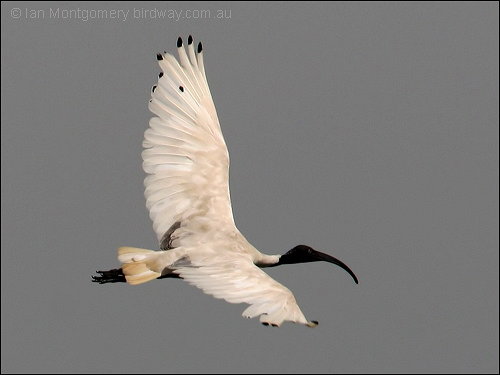
Australian White Ibis (Threskiornis molucca) by Ian
Straw-necked Ibis (Threskiornis spinicollis)
Pseudibis
Red-naped Ibis (Pseudibis papillosa)
White-shouldered Ibis (Pseudibis davisoni) ARK
Giant Ibis (Pseudibis gigantea) ARK
Geronticus
Northern Bald Ibis (Geronticus eremita)
Southern Bald Ibis (Geronticus calvus) by Dan at L P Zoo
Nipponia
Crested Ibis (Nipponia nippon)
Bostrychia
Olive Ibis (Bostrychia olivacea) IBC
Sao Tome Ibis (Bostrychia bocagei)
Spot-breasted Ibis (Bostrychia rara)
Hadada Ibis (Bostrychia hagedash)
Wattled Ibis (Bostrychia carunculata)
Theristicus
Plumbeous Ibis (Theristicus caerulescens)
Buff-necked Ibis (Theristicus caudatus) by Dario Sanches
Black-faced Ibis (Theristicus melanopis) b
Cercibis
Sharp-tailed Ibis (Cercibis oxycerca) IBC
Mesembrinibis
Green Ibis (Mesembrinibis cayennensis)
Phimosus
Bare-faced Ibis (Phimosus infuscatus) by Robert Scanlon
Eudocimus
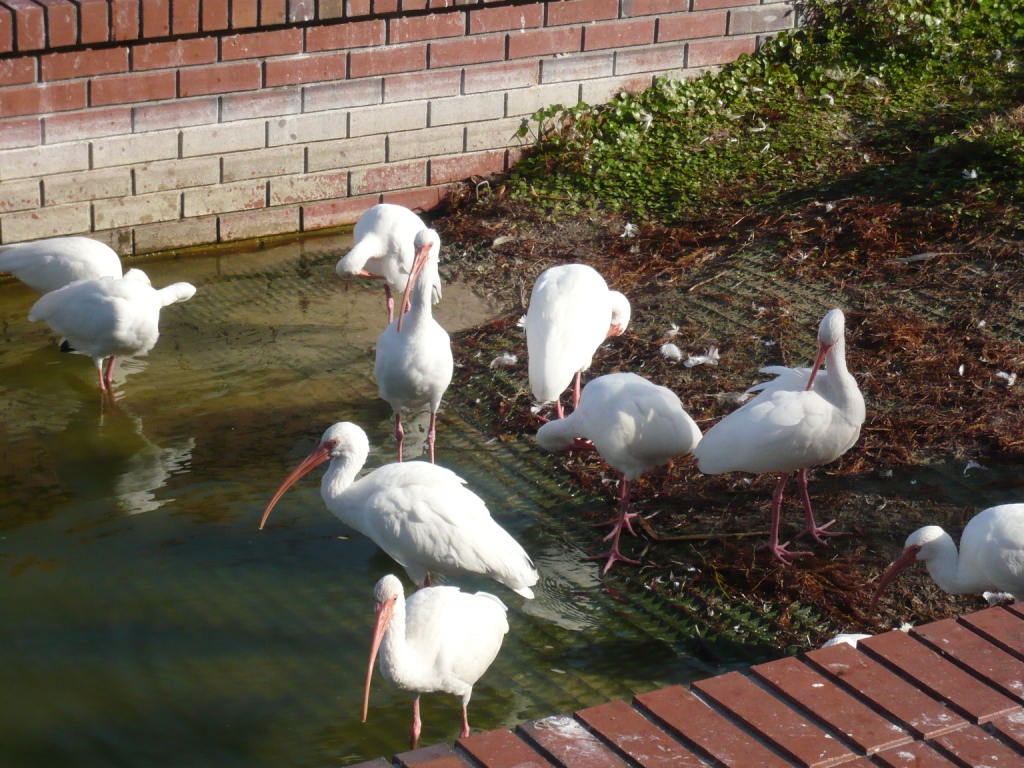
American White Ibis (Eudocimus albus) by Dan at Lake Morton
Scarlet Ibis (Eudocimus ruber) by Dan at L P Zoo
Plegadis
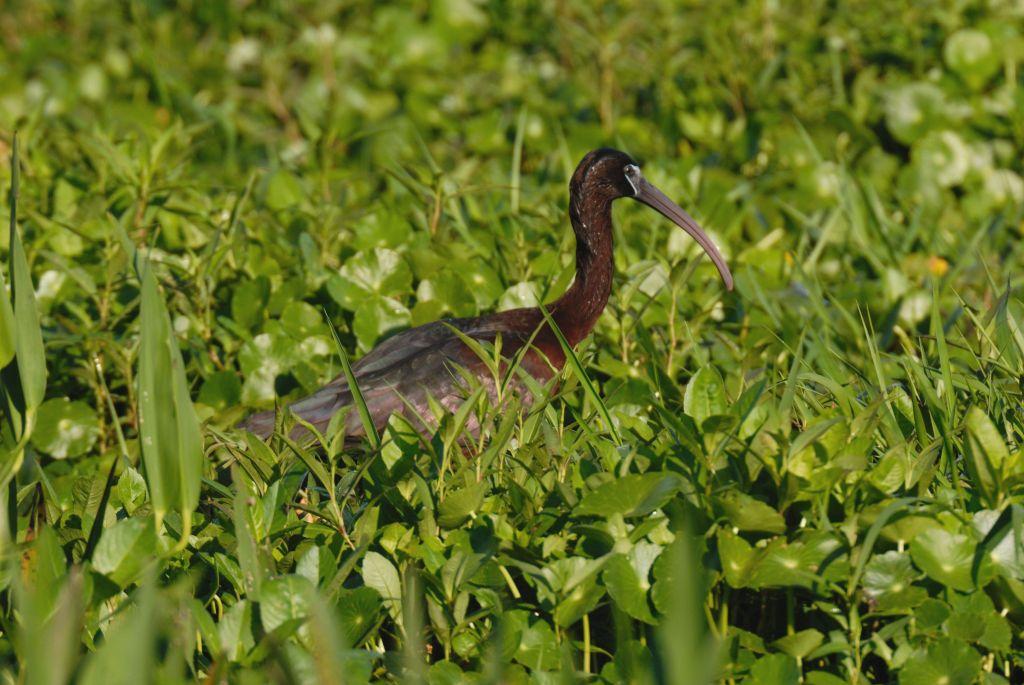
Glossy Ibis (Plegadis falcinellus) by Dan at Circle B
White-faced Ibis (Plegadis chihi) ©USFWS
Puna Ibis (Plegadis ridgwayi)
Lophotibis
Madagascar Ibis (Lophotibis cristata)

Birds of the Bible – Hovering Birds

White-tailed Tropicbird (Phaethon lepturus) by Ian

White-tailed Tropicbird (Phaethon lepturus) by Ian

Like birds hovering, so the LORD of hosts will protect Jerusalem;  he will protect and deliver it;he will spare and rescue it.” (Isaiah 31:5 ESV)

While searching for “bird” verses, I came across this verse and remembered the many birds that I have seen hovering. Go to the shore and feed Gulls and you will see them “hover over you” while they wait for another morsel to be tossed up to them. Many of the birds of prey (hawks, falcons, osprey, eagles, etc.) will “hover” while trying to catch a pray. Of course Hummingbirds will “hover” in front of flowers while sipping the nectar. We watched a Kingfisher “hover” out at Circle B, one of our favorite birding spots. Birds “hover” over their nest to protect their young. Genesis 1:2 is the only other verse using ‘hovering”, “moving”, or “fluttering.”

Using the “Compare” mode of e-Sword, here are some of the translations of this phrase:

As birds flying…he shall rescue and shall protect
As birds hovering…he will protect and deliver it, he will pass over and preserve it.
Just as birds fly over their nest to protect it…will defend Jerusalem. He will save her. He will “pass over” and save Jerusalem.
Like birds with outstretched wings…he will be a cover and salvation for it, going over it he will keep it from danger.
will protect like a mother bird circling over her nest
Like birds hovering overhead…he will shield and deliver it; and he will pass over and bring it to safety.

As you can see from these and the others not shown, this hovering or flying about is used in the protective mode, protecting their nest and their young. And of course, this verse is referring to the LORD of host defending and protecting Jerusalem. Hebrew H5774 עוּף – ‛ûph, pronounced “oof” is used for flying or hovering. “A primitive root; to cover (with wings or obscurity); hence (as denominative from H5775) to fly;…”

Copper-rumped Hummingbird (Amazilia tobaci) by Ian

Copper-rumped Hummingbird (Amazilia tobaci) by Ian

Here are what a few of the commentaries say about this passage. The bolding is mine.

BBC – 31:4-9 “God is like a lion which a multitude of shepherds (Assyria) tries to frighten away. Or, to change the figure, He is like a flock of birds, hovering over Jerusalem; He is ready to defend and deliver the city. When Israel turns back to the Lord, it will throw away its idols. The Assyrians will perish by a direct intervention of the Lord. The destruction of Sennacherib did not exhaust the meaning of these verses, so the prophecy has a future fulfillment as well, that is, in the Tribulation.”

MHCC – Isaiah 31:1-5 “God will oppose the help sought from workers of iniquity. Sinners may be convicted of folly by plain and self-evident truths, which they cannot deny, but will not believe. There is no escaping the judgments of God; and evil pursues sinners. The Lord of hosts will come down to fight for Mount Zion. The Lion of the tribe of Judah will appear for the defence of his church. And as birds hovering over their young ones to protect them, with such compassion and affection will the Lord of hosts defend Jerusalem. He will so defend it, as to secure its safety.”

Black-headed Ibis (Threskiornis melanocephalus) w chicks by Nikhil Devasar

Black-headed Ibis (Threskiornis melanocephalus) w chicks by Nikhil Devasar

Barnes – Isaiah 31:5 “As birds flying – This is another comparison indicating substantially the same thing as the former, that Yahweh would protect Jerusalem. The idea here is, that He would do it in the same manner as birds defend their young by hovering over them, securing them under their wings, and leaping forward, if they are suddenly attacked, to defend them. Our Saviour has used a similar figure to indicate his readiness to have defended and saved the same city Mat_23:27, and it is possible that he may have had this passage in his eye. The phrase ‘birds flying,’ may denote the “rapidity” with which birds fly to defend their young, and hence, the rapidity with which God would come to defend Jerusalem; or it may refer to the fact that birds, when their young are attacked, fly, or flutter around them to defend them; they will not leave them.
And passing over – פסוח pâsoach. Lowth renders this, ‘Leaping forward.’ This word, which is usually applied in some of its forms to the Passover Exo_12:13, Exo_12:23, Exo_12:27; Num_9:4; Jos_5:11; 2Ch_30:18, properly means, as a verb, “to pass over,” and hence, to preserve or spare. The idea in the passage is, that Yahweh would protect Jerusalem, as a bird defends its young.”

Bald Eagle (Haliaeetus leucocephalus) by Aesthetic Photos

Gill – Isaiah 31:5 “As birds flying, so will the Lord of hosts defend Jerusalem,…. As the preceding metaphor expresses the mighty power of God, this his tenderness and affection, as well as his speed and swiftness in the deliverance of his people. As birds in the air, at a distance, especially the eagle, have their eye upon their nests, and their young ones in them, and when in danger fly to their assistance, and hover over them, and about them, to keep off those that would hurt them, or carry them away; so the Lord, on high, sees his people when in distress, and hastens to help them, and does surround, protect, and defend them: thus the Lord did, when Sennacherib with his army besieged Jerusalem; who boasted, with respect to other nations, that he had “found as a nest the riches of the people”, and that “there was none that moved the wing against him”, Isa_10:14 to which it is thought the allusion is here:”

But God, who is rich in mercy, for his great love wherewith he loved us, Even when we were dead in sins, hath quickened us together with Christ, (by grace ye are saved;) And hath raised us up together, and made us sit together in heavenly places in Christ Jesus: That in the ages to come he might shew the exceeding riches of his grace in his kindness toward us through Christ Jesus. For by grace are ye saved through faith; and that not of yourselves: it is the gift of God: Not of works, lest any man should boast. For we are his workmanship, created in Christ Jesus unto good works, which God hath before ordained that we should walk in them. (Ephesians 2:4-10 KJV)