Birds of the Bible – Ostrich II

Common Ostrich (Struthio camelus) Memphis Zoo by Lee

Common Ostrich (Struthio camelus) Memphis Zoo by Lee

Even a mother wolf will nurse her cubs, but my people are like ostriches, cruel to their young. (Lamentations 4:3 GNB)
Even jackals nurse their young, but my people are like ostriches that abandon their own. (Lamentations 4:3 CEV)

The two versions of Lamentations 4:3 are interesting. In Birds of the Bible – Ostrich, the facts about the Ostriches behavior toward their young were mentioned. Her lack of interest in raising her young by putting them in a communal nest, her “big feet”, and her lack of knowledge.

This verse in Lamentations 4, again mentions how the ostriches are cruel to their young. This time the context is referring to the punishment of Israel and how they have gone from having much and now suffering with little or nothing. Verse 2 says,

These are Zion’s people, worth more than purest gold; yet they are counted worthless like dishes of clay.

May we serve the Lord with a clean heart and keep a “short list” of things that need to be confessed. May we never get so far away from the Lord that we have to have judgment come into our lives to “wake us up.”

Luckily, those of us who know the Lord as our personal Saviour, know:

Let your conversation be without covetousness; and be content with such things as ye have: for he hath said, I will never leave thee, nor forsake thee. (Hebrews 13:5 KJV)

Somali Ostrich (Struthio molybdophanes) by P Kwong

Somali Ostrich (Struthio molybdophanes) by P Kwong

The Ostrich, Struthio camelus, is actually an interesting bird that is flightless and native to Africa. It is the only living species of its family, Struthionidae and its genus, Struthio. Ostriches share the order Struthioniformes with the kiwis, emus, and other ratites. It is distinctive in its appearance, with a long neck and legs and the ability to run at maximum speeds of about 45 mph, the top land speed of any bird. The Ostrich is the largest living species of bird and lays the largest egg of any living bird (extinct elephant birds of Madagascar and the giant moa of New Zealand laid larger eggs).

Ostriches usually weigh from 63 to 130 kilograms (140–290 lb), with exceptional male Ostriches weighing up to 155 kilograms (340 lb). The feathers of adult males are mostly black, with white primaries and a white tail. However, the tail of one subspecies is buff. Females and young males are greyish-brown and white. The head and neck of both male and female Ostriches is nearly bare, with a thin layer of down.[4][6] The skin of the females neck and thighs is pinkish gray, while the male’s is blue-gray, gray or pink dependent on subspecies.
Claws on the wings

The long neck and legs keep their head 6 to 9 ft above the ground, and their eyes are said to be the largest of any land vertebrate – 50 millimetres (2.0 in) in diameter; they can therefore perceive predators at a great distance. The eyes are shaded from sun light falling from above.

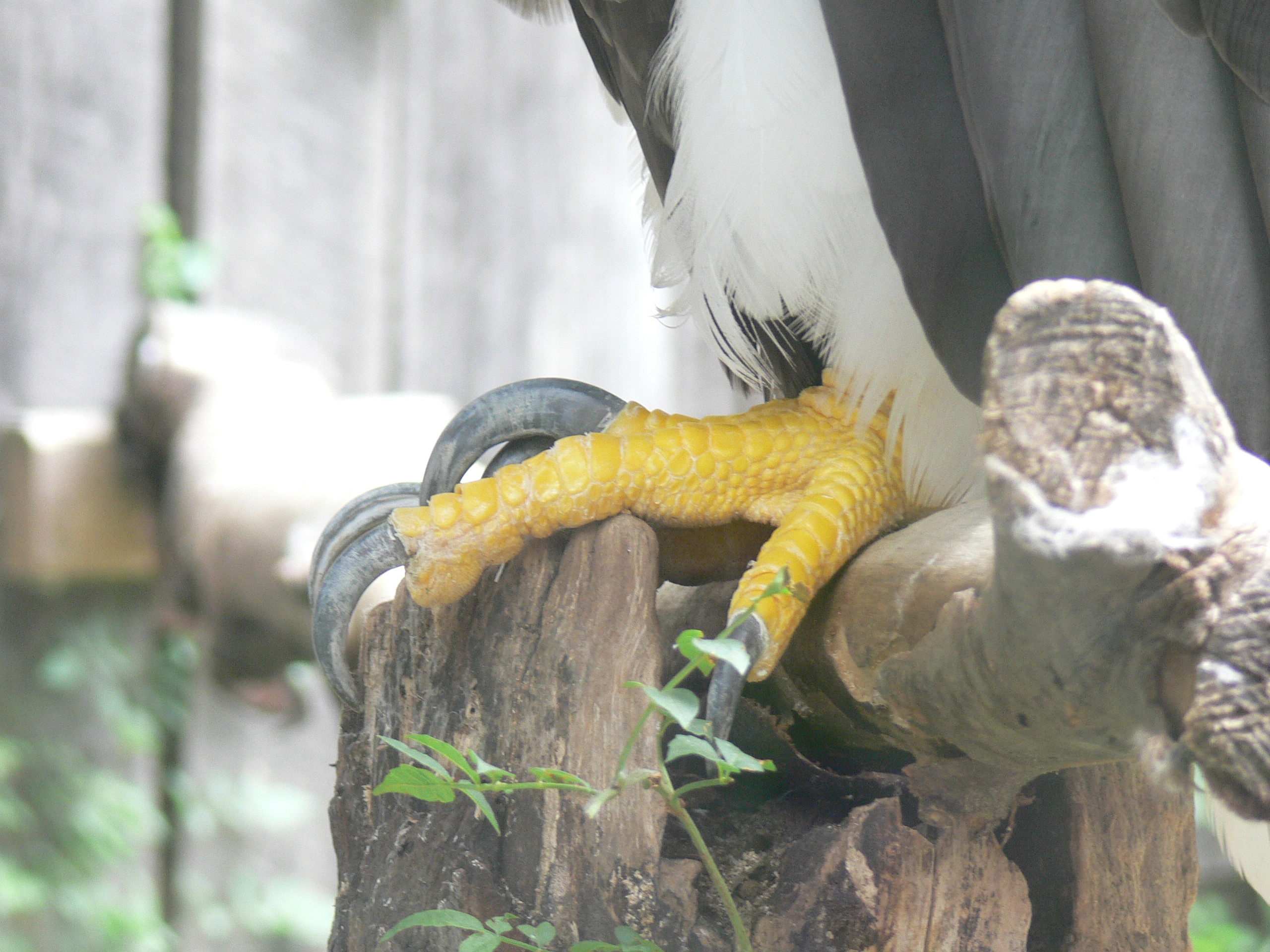
Emu Foot Lowry Pk Zoo

Emu Foot Lowry Pk Zoo

At sexual maturity (two to four years), male Ostriches can be from 5 ft 11 in to 9 ft 2 in in height, while female Ostriches range from 5 ft 7 in to 6 ft 7 in. During the first year of life, chicks grow 10 in per month. At one year of age, Ostriches weigh around 100 lb. Their lifespan is up to 40–45 years.

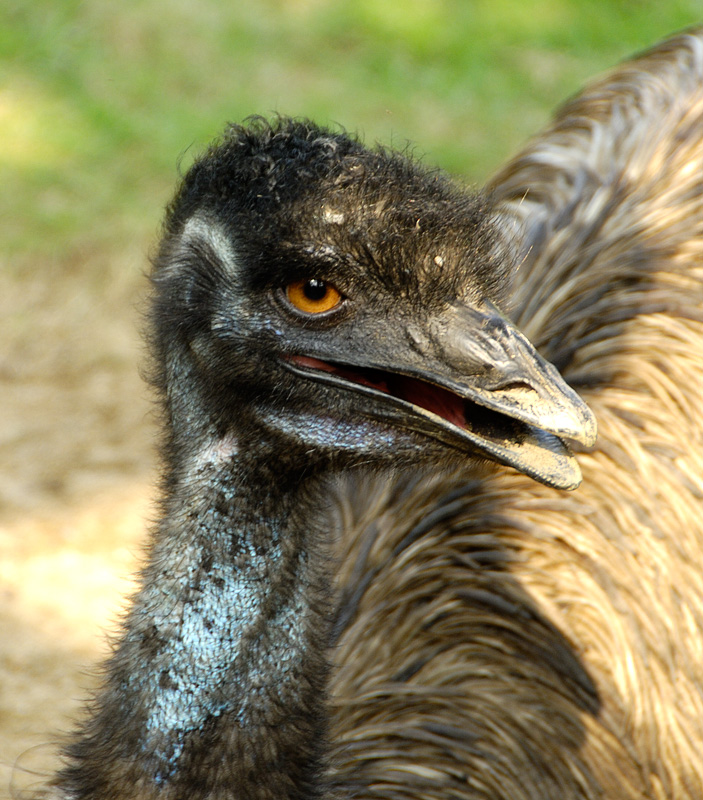
Yesterday, Dan and I were at the Lowry Park Zoo and were watching the Emu pair they have there. Took pictures of their feet and though smaller than the Ostrich, they have “big feet” also.

See Also:

Birds of the Bible – Ostrich

Ostrich

Struthionidae – Ostriches

Struthioniformes – Ostriches

*

Seeker…

Blackpoll Warbler (Setophaga striata) ©Flickr Scott Heron

Seeker… ~ by a j mithra

A small
North American bird,
the size of a sparrow
called the Blackpoll Warbler,
flies about 2,500 miles
on a nonstop 90 hr.
journey during migration
every year..

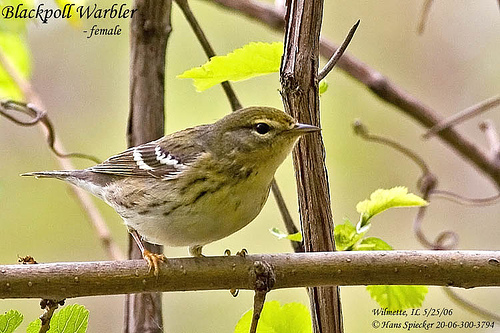
Blackpoll Warbler (Dendroica striata) female by Kent Nickell

Blackpoll Warbler (Dendroica striata) female by Kent Nickell

If such a small little bird
could fly that long
and that far,
How far
and how long
should we seek the presence
of the LORD?

But seek ye first the kingdom of God, and his righteousness; and all these things shall be added unto you. (Mathew 6:33)

Have a blessed day!

Thoughts from a j mithra

Those Ugly Shirts

I don’t know if you were glued to your TV when the miners in Chile were taken up from their 69 day entrapment, but I was. I prayed for them that nothing would go wrong as they brought each one up and for them personally to know the Lord.

Today I received an email with a YouTube about the shirts that many were wearing. I too was curious as to what they said. Here is a great video that tells about those “ugly shirts.”

Video by iranmojdeh.

Wordless Birds

Today’s Birds of the Bible

Updated at 8:10 pm

They are all finished. Hope you enjoy reading them.

********

Today, instead of doing my regular Birds of the Bible article, I am going to try to finish the Scripture Alphabet of Animals series. I have all the birds finished and am working hard to finish the rest of the animals today. All throughout the day, new articles will be posted as they are completed. I will be updating the index to the article (below) as I finish each one.

I trust you have enjoyed reading them as much as I have as the articles are being “modernized.” Harriet N Cook was a very good writer and trust she would have approved of the way that they are being handled here.

Lee

Learning from the Birds – Overwhelmed

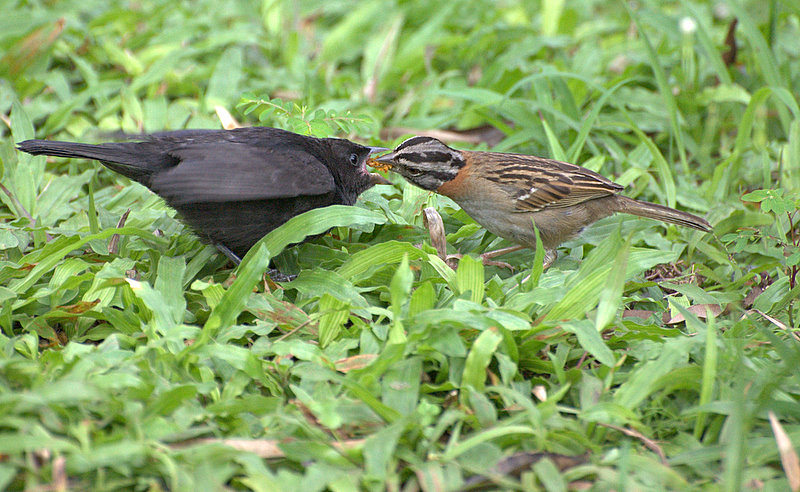
A Shiny Cowbird (Molothrus bonariensis) chick being fed by a Rufous-collared Sparrow (Zonotrichia Capensis)

A Shiny Cowbird (Molothrus bonariensis) chick being fed by a Rufous-collared Sparrow (Zonotrichia Capensis)

But now ask the beasts, and they will teach you; And the birds of the air, and they will tell you; (Job 12:7 NKJV)

Brood parasites are organisms that use the strategy of brood parasitism, found among birds, fish or insects, involving the manipulation and use of host individuals either of the same or different species to raise the young of the brood-parasite. This relieves the parasitic parent from the investment of rearing young or building nests, enabling them to spend more time foraging, producing offspring etc. Additionally, the risk of egg loss to raiders such as raccoons is mitigated, by having distributed the eggs amongst a number of different nests. As this behavior is damaging to the host, it will often result conflict between parasite and host.

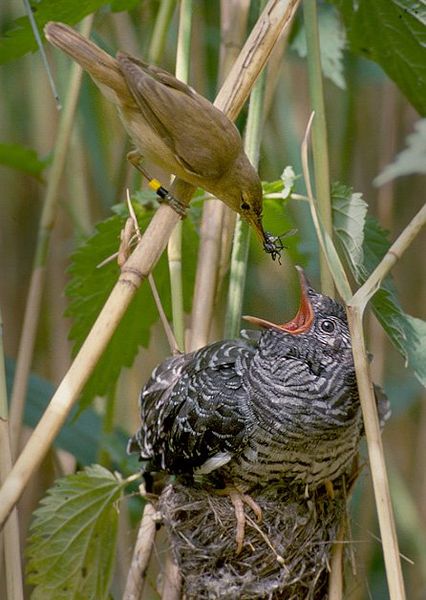
Common Cuckoo (Cuculus canorus) being raised by a Reed Warbler©WikiC

Common Cuckoo (Cuculus canorus) being raised by a Reed Warbler©WikiC

Interspecific brood-parasites include the Old World Cuckoos in Eurasia and Australia, Cowbirds and Black-headed Ducks in the Americas, and Indigobirds, Whydahs, and the Honeyguides in Africa.

Among specialist avian brood parasites, mimetic eggs are a nearly universal adaptation. There is even some evidence that the generalist Brown-headed Cowbird may have developed an egg coloration mimicking a number of their hosts.

Most avian brood parasites will remove a host egg when they lay one of their own in a nest. Depending upon the species, this can happen either in the same visit to the host nest or in a separate visit before or after the parasitism. This both prevents the host species from realizing their nest has been parasitized and reduces competition for the parasitic nestling once it hatches.

Most avian brood parasites have very short egg incubation periods and rapid nestling growth. This gives the parasitic nestling a head start on growth over its nestmates, allowing it to outcompete them. In cases where the host nestlings are significantly smaller than the parasite nestling, the host nestlings will often starve to death. Some brood parasites will eliminate all their nestmates shortly after hatching, either by ejecting them from the nest or killing them with sharp mandible hooks which fall off after a few days.

Whoa! This is NOT NICE! What is so amazing is that if not detected in time, many times the birds do find the intruding egg and toss it out, but most times, the unsuspecting parents raise this young bird as if it were it’s own.

What can we, as observers of this behavior, learn from the birds? I want to consider the host birds who have quite a challenge to face. They either fix the problem or they could be very “overwhelmed” with situation at hand.

My first thoughts were from a physical need. When faced with a health problem, we pray and visit the doctors and try to remedy the situation. Sometimes the ailment is not cured and we may be faced with an “overwhelming” need. Do we accept whatever the outcome and:

Not that I speak in regard to need, for I have learned in whatever state I am, to be content: (Philippians 4:11 NKJV)

Another lesson that could by learned by observing this “overwhelming” task might be in sharing the load. Often in churches, the ones who are willing to serve the Lord become very involved because of others not volunteering or helping. They keep taking on more responsibilities, not complaining, but in time they could become “overwhelmed.” We should find a way to:

Bear one another’s burdens, and so fulfill the law of Christ. (Galatians 6:2 NKJV)

Though one may be overpowered by another, two can withstand him. And a threefold cord is not quickly broken. (Ecclesiastes 4:12 NKJV)

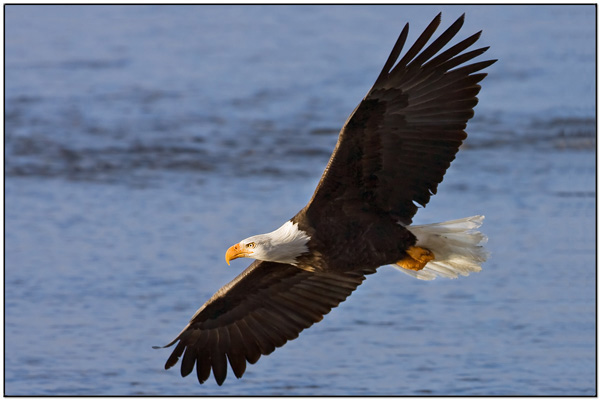
Bald Eagle flying by Dave's BirdingPix

Bald Eagle flying by Dave's BirdingPix

The host birds accept the situation and do the best they can to raise the young bird. How do they do that? One worm at a time! When we become “overwhelmed,” that is just what we need do. No! Not by catching worms, but by taking one step at a time and harkening to the following promises:

But ye, brethren, be not weary in well doing. (2 Thessalonians 3:13 KJV)

And let us not be weary in well doing: for in due season we shall reap, if we faint not. (Galatians 6:9 KJV)

I can do all things through Christ which strengtheneth me.
(Philippians 4:13 KJV)

But they that wait upon the LORD shall renew their strength; they shall mount up with wings as eagles; they shall run, and not be weary; and they shall walk, and not faint. (Isaiah 40:31 KJV)

(Some information from Wikipedia)
*

Others May, You Cannot – G. D. Watson

The following challenge was on the inside cover of this month’s “Acts & Facts” from the Institute for Creation Research. It is worth sharing and is a challenge for me that I would like to live up to, with the Lord’s help. As Christians, we should strive to live for the Lord. This article was an inspiration for Dr. Henry Morris and has been for others. George Douglas Watson lived from 1845-1924 and the following is in public domain.

If anyone wishes to come after Me, he must deny himself, and take up his cross and follow Me. For whoever wishes to save his life will lose it; but whoever loses his life for My sake will find it. (Matthew 16:24-25)

“If God has called you to be truly like Jesus in all your spirit, He will draw you into a life of crucifixion and humility. He will put on you such demands of obedience that you will not be allowed to follow other Christians. In many ways, He seems to let other good people do things which He will not let you do.

Others who seem to be very religious and useful may push themselves, pull wires, and scheme to carry out their plans, but you cannot. If you attempt it, you will meet with such failure and rebuke from the Lord as to make you sorely penitent.

Others can brag about themselves, their work, their successes, their writings, but the Holy Spirit will not allow you to do any such thing. If you begin to do so, He will lead you into some deep mortification that will make you despise yourself and all your good works.

G. D. Watson (1845-1924)

Others will be allowed to succeed in making great sums of money, or having a legacy left to them, or in having luxuries, but God may supply you only on a day-to-day basis, because He wants you to have something far better than gold, a helpless dependence on Him and His unseen treasury.

The Lord may let others be honored and put forward while keeping you hidden in obscurity because He wants to produce some choice, fragrant fruit for His coming glory, which can only be produced in the shade.

God may let others be great, but keep you small. He will let others do a work for Him and get the credit, but He will make you work and toil without knowing how much you are doing. Then, to make your work still more precious, He will let others get the credit for the work which you have done; this to teach you the message of the Cross, humility, and something of the value of being cloaked with His nature.

The Holy Spirit will put a strict watch on you, and with a jealous love rebuke you for careless words and feelings, or for wasting your time, which other Christians never seem distressed over.

So make up your mind that God is an infinite Sovereign and has a right to do as He pleases with His own, and that He may not explain to you a thousand things which may puzzle your reason in His dealings with you.

God will take you at your word. If you absolutely sell yourself to be His slave, He will wrap you up in a jealous love and let other people say and do many things that you cannot. Settle it forever; you are to deal directly with the Holy Spirit, He is to have the privilege of tying your tongue or chaining your hand or closing your eyes in ways which others are not dealt with. However, know this great secret of the Kingdom: When you are so completely possessed with the Living God that you are, in your secret heart, pleased and delighted over this peculiar, personal, private, jealous guardianship and management of the Holy Spirit over your life, you will have found the vestibule of heaven, the high calling of God.”

Quote taken from Christian Articles – G.D.Watson page

*

Birds of the Bible – Tamed

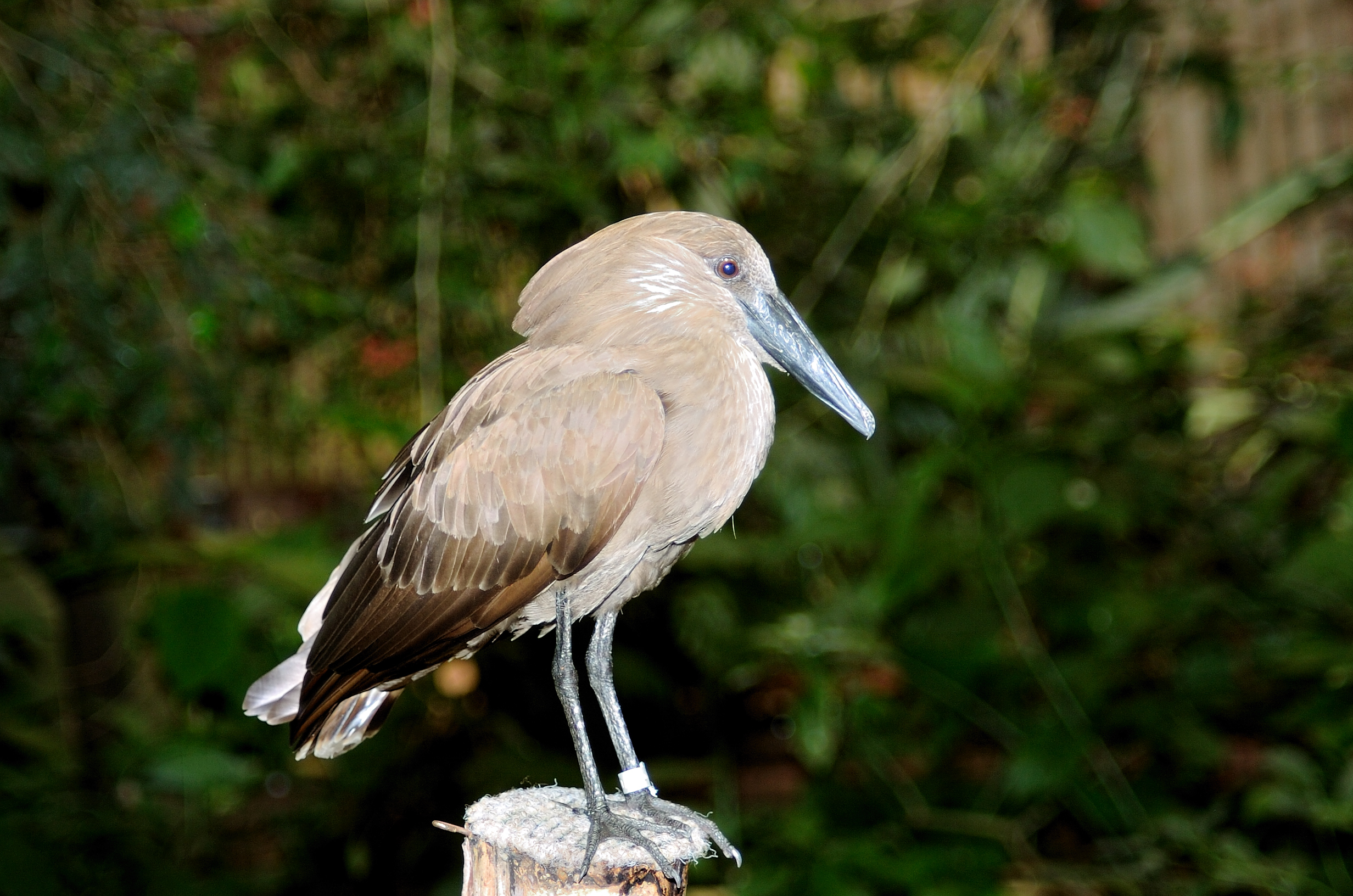
Hamerkop (Scopus umbretta) at NA by Dan

Hamerkop (Scopus umbretta) at National Aviary by Dan

Last week while Dan and I were visiting the Lowry Park Zoo in Tampa, FL, the idea for this article began. We were watching the Birds of Prey show that they have daily. We had also watched the Bird shows at the National Aviary in Pittsburgh, PA back in August.

Both places present some very interesting birds and they are not on leashes. The birds have the freedom to move around on their own, yet they do not run or fly away. They may  have been spooked at times, in Pittsburgh, and they may have to go get them, but they eventually get them back. Both places had birds flying over the heads of the spectators and doing stunts, yet they were  being controlled by the trainers. In other words, they were “tamed.”

Listening to the trainers, they tell how the birds are trained by “positive reinforcement.” The birds are encouraged  to perform for a “reward” for doing it right, but are never “punished” for not doing it right. They are just not given a “treat.” So none of the birds are mistreated.

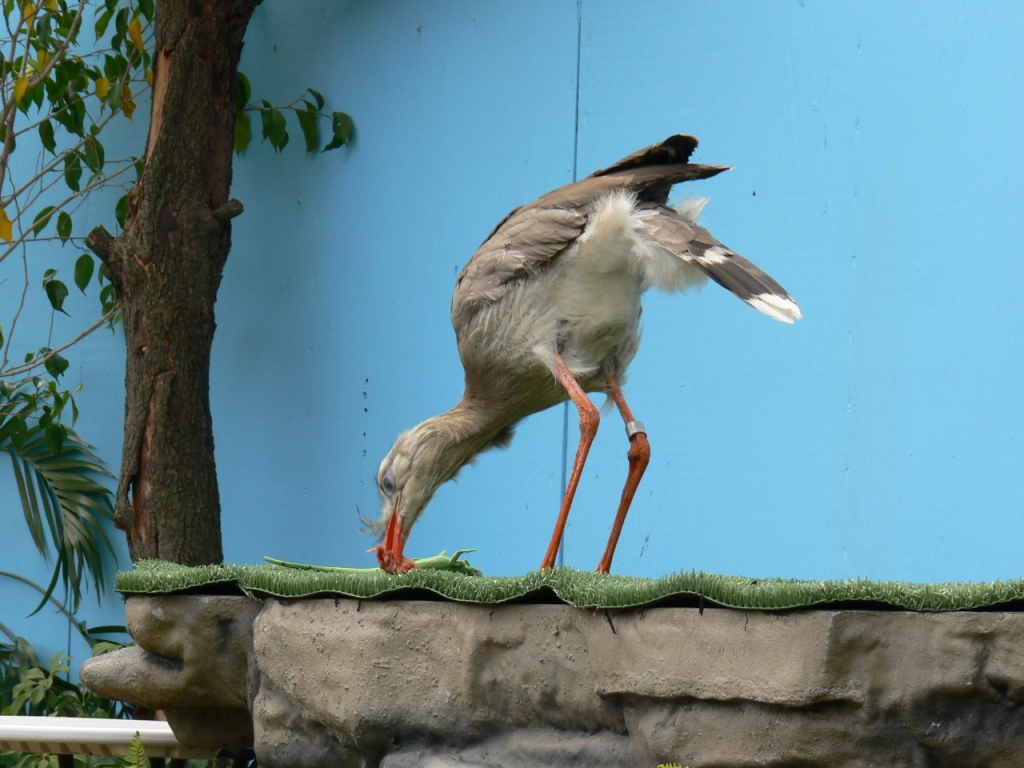
20100921 Lowry Pk Zoo Red-legged Seriema

Lowry Pk Zoo Red-legged Seriema with plastic lizard

Red-legged Seriema (Cariama cristata) by Lee at National Aviary

Red-legged Seriema (Cariama cristata) by Lee at National Aviary

What they do is encourage the bird to perform something that is already one of its behaviors. For instance, both places brought out the Red-legged Seriema, which is a bird of prey, and gave it a plastic lizard. Both birds picked it up and slung it to the floor several times. This is the normal way they kill their prey. So this was an easy task for the birds, yet the trainers had to “train or tame” the bird to where it would do its behavior on command.

The Serierma was just one of many birds doing “behaviors on command” at the Zoo and the Aviary. I felt the breezes of hawks, owls, and an eagle flying just over my head. Below is a Slide show of some of the “tamed” birds at both places.

The Bible only mentions “tame” or “tamed” in two different places. The first is mentioned in Mark 5:3-4 when a man with an unclean spirit, who dwelt in the tombs, “and no one could bind him, not even with chains, because he had often been bound with shackles and chains. And the chains had been pulled apart by him, and the shackles broken in pieces; neither could anyone tame him.” Jesus healed him.

For He said to him,  “Come out of the man, unclean spirit! (Mark 5:8 NKJV)

In James, we find the verses that tell about the birds being tamed. When we look around, we all can see many incidences of tamed critters and birds. Have you ever seen a critter tame a person? Man was given dominion over the critters in Genesis. Dominion did not mean what some think of today as subjugation, but it was more of use of, care of, learning from, and protecting them. Yet, God made man in His image, therefore man and woman are higher than the critters (all of them), not equal with them as some teach. Man has a “soul” which is accountable to God, the critters do not have a “soul.”

For every kind of beast and bird, of reptile and creature of the sea, is tamed and has been tamed by mankind. (James 3:7 NKJV)

The one thing that has a problem is the “tongue.” James goes on to say,

But no man can tame the tongue. It is an unruly evil, full of deadly poison. With it we bless our God and Father, and with it we curse men, who have been made in the similitude of God. Out of the same mouth proceed blessing and cursing. My brethren, these things ought not to be so. (James 3:8-10 NKJV)

These are some of the birds used in the shows or out and about with their trainers.

*

This slideshow requires JavaScript.

*

Birds in Songs – On Eagle’s Wings

Bald Eagle flying by Dave's BirdingPix

Bald Eagle flying by Dave's BirdingPix

I love eagles and I love this song. The song was written by Michael Joncas, in 1979 Unfortunately the words are copyrighted, so I can’t put them here on the blog, but this video has them.

Hope you enjoy the video by mhcaillesrn.

*

Birds of the Bible – The Lord Provides For Them

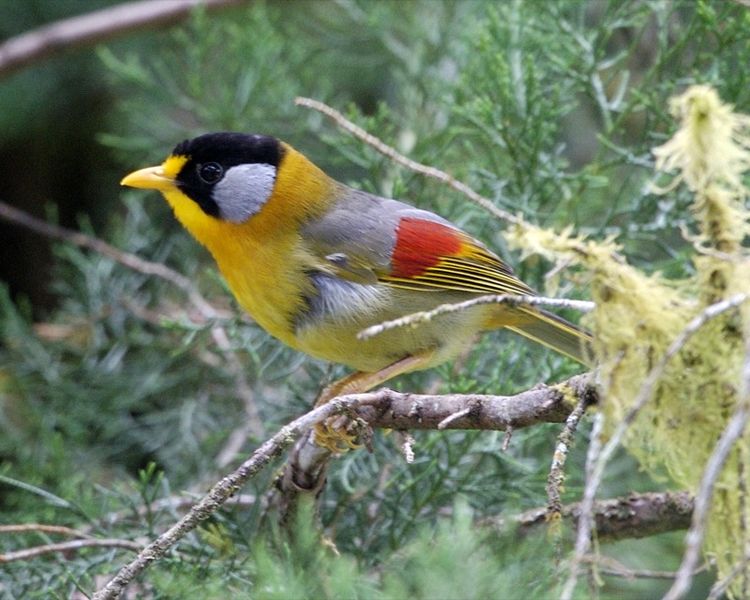
Silver-eared Leiothrix (Leiothrix argentauris) by Ian

Silver-eared Leiothrix (Leiothrix argentauris) brightly colored-by Ian

O LORD, how many are Your works! In wisdom You have made them all; The earth is full of Your possessions. There is the sea, great and broad, In which are swarms without number, Animals both small and great. There the ships move along, And Leviathan, which You have formed to sport in it. They all wait for You To give them their food in due season. You give to them, they gather it up; You open Your hand, they are satisfied with good. (Psalms 104:24-28 NASB)

When you look at all that is around you, do you stand amazed at the Lord God’s Creative Hand or do you just think given enough time, this all came about? For me, I see an awesome Creator God that has wisdom and understanding that is way beyond my finite mind to comprehend. As I was praying and asking the Lord to help me do this article, I thought, “Lord you knew I was going to make this prayer this morning.” “You know what I’ll pray about tomorrow, and the next, and next year.” Whoa! I had to finish up my prayer and not get carried away. But, now, I had my idea for this blog today.

In Genesis 1 we learn that when the critters, birds, man and woman were created, they were vegetarians.

And God said, “See, I have given you every herb that yields seed which is on the face of all the earth, and every tree whose fruit yields seed; to you it shall be for food. Also, to every beast of the earth, to every bird of the air, and to everything that creeps on the earth, in which there is life, I have given every green herb for food”; and it was so. Then God saw everything that He had made, and indeed it was very good. So the evening and the morning were the sixth day. (Genesis 1:29-31 NKJV)

God knew that man was going to sin and that the he (man and woman) and all the critters, birds, fish, and the earth were going to be cursed. God knows the end from the beginning. “Before the mountains were brought forth, Or ever You had formed the earth and the world, Even from everlasting to everlasting, You are God.” (Psalms 90:2 NKJV) Just as He provide for man, that Jesus Christ would come to pay the price for our sins; He provided for the animals and birds so they could defend themselves from the cursed nature of other critters and birds.

Silver-eared Leiothrix (Leiothrix argentauris) by Ian

Silver-eared Leiothrix blended in tree-by Ian

Watching birds, one of my favorite things to do, you can see God’s Protective Hand at work. The colors alone, give a clue. The male birds seem to be the most brightly colored, which helps the get a mate. Their mating helps preserve their species and the female, whose color is usually subtle, is protected as she sits on the nest. The bright colors of many birds, which I love to see, seem to blend right in with their surrounding. Again protecting them from predators.

God gave the birds a command to reproduce.  “And God blessed them, saying, “Be fruitful and multiply, and fill the waters in the seas, and let birds multiply on the earth.” (Genesis 1:22 NKJV) When they came off the Ark, He said to Noah, “Bring out with you every living thing of all flesh that is with you: birds and cattle and every creeping thing that creeps on the earth, so that they may abound on the earth, and be fruitful and multiply on the earth.” (Genesis 8:17 NKJV)

Steller's Sea Eagle (Haliaeetus pelagicus) by Lee at NA

Steller’s Sea Eagle (Haliaeetus pelagicus) by Lee at NA

The predators!  Many of the plants before the Flood were large and thick. The beaks and claws were used to help them eat plants, now, those same beaks and claws help them catch prey. They were still provided for by God’s forethought even though that was not what the Creator wanted them to do. He knew the end from the beginning.

I could name trait after trait, where the Creator’s love, omniscience (all-knowing), omnipotence (all-powerful), and care is shown to critters and birds. Look and observe the birds and you will see that they had a Awesome Creator that knew the end from the beginning and has well provided for them.

He sends forth springs in the valleys; They flow between the mountains; They give drink to every beast of the field; The wild donkeys quench their thirst. Beside them the birds of the heavens dwell; They lift up their voices among the branches. He waters the mountains from His upper chambers; The earth is satisfied with the fruit of His works. He causes the grass to grow for the cattle, And vegetation for the labor of man, So that he may bring forth food from the earth, (Psalms 104:10-14 NASB)

What about us? Do we observe and realize the love, care, omniscience, and omnipotence in our (man’s) creation? How about your body, eyes, skin, internal organ, heart, mind? They were all fantastically created by a loving God. Yes, they are falling apart. Yes, they become corrupt. Yes, we die. That is because of the curse and the fall of man into sin.
But!

But God commendeth his love toward us, in that, while we were yet sinners, Christ died for us. (Romans 5:8 KJV)

Let me leave you with encouragement and thoughts that the Lord gave his disciples:

Therefore I say to you, do not worry about your life, what you will eat; nor about the body, what you will put on. Life is more than food, and the body is more than clothing. Consider the ravens, for they neither sow nor reap, which have neither storehouse nor barn; and God feeds them. Of how much more value are you than the birds? And which of you by worrying can add one cubit to his stature? If you then are not able to do the least, why are you anxious for the rest? Consider the lilies, how they grow: they neither toil nor spin; and yet I say to you, even Solomon in all his glory was not arrayed like one of these. If then God so clothes the grass, which today is in the field and tomorrow is thrown into the oven, how much more will He clothe you, O you of little faith? “And do not seek what you should eat or what you should drink, nor have an anxious mind. For all these things the nations of the world seek after, and your Father knows that you need these things. But seek the kingdom of God, and all these things shall be added to you. (Luke 12:22-31 NKJV)

The Wordless Birds
*

Birds of the Bible – Birds of Prey from the Mountains

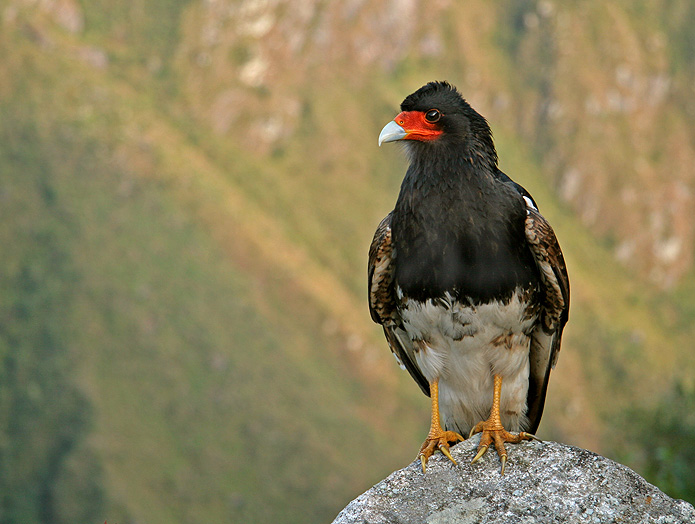
Mountain Caracara (Phalcoboenus megalopterus) ©WikiC

Mountain Caracara (Phalcoboenus megalopterus) ©WikiC

Last week the Birds of the Bible article was an introduction to the Birds of Prey. This week, the Birds of Prey from the mountains will be covered. So begins a challenge of finding birds that are not listed that way in most books or the internet.

First, let’s look at the verse in the Bible that refers to the “birds of prey of the mountains” and how the various translations translate the verse.

They shall all of them be left to the birds of prey of the mountains and to the beasts of the earth. And the birds of prey will summer on them, and all the beasts of the earth will winter on them. (Isaiah 18:6 ESV)

Mountain Pygmy Owl (Glaucidium gnoma) ©WikiC

Mountain Pygmy Owl (Glaucidium gnoma) ©WikiC

ravenous birds of the mountains – ASV, RV,JPS
birds of the mountains -BBE, MKJV
fowls of the mountains – KJV, Webster
mountain buzzards – CEV
mountain birds of prey – Darby, NAS77, NASB, NKJV
birds of prey of(on) the mountains – ESV, GW
ravenous fowl of the mountains – YLT
birds – GNB,

Other than the GNB (Good News ), they all mention that the birds are from the mountains.

The birds of prey from the mountains are coming to a feast of dead bodies that is going to last through the summer and the winter or for approximately a year. It appears that there was to be a judgment and the corpses left for the birds.

For before the harvest, when the blossom is over, and the flower becomes a ripening grape, he cuts off the shoots with pruning hooks, and the spreading branches he lops off and clears away. (Isaiah 18:5 ESV)

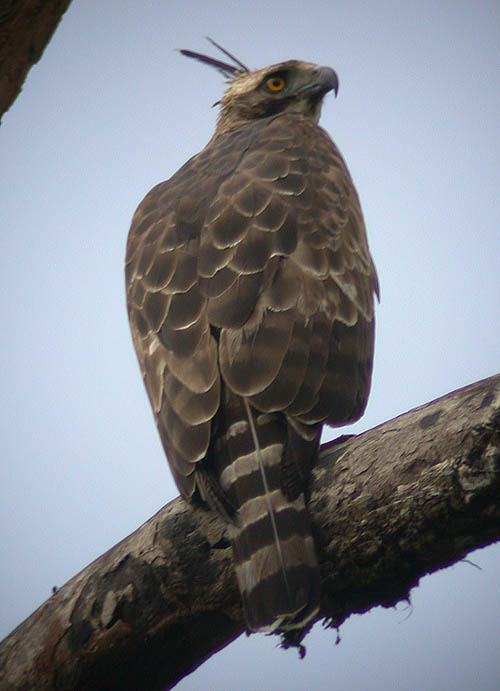
Mountain Hawk-Eagle (Nisaetus nipalensis) by Peter Ericsson

Mountain Hawk-Eagle (Nisaetus nipalensis) by Peter Ericsson

John Gill’s Exposition – “he shall both cut off the sprigs with pruning hooks, and take away and cut down the branches; as the vinedresser; or rather as one that has no good will to the vine, cuts it with pruning hooks, not to make it better, but worse, and cuts off, not the dead withered and useless parts of it, but the sprigs that have buds and flowers, or unripe grapes, upon them, and even whole branches that have clusters on them, and takes them and casts them away, to be trodden under foot, or cast into the fire; so the Lord, or the king of Assyria, the instrument in the hand of God, should cut off the Ethiopians, or the Egyptians, with the sword, both small and great, when their enterprise should fail, and their promised success: or this is to be understood of the destruction of Sennacherib’s army by the angel, when he was full of expectation of taking Jerusalem, and plundering that rich city. Jarchi and Kimchi interpret it of the destruction of the armies of Gog and Magog. The Targum is, and he shall kill the princes of the people with the sword, and their mighty ones he shall remove and cause to pass over.”

Mountain Buzzard (Buteo oreophilus)©WikiC

Mountain Buzzard (Buteo oreophilus)©WikiC

K & D – “The words of Jehovah concerning Himself have here passed imperceptibly into words of the prophet concerning Jehovah. The ripening grapes, as Isaiah 18:6 now explains, are the Assyrians, who were not far from the summit of their power; the fruit-branches that are cut off and nipped in pieces are their corpses, which are now through both summer and winter the food of swarms of summer birds, as well as of beasts of prey that remain the whole winter through. This is the act of divine judgment, to which the approaching exaltation of the banner, and the approaching blast of trumpets, is to call the attention of the people of Ethiopia.”

Now the birds are brought to this judgmental feast, but what are mountain birds of prey? I tried to find Eagles, Hawks, Owls, Vultures, or whatever birds I could that live in the mountains or at high elevations. Here are a few that I found with “mountain” in their name:

From the Accipitriformes OrderAccipitridae Family:

Mountain Serpent Eagle (Spilornis kinabaluensis) Found in northern Borneo, Sabah, Sarawak and Kalimantan. It inhabits submontane and montane evergreen rainforests. It prefers forests with height of 1,000-2,900 meters (3,220- 9514 feet) above sea level.
Mountain Buzzard (Buteo oreophilus) – Lives in montane forests in East Africa (Ethiopia, Kenya, Tanzania, Uganda, Rwanda, Burundi and extreme eastern DR Congo) and forests and plantations in South Africa. The latter population is sometimes considered a separate species, the Forest Buzzard (B. trizonatus).
Mountain Hawk-Eagle (Nisaetus nipalensis) It is a bird of mountain woodland, which builds a stick nest in a tree and lays usually a single egg. It breeds in southern Asia from Pakistan, India and Sri Lanka to China, Taiwan and Japan.

From the Falconiformes OrderFalconidae Family:
Mountain Caracara (Phalcoboenus megalopterus) a species of bird of prey in the Falconidae family. It is found in puna and páramo in the Andes, ranging from southern Ecuador, through Peru and Bolivia, to northern Argentina and Chile. It is generally uncommon to fairly common. A highly opportunistic bird commonly seen walking on the ground, it will feed on both carrion and virtually any small animal it can catch. It resembles the closely related Carunculated Caracara and White-throated Caracara, but unlike those species its chest is uniform black. Juveniles are far less distinctive than the red-faced pied adults, being overall brown with dull pinkish-grey facial skin.

From the Strigiformes OrderStrigidae Family:
Mountain Scops Owl (Otus spilocephalus) sometimes referred to as the spotted scops owl. It is locally common in its main habitat which covers some parts of Asia, mostly Bhutan and Taiwan. It has a short high-pitched call similar to the sound a radar makes.
Mountain Pygmy Owl/Northern Pygmy-Owl (Glaucidium gnoma) Their breeding habitat includes open to semi-open woodlands of foothills and mountains in western North America. In Oregon and Washington they are known to nest and forage in the center of dense, continuous forests, near streams.[2] An example of their habitat is Forest Park in Portland, Oregon. Males will regularly perch at the top of the tallest available conifer trees to issue their territorial call…

There are many more numerous Birds of Prey which live in the mountains and high forests, but time prevents finding and listing them all. The birds presented here are just to whet your appetite to find more of them and to further study the passage of Scripture. There are also many interpretations of Isaiah 18:6.

Study to shew thyself approved unto God, a workman that needeth not to be ashamed, rightly dividing the word of truth. (2 Timothy 2:15 KJV)

*

Information about the birds from Wikipedia

*

Birds of the Bible – Birds of Prey Introduction

The following is from Wikipedia’s article on “Bird of Prey” and has good information to precede thoughts on the Birds of Prey mentioned in the Bible. (Their quotes, my links)

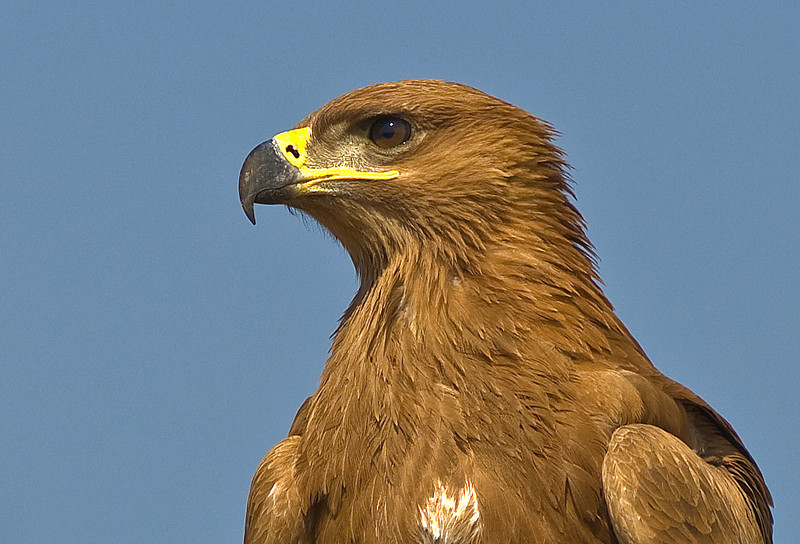
Tawny Eagle by Africaddict

Tawny Eagle by Africaddict

“Birds of prey are birds that hunt for food primarily on the wing, using their keen senses, especially vision. They are defined as birds that primarily hunt vertebrates, including other birds. Their talons and beaks tend to be relatively large, powerful and adapted for tearing and/or piercing flesh. In most cases, the females are considerably larger than the males. The term “raptor” is derived from the Latin word “rapere” (meaning to seize or take by force) and may refer informally to all birds of prey, or specifically to the diurnal group. Because of their overall large size and predatory lifestyle, they face distinct conservation concerns.

Formal Classification

The diurnal birds of prey are formally classified into five families (traditionally of the order Falconiformes, a classification currently[vague] in flux): [IOC has them mostly in the Accipitriformes Order-Lee]

* Accipitridae: hawks, eagles, buzzards, harriers, kites and Old World vultures
* Pandionidae: the Osprey (sometimes classified as subfamily Pandioninae of the previous family)
* Sagittariidae: the Secretary Bird
* Falconidae: falcons and caracaras
* Cathartidae: New World vultures including condors.

The nocturnal birds of prey – the owls – are classified separately as members of two extant families of the order Strigiformes:

* Strigidae: (typical owls)
* Tytonidae: (barn and bay owls).

Red-shouldered Hawk by Dan

The observation that otherwise unrelated bird groups may perform similar ecological roles and bear striking morphological similarities to one another is explained is because [they were created by the Lord and are all going to be called on to perform a similar task in the future. (See later)]

The common names for various birds of prey are based on structure but many of the traditional names do not reflect the evolutionary relationships between the groups.
Variations in shape and size
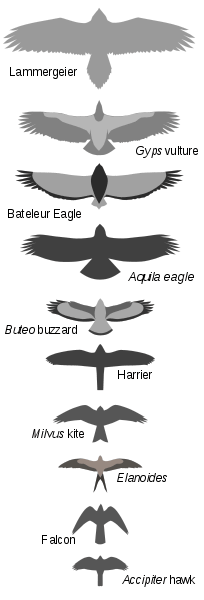
Birds of Prey - Raptorial Silhouettes ©Wikipedia

Birds of Prey – Raptorial Silhouettes ©Wikipedia

* Eagles tend to be large birds with long, broad wings and massive feet. Booted Eagles have legs and feet feathered to the toes and build very large stick nests.
* Ospreys, a single species found worldwide that specializes in catching fish, and builds large stick nests.
* Kites have long wings and relatively weak legs. They spend much of their time soaring. They will take live vertebrate prey but mostly feed on insects or even carrion.
* The true Hawks are medium-sized birds of prey that usually belong to the genus Accipiter (see below). They are mainly woodland birds that hunt by sudden dashes from a concealed perch. They usually have long tails for tight steering.
* Buzzards are medium-large raptors with robust bodies and broad wings, or, alternatively, any bird of the genus Buteo (also commonly known as “hawks” in North America).
* Harriers are large, slender hawk-like birds with long tails and long thin legs. Most use a combination of keen eyesight and hearing to hunt small vertebrates, gliding on their long broad wings and circling low over grasslands and marshes.
* Vultures are carrion-eating raptors of two distinct biological families, each occurring in only the Eastern Hemisphere (Accipitridae) or the Western (Cathartidae). Members of both groups have heads either partly or fully devoid of feathers.
* Falcons are small to medium-size birds of prey with long pointed wings. Unlike most other raptors, they belong to the Falconidae, rather than the Accipitridae. Many are particularly swift flyers. Instead of building their own nests, falcons appropriate old nests of other birds, but sometimes they lay their eggs on cliff ledges or in tree hollows. Caracaras are a distinct subgroup of the Falconidae unique to the New World, and most common in the Neotropics – their broad wings, naked faces and appetites of a generalist suggest some level of convergence with either the Buteos or the vulturine birds, or both.
* Owls are variable-sized, typically night-specialized hunting birds. They fly with extremely little audible turbulance due to special feather structure and have particularly acute hearing.”

Did you notice the list of the “birds of prey”? It is almost identical to the list of birds on the unclean lists of birds in Deuteronomy 14:11-18 and Leviticus 11:13-20. There are a few that are not Birds of Prey, but all the birds of prey are listed there either by name or implied by “their kind.”

Searching the Scriptures, these are called “bird(s) of prey” in 7 verses in the GW; 6 verses in the ESV, Darby, 5 verses in the NASV, NAS77; 4 verses in the JPS; 3 verses in the NKJV, MKJV, RV, ; none in the KJV, Webster, YLT. Why the differences. Let’s look at the 7 verses and compare how they translate the bird.

H5861 is used in most of the translations.

עיט

ayit – ah’-yit ; from H5860a; a hawk or other bird of prey: – bird,  fowl, ravenous (bird)

And when birds of prey came down on the carcasses, Abram drove them away. (Genesis 15:11 ESV)

birds of prey – ASV,  Darby, ESV,  GW, JPS,  MKJV, ,  NAS77, NASB, RV
birds – CEV
fowls – KJV, Webster
vultures – GNB, NKJV
ravenous birds – YLT

That path no bird of prey knows, and the falcon’s eye has not seen it. (Job 28:7 ESV)

birds of prey – ASV, Darby, ESV, GW, JPS, NAS77, NASB, RV
bird – BBE, MKJV, NKJV
hawk – GNB, Webster
fowl – KJV
ravenous fowl – YLT
The second part of the verse about the falcon’s eye is translated falcon’s, hawk’s, vulture’s and kite’s eye.

Does your understanding make a bird of prey fly and spread its wings toward the south? (Job 39:26 GW)

bird of prey – GW
hawk(s) – ASV, BBE, CEV, Darby, ESV, GNB, JPS, KJV, MKJV, NKJV, NAS77, NASB, RV, Webster, YLT

They shall all of them be left to the birds of prey of the mountains and to the beasts of the earth. And the birds of prey will summer on them, and all the beasts of the earth will winter on them. (Isaiah 18:6 ESV)

ravenous birds of the mountains – ASV, RV
birds of the mountains -BBE, MKJV
fowls of the mountains – KJV, Webster
mountain buzzards – CEV
mountain birds of prey – Darby, NAS77, NASB, NKJV
birds of prey of(on) the mountains – ESV, GW
ravenous birds of the mountains – JPS
ravenous birds of the mountains – YLT
birds – GNB,

calling a bird of prey from the east, the man of my counsel from a far country. I have spoken, and I will bring it to pass; I have purposed, and I will do it. (Isaiah 46:11 ESV)

ravenous bird from the east – ASV, KJV, RV, Webster, YLT
bird of strong flight from the east – BBE
like a hawk swooping down – CEV, GNB
bird of prey from the east – Darby, ESV, GW, JPS, MKJV, NAS77, NASB, NKJV
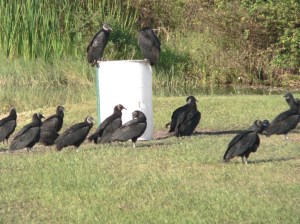
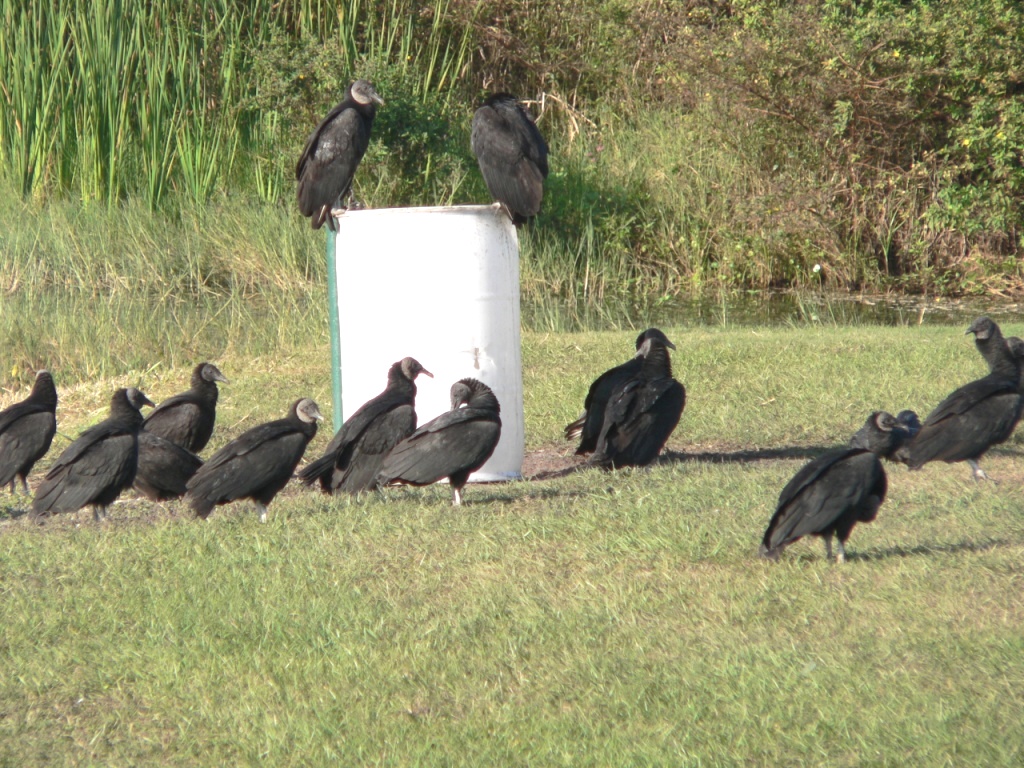
Black Vultures at Saddle Creek 12-07-07 by Lee

Is my heritage unto me as a speckled bird of prey? are the birds of prey against her round about? go ye, assemble all the beasts of the field, bring them to devour. . (Jeremiah 12:9 ASV)
speckled bird of prey and birds of prey- ASV, Darby, JPS, NAS77, NASB, RV
speckled bird and birds – KJV, MKJV, Webster
speckled vulture and vultures – NKJV
speckled fowl and fowl – YLT
coloured bird and cruel birds – BBE
colorful bird of prey and birds of prey – GW
hawk and hawks – CEV
bird and hawks – GNB
hyena’s lair and birds of prey – ESV

You shall fall on the mountains of Israel, you and all your hordes and the peoples who are with you. I will give you to birds of prey of every sort and to the beasts of the field to be devoured. (Ezekiel 39:4 ESV)

ravenous birds of every sort -ASV, JPS, KJV, RV, Webster
ravenous fowl–a bird of every wing – YLT
cruel birds of every sort – BBE
birds – CEV, GNB
birds of prey of every wing – Darby
birds of prey of every sort – ESV, NKJV
birds of prey of every kind – MKJV
every bird of prey – GW
every kind of predatory bird – NAS77, NASB

This is the foundation or introduction to the Birds of Prey. Future articles will build on these verses. There is a lot of activity going on with each verse which needs more in-depth study. Look for more Birds of Prey articles in the future.

See also:

Birds of the Bible – Clean vs. Unclean

Deuteronomy 14:11-18 Visualized

Birds of the Bible – Speckled Birds

These are the Bible translations that I have loaded on my e-Sword Bible program (most are free).

ASV-American Standard Version , BBE-Bible in Basic English, CEV-Contemporary English Version, Darby-Darby Bible, EMTV, ESV-English Standard Version, GNB-Good News Translation, GW-GOD’S WORD, ISV-International Standard Version, JPS-Jewish Publication Society Old Testament, KJV-King James Version, MKJV-Modern King James Version, Murdock-James Murdock New Testament, NAS77 & NASB-New American Standard Bible Study Set(paid), NKJV-New King James Version(paid), RV-Revised Version, Webster-Webster Bible, WNT-Weymouth New Testament, YLT-Young’s Literal Translation,

*

Red-billed Leiothrix – The Rain Seeker…

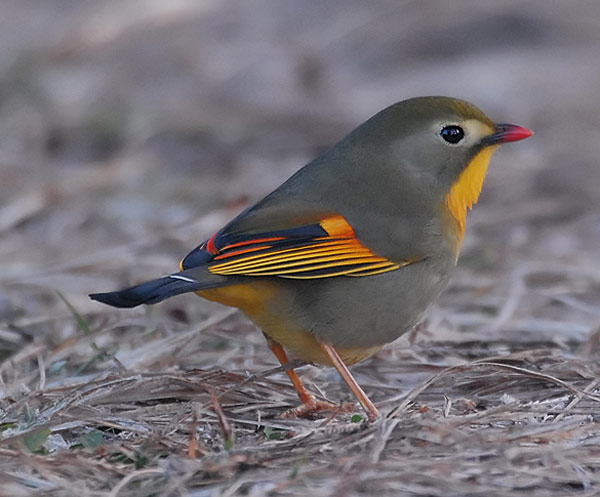
Red-billed Leiothrix (Leiothrix lutea) by Dan's Pix. at National Aviary

Red-billed Leiothrix – The Rain Seeker… ~ by a j mithra

Red-billed Leiothrix are native to Southern Asia ranging from central Himalayas in India and Nepal, eastwards to Burma and Vietnam. Leiothrix prefer to inhabit underbrush at all elevations with a cover of dense vegetation near the ground. These birds are found at elevations 700 m to 2000 m in winters and 1500 m to 2700 m in summers. Flocks of Leiothrix’s have been known to fly up to elevations of 4500 m for a short period of time.

These birds favor areas with at least 40 inches of rain.

  • We go to church, pray and give offering, but still, many of us are dry in spirit.. Why?
  • These birds have a thirst to stay in places where there is abundant rain…
  • God pours out His spirit according to our thirst…

He has promised to pour His spirit on all flesh…

For I will pour water upon him that is thirsty, and floods upon the dry ground: I will pour my spirit upon thy seed, and my blessing upon thine offspring: (Isaiah 44:3)

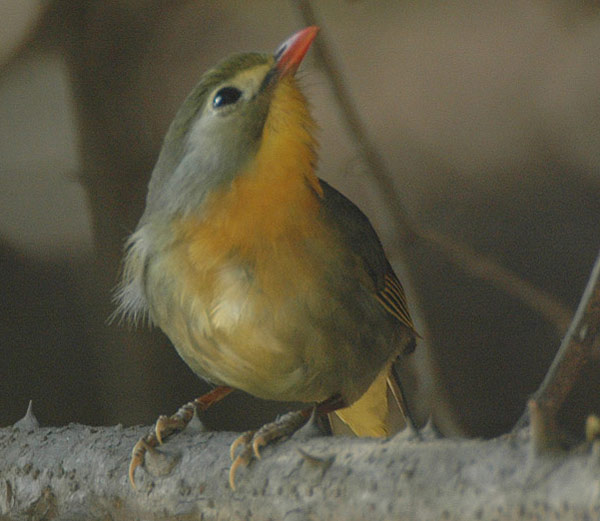
Red-billed Leiothrix (Leiothrix lutea) by Nikhil Devasar

Red-billed Leiothrix (Leiothrix lutea) by Nikhil Devasar

The leiothrix can usually be found in a group of about ten to thirty birds during the non-breeding season; however, during the breeding season the birds break off into pairs and become territorial.

  • We as believers, do we congregate often or just on Sundays?
  • The word of God encourages us to have corporate worship…
  • Jericho came down through corporate worship..
  • Battle was won through corporate worship…
  • Jesus too had promised to be in the midst of those who unite in His name in twos and threes…

The presence of the Lord flows like a river during corporate worship..

A Song of degrees of David. Behold, how good and how pleasant it is for brethren to dwell together in unity! It is like the precious ointment upon the head, that ran down upon the beard, even Aaron’s beard: that went down to the skirts of his garments; As the dew of Hermon, and as the dew that descended upon the mountains of Zion: for  there the LORD commanded the blessing, even life for evermore. (Psalm 133)

Though we need to dwell together in unity, at times, like these birds who break off into pairs, we need to have an intimate and personal relationship with our Saviour..

  • Jesus set Himself as an example by spending time alone in prayer..
  • How much time do we spend on our knees?

But thou, when thou prayest, enter into thy closet, and when thou hast shut thy door, pray to thy Father which is in secret; and thy Father which seeth in secret shall reward thee openly. (Mathew 6:6)

Red-billed Leiothrix (Leiothrix lutea) by Nikhil Devasar

Red-billed Leiothrix (Leiothrix lutea) by Nikhil Devasar

These birds seem to teach us about the importance of Praise and Prayer isn’t it? These birds have a song which consists of short powerful notes that are repeated continuously throughout the year but it is more persistent during the breeding season… This period usually lasts from early April until September and they are usually found around well watered areas.

Above it stood the seraphims: each one had six wings; with twain he covered his face, and with twain he covered his feet, and with twain he did fly.

And one cried unto another, and said, Holy, holy, holy, is the LORD of hosts: the whole earth is full of his glory. (Isaiah 6:2,30)

  • The Seraphins has been singing the same phrase since creation…
  • But, they don’t seem to feel bored at all…
  • But, most of us feel bored when the church sings the same song over and over again. Why?

The males also sing long complex songs with a wide array of syllables to attempt to attract the female…

  • Do you know how the power of worship?
  • Our worship will not let the Creator of the Universe sit in His throne..
  • It is that powerful..
  • So, sing and don’t let the King sit in His throne forever….

All the ends of the world shall remember and turn unto the LORD: and all the kindreds of the nations shall worship before thee. (Psalm 22:27)

Have a blessed day!

Your’s in YESHUA,
a j mithra

Please visit us at: Crosstree


Lee’s Addition:

The Leiothrix is in the Timaliidae Family of Babblers and Parrotbills which are in Passeriformes Order. There are two Leiothrix in the family, the other being a Silver-eared Leiothrix. Both are very colorful birds. Maybe because they seek rain, the Lord gave them colors that are bright like the rainbow.

*