Birds of the Bible – Swans II

And the swan, and the pelican, and the gier eagle, (Leviticus 11:18 KJV)
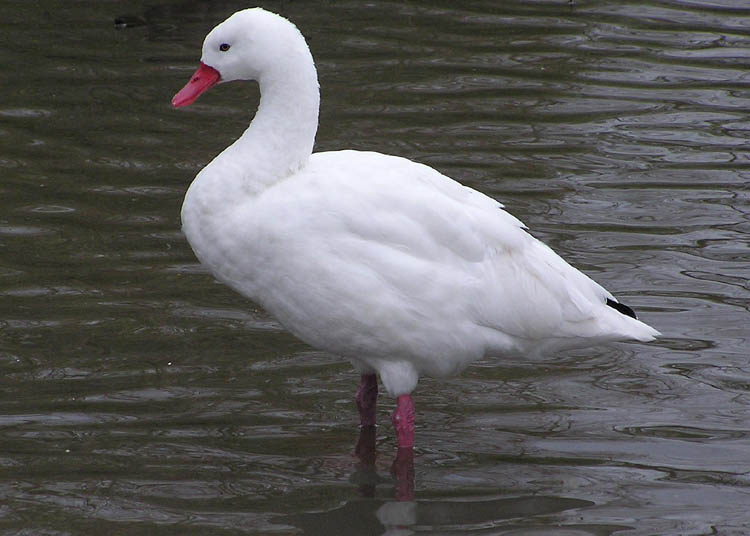
Coscoroba Swan (Coscoroba coscoroba) ©Wikipedia

Coscoroba Swan (Coscoroba coscoroba) ©Wikipedia

Swans have been written about before with Birds of the Bible – Swan I and Swan Loyalty. Because of the Lord’s amazing creation of the birds, there is always more to find out about them. In the first Swan blog it was mentioned that there are 6 Swans in the Anatidae family. Well, that is incorrect. There are 6 swans in the Cygnus genera (division of a family), but there is another genera called Coscoroba. This genera has only one swan, the Coscoroba Swan. So, there are 7 Swans.

The Coscoroba has the ones who study birds (taxonomist and others) in a quandary. They are not sure if it is a swan, duck or goose. “Externally, the body, head and legs appear to be more like a goose than a swan. As an example, their body is much smaller in comparison to other species of swans; the largest species average double the weight and have a wingspan at least 40% larger. Since they are smaller in size compared to other swan species, coscoroba swans require shorter distance to lift off from the ground or water. In contrast to other species of swan, coscoroba swans have a shorter neck and longer legs. Another feature that distinguishes coscoroba swans from other species is that feathers cover their facial skin, instead of bare skin extending from the bill to the eye. This species also lacks the characteristic basal knob found on all other five species of swans. Compared to other swans, the bill of a coscoroba swan is smaller and more resembles the bill of a duck.” (Animal Facts, Woodland Park Zoo)

They went on to say that it sounds more like a goose, doesn’t carry young on back like swans and that their young look more like young whistling ducks. Considering that the Anatidae family consists Ducks, Geese, and Swans, sounds like they are all in the same “created kind” for sure. They have been doing as they were command by God to:

And God blessed them, saying, “Be fruitful and multiply, and fill the waters in the seas, and let birds multiply on the earth. (Genesis 1:22 NKJV)
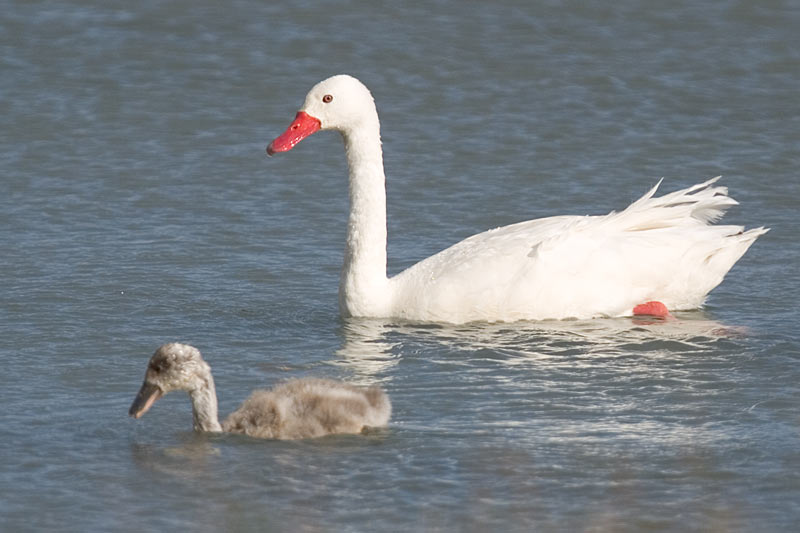
Coscoroba Swan (Coscoroba coscoroba) ©Arthur Grosset

Coscoroba Swan (Coscoroba coscoroba) ©Arthur Grosset

The Coscoroba Swan lives mainly in the southern part of South America and prefers shallow areas of lagoons, swamps, ponds, or areas with lots of vegetation. They are between 34.6-45.2 inches and males can be as much as 11.9 pounds and the female 10 pounds. “Inside the bill, there are serrated comb-like structures called lamellae, which help filter food. When eating, swans scoop up water and food, hold it in their mouth and squeeze out the water through the lamellae.”

They are all white except for the 6 black feathers at the tips of their wings. Speaking of flying, here are some interesting facts. (When migrating, the flock maintains visual contact as much as possible and will call out to each other to stay united during inclement weather or poor lighting conditions. During migrations, coscoroba swans may fly with flamingos or black-necked swans (C. melanocoryopha). Migration routes may take place at extreme elevations; researchers have noted swans flying at elevations of 26,277 feet (8,000 m). These high altitudes allow the birds to take advantage of stronger air currents. Additionally, swans almost always fly in a V-formation to save energy, as the bird in front creates a slipstream for the bird behind it to fly through.” (Animal Facts)

There are many more fascinating facts about these swans and the others, but these should help you appreciate Our Lord’s love and care for His Creation.

Hast thou not known? hast thou not heard, that the everlasting God, the LORD, the Creator of the ends of the earth, fainteth not, neither is weary? there is no searching of his understanding. (Isaiah 40:28 KJV)

See:
Coscoroba Swans Avian Web (Nice Photos)

Wordless Birds

*

Birds of the Bible – Church Camp In Philippines

Wanted to share some information on what the Lord has done through this website. This will be a two part article. I just heard about some of the results of a church camp that took place a few weeks ago. The ECBF Junior camp in Daraitan, Tanay, Philippines. Below is a video they just released on YouTube.

I got involved when Myra left a comment on our site at Birdwatching From A Christian Perspective. She asked permission to use some of the material for an upcoming camp. Of course, permission was granted and we have communicated several times since then through comments and e-mails.

I’ve asked her to do a write-up about the camp and that will be in Part II. Here are some things that I have learned through our contacts. I am sure Myra won’t mind me sharing these.

“I learned about birdwatching from an American missionary several years ago.  I didn’t know it was possible to birdwatch where I live — Taytay,  Rizal, a rather crowded town east of Manila. The missionary said they could birdwatch where they live which was not far from where I live. So have been a casual birdwatcher ever since.  I watch butterflies too.”, by Myra
Then as camp grew near, she sent me a partial section of the camp manual. When I received it, I wept from the knowledge that the Lord was using my small efforts on this blog to help others around the world. Here is part of that manual:

Let’s Be Bird Watchers!

Bakit mabuting libangan ang bird watching?

“Ang ibon at mga hayop ay marunong pa sa iyo, Sa kanila ay magtanong at ikaw ay matututo.” Job 12:7
Masdan ninyo ang mga ibon: hindi sila naghahasik ni nag-aani o kaya’y nagtitipon sa bangan. Gayunman,pinakakain sila ng inyong Amang nasa langit. Hindi ba’t higit kayong mahalaga kaysa mga ibon. (Mateo 6:26)
Sapagkat ang buhay ay higit na mahalaga kaysa pagkain, at katawan kaysa pananamit. Isipin na lang ninyo ang mga uwak: hindi sila naghahasik ni nag-aani man; wala silang bangan ni kamalig, gayunma’y pinakakain sila ng Diyos. Gaano pa kayo – higit kayong mahalaga kaysa mga ibon. (Lucas 12:23-24 )
Para maging birdwatcher:

  • Look around – magmasid.
  • Look for birds that are common near you. Where? Sa ibabaw ng mga poste, sa mga linya ng kuryente, sa mga parke, sa garden spots ng resort o subdivision.
  • Listen! Each bird has the own different note or song: Psalm 104:12(birds sing) ; Ecclesiastes 12:4 (birds make sounds); Song of Solomon 2:12 (birds have voices)
  • Some birds -maganda ang boses
  • Some birds- sintonado / malakas / masakit sa tenga ang boses
  • Some birds- madaldal.
  • Some birds- madakdak.

After you find birds to watch, observe them.
How? Take note of their:

  • Colors
  • Size (Tiny, Small, Medium, Large, Very Big)
  • Sounds
  • Beak (Pahaba, deretso lang, naka-curve, matulis, etc.)
  • Posture (hukot, deretso, laging nakatingala)
  • Wings (mahaba, maiksi, matulis, pabilog, etc.)
  • Tail (long, short, patulis, parang fork, parang pamaypay, etc.

Movements. What are they doing? Kumakain / naghahanap ng makakain / gumagawa ng pugad / may dala-dalang damo. Malikot, sa lupa naglalakad, sa bukid nakatayo , nakatayo sa ibabaw ng kalabaw

Assignment: Use some of your free time during this camp to bird watch. Describe below some of the birds you see or hear.

Like many of you, I can not read much of it, but they could and so can our Omnipresent and Omniscient Creator who knows all languages.

One more excerpt from her email I received this morning and then you can see how their camp went.

“There are a few pictures in the video that show us under some trees on a hill. That’s where I asked the kids to be absolutely silent for ten minutes and just try to listen to as many bird calls as possible. I heard at least five bird calls coming from all directions and so did many of the kids. One of the staff said those ten minutes took away months of stress. You helped in more ways than you thought you did!”

Listen to this, O Job; Stand still and consider the wondrous works of God. (Job 37:14 NKJV)

Birds of the Bible – Little Brown Jobs

An interesting video from YouTube by SmellLikeDirt caught my interest. Take a look and then I’ll comment on it.

*

The Sparrow has been written about before, but it is always nice to find out something else new about them. We know that the Lord created all the birds, but it seems as though the Sparrow just doesn’t get the attention like the more colorful birds. After watching the video, I trust you saw how God has provided for them to keep their species alive.

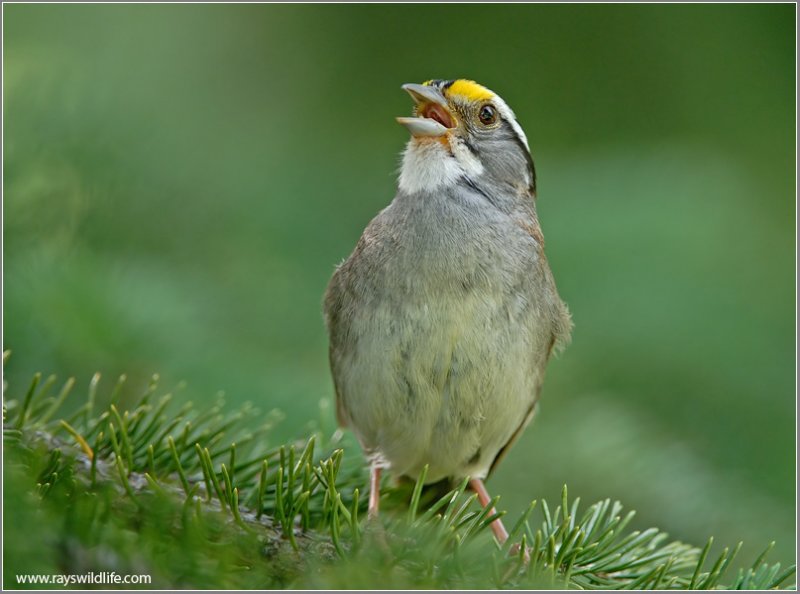
White-throated Sparrow by Ray

It is interesting about the behavior patterns of the different patterns of coloration. The White-throated Sparrow is a passerine bird of the American sparrow family Emberizidae. The White-throated Sparrow is 17 cm (6.75 inches) in length with a wingspan of 23 cm (9 inches) Typical weight is 26 grams (0.91 oz).

There are two adult plumage variations known as the tan-striped and white-striped forms. On the white-striped form the crown is black with a white central stripe. The supercilium is white as well. The auriculars are gray with the upper edge forming a black eye line.

On the tan form, the crown is dark brown with a tan central stripe. The supercilium is tan as well. The auriculars are gray/light brown with the upper edge forming a brown eye line. Both variations feature dark eyes, a white throat, yellow lores and gray bill. There is variation and some individuals may show dark lateral stripes of each side of the throat.

Most of us are just average people and sometimes may feel like you are not that important to others. But God loves us, even more than the sparrows and He hasn’t forgotten them.

Are not five sparrows sold for two copper coins? And not one of them is forgotten before God. (Luke 12:6 NKJV)

It’s true that the Sparrows are looked down on and sometimes just called, “Little Brown Jobs,” but they are created the way God wanted them in His plan for them. As Christians, not everyone can be the leader or the one in the “lime-light.” If that were true, then where would the followers be?

For in fact the body is not one member but many. If the foot should say, “Because I am not a hand, I am not of the body,” is it therefore not of the body? And if the ear should say, “Because I am not an eye, I am not of the body,” is it therefore not of the body? If the whole body were an eye, where would be the hearing? If the whole were hearing, where would be the smelling? But now God has set the members, each one of them, in the body just as He pleased. (1 Corinthians 12:14-18 NKJV)

See also:

Sparrows

*

Birds of the Bible – Leaving the Ark

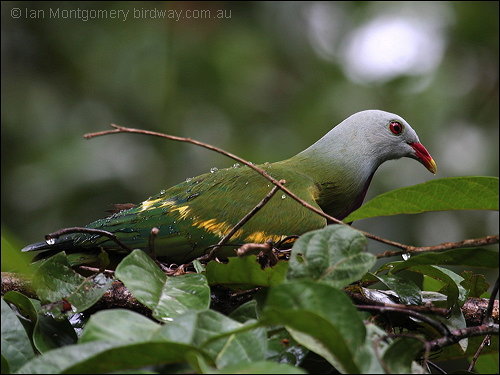
Wompoo Fruit-Dove (Ptilinopus magnificus) by Ian

Wompoo Fruit-Dove (Ptilinopus magnificus) by Ian

In my reading this week, I read something that I had overlooked before. We know that the animals, birds and all critters came to Noah two by two to be placed in the safety of the Ark.

And of every living thing of all flesh, two of every sort shalt thou bring into the ark, to keep them alive with thee; they shall be male and female. Of fowls after their kind, and of cattle after their kind, of every creeping thing of the earth after his kind, two of every sort shall come unto thee, to keep them alive. (Genesis 6:19-20 KJV)

We have written about that before in Birds of the Bible – Foundation #3 when the critters went in and Foundation #4 when they came off. What I discovered is that the attitudes or instincts of them changed when they came off.

Noah let the Raven out and it didn’t come back, but the dove did because it didn’t find a resting place for it’s feet.

But the dove found no place to set her foot, and she returned to him to the ark, for the waters were still on the face of the whole earth. So he put out his hand and took her and brought her into the ark with him. (Genesis 8:9 ESV)

Then 7 days later Noah let the dove out again and this time returned with an olive leaf.

He waited another seven days, and again he sent forth the dove out of the ark. And the dove came back to him in the evening, and behold, in her mouth was a freshly plucked olive leaf. So Noah knew that the waters had subsided from the earth. (Genesis 8:10-11 ESV)

Some commentators had this to say:

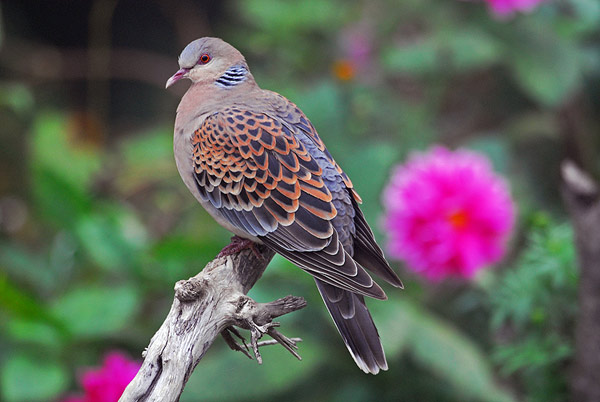
Oriental Turtle Dove (Streptopelia orientalis) by Nikhil

Oriental Turtle Dove (Streptopelia orientalis) by Nikhil

then he put forth his hand and took her, and pulled her in unto him into the ark: she hovered about it, and got near the window, which Noah opened and took her in; which may represent the gracious reception sensible souls meet with from Christ, who apply to him; he kindly embraces them, and they find room in his heart and affections, fullness of everything they want, and security from all danger.” (Gill)

“And as Noah put forth his hand, and took the dove, and pulled her in to him, into the ark, so Christ will graciously preserve, and help, and welcome, those that fly to him for rest.” (Matthew Henry)

What I noticed and believe is that the Dove did not fear Noah and allowed itself to be brought back in twice. The dove returned needing shelter, but also not wary of the humans on board. This lack of fear demonstrated by the dove may help explain why the animals, birds and other critters had no problem coming to Noah to be loaded on board the Ark in the first place. Of course, God brought them there, as we know, but the lack of fear may have made it easier for them to get them in.

Now, watch what happens in Genesis 9:1-3:

And God blessed Noah and his sons and said to them, “Be fruitful and multiply and fill the earth. The fear of you and the dread of you shall be upon every beast of the earth and upon every bird of the heavens, upon everything that creeps on the ground and all the fish of the sea. Into your hand they are delivered. Every moving thing that lives shall be food for you. And as I gave you the green plants, I give you everything. (Genesis 9:1-3 ESV)

Right there that lack of fear ended.

Today, those of us who love to go bird or critter watching know about that fear they have of us. Because of that fear, they are able to steer clear of being trapped, caged, or eaten. Do we fear satan enough that we steer clear of his traps, cages, and falling prey to him?

To me it is amazing that no matter how many times we read over a passage of Scripture, the Lord allows us see new things to help us grow and appreciate our Creator and Savior even more. Never tire of re-reading a passage of God’s Word. His Word is alive just as He is.

He is Risen! Happy Easter

Therefore doth my Father love me, because I lay down my life, that I might take it again. No man taketh it from me, but I lay it down of myself. I have power to lay it down, and I have power to take it again. This commandment have I received of my Father. (John 10:17-18 KJV)

Now if Christ be preached that he rose from the dead, how say some among you that there is no resurrection of the dead? But if there be no resurrection of the dead, then is Christ not risen: And if Christ be not risen, then is our preaching vain, and your faith is also vain. (1 Corinthians 15:12-14 KJV)

For more about Christ’s Resurrection – Please See:

Wordless Birds

Gospel Message

*

(Photo taken from an e-Mail)

Birds of the Bible – Cormorant II

And the pelican, and the gier eagle, and the cormorant, (Deuteronomy 14:17 KJV)

In the first Birds of the Bible – Cormorant, it was mentioned that they are one of the “unclean birds” not to be eaten, they have their own desalination system, and that they have been used for centuries in the Orient to catch fish for fishermen. Now, let’s look into some more facts about this family of birds.

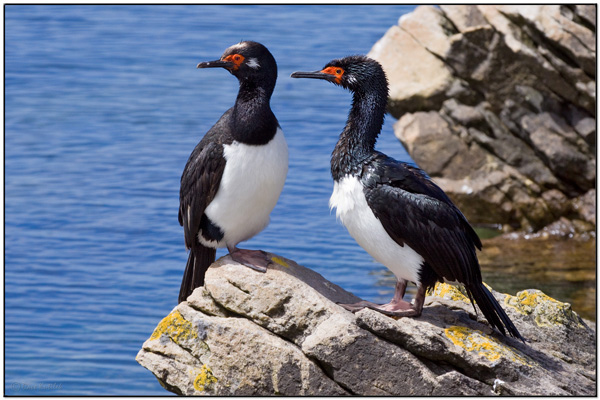
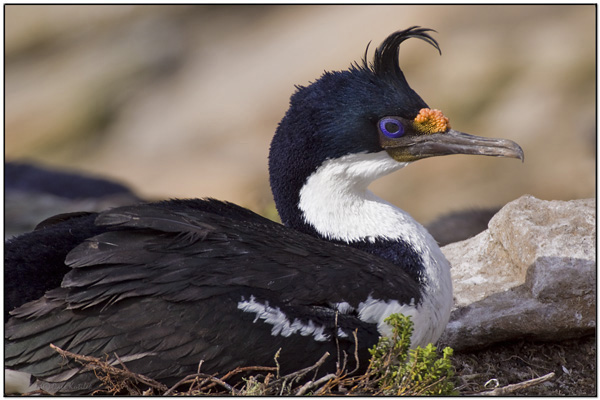
Rock Shag (Phalacrocorax magellanicus) by Daves BirdingPix

Rock Shag (Phalacrocorax magellanicus) by Daves BirdingPix

There are 36 Cormorants are in the Phalacrocoracidae Family of the Pelicaniformes Order. The family includes the Microcarbo genus (5) which has the Little Pied, Reed, Crowned, Little, and Pygmy Cormorants. The Phalacrocorax genus (21) includes Cormorants and Shags. The Leucocarbo genus (10) are all called Shags except for the Guanay Cormorant.

“There is no consistent distinction between cormorants and shags. The names “cormorant” and “shag” were originally the common names of the two species of the family found in Great Britain, Phalacrocorax carbo (now referred to by ornithologists as the Great Cormorant) and P. aristotelis (the European Shag). “Shag” refers to the bird’s crest, which the British forms of the Great Cormorant lack. As other species were discovered by English-speaking sailors and explorers elsewhere in the world, some were called cormorants and some shags, depending on whether they had crests or not. Sometimes the same species is called a cormorant in one part of the world and a shag in another, e.g., the Great Cormorant is called the Black Shag in New Zealand (the birds found in Australasia have a crest that is absent in European members of the species).” Apparently, they are just appearing after “their kind.” There is variation in size, names and colors, but they are all related.

And God created great whales, and every living creature that moveth, which the waters brought forth abundantly, after their kind, and every winged fowl after his kind: and God saw that it was good. And God blessed them, saying, Be fruitful, and multiply, and fill the waters in the seas, and let fowl multiply in the earth. (Genesis 1:21-22 KJV)

King Shag (Leucocarbo albiventer) by Daves BirdingPix

Cormorant” is a contraction derived from Latin corvus marinus, “sea raven”. Cormorants and shags are medium-to-large seabirds. They range in size from the Pygmy Cormorant (Phalacrocorax pygmaeus), at as little as 45 cm (18 in) and 340 g (12 oz), to the Flightless Cormorant (Phalacrocorax harrisi), at a maximum size 100 cm (40 in) and 5 kg (11 lb). The majority, including nearly all Northern Hemisphere species, have mainly dark plumage, but some Southern Hemisphere species are black and white, and a few (e.g. the Spotted Shag of New Zealand) are quite colorful. Many species have areas of coloured skin on the face (the lores and the gular skin) which can be bright blue, orange, red or yellow, typically becoming more brightly colored in the breeding season. The bill is long, thin, and sharply hooked. Their feet have webbing between all four toes, as in their relatives.

They are coastal rather than oceanic birds, and some have colonised inland waters – indeed, the original ancestor of cormorants seems to have been a fresh-water bird. They range around the world, except for the central Pacific islands.

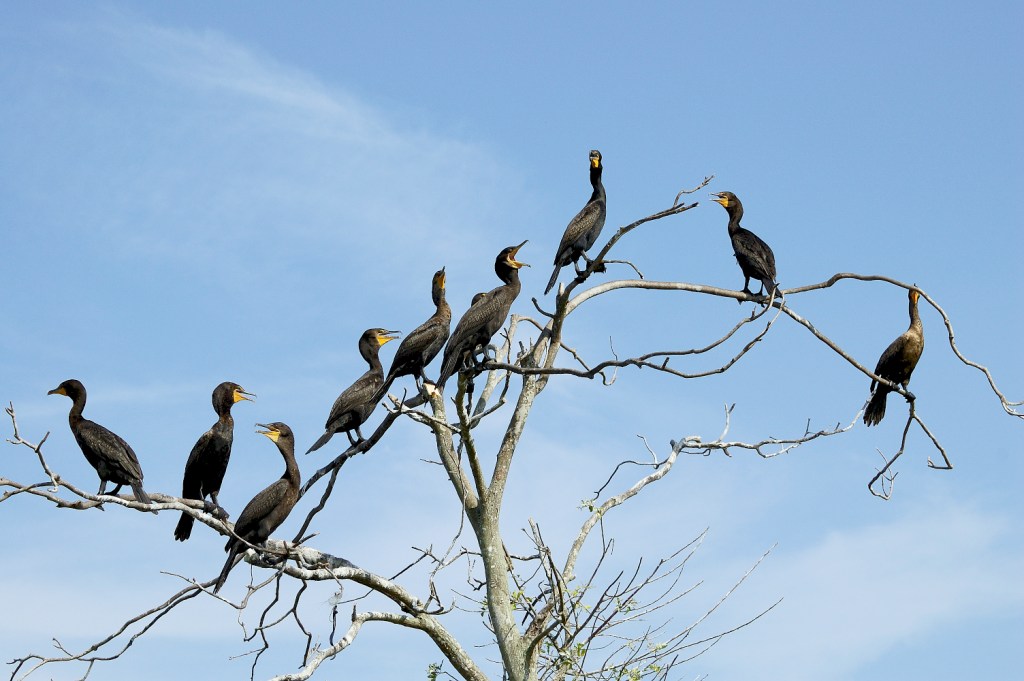
Great Cormorant (Phalacrocorax carbo) by J Fenton

Great Cormorant (Phalacrocorax carbo) by J Fenton

All are fish-eaters, dining on small eels, fish, and even water snakes. They dive from the surface, though many species make a characteristic half-jump as they dive, presumably to give themselves a more streamlined entry into the water. Under water they propel themselves with their feet. Some cormorant species have been found, using depth gauges, to dive to depths of as much as 45 metres.

After fishing, cormorants go ashore, and are frequently seen holding their wings out in the sun. All cormorants have preen gland secretions that are used ostensibly to keep the feathers waterproof.

Cormorants are colonial nesters, using trees, rocky islets, or cliffs. The eggs are a chalky-blue colour. There is usually one brood a year. The young are fed through regurgitation. They typically have deep, ungainly bills, showing a greater resemblance to those of the pelicans’, to which they are related, than is obvious in the adults.”

The Cormorants and Shags are another of the Lord’s fantastic creations from an All-powerful Creator.

Some quotes from Wikipedia

Visit the Cormorant Page

Birds of the Bible – Swan Loyalty

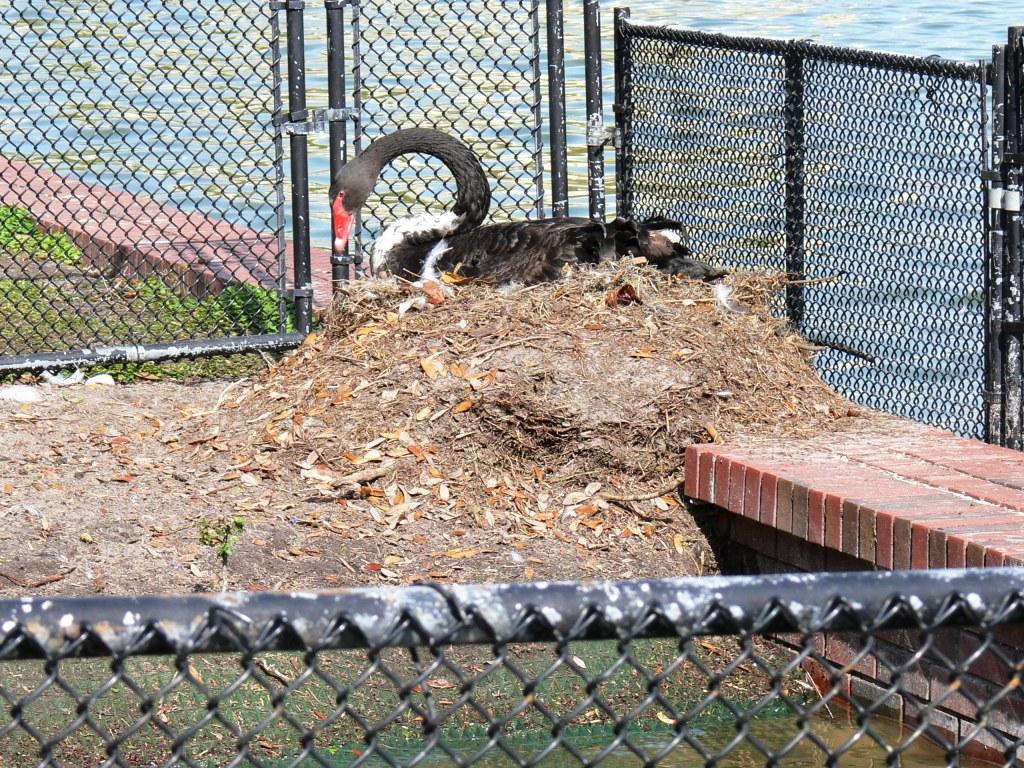
Black Swan nest at Lake Morton

Black Swan nest at Lake Morton

Dan and I went to Lake Morton in Lakeland. The Swans were building nest all over the place. When we were there several months back, one of the couples was just starting their nest. Now it is quite huge and they have even put a fence around it.

Swans are one of the Birds of the Bible listed in Deuteronomy 14:16 and Leviticus 11:18 as being one of the unclean birds that the Israelites were not to eat.

And the swan, and the pelican, and the gier eagle (Leviticus 11:18 KJV)

Here is an excerpt about the Swans and their loyalty to each other. This is from Creation Moments:
(I Corinthians 7:10) “Now to the married I command, yet not I but the Lord: A wife is not to depart from her husband.”

“Most water fowl are faithful to one mate over long periods of time. However, the swan is a champion of marital fidelity.

Mute Swan on Nest at Lake Morton

Mute Swan on Nest at Lake Morton

In North America, they are called Whistling Swans or Tundra Swans. Another member of the same species is usually found in Europe and Asia, where it is called Bewick’s Swan. Researchers report that each has a unique pattern of yellow and black on its bill, making individuals easy to identify. This allowed researchers to trace their lives over many years.

These beautiful creatures have relatively long life spans. One individual was traced for 26 years. Typically laying four eggs in nesting season, they breed for most of their lives. They are highly territorial. In a face-off for food or nesting area, the largest male is usually the winner. When there is a disagreement, the males face each other while their mates cheer them from the sidelines. Single swans enjoying a nice discovery of food are often driven off by couples. Couples are faithful for life. Researchers say that they have recorded no cases of divorce among successfully reproducing couples. Nor do they report any case of marital infidelity among swans. If a mate is lost, the survivor often takes over a year to settle down with another mate. In one case a survivor waited for six years.

Marital fidelity is also God’s instruction to humans. Today many factors are allowed to challenge marital fidelity. Often infidelity before or after marriage is portrayed as simply normal. But if swans can manage fidelity, we humans have no excuse for infidelity.”

For more information, go to the Birds of the Bible – Swans Page
Experts stunned by swan ‘divorce’ at Slimbridge wetland
Bewick’s Swans aka Tundra Swans

Birds of the Bible – Fowl (Birds) of Every Wing

In the mountain of the height of Israel will I plant it: and it shall bring forth boughs, and bear fruit, and be a goodly cedar: and under it shall dwell all fowl of every wing; in the shadow of the branches thereof shall they dwell. (Ezekiel 17:23 KJV)

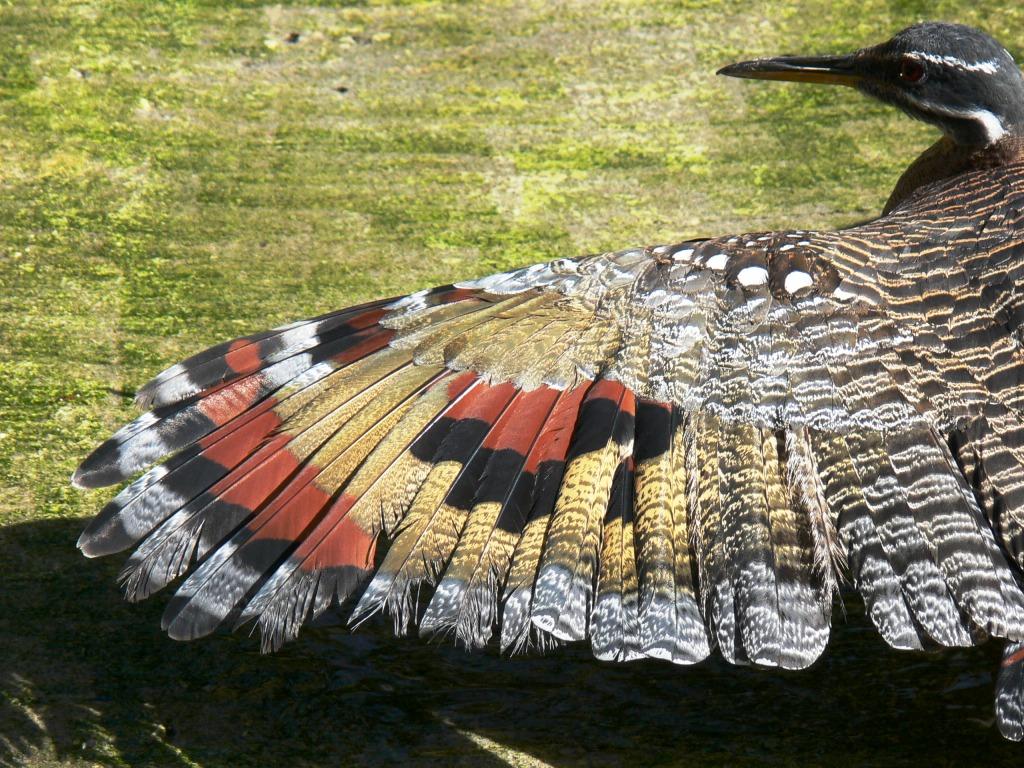
Sunbittern (Eurypyga helias) Left Wing by Lee at Lowry Park Zoo

Sunbittern (Eurypyga helias) Left Wing by Lee at Lowry Park Zoo

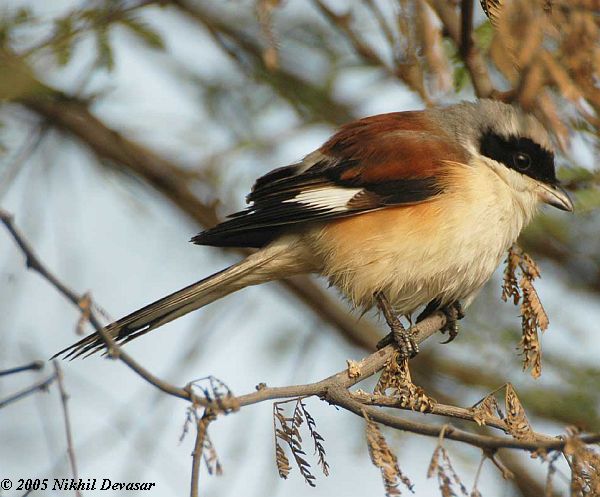
The phrase “Fowl (or Birds) of Every Wing” caught my interest. Remembering the article I recently wrote about the Sunbittern with it’s beautiful wings, I thought that might be neat to show some of the other bird’s fancy wings. Also, since I have been busy updating the Birds of the World pages, I thought that showing different birds from around the world would be interesting for you. But, first, what is that verse referring to anyway?

Adam Clarke’s Commentary on the Bible summarized Ezekiel 17:23 as a future prophecy referring to Christ,
“In the mountain of the height of Israel – He shall make his appearance at the temple, and found his Church at Jerusalem.
Shalt bring forth boughs – Apostles, evangelists, and their successors in the Gospel ministry.
And bear fruit – Multitudes of souls shall be converted by their preaching.
And under it shall dwell all fowl of every wing – All the nations of the earth shall receive his Gospel.
In the shadow of the branches thereof shall they dwell – Trust in him alone for salvation, and be saved in their trusting.”

Bay-backed Shrike (Lanius vittatus) by Nikhil Devasa

Bay-backed Shrike (Lanius vittatus) by Nikhil Devasa

“But it left room for the sovereignty of God, who would bring down the high tree and exalt the low tree, who would dry up the green tree and make the dry tree to flourish. His grace would take the little forgotten branch of the house of David and raise it up in Israel upon the mountain of His power, where He would cause it to become a goodly cedar, bearing fruit, and sheltering all that would seek the protection of its shadow. All the powers of the earth should know the word and the works of Jehovah.” (John Darby’ Synopsis)

“Both the Jews and Gentiles will be gathered into it.” (Geneva Bible Translation Notes)

and under it shall dwell all fowl of every wing; in the shadow of the branches thereof shall they dwell; by whom are designed converted sinners of all sorts, and of all nations, Jews and Gentiles; compared to birds, because weak, defenceless, and timorous; exposed to danger; and wonderfully delivered; are subject to wander and go astray; and for their chirping and warbling notes: now these may be said to “dwell” under the “shadow” of the “branches” of this “goodly cedar”, Christ and his church; that is, under the ministration of the word and ordinances, which is a very delightful and refreshing shadow, a very safe and fruitful one, Son_2:3; and here saints choose to dwell, and determine to abide and continue, as it is their interest and happiness so to do; and what a flocking and tabernacling of these birds here will there be in the latter day, where they will chirp and sing in the height of Zion? Isa_66:4; compare with this Mat_13:32; where our Lord is thought by some to allude to this passage.” (John Gill’s Exposition)

House Sparrow (Passer domesticus) Female by Nikhil

House Sparrow (Passer domesticus) Female by Nikhil

under it … all fowl — the Gospel “mustard tree,” small at first, but at length receiving all under its covert (Mat_13:32); the antithesis to Antichrist, symbolized by Assyria, of which the same is said (Eze_31:6), and Babylon (Dan_4:12). Antichrist assumes in mimicry the universal power really belonging to Christ.” (Jamieson, Fausset, and Brown)

“under it … all fowl — the Gospel “mustard tree,” small at first, but at length receiving all under its covert (Mat_13:32); the antithesis to Antichrist, symbolized by Assyria, of which the same is said (Eze_31:6), and Babylon (Dan_4:12). Antichrist assumes in mimicry the universal power really belonging to Christ.” (Life Application Study Bible)

There are other commentaries I could quote, but these are sufficient to understand that these “fowl of every wing” represent those who from around the world have accepted or will accept Christ the Lord as their Savior. (Gospel Message) We have shelter and refuge under this tree. There was a tree of life in the Garden of Eden, but access to it was forbidden because of sin, but two verses in Revelation speak of future access to that tree.

He that hath an ear, let him hear what the Spirit saith unto the churches; To him that overcometh will I give to eat of the tree of life, which is in the midst of the paradise of God. (Revelation 2:7 KJV)
Blessed are they that do his commandments, that they may have right to the tree of life, and may enter in through the gates into the city. (Revelation 22:14 KJV)

All commentary quotes are from e-Sword which is a free Bible program. More of the “Fowl of Every Wing” will be covered in future Birds of the Bible.

Cedar Waxwing – by A. J. Mithra

Cedar Waxwing

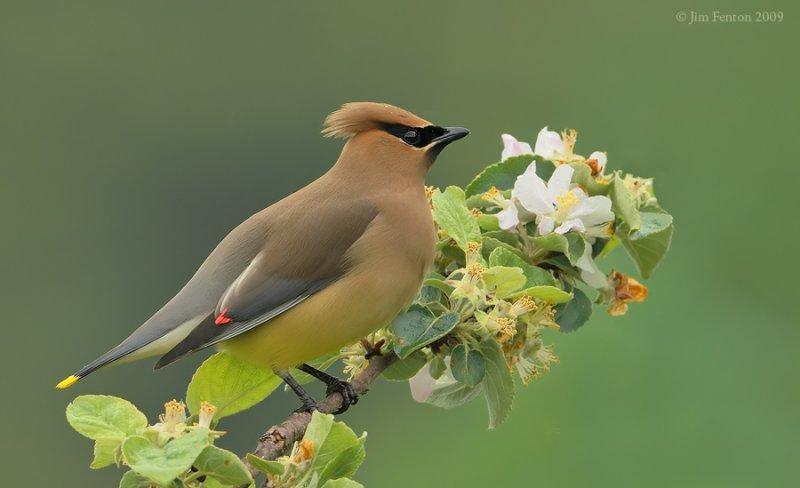
Cedar Waxwing (Bombycilla cedrorum) by J Fenton

Cedar Waxwing (Bombycilla cedrorum) by J Fenton

The Cedar Waxwing is one of the
few North American birds
that specializes in eating fruit.
It can survive on fruit alone
for several months…
The birds’ name derives
from their appetite
for cedar berries in winter…

Cedar is used in the temple
for purification..
Our body is the temple of GOD..
This bird seems to ask us
if we are leading a holy and pure life
isn’t it?

and he shall cleanse the house with the blood of the bird, and with the running water, and with the living bird, and with the cedar wood, and with the hyssop, and with the scarlet:  (Leviticus 14:53)

Cedar Waxwings inhabit
particularly along streams,,,
When JESUS comes into us
we will always dwell by the
Living Waters…

And he shall be like a tree planted by the rivers of water, that bringeth forth his fruit in his season; his leaf also shall not wither; and whatsoever he doeth shall prosper. ( Psalm 1:3)

Cedar Waxwing (Bombycilla cedrorum) by Daves BirdingPix

Cedar Waxwing (Bombycilla cedrorum) by Daves BirdingPix

The orange color is the result
of a red pigment picked up
from the berries of a
species of honeysuckle.
If a waxwing eats
enough of the berries
while growing its tail feathers
the tip of its feathers will be orange…

It is by HIS blood
that we are cleansed
and by HIS grace we become
more like HIM…
When “I” becomes less
and “JESUS” becomes more,
we would be like JESUS..
If these birds can pick up
the red color from the berries they eat,
don’t you think that we would
become more like JESUS
when we eat more of THE WORD,
THE LIVING BREAD?

By the way,
did you eat THE BREAD today?

Yours in YESHUA,
A. J. Mithra

Please visit us at: Crosstree

Birds of the Bible – Dove’s Eyes and Voice

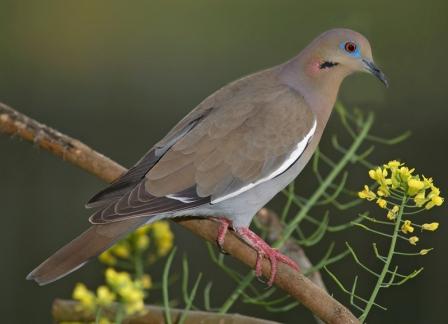
White-winged Dove by Reinier

Here are some interesting thoughts about the Eyes and Voice of a Dove. We had an Eurasian Collared Dove land in our yard today. What a lovely bird, with such a soft color. I always enjoy watching them.

White-winged Dove (Zenaida asiatica) Eye up close by Reinier

The Eyes of A Dove:

How beautiful you are, my darling, How beautiful you are! Your eyes are like doves.” (Song of Solomon 1:15 NASB)

Solomon is describing his love with terms that today we do not hear in that connection. How romantic to have your eyes compared to a dove’s eyes. At first it seems rather weird, but when you know what dove’s eyes actually look like, you realize that they ARE very beautiful.

Then she describes Solomon.

His eyes are like doves Beside streams of water, Bathed in milk, And reposed in their setting. (Song of Solomon 5:12 NASB)

John Gill’s Exposition of the Whole Bible says of this verse, referring to the meekness of Christ:
his eyes are like “doves’ eyes”; not fierce and furious, but loving and lovely; looking upon his people, under all their trials and afflictions, with sympathy and concern, to deliver them out of them: and like the eyes of doves. ”

The Voice of A Dove:
Then in chapter 2, Solomon goes on to use the dove again to describe her voice.

“Come, my shy and modest dove– leave your seclusion, come out in the open. Let me see your face, let me hear your voice. For your voice is soothing and your face is ravishing.” (Song of Solomon 2:14 MSG)

“It is fixed: She is stripped, she is carried away, And her handmaids are moaning like the sound of doves, Beating on their breasts.” (Nahum 2:7 NASB)

Audio by Andrew Spencer of Mourning Dove’s song.

John Gill’s Exposition of the Whole Bible says, “as with the voice of doves, tabering upon their breasts; mourning like doves, inwardly and secretly, not daring to express their sorrow more publicly, because of their enemies; but knocking and beating upon their breasts, as men do upon tabrets or drums, thereby expressing the inward grief of their minds; see Eze_7:16.”

Audio of Mourning Dove beating its wings by Andrew Spencer

Sounds are from Xeno-canto.org


See the Dove and Pigeons Page

Doves are in the Columbidae Family of the Columbiformes Order


Birds in Hymns – Yes, God is Good

Praise the LORD; for the LORD is good: sing praises unto his name; for it is pleasant. (Psalms 135:3 KJV)

Words: John H. Gur­ney, Psalms and Hymns for Pub­lic Wor­ship (Lon­don: 1851), based on Eliz­a­beth L. C. Fol­len’s lyr­ics in Hymns for Child­ren (Bos­ton, Mass­a­chu­setts: 1825).

Music: Tru­ro, from Psalm­o­dia Evan­gel­i­ca, by Thom­as Will­iams, 1789 (MI­DI, score). Al­ter­nate tune:
•Williams, from Tem­pli Car­mi­na, be­fore 1890 (MI­DI, score)

Yes, God is good; in earth and sky,
From ocean depths and spreading wood,
Ten thousand voices seem to cry,
“God made us all, and God is good.”

Double-crested Cormorant (Phalacrocorax auritus) at Lake John Rookery, Lakeland, FL By Dan

Double-crested Cormorant (Phalacrocorax auritus) at Lake John Rookery, Lakeland, FL By Dan

The sun that keeps his trackless way
And downward pours his golden flood,
Night’s sparkling hosts, all seem to say,
In accents clear, that God is good.

The merry birds prolong the strain,
Their song with every spring renewed;

And balmy air, and falling rain,
Each softly whispers, “God is good.”

I hear it in the rushing breeze;
The hills that have for ages stood,
The echoing sky and roaring seas,
All swell the chorus, God is good.

Yes, God is good, all nature says,
By God’s own hand with speech endued;
And man, in louder notes of praise,
Should sing for joy that God is good.

For all Thy gifts we bless Thee, Lord,
But chiefly for our heavenly food;
Thy pardoning grace, Thy quickening word,
These prompt our song, that God is good.

Most information from The Cyber Hymnal

See ~ Wordless Birds

More ~ Birds in Hymns

*

Birds of the Bible – Pleasant to the Sight

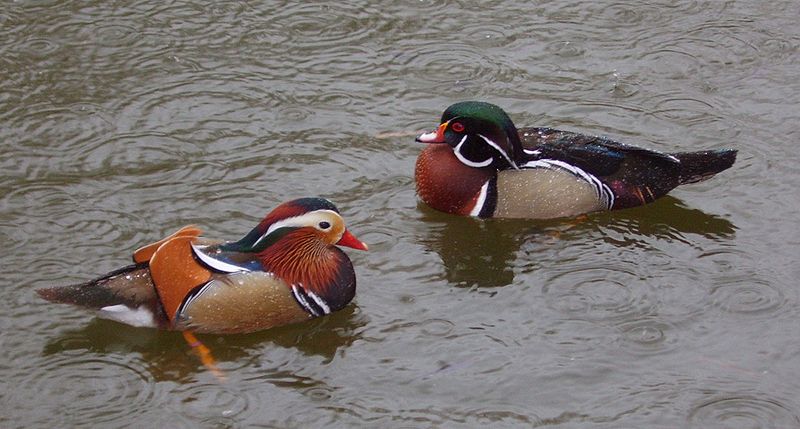
ANS-Anat Wood Duck and Mandarin Duck

And out of the ground made the LORD God to grow every tree that is pleasant to the sight, and good for food; the tree of life also in the midst of the garden, and the tree of knowledge of good and evil. (Genesis 2:9 KJV)

While searching for articles about birds I came across this article. The quote below is also appropriate for birds. I believe many of them definitely qualify as “pleasant to the sight.”

“The answer that came to my mind was suggested by Genesis 2:9, where we read that God created fruit trees not only good for food but also “pleasant to the sight.” We normally expect to find aspects of beauty as well as utility in the artifacts of human creation; how much more should we expect beauty to abound in the handiwork of God! Even creationists seem to forget that God is not only the Great Engineer, but the Great Artist as well.

Unfortunately, just like the engineering marvels of God have been corrupted by mutations and other effects of the bondage to corruption occasioned by our sin (Romans 8:18-20), so its beauty has been marred. The God whose faithful care daily sustains what He has made will not leave it so. But with the creation that “groaneth in travail,” we also wait for that time when “they shall not hurt nor destroy in all my holy mountain, but the earth shall be full of the knowledge of the Lord as the waters cover the sea” (Isaiah 6:11).” (From, Nature’s Challenge to Evolutionary Theory, by Gary Parker, Ed.D., ICR)

Thought you might enjoy seeing some “Pleasant to the Sight” birds. It was hard to narrow the choices down. These are from the Non-Passerines. Used the Passerines last week.

*

This slideshow requires JavaScript.

*