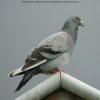
Birds of the Bible – Swallows

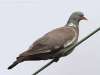
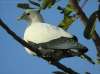
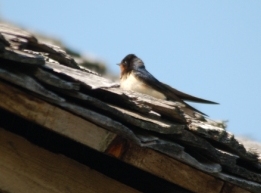
Barn Swallow by Dan

Barn Swallow by Dan

Somehow I overlooked the Swallows on the first go-around of the “Birds of the Bible” series. This blog hopes to correct that oversight.

To the Chief Musician. On An Instrument of Gath. A Psalm of the Sons of Korah. How lovely is Your tabernacle, O LORD of hosts! My soul longs, yes, even faints For the courts of the LORD; My heart and my flesh cry out for the living God. Even the sparrow has found a home, And the swallow a nest for herself, Where she may lay her young– Even Your altars, O LORD of hosts, My King and my God. Blessed are those who dwell in Your house; They will still be praising You. Selah (Psalm 84:1-4 NKJV)

Following are some quotes from Gill and Matthew Henry:

“because it freely visits the houses of men without fear” – (Gill’s Exposition of the Whole Bible)

“III. His (David’s)  grudging the happiness of the little birds that made their nests in the buildings that were adjoining to God’s altars, Psa_84:3. This is an elegant and surprising expression of his affection to God’s altars: The sparrow has found a house and the swallow a nest for herself. These little birds, by the instinct and direction of nature, provide habitations for themselves in houses, as other birds do in the woods, both for their own repose and in which to lay their young; some such David supposes there were in the buildings about the courts of God’s house, and wishes himself with them. He would rather live in a bird’s nest nigh God’s altars than in a palace at a distance

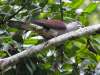
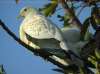
Barn Swallow by Dan

Barn Swallow by Dan

from them. He sometimes wished for the wings of a dove, on which to fly into the wilderness (Psa_55:6); here for the wings of a sparrow, that he might fly undiscovered into God’s courts; and, though to watch as a sparrow alone upon the house-top is the description of a very melancholy state and spirit (Psa_102:7), yet David would be glad to take it for his lot, provided he might be near God’s altars. It is better to be serving God in solitude than serving sin with a multitude. The word for a sparrow signifies any little bird, and (if I may offer a conjecture) perhaps when, in David’s time, music was introduced so much into the sacred service, both vocal and instrumental, to complete the harmony they had singing-birds in cages hung about the courts of the tabernacle (for we find the singing of birds taken notice of to the glory of God, Psa_104:12), and David envies the happiness of these, and would gladly change places with them. Observe, David envies the happiness not of those birds that flew over the altars, and had only a transient view of God’s courts, but of those that had nests for themselves there. David … takes notice that these birds not only have nests for themselves there, but that there they lay their young; for those who have a place in God’s
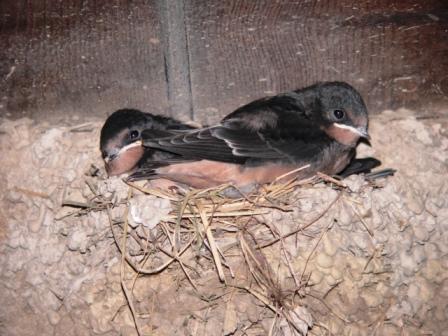
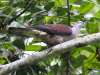
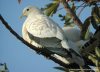
Two Swallow youngsters by Lee

Two Swallow youngsters by Lee

courts themselves cannot but desire that their children also may have in God’s house, and within his walls, a place and a name, that they may feed their kids beside the shepherds’ tents.” (Matthew Henry Commentary)

I trust that those of us that are Christians enjoy and look forward to the time we spend in church. In times like these, we need:
1. A Saviour, which is Christ the Lord (John 3:16, 2 Peter 3:18)
2. A place to “study to show thyself approved” and be nurtured by the preaching and teaching of the Word of God (Romans 10:14, 2 Timothy 2:15 & 3:16)
3. A place of fellowship (Acts 2:42)

Like a flitting sparrow, like a flying swallow, So a curse without cause shall not alight.  (Proverbs 26:2 NKJV)

Like a crane or a swallow, so I chattered; I mourned like a dove; My eyes fail from looking upward. O LORD, I am oppressed; Undertake for me! (Isaiah 38:14 NKJV)  (This verse was mentioned in the “Birds of the Bible – Cranes” blog)

“Even the stork in the heavens Knows her appointed times; And the turtledove, the swift, and the swallow Observe the time of their coming. But My people do not know the judgment of the LORD. (Jeremiah 8:7 NKJV)  (This verse was covered in the “Interesting Things – A Lesson from the Stork” blog.)

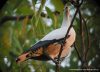
Swallows are in the Hirundinidae – Swallows Family which includes Martins. “Within the Hirundiniae, the name ‘martin’ tends to be used for the squarer-tailed species, and the name “swallow” for the more fork-tailed species; however, there is no scientific distinction between these two groups.[1] The family contains around 83 species in 19 genera.” The subfamilies are: Saw-wings (including Square-tailed, Mountain, White-headed, Black and Fanti), Swallows (many including Barn, Bank, Cave Mangrove, Golden, etc), Martins (Purple, Cuban, Sinaloa, Brown-chested, etc.), Sand Martins (including Brown-throated, Congo, Pale, Banded).

The swallows are found on all continents except Antarctica with the largest diversity of species in Africa. They are found on many islands, as there are quite a few that migrate long distances. God has designed them with short bills, but with a wide mouth that has a strong jaw. This is useful in there hunt for insects which they catch on the wing. With their streamlined body and wings that are pointed, they are very maneuverable at great speeds. Their forked long tail, that has 12 feathers, helps them steer. They can range from 3.9-9.4 inches and weight between 0.4-2.1 ounces.

More information about Swallows can be found at:

Swallow Photos
Swallow Videos

Swallow (Wikipedia)
Swallow videos on Internet Bird Collection
Swallows at Britannica Online Encyclopedia

*
Evolution vs Creation Video Series

In the beginning God created the heavens and the earth. (Genesis 1:1 NKJV)

Check out the “Evolution vs Creation” Video series from YouTube that were produced by Zonkas. Look in the “Evolution vs Creation” Pages. Many creationists like Ken Ham are mentioned along with quotes from evolutionist like Darwin. All of them are very interesting.

1 – Introduction
2 – Blind Faith & Science in Bible – Finches mentioned

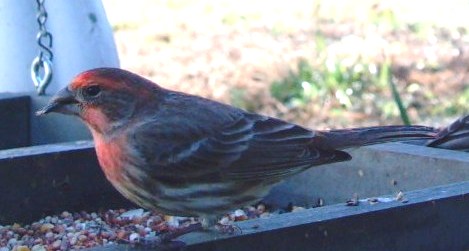
House Finch

House Finch

3 – Transitional Forms
4 – We Found the Missing The Missing Link?
5 – Big Bang Theory
6 – Chemical Evolution
7 – Earth Millions of years old?
8 – Dinosaurs and the Bible
9 – Natural Selection– Much about the eye.
10 – Creationist Scientist?
11 – Evolutionary beliefs on mankind

Birds of the Bible – Swift

“Even the stork in the heavens Knows her appointed times; And the turtledove, the swift, and the swallow Observe the time of their coming. But My people do not know the judgment of the LORD. (Jeremiah 8:7 NKJV)

While working on an “Interesting Things – Chimney Swifts” blog, I discovered that I had not done the “Birds of the Bible” about the Swallow or the Swift (translated in the NKJV and the NASB as “swift”). So, here is the first one on the Swift and the Swallow will follow soon. The Chimney Swift is now part of this one. I originally thought I had been through all the “Birds of the Bible” at least once. Fortunately, even though I may have forgotten them, the Lord never forgets his created critters.

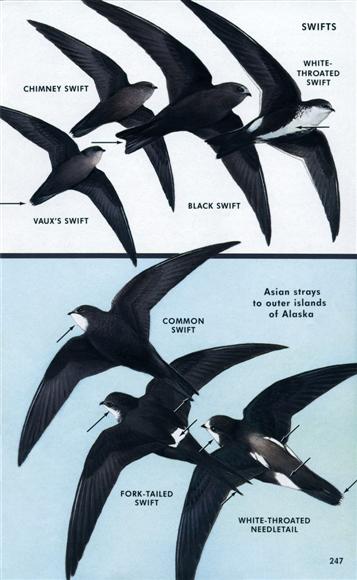
Swifts from PPeterson Field Guide to Western Birds

Swifts from Peterson Field Guide to Western Birds

During the Birding Festival last week, the Chimney Swift was mentioned as a bird that is always flying. That peaked my interest and started investigating it. Creation Moments did an article about it called “A Bird Always in Flight.

The swifts are small aerial birds, spending the majority of their lives flying. These birds have very short legs and never settle voluntarily on the ground, perching instead only on vertical surfaces. Many swifts have long swept-back wings that resemble a crescent or a boomerang. They are often described as a “flying cigar.” They belong to the Order – Apodiformes – Family Apodidae.  Many think that Swifts and Swallows are in the same family, but the Swift is related closer to the Hummingbird. “Swift” comes from the Greek apous which means “without feet.”  They all have feet, but prefer to land on a vertical surface like a chimney, clift, or bank.  Most of the Swifts travel in groups eating insects, flying most of the time – landing only to roost at night or for nesting. Their call is described as a chatter, twitter, or similar sound.”A group of swifts are collectively known as a “box”, “flock”, “screaming frenzy”, and “swoop” of swifts.” (from WhatBird.com, as are the following links)

Our North American Swifts are:
Chimney Swift is 5-6″ long with a wingspan of 11-12″ (When in a chimney they use their tail which has spines to help them stay put and they attach their nest using a saliva glue.)
Black Swift is 7-7.5″ with a wingspan of 15″
Common Swift is 6-7″ with a 16-19′ wingspan
Vaux’s Swift is 4′ with a wingspan of 11″ (the smallest North American Swift)
White-collard Swift is 8.75″ with a wingspan of 19-21
White-throated Swift is 6-7″, wingspan of 13-14″ (with a white throat)
White-throated Needletail (formerly Spine-tailed Swift) is 7.5-9″ with a 20″ wingspan


Articles and Sound from Cornell:

White-collared Swift from Wikipedia

White-collared Swift from Wikipedia

Chimney Swifts
Vaux’s Swift
White-throated Swift

Some Interesting Links:
For the Birds – Chimney Swifts
I Saw The Swifts

*

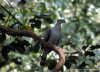
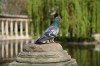
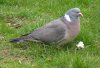
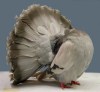
Birds of the Bible – Pigeon

In Genesis 15, Abram was told in a vision:

(1)  After these things the word of the LORD came to Abram in a vision, saying, “Do not be afraid, Abram. I am your shield, your exceedingly great reward.”…
(5)  Then He brought him outside and said, “Look now toward heaven, and count the stars if you are able to number them.” And He said to him, “So shall your descendants be.”  (6)  And he believed in the LORD, and He accounted it to him for righteousness.  (7)  Then He said to him, “I am the LORD, who brought you out of Ur of the Chaldeans, to give you this land to inherit it.”
(8)  And he said, “Lord GOD, how shall I know that I will inherit it?”
(9)  So He said to him, “Bring Me a three-year-old heifer, a three-year-old female goat, a three-year-old ram, a turtledove, and a young pigeon.”  (10)  Then he brought all these to Him and cut them in two, down the middle, and placed each piece opposite the other; but he did not cut the birds in two….
(12)  Now when the sun was going down, a deep sleep fell upon Abram; and behold, horror and great darkness fell upon him….  (17)  And it came to pass, when the sun went down and it was dark, that behold, there appeared a smoking oven and a burning torch that passed between those pieces.
(18)  On the same day the LORD made a covenant with Abram, saying: “To your descendants I have given this land, from the river of Egypt to the great river, the River Euphrates  (19)  the Kenites, the Kenezzites, the Kadmonites,  (20)  the Hittites, the Perizzites, the Rephaim,  (21)  the Amorites, the Canaanites, the Girgashites, and the Jebusites.”

The next time a pigeon is mentioned is after the birth of a child, a woman was to bring a sin offering.

‘When the days of her purification are fulfilled, whether for a son or a daughter, she shall bring to the priest a lamb of the first year as a burnt offering, and a young pigeon or a turtledove as a sin offering, to the door of the tabernacle of meeting. (Leviticus 12:6 NKJV)

In North America we have four pigeons that are in the Order Columbifomes, which contains 300 plus species. This includes pigeons, doves, and turtle-doves plus others. The size of the bird helps distinguish between “doves” and “pigeons”, with the “pigeon” being the largest. Our Pigeons are the:

The Rock Pigeon (previously the Rock Dove), “Male, 12.2–13.4 in (31–34 cm), 6.3–12.5 oz (180–355 g). Plumage generally bluish gray with relatively short tail and long, strong wings.” “The rock pigeon has a rather fast and long step. It is a skillful flyer. Flight velocities of 115 mph (185 kph) have been recorded.”  “Carrier pigeons deserve special mention. Pigeons have been used to send communications since earliest times. In ancient Egypt, Pharaoh Djoser (2600–2550 B.C.) released house pigeons at the borders of his empire to mail the news that enemies were attacking the frontiers. Today’s carrier pigeon was created about 1850 in Belgium by breeding various races. Carrier pigeons can cover up to 621 mi (1,000 km) in a single day, and were trained to live with two lofts 12.4 mi (20 km) apart.” (About.com)

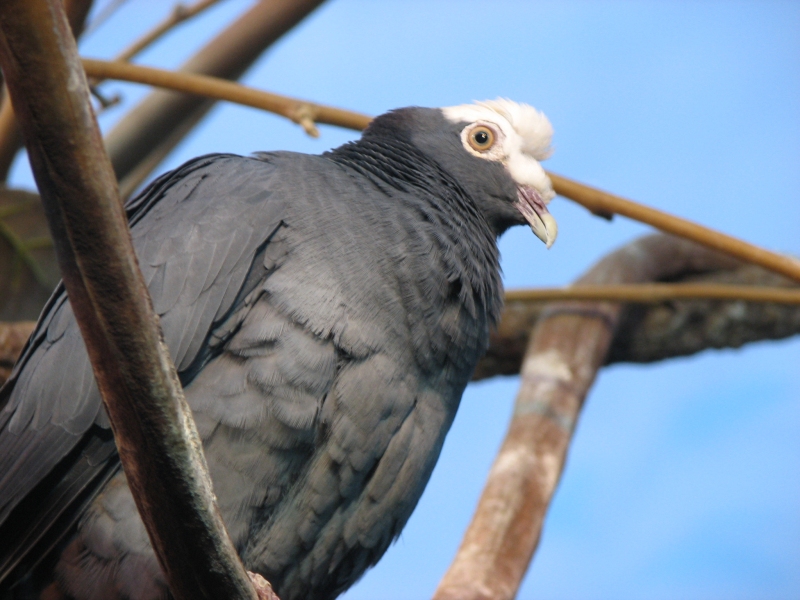
White-crowned Pigeon

White-crowned Pigeon

White-crowned Pigeon, is 13 in long, has a wingspan of 23 in and weighs about 8 oz. “The adult is dark grey, with green and white bars on the nape, a brilliant white crown to the head, a white iris, and a pale-tipped red bill.” “The ground speed of the White-crowned Pigeon in flight has not been formally documented, but is said to easily outpace a fast motorboat.” (All About Birds)

Band-tailed Pigeon, is 13-16 in and weighs 12.5 oz. and has a yellow bill and feet. “The plumage is gray, somewhat darker above. The head and underparts have a faint pink cast, especially in the adult male; the belly is nearly white.” (Western Field Guide)

Red-billed Pigeon – is 14 in and a large pigeon, that is gray and deep maroon, with a red bill with a pale tip.

“Pigeons and doves are distributed everywhere on Earth, except for the driest areas of the Sahara Desert, Antarctica and its surrounding islands and the high Arctic. They have colonised most of the world’s oceanic islands (with the notable exception of Hawaii), reaching eastern Polynesia and the Chatham Islands in the Pacific, Mauritius, the Seychelles and Reunion in the Indian Ocean, and the Azores in the Atlantic Ocean.

The Band-tailed Pigeon is the largest in North America. The Passenger Pigeon, which has become extinct, at one time had over 4 billion in number. One report mentioned that on a fly-over the pigeons were in a flock, “a mile wide and up to 300 miles long, were so dense that they darkened the sky for hours and days as the flock passed overhead.” (Chipper Wood Bird Observatory)

The family has adapted to most of the habitats available on the planet. The largest number of species are found in tropical forests and woodlands, where they may be arboreal, terrestrial or semi-terrestrial. Various species also inhabit savannas, grasslands, deserts, temperate woodlands and forests, mangrove forests, and even the barren sands and gravels of atolls.” From Wikipedia

“The Common Bronzewing (Phaps chalcoptera) is a species of medium-sized, heavily built pigeon. Native to Australia and one of the country’s most common pigeons, the Common Bronzewing is able to live in almost any habitat, with the possible exception of very barren areas and dense rainforests.” From Wikipedia

Pigeons in a group are called a “loft,” “band,” “dropping”, “passel” or a “school” of pigeons.

Links from WhatBird.com
Red-billed Pigeon
Band-tailed Pigeon or Band-tailed from All About Birds
Rock Pigeon or Rock from All About Birds
White-crowned Pigeon or White-tailed from All About Birds
Here are some of the Pigeons Worldwide:

Birds in Hymns – Awake, Glad Soul

Birds in Hymns – Awake, Glad Soul by John S. B. Monsell

Based on I Corinthians 15:20

But now Christ is risen from the dead, and has become the firstfruits of those who have fallen asleep. (NKJV)

Words: John S. B. Mon­sell, 1857. Music: St. Ste­phen, Wil­liam Jones, 1789 Al­ter­nate tunes: Awake, Glad Soul

Awake, glad soul! awake! awake!
Thy Lord has risen long;
Go to His grave, and with thee take
Both tuneful heart and song.

Bok Sanctuary Flower by Dan

Bok Sanctuary Flower by Dan

Where life is waking all around,
Where love’s sweet voices sing,
The first bright blossom may be found
Of an eternal spring.

The shade and gloom of life are fled
This resurrection day;
Henceforth in Christ are no more dead,
The grave hath no more prey.

In Christ we live, in Christ we sleep,
In Christ we wake and rise,
And the sad tears death makes us weep,
He wipes from all our eyes.

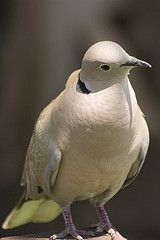
Eurasian Collard Dove by Reinier Munguia

Eurasian Collard Dove by Reinier Munguia

And every bird and every tree,
And every opening flower,
Proclaim His glorious victory,
His resurrection power.

The folds are glad, the fields rejoice,
With vernal verdure spread,
The little hills lift up their voice
And shout that death is dead.

Then wake, glad heart! awake! awake
And seek Thy risen Lord;
Joy in His resurrection take,
And comfort in His Word.

And let thy life, through all its ways,
One long thanksgiving be:
Its theme of joy, its song of praise—
Christ died, and rose for me.

Most information from The Cyber Hymnal

See ~ Wordless Birds

More ~ Birds in Hymns

*

Birds of the Bible – Osprey II

Osprey by Anthony

Osprey by Anthony

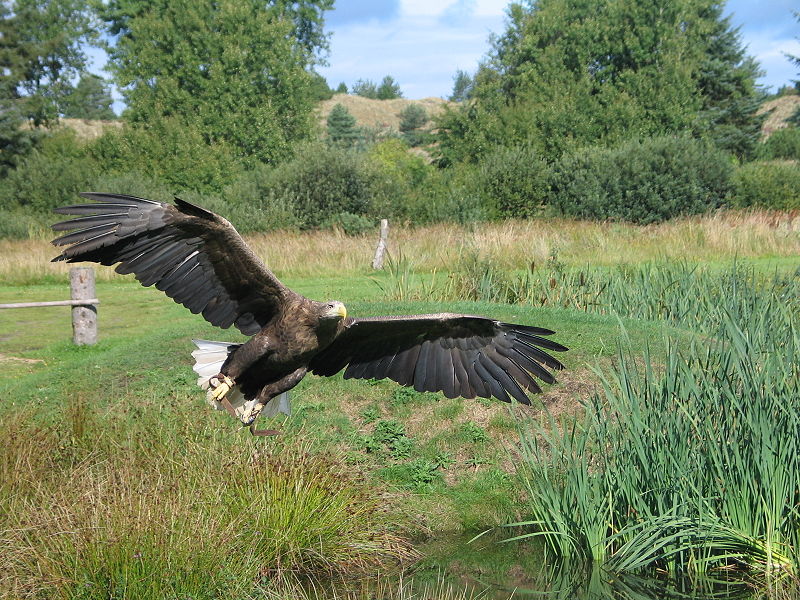
The Osprey or Ospray (depending on which version of Bible) listed in Leviticus 11:13 or Deuteronomy 14:12, gives an interesting challenge. According to my e-Sword Bible Program, an Osprey or ospray is listed in the ASV, BBE, Bishops, CEV, Geneva, JPS, KJV,  MKJV, RV, WEB, Webster, and YLT versions. Yet, the Darby calls it a sea-eagle. The ESV, GW, LITV, MSG, NASB, and the NKJV versions call it a type of Vulture. I am not sure why the different versions do that, but most of them call it the Osprey or sea-eagle which is another name used for it. The WhatBird article had this to say about it, “The Osprey, Pandion haliaetus–whose species name is derived from the Greek ‘hals’ (salt or sea) and ‘aetos,’ or eagle–is the only bird of prey that feeds exclusively on live fish.”
Smith’s Bible Dictionary says, “Osprey. The Hebrew word occurs in, Lev_11:13 and Deu_14:12, as the name of some unclean bird. It’s probably either the osprey, (Pandion haliaetus), or the white-tailed eagle, (Haliaetus albicella).”
Faussett Bible Dictionary says, “Ospray

Osprey with Fish by Jim Fenton

Osprey with Fish by Jim Fenton

ozniah (Lev_11:13; Deu_14:12). The sea eagle or fish hawk, Pandion haliaetus, the Septuagint. Or the short-toed eagle that feeds upon reptiles. The ossifrage (peres, means “the bone-breaker,” the lamergeyer, Gypaetus (eagle and vulture combined) barbatus, “the bearded vulture.” “Ospray” is a corruption of “ossifrage.” It flies in easy curving lines, and then pounces perpendicularly with unerring aim on a fish.”
International Standard BibleEncyclopedia says, “Ospray
os´prā́ (עזניּה, ‛oznīyāh; ἁλιάετος, haliáetos; Latin Pandion haliaetus): A large hawk preferring a diet of fish. The word is found in the list of abominations only. See Lev_11:13; Deu_14:12. The osprey was quite similar in appearance to some of the smaller eagles, and by some it is thought that the short-toed eagle is intended. But the eagle and the gier-eagle had been specified, and on account of the osprey plunging into water for food and having feet bare to the lower leg-joint and plumage of brighter and more distinctive marking, it seems very probable that it was recognized as a distinctive species, and so named separately. Moreover, the osprey was not numerous as were other hawks and eagles. It was a bird that lived almost wholly on fish, and these were not plentiful in the waters of Palestine. This would tend to make it a marked bird, so no doubt the translation is correct as it stands, as any hawk that lived on fish would have been barred as an article of diet (see Tristram, Natural History of the Bible, 182; also Studers, Birds of North America, p. 16).”
Webster says, Ospray
“OS’PRAY, n. [L. ossifraga; as, a bone, and frango, to break; the bone-breaker.]
The sea-eagle, a fowl of the genus Falco or hawk, of the size of a peacock. This is our fish hawk. It feeds on fish which it takes by suddenly darting upon them, when near the surface of the water.”

White-tailed Eagle in Flight - Wikipedia

White-tailed Eagle in Flight – Wikipedia

One thing most of them seem to be in agreement about, is that the bird is a fish eater. The Osprey’s diet consists almost exclusively of fish and God has created them with specialized feet and behaviors to assist them in their search for food. One of their biggest problems is the thievery of their catch by Bald Eagles. Dan and I have had the privilege twice to witness this event. Once years ago in Punta Gorda, Florida and just last month here in Winter Haven. Needless to say, the Osprey gets very upset, but both times, they lost. Do you think the Eagle knows the truth of Ephesians 4:28? (Replace hands with feet). Let’s make sure we don’t copy this improper behavior of the Eagle.

Let him who stole steal no longer, but rather let him labor, working with his hands what is good, that he may have something to give him who has need. (Eph 4:28 NKJV)

Original blog about the Osprey was Birds of the Bible – Osprey

See the Osprey Page for more information on the Osprey including Photos and Videos.

For more sources of information about Ospreys see:
Osprey – WhatBird.com
Osprey – Wikipedia
Osprey – BirdLife Species Factsheet
USGS – Osprey
Osprey Videos from the Internet Bird Connection

Birds of the Bible – Falcons II

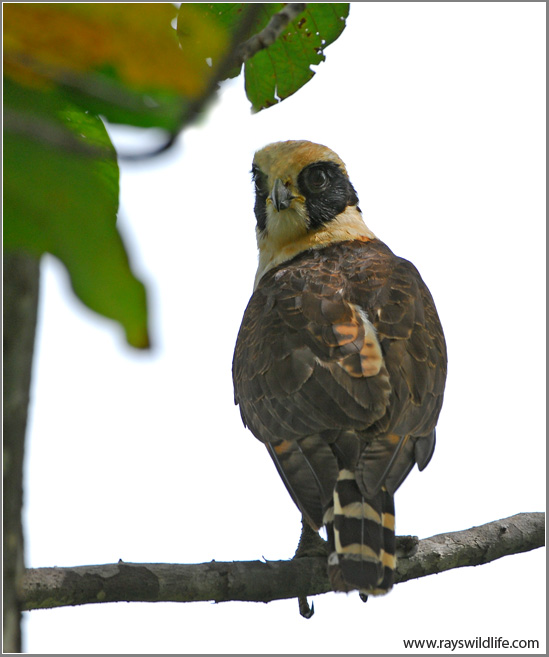
Laughing Falcon in Palo Verde National Park, Costa Rica by Ray

Laughing Falcon in Palo Verde National Park, Costa Rica by Ray

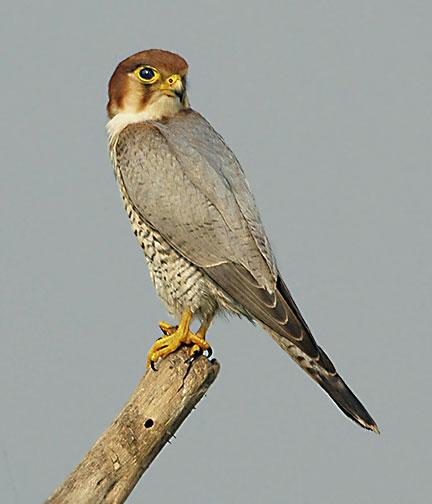
I have noticed that many come to my blog looking for information and photos of Falcons. The Birds of the Bible – Falcons introduced the Falcons. This week we will give some more on the Falcons around the world. The Falcon is on the “unclean list” of birds and was not to be eaten. Deuteronomy 14:13 and Leviticus 11:14 provides their name in that list.

the red kite, the falcon, and the kite after their kinds; (Deu 14:13 NKJV)
the kite, and the falcon after its kind; (Lev 11:14 NKJV)

The other reference in Scripture is found in Job 28:7 which refers to it’s eye.

That path no bird knows, Nor has the falcon’s eye seen it.

The Lord has created the Falcon with another fantastic ability which helps it catch its prey. Notice as you watch these videos, no matter what else they are doing, their eye’s are constantly watching for prey. A quote from Steiner Birding about the Peregrine Falcon says, “Sight is developed to a marvelous degree:
They are equipped with full-color vision and with eyes specially adapted to permit rapid adjustment of focus while moving at speed, and from four to eight times the resolving power of the human eye. Hovering may be compared to looking into a field from a car moving at twenty miles an hour or from one which comes to a standstill every few yards. It would be possible for a human being to see an individual rabbit or large game bird at a range of 600-700-yards; a bird of prey, with about four times the resolving power of the human eye, should therefore be able to see it at a range of nearly two miles.”

Here is a list of the Falcon’s listed at Internet Bird Collection (IBC) (a total of 34) The ones with the * were mentioned in the first blog:

Laughing Falcon – Videos of a Laughing Falcon on a tree and a Laughing Falcon calling continuously
Barred Forest-Falcon
Plumbeous Forest-Falcon
Lined Forest-Falcon
Slaty-backed Forest-Falcon
Collared Forest-Falcon

Red-necked Falcon

Red-necked Falcon from Wikipedia

Buckley’s Forest-Falcon
Spot-winged Falconet  – Video
African Pygmy Falcon – Video
White-rumped Pygmy-Falcon P
Collared Falconet – Video
Black-thighed Falconet
White-fronted Falconet
Philippine Falconet – Video
Pied Falconet – Video
Red-necked Falcon
Red-footed Falcon – Video
Amur Falcon – Video
Eleonora’s Falcon – Video
Sooty Falcon
Aplomado Falcon – Video
Bat Falcon – Video
Orange-breasted Falcon
New Zealand Falcon
Brown Falcon – Video
Grey Falcon
Black Falcon
Lanner Falcon – Video
Laggar Falcon
Saker Falcon – Video
Gyrfalcon
Prairie Falcon – Video
Taita Falcon – Video
Peregrine Falcon – Video

See also:

Falcon Pages
Falconidae – Caracaras, Falcons – Family
Peregrine Falcon – Peterson Field Guide

*

Birds in Hymns – In The Garden

Based on John 20:18

Mary Magdalene came and told the disciples that she had seen the Lord, and that he had spoken these things unto her.

Words & Music: C. Aus­tin Miles, March 1912:

In 1912 the music publisher Dr. Adam Geible wanted author and composer C. Austin Miles to write something that was “sympathetic in tone, breathng tenderness in every line; one that would bring tenderness in every line; one that would bring hope to the hopeless, rest for the weary, and downy pillows to dying beds.”

I read…the sto­ry of the great­est morn in his­to­ry: ‘The first day of the week com­eth Ma­ry Mag­da­lene ear­ly, while it was yet ve­ry dark, unto the se­pul­cher.’ In­stant­ly, com­plet­ely, there un­fold­ed in my mind the scenes of the gar­den of Jo­seph….Out of the mists of the gar­den comes a form, halt­ing, he­si­tat­ing, tear­ful, seek­ing, turn­ing from side to side in be­wil­der­ing amaze­ment. Fal­ter­ing­ly, bear­ing grief in ev­e­ry ac­cent, with tear-dimmed eyes, she whis­pers, ‘If thou hast borne him hence’… ‘He speaks, and the sound of His voice is so sweet the birds hush their sing­ing.’ Je­sus said to her, ‘Mary!’ Just one word from his lips, and for­got­ten the heart­aches, the long drea­ry hours….all the past blot­ted out in the pre­sence of the Liv­ing Pre­sent and the Eter­nal Fu­ture.’

This hymn was sung in the mo­vie Plac­es in the Heart, which won two Acad­e­my Awards in 1984.
C. Austin Miles (1868-1946)

I come to the garden alone
While the dew is still on the roses
And the voice I hear falling on my ear
The Son of God discloses.

Refrain

And He walks with me, and He talks with me,
And He tells me I am His own;
And the joy we share as we tarry there,
other has ever known.

He speaks, and the sound of His voice,
Is so sweet the birds hush their singing,
And the melody that He gave to me
Within my heart is ringing.

Refrain

I’d stay in the garden with Him
Though the night around me be falling,
But He bids me go; through the voice of woe
His voice to me is calling.

Refrain


References: In The Garden
Amazing Grace by Kenneth W. Osbeck, p. 116

Most information from The Cyber Hymnal

See ~ Wordless Birds

More ~ Birds in Hymns

*


Singing “In The Garden” by mercy2us

Musical Only by ilovetrains63

Another by gorgrel

Birds of the Bible – Pelicans II

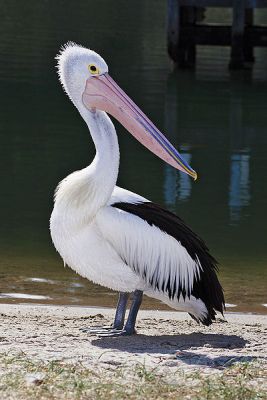
Australian Pelican

Australian Pelican

We were birdwatching at Lake Hollingsworth this week and spotted 11 American White Pelicans on the lake and also 5 Brown Pelicans hanging out with them. Over them were at least 10 or so Osprey circling hoping for some leftovers or fish to be scared up. So, this week we will revisit the “Birds of the Bible – Pelicans.”

In the first article we covered the American White Pelicans and the Brown Pelicans (our North American Pelicans), but there are six more around the world. They are  the:

Australian Pelican widespread on the inland and coastal waters of Australia and New Guinea, also in Fiji, parts of Indonesia and as a vagrant to New Zealand. Medium-sized by pelican standards: 5.3-6 ft long with a wingspan of 6–8.3 ft and weighing 9–29 lb). It is predominantly white with black along the primaries of the wings. The pale, pinkish bill is enormous, even by pelican standards, and is the largest bill in the avian world. The record-sized bill was 19.5 in long.

Dalmation Pelican It breeds from southeastern Europe through Asia to China in swamps and shallow lakes. The nest is a crude heap of vegetation. The largest of the pelicans, averaging 67 inches in length, 24-33 lbs in weight and just over 10 ft in wingspan. On average, it’s the world’s heaviest flying species. Peruvian Pelican The Peruvian birds are nearly twice the bulk of the Brown Pelican, averaging 15.4 lb in weight; they are also longer, measuring about 5 ft overall.

Great White Pelican Also known as the Eastern White Pelican or Great White Pelican, it breeds from southeastern Europe through Asia and in Africa in swamps and shallow lakes. The tree nest is a crude heap of vegetation. A large pelican, at 22 lbs, 63 in long and with a 110 inch wingspan. It differs from the Dalmatian Pelican, the only larger species of pelican, by its pure white, rather than greyish-white, plumage, a bare pink facial patch around the eye and pinkish legs.

Pink-Backed Pelicans

Pink-Backed Pelicans

Pink-backed Pelican A resident breeder in Africa, southern Arabia and Madagascar in swamps and shallow lakes. The nest is a large heap of sticks, into which 2-3 large white eggs are laid. The chicks feed by plunging their heads deep into the adult’s pouch and taking the partially digested regurgitated fish. A small pelican, but the wingspan is still around 7.9 ft with an average weight of 12 lbs. It is much smaller and duller than the Great White Pelican. The plumage is grey and white, with a pink back.

Spot-billed Pelican It breeds in southern Asia from southern Pakistan, Republic of India to Indonesia. It is a bird of large inland and coastal waters, especially shallow lakes. The nest is a heap of vegetation in a tree. A small pelican, at 49-60 in long and a weight of 9-13.2 lbs. It is mainly white, with a grey crest, hindneck and tail. Information taken from Wikipedia


The LORD will be awesome to them, For He will reduce to nothing all the gods of the earth; People shall worship Him, Each one from his place, Indeed all the shores of the nations. “You Ethiopians also, You shall be slain by My sword.” And He will stretch out His hand against the north, Destroy Assyria, And make Nineveh a desolation, As dry as the wilderness. The herds shall lie down in her midst, Every beast of the nation. Both the pelican and the bittern Shall lodge on the capitals of her pillars; Their voice shall sing in the windows; Desolation shall be at the threshold; For He will lay bare the cedar work. This is the rejoicing city That dwelt securely, That said in her heart, “I am it, and there is none besides me.” How has she become a desolation, A place for beasts to lie down! Everyone who passes by her Shall hiss and shake his fist. (Zep 2:11-15 NKJV)

“Judah had been taunted and mocked by the neighboring nations, Moab and Ammon, but God reminded them that he had “heard the taunts” (Zep_2:8), and that the taunters would be punished for their pride (Zep_2:10). At times the whole world seems to mock God and those who have faith in him. When you are ridiculed, remember that God hears and will answer. Eventually, in God’s timing, justice will be carried out. To predict the destruction of Nineveh 10 years before it happened would be equivalent to predicting the destruction of London, Tokyo, Paris, or New York. Nineveh was the ancient Near Eastern center for culture, technology, and beauty. It had great libraries, buildings, and a vast irrigation system that created lush gardens in the city. The city wall was 60 miles long, 100 feet high, and over 30 feet wide and was fortified with 1,500 towers. Yet the entire city was destroyed so completely that its very existence was questioned until it was discovered, with great difficulty, by 19th-century archaeologists. Nineveh had indeed become as desolate and dry as the desert.” (Notes from the Life Application Bible on Zephaniah 2:8-15)


See also these links:

Interesting link to Our Daily Bread about the Pathetic Pelican.

Birds of the Bible – Pelicans

Pelicans Page with Pictures and Videos

Birds in Hymns – His Eye Is On The Sparrow

Birds in Hymns – His Eye Is On The Sparrow by Civilla D. Martin.

His Eye Is On The Sparrow

Based on Matthew 10:29-31

Are not two sparrows sold for a farthing? and one of them shall not fall on the ground without your Father. But the very hairs of your head are all numbered. Fear ye not therefore, ye are of more value than many sparrows.

Words: Civilla D. Martin, 1905.
Music: Charles H. Gabriel

Grasshopper Sparrow Singing (by Ray's Wildlife Photography)

Grasshopper Sparrow Singing (by Ray

“Early in the spring of 1905, my husband and I were sojourneying in Elmira, New York. We contracted a deep friendship for a couple by the name of Mr. and Mrs. Doolittle—true saints of God. Mrs. Doolittle had been bedridden for nigh twenty years. Her husband was an incurable cripple who had to propel him self to and from his business in a wheel chair. Despite their afflictions, they lived happy Christian lives, bringing inpiration and comfort to all who knew them. One day while we were visiting with the Doolittles, my husband commented on their bright hope fullness and asked them for the secret of it. Mrs. Doolittle’s reply was simple: “His eye is on the sparrow, and I know He watches me.” The beauty of this simple expression of bound less faith gripped the hearts and fired the imagination of Dr. Martin and me. The hymn ‘His Eye Is on the Sparrow’ was the outcome of that experience.

Civilla Martin
The next day she mailed the poem to Charles Gabriel, who supplied the music. Singer Ethel Waters so loved this song that she used its name as the title for her autobiography.”

(Quotes from Cyberhymnal.org)

His Eye Is On The Sparrow

Why should I feel discouraged, why should the shadows come,
Why should my heart be lonely, and long for heaven and home,
When Jesus is my portion? My constant friend is He:
His eye is on the sparrow, and I know He watches me;
His eye is on the sparrow, and I know He watches me.

Refrain

Savanna Sparrow Singing (By Ray)

Savanna Sparrow Singing (By Ray)

I sing because I’m happy,
I sing because I’m free,
For His eye is on the sparrow,
And I know He watches me.

“Let not your heart be troubled,” His tender word I hear,
And resting on His goodness, I lose my doubts and fears;
Though by the path He leadeth, but one step I may see;
His eye is on the sparrow, and I know He watches me;
His eye is on the sparrow, and I know He watches me.

Refrain

Whenever I am tempted, whenever clouds arise,
When songs give place to sighing, when hope within me dies,
I draw the closer to Him, from care He sets me free;
His eye is on the sparrow, and I know He watches me;
His eye is on the sparrow, and I know He watches me.

Refrain


Photos with permission of Ray’s Wildlife Photography


See also:
His Eye Is On The Sparrow (Video by a j mithra)

Most information from The Cyber Hymnal

See ~ Wordless Birds

More ~ Birds in Hymns

*

Birds of the Bible – Review

But now ask the beasts, and they will teach you; And the birds of the air, and they will tell you; Or speak to the earth, and it will teach you; And the fish of the sea will explain to you. Who among all these does not know That the hand of the LORD has done this, In whose hand is the life of every living thing, And the breath of all mankind? (Job 12:7-10 NKJV)
Since February, the different birds of the Bible were presented in random order. Here is a list of those birds, with their links, in alphabetical order. Hope this helps you find a particular bird easier. If this is being used as a review, try to visualize the bird before you click on the link. (Always the teacher)

Introduction to Birds of the Bible
Foundation #1
Foundation #2
Foundation #3
Foundation #4
Foundation #5

Pelicans Pelican Study
Pigeon
Quail
Raven
Sparrows I Sparrow II House Sparrows
Storks
Swallows
Swan
Swift
Vultures
Solomon’s Birds
Bird Idols
Thoughts on the Birds of the Bible Series
Favorites
None
For His Pleasure I, For His Pleasure II
Study Tips
Speckled Bird
Birds of the Bible – Paraiba, Brazil
Birds of the Bible – Niami, Niger, West Africa

Other Articles and Videos about Birds
Be Still And Know That He is God
Birds
Bird Feeder I
Clean vs Unclean
Deuteronomy 14:11-18 Visualized
God’s Care For Birds
Pacific Golden Plover
Under His Wing

Birds of the Bible – Hen and Rooster

This week’s Birds of the Bible brings us to the end of the specifically named birds of the Bible. Since February, I have tried to present a different bird each week. I have been given the privilege to continue on with non-specific named birds and to repeat birds with different facts on our church blog.

Our Hen and the Rooster or Cock are domesticated and most have seen and heard them. So, since they are so diverse, I am only going to cover the verses that relate to them. The hen or female chicken is very protective when she has her young about her. Under her wings she provides warmth, security, and love. Christ made reference to that fact when He had been talking to the “scribes and Pharisees, hypocrites!” in Matthew 23 when He said:

O Jerusalem, Jerusalem, the one who kills the prophets and stones those who are sent to her! How often I wanted to gather your children together, as a hen gathers her chicks under her wings, but you were not willing!  (Mat 23:37 NKJV)

The Lord wants to protect us and take care of us, and what a blessing it is when we let Him provide. Unfortunately, many did not let Him then or now provide the shelter and care only He can give.


Jesus said to him, “Assuredly, I say to you that this night, before the rooster crows, you will deny Me three times.” (Mat 26:34 NKJV)
Then he began to curse and swear, saying, “I do not know the Man!” Immediately a rooster crowed. And Peter remembered the word of Jesus who had said to him, “Before the rooster crows, you will deny Me three times.” So he went out and wept bitterly. (Mat 26:74-75 NKJV)

Most of us know the story of how Peter was so sure he would never fail the Lord and deny Him, but Christ knew that before that very night was over by the time the rooster would wake up and crow, what would take place. Peter repented and went on to be a great apostle the rest of his life. Did he ever slip and fall again, I’m sure he did, like those of us who are saved by grace. Just maybe, Peter remembered the Lord’s illustration of the Hen protecting her chicks and sought the protection, security, and love only Christ can provide.