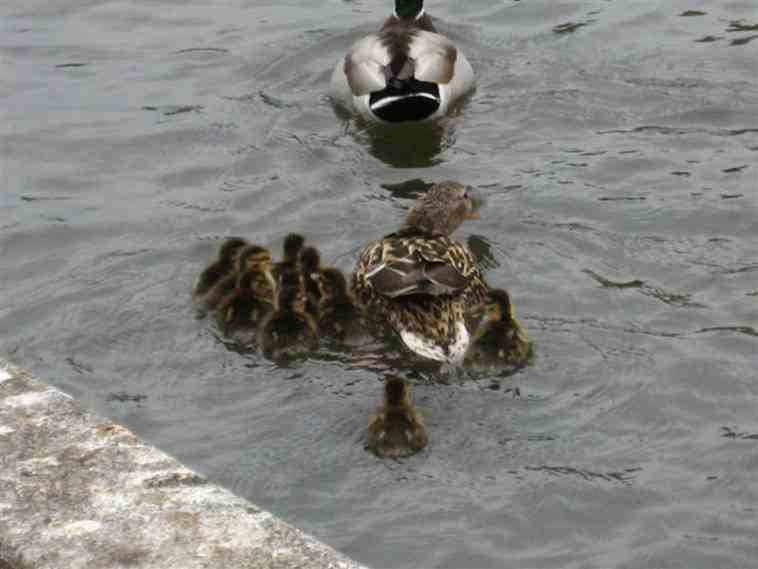
Vacation Bible School – 2012

In the beginning God created the heavens and the earth. (Genesis 1:1 NKJV)

The Fountain: Through the Eyes of the Volunteer (by Alona Hradec…:

Vacation Bible School are three words that I have not used, since I attended only once in the second grade.  But this past week has pro…

A very interesting article was placed on our church blog, The Fountain. Alona is an intern this summer and is learning many neat things and tasks. She described our VBS very well. Dan and I took photos throughout the week and thought I would share some of them here.

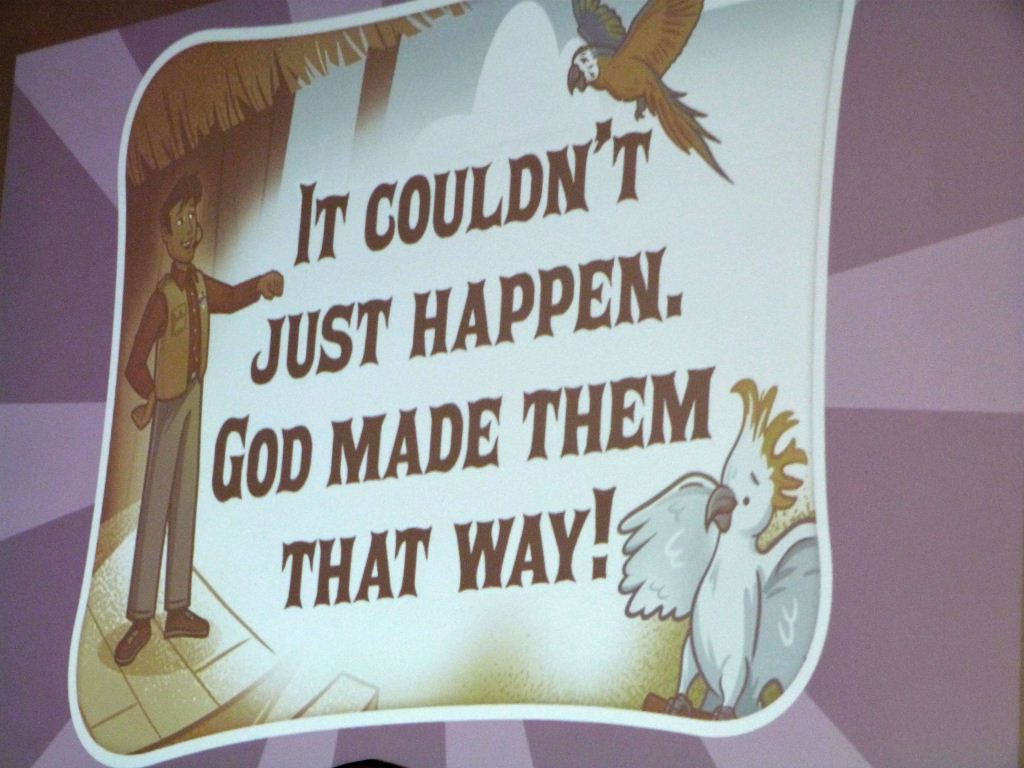
Thursday was “Bird day” and of course I got involved. I made a Powerpoint presentation about Beaks and Feet that worked in with their lesson. It was shown to two groups of the kids and then to the mothers in our MUMs class for the moms of children attending VBS.

I thought the material they used from Answers in Genesis was one of their best so far.

Here are a few of my photos

*

This slideshow requires JavaScript.

*

Early Singers…

*

Early Singers… ~ by a j mithra

Worm eating birds like Blackbird, Song Thrush and Robin start singing from around 4.00 am up until about 6.30 am.

They are blessed with large eyes in relation to the size of its body. These birds forage at low light and are capable of finding worms close to the surface of the ground early in the morning.

God wants us to be early risers like these worm eating birds, to wait in His presence to get spiritual food and to get directions from the Lord.
Jesus often used to get up very early in the morning and go out to pray.
  • Is that the reason He chose fishermen to be His disciples?
  • Remember, fishermen always rise early to venture into the sea to fish.
  • How often do we rise early to seek His presence?
  • These early rising worm eating birds have large eyes.
  • Do you want eyes that can see those worms that devour your blessings?
  • Do you want eyes that can see even in the darkest time?
Just rise early and God shall open your spiritual eyes wide open to see the unseen.
I love them that love me; and those that seek me early shall find me. (Proverbs 8:17)
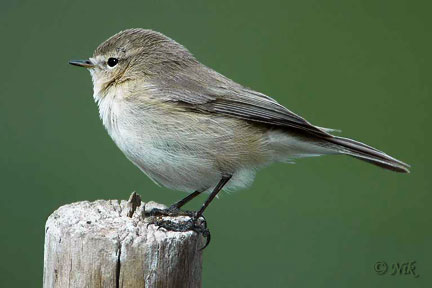
Mountain Chiffchaff (Phylloscopus sindianus) by Nikhil Devasar

Mountain Chiffchaff (Phylloscopus sindianus) by Nikhil Devasar

Wren, Chiffchaff and Black Cap are Insect eaters and they start their concert anytime from about 5.30 am.
These birds have slightly smaller eyes than the worm eaters and are more sensitive to the available light. This allows them to find darting and flying insects and spiders.
Eat the insects before it eats you.
But, how?
Do you find it difficult to get rid of all those tiny insects that nibble at your finances and blessings and your health and happiness?
  • Rise early and seek His presence and He will show you how to get rid of them.
  • Jacob wrestled with God and said that he will not leave until He blessed him..
  • It was at the break of the day that God blessed Jacob.
  • Most of God’s judgments too fell on day break.
  • The judgment of Sodom happened after day break.. (Genesis 19:15)
  • The fort of Jericho fell after day break.. (Joshua 6:15)
  • The tree that gave shelter to Jonah was consumed by God sent worms at day break.. (Jonah 4:7)
Are you waiting for God’s blessings?
  • Rise up at least before day break and receive God’s blessings before the Day of Judgment.
Want to meet God face to face and get a new name from Him?
  • Seek God before day break. That’s when God gave a new name to Jacob and
  • that’s when Jacob saw God face to face..
It is of the Lord‘s mercies that we are not consumed, because his compassions fail not.
They are new every morning: great is thy faithfulness. (Lamentations 3:22,23)
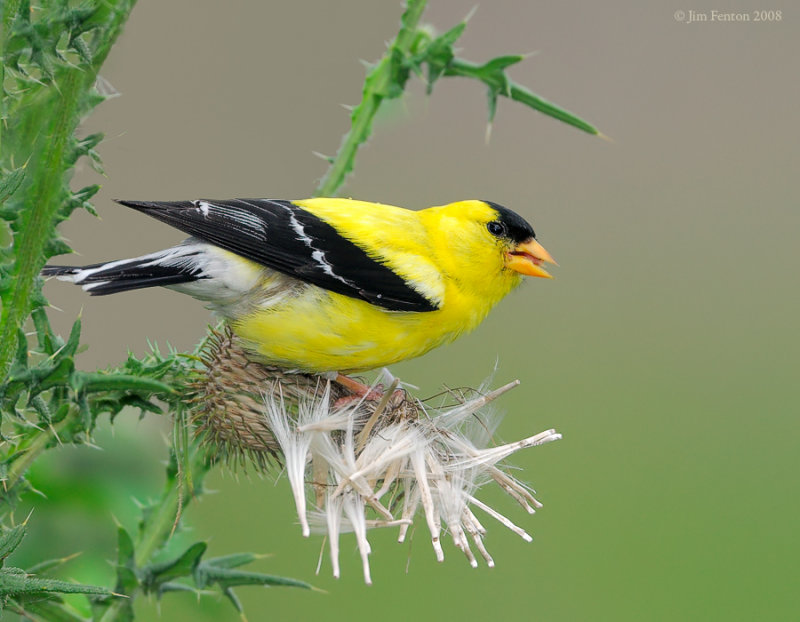
American Goldfinch (Carduelis tristis) on Thistle by Fenton

American Goldfinch (Carduelis tristis) on Thistle by Fenton

Seed eaters like Chaffinch, Goldfinch and Sparrow enter into the dawn chorus at around 6.00 am.

With smaller eyes they may need more light to look out for their food, especially when precision is required to extract small seeds.
Some of us are like these seed eaters. We need more light to look out for our food. Funny though, our God has called us to give light, but here, these seed eaters need more light to stay alive, since they have small eyes of faith.
  • They cannot see the unseen.
Someone should throw light to overcome the tight situation they are in, to show them the seed of faith.
  • What sort of seeds do we eat in the morning?
  • Do we eat seeds of doubt or seeds of faith?
  • Our fruits are determined by the seeds we eat..
And he that doubteth is damned if he eat, because he eateth not of faith: for whatsoever is not of faith is sin. (Romans 14:23)
Now the parable is this: The seed is the word of God. (Luke 8:11)
Whosoever is born of God doth not commit sin; for his seed remaineth in him: and he cannot sin, because he is born of God. (I John 3:9)
  •  Let the seed of God remain in us now and forever more..
  • Our life is shaped not by what we eat but by when we eat..
  • Remember the Manna – the word of God melts after sunrise.
So, sing early and eat early.
Have a blessed day!
Yours in YESHUA,
a j mithra

Please visit us at:

*

Ian’s Bird of the Week – Ruff

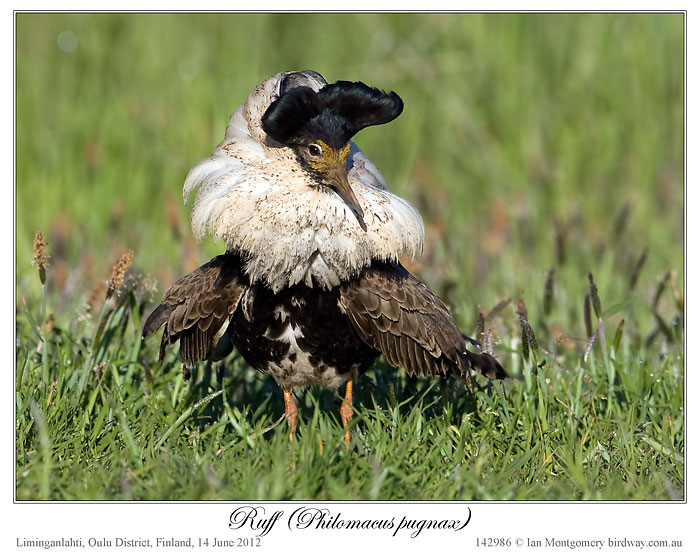
Ruff (Philomachus pugnax) by Ian 1

Ruff (Philomachus pugnax) by Ian 1

Ian’s Bird of the Week – Ruff ~ by Ian Montgomery

Newsletter ~ 6/19/12

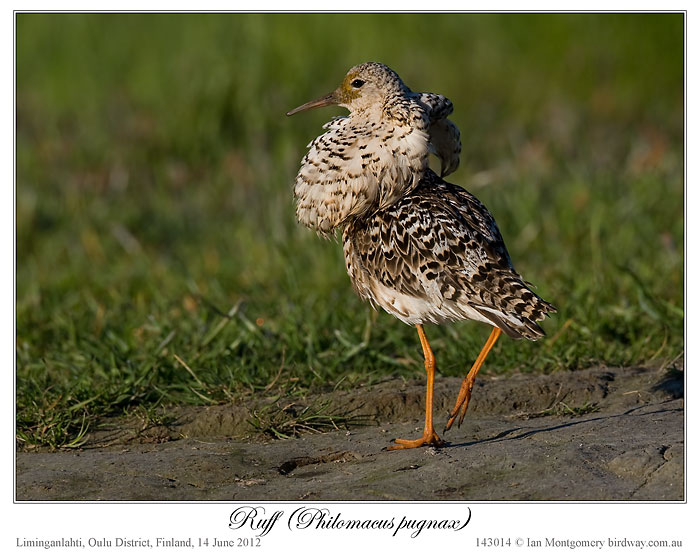
This week we have nothing short of a fashion parade, male Ruffs at a communal display ground or lek in eastern Finland. Finland is my second stop-over on the way to Ireland to visit my family and I am spending a week in the northern part of the country in search of some unusual northern European birds. I spent a couple of nights in Oulo on the west coast, a 1 hour flight north of Helsinki and then drove north west to Kuusamo near the Russian border where I am now.

In Oulu, the birding and wildlife tour company Finnature put me very early in the morning in a hide that they had set up near the lek. I settled down to watch a rather unpromising-looking piece of raised ground in a meadow, having been assured that, though it was late in the season, a couple of birds had been seen at the lek on the previous morning.

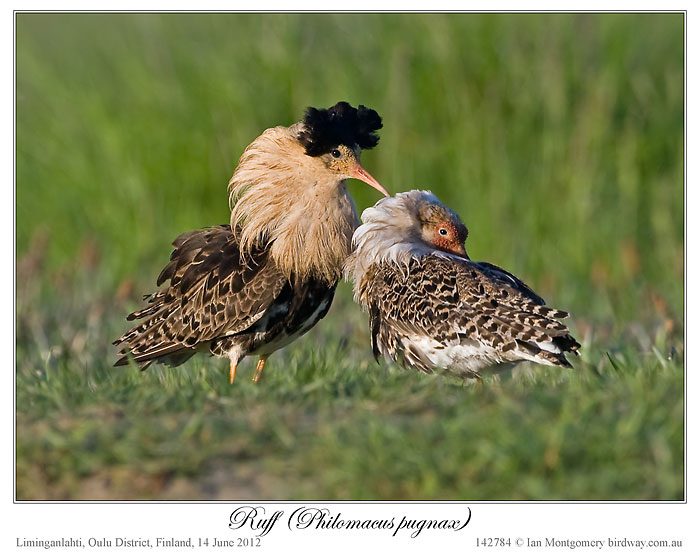
Ruff (Philomachus pugnax) by Ian 2

Ruff (Philomachus pugnax) by Ian 2

After about half an hour and shortly before 4:00am the black-ruffed bird in the second photo arrived but flew off when I moved the camera. Happily, it soon returned and this time the second white-ruffed bird arrived too and the pair started their extraordinary display, spreading their ruffs and wings apparently to make themselves appear as intimidating as possible. Sometimes, they jumped vertically in the air and at other times they crouched low on the ground in submissive looking postures.

Ruff (Philomachus pugnax) by Ian 3

Ruff (Philomachus pugnax) by Ian 3

Although the birds often came into close physical contact, there was no actual fighting and no physical damage. These black- and white-ruffed birds were the main performers during the 4 hours that I remained in the hide, but other birds joined in and at one stage there were about 10 birds on the lek. The colours of the ruffs and the erectile feathers on the head were varied. Here is a buff and black one with the white bird.

Ruff (Philomachus pugnax) by Ian 4

Ruff (Philomachus pugnax) by Ian 4

The colour of the bare wattled skin on the face varied too, being sometimes yellow and sometimes red, though it was my impression that this colour wan’t permanent and the red flush was associated with more intense display. This non-displaying one with a chestnut cap, piebald ruff has yellow facial skin.

Ruff (Philomachus pugnax) by Ian 5

Ruff (Philomachus pugnax) by Ian 5

This one is mainly chestnut.

Ruff (Philomachus pugnax) by Ian 6

Ruff (Philomachus pugnax) by Ian 6

While this one with an ermine ruff look suitably regal.

Ruff (Philomachus pugnax) by Ian 7

Ruff (Philomachus pugnax) by Ian 7

Ruffs are unusual among lekking birds in that the display is aimed mainly at other males to establish dominance, rather than at attracting females. Females may mate with multiple males producing young with different fathers and homosexual mating also occurs. The different ruff colours are apparently significant and white-ruffed males are smaller and less dominant and called satellite males.

Ruff (Philomachus pugnax) by Ian 8

Ruff (Philomachus pugnax) by Ian 8

The females, called Reeves, are quite plain and look rather like other sandpipers such as Sharp-tailed and Pectoral. In non-breeding plumage, the males resemble the females but are larger and longer-necked. Ruffs breed across northern Eurasia from Scandinavia to Siberia and winter in Africa, Asia and, in small numbers, Australia. You can see a female and ruff-less male, photographed in India, here: http://www.birdway.com.au/scolopacidae/ruff/index.htm.

Who said waders are plain and boring? I had a wonderful time at this lek. The Ruffs wasn’t one of my target species in Finland but an unexpected bonus, thank you Finnature. My main target was the largest Woodpecker in Europe, the Black Woodpecker, but that’s another story.

Best wishes
Ian

**************************************************
Ian Montgomery, Birdway Pty Ltd,
454 Forestry Road, Bluewater, Qld 4818
Tel 0411 602 737 ian@birdway.com.au
Check the latest website updates:
http://www.birdway.com.au/#updates
**************************************************


Lee’s Addition:

What a group of “show offs.” I find these birds amazing. Never thought of this family as having leks like the pheasants and those in that order. Just goes to show you that the birds are doing what they are suppose to and that is reproducing. What a show for the females to get to watch.

Bring out with you every living thing of all flesh that is with you: birds and cattle and every creeping thing that creeps on the earth, so that they may abound on the earth, and be fruitful and multiply on the earth.”
(Genesis 8:17 NKJV)

The Ruff is in the Scolopacidae – Sandpipers, Snipes Family in the Charadriiformes Order.

*

Ian’s Bird of the Week – Chinese Pond Heron

Chinese Pond Heron (Ardeola bacchus) by Ian 1

Chinese Pond Heron (Ardeola bacchus) by Ian 1

Ian’s Bird of the Week – Chinese Pond Heron ~ by Ian Montgomery

Newsletter ~ 6-11-12

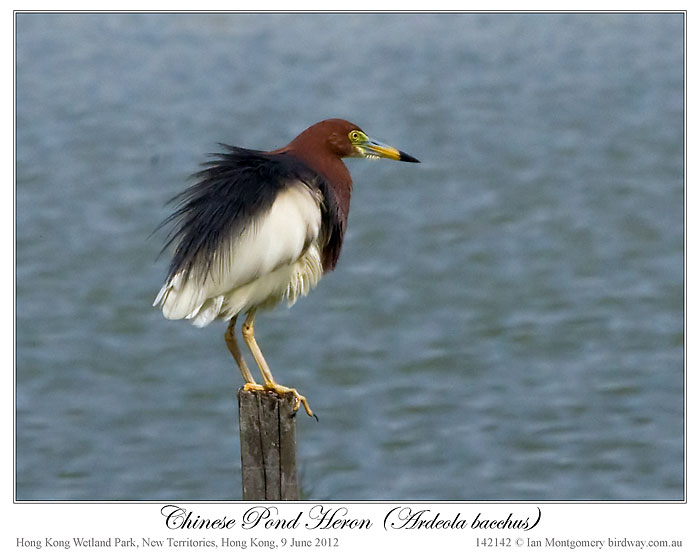
I’m stopping over for a few days in Hong Kong. It’s not the best time of the year for birding here – the northern spring and autumn/fall are good for migrants and the northern winter is good for waders and waterbirds – but we did go out to the Hong Kong Wetland Park near Mai Po reserve in the New Territories on Saturday. One of the species I was keen to see was the Chinese Pond Heron and this one in breeding plumage landed on a post near the hide/blind we were in.

This was of interest to me as it’s on the Australian list as a rare vagrant and I’d seen only non-breeding birds before (in Malaysia). The non-breeding plumage is streaky brown and white and not very distinguished, but when breeding the birds acquire striking black, white and chestnut plumage with a multi-coloured bill. This bird fluffed out its feathers, preened itself a bit and settled down for a few seconds, second photo.

Chinese Pond Heron (Ardeola bacchus) by Ian 2

Chinese Pond Heron (Ardeola bacchus) by Ian 2

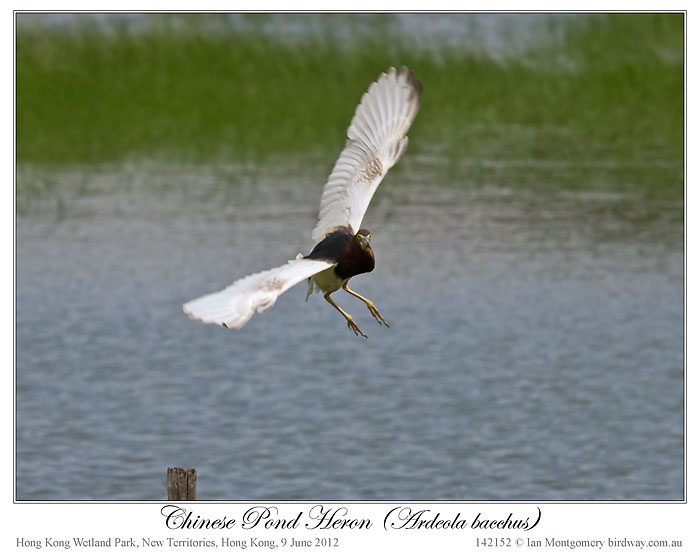
These are stocky, mid-sized (47cm/19in in length) herons that feed on fish and invertebrates. Their breeding range includes China and northern Japan. In the northern winter some migrate south to Malaysia and Indonesia, including Java, and sometimes they overshoot and end up in the Australian territories of Christmas and Cocos (Keeling) Islands and on the Australian mainland. This particular one hung around for thirty seconds and then took off, third photo, showing how high they can jump when taking off – they need to be able to do this to take off from reed beds.

Chinese Pond Heron (Ardeola bacchus) by Ian 3

Chinese Pond Heron (Ardeola bacchus) by Ian 3

In flight, fourth photo, the bird displays the striking white wing characteristic of all six species of Pond Herons (genus Ardeola). These are mainly Asian and African species, though the Squacco Heron occurs in southern Europe. The Chinese Pond Heron is closely related to the rather similar Indian Pond Heron (this one was photographed behind the Taj Mahal.

Chinese Pond Heron (Ardeola bacchus) by Ian 4

Chinese Pond Heron (Ardeola bacchus) by Ian 4

Only 30 seconds elapsed between the first and last photos, so we were lucky to have this encounter and it was the only one we saw. The Hong Kong Government is making admirable efforts, through Mai Po Reserved and the restored Hong Kong Wetland Park, to conserve wildlife, but the area is very close to the densely populated and heavily industrialised areas of southern China and the local population of Chinese Pond Herons is suffering from the effects of water pollution on their prey (mud skippers and crustaceans).

Best wishes
Ian

**************************************************
Ian Montgomery, Birdway Pty Ltd,
454 Forestry Road, Bluewater, Qld 4818
Tel 0411 602 737 ian@birdway.com.au
Check the latest website updates:
http://www.birdway.com.au/#updates
**************************************************


Lee’s Addition:

Ian, you sure get around. What a beautiful bird all decked out to “woo” its mate.

Ian has a photo of Chinese Pond Herons on his Birdway website that are in normal plumage. Not as impressive as the one above, but more normal. These herons belong to the Ardeidae – Herons and Allies Family. See a list and photos of the whole 72 species of  Herons, Bitterns and Egrets.

The stork, the heron of any variety, the hoopoe, … (Deuteronomy 14:18 AMP)

See all of Ian’s Birds of the Week articles.

*

Ian’s Bird of the Week – Royal Albatross

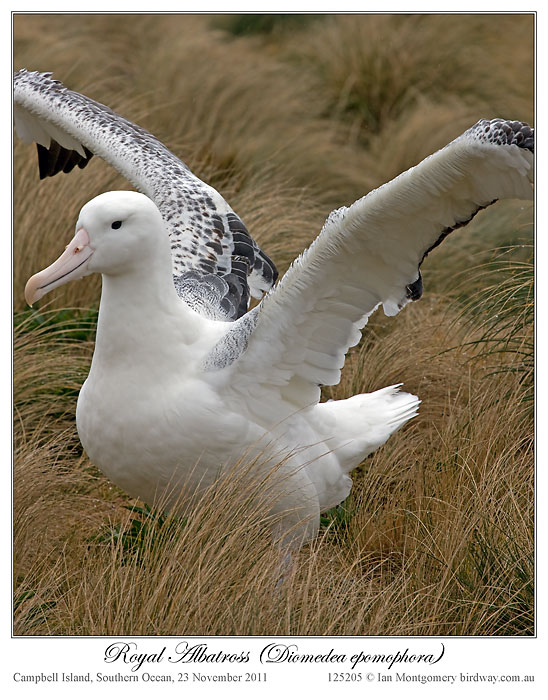
Southern Royal Albatross (Diomedea epomophora) by Ian 1

Southern Royal Albatross (Diomedea epomophora) by Ian 1

Ian’s Bird of the Week – Royal Albatross ~ by Ian Montgomery

Newsletter ~ 6-3-12

It seems only fitting to celebrate the Diamond Jubilee of Queen Elizabeth with something appropriate, so here is the Royal Albatross, or Royal Albatrosses if you accept, as most now do, the split into Northern and Southern species. Apart from just the Royal title, these birds are also very long lived (up to 60 years) and travel huge distances, routinely circumnavigating Antarctica. It has been estimated that a 50 year old Albatross has travelled 2.8 million miles which compares quite well with the Queen’s 261 official overseas visits and 96 state visits to 116 countries.

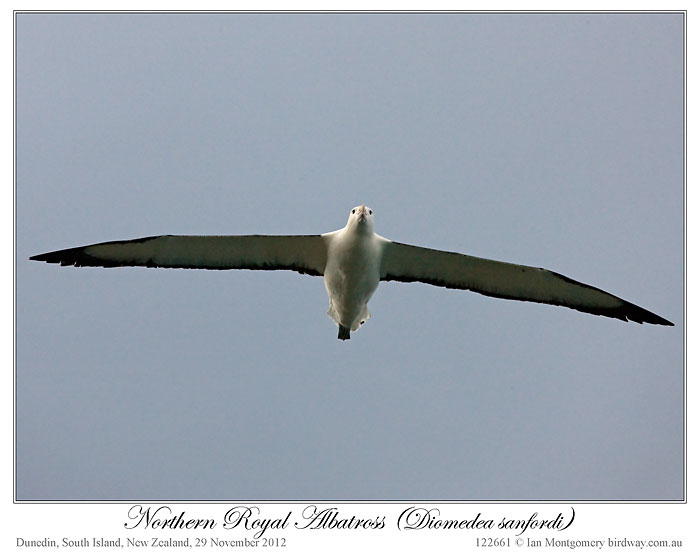
On the Sub-Antarctic trip last November, Royal Albatrosses, mainly Southern like the one in the first photo, were regular and very welcome companions in the Southern Ocean. It was always a thrill to see these huge birds completely at home in the wildest weather that the Ocean could throw at them and soaring apparently effortlessly in gale-force winds. If you look carefully at the first photo, you can see the dark (bluish) line along the upper mandible which distinguishes it from the similar Wandering Albatrosses. The other feature of note is the white leading edge to the dorsal surface of the wing. As Southern Royal Albatrosses age, the amount of leading white increases and this distinguishes it from both the Wandering Albatrosses, where the amount of white increases along the centre of the wing, and the Northern Royal Albatross where the wings remain black, as shown in the second photo.

Northern Royal Albatross (Diomedea sanfordi) by Ian2

Northern Royal Albatross (Diomedea sanfordi) by Ian 2

With a little practice, it wasn’t too difficult to distinguish between Northern and Southern birds. What helped was the fact that Royal Albatrosses do not have a confusing array of juvenile plumages, unlike their cousins the Wandering Albatrosses. The juveniles have black tips to the tale and blackish scalloping on the back (the mantle) between the wings but are otherwise similar to the adults.

Southern Royal Albatross (Diomedea epomophora) by Ian 3

Southern Royal Albatross (Diomedea epomophora) by Ian 3

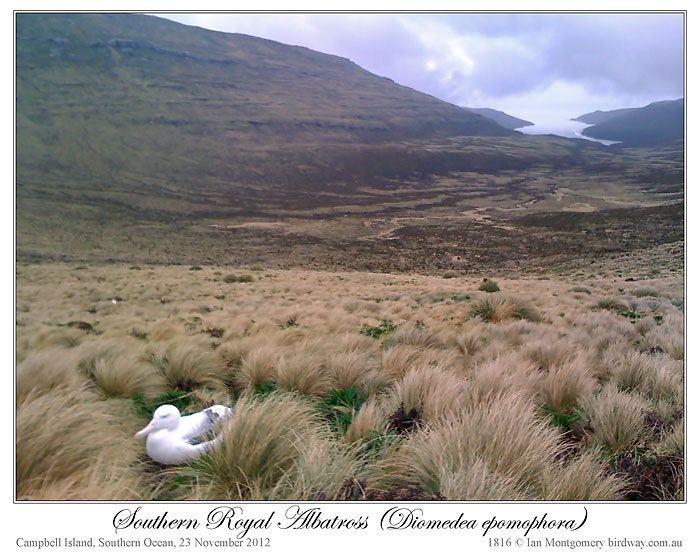
On Campbell Island, we had the opportunity to hike up path to a Southern Royal Albatross colony on a bleak, tussocky moorland. As you can see in the the third photo, things were fairly quiet when we got up there in the morning. They got busier in the afternoon when more birds arrived and some people saw greeting ceremonies, but by then, rather wet and cold, I had returned to the ship for a comforting coffee. There were strict rules about where we could leave the designated path and how close we could approach wildlife, but the albatross in the fourth photo stretching its wings flouted the rules and wandered, or blundered – they’re ungainly on land – right past me.

Southern Royal Albatross (Diomedea epomophora) by Ian 4

Southern Royal Albatross (Diomedea epomophora) by Ian 4

Albatrosses have deceptively gull-like proportions so it is a shock to realise, up-close, just how huge they are. The size record goes to the exulans race/species of the Wandering Albatross, but the Royals are not far behind and an apt comparison is with swans rather than other seabirds, ignoring length where swans have an unfair neck advantage. Southern Royal Albatrosses weight between 6.5 and 10.3kg/14.3 and 22.7lb while the heaviest flying bird, the Mute Swan, ranges between 9kg and 12kg/20 and 33lb. However Royal Albatrosses have a maximum wingspan of up to 3.5m/138in while Mute Swans range up to a mere 2.4m/94in. Just enormous in other words. The contrasting delicacy of the lacy pattern on the back is striking, and the fifth photo shows the tubular nostrils and the dark line along the mandible.

Southern Royal Albatross (Diomedea epomophora) by Ian 5

Southern Royal Albatross (Diomedea epomophora) by Ian 5

Happily, you don’t have to go Campbell Island to see these wonderful birds. Taiaroa Head, a mere 30km from the centre of Dunedin on the South Island of New Zealand, has the only mainland colony of albatrosses in the world. These are Northern Royal Albatrosses and, although I got there too late in the day to gain entry to the Royal Albatross Centre – I gave the local Yellow-eyed Penguins a higher priority – the one in the last photo flew right over me as I stood in the car park.

Northern Royal Albatross (Diomedea sanfordi) by Ian 6

Northern Royal Albatross (Diomedea sanfordi) by Ian 6

Enjoy the Jubilee!

Ian

**************************************************
Ian Montgomery, Birdway Pty Ltd,
454 Forestry Road, Bluewater, Qld 4818
Tel 0411 602 737 ian@birdway.com.au
Check the latest website updates:
http://www.birdway.com.au/#updates
**************************************************


Lee’s Addition:

Wow! Did you read the wingspan on those Albatrosses? 138 inches is 11 1/2 feet. That is amazing! I still just sit back in awe when I hear about these wonderfully created birds.

Check out Ian’s Albatrosses on his site and then check the whole family – Diomedeidae – Albatrosses

Keep me as the apple of Your eye; Hide me under the shadow of Your wings, (Psalms 17:8 NKJV)

Because You have been my help, Therefore in the shadow of Your wings I will rejoice. (Psalms 63:7 NKJV)

*

Oops! Forgot a Few!

Rainbow Lorikeet at Lowry Pk Zoo by Dan

Rainbow Lorikeet at Lowry Pk Zoo by Dan

Oops! Forgot a Few! (follow-up to Updated Birds of the World to I.O.C. 3.1 – Subspecies Definitions)

Guess I was too big a hurry to say I was finished. Realized that I forgot all 40 Order pages and the main Introductory Index pages. After updating almost 50 more pages, “I think” I am finished with the I.O.C. 3.1 Version update.

There was more that needed to be said, so, will do that now.

Now that the names are up to date for now, I am going to go back through each Family page and try to work on them more slowly. Hope to find more photographs for the species that are missing. Now that the “subspecies” are listed, photos for those need to be found. If you are a photographer of birds or know of any that would be willing to let their photos be used here, please contact me at: Lee@Leesbird.com. A link will be provided to your photo site or theirs in the sidebar under Photography and at the bottom of each Family page that uses a photo of yours. Or other arrangements could be made. Photography sites that list the bird’s names are the most useful. (Otherwise I have no clue as to what the bird is, especially ones from around the world.)

Also, there will other items added to the Family pages. Some general facts about the overall family will be added. Our Life List of All Birds Seen (*LLABS*) will be indicated by individual birds that we have seen. Will try to find a photo we took, besides the good ones from photographers that we use (see above).

I remember the days of old; I meditate on all Your works; I muse on the work of Your hands. (Psalms 143:5 NKJV)

Aren’t we thankful that when the LORD created the world and all that is in them, that he didn’t say, “Oops! I forgot…..?” We may make mistakes and miss a few items, but God is Perfect and nothing He does is ever a MISTAKE.

*

Updated Birds of the World to I.O.C. 3.1 – Subspecies Definitions

Well, I just updated the site to the newest version of the I.O.C. World Bird List – Version 3.1. It has been out for about a month, but I was busy and now finally have it finished. I have spent the last week updating almost 300 pages here. I am only one person and don’t have a staff (don’t I wish). All pages and indexes are up-to-date.

The IOC made a major update with this Version and I decided to make some changes also. I was trying to anticipate the changes coming with the Version 3, but still missed it. They added 145 extinct species of birds. There are also 20,989 subspecies added (had that right) to go with the 10,451 living species of birds in the world. They are in 40 Orders, 228 Families (plus 6 Incertae sedis), with 2257 Genera. (Now in June they are going to make more adjustments)

Have you ever questioned yourself why you do things? Working on these pages made me wonder, but I think it is still worth all the work.

Why? When I started this blog, I wanted to write about the Birds of the Bible and have been doing that since day one over four years ago. As time has progressed, this site has grown way beyond what I ever dreamed about. The Lord has given me ideas for articles, pages, references, etc. Fantastic photographers have given permission to use their photos and the whole world of birds has opened up to me. Ian let’s me use his newsletters (Bird of the Week) and he travels the world. Also ajmithra in India writes about birds there and other places. Most of all when the Lord created the birds way back in Genesis chapter 1

Then God said, “Let the waters abound with an abundance of living creatures, and let birds fly above the earth across the face of the firmament of the heavens.” So God created great sea creatures and every living thing that moves, with which the waters abounded, according to their kind, and every winged bird according to its kind. And God saw that it was good. And God blessed them, saying, “Be fruitful and multiply, and fill the waters in the seas, and let birds multiply on the earth.” So the evening and the morning were the fifth day. (Genesis 1:20-23 NKJV)

they did what He commanded them to do and now they are all over the world driving the people at IOC and other listing groups of ornithologists crazy trying to keep up with their names. Me? I am enjoying trying to find out about them and see  them or pictures of them to go along with those name.

If you, my readers, never benefit from my efforts, I still am gaining knowledge of birds that I will never see in person but are so designed and created with such care that finding out about them increases my faith. While I am doing these pages and articles, my best is what I want to give my Savior.

Birds of the World

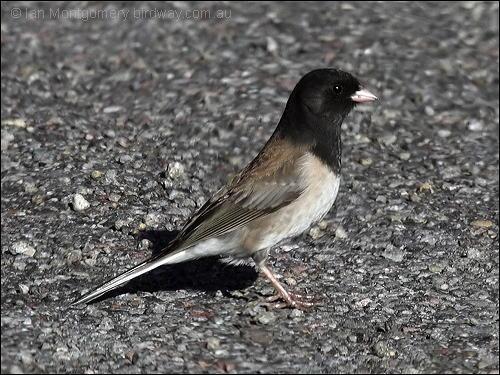
Dark-eyed Junco (Junco hyemalis) by Ian

Dark-eyed Junco (Junco hyemalis) by Ian

That said, now that they are adding all these subspecies, here are some definitions of “subspecies.” They use terms like species, subspecies, monotypic, morph, etc.

From About.com Birding/Wild Birds

Definition:

(noun) A bird that is notably different from the expected characteristics of its species, but not sufficiently different to be independently classified as a unique species. Subspecies are often geographically determined, and differences such as size variations or plumage colorations are a common basis for subspecies distinctions.

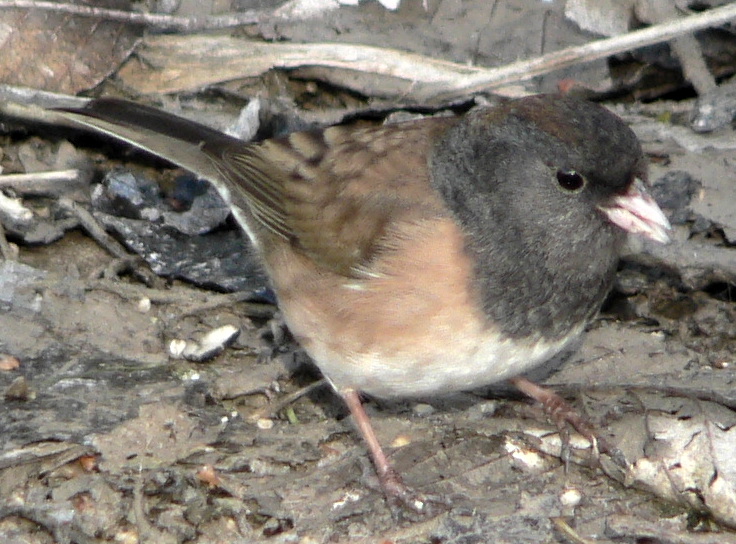
Not all bird species have distinct subspecies, and over time the classifications of different birds can change to alter subspecies into a lesser or greater number of divisions, or even to grant a subspecies distinction as a new bird species. Examples of common subspecies include the different geographic plumage variations of the dark-eyed junco, such as the eastern “slate-colored” junco and the western “Oregon” junco, as well as the southwestern subspecies of the lesser goldfinch, the “black-backed” lesser goldfinch.

While a subspecies can be noted on a birder’s life list, it does not count as an additional bird for a life list total unless the bird is reclassified as a distinct species. Many birders enjoy the extra challenge of seeing different subspecies, and comprehensive field guides will list common subspecies. These details also make a field guide more useful over time as bird classifications may change.

Dark-eyed Junco (Junco hyemalis oreganus) (one of the Oregon Juncos) ©WikiC

Dark-eyed Junco (Junco hyemalis oreganus) (one of the Oregon Juncos) ©WikiC

Definition: Monotypic

(adjective) Describes a species with only a single genetic or physical type and no officially recognized subspecies. While monotypic birds may still have subtle plumage or size variations, these differences are not sufficient to be distinguished as subspecies. Monotypic birds may still crossbreed with other species, though the hybrids are not independently recognized as a unique species or subspecies.

*****

From TheFreeDictionary

n. pl. subspecies

A taxonomic subdivision of a species consisting of an interbreeding, usually geographically isolated population of organisms.

subspecies

A subdivision of a species of organisms, usually based on geographic distribution. The subspecies name is written in lowercase italics following the species name. For example, Gorilla gorilla gorilla is the western lowland gorilla, and Gorilla gorilla graueri is the eastern lowland gorilla.
 ******
Species:A single distinct class of living creatures sharing specific DNA and physical features that differentiate them from other species. Species are uniform in appearance (unless other factors, described later, apply) and produce offspring with the same characteristics, appearance and DNA structure. An example of a species would be a Gouldian Finch.

Subspecies:A division within a species usually created by geographic isolation from the main (nominate) species. A population within a population (usually) sharing most of the same physical characteristics and DNA structure. A physically distinct sub-unit within an otherwise identical group of birds or animals. A subspecies can be though of as a “race” within a species. Most subspecies distinctions are visible. An example would be a (Southern race, smaller) European vs. a (larger, Northern race) Siberian Goldfinch. Other than the size, they are the same bird.

Read more:http://www.softbillsforsale.com/articles/definition-of-terms.asp#ixzz1wXB1i2HY

The Northern Wheatear – The Incredible Migrator..

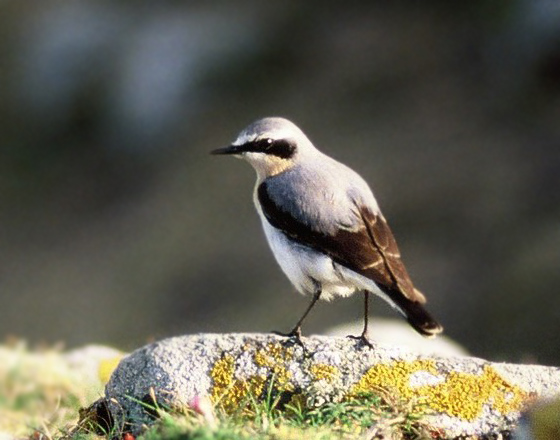
Northern Wheatear (Oenanthe oenanthe) Breeding male ©WikiC

Northern Wheatear (Oenanthe oenanthe) Breeding male ©WikiC

A migratory species, the northern wheatear breeds across northern Europe, North Africa, Asia, Alaska, north-eastern Canada and Greenland. After the breeding season, it migrates to sub-Saharan Africa, where it is found across a broad belt that stretches from Mauritania and Mali through northern Nigeria, Central African Republic and Sudan, to Ethiopia and southern Somalia. It is possible that the northern wheatear is the only regularly breeding passerine of North America that migrates to wintering grounds in sub-Saharan Africa, crossing either the Atlantic Ocean or Eurasia.

With a length of about 14.5 to 15.5 centimeters and weighing just about 18 to 33 grams that would just run to about the weight of two table spoons of salt, this bird flies to places where the other song birds have never ventured.

This is another amazing example of how God uses tiny beings to finish mighty tasks.

  • If you feel that you are small, not-fit-for-anything type or useless, just take inspiration from these tiny creatures.
  • Remember, we would soon take off for the final migration to the wedding banquet of Jesus, the King of kings, who is going to fill heaven, our final destination with redeemed sinners, weak and weary, lonely and lost and those of whom the world calls good for nothing.
  • It is for this reason we need to rejoice Him at all times even during times of trouble.

Then saith he to his servants, The wedding is ready, but they which were bidden were not worthy. Go ye therefore into the highways, and as many as ye shall find, bid to the marriage. So those servants went out into the highways, and gathered together all as many as they found, both bad and good: and the wedding was furnished with guests. (Mathew 22:8-10)

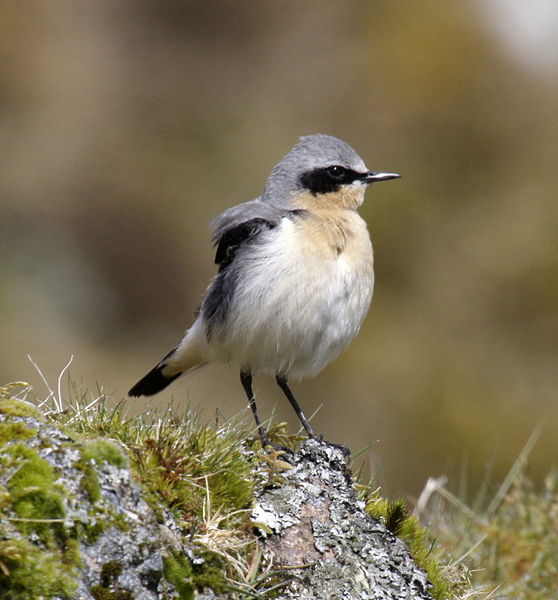
Northern Wheatear (Oenanthe oenanthe) Breeding male ©WikiC

Northern Wheatear (Oenanthe oenanthe) Breeding male ©WikiC

During the breeding season, the northern wheatear is typically found around habitats with short turf, such as moors, cliff-tops,tundra and rocky fields. It uses a variety of open habitats whilst migrating, including cultivated areas and desert, as well as human settlements.

In its winter range, the northern wheatear favours short grass steppe and degraded savanna, but may also be found on cultivated land, on barren rocky hills and among coconut palms.

This bird doesn’t seem to grumble but happily strives in almost any type of land.
Are we satisfied with the place where God has kept us? Or do we grumble that God has kept us in the wrong place?
Our God never makes mistakes.
He knows whom to choose, where to keep and when to keep..
He is always right..

There is a divine purpose in keeping you in a place where you are not happy..

  • Paul and Silas where in the wrong place but still they worshipped God and you know what?
  • God turned the wrong place into the right place for the world to know the extraordinary power of God.
  • Want to see the extraordinary power of God in your life?
  • Just stop grumbling and start worshipping God in the place where God has kept you.

The lines are fallen unto me in pleasant places; yea, I have a goodly heritage (Psalm 16:6)

Northern Wheatear (Oenanthe oenanthe) ©©

Northern Wheatear (Oenanthe oenanthe) ©©

After sighting its insect prey from an elevated perch, such as a conspicuous rock, the Northern Wheatear bounds between vegetation and stones to catch its prey on the ground. It may also scoop slow low-flying insects from the air after a short run or a low jump. A largely solitary species, outside the breeding season the northern wheatear defends a small feeding territory against other wheatears .

Breeding birds tend to return to the same nesting site each year. The male arrives around one week before the female, and courtship begins soon after the arrival of the female. Breeding pairs engage in unusual courtship dances, usually in a depression in the ground, when the male flutters and glides in the air, singing constantly.

Jesus left this earth after resurrection not just to prepare a place for us but for the wedding banquet where He would make us His bride and we would be singing praises to Him forever and ever.

And after these things I heard a great voice of much people in heaven, saying, Alleluia; Salvation, and glory, and honour, and power, unto the Lord our God: (Revelation 19:1)
And I heard as it were the voice of a great multitude, and as the voice of many waters, and as the voice of mighty thunderings, saying, Alleluia: for the Lord God omnipotent reigneth. Let us be glad and rejoice, and give honour to him: for the marriage of the Lamb is come, and his wife hath made herself ready. (Revelation 19:6,7)

Once a pair bond is established, the female chooses a nest site and the pair set about constructing the nest, which is a simple unlined cup of leaves, stems, moss, lichen, feathers and hair, built on a foundation
of dried stems and grasses. The nest is usually placed in a well-sheltered rock cavity, narrow crevice, rodent burrow, hole in a wall or under stones. Between 4 and 8 eggs are incubated for 12 to 13 days. The chicks fledge at 15 to 17 days, but do not reach full independence for a further 12 or 13 days.

The Northern Wheatear makes one of the longest journeys of any small bird, crossing ocean, ice, and desert. It migrates from Sub-Saharan Africa in spring over a vast area of the northern hemisphere that includes northern and central Asia, Europe, Greenland, Alaska, and parts of Canada. In Autumn all return to Africa, where their ancestors had wintered. Arguably, some of the birds that breed in north Asia could take a shorter route and winter in south Asia; however, their inherited inclination to migrate takes them back to Africa.

Northern Wheatear (Oenanthe oenanthe leucorhoa) by BirdPhotos

Northern Wheatear (Oenanthe oenanthe leucorhoa) by BirdPhotos

Birds of the large, bright Greenland race, leucorhoa, makes one of the longest transoceanic crossings of any passerine. In spring most migrate along a route (commonly used by Wadersand Waterfowl) from Africa via continental Europe, the British Isles, and Iceland to Greenland. However, autumn sightings from ships suggest that some birds cross the North Atlantic directly from Canada and Greenland to southwest Europe (a distance of up to 2500 km).

Birds breeding in eastern Canada are thought to fly from Baffin Island and Newfoundland via Greenland, Ireland, and Portugal to the Azores (crossing 3500 km of the North Atlantic) before flying onwards to Africa. Other populations from western Canada and Alaska migrate by flying over much of Eurasia to Africa. Miniature tracking devices have recently shown that the Northern Wheatear has one of the longest migratory flights known – 30,000km (18,640 miles), from from sub-Saharan Africa to their Arctic breeding grounds. “The Alaskan birds travelled almost 15,000km (9,000 miles) each way – crossing Siberia and the Arabian Desert, and travelling, on average, 290 km per day.

“This is the longest recorded migration for a songbird as far as we know,” said Dr Schmaljohann..
Dr Schmaljohann added: “[In the past] we totally underestimated the flight capability of birds in terms of migration.”It seems that bird migration is limited by the size of the Earth. If the planet was larger, they would probably migrate even further.”

If these small birds can set a record for the longest flight,

  • flying over extreme conditions,
  • flying over an ocean and also
  • flying over one of the biggest desert,
  • how far have we traveled to share the word of God?

We find it ever so easy to give our money to send missionaries to remote places to preach the gospel, but, why we find it so difficult to even step out of our house to share the Gospel to our neighbor?

  • God does not want our money..
  • He wants us to stand in the gap for perishing souls..
  • How many of us are ready to obey to His call?

Also I heard the voice of the Lord, saying, “Whom shall I send, and who will go for us? Then said I, Here am I; send me.” (Isaiah 6:8)

Have a blessed day!

Yours in YESHUA,
a j mithra

Please visit us at:

Crosstree

ajmithra21

*

Lee’s Addition:

Wheatears are part of the Muscicapidae – Chats, Old World Flycatchers Family.

*
Start Birdwatching Today – Questions

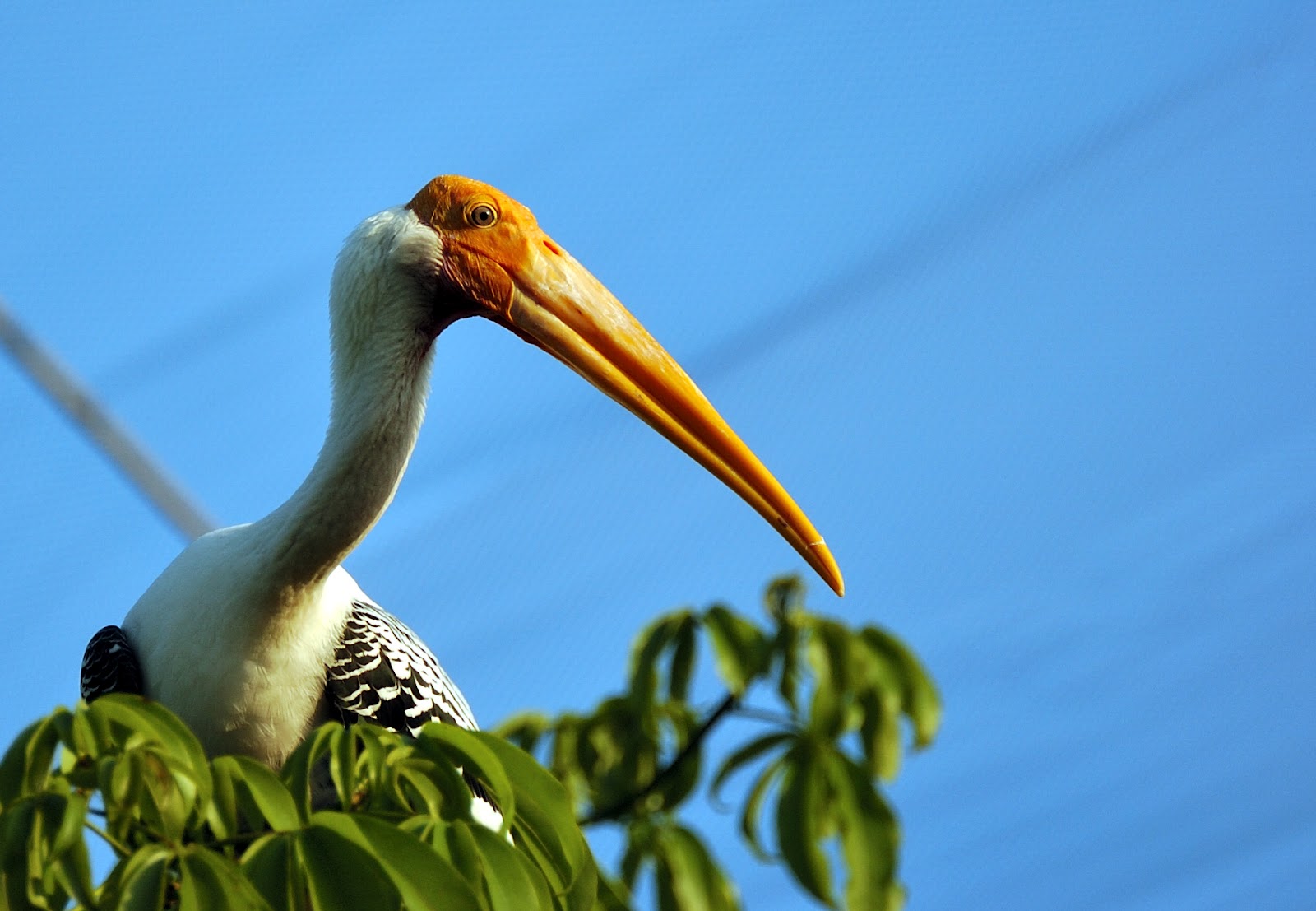
(Painted Stork by Dan’s Pix)

(Stephen, our Assistant to the Pastor, asked me to do this series about birdwatching. He came up with the titles and I have been writing the articles. Now he has given me these 13 questions to answer, so here goes.)

We hope that you have been enjoying Lee’s series, Start Birdwatching Today.  She has been attempting to show us that birding is something that anybody can do.  Whether you only look at the birds while you are driving or if you spend hours wandering through Circle B, you can enjoy the creativity of our great God.

As I have read through Lee’s posts I have had a few questions that have come to my mind.  I thought I would ask them to Lee through a post so that you all can read her answers.

  1. When did you first start birding?

    I think I always enjoyed critters, but when we lived in Tamarac, FL there was a small park nearby that had a lake, trail and a naturalist that gave bird talks. Living in the Fort Lauderdale area, there were lots of birds to view.

  2. Did anyone teach you how to go birding?

    The naturalist became my friend and also became my mentor. She taught me about birdwatching from a one on one basis.

  3. Do you run across people who see the diversity in the birds and still deny that an intelligent creator is behind it all? If so, what are their common arguments?

    Go to any birding club (Audubon) or a Birding Festival (Titusville) and you will hear all about natural selection and millions of years. You hear about how birds evolved from dinosaurs. Given enough time, they figure it all came about.

  4. What is your favorite bird? You can only pick one :)

    That’s hard! It used to be the Painted Bunting, and I suppose it still is, but now I have seen so many, I love them all.

  5. Share with us two things you have learned about God through birdwatching.

    The Lord has such Omniscience that I am amazed when I see how He has provided specific beaks, for instance, for each bird to be able to eat what it likes. How He has created their shapes to live in the environment they do, Penguins versus Hummingbirds. Every bird was so provided for by the Lord when they were being designed. God’s Love is so great to the birds and His care about them overwhelms me. If He knows when a sparrow falls, then He knows not only the number of hairs on my head, but every need, desire, problems, etc. and still Loves Me!

  6. Recently, Swans have been in the news. In Lakeland, someone has been stealing swan eggs from Lake Morton. Why are Swan eggs so valuable?

    I saw that article and had heard about it a few weeks earlier. Apparently there must be a trade for them somewhere. There are “poachers” all around the world that illegally take birds for collectors and some for their feathers or to eat. They just found out he took them to eat them.

    http://articles.orlandosentinel.com/2012-05-18/news/os-swan-eggs-stolen-scrambled-eaten-20120518_1_eggs-lakeland-report-states

  7. When I think of birding, I am often overwhelmed. I hear you talk about 185 species that have been seen at Circle B and of the thousands of species worldwide. I can name maybe 10 or 15 different species of birds. What would you say to someone who feels birding is too overwhelming?

    Who says you have to name all the birds? If you can name 3 and enjoy the rest, why worry? (Do you know every name of the folks that come here to church? Does that stop you from coming or cause you to be overwhelmed?)

  8. Tell us about the best birdwatching trip you have ever been on.

    Wow! They are all great, but as for in the wild, we won a birdwatching trip by Reinier Munguia (professional photographer) and he introduced us to Circle B (46 species seen), Lakes Morton (10 species) and Parker. He gave us birding tips and photography tips for Dan. We ended up feeding Florida Scrub Jays and Purple Gallinules at parks in Lakeland. We saw a total of 56 species that day.Best Zoo trip was to the National Aviary in Pittsburg, PA about 2 years ago. We were taken by staff all over the place and behind the scenes.

  9. How many different birds are on your life list?

    My official Life List has 234 species, but that does not count the birds that I have seen in Zoos, which you can’t count by some, but I still saw the birds. My Unofficial Life List is around 400. I have also seen many more birds that I could not name.

  10. Is there any other animal that you know of that has the wide variety and diversity of birds? Why do you think this is?

    I can’t think of any animals, maybe insects. I think birds are so varied because each one has a role to fill whether it is pollinating flowers by Hummingbirds and others, or picking bugs off of animals like an Oxpecker, or cleaning up garbage like Vultures and Buzzards. The list goes on and on. They can fly so they have spread around the world and they are obeying the Lord’s command to reproduce and fill the earth.

  11. What do you hope is the result of this series of posts?

    I hope that this series has motivated an interest and an awareness of the birds and that they will take opportunities to watch the Lord’s fantastically created birds. And maybe, we might have some more to go out birdwatching with us. I am not an expert, but I am willing to share what I have learned from others and Dan is willing to share photography tips.

  12. Do you ever take people along with you on your birdwatching trips and teach them the tricks of the trade?

    I have taken a few and am thinking that we need to plan a “Start Birding Today” trip soon. We could meet and start simple and go from there.

  13. How can someone contact you if they have questions about birding?

    Call us, number in church directory or e-mail me at Lee@leesbird.com.

Painted Bunting (Passerina ciris) ©WikiC

Painted Bunting (Passerina ciris) ©WikiC

*

That article will be on our church blog, The Fountain, soon. I have been putting the articles here about 1 week ahead. Not sure if there will be more articles. If Stephen comes up with more titles, or if someone here leaves an idea for an article, then there may be more. Leave a comment.

*

Ian’s Bird of the Week – Grey Goshawk

Grey Goshawk ( novaehollandiae) by Ian 1

Ian’s Bird of the Week – Grey Goshawk ~ by Ian Montgomery

Newsletter ~ 5-24-12

*
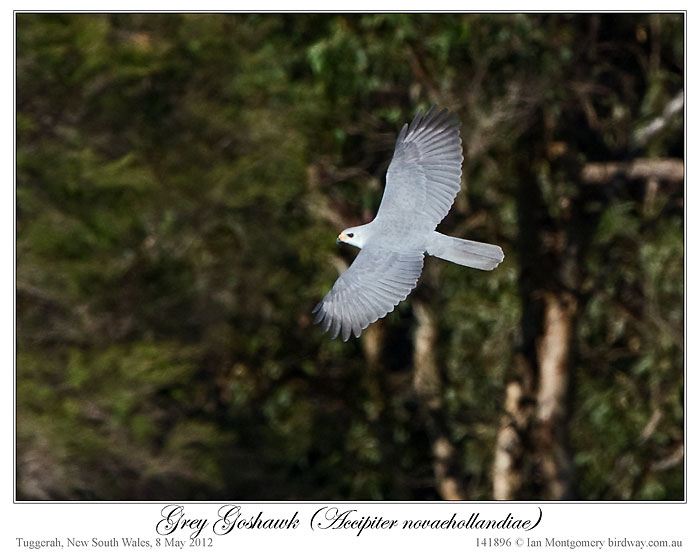
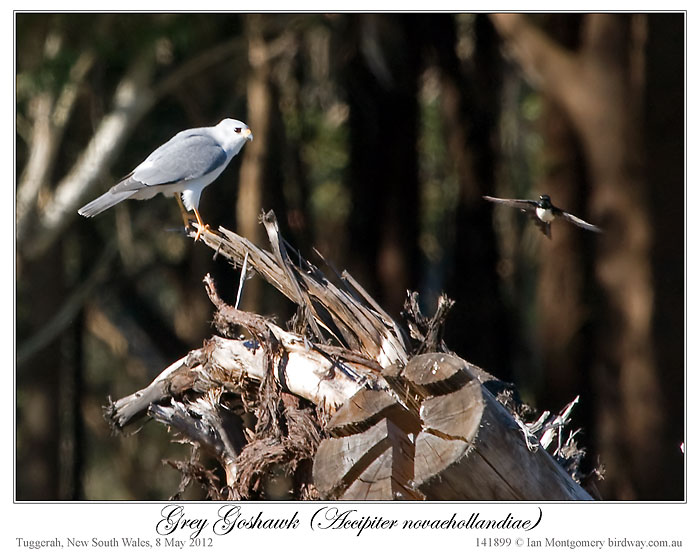
Here is an uncommon and beautiful raptor, the Grey or Variable Goshawk. It is usually called the Grey Goshawk in Australia but the moniker Variable is more accurate as it occurs in both grey and white morphs. The first photo shows a white morph bird perched in a dead tree near mangroves at Bushland Beach near Townsville, photographed in 2002.

It is the only completely white raptor worldwide, though white morph birds may show some grey on the tail – as this one does – and on the head. These are large hawks, with the females being 50-55cm/20-22in in length with a wingspan to 1.1m/43in. The smaller males are 38-42/15-16.5in. By way of comparison – the choice is deliberate – the Sulphur-crested Cockatoo is 44-51cm with a comparable wingspan of about 1m. Despite their size, they are difficult to see (and to photograph) as they inhabit mainly dense forest, or forest edges and are shy, so it would be another ten years before I got an even vaguely respectable photo of a grey morph bird, second photo.

Grey Goshawk ( novaehollandiae) by Ian 2

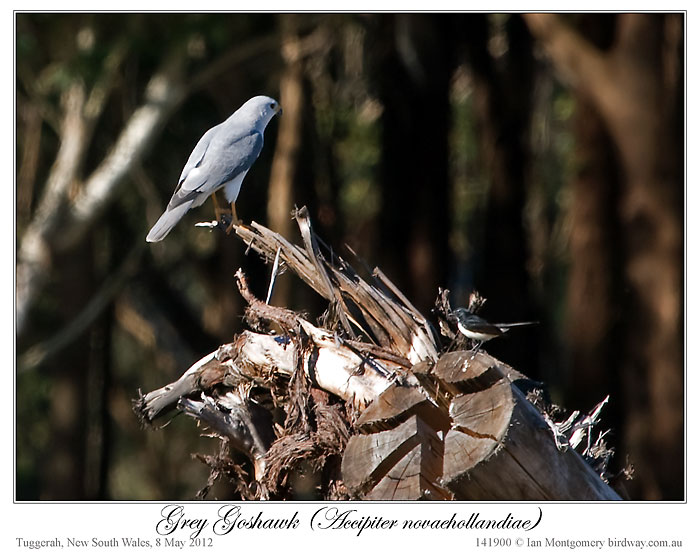
Here you can see how broad and rounded the wings are. This shape is ideal for short glides and rapid braking and is an adaptation for the preferred hunting strategy of this species, called ‘still hunting’ – perching on a well-hidden perch and making short, devastating swoops on unsuspecting prey feeding on the ground or in trees. Prey includes birds, mammals and reptiles and a female can take prey up to the size of herons, rabbits and possums. Goshawks are subject to mobbing by small birds, and the when the individual in the second photo landed on a tree stump several seconds later (12 to be exact) it immediately attracted the attention of a Willie-wagtail visible in flight near the goshawk in the third photo.

Grey Goshawk ( novaehollandiae) by Ian 3

You might recall that pied plumage is often the hallmark of aggressiveness – the reverse of camouflage – and this Willie-wagtail actually landed on the tree stump as in the third photo. The Goshawk gives the appearance of having lost interest in the Willie-wagtail, but I suspect that it was more concerned with preparing to take flight as I approached it trying to get a closer shot, which it did very shortly afterwards.

Grey Goshawk ( novaehollandiae) by Ian 4

I mentioned Sulphur-crested Cockatoos before as it has been suggested that the white morph has evolved to mimic Cockatoos to escape detection, but this theory has never been proven. It is thought that genetically the white morph is simply a single recessive gene, like Mendel’s sweet peas, as white-white mating produces white offspring, while white-grey and grey-grey can produce either. There is supposed to be geographical variation in the proportion of the morphs, with the white one being predominant in northern Australia, Tasmania and western Victoria and the grey morph being predominant in eastern Australia. Despite the specific name novaehollandiae, it isn’t an Australian endemic and also occurs in New Guinea and neighbouring islands, though the island races are sometimes treated as separate species.

Best wishes

Ian

**************************************************
Ian Montgomery, Birdway Pty Ltd,
454 Forestry Road, Bluewater, Qld 4818
Tel 0411 602 737 ian@birdway.com.au
Check the latest website updates:
http://www.birdway.com.au/#updates
**************************************************

Lee’s Addition:

Wow! Another beautiful bird! I really enjoy Ian’s Newsletters. They tell about birds that many of us never see or even hear about. Then again, we tell about American birds and to others, those are probably just as fantastic to hear about. Ian has managed to travel around the world in search of birds to photograph. Check out his website, Birdway, to enjoy his photos.

The Goshawk is one of the Birds of the Bible and was not to be eaten, but this one is such a beauty, I wouldn’t dream of eating it or hurting it anyway.

the ostrich, the short-eared owl, the sea gull, and the hawk after its kind; (Leviticus 11:16 NKJV)

The Goshawks are part of the Accipitridae – Hawks & Allies Family. Check out Ian’s 47 members of the Hawks, Eagles & Allies and then the whole list of 255 species in the family listed here.

*

Start Birdwatching Today: Enjoy The Lord’s Paintbrush – Zoos

Mandarin Duck (Aix galericulata) by Dan at Zoo Miami

Mandarin Duck (Aix galericulata) by Dan at Zoo Miami

I trust you are enjoying our “Start Birdwatching Today!” series. We have been trying to motivate you to go out and observe the many birds around you. This is the second article about “Enjoying The Lord’s Paintbrush” Click for first one.

Seeing as our subtitle is “Birdwatching from a Christian Perspective,” I want to do a few articles that you won’t see in most birding books. We believe that the world and all that its critters were created by the Lord and not evolved.

For thus says the Lord–Who created the heavens, God Himself, Who formed the earth and made it, Who established it and did not create it to be a worthless waste; He formed it to be inhabited–I am the Lord, and there is no one else. (Isaiah 45:18 AMP) O LORD, how manifold are Your works! In wisdom You have made them all. The earth is full of Your possessions— (Psalms 104:24 NKJV) Have you not known? Have you not heard? The everlasting God, the LORD, The Creator of the ends of the earth, Neither faints nor is weary. His understanding is unsearchable. (Isaiah 40:28 NKJV)

While creating the birds, the Lord has used a fantastic array of colors and designs. I can imagine Him using a fine brush when some of my favorite birds here in America were being dressed for “His pleasure.” Zoos are a fantastic place to see birds that you would have to travel to other countries to see. It is more economical to travel to a Zoo nearby.

The birds at zoos are well cared for and many are being bred to preserve their species. Some birds are so endangered by loss of habitat and other causes, that the only birds left are the ones in the zoos or preserves. We are fortunate to have some very super zoos right here within a day’s drive and our country has many others that are first class also. The birds seen here in this article are some of the fantastically painted birds created by the Lord that Dan and I have seen in Zoos.

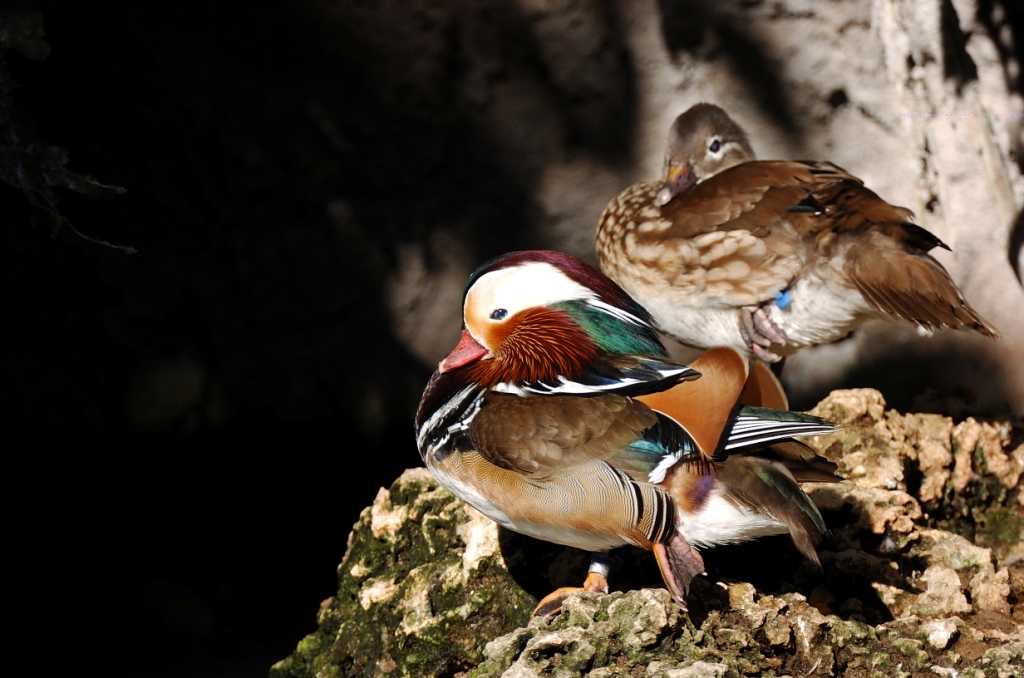
Look at the Mandarin Duck at the top. He is related to the Wood Duck up there last week. Another beautiful bird that likes to hide and make it difficult to get a good photo of him. The male is the colorful one and the female is a plain brownish to protect her while on the nest. She is in the background and you can see her painted eyelines.

Now if you have an ugly vulture and want to pretty it up, look at this design on the head of a King Vulture.

King Vulture (Sarcoramphus papa) by Lee at Brevard Zoo

King Vulture (Sarcoramphus papa) by Lee at Brevard Zoo

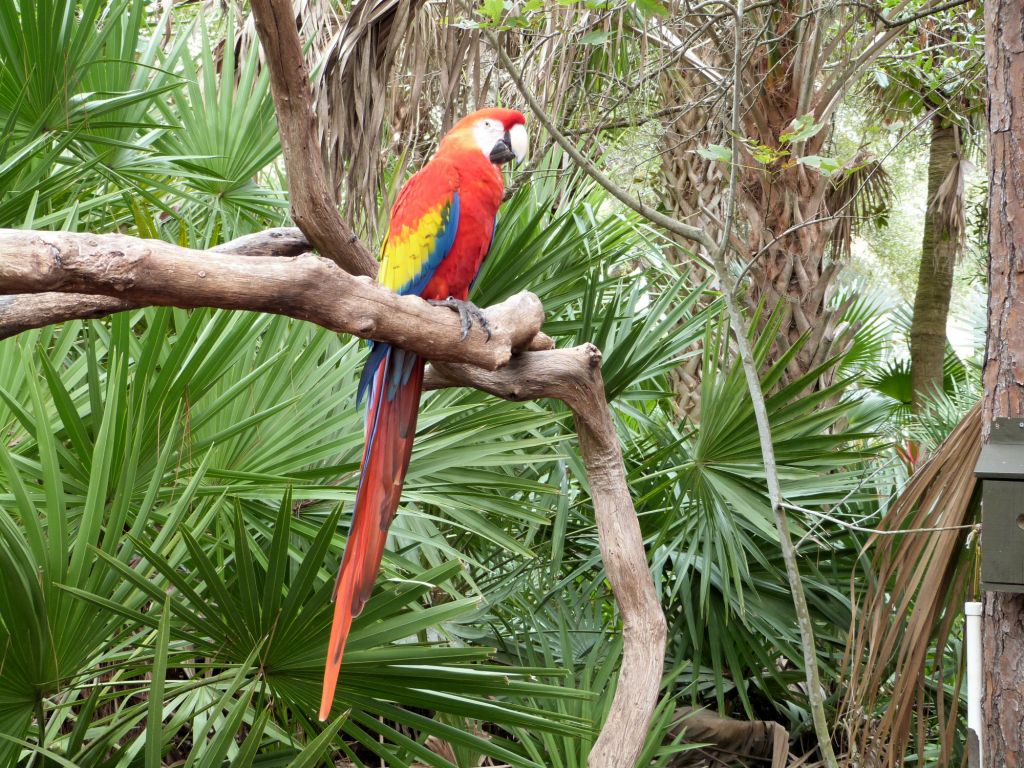
Here are a few more beauties by their Creator: How about these feathers on the Scarlet Macaw?

Scarlet Macaw (Ara macao) Feathers - Brevard Zoo

Scarlet Macaw (Ara macao) Feathers – Brevard Zoo

Scarlet Macaw (Ara macao) by Lee Brevard Zoo

Scarlet Macaw (Ara macao) by Lee Brevard Zoo

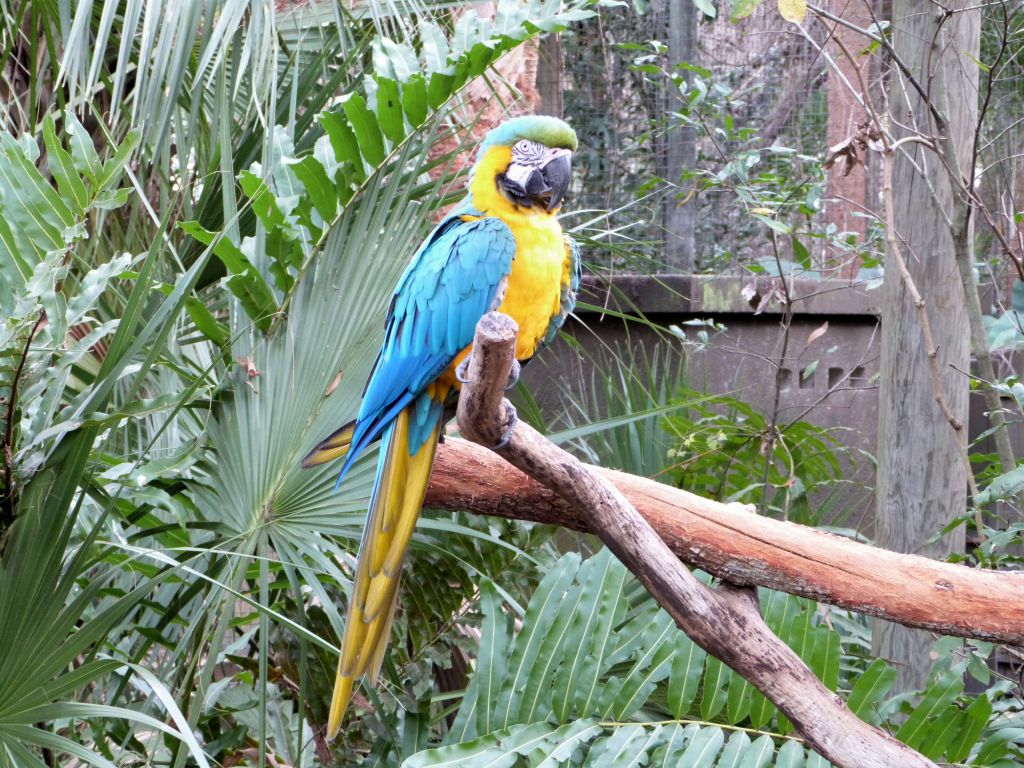
Or the gorgeous Blue-and-yellow Macaw?

Blue-and-yellow Macaw (Ara ararauna) at Brevard Zoo

Blue-and-yellow Macaw (Ara ararauna) at Brevard Zoo

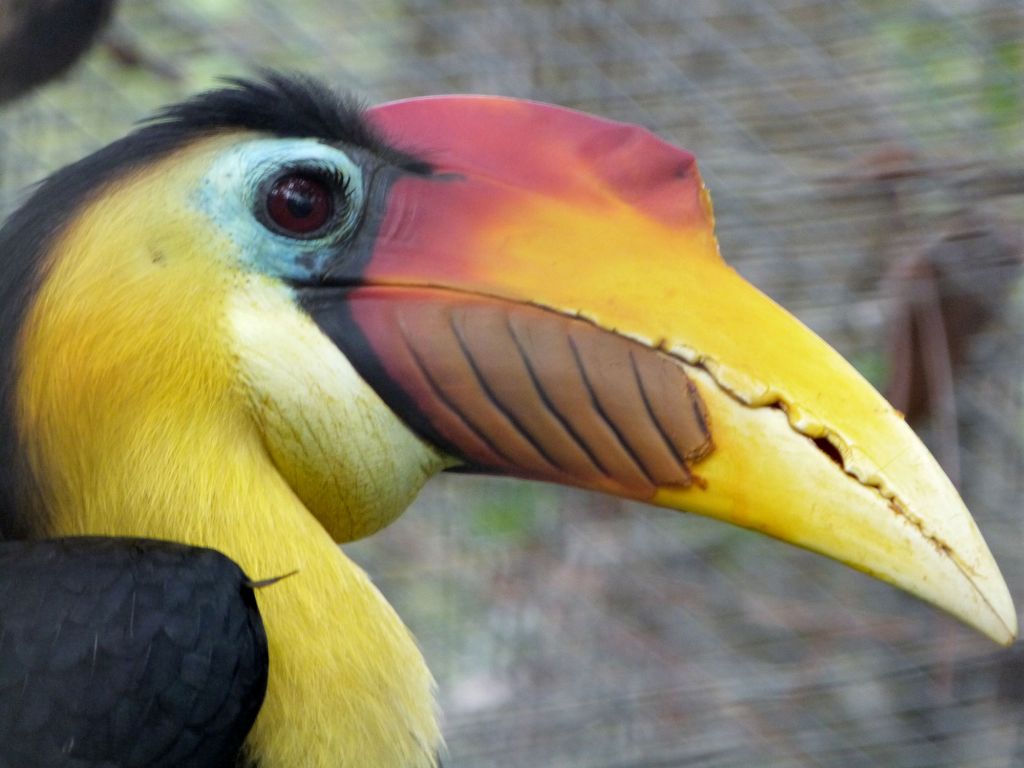
My favorite “painted” bird at the Brevard Zoo was this one:

Wrinkled Hornbill (Aceros corrugatus) Brevard Zoo by Lee

Wrinkled Hornbill (Aceros corrugatus) Brevard Zoo by Lee

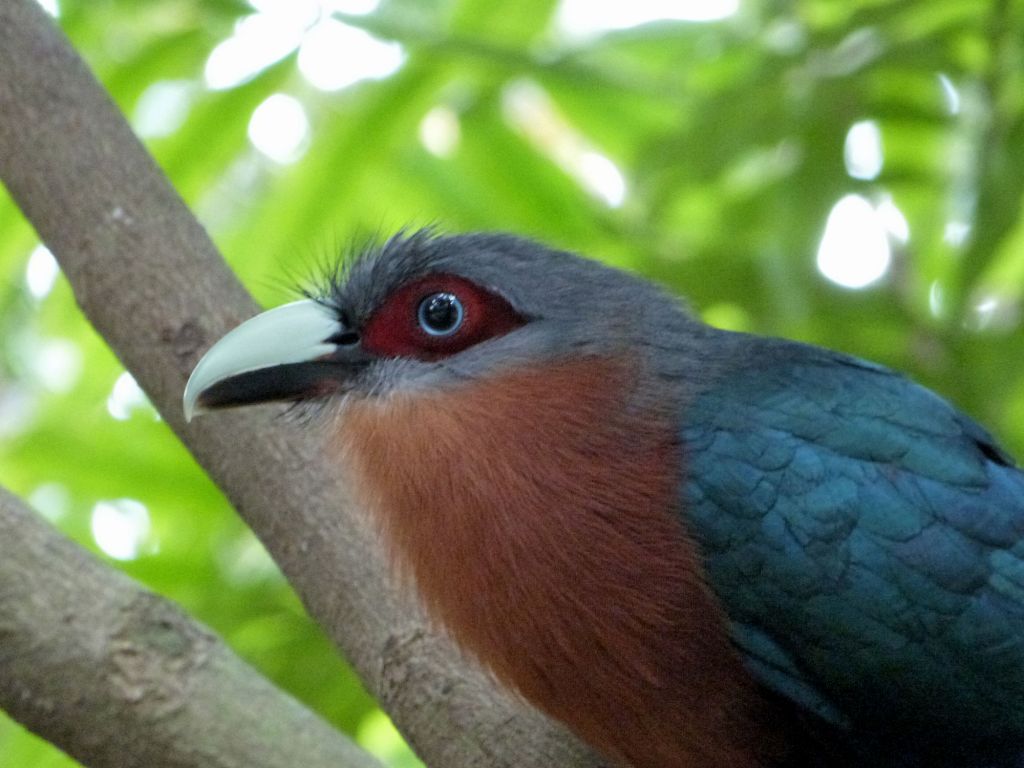
Wow!!! Down in Miami at the Wings of Asia aviary at Zoo Miami we were able to see these beautiful birds: The Chestnut-breasted Cuckoo

Chestnut-breasted Cuckoo (Cacomantis castaneiventris) Wings of Asia

Chestnut-breasted Cuckoo (Cacomantis castaneiventris) Wings of Asia

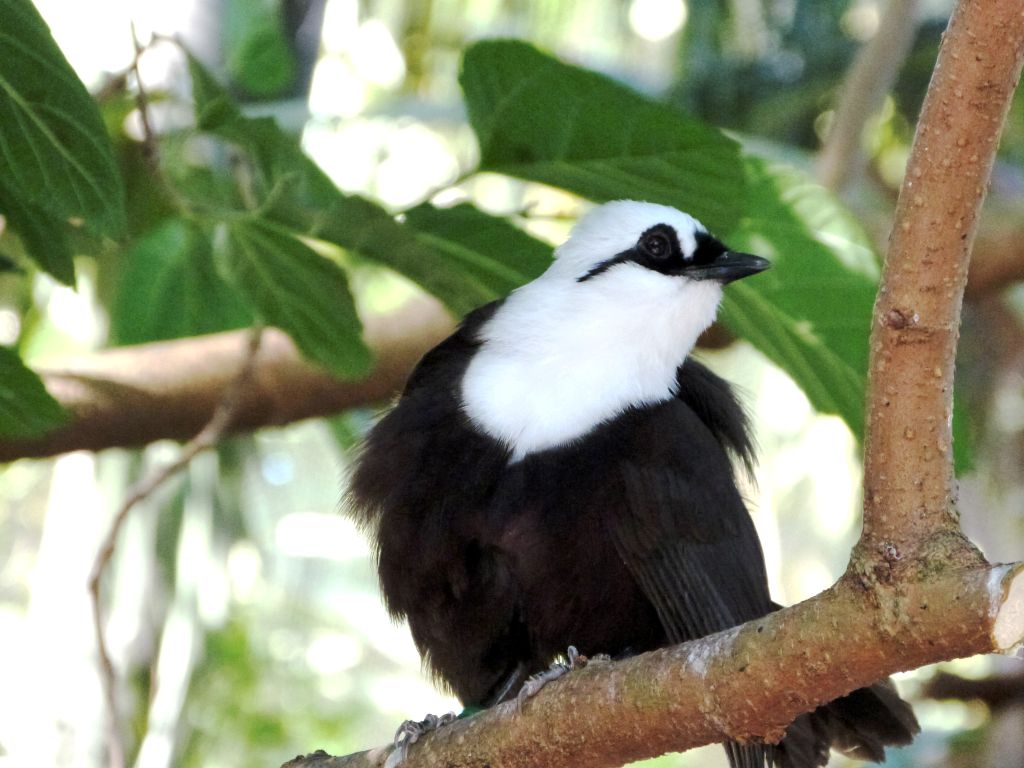
Or this cool bird which I call “Joe Cool.” Looks like the Lord painted sunglasses on it.

(Black and White) Sumatran Laughingthrush (Garrulax bicolor) by Lee

(Black and White) Sumatran Laughingthrush (Garrulax bicolor) by Lee

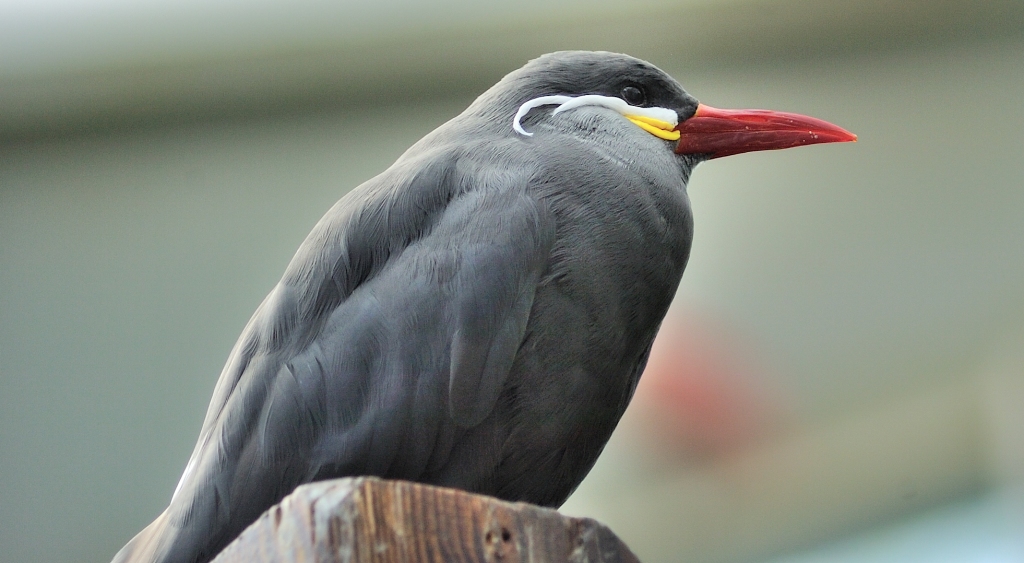
An Inca Tern seen at the National Aviary in Pittsburgh, PA:

Inca Tern by Dan at National Aviary

Inca Tern by Dan at National Aviary

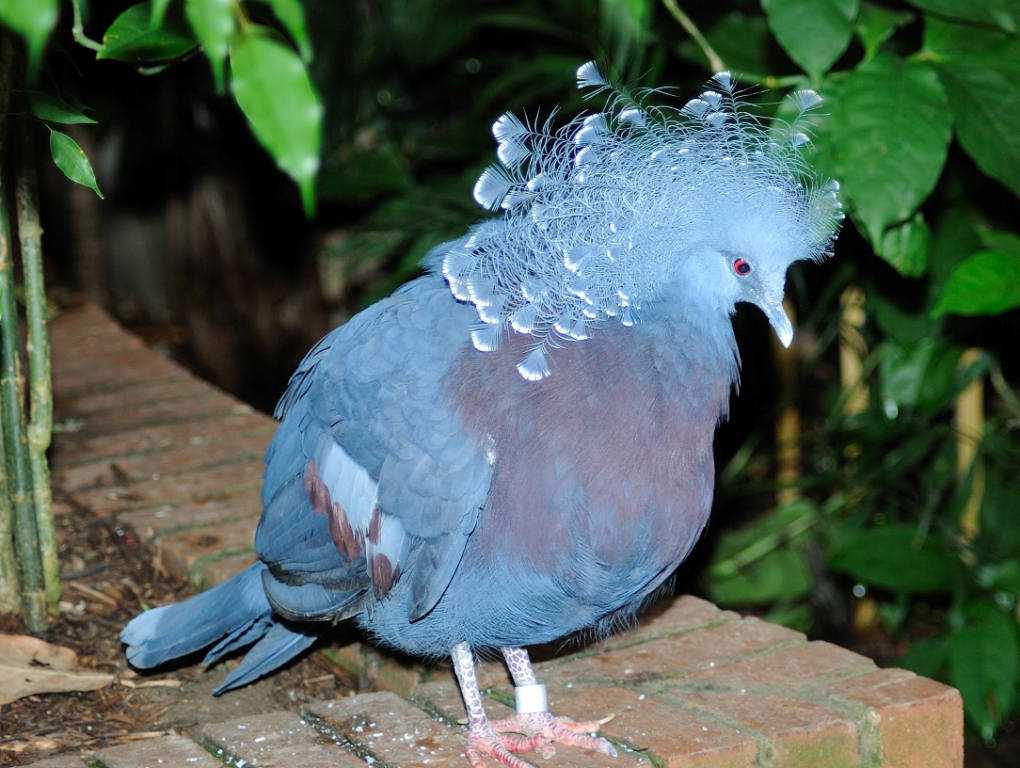
This Victorian-crowned Pigeon is at most of the zoos we have visited. They look like lace was placed on its head.

Victoria Crowned Pigeon by Dan at National Aviary

Victoria Crowned Pigeon by Dan at National Aviary

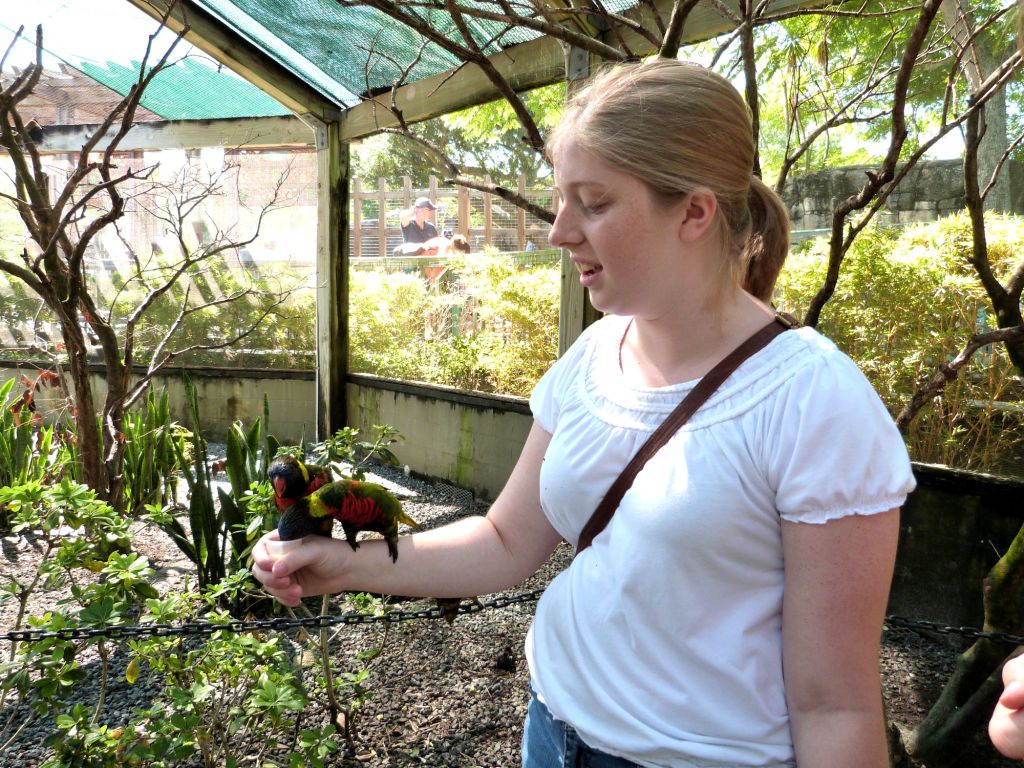
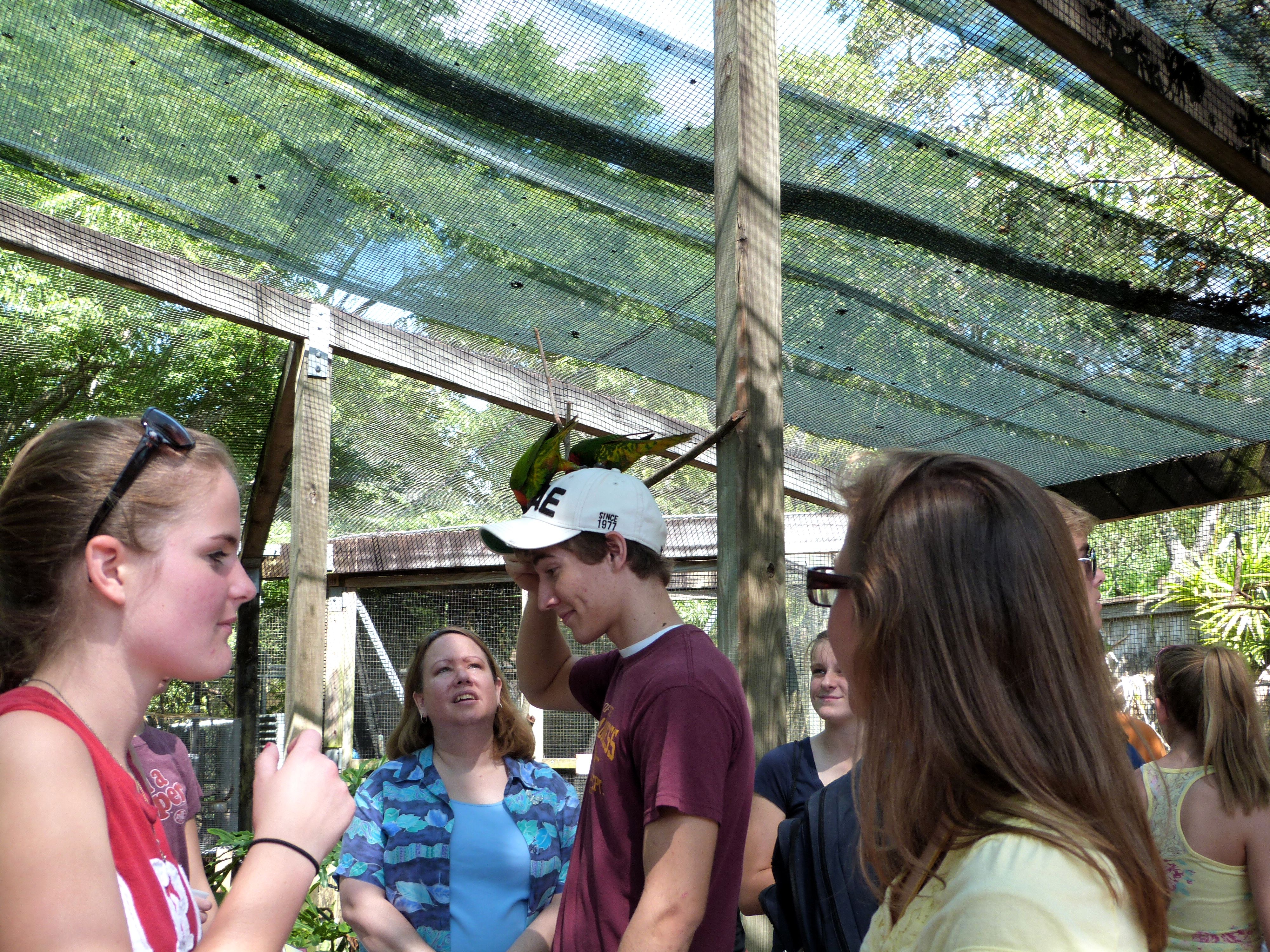
Back here locally to the Lowry Park Zoo in Tampa, there are many birds to enjoy. We met a group of our Homeschoolers over there on Friday and had the pleasure of introducing them to my avian friends there. They enjoyed all of them, but had the most fun feeding the beautiful Lorikeets.

Rainbow Lorikeets at Lowry Park Zoo

Rainbow Lorikeets at Lowry Park Zoo

Homeschoolers at Lowry Park Zoo

Homeschoolers at Lowry Park Zoo

Homeschoolers at Lowry Park Zoo

Homeschoolers at Lowry Park Zoo

Rainbow Lorikeet at Lowry Pk Zoo by Dan

Rainbow Lorikeet at Lowry Pk Zoo by Dan

There are many more that could be shown, but if you”Start Birdwatching Today” with a trip to a zoo or somewhere similiar, you might just be surprised by the beauty and magnificence of the birds. Then thank the Lord for His many blessings to us.

Oh, the depth of the riches both of the wisdom and knowledge of God! How unsearchable are His judgments and His ways past finding out! (Romans 11:33 NKJV)

See the whole “Start Birdwatching Today” series *

True Duck Story – From an e-Mail

I received this from a friend and it was too good not to share.
*****

This is a really neat story.

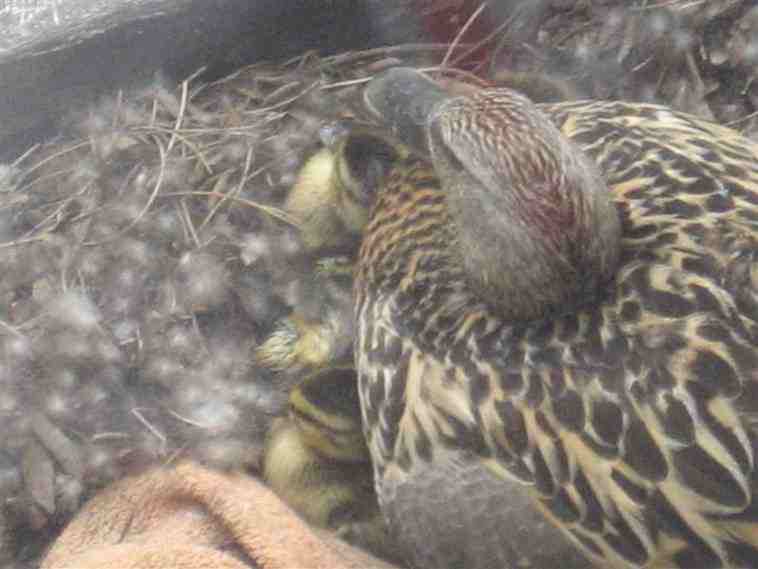
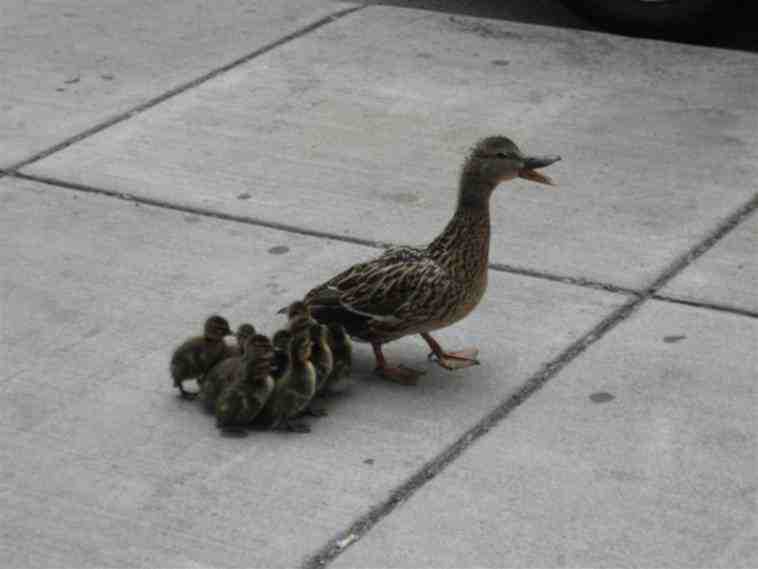
True duck story – San Antonio , Texas – Bravo something really cute happened this week. Michael R. Is an accounting clerk at Frost Bank and works there in a second story office. Several weeks ago, he watched a mother duck choose the concrete awning outside his window as the unlikely place to build a nest above the sidewalk. The mallard laid ten eggs in a nest in the corner of the planter that is perched over 10 feet in the air. She dutifully kept the eggs warm for weeks, and Monday afternoon all of her ten ducklings hatched.

Duck Story 1

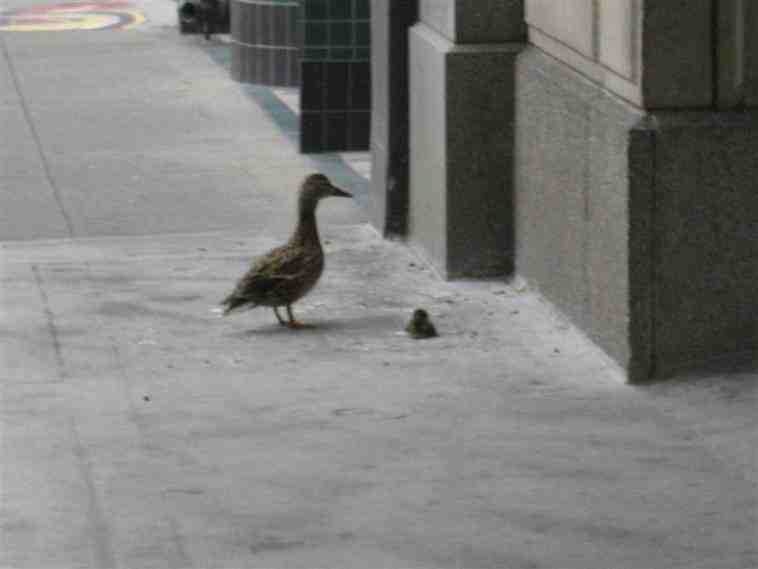
Michael worried all night how the momma duck was going to get those babies safely off their perch in a busy, downtown, urban environment to take to water, which typically happens in the first 48 hours of a duck hatching. Tuesday morning, Michael watched the mother duck encourage her babies to the edge of the perch with the intent to show them how to jump off. Office work came to a standstill as everyone gathered to watch.

The mother flew down below and started quacking to her babies above. In disbelief Michael watched as the first fuzzy newborn trustingly toddled to the edge and astonishingly leapt into thin air, crashing onto the cement below. Michael couldn’t stand to watch this risky effort nine more times! He dashed out of his office and ran down the stairs to the sidewalk where the first obedient duckling, near its mother, was resting in a stupor after the near-fatal fall. Michael stood out of sight under the awning-planter, ready to help.

As the second one took the plunge, Michael jumped forward and caught it with his bare hands before it hit the concrete. Safe and sound, he set it down it by its momma and the other stunned sibling, still recovering from that painful leap. (The momma must have sensed that Michael was trying to help her babies.)

One by one the babies continued to jump.. Each time Michael hid under the awning just to reach out in the nick of time as the duckling made its free fall. At the scene the busy downtown sidewalk traffic came to a standstill. Time after time, Michael was able to catch the remaining eight and set them by their approving mother.

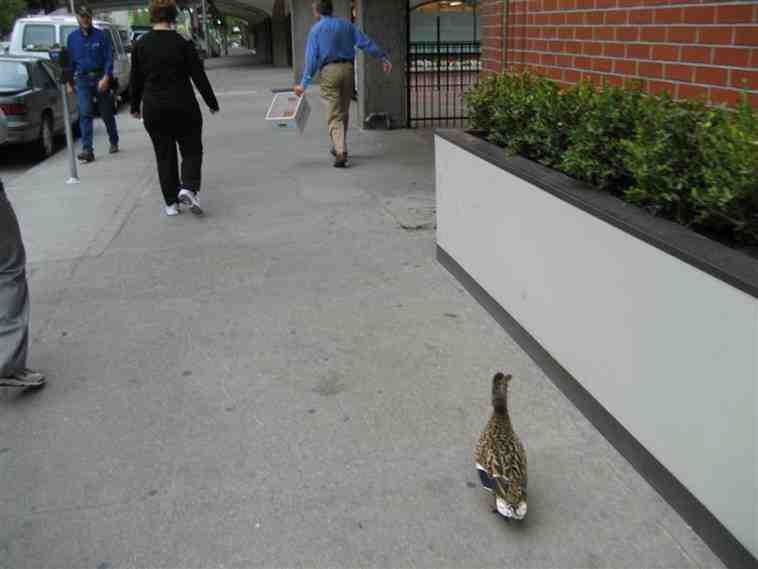
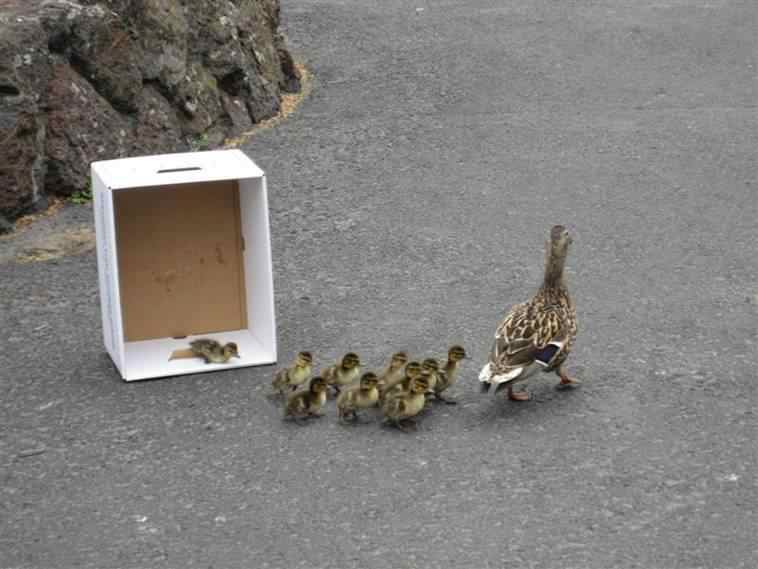
At this point Michael realized the duck family had only made part of its dangerous journey. They had two full blocks to walk across traffic, crosswalks, curbs and past pedestrians to get to the closest open water, the San Antonio River , site of the famed “River Walk.” The onlooking office secretaries and several San Antonio police officers joined in. An empty copy-paper box was brought to collect the babies. They carefully corralled them, with the mother’s approval, and loaded them in the container.. Michael held the box low enough for the mom to see her Brood. He then slowly navigated through the downtown streets toward the San Antonio River . The mother waddled behind and kept her babies in sight, all the way.

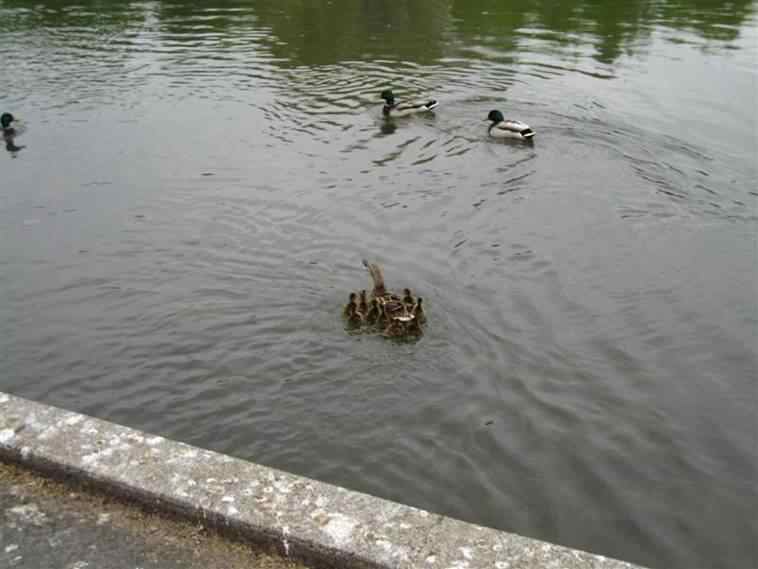
As they reached the river, the mother took over and passed him, jumping in the river and quacking loudly. At the water’s edge, Michael tipped the box and helped shepherd the babies toward the water and to the waiting mother after their adventurous ride.

All ten darling ducklings safely made it into the water and paddled up snugly to momma. Michael said the mom swam in circles, looking back toward the beaming bank bookkeeper, and proudly quacking.

At last, all present and accounted for: “We’re all together again. We’re here! We’re here!”

And here’s a family portrait before they head outward to further adventures….

Like all of us in the big times of our life, they never could have made it alone without lots of helping hands. I think it gives the name of San Antonio ‘s famous “River Walk” a whole new meaning! Maybe you will want to share this story with others. It’s too good to lose! Live honestly, Love generously, Care deeply, Speak kindly & Leave the rest to God.