Birds of the Bible – Repeating Birds

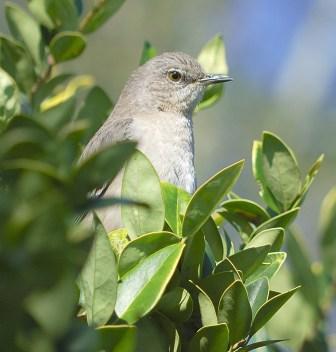
Northern Mockingbird (Mimus polyglottos) by Dan

Northern Mockingbird (Mimus polyglottos) by Dan

Curse not the king, no not in thy thought; and curse not the rich in thy bedchamber: for a bird of the air shall carry the voice, and that which hath wings shall tell the matter. (Ecclesiastes 10:20 KJV)

Talking birds! Is it possible? Solomon wrote about it in Ecclesiastes while telling people not to curse the king, even in your bedroom. Are there birds who could tell your words? First lets look at the words of Scripture in just that part of the verse. Again, I have used my e-Sword Bible program and a few other printed versions.

(ACV) For a bird of the heavens shall carry the voice, and that which has wings shall tell the matter.
(ABP+) For a winged creature of heaven shall carry your voice, and the one having the wings shall report your word.
(AKJV) for a bird of the air shall carry the voice, and that which has wings shall tell the matter.
(AMP) for a bird of the air will carry the voice, and a wing creature will tell the matter.
(ASV) for a bird of the heavens shall carry the voice, and that which hath wings shall tell the matter.
(BBE)  because a bird of the air will take the voice, and that which has wings will give news of it.
(Bishops) (10:19)  for a byrde of the ayre shall betray thy voyce, and with her fethers shall she bewray thy wordes.
(Brenton)  for a bird of the air shall carry thy voice, and that which has wings shall report thy speech.
(CEV) A little bird might hear and tell everything.
(Darby)  for the bird of the air will carry the voice, and that which hath wings will tell the matter.
(DRB)  because even the birds of the air will carry thy voice, and he that hath wings will tell what thou hast said.
(ERV) A little bird might fly and tell them everything you said.
(ESV)  for a bird of the air will carry your voice, or some winged creature tell the matter.
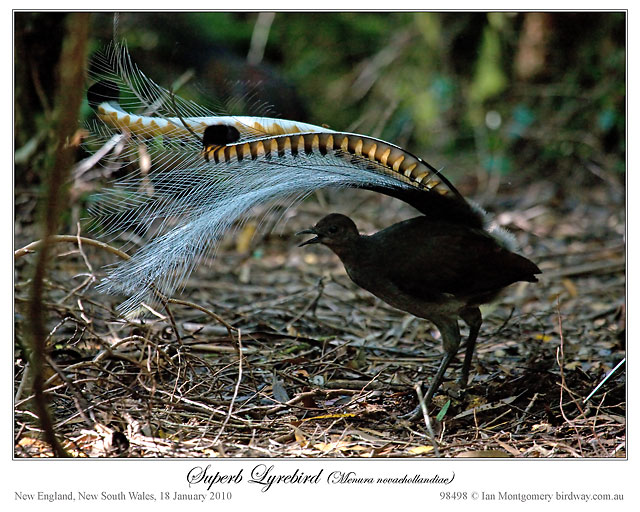
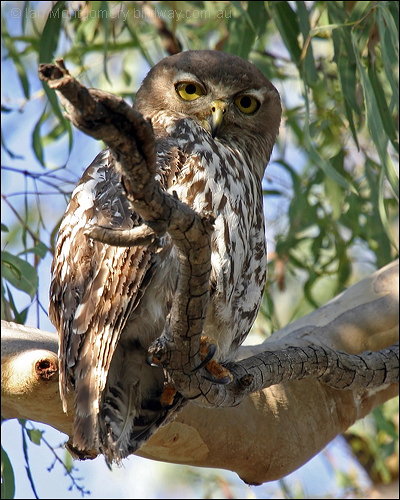
Superb Lyrebird (Menura novaehollandiae) by Ian

Superb Lyrebird (Menura novaehollandiae) by Ian

(Geneva)  for the foule of the heauen shall carie the voice, & that which hath wings, shall declare the matter.
(GNB) A bird might carry the message and tell them what you said.
(GW)  A bird may carry your words, or some winged creature may repeat what you say.
(ISV) For a bird will fly by and tell what you say, or something with wings may talk about it.
(JPS) for a bird of the air shall carry the voice, and that which hath wings shall tell the matter.
(KJV)for a bird of the air shall carry the voice, and that which hath wings shall tell the matter.
(KJV-1611) for a bird of the aire shall carry the voyce, and that which hath wings shall tell the matter.
(LITV)  for a bird of the heavens may carry the voice; yea, the lord of wings may tell the matter.
(MKJV) for a bird of the air shall carry the voice, and that which has wings shall tell the matter.
(NASB)  for a bird of the heavens will carry the sound and the winged creature will make the matter known.
(NIV) because a bird of the air may carry your words, and a bird on the wing may report what you say.
(NKJV) For a bird of the air may carry your voice, And a bird in flight may tell the matter.
(RV) for a bird of the air shall carry the voice, and that which hath wings shall tell the matter.
(Webster)for a bird of the air will carry the voice, and that which hath wings will tell the matter.
(YLT) For a fowl of the heavens causeth the voice to go, And a possessor of wings declareth the word.

Talking birds are birds that can mimic human speech. Talking birds have varying degrees of intelligence and communication capabilities: some, like the crow, a highly intelligent bird, are only able to mimic a few words and phrases, whilst some budgerigars have been observed to have a vocabulary of almost two thousand words. The Hill Myna is a commonly kept pet, well known for its talking ability – whilst its relative, the European Starling, is also adept at mimicry. Wild cockatoos in Australia have been reported to have learned human speech from ex-captive birds that have integrated into the flock. (See the Article – Wikipedia)
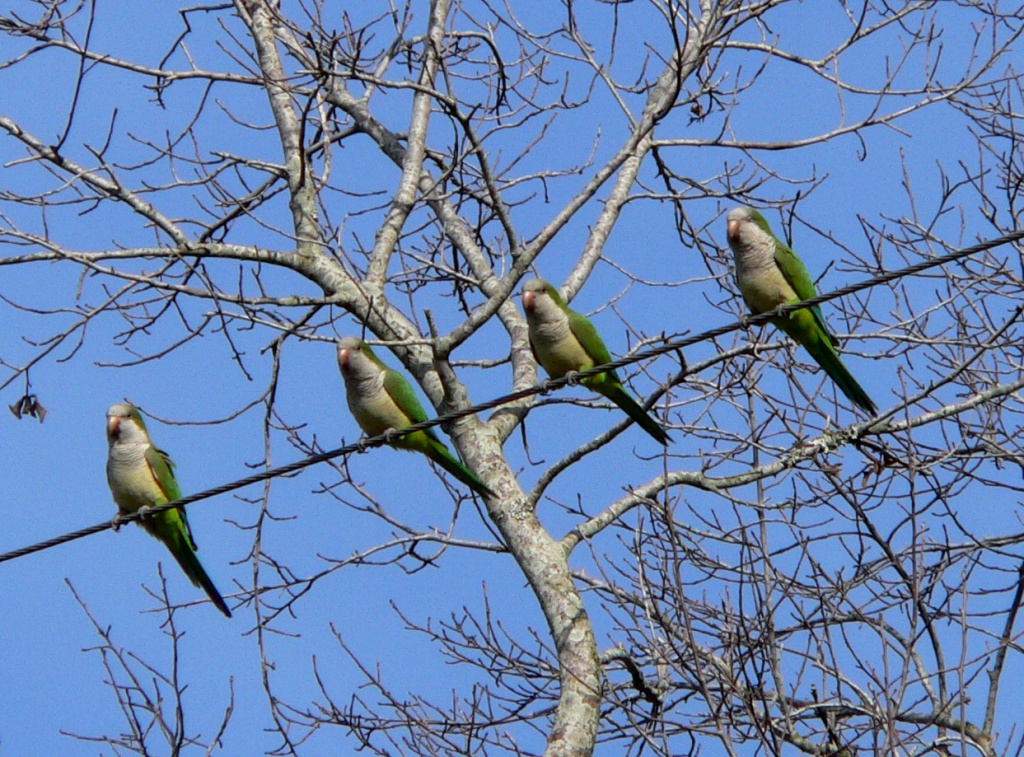
Monk Parakeets at S Lake Howard Nature Park by Lee

Monk Parakeets at S Lake Howard Nature Park by Lee

Dan and I had a Monk Parakeet that talked. Once Hoppi began to talk, he picked up everything you said. He even learned to call our dog, having heard us calling for him. Our dog would even look his way and head toward Hoppi when he called. Praise the Lord we are Christians, because that bird would repeat our conversations. I doubt he knew what he was saying, other than associating words with actions, but Hoppi did repeat what you had said.

*

From the article in Wikipedia:

In 1995 a budgerigar named Puck was credited by Guinness World Records as having the largest vocabulary of any bird, at 1,728 words.
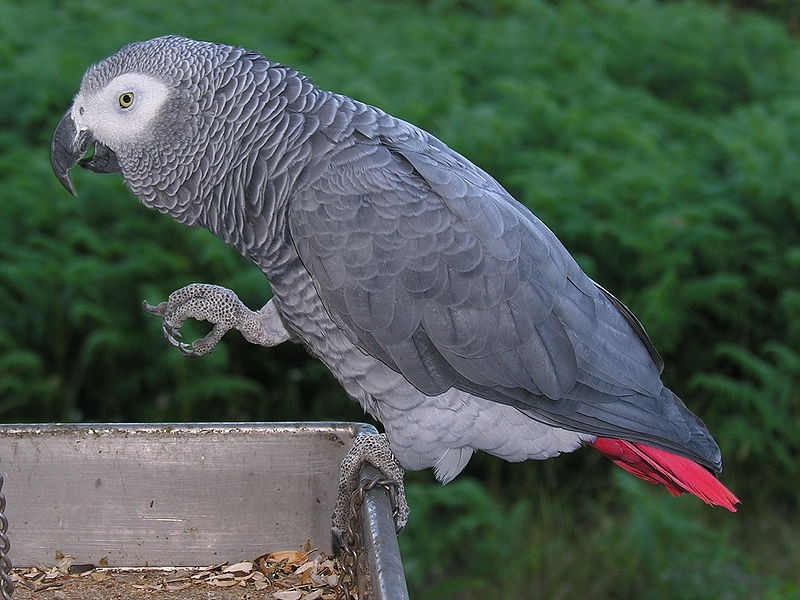
Grey Parrot (Psittacus erithacus) ©WikiC

Grey Parrot (Psittacus erithacus) ©WikiC

The African Grey Parrots are particularly noted for their cognitive abilities. Some of the most notable African Grey Parrots are Alex, Prudle, N’kisi and a new rising star, Einstein.
Alex had a vocabulary of about 100 words, but he was one of the most famous birds because of his cognitive abilities. In 2005, World Science reported that Alex understood the concept of zero. Alex died on September 6, 2007.
Prudle held the Guinness world record for bird with biggest vocabulary for many years with a documented vocabulary of 800 words.
N’kisi is noted for his impressive English usage skills and other abilities. As of January 2004, he had a documented vocabulary of 950 words and shows signs of a sense of humor. N’kisi is believed to be one of the most advanced users of human language in the animal world.
Einstein appeared on many television shows and became famous for her ability to recreate sounds as well as voice. Video clips show her making the sound of a laser beam and an evil laugh. She has been trained by Stephanie White.
African Grey Sparky is popular on YouTube for copying one liners from the sitcom Still Game in a broad Scottish accent.
Bibi, a Congo African Grey Parrot, is best known for her ability to use greetings from 20 different languages, earning her the nickname “The Polyglot Parrot.” At only three years of age, Bibi has already developed a vocabulary of about 300 words, and she understands the concepts of color and shape.
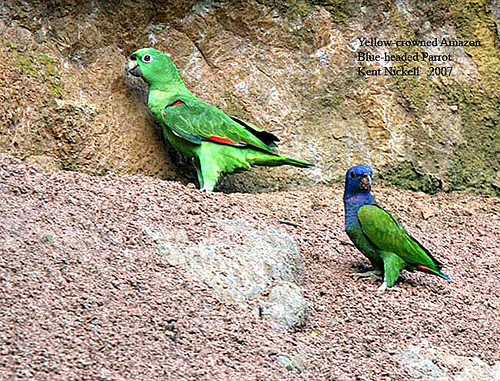
Yellow-crowned Amazon, Blue-headed Parrot by Kent Nickell

Yellow-crowned Amazon, Blue-headed Parrot by Kent Nickell

Amazon parrots – Many species of Amazona (particularly the yellow-head variety) are outstanding talkers. Yellow-napes, Double Yellow-headed, Yellow-crowned, and Panama Amazons are highly regarded as talking parrots.
Other parrots – Most parrot species are capable of imitating human words. Many can learn to use phrases in context; they can also be trained to imitate any words. Monk Parakeets (also known as Quaker parrots) are also reputed to be skilled talkers.
Hill Mynas – Hill Mynas are renowned for their ability to mimic the human voice. Many have claimed that the Hill Myna is the best talking bird and the best mimic in the world.
Lyrebird, ability to mimic natural and artificial sounds from their environment
Mockingbird, ability to mimic natural and artificial sounds from their environment
Passerine – Songbirds

Sounds like we need to watch what we say, not only about the king, but everyone. Even if the birds don’t hear us, the Lord hears our words and our thoughts.

Let the words of my mouth, and the meditation of my heart, be acceptable in thy sight, O LORD, my strength, and my redeemer. (Psalms 19:14 KJV)
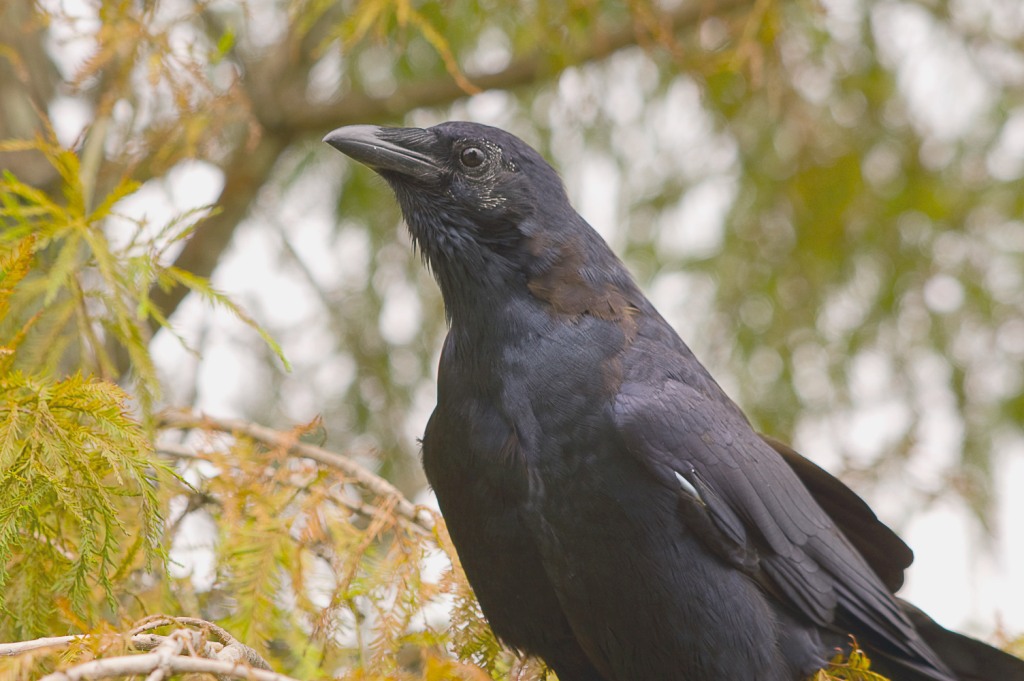
Fish Crow (Corvus ossifragus) at Lake Morton By Dan'sPix

Fish Crow (Corvus ossifragus) at Lake Morton By Dan'sPix

Here are some “one liners” about gossip from Zingers by Croft M. Pentz:

  • Blessed are the hard of hearing, for they shall miss much small talk.
  • Trying to squash a rumor is like trying to unring a bell
  • A rumor is about as hard to unspread as butter.
  • Can you imagine anyone as unhappy as a person with a live secret and a dead telephone.
  • Busy souls have no time to be busybodies.
  • When a little bird has told you something, be sure that bird was not a cuckoo.

There is another verse in Scripture that mentions the birds telling something, but it is used in a different context. We will save that for another Birds of the Bible article.

But ask now the beasts, and they shall teach thee; and the fowls of the air, and they shall tell thee: (Job 12:7 KJV)
Job 12:7

*
More Birds of the Bible

Wordless Birds

*

Birds in Hymns – Spirit of God, That Moved Of Old

Under His Wings - (Dove - photographer unknown)

Under His Wings – (Dove – photographer unknown)

And I will put my spirit within you, and cause you to walk in my statutes, and ye shall keep my judgments, and do them. (Ezekiel 36:27 KJV)

Words: Ce­cil F. Al­ex­an­der, (1818-1895) in Hymns, by the So­ci­e­ty for the Pro­pa­ga­tion of Christ­ian Know­ledge, 1852.

Music: Sol­dau, Geyst­liche Ge­sangk Buch­leyn (Wit­ten­berg, Ger­ma­ny: 1524)

Spirit of God, That Moved Of Old

Spirit of God, that moved of old
Upon the waters’ darkened face,
Come, when our faithless hearts are cold,
And stir them with an inward grace.

Thou that art power and peace combined,
All highest strength, all purest love,
The rushing of the mighty wind,
The brooding of the gentle dove.

Come, give us still Thy powerful aid,
And urge us on, and make us Thine;
Nor leave the hearts that once were made
Fit temples for Thy grace divine.

Nor let us quench Thy sev’nfold light;
But still with softest breathings stir
Our wayward souls, and lead us right,
O Holy Ghost, the Comforter.

And I will bring the blind by a way that they knew not; I will lead them in paths that they have not known: I will make darkness light before them, and crooked things straight. These things will I do unto them, and not forsake them. (Isaiah 42:16 KJV)


Ce­cil F. Al­ex­an­der Born-Ear­ly Ap­ril 1818 in Red­cross, Coun­ty Wick­low, Ire­land. Died on Oc­to­ber 12, 1895  in Lon­don­der­ry, North­ern Ire­land. She was Buried at the Ci­ty Cem­e­te­ry, Lon­don­der­ry, North­ern Ire­land.

Alex­and­er’s hus­band was Will­iam Alex­an­der, bi­shop of Der­ry and Ra­phoe, and lat­er the An­gli­can pri­mate for Ire­land. Ce­cil and her sis­ter found­ed a school for the deaf, and she set up the Girls’ Friend­ly So­ci­e­ty in Lon­don­der­ry. Ce­cil Al­ex­and­er wrote about 400 hymns in her life­time.

Geyst­liche Ge­sangk Buch­leyn (actually a hymn book, maybe)- No information

More Birds in Hymns

Most information from The Cyber Hymnal – Spirit of God, That Moved Of Old

*

Birds in Hymns – Return of Summer

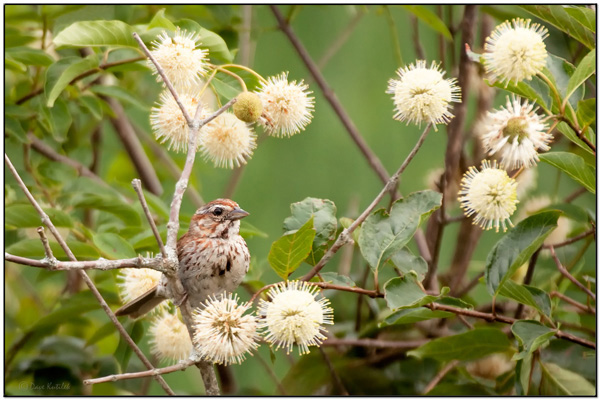
Song Sparrow in white flowers by Daves BirdingPix

Song Sparrow in white flowers by Daves BirdingPix

While the earth remaineth, seedtime and harvest, and cold and heat, and summer and winter, and day and night shall not cease. (Genesis 8:22 KJV)

Words by  Al­ice J. Clea­tor  (1871-19260), in Light in the Val­ley (Phil­a­del­phia, Penn­syl­van­ia: George C. Hugg, 1898), pag­e 196.

Music: Sant­i­a­go, Ro­bert Brooks Finch  (Late 19th Century)

Return of Summer

We hail thee, glorious summer,
We welcome thee today,
With all thy flowery legions
And all thy songbirds gay.
The happy rills to meet thee
With merry laughter run;
While woodland banners greet thee,
Beneath a smiling sun.

Refrain

We hail thee, joyous summer!
We welcome thee today!
With all thy flowery legion,
And all thy songbirds gay.

We hail thy smile of gladness
O Summer fair and sweet;
O let us lay all sadness
And sighing at thy feet.
The woodland ways are ringing
With many a merry lay;
Oh let us join in singing
With nature’s choir today.

We hail thee, joyous summer!
We welcome thee today!
With all thy flowery legion,
And all thy songbirds gay.

O Summer, thou hast brought us
A message sweet and fair;
O Summer, thou hast taught us
Of Heaven’s brooding care.
Thy gleaming skies of glory
Watch o’er the world in love;
They tell a glad, sweet story
Of summer lands above.

We hail thee, joyous summer!
We welcome thee today!
With all thy flowery legion,
And all thy songbirds gay.

Thus hath the Lord GOD shewed unto me: and behold a basket of summer fruit. (Amos 8:1 KJV)


Al­ice J. Clea­tor, Born in An­dre­as, Isle of Man, Eng­land and died April 27, 1926 in Cleve­land, Ohio.

Cleator’s family ev­i­dent­ly em­igrat­ed to Amer­i­ca in the 1870’s. She was liv­ing in Clar­idon, Ohio, in 1880, & Geau­ga Coun­ty, Ohio, in 1900, 1910, & 1920. She taught school in New York Ci­ty, re­tir­ing some time be­fore 1915.

Ro­bert Brooks Finch, – No information on him other than this Santiago music

More Birds in Hymns

Most information from The Cyber Hymnal – Return of Summer

*

Birds in Hymns – All Nature’s Works His Praise Declare

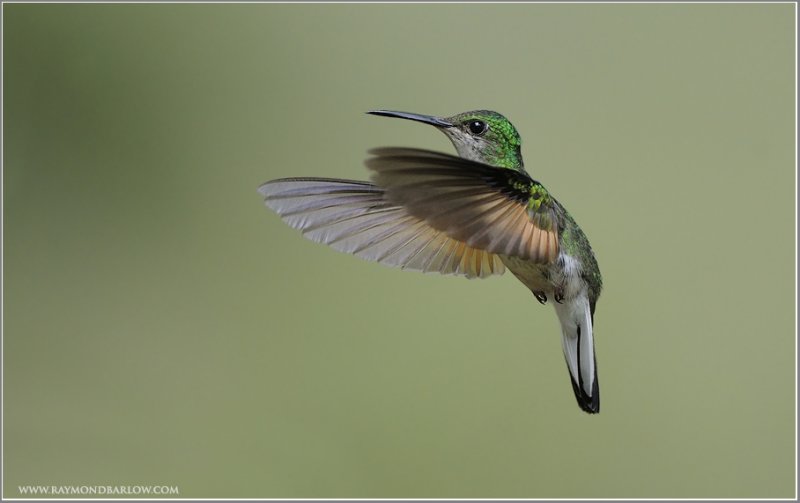
Stripe-tailed Hummingbird (Eupherusa eximia) Female by Raymond Barlow

Stripe-tailed Hummingbird (Eupherusa eximia) Female by Raymond Barlow

The heavens declare the glory of God; and the firmament sheweth his handywork. (Psalms 19:1 KJV)

Words by Henry Ware Jr. (1794-1843), 1822

Music – Bethlehem by Gottfried W. Fink (1783-1846)

All Nature’s Works His Praise Declare

All nature’s works His praise declare, to whom they all belong;
There is a voice in every star, in every breeze a song.
Sweet music fills the world abroad with strains of love and power;
The stormy sea sings praise to God, the thunder and the shower.

To God the tribes of ocean cry, and birds upon the wing;
To God the powers that dwell on high their tuneful tribute bring.
Like them, let us the throne surround, with them loud chorus raise,
While instruments of loftier sound assist our feeble praise.

Great God, to Thee we consecrate our voices and our skill;
We bid the pealing organ wait to speak alone Thy will.
Lord, while the music round us floats may earth born passions die;
O grant its rich and swelling notes may lift our souls on high!

Praise ye the LORD. Praise ye the LORD from the heavens: praise him in the heights. (Psalms 148:1 KJV)


Henry Ware, Jr was born Ap­ril 21, 1794 in Hing­ham, Mass­a­chu­setts, Died on Sep­tem­ber 25, 1843 in Fram­ing­ham, Mass­a­chu­setts and was buried in Mount Au­burn Cem­e­te­ry, Cam­bridge, Mass­a­chu­setts.

Son of a Un­i­tar­i­an min­is­ter, Ware at­tend­ed Har­vard and be­came an as­sist­ant teach­er at Ex­e­ter Acad­e­my in New Hamp­shire. In 1815, the Bos­ton Un­i­tar­i­an As­so­ci­a­tion li­censed him to preach, and in 1817, he was or­dained and be­came pas­tor of the Se­cond Church in Bos­ton, Mass­a­chu­setts. He was Pro­fess­or of Pul­pit El­o­quence and Pas­tor­al Care at the Har­vard Div­in­i­ty School, 1829-1842. He al­so ed­it­ed the Christ­ian Di­sci­ple (lat­er re­named the Christ­ian Ex­amin­er), and ran the So­ci­e­ty for Re­li­gious Im­prove­ment at Har­vard Un­i­ver­si­ty (his fa­ther was on the fa­cul­ty there, as well). A two vol­ume Mem­oir and a four vol­ume Works were pub­lished three years af­ter his death. Ware wrote this hymn for a ser­vice ded­i­cat­ing a new or­gan (see the last stan­za).

Gottfried W. Fink was born onMarch 8, 1783, Sul­za on the Ilm, Thu­rin­gia and died on Au­gust 27, 1846, Leip­zig, Ger­ma­ny.

Fink sang as a chor­is­ter at Naum­burg, and stu­died the­ol­o­gy at Leip­zig (1804-8). He be­came a Pro­fess­or of Mu­sic at Leip­zig in 1842. He is re­mem­bered for his writ­ings on mu­sic his­to­ry and the­o­ry, and his col­lect­ions of se­cu­lar and re­li­gious songs.

More Birds in Hymns

Most information from The Cyber Hymnal – All Nature’s Works His Praise Declare

*

Birds in Hymns – Great Giver Of All Good

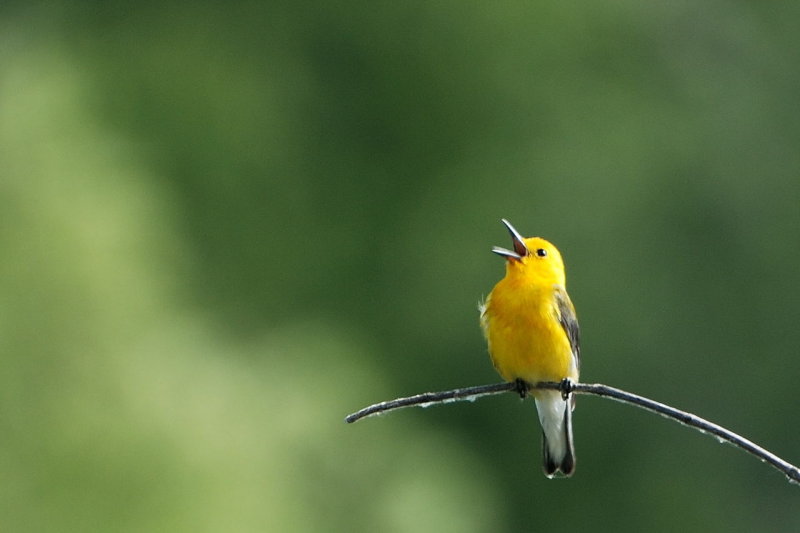
Prothonotary Warbler (Protonotaria citrea) Neal Addy Gallery

Prothonotary Warbler (Protonotaria citrea) Neal Addy Gallery

And one cried unto another, and said, Holy, holy, holy, is the LORD of hosts: the whole earth is full of his glory. (Isaiah 6:3 KJV)

Words by Ann T. Gilbert (1782-1852), 1827 (orig­in­al­ly, “Spared to Ano­ther Spring”).

This hymn ap­peared, un­at­trib­ut­ed, in the Amer­i­can School Hymn Book, by Asa Fitz, 1854, and is some­times in­cor­rect­ly ascribed to Fitz. The ver­sion be­low was pub­lished in the 1882 Col­lect­ion by God­frey Thring.

Music: Swabia by Johann M. Spiess (1715-1772) – ar­ranged by Will­iam H. Ha­ver­gal, 1847

Great Giver of All Good

Great Giver of All Good,
To Thee our thanks we yield
For all the beauties of the wood,
Of hill, and dale, and field.

Ten thousand various flowers
To Thee sweet offerings bear,
And joyous birds in woodlands bowers
Sing forth Thy tender care
.

The fields on every side
The trees on every hill,
The glorious sun, the rolling tide,
Proclaim Thy wonders still.

But trees, and fields, and skies
Still praise a God unknown;
For gratitude and love can rise
From living hearts alone.

These living hearts of ours
Thy holy Name would bless;
The blossoms of the thousand flowers
Would please the Savior less.

While earth itself decays,
Our souls can never die;
O tune them all to sing Thy praise
In better songs on high.

By them shall the fowls of the heaven have their habitation, which sing among the branches. (Psalms 104:12 KJV)


Ann T. Gilbert was the daugh­ter of Isaac Tay­lor, who at the time of her birth was a Lon­don engraver. Her father sub­se­quent­ly be­came a Con­gre­ga­tion­al min­is­ter, liv­ing first at Col­ches­ter, then at On­gar. In 1813, she mar­ried the Rev. Jo­seph Gilbert, class­ic­al and math­e­ma­ti­cal tu­tor at the Con­gre­ga­tion­al Col­lege, Mas­bo­rough (near Roth­er­ham), York­shire. From Mas­bo­rough they moved to Hull, and lat­er Not­ting­ham.

Johann M. Spiess taught mu­sic at the Gym­na­si­um in Hei­del­berg, Ger­ma­ny, and played the or­gan at St. Pe­ter’s Church and (1746-1772) at Berne Ca­thed­ral.

More Birds in Hymns

Most information from The Cyber Hymnal – Great Giver of All Good

Birds of the Bible – Little Owl

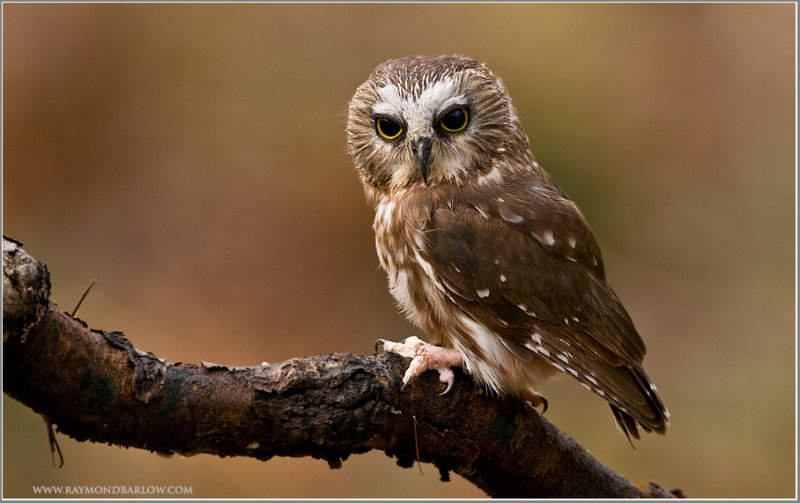
Northern Saw-whet Owl (Aegolius acadicus) (captive) by Raymond Barlow

Northern Saw-whet Owl (Aegolius acadicus) (captive) by Raymond Barlow

When I did the first Birds of the Bible – Owls back in March of 2008, this blog was only a month old. Wow! I have always enjoyed the video that I included in it and have placed it here for those who have not seen it. The Burrowing Owls would definitely qualify as Little Owls. Since that article, we have added great photographers, videographers and writers. Trust this article on just the “Little Owls” will be helpful and a blessing as we look into the Birds of the Bible.

The Little Owl is mentioned in Leviticus 11:17 and again in Deuteronomy 14:16. As you can see by the following list of verses, that it is translated as “little” in many of them. These two verses are from the list of unclean birds that the Israelites  were not to eat. See Birds of the Bible – Clean vs. Unclean

And the little owl, and the cormorant, and the great owl, (Leviticus 11:17 KJV)

little owl,H3563…   (Leviticus 11:17 KJV+)

H3563 gives this definition: כּוס,  kôs,  koce

From an unused root meaning to hold together; a cup (as a container), often figuratively a lot (as if a potion); also some unclean bird, probably an owl (perhaps from the cup like cavity of its eye): – cup, (small) owl. Compare H3599. (Strong’s Hebrew and Greek Dictionaries)

The little owl, and the great owl, and the swan, (Deuteronomy 14:16 KJV)

The little owl,H3563…  (Deuteronomy 14:16 KJV+) Same word used again.

Here are the results of  searchs in e-Sword looking for “owl” or “owls” to find which ones used “little owl.” These are the different translations and only those two verses used “little owl.”

Leviticus 11:17
and the little owl, and the cormorant, and the great owl,  (ASV)
And the little owl, and the cormorant, and the great owl,  (AKJV)
And the little owl and the cormorant and the great owl;  (BBE)
the little owl, the cormorant, the short-eared owl,  (ESV)
little owls, cormorants, great owls, (GW)
and the little owl, and the cormorant, and the great owl;  (JPS)
And the little owl, and the cormorant, and the great owl,  (KJV)
and the little owl, and the cormorant, and the eared owl;  (LITV)
and the little owl, and the cormorant, and the eared owl;  (MKJV)
and the little owl and the cormorant and the great owl,  (NAS77)
and the little owl and the cormorant and the great owl,  (NASB)
the little owl, the fisher owl, and the screech owl;  (NKJV)
and the little owl, and the cormorant, and the great owl;  (RV)
And the little owl, and the cormorant, and the great owl,  (Webster)
and the little owl, and the cormorant, and the great owl,  (YLT)

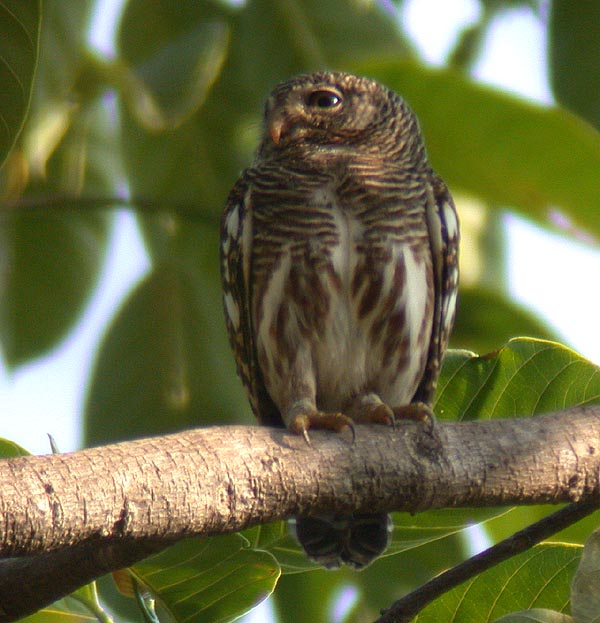
Asian Barred Owlet (Glaucidium cuculoides) by Peter Ericsson

Asian Barred Owlet (Glaucidium cuculoides) by Peter Ericsson

Deuteronomy 14:16
The little owl, the great owl, the horned owl,  (AMP)
the little owl, and the great owl, and the horned owl, (ACV)
The little owl, and the great owl, and the swan, (AKJV)
The little owl and the great owl and the water-hen; (BBE)
little owls, great owls, white owls, (ERV)
the little owl and the short-eared owl, the barn owl (ESV)
little owls, great owls, barn owls, (GW)
he little owl, the great owl, the horned owl, (ISV)
the little owl, and the great owl, and the horned owl; (JPS)
The little owl, and the great owl, and the swan, (KJV)
the little owl, and the eared owl, and the barn owl, (LITV)
the little owl, and the great owl, and the swan, (MKJV)
the little owl, the great owl, the white owl, (NAS77)
the little owl, the great owl, the white owl, (NASB)
the little owl, the screech owl, the white owl, (NKJV)
the little owl, and the great owl, and the horned owl; (RV)
The little owl, and the great owl, and the swan, (Webster)
the little owl, and the great owl, and the swan, (YLT)

Now that it is established that the “Little Owl” is a Bird of the Bible, what are some of the Little Owls that we can see today? What Order and Family do they belong? Let’s see what can be discovered.

To begin with, there are two Families of Owls in the Strigiformes Order. The Barn Owls, which are mentioned in the Bible, are in the Tytonidae Family and the rest of the Owls are in the Strigidae Family. That is where we will go to find the “little owls.” There are presently 206 species in the family, and they range from smallest (the smallest owls in the world; the Northern Pygmy Owl and the Elf Owl) to the largest Great Grey Owl (61 to 84 cm (24 to 33 in), averaging 72 cm (27 in) for females and 67 cm (26 in) for males.)

Little Owl (Athene noctua) by Nikhil Devasar

Little Owl (Athene noctua) by Nikhil Devasar

The Northern Pygmy Owl (Glaucidium californicum) and the Elf Owl (Micrathene whitneyi) would both be considered “little owls.”

There actually is a Little Owl (Athene noctua) which is resident in much of the temperate and warmer parts of Europe, Asia east to Korea, and north Africa. It is not native to Great Britain, but was first introduced in 1842, and is now naturalised there. It was also successfully introduced to the South Island of New Zealand in the early 20th century. The Little Owl is a small owl, 9-10.8 in (23-27.5 cm) in length. The adult Little Owl of the most widespread form, is white-speckled brown above, and brown-streaked white below. It has a large head, long legs, and yellow eyes, and its white “eyebrows” give it a stern expression. This species has a bounding flight like a woodpecker. The call is a querulous kee-ik. (Wikipedia)

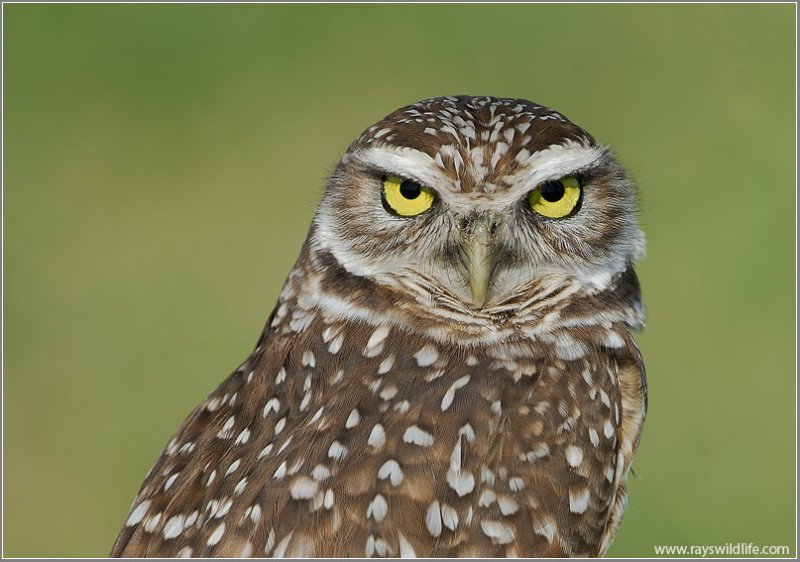
Burrowing Owl (Athene cunicularia) by Raymond Barlow

Burrowing Owl (Athene cunicularia) by Raymond Barlow

Our Burrowing Owl (Athene cunicularia), seen here in Florida, is 10 in tall and can be quite comical as this video shows. Their necks are quite limber.

The Elf Owl lives the cactus in a desert. The elf owl migrates to Arizona and New Mexico in the spring and summer. In the winter, it is found in central and southern Mexico. Elf Owls feed mainly on insects and therefore occupy habitats with a ready supply of these. Agaves and ocotillos are ideal places for foraging as moths and other insects may sleep in their flowers. Elf owls are known to eat scorpions, somehow managing to cut off the stinger. They are often seen chasing after flying insects.

The Northern Pigmy Owl is native to Canada, the United States, Mexico, Guatemala and Honduras. Pygmy owls are purportedly “sit-and-wait” predators, though they in fact hunt somewhat actively, moving from perch to perch with short flights, and pursuing prey at all levels of forest structure. They swoop down on prey; they may also catch insects in flight. They eat small mammals, birds and large insects, and may take a variety of other vertebrates and invertebrates. Mountain Pygmy Owls occasionally take prey species the same size or larger than themselves.

The other owl in the Athene genus are the Spotted Owlet (Athene brama). The Forest Owlet (Heteroglaux blewitti) is 9 in/23 cm.

Costa Rican Pygmy Owl (Glaucidium costaricanum) by Michael Woodruff

Costa Rican Pygmy Owl (Glaucidium costaricanum) by Michael Woodruff

The Glaucidium genus, to which the Norther Pygmy Owl belongs has other little species which are either Pygmy Owls or Owlets:
Eurasian Pygmy Owl (Glaucidium passerinum)
Collared Owlet (Glaucidium brodiei)
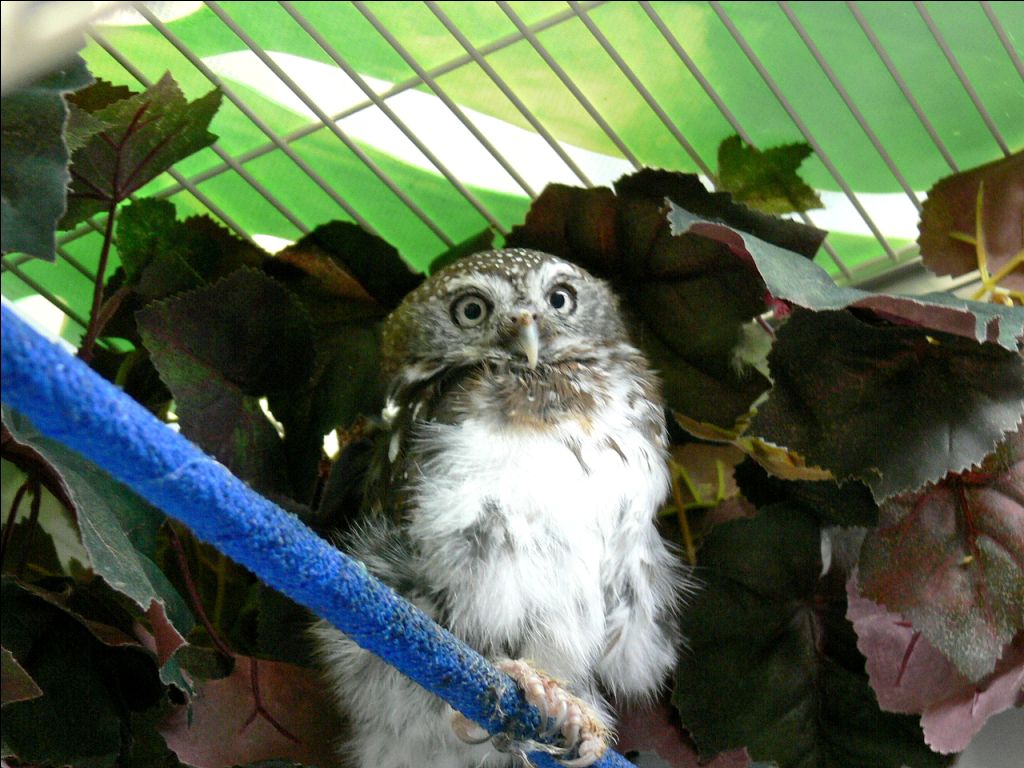
Pearl-spotted Owlet (Glaucidium perlatum) by Lee at National Aviary
Northern Pygmy Owl (Glaucidium californicum)
Mountain Pygmy Owl (Glaucidium gnoma)  ©WikiC
Costa Rican Pygmy Owl (Glaucidium costaricanum) by Michael Woodruff
Andean Pygmy Owl (Glaucidium jardinii)
Cloud-forest Pygmy Owl (Glaucidium nubicola)
Yungas Pygmy Owl (Glaucidium bolivianum)
Colima Pygmy Owl (Glaucidium palmarum)
Tamaulipas Pygmy Owl (Glaucidium sanchezi)
Pernambuco Pygmy Owl (Glaucidium mooreorum)
Central American Pygmy Owl (Glaucidium griseiceps)
Subtropical Pygmy Owl (Glaucidium parkeri)
Amazonian Pygmy Owl (Glaucidium hardyi)
East Brazilian Pygmy Owl (Glaucidium minutissimum)
Ferruginous Pygmy Owl (Glaucidium brasilianum)
Pacific Pygmy Owl (Glaucidium peruanum)
Austral Pygmy Owl (Glaucidium nana)
Cuban Pygmy Owl (Glaucidium siju)
Red-chested Owlet (Glaucidium tephronotum)
Sjöstedt’s Barred Owlet (Glaucidium sjostedti)
Asian Barred Owlet (Glaucidium cuculoides) by P Ericsson
Javan Owlet (Glaucidium castanopterum)
Jungle Owlet (Glaucidium radiatum)
Chestnut-backed Owlet (Glaucidium castanotum)
African Barred Owlet (Glaucidium capense) ©Dave Appleton
Albertine Owlet (Glaucidium albertinum)

These are mostly small owls, and some of the species are called “owlets”. Most pygmy owl species are nocturnal and hunt mainly large insects and other small prey.

Little Owls in other genera are:
Long-whiskered Owlet (Xenoglaux loweryi)
Boreal Owl (Aegolius funereus)
Northern Saw-whet Owl (Aegolius acadicus) by Ray
Unspotted Saw-whet Owl (Aegolius ridgwayi)
Buff-fronted Owl (Aegolius harrisii)

The beast of the field shall honour me, the dragons and the owls: because I give waters in the wilderness, and rivers in the desert, to give drink to my people, my chosen. This people have I formed for myself; they shall shew forth my praise. (Isaiah 43:20-21 KJV)

We should all praise the Lord for the fantastic way He has created His birds.

*

See Also:
Owls Page
Birds of the Bible – Owls
Strigidae – Owls

*

Formed By Him – Bird Cooling

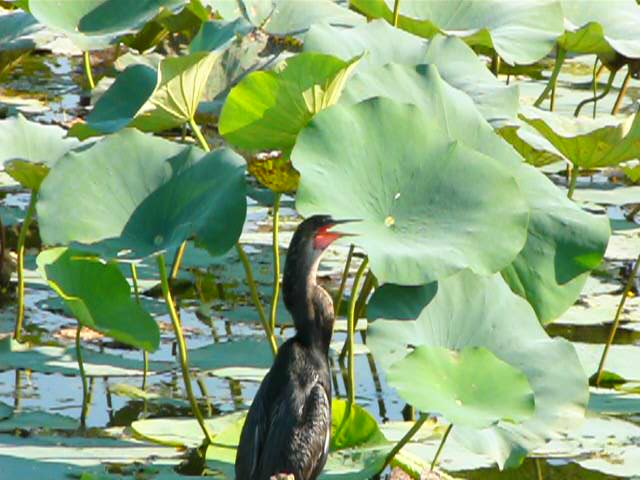
Anhinga (Anhinga anhinga) at Lake Hollingsworth by Lee

Anhinga (Anhinga anhinga) at Lake Hollingsworth by Lee

Birds were created with many fantastic abilities. Many like to compare those capabilities with human characteristics, but God has given unique and different ways to the many orders of animals, plants, birds, fish, humans, etc. There are somethings a bird cannot do, that we as humans can.

When I Consider!

Formed By Him

Birds don’t sweat! There are no sweat glands located in birds. We can perspire though through the skin to help reduce their our heat. Our avian friends have core body temperatures that exceed most mammals for their size. Their body temperatures range from 104-111 degrees F (40-44 degrees C).

All flesh is not the same flesh, but there is one kind of flesh of men, another flesh of animals, another of fish, and another of birds. (1 Corinthians 15:39 NKJV)

Here is a video I recently took of an Osprey cooling off. We were at Lake Hollingsworth in Lakeland, FL.

“In warm weather, a bird gets rid of excess body heat through its respiratory (breathing) system, which collects warm, moist air from its internal overheated tissues and expels it through its lungs… In stepping up its breathing rate from ordinary breathing to panting, a bird increases the flow of air over the most surfaces of its mouth, pharynx, bronchi, and possibly its air sacs.” (Encyclopedia of North American Birds)

But now ask the beasts, and they will teach you; And the birds of the air, and they will tell you; (Job 12:7 NKJV)

The Lord created the animals and birds and then gave man dominion over them. That “dominion” includes learning about them so we can better understand all about their abilities, traits, behaviors, etc. This helps us protect them where possible and to appreciate the Creative Hand of the Lord. I sit back amazed at the omnipotence and omniscience of the Lord. When we observe the birds and learn about them, there is no way they “just happened.”

As for us? The same applies:

I will praise thee; for I am fearfully and wonderfully made: marvellous are thy works; and that my soul knoweth right well. (Psalms 139:14 KJV)

*


More Formed by Him Articles

The Anhinga is in the Anhingadae Family of the Suliformes Order.
*

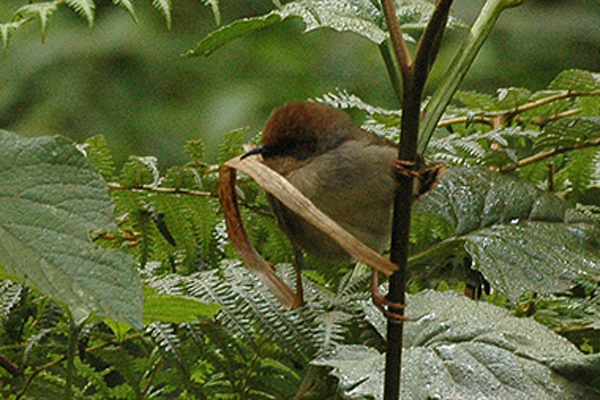
Birds of the World – Hyliota

Violet-backed Hyliota (Hyliota violacea) ©WikiC

Violet-backed Hyliota (Hyliota violacea) ©WikiC

While working on the update to the IOC Version 2.10, I noticed that of the 233 pages for the Families of Birds of the World, I do not have a photo for the top of the Family page of the Hyliota – Hyliotas Family. I have written all of my great photographers and videographers to see if they have a photo. So far, none has sent me one that I can use with permission. I have written several others who have photos on the internet, but so far no permission there either. (Update 11/5/11 Just got permission from Dave Appleton to use his Southern Hyliota. The Family page now has a picture at the top. Thanks Dave.)

I can link to photos on other sites, but to put that photo here, I need permission.

If this bird is so rare, then what is it? My curiosity has taken over and while awaiting a photo, decided to find out about those 4 birds. Here are some of those findings:

Genus Hyliota – hyliotas. Basal Passerida with no known relatives, perhaps somewhat closer to Promeropidae (sugarbirds) (from Internet)

  • Yellow-bellied (Hyliota flavigaster)
  • Southern Hyliota (Hyliota australis)
  • Usambara Hyliota (Hyliota usambarae)
  • Violet-backed Hyliota (Hyliota violacea)
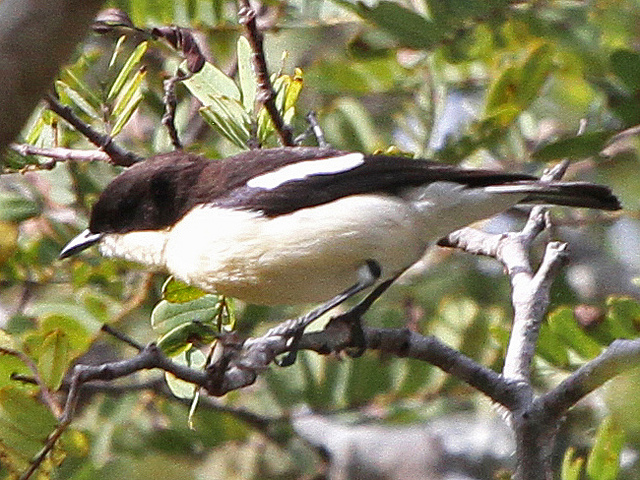
Southern Hyliota (Hyliota australis) © by DaveAppleton

Southern Hyliota (Hyliota australis) © by DaveAppleton

None of the books I own, which cover birds around the world, mention the Hyliota. Humm!

This is the total of Wikipedia’s articles on the family:
Hyliota is a genus of passerine bird. Formerly regarded as Old World warblers in the Sylviidae family, they are now often regarded as a family in their own right, the Hyliotidae.” Humm! Not much there.
Let’s see what it says about the individual birds in the family:

The Southern Hyliota (Hyliota australis) is a species of Old World warbler in the Sylviidae family. It is found in Angola, Cameroon, Democratic Republic of the Congo, Kenya, Malawi, Mozambique, South Africa, Tanzania, Uganda, Zambia, and Zimbabwe. Its natural habitats are subtropical or tropical dry forests and dry savanna. (No photo)
The Yellow-Bellied Hyliota (Hyliota flavigaster) is a species of Old World warbler in the Sylviidae family. It is found in Angola, Burkina Faso, Burundi, Cameroon, Central African Republic, Republic of the Congo, Democratic Republic of the Congo, Ivory Coast, Ethiopia, Gabon, Gambia, Ghana, Guinea, Guinea-Bissau, Kenya, Malawi, Mali, Mozambique, Nigeria, Rwanda, Senegal, Sierra Leone, Sudan, Tanzania, Togo, Uganda, and Zambia. Its natural habitat is subtropical or tropical dry forests. (No photo)
The Usambara Hyliota (Hyliota usambara) is a species of Old World warbler in the Sylviidae family. It is found only in Tanzania.
Its natural habitats are subtropical or tropical moist lowland forests, subtropical or tropical moist montanes, and plantations. It is threatened by habitat loss. (No Photo)
The Violet-Backed Hyliota (Hyliota violacea) is a species of Old World warbler in the Sylviidae family. It is found in Benin, Cameroon, Central African Republic, Republic of the Congo, Democratic Republic of the Congo, Ivory Coast, Equatorial Guinea, Gabon, Ghana, Guinea, Liberia, Nigeria, Rwanda, Sierra Leone, and Togo. Its natural habitats are subtropical or tropical dry forests and subtropical or tropical moist lowland forests. (No photo, but they have a drawing. Aha!)

According to the IOC Worldbirdnames.org website, where the IOC Version 2.10 comes from:

“Move Hyliotas from the Sylviidae to their own family Hyliotidae, a basal lineage of the Passerida without known modern relatives ”

They are now in their own Hyliota – Hyliotidae Family. They placed them in the taxonomy between the Goldcrests, kinglets – Regulidae Family and the Wrens – Troglodytidae Family.

From the Internet Bird Collection (IBC), which still has the Hyliotas in the Sylviidae Family,:
“Genus has in the past been placed variously with the Old World flycatchers (in family Muscicapidae), with the monarch-flycatchers (Monarchidae) or with the batises and wattle-eyes (Platysteiridae); although plumage resembles that of some muscicapid flycatchers of genus Ficedula, and nest is like that of platysteirids, the nestling mouth spots, the unspotted juvenile plumage and behaviour are all typical of present family. Proposed race marginalis (S Tanzania and Mozambique) considered inseparable from barbozae. Two subspecies recognized.” That quote was put by all four species of Hyliotas. Seems no one knows exactly where they belong.

They have one photo for the Yellow-bellied Hyliota (Hyliota flavigaster flavigaster) and the Violet-backed Hyliota (Hyliota violacea) has  4 video available to view.

Here is the best photo on the internet that I can find of the Southern Hyliota.

Seems to be a bit of a mystery bird. So little is said about it on the internet and so few pictures of them are available. When their DNA was tested after trying to figure out where to place it, here is the abstract from the US National Library of Medicine – National Institutes of Health:

Abstract

The African genus Hyliota includes three or four species of warbler-like birds of uncertain phylogenetic affinities, as it has historically been placed in different avian families that are now known to represent unrelated lineages: Malaconotidae (bush-shrikes), Platysteiridae (batises and wattle-eyes), Muscicapidae (Old World flycatchers) and Sylviidae (Old-World Warblers). To assess the affinities of Hyliota we sequenced a mitochondrial protein-coding gene (ND2, 1018bp) and a nuclear intron (myoglobin intron-2, 685bp). Our analyses suggest that all previous hypotheses concerning the affinities of Hyliota are erroneous. Instead, Hyliota represents a basal branch in the Passerida radiation with no close relatives. Our results, which also include analyses of relationships among other of other atypical songbird genera, lend support to an African origin of the Passerida songbird radiation.” (Italics mine)

One thing is for sure, the Lord knows all about them since He created them. Maybe they are a “kind” of their own.

So God created great sea creatures and every living thing that moves, with which the waters abounded, according to their kind, and every winged bird according to its kind. And God saw that it was good. (Genesis 1:21 NKJV)
I know all the birds of the mountains, And the wild beasts of the field are Mine. (Psalms 50:11 NKJV)

*

This page will be updated, if and when photos are made available. If anyone has a photo of any of these birds and would be willing to give permission for it to be used, please leave a comment.

Birds of the World – Discolor Birds

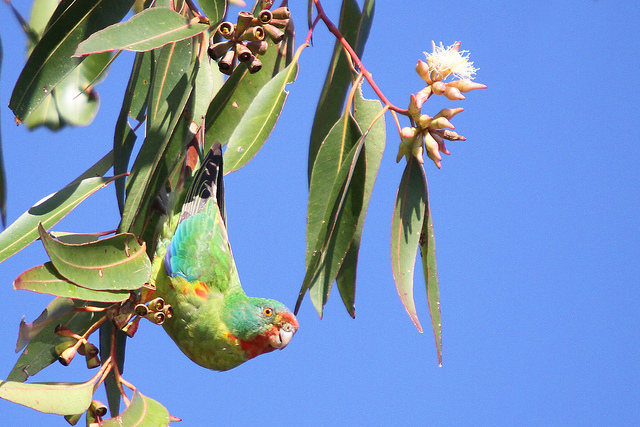
Swift Parrot (Lathamus discolor) ©© marj k

Swift Parrot (Lathamus discolor) ©© marj k

While working on the new updates for the IOC 2.10 Version, I kept noticing the word “color” in the scientific names as I sorted and resorted the Excel spreadsheet. This is a second of the “color” articles. There are concolor, bicolor, tricolor, unicolor, quadricolor, versicolor, decolor, sitticolor, nocticolor, etc. Those will come later. For now, let’s see what the “discolor” birds are.

According to the Free Dictionary, “discolor” means:

dis·col·or  (ds-klr)

v. dis·col·oreddis·col·or·ingdis·col·ors

v.tr.

To alter or spoil the color of; stain.

v.intr.

To become altered or spoiled in color.

Also – discolor – lose color or turn colorless; cause to lose or change color; change color, often in an undesired manner
Webster’s Revised Unabridged Dictionary, published 1913 by C. & G. Merriam Co.

Species with “discolor”:

Swift Parrot (Lathamus discolor) Bird roosting with head on back by Nick Talbot

Swift Parrot (Lathamus discolor) by Nick Talbot

Swift Parrot (Lathamus discolor) by NickT

Cuckoo Roller (Leptosomus discolor) from Wikipedia

Cuckoo Roller (Leptosomus discolor) from Wikipedia

Cuckoo Roller (Leptosomus discolor) ©WikiC – Video IBC
____ (Leptosomus discolor discolor) IBC

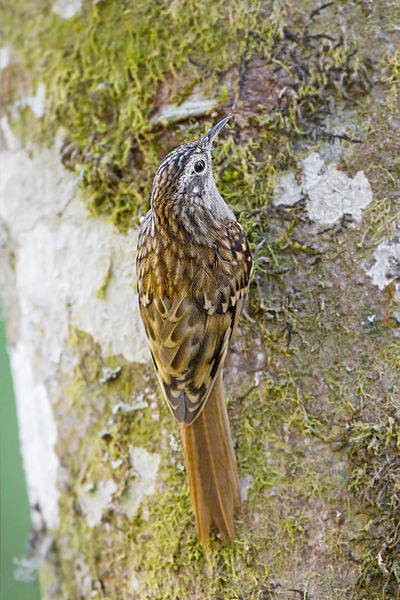
Brown-throated Treecreeper (Certhia discolor) ©WikiC

Brown-throated Treecreeper (Certhia discolor) ©WikiC

Brown-throated Treecreeper (Certhia discolor) ©WikiC

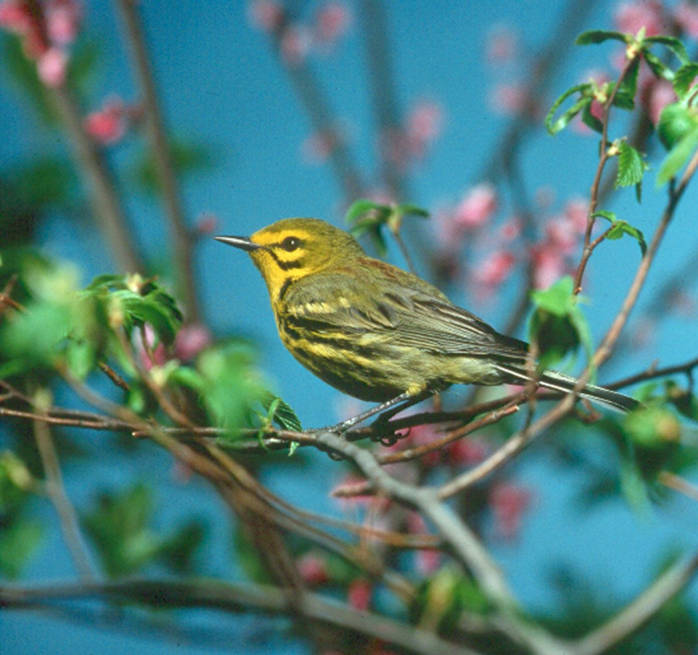
Prairie Warbler (Dendroica discolor) ©USFWS

Prairie Warbler (Dendroica discolor) ©USFWS

Prairie Warbler (Dendroica discolor) ©WikiC – Video IBC
____ (Dendroica discolor discolor) None

Subspecies with “discolor”:

Light-crowned Spinetail (Cranioleuca albiceps) – Video by Keith Blomerley
____ (Cranioleuca albiceps albiceps)
____ (Cranioleuca albiceps discolor) IBC

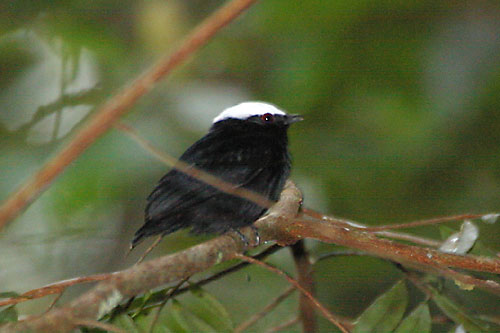
White-crowned Manakin (Dixiphia pipra) by ©AGrosset

White-crowned Manakin (Dixiphia pipra) by ©AGrosset

White-crowned Manakin (Dixiphia pipra)
____ (Dixiphia pipra discolor) None

 Little Shrikethrush (Colluricincla megarhyncha) ©WikiC

Little Shrikethrush (Colluricincla megarhyncha) ©WikiC

Little Shrikethrush (Colluricincla megarhyncha) ©WikiC
____ (Colluricincla megarhyncha discolor) None

Chubb's Cisticola (Cisticola chubbi) by Tom Tarrant

Chubb’s Cisticola (Cisticola chubbi chubbi) by Tom Tarrant

Chubb’s Cisticola (Cisticola chubbi) by Tom Tarrant – Video IBC
____ (Cisticola chubbi discolor) None

Rusty Sparrow (Aimophila rufescens) IBC – Video IBC
____ (Aimophila rufescens discolor)

Red-throated Ant Tanager (Habia fuscicauda) by Michael Woodruff

Red-throated Ant Tanager (Habia fuscicauda) by Michael Woodruff

Red-throated Ant Tanager (Habia fuscicauda) by M Woodruff – Video IBC
____ (Habia fuscicauda discolor)

As you can see by most of these birds with “discolor” in their name, have a sort of “washed-out” look. Not a very distinct color. I am sure that the Lord created them this way to help them blend in with their surroundings. Protection is important. These thoughts sort of remind me of several verses:

Ye are the salt of the earth: but if the salt have lost his savour, wherewith shall it be salted? it is thenceforth good for nothing, but to be cast out, and to be trodden under foot of men. (Matthew 5:13 KJV)

And when the chief Shepherd shall appear, ye shall receive a crown of glory that fadeth not away. (1 Peter 5:4 KJV)

*

See: Birds of the World

The Gospel Message

*

Nuggets Plus – The Mirror’s Reflection

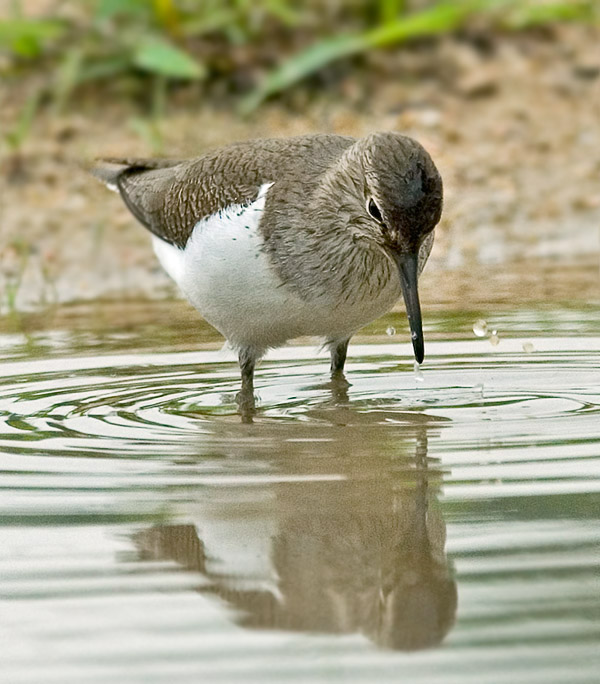
Common Sandpiper (Actitis hypoleucos) by W Kwong

Common Sandpiper (Actitis hypoleucos) by W Kwong

“A bird — most often but not always a beautiful male cardinal attaclks a window day after day and won’t stop. Invariably …people worry about it injuring itself. Rarely does a serious physical injury result but it is a possibility. Psychological injury is another matter: the bird is clearly frustrated.

Nuggets Plus

Nuggets Plus

This is territorial behavior. Male birds establish personal homelands, in the case of songbirds one to ten acres in size. Then they spend much of their time announcing their hegemony, inviting in willing female partners through song and coincidentally defending their yard against other males.

Ornithologists who study territorial behavior find that they can plot the borders of these small kingdoms with great accuracy. Males in adjacent bailiwicks know their mutual borders as though a fence separated them.

The window the bird is attacking serves as a mirror and the bird, not schooled in physics, doesn’t understand that its anatiomorphic image the other side of that glass isn’t real. (That technical word means the same size and shape but reversed like two gloves. Mirrors do that. The only time you see an exact copy of yourself is when you look into two mirrors that meet at right angles.)” (Edited) From the July 7, 2003 issue of The Buffalo News

We look in the mirror to check our appearance.

  • What do we observe?
  • As a Christian, are we seeing a new creation or
  • Do we still look like we did before accepting the Lord?

For if anyone is a hearer of the word and not a doer, he is like a man observing his natural face in a mirror; for he observes himself, goes away, and immediately forgets what kind of man he was. But he who looks into the perfect law of liberty and continues in it, and is not a forgetful hearer but a doer of the work, this one will be blessed in what he does.
(James 1:23-25 NKJV)

Have a Blessed Day!

*

See also: Mirror Test on Magpies

Personally, I see a very creative Creator at work here, not convergent evolution.

*

More Nuggets Plus

*


Birds of the World – Concolor Birds

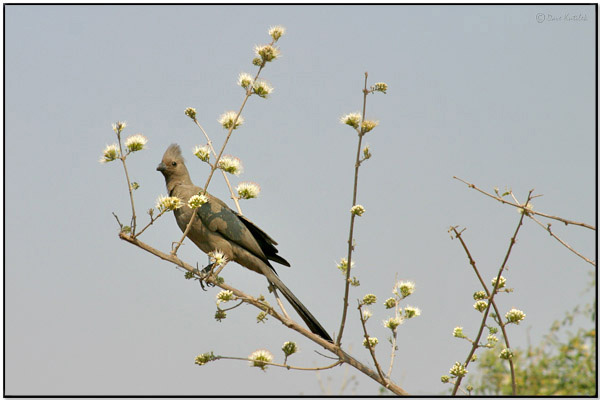
Grey Go-away-bird (Corythaixoides concolor) by Daves BirdingPix

Grey Go-away-bird (Corythaixoides concolor) by Daves BirdingPix

While working on the new updates for the IOC 2.10 Version, I kept noticing the word “color” in the scientific names as I sorted and resorted the Excel spreadsheet. This is a first of the “color” articles. There are bicolor, tricolor, unicolor, quadricolor, versicolor, decolor, sitticolor, nocticolor, etc. Those will come later. For now, let’s see what the “concolor” birds are.

According to the Free Dictionary, “concolor” means:

Con´col`or
a. 1. Of the same color; of uniform color.
Webster’s Revised Unabridged Dictionary, published 1913 by C. & G. Merriam Co.

Species and their subspecies with “concolor”:

Sooty Falcon (Falco concolor) ©WikiC

Sooty Falcon (Falco concolor) ©WikiC

Sooty Falcon (Falco concolor)

Uniform Crake (Amaurolimnas concolor) IBC
____ (Amaurolimnas concolor concolor †)

Grey Go-away-bird (Corythaixoides concolor) See Above – Video IBC
____ (Corythaixoides concolor concolor)

Dusky Crag Martin (Ptyonoprogne concolor) ©WikiC

Dusky Crag Martin (Ptyonoprogne concolor) ©WikiC

Dusky Crag Martin (Ptyonoprogne concolor) IBC
____ (Ptyonoprogne concolor concolor) IBC

Grey Longbill (Macrosphenus concolor) – Video IBC

Nilgiri Flowerpecker (Dicaeum concolor) ©WikiC

Nilgiri Flowerpecker (Dicaeum concolor) ©WikiC

Nilgiri Flowerpecker (Dicaeum concolor) IBC

Sao Tome Grosbeak (Neospiza concolor) IBC

Blue Seedeater (Amaurospiza concolor) IBC
____ (Amaurospiza concolor concolor)

Subspecies with “concolor”:

Amazonian Barred Woodcreeper (Dendrocolaptes certhia) by Kent Nickell

Amazonian Barred Woodcreeper (Dendrocolaptes certhia) by Kent Nickell

Amazonian Barred Woodcreeper (Dendrocolaptes certhia)
____ (Dendrocolaptes certhia concolor) – Video IBC

Unicolored Jay (Aphelocoma unicolor)
____ (Aphelocoma unicolor concolor) – Video IBC
____ (Aphelocoma unicolor unicolor)

Indochinese Green Magpie (Cissa hypoleuca concolor) ©WikiC

Indochinese Green Magpie (Cissa hypoleuca concolor) ©WikiC

Indochinese Green Magpie (Cissa hypoleuca)
____ (Cissa hypoleuca concolor)

Black Bulbul (Hypsipetes leucocephalus) WikiC

Black Bulbul (Hypsipetes leucocephalus) WikiC

Black Bulbul (Hypsipetes leucocephalus)
____ (Hypsipetes leucocephalus concolor)

Yellow-bellied Bush Warbler (Cettia acanthizoides)
____ (Cettia acanthizoides concolor) IBC

Singing Cisticola (Cisticola cantans) juvenile ©WikiC

Singing Cisticola (Cisticola cantans) juvenile ©WikiC

Singing Cisticola (Cisticola cantans) IBC
____ (Cisticola cantans concolor)

Plain Laughingthrush (Garrulax davidi)
____ (Garrulax davidi concolor)

Grey-breasted Spiderhunter (Arachnothera modesta) IBC – Video WikiC
____ (Arachnothera modesta concolor)

Red-collared Widowbird (Euplectes ardens)
____ (Euplectes ardens concolor) – Video IBC

For every beast of the woodland is mine, and the cattle on a thousand hills. I see all the birds of the mountains, and the beasts of the field are mine. If I had need of food, I would not give you word of it; for the earth is mine and all its wealth. (Psalms 50:10-12 BBE)

Other than the Indochinese Green Magpie, the “concolor” makes sense in that the birds are pretty well just plain birds with very little color variation. As the definition above said they are of the same or uniform color. Even though we may think these “concolor” birds are a bit dull or plain, their Creator knows all about them and cares for them. How about us?

Look at the birds of the air, for they neither sow nor reap nor gather into barns; yet your heavenly Father feeds them. Are you not of more value than they? (Matthew 6:26 NKJV)

*
Birds of the World

Update to the IOC 2.10 Version Completed

Hen (Northern) Harrier (Circus cyaneus) by J Fenton

Hen (Northern) Harrier (Circus cyaneus) by J Fenton

On October 18, 2011, the IOC released the Version 2.10 list of World Bird Names. I have been busy behind the scene again updating all the Birds of the World pages here to reflect that change. It is now complete.

The IOC World Bird List 2.10 contains 10,466 species classified in 40 Orders, 233 Families (including 5 Incertae Sedis) and 2234 Genera. They added 18 species, changed the name of 23 birds and made 28 changes to the taxonomy.

The birds, mostly from splits, added were:

Sira Curassow (Pauxi koepckeae)

Northern Harrier (Circus hudsonius)

Cape Verde Buzzard (Buteo bannermani)

Oberholser’s Fruit Dove (Ptilinopus epius)

Sula Fruit Dove Ptilinopus mangoliensis

Everett’s Scops Owl Otus everetti

Negros Scops Owl (Otus nigrorum)

Mexican Barred Owl (Strix sartorii)

Salim Ali’s Swift (Apus salimalii)

Blyth’s Swift (Apus leuconyx)

Cook’s Swift (Apus cooki)

Magdalena Antbird Myrmeciza palliata

Urrao Antpitta (Grallaria urraoensis)

Tablas Drongo (Dicrurus menagei)

Moheli Bulbul (Hypsipetes moheliensis)

Saipan Reed Warbler (Acrocephalus hiwae)

Pagan Reed Warbler (Acrocephalus yamashinae)

Bornean Spiderhunter (Arachnothera everetti )

The Northern Harrier – Hen Harrier above is one of those splits. When J Fenton took the photo it was called a Northern Harrier (Circus cyaneus). Now the Hen Harrier has taken the Circus cyaneus Scientific name and the subspecies (Circus hudsonius) is now the Northern Harrier (Circus hudsonius). Confused? Don’t feel bad. I have no idea whether that photo is of a Hen or Northern Harrier. Which ever it is, Jim or James took a  great photo of a Hen or Northern Harrier. 

Such is the naming of the birds today. I have to update my pages every time the IOC releases another Version. As I have said many times on this blog, Adam had it a lot easier and got “first dibs” at naming them after their Creator presented them to Adam.

Out of the ground the LORD God formed every beast of the field and every bird of the air, and brought them to Adam to see what he would call them. And whatever Adam called each living creature, that was its name. So Adam gave names to all cattle, to the birds of the air, and to every beast of the field. But for Adam there was not found a helper comparable to him. (Genesis 2:19-20 NKJV)

Barking Boobook (Ninox connivens) by Ian

Barking Owl (Barking Boobook) (Ninox connivens) by Ian

English Names Updates for IOC Version 2.10

Previous Name               Scientific Name         New Name

Northern Harrier – Circus cyaneus – Hen Harrier
Grey-hooded Gull – Chroicocephalus cirrocephalus – Grey-headed Gull
Maroon-chinned Fruit Dove – Ptilinopus subgularis – Banggai Fruit Dove
Barred Owl – Strix varia – Northern Barred Owl
Rufous Boobook – Ninox rufa – Rufous Owl
Powerful Boobook – Ninox strenua – Powerful Owl
Barking Boobook – Ninox connivens – Barking Owl
Donaldson-Smith’s Nightjar – Caprimulgus donaldsoni – Donaldson Smith’s Nightjar
Fork-tailed Swift – Apus pacificus – Pacific Swift
Himalayan Goldenback – Dinopium shorii – Himalayan Flameback
Common Goldenback – Dinopium javanense – Common Flameback
Lesser Goldenback – Dinopium benghalense – Black-rumped Flameback
Greater Goldenback – Chrysocolaptes lucidus – Greater Flameback
Crimson-backed Goldenback – Chrysocolaptes stricklandi – Crimson-backed Flameback
Somali Boubou – Laniarius (erlangeri) nigerrimus – Black Boubou
Stresemann’s Bush Crow – Zavattariornis stresemanni – Stresemann’s Bushcrow
Cricket Longtail – Spiloptila clamans – Cricket Warbler
Comoros Bulbul – Hypsipetes parvirostris – Grand Comoro Bulbul
Donaldson-Smith’s Sparrow-Weaver – Plocepasser donaldsoni – Donaldson Smith’s Sparrow-Weaver
Quail-Finch – Ortygospiza – 3 species Quailfinch
Colombian Brush Finch – Arremon basilicus – Sierra Nevada Brush Finch
Phelps’s Brush Finch – Arremon perijanus – Perija Brush Finch
Buffy-flanked Brush Finch – Arremon phaeopleurus – Caracas Brush Finch
Venezuelan Brush Finch – Arremon phygas – Paria Brush Finch

The Birds of the World are all listed here according to the IOC Version 2.10. You can find the following helps to help locate these birds:
Indexes

Orders

Families
Families – Alphabetical (Scientific)
Families – Alphabetical (English)
Families – Taxonomic (Scientific – English)
Families – Taxonomic (English – Scientific)

Species 
First Name of Bird
Last Name of Bird

(Tip* – Use Control+F on your keyboard to use Find or Search when looking for a specific bird in the lists.)

*