Birds of the Bible – Timid Birds

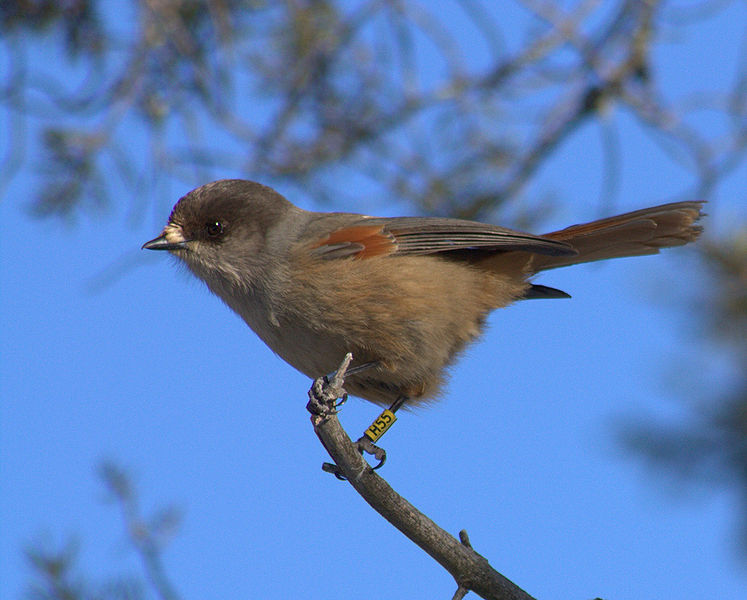
Siberian Jay (Perisoreus infaustus) ©WikiC

Siberian Jay (Perisoreus infaustus) ©WikiC

Easton’s Bible Dictionary says this about the verse: “Their (birds) timidity is alluded to in (Hosea 11:11)”

they shall come trembling like birds from Egypt, and like doves from the land of Assyria, and I will return them to their homes, declares the LORD. (Hosea 11:11 ESV)

Do birds tremble? Why? Interesting questions. Let’s see what we can find out about this passage and about “timid birds.

Instincts of: “Surely in vain the net is spread in the sight of any bird. (Proverbs 1:17 KJV)”

Nave’s Topical Bible says:

Man’s dominion over –

“Gen 1:26-28  Then God said, “Let Us make man in Our image, according to Our likeness; let them have dominion over the fish of the sea, over the birds of the air, and over the cattle, over all the earth and over every creeping thing that creeps on the earth. So God created man in His own image; in the image of God He created him; male and female He created them. Then God blessed them, and God said to them, “Be fruitful and multiply; fill the earth and subdue it; have dominion over the fish of the sea, over the birds of the air, and over every living thing that moves on the earth.”

And the fear of you and the dread of you shall be on every beast of the earth, on every bird of the air, on all that move on the earth, and on all the fish of the sea. They are given into your hand. Every moving thing that lives shall be food for you. I have given you all things, even as the green herbs. (Genesis 9:2-3 NKJV)

For You have made him a little lower than the angels, And You have crowned him with glory and honor. You have made him to have dominion over the works of Your hands; You have put all things under his feet, All sheep and oxen— Even the beasts of the field, The birds of the air, And the fish of the sea That pass through the paths of the seas. O LORD, our Lord, How excellent is Your name in all the earth! (Psalms 8:5-9 NKJV)

and wherever the children of men dwell, or the beasts of the field and the birds of the heaven, He has given them into your hand, and has made you ruler over them all—you are this head of gold. (Daniel 2:38 NKJV)

For every kind of beast and bird, of reptile and creature of the sea, is tamed and has been tamed by mankind. (James 3:7 NKJV)

Torrey’s New Topical Textbook also alludes to those verses quoted above:

Power over given to man – Genesis 1:26; Psalm 8:8;
Instinctively fear man – Genesis 9:2;
Can all be tamed – James 3:7;
Given as food to man – Genesis 9:2-3;
Taken in snares or nets – Proverbs 1:17;

Confinement of, in cages alluded to – “As a cage is full of birds, So their houses are full of deceit. Therefore they have become great and grown rich.” (Jeremiah 5:27 NKJV)
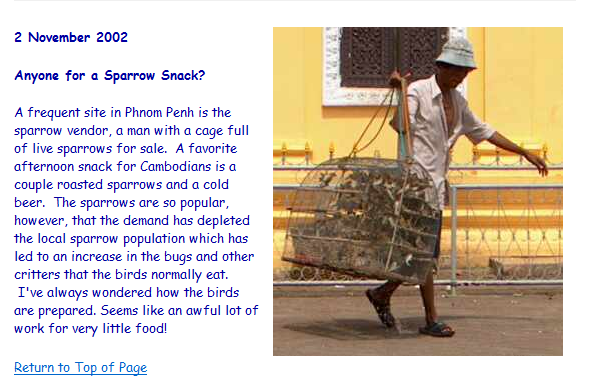
Sparrow Snack Anyone?

(From Birds of the Bible – Sparrow I)

There are many more commentary notes that could be quoted, but I think you get the idea that birds do have a reason to be timid. Just because man was given dominion over the birds doesn’t mean that he has to be cruel to them. Many birds are tamed, not by torture, but by love and patience. Forcing the birds definitely will cause them to be timid. Out in nature, many birds are shy or timid because of other birds attacking them and so they are cautious, and rightly so.

Reading some of the internet articles about timid birds, they even do research to find out about this timidity. Animal Planet produced an interesting article about research on 22 Goldfinches.

Back to our original passage of Scripture. For now we are concentrating on the timid or frightened bird, not necessarily about the dove.
Eurasian-collared Dove in Israel

Eurasian-collared Dove in Israel

Barnes says, “Hosea 11:11
They shall tremble as a bird out of Egypt – The West denoted Europe; Egypt and Assyria stand, each for all the lands beyond them, and so for Africa and Asia; all together comprise the three quarters of the world, from where converts have chiefly come to Christ. These are likened to birds, chiefly for the swiftness with which they shall then haste to the call of God, who now turned away the more, the more they were called. The dove, especially, was a bird of Palestine, proverbial for the swiftness of its flight, easily aftrighted, and flying the more rapidly, the more it was frightened, and returning to its cot from any distance where it might be carried; from where Isaiah also says of the converts, “Who are these that fly as a cloud, and as the doves to their windows?” Isa_60:8. “The Hebrews,” says Jerome, “refer this to the coming of the Christ, who, they hope, will come; we shew that it hath taken place already. For both from Egypt and Aasyria, i. e., from East and West, from North and South, have they come, and daily do they come, who sit down with Abraham, Isaac and Jacob.”

Clarke says, “They shall tremble as a bird – Those of them that are in Egypt shall also be called thence, and shall speed hither as a bird. Those in Assyria shall also be called to return, and they shall flee as doves to their windows. All shall, in the fullness of time, return to their own land.”
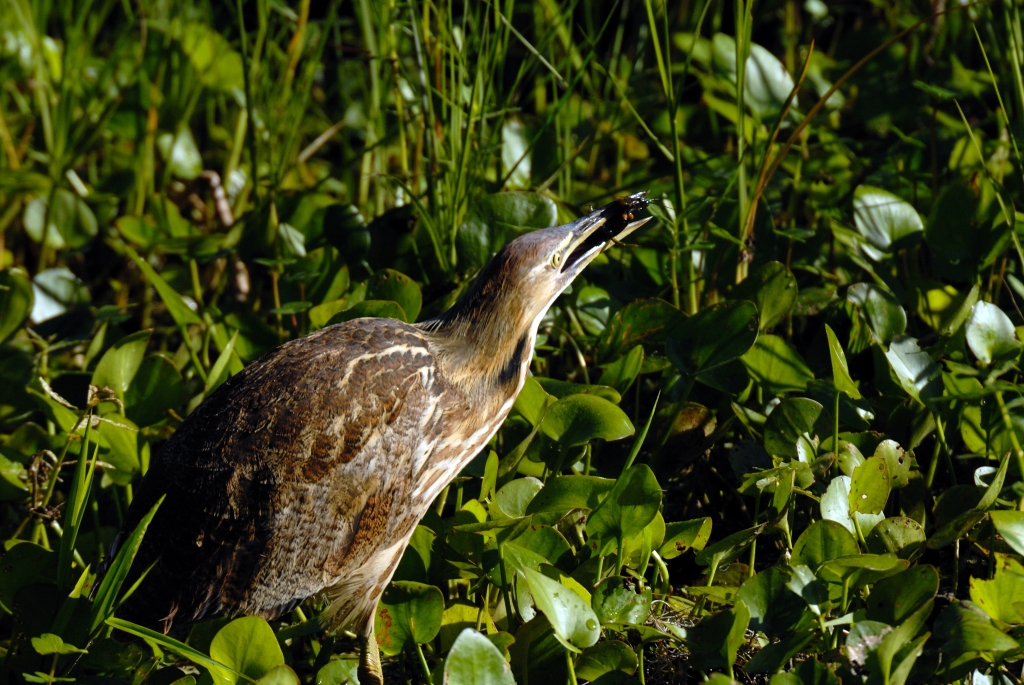
American Bittern (Botaurus lentiginosus) by Dans Pix

American Bittern (Botaurus lentiginosus) by Dans Pix

(A hard bird to capture on camera. They are very timid and evasive.)

Gill says, “Hosea 11:11  They shall tremble as a bird out of Egypt,…. They shall come from thence with fear and trembling; which may allude to the trembling of birds at the roaring of a lion, or to the trembling motion of their wings in flying; and denotes the swiftness of the motion of the Israelites and Jews to Christ, and to his church and people, and to their own land, under divine influence and direction: or “shall come with honour” (k); with all readiness and cheerfulness, in the obedience of faith: ”
“and as a dove out of the land of Assyria; which is expressive of the same things, the dove being both a timorous and swift creature. Birds in common are very timorous, and tremble at any noise, and fearful of everything that disturbs them, and therefore make all the haste and speed they can to get out of the way, and to do which they are naturally provided; and more especially the dove is always represented as very fearful and trembling, especially when pursued by the hawk, as the poet (l) observes. Though, it may be, these figures may only signify, as the weak and impotent state of the Jews, considered in themselves at this time, so the quick speed and haste they shall make to their own land.”
(So much for not concentrating on the dove.)

The next quote seems to wrap up what is being said here in Hosea 11. God is calling His trembling people home to Him because of His mercy, “Christ has purchased the pardon” for them.

Matthew Henry says, “Hosea 11:8-12
God is slow to anger, and is loth to abandon a people to utter ruin, who have been called by his name. When God was to give a sacrifice for sin, and a Saviour for sinners, he spared not his own Son, that he might spare us. This is the language of the day of his patience; but when men sin that away, then the great day of his wrath comes. Man’s compassions are nothing in comparison with the tender mercies of our God, whose thoughts and ways, in receiving returning sinners, are as much above ours as heaven is above the earth. God knows how to pardon poor sinners. He is faithful and just to forgive us our sins, and therein declares his righteousness, now Christ has purchased the pardon, and he has promised it. Holy trembling at the word of Christ will draw us to him, not drive us from him, the children tremble, and flee to him. And all that come at the gospel call, shall have a place and a name in the gospel church. The religious service of Israel were mere hypocrisy, but in Judah regard was had to God’s laws, and the people followed their pious forefathers. Let us be faithful: those who thus honour God, he will honour, but such us despise Him shall be lightly esteemed.”

Wordless Birds

More Birds of the Bible

(Commentary notes from e-Sword Bible program.)
*
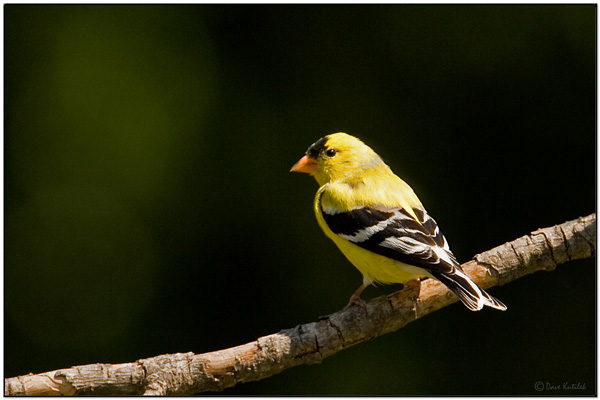
American Goldfinch – The Latecomers…

American Goldfinch (Carduelis tristis) by Daves BirdingPix

American Goldfinch (Carduelis tristis) by Daves BirdingPix

Goldfinch – The Latecomers… ~ by ajmithra

Hello everyone,

This morning I happened to read an article on Goldfinch in http://www.wild.enature.com, and that inspired me to write about these amazing late nesters.. Having just entered into the month of July, I thought it would be apt to just ponder over these awe inspiring July nesters..

By July, most songbirds are in the final stages of raising their young, but not the American Goldfinches.  These appealing, colorful birds are just getting started. Notoriously late nesters, goldfinches have been waiting for the thistles to bloom.

Do we wait for God’s timing in our lives?

  • We may feel bad when everyone is moving ahead of us.

But, God’s plan for our lives is not as same as it is for the others…

  • David was anointed by Samuel when he was just a kid..
  • He did not turn into a King immediately after the anointing..
  • He had to wait for more than thirty years..
  • He did wait without grumbling, always rejoicing in the Lord and you know what?
  • David is still considered the greatest king ever lived..
  • So great that God chose to be born in his family tree..

Wait for God’s plan to bloom, like how these Goldfinches wait for the thistles to bloom..

He hath made every thing beautiful in his time: also he hath set the world in their heart, so that no man can find out the work that God maketh from the beginning to the end (Ecclesiastes 3:11)

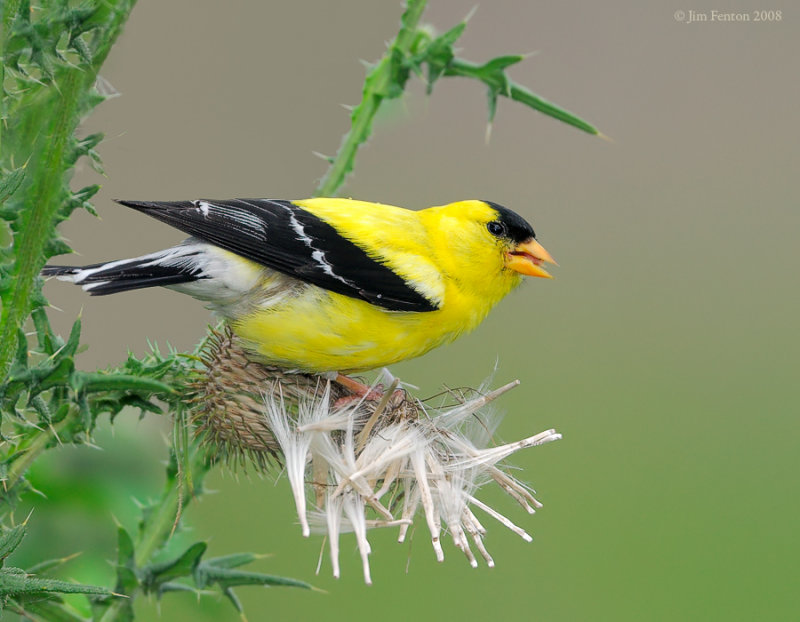
American Goldfinch (Carduelis tristis) on Thistle by Fenton

American Goldfinch (Carduelis tristis) on Thistle by Fenton

When this happens in July, it signals the goldfinches that they can start building their nests which are made primarily of the silver fibers and down of thistle blooms. Generally, the nest is built in the fork of a horizontal tree limb, 4 to 14 feet above the ground. The female builds a durable, neat cup of thistle and cattail fibers, so dense that it will hold water.Medieval writers believed that thistle can heal headaches, plague, canker, sores, vertigo, and jaundice. Do these birds know the thistles’ medicinal value?

  • God expects His bride to build a church that is durable and so dense, so that it can hold The Living Water…
  • God has promised to pour His spirit on all flesh during the last days and we do know that we are in the last days…
  • God pours so much anointing in every service in church, but we still haven’t reached the unreached yet. Why?
  • Is it because of the leak that is found in our spirit?

Are these female birds showing us how to build our nest so as to hold The Living Water?

But we have this treasure in jars of clay, to show that the surpassing power belongs to God and not to us. (2 Corinthians 4:7)

American Goldfinch (Carduelis tristis) by Lee thru window

American Goldfinch (Carduelis tristis) by Lee thru window

In it she lays 4 to 6 pale blue to white eggs and then she incubates them for 12 to 14 days, until they hatch. The attentive male often feeds his mate while she sits on the nest. By the time the eggs hatch, the thistle has gone to seed, which is perfect timing for feeding young goldfinches.

God’s timing is awesome..

See how well the birds know that the nest material will also become food for their chicks, And they don’t have to wander in search of food..

That is God’s timing..

We tend to think that God is late, but we fail to understand that He is always on time.. There are so many instances where God has asked His servants to look out for His timing..

  • Joseph had to wait for God’s time to become a Prime Minister..
  • Moses had to wait for God’s time to become a leader..
  • Sometimes God even asks us to wait for nature’s signal, like how he asks David to wait for the mulberry leaves to quiver before he falls over the enemy camp..
  • Do we wait or wilt under pressure..
  • Do not wait for a man or for an opportunity, just wait for the Lord..

Waiting to the Lord releases super power…You know?

But they that wait upon the LORD shall renew their strength; they shall mount up with wings as eagles; they shall run, and not be weary; and they shall walk, and not faint. (Isaiah 40:31)

The parents nourish this chicks by consuming the thistle seed themselves, and then regurgitating the partially digested, milk like cereal into the mouths of their nestlings. This is as close as birds come to mammals that feed their young milk from mammary glands.

Baby goldfinches are fully feathered and out of the nest 10 to 16 days later. Almost immediately, they join their parents at bird feeders across America. That’s when many people suddenly notice so many goldfinches as the summer progresses. If these birds were normal nesters like the other song birds, they would’ve faced a sever threat on their existence, which is based upon the thistle….

Masterpieces are not made overnight.. It may take weeks, months or even years to make one..

  • Do you want people to take notice of you?
  • Just wait…
  • You are destined to be the Master’s masterpiece, so just wait….

I will praise thee; for I am fearfully and wonderfully made: marvellous are thy works; and that my soul knoweth right well. (Psalm 139:14)

Have a blessed day!

Yours in YESHUA,
a j mithra

Please visit us at:
Crosstree

ajmithra21


Lee’s Addition:

See a j’s other articles – Click Here

The American Goldfinch is in the Finches – Fringillidae Family of the Passeriformes Order.

*

Formed By Him – Coua

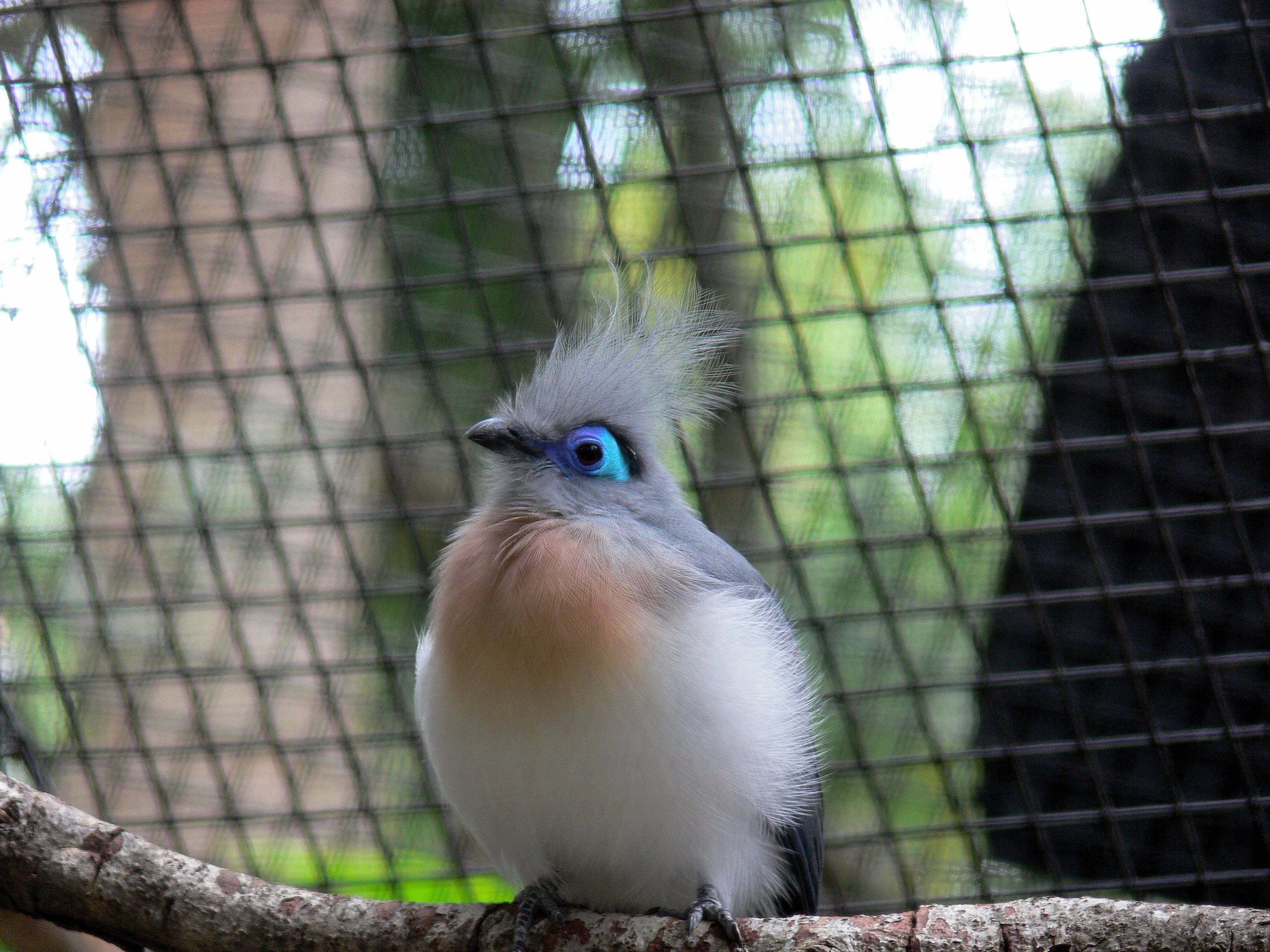
Crested Coua (Coua cristata) by Lee LPZ

Crested Coua (Coua cristata) by Lee LPZ

Dan and I stopped by the Lowry Park Zoo on the Fourth of July for a few minutes. We only had a few minutes and with a yearly pass, it made it easy to “duck-in” for a visit. The Aviary is just inside the gate, so we visited there as usual. I have been trying to get a decent photo of the Crested Coua. It is difficult because they are kept behind fine wire that gives me a fit trying to shoot through it. You would not want to know how many great photos of wire that have been deleted. Not only did I get a fair photo, but they were the most active I have seen them. They are beautiful birds and I love the way the Lord created them and especially their eyes. The eyes remind me of:

For the eyes of the Lord are over the righteous, and his ears are open unto their prayers: but the face of the Lord is against them that do evil. (1 Peter 3:12 KJV)

To open their eyes, and to turn them from darkness to light, and from the power of Satan unto God, that they may receive forgiveness of sins, and inheritance among them which are sanctified by faith that is in me. (Acts 26:18 KJV)

The Crested Coua, Coua cristata, is a medium-sized, approximately 17.3 in/44cm long, greenish-grey coua with grey crest, blue bare orbital skin, rufous breast, brown iris, black bill and legs, white belly and long white-tipped purplish-blue tail feathers.

Crested Coua (Coua cristata) Pair by Lee LPZ

Crested Coua (Coua cristata) Pair by Lee LPZ

The Crested Coua is distributed and endemic to forests, savanna and brushland of Madagascar. Widespread and a common species throughout its large habitat range. It is found from sea-level to altitude of 2,950 ft/900 metres. They feature brightly colored bare skin around the eyes. Some resemble Coucals in their habit of clambering through plant tangles while foraging, while the arboreal species move between tree canopies with gliding flight. Four species occur(red) in rainforests while the remaining six are found in the dry forests of western and southern Madagascar.The diet consists mainly of various insects, fruits, berries, seeds, snails and chameleons.

Crested Coua Video by J. del Hoya at IBC

They were created with large feet, with a reversible third toe like all cuckoos. The female usually lays two white eggs in nest made from twigs. Couas build their own nests and lay white eggs. The Crested coua is notable for the highly unusual markings that chicks display on their inner beaks, video of which can be seen on the Zoo’s YouTube channel. Coua Chick Mouth Markings. Cuckoos are know for placing their eggs in other bird species’ nests. It appears that this Coua chick may even imitate the mouth markings of the host chicks. The Lord commanded the birds to multiply and fill the earth. It appears, some even in the cuckoo family, are taking this to the limit.

And God blessed them, saying, “Be fruitful and multiply and fill the waters in the seas, and let birds multiply on the earth. (Genesis 1:22 ESV)

Couas’ calls are short series of evenly spaced notes, which are sometimes answered by other individuals.

Other Coua are the Verreaux’s, Blue, Red-capped, Red-fronted, Coquerel’s, Running, Giant, and Red-breasted Couas. They are members of the Cuculidaes, which is called the Cuckoo Family. The cuckoo family, in addition also includes the roadrunners, koels, malkohas, couas, coucals and anis.

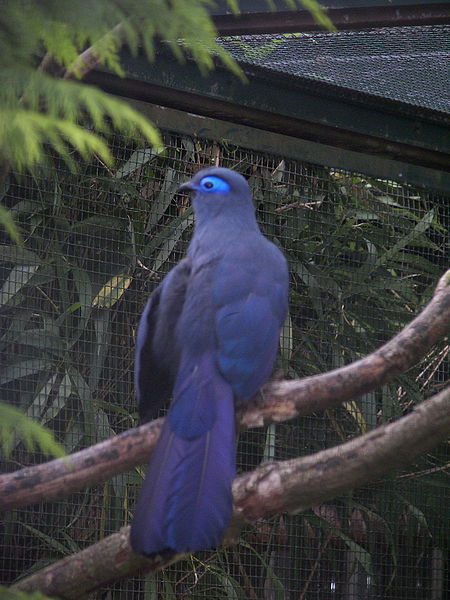
Blue Coua (Coua caerulea) by WikiC

Blue Coua (Coua caerulea) by WikiC

The Blue Coua is a deep blue with a bare blue oval around the eye and beak. It averages a size of 18.9-19.7 inches long and weighs approximately 8.2 ounces. The Blue Coua’s diet consists of insects, varied fruits, and small reptiles. Blue Coua’s can be found in the NorthWest and East areas of Madagascar. Specifically in the sub-tropical to tropical moist lowland, mangroe forest, and moist montane ares. It is a species of cokoo birds. In spanish it is known as the Cua Azul. The bird only lays one egg in a nest hidden in trees and bushes.

Giant Coua (Coua gigas) WikiC

Giant Coua (Coua gigas) WikiC

One of the most important distinguishing features of the Cuculidae family are the feet, which are zygodactyl, meaning that the two inner toes pointed forward and the two outer backward. There are two basic body forms, arboreal species (like the Common Cuckoo) which are slender and have short tarsi, and terrestrial species (like the roadrunners) which are more heavy set and have long tarsi. Almost all species have long tails which are used for steering in terrestrial species and as a rudder during flight in the arboreal species. The wing shape also varies with lifestyle, with the more migratory species like the Black-billed Cuckoo possessing long narrow wings capable of strong direct flight, and the more terrestrial and sedentary cuckoos like the coucals and malkohas having shorter rounded wings and a more laboured gliding flight.

What an amazing Creator that has provided such a diverse and interesting creation that we can enjoy watching and learning about. We will never run out of things to observe and be delighted about enjoying His many feathered wonders.

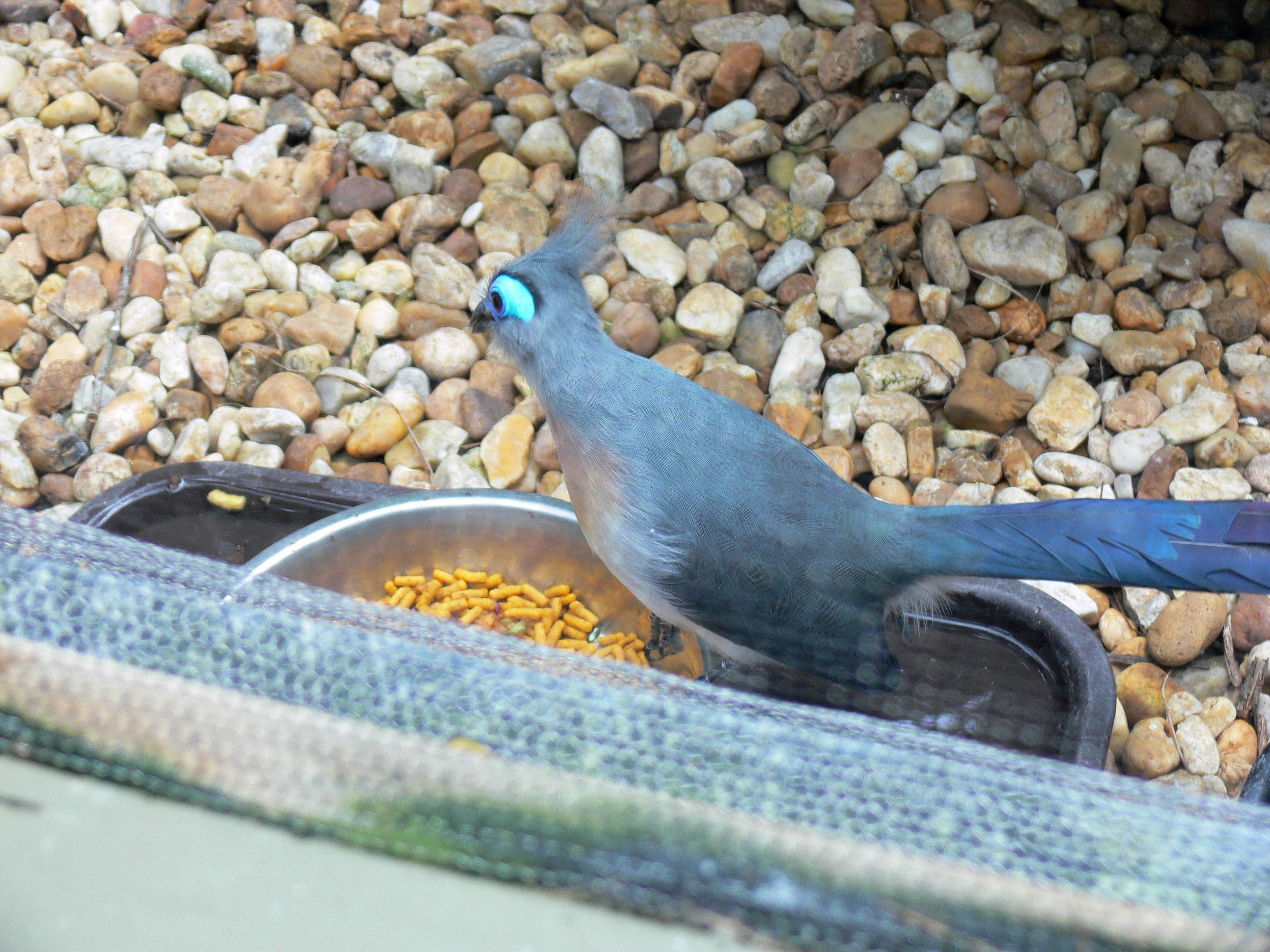
Crested Coua (Coua cristata) foot away by Lee LPZ

Crested Coua (Coua cristata) foot away by Lee LPZ

The Couas are in the Cuculidae Family of the Cuculiformes Order.

See Also:
Close-up of Coua Eye

Cuckoo

Birds of the Bible – Cuckoo and Cuckoo II

(Information from various internet sites – Wikipedia)

*

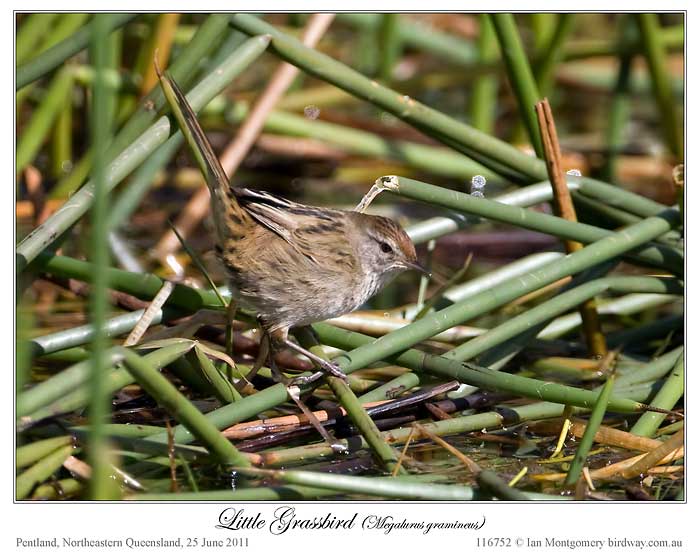
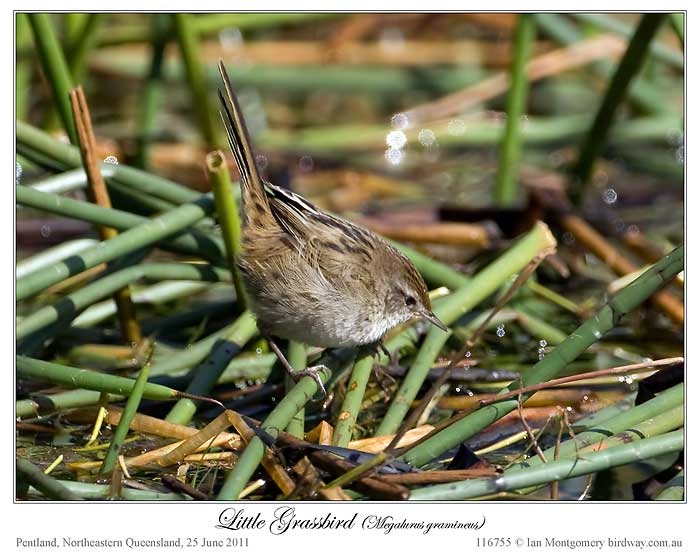
Ian’s Bird of the Week – Little Grassbird

Little Grassbird (Megalurus gramineus) by Ian

Little Grassbird (Megalurus gramineus) by Ian

Ian’s Bird of the Week – Little Grassbird ~ by Ian Montgomery

Newsletter – 7/3/2011

As well as the Baillon’s Crake, Pentland Dam produced another skulker, the Little Grassbird uncommon in North Queensland and usually heard rather seen – it has a distinctive, mournful three-note whistle.

I had prior warning, thank you again Len and Chris, so when a small dark bird – darker than another skulker present in the wetland, the Australian Reed-Warbler – appeared briefly, I got the camera ready in case it reappeared. It did eventually, and I got couple of quick shots before it disappeared for good.
Little Grassbird (Megalurus gramineus) by Ian

Little Grassbird (Megalurus gramineus) by Ian

The Little Grassbird is distributed quite widely in Australia, mainly in the eastern half of the mainland and Tasmania, though it does occur also in southern Western Australia and patchily through the Northern Territory as far as Kununurra across the border in northern Western Australia. Despite the name ‘Grassbird’, it occurs mainly in dense wetlands, though its only close Australian relative, the Tawny Grassbird http://www.birdway.com.au/sylviidae/tawny_grassbird/index.htm , is more flexible in its habitats.

Conventionally, the Grassbirds have been regarded as one of the Old World Warblers, family Sylviidae http://www.birdway.com.au/sylviidae/index.htm , though most bird taxonomists now accept that this family is a rather heterogeneous collection. Christidis & Boles, 2008, split it into a number of separate families and put the Grassbirds in a new one, the Megaluridae that also includes the Australian Songlarks and the Spinifexbird, while the Reed-Warblers also got their own family, the Acrocephalidae http://www.birdway.com.au/sylviidae/australian_reed_warbler/index.htm .
Best wishes
Ian


Ian Montgomery, Birdway Pty Ltd,
454 Forestry Road, Bluewater, Qld 4818
Phone: 0411 602 737 +61-411 602 737
Preferred Email: ian@birdway.com.au
Website: http://birdway.com.au


Lee’s Addition:

Ian just keeps coming up with his neat birds of the week. I am thankful that Ian lets me reproduce his newsletter on the blog. The birds he is exposing us to are fantastic and trust you enjoy them as much as I do. Many of his birds are from there in Australia and most of us will never get to travel to Australia to see those birds. So, continue to read his reports and do visit <a href=”http://birdway.com.au“>his website, Birdway, to see his many magnificent photos. Also look at the Birds of the Week here.

He causeth the grass to grow for the cattle, and herb for the service of man: that he may bring forth food out of the earth; (Psalms 104:14 KJV)

The Little Grassbird is in the Locustellidae Family.

See Ian’s other Birds of the Week

*

Birds of the Bible – Kite

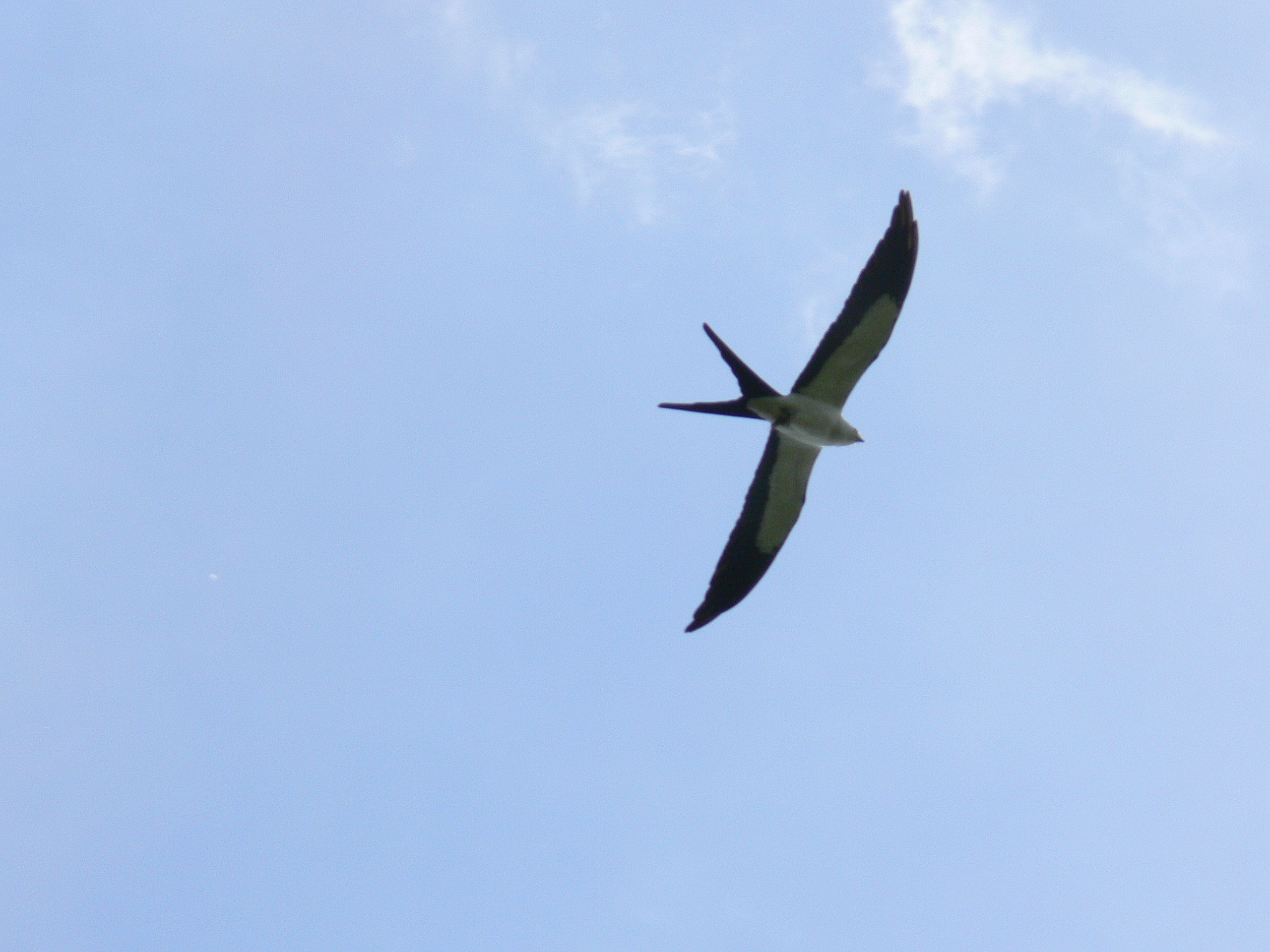
Swallow-tailed Kite - the one bird I got a photo of as it flew overhead

Swallow-tailed Kite – the one bird I got a photo of as it flew overhead

Today while Dan and I were out talking with our neighbor, a Swallow-tailed Kite flew over us several times and we all watched it disappear off in the distance. I have noticed several of them in the area lately. They are a pretty bird and I enjoy watching them fly. That tail forked out makes for a neat appearance.

Previously the Birds of the Bible – Glede and Kite article was written when this blog was first starting up. In fact, it was before we moved the blog here to WordPress and was published in the Blogspot(Blogger) format. I was exploring whether the Bible was calling it the Kite or the Glede.

Red Kite (Milvus milvus) by Ian

Red Kite (Milvus milvus) by Ian

This time, let’s look at what the versions of the Scriptures say about the Kite.

Most of the verses about the Kite are found in Leviticus 11:14 and Deuteronomy 14:13, which are in the list of the unclean birds that the Israelites were not to eat. And most of them call the bird a Kite.

Leviticus 11:14 – Here are the verses from the compare mode of e-Sword.
(ASV) and the kite, and the falcon after its kind,
(BBE) And the kite and the falcon, and birds of that sort;
(Brenton) And the vulture, and the kite, and the like to it;
(Darby) and the falcon, and the kite, after its kind;
(DRB) And the kite, and the vulture, according to their kind.
(ERV) kites, all kinds of falcons,
(ESV) the kite, the falcon of any kind,
(GW) kites, all types of buzzards,
(JPS) and the kite, and the falcon after its kinds;
(KJV) And the vulture, and the kite after his kind;
(KJV-1611) And the Uulture, and the Kite, after his kinde:
(LITV) and the kite, and the falcon, according to its kind;
(MKJV) and the kite, and the falcon, according to its kind;
(NAS77) and the kite and the falcon in its kind,
(NASB) and the kite and the falcon in its kind,
(NKJV) the kite, and the falcon after its kind;
(RV) and the kite, and the falcon after its kind;
(Webster) And the vultur, and the kite after his kind;
(YLT) and the vulture, and the kite after its kind,
Here they are called Red Kites
(ISV) red kite, falcon of any kind,

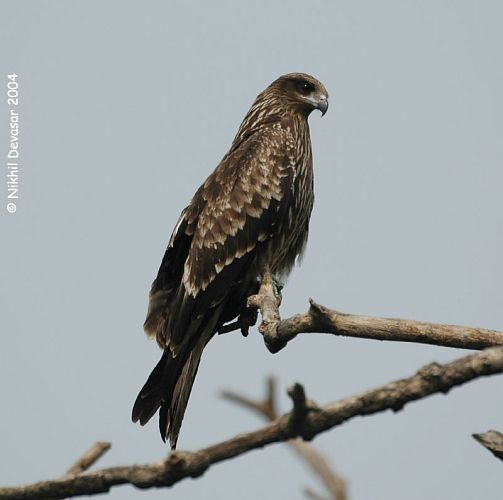
Black Kite (Milvus migrans) by Nikhil Devasar

Black Kite (Milvus migrans) by Nikhil Devasar

Deuteronomy 14:13 has some differences in the use of Kite, Glede, and Red or Black Kite.
Kite:
(ASV) and the glede, and the falcon, and the kite after its kind,
(BBE) The falcon and the kite, and birds of that sort;
(Brenton) and the vulture, and the kite and the like to it,
(Darby) and the falcon, and the kite, and the black kite after its kind;
(DRB) The ringtail, and the vulture, and the kite according to their kind:
(ERV) red kites, falcons, any kind of kite,
(ESV) the kite, the falcon of any kind;
(GW) buzzards, all types of kites,
(ISV) buzzard, any kind of kite,
(JPS) and the glede, and the falcon, and the kite after its kinds;
(KJV) And the glede, and the kite, and the vulture after his kind,
(KJV-1611) And the glede, and the kite, and the vulture after his kinde,
(KJVA) And the glede, and the kite, and the vulture after his kind,
(LITV) and the hawk, and falcons, and the kite by its kinds,
(MKJV) and the hawk, and the falcon, and the vulture after its kind,
(NAS77) and the red kite, the falcon, and the kite in their kinds,
(NASB) and the red kite, the falcon, and the kite in their kinds,
(NKJV) the red kite, the falcon, and the kite after their kinds;
(RV) and the glede, and the falcon, and the kite after its kind;
(Webster) And the glede, and the kite, and the vultur after his kind,
(YLT) and the glede, and the kite, and the vulture after its kind,

Deut 14:12  (CEV) But don’t eat the meat of any of the following birds: eagles, vultures, falcons, kites, ravens, ostriches, owls, sea gulls, hawks, pelicans, ospreys, cormorants, storks, herons, and hoopoes. You must not eat bats.

Did you notice reading down those verses that the Glede is not mentioned at all in the Leviticus 11:14 list? I even checked the verses before and after and it is not mentioned in them either. Hum!

Black-shouldered Kite (Elanus axillaris) by Nikhil

Black-shouldered Kite (Elanus axillaris) by Nikhil

There are a few other verses with “Kite” mentioned in the Bible:

Jeremiah 8:7   The kite in the air hath known her time: the turtle, and the swallow, and the stork have observed the time of their coming: but my people have not known the judgment of the Lord. (DRB-1899 Douay-Rheims)

Zechariah 5:9 And I lifted up my eyes and looked: and behold there came out two women, and wind was in their wings, and they had wings like the wings of a kite: and they lifted up the vessel between the earth and the heaven. (DRB-1899 Douay-Rheims)

Job 28:7 A path–not known it hath a ravenous fowl, Nor scorched it hath an eye of the kite, (YLT 1898 Young’s Literal Translation)

Video of American Swallow-tailed Kite by Keith Blomerley. [Broken Link] It shows a Kite in the air.

There are three versions that use “kite” in Isaiah 34:15

There shall the arrowsnake make her nest, and lay, and hatch, and gather under her shadow: yea, there shall the kites be gathered, every one with her mate. (RV Revised Version)
There shall the arrowsnake make her nest, and lay, and hatch, and brood under her shadow; yea, there shall the kites be gathered, every one with her mate. (JPS Jewish Publication Society Bible)
There shall the dart-snake make her nest, and lay, and hatch, and gather under her shade; yea, there shall the kites be gathered, every one with her mate. (ASV American Standard Version)

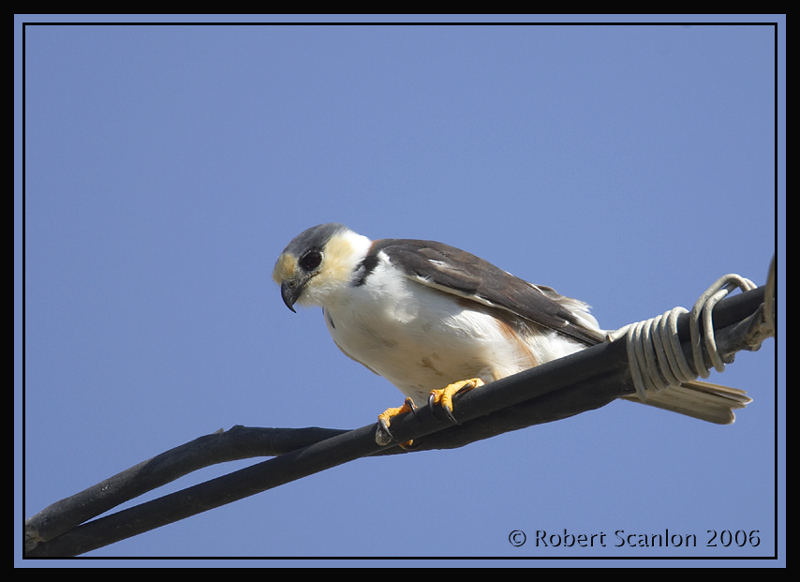
Pearl Kite (Gampsonyx swainsonii) by Robert Scanlon

Pearl Kite (Gampsonyx swainsonii) by Robert Scanlon

So what is a Kite? They are in the Accipitridae Family of the Accipitriformes Order. Being in the Accipitridae family means they are a bird of prey or raptors

Here is some of what Wikipedia has to say: “The Accipitridae, one of the two major families within the order Accipitriformes (the diurnal birds of prey), are a family of small to large birds with strongly hooked bills and variable morphology based on diet. They feed on a range of prey items from insects to medium-sized mammals, with a number feeding on carrion and a few feeding on fruit. The Accipitridae have a cosmopolitan distribution, being found on all the world’s continents (except Antarctica) and a number of oceanic island groups. Some species are migratory. Many well-known birds, such as hawks, eagles, kites, harriers and Old World vultures are included in this group.”

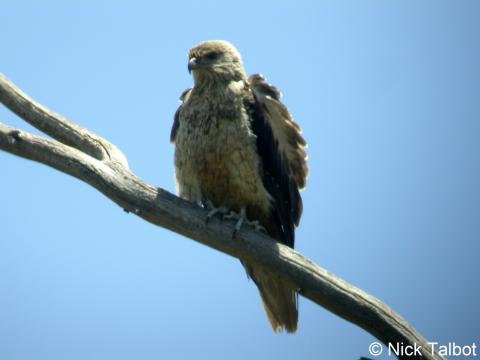
Whistling Kite (Haliastur sphenurus) by Nick Talbot

Whistling Kite (Haliastur sphenurus) by Nick Talbot

“The Black-winged Kite breeds at different times of the year across its range. Although nesting has been noted throughout the year in India, they appear not to breed in April and May. Courtship is noisy and involves chases. The nest is a loose platform of twigs in which 3 or 4 eggs are laid. The female spends more effort in the construction of the nest than the male. The eggs are pale creamy with spots of deep red. Both parents incubate but when the chicks hatch, the male spends more time on foraging for food. Females initially feed the young, sometimes hunting close to the nest but will also receive food from the male. After fledging the young birds continue to be dependent for food on the male parent for about 80 days, initially transferring food at perch and later in the air.

The prey include grasshoppers, crickets and other large insects, lizards and rodents. Injured birds, small snakes and frogs have also been recorded. The slow hunting flight is like a harrier, but it will hover like a Kestrel. It has on rare occasions been known to hunt prey in flight. Favourite perches are used for hunting and for feeding but large prey may sometimes be handled on the ground. In southern Africa, they appear to favour roadside verges for foraging and are sometimes killed by collisions with vehicles.

These birds roost communally with groups of 15 to 35 (larger numbers in Europe) converging at a large leafy tree. They are extremely silent and the calls recorded include a high-pitched squeal or a soft whistle. They call a lot mainly during the breeding season.”

(Top photo from a previous birdwatching adventure)

See others:

Glede and Kite

Birds of the Bible

Wordless Birds

*

Ian’s Bird of the Week – Baillon’s Crake

Baillon's Crake (Porzana pusilla) by Ian

Baillon's Crake (Porzana pusilla) by Ian

Ian’s Bird of the Week – Baillon’s Crake ~ by Ian Montgomery

Newsletter – 6/27/11

My apologies for a belated bird of the week. This week’s bird is the subject of some excitement at the moment in local birding circles with the reporting of unusual numbers of Baillon’s Crake (thank you Len and Chris!) at a small wetland at Pentland about 240km southwest of Townsville. So, I and some friends spent the weekend there. to have a look for this elusive species, uncommon in this part of the country.

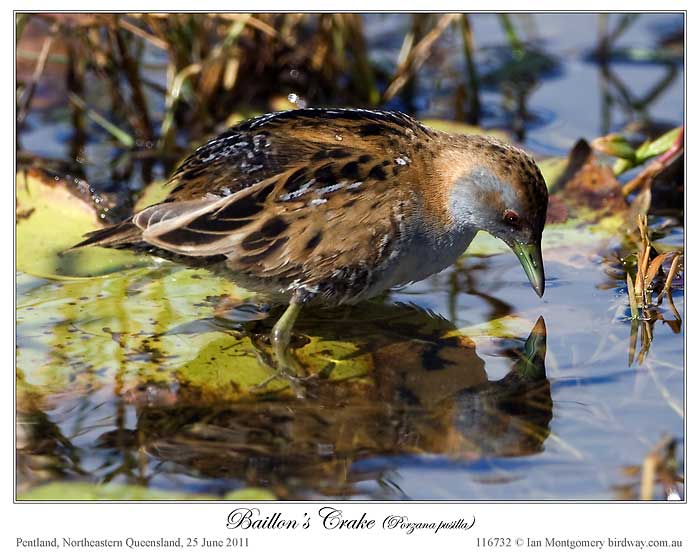
Baillon’s, with a length of 15-18cm/6-7in is the smallest member of its family (Rallidae) found in Australia and not much larger than a house sparrow. Members of this species are particularly secretive even by crake standards usually preferring to skulk in reed beds and other aquatic vegetation, but sometimes venture out into the open in dull weather to feed though rarely as freely in sunshine as the ones at Pentland, as in the first photo. This bird is probably a female as HBW (Handbook of Birds of the World, which like many ‘handbooks’ needs a crane to lift it) reports that females have a rufous patch behind the eye.
Baillon's Crake (Porzana pusilla) by Ian

Baillon's Crake (Porzana pusilla) by Ian

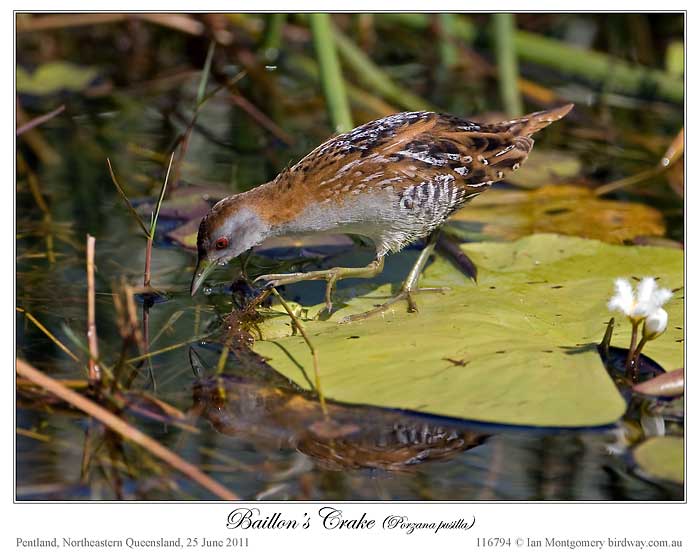
By that criterion, the bird on the lily pad in the second photo is a male with a completely grey cheek. It is also showing the long, rather jacana-like toes that enable it to walk over aquatic vegetation, both floating and submerged, though they will swim if necessary. They seemed reluctant to fly, but would do so to chase other birds that appeared to be encroaching on their patch.

Baillon's Crake (Porzana pusilla) by Ian

Baillon's Crake (Porzana pusilla) by Ian

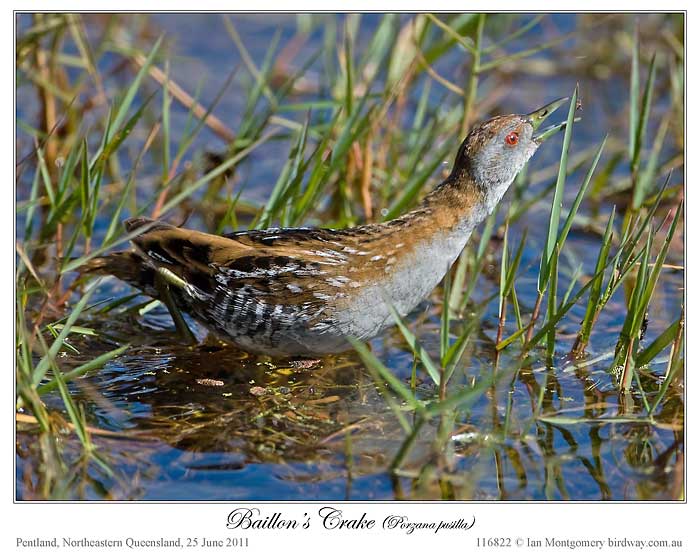
The third photo shows a bird snatching an invertebrate, maybe a small spider, off a blade of grass and stretching out its neck to full extent to do so. They would also pluck prey from under the surface and I watched one that appeared to be eating a mollusc. The fourth photo shows one peering intently at the water but its debatable whether it’s looking for dinner or, Narcissus-like, admiring its reflection (even if it is a female) while its lily pad sinks unnoticed below the surface – Baillon’s Crakes weigh about 35 g, a little over an ounce.

Baillon's Crake (Porzana pusilla) by Ian

Baillon's Crake (Porzana pusilla) by Ian

I think the bird in the fifth photo is a juvenile. The iris is brownish rather than red, the legs and bill are browner than in the adults and the underparts are buffish white, rather than grey.

Baillon's Crake (Porzana pusilla) by Ian

Baillon's Crake (Porzana pusilla) by Ian

Although Crakes in general appear reluctant to fly, they can do so well and over long distances, probably at night. They move around according to the availability of water (the wetland at Pentland sometimes dries out completely) and there is some evidence that Baillon’s Crakes move north in winter in Australia. It also has a wide distribution throughout Eurasia and Africa and a summer visitor in Europe. A separate race is found in New Zealand, it has been recorded on Macquarie Island, and a closely related species, now extinct, used to occur on Laysan Island between Midway Islands and Hawaii.

Incidentally, the smallest member of the family is the Inaccessible Rail found on Inaccessible Island in the Tristan Da Cunha Group with a length of 13-15.5 cm. Furthermore it the smallest flightless bird in the world, but, not having therefore to worry about its waistline, it is, at 40 g, heaver than Baillon’s Crake.
Best wishes,
Ian


Ian Montgomery, Birdway Pty Ltd,
454 Forestry Road, Bluewater, Qld 4818
Phone: 0411 602 737 +61-411 602 737
Preferred Email: ian@birdway.com.au
Website: http://birdway.com.au


Lee’s Addition:

Baillons are part of the Rails, Crakes & Coots – Rallidae Family of the Gruiformes Order. The Crake is in the same family as our Purple Gallinules, Common Gallinules or Moorhens and the American Coots we see often. We have Rails (Black, Clapper, King, Virginia, and Yellow) and the Sora here in Florida, but I never seem to spot them. The birds here are much larger than Ian just described. Would love to see one of them.

The most typical family members occupy dense vegetation in damp environments near lakes, swamps, or rivers. Reed beds are a particularly favoured habitat. They are omnivorous, and those that migrate do so at night: most nest in dense vegetation. In general, they are shy and secretive birds, and are difficult to observe.

Most species walk and run vigorously on strong legs, and have long toes which are well adapted to soft, uneven surfaces. They tend to have short, rounded wings and although they are generally weak fliers, they are, nevertheless, capable of covering long distances.

Can the papyrus grow up without a marsh? Can the reeds flourish without water? While it is yet green and not cut down, It withers before any other plant. So are the paths of all who forget God; (Job 8:11-13a NKJV)

See more of Ian’s Bird of the Week articles.
Family #46 – Rallidae

*

Formed By Him – Bowerbirds

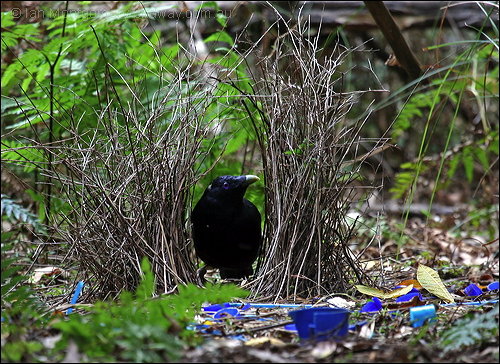
Satin Bowerbird (Ptilonorhynchus violaceus) in bower by Ian

Satin Bowerbird (Ptilonorhynchus violaceus) in bower by Ian

An interesting article from News to Note – Sept 18, 2010 issue talks about the Bowerbird and it’s ability to use special optical effects. The article is discussing Physorg.com’s information on the elaborate bowers the bird makes.

“Bowerbird males are well known for making elaborate constructions, lavished with decorative objects, to impress and attract their mates. Now, researchers reporting online on September 9 in Current Biology have identified a completely new dimension to these showy structures in great bowerbirds. The birds create a staged scene, only visible from the point of view of their female audience, by placing pebbles, bones, and shells around their courts in a very special way that can make objects (or a bowerbird male) appear larger or smaller than they really are.” (Physorg.com)

The scientist are trying to figure out about this aesthetically appealing ability. They noticed that the bird places articles from smaller to larger as the bower is approached. When they rearranged the articles, the Bowerbird changed them back. He is trying to give an allusion they think.

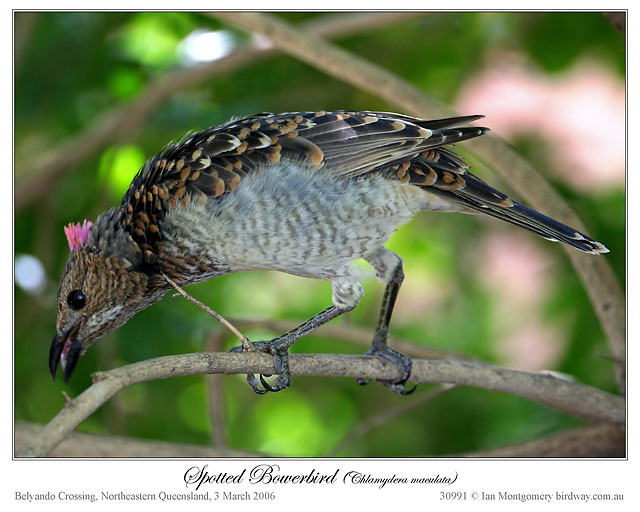
Spotted Bowerbird (Chlamydera maculata) by Ian

Spotted Bowerbird (Chlamydera maculata) by Ian

News to Note concludes with this:

“Evolutionists often seek to find natural explanations for distinct human aspects like aesthetics, moral consciousness, and self-consciousness. The bowerbirds’ apparent art appreciation seems to allow the most genetically fit to survive according to biologist Gerry Borgia of the University of Maryland. But do male bowerbirds intellectually conceive the idea of the optical illusion, and do female bowerbirds intentionally judge the design as artistic?

Rather than an intellectual intention towards art, the great bowerbird instinctively builds remarkable structures, and the female instinctively responds to the optical effect, as programmed by the Creator. Only man, created in the image of God, has a true aesthetic sense. When appreciating the beauty and design of creatures like the bowerbird, the wise aesthetic judge praises the Creator of both art and beauty.”

The two articles are interesting and of course, the one from Answers in Genesis, News to Note – Sept 18, 2010, issue gives the creationist view of this.

From another article:

” the male bower bird, an accomplished avian architect that has long fascinated scientists with its remarkably complex courting behavior. Instead of using just showy plumes or a romantic melody to attract a mate, the pigeon-sized bower bird constructs an elaborate structure — a bower — on the forest floor from twigs, leaves, and moss. It then decorates the bower with colorful baubles, from feathers and pebbles to berries and shells.”

“The bowers aren’t nests for raising kids; they are bachelor pads designed to attract and seduce one or more mates. When a female arrives to inspect the bower, the male struts and sings. He hopes to convince her to enter the bower, where mating takes place….they are of special interest to scientists seeking to understand how such complex traits evolve and function.”

Golden Bowerbird (Prionodura newtoniana) at bower by Ian

Golden Bowerbird (Prionodura newtoniana) at bower by Ian

“Each builds its own shape of bower and prefers a different decorating scheme. A few, for instance, surround their bowers with carefully planted lawns of moss. Others have been known to steal shiny coins, spoons, bits of aluminum foil — even a glass eye — in an effort to create the perfect romantic mood. Some, like the iridescent blue Satin bower bird, the star of Bower Bird Blues, even “paint” the walls of their structures with chewed berries or charcoal. For the male Satin, which builds a U-shaped bower from parallel walls of twigs, the favored color is blue. To decorate its “avenue,” as scientists call it, he collects blue feathers, berries, shells, and flowers. While some of these decorations are found in the forest, others are stolen from the bowers of other males; young males, in particular, are prone to this petty thievery. However obtained, the precious knickknacks are then scattered around the bower. The male then waits, passing time by constantly fine-tuning his structure and rearranging the decorations. (from Nature)

And God blessed them, saying, “Be fruitful and multiply, and fill the waters in the seas, and let birds multiply on the earth.” (Genesis 1:22 NKJV)

That verse answers it for me. God created them with that “complex trait.”


Information about the Bowerbird:

They are in the Ptilonorhynchidae – Bowerbirds Family of the Passeriformes Order. There are 21 species in the family in 9 different genus. There are 3 Catbirds and an Piopio included in the family.

Bowerbirds and catbirds make up the bird family Ptilonorhynchidae. These are medium-sized passerines, ranging from the Golden Bowerbird (22 cm and 70 grams) to the Great Bowerbird (40 cm and 230 grams). Their diet consists mainly of fruit but may also include insects (fed to young), flowers, nectar and leaves in some species.

The bowerbirds have an Austro-Papuan distribution, with ten species endemic to New Guinea, eight endemic to Australia and two found in both. Although their distribution is centered around the tropical regions of New Guinea and northern Australia, some species extend into central, western and southeastern Australia. They occupy a range of different habitats, including rainforest, eucalyptus and acacia forest, and shrublands.

Bowerbirds are most known for their unique courtship behaviour, where males build a structure and decorate it with sticks and brightly coloured objects in an attempt to attract a mate.

The catbirds are monogamous and raise chicks with their mate, but all other bowerbirds are polygymous, with the female building the nest and raising the young alone. These latter species are commonly sexually dimorphic, with the female being more drab in color. Female bowerbirds build a nest by laying soft materials, such as leaves, ferns, and vine tendrils, on top of a loose foundation of sticks. They lay one or two eggs, which hatch after 19 to 24 days, depending on the species.

The most notable characteristic of bowerbirds is their extraordinarily complex courtship and mating behaviour, where males build a bower to attract mates. There are two main types of bowers. One clade of bowerbirds build so-called maypole bowers that are constructed by placing sticks around a sapling; in some species these bowers have a hut-like roof. The other major bowerbuilding clade builds an avenue type bower made of two walls of vertically placed sticks. In and around the bower the male places a variety of brightly colored objects he has collected. These objects — usually different among each species — may include hundreds of shells, leaves, flowers, feathers, stones, berries, and even discarded plastic items, coins, nails, rifle shells, or pieces of glass. The males spend hours arranging this collection. Bowers within a species share a general form but do show significant variation, and the collection of objects reflects the biases of males of each species and its ability to procure items from the habitat, often stealing them from neighboring bowers. Several studies of different species have shown that colors of decorations males use on their bowers match the preferences of females.

In addition, many species of bowerbird are superb vocal mimics. Macgregor’s Bowerbird, for example, has been observed imitating pigs, waterfalls, and human chatter. Satin bowerbirds commonly mimic other local species as part of their courtship display. (Wikipedia)

(Information from various Internet sources.)
________
Articles here on the Blog about Bowerbirds:

Golden Bowerbird by A.J.Mithra
Ian’s Bird of the Week:
Tooth-billed Bowerbird
Spotted Bowerbird
Golden Bowerbird

More Formed By Him articles


Family#126 – Ptilonorhynchidae
*

Birds in Hymns – O Give Thanks To Him Who Made

Black-headed Heron (Ardea melanocephala) by Lee Lowry Pk Zoo

Black-headed Heron (Ardea melanocephala) by Lee Lowry Pk Zoo

Based on:

All things were made by him; and without him was not any thing made that was made. (John 1:3 KJV)

Words by ~ Jo­si­ah Con­der (1789-1855), in The Con­gre­ga­tion­al Hymn Book, 1836.
Music ~ “Dix” ~by~  Con­rad Koch­er, Stim­men aus dem Reiche Gott­es, 1838

O Give Thanks To Him Who Made

O give thanks to Him Who made
Morning light and evening shade;
Source and Giver of all good,
Nightly sleep and daily food;
Quickener of our wearied powers,
Guard of our unconscious hours.

O give thanks to nature’s King,
Who made every breathing thing;
His, our warm and sentient frame,
His, the mind’s immortal flame.
O how close the ties that bind
Spirits to the Eternal Mind!

O give thanks with heart and lip,
For we are His workmanship;
And all creatures are His care:
Not a bird that cleaves the air
Falls unnoticed
; but who can
Speak the Father’s love to man?

O give thanks to Him Who came
In a mortal, suffering frame—
Temple of the Deity—
Came for rebel man to die;
In the path Himself hath trod
Leading back His saints to God.

Most information from The Cyber Hymnal

See more Birds in Hymns

*

The Red-breasted Goose – Wise Nester

Red-breasted Goose (Branta ruficollis) ©©Maxfear

Red-breasted Goose (Branta ruficollis) ©©Maxfear

The Red-breasted Goose – Wise Nester ~ by a j mithra

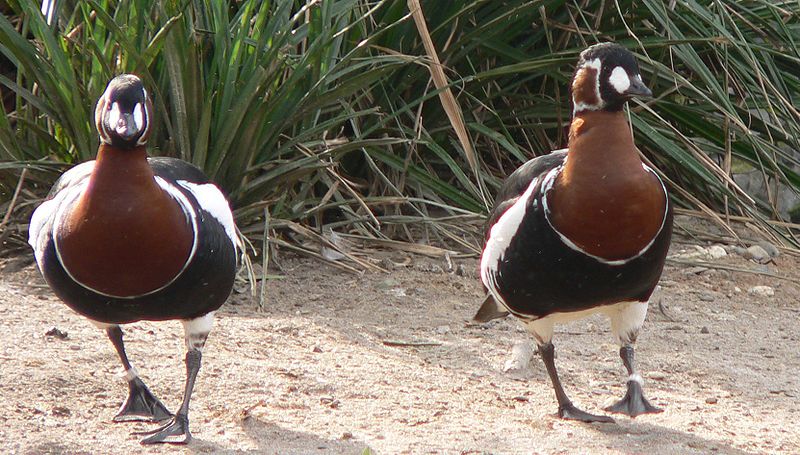
The Red-breasted Goose (Branta ruficollis) is a goose of the genus Branta. It is sometimes separated in Rufibrenta but appears close enough to the Brent Goose (Branta bernicla) to make this unnecessary, despite its distinct appearance.

Breeding on the Taimyr, Gydan and Yamal peninsulas of Russia, with beautifully defined blocks of colour, the red-breasted goose is one of the most attractive goose species in the world, but also one of the rarest. The fore-neck, breast and sides of the head are chestnut red bordered with white. The wings, back and fore-belly are charcoal black, with a bright white stripe running down the side to the white rear belly. The short neck and dark belly stand out in flight, and when seen from above two crescent-shaped stripes are visible on each wing. Juveniles are less well defined, and duller in colour.

Adults make repeated ‘kik-yoik, kik-yik’ sounds in flight. You may not like the way you look, but you are the most attractive for God, for He has created you in His own image and above all, He has blown His spirit into your nostrils..

And that is the reason you are rare, and He has never tried to create another one like you..

So God created man in his [own] image, in the image of God created he him; male and female created he them. (Genesis 1:27)

Red-breasted Goose (Branta ruficollis) ©WikiC

Red-breasted Goose (Branta ruficollis) ©WikiC

Majority of the population of red-breasted geese migrate through Bulgaria, Romania and to the Black Sea for winter. Small numbers winter in Ukraine, or in Greece if it is particularly cold. Until the 1950s, most red-breasted geese wintered in Azerbaijan, but the habitat is no longer suitable…

Red-breasted geese nest in tundra, and less often, in open parts of shrub tundra, where high and dry areas are favored, such as steep river banks, rocky slopes, rocky crags and gullies. These birds prefer rocky banks, rocky slopes, rocky crags and rocky gullies..

Where is our dwelling place?

  • Christian life doesn’t end with just propagating that Jesus is the rock of our salvation.
  • But it has got more to it..
  • We need to dwell on the Rock, by the Rock, with the Rock and for the Rock..
  • The Rock not only protects us but He also provides us.
  • He not only provides us, He also promotes us..

The LORD is my rock, my fortress and my deliverer; my God is my rock, in whom I take refuge. He is my shield and the horn of my salvation, my stronghold. (Psalm 18:2)
He should have fed them also with the finest of the wheat: and with honey out of the rock should I have satisfied thee. (Psalm 81:16)

He made him ride on the high places of the earth, that he might eat the increase of the fields; and he made him to suck honey out of the rock, and oil out of the flinty rock;

For in the day of trouble he will keep me safe in his dwelling; he will hide me in the shelter of his tabernacle and set me high upon a rock. (Psalm 27:5)

Red-breasted Goose (Branta ruficollis) ©WikiC

Red-breasted Goose (Branta ruficollis) ©WikiC

Throughout the day it flies to coastal and freshwater lakes to drink. Occasionally it also roosts at these lakes, using the middle of the water or remote shallow areas and muddy and sandy beaches with low aquatic vegetation. It will also roost on frozen lakes or on the sea..

When not breeding, red breasted geese are found in steppe habitats, where they feed on agricultural land and drink from coastal lakes. Throughout the day these birds fly to coastal and freshwater lakes to drink water..

  • They seem to know the importance of water to maintain their health..
  • Water not only heals but also prevents most disease, which is a scientifically proven fact..
  • We have the Living Water which cleanses, heals and strengthens..
  • Still most of us are weak and weary, why?

Is it cos we don’t have the habit of seeking THE WATER all through the day like these birds?

But whosoever drinketh of the water that I shall give him shall never thirst; but the water that I shall give him shall be in him a well of water springing up into everlasting life. (John 4:14)

During winter, red-breasted geese also roost on lakes, or in remote wetlands. In winter, the red-breasted goose feeds on winter wheat, barley, maize, pasture grasses and natural grassland. When it moves to the breeding grounds in early June, the diet changes, and consists primarily of grass leaves and shoots. In the second half of June, females lay between three and ten eggs, which are incubated for around 25 days.

  • How well these birds choose to change their diet just before migration…
  • How well they submit themselves to the will of God..
  • Where birds haven’t changed man has…
  • These birds know what to, what not to eat and when to eat before setting out on migration..

We are going to migrate once and for all, but sadly, most of us are yet to eat the food for migration. Is it because, we still have no idea when we need to migrate or is it because we think that what we have eaten thus far can take us home?

  • I am reminded of the ten bridesmaids who were waiting for the arrival of the Bridegroom..
  • We know not the arrival of our Bridegroom, are we getting ready or just sleeping over it?

Therefore keep watch, because you do not know the day or the hour. (Mathew 25:13)

Nests are built in close proximity to other red-breasted goose nests, and also to the nests of peregrine falcons (Falco peregrinus) and snowy owls (Nyctea scandiaca), as these birds provide protection from predators, improving breeding success of the geese. The chicks fledge at between five to six weeks of age.

A female incubating on a rocky island, taking off during the clutch control, then the nest with four eggs. (Internet Bird Collection)

In mid-September, the red-breasted geese begin their migration back to the western Black Sea coast, arriving in October or November.

  • Goose is normally thought to be dumb head..
  • Well, that is how we correlate Goose to stupidity..

But look at the wisdom of these birds, building their nests near the nests of Peregrine Falcons and Snowy owls!! They know that the rate of the breeding success depends upon the place where they nest…

  • Are we successful in life?
  • Do we eat the fruit of the works of our hands or is it being stolen or devoured?
  • Is our household protected from the enemy or are we being tormented by the enemy?

If the answer is negative, we need to look around to see if we have nested at the right place…

  • There is no use just saying that Jesus is our refuge and shelter..
  • He is there for us to protect us but do we nest beside Him?

And I set my tabernacle among you: and my soul shall not abhor you. And I will walk among you, and will be your God, and ye shall be my people. (Leviticus 26:11,12)

God is willing to shift His dwelling place among us, but, the question is, are we willing to co-dwell with Him?

Have a blessed day!

Your’s in YESHUA,
a j mithra

please visit us at:
Crosstree

ajmithra (Now with the Lord)

See more of a j mithra’s articles.

Anatidae Family

*

The Ornithologist and the Cuckoo – by Graham1281

Graham1281 has a YouTube Channel with over 200 of his accordion songs. He is from Inverness, U. K. and has given permission to use his music for backgrounds of our videos here. I came across this video while looking through his channel and decided to share it. Hope you enjoy.

“A wonderfully catchy tune written by Freeland Barbour for his friend Bobby Tulloch. Medicinecrow requested this tune and I was more than happy to oblige. The tune has fair Isle connections and so do I. My late stepfather ( George Eunson ) was born and lived a few of his childhood years there and also spent part of his early life in Lerwick. I too worked in Lerwick for 3 years myself and loved it.
The pictures are all of the birds around the Fair Isle. Hope you enjoy this and please keepthe requests coming. I’ve never enjoyed my playing so much for years.” (Graham Wilson)

And God said, “Let the waters swarm with swarms of living creatures, and let birds fly above the earth across the expanse of the heavens.” (Genesis 1:20 ESV)

Here is another of his bird related videos – The Cuckoo Waltz

*

Interesting Things – World War I Hero – Cher Ami

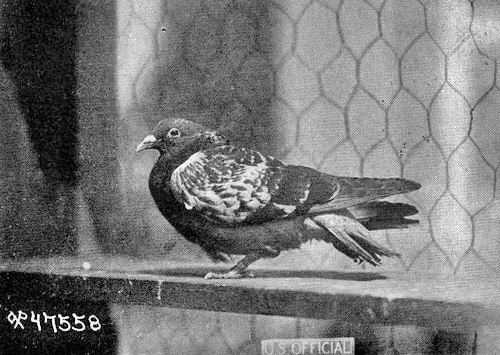
Cher Ami - Homing Pigeon Hero

Cher Ami – Homing Pigeon Hero

Cher Ami – WW1 Hero

While researching for a hero for an article on our church blog, I tried to find out about my father, who was in WW1. Being as he died when I was four years old, it is hard to find out a lot of details. All I knew is that he was in the trenches where they were poisoned with mustard gas and that it took years, but he died as a result of that gassing. Talking to my family, I also found out that he was at the Meuse-Argonne Offensive (Argonne Forrest) in which 117,000 of our American troops gave their lives and that he was in a company that had few survivors. Also found that he had fought hand-to-hand with bayonets. But the actual details are still a mystery. So, my dad and all of our men that fought in WW1 are my heros.

What I did find is a hero of the avian kind. His name was Cher Ami (French for “dear friend”, in the masculine) and he was a homing pigeon which had been donated by the pigeon fanciers of Britain for use by the U.S. Army Signal Corps in France during World War I and had been trained by American pigeoneers. He helped save the Lost Battalion of the 77th Division in the battle of the Argonne, October 1918.

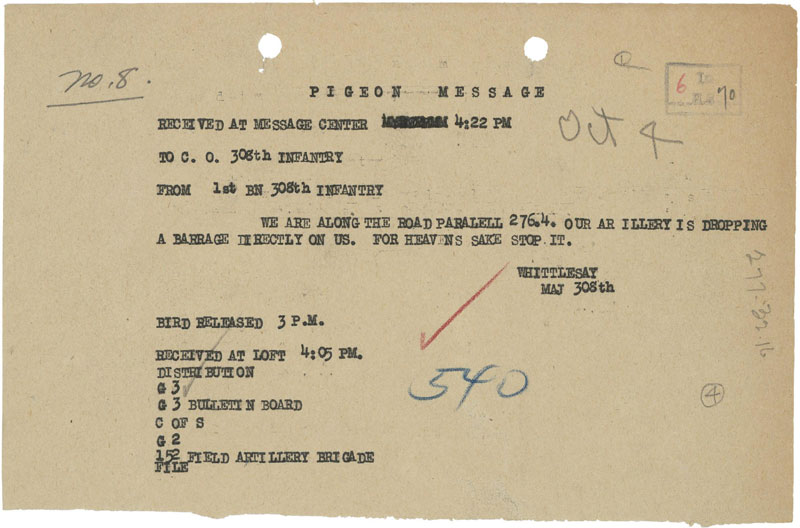
On October 3, 1918, Charles Whittlesey and more than 500 men were trapped in a small depression on the side of the hill behind enemy lines without food or ammunition. They were also beginning to receive friendly fire from allied troops who did not know their location. Surrounded by the Germans, many were killed and wounded in the first day and by the second day, only a little more than 200 men were still alive. Whittlesey dispatched messages by pigeon. The pigeon carrying the first message (“Many wounded. We cannot evacuate.”) was shot down. A second bird was sent with the message, “Men are suffering. Can support be sent?” That pigeon also was shot down. Only one homing pigeon was left: ‘Cher Ami’. He was dispatched with a note in a canister on his left leg,

We are along the road parallel to 276.4. Our own artillery is dropping a barrage directly on us. For heaven’s sake, stop it!

Actual Message Sent

Actual Message Sent

As Cher Ami tried to fly back home, the Germans saw him rising out of the brush and opened fire and for several minutes, bullets zipped through the air all around him.The men of the Lost Battalion saw Cher Ami tragically shot down, but miraculously, he was airborne again soon. He managed to arrive back at his loft at division headquarters 25 miles to the rear in just 25 minutes, helping to save the lives of the 194 survivors. In this last mission, Cher Ami had delivered the message despite having been shot through the breast, blinded in one eye, covered in blood and with a leg hanging only by a tendon.

Cher Ami had become the hero of the 77th Infantry Division, so army medics worked long and hard to save his life. They were unable to save his leg, so they carved a small wooden one for him. When he recovered enough to travel, the little one-legged hero was put on a boat to the United States, with General John J. Pershing personally seeing Cher Ami off as he departed France.

Upon return to America, Cher Ami became the mascot of the Department of Service. The pigeon was awarded the Croix de Guerre Medal with a palm Oak Leaf Cluster for his heroic service in delivering 12 important messages in Verdun. He died at Fort Monmouth, New Jersey, on June 13, 1919 from the wounds he received in battle and was later inducted into the Racing Pigeon Hall of Fame in 1931. He also received a gold medal from the Organized Bodies of American Racing Pigeon Fanciers in recognition of his extraordinary service during World War I.

Cher Ami - WWI Homing Pigeon Hero

Cher Ami – WWI Homing Pigeon Hero – WikiC

Cher Ami was as well known as any human World War I heroes. Cher Ami was later mounted by a taxidermist and donated to the Smithsonian where he is enshrined in the Smithsonian Institution, and is currently on display with Sergeant Stubby in the National Museum of American History’s “Price of Freedom” exhibit.

Who are these who fly like a cloud, And like doves to their roosts? (Isa 60:8)

Pigeons and Doves are in the Columbidae Family of the Columbiformes Order.

(Wikipedia and other internet sources)

*

Ian’s Bird of the Week – White-headed Pigeon

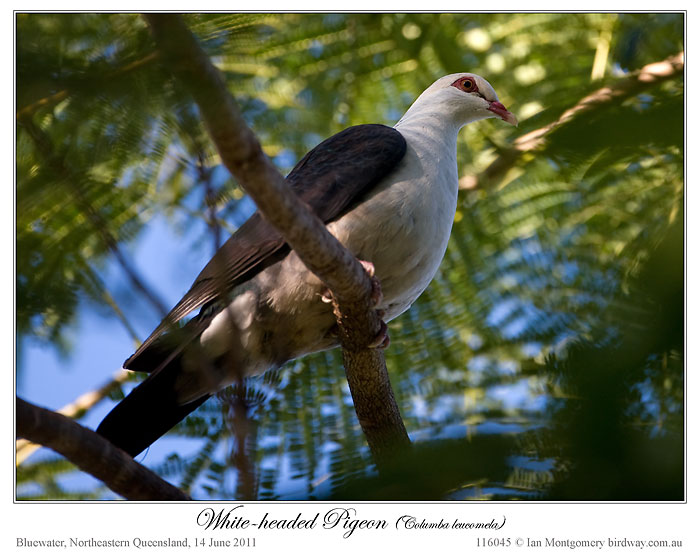
White-headed Pigeon (Columba leucomela) by Ian

White-headed Pigeon (Columba leucomela) by Ian

Ian’s Bird of the Week – White-headed Pigeon ~ by Ian Montgomery

Newsletter – 6/15/11

I’ve been preoccupied recently preparing photos for the digital publication that I first mentioned two weeks ago, so I haven’t taken many photos and hadn’t decided on this week’s bird when I took a break yesterday to put out the garbage. On the way back from the front gate, I spotted an adult male White-headed Pigeon feeding on the fruit of a boxwood shrub and took the long way round to the house to get my camera. The adult White-headed Pigeon was on my wanted list for the digital publication and hasn’t featured as a bird of the week, so two problems were solved simultaneously by just taking out the garbage. There’s a lesson there somewhere, I’m unsure what, but I do recall another occasion when I photographed Red-tailed Black-Cockatoos on a trip to the garbage dump: http://www.birdway.com.au/cacatuinae/red_tailed_black_cockatoo/source/redtailblackcockatoo02242.htm .

White-headed Pigeon (Columba leucomela) by Ian

White-headed Pigeon (Columba leucomela) by Ian

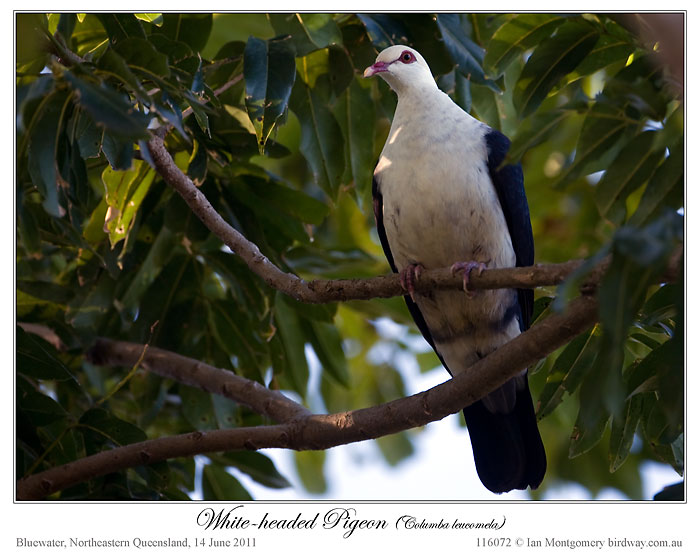
I disturbed him from the boxwood, but he flew up into a poinciana tree near the house (first photo) before retreating into the thicker foliage of what I think is an African mahogany (second photo), where he remained for ages.

White-headed Pigeons are large (to 41cm/16in in length) and rather splendid with their red and white faces and slightly iridescent bluish grey wing feathers. Here in North Queensland, they occur usually only in highland rainforest, and this is the first one that I’ve seen here near the coast, though farther south in southern Queensland and northern New South Wales (their stronghold) they do occur in coastal areas. The range from Cooktown in the north to about Bermagui on the south coast of NSW but, like other fruit-eating pigeons, they are fairly nomadic and sometimes occur in eastern Victoria. So, I don’t know whether this one is yet another refugee from cyclone Yasi or has just wandered down from the Paluma Range looking for food, as other birds do in winter.

White-headed Pigeon (Columba leucomela) by Ian

White-headed Pigeon (Columba leucomela) by Ian

The third photo is an immature bird that I photographed some years ago in rainforest near O’Reilly’s Lodge in Lamington National Park in southeastern Queensland near the border with NSW. Immature birds have greyish, rather than white heads and breasts and a dark cap. Females are intermediate in colour between the juveniles and the adult male and also have the whitish cheek visible on the juvenile.

On a completely different subject have a look at this youtube video  if you want to see the piece that the recorder group to which I belong entered in the Recorder Romp competition organised recently by the ABC.

Best wishes
Ian


Ian Montgomery, Birdway Pty Ltd,
454 Forestry Road, Bluewater, Qld 4818
Phone: 0411 602 737 +61-411 602 737
Preferred Email: ian@birdway.com.au
Website: http://birdway.com.au


Lee’s Addition:

Behold, thou art fair, my love; behold, thou art fair; thou hast doves’ eyes. (Song of Solomon 1:15 KJV)

Doves are in the Columbidae Family of the Columbiformes Order.

*