Merry Christmas 2009

I’ve dusted off last years Christmas post and updated it some. But the message is still the same and I wanted to present our pastor’s illustration at the Cantata ’08. It has a very good message.

Christmas of 2009 is here and those of us at Lee’s Birdwatching Adventures; Lee, Dan, and Val, April, and Karen would like to wish you a very Merry Christmas. We are busy doing things for the special day when we celebrate the birth of the Lord Jesus Christ. Val has still been busy cooking and baking, not to mention shoveling snow out there in Idaho. We are enjoying the warmth of Florida, but are busy, none the less (but not shoveling snow!). We are off to Tampa to visit relatives again this year and try not to eat “too” much. We hope your Christmas Day is just as enjoyable as ours will be.

During all the festivities, pause to reflect on the true meaning of Christmas. We enjoy our birdwatching adventures throughout the year, and try to write and photograph our friends the birds, but our goal is to show God’s magnificent creation and point you to Him. We do not worship nature, but we do worship the Lord who created it all.

Please watch the video of my pastor, Nathan Osborne, III, as he gave an excellent illustration about birds out in the cold and snow. It helps to explain the true meaning of Christmas. (Part of our Christmas cantata, “From the Manger to the Cross”)

Christmas Birds – Red and Green

Here is the third Christmas Birds slideshow. While searching the photos for the Red Birds and the Green Birds, I kept coming across birds that were Red and Green. Here are some more of the neat birds that the Creator gave us to enjoy. Trust you are enjoying seeing the birds by their colors. It has been enjoyable for me to look through all the great photos the photographers we use here have provided. I have one more Christmas Birds to show you, but you will have to wait until tomorrow.

And suddenly there was with the angel a multitude of the heavenly host praising God, and saying, Glory to God in the highest, and on earth peace, good will toward men. (Luke 2:13-14 KJV)

*

This slideshow requires JavaScript.

*

Birdwatching in Polk County – December 2009

Wood Duck by Dan at Lake Hollingsworth

Wood Duck by Dan at Lake Hollingsworth by Dan

What an interesting list of birds have been seen and counted here in Polk County, FL the last few days. On Saturday, the 19th, the Christmas Bird count was done on a windy day. According to the Ledger (our local newspaper), the count was low for some birds like tree swallows. Only 3 were spotted, yet in Louisiana, a migrating flock of about 5 million was reported. The Annual Christmas Bird Count has been going on around the country for 110 years.

This years total bird count for our county was 123 species. Last year there were 132 species counted. Some of the missing species this year “included horned grebe, brown thrasher, Baltimore Oriole, Ovenbird, Northern Flicker and the Field and White-crowned Sparrows.” They did have some good finds, like 7,000 White Pelicans (mostly out at our favorite place, Circle B Bar Reserve), “111 Bald Eagles, 55 Brown Pelicans, 21 Wild Turkeys (Dan and I saw 10 along the road Sunday), 21 Roseate Spoonbills, and 167 Black-bellied Whistling Ducks.” They were surprised to find Buffleheads and Canvasbacks, 6 Ruby-throated Hummers, 4 Western Kingbirds and 8 Common Loons. As you can see, birding is great here this time of the year. Those of you up North get to have these birds in the summer, but we love it when they come down here for their “winter vacation.”

Yea, the stork in the heaven knoweth her appointed times; and the turtle and the crane and the swallow observe the time of their coming; but my people know not the judgment of the LORD. (Jeremiah 8:7 KJV)

Also, today, Cole Fredricks posted on the state listing service “BRDBRAIN” a list of birds he spotted yesterday (12/20) at the Circle B. He has 69 species that he saw there. Makes me want to grab the binoculars and the camera and head out there SOON! He even has photos of a possible White-faced Ibis, which is very rare here.  Here is what he listed:

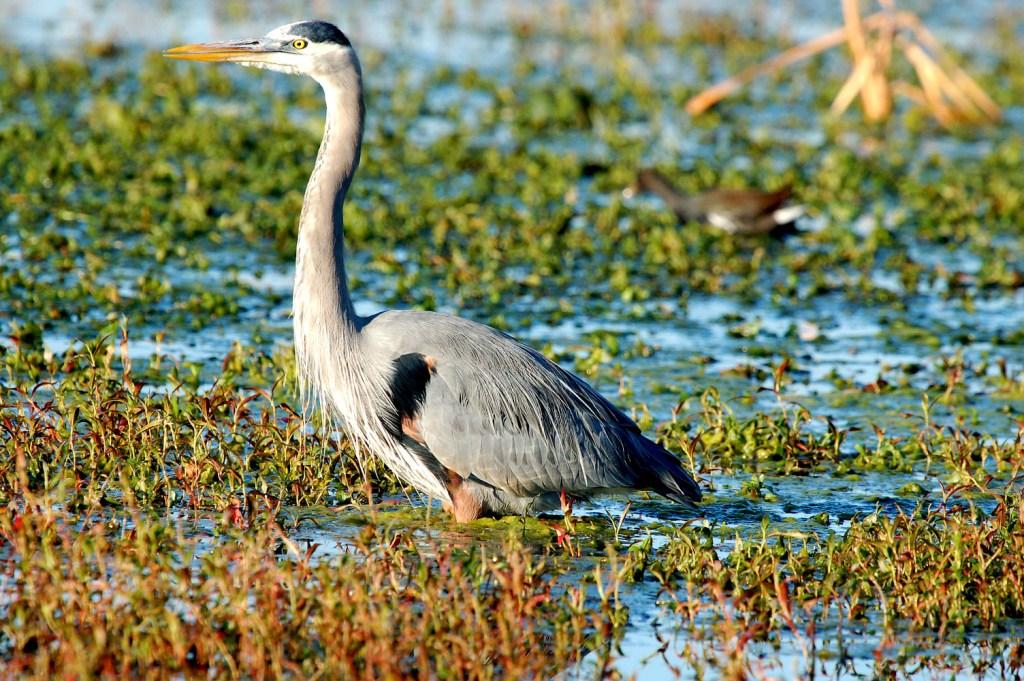
Great Blue Heron at Circle B Bar Reserve

Great Blue Heron at Circle B Bar Reserve

Location: Circle B Bar Ranch (Reserve)
Observation date: 12/20/09
Number of species: 69

Black-bellied Whistling-Duck – 80
Gadwall – 2
Mottled Duck – 8
Blue-winged Teal – 22
Northern Shoveler – 13
Ring-necked Duck – 20
Lesser Scaup – 1
Pied-billed Grebe – 20
American White Pelican – 700
Brown Pelican – 1

Wilson's Snipe at Circle B by Dan

Double-crested Cormorant – 110
Anhinga – 22
American Bittern – 1
Great Blue Heron – 25
Great Egret – 60
Snowy Egret – 1
Little Blue Heron – 8
Tricolored Heron – 7
Cattle Egret – 12
Green Heron – 1
Black-crowned Night-Heron – 4
White Ibis – 205
Glossy Ibis – 15
White-faced Ibis – 1
Roseate Spoonbill – 3

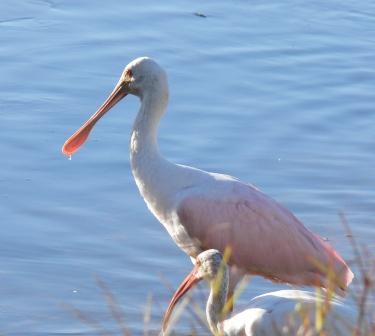
Roseate Spoonbill at Circle B

Roseate Spoonbill at Circle B

Wood Stork – 110
Black Vulture – 10
Turkey Vulture – 25
Osprey – 5
Bald Eagle – 4
Northern Harrier – 1
Red-shouldered Hawk – 4
American Kestrel – 1
Common Moorhen – 55
American Coot – 330
Limpkin – 6
Sandhill Crane – 10
Killdeer – 3
Wilson’s Snipe – 1
Laughing Gull – 25
Ring-billed Gull – 5
Caspian Tern – 21
Mourning Dove – 2

Sandhill Crane at Cirle B by Tommy Tompkins

Belted Kingfisher – 4
Red-headed Woodpecker – 1
Red-bellied Woodpecker – 7
Yellow-bellied Sapsucker – 1
Pileated Woodpecker – 1
Eastern Phoebe – 8
White-eyed Vireo – 1
Blue-headed Vireo – 1
Blue Jay – 2
Fish Crow –  2
Carolina Wren – 1
House Wren – 2
Ruby-crowned Kinglet – 1
Blue-gray Gnatcatcher – 35
American Robin – 2

White Pelicans in Flight - Circle B Bar by Dan

White Pelicans in Flight - Circle B Bar

Northern Mockingbird – 2
Yellow-rumped Warbler – 5
Pine Warbler – 3
Palm Warbler – 15
Black-and-white Warbler – 1
Common Yellowthroat – 2
Savannah Sparrow – 3
Swamp Sparrow – 2
Red-winged Blackbird – 50
Eastern Meadowlark – 4
Boat-tailed Grackle – 5

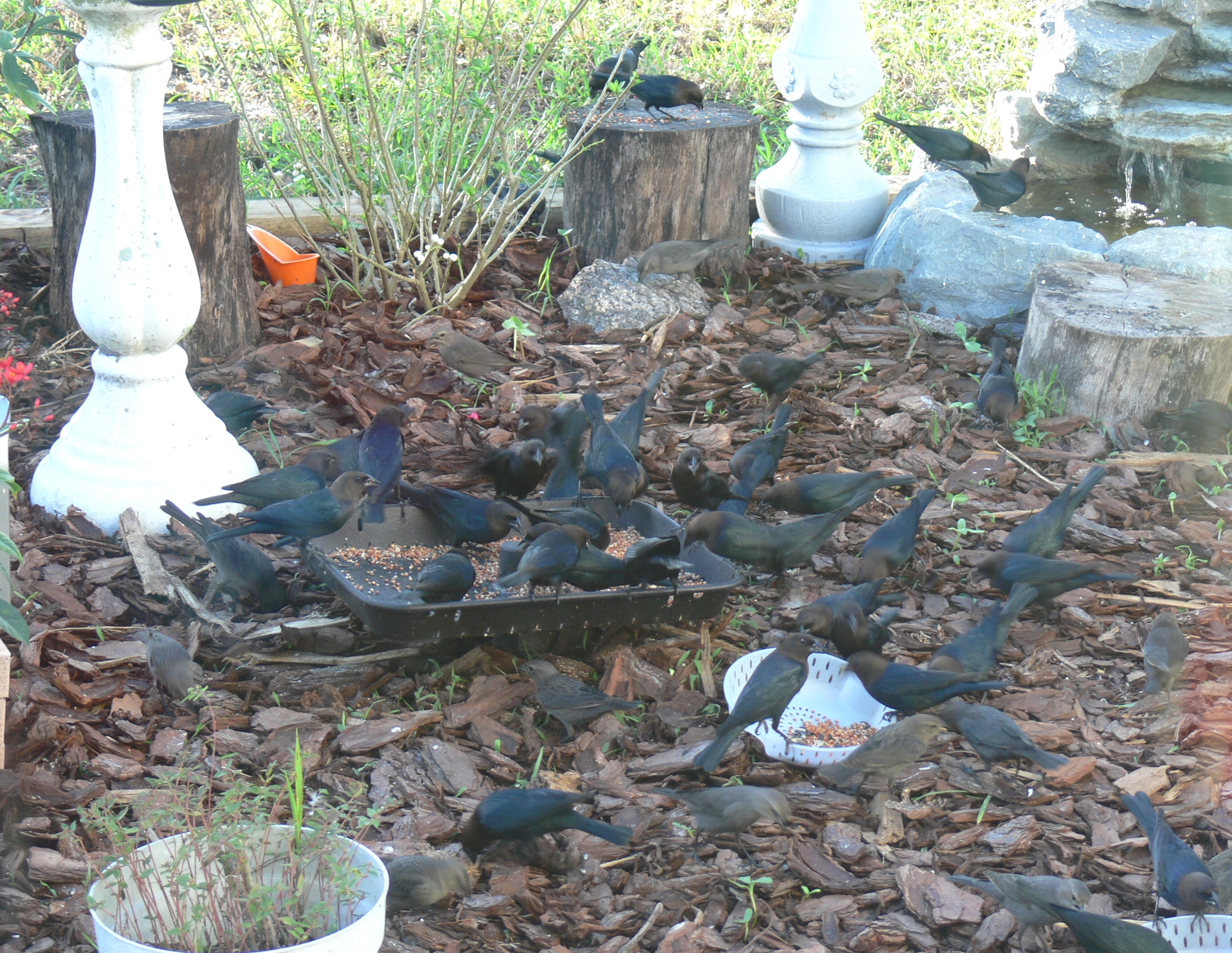
What surprised me out of the lists, no one mentioned all the 100+ Brown-headed Cowbirds in my yard everyday for the last week or so. Since we are only about 3 miles from the Circle B, as the “bird flies,” surely some of them must be there. Then again, the way they are eating up my seed, I may have the whole Polk County Cowbird population feeding here. Dan and I were birding last week at Lake Hollingsworth and Lake Morton. We saw (not on the above lists) 3 Wood Ducks, Mallards, 50+ Ring-necked Ducks, 80+ Ruddy Ducks, and Double-crested Cormorants swimming with the 15-20 White Pelicans.

Christmas Birds – Green

This is the second set of Christmas Birds. This time the Green Birds are featured. Hope you enjoyed the Christmas Birds – Red.

Again the Lord created these birds and colored them for their protection and to show off to their mates. There are many more that could be shown, but time is short this week.

Have you not known? Have you not heard? The everlasting God, the LORD, The Creator of the ends of the earth, Neither faints nor is weary. His understanding is unsearchable. (Isaiah 40:28 NKJV)

*

This slideshow requires JavaScript.

*

Ian’s Bird of the Week – Frill-necked Monarch

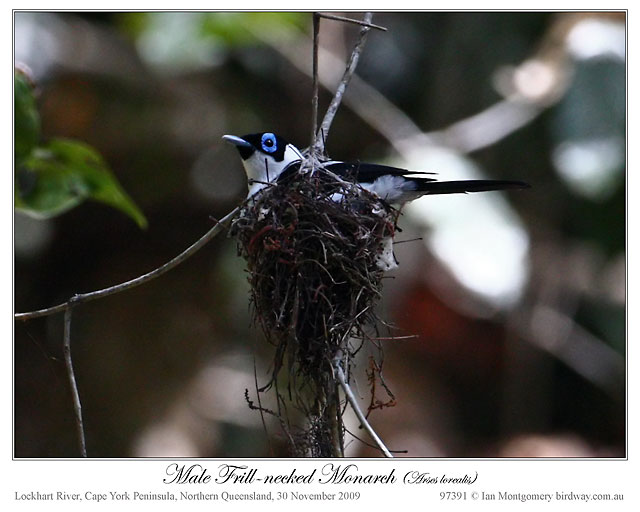
Frill-necked Monarch (Arses lorealis) by Ian

Frill-necked Monarch (Arses lorealis) by Ian

Newsletter – 12/16/2009
Frill-necked Monarch (Arses lorealis) by Ian

Frill-necked Monarch (Arses lorealis) by Ian

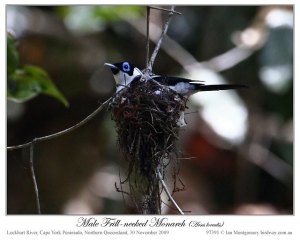
On our recent trip to Cape York Peninsula, we came across several Frill(-neck)ed Monarchs in the Lockhart River – Iron Range district. This is quite similar to the Pied Monarch of the wet tropics of northeastern Queensland, but lacks the black breast band and has a more extensive frill and broader blue eye-rings. I’ve qualified the name as the original Frilled Monarch of northern Cape York Peninsula, Torres Strait and Papua New Guinea (Arses telescopthalmus) has recently been split into the Frilled Monarch of Torres Strait and PNG and the new Frill-necked Monarch (Arses lorealis) of northern Cape York Peninsula.
The bird in the first photo is a male, distinguishable by having black lores and a black bib, or maybe goatee would be more appropriate. It’s doing something with either the white honeydew on the flower stalk or the insects (aphids or scale insects) responsible for the honeydew. More about the ‘something’ in a moment.

Earlier the same day, another Frill-necked Monarch carrying nesting material revealed the location of her nest, hanging, hammock- or swing-like, from a long vine over a creek, a typical location thought to discourage predation by animals such as arboreal snakes. This bird stayed in the nest for a few minutes, left and then, I thought, returned. It was only later, when examining the photos that it I realised that the second bird was her mate. If you look carefully, you can see the white chin (and maybe the pale lores) of the female in the second photo and the black goatee and lores of the male in the third photo.

Frill-necked Monarch

Frill-necked Monarch

The fourth photo was intended to show how precariously the nest was built at the end of at least 3 metres of vine, and, again, it was only later that I noticed that one branch of the vine was broken (in the centre of the photo). It’s still attached above the nest to the other strand of the vine and I wondered whether this attachment was serendipitous or had been done as a repair by the birds. Monarchs are supposed to use cobwebs to glue their nests together. I then wondered whether the bird in the first photograph was feeding on the aphids/scale insects, feeding on the honeydew (as some birds do such as the New Zealand Honeyeater the Tui) or collecting the honeydew as glue – it’s very sticky – for nest construction.

Back at the website, I’ve added photos of:
the Cape York race of the Masked Finch
the northern race of the Black-throated Finch
Wandering Whistling-Duck
White-bellied Sea-Eagle being fed on garfish by the Ferryman at Karumba
Golden-shouldered Parrot
White-faced Robin
Yellow-legged Flycatcher/Flyrobin
So it’s no wonder I’m late with my Christmas cards yet again!

I wish you all a safe and happy Christmas and best wishes for the New Year,
Ian

Ian Montgomery, Birdway Pty Ltd,
454 Forestry Road, Bluewater, Qld 4818
Phone: +61-7 4751 3115
Preferred Email: ian@birdway.com.au
Website: http://birdway.com.au


Lee’s Addition:

And God blessed them, saying, “Be fruitful and multiply, and fill the waters in the seas, and let birds multiply on the earth. (Genesis 1:22 NKJV)

The Frill-necked Monarch (Arses lorealis) is a species of songbird in the Monarchidae family. It is endemic to the rainforests of the northern Cape York Peninsula. It was considered a subspecies of the related Frilled Monarch (Arses telescophthalmus) for many years before being reclassified as a separate species in 1999.

The Frill-necked Monarch is a member of a group of birds termed monarch flycatchers. This group is considered either as a subfamily Monarchinae, together with the fantails as part of the drongo family Dicruridae, or as a family Monarchidae in its own right. Molecular research in the late 1980s and early 1990s revealed the monarchs belong to a large group of mainly Australasian birds known as the Corvida parvorder comprising many tropical and Australian passerines. More recently, the grouping has been refined somewhat as the monarchs have been classified in a ‘Core corvine’ group with the crows and ravens, shrikes, birds of paradise, fantails, drongos and mudnest builders.

Alternative common names include Australian Frilled Monarch, and White-lored Flycatcher.

The Frill-necked Monarch measures around 14 cm (5.5 in) in length, and the neck feathers can become erect into a small frill; the male is predominantly black and white, and can be distinguished from the similar and more common Pied Monarch by its all-white breast-the latter species having a broad black breast band. The throat, nape, shoulders, and rump are white while the wings and head are black. It has a eye-ring of bare skin, and a bright blue wattle. The bill is pale blue-grey and the eyes are dark. The female is similar but lacks the eye-ring and has white lores and a brownish tinged chest.

Breeding season is November to February with one brood raised. The nest is a shallow cup made of vines and sticks, woven together with spider webs and shredded plant material, and decorated with lichen. It is generally sited on a hanging loop of vine well away from the trunk or foliage of a sizeable tree about 2–10 metres (6.6–33 ft) above the ground. Two pink-tinged oval white eggs splotched with lavender and reddish-brown are laid measuring 19 mm x 14 mm.

Video of a Frilled Monarch (Arses telescopthalmus) by Keith.

Error
This video doesn’t exist

Christmas Birds – Red

Now that Christmas is less than a week away, it’s time to see some of the birds that have “traditional” Christmas colors. Today’s color will be birds that have some sort of red on them. Plans are for other colors to be shown during the week. When the Lord created the birds (fowls), He used many different colors, most for the protection of the bird (to blend in) or for display to attract a mate (to stand out).

We trust you enjoy the photos and that you are blessed as you consider the bird’s Creator, Who came to earth as a babe in a manger, so that He might redeem us from our sin. “All things were made through him, and without him was not any thing made that was made. (John 1:3)

But made himself of no reputation, and took upon him the form of a servant, and was made in the likeness of men: And being found in fashion as a man, he humbled himself, and became obedient unto death, even the death of the cross. (Philippians 2:7-8 KJV)

*

This slideshow requires JavaScript.

*

Birds of the Bible – Jerusalem and Bethlehem Area

I thought it would be interesting to find out about what birds Mary and Joseph might have seen on their journey from Nazareth to Bethlehem to register for the census.

And it came to pass in those days that a decree went out from Caesar Augustus that all the world should be registered. This census first took place while Quirinius was governing Syria. So all went to be registered, everyone to his own city. Joseph also went up from Galilee, out of the city of Nazareth, into Judea, to the city of David, which is called Bethlehem, because he was of the house and lineage of David, to be registered with Mary, his betrothed wife, who was with child. (Luke 2:1-5 NKJV)

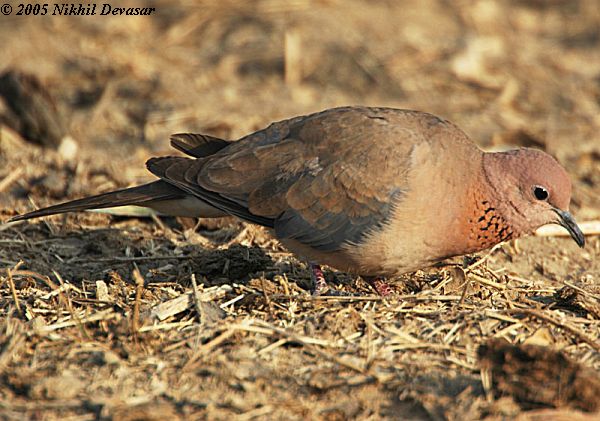
Laughing Dove (Stigmatopelia senegalensis) by Nikhil

Laughing Dove (Stigmatopelia senegalensis) by Nikhil

After several hours searching the internet, I still do not have a clear list of the birds in that area. Here, in America, you can find a bird list of about every park or area around. In Jerusalem, 10 kilometers or 6 miles from Bethlehem, I couldn’t find any lists. In Bethlehem, which is now in the West Bank, no list were found. Birds do not care about the political boundaries.  The quote below from the Jerusalem Bird Observatory was the best clue obtained. The lists for all the birds of Israel (over 500) can be found, but not for this specific area.

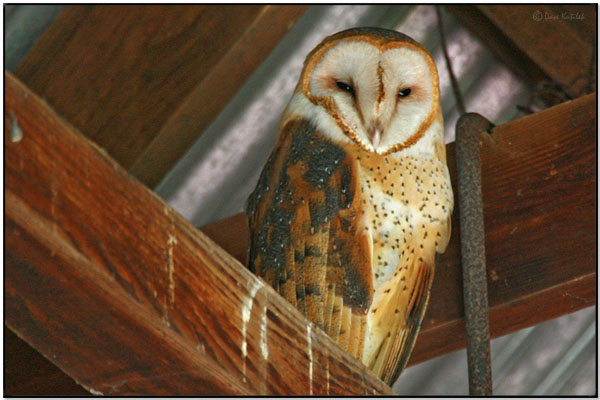
Western Barn Owl (Tyto alba) by Daves BirdingPix

Western Barn Owl (Tyto alba) by Daves BirdingPix

“Moving to central Israel, the Jerusalem region, though more famous for its religious and historical sites, can be interesting for birdwatchers too, with temperate wooded and rocky slopes to the west and the arid Judean Desert to the east. Typical forest birds, many also common in town parks and gardens, include blue jays, Syrian woodpeckers, several types of warblers and doves, song thrushes, assorted shrikes, blackbirds, robins, hoopoes, sunbirds, bulbuls, kestrels, hobbies, chukars and Scops and barn owls. Lovely areas for hiking and birdwatching include the forested mountainous area just south and west of Jerusalem around villages such as Nes Harim, Ora and Sataf, and forested areas further south near the town of Beit Shemesh and the Beit Guvrin archaeological park.

Eurasian Hoopoe (Upupa epops) by Ian

The Jerusalem Bird Observatory (JBO) is located in the landscaped gardens between the Knesset (Israel`s parliament) and the Supreme Court, though you need to bring ID and be patient with security searches. The JBO holds guided birding walks in English every Monday afternoon and does ringing there too. The Israeli capital is also home to prime nesting sites for the endangered lesser kestrel. The Musrara neighbourhood in particular is home to several nests and the Society for the Protection of Nature in Israel (SPNI) occasionally arranges walking tours of the area.” From Fatbirder

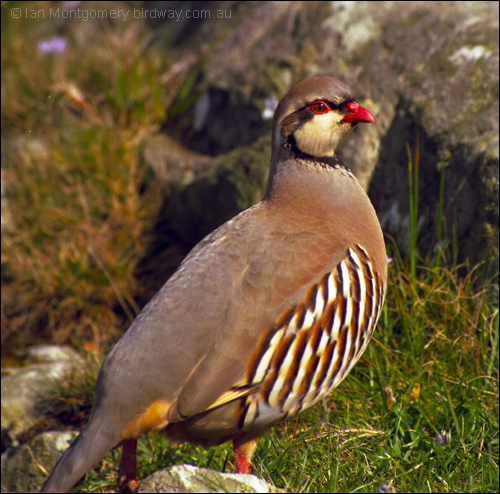
Chukar Partridge (Alectoris chukar) by Ian

In the list above, the birds bolded, are in the bird families mentioned in the Bible. There are 532 birds listed in the Israel Checklist of which 110 are residents and most of the others are winter visitors, having migrated there from elsewhere. Of the residents, there are 4 Doves – Rock Dove (Rock Pigeon) , Eurasian Collared Dove, Laughing Dove, and the Namaqua Dove. The Eurasian Hoopoe and Barn Owls are also residents. The Quail family includes the Chukar and two other residents, the Black Francolin and the Sand Partridge.

It is realized in over 2,000 years, the birds have changed within their “kinds”, but these photos, may give an indication of what Mary and Joseph may have seen on their journey and in the place where the Lord Jesus Christ was born and lain in a manger.

So it was, that while they were there, the days were completed for her to be delivered. And she brought forth her firstborn Son, and wrapped Him in swaddling cloths, and laid Him in a manger, because there was no room for them in the inn. (Luke 2:6-7 NKJV)

May the Lord bless you during the Christmas celebrations of the Birth of Our Savior, the Lord Jesus Christ, the Creator of the world.
The Gospel Message.

Updated – Hoatzin

Updated 12/17/09

I just updated the Hoatzin’s article “Interesting Birds – Hoatzin”. Two videos were added to show this amazing bird. One is repeated here and both are on the Hoatzin page. To find out more aboat this strange bird that the Lord created – Click Here.

Ian’s Bird of the Week – Golden-shouldered Parrot

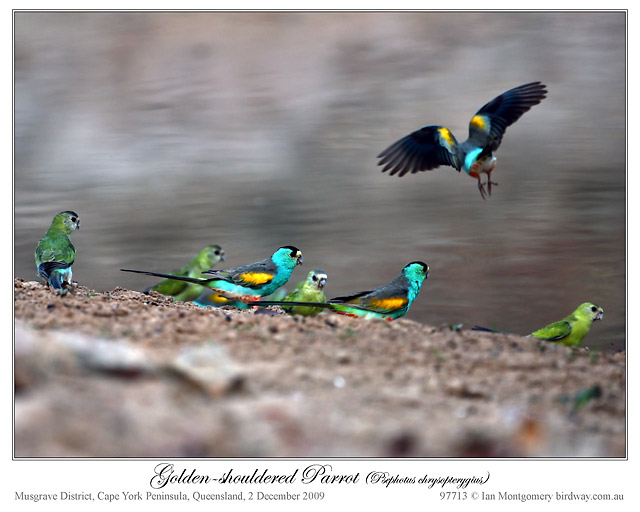
Golden-shouldered Parrot (Psephotus chrysopterygius) by Ian

Golden-shouldered Parrot (Psephotus chrysopterygius) by Ian

Newsletter: 12/8/2009

The Hooded Parrot featured as bird of the week at the end September following our encounter with some at Pine Creek in the Northern Territory. This week we have its rarer, and just as beautiful, close relative the Golden-shouldered Parrot of Cape York Peninsula, which we saw last week on our way back from Iron Range. We were shown them coming in to drink at a dam at sunrise by Sue Shephard of Artemis Station south of Musgrave.

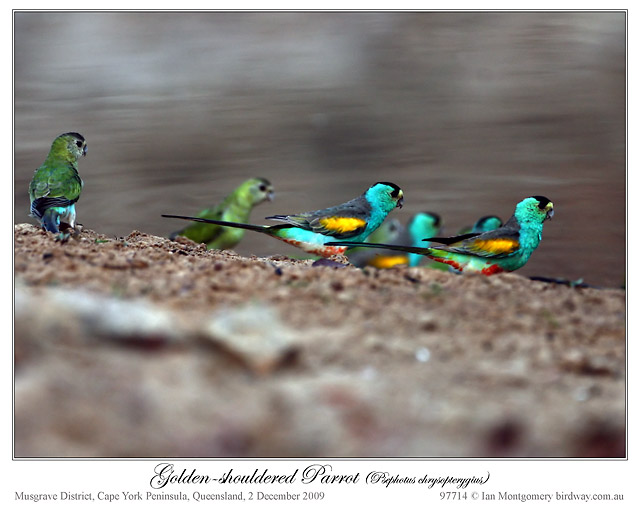
Golden-shouldered Parrot (Psephotus chrysopterygius) by Ian

Golden-shouldered Parrot (Psephotus chrysopterygius) by Ian

The two species look very similar. Male Golden-shouldered Parrots have narrower black caps, not extending past the eye, a yellowish forehead and, despite their name, a smaller golden patch on the wing. These shoulder patches are very obvious in flight, as in the bird top right in the first photo, and presumably act, along with the turquoise rump, as signals to other members of the species. At about 26cm/10in in length, these are both quite small parrots. Like the extinct, closely related, Paradise Parrot of southeastern Queensland, all three species nest, or nested, in terrestrial termite mounds.

The Golden-shouldered Parrot used to be quite widespread on Cape York Peninsula. It is now found only in two areas: in the Morehead River catchment south of Musgrave (where we saw them) and in Staaten River National Park farther to the southwest. Population estimates range up to 1,000 pairs and the species, classified as endangered, is now the subject of a national recovery plan. The good news is that in the last decade the contraction of the range appears to have stopped and the population stabilized, owing to active conservation measures being taken by the holders of grazing properties in the Morehead River catchment, notably Tom and Sue Shephard of Artemis Station. Staaten River National Park is inaccessible by road, so monitoring and conservation there pose particular challenges.

Links:
Hooded Parrot
Golden-shouldered Parrot Recovery Plan

Best wishes,
Ian

Ian Montgomery, Birdway Pty Ltd,
454 Forestry Road, Bluewater, Qld 4818
Phone: +61-7 4751 3115
Preferred Email: ian@birdway.com.au
Website: http://birdway.com.au


Lee’s Addition:
Another neat bird that Ian has captured in photos for us to enjoy. Thanks again, Ian.

He comes from the north as golden splendor; With God is awesome majesty. (Job 37:22 NKJV)

The Golden-shouldered Parrot is in the Psittacidae Family (Parrots) of the Psittaciformes Order (New Zealand Parrots, Cockatoos, and Parrots).

The adult male is mainly blue and has a characteristic yellow over the shoulder area. It has a black cap and pale yellow frontal band. It has a pinkish lower belly, thighs and undertail-coverts. It has a Grey-brown lower back. Adult female are mainly dull greenish-yellow, and have a broad cream bar on the underside of the wings. Juveniles are similar to the adult female. (Wikipedia)

To see more about the Golden-shouldered Parrot:
Nice Video at Internet Bird Collection
By Wikipedia
By Bird Life International

Birdwatching at Home – December 2009

Brown-headed Cowbird (Molothrus ater)

Brown-headed Cowbird (Molothrus ater)

December is that busy time of the year when you don’t get to do as much birdwatching as you would like to do. There are so many other things going on and then we had several days where it rained or was overcast. But, all is not lost. There is always the window to look out. Recently we increased the size of the feeding area in our small backyard and now a few birds are coming. Until this month, about all that showed up were the Mourning Doves, the Boat-tailed Grackles, our local Sandhill Crane and of course the Squirrels. In the last few weeks 11 White Ibises, 4 Palm Warblers, our Northern Mockingbird, one Yellow-headed Blackbird and three Red-winged Blackbirds and two Eurasian Collared-Doves came in to check out the feeders. A Red-shouldered Hawk scattered the birds one morning. Today and yesterday, we have had an invasion (75+) of Brown-headed Cowbirds and one Red-winged Blackbird. The problem we have is that our yard is up against a major road and it spooks the birds, so even getting the birds that most people don’t care for is a delight for us. These birds are the ones who like to empty your feeders in “no time flat”.

Consider the ravens, for they neither sow nor reap, which have neither storehouse nor barn; and God feeds them. Of how much more value are you than the birds? (Luke 12:24 NKJV)

Brown-headed Cowbirds

Brown-headed Cowbirds

What a promise to the birds and to us. God feeds them most time by the plants and bugs in the fields, but he also uses our feeders and water to supply their needs. The same is true for people who are righteous. The Bible says in Psalms 37:25-28, “I have been young, and now am old; Yet I have not seen the righteous forsaken, Nor his descendants begging bread. He is ever merciful, and lends; And his descendants are blessed. Depart from evil, and do good; And dwell forevermore. For the LORD loves justice, And does not forsake His saints; They are preserved forever, But the descendants of the wicked shall be cut off. (NKJV) The Lord helps His own by seeing they have jobs and their needs met. If times get hard and the job is gone, the Lord will lay it on someones heart to help them out. He has promised to meet our “needs” not our “wants.”

Birds in Hymns – The Friendly Beasts

Mourning Dove (Zenaida macroura) by Quy Tran

Mourning Dove (Zenaida macroura) by Quy Tran

So it was, that while they were there, the days were completed for her to be delivered. And she brought forth her firstborn Son, and wrapped Him in swaddling cloths, and laid Him in a manger, because there was no room for them in the inn. (Luke 2:6-7 NKJV)

Words: Un­known au­thor, 12th Cen­tu­ry; trans­lat­ed from French to Engl­ish by an anon­y­mous trans­lat­or.

Music: Or­i­ent­is Par­ti­bus, med­ie­val French mel­o­dy

Jesus, our Brother, strong and good,
Was humbly born in a stable rude,
And the friendly beasts around Him stood,
Jesus, our Brother, strong and good.

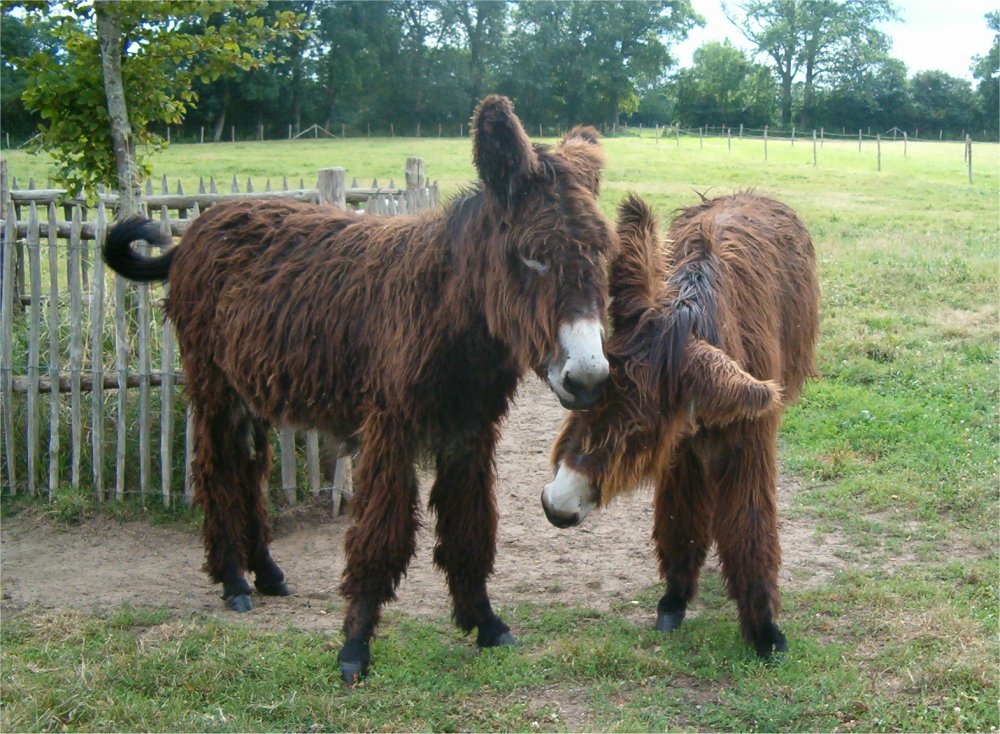
“I,” said the donkey, shaggy and brown,
“I carried His mother uphill and down,
I carried His mother to Bethlehem town;
I,” said the donkey, shaggy and brown.

“I,” said the cow, all white and red,
“I gave Him my manger for His bed,
I gave Him hay to pillow His head;
I,” said the cow, all white and red.

“I,” said the sheep with curly horn,
“I gave Him my wool for His blanket warm,
He wore my coat on Christmas morn;
I,” said the sheep with curly horn.

“I,” said the dove, from the rafters high,
“I cooed Him to sleep that He should not cry,
We cooed Him to sleep, my mate and I;
I,” said the dove, from the rafters high.

Thus all the beasts, by some good spell,
In the stable dark were glad to tell
Of the gifts they gave Emmanuel,
The gifts they gave Emmanuel.

Donkey - Shaky and Brown

Donkey - Shaggy and Brown

Most information from The Cyber Hymnal

See ~ Wordless Birds

More ~ Birds in Hymns

*

Interesting Things – Stinking Poison Bird – Pitohui

Thinking

But the unbelieving Jews stirred up the Gentiles and poisoned their minds against the brethren. (Acts 14:2)

Another interesting article from Creation Moments:

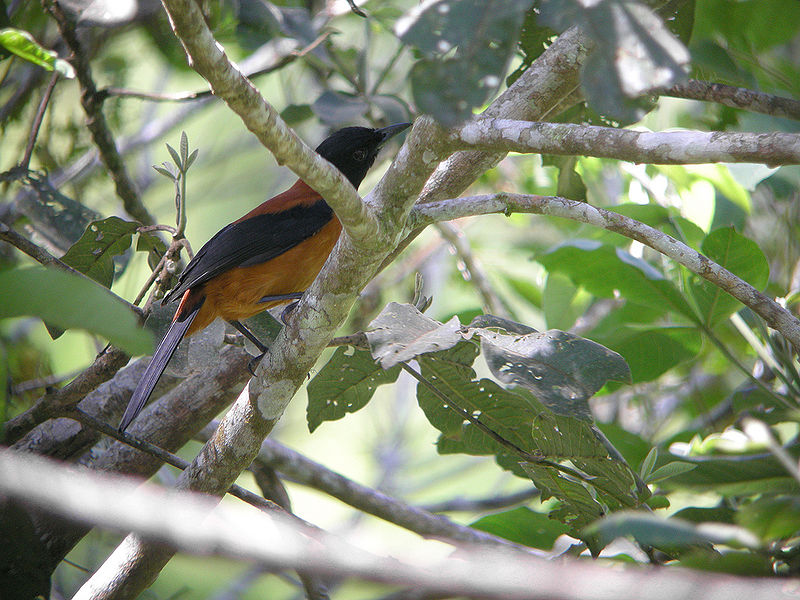
“The hooded pitohui is an evil-smelling, blue jay-sized bird that is native to New Guinea. The bird has been known to science since 1827, but they held a secret that only began to be uncovered in 1989.

Hooded Pitohui (Pitohui dichrous) ©Wikipedia

Hooded Pitohui (Pitohui dichrous) ©Wikipedia

An American graduate student made the discovery while studying another local bird – the bird of paradise. Unfortunately, hooded pitohuis kept getting caught in his nets. As he released the unwanted pitohuis, they would claw and peck at him. After he released the birds, he licked the wounds they had caused. As a result, his mouth began to burn and finally became numb for several hours. This led the graduate student to send dead hooded pitohuis to the National Institutes of Health for further study. The poison they produce was finally identified as one of the most poisonous substances known. It is hundreds of times more poisonous than strychnine. The amount of poison in one bird can kill 500 mice. Most amazing is that only one other creature produces the same poison, the poison dart frog of Central America.

Those who believe in evolution maintain that the ability to produce the poison must have evolved twice. But it’s not that simple. Not only do both bird and frog, half a world apart, have to evolve this unlikely ability twice, but they both had to evolve immunity to their own poison. Ultimately, evolution is a faith. It is a faith that is poisonous to Christianity because it makes death natural rather than a result of the first Adam’s sin. And without the fact of the first Adam, there is no need for the Second Adam, Jesus Christ.

Prayer: Lord, I thank You for Your victory over sin, death and the devil. Amen.”

References: Natural History, 2/94, pp.4 8.

Copyright © 2009 Creation Moments, Inc., PO Box 839, Foley, MN  56329, www.creationmoments.com.

Hooded Pitohui are in the Pachycephalidae – Whistlers and Allies Family in the Passeriformes Order

See AvianWeb.Com’s – Hooded Pitohui

Hooded Pitohui videos by Keith Blomerley