Interesting Things – Reshaped Wings, Forest Birds, Evolution?

I came across an interesting article in Science News, September 12, 2009, called, “Rapid evolution may be reshaping forest birds’ wings,” by Susan Millius. Subtitle – “Trend for pointier appendages in heavily logged boreal forests, with blunter, rounder ones in reforested parts of New England.”

Boreal Chickadee (Poecile hudsonicus) by Daves BirdingPix

Boreal Chickadee (Poecile hudsonicus) by Daves BirdingPix

Records have been kept on birds that live in the boreal forest of Canada and parts of New England for the past centrury. These areas were heavily logged and left bare or reforested as in parts of New England.

When the records were analyzed, a trend developed. Wings of forest birds where the trees were logged and left bare were longer (approximately by 2 cm) and more pointed, whereas, the forest birds that had the trees replanted and the forest renewed, had shorter (by 2 cm) and rounder wings. They are comparing the same species of birds in both places.

“Mature-woodland species showed the clearest change in pointiness regardless of body size, Desrochers said. During the past century, their long wing feathers, or primary feathers, overall gained about 2.23 millimeters on average. That uptick roughly matches the magnitude of differences between sexes. For example, a female boreal chickadee’s wing today is about the length of a male’s in 1900, he said.

Desrochers also included more southerly species on his list, such as the scarlet tanager and hooded warbler. These birds had experienced a very different century. The landscape of New England, deforested during previous years, rebounded into green woodland again. And here, Desrochers found a trend back toward rounder wing tips. The eight mature-woodland species he studied typically had lost, on average, some 2.37 millimeters on those long primary feathers.

These species aren’t passive victims of environmental change, Desrochers said. As bird species face new challenges, they respond to the extent they can. “Birds are not like sitting ducks,” he said.”

David Winkler said, “It’s surprising that there’s so much change so fast.” He also noted, “doesn’t explicitly address whether the wings change by evolution or by some other process. Winkler said that in observing changes and invoking evolution, “we need to be careful.”
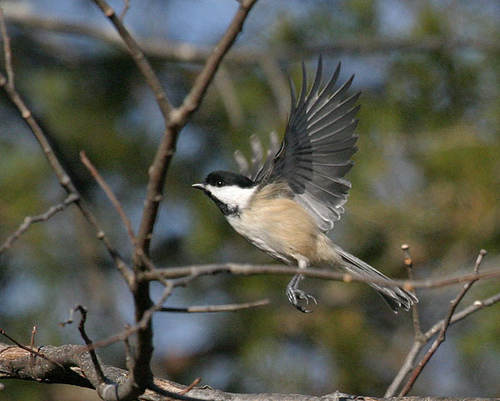
Black-capped Chickadee (Poecile atricapillus) by Kent Nickell

Black-capped Chickadee (Poecile atricapillus) by Kent Nickell

Well, of course, those statements caught my interest. I believe in a Creator who supplies his creation with tremendous capability to adapt and have their needs supplied. I believe in natural selection and variation, but not something turning into something else or “macro-evolution.” I think the bird changed “by some other process,” namely, God’s protective watch-care.

Reading through the comments left, several were of note:

“I wonder what the “evolution might be directed by the species itself” refers to. It’s obvious here that the evolutionary selection of birds with appropriately shaped wings is caused by external forces, nothing the bird is doing. Those birds in areas that are opened up which have slightly longer wings are able to raise more chicks, while those in areas that are being reforested that have more rounded wings are able to raise more chicks. The reason is that distance flying is done more efficiently with longer (and therefore pointier) wings, while maneuverability is required in heavily branched areas and is done with shorter wings.

As for whether the wings are being worn out by contact with branches, this would be evident because the wear at the tip would be obvious. Feather shafts don’t go the whole way to the end of the feather, so if the tips were worn off, it would be noticed”  by DM (very good comment)

“Could the shorter wings of birds in denser forests be due to greater feather wear from brushing against branches and foliage? Maybe all wing feathers start out pointy and simply wear into a rounded shape.” by KC

More searching on the internet turned up a remark about this article at Answers in Genesis with this very interesting statement:  “The report notes that “as bird species face new challenges, they respond to the extent they can.” This comports with the creationist view: God included a range of genetic information and adaptability in organisms to allow them to live properly in a range of habitats.

The scientists aren’t certain how significant a role genes play in the wing tip changes. Still, Cornell University ornithologist David Winkler noted, “It’s surprising that there’s so much change so fast,” and Desrochers calls “rapid evolution” the most direct explanation. The speed of the changes indicates how the created kinds could have speciated rapidly after the Flood. Centuries of accumulated changes between some populations from the same created kinds resulted in sexual incompatibility. However, in other kinds (such as canids; see above), populations retain the ability even if interbreeding is uncommon.”

Consider the ravens: they neither sow nor reap, they have neither storehouse nor barn, and yet God feeds them. Of how much more value are you than the birds! (Luke 12:24 ESV)

God is providing for the birds and we know He will provide for us, especially if we belong to Him.

Bolding is by Lee.

When I Consider! – Loon

When I Consider!

When I Consider!

“Evidence From Biology”

The loon is designed quite differently than almost all other birds. While the bodies of most birds are designed as light and aerodynamic as possible, the loon’s body is heavier, allowing it to sink until only its head is above water. It controls its ability to float by inflating or deflating tiny air sacs under its skin. When flying at high altitude, where the air is thin, the loon can conserve oxygen by limiting the flow of blood to its massive leg muscles.

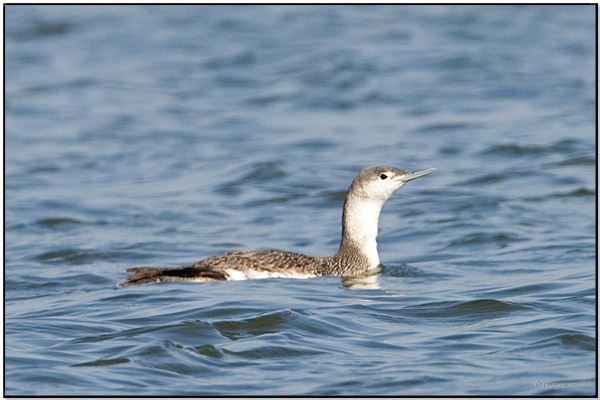
Red-throated Loon (Gavia stellata) by Daves BirdingPix

Red-throated Loon (Gavia stellata) by Daves BirdingPix

The loon also has a perfectly developed reflex which limits the flow of blood to its wings and digestive tract during underwater dives. This allows the loon to hold its breath for long periods of time. Although an average dive lasts about 40 seconds, three-minute dives that cover 300-400 yards are quite common. Astounding dives have been documented where loons have held their breath for as long as 15 minutes while swimming underwater for over 2 miles.

Both common sense and the laws of probability tell us that these many unique abilities could not have evolved by chance processes such as random mutations. The loon could not have developed its unique diving ability in some step-at-a-time manner. It would have starved to death long before it caught its first fish. The system had to work perfectly from the beginning.”

Great Northern Loon (Gavia immer) by J Fenton

Great Northern Loon (Gavia immer) by J Fenton

Character Sketches, Vol III. p.49

For thou art great, and doest wondrous things: thou art God alone. (Psalms 86:10 KJV)

From September 18, A Closer Look at the Evidence, by Richard and Tina Kleiss
More – “When I Consider!


Lee’s Additions:

“any of five species of diving birds constituting the genus Gavia, family Gaviidae. Loons were formerly included, along with the grebes, to which they bear a superficial resemblance, in the order Colymbiformes, but they are considered to constitute their own separate order. Loons range in length from 60 to 90 cm (2 to 3 feet). Characteristics include a strong tapered bill, small pointed wings, webs between the front three toes, and legs placed far back on the body, which makes walking awkward. Loons have thick plumage that is mainly black or gray above and white below. During the breeding season the dorsal plumage is patterned with white markings, except in the red-throated loon (Gavia stellata), which during the summer is distinguished by a reddish brown throat patch. In winter the red-throated loon develops white speckling on the back, while the other species lose these markings.” (Britannica Online)
“Loons are excellent swimmers, using their feet to propel themselves above and under water and their wings for assistance. Because their feet are far back on the body, loons are poorly adapted to moving on land. They usually avoid going onto land, except when nesting.

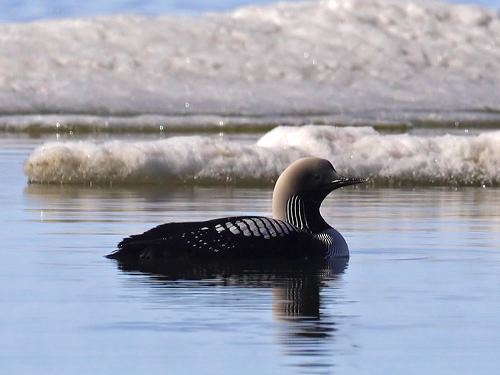
Pacific Loon (Gavia pacifica) by Ian

Pacific Loon (Gavia pacifica) by Ian

All loons are decent fliers, though the larger species have some difficulty taking off and thus must swim into the wind to pick up enough velocity to become airborne. Only the Red-throated Diver (G. stellata) can take off from land. Once airborne, their considerable stamina allows them to migrate long distances southwards in winter, where they reside in coastal waters. Loons can live as long as 30 years.”

“The loons are the size of a large duck or small goose, which they somewhat resemble in shape when swimming. Like in these but unlike in coots (which are Rallidae) and grebes (Colymbiformes), their toes are connected by webbing. They may be confused even more readily with cormorants (Phalacrocoracidae), which are not too distant relatives of divers and like them are heaviset birds whose bellies – unlike those of ducks and geese – are submerged when swimming. Flying loons resemble a plump goose with a seagull’s wings, which seem quite small in proportion to the bulky body. They hold their head slightly pointing upwards during swimming, less so than cormorants do, and in flight they let the head decidedly droop down compared to all other aquatic birds of comparable habitus.

Males and females do not differ in plumage. Males are a bit larger on average, but usually this is only conspicuous when directly comparing the two parents. Their plumage is largely patterned black-and-white in summer, with grey on the head and neck in some species, and a white belly in all of them. This resembles many sea-ducks (Merginae) a lot – notably the smaller goldeneyes (Bucephala) – but is distinct from most cormorants which rarely have white feathers, and if so usually as large rounded patches rather than delicate patterns. All species of divers have a spear-shaped bill.”(Wikipedia)

See Also:
Peterson’s Field Guide Video Series on the Common Loon (Now the Great Northern Loon)
Gaviidae – Loons
Loon from Wikipedia
An interesting article in The Wilson Bulletin dated September 1947 – “The Deep Diving of the Loon and Old-Squaw and its Mechanism

Birds in Hymns – Sweet And Clear The Birds Are Singing

Based on:

He is not here: for he is risen, as he said. Come, see the place where the Lord lay. (Matthew 28:6 KJV)

Words: Unknown, in the Hymnal for American Youth by H Augustine Smith, 1919
Music: Canticles, by Frederick F Bullard, 1902 (1864-1904)

Wood Duck

Sweet and clear the birds are singing,
At Easter dawn.
Hark, O hear, the bells are ringing,
On Easter morn!
And the song that they sing,
That good news we hear them ring,
Is “Christ the Lord is risen, is risen.”

Birds, your hearts give to your singing,
And feel no fear.
Bells, fill all the air with ringing,
Let all men hear!
For the whole world is glad,
And with beauty new is clad;
Now Christ the Lord is risen, is risen.

Northern Parula (Parula americana) by Reinier Munguia

Northern Parula (Parula americana) by Reinier Munguia

Leaf and bud, as now, were growing
In Galilee;
Lilies Jesus loved were blowing
As fair to see;
When the first Easter morn
Woke the world to joy new born,
For Christ the Lord is risen, was risen.

Easter buds will soon be flowers,
Fragrant and gay;
Winter’s snows give place to showers,
And night to day;
Hope and joy come again,
Life and light forever reign;
Yea! Christ the Lord is risen, is risen!

Most information from The Cyber Hymnal

See ~ Wordless Birds

More ~ Birds in Hymns

*

Birds in Hymns – O Bless the Lord, My Soul

Birds in Hymns – O Bless the Lord, My Soul by James Montgomery

Based on Psalms 103

A Psalm of David. Bless the LORD, O my soul: and all that is within me, bless his holy name. Bless the LORD, O my soul, and forget not all his benefits: (Psalms 103:1-2 KJV)

Words: James Montgomery, in Se­lect­ion of Psalms and Hymns, by Thom­as Cot­ter­ill, 1819.
Music: St. Thom­as (Will­iams), Aar­on Will­iams, The New Un­i­vers­al Psalm­o­dist, 1770

O Bless the Lord, My Soul

Bald Eagle (Haliaeetus leucocephalus)  by Quy Tran

Bald Eagle (Haliaeetus leucocephalus) by Quy Tran

O bless the Lord, my soul!
His grace to thee proclaim!
And all that is within me join
To bless His holy Name!

O bless the Lord, my soul!
His mercies bear in mind!
Forget not all His benefits!
The Lord to thee is kind.

He will not always chide;
He will with patience wait;
His wrath is ever slow to rise,
And ready to abate.

He pardons all thy sins;
Prolongs thy feeble breath;
He healeth thine infirmities,
And ransoms thee from death.

He clothes thee with His love;
Upholds thee with His truth;
And like the eagle He renews
The vigor of thy youth.

Then bless His holy Name,
Whose grace hath made thee whole,
Whose loving kindness crowns thy days!
O bless the Lord, my soul!


Who satisfieth thy mouth with good things; so that thy youth is renewed like the eagle’s. (Psalms 103:5 KJV)

See:
Eagles by Linda Ozirney

Most information from The Cyber Hymnal

See ~ Wordless Birds

More ~ Birds in Hymns

*

Birdwatching 09-18-09 at Circle B Bar Reserve

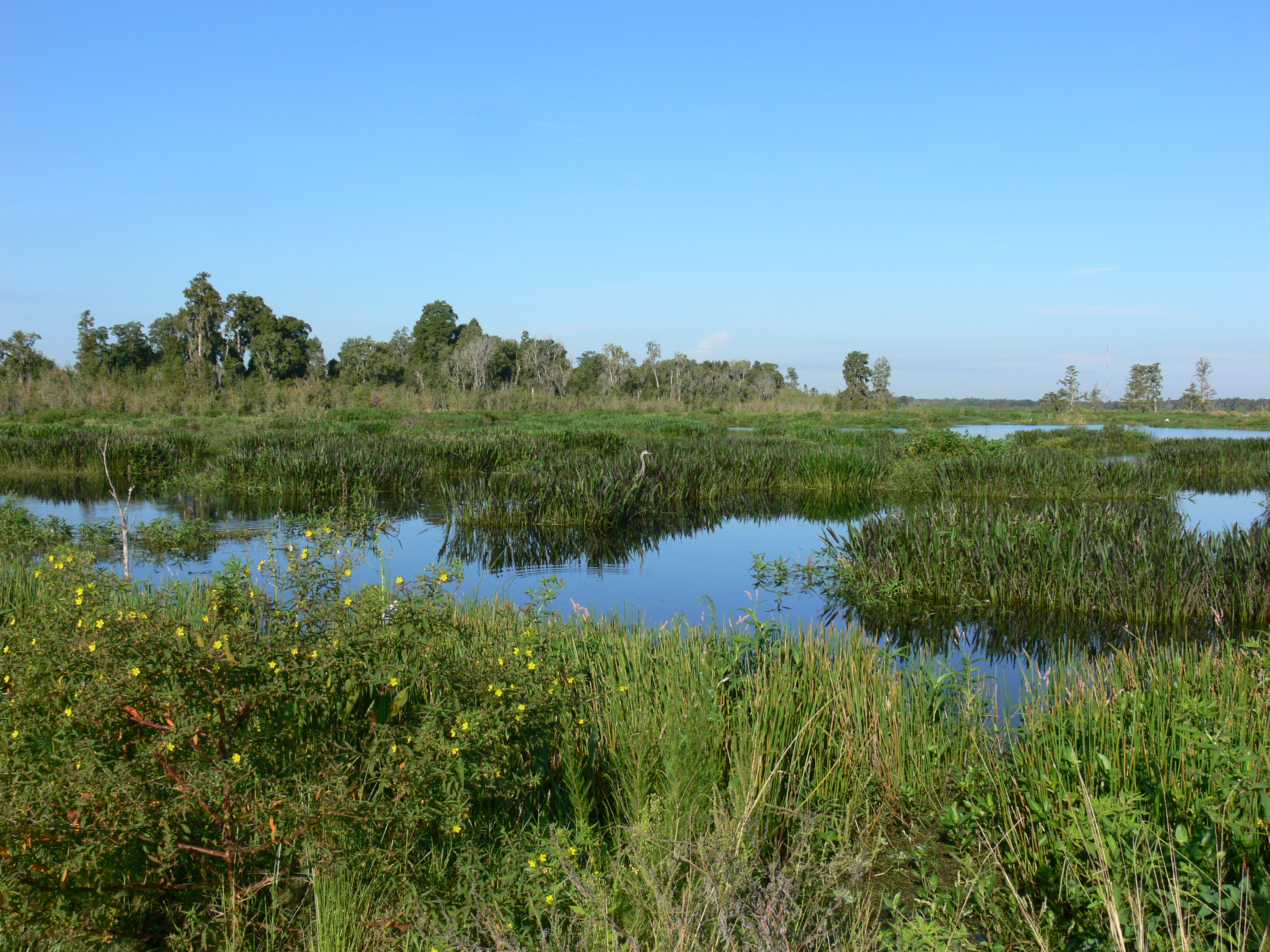
Looking out across part of Circle B  by Lee

Looking out across part of Circle B by Lee

Yesterday, Dan and I went out to the Circle B Bar Reserve again. As you can see it was a nice clear day. We had not been there for awhile due to the summer heat and many birds leave and head north for the summer. There were plenty of birds to see, but most have not arrived back yet. The Black-bellied Whistling-ducks were back (at least I didn’t see any last time we were there). One of the resident Bald Eagles made several low passes over the area and stirred many of the birds into the air. As they scattered, they passed right over us, whistling as they passed. There were many young Common Moorhens and at least one batch of very young ones with a parent. All in all, we saw 35 species and a few unknowns that were mostly heard.

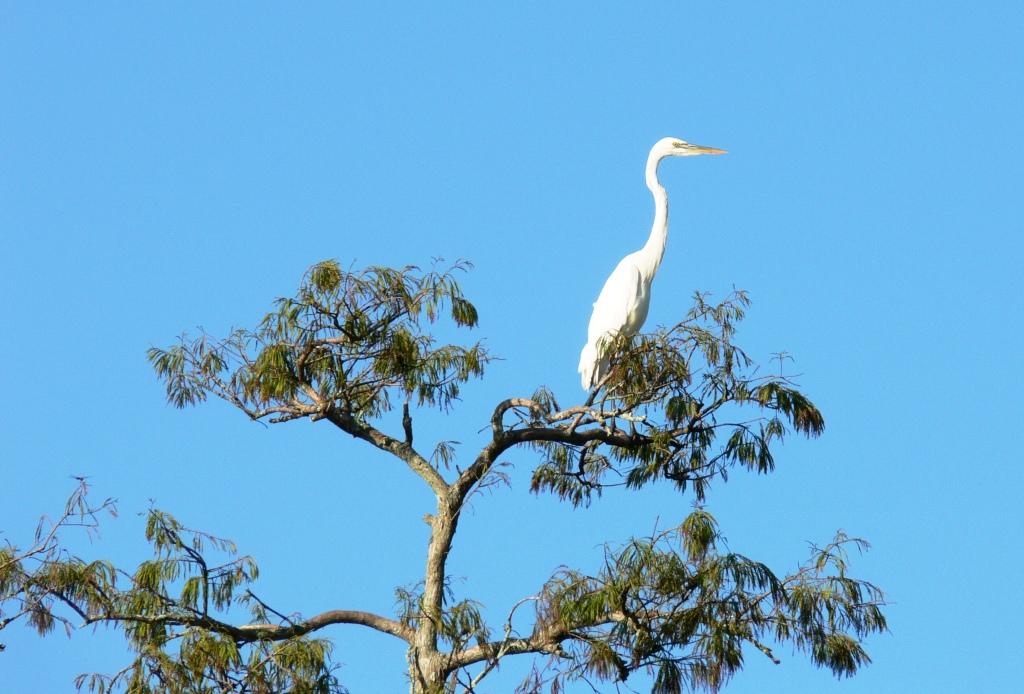
Western Great Egret (Ardea alba) Circle B by Lee

Western Great Egret (Ardea alba) Circle B by Lee

Here is a list of what we saw or heard in the order they were found:
Muscovy Ducks (just outside the park), 3 Sandhill Cranes, Mourning Doves, Black Vultures, Turkey Vultures, Ospreys, Carolina Wren, Pileated Woodpeckers, Tufted Titmouse, Great Blue Herons, Great Egrets, Red-Bellied Woodpecker, 2 Bald Eagles, Black-Bellied Whistling Ducks, Cattle Egrets, Pied-billed Grebe, Common Moorhens, Purple Gallinules, 2 Northern Harrier, 2 Red-shouldered Hawks, Little Blue Herons, Red-winged Blackbirds, Killdeer, Glossy Ibises, White Ibises, Snowy Egret, Fish Crows, Anhingas, 1 Double-crested Cormorant, Green Heron, Belted Kingfishers, Blue Jays, 2 Cardinals (M/F), Blue-grey Gnatcatcher, 5 or 6 Northern Bob-Whites. I also spotted a warbler with yellow and black, but it was too quick to get a good ID.

*

This slideshow requires JavaScript.

*

All Slide shows can be clicked on for a larger view.

For other birdwatching trips to the Circle B Bar Reserve

*

Ian’s Bird of the Week – Banded Fruit-Dove

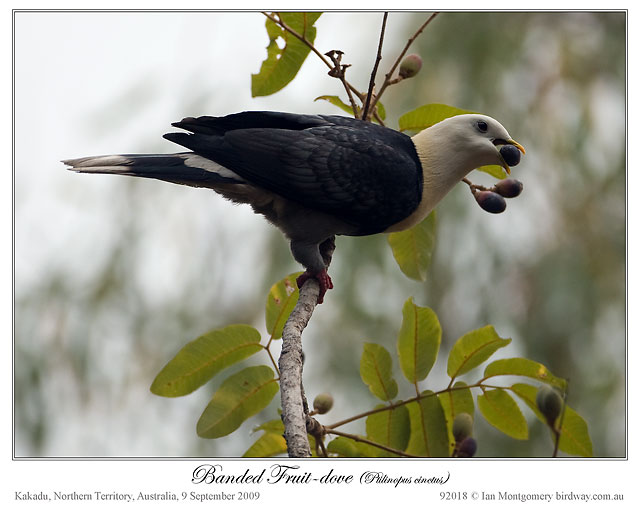
Banded Fruit Dove (Ptilinopus cinctus) by Ian

Banded Fruit Dove (Ptilinopus cinctus) by Ian

Ian’s Newsletter – 09/18/2009

We did, in fact, find and photograph the White-quilled Rock-Pigeon on Wednesday, but rather than send another Rock-Pigeon as Bird of the Week, here is another, perhaps more photogenic, member of the pigeon family, the Banded Fruit-Dove. This was on my secondary target list (seen previously but not photographed) but high-priority none-the-less as it’s a splendid bird, uncommon and with a very restricted range in Australia, though it also occurs in Indonesia.

In Australia it occurs only in relict rain-forest patches in gullies of the sandstone escarpments of Arnhem Land and Kakadu. It’s usually shy and, like other fruit-doves, easier to hear than see as it usually keeps to to the foliage of fruiting trees. This bird, however, was gorging itself on the fruit of a tree with sparse foliage and didn’t seem to take much notice of us. It gets its name from the black band across the breast. The white head and breast makes it look rather like the Pied Imperial-Pigeon but is actually a member of the Ptilinopus genus that includes some of Australia’s most spectacular Fruit-Doves, the Wompoo, Rose-crowned and Superb (all at http://www.birdway.com.au/columbidae/index_aus.htm ).

We are still in Kununurra in Western Australia but start the return journey eastwards tomorrow. The hot weather hasn’t relented: it reached 41ºC yesterday, and it is easy to see why the local tourist season is almost finished – only mad dogs and birders etc.

Best wishes,
Ian

Ian Montgomery, Birdway Pty Ltd,
454 Forestry Road, Bluewater, Qld 4818
Phone: +61-7 4751 3115
Preferred Email: ian@birdway.com.au
Website: http://birdway.com.au


Lee’s Addition:


So I said, “Oh, that I had wings like a dove! I would fly away and be at rest. (Psalms 55:6 NKJV)

I added links to the other birds Ian mentioned above and more photos below:
Pied Imperial-Pigeon (Ducula bicolor)
Wompoo Fruit-Dove (Ptilinopus magnificus)
Rose-crowned Fruit-Dove (Ptilinopus regina)
Superb Fruit-Dove on a nest (Ptilinopus superbus)

Video of a Banded Fruit-Dove by Mark Sutton at IBC

Ptilinopus magnificus

Ian’s Bird of the Week – Chestnut-quilled Rock-Pigeon

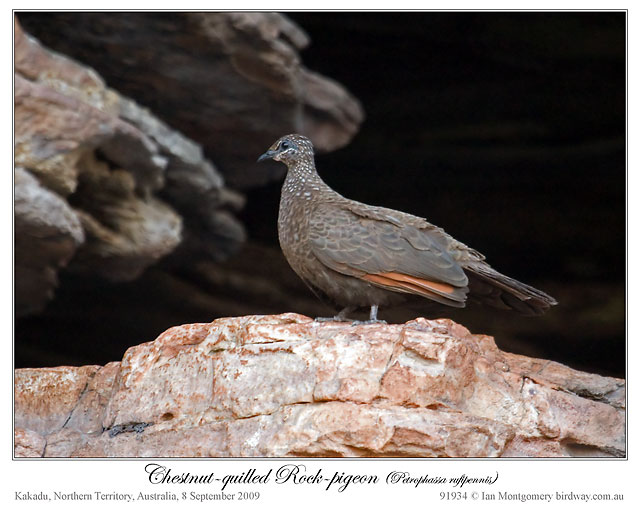
Chestnut-quilled Rock Pigeon (Petrophassa rufipennis) by Ian

Chestnut-quilled Rock Pigeon (Petrophassa rufipennis) by Ian

Ian’s Newsletter – 09/16/2009

This is really the bird of last week as this is the first opportunity I’ve had for internet access for 12 days. We are in Kununurra now in far northeastern Western Australia, having arrived here yesterday from the Northern Territory. We spent most of the time in the Kakadu area, followed by a couple of days in Pine Creek between Darwin and Katherine.

The Chestnut-quilled Rock-Pigeon was on my primary target list – birds that I hadn’t seen before – so I was pleased to find this single bird at Bardedjildidji, a sandstone escarpment in eastern Kakadu near Ubirr on the border with Arhnem Land. It obligingly flew past us before landing in this small cave not too far away and not too inaccessible. You can see the chestnut on the partially open wing.

There are two species of Rock-Pigeon – this one and the closely related White-quilled Rock-Pigeon. Both have limited distributions in northern Australia, the Chestnut-quilled in the Kakadu area and the White-quilled farther west in the Top end of the Northern Territory and across the border into Western Australia. Both are found in very rugged sandstone country where they take refuge in crevices and caves.

The White-quilled is one of the reasons for coming as far as Kununurra and we are going to look for this species later this afternoon when it cools down a bit. It has been very hot for almost our entire stay, reaching 37-38ºC almost every day. So, birding has been hard work a lot of the time.

I’ll send another catch-up bird of the week in a day or two while I have the opportunity here in Kununurra.

Best wishes,
Ian

Ian Montgomery, Birdway Pty Ltd,
454 Forestry Road, Bluewater, Qld 4818
Phone: +61-7 4751 3115
Preferred Email: ian@birdway.com.au
Website: http://birdway.com.au


Lee’s Addition: (bolding by Lee)


You who dwell in Moab, Leave the cities and dwell in the rock, And be like the dove which makes her nest In the sides of the cave’s mouth. (Jeremiah 48:28 NKJV)

One addition for us who use farenheit the 37-38° C is 98.6-100.4 F. Whew! That is hot!

“Description: (Collett 1898); Length 28 cm (12 – 12 1/2 inches). Head, neck, mantle & breast feathers dark sepia or dusky brown having a pale grey bases and buff fringes which form the scaly appearance. The throat & narrow stripe below & extending past the eye is white & is bordered above with a small black stripe extending thru the eye from the bill also bordered above with a thin white stripe. Primaries & secondaries bright chestnut with dark brown tips (chestnut color best seen when bird is in flight or stretching the wing). Belly and undertail dark brown. Eyes, bill, legs & feet dark brown. Female similar; juvenile are duller appearance.” from International Dove Society

Birds of the Bible – What Birds Can Tell – 1

Belted Kingfisher (Megaceryle alcyon) by Daves BirdingPix

Belted Kingfisher (Megaceryle alcyon) by Daves BirdingPix

But now ask the beasts, and they will teach you; And the birds of the air, and they will tell you; Or speak to the earth, and it will teach you; And the fish of the sea will explain to you. Who among all these does not know That the hand of the LORD has done this, (Job 12:7-9 NKJV)

One of my favorite birds that I enjoy watching is the Kingfisher. The ones we have here in Florida (Belted Kingfishers) are rather plain compared to others around the world, but they all have a characteristic look of a very long bill on a large head and a short neck. It is the bill that those in Japan have studied that is amazing.

Japan has electric trains that speed over 200 miles per hour or 322 kilometers per hour. They are very safe and have a great record, but a noise problem had been plaguing them until they observed the Kingfisher’s beak. When the speeding trains went through the tunnels, it caused a “tunnel boom” which goes against their strict sound pollution laws.

Blue-eared Kingfisher (Alcedo meninting) by Nik

Blue-eared Kingfisher (Alcedo meninting) by Nik

“Eiji Nakatsu, the train’s chief engineer and an avid bird-watcher, asked himself, “Is there something in Nature that travels quickly and smoothly between two very different mediums?” Modeling the front-end of the train after the beak of kingfishers, which dive from the air into bodies of water with very little splash to catch fish, resulted not only in a quieter train, but 15% less electricity use even while the train travels 10% faster.” (Learning Efficiency from Kingfishers)

Bullet Train

Bullet Train

The “tunnel boom” is caused  “when a train passes through such a tunnel at high speed, it compresses the air in front of the engine. Upon leaving the tunnel, this air rushes outward, creating a loud thunderclap, or sonic boom. Nearby windows rattle, and people are awakened by the noise.” (Don DeYoung, Answers) When the engineers did wind tunnel experiments they found that “the kingfisher’s bill is ideally shaped for a smooth, streamlined transition from air into water. This drastic change in pressure is similar to the change a bullet train experiences when emerging from a tunnel into the open air.”

By observing one of God’s created birds, the kingfisher, they were able to solve a serious problem. The Lord in His great wisdom has provided us many critters and other things to observe so that they may “tell us” things that will benefit us.

Whoso is wise, and will observe these things, even they shall understand the lovingkindness of the LORD. (Psalms 107:43 KJV)

See Also:

Speeding Bullet – Answers V4, #3
Kingfisher – Train by Discovery of Design
Learning Efficiency from Kingfishers by Biomimicry Institute

*

Early Bird by GeHof

Here’s an interesting video of tribute to birds, especially Those Early Birds Getting The Worm. From GeHof who posted it at YouTube.
What else was I to do today while we are having stormy weather here in Central Florida? I have been “Birdwatching” the internet.

Ian’s Bird of the Week – Red-faced Cormorant

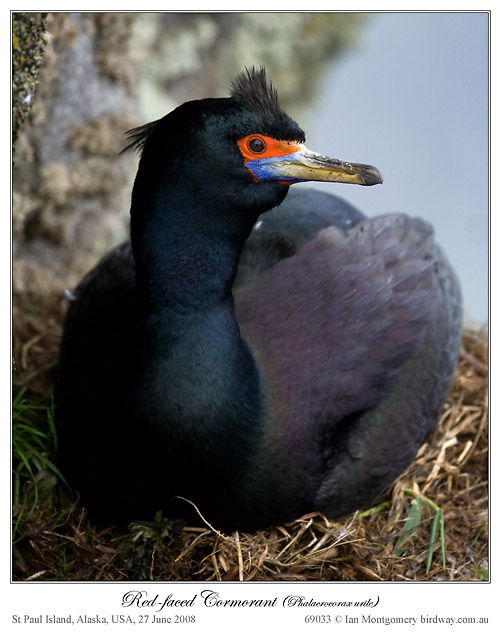
Red-faced Cormorant (Phalacrocorax urile) by Ian

Red-faced Cormorant (Phalacrocorax urile) by Ian

Newsletter 03-10-2009

Cormorants don’t often make it as Bird of the Week. People, particularly fishermen, mostly say or think “Uggh” when you say “cormorant” and even birders probably just tick them off without pausing in silent awe at their beauty. Cormorant, in general, lack style, hence the unflattering expression “like a shag on a rock”.

Well, here’s one that I think makes the grade. I particularly wanted to see Red-faced Cormorants when I was in Alaska last June. I wasn’t disappointed, particular when I got close to nesting birds on the cliffs of St Paul Island, and I give them high marks for their striking red and blue facial patterns, double crests, and startlingly iridescent plumage, worthy of some tropical wonder like a Bird of Paradise.

Red-faced Cormorant (Phalacrocorax urile) by Ian

Red-faced Cormorant (Phalacrocorax urile) by Ian

You have to go out of your way to see them, too. In North America, they occur only in southern Alaska, the Aleutians and the islands of the Bering Sea, though they are common within their restricted range, which extends across the Bering Sea to eastern Siberia and as far south as northern Japan.

On the website, I’ve been concentrating on updating galleries and indices to the latest format. One of the aims of this is to make it easier to navigate from one family to the next. I’m doing this through Previous and Next Family links on the top level (usually Global) thumbnail pages for each family (though not, at the moment, the lower Australian, Old World and New World thumbnail pages). This is progressing well. It is now possible to navigate through all the non-passerine families and I hope to fill the remaining gaps in the passerines (perching birds) soon. So, you can start at the first family, Cassowaries and Emus (http://www.birdway.com.au/casuariidae/index.htm) and follow the Next Family links all the way through 70 families as far as the New World Flycatchers (http://www.birdway.com.au/tyrannidae/index.htm) where the trail currently peters out with the New World Antbirds.

Best wishes,
Ian

Ian Montgomery, Birdway Pty Ltd,
454 Forestry Road, Bluewater, Qld 4818
Phone: +61-7 4751 3115
Preferred Email: ian@birdway.com.au
Website: http://birdway.com.au


Lee’s Addition:

The Cormorant is found in the list of unclean birds that the Israelites were not to eat.

And the pelican, and the gier eagle, and the cormorant, (Deuteronomy 14:17 KJV)

See Also:
Cormorant page
Birds of the Bible – Cormorant
Cormorant Photos
Cormorant Videos
Phalacrocoracidae – Cormorants, shags

The Secret Only God Knows About Hummingbirds – by April Lorier

HummingBirdSMAll of my neighbors have hummingbird feeders on their porches. Why? Well, everyone knows there’s something very special about these birds. Yes, they are birds, and there’s a secret only God knows about them.

Hummingbirds are birds in the family Trochilidae, and are native to the Americas. They can hover in mid-air by rapidly flapping their wings 12–90 times per second (depending on the species). They can fly backwards, and are the only group of birds able to do so.

Hummingbirds do not spend all day flying, though. They don’t have the energy for that! The majority of their activity consists simply of sitting or perching.

Hummingbirds feed in many small meals, consuming many small invertebrates and up to five times their own body weight in nectar each day. They spend an average of 10-15% of their time feeding and 75-80% sitting and digesting.

Hummingbirds feed on the nectar of plants and are important pollinators, especially of deep-throated, tubular flowers. Like bees, they are able to assess the amount of sugar in the nectar they eat; they reject flower types that produce nectar which is less than 10% sugar and prefer those whose sugar content is stronger. Nectar is a poor source of nutrients, so hummingbirds meet their needs for protein, amino acids, vitamins, minerals, etc. by preying on insects and spiders, especially when feeding young.

Their English name derives from the characteristic hum made by their rapid wing beats. They can fly at speeds exceeding 33 mph.

What is awesome about humming birds is that aerodynamically, these birds are not able to fly, and yet they do!

As scientists try to figure out how hummingbirds are flying, I think God is smiling. It’s just another thing only The Creator knows, and that’s fine with me. Life should have some mystery, don’t you think?

(c) 2009 April Lorier

For since the creation of the world God’s invisible qualities—his eternal power and divine nature—have been clearly seen, being understood from what has been made, so that men are without excuse. Romans 1:20

Supplied by and reprinted with permission of April Lorier


See:
More of April’s Articles here

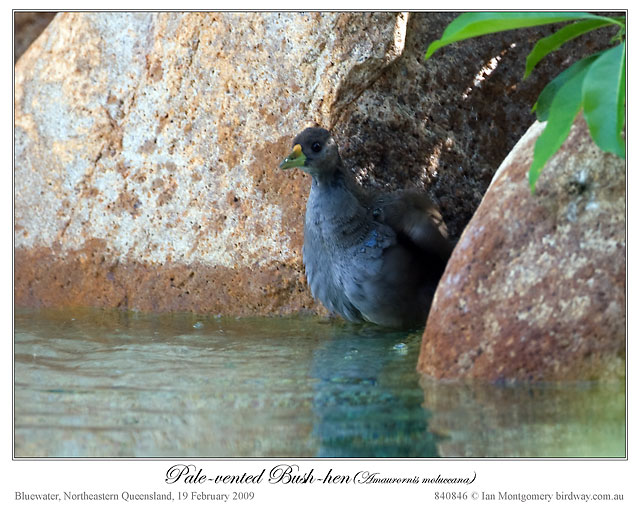
Ian’s Bird of the Week – (Pale-vented) Bush-hen

Pale-vented Bush-hen (Amaurornis moluccana) by Ian

Pale-vented Bush-hen (Amaurornis moluccana) by Ian

Ian’s Newsletter 02-24-2009

Pale-vented Bush-hen (Amaurornis moluccana) by Ian

Pale-vented Bush-hen (Amaurornis moluccana) by Ian

Last week, when discussing Kittiwakes and red legs, I referred obliquely to a common phenomenon in birding when having finally seen what I wanted (red legs) I saw lots of them. Serious birders call these bogey birds, where serious means passionate (oneself) or obsessed (someone else) and bogey means an evil spirit, or species, that leads you on a lengthy wild goose chase. The chase ends when a careless bird breaks the taboo by letting you see it and then, miraculously, the veil is lifted from your eyes and they appear everywhere.

Probably the two most challenging bogey birds in North Queensland, worse than Cassowaries, are unsurprisingly crakes: the (Pale-vented – a la Christidis & Boles, 2008) Bush-hen and the Red-necked Crake. I’d spent 6 years up here before I briefly spotted a startled Bush-hen from a speeding car (I wasn’t driving) and, after 7 years, I still haven’t had a proper view of a Red-necked Crake.

Pale-vented Bush-hen (Amaurornis moluccana) by Ian

Pale-vented Bush-hen (Amaurornis moluccana) by Ian

Typically, two weeks after seeing the Bush-hen (this time last year) a family of them appeared in my back yard, visible from the back verandah. Last Thursday, I was working on the website in the study, and went to make a cup of coffee when I spotted a Bush-hen in full view on the edge of the swimming pool. Unfortunately, the bird saw me move inside the house to get the camera and all I could manage was a shot of a nervous bird sneaking away through the vegetation. I left the camera and tripod set up in the house, just in case, and the bird reappeared a couple of hours later. It had a drink on the left hand side of the pool (photo no. 1) flew across the pool to a shallow spot for a swim (no. 2) and then spent about 10 minutes preening on a rock (no. 3). The bird came back again for another session on Saturday.
Both the days in question were sunny and very hot (33ºC/91ºF) and it was the middle of the day. The field guide says ” . . . secretive . . .emerges on overcast mornings, evenings . . .”, I like to imagine that they’re nesting again and the pool becomes irresistible during a tiresome day incubating eggs.

Back at the website, revised galleries include:
Falcons (http://www.birdway.com.au/falconidae/index.htm)
New World Vultures (http://www.birdway.com.au/cathartidae/index.htm)
Rails and Allies (http://www.birdway.com.au/rallidae/index.htm)
New World Flycatchers (http://www.birdway.com.au/tyrannidae/index.htm)
Cotingas (http://www.birdway.com.au/cotingidae/index.htm).

Best wishes,
Ian

Ian Montgomery, Birdway Pty Ltd,
454 Forestry Road, Bluewater, Qld 4818
Phone: +61-7 4751 3115
Preferred Email: ian@birdway.com.au
Website: http://birdway.com.au


Lee’s Addition:


For I satisfy the weary ones and refresh everyone who languishes. (Jeremiah 31:25 NASB)