Birds of the Bible – Hawks

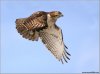
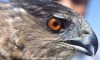
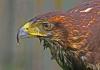
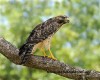
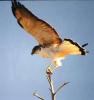
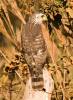
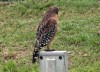
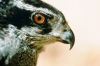
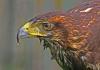
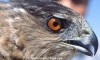
Hawks are roughly divided into two groups: Buteos and Accipiters. The “Buteos are chunky hawks with broad wings and short, wide tails. They may soar for hours…with hardly a flap of their wings, and often perch in the open.” “Accipiters are slim hawks with relatively short rounded wings and long tails. They are in the woods, and “pursue prey with stealth and agility.” Quotes from p.108, Kaufman Field Guide to Birds of North America.

And the owl, and the night hawk, and the cuckow, and the hawk after his kind, (Lev 11:16 and Deu 14:15 KJVR)

“Large hawks were numerous in Palestine. The largest were 2 ft. long, have flat heads, hooked beaks, strong talons and eyes appearing the keenest and most comprehensive of any bird. They can sail the length or breadth of the Holy Land many times a day. It is a fact worth knowing that mist and clouds interfere with the vision of birds and they hide, and hungry and silent wait for fair weather, so you will see them sailing and soaring on clear days only. These large hawks and the glede are of eagle-like nature, nesting on Carmel and on the hills of Galilee, in large trees and on mountain crags. They flock near Beersheba, and live in untold numbers in the wilderness of the Dead Sea.” (International Standard Bible Encyclopedia)

The Buteos in North America are:
Red-tailed Hawk (19″, wingspan 50″, with a red tail)
Rough-legged Hawk (21″, wingspan 53″)
Ferruginous Hawk (23″, wingspan 56″, our largest buteo)
Broad-winged Hawk (16″, wingspan 34″, crow-sized, soars with wings flat)
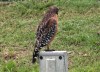
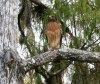
Red-shouldered Hawk (17″, wingspan 40″, red shoulders and chest)
Gray Hawk (17″, wingspan 36″ )
Swainson’s Hawk (19″, wingspan 51″, brown chest-band)
White-tailed Hawk (20″, wingspan 51″, soars with wings in a V)
Short-tailed Hawk (16″, wingspan 36″, small with big-headed look)
Harris Hawk (21″, wingspan 46″, black tail with white base and tip)
Zone-tailed Hawk (20″, wingspan 51″, broad white band on tail)
Common Black Hawk (20″, wingspan 50″, very broad wings)
Accipiters (‘built for agility and burst of speed”) are:
Sharp-shinned Hawk (12″, wingspan 25″)
Cooper’s Hawk (18″, wingspan 32″)
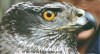
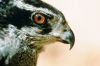
Northern Goshawk (22″, wingspan 43″)


Birds of the Bible – Vulture

But these you shall not eat: the eagle, the vulture, the buzzard, (Deu 14:12 NKJV)
And the vulture, and the kite after his kind; (Lev 11:14 KJV)


Job 28 tells of the wealth of earth that is hidden and must be mined; Gold, silver, brass, iron, precious stones such as sapphires, and gold dust. It is buried where the eyes of the birds mentioned have never seen them.

There is a path which no fowl knoweth, and which the vulture’s eye hath not seen: (Job 28:7 KJV)

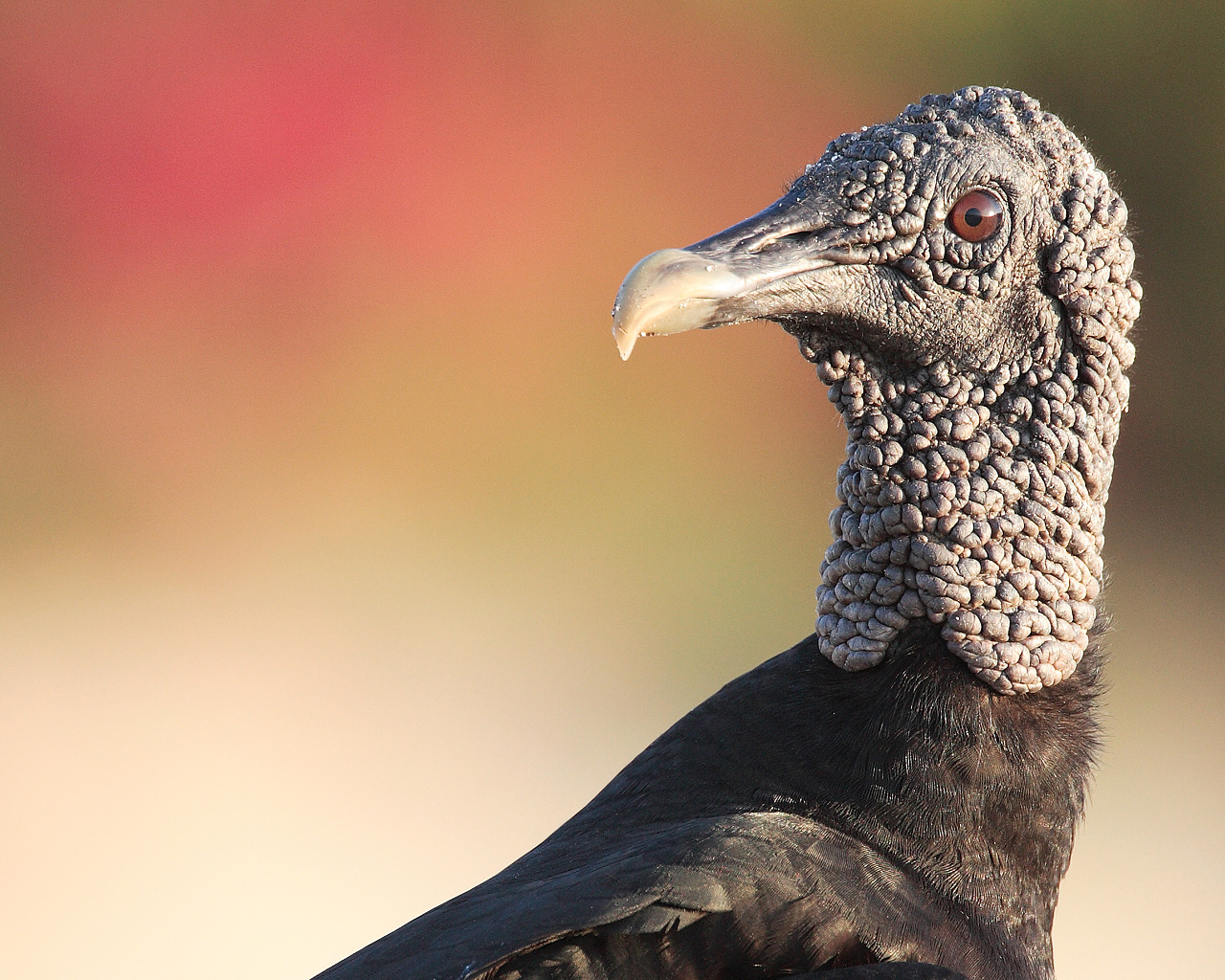
Black Vulture from Wikipedia

Black Vulture from Wikipedia

So, let’s find out some about the vulture. Vultures are good-sized birds that eat carrion (dead things). They help keep our country side clean of things that have died or been attacked by other birds or mammals. I think they are ugly looking, but what makes them look that way is the lack of feathers around the face. This helps them eat without messing up their feathers and having them soaked with blood and other dead stuff. The Lord made them the way they are and given them the task mentioned. I imagine the Lord does not consider them ugly.

In the New World we have the Andean Condor, Black Vulture, California Condor(the larges in North America-47″ with a 10′ wingspan), Greater Yellow Headed Vulture, King Vulture, Lesser Yellow Headed Vulture, and the Turkey Vulture. In the Old World Vulture family we get the African White-backed, Asian White-backed, Bearded, Cape Giffon, Cinereous, Egyptian, Eurasian Griffon, Himalayan Griffon, Hooded, Lappet Faced, Long Billed, Palm Nut, Red-headed, Ruppells Griffon, and White Headed Vultures.

A good reference to these Vultures is at these websites:

Nave’s Topical Bible – Vultures

*

Birds of the Bible – Hawk Migration

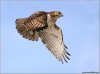
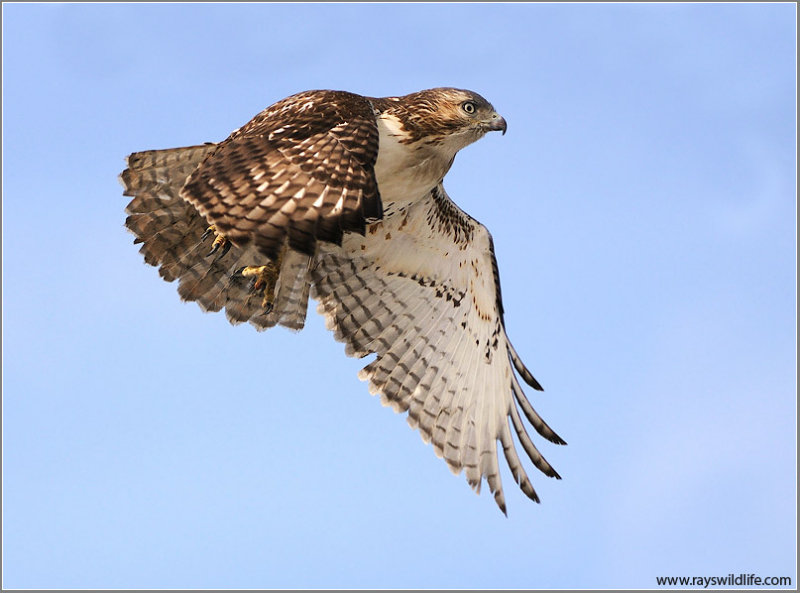
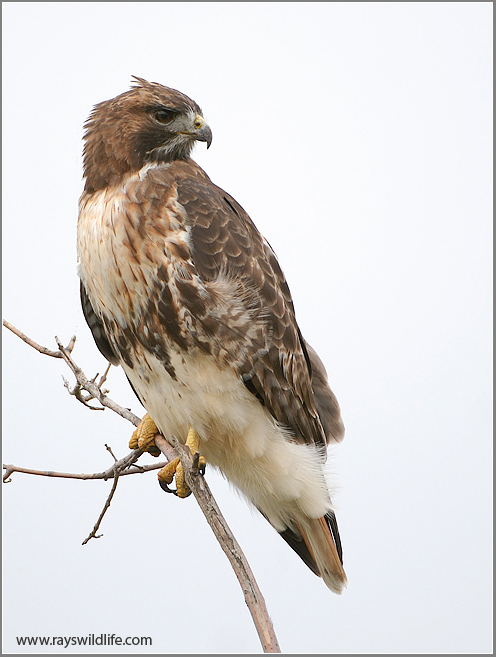
Red-tailed Hawk by Ray

Red-tailed Hawk by Ray

Doth the hawk fly by thy wisdom, and stretch her wings toward the South? (Job 39:26 KJV)


Through God’s wisdom (omniscience), the Hawks He created have a built-in instinct to fly south for the winter and how to accomplish that feat. There is much studied and observed about this phenomenon. People watch them as they fly over by the hundreds and thousands.  Wings on the Wind has a very good article about how they ride the thermals or catch updrafts to carry them along on their journey. Right now, between August and December is the Fall migration time.

The verse quoted at the top is found in a set of questions started in Job 38:

Then the LORD answered Job out of the whirlwind, and said, Who is this that darkeneth counsel by words without knowledge? Gird up now thy loins like a man; for I will demand of thee, and answer thou me. (Job 38:1-3 KJV)

Some other interesting translations of Job 39:26 are:
“Is it through your knowledge that the hawk takes his flight, stretching out his wings to the south?” (BBE)
“Did you teach hawks to fly south for the winter?” (CEV)
“Is it by your understanding that the hawk soars and spreads his wings toward the south?” (ESV)
“Does your understanding make a bird of prey fly and spread its wings toward the south?” (GW)
“Was it through your know how that the hawk learned to fly, soaring effortlessly on thermal updrafts?” (MSG)
“Is it by your understanding that the hawk soars, Stretching his wings toward the south?” (NASB)

When we think we have “all the answers” to life’s questions and are feeling like we do not need God our Creator or a relationship with Him; read Job 38-42. “Thou art worthy, O Lord, to receive glory and honor and power: for thou hast created all things, and for thy pleasure they are and were created.” (Rev 4:11 KJV)
The Creator’s Gift of Intelligence


Information about Hawk Migration:

Red-tailed Hawk by Ray's Wildlife

Red-tailed Hawk by Ray

Wings on the Wind
Hawk Migration Association of NA
Hawk Migration Chart

Places to View:
Blue Ridge Parkway


Birds of the Bible – Nighthawk II

Last week after I published Nighthawk I, I started looking for more photos and videos to supplement the article. I kept running into other usages of the word “nighthawk.” So, here is more on the topic.

In the two references: Lev 11:16, Deu 14:15 See Nighthawk the word nighthawk is from “H8464 – תּחמס
tachmâs (takh-mawce’) is from H2554; a species of unclean bird (from its violence), perhaps an owl: – night hawk.”

Tachmas cannot be identified with any certainty. Here is how it is interpreted:

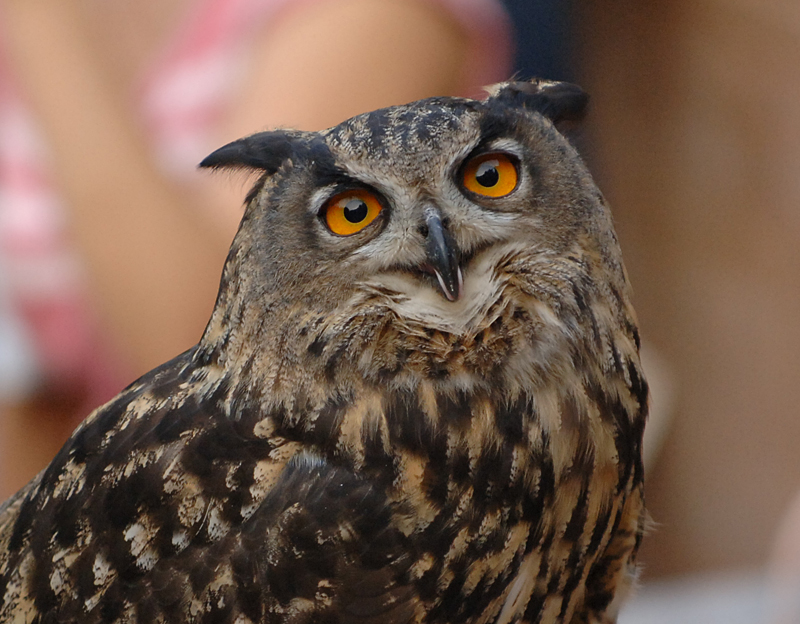
Great Horned Owl by Phil Kwong Galleries

Great Horned Owl by Phil Kwong Galleries

night-hawk – ASV, BBE, JPS, YLT
nighthawk – ESV, GW, MSG, Webster
night hawk – KJV, RV
nighthauke – KJV 1611
nyght Crowe – Bishops
night crowe – Geneva
female ostrich and the male ostrich – Darby
short-eared owl – HCSB, NKJV
great owl – LITV, MKJV
screech owl – WEB, NRSV, NIV

Needless to say, this “has caused great controversies among commentators. Some scholars of the Hebrew language have thought that the male ostrich was signified by tachmas, the word bath-haya’anah being supposed by them to signify the female ostrich. It is hardly probable, however, that the sacred writer should have mentioned separately the sexes of the same species, and we must therefore look for some other interpretation.

Going to the opposite extreme of size, some scholars have translated tachmas as Swallow. This again is not a very probable rendering, as the swallow would be too small a bird to be specially named in the prohibitory list. ‘I’he balance of probability seems, to lie between two interpretations – namely, that which considers the word tachmas to signify the Night-hawk, and that which translates it as Owl. For both of these interpretations much is to be said, and it cannot be denied that of the two the latter is perhaps preferable. If so, the White or Barn Owl is probably the particular species to which reference is made.

However, many commentators think that the Night-hawk or Nightjar is the bird which is signified by the word tachmas, and as owls seem to have been signified by alternative words, the rendering of the Authorized Version seems an acceptable translation. Moreover, the Jewish Bible follows the same translation, and renders tachmas as Night-hawk, but affixes the mark of doubt. ” (From The Nightjar or Night Hawk in the Bible on Wonder of Birds website)

I said all of that to say, I don’t know for any certainty which bird it is. Therefore, I am adding pictures of the other birds mentioned beside the ones I posted last week. Only the Lord know for certain which birds were indicated. I’ll leave it at that.


Birds of the Bible – Nighthawk

Common Nighthawk

Common Nighthawk

The Night Hawk is part of the Caprimulgidae – Nightjars family. Here in North America, the Lesser, Common, and Antillean Nighthawks, are joined by the Common Pauraque, Common Poorwill, Chuck-Will’s Widow, and the Whip-Poor-Will to round out the family. They have long wings, short legs, and very small bills with a large mouth. All of these are late evening, early morning, and night hunters of insects. God created them with coloration that helps them blend in with the tree or leaves around them and most perch horizontal to the limbs instead of across them like most birds. This also helps hide them in the daytime. Even though they have the name “Hawk”, they do not resemble what most would think of hawks. The term is more of the fact of ‘hawking or catching” insects while in flight. Most fly low over the ground in search the moths and large flying insects. They range from 7 to 13 inches long with wingspans from 11 to 24 inches.

All Nighthawks listed in the New World are the Band-tailed Nighthawk, Plain-tailed Nighthawk, Nacunda Nighthawk, Rufous-bellied Nighthawk, Short-tailed Nighthawk, Antillean Nighthawk, Lesser Nighthawk, Common Nighthawk, Least Nighthawk, Sand-colored Nighthawk

UPDATE: AUG 30, 2008: Upon further investigation, the night hawk mentioned in the verses is most likely a type of owl that feeds at night. I will make a new article soon. Enjoy this anyway. (Lee)

They are again in our list of birds that are “unclean.” Both verses are identical in the KJV.

And the owl, and the night hawk, and the cuckoo, and the hawk after his kind, (Lev 11:16)
And the owl, and the night hawk, and the cuckoo, and the hawk after his kind, (Deu 14:15)

See Nighthawks for more information.


Grey Nightjar

Interesting Things – A Lesson from the Stork

SmileyCentral.com

“A Lesson from the Stork

“Yea, the stork in the heaven knoweth her appointed times; and the turtle and the crane and the swallow observe the time of their coming; but my people know not the judgment of the Lord.” (Jeremiah 8:7)

The migratory behavior of birds is fascinating. If it only occurred once, we would call it a miracle. Yet we see bird migrations twice a year, so we are desensitized to the Creator-designed magnificence of these journeys.

Geographically, Israel sits center-stage among the great continents of Europe, Asia, and Africa. Many birds migrate from European and Asian winters to Africa, with the migrations reversed prior to summer. …….”

Click link to see the rest of this devotional today from Days of Praise.

Birds of the Bible – Hoopoe

By permission of William Kwong

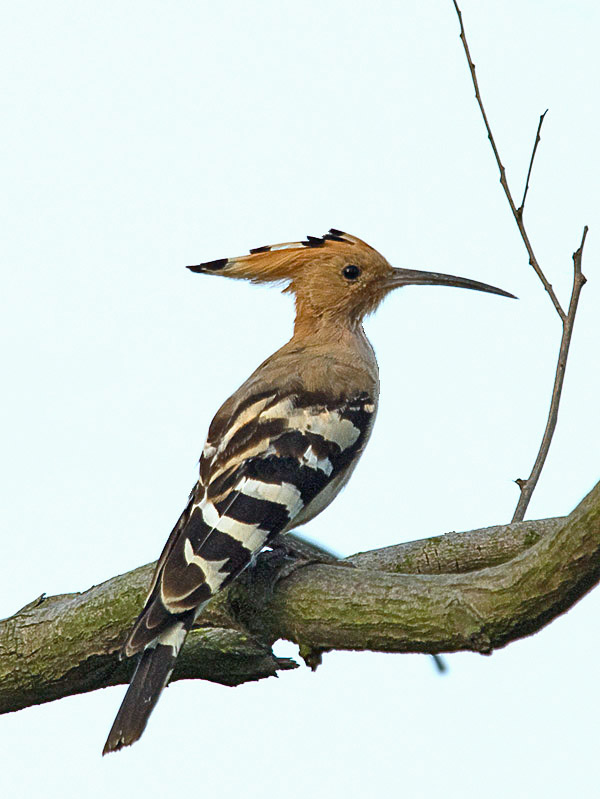
Eurasian Hoopoe By William Kwong

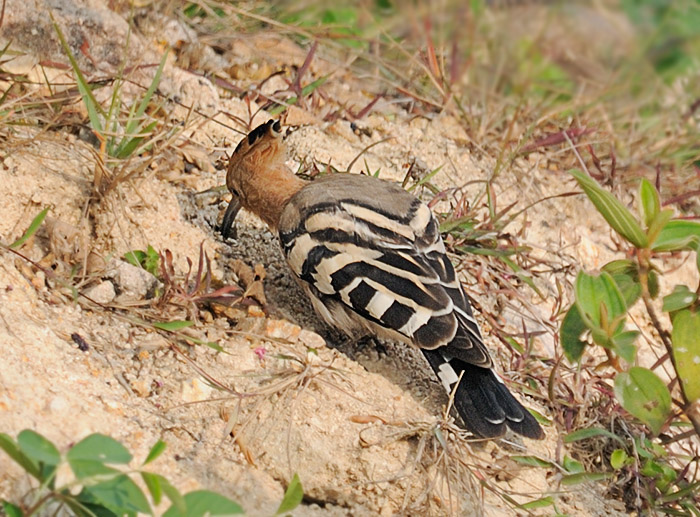
The Hoopoe is mentioned in the list of “unclean” things not to eat in Leviticus and Deuteronomy. I am sort of revisiting my Birds of the Bible – Lapwing which uses the same references. Depending on which copy of Scripture one uses it is translated Lapwing in some and Hoopoe in others. The Hoopoe is an interesting and pretty bird, so I will describe it in today’s blog.

the stork, the heron after its kind, the hoopoe, and the bat. (Lev 11:19 NKJV)
the stork, the heron after its kind, and the hoopoe and the bat. (Deu 14:18 NKJV)

 Eurasian Hoopoe By William Kwong

Eurasian Hoopoe By William Kwong

  • They are found in Asia, Europe, and North Africa, Sub-Saharan Africa and Madagascar.
  • They migrate to the tropics in the winter.
  • In 2008, the Long-Billed Hoopoe became the national bird of Israel. See Article
  • Their diet consists of mostly worms and insects, which they find while spending most of their time on the ground.
  • “The nest is in a hole in a tree or wall. Like those of its relatives,… the nest tends to contain copious amounts of faeces and smell very foul as a protection against predators[2].”(Wikipedia)
  • “The song is a trisyllabic “oop-oop-oop”, which gives rise to its English and scientific names.”(Wikipedia)
 Eurasian Hoopoe By William Kwong

Eurasian Hoopoe By William Kwong

Links to check out:

Wikipedia – Hoopoe

Bird Families of the World – Hoopoes

William Kwong’s Gallery (Photos used with his Permission)

Hoopoe – Photos & Videos

See:

Appreciation For Fantastic Photographers

I want to express my heartfelt appreciation and thanks for the following Professional or Almost Professional Photographers who have given me permission to use some of their photos on this birdwatching site. They have fantastic pictures in their Galleries, which you will greatly enjoy. Please visit the links below to view some awesome pictures of birds and other subjects. SmileyCentral.com These are the ones you see with that “looooong” lens sticking out in front of their cameras. They have a great God given talent to capture what they see as they look through those lenses.
With the help of photographs from them and others, I hope to improve previous and future blogs.

AestheticPhotos by Wade Dowdy
Dan’s Pix, by my husband, Dan
dparsons Photostream by Pastor BBC
Fotobirder by Steve Slayton
Gramps (Les)
Jim Fenton’s Galleries
Maji’s Photostream by Maji
Philip Kwong’s Galleries, he is in Hong Kong
Ray’s Wildlife Photography by Raymond J Barlow
WildStock Photography by Reinier Munguia
101-365 Galleries by Chris Heilman
Anthony 747

Updated: Aug 14
William Kwong Galleries, he is in Hong Kong

Birds of the Bible – Falcons

American Kestrel by AestheticPhotos

American Kestrel by AestheticPhotos

Today we introduce another bird family that has been wonderfully created by God. The Falcon is in the Family “Falconidae” which are birds of prey. Worldwide there are over 60 species in the family. Falcons, Caracara, Forest-Falcons, Kestrels, Falconets, Pygmy-Falcons, and Hobbies make up the family. For an interesting list of the birds and videos of them, see Internet Bird Collection. These are the birds seen in North America according to Thayer’s Birding software:

  • Aplomado Falcon (15-16.5” with  40-48” wingspan) Mexico to Central and South America, TX

  • Gyrfalcon (20-25” with 50-64” wingspan – largest of the falcons) – Arctic tundra-winter seen in upper Midwest, Dakotas, Montana, Idaho and Washington – Flies close to the ground.

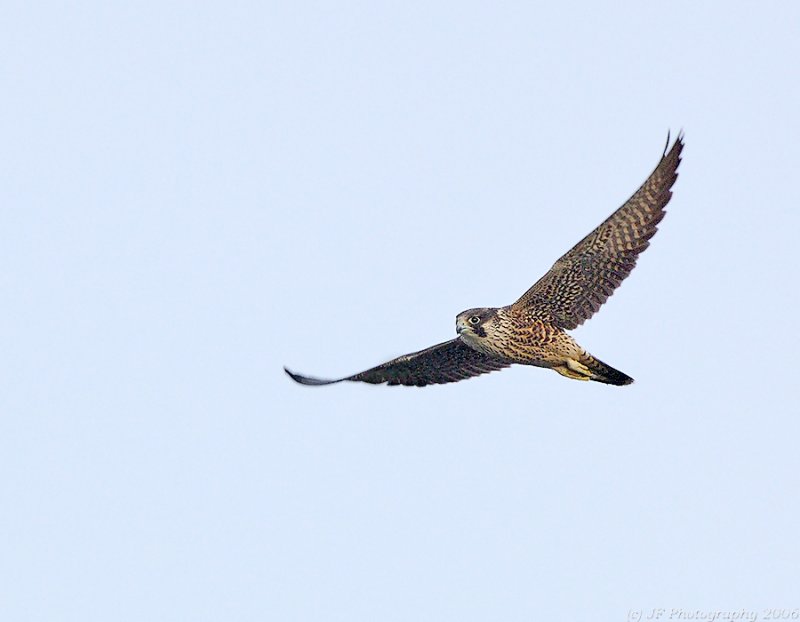
  • Peregrine Falcon (16-20” with  36-44” wingspan – large falcon)

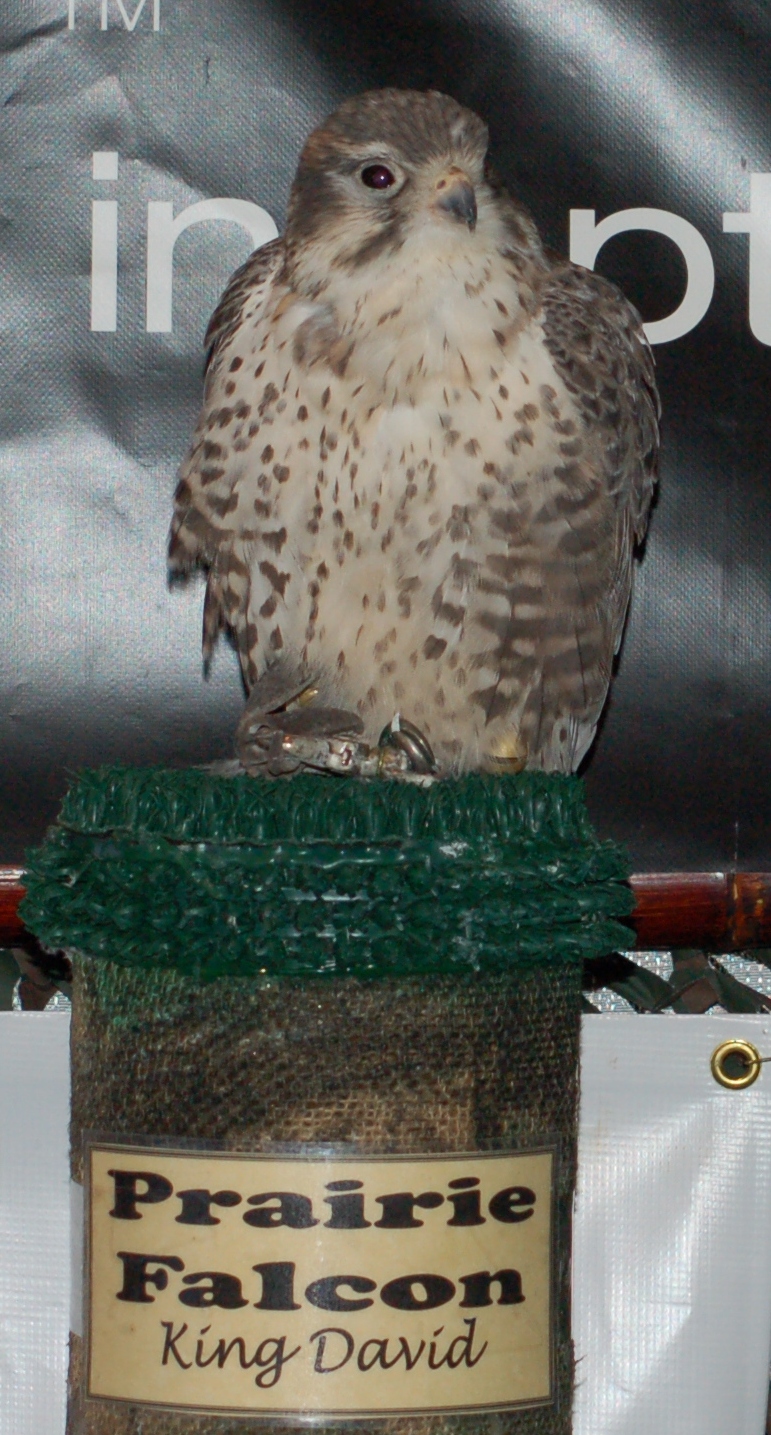
  • Prairie Falcon (15.5-19.5” with 35-43” wingspan)

  • Merlin (12” with 25” wingspan)

  • Collared Forest-Falcon (21-25” with 30-37” wingspan) (Accidental-South Texas)

  • American Kestrel (10.5” with 23” wingspan – Smallest falcon)

  • Eurasian Kestrel (13.5”with 29” wingspan Hovers) – Mass, NJ, N Brunswick and Aleutian Islands of Alaska

    Prairie Falcon by Dan

    Prairie Falcon by Dan

  • Crested Caracara (23” with 50” wingspan) – TX and FL, Prairie region of central FL, open arid and semiarid scrublands, grassland w/ few trees, ranchland

  • Eurasian Hobby (11-13” with 28-33” wingspan) – Europe and Asia, Africa (winters) very rare in North America Captures prey in the air.

A good article about the Falconidae Family is at the Handbook of the Birds of the World website. The Wikipedia had these comments:
“Falcons and caracaras are carnivores, feeding on birds, small mammals, reptiles, insects and carrion.”,
“They have strongly hooked bills, sharply curved talons and excellent eyesight. The plumage is usually composed of browns, whites, chestnut, black and grey, often with barring of patterning. ”
“They differ from other Falconiformes (Hawks, Eagles, Falcons, etc.) in killing with their beaks instead of their feet. They have a “tooth” on the side of their beak for the purpose.”

Peregine Falcon by Jim Fenton

Peregrine Falcon by Jim Fenton

The Falcon is another bird on the “unclean” list.
“And these you shall regard as an abomination among the birds; they shall not be eaten, they are an abomination: the eagle, the vulture, the buzzard, the kite, and the falcon after its kind;” (Leviticus 11:13-14 NKJV)
“the red kite, the falcon, and the kite after their kinds;” (Deuteronomy 14:13 NKJV)
“You shall fall upon the mountains of Israel, you and all your troops and the peoples who are with you; I will give you to birds of prey of every sort and to the beasts of the field to be devoured. (Ezekiel 39:4 NKJV)

Check out the

Falcons page for Photos and Videos
Falconidae – Caracaras, Falcons – Family

*

Videos of Large Formations of Birds

Just found these on the internet.

You will never believe this one. Only God could put that instinct in them! Wow!
Starlings on Otmor

Starling Magic

(Updated Aug 3) After posting these videos last night, I decided to see if this habit might be mentioned in Scripture and here is what I found:

Like birds flying about, So will the LORD of hosts defend Jerusalem. Defending, He will also deliver it; Passing over, He will preserve it.” (Isaiah 31:5 NKJV)
Then I saw an angel standing in the sun; and he cried with a loud voice, saying to all the birds that fly in the midst of heaven, “Come and gather together for the supper of the great God, (Revelation 19:17 NKJV)
Who are these who fly like a cloud, And like doves to their roosts? (Isaiah 60:8 NKJV)

Here is an interesting commentary quote from Matthew Henry:
“(4.) These converts flocking to the church shall be greatly admired (Isa_60:8): Who are these that fly as a cloud? Observe,
[1.] How the conversion of souls is here described. It is flying to Christ and to his church, for thither we are directed; it is flying like a cloud, though in great multitudes, so as to overspread the heavens, yet with great unanimity, all as one cloud. They shall come with speed, as a cloud flying on the wings of the wind, and come openly, and in the view of all, their very enemies beholding them (Rev_11:12), and yet not able to hinder them. They shall fly as doves to their windows, in great flights, many together; they fly on the wings of the harmless dove, which flies low, denoting their innocency and humility. They fly to Christ, to the church, to the word and ordinances, as doves, by instinct, to their own windows, to their own home; thither they fly for refuge and shelter when they are pursued by the birds of prey, and thither they fly for rest when they have been wandering and are weary, as Noah’s dove to the ark.
[2.] How the conversion of souls is here admired. It is spoken of with wonder and pleasure: Who are these? We have reason to wonder that so many flock to Christ: when we see them all together we shall wonder whence they all came. And we have reason to admire with pleasure and affection those that do flock to him: Who are these? How excellent, how amiable are they! What a pleasant sight is it to see poor souls hastening to Christ, with a full resolution to abide with him!”

Interesting Things – Only God Can Make An Instinct

SmileyCentral.com

I copied this excerpt from   Author: Lanny and Marilyn Johnson

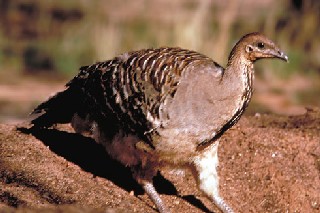
Mallee Fowl

“The Mallee Fowl is a mound building bird that only lives in Austria. It is about the size of a chicken and is an incredibly busy worker. In the fall of each year the male begins to dig a hole about three feet deep. After the hole is dug, he piles leaves and twigs into the pit. After each rain he covers a layer of vegetation with sand sealing in the moisture. The mounds he builds can be up to 35 feet across and 15 feet high. He will move as much as 6000 pounds of material to build his mound! As the wet vegetation decays, it produces heat. So as the leaves and twigs rot, the pile warms up. “… To read the whole article Only God Can Make An Instinct

Mallee Fowl Mound

Mallee Fowl Mound

Some more links about the Mallee Fowl:

Mallee Fowl