Ian’s Bird of the Week – Plum-headed Finches

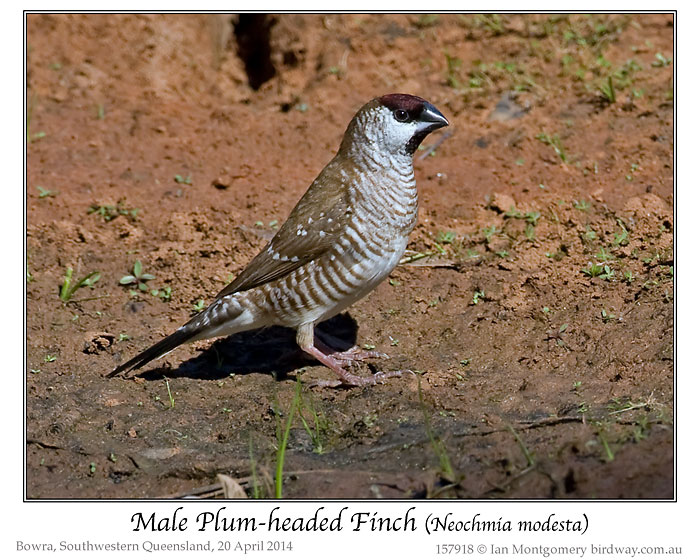
Plum-headed Finch (Neochmia modesta) by Ian

Ian’s Bird of the Week – Plum-headed Finches ~ by Ian Montgomery

Newsletter – 6-28-14

Bird of the week numbering has been a bit wonky lately, two #502s, no #503 to compensate, and two #504s and the one previous to this, Halls Babbler was #506 and should have been #507. Hopefully, we are back on track now with #508, the Plum-headed Finch. One of my favourite methods of bird photography is to relax by a water-hole in a comfortable camping chair and see what comes along. I did this at Bowra in April, and was treated to several pairs of Plum-headed Finches, presumably breeding as a result of rain several weeks earlier.

The ‘plum’ bit refers to the gorgeous cap, dark and extensive in the male, above, or paler and less extensive in the female, which has consequently space for a white eye-stripe. Males have black chins, females white ones. The specific modesta presumably refers to the understated colours, but I think the barred breast and flanks make them look very smart, and it’s always a pleasure to see them.

Plum-headed Finch (Neochmia modesta) by Ian Fem

The genus Neochmia contains only three other species, all of them Australian: Star, Red-browed and Crimson Finches, and none barred, so the Plum-headed looks quite distinctive. In the past it has been placed in its own genus, but mitochondrial studies show that it’s quite closely related to both the Star and Red-browed Finches. lum-headed Finch (Neochmia modesta) by Ian males

They have quite a widespread distribution in Queensland and New South Wales, but mainly inland and rather patchy. With an average length of 11cm/4.3in, they’re quite small. They’re popular as cage birds and used to be trapped a lot, but have been protected since 1972. Plum-headed Finch (Neochmia modesta) by Ian male

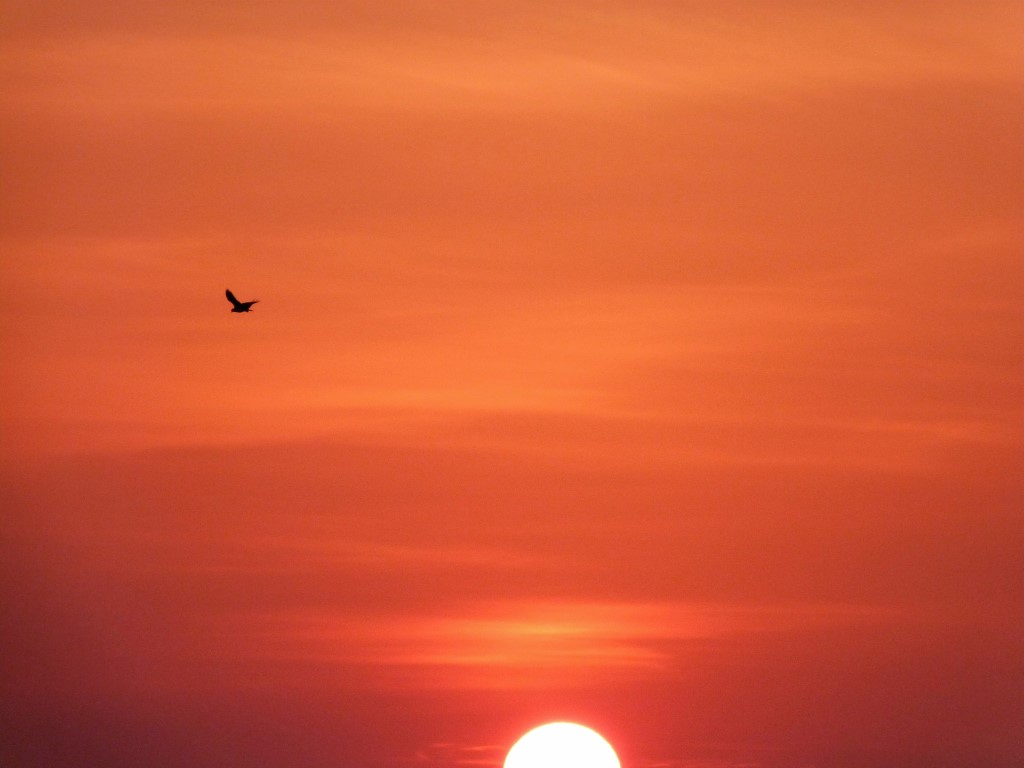
The bird in the fourth photo was photographed in the light of the setting sun, hence the lovely glow. I’ve been on the road for a few days taking (almost) the last location photos for Where to Find Birds in Northeastern Queensland so I’ll keep this short. One more day trip along the inland route to Paluma, and that’s it.

Links to the other members of the tribe:

Red-browed Finch
Crimson Finch
Star Finch

Best wishes

Ian

**************************************************

Ian Montgomery, Birdway Pty Ltd,
454 Forestry Road, Bluewater, Qld 4818
Tel 0411 602 737 ian@birdway.com.au
Bird Photos http://www.birdway.com.au/
Recorder Society http://www.nqrs.org.au


Lee’s Addition:

Also, to every beast of the earth, to every bird of the air, and to everything that creeps on the earth, in which there is life, I have given every green herb for food”; and it was so. (Genesis 1:30 NKJV)

What a neat looking Finch, Ian. Thanks again for sharing with us. Plum-headed Finches belong to the Estrildidae – Waxbills, Munias & Allies Family which has 141 species.

*

Ian’s Finches:

Other Links:

*

More Good News Tracts

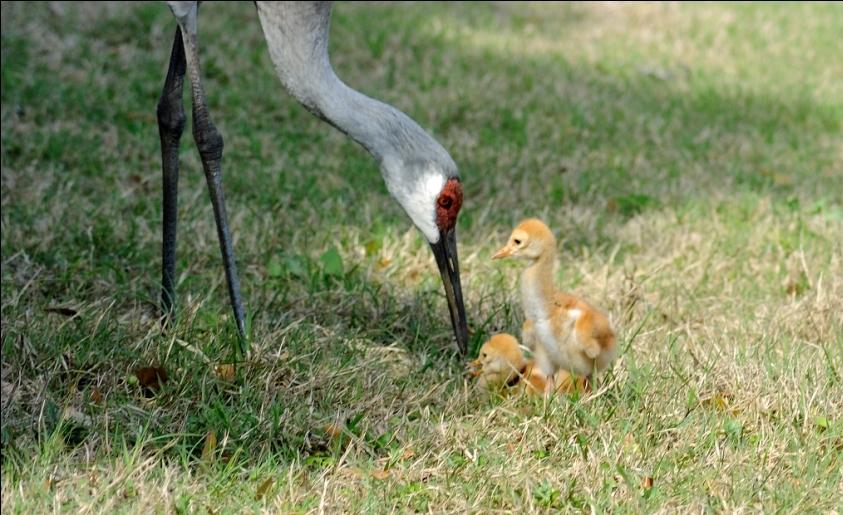
Sandhill Crane babies

Sandhill Crane babies

My son, give attention to my words; Incline your ear to my sayings. Do not let them depart from your eyes; Keep them in the midst of your heart; For they are life to those who find them, And health to all their flesh. Keep your heart with all diligence, For out of it spring the issues of life. (Proverbs 4:20-23 NKJV)

Nine more Good News Tract pages were added today. There are 31 altogether and they have not only the written text, but also audio.

I trust you can learn from them and/or use them to encourage others.

and sent Timothy, our brother and minister of God, and our fellow laborer in the gospel of Christ, to establish you and encourage you concerning your faith, (1 Thessalonians 3:2 NKJV)

Below are links to the Various Tracts from Crossway with each having the words and an audio:

Good News! Did you know that christianaudio has produced the audio tracts for many of the most popular Crossway tracts? They are free for the taking and free to distribute. In fact, Crossway distributes more than 23 million every year. Written by Max Lucado, Billy Graham, Mark Driscoll, John Piper and others, they have simple and profound truths to help teach the Good News! There are 31 in an easy to download zip file. They are free for the taking in both audio and PDF and able to be shared without restriction.

To learn more about Good News Tracts, visit www.goodnewstracts.org.


More Good News Tracts

*

Ian’s Bird of the Week – Hall’s Babbler

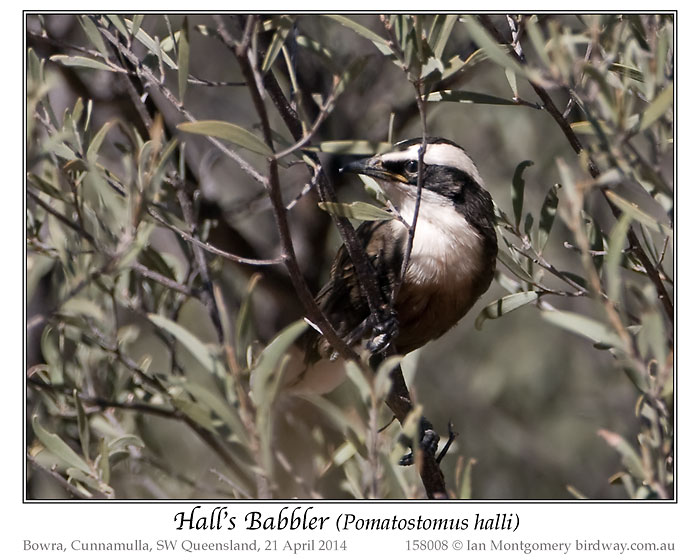
Hall's Babbler (Pomatostomus halli) by IanHere is another of the Bowra specialties, Hall’s Babbler, which has a restricted range in dry scrubland in western Queensland north to about Winton and northwestern New South Wales south to about Brewarrina.

If you think it looks just like a White-browed Babbler, you won’t be surprised to hear that it was overlooked as a separate species until 1963 and was first described in 1964. It was named after Harold Hall who funded five controversial bird collecting Australian expeditions in the 1960s and the species was detected, and presumably ‘collected’, on the first of these. It’s larger than the White-browed, 23-25cm/9-10 in length versus 18-22cm/7-9in, is darker overall, has a shorter white bib abruptly shading into the dark belly and a much wider eyebrow. DNA studies suggest that it’s actually more closely related to the Grey-crowned Babbler. It’s voice is described pithily by Pizzey and Knight as ‘squeaky chatterings … lacks “yahoo” of Grey-crowned and madder staccato outbursts of White-browed’. Babblers are clearly birds of great character.

Hall's Babbler (Pomatostomus halli) by Ian

It’s quite common at Bowra in suitable habitat, mainly mulga scrub, and on this occasion we found a party of about 20. Like all Australasian babblers, they’re very social and move erratically through the scrub bouncing along the ground and up into bushes like tennis balls. They’re delightful to watch, and infuriating to photograph as the tangled, twiggy mulga plays havoc with automatic focus – no time for manual – and they keep ducking out of sight. You can be lucky and get ones, like the bird in the second photo, that hesitate briefly, between bounces, in the open to look for food. There had been some good rain a couple of months before our visit, and the birds had been breeding – the one in the third photo with the yellow gape is a juvenile.

Hall's Babbler (Pomatostomus halli) by Ian

Bowra is unusual in that it’s in a relatively small area where the ranges of all four Australian babblers overlap. The other restricted range species, the Chestnut-crowned is at the northern end of its range and also fairly easy to find, while the widespread more northern species, the Grey-crowned, meets the mainly southern White-browed.

I’ve had several emails recently from prominent birders commenting on the excellence of the digital version of Pizzey and Knight. Things they like particularly are the combination of both illustrations and photos (including over 1200 of mine), the great library of bird calls by Fred Van Gessel, portability (phone, tablet and PC), comprehensiveness – all of the more than 900 species recorded in Australia and its territories and ease of generating bird lists by location. The good news is that the price has been reduced to $49.95 and it comes in iPhone/iPad, Android and Windows versions. Go here http://www.gibbonmm.com.au for more information, product tours and links to the appropriate stores, and here http://www.birdway.com.au/meropidae/rainbowbeeeater/source/rainbow_bee_eater_15231.htm to see the photo of the Rainbow Bee-eater below.

Hall's Babbler (Pomatostomus halli) by Ian

My apologies for the delay since the last bird of the week. I’m having a major drive to finish Where to Find Birds in Northeastern Queensland and other things are getting pushed temporarily into the background.

Greetings
Ian

**************************************************
Ian Montgomery, Birdway Pty Ltd,
454 Forestry Road, Bluewater, Qld 4818
Tel 0411 602 737 ian@birdway.com.au
Bird Photos http://www.birdway.com.au/
Recorder Society http://www.nqrs.org.au


Lee’s Addition:

But shun profane and idle babblings, for they will increase to more ungodliness. (2 Timothy 2:16 NKJV)

Here is what a Hall’s Babbler sounds like:

Thanks again Ian for sharing another interesting bird from your part of the world.

Our Hall’s Babbler is a member of the Pomatostomidae – Australasian Babblers Family. There are only five species in the family.

*

Hall’s Babbler – Wikipedia

Ian’s Bird of the Week

Pomatostomidae – Australasian Babblers Family

*

Sunday Inspiration – Herons

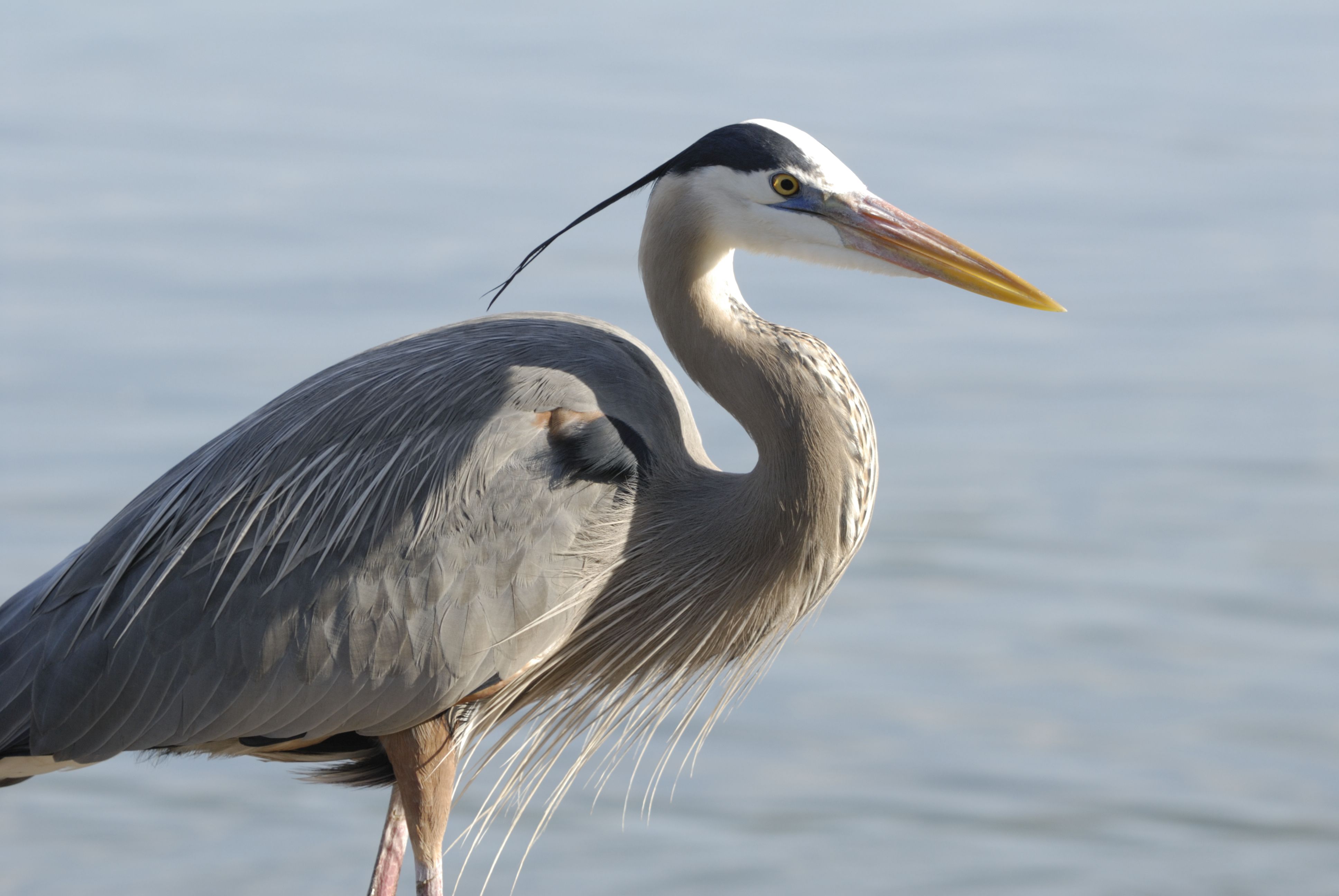
Great Blue Heron by Dan

Great Blue Heron by Dan

And the stork, the heron after her kind, and the lapwing, and the bat. (Leviticus 11:19 KJV)

Herons are a favorite bird species of mine. We see them frequently here in central Florida. One of their characteristics that impress me is their patience. It is common to see them standing almost still except for their neck swaying slowly back and forth.

Oh, that I had the patience like these Storks.

These wait all upon thee; that thou mayest give them their meat in due season. (Psalms 104:27 KJV)

Wait on the LORD: be of good courage, and he shall strengthen thine heart: wait, I say, on the LORD. (Psalms 27:14 KJV)

Knowing this, that the trying of your faith worketh patience. (James 1:3 KJV)

Herons belong to the  Ardeidae – Herons, Bitterns Family and are a Bird of the Bible.

*

This slideshow requires JavaScript.

*

*

“Peace Medley”  by Faith Baptist Choir

*

*


Birds of the Bible – Maturing Eagle

Bald Eagle (Haliaeetus leucocephalus) Jax Zoo by Lee

Bald Eagle (Haliaeetus leucocephalus) Maturing at Jax Zoo by Lee

Bless the LORD, O my soul: and all that is within me, bless his holy name. Bless the LORD, O my soul, and forget not all his benefits: Who forgiveth all thine iniquities; who healeth all thy diseases; Who redeemeth thy life from destruction; who crowneth thee with lovingkindness and tender mercies; Who satisfieth thy mouth with good things; so that thy youth is renewed like the eagle’s. (Psalms 103:1-5 KJV)

Last week at the Jacksonville Zoo, we saw this “rag-tag” Eagle. We found out that he is around five years old and has been going through his transition. They said that in the last two weeks he has really started to change. As you may know, Bald Eagles get their “bald” head when they mature. I have seen Eagles with an all black heads and the all white heads, but never in the process of maturing. I am glad that we were able to see him in this stage of his life.

Now for a much better photo by Dan:

Bald Eagle maturing at Jax Zoo by Dan

Bald Eagle maturing at Jax Zoo by Dan

Actually, it may be a “she.” I forgot to ask. Both male and females get the “bald” head after about five years of so.

The above verse, “so that thy youth is renewed like the eagle’s.” reminds of the Lord’s watch-care of the birds, but more importantly, over us. When I see this eagle, it reminds me of times when we mature as Christians. Sometimes we seem a little “rag-tag” in our development, but as we keep our eyes on the Lord, He helps us mature as we should.

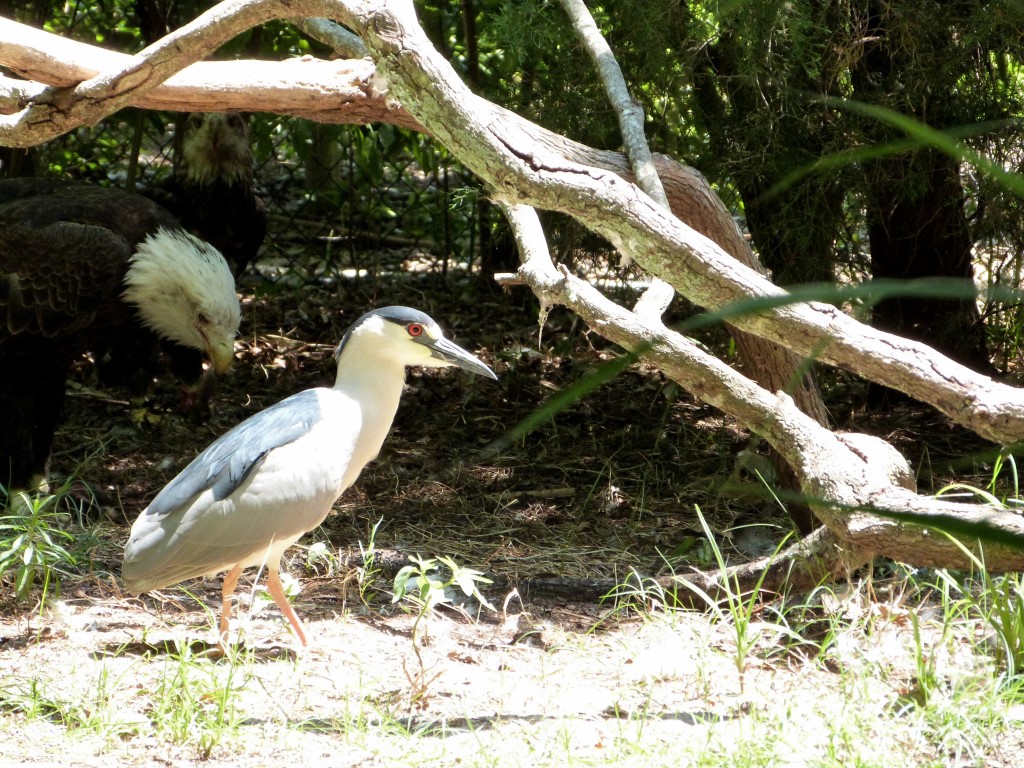
Black-crowned Night Heron (Nycticorax nycticorax) Jax Zoo by Lee

Black-crowned Night Heron (Nycticorax nycticorax) Jax Zoo by Lee

Here are some of the photos we took of the two eagles and a friendly Black-crowned Night-heron that was keeping them company. The Heron was wild and flew out later. These two Eagles were injured and can never return to the wild.

*

Also:

Changed From the Inside Out

*


Sunday Inspiration – Sunrise Gives A Big Surprise

Sunrise at Mayport 5-23-14

Sunrise at Mayport 5-23-14

And he shall be as the light of the morning, when the sun riseth, even a morning without clouds; as the tender grass springing out of the earth by clear shining after rain. (2 Samuel 23:4 KJV)

Friday, we were on the balcony of our room on Mayport Naval Station, Jacksonville. We were taking photos of the sunrise before packing up to come home.

As I took photos, I noticed a ship pretty far out heading in. Because it was early dawn, we couldn’t really see what it was and decided it was just a merchant ship coming in.

A ship way out coming in.

A ship way out coming in.

I kept photographing the sun rising and trying to catch some birds outlined. You know, like those real photographers do. Guess I better stick to birdwatching and leave the photography to those who know what they are doing.

Trying to catch a bird.

Trying to catch a bird.

As the ship came in, I started trying to catch it as it came under the rising sun. She gave 5 horn blasts, which Dan said, is a sign of an incoming Naval ship. I could not find her number on the bow. So I kept shooting.

Sunrise and USS New York at Mayport

Sunrise and the ship at Mayport

As were leaving the base to head home, we came by where the ships dock. There was that ship and then it “hit me,” That was the

USS New York!

Wow! Needless say, we stopped and took more photos of her tied up. Never thought I’d get a chance to see the USS New York, but there it was! It is special and this being Memorial Day weekend, it is even more special.

Now that we are home and I am viewing the photos on a monitor and not through the viewfinder, her number “21” is visible. Also,I found out that Mayport Naval Station is now the USS New York’s homeport as of last December.

Sunrise and USS New York at Mayport

Sunrise and USS New York at Mayport

This is not the usual “Sunday Inspiration,” but I want this to be a tribute to those who have served in the military and especially to those who have lost someone who served in the military. My father died as a result of his injuries sustain by “mustard gas.” It was years later, but it caused many problems.

And will be a Father unto you, and ye shall be my sons and daughters, saith the Lord Almighty. (2 Corinthians 6:18 KJV)

For whatsoever things were written aforetime were written for our learning, that we through patience and comfort of the scriptures might have hope. (Romans 15:4 KJV)

Lord Bless all of you as we remember not only the military, but also those who lost their lives in the “Twin Towers” on 9/11. You can see the two tall stacks representing the towers.

Remember the days of old, consider the years of many generations: ask thy father, and he will shew thee; thy elders, and they will tell thee. (Deuteronomy 32:7 KJV)

Grace be to you and peace from God our Father, and from the Lord Jesus Christ. Blessed be God, even the Father of our Lord Jesus Christ, the Father of mercies, and the God of all comfort; Who comforteth us in all our tribulation, that we may be able to comfort them which are in any trouble, by the comfort wherewith we ourselves are comforted of God. (2 Corinthians 1:2-4 KJV)

*

This slideshow requires JavaScript.


“Military Service Medley” – Faith Baptist Orchestra 7-3-11

*

Gospel Message

*

Ian’s Bird of the Week – Chestnut-breasted Quail-thrush

Ian’s Bird of the Week – Chestnut-breasted Quail-thrush ~ by Ian Montgomery

Newsletter – 5/21/14

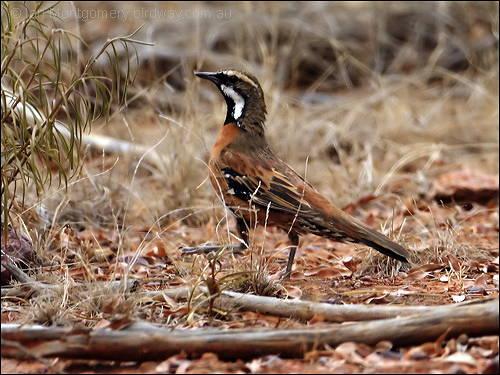
One of the specialties at Bowra is the Chestnut-breasted Quail-thrush a mainly terrestrial inhabitant of stony areas with scrubby bushes, particular mulga, in dry, but not desert, parts of western Queensland and NSW with a widely-separated population in Western Australia. It has suffered in eastern Australia from habitat clearance, but can usually be found at Bowra in an area called the Stony Ridge on the road that runs west of the homestead. This location, incidentally is also good for another specialty, Hall’s Babbler.

Chestnut-breasted Quail-thrush (Cinclosoma castaneothorax)  by Ian

Quail-thrushes are shy and either sit tight and flush suddenly with a quail-like whirring of their wings or run for cover. The Chestnut-breasted usually runs, but this time we unwittingly encircled this male bird which took refuge in a dead tree, the first time I’ve seen any quail-thrush do so. It looked confused rather than alarmed and wandered for a long time from branch to branch providing unusually good opportunities for photography until it hopped down onto the ground and ran away. On this occasion we saw only the brightly coloured male; females have more subdued colours, brown replacing the all the black plumage except the spotty wing coverts and rely on camouflage to escape detection when nesting on the ground. Quail-thrushes feed on both insects and seeds and there are an Australasian taxon with about four species in Australia and one in New Guinea.

Chestnut Quail-thrush by Ian

Chestnut Quail-thrush by Ian

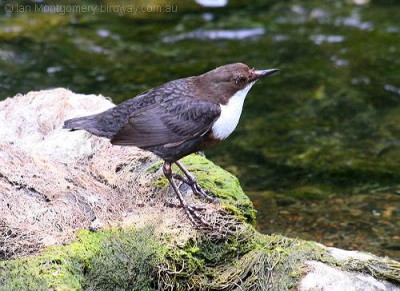
Quail-thrushes presumably get the quail part of their name from their terrestrial habits and whirring flight and the thrush part from their body shape. Cinclosoma is bird-taxonomy-speak for thrush in a confused sort of way. Confused because the Latin cinclus means thrush but derives from the Greek Kinklos a waterside bird of unknown type mentioned by Aristotle and others and though to be either an Old World Wagtail or a wader. To add to the confusion, Cinclidae refers to the Dipper family, not the thrushes, with Cinclus cinclus being the Eurasian White-breasted Dipper.


White-throated Dipper (Cinclus cinclus) by Ian

White-throated Dipper (Cinclus cinclus) by Ian


The confusion continues with actual taxonomy. The western race of the Chestnut-breasted is sometimes (IOC) treated as a separate species, the Western Quail-thrush. Meanwhile the geographically intermediate and closely-related Cinnamon Quail-thrush of central Australia desert country is sometimes split in two as well, with the Nullabor race being treated as a separate species, though it has also been lumped with the Chestnut-breasted. If that’s not enough, Birdlife International puts the Quail-thrushes in a family of their own, the Cinclosomatidae, while Birdlife Australia and the IOC lump with the Whipbirds and called them Psophodidae. (Birdlife International use to lump them and call them the Eupetidae.) I though you’d like to know! Let’s just enjoy the photos:

Greetings
Ian
**************************************************
Ian Montgomery, Birdway Pty Ltd,
454 Forestry Road, Bluewater, Qld 4818
Tel 0411 602 737 ian@birdway.com.au
Bird Photos http://www.birdway.com.au/
Recorder Society http://www.nqrs.org.au


Lee’s Addition:

The people asked, and He brought quail, And satisfied them with the bread of heaven. (Psa 105:40)

Thanks, Ian, for introducing us to another interesting bird. Your timing is perfect, as I am away from my computer for a few days.

Ian’s Bird of the Week
Odontophoridae – New World Quail Family

*

Sunday Inspiration – Singing Birds

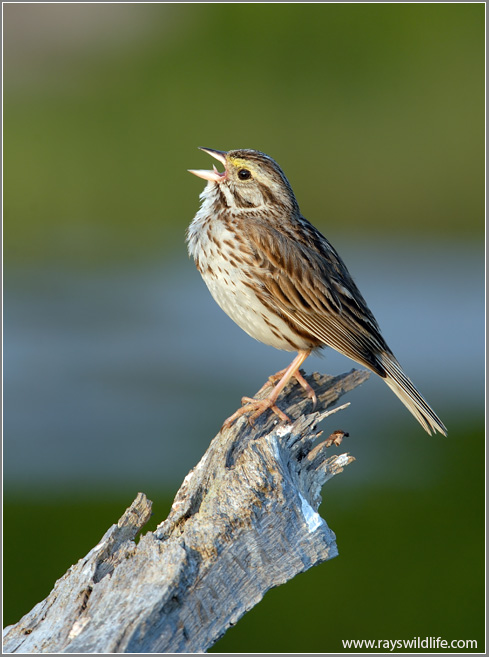
Savannah Sparrow singing by Ray

Savannah Sparrow singing by Ray

By them the birds of the heavens have their home; They sing among the branches. (Psalms 104:12 NKJV)

The Lord created the birds with the ability to sing such beautiful songs. They have various reasons for singing and shouldn’t we also be willing to sing in our different activities?

The LORD is my strength and my shield; My heart trusted in Him, and I am helped; Therefore my heart greatly rejoices, And with my song I will praise Him. (Psalms 28:7 NKJV)

“O God, my heart is fixed; I will sing and give praise, even with my glory.” (Psalms 108:1 KJV)

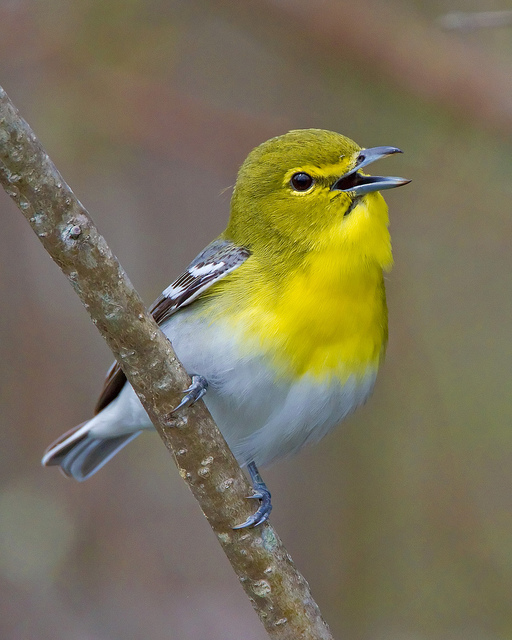
Yellow-throated Vireo (Vireo flavifrons) singing ©nebirdsplus

Yellow-throated Vireo (Vireo flavifrons) singing ©nebirdsplus

And some more great “singing” verses:

Speaking to yourselves in psalms and hymns and spiritual songs, singing and making melody in your heart to the Lord; (Ephesians 5:19 KJV)

Let the word of Christ dwell in you richly in all wisdom; teaching and admonishing one another in psalms and hymns and spiritual songs, singing with grace in your hearts to the Lord. (Colossians 3:16 KJV)

*

This slideshow requires JavaScript.

*

“Singing” – by Dr. Richard Gregory (permission given by Mrs. Gregory)

Dr. Gregory, who was a member of our church, is now in the presence of the Lord. He is seeing His Saviour “Face to face.”

*

Sunday Inspiration

Birds of the Bible

Birds of the Bible – Singing Birds

Birds in Hymns

Sharing The Gospel

*


Birds of the Bible – Dove and Pigeon Distribution


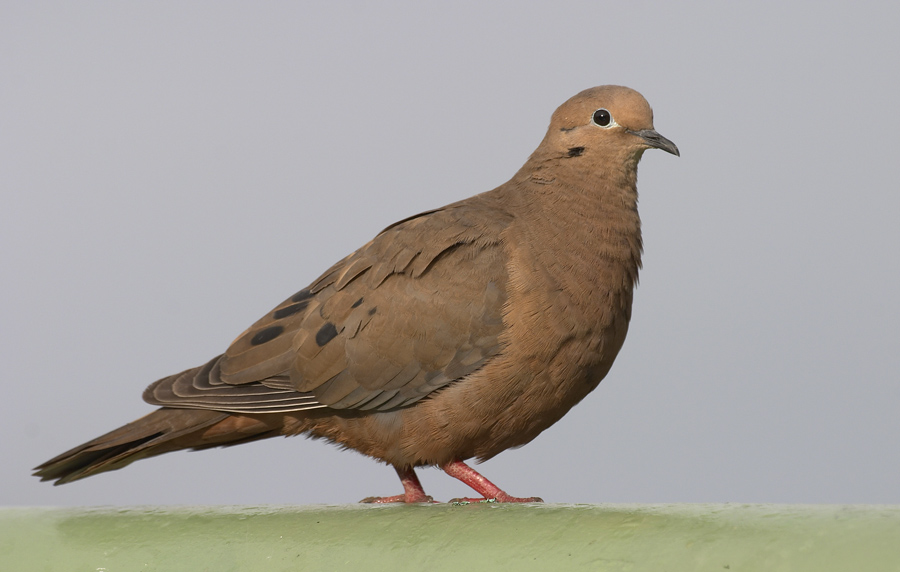
Eared Dove (Zenaida auriculata) by Robert Scanlon

Eared Dove (Zenaida auriculata) by Robert Scanlon

Also he sent forth a dove from him, to see if the waters were abated from off the face of the ground; (Genesis 8:8 KJV)

Doves and Pigeons are mentioned many times throughout Scripture. When people all over the world read about them in their Bible, they probably have an idea of what that bird looks like. Why?

“Pigeons and doves are distributed everywhere on Earth, except for the driest areas of the Sahara Desert, Antarctica and its surrounding islands and the high Arctic. They have colonised most of the world’s oceanic islands, reaching eastern Polynesia and the Chatham Islands in the Pacific, Mauritius, the Seychelles and Réunion in the Indian Ocean, and the Azores in the Atlantic Ocean.” (Wikipedia)

They appear almost everywhere. During the time of sacrifices to God, before Jesus Christ became the perfect Sacrifice for our sins; doves, turtle dove and young pigeons were accepted. Just as salvation is available to all, there were birds available, no matter where you were.

Eurasian Collared Dove (Streptopelia decaocto) by Dan

Eurasian Collared Dove (Streptopelia decaocto) by Dan

Why are they so plentiful?

“The family has adapted to most of the habitats available on the planet. These species may be arboreal, terrestrial or semiterrestrial. Various species also inhabit savannas, grasslands, deserts, temperate woodlands and forests, mangrove forests, and even the barren sands and gravels of atolls.”

Zebra Dove (Geopelia striata) by Margaret Sloan

Zebra Dove (Geopelia striata) has been widely introduced around the world – by Margaret Sloan

Are the Doves and Pigeons called by the same name? No. As they have reproduced and moved to the different areas (distribution), the number of species have grown.

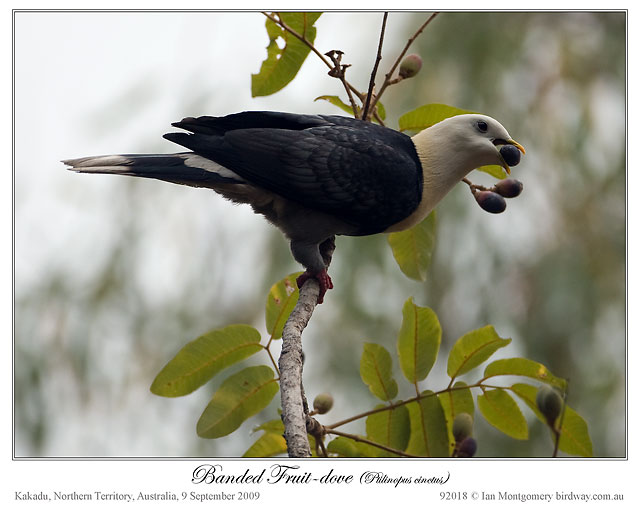
“Some species have large natural ranges. The Eared Dove ranges across the entirety of South America from Colombia to Tierra Del Fuego, the Eurasian Collared Dove has a massive (if discontinuous) distribution from Britain across Europe, the Middle East, India, Pakistan and China, and the Laughing Dove across most of sub-Saharan Africa, as well as India, Pakistan and the Middle East. Other species have a tiny, restricted distribution; this is most common in island endemics. The Whistling Dove is endemic to the tiny Kadavu Island in Fiji, the Caroline Ground-dove is restricted to two islands, Truk and Pohnpei in the Caroline Islands, and the Grenada Dove is restricted to Grenada in the Caribbean. Some continental species also have tiny distributions; for example, the Black-banded Fruit Dove is restricted to a small area of the Arnhem Land of Australia, the Somali Pigeon is restricted to a tiny area of northern Somalia, and Moreno’s Ground Dove is restricted to the area around Salta and Tucuman in northern Argentina.”

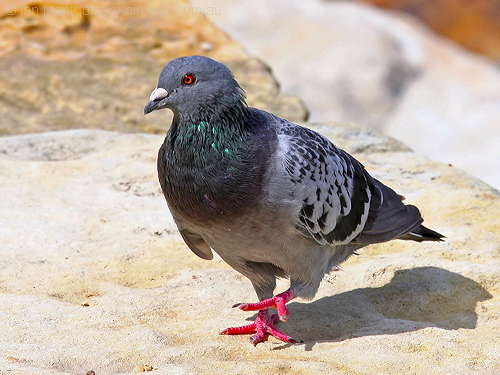
Rock Dove (Columba livia) by Ian

Rock Dove (Columba livia) by Ian

 And he said unto him, Take me an heifer of three years old, and a she goat of three years old, and a ram of three years old, and a turtledove, and a young pigeon. (Genesis 15:9 KJV)

“The largest range of any species is that of the Rock Dove or Rock Pigeon. This species had a large natural distribution from Britain and Ireland to northern Africa, across Europe, Arabia, Central Asia, India, the Himalayas and up into China and Mongolia. The range of the species increased dramatically upon domestication, as the species went feral in cities around the world. The species is currently resident across most of North America, and has established itself in cities and urban areas in South America, sub-Saharan Africa, Southeast Asia, Japan, Australia and New Zealand. The species is not the only pigeon to have increased its range due to the actions of man; several other species have become established outside of their natural range after escaping captivity, and other species have increased their natural ranges due to habitat changes caused by human activity.”

The “Pigeon” (Columba livia) is known by many names because of the different languages spoken, yet they all refer to the same bird. The scientific name,  Columba livia, refers to only that bird, no matter what they call it.

Here are some examples:

English:
Rock Pigeon
Czech:
holub skalní
German:
Felsentaube
Danish:
Klippedue
Spanish:
Paloma Bravía
Finnish:
kalliokyyhky
French:
Pigeon biset
Icelandic:
Bjargdúfa
Italian:
Piccione selvatico
Japanese:
kawarabato
Japanese:
カワラバト(ドバト)
Dutch:
Rotsduif
Norwegian:
Klippedue (Domestisert: Bydue)
Polish:
gołąb miejski
Portuguese:
Pombo-doméstico
Portuguese (Brazil):
Pombo-doméstico
Russian:
Сизый голубь
Slovak:
holub divý
Swedish:
Klippduva
Chinese:
原鸽

(Adapted from the Wikipedia’s “Columbidae” page, especially the “Distribution and Habitat” section.)

Banded Fruit Dove (Ptilinopus cinctus) by Ian

Banded Fruit Dove (Ptilinopus cinctus) by Ian

The flowers appear on the earth; The time of singing has come, And the voice of the turtledove Is heard in our land. (Song of Solomon 2:12 NKJV)

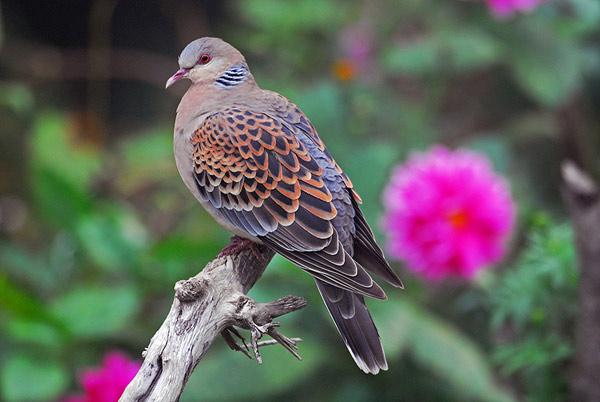
Oriental Turtle Dove (Streptopelia orientalis) by Nikhil

Oriental Turtle Dove (Streptopelia orientalis) by Nikhil

The next day John seeth Jesus coming unto him, and saith, Behold the Lamb of God, which taketh away the sin of the world. (John 1:29 KJV)

As mentioned above, if a person could not afford a lamb or ram, then Turtle Dove and Pigeons were accepted. They were plentiful and available. Since the Lord paid the ultimate sacrifice for our sin, the need to use these birds is no longer needed. As a birdwatcher, I am thankful. As a Christian, I am most thankful for the Lord’s sacrifice for my sins.

Jesus saith unto him, I am the way, the truth, and the life: no man cometh unto the Father, but by me. (John 14:6 KJV)

See:

*

Birds of the Bible – Buzzards

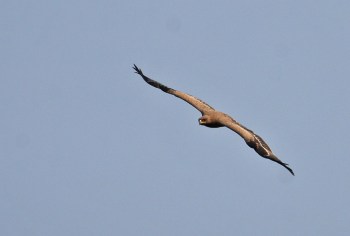
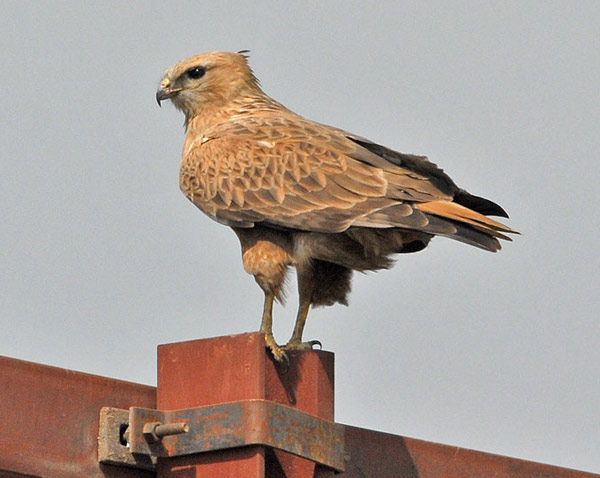
Long-legged Buzzard (Buteo rufinus) by Nikhil Devasar

Long-legged Buzzard (Buteo rufinus) by Nikhil Devasar

But these you shall not eat: the eagle, the vulture, the buzzard, (Deuteronomy 14:12 NKJV)

In Birds of the Bible – How Many Are There? II, the buzzard was mentioned. Also last week, Ian did an article on the Black-breasted Buzzard. Since realizing that this bird, the Buzzard, had not been added to the Birds of the Bible pages, I added a Buzzard and this is the first article about our forgotten avian bird.

Aren’t we glad that the Lord does not forget His Creation?

Look at the birds of the air, for they neither sow nor reap nor gather into barns; yet your heavenly Father feeds them. Are you not of more value than they? (Matthew 6:26 NKJV)

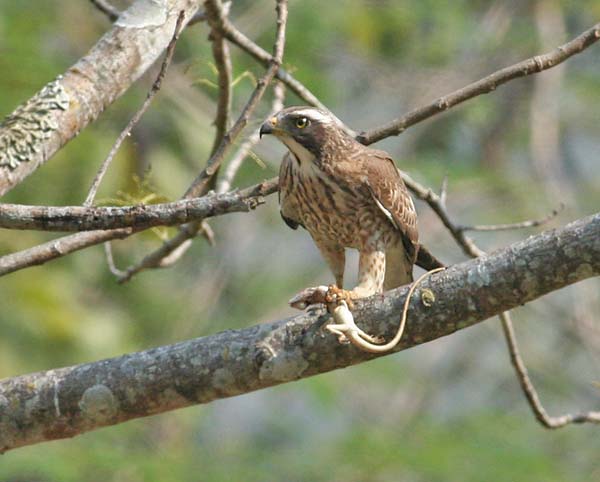
Buzzards belong to the  Accipitridae – Kites, Hawks & Eagles Family and has 28 species in this family with “Buzzard” in their name. Members of this family are known as “Birds of Prey” or “raptors” by many.

Grey-faced Buzzard (Butastur indicus) by Peter Ericsson

Grey-faced Buzzard (Butastur indicus) by Peter Ericsson

From Britannica “True buzzards, or buteos, constitute the subfamily Buteoninae of the family Accipitridae. When in flight, they can usually be distinguished from other birds of prey by their broad wings and expansive rounded tails. They fly with slow heavy wing beats and soar gracefully. The plumage of most species is essentially dark brown above and white or mottled brown below, and the tail and underside of the wings usually are barred. There is much variability of pigmentation, however, even between individuals of a single species. Buzzards customarily prey on insects and small mammals and only occasionally attack birds. The nest, in a tree or on a cliff, is substantial, built of sticks and lined with softer materials. The two to five whitish eggs are blotched with brown.”

One of several medium-sized, wide-ranging raptors with a robust body and broad wings. In particular, those in the genus Buteo. In the Old World, members of this genus are named as “buzzards”, but “hawk” is more common in North America.

In Europe, the Common Buzzard, Buteo buteo, where Buzzard is often used as a synonym. The Common Buzzard is the most known buzzard in the Old World.

In the New World Buzzard can mean:

  • A vulture, particularly the American Black Vulture and Turkey Vulture, or as a general term for vultures.
  • In parts of the United States where they are considered pest, particularly in rural areas, a derogatory term for certain birds of prey, such as the Chickenhawk (a common colloquial name referring to either the Cooper’s Hawk, the Sharp-shinned Hawk or the Red-tailed Hawk), or the Duck hawk (known elsewhere as the Peregrine Falcon).

Quotes from Britannica and Wikipedia with editing.

Another Bible verse with “buzzard” is in Leviticus:

And these you shall regard as an abomination among the birds; they shall not be eaten, they are an abomination: the eagle, the vulture, the buzzard, (Leviticus 11:13 NKJV)

Both verses, Leviticus 11:13 and Deuteronomy 14:12 are listed in the birds not to be eaten by the Israelites. Considering what they eat, I am in no hurry to eat them either.


See:

*

Birds of the Bible – How Many Are There? II

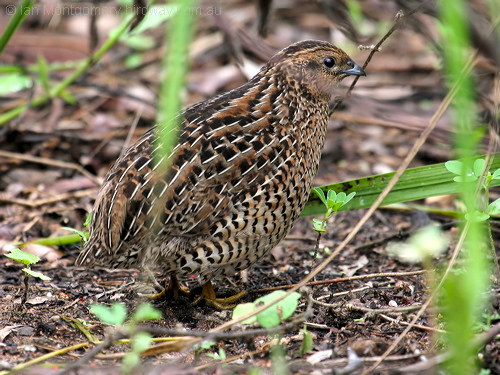
Brown Quail (Coturnix ypsilophora) by Ian

Brown Quail (Coturnix ypsilophora) by Ian

Birds of the Bible – How Many Are There? I (continued…)

As we continue in Genesis, the only other reference to birds that I have found is in Chapter 40. Joseph had been tossed in prison and in time he was joined by Pharaoh’s chief butler and his chief baker. They each have dreams and Joseph interprets them for the two men. Unfortunately the baker’s dream, which includes birds, will be killed.

And in the uppermost basket there was of all manner of bakemeats for Pharaoh; and the birds did eat them out of the basket upon my head. And Joseph answered and said, This is the interpretation thereof: The three baskets are three days: Yet within three days shall Pharaoh lift up thy head from off thee, and shall hang thee on a tree; and the birds shall eat thy flesh from off thee. (Genesis 40:17-19 KJV)

Looking at the verses in the compare mode, “birds” or “birdies” are listed by all except one. The ECB calls them the “flyers.” No matter what they are called, it was not a good day for the Chief Baker.

That brings us to the book of Exodus as the children of Israel travel through the wilderness that we meet our next named bird. The Quail. They had been complaining about only eating manna and started asking why they couldn’t have meat. So the LORD sent them quail or whatever we find they called them. I wrote about this avian critter in Birds of the Bible – Quail and in Quail II. Let’s see how the quail in translated here.

And it came to pass, that at even the quails came up, and covered the camp: and in the morning the dew lay round about the host. (Exodus 16:13 KJV)

  • Quail or quails by most versions
  • mother-quail (ABP+)
  • little birds (BBE)
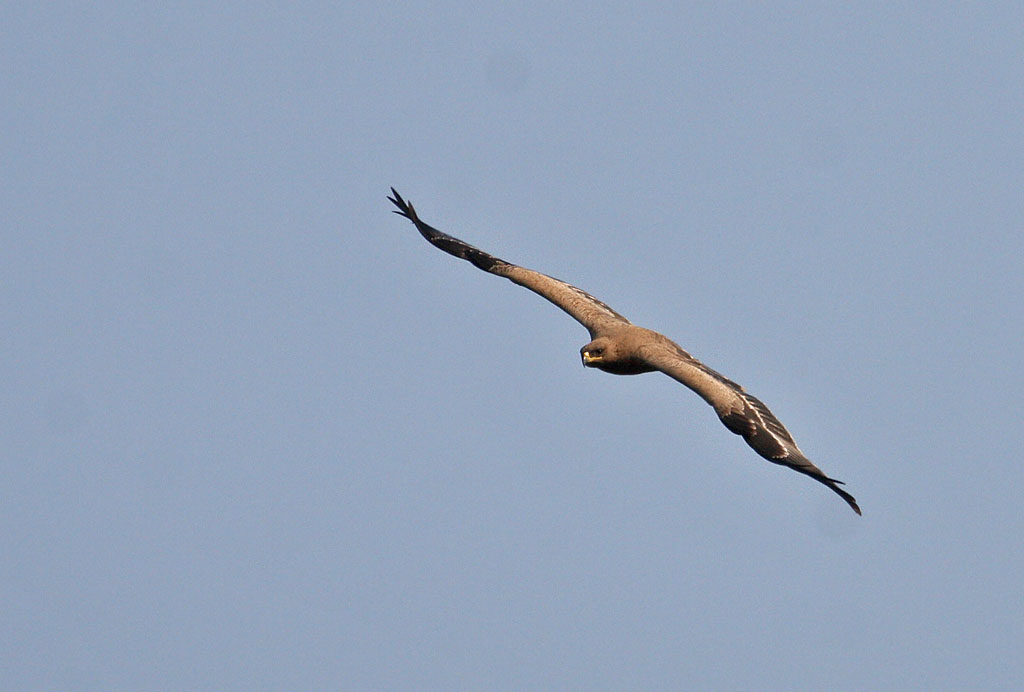
Steppe Eagle (Aquila nipalensis) by Peter Ericsson

Steppe Eagle (Aquila nipalensis) by Peter Ericsson

Our next verse and named bird is in Exodus 19:4 where the LORD is telling Moses what to tell the people.

Ye have seen what I did unto the Egyptians, and how I bare you on eagles‘ wings, and brought you unto myself. (Exodus 19:4 KJV)

The power of the eagle’s wings is referred to as how He freed them from their bondage in Egypt. So now we can add the Eagle to our list of birds. There are many references to Eagles throughout God’s Word. Every version mentions “eagle’s wings” or “wings of eagles.” See the Eagle articles.

As we move on to Leviticus, our count of the birds is going to really climb as we encounter the list of the Clean and Unclean birds in Chapter 11 also lots a variety as to how those birds are translated. Before we get there, the sacrifices are mentioned of the turtledoves or young pigeons, previously covered, in Lev 1:14, 5:7, 11, 12:6, 8, and  chapters 14 and 15.

And if the burnt sacrifice of his offering to the LORD is of birds, then he shall bring his offering of turtledoves or young pigeons. (Leviticus 1:14 NKJV)

I am going to quote the KJV and NKJV for the list, then we will check out the variations:

Leviticus 11:13-19 KJV
(13) And these are they which ye shall have in abomination among the fowls; they shall not be eaten, they are an abomination: the eagle, and the ossifrage, and the ospray,
(14) And the vulture, and the kite after his kind;
(15) Every raven after his kind;
(16) And the owl, and the night hawk, and the cuckow, and the hawk after his kind,
(17) And the little owl, and the cormorant, and the great owl,
(18) And the swan, and the pelican, and the gier eagle,
(19) And the stork, the heron after her kind, and the lapwing, and the bat.

Leviticus 11:13-19 NKJV
(13) ‘And these you shall regard as an abomination among the birds; they shall not be eaten, they are an abomination: the eagle, the vulture, the buzzard,
(14) the kite, and the falcon after its kind;
(15) every raven after its kind,
(16) the ostrich, the short-eared owl, the sea gull, and the hawk after its kind;
(17) the little owl, the fisher owl, and the screech owl;
(18) the white owl, the jackdaw, and the carrion vulture;
(19) the stork, the heron after its kind, the hoopoe, and the bat.

Can you see the differences already? That is just two translations, let’s see what the others reveal. So far we now have added; ossifrage, ospray, kite, night hawk, cuckow, hawk, little owl, cormorant, great owl, swan, pelican, gier eagle, stork, heron, lapwing, falcon, ostrich, short-eared owl, sea gull, fisher owl, screech owl, white owl, jackdaw, carrion vulture, hoopoe.

Levitus 11: 13 –

  • griffin (ABP+) (DRB) griffon vulture (NET),  
  • gier-eagle (ASV) (BBE) (RV),
  • Goshauke (Bishops) (Geneva) (Tyndale),
  • sea-eagle (Brenton) (Darby),
  • buzzards (ERV) (NAS77) (NASB) (UKJV),
  • bearded vulture and black vulture (ESV) (GW) (HCSB) (LITV) (MKJV)(WEB R) black and great vulture (JPS)
  • cormoraunte and kyte (Tyndale)

Some list them all in one verse:

(CEV) Eagles, vultures, buzzards, crows, ostriches, hawks, sea gulls, owls, pelicans, storks, herons, hoopoes, and bats are also disgusting, and you are forbidden to eat any of them.
(GNB) You must not eat any of the following birds: eagles, owls, hawks, falcons; buzzards, vultures, crows; ostriches; seagulls, storks, herons, pelicans, cormorants; hoopoes; or bats.

The next two verses are easier. Verse 14 has all birds of prey: (KJV)  “And the vulture, and the kite after his kind; ”

  • vulture – “whole species of falcon” (AMP)
  • kite
  • crows (ABP+)
  • buzzards (CJB) (GW) (NRSV)
  • falcon (Darby) + others
  • hawk (ECB)
  • red kite (ISV)
  • red kites and all kinds of black kites (NIrV) (NIV) (WEB (R))
One last verse for now: “every raven of any kind,” (Leviticus 11:15 ESV)
  • black birds, (ERV)
  • crows (GW) (NET)
Ravens, Blackbirds and Crows are all in the same family. No problem there.

In our list below, I doubled up the obvious birds that are in the same family like the owls and vultures.

Our list of Birds of the Bible so far:

Also mentioned:

  • Swooper (Gen 15:11)
  • Flyers (Gen 40:19) (Lev 11:13)

I am only listing what the different versions have written. I am neither approving or disapproving those versions.

For now, that is enough. To be continued in Part III.

Wordless Birds

Disclaimer About Bible Version Usage

*
Birds of the Bible – How Many Are There? I

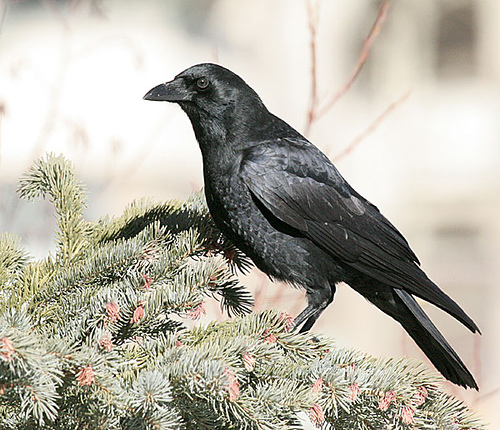
Chihuahuan Raven (Corvus cryptoleucus)Raven (Corvus corax) by Kent Nickell

Northern Raven (Corvus corax) by Kent Nickell

The list of the Birds of the Bible varies according to which version of the Bible you use. We have discussed this in other articles, but don’t think I ever actually listed them all. An article from Birding and the Bible says there are 29 and then questions 2 of them, the Glede and the Ossifrage, adding the Swift, his lists is 28 or 29.

The sidebar here has links to 33 pages of Bible Birds. There are a few more I am considering adding. After this study, I may find even more. I am going to write this as I do my research using my e-Sword program (free). Currently, I have quite a few versions of the Scriptures loaded and want to see what is listed. (Disclaimer About Bible Version Usage) Let’s get started.

The very first reference to birds or fowls, is in Genesis 1:21. That is where God created “every winged fowl after his kind” (KJV) or ” every winged bird according to its kind” (NKJV). Most agree with, “And God saw that it was good.” Here are some of the other ways of stating it:

  • “winged creature feathered  according to type.” (ABP+)
  • “every creature that flies with wings according to its kind,” (Brenton)
  • “every kind of bird that flies in the air.” (ERV)
  • ” all kinds of birds.” (GNB)
  • “He created every kind of bird that flies.” (NIrV)

So basically, all agree that the birds or fowls were created after their kind or type on the fifth day (1:23) and that God saw that it was good. That right there includes all the major families of birds, some have become extinct, some which interbred within their kinds, etc. until today we now have over 10,000 named species of birds. (Birds of the World)

In Genesis 1:25 God said, “Let us make man in our image, after our likeness: and let them have dominion” over birds, etc. The term his is given as “dominion over”, “have rule over”, “power over” (GNB), “be masters over” (ISV), “So they can be responsible for” (MSG).

Then in Genesis 2:20, Adam named the birds that the LORD God brought to him. The version all agree that they are birds or fowls or the air or heavens.

In chapter 3, Adam and Eve sin against God and we all come under the judgement including the critters, birds included. By chapter 6, things are so bad that the LORD tells Noah to bring two of every kind of critter into the Ark and then in 6:20, the birds are again mentioned. They are to be preserved in pairs of sevens. Again, no specific named bird is mentioned throughout chapter 6 or 7.

Eurasian Collared Dove (Streptopelia decaocto) by Lee

During and after the Flood, then we finally here of specific named birds. The first bird named in the Bible is the Raven. Noah opened the window of the ark and “sent forth a raven” and it flew back and forth “until the waters were dried up from off the earth.” (KJV) Other than spelling differences, they all agree on the Raven. The same is true of verse 8 where the Dove was released. The Dove kept coming back until the waters were totally dried up. The third time it was released, it did not return.

So now we have 2 Birds of the Bible – the Raven and the Dove.

The next reference to birds is in 9:2 where the birds now have a fear of humans placed on them. They, the birds, are told to multiply and fill the earth and are given a covenant or promise by God that the earth would never be destroyed by a worldwide flood again. Gen 9:10-17 – the Rainbow.

And the fear of you and the dread of you shall be upon every beast of the earth, and upon every fowl of the air, upon all that moveth upon the earth, and upon all the fishes of the sea; into your hand are they delivered. (Genesis 9:2 KJV)

King Vulture Brevard Zoo 120913 by Lee

King Vulture Brevard Zoo by Lee

In Genesis 15:9 we find the next birds, a Turtledove, young pigeon and in 15:11, the vultures. Two are sacrificed birds, the other is coming to take from the alter.

So He said to him, “Bring Me a three-year-old heifer, a three-year-old female goat, a three-year-old ram, a turtledove, and a young pigeon.” Then he brought all these to Him and cut them in two, down the middle, and placed each piece opposite the other; but he did not cut the birds in two. And when the vultures came down on the carcasses, Abram drove them away. (Genesis 15:9-11 NKJV)

Let’s see how these birds are given in the various translations. “dove” several, “turtle” (DRB), “mourning dove” (GW), “even a nestling” (LITV), and “young bird” (YLT). Most are in agreement with spelling differences from the old English of some of the translations.

Verse 11 has: birds of prey, birds, fowls, large birds (DRB), swoopers (ECB), Vultures (GNB, MSG, NKJV), and ravenous birds (YLT). Never heard of “swoopers”, so I guess that one doesn’t count. What you think? They all realize that some birds came swooping down trying to get at the sacrifice, but Abram drove them away.

Our list of Birds of the Bible so far:

Also mentioned:

  • Swooper (Gen 15:11)

For now, that is enough. To be continued in Part II.

Birds of the Bible

Wordless Birds

*