The Pompadour Cotinga – Concealed Incubators…

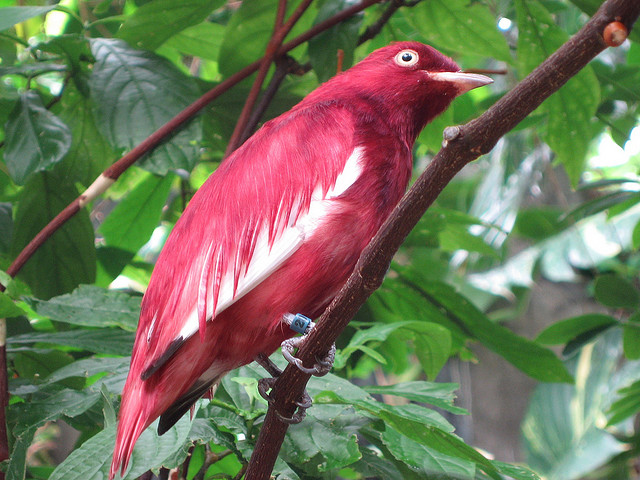
Pompadour Cotinga (Xipholena punicea) ©© Miami_Metrozoo male

Pompadour Cotinga (Xipholena punicea) ©© Miami_Metrozoo male

The Pompadour Cotinga – Concealed incubators… ~ by a j mithra

The Pompadour Cotingas are South American birds from the Cotingidae family. They are found in Brazil, Columbia, French Guiana, Guyana, Peru, Suriname, and Venezuela.

They reside in elevations to 1300 m which occur throughout Amazonia. The primary range extends from Columbia eastward to French Guiana and south to north-west Brazil. It is found in the canopy of humid forest and seems to be more numerous in areas of sandy soil forest.
 

Pompadour Cotinga (Xipholena punicea) ©©beautifulcataya Flickr

Pompadour Cotinga (Xipholena punicea) ©©beautifulcataya Flickr

Sand is used most often as a symbol of countless multitudes; especially of the children of Israel and of God’s thoughts on us and also of the wisdom and understanding that God gave King Solomon..

  • Is that the reason why these beautiful birds are more numerous in areas of sandy soil forest?
  • They know that Their creator is so mindful of them…

How precious also are thy thoughts unto me, O God! how great is the sum of them! If I should count them, they are more in number than the sand: when I awake, I am still with thee. (Psalm 139:17, 18)

During breeding season males gather to perform a ritualized flight display to attract a female. Two or three males will chase each other around a group of tree tops, keeping above the trees so that their white wings flashing against the dark foliage are visible for a great distance. The males are relatively easy to see even at a distance with their white wings flashing as they fly from tree to tree. Females sometimes join mixed canopy flocks but males appear to be more solitary…


Pompadour Cotinga (Xipholena punicea) female by AGrosset

Pompadour Cotinga (Xipholena punicea) female by AGrosset

It is not uncommon for the clutch to contain a single egg. The eggs are a greenish gray with drab spotting. Frail open nests of curly wood tendrils completely conceal the female while she incubates. Little is known about their breeding habits because it occurs high up in the forest canopy.

  • God closed the door of the Ark and concealed Noah his family and the wildlife as well..
  • God’s plan in our lives are planned high above in the heavens where no one can see..
  • His ways are not our ways and our ways are not His..

Please read through Isaiah 39 and you will learn how King Hezekiah brought curse over his family when he showed off all his treasure to the envoys of Babylon so as to win favour from them..

  • Do not show off God’s blessings over your life to the others to win favour but just conceal yourself like these birds..
  • God has concealed us in His palm so wait until He shows us off to the world..

Humble yourselves therefore under the mighty hand of God, that he may exalt you in due time: (I Peter 5:6)

The bride, the Church, needs to completely conceal itself while it incubates God’s will…

But you, when you pray, enter into your closet, and when you have shut your door, pray to your Father which is in secret; and your Father which sees in secret shall reward you openly. (Mathew 6:6)

A considerable number of these birds are remarkable for the extraordinarily abnormal form of some of their wing-quills, and occasionally of their wing-coverts – a feature in the former case observable also among the Pipridae, and, where existing, generally confined to the male bird.
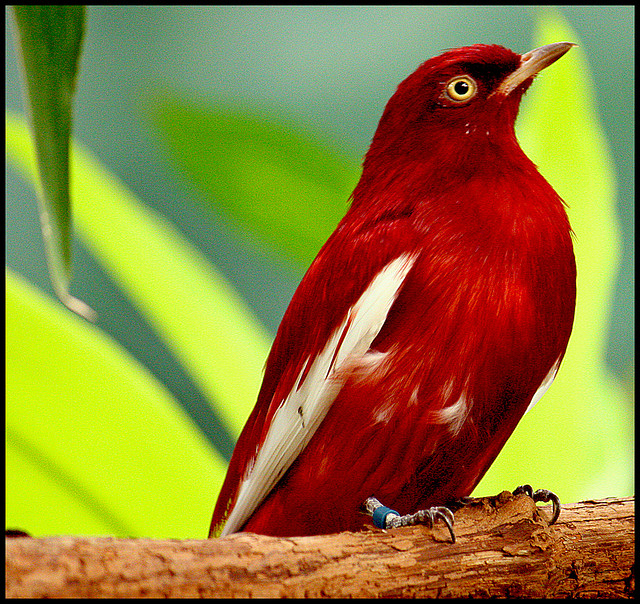
 

Pompadour Cotinga (Xipholena punicea) ©©holyknight33 Flickr

Pompadour Cotinga (Xipholena punicea) ©©holyknight33 Flickr

Many of them also are brilliantly coloured, and at least one, today known as the Pompadour Cotinga (Xipholena punicea) but known as the Pompadour Chatterer in the 19th Century (and had a latin name of Xipholena pompadora at that time) was given its 19th Century name by Edwards (Gleanings, ii. p. 275, pl. 341) after the celebrated Madame de Pompadour, to whom these birds and other birds were sent, when the ship that bore them from Cayenne fell a prize to a British cruiser.

The Pompadour Cotinga is of a hue scarcely to be seen in any other bird. The coloration of the Cotingas is from true pigmentation, not the more common prismatic feather structure. The males are a glistening wine red color with white flight feathers narrowly tipped in black. The elongated and stiff greater wing coverts are wine red with white shafts partly covering the flight feathers. The females are mainly gray and paler below. The throat and belly are grayish white, with the wings and tail dusky. Greater wing coverts and inner flight feathers are broadly edged in white. The juveniles are like the female but with dark eyes.

With glistening wine red color with white flight feathers, reminds us of the wine soaked garment of our Lord isn’t it?

My beloved is white and ruddy, the chiefest among ten thousand. (Song of Solomon 5:10)

  • About 2000 years back He came to redeem us and was battered and bruised made it look like His garment was soaked in wine…
  • This time around He is going to come again to turn His garment into red..
  • Not with His blood though…

Who is this that cometh from Edom, with dyed garments from Bozrah? this that is glorious in his apparel, travelling in the greatness of his strength? I that speak in righteousness, mighty to save.
Wherefore art thou red in thine apparel, and thy garments like him that treadeth in the winefat?
I have trodden the winepress alone; and of the people there was none with me: for I will tread them in mine anger, and trample them in my fury; and their blood shall be sprinkled upon my garments, and I will stain all my raiment
For the day of vengeance is in mine heart, and the year of my redeemed is come. (Isaiah 63:1-4)

Are we ready to meet the King?

Have a blessed day!

Your’s in YESHUA,
a j mithra

Please visit us at:
Crosstree
ajmithra21

Birds of the Bible – Bird Catcher

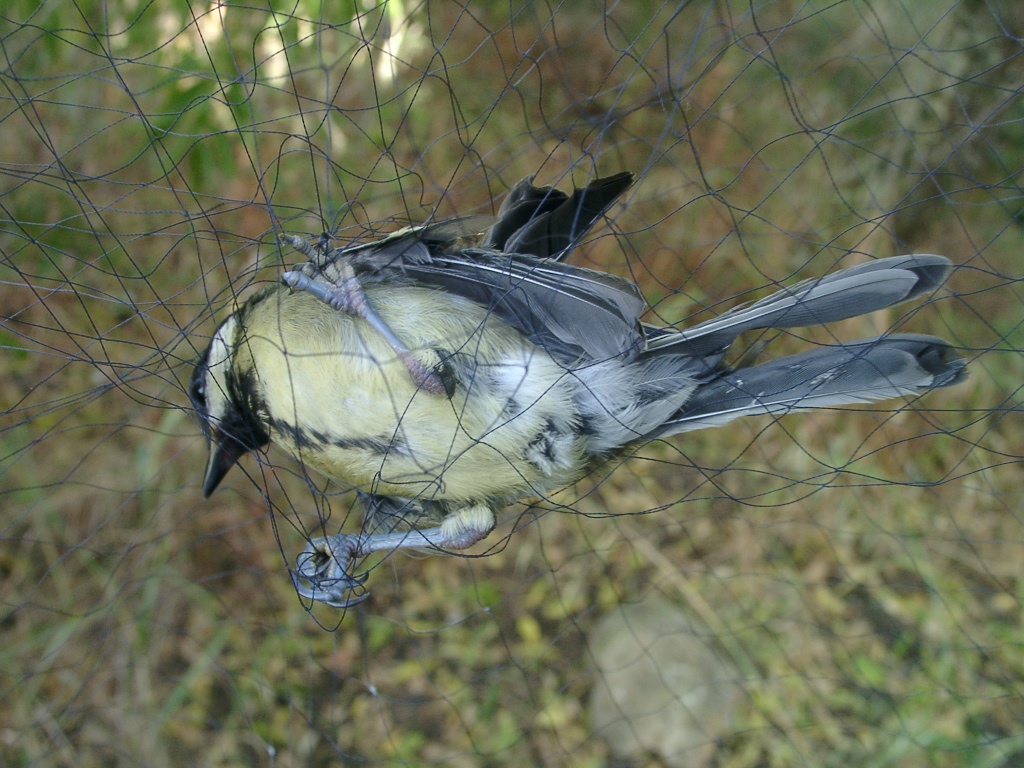
Bird Caught in a Net ©WikiC

Bird Caught in a Net ©WikiC

Fowler

“foul´ẽr (יקשׁ, yōḳēsh): A professional birdcatcher. In the days previous to firearms, birds were captured with nets spread on the ground, in traps and snares. There was a method of taking young birds from a nest, raising them by hand, and when they had become very tame, they were confined in hidden cages so that their voices would call others of their kind to the spot and they could be killed by arrows of concealed bowmen or the use of the throw-stick (Ecclesiasticus 11:30) This was a stick 1 1/2 feet in length and 1/2 inches in diameter, hurled with a rotary motion at the legs of the birds and was very effective when thrown into flocks of ground birds, such as partridge or quail, especially if the birds were running up hill. There was also a practice of sewing a captured bird’s eyelids together and confining it so that its cries would call large numbers of birds through curiosity and they could then be taken in the several ways mentioned. The fowlers supplied the demand for doves and other birds used for caged pets, and furnished the market with wild pigeons and doves for sacrifice and such small birds as were used for food.

For he will deliver thee from the snare of the fowler. And from the deadly pestilence. (Psalms:91:3)

This is David’s promise that the Almighty will deliver us from the evil plans laid to ruin us, as a bird sometimes in its struggles slips the hair and escapes from the “snare” (which see) set for it.

(Here is a video of a modern day “fowler” by patriotledger.)

Our soul is escaped as a bird out of the snare of the fowlers: The snare is broken, and we are escaped. (Psalms 124:7)

Here is the fulfillment of the former promise in a cry of rejoicing. Sometimes the snare held fast, sometimes it broke; then the joy in the heart of a freed man was like the wild exultation in the heart of the escaping bird.

Deliver thyself as a roe from the hands. of the hunter. And as a bird from the hand of the fowler. (Proverbs 6:5)


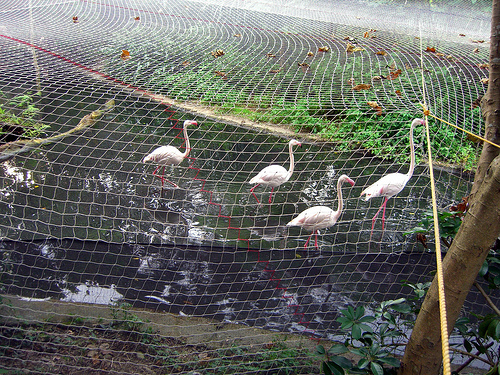
Flamingos Caught in a net©Flickr

Flamingos Caught in a net©Flickr

With methods so primitive as these for taking birds, it must have occurred frequently that a stunned, wounded or entrapped bird slipped even from the hand that held it and made good its escape.

For among my people are found wicked men: they watch, as fowlers lie in wait; they set a trap, they catch men. (Jeremiah 5:26)

Here is the plain comparison strongly drawn between wicked men entrapping their fellows and fowlers taking unsuspecting birds.
The last reference is in Hosea 9:8:

Ephraim was a watchman with my God: as for the prophet, a fowler’s snare is in all his ways, and enmity in the house of his God.

Wherever he goes, the prophet is in danger of being trapped.”

* * *

This article was quoted from:

The International Standard Bible Encyclopedia (1915) is a public domain Biblical encyclopedia. This encyclopedia was published by Wm. B. Eerdmans Publishing Co. It contains articles by nearly 200 scholars about archaeological discoveries, the language and literature of Bible lands, customs, family life, occupations, and the historical and religious environments of Bible people.

In addition there is a newer version which should not be confused with the public domain 1915 edition that can be found freely available at various sites.

Photos and Video added and article layout by Lee

*

The Little Spiderhunter – The Praising Pollinator

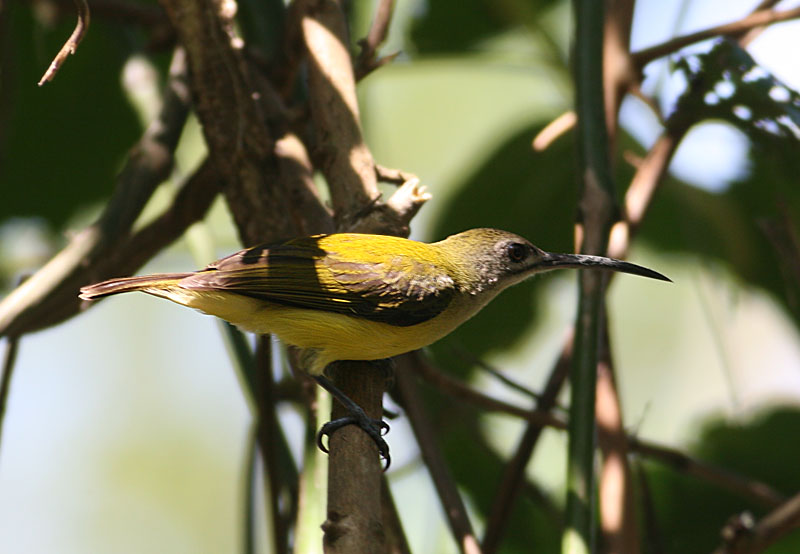
Little Spiderhunter (Arachnothera longirostra) by Peter Ericsson

Little Spiderhunter (Arachnothera longirostra) by Peter Ericsson

The Little Spiderhunter – The Praising Pollinator ~ by a j mithra

The Little Spiderhunter (Arachnothera longirostra) is a species of long-billed nectar feeding bird in the Nectariniidae family found in the moist forests of South and Southeast Asia.

Unlike typical Sunbirds, males and females are very similar in plumage.

They are usually seen in ones or twos and frequently make a “tzeck” call and are most often found near flowering plants where they obtain nectar. They are found close to their favorite nectar bearing trees, often species of wild Musaceae or flowers in gardens.

We too have Jesus, the Rose of Sharon and the Lilly of the valley, who is sweeter than honey..

But, where is our dwelling place? Is it near Jesus?

Though these birds are called spider eaters, a lesson can be learned from them who dwell among the flowers to obtain nectar…

Though we are sinners, the WORD, which is sweeter than honey, is able to make us holy when we prefer to dwell among The Rose of Sharon…

These birds have to go in search of their favorite flowers..

But, we have the most amazing privilege of bringing the Rose of Sharon, the Lilly of the Valley, among us through our praise…

But thou art holy, O thou that inhabitest the praises of Israel. (Psalm 22:3)

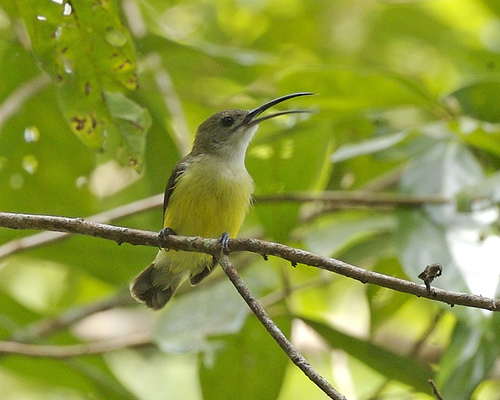
The distinctive long beak sets it apart from other Sunbirds. The sexes are alike except for a paler base to lower mandible in the female. The male has an all black beak.
They have a buzzy “zick-zick” call that is made regularly when disturbed or when foraging. The song is series of rapid chipping notes and these can go on for long periods… While dwelling near its favorite nectar bearing trees, these birds sing for long period of time particularly when they are disturbed…

  • King Jehoshaphat disturbed God with praise when he was disturbed by his enemies..
  • Peter and Silas, disturbed God with their praise when they were disturbed by the soldiers…
  • Jonah disturbed God with his praise when he was disturbed inside the whale’s belly..
  • King Nebuchadnezzar disturbed God with his praise when his pride disturbed him..
  • The best way to disturb God when we are disturbed is to praise Him…

Do we murmur or sing praise to the Lord when we are disturbed?

Praise ye the LORD. Sing unto the LORD a new song, and his praise in the congregation of saints.
Let Israel rejoice in him that made him: let the children of Zion be joyful in their King.
Let them praise his name in the dance: let them sing praises unto him with the timbrel and harp.
For the LORD taketh pleasure in his people: he will beautify the meek with salvation.
Let the saints be joyful in glory: let them sing aloud upon their beds.
Let the high praises of God be in their mouth, and a two edged sword in their hand;
To execute vengeance upon the heathen, and punishments upon the people;
To bind their kings with chains, and their nobles with fetters of iron;
To execute upon them the judgment written: this honour have all his saints. Praise ye the LORD. (Psalm 149)

Little Spiderhunter (Arachnothera longirostra) ©©Flickr

Little Spiderhunter (Arachnothera longirostra) ©©Flickr

The genus name Arachnothera means “spider hunter” and the species epithet refers to the long beak. About thirteen geographic races are recognized. The nominate race longirostra (Latham, 1790) is found in southwestern India, central and northeastern India, foothills of the Himalayas and into Thailand and Yunnan. Race sordida La Touche, 1921 is found in southern China and northeastern Thailand. Race pallida Delacour, 1932 is found in southeastern Thailand and C & S Indochina. The species is found in Bangladesh, Bhutan, Brunei, Cambodia, China, India, Indonesia, Laos, Malaysia, Myanmar, Nepal, the Philippines, Thailand, and Vietnam.

Within India, there are disjunct populations in the Eastern Ghats from Lamasinghi, Vishakapatnam and parts of Orissa and the Western Ghats apart from the main distribution in north-east India that extends into Southeast Asia. A record from the Nicobar Islands is considered doubtful.

Its natural habitats are subtropical or tropical moist lowland forests, subtropical or tropical mangrove forests, and subtropical or tropical moist montanes. It is usually found below the canopy.

They have been noted as good pollinators of wild banana species and several species of the ginger family and often visit Indian silk cotton tree and Indian coral tree for nectar.

These birds are good pollinators…

  • The extension of kingdom of God depends upon pollinators of His word…
  • Are we good pollinators of the Rose of Sharon and the Lilly of the valley?
  • Or are we just honey suckers?

It is time for us to think and rethink of our status in the kingdom of God…

Now then we are ambassadors for Christ … (II Corinthians 5:20)

Little Spiderhunter (Arachnothera longirostra) ©©

Little Spiderhunter (Arachnothera longirostra) ©©

They are often seen in plantations in forest areas. Although they are more often seen in secondary forests or in clearings and appear to be tolerant of human activities, they have become extinct in some forest fragments. In Singapore they have gone locally extinct within the botanical garden.

The breeding season in northeastern India is March to September but mainly May to August and in southern India it breeds from December to August.

The nest is a compact cup attached under a banana or similar broad leaved plant suspended by cobwebs and vegetable fibre. Two eggs are the usual clutch.

In Sarawak, the Kayan, Kenyah and Punan people consider it a bird of good omen and when they are out collecting camphor, the men would wait until they heard the “sit” call of one of these spiderhunters.

  • As we call His name, He sure will deliver the undelivered…
  • God is waiting for our call before He separates the husk from the grains…
  • There are millions out there who have not even head the name Jesus..

What are we going to do to reach them before the King returns?

Call unto me, and I will answer thee, and show thee great and mighty things, which thou knowest not. (Jeremiah 33:3)

Have a blessed day!

Your’s in YESHUA,
a j mithra

Please visit us at:

Crosstree
http://ajmithra21.wordpress.com/


Lee’s Addition:

The Little Spiderhunter is in the Nectariniidae – Sunbirds Family of the Passeriformes Order.

See more of a j mithra’s articles
More Birds of the World

Birds in Hymns – O Maker of the Sea and Sky

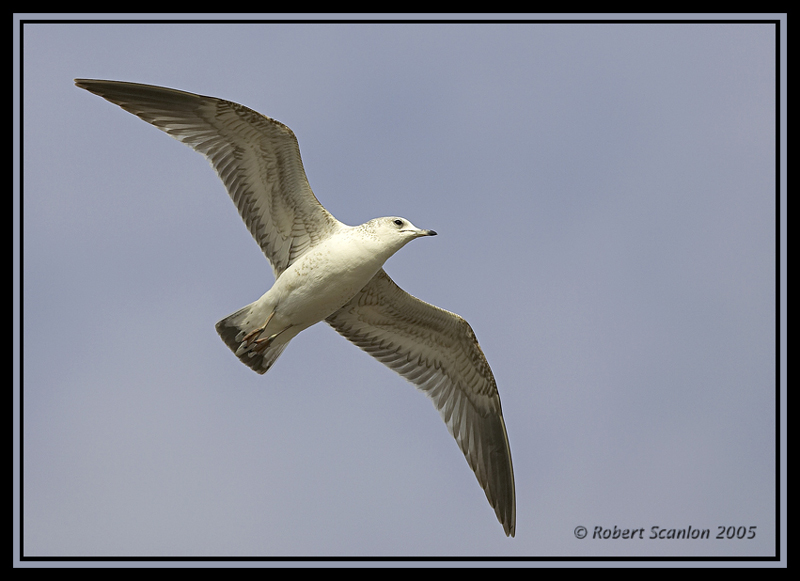
Common Gull (Larus canus) by Robert Scanlon

Common Gull (Larus canus) by Robert Scanlon

Happy is he that hath the God of Jacob for his help, whose hope is in the LORD his God: Which made heaven, and earth, the sea, and all that therein is: which keepeth truth for ever: (Psalms 146:5-6 KJV)

Words by Hen­ry Bur­ton, 1905. (1840-1930)
Music – Santa Trin­i­ta by E. V. Pier­ac­ci­ni (1828-1902)

O Maker of the Sea and Sky


* * *
O Maker of the sea and sky,
Whose word the stormy winds fulfill,
On the wide ocean Thou art nigh,
Bidding these hearts of ours be still.

What if Thy footsteps are not known?
We know Thy way is in the sea;
We trace the shadow of Thy throne,
Constant amid inconstancy.

Shy Albatross (Thalassarche cauta) by Ian

Shy Albatross (Thalassarche cauta) by Ian

Thou bidd’st the north or south wind blow;
The lonely sea bird is Thy care;
And in the clouds which come and go,
We see Thy chariots everywhere.

The sun that lights the homeland dear
Spreads the new morning o’er the deep;
And in the dark Thy stars appear,
Keeping their watches while we sleep.

And so, secure from all alarms,
Thy seas beneath, Thy skies above,
Clasped in the everlasting arms,
We rest in Thine unslumbering love.

My help cometh from the LORD, which made heaven and earth. He will not suffer thy foot to be moved: he that keepeth thee will not slumber. (Psalms 121:2-3 KJV)

Most information from The Cyber Hymnal

More Birds in Hymns

Wordless Birds

*

Birdwatching at Circle B Bar Reserve – Jan 2011

Here is a video that I shot out at the Circle B Bar Reserve in Lakeland, FL on January 18th. We went out to watch some of the 4,000 American White Pelicans land at the marsh. We got there about 4:30 pm and stayed until almost 6 pm.

I left the sound on so that you can catch the amazement in my voice. My english is terrible and my words nutty, but I was thoroughly enjoying my “birdwatching adventure.” This is what it is really like to go birdwatching with me. I get so amazed at watching God’s created critters.

Thou wilt shew me the path of life: in thy presence is fulness of joy; at thy right hand there are pleasures for evermore. (Psalms 16:11 KJV)

I have more of these and pictures, but will save them for another time. Slower connections speeds will have enough problems loading just one video.

On the video I said about 100 feet over my head, it was more like 20-30 feet over our heads. The pelicans were landing right behind us.

Formed By Him – Sea Birds That Drink Seawater

Buller's Shearwater (Puffinus bulleri) by Ian

Buller’s Shearwater (Puffinus bulleri) by Ian

An interesting article by Donna L. O’Daniel provided the background for this blog. You can see her complete article at: Water, Water Everywhere . . . And Not A Drop To Drink. See the article for some of the more technical aspects of this.

Birds that are at sea for months and even years must have a way to quench their thirst. How can they do that? If we drink seawater, which is loaded with salt, we would be in deep trouble. Most regular birds would also suffer harm if they were to drink the salty water all the time. Birds like the Albatrosses, Petrels, Tubenoses and Shearwaters do, in fact, drink saltwater.

Laysan Albatross (Phoebastria immutabilis) by Daves BirdingPix

You would know that the Lord God, the Creator God, would have already prepared these birds for this situation. And so He did.

For My thoughts are not your thoughts, Nor are your ways My ways,” says the LORD. “For as the heavens are higher than the earth, So are My ways higher than your ways, And My thoughts than your thoughts. (Isaiah 55:8-9 NKJV)
Have you not known? Have you not heard? The everlasting God, the LORD, The Creator of the ends of the earth, Neither faints nor is weary. His understanding is unsearchable. (Isaiah 40:28 NKJV)

Northern Giant Petrel (Macronectes halli) by Dave's BirdingPix

Northern Giant Petrel (Macronectes halli) by Dave’s BirdingPix

“Sea birds like the albatross drink freely from sea water but never seem to suffer any ill effects. They manage this because their physiology has become adapted to the sea environment. They have special glands just behind their eyes that actively pump salt out of their blood and into narrow tubes that lead into the bird’s nostril. The excess salt drips harmlessly out of the body, restoring the blood salt level back to normal.” “Seabirds can drink seawater and have salt glands inside the head that eliminate excess salt out of the nostrils.” (Internet)

Wikipedia has this to say about the Albatrosses: “Albatrosses, along with all Procellariiformes have a need to lower their salt content due to their drinking of ocean water. All birds have an enlarged nasal gland at the base of the bill, above their eyes. This gland is inactive in species that don’t require it; however the Procellariiformes do require its use. Scientists are uncertain as to its exact processes, but do know in general terms that it removes salt that forms a 5% saline solution that drips out of their nose or is forcibly ejected in some birds.

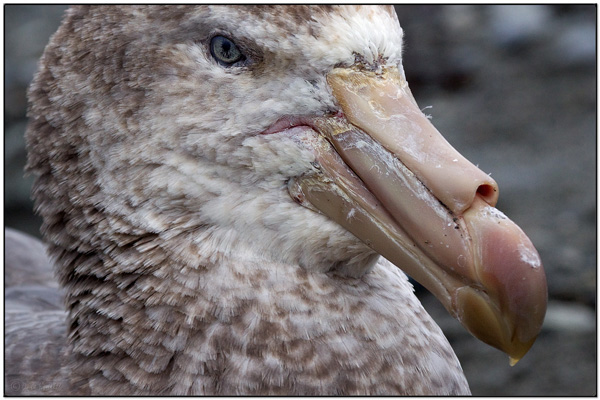
Northern Giant Petrel head close-up by Daves BirdingPix

Northern Giant Petrel head close-up by Daves BirdingPix

About the Tubenoses and Shearwaters: “They also have a uniquely structured bill, with seven to nine distinct horny plates.. Finally, they have a salt gland that is located above their nasal passages and helps desalinate their body, as they drink seawater. They excrete the salty waste out their nose. As members of Procellariiformes, they share certain characteristics. First they have tubular nostrils called nariorns. This feature gives them their common name, Tubenoses. The opening to the nostril is located differently in some birds. These birds have the opening on top of the upper bill.”

For since the creation of the world His invisible attributes are clearly seen, being understood by the things that are made, even His eternal power and Godhead, so that they are without excuse, because, although they knew God, they did not glorify Him as God, nor were thankful, but became futile in their thoughts, and their foolish hearts were darkened. (Romans 1:20-21 NKJV)

Wandering Albatross (Diomedea exulans) by Ian

Wandering Albatross (Diomedea exulans) by Ian

“The creation model for the origin of avian salt glands states that an intelligent Creator created this class of vertebrates complete with all of the complex systems within their bodies to survive in and adapt to their given environments, including salt glands to rid their bodies of excess salt. Perhaps the strongest argument in favor of the creation model for the origin of avian salt glands, aside from the lack of transitional forms in the fossil record, is one consisting of purpose and interdependence of purposeful parts.

Given the complexity of the functioning of avian salt glands, their existence by design can hardly be denied. The evidence for design that is obvious in the avian salt gland suggests a Designer who not only created the gland, but the entire animal, the earth, and the entire universe.” From Donna’s Article (see above)

And He said to me, “It is done! I am the Alpha and the Omega, the Beginning and the End. I will give of the fountain of the water of life freely to him who thirsts. (Revelation 21:6 NKJV)
And the Spirit and the bride say, “Come!” And let him who hears say, “Come!” And let him who thirsts come. Whoever desires, let him take the water of life freely. (Revelation 22:17 NKJV)

The Procellariiformes Order includes these Families:
Albatrosses – Diomedeidae – 21 species
Petrels, Shearwaters – Procellariidae – 86 species
Storm Petrels – Hydroatidae – 23 species
Diving Petrels – Pelecanoididae – 4 species

More Formed By Him articles

*

Birds of the Bible – Seven By Seven

Northern Pintail (Anas acuta) pair by Ray

Northern Pintail (Anas acuta) pair by Ray

When the birds and animals came to Noah and the Ark, the “clean critters” came “seven by seven.” Noah was told in Genesis 7:1-3:

And the LORD said unto Noah, Come thou and all thy house into the ark; for thee have I seen righteous before me in this generation. Of every clean beast thou shalt take to thee by sevens, the male and his female: and of beasts that are not clean by two, the male and his female. Of fowls also of the air by sevens, the male and the female; to keep seed alive upon the face of all the earth. (Genesis 7:1-3 KJV)

Indian Scops Owl (Otus bakkamoena) pair by Nikhil Devasar

Indian Scops Owl (Otus bakkamoena) pair by Nikhil Devasar

Take with you seven pairs of all clean animals, the male and his mate, and a pair of the animals that are not clean, the male and his mate, and seven pairs of the birds of the heavens also, male and female, to keep their offspring alive on the face of all the earth. (Genesis 7:2-3 ESV)

Pair of Sandhill Cranes by Mike Bader

Pair of Sandhill Cranes by Mike Bader

And from the winged creatures of the heaven, of the clean, seven by seven, male and female; and from all the winged creatures of the ones not clean, two by two, male and female, to maintain seed upon all the earth. (Genesis 7:3 APG)

These verses are interesting to look at because they give two different ideas about what the LORD said to Noah. The APG (Apostolic Bible Polyglot), from which I took the “seven by seven” for the title, indicates that the birds came in as seven pairs of “clean birds” and one pair of “unclean birds.” Most of the other translations seem to indicate that all the birds came in with seven pairs.

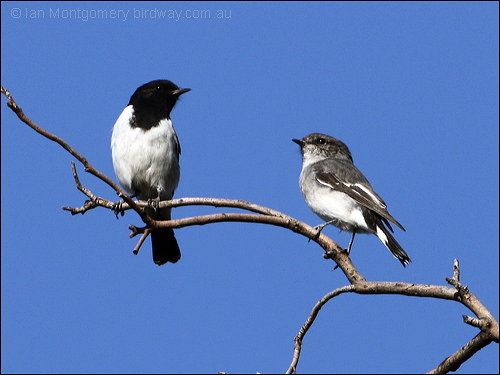
Hooded Robin (Melanodryas cucullata) by Ian

Hooded Robin (Melanodryas cucullata) by Ian

The King James and the English Standard Versions quoted above do not specify “clean or unclean”, only that there are to be seven pairs, the male and his female. I am inclined to lean toward this understanding of these verses. Birds are more fragile than the beast or land animals and that could be why the LORD would have protected them more. Also, reading the commentary by Matthew Henry about why there were more “clean than unclean”, I almost had to chuckle.

“3. Yet more of the clean were preserved than of the unclean. (1.) Because the clean were most for the service of man; and therefore, in favour to him, more of them were preserved and are still propagated. Thanks be to God, there are not herds of lions as there are of oxen, nor flocks of tigers as there are of sheep. (2.) Because the clean were for sacrifice to God; and therefore, in honour to him, more of them were preserved, three couple for breed, and the odd seventh (pair) for sacrifice, Gen_8:20. God gives us six for one in earthly things, as in the distribution of the days of the week, that in spiritual things we should be all for him. What is devoted to God’s honour, and used in his service, is particularly blessed and increased.” (Matthew Henry’s Commentary on Gen 7:2)

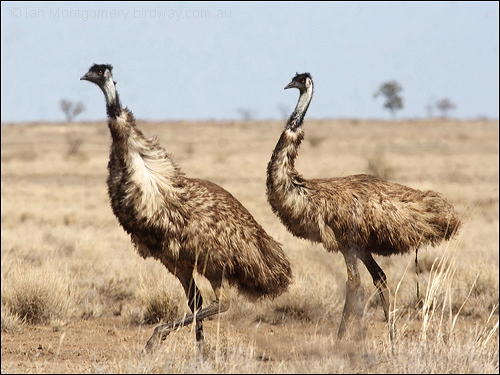
Emu (Dromaius novaehollandiae) by Ian-2

Strutting Emu (Dromaius novaehollandiae) by Ian

Digging into my e-Sword Bible Program to see about this difference, here are how the different versions describe Gen 7:3 –

Those indicating all birds and seven pairs of them:
(ASV) of the birds also of the heavens, seven and seven, male and female, to keep seed alive upon the face of all the earth.
(BBE) And of the birds of the air, seven males and seven females, so that their seed may still be living on the face of the earth.
(CEV) Also take seven pairs of every kind of bird with you. Do this so there will always be animals and birds on the earth.
(Darby) Also of the fowl of the heavens by sevens, male and female; to keep seed alive on the face of all the earth.
(DRB) But of the beasts that are unclean two and two, the male and the female. Of the fowls also of the air seven and seven, the male and the female: that seed may be saved upon the face of the whole earth.
(ERV) Get seven pairs (seven males and seven females) of all the birds. This will allow all these animals to continue living on the earth after the other animals are destroyed.
(ESV) and seven pairs of the birds of the heavens also, male and female, to keep their offspring alive on the face of all the earth.
(GNB) Take also seven pairs of each kind of bird. Do this so that every kind of animal and bird will be kept alive to reproduce again on the earth.
(GW) Also, take seven pairs of every kind of bird (a male and a female of each) to preserve animal life all over the earth after the flood.
(JPS) of the fowl also of the air, seven and seven, male and female; to keep seed alive upon the face of all the earth.
(KJV) Of fowls also of the air by sevens, the male and the female; to keep seed alive upon the face of all the earth.
(KJV-1611) Of fowles also of the aire, by seuens, the male & the female; to keepe seed aliue vpon the face of all the earth.
(LITV) And take of the fowl of the heavens by sevens, male and female, to keep alive seed on the face of the earth.
(MKJV) Also take of the fowls of the air by sevens, the male and the female, to keep seed alive upon the face of all the earth.
(NAS77) also of the birds of the sky, by sevens, male and female, to keep offspring alive on the face of all the earth.
(NASB) also of the birds of the sky, by sevens, male and female, to keep offspring alive on the face of all the earth.
(NKJV) also seven each of birds of the air, male and female, to keep the species alive on the face of all the earth.
(RV) of the fowl also of the air, seven and seven, male and female: to keep seed alive upon the face of all the earth.
(Webster) Of fowls of the air also by sevens, the male and the female; to keep seed alive on the face of all the earth.
(YLT) also, of fowl of the heavens seven pairs, a male and a female, to keep alive seed on the face of all the earth;

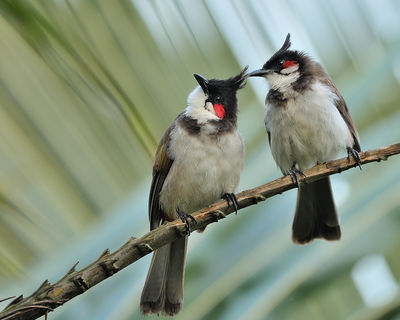
Red-whiskered Bulbul Proud Parents by TAJA

Red-whiskered Bulbul Proud Parents by TAJA

Those indicating “clean and unclean”
(APG) And from the winged creatures of the heaven, of the clean, seven by seven, male and female; and from all the winged creatures of the ones not clean, two by two, male and female, to maintain seed upon all the earth.
(Brenton) And of clean flying creatures of the sky sevens, male and female, and of all unclean flying creatures pairs, male and female, to maintain seed on all the earth.

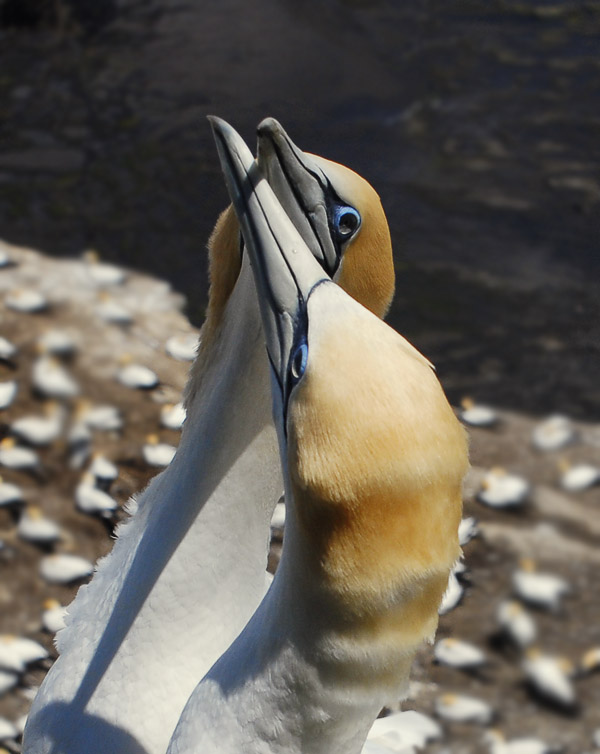
Northern Gannet (Morus bassanus) by W Kwong

Northern Gannet (Morus bassanus) by W Kwong

All of the translations agree on two things for sure. They all agree that they came by male and female pairs. Not male and male pairs or female and female pairs. They also all agree that they were being preserved to keep the species and their future offspring alive. When they left the ark, they were told:

Then God spoke to Noah, saying, “Go out of the ark, you and your wife, and your sons and your sons’ wives with you. Bring out with you every living thing of all flesh that is with you: birds and cattle and every creeping thing that creeps on the earth, so that they may abound on the earth, and be fruitful and multiply on the earth.” So Noah went out, and his sons and his wife and his sons’ wives with him. Every animal, every creeping thing, every bird, and whatever creeps on the earth, according to their families, went out of the ark. (Genesis 8:15-19 NKJV)

See also: Birds of the Bible – Foundation #3
More Birds of the Bible Articles

*

Birds In Hymns – There Seems A Voice In Every Gale

…The heavens declare the glory of God; and the firmament sheweth his handywork. Day unto day uttereth speech, and night unto night sheweth knowledge. There is no speech nor language, where their voice is not heard. (Psalms 19:1-3 KJV)

Words by Amel­ia A. Opie (1769-1853)
Music: Ar­ling­ton – by Thom­as A. Arne, 1762; ar­ranged by Ralph Har­ris­on, 1784
Thomas A. Arne (1710-1778)

Red-tailed Tropicbird (Phaethon rubricauda) by Bob-Nan

Red-tailed Tropicbird (Phaethon rubricauda) by Bob-Nan

There Seems A Voice In Every Gale


There seems a voice in every gale,
A tongue in every flower,
Which tells, O Lord, the wondrous tale
Of Thy almighty power.

The birds, that rise on quivering wing,
Proclaim their Maker’s praise,
And all the mingling sounds of spring
To Thee an anthem raise.

Shall I be mute, great God, alone
’Midst nature’s loud acclaim?
Shall not my heart, with answering tone,
Breathe forth Thy holy Name?

All nature’s debt is small to mine;
Nature shall cease to be;
Thou gavest proof of love divine,
Immortal life to me.

Another great hymn from the past. We just returned from the second funeral of the week. For some, the death of a loved one may seem like a gale. The Lord speaks to us through our trials and gives us a comfort and peace as we go through them. That is, considering the person is in fellowship with the Savior. Both of these dear saints of the Lord, one here and one 200 miles away, were believers in the Lord Jesus Christ and their families also. They have comfort in knowing their loved ones are in the “presence of the Lord,” but they will have grief and sorrow, but the Lord will speak to them and they will come through the “Gale” they are going through. Our hearts and prayers are with both families.

Most information from The Cyber Hymnal

See ~ Wordless Birds

More ~ Birds in Hymns

*

Birds of the Bible – Falcon – Caracara

Northern Crested Caracara (Caracara cheriway) by Dan at Viera Wetland

Northern Crested Caracara (Caracara cheriway) by Dan at Viera Wetlands

The first Birds of the Bible – Falcons blog introduced the North American members of the Falcon – Falconidae Family. Then the next article, Birds of the Bible – Falcons II, introduced more of the 65 Falcon family members, mainly just the falcons, and provided links to videos of them.

The Caracaras are a part of the Falcon – Falconidae family and these would also be included in the references given in the Bible. The Falcons and their kind are on the “do not eat” list in Leviticus and Deuteronomy and again mentioned in Job.

And these you shall detest among the birds; they shall not be eaten; they are detestable: the eagle, the bearded vulture, the black vulture, the kite, the falcon of any kind, (Leviticus 11:13-14 ESV)

the kite, the falcon of any kind; (Deuteronomy 14:13 ESV)

That path no bird knows, Nor has the falcon’s eye seen it. (Job 28:7 NKJV)

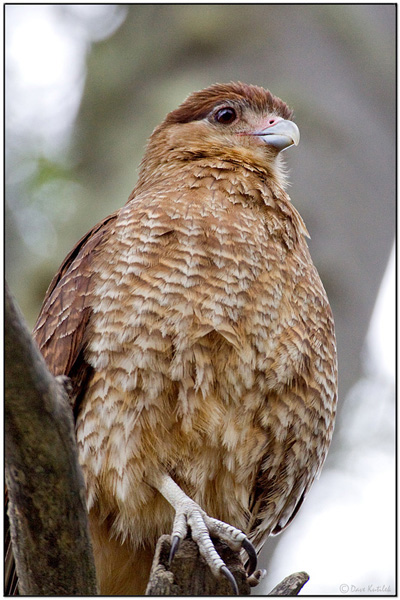
Chimango Caracara by Daves Birding Pix

Chimango Caracara by Daves Birding Pix

Caracaras, there are 10 of them, are also included  in the birds of prey category. We saw our first Northern Crested Caracara along the interstate in Texas, not far from the well-known King Ranch. The Northern Crested Caracara is 23 inches long and has a 50 inch wingspan. The wings are broad and it has a long tail. They have long necks and long legs. They spend much of their time perched or walking on the ground, but can run swiftly. They hang out with vultures at carcasses and many times steal their food.

Male and females are similar. We have these here in central Florida. They are seen on the ground or perching on fence posts and tops of trees. Often seen walking along roadsides. Scratches like chicken for insects. The AOU split this species in July, 2000 from the South American species, Caracara plancus.

The Caracaras are:

Black Caracara (Daptrius ater) – S. America
Red-throated Caracara (Ibycter americanus) – C. & S. America
Carunculated Caracara (Phalcoboenus carunculatus) – Ecuador & Colombia
Mountain Caracara (Phalcoboenus megalopterus) ©WikiC – S. America
White-throated Caracara (Phalcoboenus albogularis) – S. America
Striated Caracara (Phalcoboenus australis) – S. America
Northern Crested Caracara (Caracara cheriway) by Dan – N. America
Southern Crested Caracara (Caracara plancus) – S. America
Yellow-headed Caracara (Milvago chimachima) – C. & S. America
Chimango Caracara (Milvago chimango) – S. America

***

As you can see above, they are only in the Western Hemisphere

***

Some information from Thayer Birding Software

Falcon Page

Caracara – Wikipedia

Gospel Message

*

Raining Red-winged Blackbirds

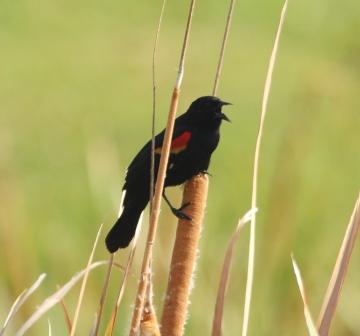
Red-winged Blackbird at Bok Sanctuary

Red-winged Blackbird at Bok Sanctuary

Many have heard the news today about the many (4,000-5,000 at last count) Red-winged Blackbirds that they found in Arkansas. They fell from the sky on New Year’s Eve.

“The Arkansas Game and Fish Commission spokesman Keith Stephens says the birds fell in an area about a mile long and a half-mile wide (1 1/2 kilometers long and 800 meters wide). The Commission said Saturday that it began receiving reports about the dead birds about 11:30 p.m. the previous night.

The birds fell over a 1-mile (2-kilometer) area, and an aerial survey indicated that no other dead birds were found outside of that area. Laboratories in Arkansas, Georgia and Wisconsin will examine some carcasses starting Monday.” (Foxnews.com)

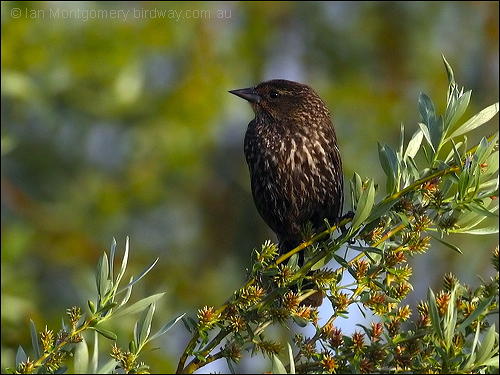
Red-winged Blackbird (Agelaius phoeniceus) female by Ian

Red-winged Blackbird (Agelaius phoeniceus) female by Ian

The ornithologists are debating whether it was lightning or hail that hit the flock. At this time of the year they are in migration or gathered in flocks. I know here in Central Florida, the Red-winged Blackbirds have just begun coming back to my feeders after their summer in the north.

It is very sad and seems quite devastating to think about. I really enjoy watching them and especially have been challenged by trying to identify the female red-wing. One thing is for certain:

Are not two sparrows sold for a farthing? and one of them shall not fall on the ground without your Father. But the very hairs of your head are all numbered. Fear ye not therefore, ye are of more value than many sparrows. (Matthew 10:29-31 KJV)

I know they were not sparrows, but those verses apply to all the birds.

Red-winged Blackbirds (Agelaius phoeniceus) are in the Icteridae Family which includes Oropendolas, Orioles and Blackbirds. There are 108 members and they are perching birds (Passeriformes Order)

Red-winged Blackbird (Agelaius phoeniceus) by Ray

Red-winged Blackbird (Agelaius phoeniceus) by Ray

The male Red-winged Blackbird has a red shoulder patch bordered by yellow or white and has black plumage. The female is brownish overall with heavy streaked underparts. The juveniles are similar to the female. They have sharply-pointed bills. They are about 8.75 inches (22 cm) long.

As I thought about them today, I imagined their summer up north with having the young and flying here and there gathering worms and insects to feed them. Then watched their young learn to fly and grow. Now, they may have been migrating down here to enjoy the winter. The Creator of them knew all about that and also knew this was going to happen.

Sad, yes, but what about us? Do we get busy with all of our activities, but forget that our lives are also in the Hands of the Creator, the Lord Jesus Christ?

Come now, you who say, “Today or tomorrow we will go to such and such a city, spend a year there, buy and sell, and make a profit”; whereas you do not know what will happen tomorrow. For what is your life? It is even a vapor that appears for a little time and then vanishes away. Instead you ought to say, “If the Lord wills, we shall live and do this or that.” (James 4:13-15 NKJV)

Quoted in yesterday’s sermon at Faith Baptist ~ “It is curious that people who are filled with horrified indignation whenever a cat kills a sparrow can hear that story of the killing of God told Sunday after Sunday and not experience any shock at all.” –Dorothy Sayers

*

Merry Christmas 2010

For unto you is born this day in the city of David a Saviour, which is Christ the Lord. (Luke 2:11 KJV)

We had our Christmas concert Sunday night at Faith Baptist and the final song was “Listen to the Hammer Ring.” Below is the video of that song.

Christmas is the celebration of the Birth of Christ, but the ultimate reason He was born of a virgin was so He could be Our Perfect Sinless Savior. Christmas and Easter both go “hand-in-hand” because they are about the Lord Jesus Christ, the Creator of the world and all that is in it (including our beautiful birds). The world is doing everything it can to remove Christ from both of those holidays. But:

For God so loved the world, that he gave his only begotten Son, that whosoever believeth in him should not perish, but have everlasting life. (John 3:16 KJV)

Wordless Birds and the Gospel Message

*

Silent Night by Andrea Bocelli

Merry Christmas to all of you, from us here at the Birdwatching Adventures.

A friend sent me a link to Andrea Bocelli singing Silent Night and want to share it with all our readers. Andrea is blind.