“Little Yeshua” and “This is God” were part of the Everlasting Light Cantata – A Christmas Carol For A Dark World. The solo was by Caleb and the duet was sung by Jessie and Christina. The messages of these songs are tremendous. When you consider that the Lord Jesus Christ, the Creator, put on flesh, so that He could redeem us is an awesome thought.
*
He was in the world, and the world was made by him, and the world knew him not. He came unto his own, and his own received him not. But as many as received him, to them gave he power to become the sons of God, even to them that believe on his name: Which were born, not of blood, nor of the will of the flesh, nor of the will of man, but of God. And the Word was made flesh, and dwelt among us, (and we beheld his glory, the glory as of the only begotten of the Father,) full of grace and truth. (John 1:10-14 KJV)
*
*
In the beginning was the Word, and the Word was with God, and the Word was God. The same was in the beginning with God. All things were made by him; and without him was not any thing made that was made. In him was life; and the life was the light of men. And the light shineth in darkness; and the darkness comprehended it not. (John 1:1-5 KJV)
*
Here are two more videos from yesterday. If there is interest, more will be added later.
Here is another song from the Everlasting Light Cantata we had yesterday. This one has the children singing. “Christmas Shines” by Faith Baptist Church, Winter Haven, FL
(15) And it came to pass, as the angels were gone away from them into heaven, the shepherds said one to another, Let us now go even unto Bethlehem, and see this thing which is come to pass, which the Lord hath made known unto us.
(16) And they came with haste, and found Mary, and Joseph, and the babe lying in a manger.
(17) And when they had seen it, they made known abroad the saying which was told them concerning this child.
(18) And all they that heard it wondered at those things which were told them by the shepherds.
(19) But Mary kept all these things, and pondered them in her heart.
(20) And the shepherds returned, glorifying and praising God for all the things that they had heard and seen, as it was told unto them.
While searching to find birds to write about with a Christmas theme, I came across the Territory of Christmas Island which belongs to Australia. It is in the Indian Ocean and only has a population of 1,403 residents who live in a number of “settlement areas” on the northern tip of the island.
*
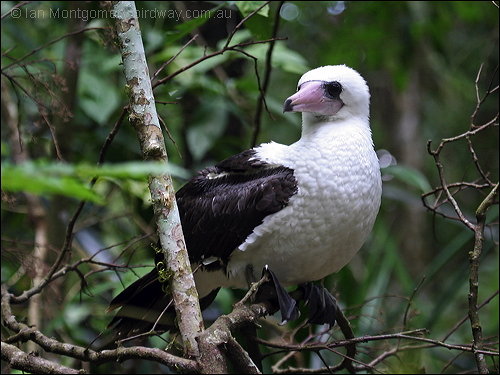
Abbott’s Booby (Papasula abbotti) by Ian
The island’s geographic isolation and history of minimal human disturbance has led to a high level of endemism (or state of being unique to a defined geographic location, such as an island, nation or other defined zone, or habitat type, and found only there) among its flora and fauna, which is of significant interest to scientists and naturalists. 63% of its 135 square kilometres (52 sq mi) is an Australian national park. There exist large areas of primary monsoonal forest.
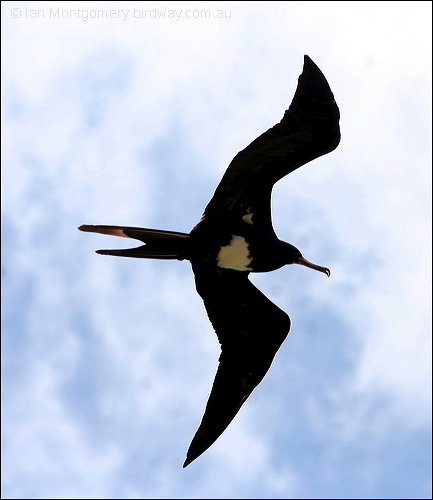
Christmas Frigatebird (Fregata andrewsi) by Ian
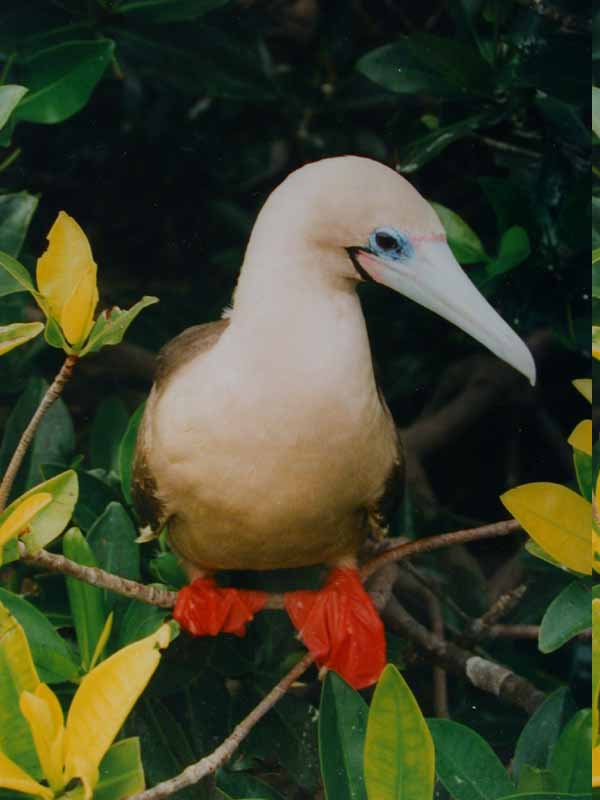
Christmas Island is a focal point for sea birds of various species. Eight species or subspecies of sea birds nest on the island. The most numerous is the Red-footed Booby that nests in colonies, in trees, on many parts of the shore terrace. The widespread Brown Booby nests on the ground near the edge of the seacliff and inland cliffs. Abbott’s Booby nests on tall emergent trees of the western, northern and southern plateau rainforest. The Christmas Island forest is the only nesting habitat of the Abbott’s Booby left in the world. The endemic Christmas Island Frigatebird (listed as endangered) has nesting areas on the north-eastern shore terraces and the more widespread Great Frigatebirds nest in semi-deciduous trees on the shore terrace with the greatest concentrations being in the North West and South Point areas. The Common Noddy and two species of bosuns or tropicbirds, with their brilliant gold or silver plumage and distinctive streamer tail feathers, also nest on the island.
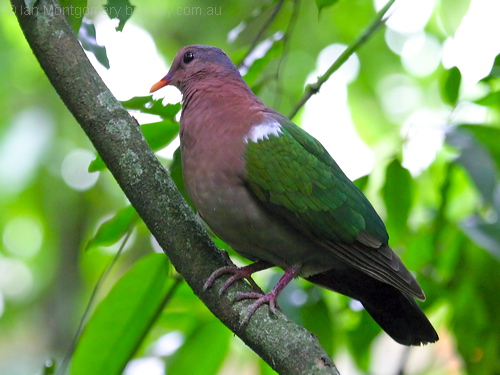
Christmas Imperial Pigeon (Ducula whartoni) by Ian Montgomery
Of the ten native land birds and shorebirds, seven are endemic species or subspecies. This includes the Christmas Island Thrush, and the Christmas Island Imperial Pigeon. Some 86 migrant bird species have been recorded as visitors to the Island.
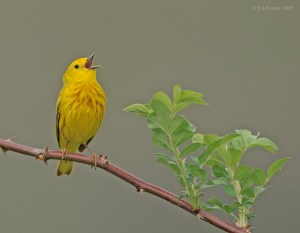
American Yellow Warbler (Dendroica aestiva) singing by J Fenton
My lips shall greatly rejoice when I sing unto thee; and my soul, which thou hast redeemed. (Psalms 71:23 KJV)
Birds in Christmas Hymns
Words by Henry J. van Dyke, 1907. Van Dyke wrote this hymn while staying at the home of Harry A. Garfield at Williams College, Massachusetts. It was first published in the Presbyterian Hymnal in 1911. It also appeared in the Poems of Henry van Dyke, 1911. Van Dyke wrote:
“These verses are simple expressions of common Christian feelings and desires in this present time—hymns of today that may be sung together by people who know the thought of the age, and are not afraid that any truth of science will destroy religion, or any revolution on earth overthrow the kingdom of heaven. Therefore this is a hymn of trust and joy and hope.”
Music: Hymn to Joy, from the 9th Symphony of Ludwig van Beethoven; adapted by Edward Hodges, 1824
Joyful, Joyful, We Adore Thee
Joyful, joyful, we adore Thee, God of glory, Lord of love;
Hearts unfold like flowers before Thee, opening to the sun above.
Melt the clouds of sin and sadness; drive the dark of doubt away;
Giver of immortal gladness, fill us with the light of day!
All Thy works with joy surround Thee, earth and heaven reflect Thy rays,
Stars and angels sing around Thee, center of unbroken praise.
Field and forest, vale and mountain, flowery meadow, flashing sea, Singing bird and flowing fountain call us to rejoice in Thee.
Thou art giving and forgiving, ever blessing, ever blessed,
Wellspring of the joy of living, ocean depth of happy rest!
Thou our Father, Christ our brother, all who live in love are Thine;
Teach us how to love each other, lift us to the joy divine.
Mortals, join the happy chorus, which the morning stars began;
Father love is reigning o’er us, brother love binds man to man.
Ever singing, march we onward, victors in the midst of strife,
Joyful music leads us sunward in the triumph song of life.
Who, being in the form of God, thought it not robbery to be equal with God: But made himself of no reputation, and took upon him the form of a servant, and was made in the likeness of men: (Philippians 2:6-7 KJV)
Words by Emily E. Elliott, 1864. This hymn was first used at St. Mark’s Church in Brighton, England, where Elliott’s father was rector. In 1870, it was published in the Church Missionary Juvenile Instructor, which Elliott edited.
Music: Margaret, Timothy R. Matthews, 1876
Birds in Christmas Hymns
Thou Didst Leave Thy Throne
Thou didst leave Thy throne and Thy kingly crown,
When Thou camest to earth for me;
But in Bethlehem’s home was there found no room
For Thy holy nativity.
Refrain
O come to my heart, Lord Jesus, There is room in my heart for Thee.
Heaven’s arches rang when the angels sang,
Proclaiming Thy royal degree;
But of lowly birth didst Thou come to earth,
And in great humility.
Refrain
O come to my heart, Lord Jesus, There is room in my heart for Thee.
The foxes found rest, and the birds their nest In the shade of the forest tree;
But Thy couch was the sod, O Thou Son of God,
In the deserts of Galilee.
Refrain
O come to my heart, Lord Jesus, There is room in my heart for Thee.
Thou camest, O Lord, with the living Word,
That should set Thy people free;
But with mocking scorn and with crown of thorn,
They bore Thee to Calvary.
Refrain
O come to my heart, Lord Jesus, There is room in my heart for Thee.
When the heavens shall ring, and the angels sing,
At Thy coming to victory,
Let Thy voice call me home,
Saying Yet there is room,
There is room at My side for thee.
My heart shall rejoice, Lord Jesus,
When Thou comest and callest for me.
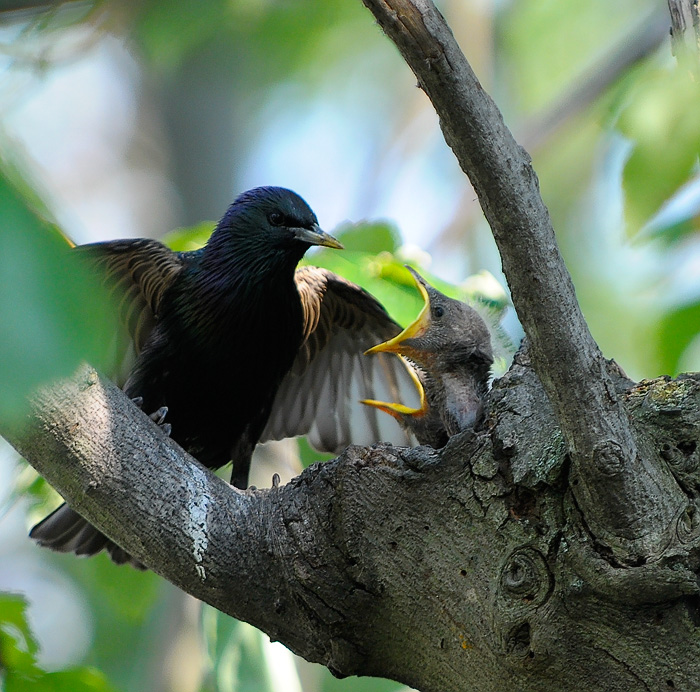
Protection and feeding at the nest by Anthony
Emily E. Elliott (1836-1897) – Emily’s father was Edward Bishop Elliott, Rector of St. Mark’s Church in Brighton, and her aunt was hymnist Charlotte Elliott. For six years, Emily served as editor of The Church Missionary Juvenile Instructor.
Timothy R. Matthews (1826-1910) – Son of the rector of Colmworth, Matthews attended the Bedford Grammar School and Gonville and Caius College, Cambridge (MusB 1853). Ordained the same year, he became private tutor to the family of Rev. Lord Wriothesley Russell, a canon of St. George’s Chapel, Windsor Castle, where he studied under the organist, George Elvey, subsequently a lifelong friend.
Matthews served as Curate (1853-1859) and Curate-in-Charge (1859-1869) of St. Mary’s Church, Nottingham. During this time he founded Nottingham’s Working Men’s Institute. In 1869, he became Rector at North Coates, Lincolnshire. He retired in 1907 to live with his eldest son at Tetney vicarage.
Matthews edited the North Coates Supplemental Tune Book and The Village Organist. He composed Morning and Evening Services, chants and responses, and earned a reputation for simple but effective hymn tunes, writing over 100. William Howard requested six tunes from him for a children’s hymnal, and Matthews completed them within a day. Matthews also composed a Christmas carol and a few songs. His sons Norton and Arthur Percy were also known as hymn tune composers.
Ian’s Bird of the Week – Mistletoebird ~ by Ian Montgomery
Newsletter ~ 12/23/12
As an ex-pat, I’ve never really got used to a hot Christmas in Australia. Here we sing carols about open sleighs, holly and ivy and the shops decorate their windows with fake snow, but it all seems a little contrived when the temperature is 31.4ºC/88.5ºF, the average maximum daily temperature for December in Townsville. We do, however, have mistletoe – lots of of growing on Eucalyptus trees – and, even better, Mistletoebirds, so I’ve chosen it as our Christmas bird of the week. It has featured as bird of the week before (August 2003 and June 2004) but originality is not a conspicuous feature of Christmas.
What were you doing under the Mistletoe on Christmas Day 2007? I was photographing the male Mistletoebird in the first photo gorging on a luscious Christmas lunch of Mistletoe berry. They’re tiny birds (9.5-11cm/3.75-4.3in) but have huge appetites, mistletoe berries not being very nutritious but they do the mistletoe a service by depositing rapidly-digested seed-containing excreta on the branches of the host trees. They’ll also eat the fruit of other plants (the fruits in photos 2 and 3 are not mistletoe), nectar and insects.
Mistletoebird (Dicaeum hirundinaceum) by Ian 2
The males are striking with their Christmassy red breasts and vents, and blackish-blue iridescent backs and the specific name hirundinaceum means ‘swallow-like’, Hirunda being the generic name for typical swallows. The females (third photo) are a more subtle grey, but have reddish vents.
Mistletoebird (Dicaeum hirundinaceum) by Ian 3
Mistletoebirds build exquisite pouch-shaped hanging nests and the fourth photo shows the young take after their parents in continually wanting food. Their nests are similar to those of Sunbirds and they are often placed in the same family Nectarinidae. Mistletoebirds are actually Flowerpeckers (Dicaeum) and are sometimes put in their own family, the Dicaeidae.
Mistletoebird (Dicaeum hirundinaceum) by Ian 4
Being so unChristmassy here, I find that it sneaks up me un-noticed. Last year, all my Christmas cards arrived late, so my New Year Resolution was to not send any more and the money saved is going to the Australian Wildlife Conservancy, which I think has the best record for conservation and reserve management in Australia. So, I wish you an electronic Very Peaceful Christmas and a Lovely New Year. Just remember the Mistletoebird and its appetite when you contemplate the third helping of Christmas pudding tomorrow!
Ian
**************************************************
Ian Montgomery, Birdway Pty Ltd,
454 Forestry Road, Bluewater, Qld 4818
Tel 0411 602 737 ian@birdway.com.au
Check the latest website updates: http://www.birdway.com.au/#updates
Lee’s Addition:
How appropriate is Ian’s photos of a neat little bird that loves Mistletoe. Thanks, Ian, and Merry Christmas to you also.
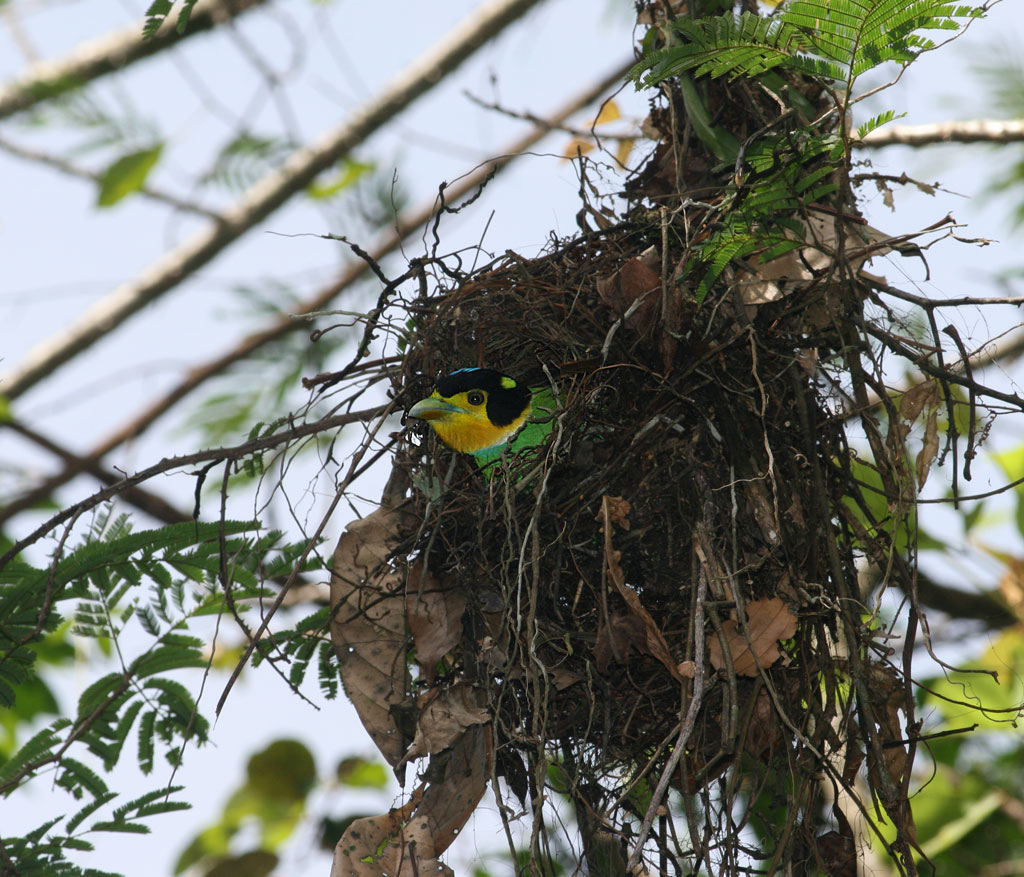
Long-tailed Broadbill (Psarisomus dalhousiae) in nest by Peter Ericsson
And when they were come into the house, they saw the young child with Mary his mother, and fell down, and worshipped him: and when they had opened their treasures, they presented unto him gifts; gold, and frankincense, and myrrh. (Matthew 2:11 KJV)
Music: St. Petersburg, attributed to Dmitri S. Bortniansky (1751-1825), 1825
Birds in Christmas Hymns
The Day The Christ-Child’s Tender Eyes
The day the Christ-child’s tender eyes
Unveiled their beauty on the earth,
God lit a new star in the skies
To flash the message of His birth;
And wise men read the glowing sign,
And came to greet the Child divine.
Low kneeling in the stable’s gloom,
Their precious treasures they unrolled;
The place was rich with sweet perfume;
Upon the floor lay gifts of gold.
And thus adoring they did bring
To Christ the earliest offering.
I think no nimbus wreathed the head
Of the young King so rudely throned;
The quilt of hay beneath Him spread
The sleepy kine beside Him owned;
And here and there in the torn thatch
The sky thrust in a starry patch.
Oh, when was new-born monarch shrined
Within such canopy as this? The birds have cradles feather lined;
And for their new babes princesses
Have sheets of lace without a flaw,
His pillow was a wisp of straw!
He chose this way, it may have been,
That those poor mothers, everywhere,
Whose babies in the world’s great inn
Find scanty cradle-room and fare,
As did the Babe of Bethlehem,
May find somewhat to comfort them.
Mute Swan on Nest at Lake Morton by Dan
May Riley Smith (1842-1927) – Smith attended the Tracey Female Institute in Rochester, and the Collegiate Institute in Brockport, New York. She married Albert Smith of Springfield, Illinois, in 1869; they were living in New York state in 1910. Her works include:
The Gift of Gentians, 1882
The Inn of Rest, 1888
Sometime and Other Poems, 1892
Dmitri S. Bortniansky (1751-1825) – Bortniansky’s musical career began in the church choir. As a young man, he studied with Baldassare Galuppi (il Buranello) in St. Petersburg. In 1769, Bortniansky followed Galuppi to Italy (with the help of a stipend from Russian Empress Catherine) to work in opera. His productions included Creonte (1776), Alcide (1778), and Quinto Fabio (1778). After returning to Russia, he became master of the court choir in St. Petersburg. In 1796, he was appointed director of the czar’s court chapel and a councilor of state. In addition to his other duties, he composed liturgical music, and wrote operas with French texts: La fête du seigneur (1786), Le faucon (1786), and Le fils-rival (1787). After his death, his work spread to Prussia, where his music appeared in Altpreußische Agende (Old Prussian Agenda) in 1829. His tune St. Petersburg/Wells is a traditional closing piece for the Großer Zapfenstreich (ceremonial tattoo) in German military music.
Christmas brings joy to every heart,
Sets old and young rejoicing,
What angels sang once to all on earth,
Oh, hear the children voicing.
Bright is the tree with lights aglow, Like birds that perch together,
The child that holdeth Christmas dear
Shall keep these joys forever.
Joy comes to the all the world today,
To halls and cottage hasting,
Come, sparrow and dove, from roof tree tall,
And share our Christmas feasting.
Dance, little child, on mother’s knee,
The lovely day is dawning,
The road to paradise is found
The blessèd Christmas morning.
Once to this earth our Savior came,
An infant poor and lowly,
To open for us those gardens fair
Where dwell His angels holy.
Christmas joy He bringeth us,
The Christ child King of heaven,
“To every little child,” He saith,
“Shall angel wings be given.”
Glory to God in the highest, and on earth peace, good will toward men. (Luke 2:14 KJV)
Words & Music by William H. Havergal (1793-1870), alt.
Birds in Christmas Hymns
The Worcester Christmas Carol
How grand and how bright
That wonderful night,
When angels to Bethlehem came!
They burst forth like fires,
They struck their gold lyres,
And mingled their song with the flame.
The shepherds were mazed,
The pretty lambs gazed
At darkness thus turned into light:
No voice was there heard
From man, beast or bird,
So sudden and solemn the sight.
And then, when the sound reechoed around,
The hills and the dales all awoke:
The moon and the stars
Stopped their fiery cars,
And listened while Gabriel spoke:
I bring you, said he,
From the glorious Three,
Good tidings to gladden mankind;
The Savior is born,
But He lies forlorn
In a manger, as soon you will find.
At mention of this,
(The source of all bliss,)
The angels sang loudly and long;
The soared to the sky,
Beyond mortal eye,
But left us the words of their song:
All glory to God,
Who laid by His rod,
To smile on the world through His Son:
And peace be on earth,
For this wonderful birth
Wonderful conquests has won;
And good will to man,
Though his life’s a span,
And his thoughts so evil and wrong;
Then pray, Christians, pray;
But let Christmas day
Have your sweetest and holiest song.
Here are Havergal’s original lyrics for stanzas where, due to irregularities in meter, they do not fully fit the music:
I bring you, said he,
From the glorious Three,
Good tidings to gladden mankind;
The Savior is born,
But He lies all forlorn
In a manger, as soon you will find.
…
All glory to God,
Who laid by His rod,
To smile on the world through His Son:
And peace be on earth,
For this wonderful birth
Most wonderful conquests has won;
And good will to man,
Though his life’s but a span,
And his thoughts so evil and wrong;
Then pray, Christians, pray;
But let Christmas day
Have your sweetest and holiest song.
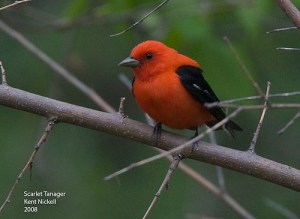
Scarlet Tanager (Piranga olivacea) by Kent Nickell
William H. Havergal (1793-1870) – The epitaph on Havergal’s white marble tomb reads:
The Rev. William Henry Havergal, M.S.,
Vicar of Shareshill and Hon. Canon of Worcester Cathedral.
Died at Leamington, 19th April 1870, aged 77.
Curate 7, and Rector 13 years, of this parish, 1822 to 1843.
A faithful minister in the Lord (Eph. Vi. 21).
Havergal was educated at Merchant Taylors School St. Edmund’s Hall, Oxford (BA 1815, MA 1819). He was ordained a deacon in 1816, and priest in 1817. He held three rectorships: Astley, Worcestershire (1829); St. Nicholas, Worcester (1842); and Shareshill, near Wolverhamptom (1860). Hymnist Frances Havergal was his daughter.
*
A Psalm for Solomon. Give the king thy judgments, O God, and thy righteousness unto the king’s son. He shall judge thy people with righteousness, and thy poor with judgment. (Psalms 72:1-2 KJV)
Words by James Montgomery (1771-1854), 1821
[This hymn] is a metrical version of the Seventy-second Psalm. It was written as a Christmas hymn and was first sung on Christmas Day, 1821, at a great convocation of the Moravians in their settlement at Fulneck. At a Wesleyan missionary meeting, held in Liverpool on April 14 of the following year, 1822, when Doctor Adam Clarke presided, Montgomery made an address and closed it by the recital of this hymn with all of its verses…Doctor Clarke later used it in his famous Commentary in connection with his discussion of the Seventy-second Psalm.
Music: Ellacombe, Gesangbuch der Herzogl. Wirtembergischen Katholischen Hofkapelle (Württemberg, Germany: 1784); adapted & harmonized by William H. Monk in the 1868 appendix to Hymns Ancient and Modern, number 366
Birds in Christmas Hymns
Hail to the Lord’s Anointed
Hail to the Lord’s anointed, great David’s greater Son!
Hail in the time appointed, His reign on earth begun!
He comes to break oppression, to set the captive free;
To take away transgression and rule in equity.
He comes in succor speedy to those who suffer wrong;
To help the poor and needy, and bid the weak be strong;
To give them songs for sighing, their darkness turn to light,
Whose souls, condemned and dying, were precious in His sight.
By such shall He be fearèd while sun and moon endure;
Beloved, obeyed, reverèd; for He shall judge the poor
Through changing generations, with justice, mercy, truth,
While stars maintain their stations, or moons renew their youth.
He shall come down like showers upon the fruitful earth;
Love, joy, and hope, like flowers, spring in His path to birth.
Before Him, on the mountains, shall peace, the herald, go,
And righteousness, in fountains, from hill to valley flow.
Arabia’s desert ranger to Him shall bow the knee;
The Ethiopian stranger His glory come to see;
With offerings of devotion ships from the isles shall meet,
To pour the wealth of oceans in tribute at His feet.
Kings shall fall down before Him, and gold and incense bring;
All nations shall adore Him, His praise all people sing;
For He shall have dominion o’er river, sea and shore, Far as the eagle’s pinion or dove’s light wing can soar.
For Him shall prayer unceasing and daily vows ascend;
His kingdom still increasing, a kingdom without end:
The mountain dews shall nourish a seed in weakness sown,
Whose fruit shall spread and flourish and shake like Lebanon.
O’er every foe victorious, He on His throne shall rest;
From age to age more glorious, all blessing and all blest.
The tide of time shall never His covenant remove;
His name shall stand forever, His name to us is Love.
American Yellow Warbler (Dendroica aestiva) singing by J Fenton
And the angel said unto them, Fear not: for, behold, I bring you good tidings of great joy, which shall be to all people. For unto you is born this day in the city of David a Saviour, which is Christ the Lord. (Luke 2:10-11)
Written as – El Cant Dels Ocells – Traditional Catalonian Carol
Translator Unknown
Carol of the Birds
1. Upon this holy night,
When God’s great star appears,
And floods the earth with brightness Birds’ voices rise in song
And warbling all night long
Express their glad heart’s lightness Birds’ voices rise in song
And warbling all night long
Express their glad heart’s lightness
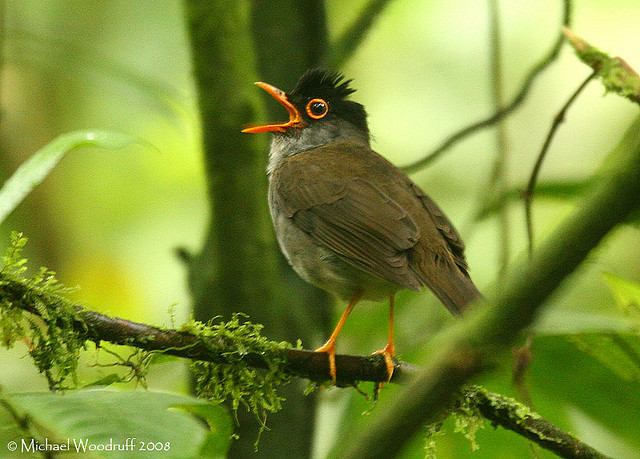
Black-headed Nightingale-Thrush (Catharus mexicanus) by Michael Woodruff
2. The Nightingale is first
To bring his song of cheer,
And tell us of His glad – ness:
Jesus, our Lord, is born
To free us from all sin
And banish ev’ry sadness!
Jesus, our Lord is born
To free us from all sin
And banish ev’ry sadness!
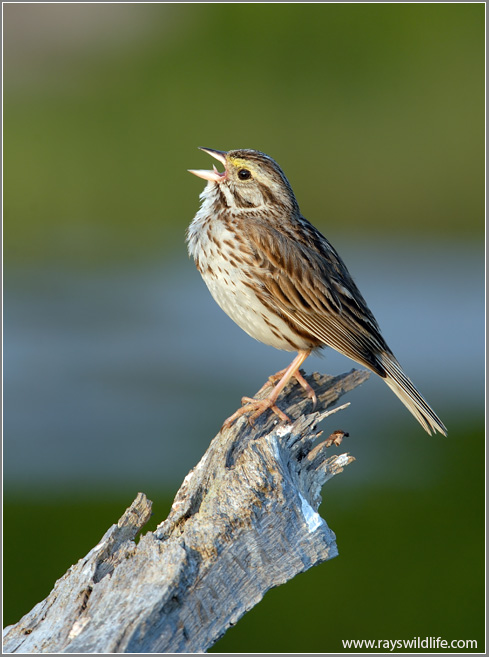
Savannah Sparrow singing by Ray
3. The answ’ring Sparrow cries:
“God comes to earth this day
Amid the angels flying.”
Trilling in sweetest tones,
The Finch his Lord now owns:
“To Him be all thanksgiving.”
Trilling in sweetest tones,
The Finch his Lord now owns:
“To Him be all thanksgiving.”
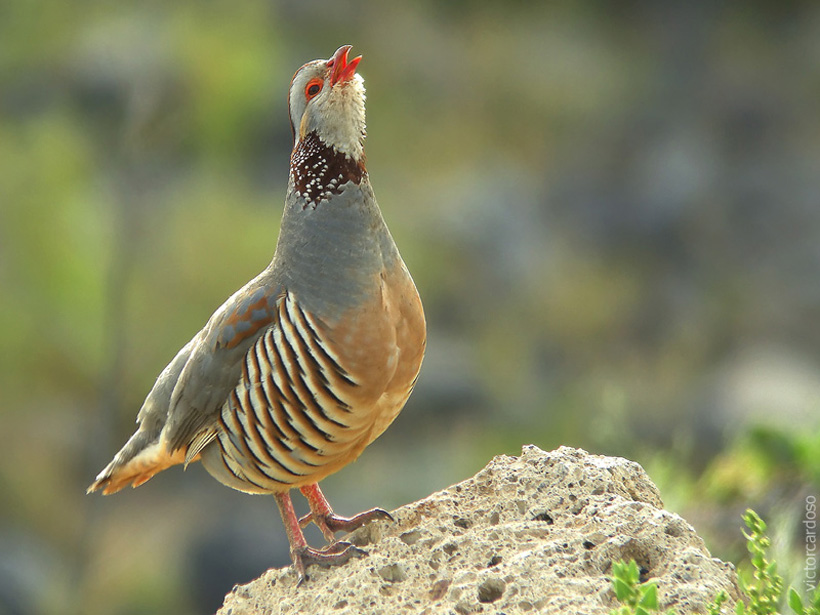
Barbary Partridge (Alectoris barbara koenigi) Pixdaus
4. The Partridge adds his note:
“To Bethlehem I’ll fly,
Where in the stall He’s lying.
There, near the manger blest,
I’ll build myself a nest,
And sing my love undying.
There, near the manger blest,
I’ll build myself a nest,
And sing my love undying.
*
Found another version of the Carol of the Birds and it appears to be Australian Birds.
The Carol of the Birds
(Wheeler/James)
Brolga (Grus rubicunda) by Ian
Out on the plains the brolgas are dancing
Lifting their feet like warhorses prancing
Up to the sun the woodlarks go winging
Faint in the dawn light echoes their singing
Crana! Orana! Orana to Christmas Day.
Crested Bellbird (Oreoica gutturalis) by Ian
Down where the tree ferns grow by the river
There where the waters sparkle and quiver
Deep in the gullies bell-birds are chiming
Softly and sweetly their lyric notes rhyming
Orana! Orana! Orana to Christmas Day.
Silver-crowned Friarbird (Philemon argenticeps) by Ian
Friar birds sip the nectar of flowers Currawongs chant in wattle tree bowers
In the blue ranges lorikeets calling
Carols of bush birds rising and falling
Orana! Orana! Orana to Christmas Day.
*












 Lee's Birdwatching Adventures Plus