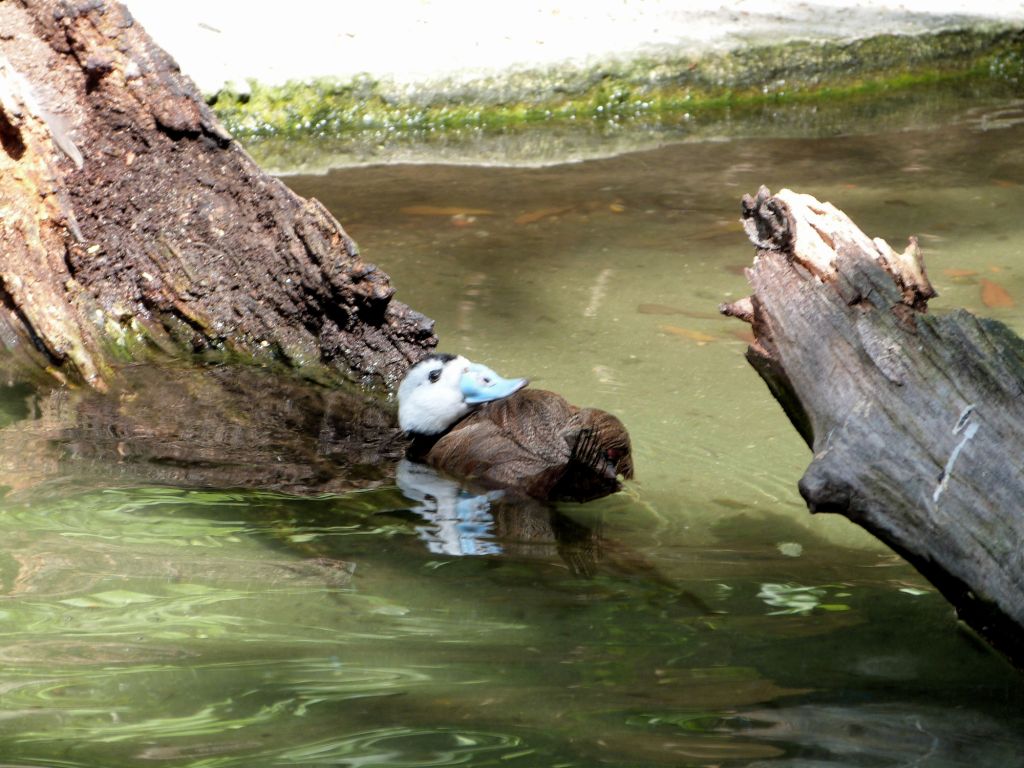
Birdwatching at Lake Morton and S. Lake Howard

With all that has been going on lately, we have not had much time or chance to go visit the birds. When Tropical Storm Debby came by, she dropped quite a bit of rain in the area. Some “true” birdwatchers were out and about seeing some really neat birds that were blown off course. We played the “fair weather” birders and stayed indoor where it was dry. Some areas had 12-15 inches, but we had about 6 inches of rain here at the house.

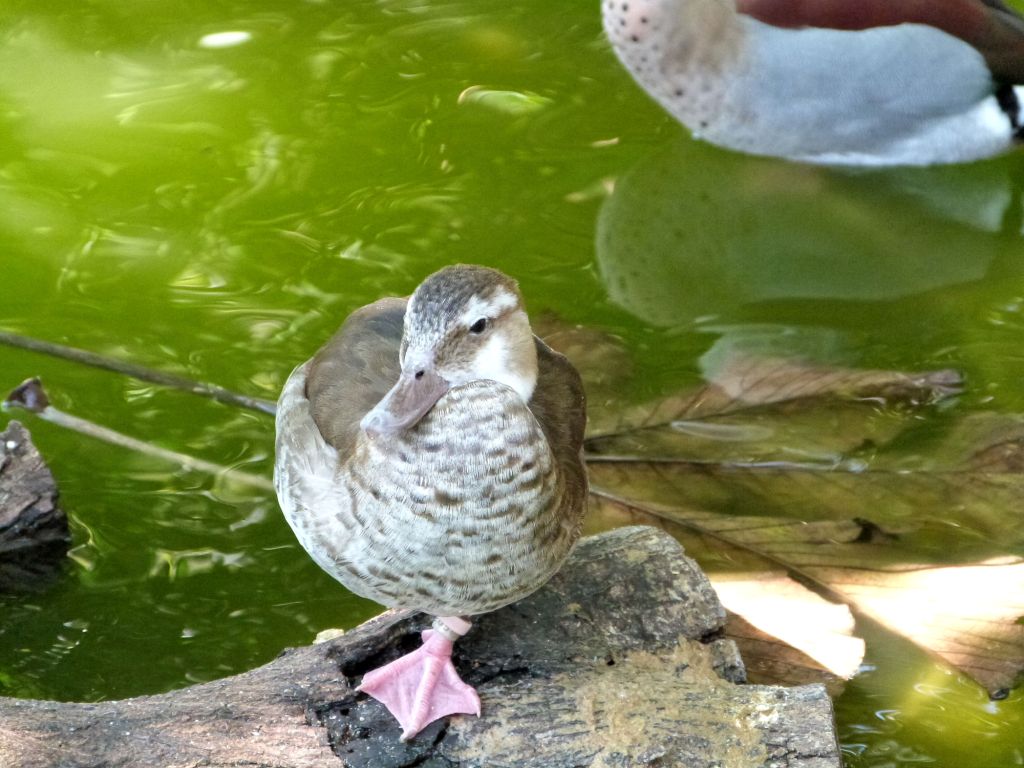
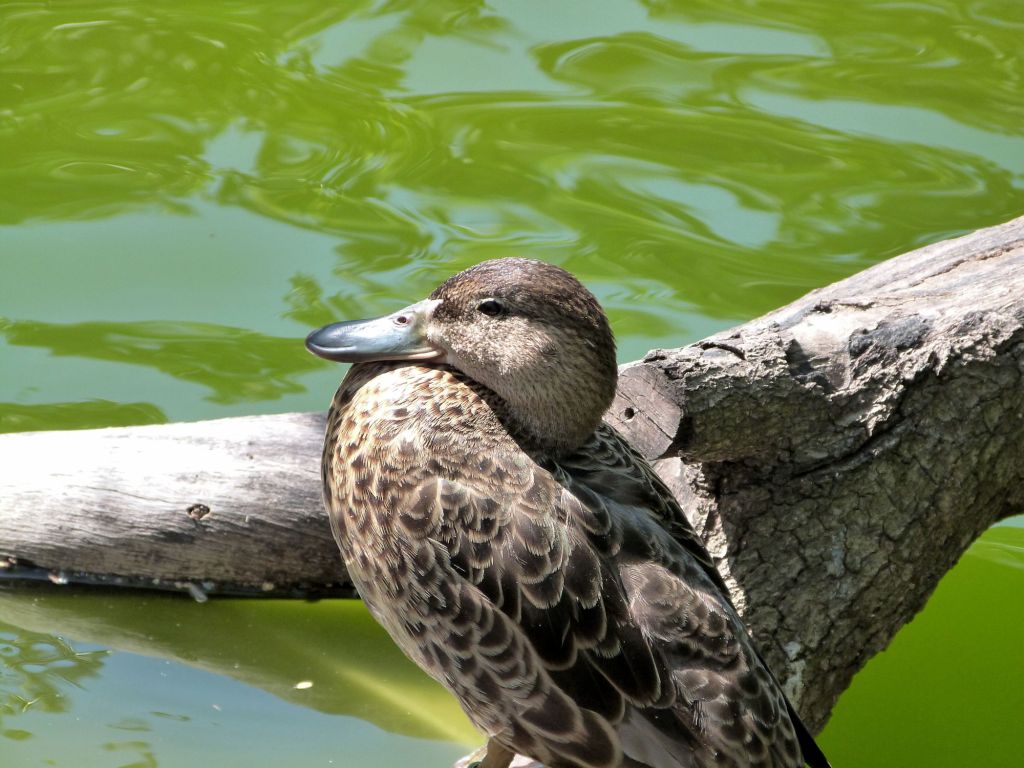
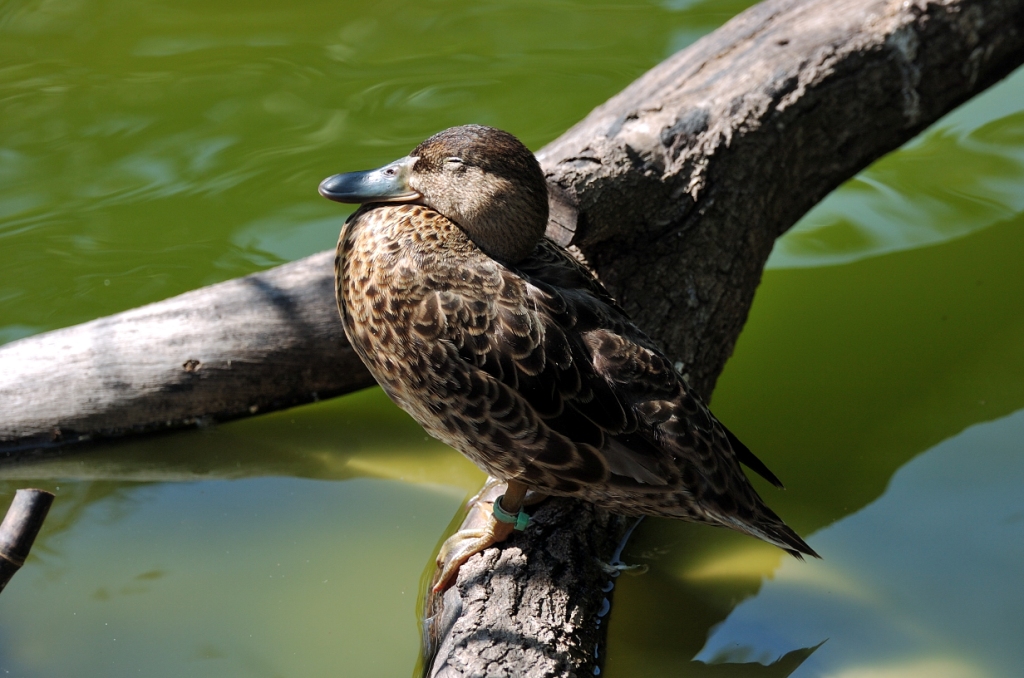
On the 28th we stopped by Lake Morton, in Lakeland, on the way to an errand. We took the cameras and knew the local birds would be there. Not too many surprises other than I counted over 30 Mute Swans. This is even with all the eggs that were stolen from the nests. Also, I found several Wood Ducks swimming around, an immature Wood Stork, and three “Aflac” Mallard Ducks sitting in the shade of a park bench.

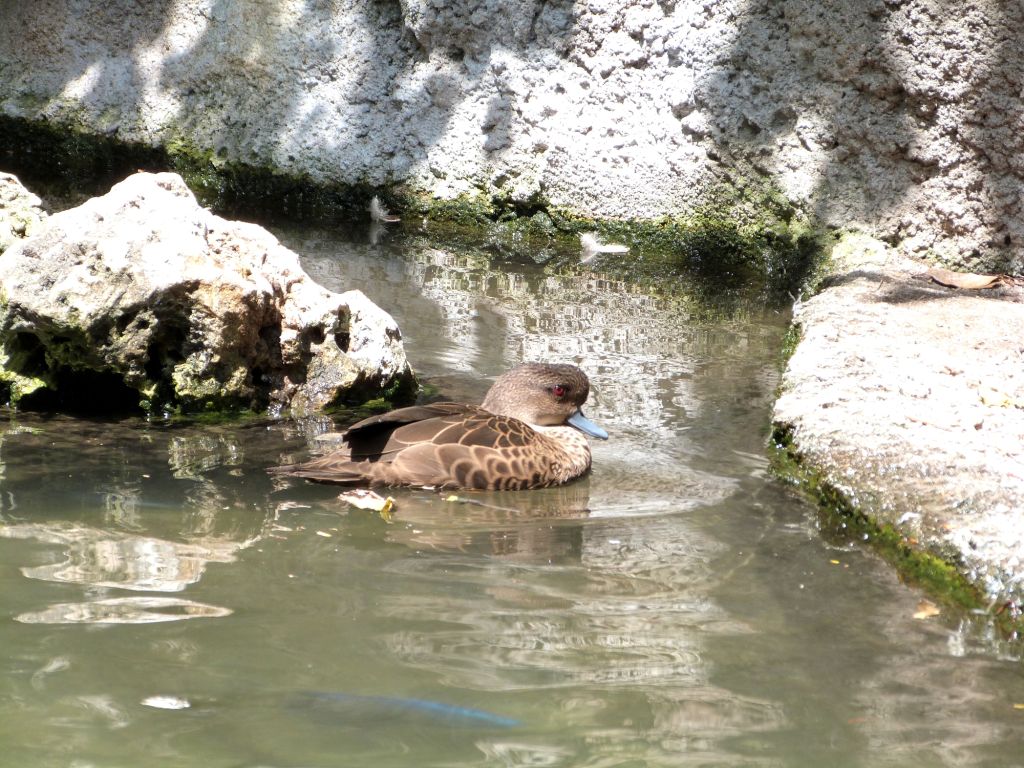
On the 2nd, last evening, we took our cameras with us and spent a few minutes taking photos of the flooding at South Lake Howard Nature Park. The water has receded some from earlier. At one point last week, the “island” was under water completely. We saw it then, but didn’t have a camera with us as we drove by.

Decided to share some of the photos of the two visits. We saw – Mute and Black Swans, Wood Ducks and Wood Storks, Mallards, Ospreys, Laughing Gulls, Great Egret, Anhingas, Red-winged and Boat-tailed Blackbirds, Mourning Doves, Rock Pigeons, White Ibises, Great Blue Heron, Limpkins, Muscovy Ducks, Common Gallinules, and heard Monk Parakeets and a Red-bellied Woodpecker. Not bad for about 30 minutes at Morton and 10 minutes at the Nature Park. Some of the photos are just of the water. Trees are standing in water that normally are on dry ground.

He is like a man which built an house, and digged deep, and laid the foundation on a rock: and when the flood arose, the stream beat vehemently upon that house, and could not shake it: for it was founded upon a rock. (Luke 6:48 KJV)

*

All photos are by me. Dan hasn’t showed me his yet. Bummer, his are always better. If you know what kind of Gull that is, leave a comment, please. I think they are young and I am not the best at IDing them.

This slideshow requires JavaScript.

*

Birdwatching at MacDill AFB, May 2012

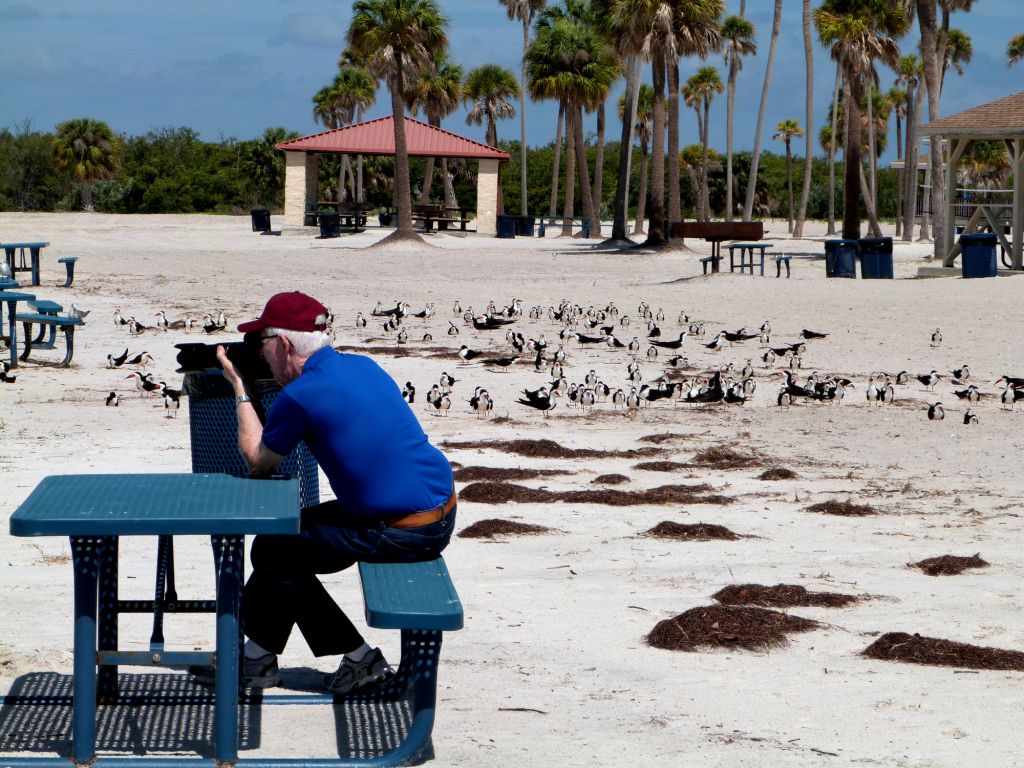
Dan and Black Skimmers

Dan and Black Skimmers

Today, Dan and I had to run over to Tampa for a couple of errands. We stopped by the MacDill AF Base to see how the birds were faring out on their beach on Tampa Bay. When we were there a month or so ago, there were lots of shorebirds. Since there have been many of reports lately from the Listing Service of migrants passing through the state, we thought we would take a look. Tampa is about 45 miles to the west of us and closer to the Gulf of Mexico. We didn’t have the time to go on over to the gulf.

Yellow-crowned Night Heron

Yellow-crowned Night Heron

Our biggest surprise, and the only one, was a pair of Yellow-crowned Night Herons along one of the canals. Down at the beach, we only found the usual Skimmers, Laughing and Ring-billed Gulls, two kinds of Terns; Royal and Sandwich, Turnstones, Willet, White Ibises, and the proverbial Brown Pelicans flying by in formation. A little disappointing, but enjoyable none the less. Even when I only see one bird, I enjoy my birdwatching adventures. I assume most of the birds have already passed by or they were not in much of a beach mood today.

Ruddy Turnstone

Ruddy Turnstone

Even though few species seen today, aren’t they all amazing to watch? I am always amazed at the variety of birds that we get the pleasures of watching.

Which doeth great things past finding out; yea, and wonders without number. (Job 9:10 KJV)

White Ibis

White Ibis

And

Some of the birds at the beach

Some of the birds at the beach Laughing Gulls, Royal Terns and Black Skimmers

I also shot a video of some of the birds at the shore. There are Black Skimmers, which I think are cute walking around, Royal Terns, Sandwich Tern and Laughing Gulls relaxing together.

*

*

One other bird spotted out my back window a few days ago was this House Finch. All winter the normal House Finches and some orange variant ones visited the feeders. This one seems to have combined the two together. Thought it was rather different and wanted to share it. It was shot through the window and screen, so not the best shot.

Interesting House Finch at feeder

Interesting House Finch at feeder

*

Zoo Miami’s Wings of Asia – Wow! – II

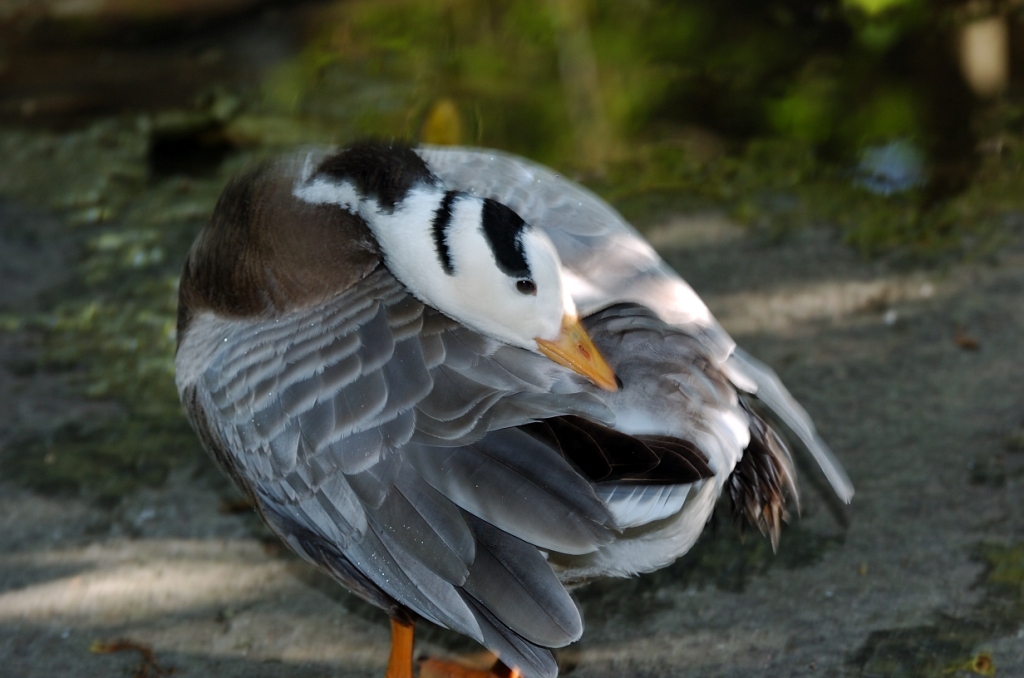
Bar-headed Goose (Anser indicus) by Dan at Zoo Miami

Bar-headed Goose (Anser indicus) by Dan at Zoo Miami

In Zoo Miami’s Wings of Asia – Wow! – I our trip their was introduced. Now to continue with our adventure there. I am still sorting photos, but I have most of the water birds figured out.

First, here are two quotes about the aviary from Zoo Miami’s website. “Brilliantly colored pheasants, hornbills, pigeons and many other birds show off their shimmering, iridescent plumage in a large, lush free-flight enclosure that provides them with unencumbered flight. Tiny and large birds swoop overhead, perch on branches and even strut and stroll right by visitors. The air is alive with bird activity, beautiful birdsongs, trickling brooks and waterfalls.” They said that so much better than I could, but it is so true.

“The bird collection is quite diverse with rare, colorful species that sing attractive songs and make unusual vocalizations. Some of the birds are cranes, rails, mynahs, parrots, pheasants, thrushes, fruit-pigeons, barbets and woodpeckers. The birds, vastly different in size, range from 10-gram (.35 oz) Japanese white-eyes to 7000-gram (15.4 lb) sarus cranes…  Many of these species are rare in zoo collections, and some can only be seen at Zoo Miami as part of our participation in wildlife conservation breeding initiatives such as the Species Survival Program.”

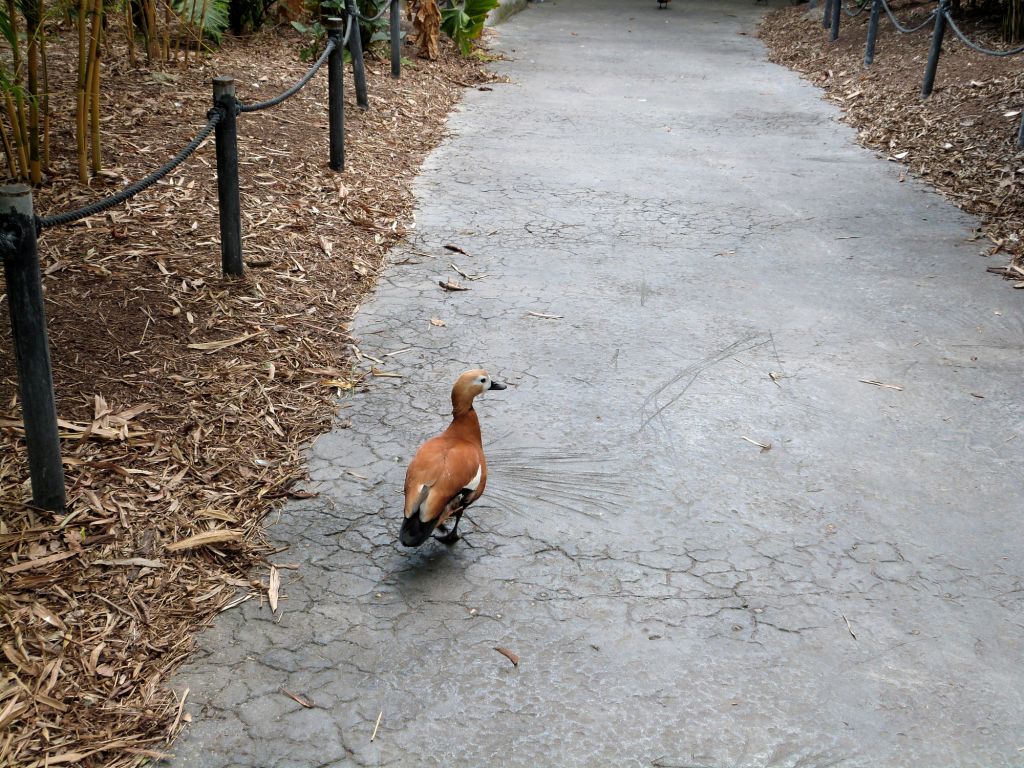
Ruddy Shelduck (Tadorna ferruginea) Zoo Miami by Lee

Ruddy Shelduck (Tadorna ferruginea) Zoo Miami by Lee

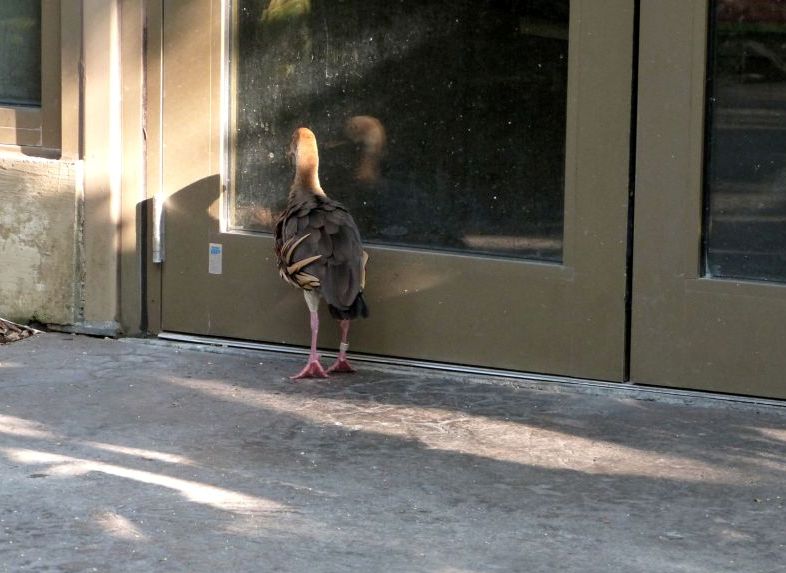
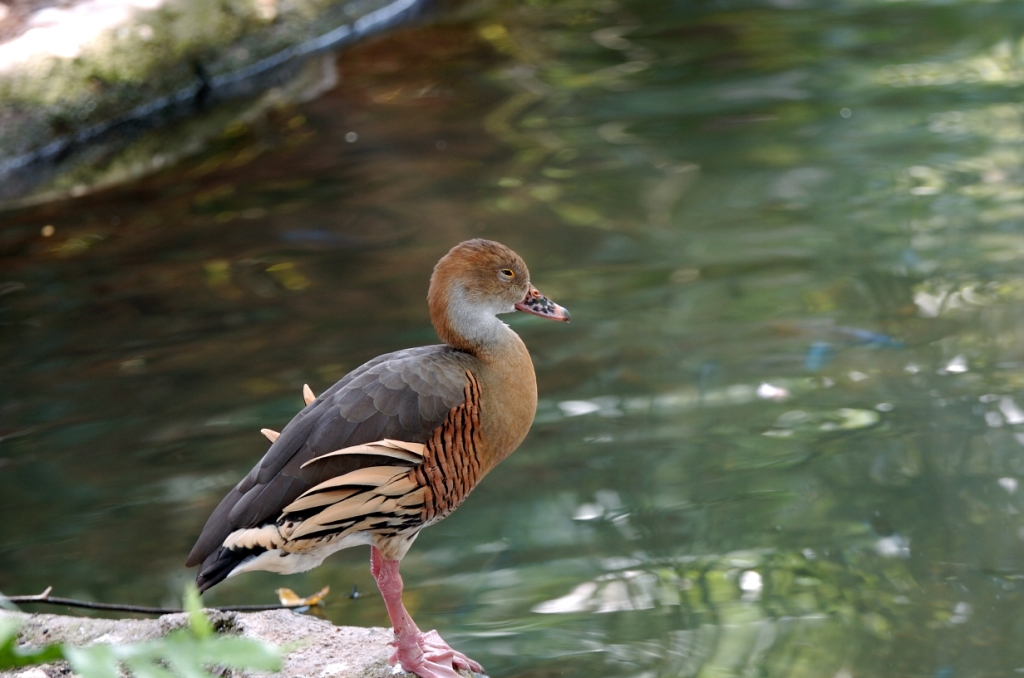
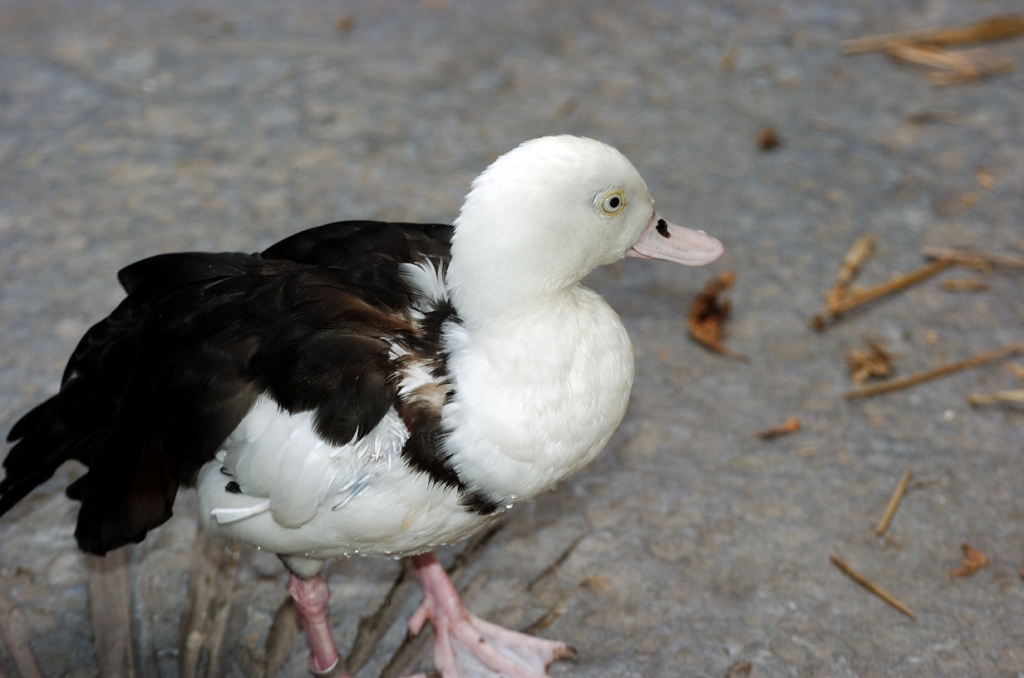
Strut some of them do! I’ll save the cranes for another article, but the Ruddy and Raja Shelducks were strolling all around. The Plumed Whistling Duck was checking out the entry door. Maybe looking for a way out or to see if the next visitors were on the way. Why would he want to leave such a fantastic surrounding?

Plumed Whistling Duck (Dendrocygna eytoni) Zoo Miami by Lee

Plumed Whistling Duck (Dendrocygna eytoni) Zoo Miami by Lee

Just in the Anatidae – Ducks, Geese & Swans Family there were 18 species that we were able to see and photograph. In addition there were 6 members of that family we found around the zoo (Amazon & Beyond and Cloud Forrest). Some we have seen previously, but most were ones not seen by us. Here is a list of those with a link to a photo and a slide show at the bottom. I am starting with these because they are the some of the first you encounter when you enter the aviary. By wandering around on the paths you actually arrive at three different heights with different bird species hanging out. More on that later.

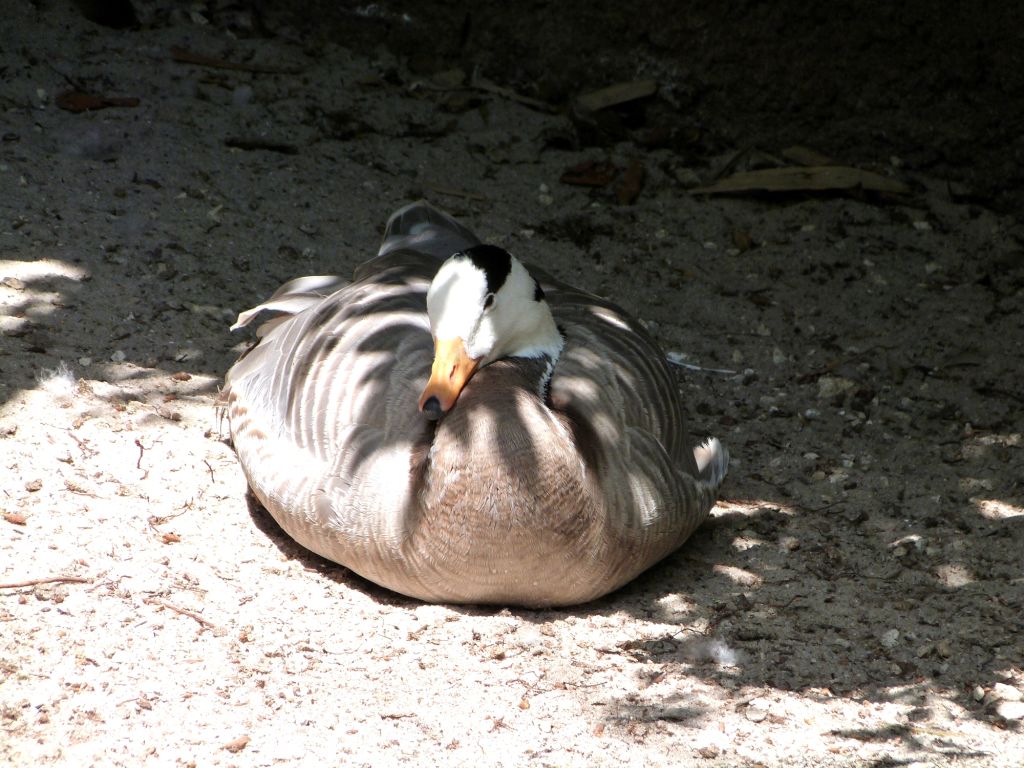
Bar-headed Goose (Anser indicus) Zoo Miami by Lee

Bar-headed Goose (Anser indicus) Zoo Miami by Lee

The Bar-headed Goose’s picture was selected because of its behavior. I am featuring it because the Bar-headed Goose is thought to be one of the world’s highest flying birds, having been heard flying across Mount Makalu (the fifth highest mountain on earth at 8,481 metres (27,825 ft)) and apparently seen over Mount Everest (8,848 metres (29,029 ft), although this is a second hand report). This incredibly demanding migration has long puzzled physiologists and naturalists: “there must be a good explanation for why the birds fly to the extreme altitudes […] particularly since there are passes through the Himalaya at lower altitudes, and which are used by other migrating bird species” quoted from Black & Tenney (1980). In fact bar-headed geese is now believed that they do take the high passes through the mountains. The challenging northward migration from lowland India to breed in the summer on the Tibetan Plateau is undertaken in stages, with the flight across the Himalaya (from sea-level) being undertaken non-stop in as little as seven hours. Surprisingly, despite predictable tail winds that blow up the Himalayas (in the same direction of travel as the geese), bar-headed geese spurn these winds, waiting for them to die down overnight, when they then undertake the greatest rates of climbing flight ever recorded for a bird, and sustain these climbs rates for hours on end.

The Bar-headed Goose is known to be well equipped for this incredibly challenging migration. It has a slightly larger wing area for its weight than other geese, which is believed to help the goose fly at high altitudes. Studies have found that they breathe more deeply and efficiently under low oxygen conditions. The haemoglobin of their blood has a higher oxygen affinity than that of other geese. Again we see a well designed avian creation by its Creator. The Lord knew the conditions and heights it would need to cross to reach the feeding grounds provided for it.

Also, to every beast of the earth, to every bird of the air, and to everything that creeps on the earth, in which there is life, I have given every green herb for food”; and it was so. (Genesis 1:30 NKJV)

I know all the birds of the mountains, And the wild beasts of the field are Mine. (Psalms 50:11 NKJV)

The Bar-headed Goose migrates over the Himalayas to spend the winter in parts of India (from Assam to as far south as Tamil Nadu. The winter habitat of the Bar-headed Goose is cultivated fields, where it feeds on barley, rice and wheat, and may damage crops. Birds from Kyrgyzstan have been noted to stopover in western Tibet and southern Tajikistan for 20 to 30 days before migrating further south. Some birds may show high wintering site fidelity.

The bird is pale grey and is easily distinguished from any of the other grey geese of the genus Anser by the black bars on its head. It is also much paler than the other geese in this genus. In flight, its call is a typical goose honking. The adult is 71–76 centimetres (28–30 in) and weighs 1.87–3.2 kilograms (4.1–7.1 lb). (Wikipedia)

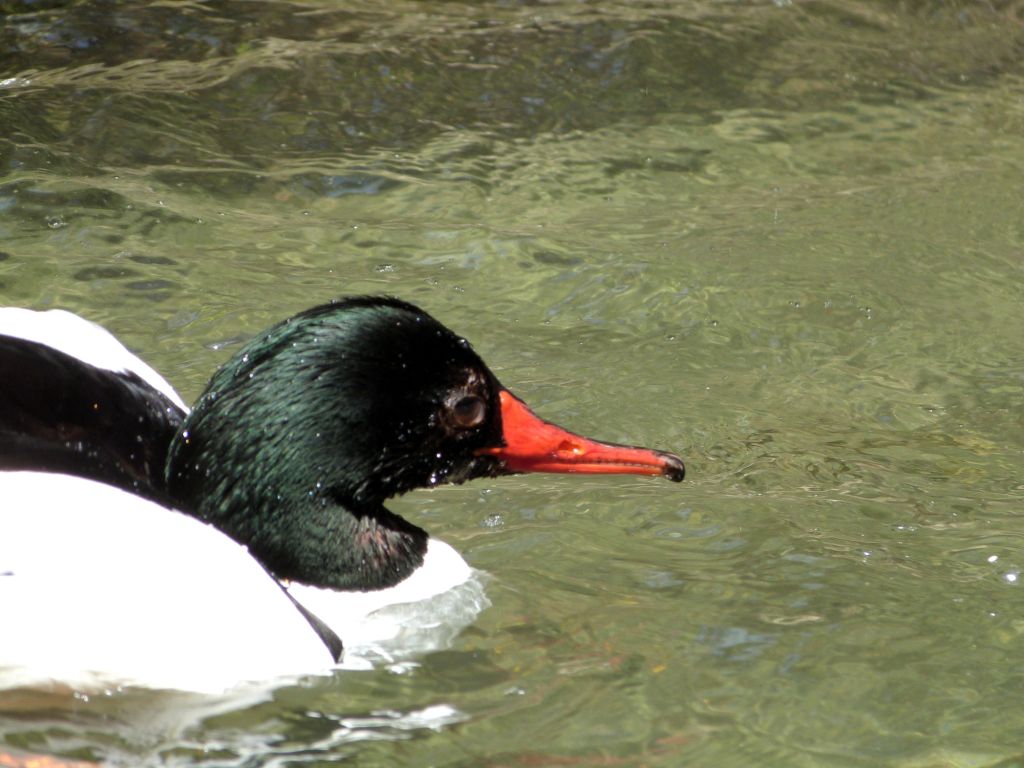
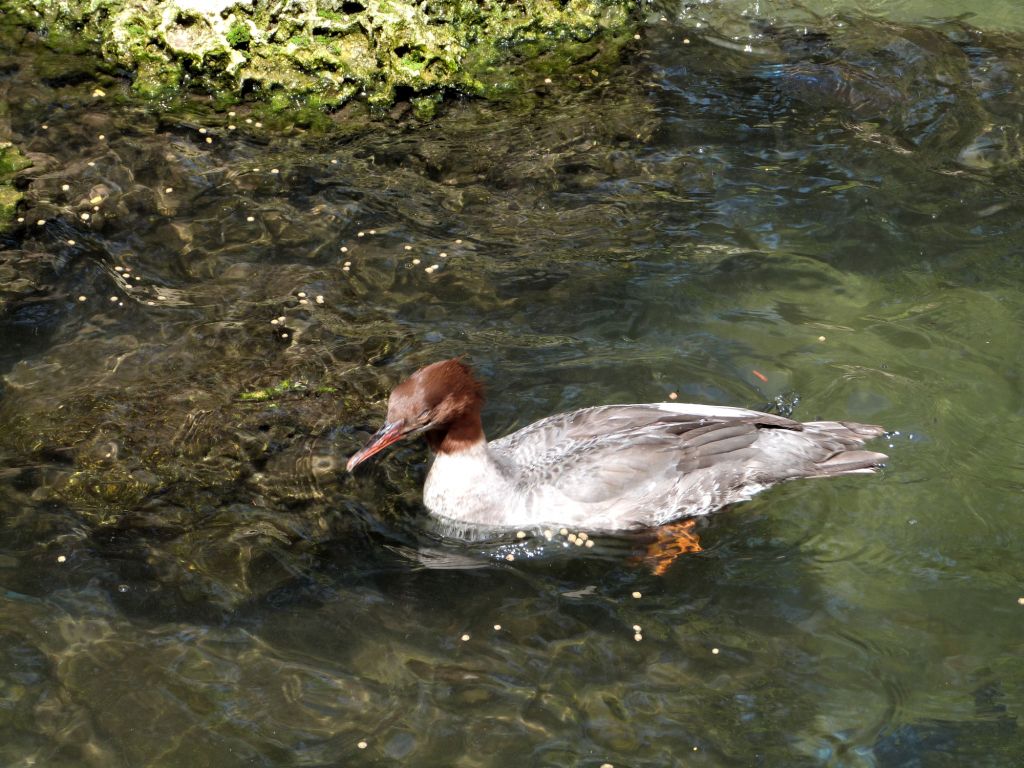
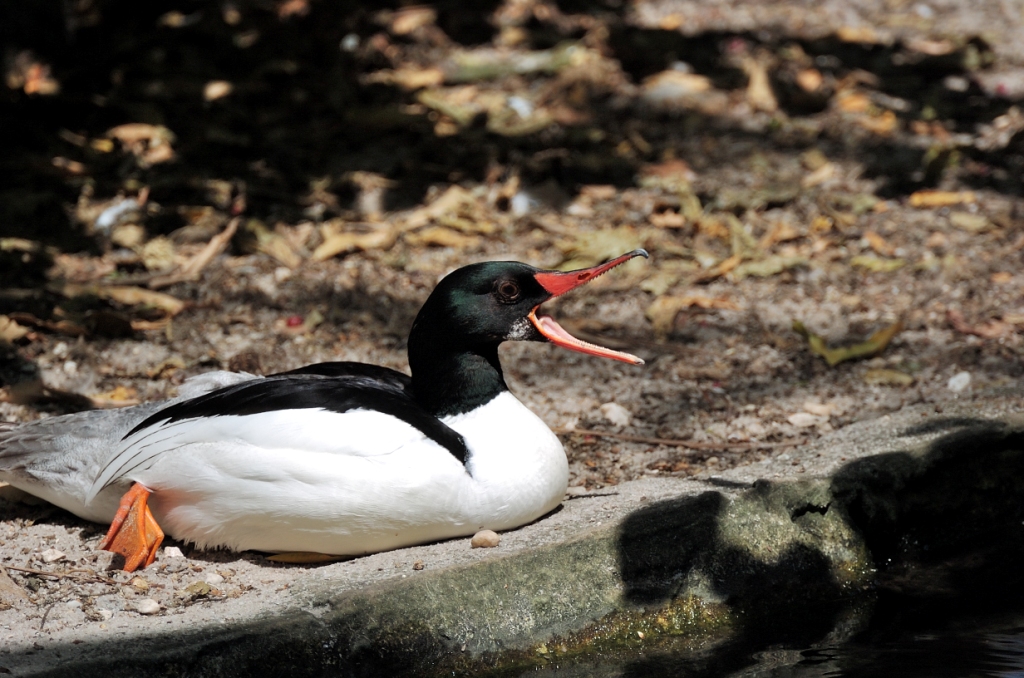
One more tale to tell. The Common Merganser had just eaten and he started flipping his feet like crazy. He was splashing water everywhere. I suppose he was happy. I finally turned the video on and caught part of it. He even chased the White-headed Duck around.


The name in (parenthesis) at the front is the name the zoo uses. I use the I.O.C. World Bird Names here on the blog. These are in taxonomic order.

White-faced Whistling Duck (Dendrocygna viduata) Amazon and Beyond
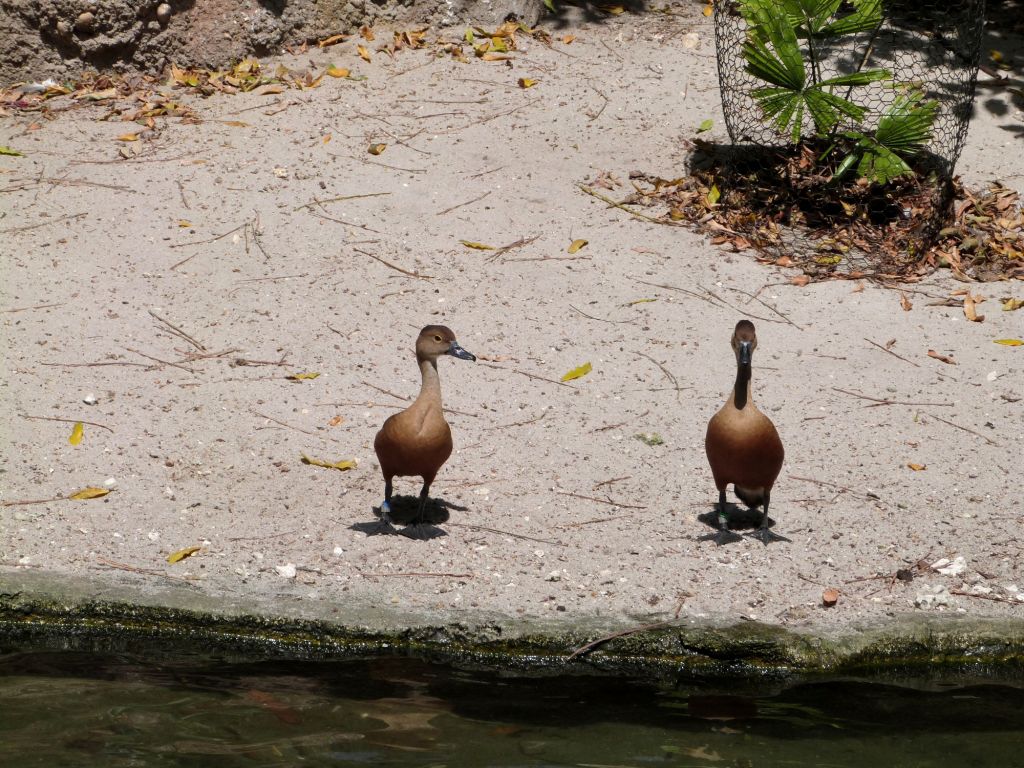
Plumed Whistling Duck (Dendrocygna eytoni) – Dan’s
(Javan) Lesser Whistling Duck (Dendrocygna javanica) – Dan’s
Bar-headed Goose (Anser indicus) – Dan’s
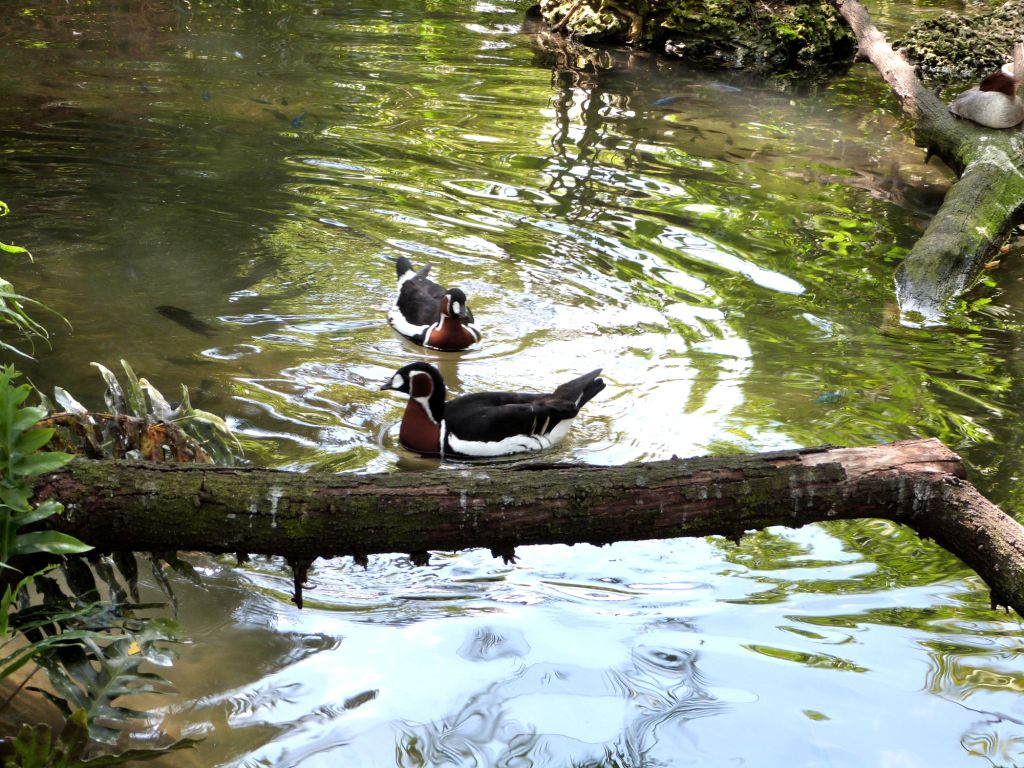
Red-breasted Goose (Branta ruficollis)
Coscoroba Swan (Coscoroba coscoroba) Amazon and Beyond
Raja Shelduck (Tadorna radjah) – Dan’s
Ruddy Shelduck (Tadorna ferruginea) – Dan’s
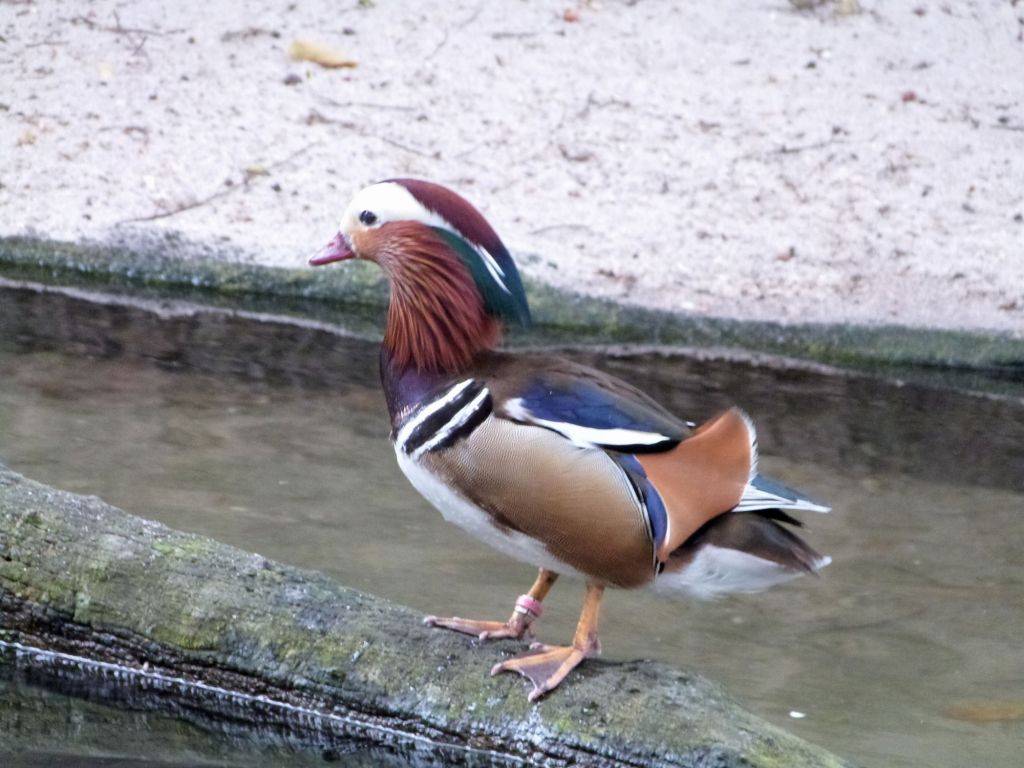
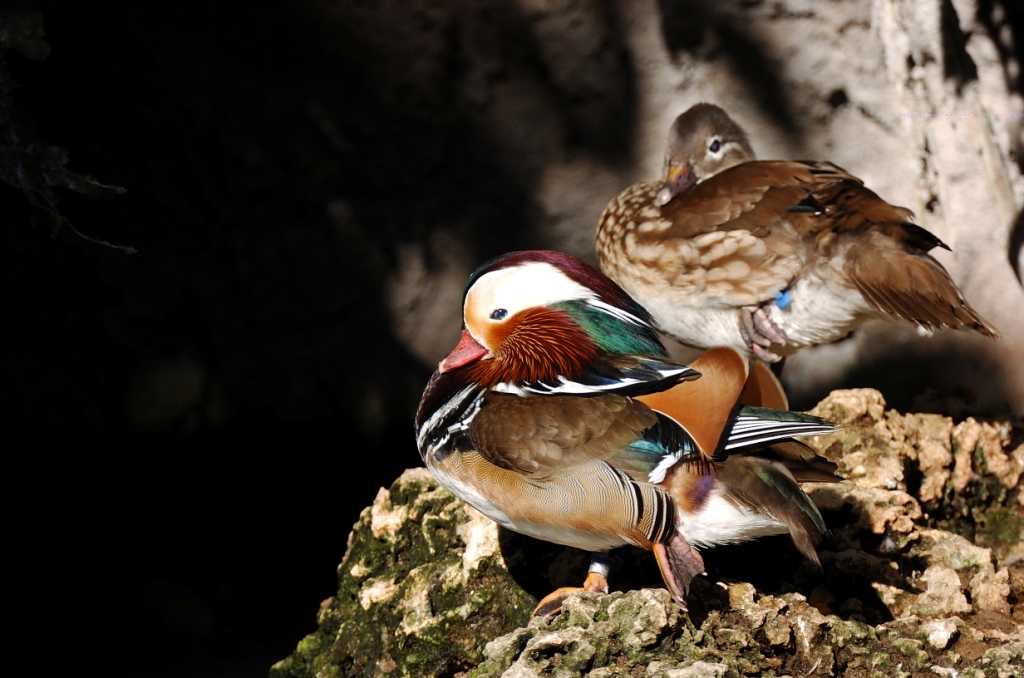
Mandarin Duck (Aix galericulata) – Male – Dan’s
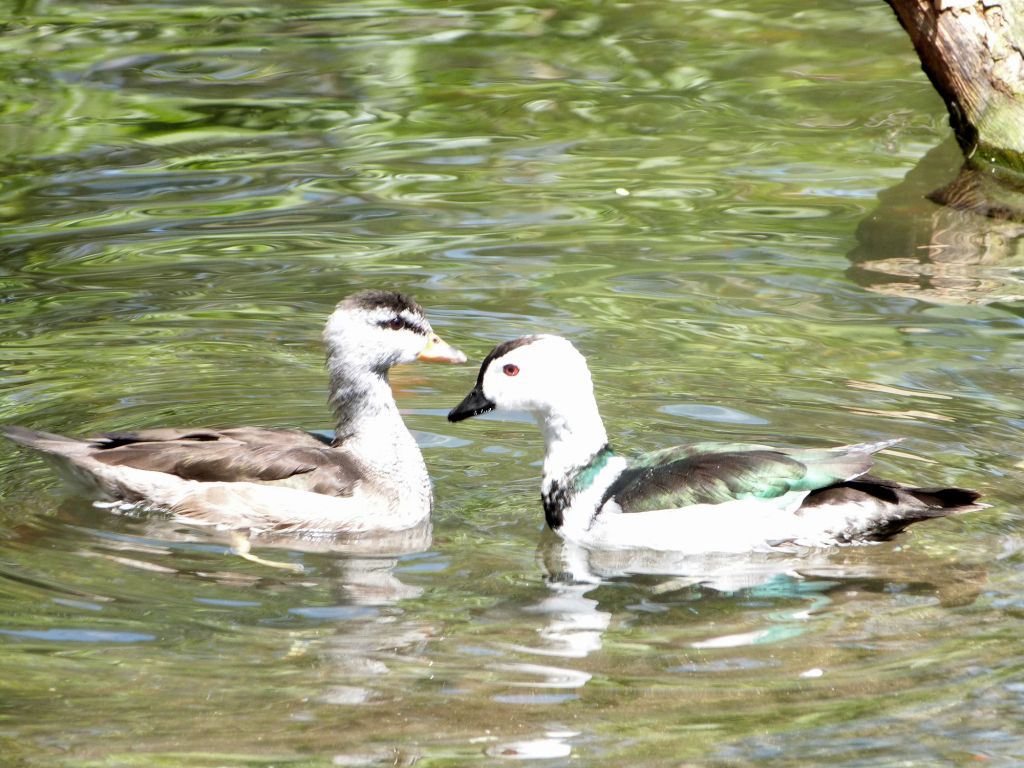
(Pygmy Goose) Cotton Pygmy Goose (Nettapus coromandelianus)
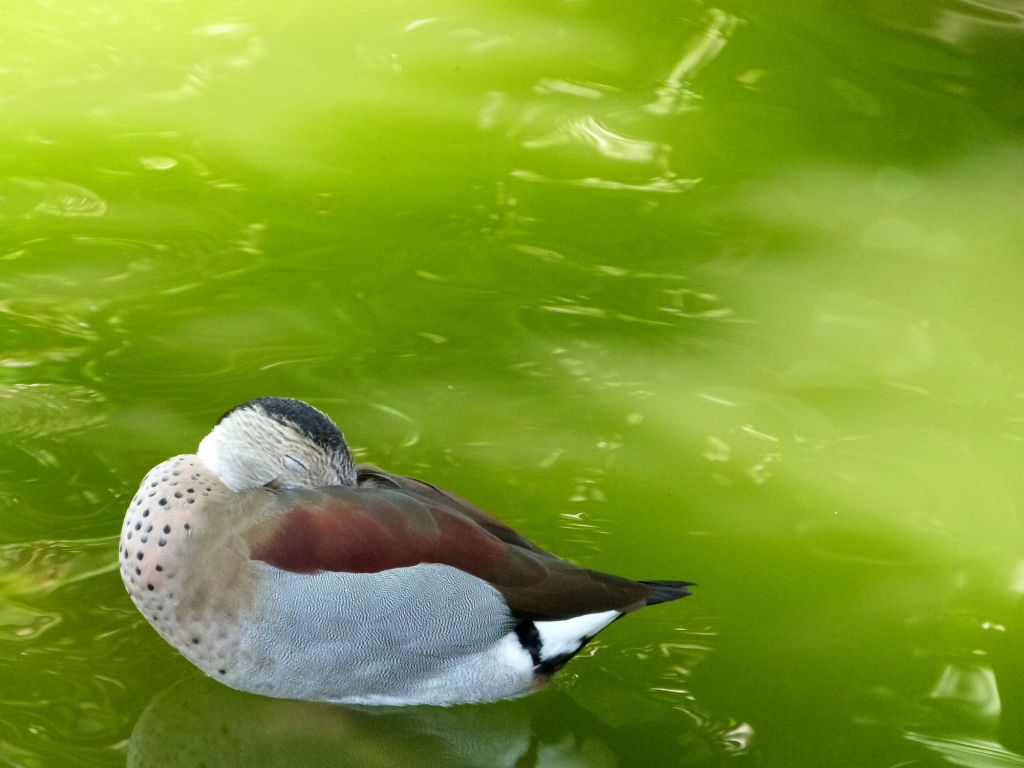
Ringed Teal (Callonetta leucophrys) Male – Female – Dan’s Amazon and Beyond
Bronze-winged Duck (Speculanas specularis) Sign (Saw, but no photo) Amazon and Beyond
Eurasian Wigeon (Anas penelope) (Saw, but no photo)
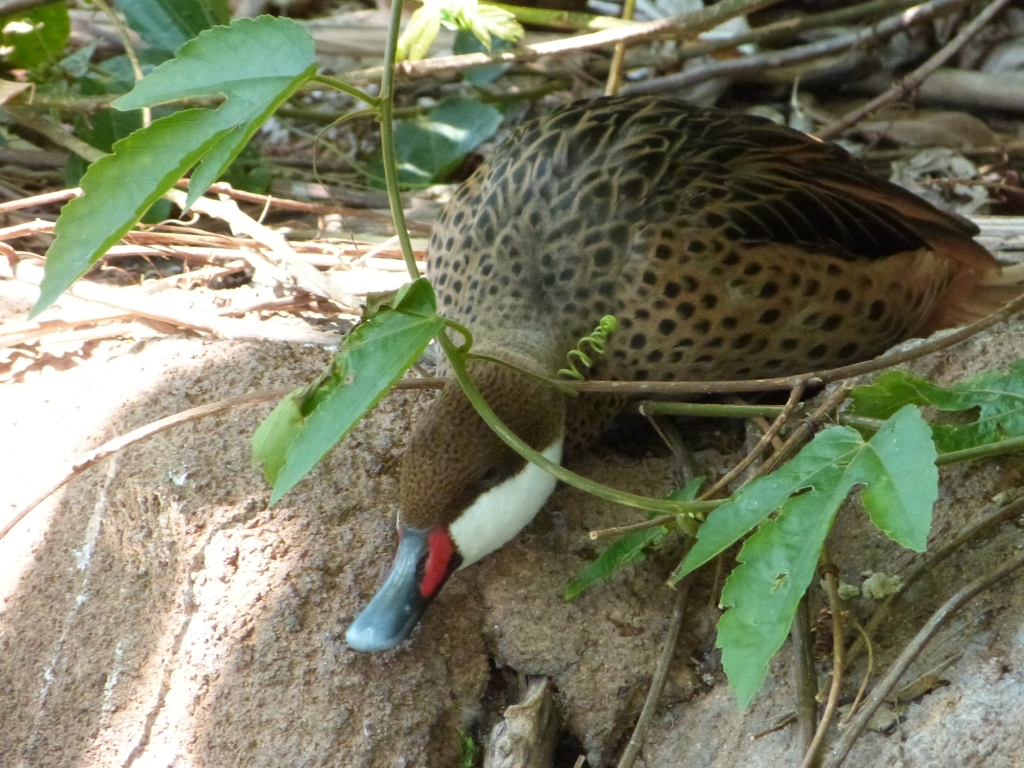
Blue-winged Teal Female (I think) – Dan’s Amazon and Beyond
Northern Shoveler (Anas clypeata) Dan’s
Sunda Teal (Anas gibberifrons)
Northern Pintail (Anas acuta) (proof)
White-cheeked Pintail (Anas bahamensis) Amazon and Beyond
Baikal Teal (Anas formosa)
Red-crested Pochard (Netta rufina) – Dan’s
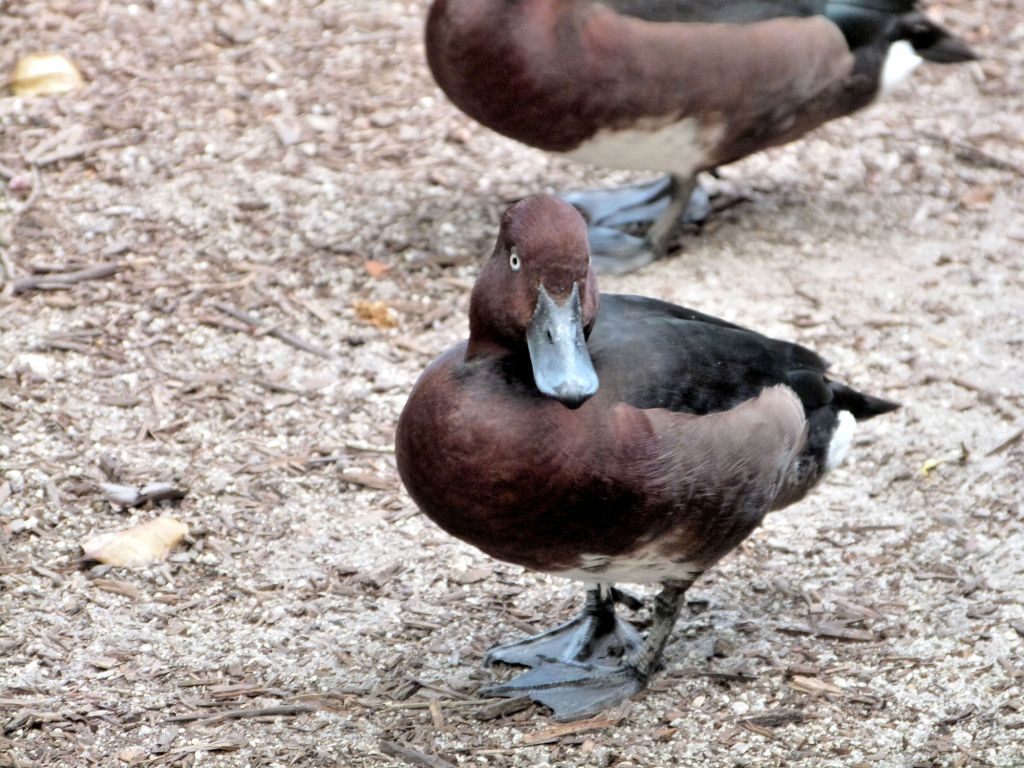
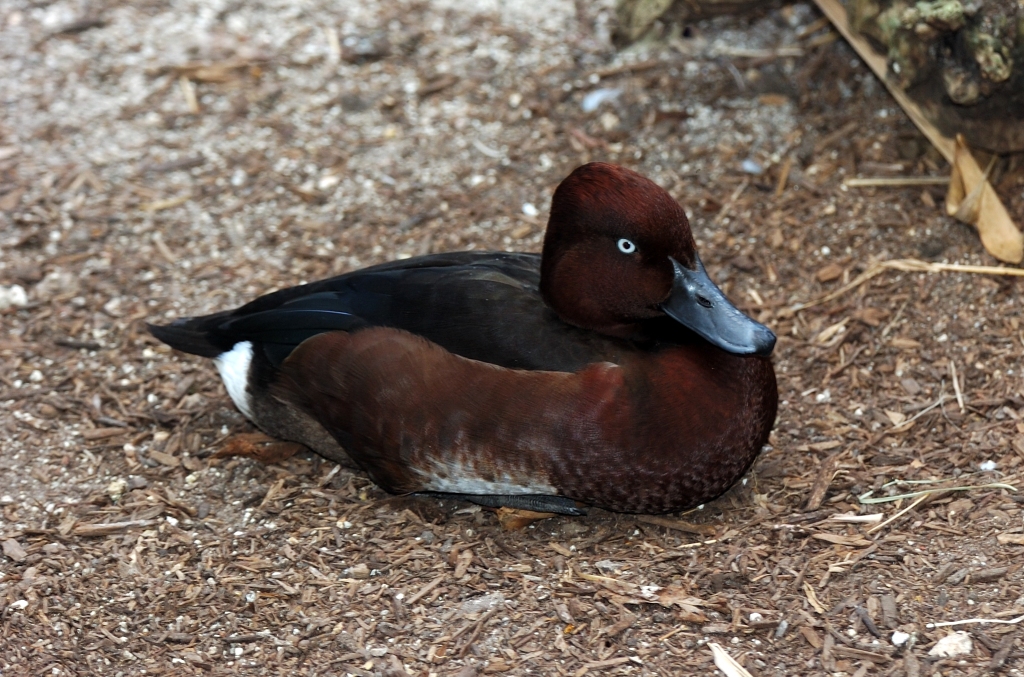
(Common White Eye) Ferruginous (Aythya myroca) – Dan’s
Common Merganser (Mergus merganser) Male – Female – Dan’s
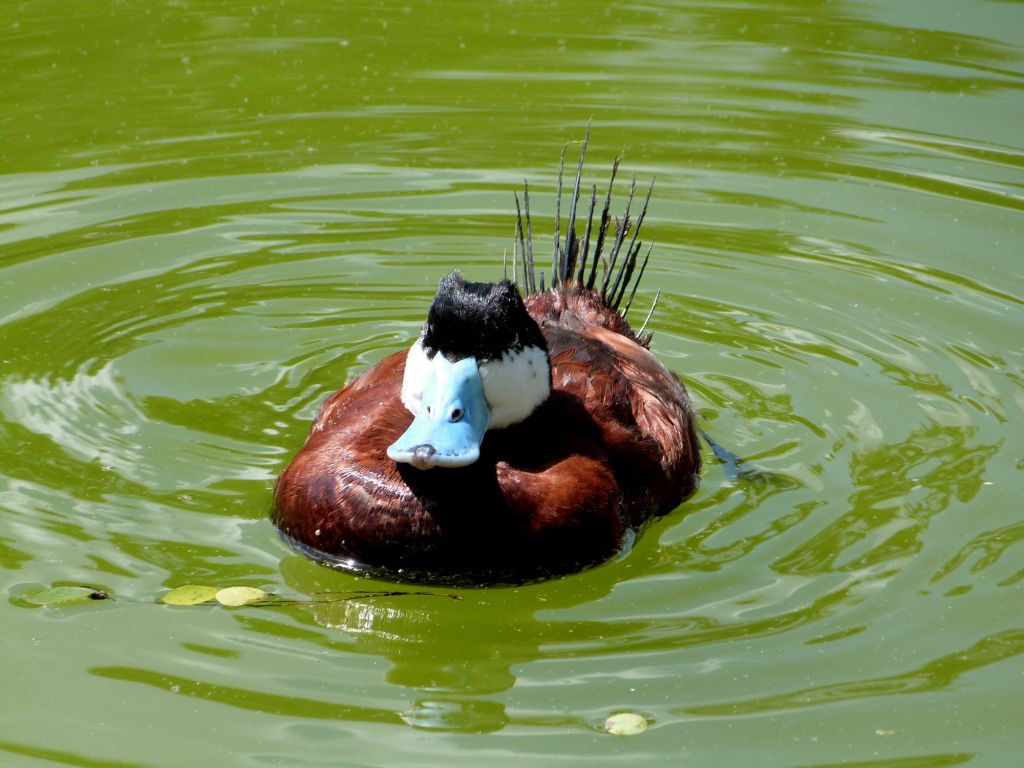
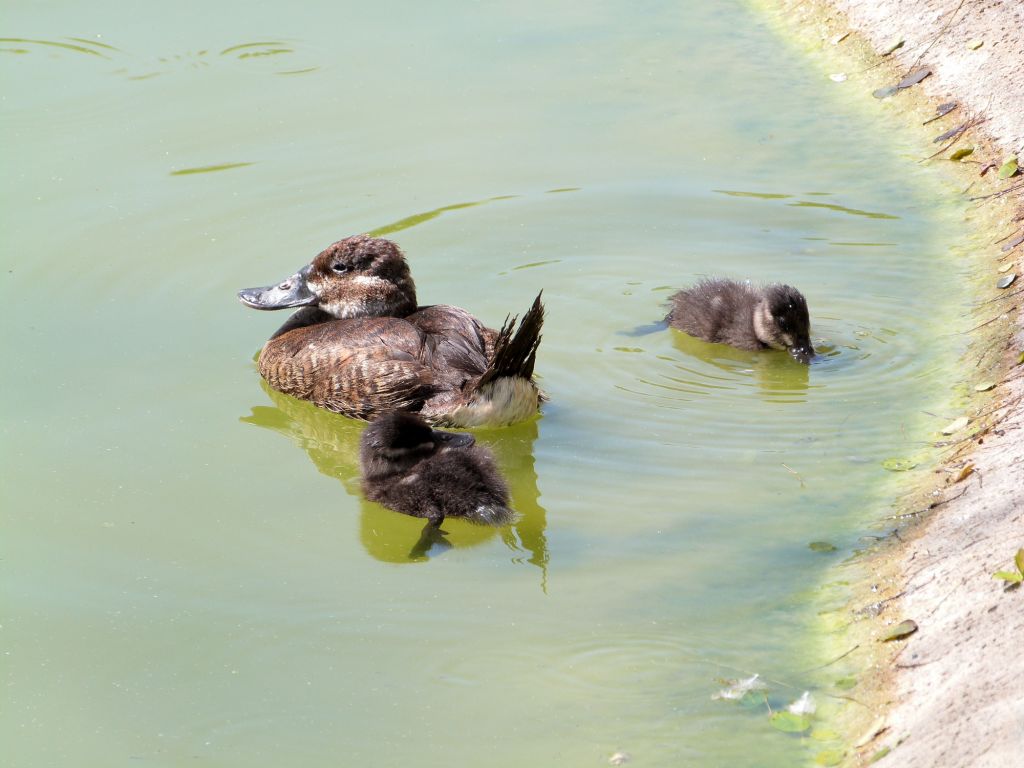
Ruddy Duck (Oxyura jamaicensis) Male – Female & young – Dan’s
White-headed Duck (Oxyura leucocephala)

This slideshow requires JavaScript.

*

Links:

Zoo Miami’s Wings of Asia – Wow! – I

Bar-headed Goose – Wikipedia

Zoo Miami – Miami, Florida

Wings of Asia – Aviary

Anatidae – Ducks, Geese & Swans Family

Zoo Miami’s Wings of Asia – Wow! – I

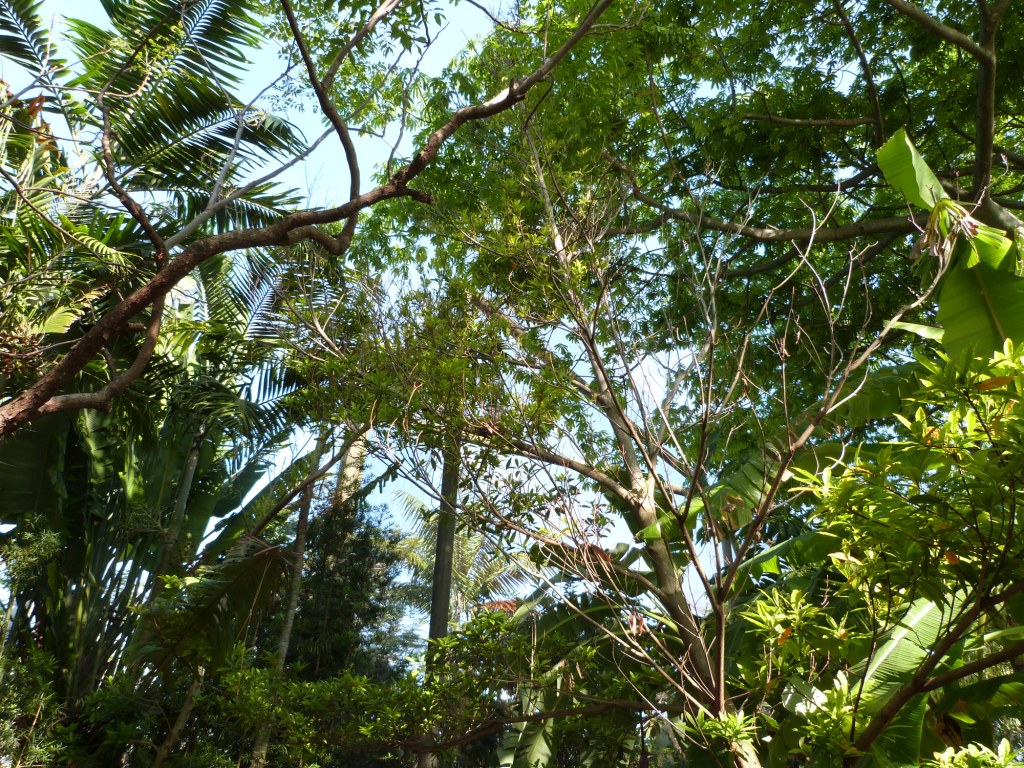
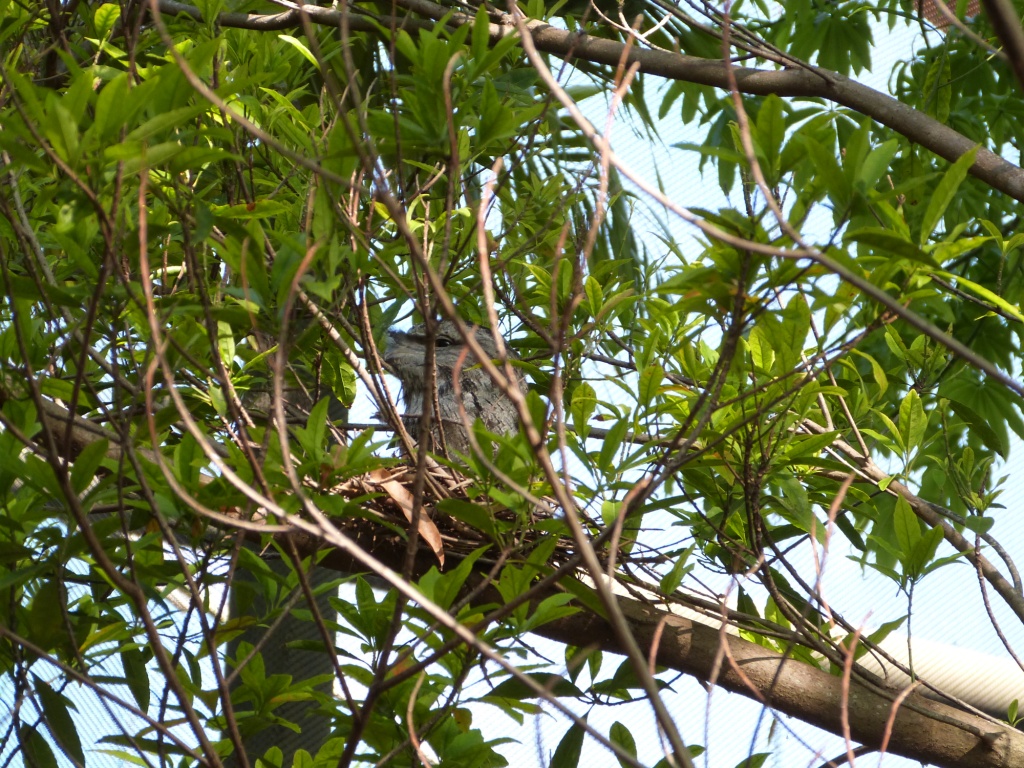
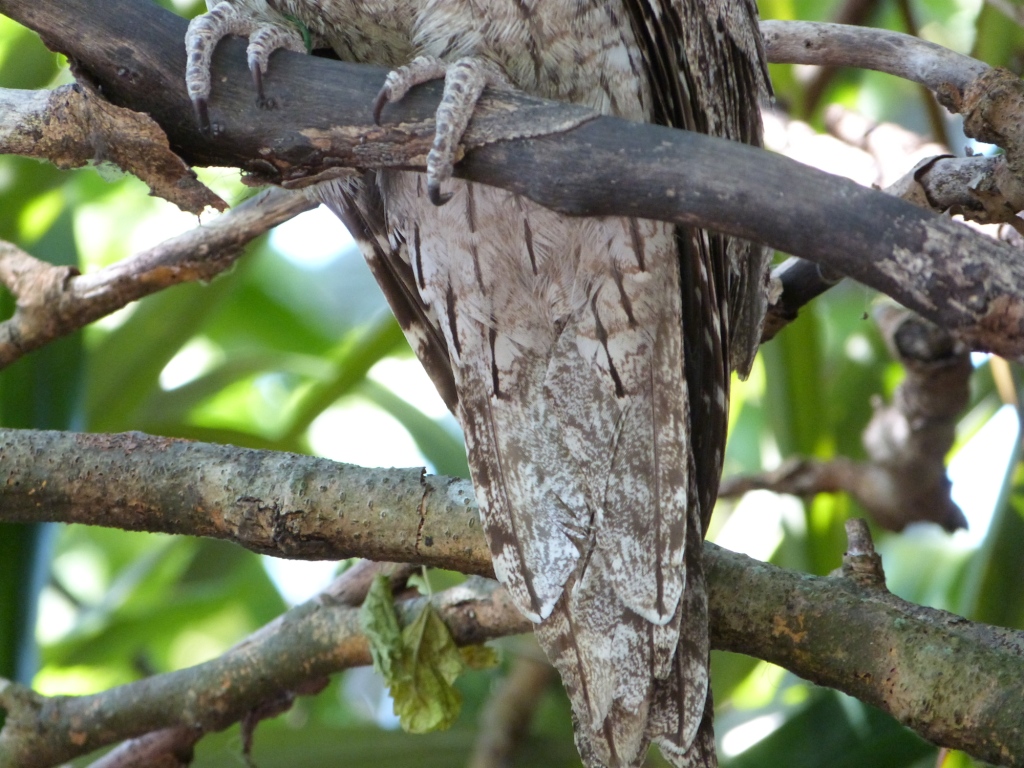
Tawny Frogmouth (Podargus strigoides) by Lee

Tawny Frogmouth (Podargus strigoides) Do You See It?

We drove down to Miami this week, 200 miles, went to Zoo Miami twice and drove home. Simple statement, but what we saw was fantastic. Just the ride down allowed us to observe some of our own wildlife. Those highlights were 2 Northern Crested Caracaras (one standing along the road), a Cooper’s Hawk, a Red-shouldered Hawk, several other hawks (unknown) and a Roseate Spoonbill flying by. The rest of the birds were just our normal Grackles, Doves, Egrets, Herons and Crows.

Our goal was to see the Wings of Asia aviary at Zoo Miami or Miami Metro Zoo as I call it. The last time we were there was before Hurricane Andrew destroyed it in the early 1990’s. We lived in Tamarac then and had an annual pass to the zoo. “ Wings of Asia opened in the spring of 2003 and marked the first phase of a 20-year master plan. More than 300 exotic, rare and endangered Asian birds representing over 70 species reside in this Aviary. Covering more than 54,000 square feet, it is the largest open air Asian aviary in the Western Hemisphere.” That number is now around 85 species. About a year or so ago I became aware that the Aviary had been rebuilt and we have been trying to work it out to get there. We finally got there and my description would be, “Wow!”
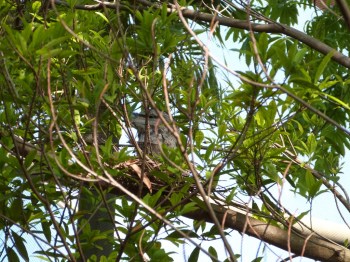
Tawny Frogmouth (Podargus strigoides) by Lee at Wings of Asia

Do You See It Yet?

All of those 85 species in there are free to fly and or swim around. Many species have 2 or more birds represented by couples, nests and young.

The staff are also very helpful and friendly. After they found out that we were really interested in the birds, they sort of took us “under their wing.” Our special thanks to Dolora, Stacie, Ezekial, Carl and the others.

Where do you begin to tell about the thrill of seeing birds that you have read about, only seen photos of, or never even heard of before? With over 10,000 birds in the world, any time you get to see them for real is exciting, even if they are at the zoo. The birds of Asia and a few from other countries were not just standing there waiting on you to look at them. No, that place is so large that you actually have to do some birdwatching. At times I felt like I was out in the field trying to find the birds. Because of the help from the staff we were able to see many more than we would have on our own.

We were able to see the Cloud Forrest and the Amazon and Beyond small aviaries. More on that later. Overall I took over 1,000 photos and not sure how many Dan took. It is going to take awhile to sort through them and put the right name on the right bird photo. We were extremely tired when we got in last night and so have not started working on them yet.
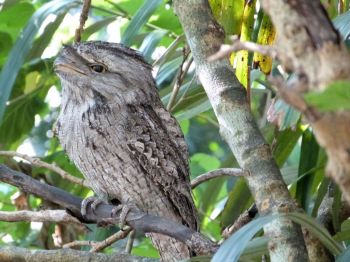
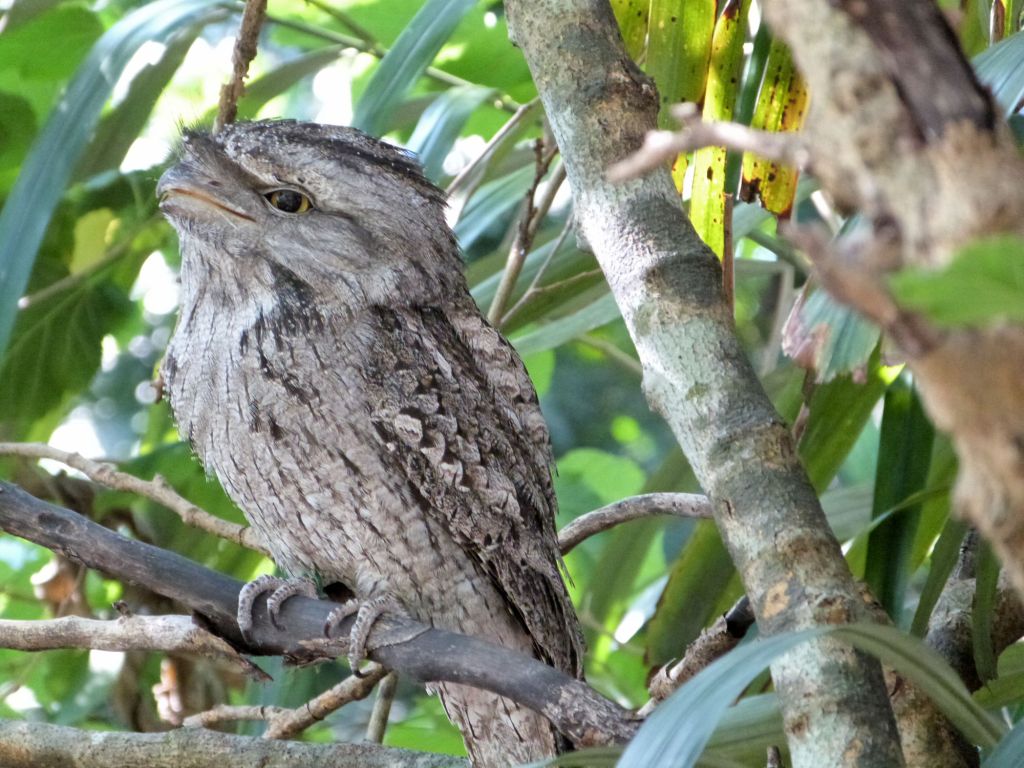
Tawny Frogmouth (Podargus strigoides) at Wings of Asia

Tawny Frogmouth (Podargus strigoides) at Wings of Asia by Lee

I did want to share one bird that was on my “most want to see” list. Again, it took the help of the keepers to point it out. I had walked under it several times on Wednesday and never saw it. The Lord has provided the Tawny Frogmouth with a fantastic protection. It looks like the bark on a tree. It also has a very big mouth and hence its “frogmouth” name. They are in the Podargidae – Frogmouth Family which is in the  Caprimulgiformes Order. I was amazed at how large it actually was because it is hard to judge size from photos.

Wikipedia says – The Tawny Frogmouth is often mistaken to be an owl. Many Australians refer to the Tawny Frogmouth by the colloquial names of “Mopoke” or “Morepork”, which usually are common alternative names for the Southern Boobook. Frogmouths are not raptorial birds.

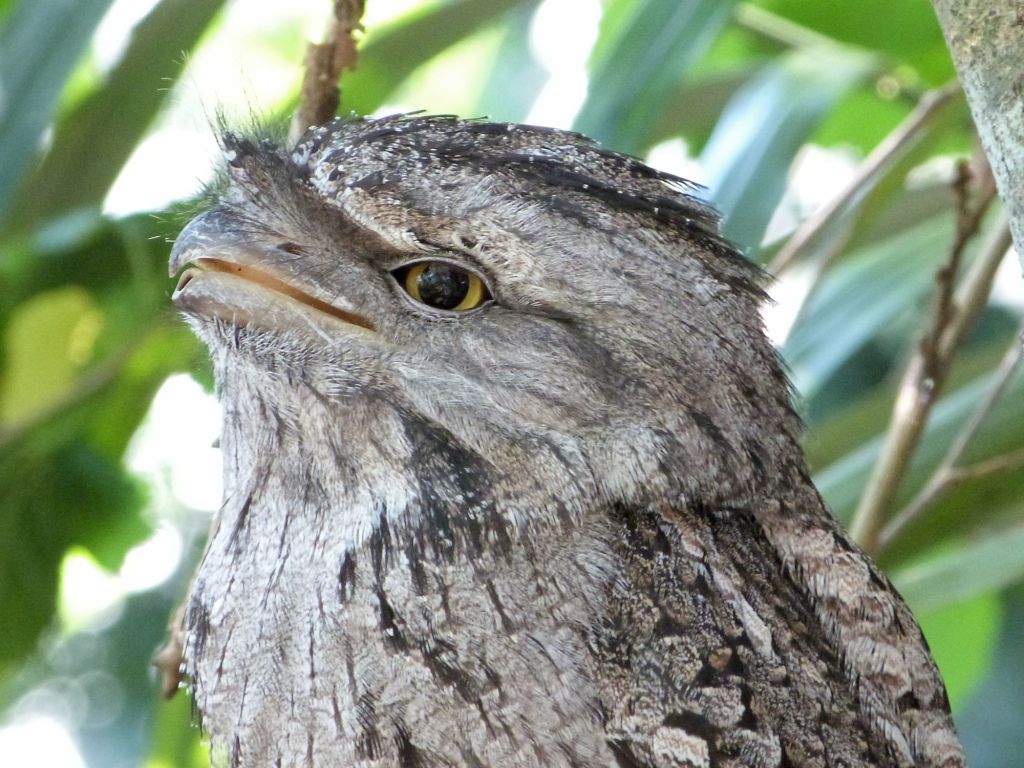
Tawny Frogmouth (Podargus strigoides) at Zoo Miami

Tawny Frogmouth (Podargus strigoides) at Zoo Miami

Males and females look alike and are 35–53 cm (14–21 in) long. This very bulky species can weigh up to 680 grams (1.5 lbs) and, in overweight zoo specimens, up to 1400 grams (3.1 lbs). This species thus reaches the highest weights known in the Caprimulgiformes order. They have yellow eyes and a wide beak topped with a tuft of bristly feathers. They make loud clacking sounds with their beaks and emit a reverberating booming call.

Tawny Frogmouths hunt at night and spend the day roosting on a dead log or tree branch close to the tree trunk. Their camouflage is excellent — staying very still and upright, they look just like part of the branch. When feeling threatened, the Tawny Frogmouth stays perfectly still, with eyes almost shut and with bill pointed straight, relying on camouflage for protection.
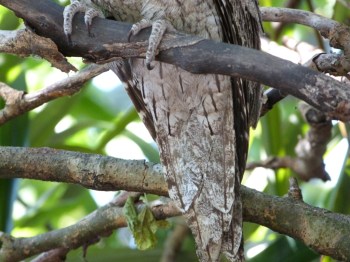
Tawny Frogmouth (Podargus strigoides) Tail

Tawny Frogmouth (Podargus strigoides) Tail

The Tawny Frogmouth is almost exclusively insectivorous, feeding rarely on frogs and other small prey. They catch their prey with their beaks rather than with their talons, another way in which they are different from owls. Owls fly around at night hunting food, but Tawny Frogmouths generally remain sitting very still on a low perch, and wait for food to come to them. They catch prey with their beaks, and sometimes drop from their perch onto the prey on the ground. The bird’s large eyes and excellent hearing aid nocturnal hunting.

Tawny Frogmouths and owls both have anisodactyl feet – meaning that one toe is facing backwards and the other three face forwards. However, owls’ feet are much stronger than the feet of the Tawny Frogmouth as owls use their feet to catch their prey. Owls are also able to swing one of their toes around to the back (with a unique flexible joint) to get a better grip on their prey. Tawny Frogmouths have fairly weak feet as they use their beaks to catch their prey. Owls eat small mammals, like mice and rats, so their bones are shorter and stronger than those of Tawny Frogmouths which usually hunt smaller prey. Tawny Frogmouths typically wait for their prey to come to them, only rarely hunting on the wing like owls.

Breeding – Tawny Frogmouth pairs stay together until one of the pair dies. They breed from August to December. They usually use the same nest each year, and must make repairs to their loose, untidy platforms of sticks. After mating, the female lays two or three eggs onto a lining of green leaves in the nest. Both male and female take turns sitting on the eggs to incubate them until they hatch about 25 days later. Both parents help feed the chicks.

I have many more adventures to share from Zoo Miami. Praise the Lord for a great trip to see more of His fantastic Creative Hand in person. Zoos are a favorite of mine along with being in the field birdwatching. The birds that they collect are many times endangered or are being threatened by lost of habitat. One of the commands that the LORD gave man was to be responsible for or have dominion over the birds and other critters. Dominion does not mean be cruel to them but to help them and Zoo are one of those places.

Then God said, “Let Us make man in Our image, according to Our likeness; let them have dominion over the fish of the sea, over the birds of the air, and over the cattle, over all the earth and over every creeping thing that creeps on the earth.” (Genesis 1:26 NKJV)

Links:

Zoo Miami – Miami, Florida

Podargidae – Frogmouth Family

*
Birdwatching Trip to Circle B in March 2012

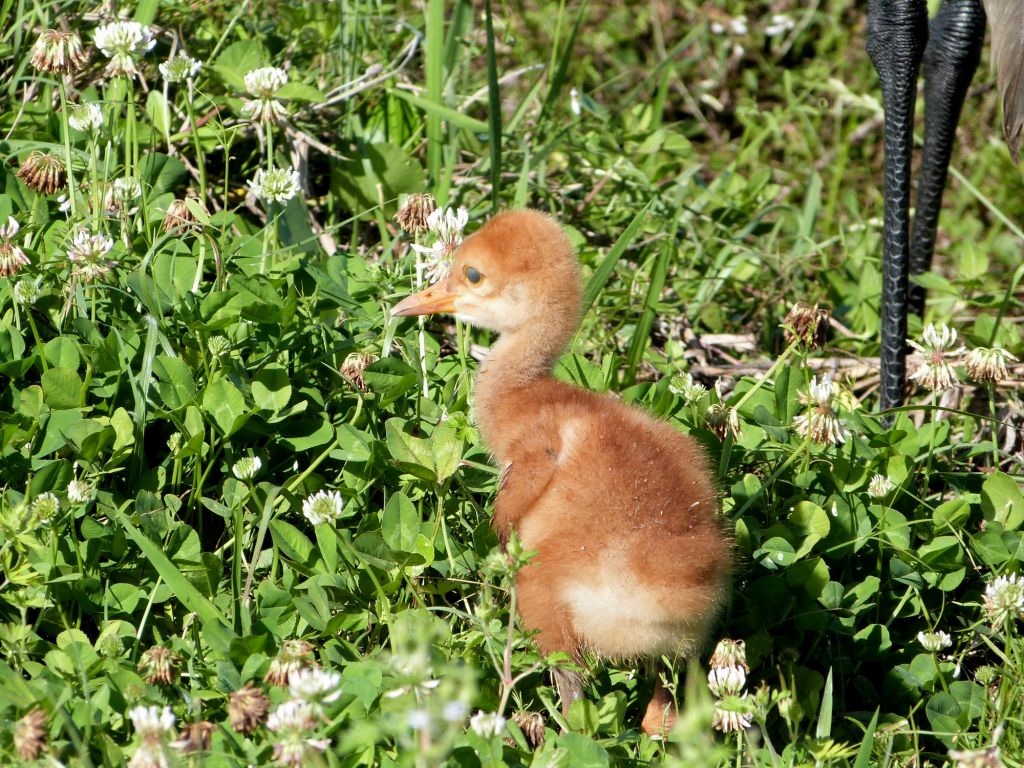
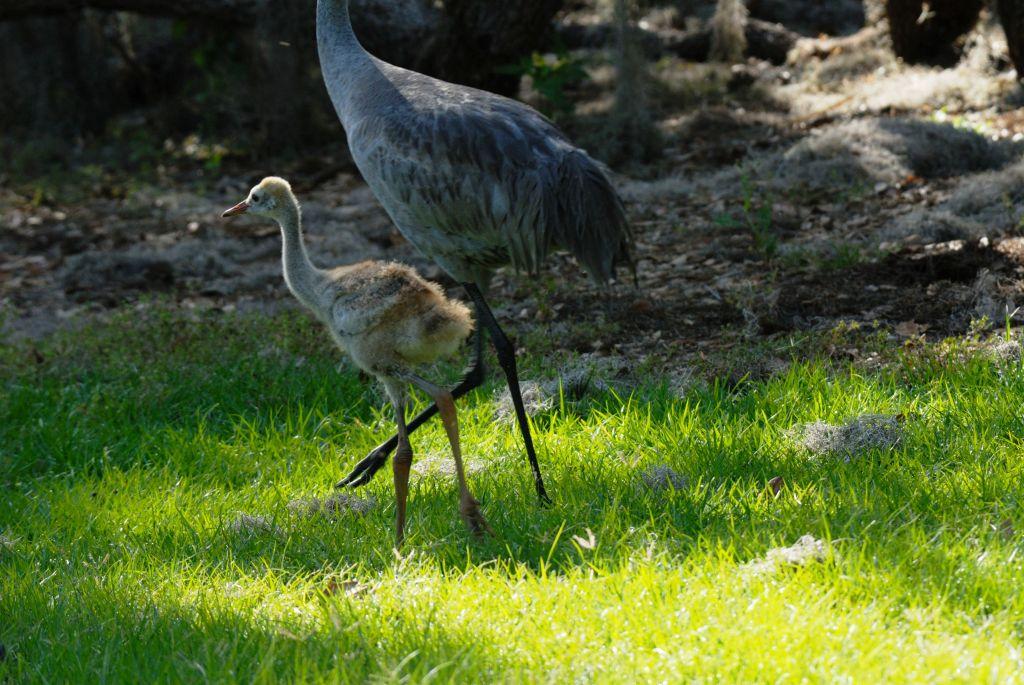
Sandhill Crane Chick at Circle B by Lee

Sandhill Crane Chick at Circle B by Lee

We had not been to Circle B recently, nor especially out to the Marsh by the windmill. Actually the windmill has lost its blades. It is a long trek out there for me, but praise the Lord, one of the workers came along with one of their vehicles and gave us a ride to the marsh. We were greeted by a group photographing Sandhill Cranes with their baby. That would have made the trip worth it alone.

Of course there were other birds awaiting our arrival. It is never boring out there. Since we had parked up by the entrance to get to the marsh, when we got out of the car and were getting our cameras and binoculars, we were greeted by the sound of a Pileated Woodpecker. When we returned, the Pileated showed off and we got some close-up shots of two of them. They were right by the pavilion and didn’t seem to mind those of us nearby.

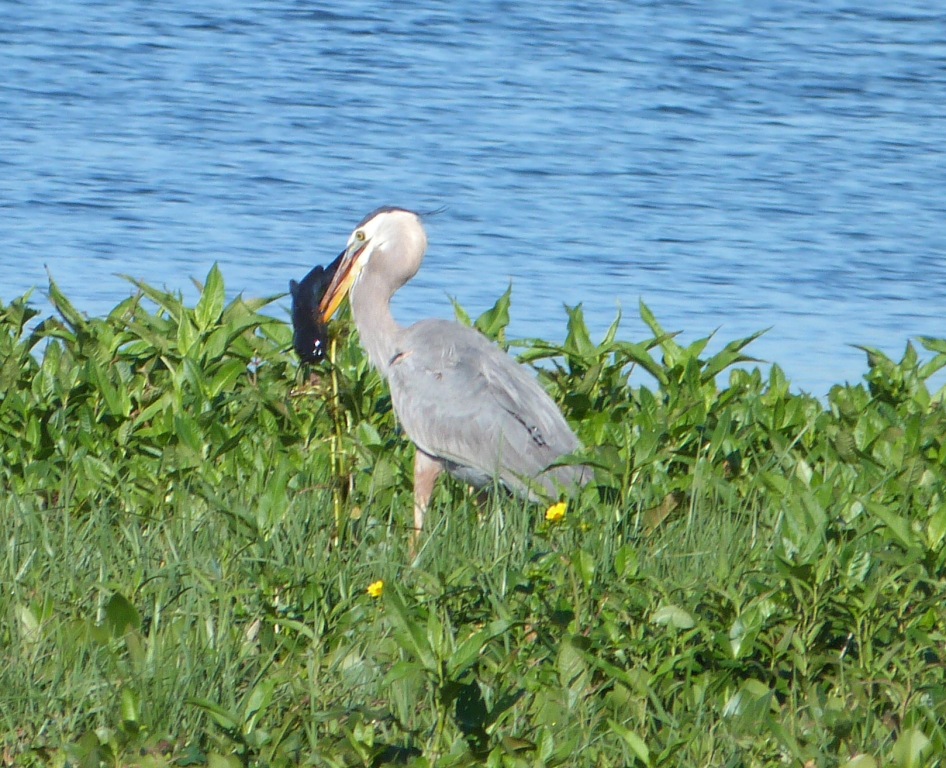
Great Blue Heron with Catfish at Circle B by Lee - cropped

Great Blue Heron with Catfish at Circle B by Lee - cropped

Another neat observation was the Great Blue Heron that caught a fish, actually a catfish. He was out from the edge a bit, but was able to zoom in on him. Took some video of it trying to kill the fish.

It is still quite dry out there as the rains have not started yet. It has been rather dry this winter. Water levels are still low.

I am including some photos and video taken out at Circle B that day. Video has segment of Great Blue with the Catfish and a close-up of the Pileated Woodpecker. Notice how he uses his tail to support himself.

This slideshow requires JavaScript.

In the beginning was the Word, and the Word was with God, and the Word was God. He was in the beginning with God. All things were made through Him, and without Him nothing was made that was made. (John 1:1-3 NKJV)

Here is the list from e-bird for that trip. (37 species total)

6
Black-bellied Whistling-Duck
2
Mallard
20
Blue-winged Teal
4
Pied-billed Grebe
5
Double-crested Cormorant
4
Anhinga
2
Great Blue Heron
1
Great Egret
1
Little Blue Heron
2
Tricolored Heron
2
Cattle Egret
7
White Ibis
5
Glossy Ibis
2
Black Vulture
4
Turkey Vulture
5
Osprey
1
Bald Eagle
1
Red-shouldered Hawk
1
American Kestrel
10
Common Gallinule
25
American Coot
3
Limpkin
3
Sandhill Crane
1
Lesser Yellowlegs
1
Laughing Gull
2
Mourning Dove
2
Red-bellied Woodpecker
2
Pileated Woodpecker
1
Blue Jay
4
Tree Swallow
1
Carolina Wren
1
Magnolia Warbler
1
Palm Warbler
1
Savannah Sparrow
1
Northern Cardinal
5
Red-winged Blackbird
10
Boat-tailed Grackle

See more Birdwatching Adventures out at Circle B Bar Reserve, Lakeland, Florida.

Wordless Birds

*
Another Visit To Lowry Park Zoo – March 2012

Demoiselle Crane (Grus virgo) Preening by Lee

Demoiselle Crane Preening by Lee at LPZoo

Dan and I were able to get in a small visit to the Lowry Park Zoo in Tampa a few days ago. Our goal was to go to the Sulawesi, Free-Flight and the Lorikeet Landing Aviaries. Most of the birds we saw were busy preening that day. Probably the most feather fluffing seen by so many birds on the same day, by us at least. It was difficult to get a good photo of them.

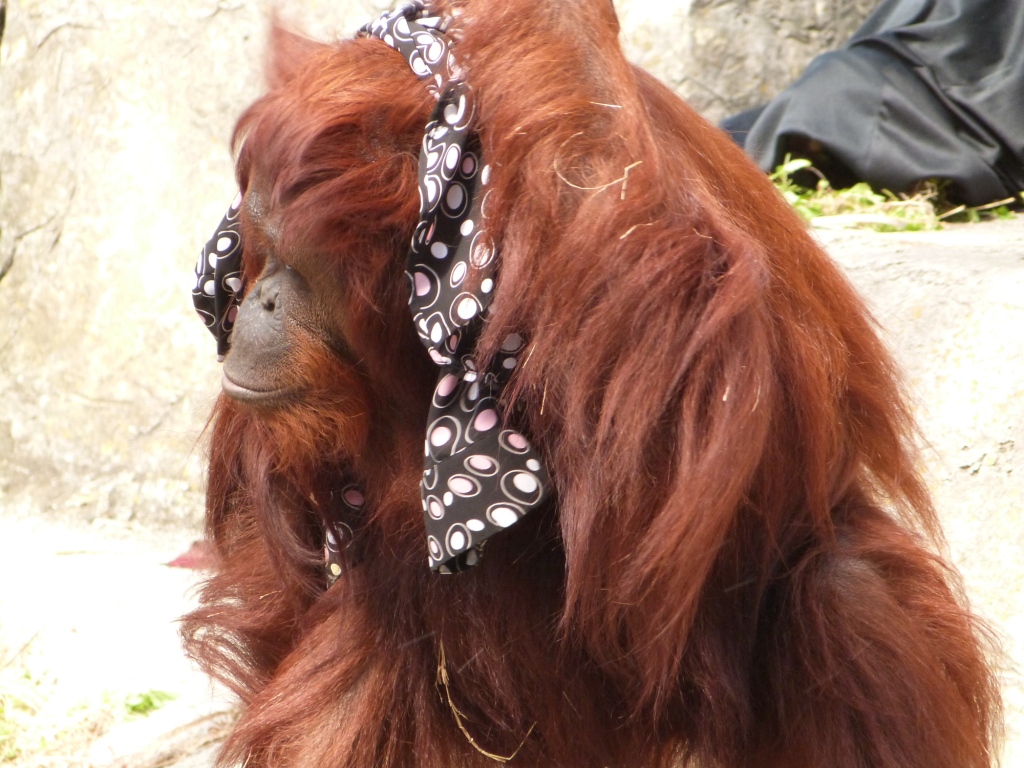
Bornean Orangutan at LPZoo 3-8-12

Bornean Orangutan at LPZoo 3-8-12

Never the less, it is always enjoyable to watch and observe their behaviors. Actually there were a couple of Bornean Orangutans displaying a behavior of covering their heads with cloths that can be quite funny. In the past, we have also seen them use cardboard as coverings.

Bornean Orangutan at LPZoo 3-8-12

Bornean Orangutan at LPZoo 3-8-12

Back to birdwatching. One of the highlights was getting to see the juvenile Sulawesi Hornbill maturing. The beak colors have not started developing yet.

Sulawesi Hornbill (Penelopides exarhatus) LPZoo 3-8-12

Sulawesi Hornbill (Penelopides exarhatus) LPZoo 3-8-12

“As this youngster ages the colors of the adult will become more pronounced. The Sulawesi Hornbill (Penelopides exarhatus), also known as the Sulawesi Tarictic Hornbill, Temminck’s Hornbill or Sulawesi Dwarf Hornbill, is a relatively small, approximately 45 cm (17.7 in) long, black hornbill. The male has a yellow face and throat, and black-marked yellowish-horn bill. The female has an all black plumage and a darker bill.

An Indonesian endemic, the Sulawesi Hornbill is distributed in the tropical lowland, swamps and primary forests of Sulawesi and nearby islands, from sea-level to altitude up to 1,100 metres. There are two subspecies of the Sulawesi Hornbill.

The Sulawesi Hornbill is a social species that lives in groups of up to 20 individuals. It is believed that only the dominant pair breeds, while the remaining members of the group act as helpers. The diet consists mainly of fruits, figs and insects. The female seals itself inside a tree hole for egg-laying. During this time, the male and helpers will provide food for the female and the young.” (Wikipedia)

Here is the adult male that was standing nearby the two youngsters.

Sulawesi Hornbill (Penelopides exarhatus) LPZoo 3-8-12 by Lee

Sulawesi Hornbill (Penelopides exarhatus)LPZoo by Lee

Below are some of the photos taken on this trip to the Zoo. It was another enjoyable day to observe the Lord’s creation up close.

The works of the LORD are great, sought out of all them that have pleasure therein. (Psalms 111:2 KJV)

This slideshow requires JavaScript.

*
Birdwatching Trip to Viera Wetlands – February 2-3, 2012

Alligator on bank at Viera Wetlands

Alligator on bank at Viera Wetlands

We enjoyed our visit to Viera Wetlandslast week. Good thing we went then, because we are both sick this week. (Not from the trip.) But we are on the mend. “The wetlands are a popular site for birders, photographers, and eco-tourists.  The entire wetland system is accessible by automobile, making the site popular among those who find the rigors of hiking trails and summer temperatures daunting.  Even better, viewing the site from one’s automobile serves to screen visitors from birds and widlife, enhancing the experience.” They have 4 Cells and a Lake which have a berm around them. You drive on the berm and that gets you right up to the birds. (If they cooperate)

This was not our first visit to the wetlands, but it is 100 miles from home, so it is not something we do frequently. Other than a few different birds we have almost the same ones right here at the Circle B Bar Reserve (only 4 miles from home).

Here is a list of the birds turned in to eBird for the two days we visited the wetlands:

Hooded Merganser (Lophodytes cucullatus) with Hood up by Lee

Hooded Merganser (Lophodytes cucullatus) with Hood up

Mottled Duck
Blue-winged Teal
Northern Shoveler
Ring-necked Duck
Hooded Merganser
Pied-billed Grebe
Wood Stork
Double-crested Cormorant
Anhinga Viera Wetlands
Great Blue Heron
Great Egret
Snowy Egret
Little Blue Heron
Tricolored Heron
White Ibis
Glossy Ibis
Black Vulture
Turkey Vulture
Osprey
Northern Harrier
Crested Caracara

Savannah Sparrow (Passerculus sandwichensis) by Lee at Viera Wetlands

Savannah Sparrow (Passerculus sandwichensis) by Lee at Viera Wetlands

Common Gallinule
American Coot
Limpkin
Sandhill Crane
Caspian Tern
Royal Tern
Belted Kingfisher
Fish Crow
Purple Martin
Tree Swallow
House Wren
European Starling
Palm Warbler
Yellow-rumped Warbler
Savannah Sparrow
Red-winged Blackbird
Eastern Meadowlark
Boat-tailed Grackle

39 total birds seen that I can identify. If I include the rest of the birds spotted there in Brevard County including the wild birds at the Zoo and Beach, then the count goes to 52. The additional birds include the Brown Pelican, Black and Turkey Vultures, Red-shouldered Hawk, Eurasian Collared Dove, Mourning Dove, Red-bellied and Downy Woodpeckers, Pine Warbler, Northern Cardinal and Brown-headed Cowbird. Other than the Caracara, Sanderling, and Ruddy Turnstone, I have seen the rest in Polk County, where we live.

Does that mean, I wouldn’t go back, NO WAY! I love going over there to the Wetlands because every time you go, there are different birds waiting for you to discover them. That is what birdwatching is all about. Also, Brevard County has the Merritt Island Wild Life Refuge and other great birding places.

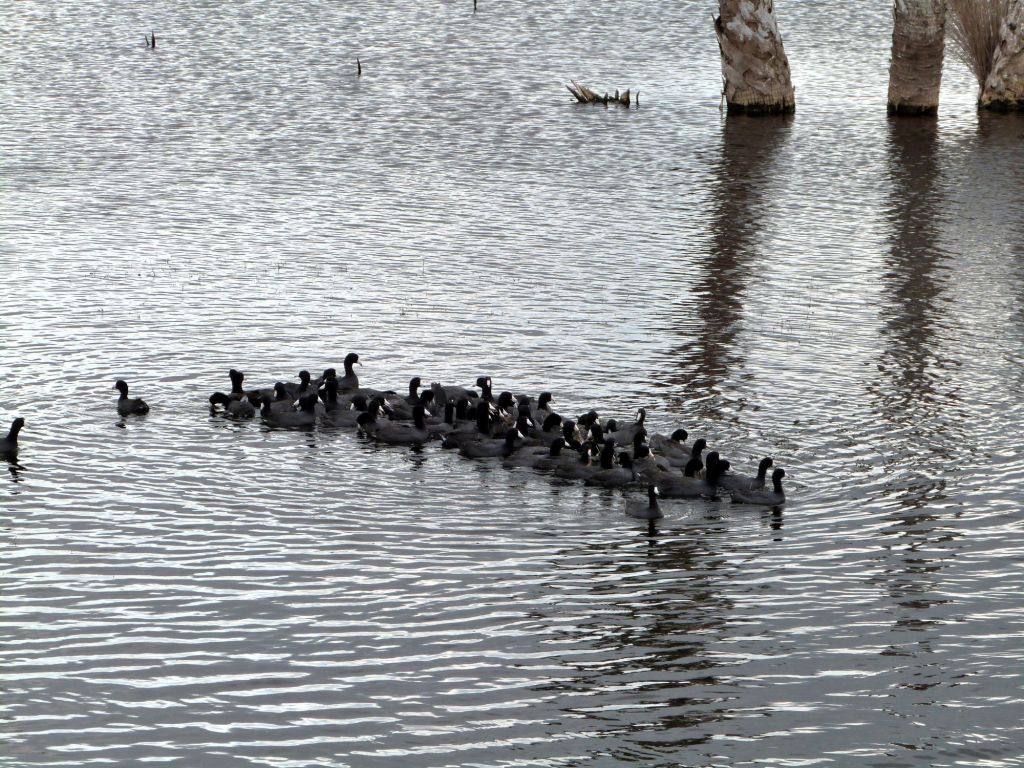
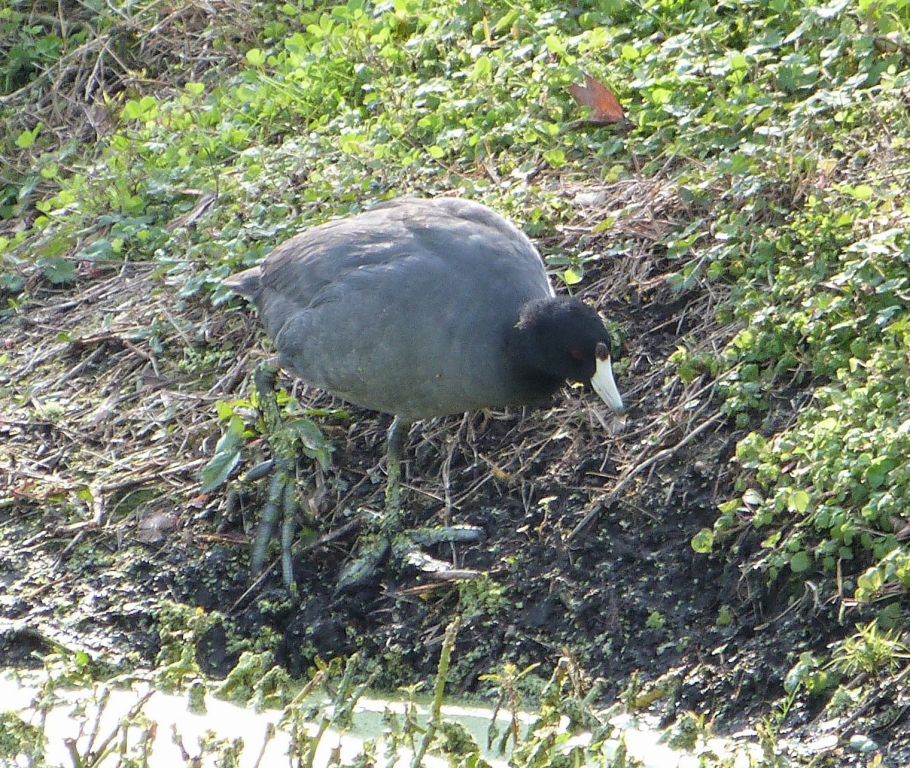
There had to be well over 1,000 American Coots out there. What amazed me was how they would all huddle together in long streams of them. This was just one of the smaller groups. Some were hundred of Coots long.

American Coots at Viera Wetlands

American Coots at Viera Wetlands

I am not sure what this Coot did, but it appears the Northern Shovelers are escorting him out of their area.

Coot Surrounded by Shovelers at Viera Wetlands

Coot Surrounded by Shovelers at Viera Wetlands

Managed to get a close-up of a Boat-tailed Grackle sitting on a sign.

Boat-tailed Grackle (Quiscalus major) at Viera by Lee

Boat-tailed Grackle (Quiscalus major) at Viera by Lee

It seemed a little dryer than on previous visits. Looks like they could use some rain. It does make an effect on what birds are present by the water levels. Was a great visit.

I know all the birds of the mountains, And the wild beasts of the field are Mine. (Psalms 50:11 NKJV)

*

Birdwatching Adventure to Brevard Zoo in Viera, FL

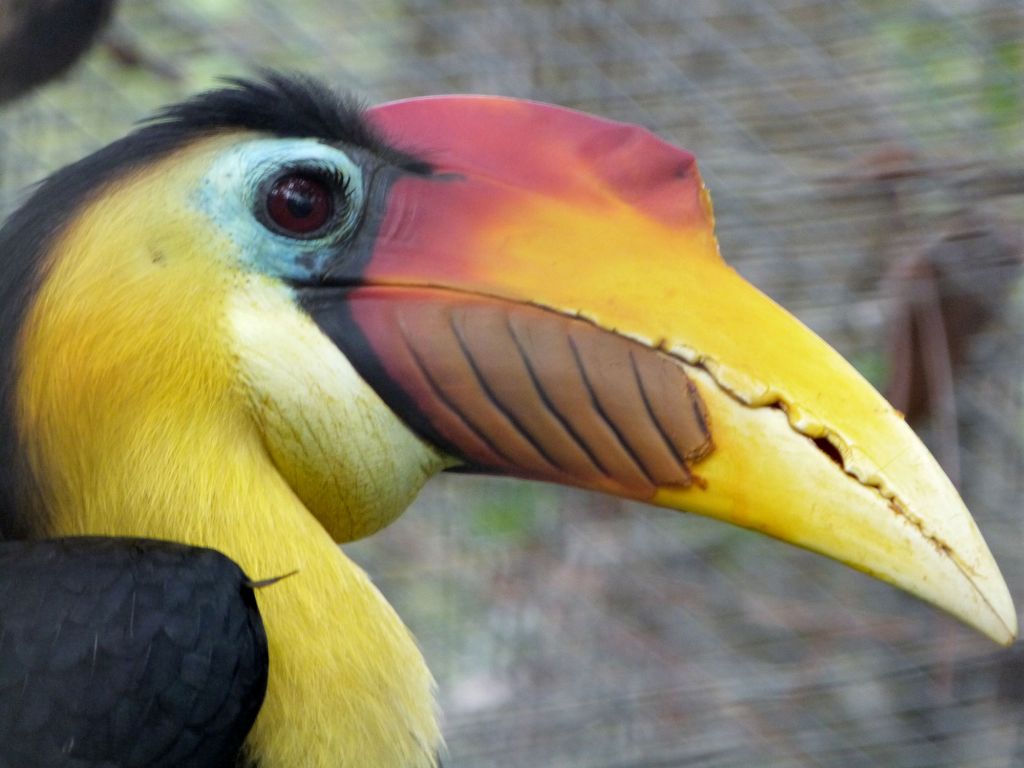
Wrinkled Hornbill (Aceros corrugatus) Brevard Zoo by Lee

Wrinkled Hornbill (Aceros corrugatus) Brevard Zoo by Lee

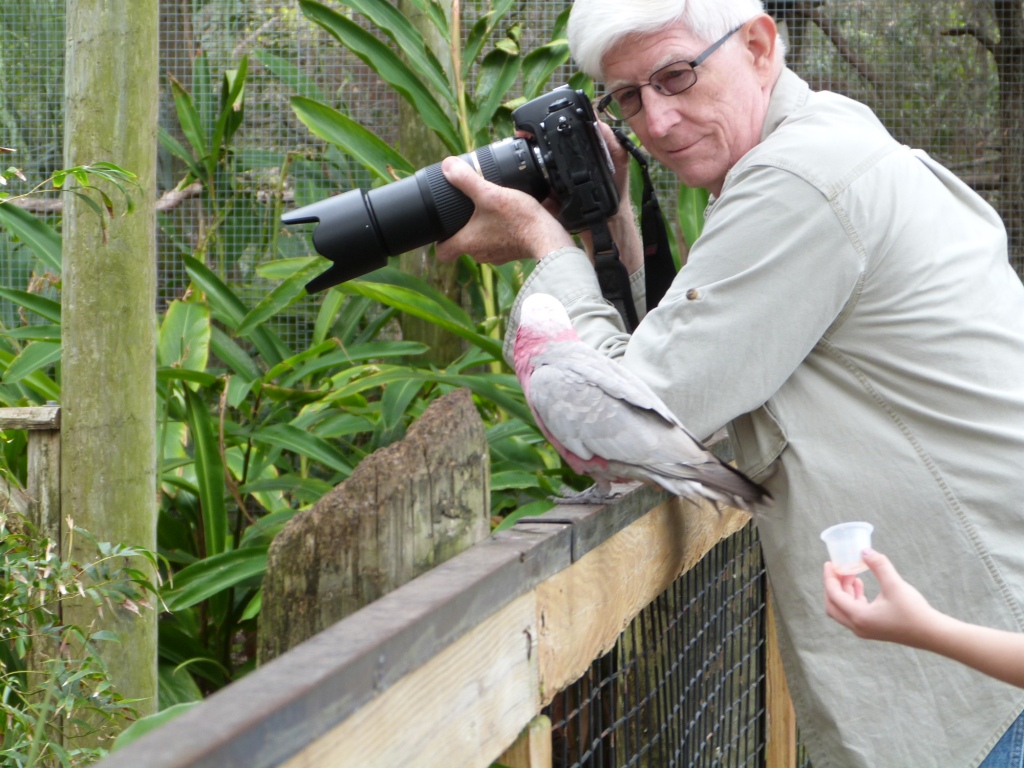
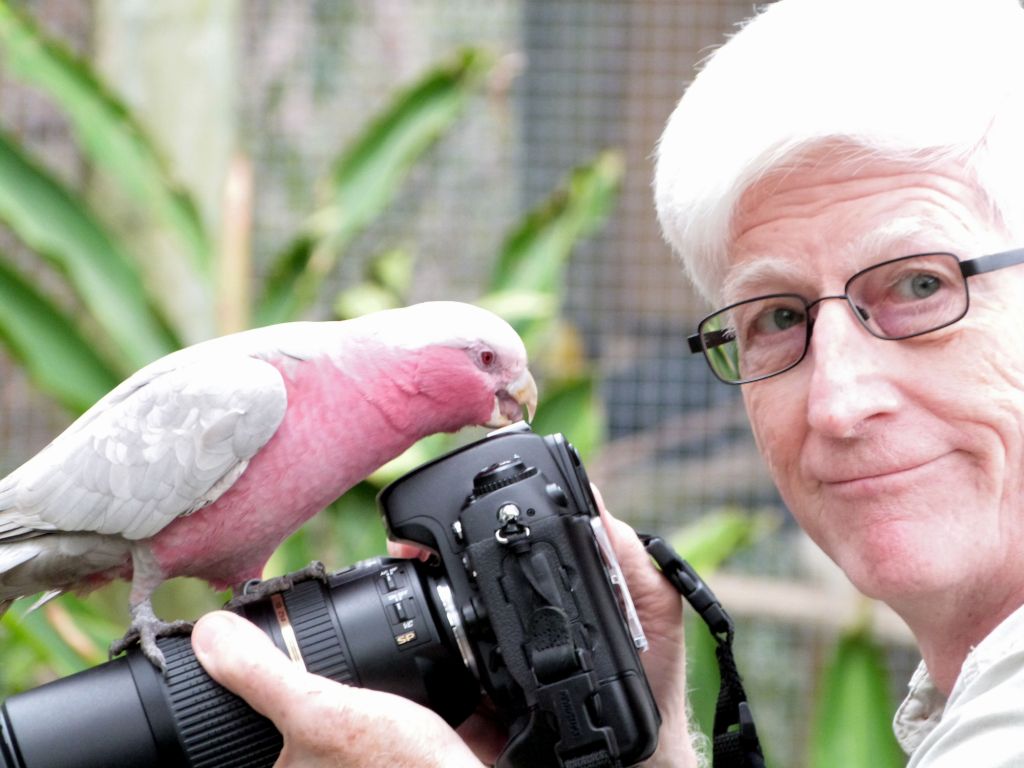
We had a delightful and interesting visit to the Brevard Zoo in Viera (Melbourne), Florida on Friday the 3rd. We were over there also visiting Viera Wetland (2nd & 3rd) (article to come) and also went to the Atlantic shore for a few minutes that evening (the 2nd). Some of the highlights were that Galah landing on Dan’s camera. See Just Back From A Birdwatching Adventure – Viera. Luckily I had my own camera and was able to “capture the moment.” What was so interesting about that Galah is that he (or she) had become intrigued by Dan’s camera. A child tried to offer it some of the liquid they sell to feed the birds, but no, the camera was more interesting. (This picture is not good, but it show the action)

 Galah (Eolophus roseicapilla) trying to off juice.

Galah (Eolophus roseicapilla) trying to off juice.

Then the Galah hopped up on his camera.

Galah (Eolophus roseicapilla) Hopping on the camera

Galah (Eolophus roseicapilla) Hopping on the camera

What a gorgeous color and nice bird.
Galah (Eolophus roseicapilla) Cockatoo - Brevard Zoo

Galah (Eolophus roseicapilla) Cockatoo – Brevard Zoo

In that same area I got a great picture of a Laughing Kookaburra. Couldn’t get it to laugh, but I tried. Sure the others around thought I was nuts, but who cared.
Laughing Kookaburra (Dacelo novaeguineae) Brevard Zoo by Lee

Laughing Kookaburra (Dacelo novaeguineae) Brevard Zoo by Lee

The photo at the top was a challenge to photograph. My camera is a point and shoot on program mode. Do you know how many fantastic photos I have taken of fences, wires, cages, limbs, grass, etc. instead of the bird or whatever?
White-crested Turaco (Tauraco leucolophus) with fencing.

White-crested Turaco (Tauraco leucolophus) with fencing.

With some patience and lots of tries, I can get a little better shot.
White-crested Turaco (Tauraco leucolophus) Through the fence somewhat.

White-crested Turaco (Tauraco leucolophus) Through the fence somewhat.

Here is the list of wild birds I turned in to eBird:
Walking around the Zoo – these are the wild birds freeloading at the zoo – 16 species
Mallard (Domestic type) 10
Great Blue Heron 2
White Ibis 18
Black Vulture 6
Turkey Vulture 1
American Coot 2
Eurasian Collared-Dove 1
Mourning Dove 2
Red-bellied Woodpecker 3
Downy Woodpecker 2
Fish Crow 7
House Wren 2
Pine Warbler 1
Yellow-rumped Warbler 2
Yellow-rumped Warbler (Myrtle) 1
Northern Cardinal 2
Boat-tailed Grackle 50
Besides all of those of course we saw the residents of the Zoo. All total, counting the wild birds we saw 48 of God’s wonderfully created birds. Some of them were absolutely fantastic. Even the ugly ones were wonderfully created for their purposes and place in the overall plan the Lord has for them.

For the invisible things of him from the creation of the world are clearly seen, being understood by the things that are made, even his eternal power and Godhead; so that they (we) are without excuse: (Romans 1:20 KJV)

 **Due to my site being hacked, some of the photo links were removed**
Birds observed at Brevard Zoo:
Total observations: 48
English name Scientific name
1 Southern Cassowary Casuarius casuarius
2 Emu Dromaius novaehollandiae
3 Wild Turkey Meleagris gallopavo
4 Black-bellied Whistling Duck Dendrocygna autumnalis
5 West Indian Whistling Duck Dendrocygna arborea
6 Coscoroba Swan Coscoroba coscoroba
7 Black Swan Cygnus atratus
8 Raja Shelduck Tadorna radjah
9 White-cheeked Pintail Anas bahamensis
10 American Flamingo Phoenicopterus ruber
11 Chilean Flamingo Phoenicopterus chilensis
12 Marabou Stork Leptoptilos crumeniferus
13 American White Ibis Eudocimus albus
14 Scarlet Ibis Eudocimus ruber
15 Roseate Spoonbill Platalea ajaja
16 Great Blue Heron Ardea herodias
17 Black Vulture Coragyps atratus
18 King Vulture Sarcoramphus papa
19 Bald Eagle Haliaeetus leucocephalus
20 Red-shouldered Hawk Buteo lineatus
21 Red-tailed Hawk Buteo jamaicensis
22 Northern Crested Caracara Caracara cheriway
23 American Coot Fulica americana
24 Black Crowned Crane Balearica pavonina pavonina
25 Sandhill Crane Grus canadensis
26 Blue Crane (Stanley) Grus paradisea
27 Masked Lapwing Vanellus miles
28 Eurasian Collared Dove Streptopelia decaocto
29 Mourning Dove Zenaida macroura
30 Galah Eolophus roseicapilla
31 Cockatiel Nymphicus hollandicus
32 Rainbow Lorikeet Trichoglossus moluccanus
33 Hyacinth Macaw Anodorhynchus hyacinthinus
34 Blue-and-yellow Macaw Ara ararauna
35 Scarlet Macaw Ara macao
36 Golden Parakeet Guaruba guarouba
37 White-crested Turaco Tauraco leucolophus
38 Laughing Kookaburra Dacelo novaeguineae
39 Wrinkled Hornbill Aceros corrugatus
40 Southern Ground Hornbill Bucorvus leadbeateri
41 Red-bellied Woodpecker Melanerpes carolinus
42 Downy Woodpecker Picoides pubescens
43 Fish Crow Corvus ossifragus
44 House Wren Troglodytes aedon
45 Yellow-rumped Warbler Dendroica coronata
46 Myrtle Warbler Dendroica coronata
47 Boat-tailed Grackle Quiscalus major
48 Northern Cardinal Cardinalis cardinalis

There were other animals at the zoo, but our main focus was on the birds. It is a very nice landscaped zoo and the over-all appearance was great. The critters all seemed to be well taken care of. It is definitely worth a visit to the Brevard Zoo if you are in that area. It is actually listed as being at 8225 North Wickham Road, Melbourne, FL 32940. Update: 2/11/12  –  Dan just posted his photos on his photography website. His photos at –  Dan’s Pix –  are much better than mine, of course, he has a better camera. Will be doing an article on our visit to the Viera Wetlands soon. *

Just Back From A Birdwatching Adventure – Viera

Galah (Eolophus roseicapilla) Cockatoo - Brevard Zoo

Galah (Eolophus roseicapilla) Cockatoo - Brevard Zoo

Deck thyself now with majesty and excellency; and array thyself with glory and beauty. (Job 40:10 KJV)

Dan and I took off yesterday and drove to Viera, Florida, which is about 30 miles south of Titusville. We birded Viera Wetlands, which is a prime birding spot in Florida, yesterday and then for awhile this morning. After that we went to the Brevard Zoo for about 3 hours and then drove back home this afternoon. It is 101 miles over there and only takes about 1 1/2 hours to drive it. It is interstate or toll road all the way.

That trip is the reason there has not been a blog posted in the last few days. I now have over 140 email messages to go through and 800 photos to sort.

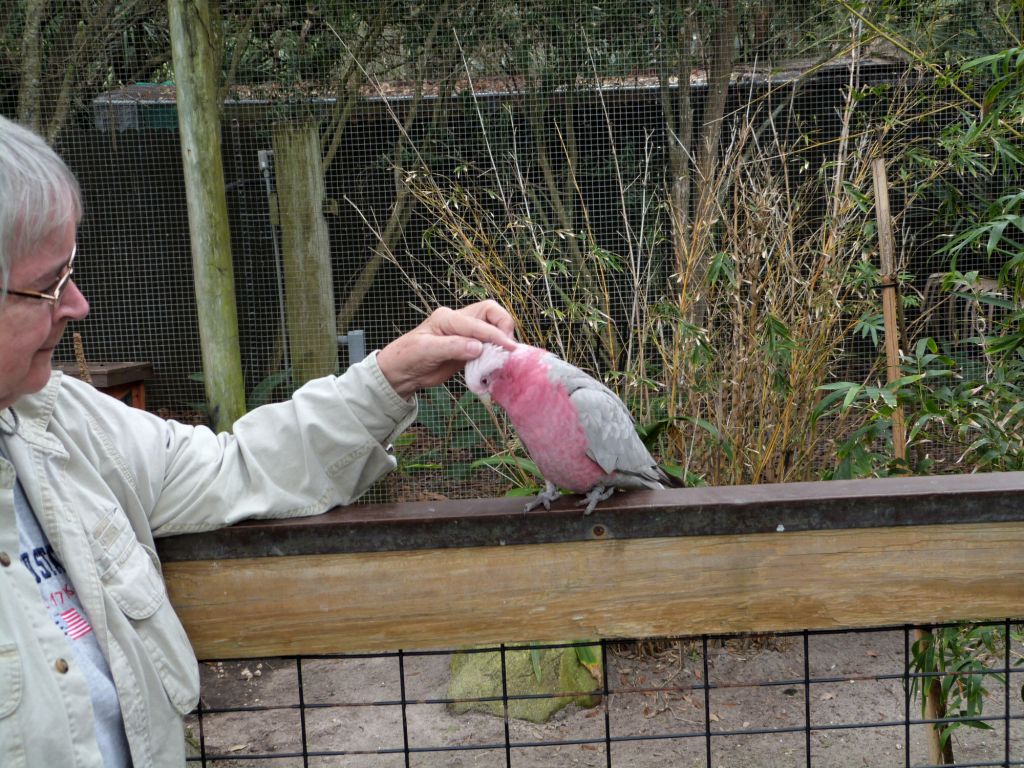
Galah (Eolophus roseicapilla) and Dan

Galah (Eolophus roseicapilla) and Dan

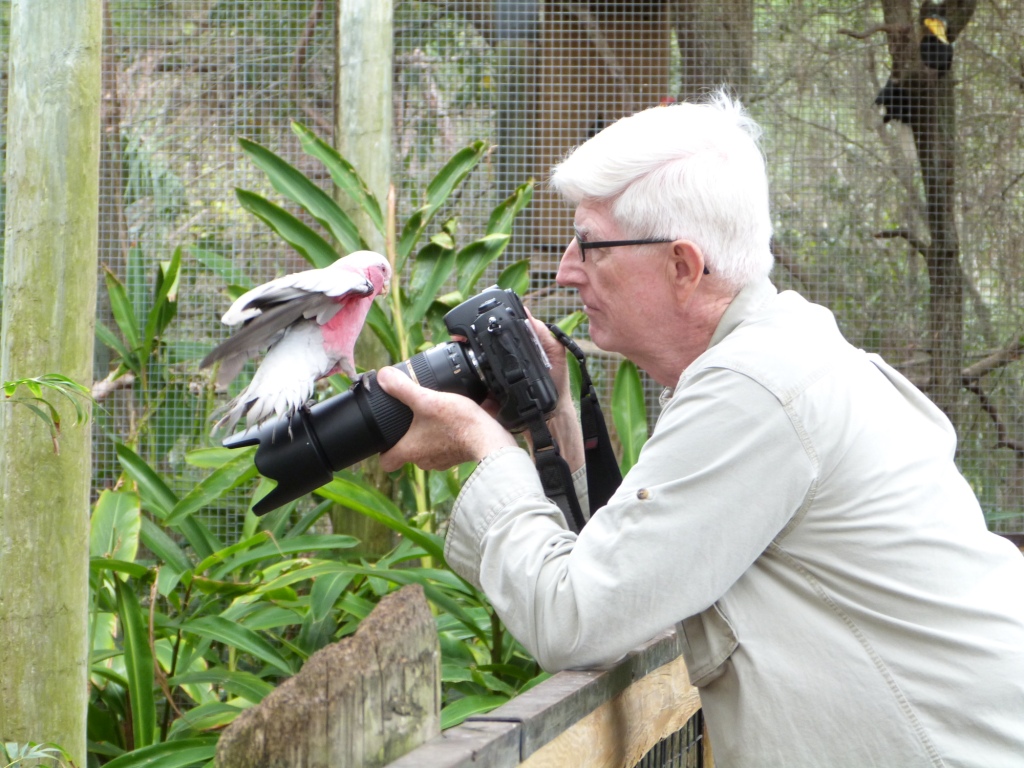
Just as something to share, today at the Zoo, a Galah, in the Cockatoo family, hopped up on Dan’s camera and I was able to take a couple of neat photos I want to share. Ian has photos of the Galah and I was anxious to see one. I never dreamed that we would get this close to one. I even rubbed it’s head for awhile. Wow! What beauty and colors the Lord has given His Creation.

Galah (Eolophus roseicapilla) and Dan

Galah (Eolophus roseicapilla) and Dan

The Galah is in the Cacatuidae – Cockatoos Family.

“The Galah ( /ɡəˈlɑː/), Eolophus roseicapilla, also known as the Rose-breasted Cockatoo, Galah Cockatoo, Roseate Cockatoo or Pink and Grey, is one of the most common and widespread cockatoos, and it can be found in open country in almost all parts of mainland Australia.

Galah and Lee - Brevard Zoo

Galah and Lee - Brevard Zoo

It is endemic on the mainland and was introduced to Tasmania, where its distinctive pink and grey plumage and its bold and loud behaviour make it a familiar sight in the bush and increasingly in urban areas. It appears to have benefited from the change in the landscape since European colonisation and may be replacing the Major Mitchell’s Cockatoo in parts of its range.
The term galah is derived from gilaa, a word found in Yuwaalaraay and neighbouring Aboriginal languages.” (Wikipedia)

More of the trip in future posts.

*

Birdwatching Adventure for January 7, 2012

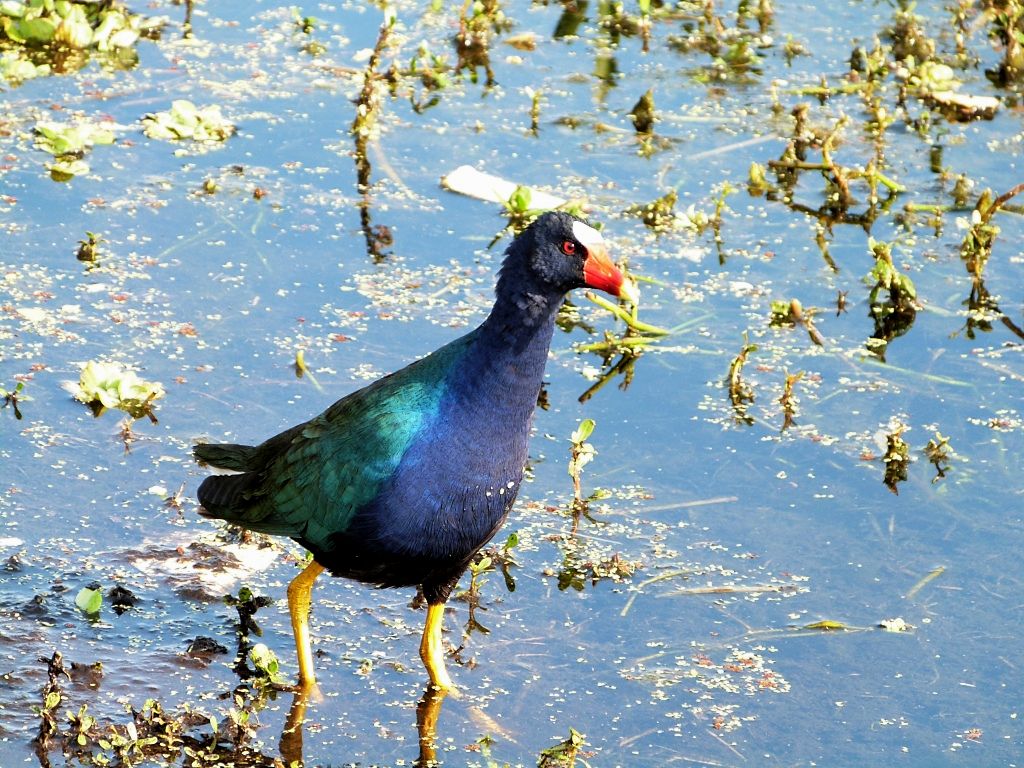
Purple Gallinule by Lee at Lake Parker 1-7-12

Purple Gallinule by Lee at Lake Parker 1-7-12

In the last 10 days, Dan and I have finally been able to go birdwatching. We have had three birding trips right here in Polk County.

Twice we went up to Lake Parker Park in Lakeland. We went on the 7th and again on the 14th of January. The 7th was our 1st adventure of 2012. Here is a list of what I turned in to ebird.org which is a listing service that was launched in 2002 by the Cornell Lab of Ornithology and National Audubon Society to track birds. Here is the list for the January 7, 2012:

Comments: Along shore on way to park and in park
26 species (+1 other taxa)
Mallard (Domestic type) 8
Ring-necked Duck 3
Pied-billed Grebe 4
Double-crested Cormorant – Immature 4
Anhinga 5
Great Blue Heron 2
Great Egret 2
Snowy Egret 3
Cattle Egret 1
White Ibis 10
Glossy Ibis 4
Roseate Spoonbill 1
Turkey Vulture 1
Osprey 4
Red-shouldered Hawk 1
Purple Gallinule 3
Common Gallinule 5
American Coot 7
Ring-billed Gull 20
Caspian Tern 1
Belted Kingfisher 1
Downy Woodpecker 1
Blue-gray Gnatcatcher 5
Palm Warbler 1
Pine Warbler 3
Yellow-rumped Warbler 2
Boat-tailed Grackle 20
American Coot showing feet by Lee LPkr

American Coot showing feet by Lee LPkr

American Coots have an amazing foot structure. It’s not what you would expect but has lobed toes rather than webbed feet. Photos of foot on Google Search

Which doeth great things past finding out; yea, and wonders without number. (Job 9:10 KJV)

I also turned in the birds I saw coming and going to the park, which is 10 miles from our house:
9 species
Black Vulture 5
Turkey Vulture 10
Sandhill Crane 3
Rock Pigeon 4
Eurasian Collared-Dove 10
Mourning Dove 1
Fish Crow 50
Boat-tailed Grackle 5
House Finch 2
Palm Warbler cropped by Lee LPP

Palm Warbler (Mistaken Pipit) by Lee LPP

All in all, it was a great birding day. The highlight was getting a new bird for my life list of birds seen. (Update This Pipit turned out to be a Palm Warbler, NOT a life bird: We spotted an American Pipit along the shore before we arrived at the park.) We stopped because Dan had spotted a Roseate Spoonbill. The county had a fair sized alligator pinned up right there also.

Last year I saw 2 “life birds” but it took all year to find them. I am writing this on the 17th and I already have 2  to tell you about, but I will save those for the next articles.
*

Birdwatching at Lowry Park Zoo – May 2011

Great Argus (Argusianus argus argus) (Great Malay Argus P) by Lee at LPZ

Great Argus (Argusianus argus argus) (Great Malay Argus Pheasant) by Lee at LPZ

Dan and I were able check out the birds again at the Lowry Park Zoo in Tampa, FL last Friday. We went to a few of the aviaries we haven’t been in for awhile. We went to the Sulawesi Aviary and saw the Magpie Goose, Masked Lapwing, Great Malay Argus Pheasant , Victorian Crowned Pigeon (SSP), Mandarin Duck, Sulawesi Tarictic (Temminck’s) Hornbill, Demoiselle Crane, Great Malay Argus, Javan Pond Heron and the (Green-naped) Pheasant Pigeon, with the Bar-headed Goose just outside.

Sulawesi Hornbill (Penelopides exarhatus) by Lee LPZ

Sulawesi Hornbill (Penelopides exarhatus) by Lee LPZ

From there we stopped by Lorikeet Landing to see many Lorikeets being feed by visitors. There the Green-naped, Swainson’s, Weber’s and Rainbow Lorikeets carry on with lots of noisy calls (all of these are subspecies of the Rainbow).

Lorikeet being feed by youngster at Lowry Pk Zoo

Lorikeet being feed by youngster at Lowry Pk Zoo

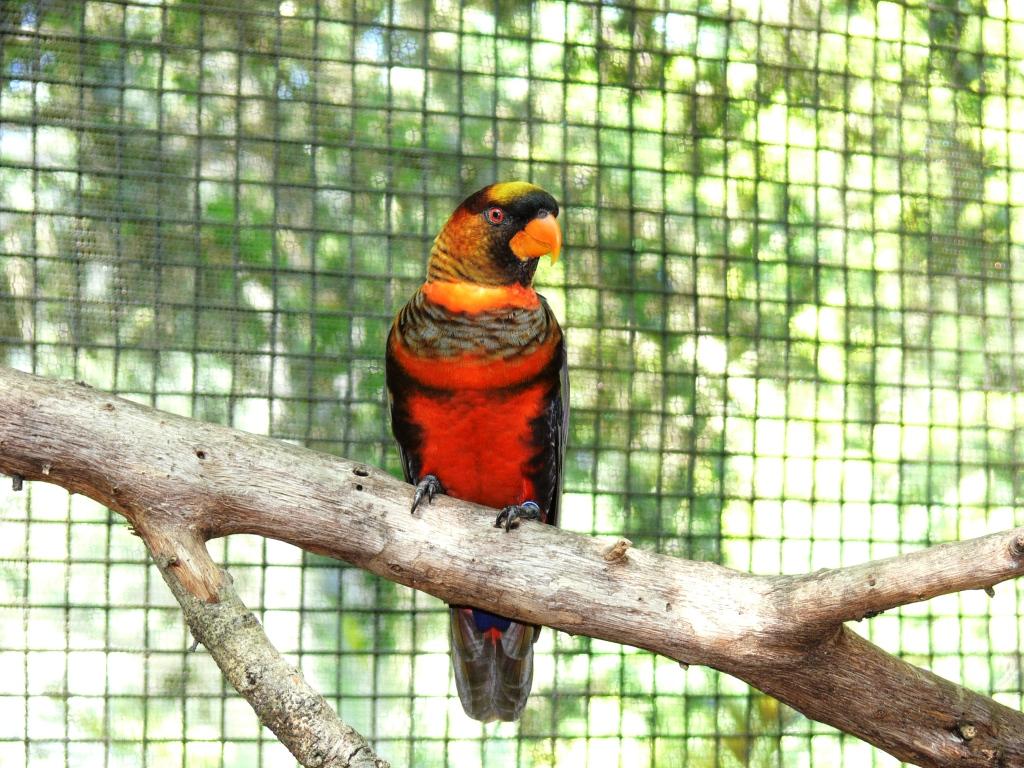
They also have Dusky Lory, Violet-crested Turaco, and Green-winged Teals.

Dusky Lory (Pseudeos fuscata) by Lee at LPZoo

Dusky Lory (Pseudeos fuscata) by Lee at LPZoo

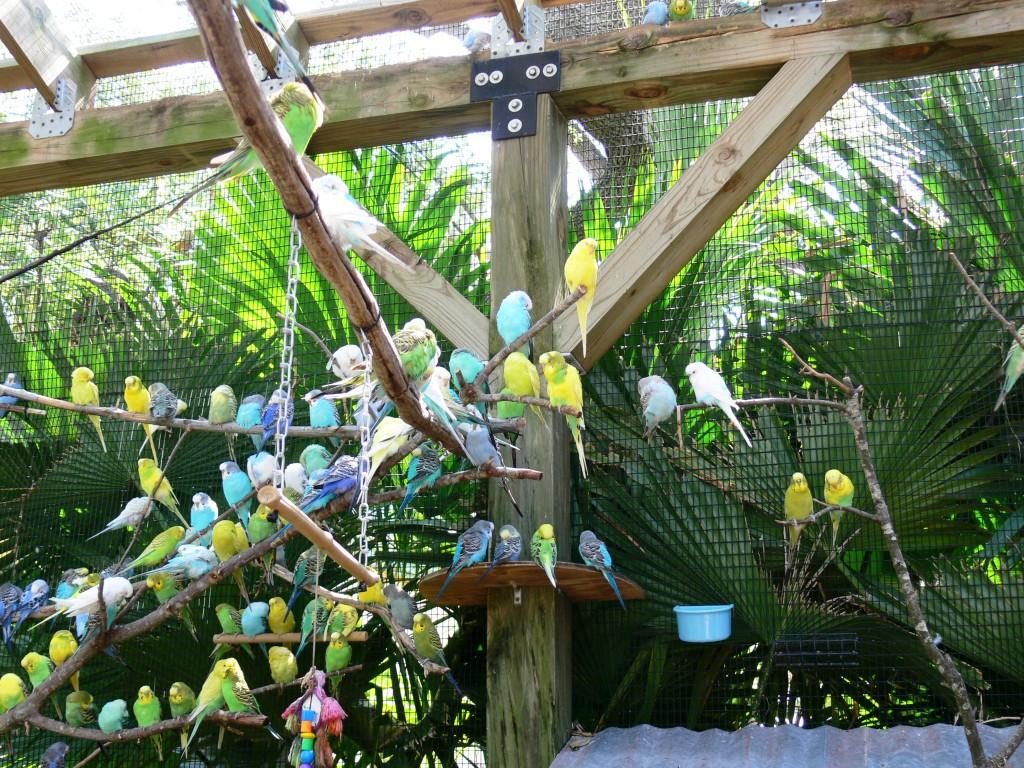
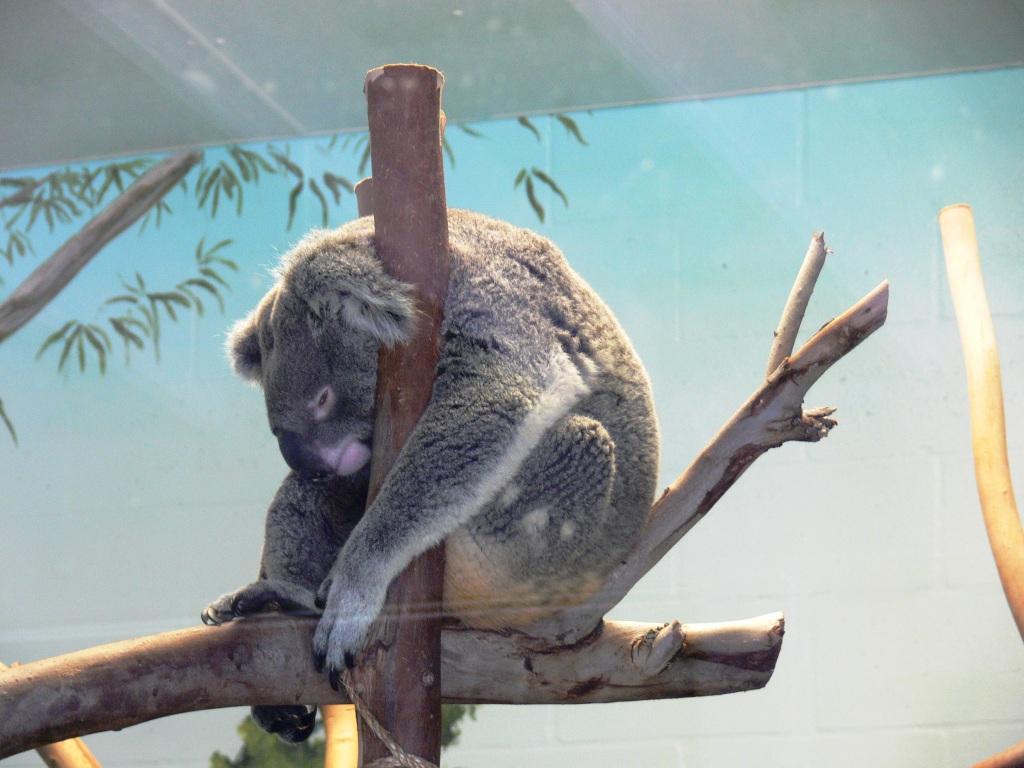
The Wallaroo Station (Australian) greets you with the Palm Cockatoo, Silky, Australorp and Buff Orphington Chickens. Then just inside you can view the sleepy Koala (whoops, that not a bird, but it was in a tree) and the Emu. The Malayan Flying Fox exhibit had those bats, plus the Magpie Goose, Rosy Starlings, Long-billed Corella (new for me), and Red-tailed Black Cockatoo. The Bali Myna was busy singing and showing off for its mate and then we entered the Budgerigar Aviary. Wow! They were everywhere.

Budgerigar (Melopsittacus undulatus) by Lee LPZ

Budgerigar (Melopsittacus undulatus) by Lee LPZ

We saw more, but will save that for another article. It was enjoyable as usual as we watched the Lord’s Creative Hand through these fantastic birds.

The works of the LORD are great, sought out of all them that have pleasure therein. His work is honourable and glorious: and his righteousness endureth for ever. (Psalms 111:2-3 KJV)

I have also been updating some more of the photos for:
Life List of All Birds We Have Seen

Koala by Lee LPZ

Koala by Lee LPZ

*

Birdwatching at Circle B – 4/22/11

Sandhill Crane (Grus canadensis) and young by Dan's Pix

Sandhill Crane (Grus canadensis) and young by Dan’s Pix

Yea, the stork in the heaven knoweth her appointed times; and the turtle and the crane and the swallow observe the time of their coming; but my people know not the judgment of the LORD. (Jeremiah 8:7 KJV)

We were finally able to find a little bit of time to go birdwatching the other day. Our adventure took us back out to the Circle B Bar Reserve in Lakeland, FL. It was a cloudless morning, around 64 degrees, when we arrived. Dan had his camera along, but I only used my binoculars. One thing nice about the Circle B is its closeness to home. With fuel prices rising, birdwatching nearer to your local areas may become more necessary.

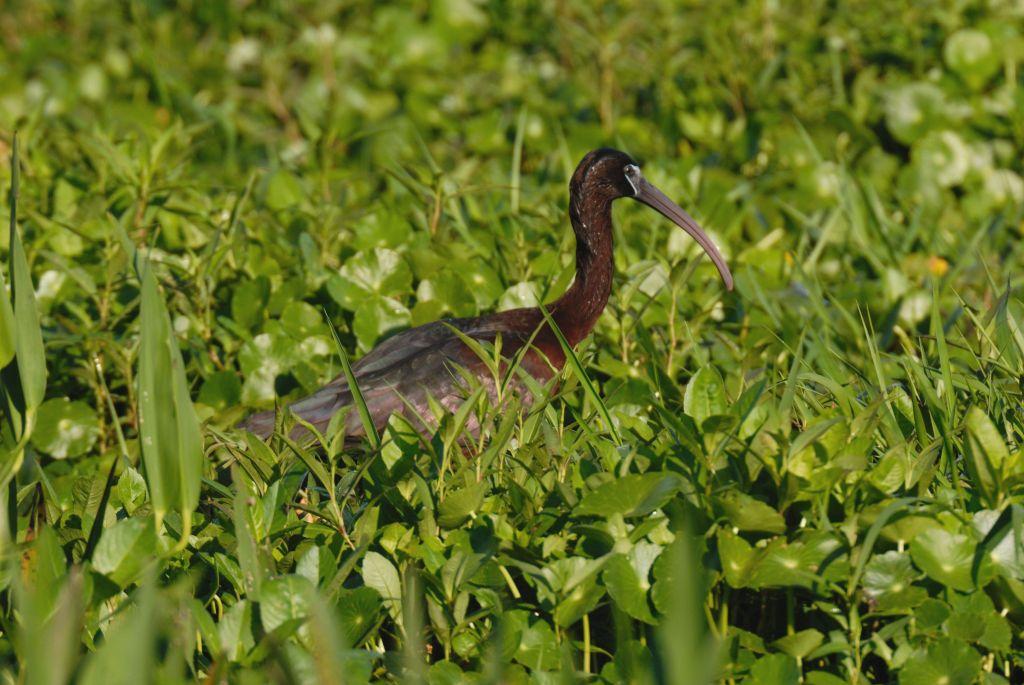
Glossy Ibis (Plegadis falcinellus) by Dan's Pix

Glossy Ibis (Plegadis falcinellus) by Dan’s Pix

We are fortunate, because Circle B is becoming a premier birding spot here in Florida. With 1,267 acres to roam, there is plenty to see. Unfortunately, many of our “winter visiting birds” have packed their bags and gone back North. Fortunately, we still have our “residents” that keep any trip out there interesting.

Anhinga (Anhinga anhinga) by Dan's Pix

Anhinga (Anhinga anhinga) by Dan’s Pix

One of my surprises was the lack of Wood Storks this trip. Usually there are plenty of them hanging out in the trees early in the morning. Never spotted a one, yet two days later in town we spotted one flying over. They are here, but just wanted to make themselves scarce that Friday.

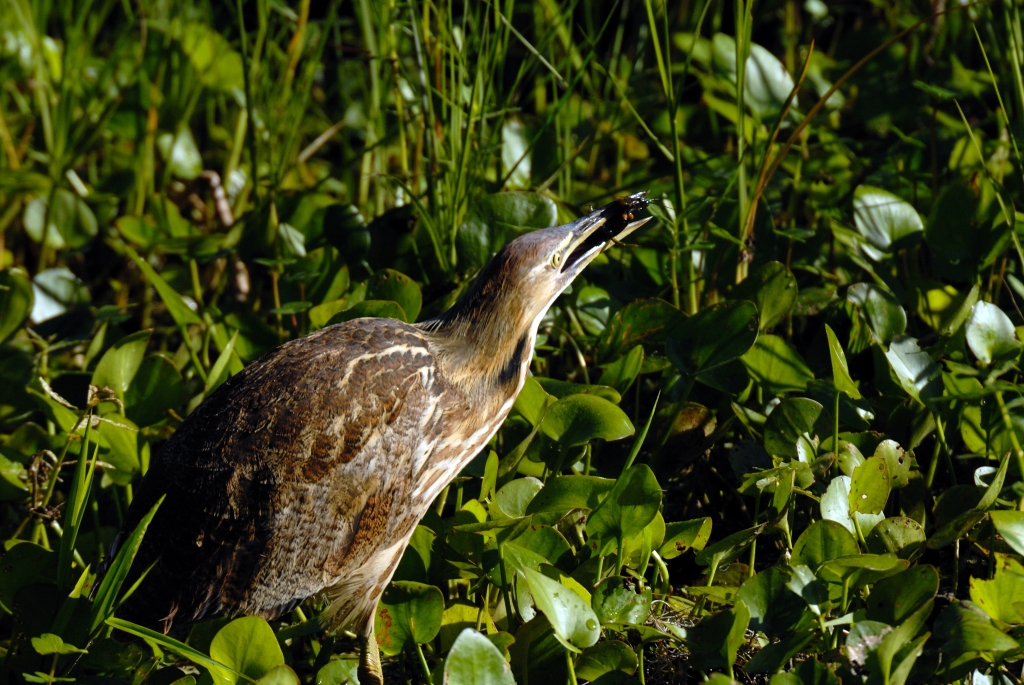
American Bittern (Botaurus lentiginosus) by Dans Pix

American Bittern (Botaurus lentiginosus) by Dans Pix

Another surprise was finding the American Bittern. We knew there were some out there, but kept missing them. This time I spotted one, whipped out my phone, and called Dan to bring his camera to my location while I kept the Bittern in view. He got one shot just as it had caught something.

Little Blue Heron (Egretta caerulea) imm by Dan's Pix

Little Blue Heron (Egretta caerulea) imm by Dan’s Pix

One of my favorite birds was an immature Little Blue Heron. When they are young, they are white instead of blue. As they mature, the become “blotchy” as the blue starts to come in. This one was right along the walk path and we were able to view it very well.

Black-bellied Whistling Duck (Dendrocygna autumnalis) with young

Black-bellied Whistling Duck (Dendrocygna autumnalis) with young

We also found some Glossy and White Ibises, Tricolored Herons, Great Blue Heron, more Little Blue Herons, Great Egrets, a Snowy Egret, Cattle Egrets, the American Bittern, Green Heron, Limpkins, Mourning Doves, Cardinals, Tufted Titmouce, Carolina Wren and maybe a House Wren, Red-bellied, Pileated and Downy Woodpeckers, Common Gallinules, American Coots, Black-bellied Whistlers with young ones, 3 sets of Sandhill Cranes with young, Red-shouldered Hawk (light phase), Anhingas and Double-crested Cormorants, Redwing Blackbirds and Boat-tailed Grackles.

All in all it was a great morning to be out enjoying God’s Creation of birds and other critters. We also observed 4 young alligators about 2-3 feet long and a Black Racer about 4 feet long stretched out along some bushes.

See our other birdwatching trips to Circle B – Click Here

*