Ian’s Bird of the Week – Kea

Kea (Nestor notabilis) by Ian #1

Kea (Nestor notabilis) by Ian #1

Ian’s Bird of the Week – Kea ~ by Ian Montgomery

Newsletter ~ 1/26/12

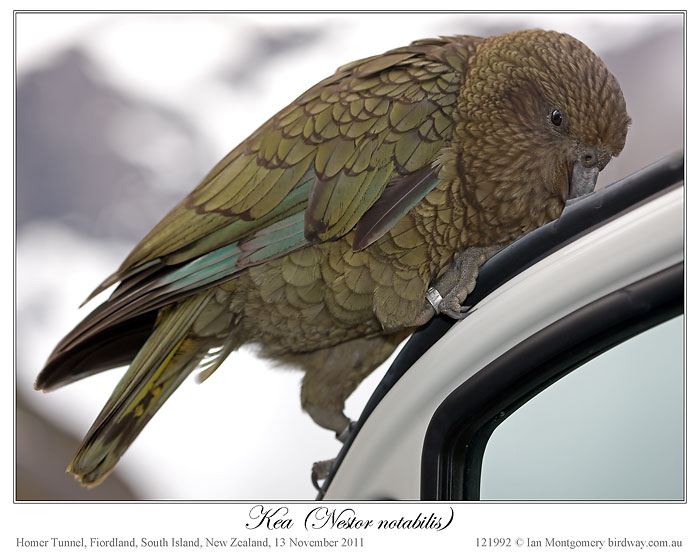
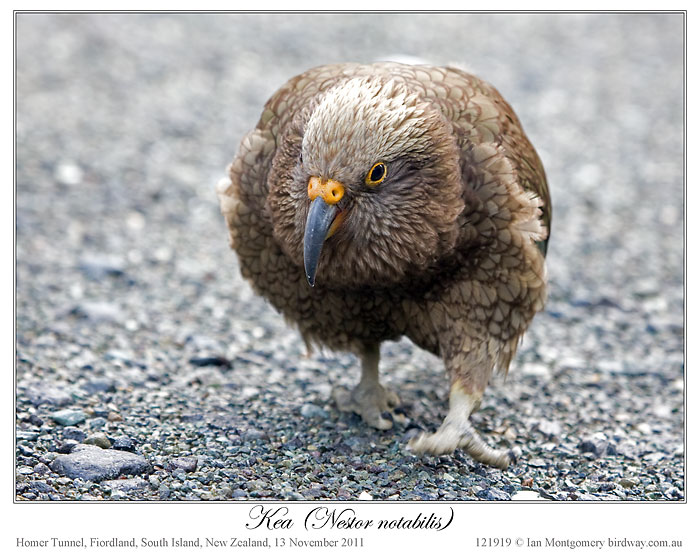
If you park near the entrance to the Homer Tunnel on the way to Milford Sound in Fiordland on the South Island of New Zealand, you are likely to be approached by one of these interesting-looking parrots.

‘Friendly-looking chap’, you might think, ‘I wonder what he’s after? Just saying Hello? Some food maybe?’. Wrong. This one, the Kea, has a one-track mind, and is only interested in destruction, or more specifically dismantling your vehicle.
Kea (Nestor notabilis) by Ian #2

Kea (Nestor notabilis) by Ian #2

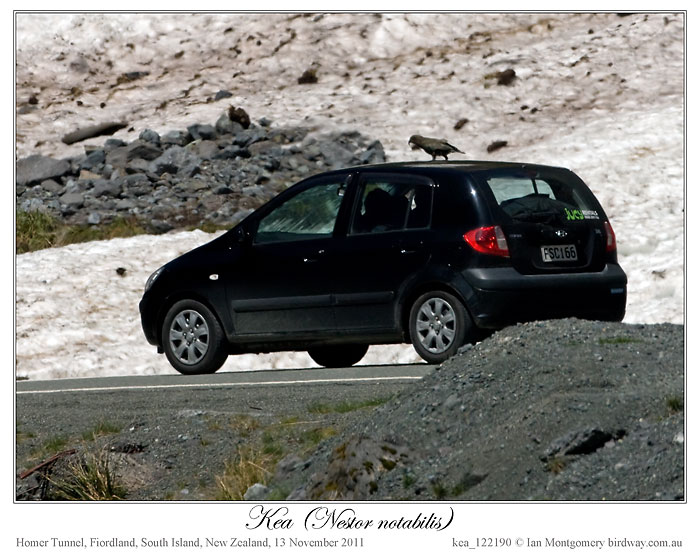
Quick as a flash, it and his pals will check it out for weak spots and set to work – this one with yellow cere, lower mandible and eye-ring is a juvenile delinquent (yes, that’s snow in the background, these are tough birds). Let’s see if we can rip the roof off.

Kea (Nestor notabilis) by Ian #3

Kea (Nestor notabilis) by Ian #3

Oh well, the roof was stronger than it looked. How about the braking light above the back door, this has some promising cracks.

Kea (Nestor notabilis) by Ian #4

Kea (Nestor notabilis) by Ian #4

Meanwhile, this hardened criminal (this is an adult bird) has learnt that the rubber is more vulnerable and attacks the lining of the front door.
Kea (Nestor notabilis) by Ian #5

Kea (Nestor notabilis) by Ian #5

And don’t think you can get rid of us by just driving off. We’ll hang on grimly until we get blown off by the breeze.

Kea (Nestor notabilis) by Ian #6

Kea (Nestor notabilis) by Ian #6

Keas have the reputation of being playful, but the intensity and obsessiveness of their attacks looked anything like a game to me and more like a compulsion. In fact, their attacks did no noticeable damage even though I parked the camper there for some time so that I could look for the Rock Wrens (Bird of the Week #438). According to my field guide ‘the worst offending birds are caught and transferred to distant sites or taken into captivity’. Sounds familiar.

At one time, Keas were supposed to kill sheep, and the resulting bounty led to their persecution and decline. They have been fully protected since 1986 and the population is recovering.
Keas are quite large birds, 46cm/18in in length and weighting up to 1Kg/2.2lbs. They and their relatives the Kaka and the Kakapo comprise a taxonomically distinct lineage of New Zealand parrots not closely related to any others and usually placed either in their own family (IOC) or sub-family (Birdlife International). While the flightless Kakapo is critically endangered and the subject of an intensive rescue mission http://www.kakaporecovery.org.nz/ , the Kea is quite common in Alpine areas of the South Island and the Kaka occurs in the forests of both islands, though I failed to find it on this trip. It’s good to leave something for the next visit.
Best wishes
Ian

Ian Montgomery, Birdway Pty Ltd,
454 Forestry Road, Bluewater, Qld 4818
Phone: 0411 602 737 +61-411 602 737
Preferred Email: ian@birdway.com.au
Website: http://birdway.com.au


Lee’s Addition:

Sounds like you might want to keep an eye on your personal property around those birds! It is amazing how much the birds vary in their habits and diets. Every time Ian writes about his encounters with the various birds, it’s always different and interesting. Keep up the great birding, Ian, we enjoy your encounters with our avian friends around the world.

I know all the birds of the mountains, And the wild beasts of the field are Mine. (Psalms 50:11 NKJV)

See Ian’s Cockatoos & Allies and his Parrots & Allies, which are part of the Strigopidae Family. Those parrots along with the Cockatoos – Cacatuidae and Parrots – Psittacidae Families make up the Psittaciformes Order.

*

Ian’s Bird of the Week – Paradise Shelduck

Paradise Shelduck (Tadorna variegata) by Ian 1

Paradise Shelduck (Tadorna variegata) by Ian 1

Ian’s Bird of the Week – Paradise Shelduck ~ by Ian Montgomery

Newsletter – 1/16/12

Shelducks are all rather splendid, so this one has to be particularly fine to earn the moniker ‘Paradise’. Interestingly, it is the white-headed female that is, I think, the more striking as in the first photo of a female having a drink (of salt water!) at Milford Sound.

Paradise Shelduck (Tadorna variegata) by Ian 2

Paradise Shelduck (Tadorna variegata) by Ian 2

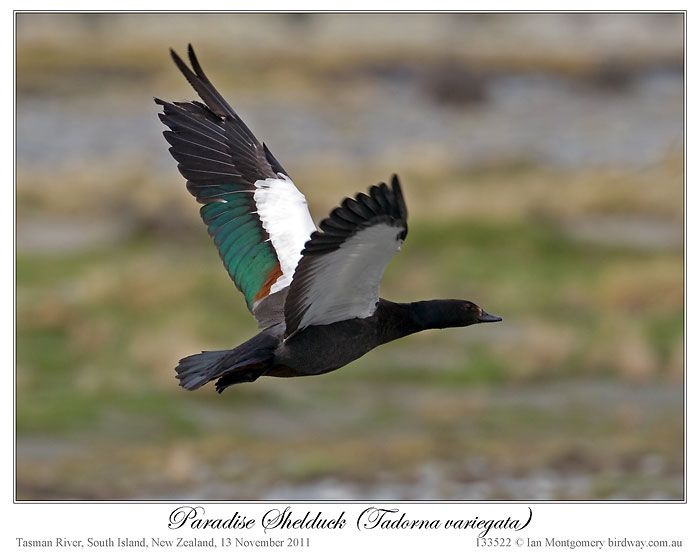
The second photo shows the same bird stretching her wing to show us the gorgeous emerald green secondary flight feathers. Like all Shelducks, these are large ducks, averaging 63cm/25in in length and the males, averaging 1,700g/3.7lbs, are larger than the females, 1,400g/3.1lbs.
Paradise Shelduck (Tadorna variegata) by Ian 3

Paradise Shelduck (Tadorna variegata) by Ian 3

Meanwhile her mate, who has a dark brown head and finely patterned wing coverts, decides it’s time to go for a swim.
The males have the same black, emerald green and white wing pattern as the female as shown by this male flying along a river in the Waitaki Valley.
Paradise Shelduck (Tadorna variegata) by Ian 4

Paradise Shelduck (Tadorna variegata) by Ian 4

Unlike most other avian species where the female is more colourful, such as Buttonquails and Cassowaries, here there is no switching of gender roles: the female incubates the eggs while the male vigorously defends the territory from predators. Paradise Shelducks maintain pair bonds from one year to the next returning to the same territory. They are partial to both high country riverbeds and farmland and the population has benefitted from the clearing of land for pasture since European settlement.
The Paradise Shelduck is a New Zealand endemic, though a flock of 5 spent arrived on Lord Howe Island in March 1950 and remained for over a month so it is included in the official Australian list.
Best wishes
Ian

Ian Montgomery, Birdway Pty Ltd,
454 Forestry Road, Bluewater, Qld 4818
Phone: 0411 602 737 +61-411 602 737
Preferred Email: ian@birdway.com.au
Website: http://birdway.com.au


Lee’s Addition:

What a neat looking bird. Both the male and the female have such a clean look about them. Shelducks are part of the Anatidae – Ducks, Geese, and Swans Family. They are all in the Tadorna Genus which includes 6 Shelducks. We do not have Shelducks established here in the U.S.

And God blessed them, saying, “Be fruitful and multiply and fill the waters in the seas, and let birds multiply on the earth.” (Genesis 1:22 ESV)

See Ian’s Shelducks on his Birdway website.

Australian Shelduck

Paradise Shelduck

Common Shelduck

Radjah/Raja Shelduck

*

Ian’s Bird of the Week – South Island Wren/New Zealand Rockwren

New Zealand Rockwren (Xenicus gilviventris) by Ian 1

New Zealand Rockwren (Xenicus gilviventris) by Ian 1


Ian’s Bird of the Week – South Island Wren/New Zealand Rockwren ~ by Ian Montgomery

Newsletter – 1-9-12

Happy New Year! To celebrate the New Year, here is a representative of an unusual new family for the website, the New Zealand Wrens. There it is usually called the Rock Wren, though its international name is the South Island Wren, to avoid confusion with the unrelated Rock Wren of North America.

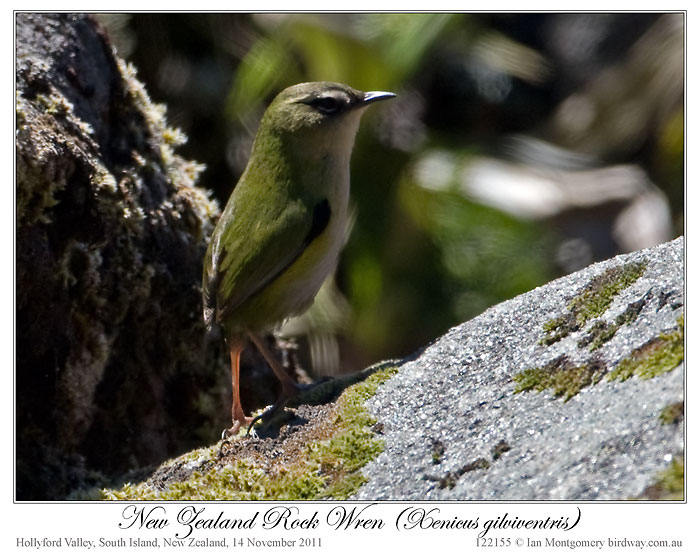
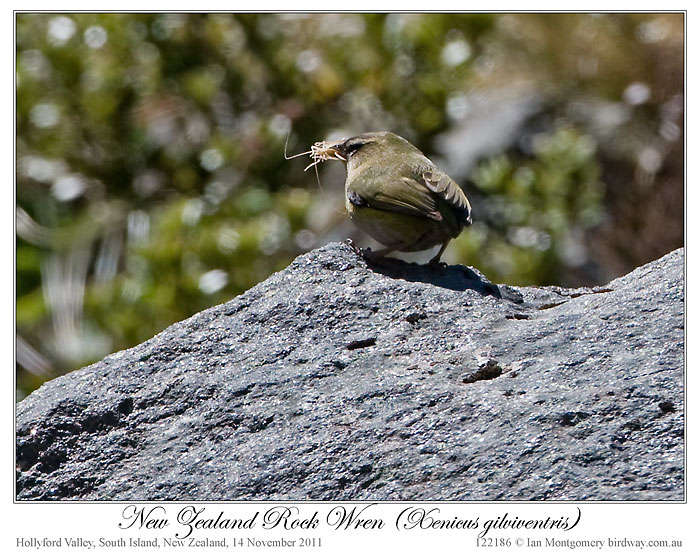
I used the Birds of New Zealand Locality Guide by Stuart Chambers to plan my trip and, in it I read: ‘The Rock Wren(Rockwren) is one of New Zealand’s rarer species and one of its more difficult birds to find. It is also one of its gems.’ This of course proved compelling and, as one of its prime sites was near the Homer Tunnel on the way to Milford Sound where I was after the Fiordland Penguin, I made an effort to find it. Compared with say the notorious Australian Grasswrens, this proved relatively easy as the birds often stand on prominent rocks in fine weather, where they bob up and down in a very endearing way, and I found a pair on the second attempt.
New Zealand Rockwren (Xenicus gilviventris) by Ian 2

New Zealand Rockwren (Xenicus gilviventris) by Ian 2

Their upright stance and short tails gives them, like Pittas and Penguins, the fascinating appearance of little people and these are tiny. They measure 10cm/4in in length and the males, weighting about 16g are smaller and lighter than the females at 20g. They’re tough little birds, though, and occur only in rocky Alpine habitats above the tree-line on the South Island. the third photo shows where I found them.
New Zealand Rockwren (Xenicus gilviventris) Habitat by Ian 3

New Zealand Rockwren (Xenicus gilviventris) Habitat by Ian 3

They have a flexible diet with a preference for invertebrates but also eat grass seeds and fruit. The bird in the fourth photo, has just caught a substantial grasshopper, presumably, given the season, for nestlings. The sexes differ in plumage and the green bird in the first two photos is a male. The one with the grasshopper looks browner, but I’m unsure whether that’s because it’s a female or is due to the angle of the light.
New Zealand Rockwren (Xenicus gilviventris) by Ian 4

New Zealand Rockwren (Xenicus gilviventris) by Ian 4

Only two species of New Zealand Wrens – the Acanthisittidae – survive, the other being the even smaller but more widespread Rifleman http://www.birdway.com.au/acanthisittidae/rifleman/index.htm , so named because of its upward tilted bill. This family has no close relatives among the Passerines and has long baffled taxonomists as reflected in the choice of Xenicus for the Rock Wren, meaning ‘strange’ (from the same Greek word as xenophobia). Recent DNA studies suggest that they diverged from the other passerines early in their evolution and probably qualify for their own sub-order, separate from the ‘true’ song birds the Oscines, and the mainly South American Sub-Oscines (which include some Australian representatives, notably the Lyrebirds and the Pittas).
I’ve added to the website most of the new Australian species from the Sub-Antarctic and Tasmanian sections of the trip – http://www.birdway.com.au/index.htm#updates – and am now working on the New Zealand additions. To accommodate them, I’m expanding the Australian section of the website to Australasian and indicating on the Australasian thumbnails whether each species is on the Australian and/or New Zealand lists. For an example, have a look at the Stilts and Avocets: http://www.birdway.com.au/recurvirostridae/index_aus.htm . As part of this change, I’m switching the taxonomic sequence of the Australasian section from Christidis and Boles, 2008, to Birdlife International. This will simplify the overall structure and cater for New Zealand additions not covered by C & B.
Best wishes

Ian

Ian Montgomery, Birdway Pty Ltd,
454 Forestry Road, Bluewater, Qld 4818
Phone: 0411 602 737 +61-411 602 737
Preferred Email: ian@birdway.com.au
Website: http://birdway.com.au


Lee’s Addition:

Four inches is a very tiny bird. Looking at photo #3, I am amazed that they found that little bird. Way to go, Ian.

let the inhabitants of the rock sing, let them shout from the top of the mountains. (Isaiah 42:11b KJV)

The Rockwren is in the Acanthisittidae – New Zealand Wrens Family. They are Passeriformes Order birds. Ian uses the Birdlife International for his list, whereas this site uses the IOC list. Very little differences.

See – Ian’s Birds of the Week

*

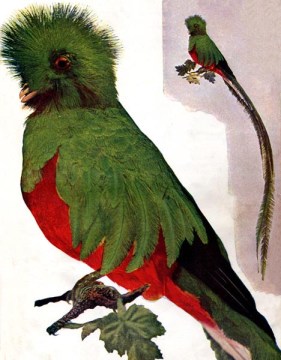
Birds Vol 1 #1 – The Resplendent Trogon (Quetzal)

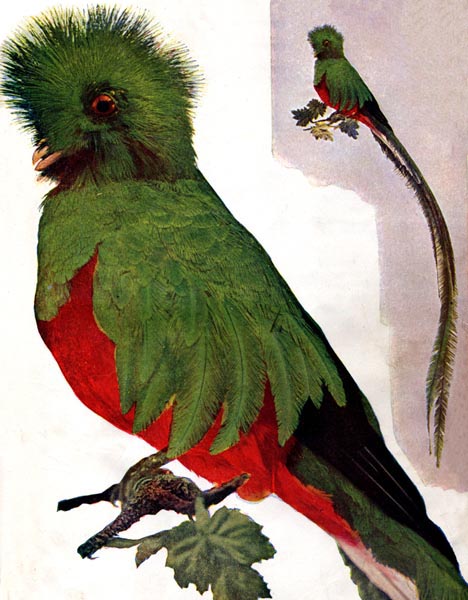
Resplendent (Trogon) Quetzal (Pharomachrus mocinno)

Resplendent (Trogon) Quetzal (Pharomachrus mocinno)

Birds Illustrated by Color Photography – Revisited

Vol 1. January, 1897 No. 1

*

THE RESPLENDENT TROGON

A Letter to Little Boys and Girls of the United States.

Is it cold where you live, little boys and girls? It is not where I live. Don’t you think my feathers grew in the bright sunshine?

My home is way down where the big oceans almost meet. The sun is almost straight overhead every noon.

I live in the woods, way back where the trees are tall and thick. I don’t fly around much, but sit on a limb of a tree way up high.

Don’t you think my red breast looks pretty among the green leaves?

When I see a fly or a berry I dart down after it. My long tail streams out behind like four ribbons. I wish you could see me. My tail never gets in the way.

Wouldn’t you like to have me sit on your shoulder, little boy? You see my tail would reach almost to the ground.

If you went out into the street with me on your shoulder, I would call whe-oowhe-oo, the way I do in the woods.

All the little boys and girls playing near would look around and say, “What is that noise?” Then they would see you and me and run up fast and say, “Where did you get that bird?”

The little girls would want to pull out my tail feathers to put around their hats. You would not let them, would you?

I have a mate. I think she is very nice. Her tail is not so long as mine. Would you like to see her too? She lays eggs every year, and sits on them till little birds hatch out. They are just like us, but they have to grow and get dressed in the pretty feathers like ours. They look like little dumplings when they come out of the eggs.

But they are all right. They get very hungry and we carry them lots of things to eat, so they can grow fast.

Your friend,
R. T.

Resplendent Quetzal (Pharomachrus mocinno) Reinier Munguia

Resplendent Quetzal (Pharomachrus mocinno) Reinier Munguia

THE RESPLENDENT TROGON

imgrESPLENDENT Trogons (Quetzals) are natives of Central America. There are fifty kinds, and this is the largest. A systematic account of the superb tribe has been given by Mr. Gould, the only naturalist who has made himself fully acquainted with them.

Of all birds there are few which excite so much admiration as the Resplendent Trogon.

The skin is so singularly thin that it has been not inaptly compared to wet blotting paper, and the plumage has so light a hold upon the skin that when the bird is shot the feathers are plentifully struck from their sockets by its fall and the blows which it receives from the branches as it comes to the ground.

Its eggs, of a pale bluish-green, were first procured by Mr. Robert Owen. Its chief home is in the mountains near Coban in Vera Paz, but it also inhabits forests in other parts of Guatemala at an elevation of from 6,000 to 9,000 feet.

From Mr. Salvin’s account of his shooting in Vera Paz we extract the following hunting story:

“My companions are ahead and Filipe comes back to say that they have heard a quesal (Resplendent Trogon). Of course, being anxious to watch as well as to shoot one of these birds myself, I immediately hurry to the spot. I have not to wait long. A distant clattering noise indicates that the bird is on the wing. He settles—a splendid male—on the bough of a tree not seventy yards from where we are hidden. It sits almost motionless on its perch, the body remaining in the same position, the head only moving from side to side. The tail does not hang quite perpendicularly, the angle between the true tail and the vertical being perhaps as much as fifteen or twenty degrees. The tail is occasionally jerked open and closed again, and now and then slightly raised, causing the long tail coverts to vibrate gracefully. I have not seen all. A ripe fruit catches the quesal’s eye and he darts from his perch, plucks the berry, and returns to his former position. This is done with a degree of elegance that defies description. A low whistle from Capriano calls the bird near, and a moment afterward it is in my hand—the first quesal I have seen (…).”

The above anecdote is very beautiful and graphic, but we read the last sentence with pain. We wish to go on record with this our first number as being unreconciled to the ruthless killing of the birds. He who said, not a sparrow “shall fall on the ground without your Father,” did not intend such birds to be killed, but to beautify the earth.

The cries of the quesal are various. They consist principally of a low note, whe-oowhe-oo, which the bird repeats, whistling it softly at first, then gradually swelling it into a loud and not unmelodious cry. This is often succeeded by a long note, which begins low and after swelling dies away as it began. Other cries are harsh and discordant. The flight of the Trogon is rapid and straight. The long tail feathers, which never seem to be in the way, stream after him. The bird is never found except in forests of the loftiest trees, the lower branches of which, being high above the ground, seem to be its favorite resort. Its food consists principally of fruit, but occasionally a caterpillar is found in its stomach.
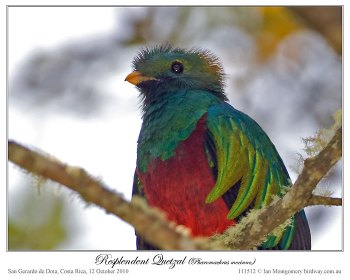
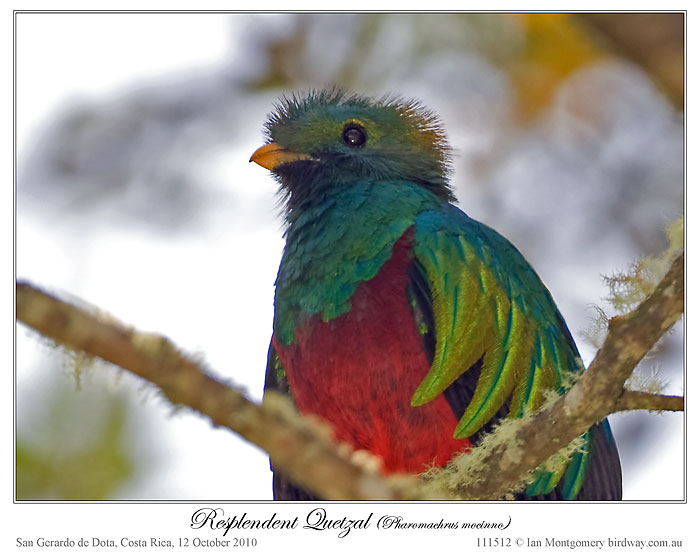
Resplendent Quetzal (Pharomachrus mocinno) by Ian

Resplendent Quetzal (Pharomachrus mocinno) by Ian


Lee’s Addition:

The Resplendent is in the Trogan Family, but today it is called the Resplendent Quetzal (Pharomachrus mocinno). Along with the writer, needless killing of birds is uncalled for, but back in 1897 the ladies liked feathers in their hats. Thankfully, that practice has been stopped for the most part, but how many birds have become extinct or near extinct because of it? What a fantastic bird the Lord created with these long tails.

For man also does not know his time: Like fish taken in a cruel net, Like birds caught in a snare, So the sons of men are snared in an evil time, When it falls suddenly upon them. (Ecclesiastes 9:12 NKJV)
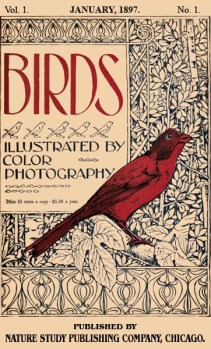
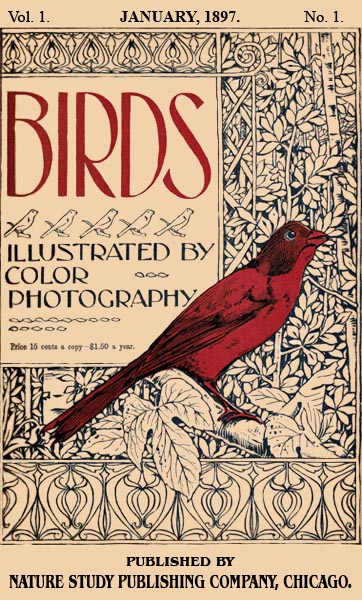
Birds Illustrated by Color Photograhy Vol 1 January 1897 No 1 - Cover

Birds Illustrated by Color Photograhy Vol 1 January 1897 No 1 – Cover

Birds Illustrated by Color Photography – Revisited – Introduction

The above article is the second article in the monthly serial that was started in January 1897 “designed to promote Knowledge of Bird-Live.” These include Color Photography, as they call them, today they are drawings. There are at least three Volumes that have been digitized by Project Gutenberg.

To see the whole series of – Birds Illustrated by Color Photography – Revisited

*

The Resplendent Quetzal is one of 43 species in the Trogonidae – Trogons Family in the Trogoniformes Order. Of the 7 Genus, only two have Quetzals and the other five have Trogons.

The word “trogon” is Greek for “nibbling” and refers to the fact that these birds gnaw holes in trees to make their nests.

The Resplendent Quetzal, Pharomachrus mocinno, is a bird in the trogon family. It is found from southern Mexico to western Panama (unlike the other quetzals of the genus Pharomachrus, which are found in South America and eastern Panama). It is well known for its colorful plumage. There are two subspecies, P. m. mocinno and P. m. costaricensis.

This species is 36–40 cm (14–16 in) long, plus up to 65 cm (26 in) of tail streamer for the male, and weighs about 210 g (7 oz). It is the largest representative of the trogon order. The subspecies costaricensis is slightly smaller than the nominate race and has shorter narrower tail plumes.

This quetzal plays an important role in Mesoamerican mythologies. The Resplendent Quetzal is Guatemala’s national bird, and an image of it is on the flag and coat of arms of Guatemala. It is also the name of the local currency (abbreviation GTQ).

1989 Half Quetzal

1989 Half Quetzal

Trogons are residents of tropical forests worldwide, with the greatest diversity in the Neotropics. The genus Apaloderma contains the three African species, Harpactes and Apalharpactes are Asian, and the remaining four genera are found in Central and South America.

They feed on insects and fruit, and their broad bills and weak legs reflect their diet and arboreal habits. Although their flight is fast, they are reluctant to fly any distance. Trogons are generally not migratory, although some species undertake partial local movements.

Trogons have soft, often colourful, feathers with distinctive male and female plumage. They are the only type of animal with a heterodactyl toe arrangement.

The trogons are insectivorous, usually hunting from a perch. They nest in holes dug into trees or termite nests, laying 2-4 white or pastel-coloured eggs.

The majority of trogons are birds of tropical and subtropical forests. They have a cosmopolitan distribution in the worlds wet tropics, being found in the Americas, Africa and Asia. A few species are distributed into the temperate zone, with one species, the Elegant Trogon, reaching the south of the United States specifically southern Arizona and the surrounding area. Some species, particularly the quetzals, are adapted to cooler montane forest.

The trogons as a family are fairly uniform in appearance, they have compact bodies with long tails (very long in the case of the quetzals), and short necks. Trogons range in size from the 23 cm, 40 gram Scarlet-rumped Trogon to the 40 cm, 210 gram Resplendent Quetzal (not including the male quetzal’s 3-foot-long (0.91 m) tail streamers). Their legs and feet are weak and short, and trogons are essentially unable to walk beyond a very occasional shuffle along a branch. They are even incapable of turning around on a branch without using their wings. The ratio of leg muscle to body weight in trogons is only 3 percent, the lowest known ratio of any bird.

(Information from Wikipedia and other internet sources)

Next Article – The Mandarin Duck

Previous Article – The Nonpareil – Painted Bunting

Wordless Birds

Links:

Ian’s Bird of the Week – Resplendent Quetzal
Ian’s Bird of the Week – Violaceous Trogon
Trogons & Quetzel Photos – Ian’s Birdway
Resplendent Quetzal Photos on Aves – Wikipedia
Resplendent Quetzal Wikipedia
Trogon Family – Wikipedia
Birds of the World – Trogonidae

*
Ian’s Bird of the Week – King Penguin

King Penguin (Aptenodytes patagonicus) 1 by Ian

King Penguin (Aptenodytes patagonicus) 1 by Ian

Ian’s Bird of the Week – King Penguin ~ by Ian Montgomery

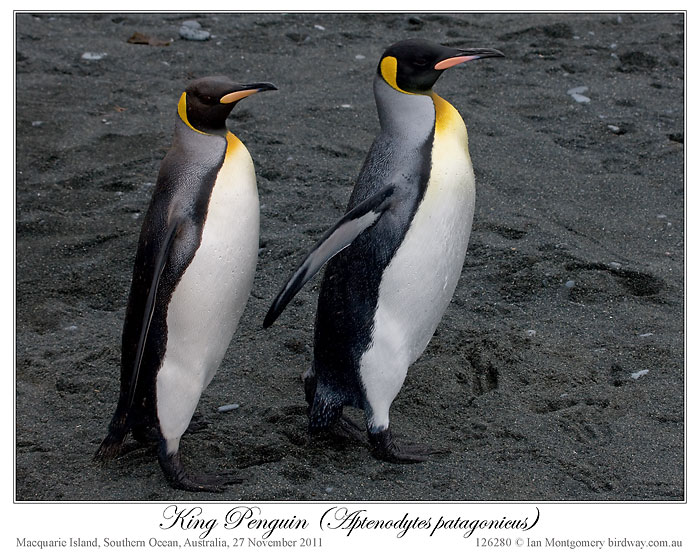
The Royal Penguins may have won the bird of the trip award on the basis of character, but the sartorial crown went to the King Penguin also very common on the beach at Macquarie Island. We’ll see later that they also won the Worst Dressed Award. The adult King Penguins were magnificently turned out, and strode importantly around, very erect with chests puffed out as in the first photo. (If their suits hadn’t been pure silk, they might, however, be considered slight spivvy.)

They alway seemed to have some consequential to do, such as this one calling at intervals trumpet-like and being listened to deferentially by its followers and being answered in a similar vein by another leader at some distance.
King Penguin (Aptenodytes patagonicus) 2 by Ian

King Penguin (Aptenodytes patagonicus) 2 by Ian

If you sat quietly on the beach, they would, like the Royals come over to inspect you, but they didn’t seem to approve of what they found.
King Penguin (Aptenodytes patagonicus) 3 by Ian

King Penguin (Aptenodytes patagonicus) 3 by Ian

When called upon to do something undignified like feeding an unrelenting chick, they did so with an expression that suggested that this should really be done by a wet nurse, and the neighbours would turn avert their gaze disdainfully.
King Penguin (Aptenodytes patagonicus) 4 by Ian

King Penguin (Aptenodytes patagonicus) 4 by Ian

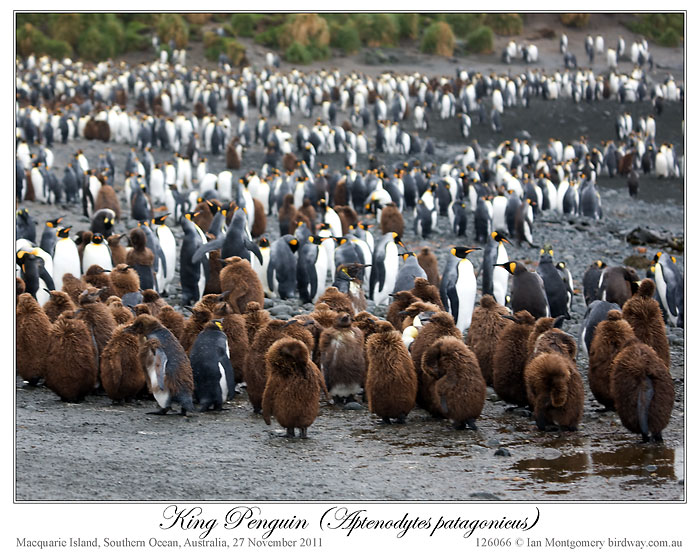
The chicks, of course, won the Worst Dressed Award and the adults, whenever possible, disowned them so that were forced to huddle in a creche at the unfashionable end of the beach.
King Penguin (Aptenodytes patagonicus) 5 by Ian

King Penguin (Aptenodytes patagonicus) 5 by Ian

The chicks look as if they’re preening, but they are really trying to rip off their awful yeti outfits. You can see that some of them have nearly succeeded. This is a transformation to rival any emerging butterfly, and if Hans Christian Andersen had known about King Penguin chicks he would have chosen them rather than cygnets for his Ugly Duckling fairy tale.
King Penguin (Aptenodytes patagonicus) 6 by Ian

King Penguin (Aptenodytes patagonicus) 6 by Ian

Meanwhile, at the other end of the beach, the King Penguins stride officiously towards an Elephant Seal lumbering out of the water. I couldn’t resist converting this into a comic-strip cartoon using an iPhone app called Halftone http://www.juicybitssoftware.com/halftone/ .
King Penguin (Aptenodytes patagonicus) 7 by Ian

King Penguin (Aptenodytes patagonicus) 7 by Ian

As you can imagine, it was a special day on Macquarie Island.
I’m continuing to put photos from the trip on the website and there are now 650 Australian bird species there. You can check the latest updates here: http://www.birdway.com.au/#updates .
Best wishes
Ian


Ian Montgomery, Birdway Pty Ltd,
454 Forestry Road, Bluewater, Qld 4818
Phone: 0411 602 737 +61-411 602 737
Preferred Email: ian@birdway.com.au
Website: http://birdway.com.au


Lee’s Addition:

Now Ian has gone to making cartoons. Ian, that must have been an exciting special day. From your writing, your pleasure shines through. Thanks for sharing your great photos with us again. Stay tuned for Ian’s next adventure. Can’t wait to see some more of his photos from that trip.

Penguines are in the Spheniscidae – Penguin Family of the Sphenisciformes Order. Penguins are the only family in the Order. Check out Ian’s Penguin photos at his Birdway.com site. He has photos for 9 of the 18 species of Penguins.

The king’s heart is in the hand of the LORD, as the rivers of water: he turneth it whithersoever he will. (Proverbs 21:1 KJV)

*
Ian’s Bird of the Week – Red-crowned Parakeet

Red-crowned Parakeet (Cyanoramphus novaezelandiae) by Ian 1

Red-crowned Parakeet (Cyanoramphus novaezelandiae) by Ian 1

Ian’s Bird of the Week – Red-crowned Parakeet ~ by Ian Montgomery

Newsletter ~ 12/20/11

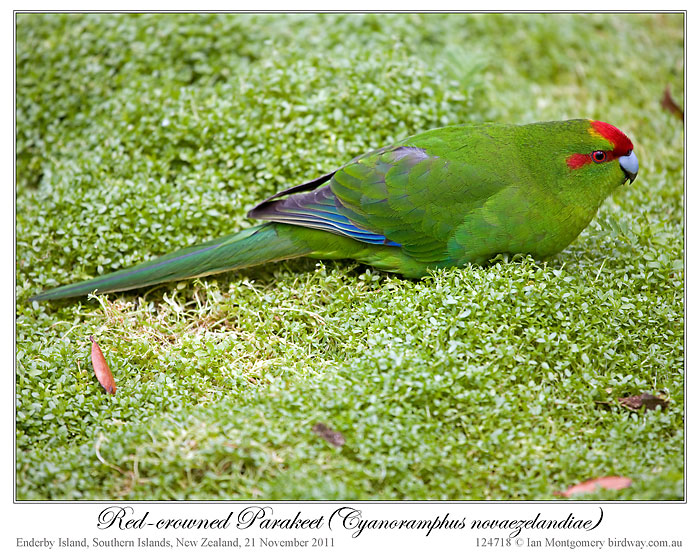
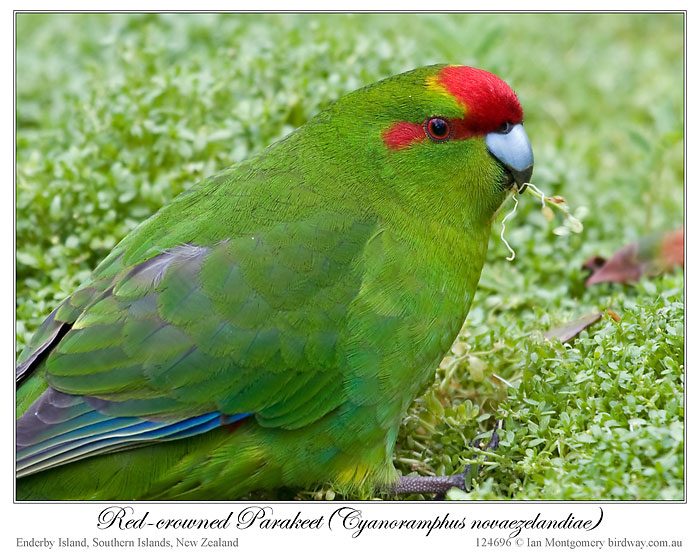
Christmas is nearly on us, so a bird in the Christmas colours of red and green seems appropriate. Here is the Red-crowned Parakeet, one of the relatively few non-seabirds encountered on the trip to the Sub-Antarctic Islands.

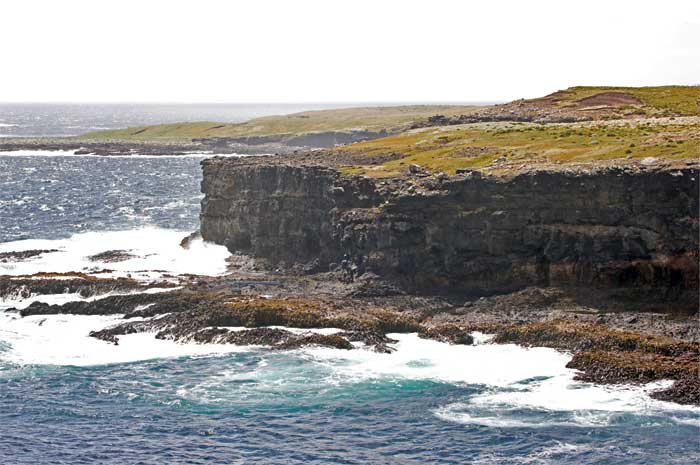
We found these birds at several locations on Enderby Island, one of the smaller of the Auckland Islands and the first site at which we actually landed after leaving Dunedin. Enderby Island is mainly basalt with rocky cliffs, as in the second photo, and it reminded me very much of St Paul Island in the Bering Sea that I visited three years ago. On both the vegetation is mainly tundra, though unlike the treeless St Paul Enderby has patches of very gnarled dwarf rata forest.
Red-crowned Parakeet (Cyanoramphus novaezelandiae) by Ian 2

Enderby Island by Ian 2

The Parakeets feed mainly on the ground and we found them both on the tundra and in the forest. They are herbivorous, and the bird in the first photo is feeding on the dense understory of the forest – the third photo shows the same bird in close-up eating very fine shoots and leaves.
Red-crowned Parakeet (Cyanoramphus novaezelandiae) by Ian 3

Red-crowned Parakeet (Cyanoramphus novaezelandiae) by Ian 3

The fourth photo shows a different bird feeding on the flower-heads of small herbs growing on the tundra near the beach where we landed.
Red-crowned Parakeet (Cyanoramphus novaezelandiae) by Ian 4

Red-crowned Parakeet (Cyanoramphus novaezelandiae) by Ian 4

I’m used to seeing parrots in more tropical locations, so it was a startling to see these small (25-28cm/10-11in long) elegant parrots in such a cold and rugged environment. They are obvious tough little birds, though their confiding habits, ground-feeding life-style and choice of low nesting sites makes them very vulnerable to introduced predators such as feral cats,rats and, in New Zealand, stoats. The Red-crowned Parakeet used to widespread throughout New Zealand but is now rare or extinct on the two main islands, though it survives well on Stewart and other offshore islands. As you can judge from the photos, the birds are very approachable and took little notice of us.
On the website, there are now nine species of penguins http://www.birdway.com.au/spheniscidae/index.htm and thirteen species of albatrosses http://www.birdway.com.au/diomedeidae/index.htm . The additional species of albatrosses include ones that were treated as sub-species by Christidis and Boles, 2008, but are now recognised as full species by Birdlife International and the IOC.
I wish you a safe and happy Christmas and best wishes
Ian


Ian Montgomery, Birdway Pty Ltd,
454 Forestry Road, Bluewater, Qld 4818
Phone: 0411 602 737 +61-411 602 737
Preferred Email: ian@birdway.com.au
Website: http://birdway.com.au


Lee’s Addition:

Thanks again, Ian, for sharing your great adventures. This parakeet, indeed, looks decked out for the colors of Christmas. Would be pretty to have a flock of them perching on a Christmas Tree. Merry Christmas to you, Ian, and our readers.

Then the angel said to them, “Do not be afraid, for behold, I bring you good tidings of great joy which will be to all people. For there is born to you this day in the city of David a Savior, who is Christ the Lord. (Luke 2:10-11 NKJV)

Check out Ian’s other Parrots and Parakeets at his Parrots & Allies Psittacidae Family page. Our Birds of the World Psittacidae Family page has more Parrot and Parakeet photos.

Ian’s Other Birds of the Week

*

Ian’s Bird of the Week – Royal Penguin

Royal Penguin (Eudyptes schlegeli) by Ian 1

Royal Penguin (Eudyptes schlegeli) by Ian 1

Ian’s Bird of the Week – Royal Penguin ~ by Ian Montgomery

Newsletter – 12/10/11

I think that this should really be the Bird of the Trip, if not the Year. The birders’ table at dinner on the last night on board had a vote for Bird of the Trip, and it was a close contest between the Light-mantled Sooty Albatross, featured last week, and my choice, the Royal Penguin. As I mentioned last week, Macquarie Island was for most of us the highlight of the trip, and the day spent on familiar terms with the penguins was memorably enchanting.

Four species breed there, the commonest being the Royal and King Penguins. The King Penguins are beautiful, very smart, elegant and colourful, but the smaller Royals (up to 75cm/30in in length) won hands down in terms of personality.
Royal Penguin (Eudyptes schlegeli) by Ian 2

Royal Penguin (Eudyptes schlegeli) by Ian 2

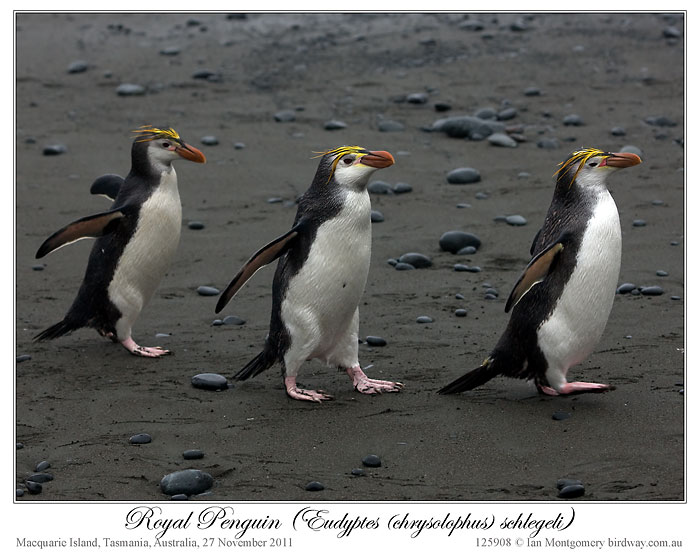
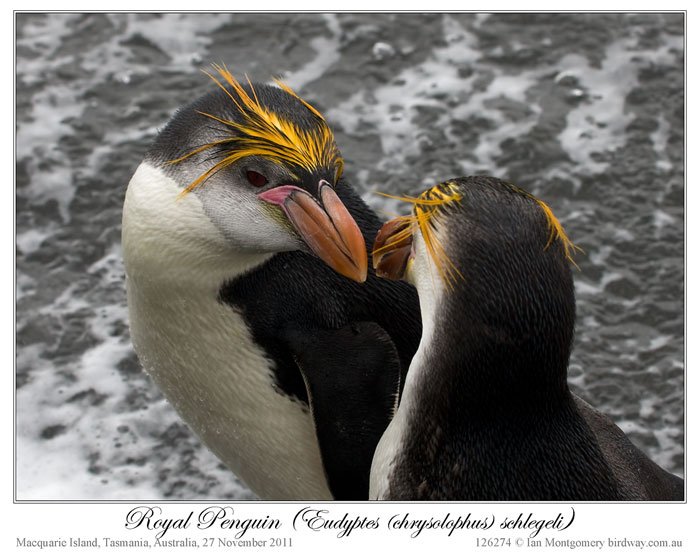
Who could fail to be endeared by the curious attention of the bird in the first photo or by the ones promenading along the beach as in the second photo or by the pair having a deep and meaningful exchange, as in the the third photo?
Royal Penguin (Eudyptes schlegeli) by Ian 3

Royal Penguin (Eudyptes schlegeli) by Ian 3

Apart from curiosity, the penguins appeared little affected by our presence. They would move out of the way if you walked towards them, but if you sat on the beach, they’d come over to check you out and nibble in an exploratory manner on clothing and cameras. The Labrador-eyed baby elephant seals would come over for a cuddle, but that’s another story.
Royal Penguin (Eudyptes schlegeli) by Ian 4

Royal Penguin (Eudyptes schlegeli) by Ian 4

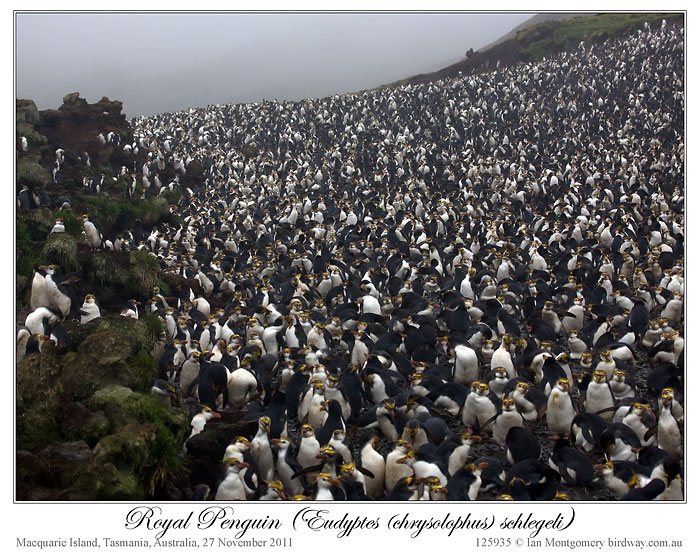
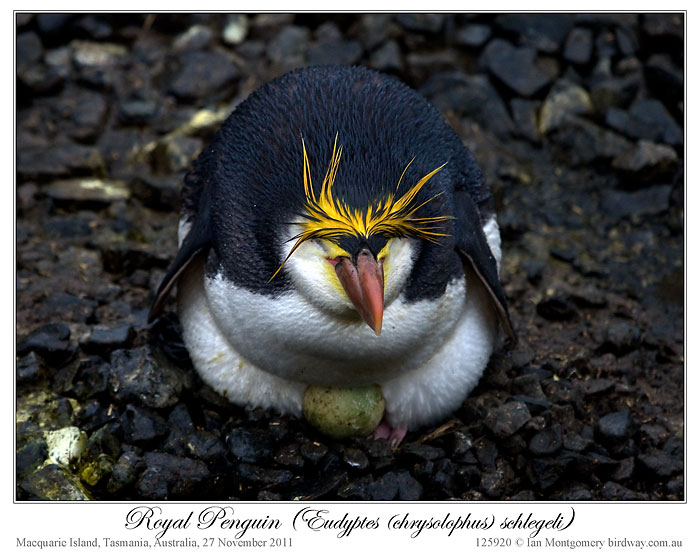
The beach was the promenade area but the real action was taking place at a huge rookery behind the beach, fourth photo. Here, many thousands of Royal Penguins were huddled on uncomfortable-looking stony nests incubating eggs like the long-suffering one having a bad-hair day in the fifth photo.
Royal Penguin (Eudyptes schlegeli) by Ian 5

Royal Penguin (Eudyptes schlegeli) by Ian 5

Woe betide a penguin getting too close to another one’s nest, and an individual moving through the colony was subject to a cacophony of abuse like the one in the sixth photo. The abusers didn’t appeared seriously aggressive, more just letting off steam and complaining about the crowded conditions. They did get serious, however, when the brown skuas attempted to steal their eggs and the area around the rookery was littered with empty egg shells.
Royal Penguin (Eudyptes schlegeli) by Ian 6

Royal Penguin (Eudyptes schlegeli) by Ian 6

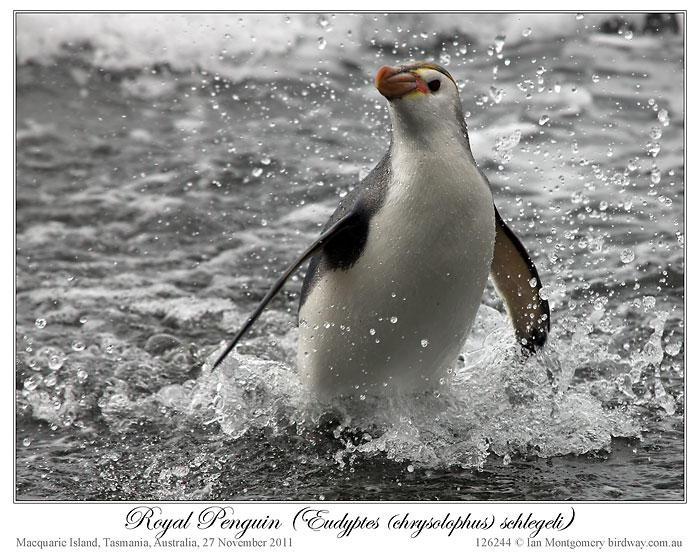
Now generally recognised as a separate species from the closely related Macaroni Penguin, the Royal breeds only on Macquarie Island and the population is estimated at 850,000 pairs. (Macaronis have black chins, Royal have white ones.) ‘Royal’ struck me as a quite inappropriate name: ‘court jester’ would be closer. Maybe that would be underestimating them: the one in the last photo looks like a real champion emerging from the surf, up there with any cross-channel swimmer.
Royal Penguin (Eudyptes schlegeli) by Ian 7

Royal Penguin (Eudyptes schlegeli) by Ian 7

I’m in Sydney now on my way home. The week spent in Tasmania in search of the local endemics was largely successful, despite sometimes miserable weather and I’m looking forward to making many additions to the website.
Best wishes
Ian

Ian Montgomery, Birdway Pty Ltd,
454 Forestry Road, Bluewater, Qld 4818
Phone: 0411 602 737 +61-411 602 737
Preferred Email: ian@birdway.com.au
Website: http://birdway.com.au


Lee’s Addition:

Wow! How do they ever know where their nest is located? That must have been some experience. That second photo looks like they are strutting their stuff.

The Penguins are in the Sphenisciformes Order and they make up the only family, the Spheniscidae Family. See Ian’s photos of the Penguins and then check out our Birds of the WorldSpheniscidae – Penguin family.

He sends out His command to the earth; His word runs very swiftly. He gives snow like wool; He scatters the frost like ashes; He casts out His hail like morsels; Who can stand before His cold? (Psalms 147:15-17 NKJV)

Apparently Penguins were designed to “stand before His cold.”

*

Ian’s Bird of the Week – Light-mantled Albatross

Light-mantled Albatross (Phoebetria palpebrata) by Ian 1

Light-mantled Albatross (Phoebetria palpebrata) by Ian 1

Ian’s Bird of the Week – Light-mantled Albatross ~ by Ian Montgomery

Newsletter ~ 12/1/11

We arrived in Hobart today at the end of successful visit to the Sub-antarctic Islands between New Zealand and Australia. We had a lot of very rough weather in the Southern Ocean but the weather was kinder to us at the various destinations and we managed make all the planned landings (Auckland Islands, Campbell and Macquarie Islands) and view the Snares from the zodiacs (where actual landings are not permitted). I managed to photograph most of the species on my target list and the highlight for most of us was Macquarie Island and its four nesting species of penguin.

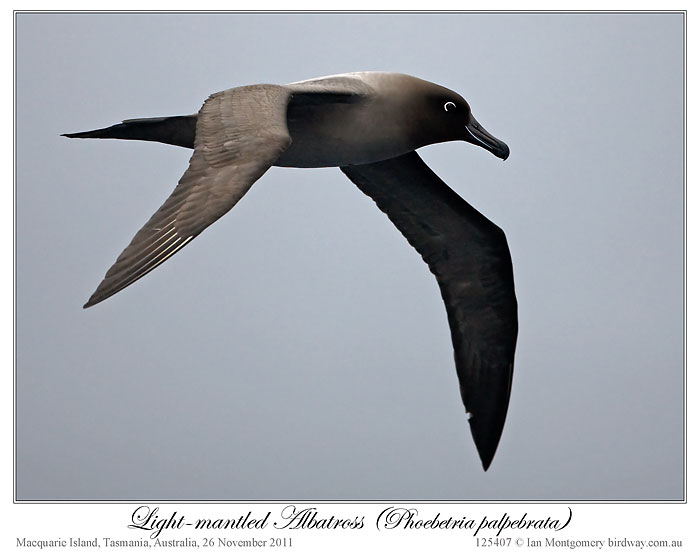
As the last Bird of the Week was the Yellow-eyed Penguin, I’ve chosen an albatross, the Light-mantled (Sooty) Albatross, for this week and will return to penguins later. This was the Albatross that I most wanted to see and also very popular with everyone else. My interest in it had been aroused when I’d heard it likened to a Siamese cat, a seal point in particular. The comparison is apt given the chocolate brown head and latte-coloured body, and the silky texture of the plumage is quite feline in appearance. The white partial eye-ring is striking and sets off the dark head colour very well.
Light-mantled Albatross (Phoebetria palpebrata) by Ian 2

Light-mantled Albatross (Phoebetria palpebrata) by Ian 2

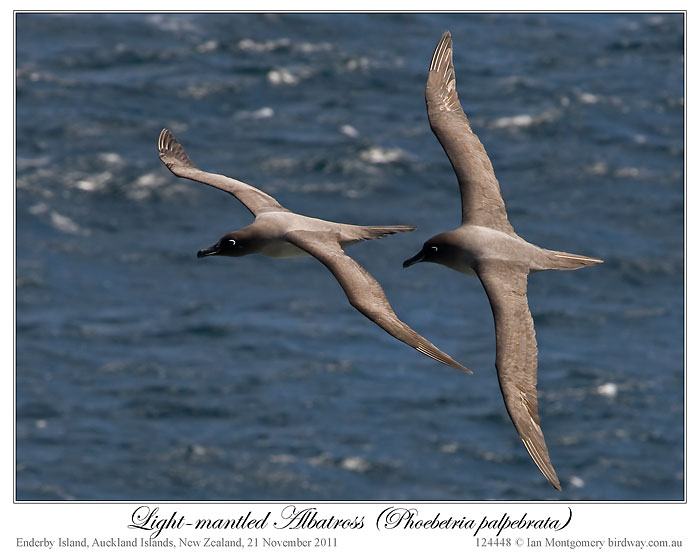
We saw Light-mantled Albatrosses quite frequently until we got close to Tasmania, encountering them first and best on Enderby Island, one of the Auckland Islands, as in the first photo but also at sea and at Macquarie Island as in the second photo. Macquarie Island is administratively part of the State of Tasmania even though it is a long way away and, as one of the Kiwis on board pointed out, geographically part of New Zealand. The Albatrosses were nesting on Enderby Island and it was here that we saw pairs indulging in their beautiful courtship flights, quite an aerial ballet, as in the third photo.
Light-mantled Albatross (Phoebetria palpebrata) by Ian 3

Light-mantled Albatross (Phoebetria palpebrata) by Ian 3

At this point, I though that the comparison with Siamese Cats broke down. I used to have a pair and. when the female was on heat, her behaviour was anything but elegant; demented would have been more like it.
Light-mantled Albatross (Phoebetria palpebrata) by Ian 4

Light-mantled Albatross (Phoebetria palpebrata) by Ian 4

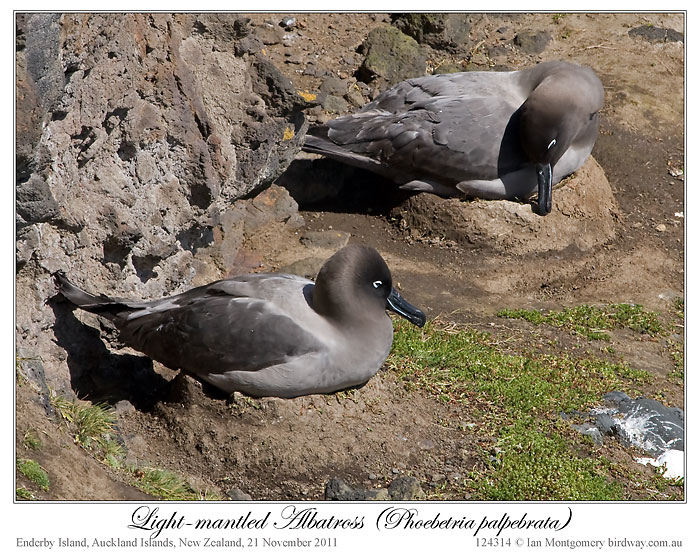
Some pairs were already nesting and incubating eggs. They chose small platforms on quite rocky cliffs and often nested in close proximity to each other, as in the fourth photo. Light-mantled are quite small by albatross standards, measuring about 84cm/33in in length with a wingspan of 215cm/85in. Their range is circumpolar in the colder waters of the Southern Ocean and are seen only rarely in the waters of mainland Australia and Tasmania proper.
Light-mantled Albatross (Phoebetria palpebrata) by Ian 5

Light-mantled Albatross (Phoebetria palpebrata) by Ian 5

On close inspection of the head of a Light-mantled, as in the last photo, the eyes are bluish and, as a final touch, the pale stripe on the bill is also blue. Yes, I know, same colour scheme as a Siamese Cat!
During the rougher parts of the voyage I had the opportunity to work on some of the photos and I have added the following species to the website: Snares, Fiordland and Yellow-eyed Penguins:
Best wishes
Ian

Ian Montgomery, Birdway Pty Ltd,
454 Forestry Road, Bluewater, Qld 4818
Phone: 0411 602 737 +61-411 602 737
Preferred Email: ian@birdway.com.au
Website: http://birdway.com.au


Lee’s Addition:

The hearing ear, and the seeing eye, the LORD hath made even both of them. (Proverbs 20:12 KJV)

What an absolutely neat looking bird. I love that eye ring. Makes the eyes very expressive. Looks like they built nests of mud.

It will be interesting to see what other neat birds that Ian has found on this trip. Not so sure I would have enjoyed those rough seas.

The Albatross are found in the Diomedeidae Family of the Procellariiformes Order. That order includes Petrel, Shearwater, Storm Petrel and Diving Petrel families.

Check out:

Ian’s Albatross Photos

Bird of the Week Newsletters

*

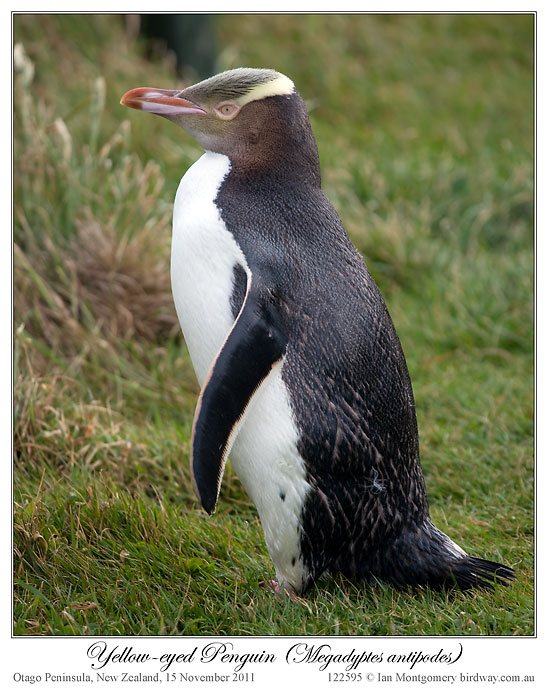
Ian’s Bird of the Week – Yellow-eyed Penguin

Yellow-eyed Penguin (Megadyptes antipodes) by Ian 1

Yellow-eyed Penguin (Megadyptes antipodes) by Ian 1

Ian’s Bird of the Week – Yellow-eyed Penguin ~ by Ian Montgomery

Newsletter – 11/22/11
I had intended the Fiordland Crested Penguin at Milford Sound to be the next bird of the week, but since then I have photographed the unusual and rarer Yellow-eyed Penguin at the well-known colony on the Otago Peninsula near Dunedin and chosen it instead.

I went there in the evening as this is the time when the fishing member of the breeding pairs returns to relieve the incubating or baby-sitting member. The bird in the first photo is an adult that has just returned to the colony. The adults are distinguishable by having the yellow band joining the eyes around the nape of the head.
Yellow-eyed Penguin (Megadyptes antipodes) by Ian 2

Yellow-eyed Penguin (Megadyptes antipodes) by Ian 2

The bird in the second photo is another adult. Yellow-eyed Penguins are quite large, up to 79cm/31in in length and weighing up to 8kg. The males are larger than the females and penguins in general have heavy bones by bird standards to help them dive. When the pairs are reunited they typically perform mutual preening as in the third photo.
Yellow-eyed Penguin (Megadyptes antipodes) by Ian 3

Yellow-eyed Penguin (Megadyptes antipodes) by Ian 3

The total population of the species is about 2,000 pairs, mainly on Auckland and Campbell Islands, with about 150 pairs on Stewart Island and about 500 on the South Island. It has suffered from loss of coastal forest and still suffers from predation by introduced mammals such as feral cats. It is classified as endangered, but the population has been relatively stable over the last 30 years.
Yellow-eyed Penguin (Megadyptes antipodes) by Ian 4 juvenile

Yellow-eyed Penguin (Megadyptes antipodes) by Ian 4 juvenile

The bird in the fourth photo is a juvenile (they don’t breed until they are 3 or 4 years old) and lacks the yellow band on the back of the head.
More than 20 years ago, when on Stewart Island, I booked to go on a boat trip to an island that had both Yellow-eyed Penguins and Wekas, a large flightless rail. The weather was so bad that the trip was cancelled and both these species had represented unfinished business. On this trip I encountered Wekas at Milford Sound.
I’m in Dunedin for a second time now, having needed to drive to Christchurch to return the camper and then flown back. This produced a strangely disorientating feeling of deja-vu, as you quite reasonably expect to end up somewhere else after a flight, not where you’ve just been the day before. I have met up with my 3 travelling companions from Victoria and we are all excited at the prospect of sailing for the Sub-Antarctic Islands tomorrow. So, don’t expect another bird of the week or any communication for that matter until we reach Hobart where we are due on 1 December. I hope that by then I’ll have many more photos to share with you.
Best wishes
Ian

Ian Montgomery, Birdway Pty Ltd,
454 Forestry Road, Bluewater, Qld 4818
Phone: 0411 602 737 +61-411 602 737
Preferred Email: ian@birdway.com.au
Website: http://birdway.com.au


Lee’s Addition:

Ian has been putting out his newsletters close together lately. Most likely since he knows he will be away from an internet connection for awhile. This newsletter was received several days ago, but decided to space it to fill the gap of time before his next one arrives. I am looking forward to what this next part of his trip produces.

Penguins are in the Sphenisciformes Order. The family, Spheniscidae, is the only one in the order. The 18 Penguins are in 5 genera; Aptenodytes, Pygoscelis, Eudyptes, Megadyptes and Spheniscus. Check out Ian’s Penguins and the the complete Spheniscidae family here.

Let heaven and earth praise Him, The seas and everything that moves in them. (Psalms 69:34 NKJV)

*

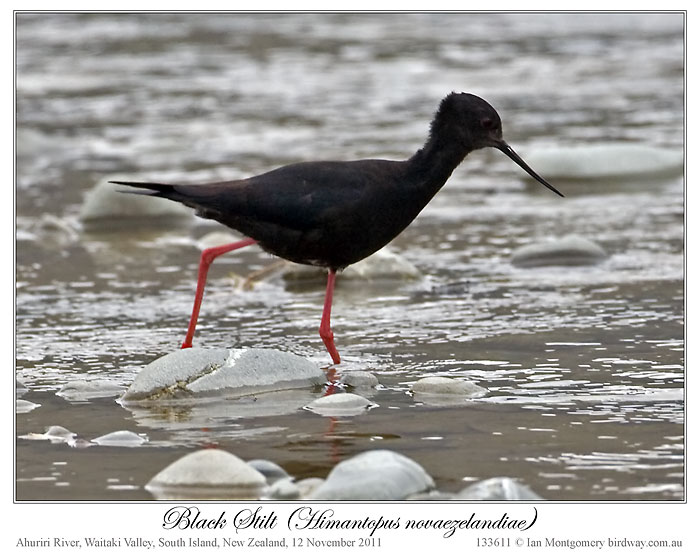
Ian’s Bird of the Week – Black Stilt

Black Stilt (Himantopus novaezelandiae) 1 by Ian

Black Stilt (Himantopus novaezelandiae) 1 by Ian

Ian’s Bird of the Week – Black Stilt ~ by Ian Montgomery

Newsletter – 11/15/11

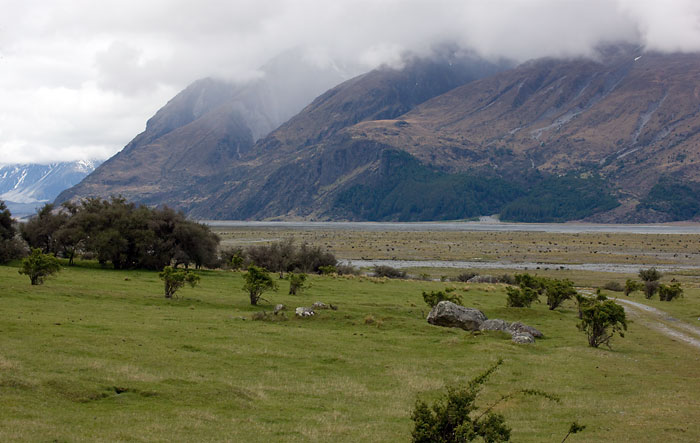
You’ve done it again! Your collective goodwill and spiritual energy have provided yet another special, this time very special bird, the critically endangered and recently saved from extinction Black Stilt. I did have to do a little work as well to find a couple in their favoured habitat of often inaccessible, so-called braided rivers of the South Island. At the second potential site, see photo, the task seemed impossible – that’s all river bed between the foreground and the mountains – and I almost gave up.

Tasman River by Ian

Tasman River by Ian

The third site wasn’t any better, but the fourth and last was a bridge over another river and you could have knocked me over with a feather when, having just stepped onto the bridge, I spotted two Black Stilts feeding a couple of hundred meters away close to the river bank.
One flew away when I approached but the other was much more cooperative and continued feeding.
Black Stilt (Himantopus novaezelandiae) 2 by Ian

Black Stilt (Himantopus novaezelandiae) 2 by Ian

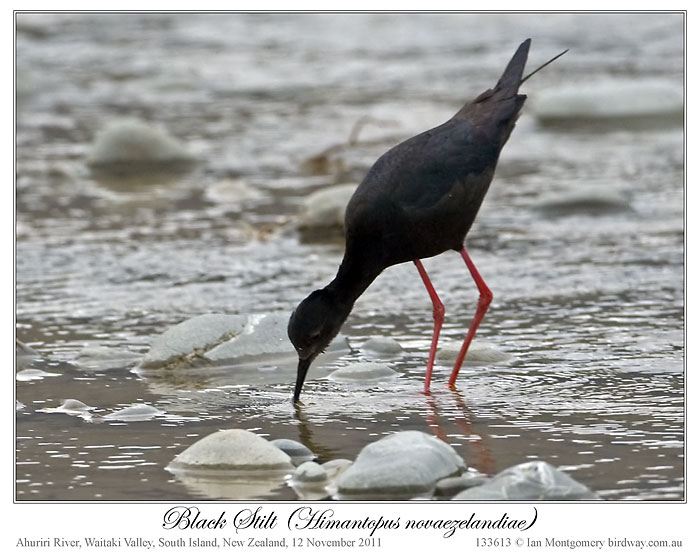
Eventually it flew off too, but it landed not far away, close to a breeding colony of 3 or 4 pairs of Black-fronted Terns, another species on my wanted list.
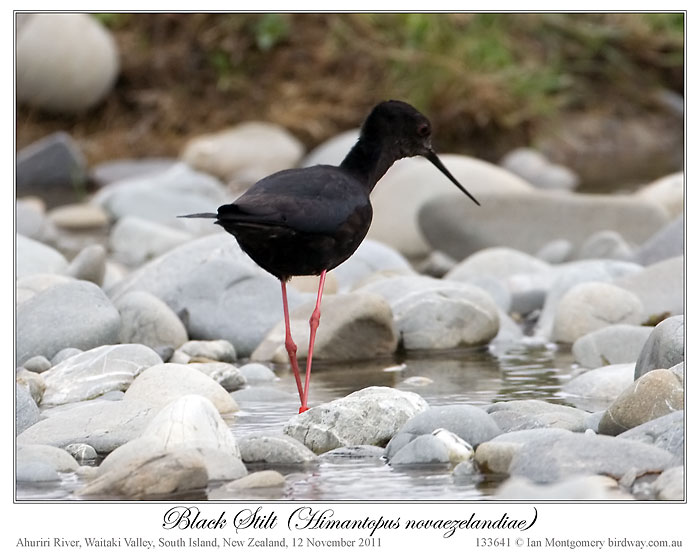
Black Stilt (Himantopus novaezelandiae) 3 by Ian

Black Stilt (Himantopus novaezelandiae) 3 by Ian

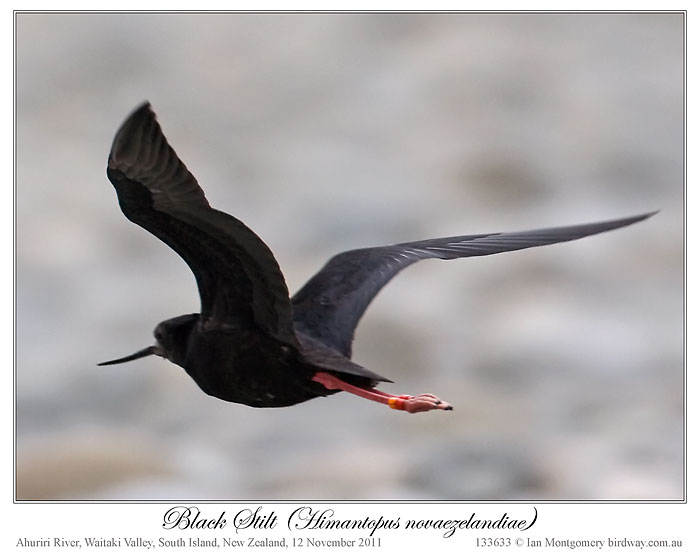
It stayed for a little while longer, until the terns chased it off. If you look carefully in the last photo, you can see a coloured band on the right leg and bird is presumably one of the captive-bred and released birds.
Black Stilt (Himantopus novaezelandiae) 4 by Ian

Black Stilt (Himantopus novaezelandiae) 4 by Ian

The population of Black Stilts in the wild reached a low of 23 adults in 1981 when the program started, making it the rarest wading bird in the world. There are now probably 200 birds in the wild and the program continues. Lets keep our fingers crossed!
I’ve had a great time so far in New Zealand and yesterday I went on a successful boat trip on Milford Sound in lovely weather for another wanted species, another potential bird of the week. I’m now on my way back to Christchurch to return my splendid campervan – I shall be reluctant to return it.
Best wishes
Ian


Ian Montgomery, Birdway Pty Ltd,
454 Forestry Road, Bluewater, Qld 4818
Phone: 0411 602 737 +61-411 602 737
Preferred Email: ian@birdway.com.au
Website: http://birdway.com.au


Lee’s Addition:

Glad to see the Lord answers prayers. (See Addition –  NZ/Australasian Shoveler) What a neat bird, glad you found it and didn’t give up. With them so few in numbers, that is a Great Catch!

I love them that love me; and those that seek me early shall find me. (Proverbs 8:17 KJV)

The Black Stilt is in the Recurviostridae Family of the Charadriiformes Order. There are 6 Stilts and 4 Avocets. Check out Ian’s Recurviostridae photos.

“Avocets and stilts range in length from 30 to 46 centimetres (12 to 18 in) and in weight from 140 to 435 grams (4.9 to 15.3 oz); males are usually slightly bigger than females.[1] All possess long, thin legs, necks, and bills. The bills of avocets are curved upwards, and are swept from side to side when the bird is feeding in the brackish or saline wetlands they prefer. The bills of stilts, in contrast, are straight. The front toes are webbed, partially in most stilts, fully in avocets and the Banded Stilt, which swim more. The majority of species’ plumage has contrasting areas of black and white, with some species having patches of buff or brown on the head or chest. The sexes are similar.” (Wikipedia)

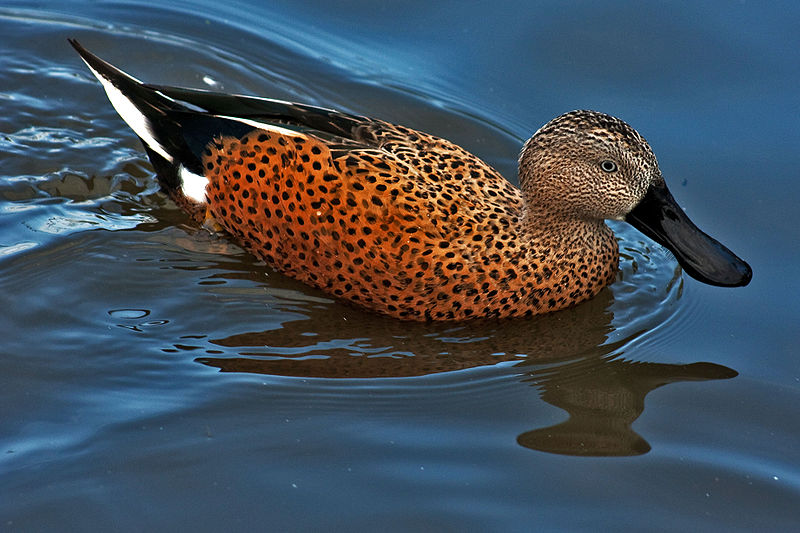
Ian’s Bird of the Week – NZ/Australasian Shoveler

Australasian Shoveler (Anas rhynchotis) by Ian Montgomery

Australasian Shoveler (Anas rhynchotis) by Ian Montgomery

Ian’s Bird of the Week – Australian Shoveler

Newsletter – 11/11/11

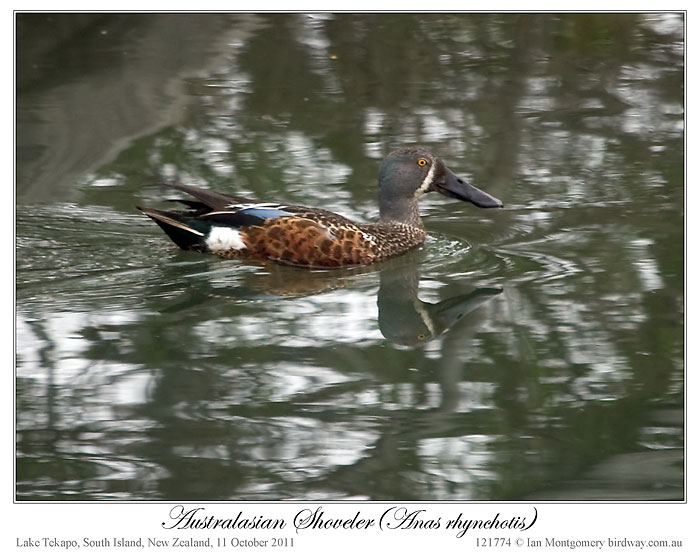
This is really just a token bird of the week as an apology for being late, having been busy preparing, packing and travelling. I’m now on the South Island of New Zealand and surrounded by introduced birds such as Eurasian Chaffinches and Blackbirds. I had a look for Black Stilt yesterday without success so here’s a male New Zealand Shoveler instead. At least that’s what they’re called here, even though they are the same species as the Australasian Shoveler. What ever, they’re gorgeous ducks.

Australasian Shoveler (Anas rhynchotis) by Ian

Australasian Shoveler (Anas rhynchotis) by Ian

I’m going to have another try at the Black Stilt today so wish me luck: your collective goodwill has worked in the past! After that, I plan to head south towards Fiordland to see what I can find there.

Best wishes

Ian

Ian Montgomery, Birdway Pty Ltd,
454 Forestry Road, Bluewater, Qld 4818
Phone: 0411 602 737 +61-411 602 737
Preferred Email: ian@birdway.com.au
Website: http://birdway.com.au


Lee’s Addition:

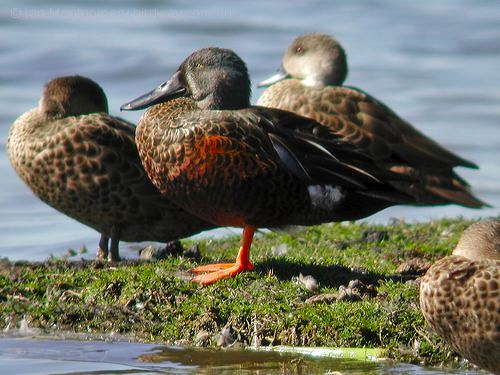
Since Ian wrote a short note, I added a second one of his Australasian Shovelers to the newsletter. Click see his other Australasian Shoveler photos. Ian, will be praying you find your birds and for your safety. Trust you find your Black Stilts so we can have a look at them also.

The Shovelers are in the Anas genus of the Anatidae – Ducks, Geese & Swans Family. Ian’s Anatidae Index Page.

Cape Shoveler (Anas smithii) by Ian
Red Shoveler (Anas platalea) ©WikiC
Australasian Shoveler (Anas rhynchotis) by Ian
Northern Shoveler (Anas clypeata) by Ian

Even though these birds could be eaten, many people like duck, I prefer to watch them instead. They are protected by:

If a bird’s nest happens to be before you along the way, in any tree or on the ground, with young ones or eggs, with the mother sitting on the young or on the eggs, you shall not take the mother with the young; you shall surely let the mother go, and take the young for yourself, that it may be well with you and that you may prolong your days. (Deuteronomy 22:6-7 NKJV)

*

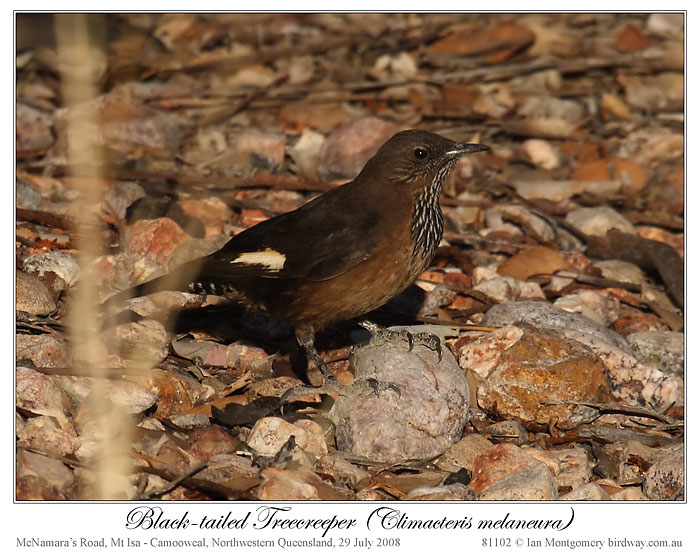
Ian’s Bird of the Week – Black-tailed Treecreeper

Black-tailed Treecreeper (Climacteris melanurus) by Ian

Black-tailed Treecreeper (Climacteris melanurus) by Ian

Ian’s Bird of the Week – Black-tailed Treecreeper ~ by Ian Montgomery

Newsletter – 10/28/11

I hope you like albatrosses and penguins as I leave in less than 2 weeks for a boat-trip to the so-called Sub-Antarctic island south of New Zealand and Australia and seabirds will, I hope, dominate the bird of the week for some time to come. In the meantime, here is a real landlubber, the Black-tailed Treecreeper, from northwestern Australia. It’s range extends from northwestern Queensland (Cloncurry district) through the Top End of the Northern Territory to the Kimberley region of northern Western Australia, with an isolated population of a paler race slightly farther south in the Pilbara region.

Black-tailed Treecreeper (Climacteris melanurus) by Ian

Black-tailed Treecreeper (Climacteris melanurus) by Ian

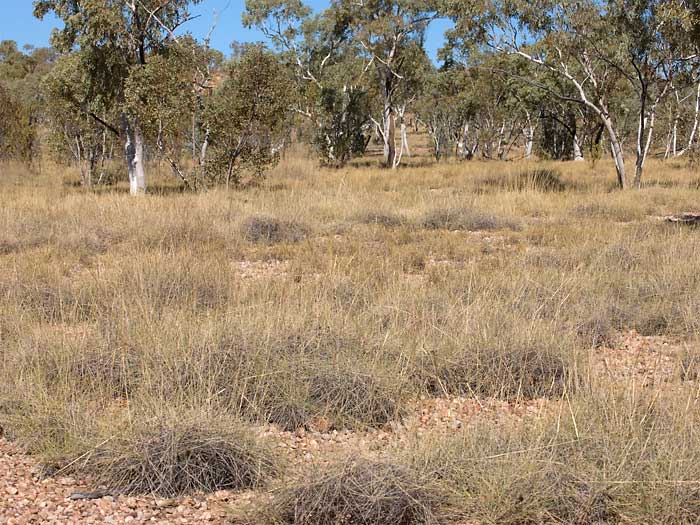
This bird is a male with a black throat with white streaks and the photo shows well the huge rear claws that it uses to climb trees. The photo also shows that Australo-Papuan Treecreepers (Climacteridae Family) usually don’t rely on their tails as a prop, unlike the unrelated Northern Hemisphere Treecreepers (Certhiidae) and Woodpeckers (Picidae). This photo was taken in tropical forest in Kakadu but this species also occurs in much more arid country with only scattered trees and it will feed on the ground, as in the second photo, taken at McNamara’s Road between Mount Isa and Camooweal. This bird is also a male: females have pale throats, but I haven’t got a good photo of one.

McNamaras Road by Ian

McNamaras Road by Ian

The main ground cover here is a prickly grass usually called spinifex (Triodia) and this site, third photo, is famous for its Carpentarian Grasswrens, but I remember it better for a hard night’s camping with a punctured airbed on this fourth-failed and final foray here in search of these elusive grasswrens – final because I was shown the grasswrens at another site two days later by Brian Venables who has much better hearing than I have! (Carpentarian Grasswren)

Best wishes
Ian

Ian Montgomery, Birdway Pty Ltd,
454 Forestry Road, Bluewater, Qld 4818
Phone: 0411 602 737 +61-411 602 737
Preferred Email: ian@birdway.com.au
Website: http://birdway.com.au


Lee’s Addition:

I am glad Ian is the one camping in an area like that last photo. That prickly grass doesn’t look too inviting. Those neat photos of the Treecreeper are worth it though. Thanks for sacrificing your airbed for them.

In them the birds build their nests; the stork has her home in the fir trees. (Psalms 104:17 ESV)

The Climacteridae- Australian Treecreeper Family and the Certhiidae – Treecreepers Family are in the Passeriformes Order and the Picidae – Woodpeckers Family is in the Piciformes Order.

*