Seeker…

Blackpoll Warbler (Setophaga striata) ©Flickr Scott Heron

Seeker… ~ by a j mithra

A small
North American bird,
the size of a sparrow
called the Blackpoll Warbler,
flies about 2,500 miles
on a nonstop 90 hr.
journey during migration
every year..

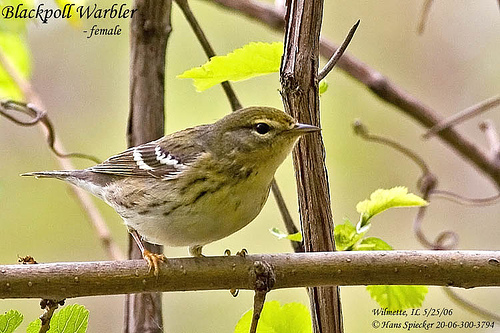
Blackpoll Warbler (Dendroica striata) female by Kent Nickell

Blackpoll Warbler (Dendroica striata) female by Kent Nickell

If such a small little bird
could fly that long
and that far,
How far
and how long
should we seek the presence
of the LORD?

But seek ye first the kingdom of God, and his righteousness; and all these things shall be added unto you. (Mathew 6:33)

Have a blessed day!

Thoughts from a j mithra

Bobolink – Extraordinary Migrant…

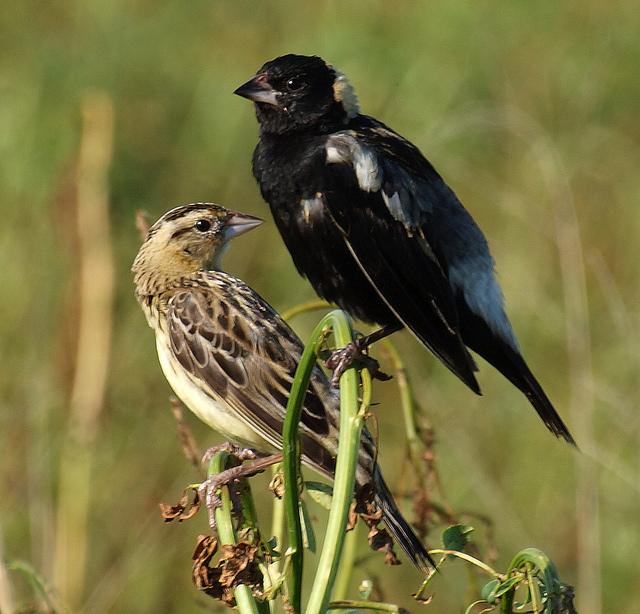
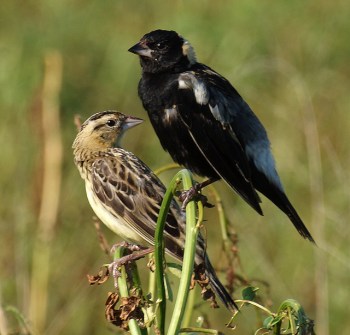
Bobolink (Dolichonyx oryzivorus) Pair ©©ramendan

Bobolink (Dolichonyx oryzivorus) Pair ©©ramendan

Bobolink – Extraordinary Migrant… ~ by a j mithra

Rice bird, meadow-wink, skunk blackbird, reed bird, butter bird—these various names for the member of the blackbird family most commonly known as the Bobolink reflect the diversity of ways in which humans have looked upon this gregarious songbird.

Nesting in the prairies and cultivated land of south Canada and the northern United States and wintering in the grasslands and marshes of Argentina, the Bobolink migrates at least 5,000 miles each way.
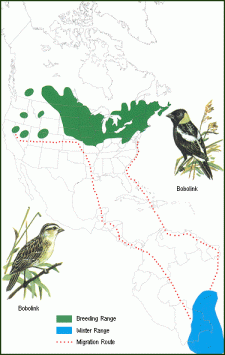
Bobolink Migration Route©WikiC

Bobolink Migration Route©WikiC

The Bobolink is an extraordinary migrant, traveling to south of the equator each autumn and making a round-trip of approximately 20,000 kilometers (12,500 mi). One female, known to be at least 9 years old, presumably made this trip annually, a total distance equal to traveling 4.5 times around the earth at the equator! These birds migrate to Argentina, Bolivia and Paraguay. One bird was tracked flying 12,000 miles (19,000 km) over the course of the year, and up to 1,100 miles (1,800 km) in one day. The vast distance is more impressive in relation to the Bobolink’s diminutive size, averaging 7 inches in length, 11.5 inches in wingspan, and 1.5 ounces. in weight.

  • Feeling small?
  • Get ready to do greater things for God…
  • You know, God does not use boulders to stop the waves of the sea from entering the land..
  • But, He uses tiny grains of sand to do it..

God has designed this bird to travel long distances to encourage us that we too can do great and mighty things for God..

A little one shall become a thousand, and a small one a strong nation: I the LORD will hasten it in his time. (Isaiah 6:21)

God seems to have a liking to use small things to fulfill great missions..

  • He chose the small Miriam to find a way to take care of Moses..
  • He chose a small slave girl to bring healing to a Commander of an army..
  • He chose a little shepherd boy David to bring down a mighty giant..
  • He chose a small boy to feed the multitudes…

Here again, this small bird He uses to inspire us to do great things for God..

If this small bird can travel 4.5 times around the world at the equator in its life time, how much more God will expect from us? Most of rely on our strength that is the reason we find it so difficult to travel next door to share the gospel isn’t it?

What sense does it make to say, I can do all things through Christ who strengthens me when we find it so difficult to stand for God?

But be ye doers of the word, and not hearers only, deceiving your own selves. For if any be a hearer of the word, and not a doer, he is like unto a man beholding his natural face in a glass: For he beholdeth himself, and goeth his way, and straightway forgetteth what manner of man he was. But whoso looketh into the perfect law of liberty, and continueth therein, he being not a forgetful hearer, but a doer of the work, this man shall be blessed in his deed. (James 1:22-25)

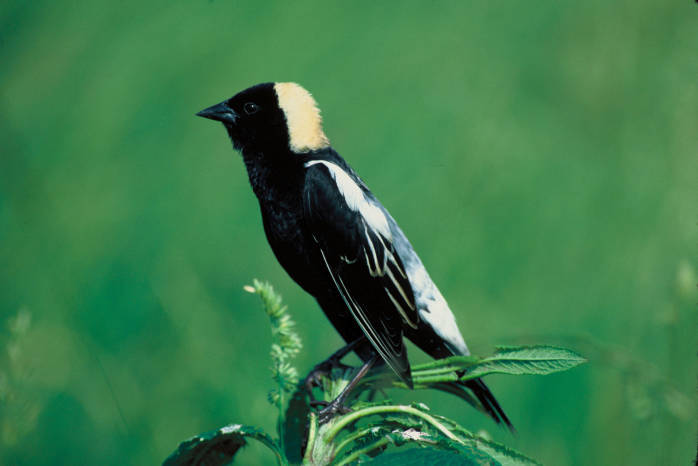
Bobolink (Dolichonyx oryzivorus) ©USFWS

Bobolink (Dolichonyx oryzivorus) ©USFWS

Bobolinks begin their journey northward in South America in early March, reaching Colombia and Venezuela in late April. From there, most take a route over the Caribbean Sea to the Florida peninsula, although some will cross the Gulf of Mexico from the Yucatan Peninsula to Louisiana and Texas. From there they fan northward and westward, arriving on the breeding grounds in May. These Birds breed in open grasslands and hay fields.

Bobolinks migrate at night. The distinctive “clink” notes of these nocturnal travelers can be heard as they pass overhead in large flocks, apparently using the earth’s magnetic field as a compass and the locations of the stars as a map.

  • Human race boasts about technology, innovation and inventions…
  • We feel great pride in finding unknown routes with the help of satellites and compass…

But, these birds use the earth’s magnetic field as compass and locations of the stars as a map…

  • How difficult it is for us to tread on unknown path?
  • When we worship in church we feel so good to call Jesus as the Brightest Morning Star…
  • Do we really turn towards this Morning Star to seek direction in life?
  • Who is our inspiration in life?

If God be with us who can be against us? But the million dollar question is, are we with God?

Great in counsel, and mighty in work: for thine eyes are open upon all the ways of the sons of men: to give every one according to his ways, and according to the fruit of his doings: (Jeremiah 32:19)

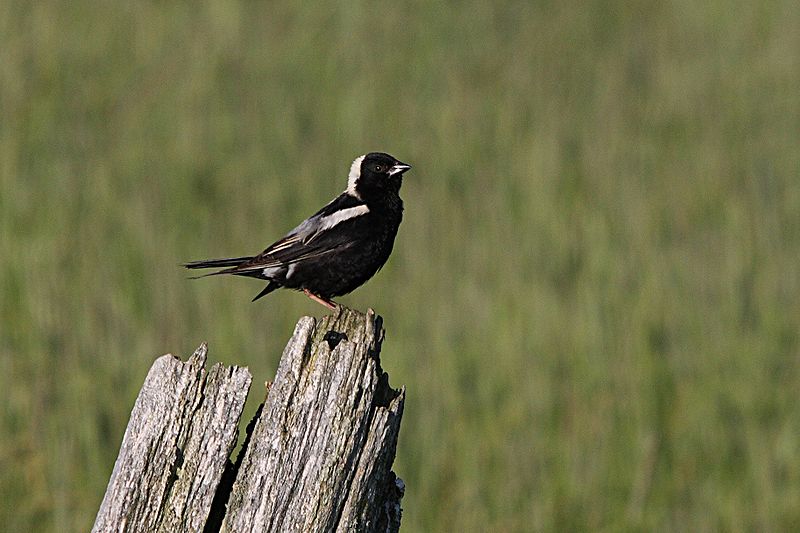
Bobolink (Dolichonyx oryzivorus) ©WikiC

Bobolink (Dolichonyx oryzivorus) ©WikiC

In summer, Bobolinks feed primarily on insects switching to grain crops as they migrate south. In migration and in winter uses freshwater marshes, grasslands, rice and sorghum fields.

Although the Bobolink typically feeds during the day, in migration, while building fat reserves for its long over water flight, it has been observed feeding in rice fields after dark on bright nights.

We all know that we are on the verge of migrating once and for all to heaven..

  • Have we stored reserves to migrate that long?
  • His words has the power to heal the broken and strengthen the weak…
  • His words shall never return empty…

My son, forget not my law; but let thine heart keep my commandments: For length of days, and long life, and peace, shall they add to thee. Let not mercy and truth forsake thee: bind them about thy neck; write them upon the table of thine heart: So shalt thou find favour and good understanding in the sight of God and man.

Trust in the LORD with all thine heart; and lean not unto thine own understanding. In all thy ways acknowledge him, and he shall direct thy paths. Be not wise in thine own eyes: fear the LORD, and depart from evil. It shall be health to thy navel, and marrow to thy bones. (Proverbs 3:1-8)

Bobolink (Dolichonyx oryzivorus) by J Fenton

Bobolink (Dolichonyx oryzivorus) by J Fenton

How many times do we read His words in a day? Maybe we should learn from these birds to eat His words even during our dark hours.

Thy word is a lamp unto my feet, and a light unto my path. (Psalm 119:105)

Judging by sight or sound, the Bobolink is a bird of distinction. Their song has been vividly described as

  • “a bubbling delirium of ecstatic music that flows from the gifted throat of the bird like sparkling champagne,”
  • “a mad, reckless song-fantasia, and outbreak of pent-up, irrepressible glee,” and as
  • “a tinkle of fairy music, like the strains of an old Greek harp.”

We may not be a good singer, yet, God loves to hear us sing. The reason for creating us is to sing, glorify and thank Him.  But, we seem to do every other thing except thanking Him…  Many of our prayers are unanswered, because, we have failed to thank when we pray..

Be careful for nothing; but in every thing by prayer and supplication with thanksgiving let your requests be made known unto God. (Philippians 4:6)

Have a blessed day!

Your’s in YESHUA,
a j mithra

Please visit us at: Crosstree


The Bobolink is in the Icteridae Family of the Passeriformes Order

*

Arctic Terns – The Light Seekers

Arctic Terns – The Light Seekers

Arctic Tern (Sterna paradisaea) by J Fenton

Arctic Tern (Sterna paradisaea) by J Fenton

The Arctic Terns
see more daylight
than the other birds,
cos,
it flies about 19,000 kilometers
from the Arctic to the Antarctic
and back every year
during migration….
Which means,
in its life time
it would travel a distance
equal to going to the moon
and back…
We too can do,
what others can’t
when we see more of
JESUS , THE LIGHT….

But if we walk in the light, as he is in the light, we have fellowship one with another, and the blood of Jesus Christ his Son cleanseth us from all sin. (1John1:7)

A thought from a j mithra

*

The Artic Tern is in the Laridae Family.

*

Birds – Watchers of Light

Birds – Watchers of Light ~ by a j mithra

American Golden Plover (Pluvialis dominica) at National Aviary by Lee

American Golden Plover (Pluvialis dominica) at National Aviary by Lee

Changes in the
level of sunlight,
causes migratory birds
to migrate…
Are you ready
to migrate
to heaven?
Cos,
the darkness
is fast approaching
and
THE LIGHT
is on the way
to trigger the migration
for the last time…

Watch therefore, for ye know neither the day nor the hour wherein the Son of man cometh. Mathew (25:13)

A thought from a j mithra

*

The Pacific Golden Plover is in the Charadriidae Family and a long distance migration bird.

*

When The Robins Came – by Dorothy (Dot) Belle Malcolm

When The Robins Came – by Dorothy (Dot) Belle Malcolm

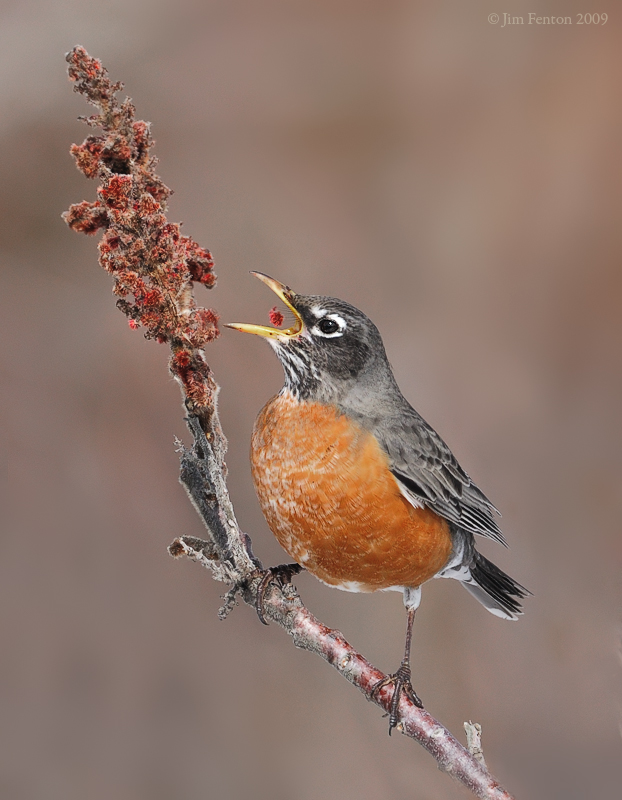
Robin Eating by Jim Fenton

Robin Eating by Jim Fenton

They came one day – loudly – uninvited – wildly flying thru the branches of the neighbor’s camphor tree, and were scattered over the ground as if it were a race to see who could eat the most. But primarily they were in the tree.

For days their noisy, frantic activity continued, usually in the mornings. Then when it seemed they had moved on to somewhere else, I saw they were back again.

Only this time in a tree near where I was cleaning up from the effects of winter’s cold. And they were oh so loud and gave no heed to me. I felt they were having much fun. They delighted in flicking decaying leaves around in search of wormy treasures.

In their colors of black and orange and yellow bills, they appeared fresh, strong, and each feather perfect. In their foraging, they would skitter, bob, stop still, stand proudly, with heads held up. They looked like strong healthy sentinels.

What joy seemed to be theirs, scattering leaves over the stone pathways. At first, I blamed the squirrels for the mess, but soon realized that was a wrong assumption. When they left, and I observed the mess, I thought they had not been taught good manners. After all they were visitors – shouldn’t they have cleaned up after themselves?

When I saw no more for a few days, I was sorry to have thought badly of their manners. After all, did I not greatly enjoy their antics? For you see, I had much to savor until they hopefully return next Spring.

Imagine how let down I felt by their supposed absence. I recalled their wild flights, beautiful fresh colors, proud looks and flicking up of the leaves. Oh how happy I was in a few days to be rewarded by the sight of a lone robin and hear it’s voice. Was it left behind I wondered – why did it appear to be alone? No, no, not at all, for in a couple days a goodly group appeared. I knew they were not here to stay though. When they return next year they will have an open invitation to my yard, trees, leaves, and all the rest. Let them be loud, wild, and messy. I shall not speak of bad manners again.

You will show me the path of life; In Your presence is fullness of joy; At Your right hand are pleasures forevermore. (Psalms 16:11 NKJV)
Look at the birds of the air: they neither sow nor reap nor gather into barns, and yet your heavenly Father feeds them. Are you not of more value than they? (Matthew 6:26 ESV)

Dorothy, Dottie as we know her at church, is a friend who likes to garden and provide for the needs of birds. When she told me of this true story, I had asked her if I could produce it here. Thanks, Dottie, I hope the readers enjoy it as much as I do and look forward to more observations of yours to share.

See her – Return of the Robins

*

Is the Bride Ready? – A. J. Mithra

Is the Bride Ready? – A. J. Mithra

Migration the most amazing
natural phenomena on earth..
The longest migrations
of all are those of birds.

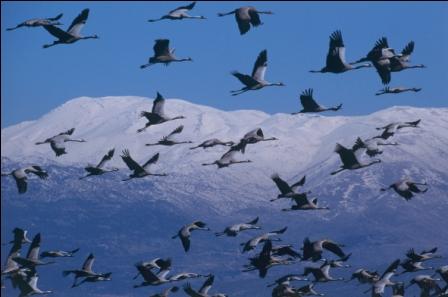
Crane Migration over Israel

Crane Migration over Israel

Israel, which is located
right at the junction
of three continents,
is crossed by migrating birds
of 300 different species,
on a scale unparalleled
anywhere in the world…

Studies over the past decade
shows that about
500 million birds cross
Israel’s narrow airspace
twice every year
in the course of their migrations…
Between one to two million raptors
migrate through Eilat,
in Israel each spring.

Is this large scale
migration and breeding in Israel,
a trial run for the feast
which GOD has planned
for these birds
when JESUS returns
as THE KING?

The Birds are
preparing themselves
for the biggest
marriage feast ever…

The BRIDE-GROOM is on HIS way,
Is the bride ready?

And thou, son of man, thus saith the Lord Jehovah: Speak unto the birds of every sort, and to every beast of the field, Assemble yourselves, and come; gather yourselves on every side to my sacrifice that I do sacrifice for you, even a great sacrifice upon the mountains of Israel, that ye may eat flesh and drink blood. (Ezekiel 39:17)

Your’s in YESHUA,
A. J. Mithra at Crosstree

Updated 5/29/10: Changed name from Migration over Israel to present. I missed aj’s updated changes – (corrected by editor).

Click to see more of A. J.’s articles


Palestine-Israel: A Crossroad for Bird Migration

The Flight of Migratory Birds by Werner Gitt

Pectoral Sandpiper (Calidris melanotos) by J Fenton

Pectoral Sandpiper (Calidris melanotos) by J Fenton

The Flight of Migratory Birds by Werner Gitt is a fairly technical, but very interesting article about the migration of birds. While thinking about yesterday’s Birds of the Bible – Migration September 2009, I came across this article. He mentions the Pacific Golden Plover in detail and some other long fliers, like:

“The following equally incredible flight performances are recorded for:

  • the Japanese snipe (Capella hardtwickii): 5,000 km flight from Japan to Tasmania
  • the needle-tailed swift of Eastern Siberia (Chaetura caudacuta): flight from Siberia to Tasmania
  • the American sandpipers (e.g. Calidris melanotos = pectoral sandpiper): 16,000 km flight from Alaska to Tierra del Fuego.”

Another excerpt from the article:

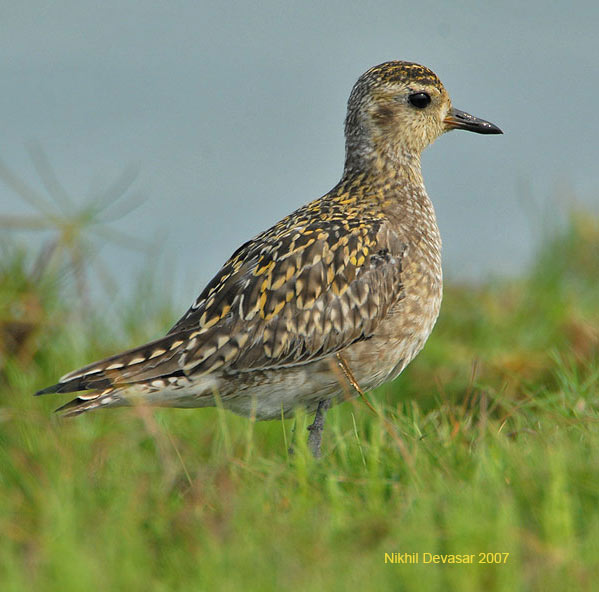
Pacific Golden Plover (Pluvialis fulva) by Nikhil Devasar

Pacific Golden Plover (Pluvialis fulva) by Nikhil Devasar

“The birds’ capabilities extend beyond the bounds of our imagination. They can determine their homeward course over long distances, even when all possible aids to orientation have been removed during the disorientation journey. They possess the extraordinary faculty of being able, wherever they are, to determine their position relative to their home territory from their immediate surroundings. And this method of determining location, itself not understood even today, is only the beginning; then comes the real problem, namely flight navigation: mere sense of direction is not enough for this.

During flight over wide, windswept stretches of ocean, a tendency to drift off course cannot be avoided. Such drift must be continually compensated for, as in a feedback system in control technology, in order to avoid losing energy by flying a longer route. The Creator equipped the birds with a precise ‘autopilot,’ which apparently is constantly measuring its geographical position and comparing the data with its individually “programmed” destination. In this way an economical, energy-saving and direct flight is guaranteed. Just where this vital system is to be found and how this operating information is coded is known by no one today except the Creator, who made it.”
To see the whole article – CLICK HERE


Birds of the Bible – Migration September 2009

Radar 9-30-09 image at 12:30 AM Eastern Daylight savings time.

Radar 9-30-09 image at 12:30 AM Eastern Daylight savings time.

I know that I have written about the migration of the birds before, but this is really interesting. They have been posting radar images of the Florida peninsula on BRDBRAIN, a bird-listing service. Here are the images for September 28th and 30th. The dark spots are the birds in migration being picked up on radar. It is amazing. I have been reading the updates for about a week and the birds are ON THE MOVE!

Even the stork in the sky Knows her seasons; And the turtledove and the swift and the thrush Observe the time of their migration; But My people do not know The ordinance of the LORD. (Jeremiah 8:7 NASB)

9-28-2009 Bird Radar

9-28-2009 Bird Radar

When the Lord created the birds, he put within them the instinct to migrate. They go for various reasons, but that desire is there and off they go. Some do not make it across the open waters, but most do. As you can see by the radar, they know to fly around the bad weather and go where it is clear. I know here in Polk county, Florida, that the Bald Eagles have been arriving back. I have seen a Bald Eagle on 7 of the last 9 days. I was in different places in the county when they were spotted. Prior to that, I had not spotted any eagles since they left on their spring northern migration other than the few resident ones.

Does the hawk fly by your wisdom, And spread its wings toward the south? (Job 39:26 NKJV)

“Stretch her wings toward the south? – Most of the falcon tribe pass their spring and summer in cold climates; and wing their way toward warmer regions on the approach of winter. This is what is here meant by stretching her wings toward the south. Is it through thy teaching that this or any other bird of passage knows the precise time for taking flight, and the direction in which she is to go in order to come to a warmer climate? There is much of the wisdom and providence of God to be seen in the migration of birds of passage. This has been remarked before. There is a beautiful passage in Jeremiah, Jer_8:7, on the same subject:” From the Adam Clarke’s Commentary.

A few links to check out are:

http://badbirdz2.wordpress.com/
http://badbirdz2.wordpress.com/2009/09/30/more-migration-over-florida-2/
http://badbirdz2.wordpress.com/2009/09/30/more-migrants-on-their-way/
http://badbirdz2.wordpress.com/2009/09/29/major-migrant-movement-last-night/

See Also:
Birds of the Bible – Migration
Bird Migration Mistakes
Interesting – Migration and Mechanics of Flight
Interesting Things – Amazing Bird Migration
Birds of the Bible – Hawk Migration
Interesting Thing – Lesson from the Stork

Birds of the Bible – Migration

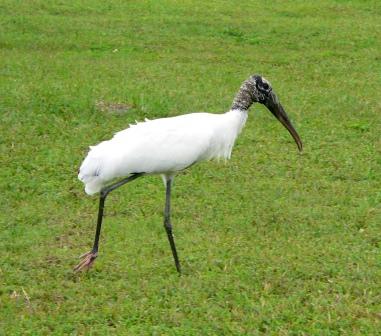
Wood Stork by Lee

Wood Stork by Lee

Even the stork in the sky Knows her seasons; And the turtledove and the swift and the thrush Observe the time of their migration; But My people do not know The ordinance of the LORD. (Jeremiah 8:7 NASB)

That time of the year is approaching and for some birds, it has already started. What? Migration. The birds have been busy all spring and summer having babies, feeding them, raising them, training them, and now it is time to go elsewhere. That is, if they are the kind of bird that migrates. Why do the migrate? Most because of food sources or to stay warm. The hardy “residents” will stay behind and “hold down the fort” so to say.

God has put the instinct in them when they were created to know to “migrate.” Depending on which version of the Bible your read, the stork:

  • knoweth her appointed times
  • is conscious of her fixed times
  • know when it’s time to fly away for the winter and when to come back
  • know when it is time to return
  • knows her seasons

And the dove and swallow and crane (depending on version):

  • observe the time of their coming
  • Observe the time of their migration
  • keep to the times of their coming
  • know when it’s time to migrate
  • watch the time of their coming

For those of us down here in Florida, we get excited because we will finally get to observe some birds as they pass by or as they get here for the winter “vacation.”

Please check out these previous articles about migration. I think you will find them very interesting:

Interesting Things – Amazing Bird Migration
Interesting – Migration and Mechanics of Flight
Pacific Golden Plover
Birds of the Bible – Hawk Migration
A Lesson from the Stork
Too Much Knowledge?
Bird Migration Mistakes – released today
Not a bird, but:
Interesting Things – Dragonflies II

Updated Below: 10-15-09

Migrating Storks from Europe circling the hot air thermals over the Sinai to gain altitude before crossing the Red Sea and continuing on their migration into Africa by dell09875

*

Bird Migration Mistakes

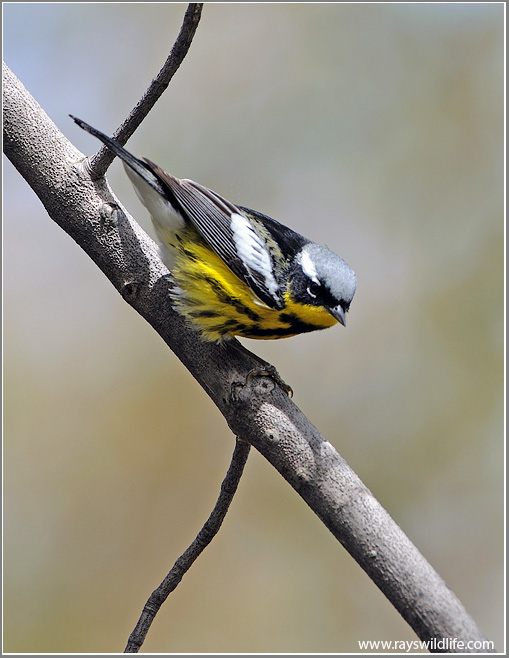
Magnolia Warbler by Ray

For I consider that the sufferings of this present time are not worthy to be compared with the glory that is to be revealed to us. For the anxious longing of the creation waits eagerly for the revealing of the sons of God. For the creation was subjected to futility, not willingly, but because of Him who subjected it, in hope that the creation itself also will be set free from its slavery to corruption into the freedom of the glory of the children of God. For we know that the whole creation groans and suffers the pains of childbirth together until now. (Rom 8:18-22 NASB)

Confused Birds – http://www.creationmoments.net/radio/listen.php?t=476
“Birds that make mistakes in navigation are called vagrants.”
Copyright © 2009 Creation Moments • All Rights Reserved

See: Vagrant Eastern Wood-Warblers

California Vagrant Birds – a set on Flickr

Interesting Things – Dragonflies II

Thinking

Globe-Skimmer

Globe-Skimmer

Interesting Things – Dragonfly gave a lot of detail about the Dragonflies. Now the researchers have produced some very interesting details about their migration.  According to the “Mail Online”, they have longest migration by insects. They “fly 11,000 mile round-trip over ocean.” and the “BCC-Earth News” also has an article about their incredible journey.

From the BBC Earth News: “Every year, millions of dragonflies fly thousands of kilometres (11,000 miles) across the sea from southern India to Africa.

So says a biologist in the Maldives, who claims to have discovered the longest migration of any insect.

If confirmed, the mass exodus would be the first known insect migration across open ocean water.”

They go on to mention the Monarch Butterfly’s migration is much less lengthy, only traveling around 8,600 miles round-trip.

Round-trip of Dragonfly

Round-trip of Dragonfly from Mail Online

What an amazing feat these dragonflies perform. Below are the links to the articles, but what a fantastic Creator we have. As you read the articles, you cannot but be amazed by the way they were programmed to sense the weather patterns, knowing when the rains would be there, etc. There is no way this just happened without a designer.

O LORD, how many are Your works! In wisdom You have made them all; The earth is full of Your possessions. (Psalms 104:24 NASB)


Longest insect migration revealed by BBC Earth News”

Longest insect migration ever as dragonflies fly 11,000-mile round-trip over ocean” by Mail Online

Other Interesting Things

Birds of the Bible – Study Tips

When the Birds of the Bible were introduced in February, 2008, “Introduction to Birds of the Bible“, the goal was to acquaint you with each bird that is mentioned in the Bible and for you to learn of God’s great handiwork in their creation. These blogs have grown greatly since then.  I would like to share some of the methods that I use to produce these articles and to study God’s Word.

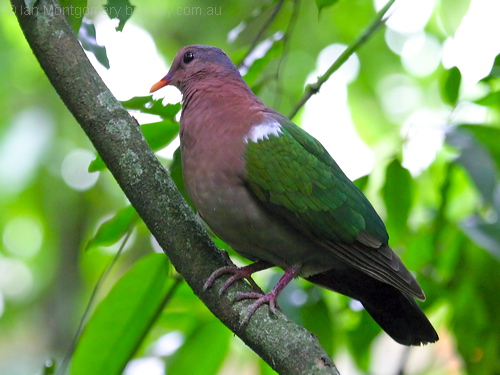
Emerald Dove by Birdway

Emerald Dove by Birdway

As you are reading along in your Bible, you may come across the mention of a particular bird (or any other topic)  in a verse. You see a bird and are wondering whether it is mentioned in Scripture. Your curiosity is caught and you want to find out more. What do you do?

  • As a “birdwatcher,” you can pull our your handy bird handbooks like: Peterson Field Guide for Birds, Smithsonian Field Guide to the Birds, The Sibley Guide to Birds, etc.
  • As an “internet birdwatcher,” you can “Google” that bird and get instant information (more than you can ever read) and learn many interesting things.
  • As a “Bible birdwatcher,” you can look in your concordance for references to that bird and if you have a Bible software program, such as “e-Sword” (free), you can search for the bird.
  • Also as a “Bible birdwatcher,” you may want to see why the bird is mentioned and what applications can be made by that passage of Scripture used. I like to use the Topical references, like Nave’s Topical Bible and Torrey’s New Topical Textbook. That is one reason that they are available here to help in the study of the “Birds of the Bible.” The ones here are different in that I put a picture of the bird on its page.

But now ask the beasts, and they will teach you; And the birds of the air, and they will tell you; (Job 12:7 NKJV)

This verse has been quoted many times in these blogs and we have tried to apply it to the lessons to be learned. Also, there are many other verses that give encouragement to study God’s Word.

These were more noble than those in Thessalonica, in that they received the word with all readiness of mind, and searched the scriptures daily, whether those things were so. (Acts 17:11 KJV)
Study to shew thyself approved unto God, a workman that needeth not to be ashamed, rightly dividing the word of truth. (2 Timothy 2:15 KJV)

As you study about the birds (or whatever in the Bible), I trust you will:

Let the word of Christ dwell in you richly in all wisdom; teaching and admonishing one another in psalms and hymns and spiritual songs, singing with grace in your hearts to the Lord. (Colossians 3:16 KJV)