As previously reported, the Slide.Com is closing down as of March 6th. Unfortunately I have used a lot of the Slideshows from them on this site. I am busy kicking up dust behind the scenes and decided to share links to the articles as I get some of them finished. At least you will know I have not been “goofing off.” Besides that, many of these were produced sometime back and deserve a reminder of our many birds the Lord has created for His Glory and pleasure. Trust you like the new Slideshows that are being installed. They are taking a great effort on my part to learn the new procedure, but after quite a few mistakes, maybe I can get them out quicker now.
The works of the LORD are great, sought out of all them that have pleasure therein.(Psalms 111:2 KJV)
Having made known unto us the mystery of his will, according to his good pleasure which he hath purposed in himself: (Ephesians 1:9 KJV)
For it is God which worketh in you both to will and to do of his good pleasure. (Philippians 2:13 KJV)
Thou wilt shew me the path of life: in thy presence is fulness of joy; at thy right hand there are pleasures for evermore. (Psalms 16:11 KJV)
Thanks for your patience and your visits to this website. While I am working away, I am enjoying seeing articles that I had forgotten about.
As previously reported, the Slide.Com is closing down as of March 6th. Unfortunately I have used a lot of the Slideshows from them on this site. I am busy kicking up dust behind the scenes and decided to share links to the articles as I get some of them finished. At least you will know I have not been “goofing off.” Besides that, many of these were produced sometime back and deserve a reminder of our many birds the Lord has created for His Glory and pleasure. Trust you like the new Slideshows that are being installed. They are taking a great effort on my part to learn the new procedure, but after quite a few mistakes, maybe I can get them out quicker now.
The works of the LORD are great, sought out of all them that have pleasure therein.(Psalms 111:2 KJV) Having made known unto us the mystery of his will, according to his good pleasure which he hath purposed in himself: (Ephesians 1:9 KJV) For it is God which worketh in you both to will and to do of his good pleasure. (Philippians 2:13 KJV) Thou wilt shew me the path of life: in thy presence is fulness of joy; at thy right hand there are pleasures for evermore. (Psalms 16:11 KJV)
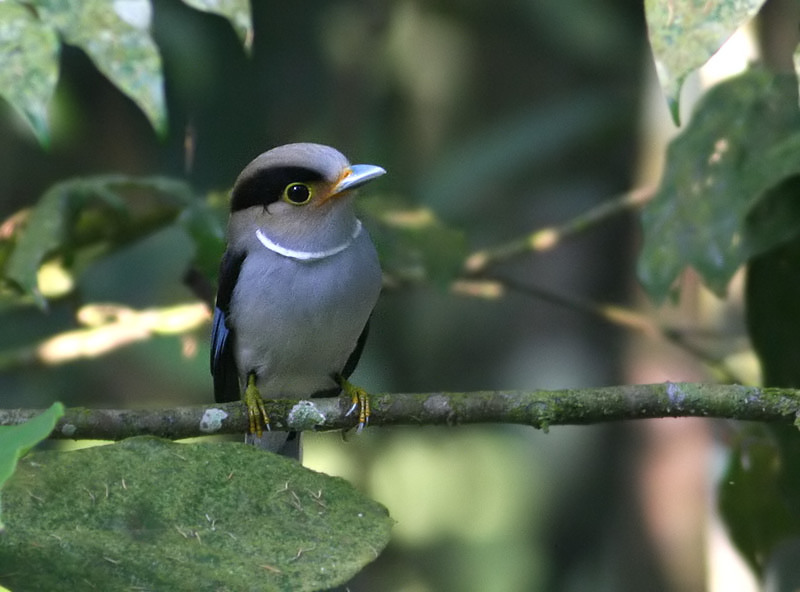
Thanks for your patience and your visits to this website. Completed: One of my favorite birds the Broadbill. Never heard of it until I started doing the Birds of the World. Aren’t they adorable?
Silver-breasted Broadbill (Serilophus lunatus) by Peter Ericsson
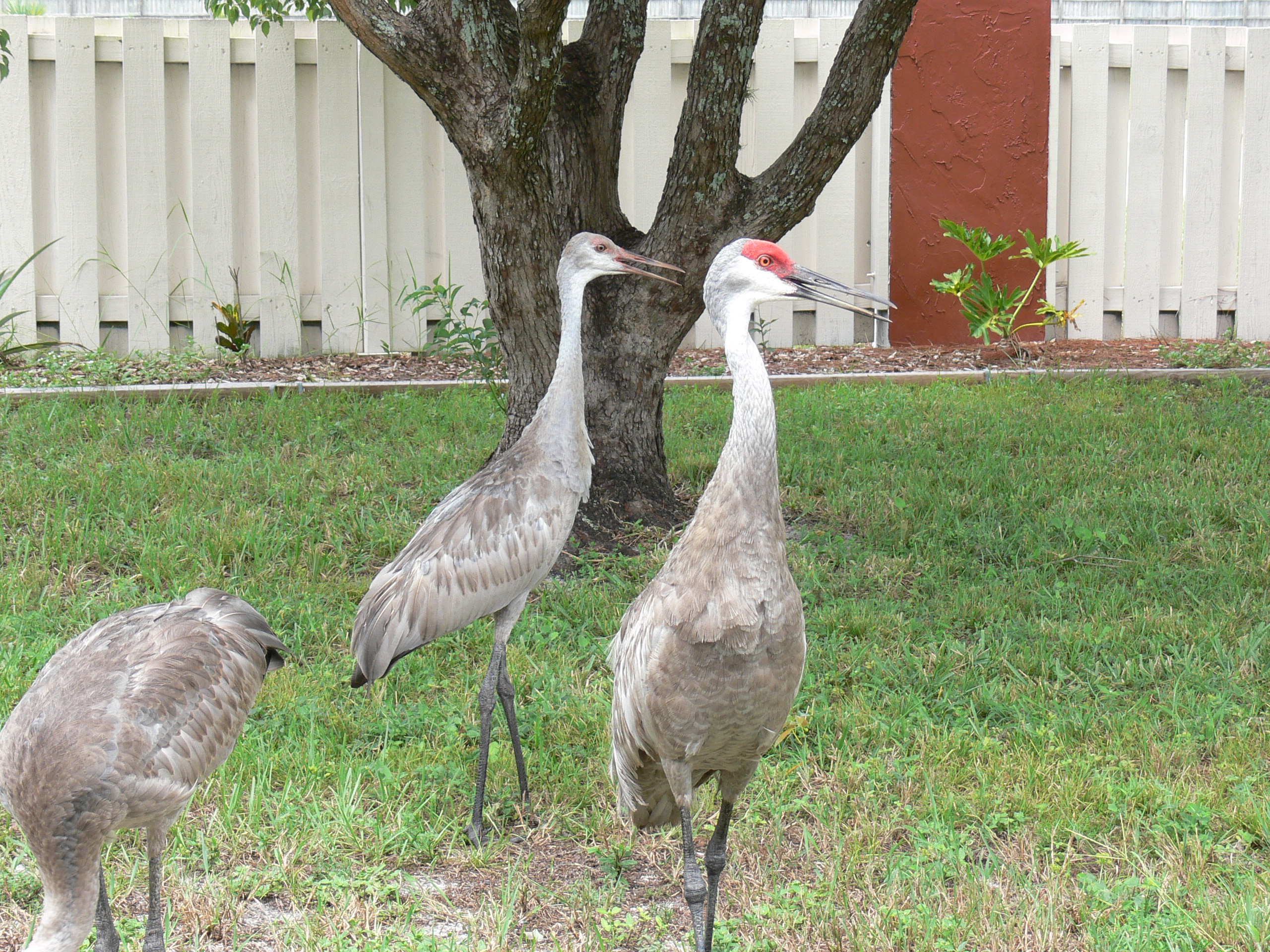
Our neighbor called 4 or 5 days before telling us that the Sandhill Cranes here in the community were sitting on a nest. Then Sunday afternoon (3/14/10) she called again to tell us that they were walking with the babies (born that morning). So these little Sandhill Crane “colts” are only a day old.
“Sandhill breeding habitat is marshes and bogs in central and northern Canada, Alaska, part of the midwestern and southeastern United States, Siberia and Cuba. They nest in marsh vegetation or on the ground close to water. The female lays two eggs on a mound of vegetation, but it is rare that both chicks hatch and grow to independence. Cranes mate for life; both parents feed the young, called “colts“, who are soon able to feed themselves. The colts are taught to fly over many weeks when they run and dance with their parents. Dancing is a significant component in the education of young cranes. The Sandhill Crane does not breed until it is two to seven years old, and the average generation time is 12.5 years. It can live up to 25 years in the wild; in captivity it has been known to live more than twice that span. Mated pairs stay together year-round and migrate south as a group with their offspring.” (Wikipedia) This pair is here year-round. Been in our backyard many times.
I know all the birds of the hills, and all that moves in the field is mine. (Psalms 50:11 ESV)
Thought you might enjoy seeing them. Dan walked over and took these photos.
For every beast of the forest is Mine, And the cattle on a thousand hills. I know all the birds of the mountains, And the wild beasts of the field are Mine. “If I were hungry, I would not tell you; For the world is Mine, and all its fullness. (Psalms 50:10-12 NKJV)
Not only are all the birds and critters God’s, but He also provides for their needs as does He for ours. Psalm 104 is loaded with God’s provisions, but only Psalm 104:10-17 is quoted here.
He sends the springs into the valleys; They flow among the hills. They give drink to every beast of the field; The wild donkeys quench their thirst. By them the birds of the heavens have their home; They sing among the branches. He waters the hills from His upper chambers; The earth is satisfied with the fruit of Your works. He causes the grass to grow for the cattle, And vegetation for the service of man, That he may bring forth food from the earth, And wine that makes glad the heart of man, Oil to make his face shine, And bread which strengthens man’s heart. The trees of the LORD are full of sap, The cedars of Lebanon which He planted, Where the birds make their nests; The stork has her home in the fir trees. (Psalms 104:10-17 NKJV)
Thought you might enjoy viewing some of God’s birds from around the world.
The pictures below are only 150+, yet there at least 10,474 known named bird species currently.
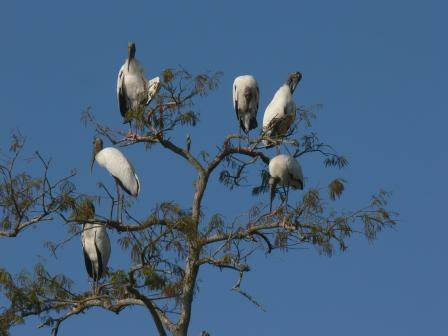
Yesterday, Dan and I went out to the Circle B Bar Reserve for some birdwatchng. I think I would have to call it, “Stork Day.” From our photos, I have counted well over 100 Wood Storks and that doesn’t count the ones we didn’t photograph. It is time to find out some more about the stork.
From the first Birds of the Bible – Stork article,we found out that the stork is on the unclean list of birds that were not to be eaten by the Israelites. (Leviticus 11:19 and Deuteronomy 14:18). Jeremiah 8:7, tells of “her appointed times” (migration) and Zechariah 5:9 mentions the “wings of a stork.”
Psalms is going to provide our thoughts for today.
The trees of the LORD are full of sap; the cedars of Lebanon, which he hath planted; Where the birds make their nests: as for the stork, the fir trees are her house. (Psalms 104:16-17)
The Whole Tree
As you can tell from the photos, the storks like to hang out in the trees. The trees were loaded with them. We were out there recently (September 18th) and I did not see any on that visit. Jeremiah was correct, “Yea, the stork in the heaven knoweth her appointed times;” Migration has been underway and these are either resting while on their trip or they are going to be here for the winter.
“Storks (family Ciconiidae) make their nests of sticks, reeds and grass, in tall trees. When the chicks hatch, their thin, featherless skin is extremely vulnerable to the direct rays of the sun. The parent bird has two responses to the high temperature problem — if water is nearby, the stork fills its large beak, returns to the nest, and douses the tiny chicks with cooling water. If this is not sufficient, the parent then performs a most remarkable feat — it stands over the young and spreads its large wings over the entire nest, thus shading the chicks from the sun’s rays! Often it will do this for hours at a time.” from “Birdbrains?” at Answers in Genesis
Storks Shadowing Baby in Lakeland by Dan
When the Lord created the Stork, the knowledge to protect their babies was put in them. Our God and Savior has promised to meet our needs. If He cares about the birds, how much more does he care about us?
“Storks are large, long-legged, long-necked wading birds with long stout bills, belonging to the family Ciconiidae. They occur in most of the warmer regions of the world and tend to live in drier habitats than the related herons, spoonbills and ibises; they also lack the powder down that those groups use to clean off fish slime. Storks have no syrinx and are mute, giving no bird call; bill-clattering is an important mode of stork communication at the nest. Many species are migratory. Most storks eat frogs, fish, insects, earthworms, and small birds or mammals. There are 19 living species of storks in six genera.
Storks tend to use soaring, gliding flight, which conserves energy. Soaring requires thermal air currents. Ottomar Ansch??tz’s famous 1884 album of photographs of storks inspired the design of Otto Lilienthal’s experimental gliders of the late 19th century. Storks are heavy with wide wingspans, and the Marabou Stork, with a wingspan of 3.2 m (10.5 feet), shares the distinction of “longest wingspan of any land bird” with the Andean Condor.
Their nests are often very large and may be used for many years. Some have been known to grow to over 2 m (6 feet) in diameter and about 3 m (10 feet) in depth. Storks were once thought to be monogamous, but this is only true to a limited extent. They may change mates after migrations, and migrate without them. They tend to be attached to nests as much as partners.
Storks’ size, serial monogamy, and faithfulness to an established nesting site contribute to their prominence in mythology and culture.
Today we went birdwatching and ended up at three different places. Our intention was to go to Lake Hollingsworth, one of our favorite places to bird watch. I started my list as we were riding and saw about 20 Muscovy ducks (they are very prolific here), Morning Dove, Osprey, Black and Turkey Vultures, and a pair of Northern Harrier sitting on one of the light arms along the toll road.
It was clear today and about 79° when we arrived at Lake Hollingsworth at 8:35 am. We have been having some rain lately and the lake was really up. I spotted a Great Blue Heron, White Ibises, Mallards, some more vultures, and a Great Egret. What I didn’t spot were very many birds or a parking spot. So, we decided to go to Lake Morton instead. Good choice.
We were there by about 8:50 am and saw lots of birds being fed by a little girl and here father. She was the center of attention of the local clientele. I attempted to take her picture and the birds, but we had had our cameras and our eyeglasses in the car with the air conditioner running. After my glasses un-fogged, I looked through my lens and it was foggy. Needless to say, it was humid! Next time the camera will be in the trunk.
Mr and Mrs Wood Duck by Lee
Anyway, it was a great day for pictures and I even took several videos (with my regular camera), fed the critters, and here is what we observed: Wood Ducks (12+), Mallards, Wood Storks (I practically hand fed them), White Ibises, Black Swans, Mute Swans, Geese, Double-crested Cormorants, Laughing Gull, Anhinga, Muscovy Ducks, Bald Eagle (3rd one I’ve seen this week-there coming back!), Unknown terns, Limpkin, Rock Pigeons, Green Heron, Snowy Egret and a Great Blue Heron.
My highlight of being there was getting so close to the Wood Storks. I have never seen them that friendly before. Had I been brave enough to hold the bread (I know, you are not to feed wildlife, but everyone does at that lake and Hollingsworth), they would have ate right out of my hand. I tossed it to them and they were catching it and making a loud snap as that big beak closed. (The reason I didn’t hand feed. I need those fingers to snap photos with.) Also, the storks were sitting different than I had seen. Got a video of that also. The other highlight was I was videoing when a Bald Eagle flew over. I swung the camera up and caught him as he was flying off. You can hear my excitement in the video. I love eagles and had just wrote about them on yesterday’s blog.
We left there and had a small bite to eat and then on the way home decided to stop in at Circle B Bar Reserve to see what might be up near the entrance. By now it was 10:45 and most of the birds were resting somewhere, but not in sight. We heard a Blue Jay, Carolina Wren, Red-bellied Woodpecker, Tufted Titmouse and Blue-grey Gnatcatchers. Overhead we saw more Turkey Vultures and Black Vultures, and Wood Storks and then a Wood Stork flew low past us. Knowing bird sounds helps tremendously when you are in the woods and don’t always get to see the birds. I need to practice up much more myself. It counts when you are making list if they are heard.
The Lord provided a beautiful morning to watch His critters and just enjoy being out and about.
This is the LORD’S doing; it is marvellous in our eyes. This is the day which the LORD hath made; we will rejoice and be glad in it. (Psalms 118:23-24 KJV)
This first video is just looking around at the ducks and then spotting an eagle flying by.
The second video is of the stork bending its legs and sitting down.
I received an interesting e-mail from a friend and decided to post it. Checking out how to do it, I found it already posted on slideshare. Hope you enjoy it.
Our missionaries in Niami, Niger, encounter different Birds of the Bible than our missionary in Brazil, that I wrote about last week.
These are some of the different birds mentioned in the Bible that they might see in Niger that we don’t see here. Some do not have pictures, so this is not a complete list. All of these pictures are from the Niger, Africa list of birds from Wikipedia.
Thou art worthy, O Lord, to receive glory and honor and power: for thou hast created all things, and for thy pleasure they are and were created. (Revelation 4:11)
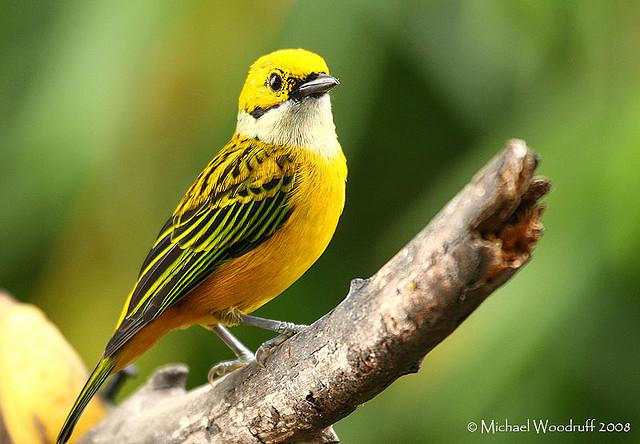
The Lord has created some fantastically beautiful birds amongst His Creation. This blog is just to show you some of those birds. As you watch the photos, realize that they are under a curse, (“For we know that the whole creation groaneth and travaileth in pain together until now.” Romans 8:22) and yet they are so neat. What must the first birds have been like when they were created? The Lord must have the neatest Paint Brush!
These photos were chosen to show colors and markings. In another blog, I’ll feature another of God’s Creative Handiwork.
We went birdwatching last Thursday, the 18th of December, on a very foggy morning. We were at Circle B Bar Reserve at 7:10am. When we started it was 59 degrees F. We parked up by the new Nature Center and walked out to the “Heron Hideout” path. Here is a list of the birds observed there in the order we spotted them:
White Ibis 6+, Great Blue Herons, Killdeer, Carolina Wren, Wood Storks 75+, Palm Warblers, Yellow-rumped Warbler, Cormorants 15+, Kingfisher, Great Egrets 10+, Glossy Ibis 4+, Tricolored Herons, Eastern Phoebe, Sandhill Cranes 2, Limpkin, Pileated Woodpecker, (an Otter), Coots 10+, Pied-billed Grebe 2, Northern Harrier 1, Common Moorhens 10+, Blue-gray Gnatchatcher, Osprey 3, Roseate Spoonbills 4, Downy Woodpecker, Little Blue Herons, Tree Swallow, Green-Winged Teal, Black-bellied Whistling-Ducks, Muscovy, Red-shoulder Hawk, (what I think is a Hooded Warbler), Red-bellied Woodpecker, Redwing Blackbirds, Boat-tailed Grackles, Blue Jay, Morning Doves 5, (36 species) plus several unknowns. Not a bad 2 hours of birding.
Me, feeding the beggars!
We left there at 9:00 am and drove over to Lake Hollingsworth in Lakeland. At 9:10 most of the fog had cleared and it was up to 66 already. With bread in hand, I was attacked again by the local beggars (see photo). After the Geese, Mallards, White Ibises, Ring-billed Gulls, Boat-tailed Grackles, Common Moorhens and Purple Gallinules got my offerings, I proceeded to go see what else was around. The rest of the adventure turned up Anhingas, Cormorants, Great Blue Herons, Mottled Ducks, Great Egrets, Muscovy, Limpkins 4, Osprey 10+, Tricolored Heron 2, Pied-billed Grebes, Coots, American White Pelicans 11, Brown Pelicans 5, Little Blue Heron, Wood Storks, Black-crowned Night-Heron, Eastern Phoebe, Common Grackles, Caspian Tern. (26) Not bad for an hour of viewing.
Putting the 36 plus the 8 different ones together, gives 44 bird species and a one Otter morning. Again, I am thankful for the opportunity to view and enjoy God’s critters and see His handiwork.
I know these have been around for awhile, but they are still worth looking at.
Take therefore no thought for the morrow: for the morrow shall take thought for the things of itself. Sufficient unto the day is the evil thereof. (Mat 6:34 KJV)
In the slideshow are some pictures from an e-mail I received today. I selected all the bird ones and a few of the others. Just wanted to share them with you. I do not know the source of the photos, but thank you for taking such great shots. If not in the public domain, let me know and I will pull them.




 Lee's Birdwatching Adventures Plus