Avian and Attributes – Royal

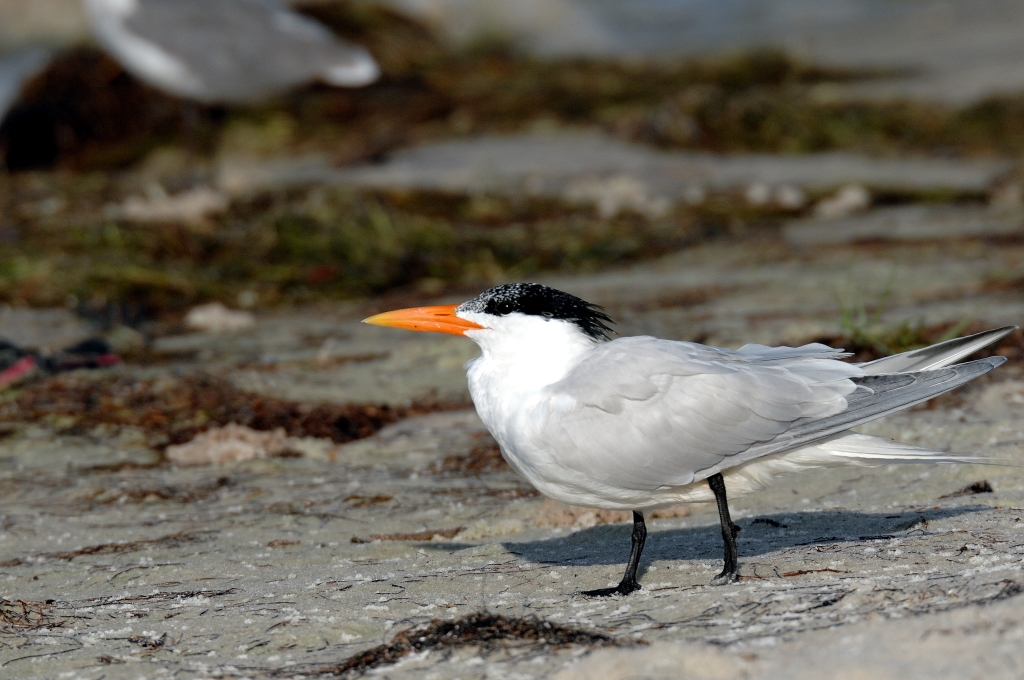
Royal Terns by Dan MacDill Shore

“But ye are a chosen generation, a royal priesthood, an holy nation, a peculiar people; that ye should shew forth the praises of him who hath called you out of darkness into his marvellous light:” (1 Peter 2:9 KJV)


Avian and Attributes – Royal

ROY’AL, a. [L. regalis, from rex, king.]
1. Kingly; pertaining to a king; regal; as royal power or prerogative; a royal garden; royal domains; the royal family.
2. Becoming a king; magnificent; as royal state.
3. Noble; illustrious.
How doth that royal merchant, good Antonio?
ROY’AL, n.
1. A large kind of paper. It is used as a noun or an adjective.
2. Among seamen, a small sail spread immediately above the top-gallant-sail; sometimes termed the top-gallant-royal.
3. One of the shoots of a stag’s head.
4. In artillery, a small mortar.
5. In England, one of the soldiers of the first regiment of foot, called the royals, and supposed to be the oldest regular corps in Europe.

“If ye fulfil the royal law according to the scripture, Thou shalt love thy neighbour as thyself, ye do well:” (James 2:8 KJV)


Royal Birds
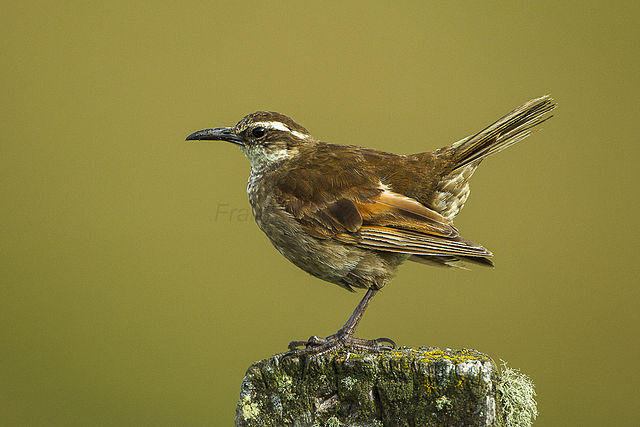
Stout-billed Cinclodes (Cinclodes aricomae) ©WikiC

Royal Cinclodes (Cinclodes aricomae) is a passerine bird which breeds in the Andes of south-east Peru and adjacent Bolivia. It was formerly considered to be a subspecies of the stout-billed cinclodes C. excelsior. It is 20 cm long and weighs 50 g with a heavy bill and dark chocolate-brown on the body, face and crown with whitish mottling and streaking on the breast.

This bird has a population of less than 250, and is classified as Critically Endangered. It is confined to tiny, humid patches of Polylepis woodland and montane scrub, and the major threat to its survival is the use of fire and heavy grazing which restrict the regeneration of Polylepis.

Royal Parrotfinch ©Arkive

Royal Parrotfinch (Erythrura regia) is a species of estrildid finch endemic to Vanuatu in the South Pacific Ocean. It is found commonly at mid-altitudes on the larger islands such as Espiritu Santo, above 300 m., but it also can be found at small sea-level islands in fruiting figs in forest edge in Emae and Tongoa. This species is usually found in singles, pairs or small groups feeding on figs in the forest canopy.
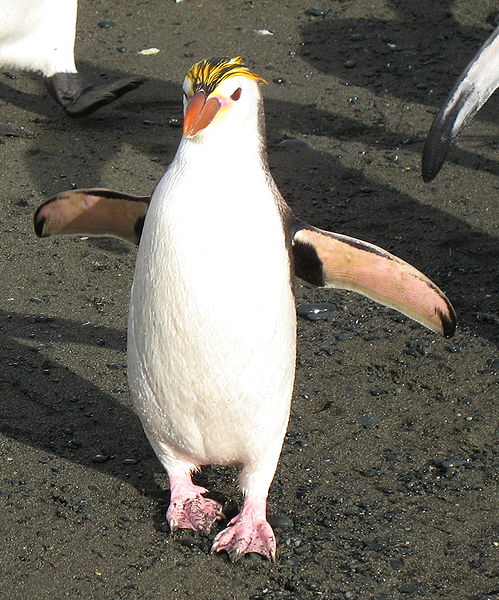
Royal Penguin (Eudyptes schlegeli) ©WikiC

Royal Penguin (Eudyptes schlegeli) ©WikiC

Royal Penguin (Eudyptes schlegeli) is a species of penguin, which can be found on the sub-Antarctic Macquarie Island and adjacent islands. The scientific name commemorates the German zoologist Hermann Schlegel.

They inhabit the waters surrounding Antarctica. Royals look very much like macaroni penguins, but have a white face and chin instead of the macaronis’ black visage. Males are larger than females. Royal penguins breed only on Macquarie Island and, like other penguins, spend much of their time at sea, where they are assumed to be pelagic.

Royal Spoonbill (Platalea regia) ©WikiC

Royal Spoonbill (Platalea regia) also known as the black-billed spoonbill, occurs in intertidal flats and shallows of fresh and saltwater wetlands in Australia, New Zealand, Indonesia, Papua New Guinea, and the Solomon Islands. It has also been recorded as a vagrant in New Caledonia. The royal spoonbill lives in wetlands and feeds on crustaceans, fish and small insects by sweeping its bill from side to side. It always flies with its head extended.
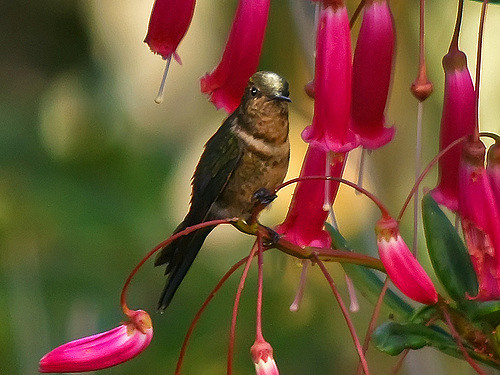
Royal Sunangel (Heliangelus regalis)©Flickr DCook

Royal Sunangel (Heliangelus regalis) is a species of hummingbird. It is endemic to subtropical elfin forests and shrubs in the Andes of northern Peru and adjacent south-eastern Ecuador. It is endangered due to habitat loss. It is strongly sexually dichromatic, and while females resemble other female sunangels, males are unique with their iridescent dark blue plumage.
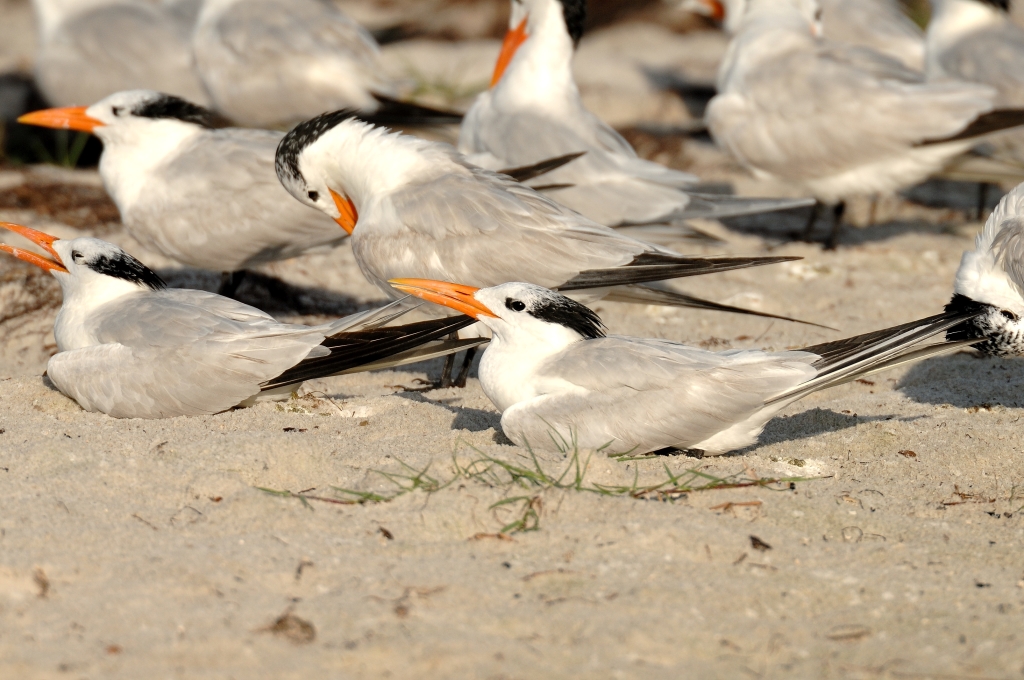
Royal Terns by Dan MacDill AFB Shore

Royal Tern (Thalasseus maximus) is a tern in the family Laridae. The genus name is from Ancient Greek Thalasseus, “fisherman”, from thalassa, “sea”. The specific maximus is Latin for ‘”greatest”.

This bird has two distinctive subspecies: T. m. maximus which lives on the Atlantic and Pacific coasts of the North and South America, and the slightly smaller T. m. albididorsalis lives on the coast of West Africa. The royal tern has a red-orange bill and a black cap during the breeding season, but in the winter the cap becomes patchy. The royal tern is found in Europe, Africa, the Americas, and the Caribbean islands. The royal tern lives on the coast and is only found near salt water. They tend to feed near the shore, close to the beach or in backwater bays.


More Avian and Attributes

Birds whose first name starts with “R”

Good News

*
[Definitions from Webster’s Dictionary of American English (1828), unless noted. Bird info from Wikipedia plus.]
Survey – God’s Recipe

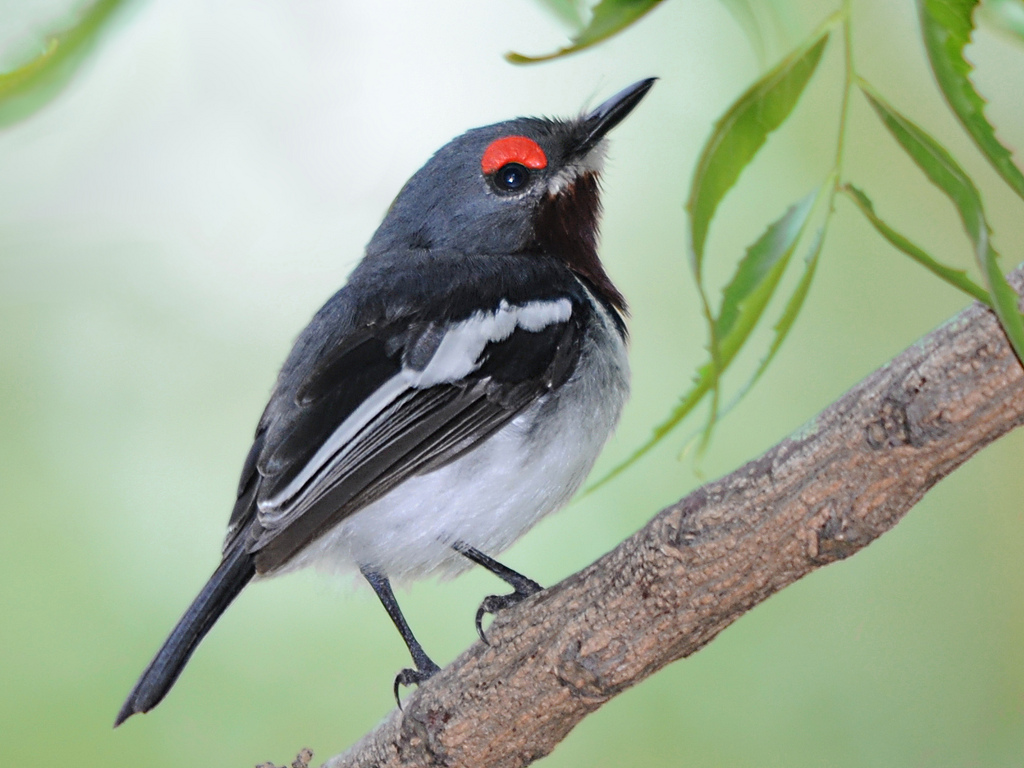
Brown-throated Wattle-eye (Platysteira cyanea) Male ©Flickr Isidro Vila Verde

“To know wisdom and instruction; to perceive the words of understanding;” (Proverbs 1:2 KJV)

Would this make a good series for the Birds of the Bible for Kids blog or even this blog?

God’s Recipe for the Brown-throated Wattle Eye

Looking for some comments. Either here or over on the other blog.


I.C.R.’s Days of Praise – Instantaneous Creation

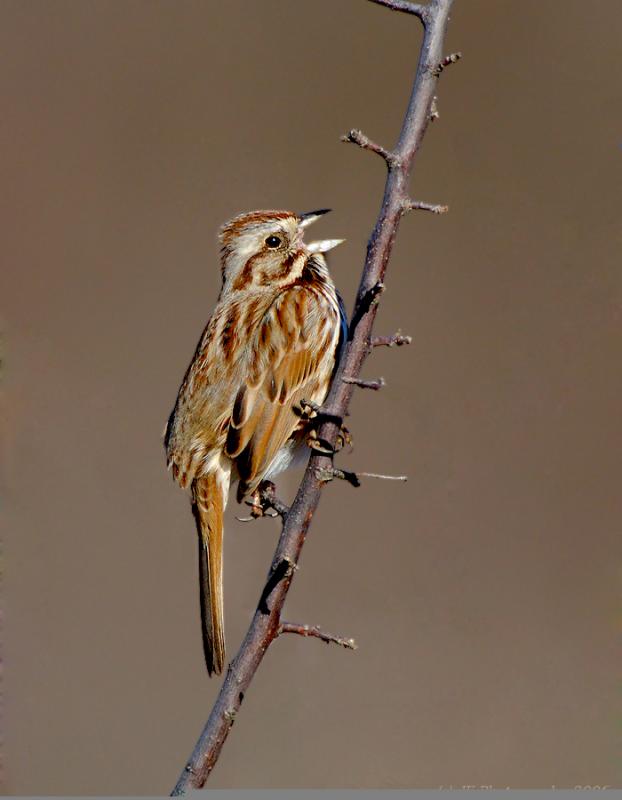
Song Sparrow (Melospiza melodia) by J Fenton

Song Sparrow (Melospiza melodia) by J Fenton

I.C.R.’s Days of Praise – Instantaneous Creation

BY HENRY M. MORRIS, PH.D. | THURSDAY, MAY 03, 2018

“Let them praise the name of the LORD: for he commanded, and they were created.” (Psalm 148:5)

The concept of “fiat creation” is opposed by evolutionists and all who believe in the so-called geologic ages. Nevertheless, this is clearly the teaching of the Word of God, and God was there! Psalm 148 exhorts all the stars to praise the Lord, and then notes that, as soon as God spoke, they “were created.” Similarly, “by the word of the LORD were the heavens made; and all the host of them by the breath of his mouth. . . . For he spake, and it was done; he commanded, and it stood fast” (Psalm 33:6, 9).

It is worth noting that whenever the verbs “create” and “make” are used in reference to God’s work of creation, they are never in the present tense. God is not now creating or making stars or animals or people as theistic evolution requires; at the end of the six-day creation period, in fact, God “rested from all his work which God created and made” (Genesis 2:3).

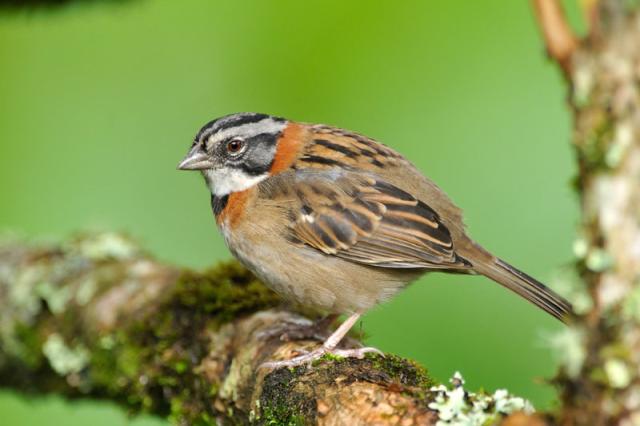
Rufous-collared Sparrow (Zonotrichia capensis) Reinier Munguia

Rufous-collared Sparrow (Zonotrichia capensis) Reinier Munguia

This is the teaching of the New Testament also. “The worlds [that is, the space/time cosmos, the ‘aeons’] were framed [not ‘are being framed’] by the word of God [not ‘by processes of stellar evolution’], so that things which are seen were not made of things which do appear [not ‘out of pre-existing materials,’ as required by theories of chemical and cosmic evolution]” (Hebrews 11:3).

The Lord Jesus Christ Himself confirmed the doctrine of recent creation.

“From the beginning of the creation [not, that is, four billion years after the solar system evolved] God made them [Adam and Eve] male and female” (Mark 10:6).

Thus, those who believe in the geologic ages are rejecting both the biblical record and the authority of Jesus Christ in order to attain ephemeral acceptance by the ungodly. This is a poor exchange! HMM


What a great devotional because it expresses exactly what I believe about God’s Creation. God created our marvellous Avian Wonders which did not evolve from dinosaurs. They were created the day after the birds.

Days of Praise Devotionals

Ian’s Bird of the Moment – Night Birds

If you can remember that far back, the last bird of the moment was Eastern Grass Owl. [http://www.birdway.com.au/botw/botw_584.php] found during a spot-lighting trip to the Townsville Town Common led by local night-bird expert and pillar of BirdLife Townsville Ian Boyd.
At the time, Ian Boyd was refusing to be discouraged by pancreatic cancer, an attitude that we all admired until his death on 23rd of February. Typically undaunted he gave a presentation on his favourite topic, Night Birds at the BirdLife Townsville AGM on the 10th of February although he had less than a couple of weeks to live. Isolated by flood waters in Bluewater, I couldn’t attend the funeral on 1st March so here is a photographic tribute to him instead.
I got to know him well during his last year or and am left with some precious memories of searching for night birds with him. So let’s go birding together while I share three special occasions with you.
The first was when a birding friend and photographer from Mt Isa was visiting Townsville and wanted to photograph a Rufous Owl. I contacted Ian Boyd and he took us to an active nesting site on a hot afternoon at the end of October. There he showed us the two adults which we photographed (one of them is in the first photo) and our visitor from Mt Isa returned to the site later and got a photo of a fledgling peering out of the tree hollow.
The second was the occasion when we found the female Eastern Grass Owl at the Townsville Town Common which featured as the last Bird of the Moment. At the time our goal was to search for Spotted Nightjars which are supposed to occur occasionally along the Freshwater Track that goes across the grassy, saltbush flats between Bald Rock and the Freshwater hide (see this map: https://www.npsr.qld.gov.au/parks/townsville/pdf/townsville-town-common-map.pdf). We drove across the Town Common arriving at Shelley Beach on the northern side at sunset and then drove slowly back in darkness checking for night birds as we went along.
The first stretch of riverine forest on the Shelley Beach Trail produced a remarkable five Owlet Nightjars (second photo) and a single male Tawny Frogmouth (third photo). Male Tawny Frogmouths have silvery grey, strongly marbled plumage. We had only just started along the Freshwater Track when the cry went up ‘Barn Owl’ but we quickly realised that the Tyto Owl beside the track was a female Eastern Grass Owl (fourth photo).
There was no sign of any Spotted Nightjars – we suspect that they are more like to be found in the dry winter months – but at the start of the Freshwater Lagoon Road south of the Freshwater hide, we found a Large-tailed Nightjar (fifth photo). This species is the commonest Nightjar around Townsville and is well known for its persistent, loud ‘chop chop’ call that gives it the colloquial name of Carpenter or Axe Bird.
Finally, along the track between Payet’s Tower and the Forest Walk, a Barking Owl (sixth photo) represented the only remaining Australian night bird family for the evening – Aegothelidae (Owlet NIghtjars), Podargidae (Frogmouths), Tytonidae (Barn Owls), Caprimulgidae (Nightjars) and Strigidae (Hawk Owls). I’m following the IOC and BirdLife International in lumping the Nightjars and Eared-Nightjars into a single family.
We repeated the spotlighting at the Town Common a week later. This time we found one or two Owlet Nightjars along the Shelley Beach Trail, but Tawny Frogmouths were out in force. The seventh photo shows a female; females are often rufous like this one but always have plainer less marked plumage than the males. The eight photo shows a remarkably approachable male Tawny Frogmouth.
This time there was no sign of the Eastern Grass Owl (or Spotted NIghtjars) and the surprise of the night was a Barn Owl perched in a tree along the stretch where we’d found the Barking Owl the previous week (ninth photo). This bird seemed unbothered by our spot- and flash-lights and when it did leave it did so to plunge into the undergrowth after some prey.
That was the last time I went birding with Ian Boyd. He is greatly missed by his wife Robyn, the rest of his family and all us bird watchers who appreciated his generosity, warmth, leadership and enthusiasm. I’ll treasure these great memories of birding with him during his last few months with us. Thank you, Ian Boyd.
Ian Montgomery

Lee’s Addition:

“And the owl, and the night hawk, and the cuckow, and the hawk after his kind,” (Leviticus 11:16 KJV)

Fantastic photos of Night Birds. Also, sorry to hear about the death of Ian’s friend, Ian Boyd.

We have missed Ian’s newsletters. We have gone from Ian’s Bird of the Week, to Ian’s Bird of the Month, to Ian’s Bird of the Moment [whenever he can find time]. I think many of us have reasons why our previously vigorously produced posts slow down. I believe Ian has been dealing with some eye issues. Not good for a photographer. I can relate, as my back issues have slowed our birdwatching adventures down to a trickle.

At any rate, these are some very great photos. Enjoy!

*

Ian’s Bird of the Week

Ian’s Bird of the Moment – Eastern Grass Owl

Good News