Hummingbird Families – Firecrowns

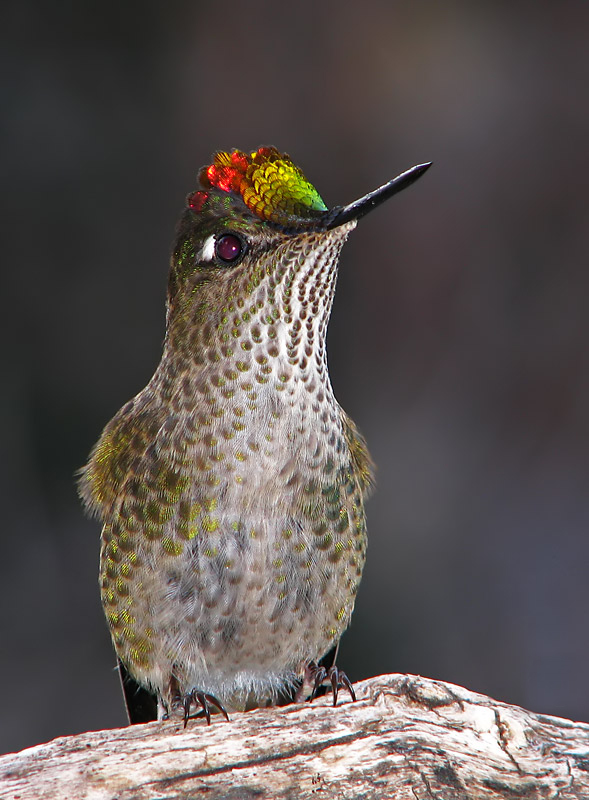
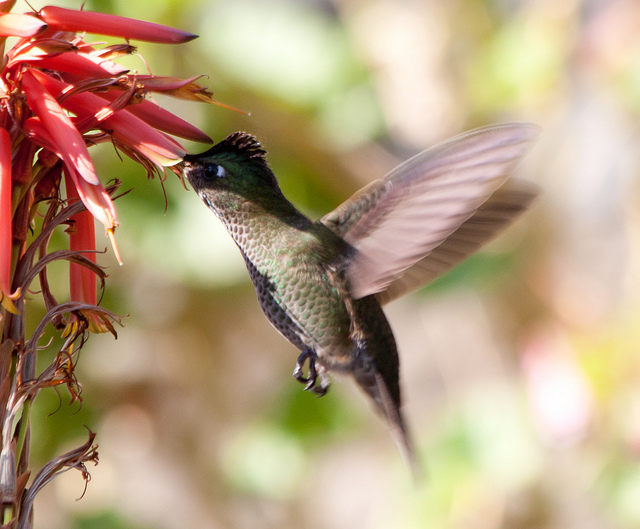
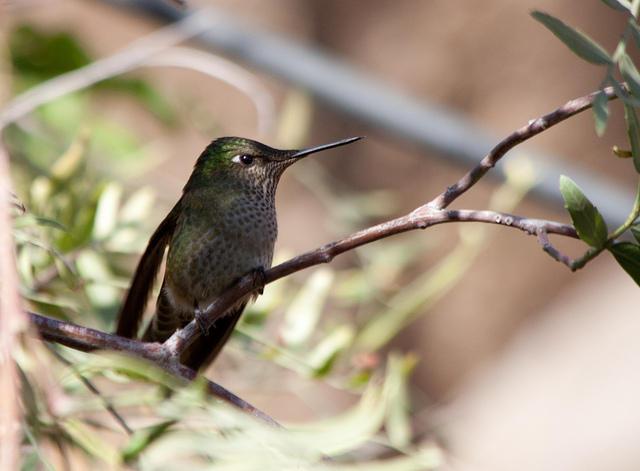
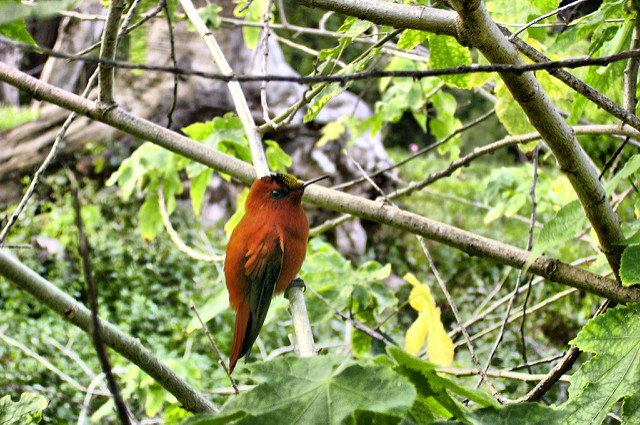
Green-backed Firecrown (Sephanoides sephaniodes) ©WikiC

Green-backed Firecrown (Sephanoides sephaniodes) ©WikiC

For You meet him with the blessings of goodness; You set a crown of pure gold upon his head. (Psalms 21:3 NKJV)

A few days ago, I used this photo for one of our Daily Devotionals, Lee’s Two Word Tuesday. It is such a beautiful creation from the Lord, that I wondered what I could find out about it and where it is from. So, here is what I discovered:

The firecrowns are the genus Sephanoides of the hummingbirds. There are two species. They are members of the Trochilidae – Hummingbird Family.

Green-backed firecrown, Sephanoides sephaniodes

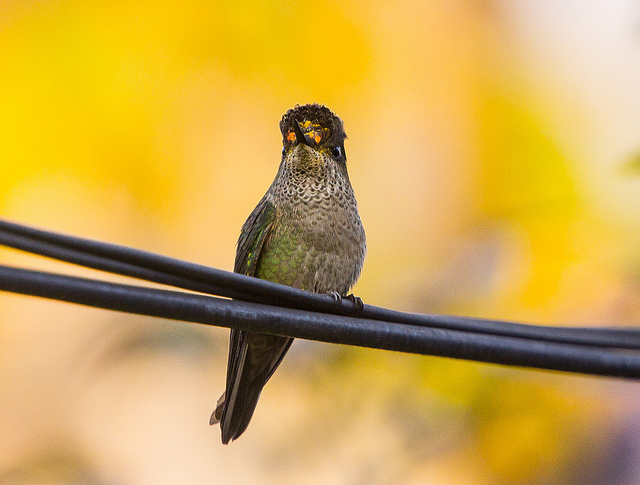
Green-backed Firecrown (Sephanoides sephaniodes) ©Flickr Flavio Camus

Green-backed Firecrown (Sephanoides sephaniodes) ©Flickr Flavio Camus

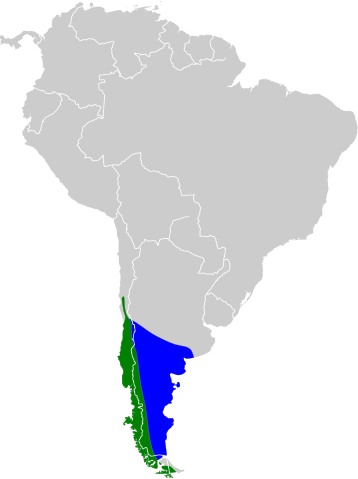
The Green-backed Firecrown (Sephanoides sephaniodes) occurs widely in Argentina and Chile and Isla Róbinson Crusoe, one of a three-island archipelago belonging to Chile. This Firecrown seasonally migrates to the mainland. Both species will hang from flower petals or leaves with their feet. They feed on nectar and insects.

“This compact bird has a short bill and tail, overall dark green plumage with whitish-gray underparts, and males possess a namesake glowing orange-red crown patch. These birds are highly territorial and often badger wayward trespassing birds as large as caracaras.” (Neotropical Birds)

Juan Fernández firecrown, Sephanoides fernandensis

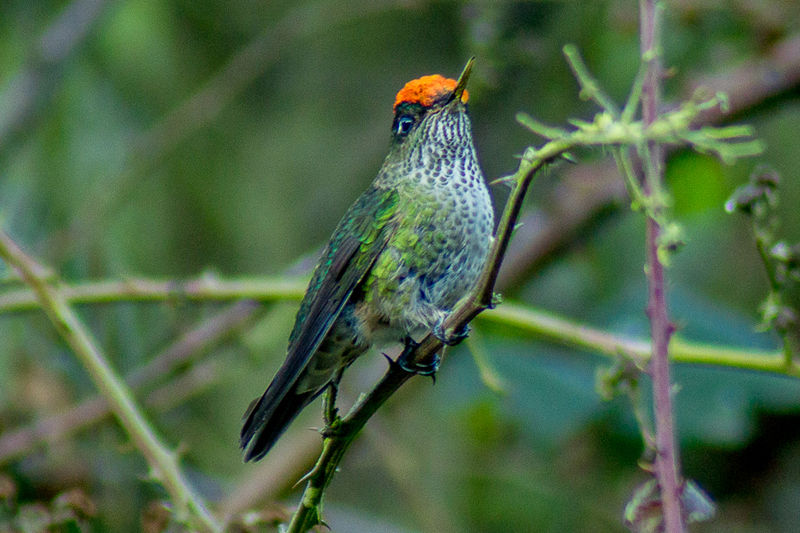
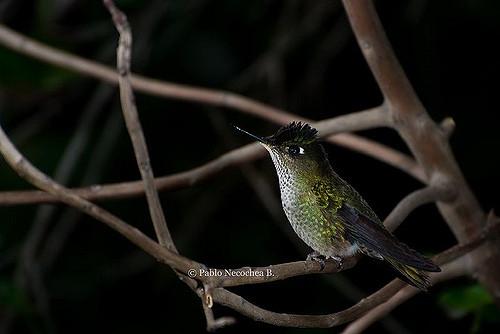
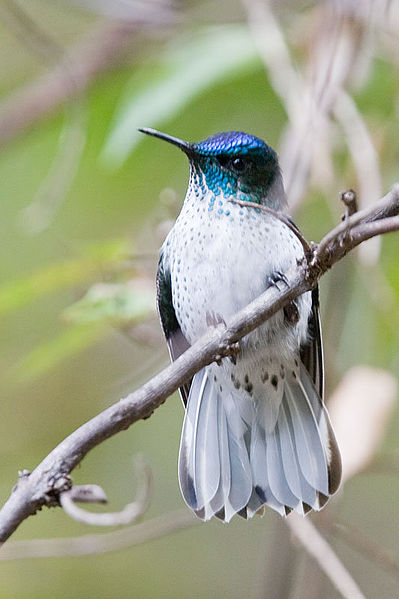
Juan FernándezFirecrown (Sephanoides fernandensis hembra) ©Flickr Island Conservation

Juan Fernández Firecrown (Sephanoides fernandensis hembra) Subspecies ©Flickr Island Conservation

For what is our hope, or joy, or crown of rejoicing? Are not even ye in the presence of our Lord Jesus Christ at his coming? (1 Thessalonians 2:19 KJV)

The Juan Fernández Firecrown (Sephanoides fernandensis) is a hummingbird that is found solely on Isla Róbinson Crusoe, one of a three-island archipelago belonging to Chile. It is 350 miles off the coast. It is non-migratory and shares the island with its smaller relative the Green-backed Firecrown.

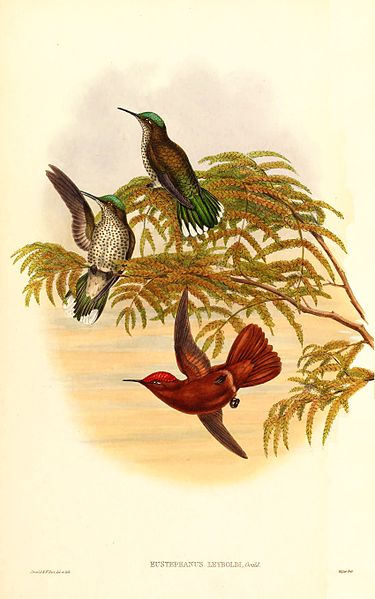
The Juan Fernández Firecrown arguably shows the greatest degree of sexual dimorphism found among hummingbirds. Unlike in most hummingbirds, where females simply lack the ornamental plumage of the males, in S. fernandensis they are also brilliantly-colored, but differ so much from males that in the 19th century they were thought to be different species until a nest was discovered with one of each sex.

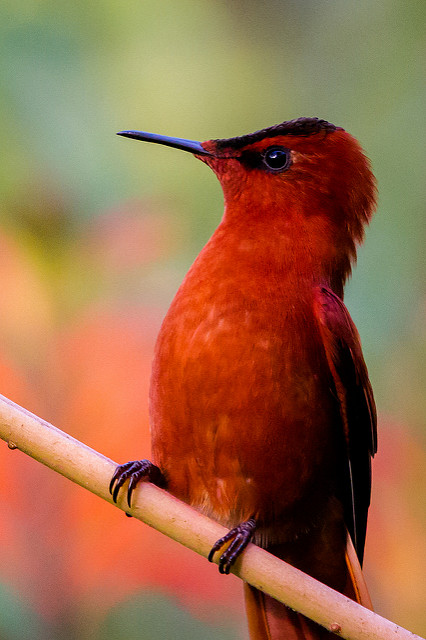
Juan Fernandez Firecrown (Sephanoides fernandensis) ©WikiC

Juan Fernandez Firecrown (Sephanoides fernandensis) ©WikiC

The male is 11.5–12 cm long and weighs 10.9 g. Its color is mostly cinnamon orange, excepting dark grey wings, black bill, and iridescent gold crown.

Juan Fernandez Firecrown (Sephanoides fernandensis) ©Flickr Island Conservation

Juan Fernandez Firecrown (Sephanoides fernandensis) ©Flickr Island Conservation

The female is 10 cm long and weighs 6.8 g. Its underparts are white with a dappling of very small green and black areas; the crown is iridescent blue, and upperparts are blue-green.

(Information from Wikipedia)

*


*

Trochilidae – Hummingbird Family

Lee’s Two Word Tuesday – 7/5/16

Firecrown – Wikipedia

Green-backed Firecrown – Wikipedia

Juan Fernández Firecrown  – Wikipedia

Neotropical Birds
*

Lee’s Five Word Friday – 7/8/16

***

Stand Tall ©National Geographic

STAND FAST IN THE LORD

***


“For now we live, if ye stand fast in the Lord.” (1 Thessalonians 3:8 KJV)

Penguins Standing Tall ©National Geographic

*

More Daily Devotionals

*

Avian Kinds on the Ark – Introduction

Ark Encounter During Construction

Ark Encounter During Construction

You shall take with you seven each of every clean animal, a male and his female; two each of animals that are unclean, a male and his female; also seven each of birds of the air, male and female, to keep the species alive on the face of all the earth. (Genesis 7:2-3 NKJV)

Today in Williamstown, Kentucky, they had the Grand Opening of the Ark Encounter. The building of the Ark Encounter was mentioned in Birds of the Bible – Foundation – The Ark. Now, it is open and we are looking forward to the opportunity to go see this modern day, full sized Ark. It’s about 900 miles from where we live, but it is definitely on my “bucket list.”

What I want to do, in a series of articles, is to introduce the Avian Kinds, Bird kinds, that are thought to be on board. An article, An Initial Estimate of Avian Ark Kinds, appeared on Nov. 27, 2013. It was written by Dr. Jean Lightner. Here is her abstract from that article.

Creationists recognize that animals were created according to their kinds, but there has been no comprehensive list of what those kinds are. As part of the Answers in Genesis Ark Encounter project, research was initiated in an attempt to more clearly identify and enumerate vertebrate kinds that were present on the Ark. In this paper, using methods previously described, 196 putative bird kinds are identified. Due to the limited information available and the fact that avian taxonomic classifications shift, this should be considered only a rough estimate.

I bolded the “196 putative bird kinds are identified” because that is what these articles are going to be about. According to I. O. C., the naming list that this site uses, there are 239 Families. On the Birds of the World family page, you will see this:

Lee’s Birds of the World, based on the IOC World Bird List 6.2 contains 10,637 extant species (and 154 extinct species)  classified in 40 Orders,  239 Families (plus 2 Incertae Sedis) and 2289 Genera and 20,490 Subspecies.

If my math is correct, 239 minus 196, equals 43. Okay, where did those 43 extra families come from? That is what this series is going to try to find out. (Not Today)

Ark Encounter - First Look, By TV station

Ark Encounter – First Look, By TV station

STAY TUNED!!

*

Birds of the Bible – Foundation – The Ark

An Initial Estimate of Avian Ark Kinds

Grand Opening of the Ark Encounter

Birds of the World

*

Lee’s Three Word Wednesday – 7/6/16

***

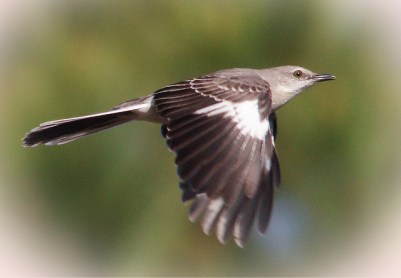
Northern Mockingbird (Mimus polyglottos) In Flight ©Flickr Tom Wicker

HE DID FLY

***


“(And he rode upon a cherub, and did fly: yea, he did fly upon the wings of the wind.” (Psalm 18:10)

Northern Mockingbird (Mimus polyglottos) In Flight ©Flickr Tom Wicker

*

More Daily Devotionals

*

Lee’s Two Word Tuesday – 7/5/16

***

Green-backed Firecrown (Sephanoides sephaniodes) ©WikiC

ARE CROWNED

***


“The simple inherit folly: but the prudent are crowned with knowledge.” (Proverbs 14:18 KJV)

Green-backed Firecrown (Sephanoides sephaniodes) ©WikiC

*

More Daily Devotionals

*

Red Skelton’s Pledge of Allegiance

Now the Lord is that Spirit: and where the Spirit of the Lord is, there is liberty. (2 Corinthians 3:17 KJV)

Today we celebrate the Fourth of July. This is a great telling of what this Pledge should mean to all of us Americans. Our country was founded on Christian Principles, but unfortunately, today many  are turning their backs on those principles, wanting to do their own things.

Also, many are turning their backs on our Constitution and Bill of Rights. Again, they are wanting to do their own things. Lord help us to keep America on the right path.

While they promise them liberty, they themselves are the servants of corruption: for of whom a man is overcome, of the same is he brought in bondage. For if after they have escaped the pollutions of the world through the knowledge of the Lord and Saviour Jesus Christ, they are again entangled therein, and overcome, the latter end is worse with them than the beginning. (2 Peter 2:19-20 KJV)

But take heed lest by any means this liberty of yours become a stumblingblock to them that are weak. (1 Corinthians 8:9 KJV)

Bald Eagle and a flag

What will you do with Jesus?

Lee’s One Word Monday – 7/4/16

***

HAPPY FOURTH OF JULY!!

Northern Cardinal (Cardinalis cardinalis) - WikiC

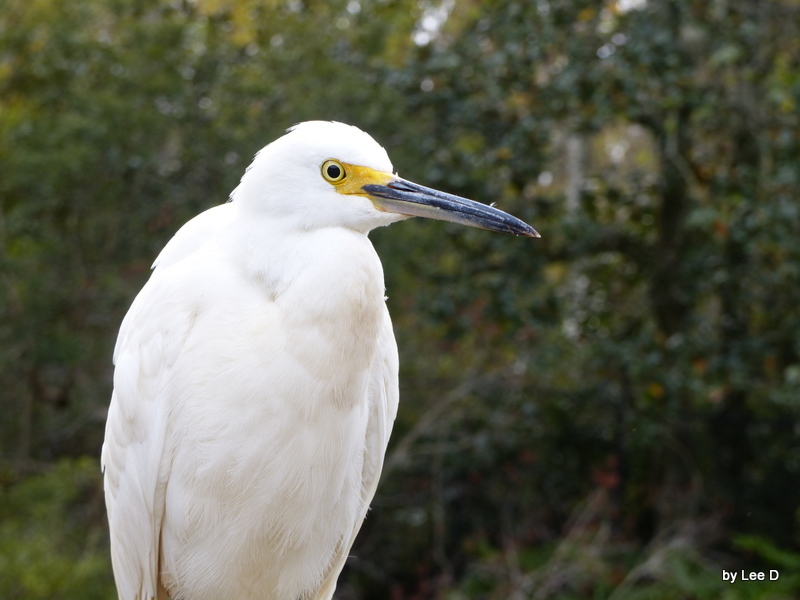
Snowy Egret by Lee

Indigo Bunting (Passerina cyanea) by Raymond Barlow

LIBERTY

***


“Now the Lord is the Spirit; and where the Spirit of the Lord is, there is liberty.” (2 Corinthians 3:17 NKJV)

Northern Cardinal (Cardinalis cardinalis) ©WikiC, Snowy Egret by Lee, Indigo Bunting (Passerina cyanea) by Raymond Barlow

*

More Daily Devotionals

*

Sunday Inspiration – Thraupidae – Tanagers and Allies III

Yellow-scarfed Tanager (Iridosornis reinhardti) ©Dubi Shapiro

“To the chief Musician, A Psalm of David. In the LORD put I my trust: how say ye to my soul, Flee as a bird to your mountain?” (Psalms 11:1 KJV)

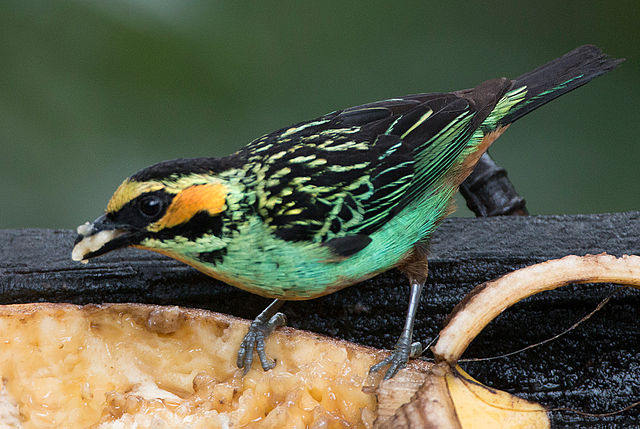
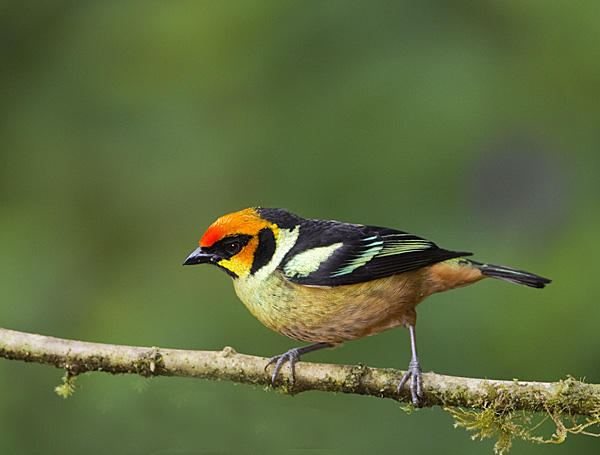
We start off this week’s segment of the Thraupidae Family with some Mountain Tanagers. They are very colorful creations from their Creator. Needless to say, they like to live in the mountains, mostly in Central and South America. These genera; Cyanicterus, Bangsia, Buthraupis, Cnemathraupis, Chlorornis, Wetmorethraupis, Anisognathus, Dubusia are considered Mountain Tanagers by Wikipedia.

Fawn-breasted Tanager (Pipraeidea melanonota) ©WikiC

Fawn-breasted Tanager (Pipraeidea melanonota) ©WikiC

Typical Tanagers: Pipraeidea, Iridosornis, and Thraupis (covered last week) are being included this week also. These occur from Mexico to Argentina.

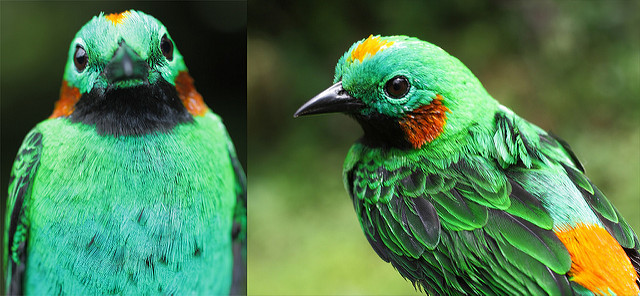
Orange-eared Tanager (Chlorochrysa calliparaea bourcieri) ©Flickr Andres Cuevo

Orange-eared Tanager (Chlorochrysa calliparaea bourcieri) ©Flickr Andres Cuevo

The last group Chlorochrysa is a genus of small colorful tanagers.  Their natural habitats are subtropical or tropical moist montane forests.

This slideshow requires JavaScript.

I will remember the works of the LORD: surely I will remember thy wonders of old. I will meditate also of all thy work, and talk of thy doings. Thy way, O God, is in the sanctuary: who is so great a God as our God? Thou art the God that doest wonders: thou hast declared thy strength among the people. (Psalms 77:11-14 KJV)

“Jesus Paid It All” – Men’s Father’s Day Choir

“While The Ages Roll” –  Men’s Quartet

These were both sung on Father’s Day 2016 at Faith Baptist

*

More Sunday Inspirations

Sunday Inspiration – Thraupidae – Tanagers and Allies I

Sunday Inspiration – Thraupidae – Tanagers and Allies II

Traupidae Family – Tanagers and Allies

Wages or a Gift
*

Lee’s Four Word Thursday – 6/30/16

***

Dan's Wood Stork Tree

AS FOR THE STORK

***


“The trees of the LORD are full of sap; the cedars of Lebanon, which he hath planted; Where the birds make their nests: as for the stork, the fir trees are her house.” (Psalms 104:16-17 KJV)

Dan’s Wood Stork Tree

*
More Daily Devotionals

*

Prothonotary Warbler And An Update

One of the birders that I follow, has a Channel on YouTube, VideoBirder of their birdwatching videos. This Prothontary Warbler, shows the difficulty that photographers and videographers have of trying to catch a bird. They flit all over the place and if your lucky or blessed, you may get a brief view. In this video, this beautiful bird sings, and then off he goes again.

But seek ye first the kingdom of God, and his righteousness; and all these things shall be added unto you. Take therefore no thought for the morrow: for the morrow shall take thought for the things of itself. Sufficient unto the day is the evil thereof. (Matthew 6:33-34 KJV)

As I was watching that video and thinking about the verse above, why do we worry or fret? Sometimes life is like that bird. We are busy going from here to there. Some times you can see him clearly and so in life things seem clear and we have “smooth sailing.” Other times, that bird is hidden behind the branches and you can’t see it so clear. In our lives things can have “bumps in the road” or problems that show up. Yet, the Lord knows all about it and guides us through those rough parts of our walk through life.

Right now, Dan and I have been dealing with health issues. One reason you have not seen very few, if any “birdwatching adventures” lately, is because we haven’t been on any adventures. At least not that kind. I am so thankful for James J. S. Johnson and Emma Forster for helping supply articles for the blog. Others have sent emails with birds which we have placed on the blog. Even the daily devotionals have helped keep this blog active. Dr. Jim, (James Johnson) as I call him, has even been helping with ideas for the devotionals.

Prothonotary Warbler (Protonotaria citrea) In a cavity nest ©WikiC

Prothonotary Warbler (Protonotaria citrea) In a cavity nest ©WikiC

So, if you have wondered where the “adventures” have been, now you know.

First I slipped the disc in my back, back in the fall, and I have been living with that. Made it almost through the winter and caught Bronchitis, which usually last longer than I would like. Now Dan, who is our main photographer, at least the better one, has been dealing with something for almost the last two months. Even spent time in the hospital last week, and we are still dealing with tests and Doctor visits.

Prothonotary Warbler (Protonotaria citrea) Neal Addy Gallery

Prothonotary Warbler (Protonotaria citrea) Neal Addy Gallery

Like the bird, we are flitting here and there, yet, we can still sing. We have a Savior, the Lord Jesus Christ, who knows all about our issues and none of this is catching Him by surprise. He knows what the outcome will be of the tests, diagnosis, and cure. Dan has lost quite a bit of weight and is still weak, plus other issues. We are just resting and trusting in Him. Many of our friends are praying to us and your prayers will also be appreciated.

If a day gets missed and no blog comes out, this may give you an idea why. We are looking forward to getting back out there birdwatching and trying to catch a photo of birds like that Prothontary Warbler, or a Warbler we see here. Lord’s Blessings on all of you.

Palm Warbler by Dan

Palm Warbler by Dan

“Fear ye not therefore, ye are of more value than many sparrows.” (Matthew 10:31 KJV)

Prothonotary Warbler – All About Birds

Prothonotary Warbler – Wikipedia

Lee’s Two Word Tuesday – 6/28/16

***

Greylag Goose (Anser anser) Pals Walking ©Pinterest

A FRIEND

***


“A man that hath friends must shew himself friendly: and there is a friend that sticketh closer than a brother.” (Proverbs 18:24 KJV)

Greylag Goose (Anser anser) Pals Walking ©Pinterest

*

More Daily Devotionals

*

Sunday Inspiration – Thraupidae – Tanagers and Allies II

Vermilion Tanager (Calochaetes coccineus) ©Nick Athanas

Vermilion Tanager (Calochaetes coccineus) ©Nick Athanas

Come now, and let us reason together, saith the LORD: though your sins be as scarlet, they shall be as white as snow; though they be red like crimson, they shall be as wool. (Isaiah 1:18 KJV)

Last week’s Sunday Inspiration of Tanagers and Allies started us off on this huge family. We will continue, starting with the five Lanio genus of Shrike-Tanagers.

Brazilian Tanager (Ramphocelus bresilius) by Dario Sanches

Brazilian Tanager (Ramphocelus bresilius) by Dario Sanches

The words of the LORD are pure words: as silver tried in a furnace of earth, purified seven times. (Psalms 12:6 KJV)

Wait until you see the second very colorful genus, the Ramphocelus. These are Neotropical birds that have enlarged shiny whitish or bluish-grey lower mandibles, which are pointed upwards in display. However, this is greatly reduced in the females of most species. Males are black and red, orange or yellow, while females resemble a duller version of the males, or are brownish or greyish combined with dull red, orange or yellowish.

Cherrie's Tanager (Ramphocelus costaricensis) Female by Raymond Barlow

Cherrie’s Tanager (Ramphocelus costaricensis) Female by Raymond Barlow

Ramphocelus tanagers are found in semi-open areas. The nest is a cup built by the female of plant materials such as moss, rootlets, and strips of large leaves like banana or Heliconia, and is often in a fairly open site in a tree. The female usually lays pale blue eggs, with grey, brown or lavender spots, and the young stay in the nest for only about 12 days. The songs of this genus are repetitions of rich one- or two-syllable whistles. Most of these are of a crimson or reddish hue.

Sayaca Tanager (Thraupis sayaca) ©WikiC

Sayaca Tanager (Thraupis sayaca) ©WikiC

The Thraupis Tanagers are another beautiful genera of the Lord’s Creation. This time, blue will is the dominate color. “These tanagers are mainly found in semi-open habitats including plantations and open woodland, but some will venture into towns. They feed from medium to high levels in trees, taking mainly fruit, with some nectar, and insects which may be taken in flight.” (Wikipedia)

Blue-backed Tanager (Cyanicterus cyanicterus) ©Francesco_Veronesi

This week will end with two genus that have only one species each, the Vermilion Tanager (Calochaetes coccineus) and the Blue-backed Tanager (Cyanicterus cyanicterus). All the birds this week live from Mexico down through South America.

This slideshow requires JavaScript.

I know all the birds of the mountains, And the wild beasts of the field are Mine. (Psalms 50:11 NKJV)

“My Faith Still Holds” ~ Faith Baptist Orchestra

*

More Sunday Inspirations

Sunday Inspiration – Thraupidae – Tanagers and Allies I

Traupidae Family – Tanagers and Allies

Hope for Hard Times

*