A Pleasant Surprise – III

BJU Bird Collection 2018 Bottom Shelf

The next set of birds from the Waterman Bird Collection at BJU has five specimens. Four of these birds are found in or near water, but the Crow is not really known as a water bird. [This is a copy of the Waterman Bird Collection – Part II from Birds of the Bible for Kids]

This is the bottom shelf display under the Anatidae Family, just above them. That Family was covered in A Pleasant Surprise – II. I trust you clicked on the links provided to read more about those avian wonders.

Common Loon (Gavia immer) BJU Bird Collection 2018

Common Loon (Gavia immer) BJU Bird Collection 2018

Our big tall bird is a Common Loon. “The common loon or great northern diver (Gavia immer) is a large member of the loon, or diver, family of birds. Breeding adults have a plumage that includes a broad black head and neck with a greenish, purplish, or bluish sheen, blackish or blackish-grey upperparts, and pure white underparts except some black on the undertail coverts and vent. Non-breeding adults are brownish with a dark neck and head marked with dark grey-brown. Their upperparts are dark brownish-grey with an unclear pattern of squares on the shoulders, and the underparts, lower face, chin, and throat are whitish. The sexes look alike, though males are significantly larger and heavier than females. During the breeding season, they live on lakes and other waterways in Canada, the northern United States (including Alaska), as well as in southern parts of Greenland and Iceland. Small numbers breed on Svalbard and sporadically elsewhere in Arctic Eurasia. Common loons winter on both coasts of the US as far south as Mexico, and on the Atlantic coast of Europe.
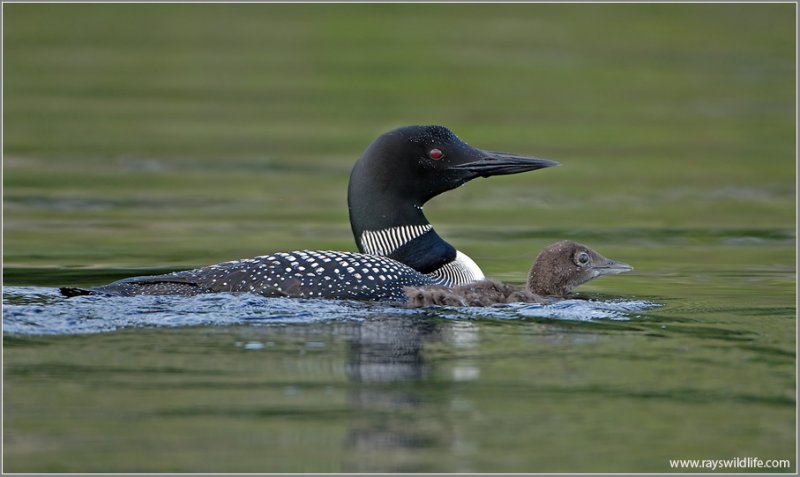
Common Loon by Raymond Barlow

Common loons eat a wide range of animal prey including fish, crustaceans, insect larvae, mollusks, and occasionally aquatic plant life. They swallow most of their prey underwater, where it is caught, but some larger items are first brought to the surface.” Common Loon – Wikipedia

Here is just one of the Cool Facts from Common Loon – All About Birds

  • Loons are agile swimmers, but they move pretty fast in the air, too. Migrating loons have been clocked flying at speeds more than 70 mph.

Red-necked Grebe (Podiceps grisegena) BJU Bird Collection 2018

Next to the Loon is a Red-necked Grebe (Podiceps grisegena). “Like all grebes, the Red-necked is a good swimmer, a particularly swift diver, and responds to danger by diving rather than flying. The feet are positioned far back on the body, near the tail, which makes the bird ungainly on land. It dives for fish or picks insects off vegetation; it also swallows its own feathers, possibly to protect the digestive system.” Red-necked Grebes – Wikipedia

Red-necked Grebe (Podiceps grisegena) young on her wing©USFWS

Red-necked Grebe (Podiceps grisegena) young on her wing©USFWS

Here is a Cool Fact from Red-necked Grebe – All About Birds

  • The oldest recorded Red-necked Grebe was at least 11 years old when it was found in Minnesota, the same state where it had been banded.

Pied-billed Grebe (Podilymbus podiceps) BJU Bird Collection 2018

The smaller Grebe, next to the Red-necked Grebe, is a Pied-billed Grebe (Podilymbus podiceps) . They both belong to the Podicipedidae Family. Now that is a bird we see often here in Florida.

Pied-Billed Grebe at Lake Hollingsworth, Lakeland, FL by Dan

Pied-Billed Grebe at Lake Hollingsworth, Lakeland, FL by Dan

“The Pied-billed Grebes (Podilymbus podiceps) is a species of the grebe family of water birds. Since the Atitlán grebe (Podilymbus gigas) has become extinct, it is the sole extant member of the genus Podilymbus. The pied-billed grebe is primarily found in ponds throughout the Americas. Other names of this grebe include American dabchick, dabchick, Carolina grebe, devil-diver, dive-dapper, dipper, hell-diver, pied-billed dabchick, pied-bill, thick-billed grebe, and water witch.”

Pied-billed Grebes are small, stocky, and short-necked. They are mainly brown, with a darker crown and back. Their brown color serves as camouflage in the marshes they live in. They do not have white under their wings when flying, like other grebes. Their undertail is white and they have a short, blunt chicken-like bill that is a light grey color, which in summer is encircled by a broad black band (hence the name). In the summer, its throat is black.”  Pied-billed grebe – Wikipedia [with editing]

A Cool Fact about this from Pied-billed Grebe – All About Birds

  • Pied-billed Grebe chicks typically leave the nest the first day after hatching and spend much of their first week riding around on a parent’s back. They usually spend most of their first 3 weeks on or near the nest platform.
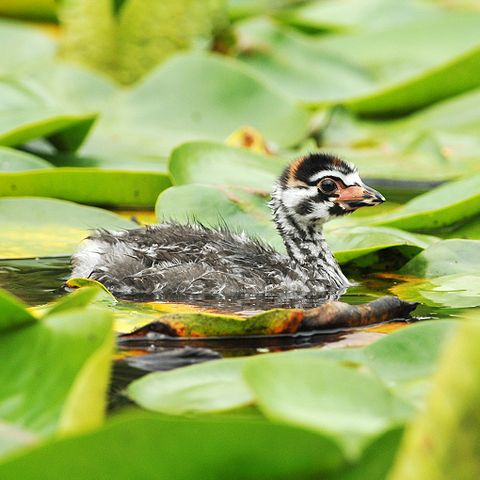
Pied-billed Grebe (Podilymbus podiceps) chick ©WikiC

We will check out the other two birds in the display case next.

I trust you will enjoy meeting the various birds through this series. The links provided give much more information, and photos of these species.

“The works of the LORD are great, Studied by all who have pleasure in them.” (Psalms 111:2 NKJV)

Gaviidae – Loons – Family

Podicipedidae – Grebes – Family


Four Billion Birds Flying

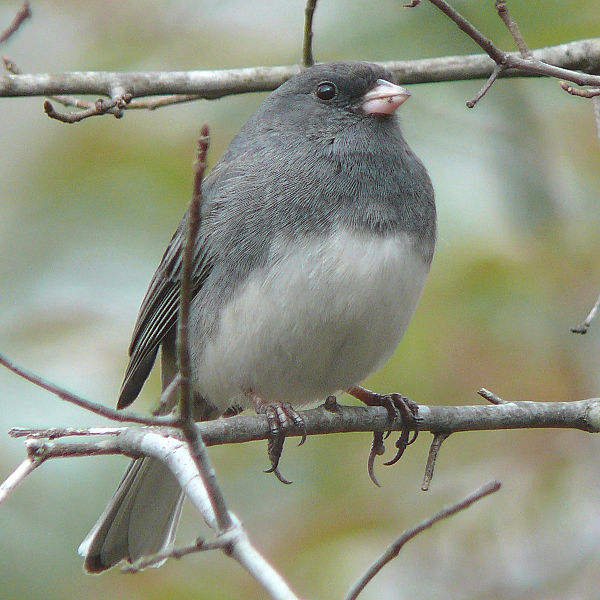
Dark-eyed Junco (Slate-colored) (Junco hyemalis hyemalis) female WikiC

“To everything there is a season, A time for every purpose under heaven:” (Ecclesiastes 3:1 NKJV)

Here are some interesting statements from an article on All About Birds. The research that Cornell Lab of Ornithology scientists are discovering with weather radar data is assisting the ornithologist. They are learning more about the 4 Billion birds that migrate during this time of the year.

“An average of 4 billion birds passed from Canada across the northern border of the U.S. in autumn, with 2.6 billion birds returning across the Canada–U.S. border in spring. Activity across the southern border was on an even grander scale: an average of 4.7 billion birds left the U.S. for Mexico and other points south each autumn, with 3.5 billion birds heading north across the U.S. southern border each spring.”

Summer Tanager (Piranga rubra) male by Kent Nickell

Summer Tanager (Piranga rubra) male by Kent Nickell

That is quite a few birds heading south, with fewer returning in the spring. It appears the birds that go further south have a better survival rate than the ones that winter here in the United States. 

” For birds crossing the U.S. northern border—which includes many short-distance migrants such as sparrows, Snow Buntings, and Dark-eyed Juncos that fly from Canada to spend winter in the Lower 48 states—the average rate of return was 64 percent. But for birds crossing the U.S. southern border—which includes more of the long-distance migrants such as warblers, tanagers, and orioles that travel to Central and South America, three to four times farther than the short-distance migrants—the average rate of return was 76 percent.”

Boat-tailed Grackle (Quiscalus major) at Lake Howard, Winter Haven, Florida By Dan'sPix

Boat-tailed Grackle (Quiscalus major) at Lake Howard, Winter Haven, Florida By Dan’sPix

My first thoughts were why are so many not surviving here in North America. Yet, those traveling further south, seem to fare better. I knew from previous articles I’ve read that many birds die from impact with tall buildings and glass windows. Here is what they had to say:

One explanation for the higher mortality among birds that overwinter in the U.S. may be a higher number of hazards. “All birds need to stay safe from predators, find enough food, and not get hit by a car,” says Ken Rosenberg, research coauthor and conservation scientist at the Cornell Lab. “Birds wintering in the U.S. may have more habitat disturbances and more buildings to crash into, and they might not be adapted for that.” 

They also discuss in this article the differences in different breeding strategy between short distant and long distant migrants.

“And He changes the times and the seasons;” (Daniel 2:21 NKJV)

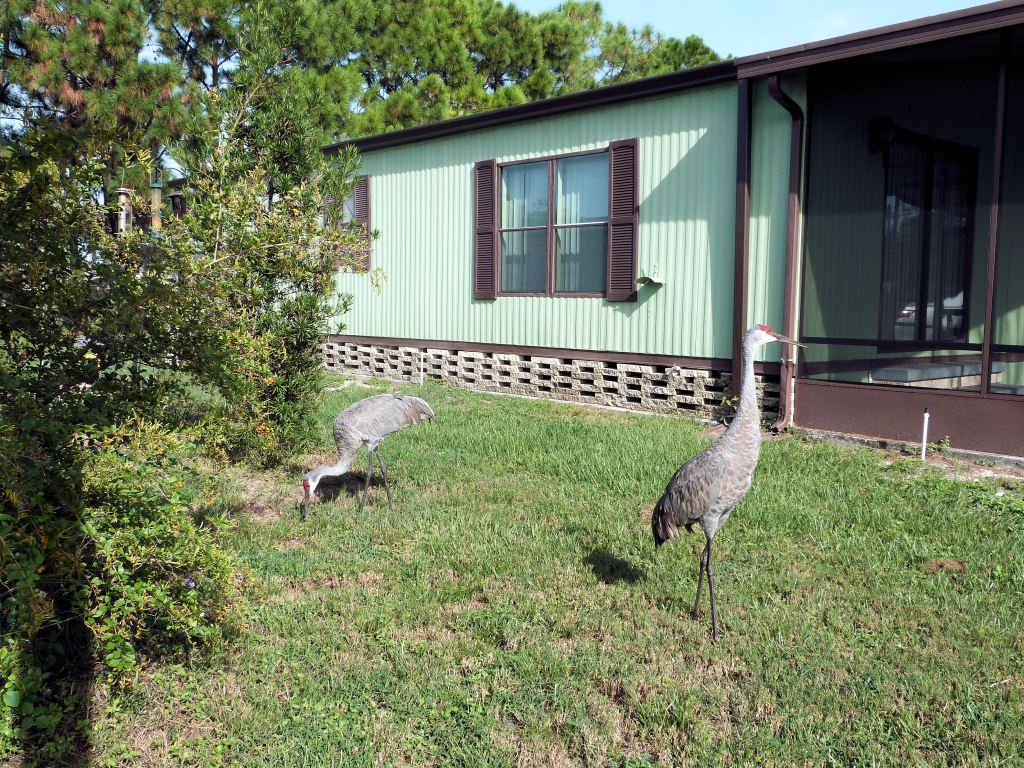
Sandhill Cranes in our side yard

Here in Florida, I have begun seeing more of the migrants that spend time near here. The Boat-tailed Grackles are invading my feeders already. I have also spotted more Bald Eagles, and the Heron, Egrets, and Sandhill Cranes seem to be more populous. Yeah, for the Winter Visitors!!


4 Billion Birds Will Fly Through American Airspace This Fall by Carley Eschiman, All About Birds, Sept 17,2018

Unbelievable Migrations from Creation Moments

Bird Migration Mistakes

Birds of the Bible – Migration September 2009

Interesting Things – Amazing Bird Migration


Black Sicklebill – Thin Blue Line

Here is an interesting video about a Black Sicklebill displaying.
Black Sicklebill: The Thin Blue Line by Cornell Lab of Ornithology
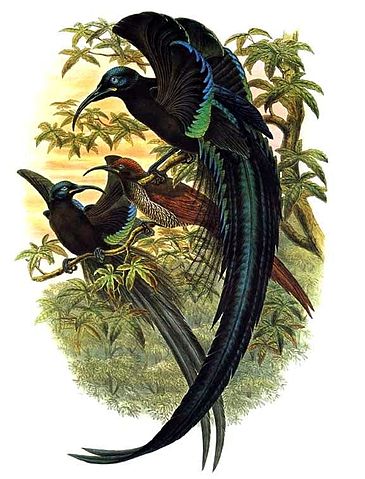
Black Sicklebills are elegant, slender birds with long bills and tails. But that all changes when a female comes by. The male transforms into a horizontal comet shape on his display perch. He doesn’t use his wings to do this; he uses flank feathers. The comet shape is accentuated by a narrow blue band of iridescence created when those flank feathers line up precisely. Filmed and photographed by Tim Laman and Eric Liner. [YouTube] “The black sicklebill (Epimachus fastosus) is a large bird-of-paradise of midmountain forests of New Guinea. The sicklebill’s diet consists mainly of fruits and arthropods. The male of the species performs a horizontal courtship display with the pectoral plumes raised around its head. The male has black plumage with iridescent green, blue and purple scale-like feathers, red irises, bright yellow mouth, long curved black bill, huge sabre-shaped tail and large erectile fan-like plumes on the sides of its breast. The female is smaller than the male, with reddish brown plumage, brown irises, and buff below. Reaching up to 110 cm in length, the male black sicklebill is the longest member of Paradisaeidae, though the curl-crested manucode has a larger body.” [Wikipedia with editing]
‘Call to Me, and I will answer you, and show you great and mighty things, which you do not know.’ (Jeremiah 33:3 NKJV)


Birds Heading South – We Are Heading North

Myrtle (Yellow-rumped) Warbler (Setophaga coronata) breeding ©WikiC

Looking forward to our northern birds to begin heading down for the winter. Actually, there have been reports already of migrating birds in various places around Florida. Unfortunately, some of them currently in Florida may be grounded for awhile until Tropical Storm Gordon blows out of the state.

“I would hasten my escape from the windy storm and tempest.” (Psalms 55:8 KJV)

Hurricane season gets active about the same time the fall migration gets underway. The Lord has given most of the birds the instinct to take cover during these disturbances.

We are currently headed the opposite direction. We are going North for a few days. Hope there will be a few birds left up there to enjoy while we are there. Dan has a High School reunion [60th] to attend. I will be visiting with a niece that I haven’t seen in years. When we get back home, maybe we will have some winter bird visitors already in Florida setting up their lawn chairs for the winter. That will give us some birding photos to take. Summer time is pretty slim on birding.

I am trusting the Lord to help me heal from my back surgery so we can get out and about with the birds again. So far, I am getting better, but still taking it easy. Also hope to get a few photos taken while on trip. Stay tuned!

Bill It To The White Stork

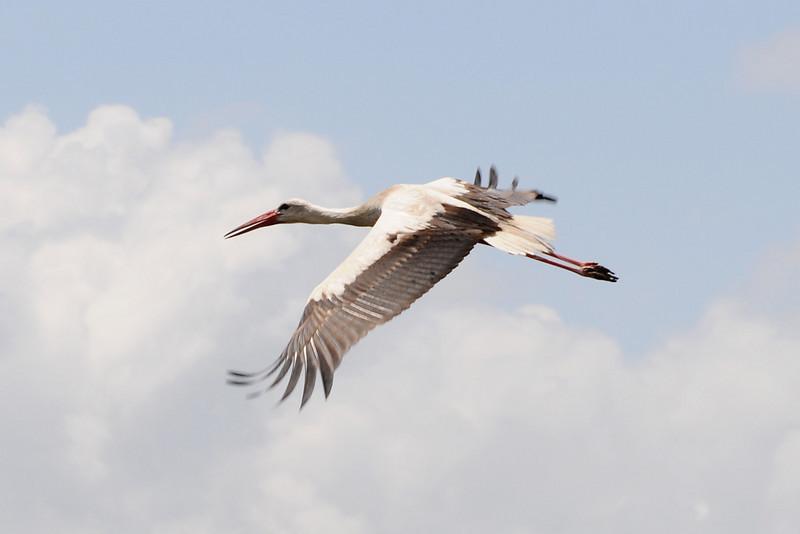
White Stork (Ciconia ciconia) by Bob-Nan

“Yea, the stork in the heaven knoweth her appointed times; and the turtle and the crane and the swallow observe the time of their coming; but my people know not the judgment of the LORD.” (Jeremiah 8:7 KJV)

This migrating stork was tagged with a tracking device and ended up running up quite a phone bill. Here are excerpts from two different articles about Kajtek, the White Stork.

“A migrating, tagged, male white stork—known to the Polish environmentalists who were tracking him as “Kajtek”—blipped out of contact on 26 April.

That, however, did not stop him from making good use of the SIM card in his GPS tracker, with which the bird—or somebody who found the GPS device and picked it apart in order to get at the card—racked up a $2,700 phone bill.” [SIM card in bird’s GPS tracker]

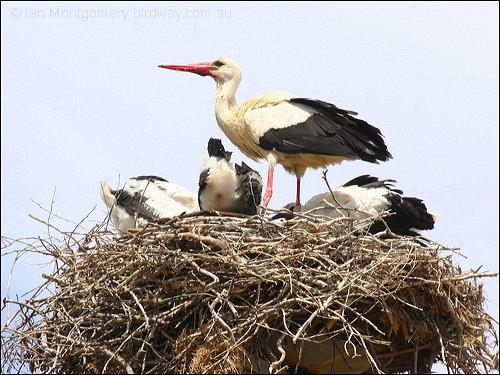
White Stork (Ciconia ciconia) by Ian

“In a Facebook post, the group explains that “for unknown reasons” Kajtek stayed in the area for over two months, “travelling 25 kms in different directions during the day”.

Last month, EkoLogiczna was surprised with a phone bill linked to the SIM card installed in the Kajtek’s GPS tracker for a total amount of 10,000 PLN (€2,278).

“Someone quite simply removed the card from the tracker, put it in a phone and used it for 20 hours of communication,” the group said in the Facebook post.

According to the EuroNatur Foundation, Poland is a major centre of distribution for the white stork, accounting for 40% of the bird’s world population.”

“Let him that stole steal no more: but rather let him labour, working with his hands the thing which is good, that he may have to give to him that needeth.” (Ephesians 4:28 KJV)

Here are the stories about this:

SIM card in bird’s GPS tracker used to rack up $2,700 phone bill …

Roaming stork lands Polish charity with huge phone bill

USA Today

Ian’s Bird of the Moment – Masked Finch

Ian’s Bird of the Moment – Masked Finch by Ian Montgomery

Surprise, surprise: a Bird of the Moment! I’ve been on a couple of camping trips in the last few months, so I have a few birds to share with you. The first trip was prompted by some birding friends who had found some Red-browed Pardalotes at a place called Cumberland Dam about half way between the Gulf of Carpentaria and both Cairns and Townsville. See the map below from the ebook Where to Find Birds in North-east Queensland.
At the time I was doing a major revision of the book and needed photos of both Cumberland Dam and Red-browed Pardalote, so I downed tools and set of with a couple of friends. The photo of the Dam proved easy enough (below) but the Pardalotes were more difficult. Cumberland was a gold mining town in the fourth quarter of the nineteenth century and at its peak in 1886 nearly 400 mine workers and their families lived there. Now all that is left is this square brick chimney and the dam, both built to serve the boilers that powered the batteries for crushing the gold-containing ore. See http://www.travelling-australia.info/Journal2011/22JulPtB.html.
Cumberland Dam is a well known birding spot. The area has a average annual rainfall of about 800mm/31in but 80% of that falls in the northern wet season from October to April so any persistent bodies of water in the dry season attract many birds. In addition, the region is on the western slopes of the Great Dividing Range – the Torresian Barrier of Schodde and Mason (1980) – so one can expect to find some species and races of birds different from those of coastal northeastern Queensland.
A striking example of these is the Cape York race of the Masked Finch, sometimes called the White-eared Finch. Cumberland is at the very southern tip of its range, shown below from The Directory of Australian Birds by Schodde and Mason (1999). The nominate race ranges from far northwestern Queensland to Broome in northern Western Australia and the ranges of the two races are disjoint.
When looking for the elusive Red-browed Pardalote, I found this pair of Masked Finches near the dam very busy gathering nesting material.
Their favourite material seemed to be what looked like thistle down but they also brought in feathers.
I assumed the nest was in a nearby clump of trees but on the second day they were still working away and I saw them taking the material into this clump of thick dried grass beside a barbed wire fence near where I’d first spotted them.
Here, incidentally is the nominate, western race of the Masked Finch so you can see why the Cape York race is called the White-eared Finch.
Pardalotes are easy to hear but hard to see as, unless you are lucky enough to find them at a nesting hollow on the ground, they spend their time in the outer foliage of trees. The Red-browed Pardalote has a distinctive call of about six notes, starting slow and low in pitch and then accelerating and rising. We heard three at Cumberland Dam and I went on a couple of wild-goose chases through forest and grazing country but got no more than a glimpse of one flying away and no photos. The Red-browed Pardalote quest ultimately succeeded on another camping trip: to be continued!

It has been some time since Ian Montgomery has produced on of his great articles. I trust you enjoy this latest one. Ian went from a Bird of the Week, to Bird of the Month, and now to the Bird of the Moment. Hew has been struggling with his health. We are always glad when he is able to produce a blog.
Ian, you are in our prayers that things are improving.

Ian’s searching for that Red-browed Paratote reminds me of the verse about seeking and searching with all your heart. In this case, it is a bird that is being searched for, yet we are to seek the Lord. He is the Creator of all these birds. He wants us to find Him and accept His gift of Salvation.

“And you will seek Me and find Me, when you search for Me with all your heart.” (Jeremiah 29:13 NKJV)

Ian’s Bird of the Week

Wages or a Gift

Osprey Feeding On His Catch of the Day

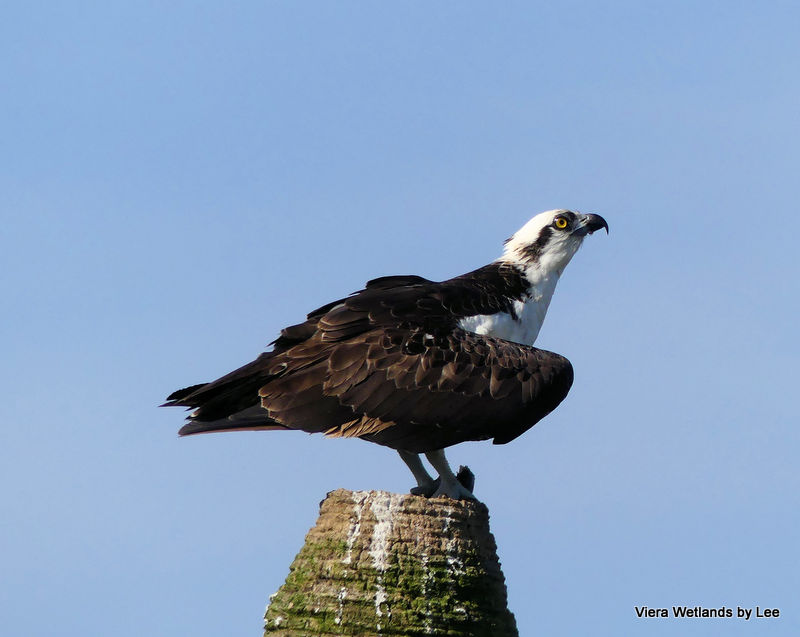
Osprey at Viera looking to the Creator and hopefully he is thanking Him for the fish.

“Who provideth for the raven [and Ospreys] his food? when his young ones cry unto God, they wander for lack of meat.” (Job 38:41 KJV)

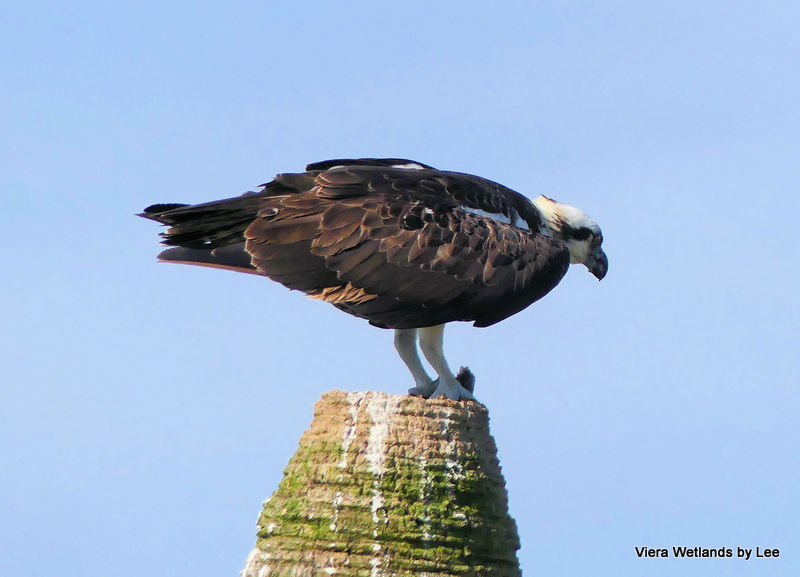
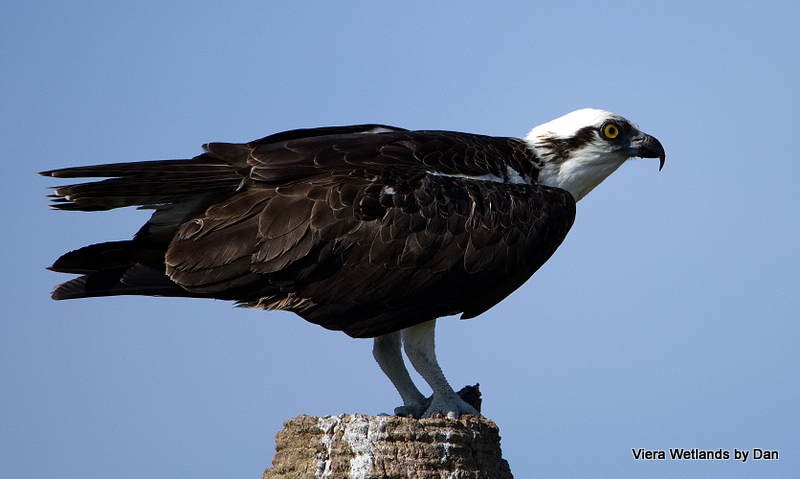
Dan took a couple of really nice photos of the hungry Osprey.

Now for Dan’s great photos.

Time to strip the innards! Yuck!

When we were last at Viera Wetlands, we caught an Osprey eating a fish. Apparently he doesn’t like the “guts.” We watched it pull them out and then drop them. Did that several times, and then started eating the fish.

“But God giveth it a body as it hath pleased him, and to every seed his own body. All flesh is not the same flesh: but there is one kind of flesh of men, another flesh of beasts, another of fishes, and another of birds.” (1 Corinthians 15:38-39 KJV)

I am thankful that the Lord let me be born as a human. I am also very thankful that He provided salvation for our fallen sinful human nature.

What will you do with Jesus?

Other Photos by Dan

Take A Note

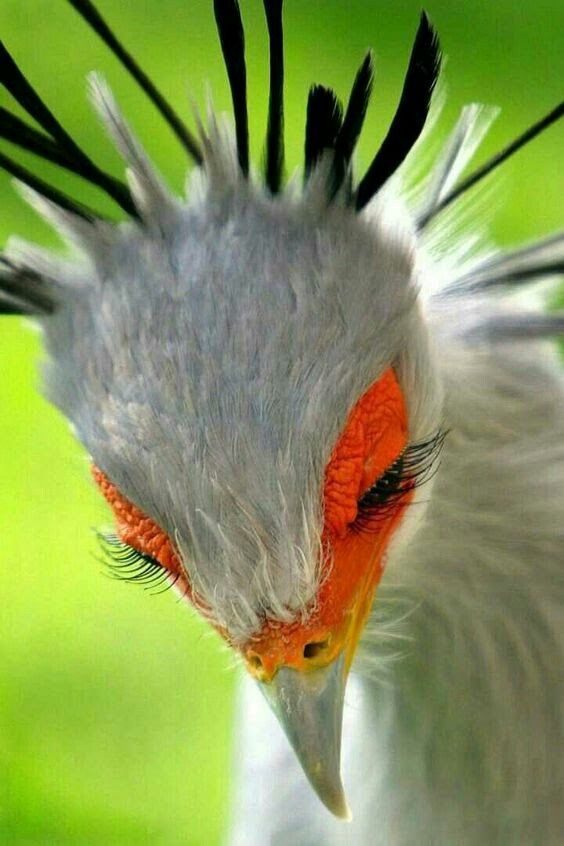
Secretarybird look straight at the lens – ©Pinterest – Rudi Luyten

You would like me to take a note?

Secretarybird -Notice the eyelashes – ©Pinterest

Looking down to start writing! [Notice the eyelashes]

Just because these are neat birds, decided to share these Secretarybird photos from Pinterest.

“Let not mercy and truth forsake you; Bind them around your neck, Write them on the tablet of your heart,” (Proverbs 3:3 NKJV)

*
Secretary Bird – The Walker

Indecisive Black-bellied Whistling-Duck

Shall I Go To The This Way?

Shall I Go To That Way?

And Elijah came unto all the people, and said, How long halt ye between two opinions? if the LORD be God, follow him: but if Baal, then follow him. And the people answered him not a word. (1 Kings 18:21 KJV)

Still Undecided As To Which Way To Go by Lee

Elijah went there and stood in front of the people. He said, “How long will it take you to make up your minds? If the LORD is the one and only God, follow him. But if Baal is the one and only God, follow him.” The people didn’t say anything. (1 Kings 18:21 NIrV)

Just About Decided

Elijah challenged the people: “How long are you going to sit on the fence? If GOD is the real God, follow him; if it’s Baal, follow him. Make up your minds!” Nobody said a word; nobody made a move. (1 Kings 18:21 MSG)

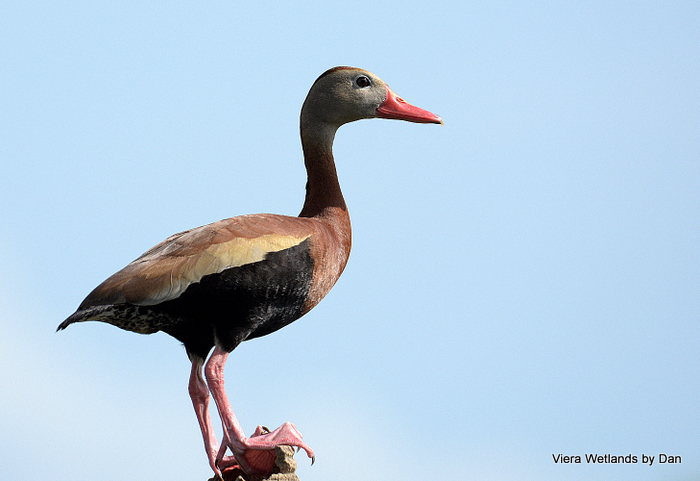
This Black-bellied Whistling-Duck was undecided about where to go. There were quite a few Whistling Ducks at Viera Wetlands, and they were playing “musical palm tree stubs.” They kept landing on these tree tops and chasing the other off. Yet, this verse comes to mind.

I trust all of us are decided about WHO we are going to follow.

Now for a picture of a Black-bellied Whistling-Duck by Dan [the much better photographer]

Black-bellied Whistling Duck by Dan

The Black-bellied Whistling-Duck is a large, gooselike duck with a long neck, long legs, and short tail. In flight, look for their broad wings, long neck, and hunched back.

Black-bellied Whistling-Ducks are dark overall: a chestnut breast and black belly are set off by a bright-pink bill and legs, grayish face, and broad white wing stripe, also visible in flight. Immatures are duller than adults, with a dark bill, pale breast, and mottled black belly. [Info from All About Birds]*

Atlantic Puffins on the Isle of Mull, Scotland

Atlantic Puffins by Bill Boothe, MD in the Isle of Mull Scotland

These Atlantic Puffin’s photo was taken by Bill Boothe, MD, in the Isle of Mull, Scotland. Dr. Boothe is a long time friend of Dr. James Johnson. It would have been nice to have been there also.

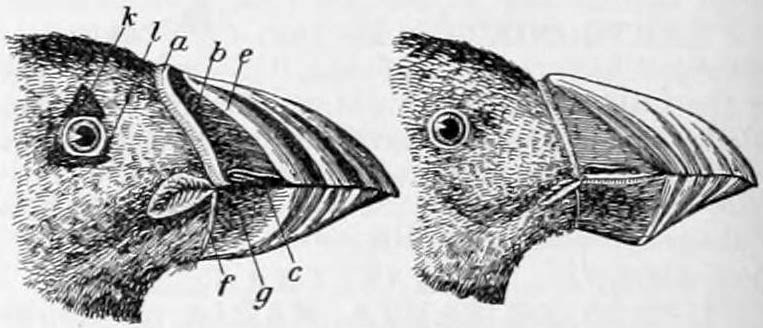
This puffin (Atlantic Puffin) has a black crown and back, pale grey cheek patches and white underparts. Its broad, boldly marked red and black beak and orange legs contrast with its plumage. It moults while at sea in the winter and some of the bright-colored facial characteristics are lost, with color returning again during the spring. The external appearance of the adult male and female are identical though the male is usually slightly larger. The juvenile has similar plumage but its cheek patches are dark grey. The juvenile does not have brightly colored head ornamentation, its bill is narrower and is dark-grey with a yellowish-brown tip, and its legs and feet are also dark. Puffins from northern populations are typically larger than in the south and it is generally considered that these populations are different subspecies.

Puffin Beaks – Breeding L and non-breeding R – 1905 PubDom Drawing

Spending the autumn and winter in the open ocean of the cold northern seas, the Atlantic puffin returns to coastal areas at the start of the breeding season in late spring. It nests in clifftop colonies, digging a burrow in which a single white egg is laid. The chick mostly feeds on whole fish and grows rapidly. After about six weeks it is fully fledged and makes its way at night to the sea. It swims away from the shore and does not return to land for several years. [Wikipedia with editing]

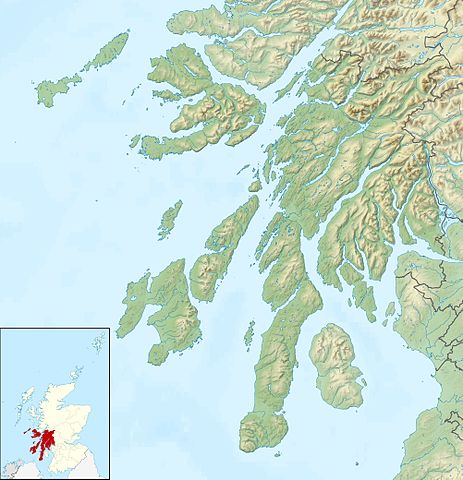
This photo was take in Mull, Scotland. “Mull (Scottish Gaelic: Muile, pronounced [ˈmulʲə]) is the second largest island of the Inner Hebrides (after Skye), off the west coast of Scotland in the council area of Argyll and Bute.

Argyll and Bute UK relief location map

With an area of 875.35 square kilometres (337.97 sq mi) Mull is the fourth largest Scottish island and the fourth largest island surrounding Great Britain (excluding Ireland). In the 2011 census the usual resident population of Mull was 2,800; a slight increase on the 2001 figure of 2,667; in the summer this is supplemented by many tourists. Much of the population lives in Tobermory, the only burgh on the island until 1973, and its capital.”

Lighter side verses: [yet very true]

“Love suffers long and is kind; love does not envy; love does not parade itself, is not puffed up;” (1 Corinthians 13:4 NKJV)

“We know that we all have knowledge. Knowledge puffs up, but love edifies.” (1 Corinthians 8:1 NKJV)

Hummingbirds in Ultra Slow Motion

Dr. Jim, [aka J.J.S.Johnson] found this super video about Hummingbirds. It has amazing facts and nice music. Please watch. You will glad you did.

This is on Nature’s Invitation YouTube Channel. ‘Over 20 amazing Facts about Hummingbirds. Slow motion footage of the hummingbird in Full HD. Great for school nature projects. Watch hummingbirds fly in ULTRA slow motion. Watch the humming bird hover and fly backwards in slow motion. Videos of hummingbird babies (chicks) being fed and much more.”

“But where can wisdom be found? And where is the place of understanding? Man does not know its value, Nor is it found in the land of the living. The deep says, ‘It is not in me’; And the sea says, ‘It is not with me.’ It cannot be purchased for gold, Nor can silver be weighed for its price. (Job 28:12-15)

“From where then does wisdom come? And where is the place of understanding? It is hidden from the eyes of all living, And concealed from the birds of the air. (Job 28:20-21)

God understands its way, And He knows its place. For He looks to the ends of the earth, And sees under the whole heavens, To establish a weight for the wind, And apportion the waters by measure. When He made a law for the rain, And a path for the thunderbolt, Then He saw wisdom and declared it; He prepared it, indeed, He searched it out. And to man He said, ‘Behold, the fear of the Lord, that is wisdom, And to depart from evil is understanding.’ ” (Job 28:23-28 NKJV)

When I Am Grown

Young Gallinule at Viera Wetlands

On the Fourth of July, yesterday, we were at Viera Wetlands, Viera, Florida and spotted this young Common Gallinule, depending on what they are calling it. Look at its feet. He/she has some growing to do to fit those feet.

Below is how it will look when it matures.

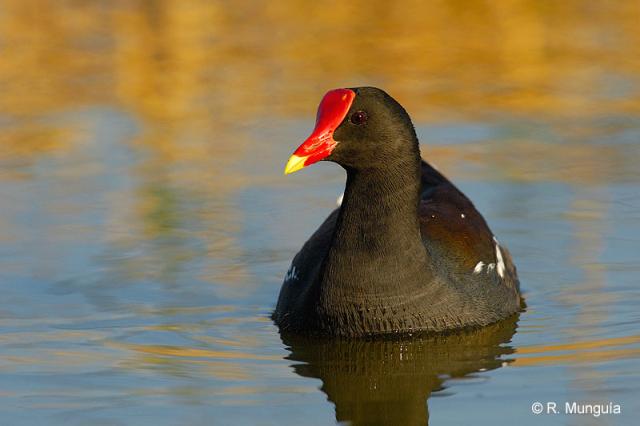
Common Gallinule (Gallinula chloropus) by Reinier Munguia

“I have been young, and now am old; yet have I not seen the righteous forsaken, nor his seed begging bread.” (Psalms 37:25 KJV)

Another promise our Savior and Creator has given us. Lord’s Blessings.

Common Gallinule – All About Birds

Shield of Thy Salvation