Avian and Attributes – Immutable

Marshall's Iora (Aegithina nigrolutea) by Nikhil Devasar

Marshall’s Iora (Aegithina nigrolutea) by Nikhil Devasar

“That by two immutable things, in which it was impossible for God to lie, we might have a strong consolation, who have fled for refuge to lay hold upon the hope set before us:” (Hebrews 6:18 KJV)

Immutable

IMMU’TABLE, a. [L.immutabilis; in and mutabilis.] invariable; unalterable; not capable or susceptible of change.
That by two immutable things, in which it was impossible for God to lie, we might have strong consolation. Heb 6.


Marshall’s Iora

The White-tailed Iora or Marshall’s Iora (Aegithina nigrolutea), is a songbird in the genus Aegithina found in parts of India and Sri Lanka. Calls are strident whistles; songs are musical to human ears. The Ioras are small to medium-small sized passerines, ranging from 11.5 to 15.5 cm (4.5–6.1 in) in length. Ioras have thin legs, and their bills are proportionately longer.

Ioras eat insects and spiders, which they find by nimbly gleaning the leaves of the slenderest outer twigs.  Aegithinidae Family


More Avian and Attributes Articles

Birds of the World – Common Iora and Allies

Sunday Inspiration –  Vangas and Friends

Birds whose last name start with “I”

*
[Definitions from Webster’s Dictionary of American English (1828), unless noted. Bird info from Wikipedia plus.]

Avian and Attributes – Holy

Lewin's Honeyeater (Meliphaga lewinii) by W Kwong

    Lewin’s Honeyeater (Meliphaga lewinii) by W Kwong

“But as he which hath called you is holy, so be ye holy in all manner of conversation; Because it is written, Be ye holy; for I am holy.” (1 Peter 1:15-16 KJV)


Holy

HO’LY, a.
1. Properly, whole, entire or perfect, in a moral sense. Hence, pure in heart, temper or dispositions; free from sin and sinful affections. Applied to the Supreme Being, holy signifies perfectly pure, immaculate and complete in moral character; and man is more or less holy, as his heart is more or less sanctified, or purified from evil dispositions. We call a man holy, when his heart is conformed in some degree to the image of God, and his life is regulated by the divine precepts. Hence, holy is used as nearly synonymous with good, pious, godly.
Be ye holy; for I am holy. 1 Pet 1.

2. Hallowed; consecrated or set apart to a sacred use, or to the service or worship of God; a sense frequent in Scripture; as the holy sabbath; holy oil; holy vessels; a holy nation; the holy temple; a holy priesthood.

3. Proceeding from pious principles, or directed to pious purposes; as holy zeal.

4. Perfectly just and good; as the holy law of God.

5. Sacred; as a holy witness.

Holy of holies, in Scripture, the innermost apartment of the Jewish tabernacle or temple, where the ark was kept, and where no person entered, except the high priest, once a year.

Holy Ghost, or Holy Spirit, the Divine Spirit; the third person in the Trinity; the sanctifier of souls.

Holy war, a war undertaken to rescue the holy land, the ancient Judea, from the infidels; a crusade; an expedition carried on by Christians against the Saracens in the eleventh, twelfth and thirteenth centuries; a war carried on in a most unholy manner.


Lewin’s Honeyeater

The Lewin’s Honeyeater (Meliphaga lewinii) is a bird that inhabits the ranges along the east coast of Australia. It has a semicircular ear patch, pale yellow in color. The name of this bird commemorates the Australian artist John Lewin.

Lewin’s honeyeaters feed mostly on fruits, favoring berries and small fruits, but also eat insects and nectar. Birds are normally seen alone, but may form loose groups of up to 10 birds. They feed in the upper branches and on the trunks of trees. Some insects are caught in flight. Meliphagidae Family


More Avian and Attributes Articles

Sunday Inspiration – Honeyeaters

Birds whose last name start with “H”

Good News

*
[Definitions from Webster’s Dictionary of American English (1828), unless noted. Bird info from Wikipedia plus.]

Avian and Attributes – Glorious

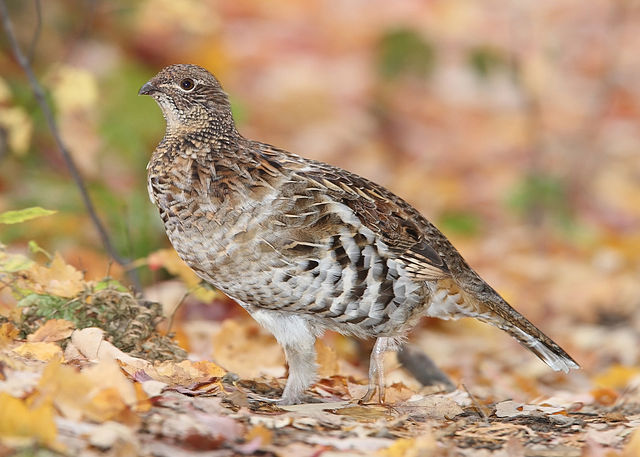
Ruffed Grouse (Bonasa umbellus) ©WikiC

“Who is like unto thee, O LORD, among the gods? who is like thee, glorious in holiness, fearful in praises, doing wonders?” (Exodus 15:11 KJV)


Glorious

GLO’RIOUS, a. [L. gloriosus. See Glory.]
1. Illustrious; of exalted excellence and splendor; resplendent in majesty and divine attributes; applied to God. Exo 15:11.
2. Noble; excellent; renowned; celebrated; illustrious; very honorable; applied to men, their achievements, titles, &c.
Let us remember we are Cato’s friends,
And act like men who claim that glorious title.
3. Boastful; self-exulting; haughty; ostentatious.


Ruffed Grouse

The ruffed grouse differs from other grouse species in its courtship display. Unlike other grouse species, the ruffed grouse relies entirely on a non-vocal acoustic display, known as drumming. The drumming itself is a rapid, wing-beating display that creates a low-frequency sound, starting slow and speeding up (thump…thump…thump..thump-thump-thump-thump). Even in thick woods, this can be heard for a quarter-mile or more (~1/2 km).

The ruffed grouse spends most of its time quietly on the ground, and when surprised, may explode into flight, beating their wings very loudly. In the winter, they will burrow into the snow for warmth, and may suddenly burst out of the snow when approached too closely.

Phasianidae Family

Watch video of Ruffed Grouse Druming


More Avian and Attributes Articles

Birds whose last name start with “G”

Good News

*
[Definitions from Webster’s Dictionary of American English (1828), unless noted. Bird info from Wikipedia plus.]

Avian and Attributes – Faithful

Peregrine Falcon In Flight by Raymond Barlow

Peregrine Falcon In Flight by Raymond Barlow

“Know therefore that the LORD thy God, he is God, the faithful God, which keepeth covenant and mercy with them that love him and keep his commandments to a thousand generations;” (Deuteronomy 7:9 KJV)


Faithful

FA’ITHFUL, a.
1. Firm in adherence to the truth and to the duties of religion.
Be thou faithful unto death, and I will give thee a crown of life. Rev 2.
2. Firmly adhering to duty; of true fidelity; loyal; true to allegiance; as a faithful subject.
3. constant in the performance of duties or services; exact in attending to commands; as a faithful servant.
4. Observant of compact, treaties, contracts, vows or other engagements; true to one’s word. A government should be faithful to its treaties; individuals, to their word.
5. True; exact; in conformity to the letter and spirit; as a faithful execution of a will.
6. True to the marriage covenant; as a faithful wife or husband.
7. Conformable to truth; as a faithful narrative or representation.
8. Constant; not fickle; as a faithful lover or friend.
9. True; worthy of belief. 2 Tim 2.


Peregrine Falcon

While its diet consists almost exclusively of medium-sized birds, the peregrine will occasionally hunt small mammals, small reptiles, or even insects. Reaching sexual maturity at one year, it mates for life and nests in a scrape, normally on cliff edges or, in recent times, on tall human-made structures. [italics added for emphasis]


More Avian and Attributes Articles

Birds whose last name start with “F”

Northern Raven and Peregrine Falcon: Two Birds Supporting the Manx Coat of Arms

Birds of the Bible – Peregrine Falcon and Goshawk

Peregrine Falcon

Good News

*
[Definitions from Webster’s Dictionary of American English (1828), unless noted. Bird info from Wikipedia plus.]

Avian and Attributes – Everlasting

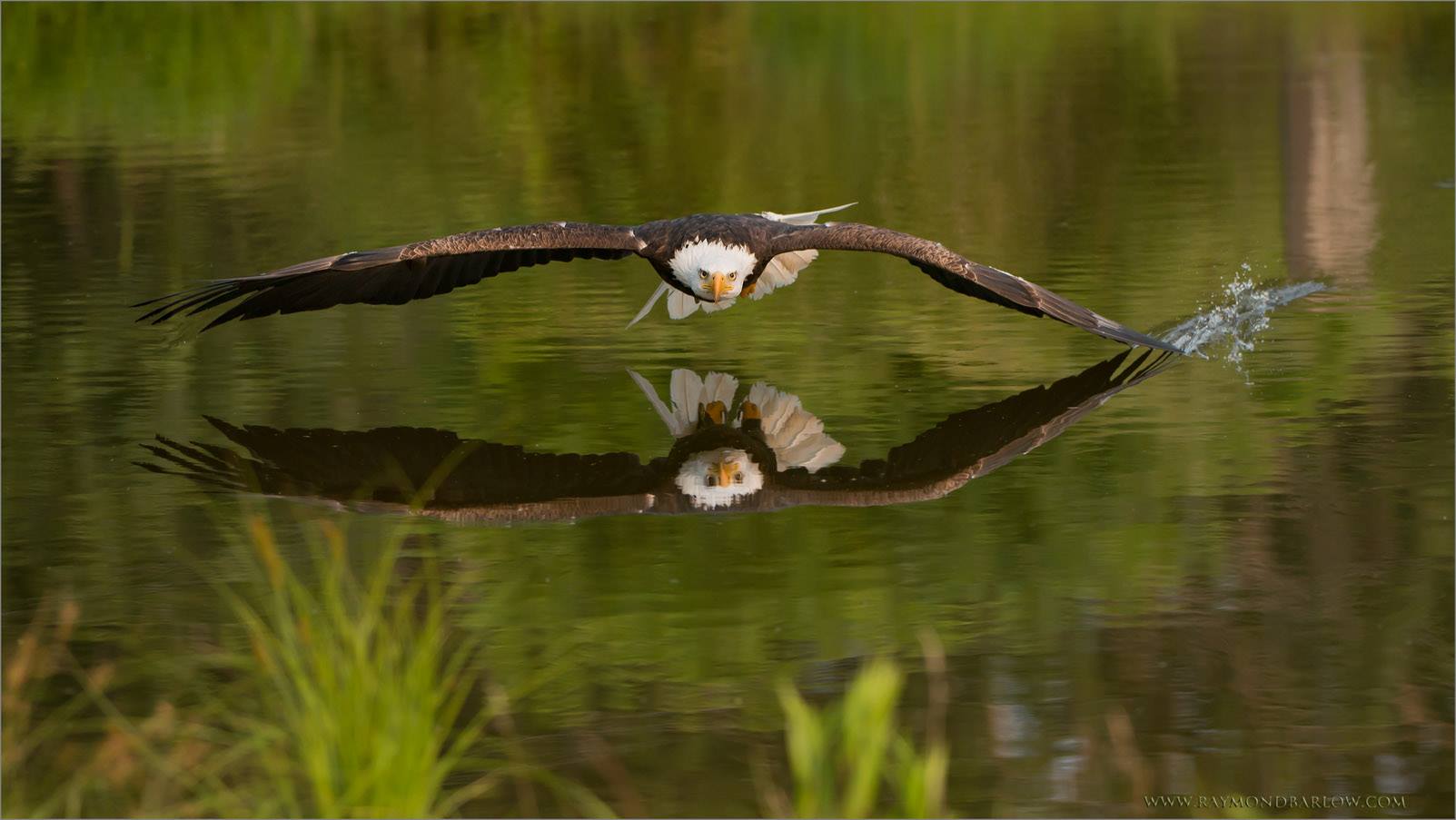
Bald Eagle (Haliaeetus leucocephalus) by Ray Barlow

“Thy throne is established of old: thou art from everlasting.” (Psalms 93:2 KJV)


Everlasting

EVERL`ASTING, a. [ever and lasting.] Lasting or enduring for ever; eternal; existing or continuing without end; immortal.
The everlasting God, or Jehovah. Gen 21.
Everlasting fire; everlasting punishment. Mat 18:25.
1. Perpetual; continuing indefinitely, or during the present state of things.
I will give thee, and thy seed after thee, the land of Canaan, for an everlasting possession. Gen 17.
The everlasting hills or mountains. Genesis. Habakkuk.
2. In popular usage, endless; continual; unintermitted; as, the family is disturbed with everlasting disputes.
EVERL`ASTING, n. Eternity; eternal duration, past and future.
From everlasting to everlasting, thou art God. Psa 90.


Eagle is a common name for many large birds of prey of the family Accipitridae; it belongs to several groups of genera that are not necessarily closely related to each other.

Most of the 60 species of eagles are from Eurasia and Africa. Outside this area, just 14 species can be found – two in North America, nine in Central and South America, and three in Australia. Accipitridae Family


More Avian and Attributes Articles

Birds whose last name start with “E”

Good News

*
[Definitions from Webster’s Dictionary of American English (1828), unless noted. Bird info from Wikipedia plus.]

Avian and Attributes – Deliverer

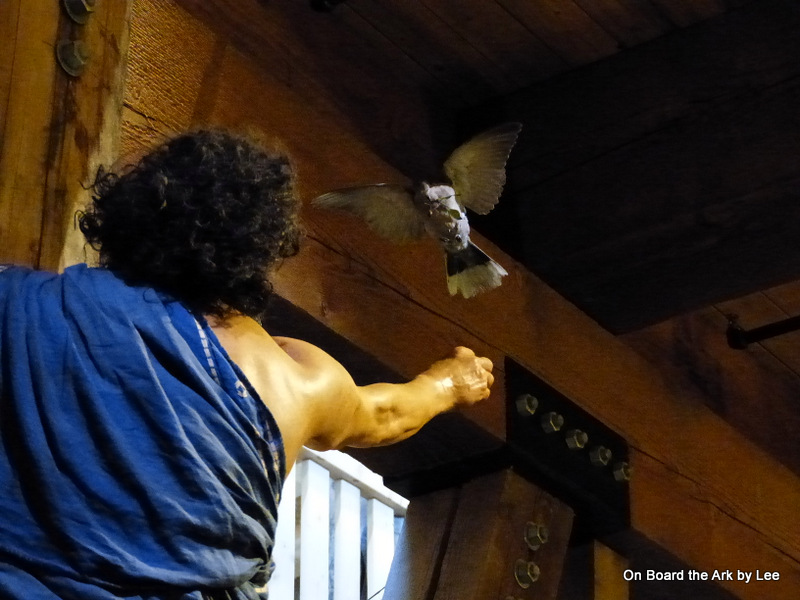
Noah taking the Dove back on board the Ark. (Ark Encounter by Lee)

“And he said, The LORD is my rock, and my fortress, and my deliverer;” (2 Samuel 22:2 KJV)


Deliverer

DELIVERER, n.
1. One who delivers; one who releases or rescues; a preserver.
The Lord raised up a deliverer to Israel. Judges 30.
2. One who relates, or communicates.


The Dove are perching birds, which along with the pigeons belong to the taxonomic family Columbidae. They are perhaps best known as birds of gentle nature, but are also popular game birds. The symbolism of a white dove (though most “white doves” are actually white homing pigeons), has been used for peace, purity, and innocent love. Columbidae Family


More Avian and Attributes Articles

Birds whose last name start with “D”

(Dove – Creation Wiki)

Good News

*
[Definitions from Webster’s Dictionary of American English (1828), unless noted.]

Avian and Attributes – Creator

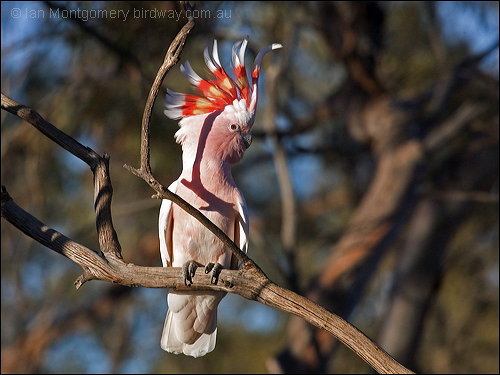
Major Mitchell's Cockatoo (Lophochroa leadbeateri) By Ian

Major Mitchell’s Cockatoo (Lophochroa leadbeateri) By Ian

Hast thou not known? hast thou not heard, that the everlasting God, the LORD, the Creator of the ends of the earth, fainteth not, neither is weary? there is no searching of his understanding.” (Isaiah 40:28 KJV)


Creator

CREATOR, n. [L.]
1. The being or person that creates.
Remember thy Creator in the days of thy youth. Eccl 12.
2. The thing that creates, produces or causes.


Major Mitchell’s Cockatoo

With its soft-textured white and salmon-pink plumage and large, bright red and yellow crest, it is often described as the most beautiful of all cockatoos. It is named in honour of Major Sir Thomas Mitchell, who wrote, “Few birds more enliven the monotonous hues of the Australian forest than this beautiful species whose pink-coloured wings and flowing crest might have embellished the air of a more voluptuous region.” Cacatuidae Family


More Avian and Attributes Articles

Birds whose last name starts with “C”

Major Mitchell’s Cockatoo – Wikipedia

Parrot – Creation Wiki

Good News

*
[Definitions from Webster’s Dictionary of American English (1828), unless noted. Bird info from Wikipedia plus.]

Avian and Attributes – Beautiful

Beautiful Firetail (Stagonopleura bella) M ©WikiC

“In that day shall the branch of the LORD be beautiful and glorious, and the fruit of the earth shall be excellent and comely for them that are escaped of Israel.” (Isaiah 4:2 KJV)


Beautiful

BEAU’TIFUL, a. bu’tiful. [beauty and full.]
1. Elegant in form, fair, having the form that pleases the eye. It expresses more than handsome.
2. Having the qualities which constitute beauty, or that which pleases the senses other than the sight; as a beautiful sound.


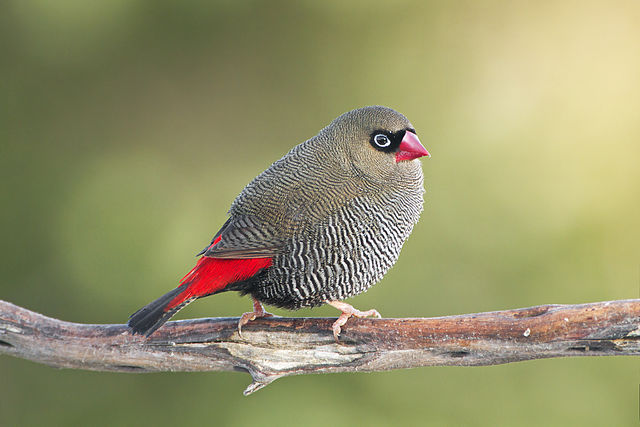
The beautiful firetail (Stagonopleura bella) is a common species of estrildid finch found in Australia. The species inhabits temperate shrubland habitats in Australia. The beautiful firetail mainly feeds on grass seed and Casuarina and Melaleuca seeds. Small insects and snails occasionally complement this herbivore diet. Estrildidae Family


More Avian and Attributes Articles

Beautiful Firetail – Wikipedia

Birds whose first name start with “B”

Good News

*

[Definitions from Webster’s Dictionary of American English (1828), unless noted. Bird info from Wikipedia plus.]

Avian and Attributes – Almighty

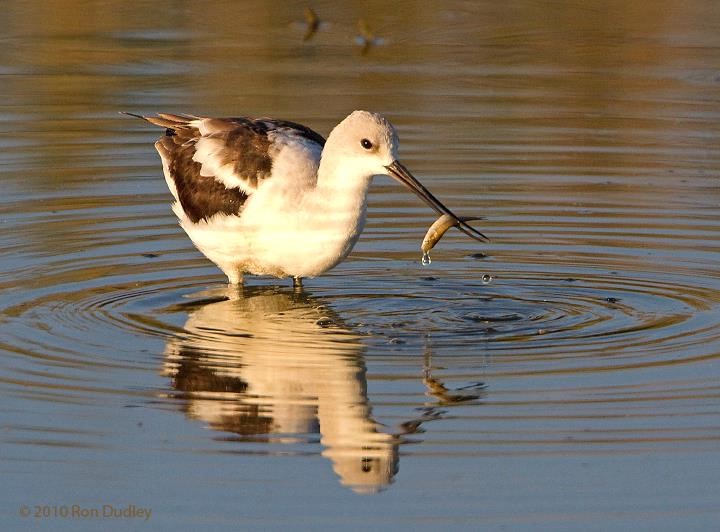
American Avocet “Gone fishin” – photo by Ron Dudley

“He that dwelleth in the secret place of the most High shall abide under the shadow of the Almighty.” (Psalms 91:1 KJV)


Almighty

ALMI’GHTY, a. [all and mighty. See Might.]
Possessing all power; omnipotent; being of unlimited might; being of boundless sufficiency; appropriately applied to the Supreme Being.
ALMI’GHTY, n. The Omnipotent God.


Avocets have long legs and they sweep their long, thin, upcurved bills from side to side when feeding in the brackish or saline wetlands they prefer. The plumage is pied, sometimes also with some red. Members of this genus have webbed feet and readily swim. Their diet consists of aquatic insects and other small creatures. Recurvirostridae Family


“A” is for Avocet and Albatross: “A” Birds, Part 1

Birds Vol 2 #1 – The American Avocet

***

Today is the beginning of a new series for Lee’s Birdwatching Adventures. A good friend of mine, Rhonda Sawtelle, (Create a Positive Day), has been posting every day on her Facebook a different attribute of our Lord God. She has been going through them alphabetically. What if each day, we had a different attribute and a bird that starts with that same letter. My challenge is to try to at least get through the alphabet at least once. Maybe several rounds. Stay tuned!

More Avian and Attributes Articles

Birds whose last name start with “A”

Good News

*

[Definitions from Webster’s Dictionary of American English (1828), unless noted. Bird info from Wikipedia plus.]

Shorebirds Looney about Horseshoe Crab Eggs

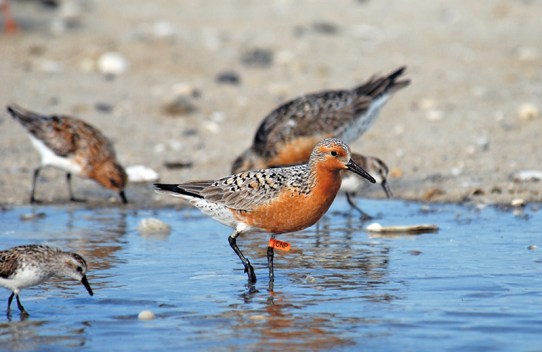
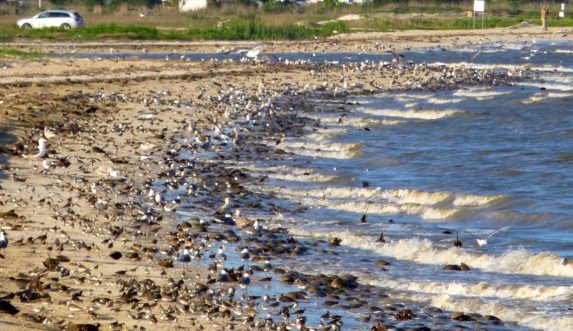
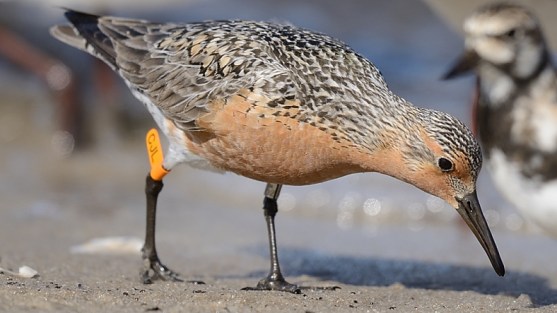
RedKnot-DelawareBay-beach.GregoryBreese-USFWS

Red Knot Eating Crab Eggs at Delaware Bay Beach

Photo by Gregory Breese / USF&WS

Thankfully, the rhythms of our world are fairly predictable. Although the details differ, the overall cycles are regular:

While the earth remains, seedtimes and harvest, and cold and heat, and summer and winter, and day and night shall not cease. (Genesis 8:22)

Because of these recurring patterns migratory birds can depend on food being conveniently available when they migrate northward in the spring. In effect,  “fast food” on the beach is a “convenience store” for famished feathered fliers.

For example, consider how the annual egg-laying (and egg-burying) activities of horseshoe crabs perfectly synchronize with the hunger of migratory shorebirds (e.g., red knots, turnstones, and sandpipers) that stopover on bayside beaches, for “fast food”, right where huge piles of crab eggs have just been deposited (and where some have been uncovered by tidewaters).

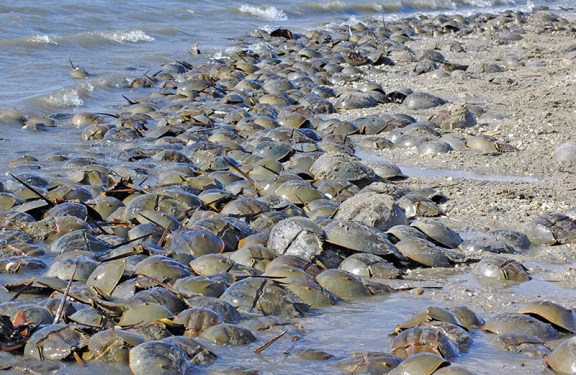
HorseshoeCrabs-DelawareBay-beach.GregoryBreese-USFWS

Horseshoe Crabs on Delaware Bay Beach

Photo by Gregory Breese / USF&WS

No need to worry about the birds eating too many crab eggs! – the egg-laying is so prolific (i.e., about 100,000 eggs per mother) that many horseshoe crab eggs are missed by the migratory birds, thus becoming the next generation of horseshoe crabs, plus the birds mostly eat the prematurely  surfacing eggs that are less likely to succeed in life anyway!)

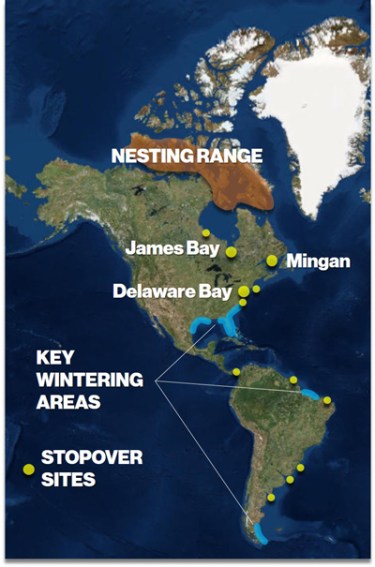
Timing is everything. Each spring, shorebirds migrate from wintering grounds in South America to breeding grounds in the Arctic. These birds have some of the longest migrations known. Delaware Bay is the prime stopover site and the birds’ stop coincides with horseshoe crab spawning. Shorebirds like the red knot, ruddy turnstone and semipalmated sandpiper, as well as many others, rely on horseshoe crab eggs to replenish their energy reserves before heading to their Arctic nesting grounds.  The birds arrive in the Arctic before insects emerge. This means that they must leave Delaware Bay with enough energy reserves to make the trip to the Arctic and survive without food until well after they have laid their eggs. If they have not accumulated enough fat reserves at the bay, they may not be able to breed.

The world’s largest spawning population of horseshoe crabs occurs in Delaware Bay. During high tide, horseshoe crabs migrate from deep water to beaches to spawn. The female digs a nest in the sand and deposits between 4,000 and 30,000 eggs that the male will fertilize with sperm. A single crab may lay 100,000 eggs or more during a season. Horseshoe crab spawning begins in late April and runs through mid-August, although peak spawning in the mid-Atlantic takes place May 1 through the first week of June.

At low tide, adult crabs go back into the water but may return at the next high tide. Horseshoe crab spawning increases on nights with a full or new moon, when gravity is stronger and high tides are even higher. At the same time that migrating shorebirds arrive to rest and feed along Delaware Bay, horseshoe crab activity is high. While the crab buries its eggs deeper than shorebirds can reach, waves and other horseshoe crabs expose large numbers of eggs. These surface eggs will not survive, but they provide food for many animals. The shorebirds can easily feed on eggs that have surfaced prematurely.

Quoting Kathy Reshetiloff, “Migratory Birds Shore Up Appetites on Horseshoe Crab Eggs”, THE CHESAPEAKE BAY JOURNAL, 27(3):40 (May 2017).

Shorebirds-HorseshoeCrabs-DelawareBay.LarryNiles

Shorebirds and Horseshoe Crabs on Delaware Bay Beach

Photo by Larry Niles

Notice how it is the gravitational pull of the moon, as the moon goes through its periodic cycle, that causes the high and low tides – which facilitate the uncovering of enough horseshoe crab eggs to satisfy the needs of the migratory stopover shorebirds that pass through Delaware Bay.  Notice how the moon provides a phenological “regulation” (i.e., the moon is physically ruling and correlating the interaction of the horseshoe crabs, the migratory shorebirds, and the bay’s tidewaters – in accordance with and illustrating Genesis 1:16-18).

At low tide, adult crabs go back into the water but may return at the next high tide. Horseshoe crab spawning increases on nights with a full or new moon, when gravity is stronger and high tides are even higher. At the same time that migrating shorebirds arrive to rest and feed along Delaware Bay, horseshoe crab activity is high.

Again quoting Kathy Reshetiloff, “Migratory Birds Shore Up Appetites on Horseshoe Crab Eggs”, THE CHESAPEAKE BAY JOURNAL, 27(3):40 (May 2017).

RedKnot-MigrationMap.NatureConservancy
Map of Red Knot Winter Ranges, Summer Breeding Range, & Migratory Stopovers
Map by The Nature Conservancy, adapted from USF&WS map

So, you might say that these reproducing Horseshoe Crabs, and the myriads of migratory shorebirds, share phenological calendars because they’re all looney.

RedKnot-onshore.NatureConservancy-MJKilpatrick

Red Knot on Beach, during Migratory Stopover
photo by The Nature Conservancy / M J Kilpatrick

Palaces Are Known For Both Tattletales And Wagtails

Palaces Are Known For Both Tattletales And Wagtails

Dr. James J. S. Johnson

Curse not the king, no not in thy thought; and curse not the rich in thy bedchamber: for a bird of the air shall carry the voice, and that which hath wings shall tell the matter.   (Ecclesiastes 10:20)

Royal palaces are known to attract (and to house) some of God’s winged wonders, and Catherine’s Palace —  one of the imperial Russian palaces  —  is no exception.   (And not all palace-dwelling birds there are tattle-tales, although some are wagtails!)

CatherinePalace-TsarskoyeSelo.main-entrance-exterior
Catherine’s Palace, front entrance exterior   (Saint-Petersburg.com photograph)

Catherine’s Palace is a royal mansion – a “summer palace” —  in Pushkin (a/k/a Tsarskoye Selo), about 19 miles south of St. Petersburg (f/k/a Leningrad), Russia, which my wife and I visited on July 9th of AD2006.  The imposingly-humongous-yet-flourishingly-ornate, embellishment-heavy, exquisitely dignified architecture is classified as Rococo (i.e., late Baroque), and a ton of wealth is built into its many construction details and decorative displays.  The palace was originally commissioned by Empress Catherine I (AD1717) but was extravagantly modified (during AD1752-AD1756) at the direction of Empress Elizabeth Petrovna, Catherine’s daughter (who was 1 of Catherine’s 2 children who survived to adulthood, the other 10 dying young), and afterwards by Emperor Alexander I, Catherine’s grandson.  Before German invaders destroyed the palace’s interior, during World War II, Russian archivists had documented the interior of the palace; those records were used (after the war) to repair and restore some, but not all, of this historic and opulent mansion.

GrandHall-CatherinePalace.PushkinRussia

Grand Hall, Catherine Palace, in Pushkin, Russia   (Saint-Petersburg.com photograph)

Yet one of the most magnificent treasures, of Catherine’s Palace, survives to this very day  —  hidden in plain view  —  skipping merrily in the yards and fields adjacent to Catherine’s Palace: the WHITE WAGTAIL.

WhiteWagtail-youngfemale.AndreasTrepte

WHITE WAGTAIL  1st summer female (Andreas Trepte / Wikipedia photograph)

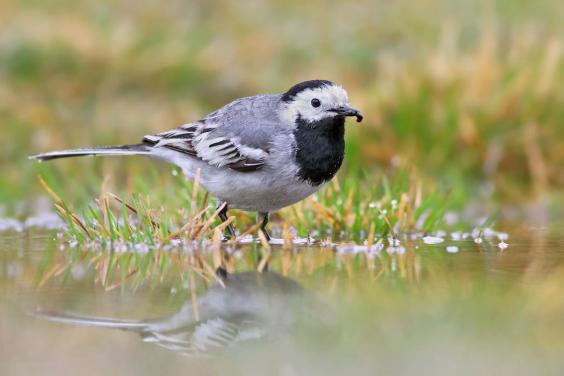
The White Wagtail (Motacilla alba), a mostly grey bird (of a grey tone similar to that of many mockingbirds) with a black head (and bib) that contrasts with white “eye-mask” plumage, plus blue and white striping on its wings and tail-feathers.  This small black-white-and-grey passerine, cousin to the pipits, is named for its most famous behavior: wagging its tail.

Slim black and white bird with a long, constantly wagging tail. Frequently seen beside water but equally in fields, farmyards, parks, [recreational] playing fields, roadsides, rooftops.  The [subspecies variety called the] Pied Wagtail (race yarrellii) is resident [of the] British Isles, although a very few nest on adjacent continental coasts.  Nominate White (race albus) nests throughout Europe [from the Iberian Peninsula to the Ural Mountains, including the Baltic Sea coastlands including Russia’s St. Petersburg –  but only summering in the northern half of Europe], and is scarce but regular passage migrant to Britain (March-May / August / October).

[Quoting Chris Knightley, Steve Madge, & Dave Nurney, POCKET GUIDE TO THE BIRDS OF BRITAIN AND NORTH-WEST EUROPE (London & New Haven, Yale Univ. Press, 1998), page 201. See also, accord, Lars Jonsson, BIRDS OF EUROPE, WITH NORTH AFRICA AND THE MIDDLE EAST (Princeton University Press, 1993), page 372-373.]

WhiteWagtail.BengtNyman

WHITE WAGTAIL   (Bengt Nyman photograph)

For me, the Wagtail’s characteristic tail-wagging reminds me of a happy pet dog, such as a French Poodle or Labrador Retriever. Every child should have happy memories of a happy dog’s companionship – I’m thankful that my childhood memories include such happy times.  Wagtails themselves enjoy their own version of companionship; they are monogamous, sharing nest duties (e.g., constructing the nest together, taking turns to incubate their unhatched eggs, and taking turns feeding the hatchlings), and they defend their own family’s territory.

WhiteWagtail-with-bug.Moorhen-photo

WHITE WAGTAIL with insect prey   (Roy & Marie Battell / Moorhen.me.uk photograph)

What do wagtails eat?  A mix of adult and larval insects (e.g., flies, midges, cranflies, mayflies, caterpillars, moths, dragonflies, beetles, aquatic insect larvae), spiders, earthworms, tiny fish fry (as it wades in shallow water), a few seeds, and sometimes small snails.

WhiteWagtail-InternetBirdCollection-IvanSjogren

WHITE WAGTAIL male in shallow water    (Ivan Sjögren photograph)

The White Wagtail also bobs his head while walking, somewhat like how city-dwelling pigeons do.

Walks or runs [sometimes making quick dashes] with nodding head, sudden lunges and flycatching leaps. In flight, can be picked out at distance by long tail and conspicuously dipping action, with distinct bursts of wingbeats.  Flight call characteristic:  a loud tchiz-ick; also utters an emphatic tsu-weeI.  Lively, twittering song.  In winter, forms large roosts in reedbeds, towns, etc.

[Quoting Chris Knightley, Steve Madge, & Dave Nurney, POCKET GUIDE TO THE BIRDS OF BRITAIN AND NORTH-WEST EUROPE (London & New Haven, Yale Univ. Press, 1998), page 201.]

So, if you ever get to visit Catherine’s Palace, in Pushkin (outside of St. Petersburg), Russia, as we did on July 9th of AD2006, do enjoy all the golden glitter and ivory opulence  —  but don’t forget to also keep an eye open for a bird wagging its tail, maybe foraging on the manicured lawns nearby, or hunting near other less glamorous buildings  —  you might see an avian treasure, the White Wagtail!         ><> JJSJ  profjjsj@aol.com

WhiteWagtail-rooftop-hunting.Moorhen-montage-photoblend

WHITE WAGTAIL hunting rooftop insects     (Roy & Marie Battell / Moorhen.me.uk montage photo-blend)

CatherinePalace-PushkinRussia.aerial-view

CATHERINE’S PALACE:  aerial view, Pushkin, Russia   (Saint-Petersburg.com photograph)

What’s Good For The Goose . . . May Be Relocating (To Another Summer Home)

BARNACLE  GOOSE  BIOGEOGRAPHY:    WHAT’S GOOD FOR THE GOOSE MAY INCLUDE RELOCATING (AWAY FROM BREEDING GROUNDS TOO CLOSE TO RUSSIA’S H-BOMB TESTING SITE!)

Dr. James J. S. Johnson BarnacleGoose-3swimming.BirdArt-Kuvat-Finland

BARNACLE GOOSE trio, swimming in Finland  (photo credit: Kuvat / ArtBird)

And Solomon’s provision for one day was 30 measures of fine flour, and 60 measures of meal, 10 fat oxen, and 20 oxen out of the pastures, and 100 sheep, beside harts, and roebucks, and fallow-deer, and fatted fowl.   (1st Kings 4:22-23)

Are geese alluded to in Scripture, although not by the name “goose”? Maybe. King Solomon was famous for providing banquets on a daily basis, including “fatted fowl” – which likely included geese, according to British zookeeper-zoölogist George Cansdale:

[Consider the likely] possibility that domestic geese were the fatted fowl —  Heb. barburim —  supplied daily to Solomon’s table.  . . .  This wild goose [i.e., the Greylag Goose, mixed with all geese that hybridize with it] breeds naturally in N. and central Europe and may have first been domesticated there. It was kept, perhaps already fully domesticated, very early in Ancient Egypt and Mesopotamia, probably as a resutl of trapping some of the many winter migrants.  . . .  [Although we don’t know] when they first reached Palestine … [carved] ivories of the eleventh century B.C. from Megiddo illustrate tame geese beiogn tended, and this is the century before Solomon, so there is no doubt that they were available [to King Solomon, who procured resources from neighboring regions in Europe, Asia, and Africa].

[Quoting George S. Cansdale, ALL THE ANIMALS OF THE BIBLE LANDS (Zondervan, 1976), page ; see contextual discussion at pages 178-180.]

The mostly-migratory Barnacle Goose is a favorite of many birdwatchers in northern Europe.  It is more likley to be seen during its wintering months, unless one ventures above the Arctic Circle.  (The exception is a Barnacle Goose population residing in Baltic Sea coastlands, which appears content to dwell there year-round – see range map below.)

BarnacleGoose-RangeMap.WikipediaCommons

BARNACLE GOOSE RANGE MAP  (Cartographic credit: Wikipedia Commons)

In my sporadic wanderings, during years past, specifically on July 7th of AD2006 – I saw several Barnacle Geese (Branta leucopsis) strolling about in Kaivopuisto Park, by the Helsinki Harbor, in Finland.

BarnacleGoose-pair.Helsinki-KaivopuistoPark

BARNACLE GOOSE pair, in Kaivopuisto Park, Helsinki, Finland  (photo credit: Juha Matti / Picssr)

This migratory goose, which during the summer is common in (and near) Helsinki’s Kaivopuisto Park (where I saw some loitering and lounging on the park grass), has been described as follows:

An immaculate, sociable little goose, only slightly larger than a Mallard. Tiny bill and a white face peering out of black ‘balaclava’ diagnostic.  Unlike the much larger Canada Goose, black extends over [its] breast and body is grey (not brown). All [seasonal] plumages similar, but juvenile duller with plain, unbarred flanks. Feral or escaped [e.g., from British zoos] birds are also frequent at inland sites in England [e.g., Leeds Castle, in Kent, where I visited in AD2003], often [mixed] with Canadas [i.e., with Canada Geese].

[Quoting Chris Knightley, Steve Madge, & Dave Nurney, POCKET GUIDE TO THE BIRDS OF BRITAIN AND NORTH-WEST EUROPE (London & New Haven, Yale Univ. Press, 1998), page 31.]
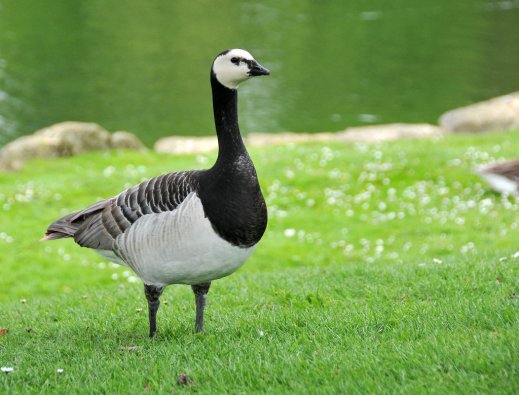
BarnacleGoose-LeedsCastle-Kent.ThomasCogley-sideview

BARNACLE GOOSE at Leeds Castle, Kent, England  (photo credit: Thomas Cogley)

Like other geese, these birds know how to use their voices:

Noisy, even when feeding, their high-pitched, yelping barks [!] reaching a crescendo as the shimmering flock rises – sounds not unlike a pack of chasing hounds.

[Quoting Knightley, Madge, & Nurney, POCKET GUIDE TO THE BIRDS OF BRITAIN AND NORTH-WEST EUROPE, page 31.]   These geese are herbivores  —  feeding mostly on grasses, leaves, roots, tubers, aquatic plants, and/or agricultural crops (such as grains grown in northern Europe’s farmlands), and their digestive processes adi  in seed dispersals.  Predators of Barnacle Geese – especially during the breeding season  —  include Peregrine Falcons, Arctic Foxes, and Polar Bears.

Besides Sweden’s (and other) Baltic coastlands, these cool-weather-loving geese habitually summer in the Arctic’s far north, including breeding grounds in Iceland, Svalbard, Greenland, and Russia’s arctic archipelago Novaya Zemla (and on the Siberian coast just south of Novaya Zemla).

Students of the Cold War can appreciate that Novaya Zemla was a scary place to be on October 30th of AD1961, when the USSR tested its RDS-220 hydrogen bomb “Ivan” (a/k/a Tsar Bomba (Russian Царь-бомба, i.e., “Tsar Bomb”), the largest man-made explosion detonated in world history.
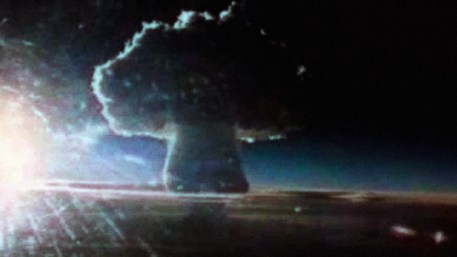
TsarBomb.Russian-Hbomb-AD1961

Explosion of Soviet Union’sЦарь-бомба Hydrogen Bomb 
seen from 100 miles away   (public domain)

Based on migratory habits the Barnacle Gees were likely absent when the blast occurred  —  but what was it like, during the next spring, when the geese would have migrated north, to their usual breeding grounds in Novaya Zemla?  Some emigrants of the Novaya Zemla-breeding population of Barnacle Geese, however, relocated to and colonized (from their ancestral breeding grounds in Russia’s Novaya Zemla) various coastlands around the Baltic Sea’s northern shores, i.e., they now summer upon islands or coastlands of Sweden, Finland, Denmark, and Estonia (and afterwards winter within and near the Netherlands).

Meanwhile, during winter, other Barnacle Goose populations (such as those that breed in Iceland or Greenland) migrate to the much milder “Western Isles” of Scotland (i.e., the Hebrides, e.g., Islay)  — or on the western coast of Ireland  —  or in the Solway Firth region of the England-Scotland border.

BarnacleGoose-with-goslings.JoeBlossom-Arkive

BARNACLE GOOSE parent & goslings   (photo credit: Joe Blossom / Arkive.org )

Of course, many “species” of geese descend from the ancestral pairs of goose-kind that survived the Genesis Flood aboard Noah’s Ark. Consider, for example, the photograph below (by David Appleton), showing a goose standing in grass of Holkham Park (in Norfolk, England)  —  which appears to be a Barnacle Goose X Greylag Goose hybrid.
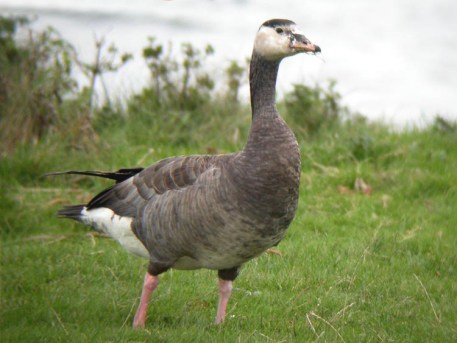
BarnacleGoose-GreylagGoose-hybrid.NorfolkEngland-DavidAppleton

Barnacle/Greylag Goose hybrid, Norfolk, England  (photo credit: David Appleton)

Meanwhile, if I was a Barnacle Goose  – and thank God that He created me to be me, instead! –  I’d prefer Helsinki’s Kaivopuisto Park as my year-round home habitat, rather than summer in Novaya Zemla.   (As far as I’m concerned, let the Arctic Ocean polar bears have that arctic archipelago!)   ><> JJSJ    profjjsj@aol.com


BarnacleGoose-flock-Islay.BirdGuides
Winter flock of Barnacle Geese, Islay, Inner Hebrides   (photo credit: Stef McElwee / Birdguides)