Birds of the Bible – The Lord Provides For Them

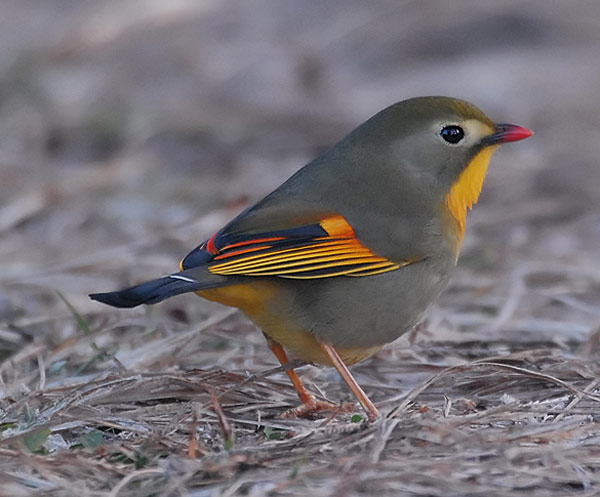
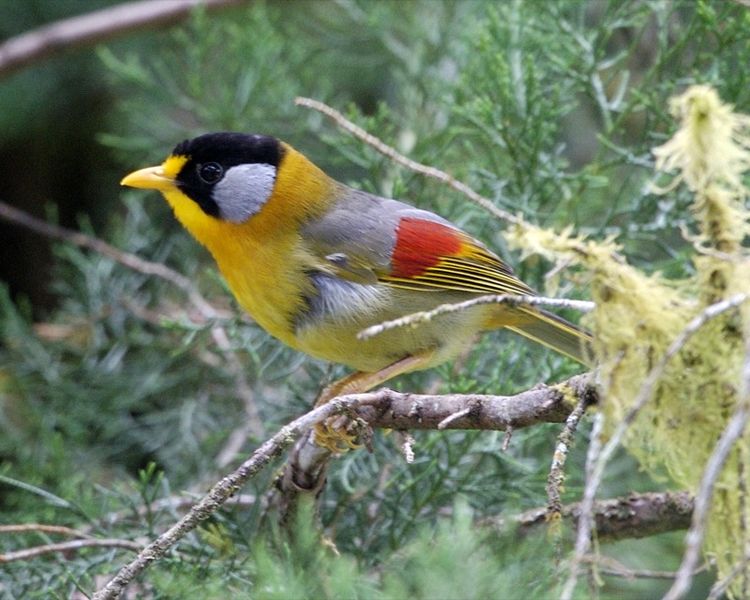
Silver-eared Leiothrix (Leiothrix argentauris) by Ian

Silver-eared Leiothrix (Leiothrix argentauris) brightly colored-by Ian

O LORD, how many are Your works! In wisdom You have made them all; The earth is full of Your possessions. There is the sea, great and broad, In which are swarms without number, Animals both small and great. There the ships move along, And Leviathan, which You have formed to sport in it. They all wait for You To give them their food in due season. You give to them, they gather it up; You open Your hand, they are satisfied with good. (Psalms 104:24-28 NASB)

When you look at all that is around you, do you stand amazed at the Lord God’s Creative Hand or do you just think given enough time, this all came about? For me, I see an awesome Creator God that has wisdom and understanding that is way beyond my finite mind to comprehend. As I was praying and asking the Lord to help me do this article, I thought, “Lord you knew I was going to make this prayer this morning.” “You know what I’ll pray about tomorrow, and the next, and next year.” Whoa! I had to finish up my prayer and not get carried away. But, now, I had my idea for this blog today.

In Genesis 1 we learn that when the critters, birds, man and woman were created, they were vegetarians.

And God said, “See, I have given you every herb that yields seed which is on the face of all the earth, and every tree whose fruit yields seed; to you it shall be for food. Also, to every beast of the earth, to every bird of the air, and to everything that creeps on the earth, in which there is life, I have given every green herb for food”; and it was so. Then God saw everything that He had made, and indeed it was very good. So the evening and the morning were the sixth day. (Genesis 1:29-31 NKJV)

God knew that man was going to sin and that the he (man and woman) and all the critters, birds, fish, and the earth were going to be cursed. God knows the end from the beginning. “Before the mountains were brought forth, Or ever You had formed the earth and the world, Even from everlasting to everlasting, You are God.” (Psalms 90:2 NKJV) Just as He provide for man, that Jesus Christ would come to pay the price for our sins; He provided for the animals and birds so they could defend themselves from the cursed nature of other critters and birds.

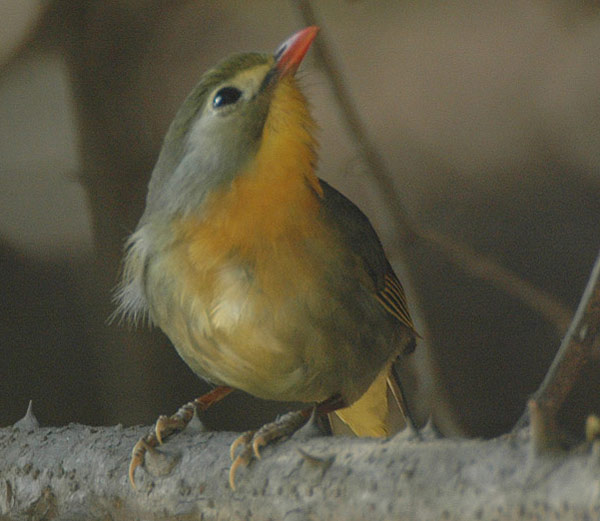
Silver-eared Leiothrix (Leiothrix argentauris) by Ian

Silver-eared Leiothrix blended in tree-by Ian

Watching birds, one of my favorite things to do, you can see God’s Protective Hand at work. The colors alone, give a clue. The male birds seem to be the most brightly colored, which helps the get a mate. Their mating helps preserve their species and the female, whose color is usually subtle, is protected as she sits on the nest. The bright colors of many birds, which I love to see, seem to blend right in with their surrounding. Again protecting them from predators.

God gave the birds a command to reproduce.  “And God blessed them, saying, “Be fruitful and multiply, and fill the waters in the seas, and let birds multiply on the earth.” (Genesis 1:22 NKJV) When they came off the Ark, He said to Noah, “Bring out with you every living thing of all flesh that is with you: birds and cattle and every creeping thing that creeps on the earth, so that they may abound on the earth, and be fruitful and multiply on the earth.” (Genesis 8:17 NKJV)
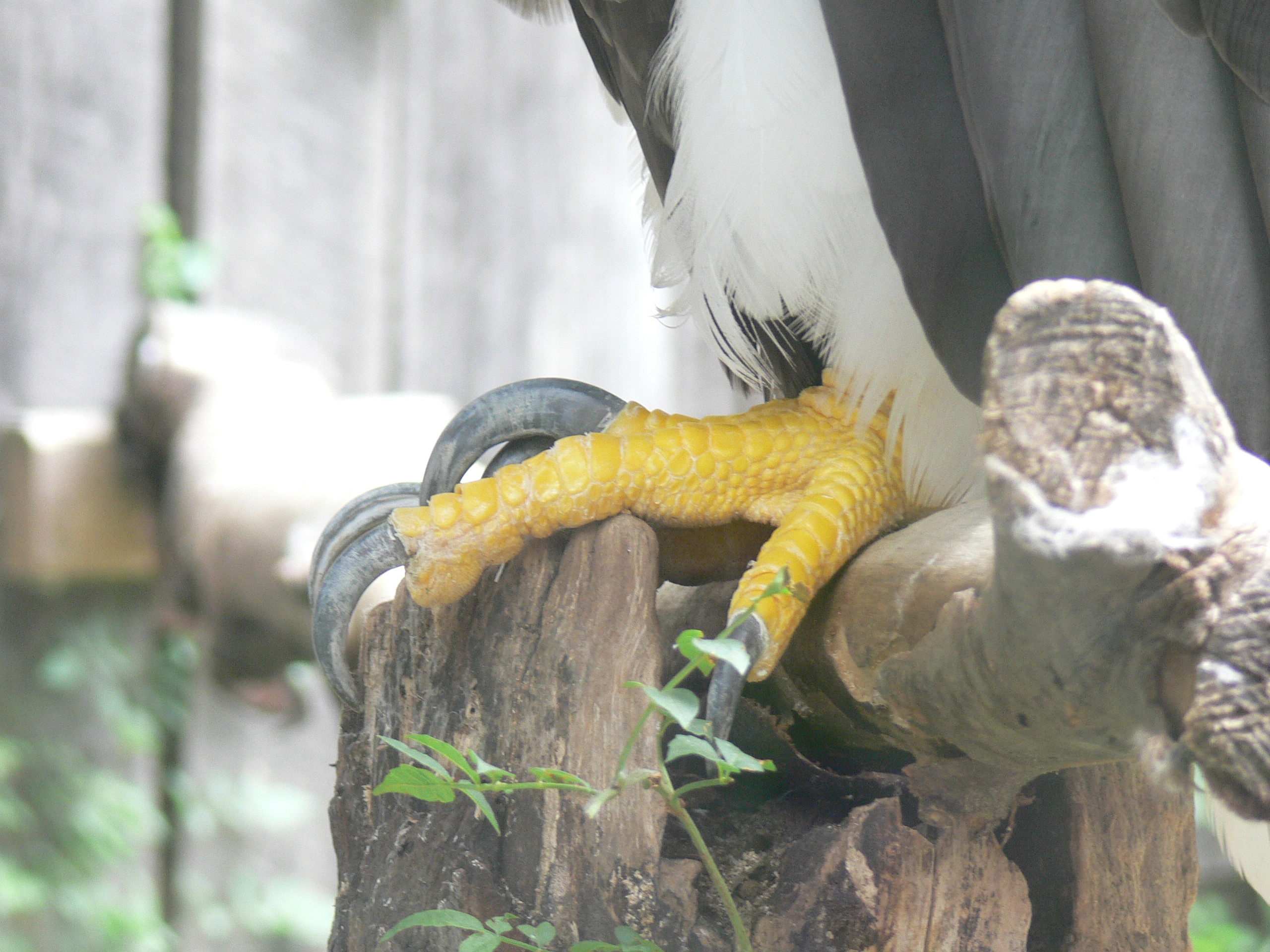
Steller's Sea Eagle (Haliaeetus pelagicus) by Lee at NA

Steller’s Sea Eagle (Haliaeetus pelagicus) by Lee at NA

The predators!  Many of the plants before the Flood were large and thick. The beaks and claws were used to help them eat plants, now, those same beaks and claws help them catch prey. They were still provided for by God’s forethought even though that was not what the Creator wanted them to do. He knew the end from the beginning.

I could name trait after trait, where the Creator’s love, omniscience (all-knowing), omnipotence (all-powerful), and care is shown to critters and birds. Look and observe the birds and you will see that they had a Awesome Creator that knew the end from the beginning and has well provided for them.

He sends forth springs in the valleys; They flow between the mountains; They give drink to every beast of the field; The wild donkeys quench their thirst. Beside them the birds of the heavens dwell; They lift up their voices among the branches. He waters the mountains from His upper chambers; The earth is satisfied with the fruit of His works. He causes the grass to grow for the cattle, And vegetation for the labor of man, So that he may bring forth food from the earth, (Psalms 104:10-14 NASB)

What about us? Do we observe and realize the love, care, omniscience, and omnipotence in our (man’s) creation? How about your body, eyes, skin, internal organ, heart, mind? They were all fantastically created by a loving God. Yes, they are falling apart. Yes, they become corrupt. Yes, we die. That is because of the curse and the fall of man into sin.
But!

But God commendeth his love toward us, in that, while we were yet sinners, Christ died for us. (Romans 5:8 KJV)

Let me leave you with encouragement and thoughts that the Lord gave his disciples:

Therefore I say to you, do not worry about your life, what you will eat; nor about the body, what you will put on. Life is more than food, and the body is more than clothing. Consider the ravens, for they neither sow nor reap, which have neither storehouse nor barn; and God feeds them. Of how much more value are you than the birds? And which of you by worrying can add one cubit to his stature? If you then are not able to do the least, why are you anxious for the rest? Consider the lilies, how they grow: they neither toil nor spin; and yet I say to you, even Solomon in all his glory was not arrayed like one of these. If then God so clothes the grass, which today is in the field and tomorrow is thrown into the oven, how much more will He clothe you, O you of little faith? “And do not seek what you should eat or what you should drink, nor have an anxious mind. For all these things the nations of the world seek after, and your Father knows that you need these things. But seek the kingdom of God, and all these things shall be added to you. (Luke 12:22-31 NKJV)

The Wordless Birds
*

National Aviary – Hospital, Breeding, and Kitchen Areas

Gracie the retired Chestnut-mandibled Toucan (Ramphastos swainsonii)

Gracie the retired Chestnut-mandibled Toucan (Ramphastos swainsonii)

One of the special privileges at the National Aviary was the behind the scenes places we were allowed to visit. Sarah, the “Bird Nurse” (Head Keeper of Hospital Care), that we had met the day before, and Steven, the Director of Animal Programs, gave us a grand tour. (See Introduction)

Gracie the retired Chestnut-mandibled Toucan (Ramphastos swainsonii)

Gracie the retired Chestnut-mandibled Toucan petted by Lee

We started off by visiting the “Geriatric Hospital” where the retired or aging bird’s care is provided. We met, Jamie, the Vetenarian Technician, who works with the birds also. We met “Skippy”, the 23 year old Black-necked Stilt. There were other birds there like, “Gracie”, a Chestnut-mandibled Toucan, which I got to scratch her head. She had performed well over the years, but now is retired. Other retirees were “Smiley”, the White-tailed Trogan; “Stevie”, the Boat-billed Heron;  “Hermie”, the Montezuma Oropendola; a  Blue-naped Mousebird, Sudan Golden Sparrow, Black-naped Oriole, Goldie’s Lorikeet, Spangled Cotinga, Superb Starling, Collared Kingfisher and one or two others that I missed writing down. My excitement was way up there.

National Aviary Hospital X-ray and Surgery

National Aviary Hospital X-ray and Surgery

Down in the basement also was their hospital area where they do any surgery and take x-rays. It was quite well equipped and the physical needs of all the aves that live at the National Aviary are well provided for.

Steven, the Director, then met us and took up to the 2nd floor where his “pride and joy” are housed. That is where the breeding birds were kept. As you may know, many of the zoos and aviaries goal is to help preserve species that are endangered or close to extinction. Not all the birds being bred there were in those categories. The were pairs of Blue-fronted Amazon Parrots, Green Aracaris, Grossbeak Starlings, Cape Thicknees, Palm Cockatoos, Turquoise-fronted Amazons, Golden-crested Mynas, Bali Mynas and Rainbow Lorikeets. Wow! Saw all of them close up. What a thrill.

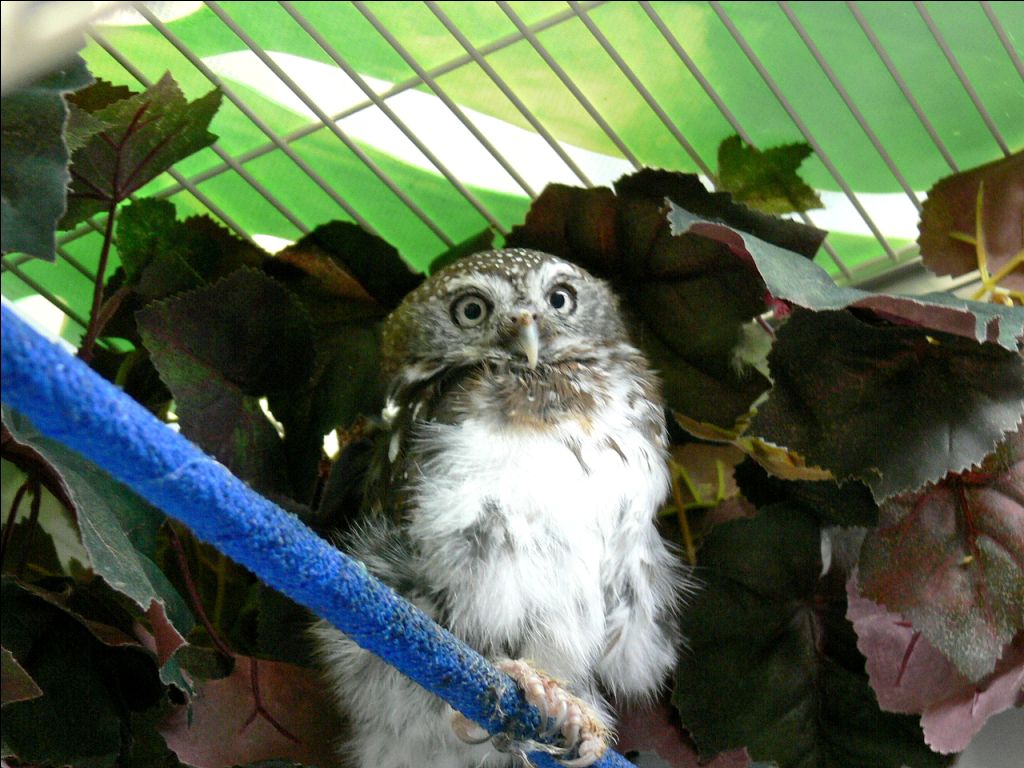
Pearl-spotted Owlet (Glaucidium perlatum) Breeding Room by Lee

Pearl-spotted Owlet (Glaucidium perlatum) Breeding Room by Lee

During that day and the next, we also visited the regular aviary hospital and some more “behind the scenes” places. At the Hospital, Sarah showed us some of her current patients like the Black-headed Woodpecker, Pearl-sided Owlet, Call Duck (broken wing), Runner Duck (broken hip), Rhinoceros Hornbill, Micronesian Kingfisher, White-crested Laughingthrush, and a Silkie Chicken.

Who gives food to all flesh, For His lovingkindness is everlasting. (Psalms 136:25 NASB)

All of these birds and the one mammal (2-toed Sloth) need to eat. Do they ever eat well! In the Kitchen area they were preparing the next meal for them. Wow! What great looking fresh fruits and vegetables were being prepared. Of course, there are different kinds of bird foods and seeds. We were shown the different crickets, worms and “Super Worms” which are the “worm of choice” by many of the avian eaters. The fresh and frozen “meat” (mouse, chicken, fish, etc.) are kept in walk-in coolers and freezer. These feathered critters are well supplied with their daily bounty.
What an amazing place and honor to be shown so many areas of the National Aviary. Our hearty thanks to Steven, Sarah, Jamie, and all the trainers and staff that made our visit “super special.” Thank you! Thank you! Thank you!

He also spoke 3,000 proverbs, and his songs were 1,005. He spoke of trees, from the cedar that is in Lebanon even to the hyssop that grows on the wall; he spoke also of animals and birds and creeping things and fish. Men came from all peoples to hear the wisdom of Solomon, from all the kings of the earth who had heard of his wisdom. (1 Kings 4:32-34 NASB)

Praise Him for His mighty deeds; Praise Him according to His excellent greatness. (Psalms 150:2 NASB)

Hope you enjoy the slide show below. Not all the photos are great, but they will give you an idea of what the visit was like. FABULOUS!
See Also:

National Aviary, Pittsburgh, PA

Happy Birthday – Skippy at National Aviary

Birdwatching at the National Aviary – Introduction

National Aviary – Penguin Encounter

Birds of the Bible – At the National Aviary

Birdwatching the National Aviary – Grasslands

Birdwatching the National Aviary – Tropical Forest

*

This slideshow requires JavaScript.

*

Updating Life List of All Birds We Have Seen

Golden-breasted Starling (Lamprotornis regius) at NA by Lee

Golden-breasted Starling (Lamprotornis regius) by Lee

I have been busy behind the scene working on the “Life List of All Birds We Have Seen” page. It is a work in progress. Decided to list all the birds we have seen in person, whether they were in the wild, seen at zoos or in an aviary.

When the Lord created them, He declared them very good. So why should we not have pleasure in keeping track of them, whether they are free or confined. Many in aviaries at zoos or the National Aviary are being very well taken care of and provided for. Many are being bred to preserve their species.

Praise the LORD! I will praise the LORD with my whole heart, …. The works of the LORD are great, Studied by all who have pleasure in them. His work is honorable and glorious, And His righteousness endures forever. He has made His wonderful works to be remembered; The LORD is gracious and full of compassion. (Psalms 111:1-4 NKJV)

I have put them in taxonomic order and used the I.O.C. list of names. (2.5 Version). Searching through old photos and current ones, I am trying to find as many pictures of the birds we have seen as possible. Some of the photos are what I would call a “proof shot,” which means, it’s not great, but you can tell which bird it is. Some are from scanned photos and our first digital cameras. But all links to photos on the page were taken by either Dan or I.

Demoiselle Crane (Anthropoides virgo) at MetroZoo 1989-Photo

I also contacted the Miami Metro Zoo, which had the fabulous Wings of Asia aviary before Hurricane Andrew blew it away. (Rebuilt in 2003) We had an annual pass back then and visited it quite often. That was about the time I really became a birdwatcher. They sent me a list of the birds that were in the aviary just before the hurricane. I am using those birds also on my list. I only have a few photos from there because most were taken on slides which were lost.

Anyway, the page will be updated quite frequently as photos are found and linked to the page. Hope you enjoy them and that you keep better list of the birds you have seen than I did.

See: “Life List of All Birds We Have Seen

Interesting Things – Loving Poison Dart Frog

Poison Dart Frog - (Epipedobates tricolor)close ©Wiki

Poison Dart Frog - (Epipedobates tricolor)close ©Wiki

The Loving Poison Dart Frog – from Creation Moments

We love Him because He first loved us. (1 John 4:19)

SmileyCentral.comThe Choco Indians of Panama and Colombia use the poison from the skin of the beautiful poison dart frog to make their lethal darts. The bright orange and deep blue skin of this frog serves to warn predators that it is best left alone and its poisonous skin untouched.

Poison Dart Frog - (Epipedobates tricolor)close ©Wiki

Poison Dart Frog - (Epipedobates tricolor)close ©Wiki

Although it is deadly, the poison dart frog is one of the most loving parents in the entire amphibian world. The female will lay about a dozen eggs in the leaf litter within her mate’s territory. Both parents will stand watch over the eggs, keeping them moist, until the tadpoles emerge. Then the female allows each tadpole, one at a time, to wriggle onto her back. She takes each tadpole, in its turn, to its own miniature pond created by water trapped in the fronds of jungle plants. The mother poison dart frog remembers where each one of her tadpoles is and returns on a regular schedule to lay infertile eggs for the growing youngster to eat.

I would prefer to think that the care of the adult poison dart frogs for their children grows out of a sense of love for their off-spring, and we know that God is the author of all love. But even if this care is programmed instinct, we must still find the “programmer” – and that takes us back to the Creator once again. Such wisdom cannot be said to come from nowhere.
Prayer:
Dear Heavenly Father, the source of all love and wisdom, grant wisdom to Your people so that they may effectively witness to those around them who are being misled to believe that love is merely instinct and that wisdom can come from nowhere. In Jesus’ Name. Amen.

Notes:
Brownlee, Shannon, 1985, Discover, May, p. 55. ©Creation Moments 2010


Poison Dart Frog - Dendrobatid Frog-Peru ©WikiC

Poison Dart Frog - Dendrobatid Frog-Peru ©WikiC

From Wikipedia:
“Most species of poison dart frogs are small, sometimes less than 1.5 centimetres (0.59 in) in adult length, although a few are up to 6 centimetres (2.4 in) in length. They weigh about 2 grams, depending on the size of the frog. Most poison dart frogs are brightly colored, displaying aposematic patterns to warn potential predators. Their bright coloration is associated with their toxicity and levels of alkaloids. Frogs like the ones of Dendrobates species have high levels of alkaloids, whereas the Colostethus species are cryptically colored and are non-toxic.[5] Unlike most other frogs, they are diurnal, rather than being primarily nocturnal or crepuscular.[6] When born and raised in captivity, poison frogs do not produce the skin toxins which they retain in their native habitat.[7]

They lay their eggs in moist places, including on leaves, in plants, among exposed roots, and elsewhere, and allow the tadpoles to wriggle onto their backs shortly after they hatch. They then carry the piggy-backed tadpoles to water, where the larva remain until metamorphosis. The water is typically a pool, but some species use the water gathered in bromeliads or other plants; and some species provide food, supplying the tadpoles with unfertilized eggs to eat.[6]

Many species of poison dart frog are dedicated parents. The red-and-blue poison-arrow frog (Dendrobates pumilio) carry their newly hatched tadpoles into the canopy. The tadpoles stick to the mucus on the back of their parents. Once in the upper reaches of the rainforest trees the parents deposit their young in the pools of water that accumulate in epiphytic plants such as bromeliads. The tadpoles feed on invertebrates in their arboreal nursery and their mother will even supplement their diet by depositing eggs into the water. Other poison frogs lay their eggs on the forest floor, hidden beneath the leaf litter.”
*

Birds of the Bible – Birds of Prey from the Mountains

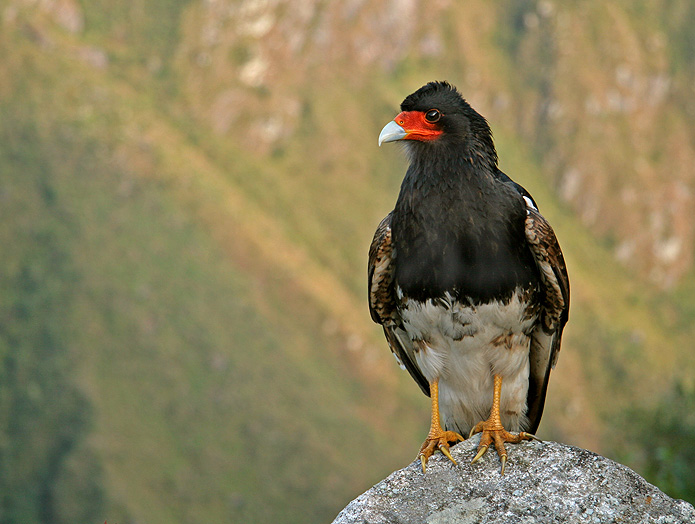
Mountain Caracara (Phalcoboenus megalopterus) ©WikiC

Mountain Caracara (Phalcoboenus megalopterus) ©WikiC

Last week the Birds of the Bible article was an introduction to the Birds of Prey. This week, the Birds of Prey from the mountains will be covered. So begins a challenge of finding birds that are not listed that way in most books or the internet.

First, let’s look at the verse in the Bible that refers to the “birds of prey of the mountains” and how the various translations translate the verse.

They shall all of them be left to the birds of prey of the mountains and to the beasts of the earth. And the birds of prey will summer on them, and all the beasts of the earth will winter on them. (Isaiah 18:6 ESV)

Mountain Pygmy Owl (Glaucidium gnoma) ©WikiC

Mountain Pygmy Owl (Glaucidium gnoma) ©WikiC

ravenous birds of the mountains – ASV, RV,JPS
birds of the mountains -BBE, MKJV
fowls of the mountains – KJV, Webster
mountain buzzards – CEV
mountain birds of prey – Darby, NAS77, NASB, NKJV
birds of prey of(on) the mountains – ESV, GW
ravenous fowl of the mountains – YLT
birds – GNB,

Other than the GNB (Good News ), they all mention that the birds are from the mountains.

The birds of prey from the mountains are coming to a feast of dead bodies that is going to last through the summer and the winter or for approximately a year. It appears that there was to be a judgment and the corpses left for the birds.

For before the harvest, when the blossom is over, and the flower becomes a ripening grape, he cuts off the shoots with pruning hooks, and the spreading branches he lops off and clears away. (Isaiah 18:5 ESV)

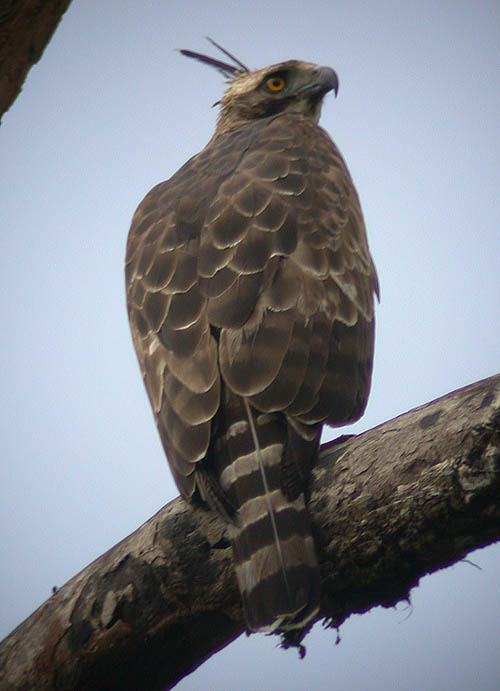
Mountain Hawk-Eagle (Nisaetus nipalensis) by Peter Ericsson

Mountain Hawk-Eagle (Nisaetus nipalensis) by Peter Ericsson

John Gill’s Exposition – “he shall both cut off the sprigs with pruning hooks, and take away and cut down the branches; as the vinedresser; or rather as one that has no good will to the vine, cuts it with pruning hooks, not to make it better, but worse, and cuts off, not the dead withered and useless parts of it, but the sprigs that have buds and flowers, or unripe grapes, upon them, and even whole branches that have clusters on them, and takes them and casts them away, to be trodden under foot, or cast into the fire; so the Lord, or the king of Assyria, the instrument in the hand of God, should cut off the Ethiopians, or the Egyptians, with the sword, both small and great, when their enterprise should fail, and their promised success: or this is to be understood of the destruction of Sennacherib’s army by the angel, when he was full of expectation of taking Jerusalem, and plundering that rich city. Jarchi and Kimchi interpret it of the destruction of the armies of Gog and Magog. The Targum is, and he shall kill the princes of the people with the sword, and their mighty ones he shall remove and cause to pass over.”

Mountain Buzzard (Buteo oreophilus)©WikiC

Mountain Buzzard (Buteo oreophilus)©WikiC

K & D – “The words of Jehovah concerning Himself have here passed imperceptibly into words of the prophet concerning Jehovah. The ripening grapes, as Isaiah 18:6 now explains, are the Assyrians, who were not far from the summit of their power; the fruit-branches that are cut off and nipped in pieces are their corpses, which are now through both summer and winter the food of swarms of summer birds, as well as of beasts of prey that remain the whole winter through. This is the act of divine judgment, to which the approaching exaltation of the banner, and the approaching blast of trumpets, is to call the attention of the people of Ethiopia.”

Now the birds are brought to this judgmental feast, but what are mountain birds of prey? I tried to find Eagles, Hawks, Owls, Vultures, or whatever birds I could that live in the mountains or at high elevations. Here are a few that I found with “mountain” in their name:

From the Accipitriformes OrderAccipitridae Family:

Mountain Serpent Eagle (Spilornis kinabaluensis) Found in northern Borneo, Sabah, Sarawak and Kalimantan. It inhabits submontane and montane evergreen rainforests. It prefers forests with height of 1,000-2,900 meters (3,220- 9514 feet) above sea level.
Mountain Buzzard (Buteo oreophilus) – Lives in montane forests in East Africa (Ethiopia, Kenya, Tanzania, Uganda, Rwanda, Burundi and extreme eastern DR Congo) and forests and plantations in South Africa. The latter population is sometimes considered a separate species, the Forest Buzzard (B. trizonatus).
Mountain Hawk-Eagle (Nisaetus nipalensis) It is a bird of mountain woodland, which builds a stick nest in a tree and lays usually a single egg. It breeds in southern Asia from Pakistan, India and Sri Lanka to China, Taiwan and Japan.

From the Falconiformes OrderFalconidae Family:
Mountain Caracara (Phalcoboenus megalopterus) a species of bird of prey in the Falconidae family. It is found in puna and páramo in the Andes, ranging from southern Ecuador, through Peru and Bolivia, to northern Argentina and Chile. It is generally uncommon to fairly common. A highly opportunistic bird commonly seen walking on the ground, it will feed on both carrion and virtually any small animal it can catch. It resembles the closely related Carunculated Caracara and White-throated Caracara, but unlike those species its chest is uniform black. Juveniles are far less distinctive than the red-faced pied adults, being overall brown with dull pinkish-grey facial skin.

From the Strigiformes OrderStrigidae Family:
Mountain Scops Owl (Otus spilocephalus) sometimes referred to as the spotted scops owl. It is locally common in its main habitat which covers some parts of Asia, mostly Bhutan and Taiwan. It has a short high-pitched call similar to the sound a radar makes.
Mountain Pygmy Owl/Northern Pygmy-Owl (Glaucidium gnoma) Their breeding habitat includes open to semi-open woodlands of foothills and mountains in western North America. In Oregon and Washington they are known to nest and forage in the center of dense, continuous forests, near streams.[2] An example of their habitat is Forest Park in Portland, Oregon. Males will regularly perch at the top of the tallest available conifer trees to issue their territorial call…

There are many more numerous Birds of Prey which live in the mountains and high forests, but time prevents finding and listing them all. The birds presented here are just to whet your appetite to find more of them and to further study the passage of Scripture. There are also many interpretations of Isaiah 18:6.

Study to shew thyself approved unto God, a workman that needeth not to be ashamed, rightly dividing the word of truth. (2 Timothy 2:15 KJV)

*

Information about the birds from Wikipedia

*

Using Whatever Talent the Lord Has Given You

Thought I would share an article that I wrote for our church blog (The Fountain).

As many of you know, around Faith Baptist, I am known as the “Bird Lady.” Also many have read the “Birds of the Bible” articles of the past. How did this come about?

When I was 16 years old (1960) I accepted the Lord as my Saviour and thus began my journey with the Lord. The Lord allowed me to attend Bob Jones University through the War Orphans Fund (my father died as a result of the war and my mother died when I was 13). Not being from an educational family (D+ average in high school), I struggled academically, but the desire to finish was strong. I finished my degree 16 years after I started with a Bible major. I had tried many majors, but never found what I wanted.

While we were on vacation this summer, we attended a friend’s church and they were questioning things that became a turning point in our lives. There were various testimonies given and then I remembered one that changed me. In 1979, Dan and I purchased our first computer, a Radio Shack Model I. I spent hours teaching myself all about it and learning to program. That computer and the many since gave me a direction and a niche for me to fill. I always told the Lord that I just didn’t have any talents to offer Him. Long story short, I became a computer teacher and ended up even getting a Masters degree in Computer Education.

Sunbittern at Lowry Park Zoo by Dan

In the late 80’s I became a birdwatcher. A naturalist at our local park became my mentor. I had always loved the out of doors and enjoyed watching God’s creation, but could not put many names on what I saw. Birds are just so beautiful and show the Lord’s creative hand so much. I am just amazed and love watching them. Another niche!

Now there were three important parts to my life; the Lord, computers and birds. (Of course Dan is there also) My desire and prayers were that the Lord would let me blend those three things into some sort of ministry for Him. It began by doing five-minute presentations to a junior Sunday School class each week. When we moved up here to Faith, I couldn’t find an outlet to do my bird presentations until the Lord, through Stephen, let me start doing the “Birds of the Bible” on the blog here.

I started my own blog to learn how to do the articles. Now, the Lord is blessing my blog by letting the “Birds of the Bible” and many other Christian birdwatching articles be read by people all over the world. And, now, I am the “Bird Lady” and I thank the Lord for His Love and Grace to let me be called by that name.

Call unto me, and I will answer thee, and shew thee great and mighty things, which thou knowest not. (Jeremiah 33:3 KJV)

My prayer and challenge for the readers is that you also will let the Lord use what ever talent or gift you have for Him. Maybe you love bugs, flowers, music, or whatever. Maybe you are an encourager, good cook, child sitter, nursery worker, like to visit the sick, etc. We all have something that the Lord has given us. Let the Lord use what you have for Him so that we can help reach others with the Gospel and God’s Love.

Gospel Message

Wordless Birds

*

Birds – The Engineers..

Birds – The Engineers.. ~ by a j mithra

Birds are capable of grand engineering feats. But are they engineers?  Not in the way you might think. Just as birds know how to fly, they know how to build a nest without instructions or apprenticeship. It’s a matter of instinct. Birds craft their nests without consciously thinking about it. How then did some species of birds develop such well-engineered, elaborate nests?

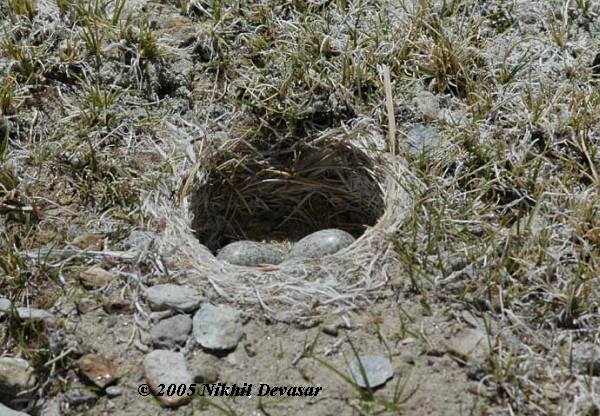
Horned Lark (Eremophila alpestris) Nest w/eggs by Nikhil Devasar

Horned Lark (Eremophila alpestris) Nest w/eggs by Nikhil Devasar

Horned Larks nests showed a significant northern bias in orientation angle and were 49% shaded in the early afternoon, the hottest part of the day. A northern nest orientation ensures maximal shading by the grass tuft to the south, may protect nests from cool evening winds, and provides increased daytime ventilation of the nest through exposure to prevailing winds. In addition, shade may also help conceal nests from predators.

  • From where did these birds learn to choose the location to build their nests?
  • Have we ever thought about the direction in which we need to have the front door of our house?
  • Is our choice based on location or direction of the house?

When JESUS becomes our direction, HE gives the best location..

I am the door: by me if any man enter in, he shall be saved, and shall go in and out, and find pasture. (John 10:9)

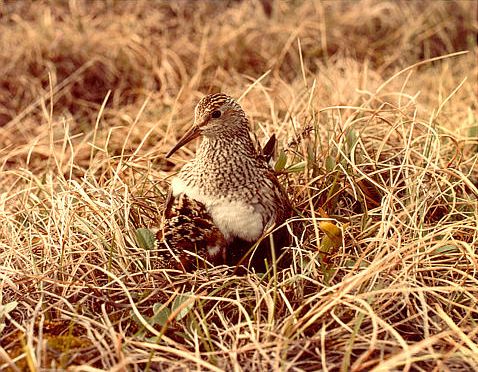
Pectoral Sandpiper (Calidris melanotos) ©WikiC

Pectoral Sandpiper (Calidris melanotos) ©WikiC

Pectoral Sandpipers nest on the arctic tundra, often near water. The nest is lined with grass, moss and lichens. They do not use lining materials according to local availability. Instead, relative use was correlated with a material’s insulative quality when wet and they therefore use lining materials appropriate to minimizing heat loss given their damp breeding environment.

And he shall be like a tree planted by the rivers of water, that bringeth forth his fruit in his season; his leaf also shall not wither; and whatsoever he doeth shall prosper. (Psalm 1:3)

Blue Tit (Parus caeruleus) by Robert Scanlon

Blue Tit (Parus caeruleus) by Robert Scanlon

Female Blue Tits gather lavender, yarrow, curry, mint and other scented plants for their nests shortly after laying eggs, and continue to do so until the chicks leave home. They are real botanists and do a great job exploiting their environment to protect their chicks. The birds make a pot-pourri of 10 aromatic plants from the 250 species in their habitat. Many of the chemicals in these plants ward off bacteria,
viruses, parasites, fungi and insects.

Our nest is covered by the blood of JESUS and no harm shall enter…

And the blood shall be to you for a token upon the houses where ye are: and when I see the blood, I will pass over you, and the plague shall not be upon you to destroy you, when I smite the land of Egypt. (Exodus 12:13)

Common Waxbill (Estrilda astrild) by Daves BirdingPix

Common Waxbill (Estrilda astrild) by Daves BirdingPix

Common Waxbills are small African finches select carnivore scat as a material to include in, on, and around their nests to reduce predation risk…

A South American Ovenbird may take months to fashion one nest from clay or mud mixed with bits of straw, hair, and fibers. The tropical sun bakes the walls brick-hard.

Bald Eagles, which use sticks, some two inches thick and several feet long, to make nests sturdy enough to support a human adult.

Chimney Swift using saliva as glue to help support its nest.


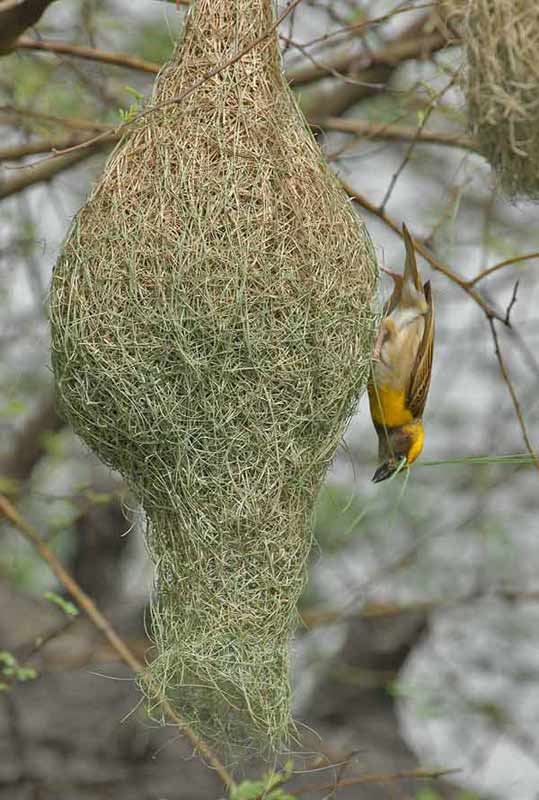
Baya Weaver (Ploceus philippinus) by Nikhil Devasar

Baya Weaver (Ploceus philippinus) by Nikhil Devasar

Baya Weaver nests in colonies of up to 20-30 pairs, usually in trees near freshwater and open ground. Their nests hang from a branch and look like an upside-down flask. A long tube leads to a side entrance,  making it difficult even for snakes to enter the nest. Nests are made entirely out of strips of grass
that the birds collect by cutting a notch in some tall grass, then stripping off a 30-60 cm long piece. A newly-made nest is green with fresh grass and turns brown as the grass dries. A bird may make up to 500 trips to complete a nest.

  • GOD has given us a home and a family with a purpose….
  • Most of us are trying hard to be like others and to live like others…
  • HE loves us as we are so; let us live the way HE wants us to live…

Sparrows never try to live like Eagles. Do they? If we are a sparrow, so be it and if we are an Eagle, so be it. After all, a sparrow cannot live like an Eagle and an Eagle cannot live like a Sparrow…

I will make a man more precious than fine gold; even a man than the golden wedge of Ophir. (Isaiah 13:12)

Bird nests vary from a simple accumulation of materials on the ground to elaborate refuges in or on secluded and elevated substrates. Nest construction and placement are correlated with flight ability. Some birds create a simple depression in the ground to harbor their incubating eggs. The progression of nest complexity moves from cryptic ground nests to simple elevated nests. Birds which construct elevated nests in a bush or tree or on a cliff or rock ledge tend to be better fliers than simple ground nesters.

  • You may be wondering why GOD has placed you as a ground nester while you desire to be an elevated nester…
  • You may be wondering why you have not got a place you feel that you deserve…
  • May be GOD feels that you would get hurt if you are an elevated nester..
  • Or maybe HE feels that you are not best equipped to be in a higher place…

Humble yourselves therefore under the mighty hand of God, that he may exalt you in due time: (1Peter 5:6)

  • GOD had HIS nest in heaven and because HE loved us so much,
  • HE stirred up HIS nest and wandered without a nest to be crucified for our sins…
  • So that HE may nest in us…
  • HE needs a nest that is why HE is knocking at the door of your heart….
  • Do you have a place for HIM to nest?

Please do not forget that HE is building an eternal nest for us live with HIM forever and ever.

Behold, I stand at the door, and knock: if any man hear my voice, and open the door, I will come in to him, and will sup with him, and he with me. (Revelation 3:2)

Have a blessed day!

Your’s in YESHUA,
a j mithra

Please visit us at: Crosstree


See:
Gospel Message

Wordless Birds

Birds of the Bible – Nests

*

Birdwatching the National Aviary – Tropical Forest

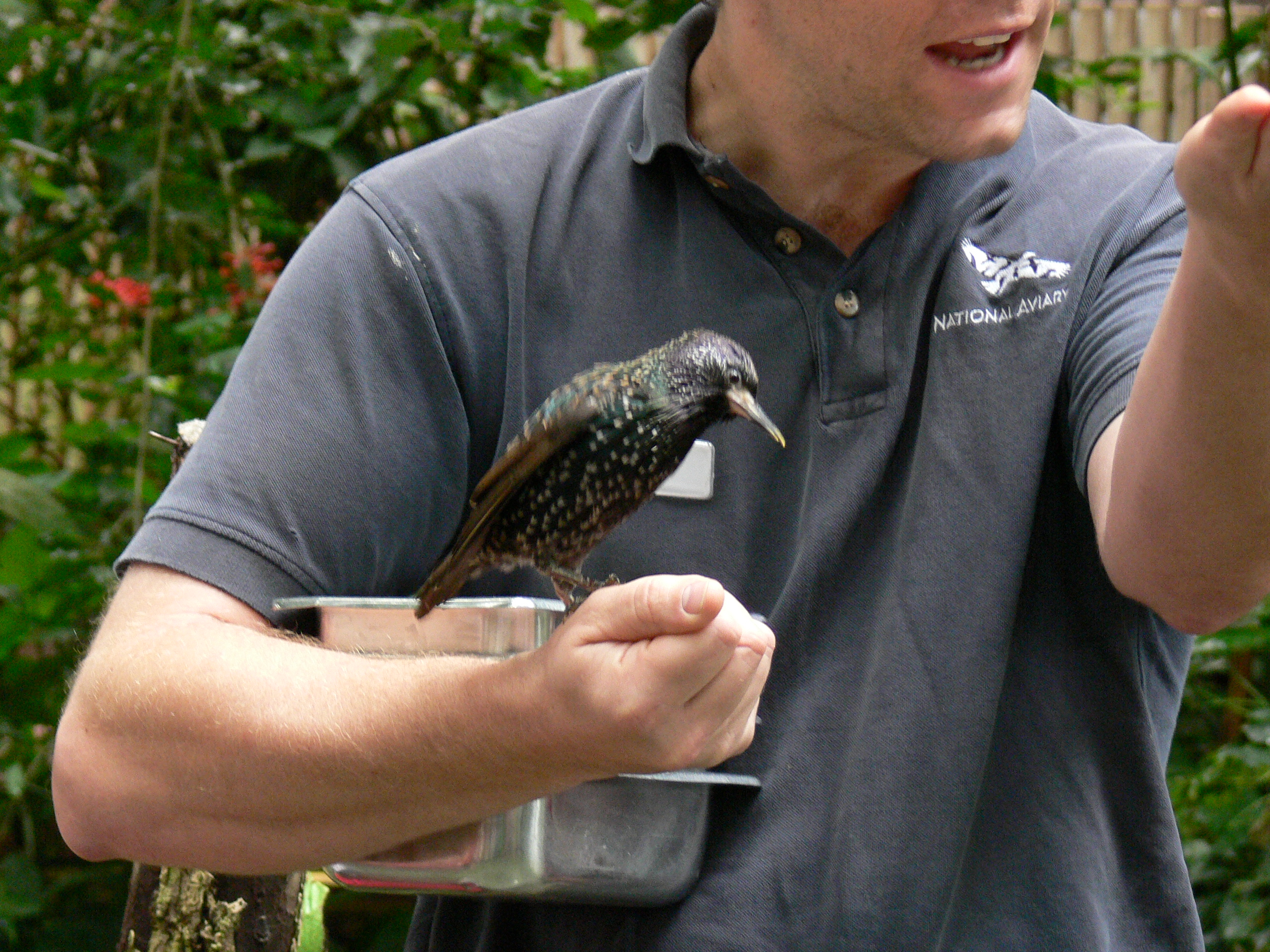
Common Starling (Sturnus vulgaris) by Lee NA Feeding

Common Starling (Sturnus vulgaris) by Lee NA Feeding

This article is about the numerous birds found in the Tropical Forest Free-flight section at the National Aviary in Pittsburgh, PA. It has taken awhile to find the names of the birds in the pictures we took while we were there. My enthusiastically taken 600 photos has turned into a real challenge. That, and I do have a life.

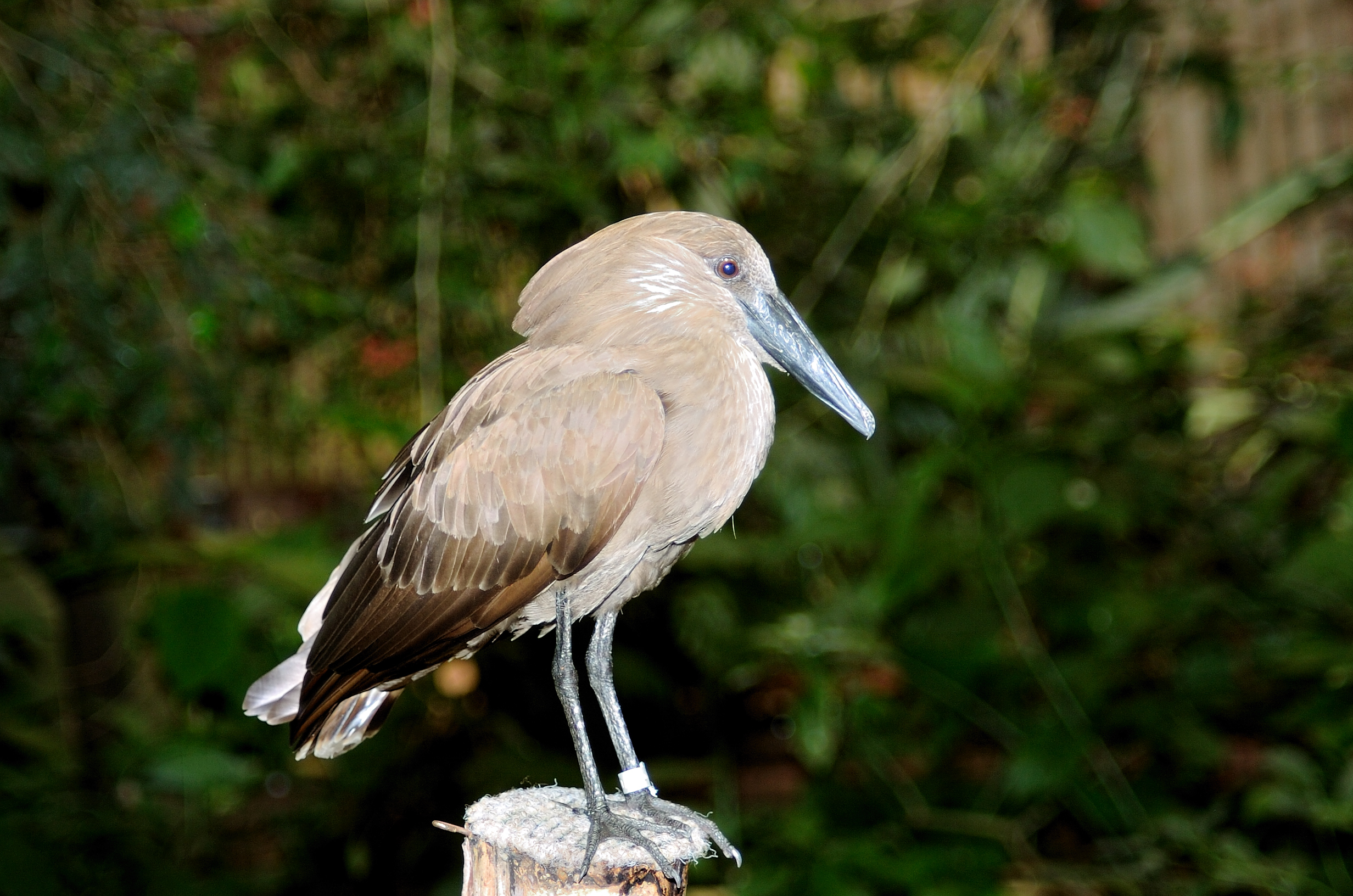
Hamerkop (Scopus umbretta) at NA by Dan

Hamerkop (Scopus umbretta) at NA by Dan

The Tropical Forest section has some really interesting birds that I had read about or seen in photos. It was great to be able to get so close to the birds. About the time we arrived there, they were getting ready to do one of the feedings. This really brought the birds out of the trees. Some, the Common Starling, landed right on the bin with the food and started helping himself. My favorite bird there was the Hammerkop, who many got to feed by hand and a close second was the Blue Rollers. They seemed right personable. Of course, I enjoyed all of them and was thrilled to get to watch them.

Blue-bellied Roller (Coracias cyanogaster) at NA by Lee

Blue-bellied Roller (Coracias cyanogaster) by Lee

Probably one of the most colorful birds in the Tropical Forest was the Golden-breasted Starling who was nothing like the Common Starling above. The feathers are iridescent and just shine.

Golden-breasted Starling (Lamprotornis regius) at NA by Lee

Golden-breasted Starling (Lamprotornis regius) by Lee

I am adding a Slide collection of the birds in the Tropical Forest. They are not of everything, but the ones that turned out good enough to show.

This slideshow requires JavaScript.

*

Humming Birds – The Believing Believers… by a j mithra

a j mithra has produced another video using a hummingbird video with his thoughts and music.

We had previously done this as an article, then a j turned it in to a video. Absolutely amazing.

The Hummingbird – The Believing Believer…

The Bible says,”But ask now the beasts, and they shall teach thee; and the fowls of the air, and they shall tell thee: (Job12:7)

He says:

Here are some of the many things that we can learn from these small little wonderful Humming Birds…

Trust you enjoy watching this video.

*

YouTube’s  NATURE | Behind the Scenes of “Hummingbirds” | PBS is where the video came from (I think) and tells how the shots of the Hummingbirds were taken.

*

Red-billed Leiothrix – The Rain Seeker…

Red-billed Leiothrix (Leiothrix lutea) by Dan's Pix. at National Aviary

Red-billed Leiothrix – The Rain Seeker… ~ by a j mithra

Red-billed Leiothrix are native to Southern Asia ranging from central Himalayas in India and Nepal, eastwards to Burma and Vietnam. Leiothrix prefer to inhabit underbrush at all elevations with a cover of dense vegetation near the ground. These birds are found at elevations 700 m to 2000 m in winters and 1500 m to 2700 m in summers. Flocks of Leiothrix’s have been known to fly up to elevations of 4500 m for a short period of time.

These birds favor areas with at least 40 inches of rain.

  • We go to church, pray and give offering, but still, many of us are dry in spirit.. Why?
  • These birds have a thirst to stay in places where there is abundant rain…
  • God pours out His spirit according to our thirst…

He has promised to pour His spirit on all flesh…

For I will pour water upon him that is thirsty, and floods upon the dry ground: I will pour my spirit upon thy seed, and my blessing upon thine offspring: (Isaiah 44:3)

Red-billed Leiothrix (Leiothrix lutea) by Nikhil Devasar

Red-billed Leiothrix (Leiothrix lutea) by Nikhil Devasar

The leiothrix can usually be found in a group of about ten to thirty birds during the non-breeding season; however, during the breeding season the birds break off into pairs and become territorial.

  • We as believers, do we congregate often or just on Sundays?
  • The word of God encourages us to have corporate worship…
  • Jericho came down through corporate worship..
  • Battle was won through corporate worship…
  • Jesus too had promised to be in the midst of those who unite in His name in twos and threes…

The presence of the Lord flows like a river during corporate worship..

A Song of degrees of David. Behold, how good and how pleasant it is for brethren to dwell together in unity! It is like the precious ointment upon the head, that ran down upon the beard, even Aaron’s beard: that went down to the skirts of his garments; As the dew of Hermon, and as the dew that descended upon the mountains of Zion: for  there the LORD commanded the blessing, even life for evermore. (Psalm 133)

Though we need to dwell together in unity, at times, like these birds who break off into pairs, we need to have an intimate and personal relationship with our Saviour..

  • Jesus set Himself as an example by spending time alone in prayer..
  • How much time do we spend on our knees?

But thou, when thou prayest, enter into thy closet, and when thou hast shut thy door, pray to thy Father which is in secret; and thy Father which seeth in secret shall reward thee openly. (Mathew 6:6)

Red-billed Leiothrix (Leiothrix lutea) by Nikhil Devasar

Red-billed Leiothrix (Leiothrix lutea) by Nikhil Devasar

These birds seem to teach us about the importance of Praise and Prayer isn’t it? These birds have a song which consists of short powerful notes that are repeated continuously throughout the year but it is more persistent during the breeding season… This period usually lasts from early April until September and they are usually found around well watered areas.

Above it stood the seraphims: each one had six wings; with twain he covered his face, and with twain he covered his feet, and with twain he did fly.

And one cried unto another, and said, Holy, holy, holy, is the LORD of hosts: the whole earth is full of his glory. (Isaiah 6:2,30)

  • The Seraphins has been singing the same phrase since creation…
  • But, they don’t seem to feel bored at all…
  • But, most of us feel bored when the church sings the same song over and over again. Why?

The males also sing long complex songs with a wide array of syllables to attempt to attract the female…

  • Do you know how the power of worship?
  • Our worship will not let the Creator of the Universe sit in His throne..
  • It is that powerful..
  • So, sing and don’t let the King sit in His throne forever….

All the ends of the world shall remember and turn unto the LORD: and all the kindreds of the nations shall worship before thee. (Psalm 22:27)

Have a blessed day!

Your’s in YESHUA,
a j mithra

Please visit us at: Crosstree


Lee’s Addition:

The Leiothrix is in the Timaliidae Family of Babblers and Parrotbills which are in Passeriformes Order. There are two Leiothrix in the family, the other being a Silver-eared Leiothrix. Both are very colorful birds. Maybe because they seek rain, the Lord gave them colors that are bright like the rainbow.

*

Interesting Things – Most Interesting Sounds Never Heard

Northern Lights - ©WikiC

Northern Lights - ©WikiC

The Most Interesting Sounds You’ve Never Heard – from Creation Moments

The clouds poured out water: the skies sent out a sound: thine arrows also went abroad. (Psalm 77:17)

Northern Lights ©WikiC

Northern Lights ©WikiC

We are surrounded by sounds, some of which can be louder than an airliner taking off. Yet, we never hear these sounds. It’s called infrasound. It’s real sound that can be recorded if you have the right equipment.

Infrasound waves are below 20 hertz, the lowest frequency we can hear. Because the sound waves are long, they can travel hundreds or even thousands of miles. Volcanic eruptions regularly generate infrasound and so does the wind. But, perhaps most interestingly, those beautiful Northern Lights that often color the night sky also generate infrasound. The sound is produced when the incoming solar particles push the air outward. While we are not able to hear infrasound, it does influence us. Researchers in England placed an infrasound generator in a concert hall and, during the performance, infrasound was added at selected points. After the concert, the audience was asked about their emotions during certain passages of music, or if they had had experienced any strange feelings during the concert. Researchers concluded that infrasound intensified whatever emotional state the music had produced in people. So, if you have ever watched the Northern Lights and thought you were almost hearing something, it was likely the infrasound you were sensing.

Northern Lights at Fort McMurray©WikiC

Northern Lights at Fort McMurray©WikiC

The more we learn about the creation God has given us, the more we find to marvel at how excellent is His workmanship.

Prayer:
Father, You have been so generous to us, not only in the creation You have given us, but also in Your love in Christ.

Notes:
Science News, 1/10: 2004, pp. 26-28, Kate Ramsayer, “Infrasonic Symphony.”

*

Yellow-rumped Cacique – The trusted Watchman

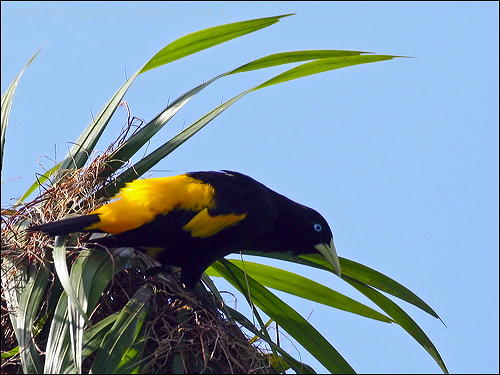
Yellow-rumped Cacique (Cacicus cela) by Ian

Yellow-rumped Cacique – The trusted Watchman ~ by a j mithra

The caciques are Passerine birds in the New World Blackbird family. Members of the family are resident breeders in tropical South America and north to Mexico. The caciques are birds associated with woodland or forest. The Yellow-rumped Cacique is found in tropical South America from Panama to central Brazil.

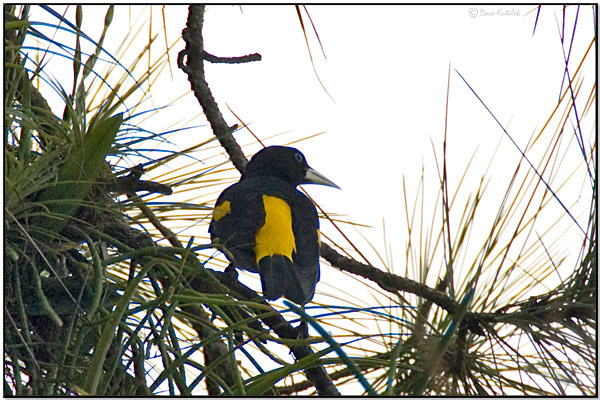
Yellow-rumped Cacique (Cacicus cela) by Daves BirdingPix

Yellow-rumped Cacique (Cacicus cela) by Daves BirdingPix

It prefers Varzea forest edges, woodland and some semi-open habitats. The areas flooded in the annual cycle are extensive lowland and forested areas bordering the main river and its tributaries and are known by the Portuguese word várzea which means flooded plains are subject to annual flooding, with consequent soil enrichment; Trees in this zone survive flooding for several weeks annually and provide the basis of a food web that includes fish adapted…

They are very gregarious and large, noisy flocks can be seen flying over Amazon Rivers particularly at dawn and dusk as the flocks move from their overnight roost to their feeding grounds and back again. These birds prefer a place which is abundant in food and water…

There is abundance in the presence of Jesus, our Good Shepherd..

King David had experienced God’s abundance and that’s why he says,

The LORD is my shepherd; I shall not want. He maketh me to lie down in green pastures: he leadeth me beside the still waters.” Psalm 23:1,2

These birds seem to know that flood brings in soil enrichment which in turn provides the basis of food web…

Are you in the midst of a flood?

Just remember this verse,

So shall they fear the name of the LORD from the west, and his glory from the rising of the sun. When the enemy shall come in like a flood, the Spirit of the LORD shall lift up a standard against him. Isaiah 59:19

Where there is flood, there the Spirit of the Lord lifts a banner..

Glory be to Jesus name!!!!!!!!!

Yellow-rumped Cacique (Cacicus cela) by Ian

Yellow-rumped Cacique (Cacicus cela) by Ian

Most are colonial breeders, with several long, hanging, bag-shaped nests in a tree, each suspended from the end of a branch and have their entrance at the upper side. The nests are occupied in the short dry season.

The birds don’t like bad weather; they leave the colony when it rains too much. Nests can be washed out of a tree by heavy rain. For more protection, a couple of males are always on watch and if a bird of prey comes in sight, they sound the alarm and the colony tree will be empty in no time.

God has set us as watchmen over His people to warm them to walk in The WAY..

If when he seeth the sword come upon the land, he blow the trumpet, and warn the people; Then whosoever heareth the sound of the trumpet, and taketh not warning; if the sword come, and take him away, his blood shall be upon his own head.

He heard the sound of the trumpet, and took not warning; his blood shall be upon him. But he that taketh warning shall deliver his soul.

But if the watchman see the sword come, and blow not the trumpet, and the people be not warned; if the sword come, and take any person from among them, he is taken away in his iniquity; but his blood will I require at the watchman’s hand.

So thou, O son of man, I have set thee a watchman unto the house of Israel; therefore thou shalt hear the word at my mouth, and warn them from me.” Ezekiel33:3-7

Yellow-rumped Cacique (Cacicus cela) by Kent Nickell

Yellow-rumped Cacique (Cacicus cela) by Kent Nickell

Some species choose a tree that also contains an active wasp nest as a deterrent to predators (e.g. toucans), and females compete for the best sites near the protection of the wasp nest. The wasps also repel Philornis flies which are attracted in enormous numbers by the birds’ smell. These flies are paratisized by a mite which then move on to the nestlings, many of whom die from the infestation.

The females make the nests, brood en raise the young and are more abundant than the males. These birds are not afraid of building their nests near a tree that contains wasp’s nest..

Is it because they know that,

And we know that all things work together for good to them that love God, to them who are the called according to his purpose. Romans 8:28?

If Naaman had not turned into a leper, he wouldn’t have known God…

If Lazarus didn’t die, he wouldn’t have known the power of God…

After a nasty fall, if I had not dislocated my shoulder, I would surely have dislocated my hip..

Thank You Lord for Your saving grace and I also thank You for Sister Lee and the readers of this site who had prayed for my healing…

Bless them abundantly Lord in Jesus name …Amen

These are slim birds with long tails and a predominantly black plumage The relatively long pointed bill is pale greenish, yellowish or bluish, depending on species, and most caciques have blue eyes (at least when adult).

  • The female is typically smaller than the male.
  • Caciques eat large insects and fruit.
  • Most are gregarious and typically seen in small groups.
  • They are very vocal, producing a wide range of songs, sometimes including mimicry.
  • Males try to make an indelible impression on the females by showing their yellow feathers and flapping their wings.
Yellow-rumped Cacique (Cacicus cela) by Kent Nickell

Yellow-rumped Cacique (Cacicus cela) by Kent Nickell

Gold is called the Yellow metal and Gold denotes God’s glory…

God had been showing His glory and spreading His wings time and again to show how much He cares for us and longs for us to come under His wings..

But, there are still scores of them out there who are yet to know Him…

Are we doing something to reach the unreached?

The LORD recompense thy work, and a full reward be given thee of the LORD God of Israel, under whose wings thou art come to trust. Ruth 2:12

Have a blessed day!

Your’s in YESHUA,
a j mithra

Please visit us at:  Crosstree


Lee’s Addition:

We are continuing to pray for you, a j. Praying for your speedy recovery.

There are 12 Caciques are in the Icteridae – Oropendolas, Orioles & Blackbirds Family of the Passeriformes Order.

*