Second Anniversary of Blog

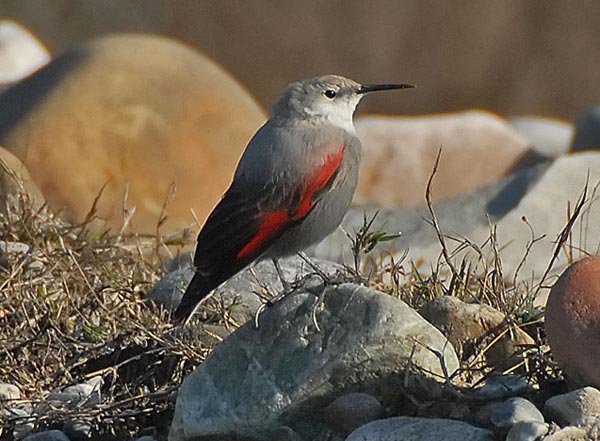
Wallcreeper (Tichodroma muraria) by Nikhil

Wallcreeper (Tichodroma muraria) by Nikhil

The Lord has continued to bless our efforts with this blog. If you read over last years blog, “Happy One Year Anniversary!“, you will see how it began. During this last year there have been more additions. April Lorier gave permission to use some of her articles as did Donna Watkins. Their articles are found in the Guest Authors section. Then Ian Montgomery, one of the photographers we are using, gave permission to turn his Bird of the Week newsletter into a blog series.

Speaking of photographers, the list of their links in the sidebar is growing. I am very thankful for each one of them that has given permission for their photos and videos to be used on the blog. There are now two videographers included in the list. The fantastic work of all of them has greatly enhanced this blog.
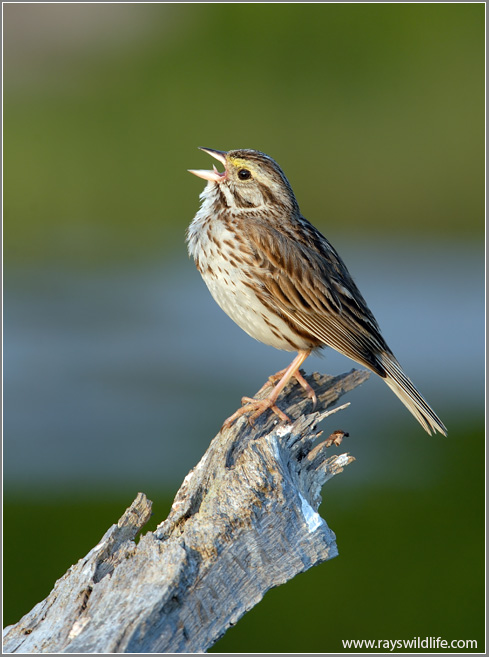
Savannah Sparrow singing by Ray

Of course, Dan and I continue to go out birdwatching, when we can. Those articles are spread throughout. I had started three different blogs, but decided to incorporate them back into Lee’s Birdwatching Adventures Plus, this main blog. The “PLUS Index” contains the Creation articles, “References” contains Nave’s and Torrey’s Topical studies, and “Birds – World” contains the Birds of the World. There are other sections for the Birds in Hymns, Birdwatching, etc. The “Birds of the Bible” articles, which is what started the idea of this blog, are reproduced on the only other blog I maintain. The Birds of the Bible blog only has those articles. I almost stopped it, but readers wanted it to continue. It is doing well and has now had 13,733 pages visited so far. (Stopped it in 2013) This main blog had its 84,000th page visited last night. (Those numbers are for 1.5 years) Thanks to all of you who have visited this site.

Those numbers were not mentioned to boast, but to give credit were it is due. The Lord is the One who gave me the ideas and the ability to do this. He is the One who created all these birds that we get the privilege to write about and show the photos and videos of them doing what He created them to do. Through the internet, these words and photos go to places we would never get to. There, they provide information, encouragement, and blessings to those who view these pages. (At least, that is what the readers tell us.) He, the Lord Jesus, is the One who gets the credit.

O LORD, how manifold are thy works! in wisdom hast thou made them all: the earth is full of thy riches. (Psalms 104:24) I will sing unto the LORD as long as I live: I will sing praise to my God while I have my being. My meditation of him shall be sweet: I will be glad in the LORD. (Psalms 104:33-34 KJV)
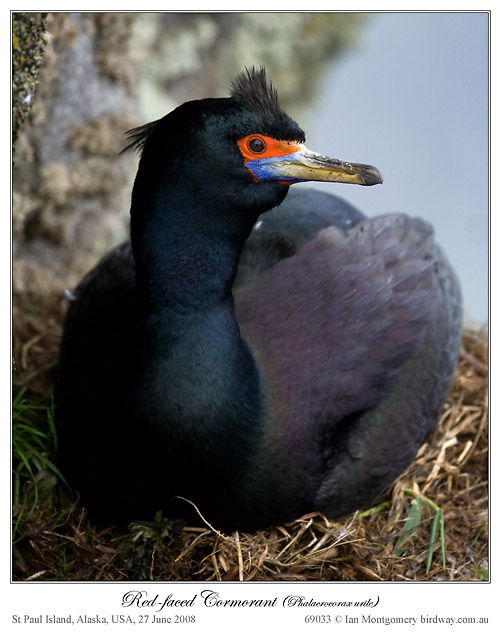
Ian’s Bird of the Week – Red-faced Cormorant

Red-faced Cormorant (Phalacrocorax urile) by Ian

Red-faced Cormorant (Phalacrocorax urile) by Ian

Newsletter 03-10-2009

Cormorants don’t often make it as Bird of the Week. People, particularly fishermen, mostly say or think “Uggh” when you say “cormorant” and even birders probably just tick them off without pausing in silent awe at their beauty. Cormorant, in general, lack style, hence the unflattering expression “like a shag on a rock”.

Well, here’s one that I think makes the grade. I particularly wanted to see Red-faced Cormorants when I was in Alaska last June. I wasn’t disappointed, particular when I got close to nesting birds on the cliffs of St Paul Island, and I give them high marks for their striking red and blue facial patterns, double crests, and startlingly iridescent plumage, worthy of some tropical wonder like a Bird of Paradise.

Red-faced Cormorant (Phalacrocorax urile) by Ian

Red-faced Cormorant (Phalacrocorax urile) by Ian

You have to go out of your way to see them, too. In North America, they occur only in southern Alaska, the Aleutians and the islands of the Bering Sea, though they are common within their restricted range, which extends across the Bering Sea to eastern Siberia and as far south as northern Japan.

On the website, I’ve been concentrating on updating galleries and indices to the latest format. One of the aims of this is to make it easier to navigate from one family to the next. I’m doing this through Previous and Next Family links on the top level (usually Global) thumbnail pages for each family (though not, at the moment, the lower Australian, Old World and New World thumbnail pages). This is progressing well. It is now possible to navigate through all the non-passerine families and I hope to fill the remaining gaps in the passerines (perching birds) soon. So, you can start at the first family, Cassowaries and Emus (http://www.birdway.com.au/casuariidae/index.htm) and follow the Next Family links all the way through 70 families as far as the New World Flycatchers (http://www.birdway.com.au/tyrannidae/index.htm) where the trail currently peters out with the New World Antbirds.

Best wishes,
Ian

Ian Montgomery, Birdway Pty Ltd,
454 Forestry Road, Bluewater, Qld 4818
Phone: +61-7 4751 3115
Preferred Email: ian@birdway.com.au
Website: http://birdway.com.au


Lee’s Addition:

The Cormorant is found in the list of unclean birds that the Israelites were not to eat.

And the pelican, and the gier eagle, and the cormorant, (Deuteronomy 14:17 KJV)

See Also:
Cormorant page
Birds of the Bible – Cormorant
Cormorant Photos
Cormorant Videos
Phalacrocoracidae – Cormorants, shags

World Bird Lists on the Internet

There is plenty of data about the birds of the world on the internet. This site is not competing with them, but just trying to use the pages here to introduce the birds and have links to our articles and links to great pages about them on the internet.

Our emphasis is “Birdwatching from a Christian Perspective”, so, we may see things a little different from time to time. When I read so many of the articles, they tell of the birds evolving, whereas, I believe God created them and told them to go multiply and cover the earth. There has been lots of variation going on, but no “evolution” from one kind to another. So, I just read around their remarks about evolution and enjoy the information about the actual birds.

Here are some links for information on the birds of the world.

IOC World Bird List ver 2.1 – Where I got the data for my list.

Bird Families of the World, 9th edition – Used many times for references

Bird Families of the World, Allen Chartier’s photographs – Newly found

Birdingonthe.net – Lots of links for birding the internet

Checklist of the World – Many interesting links

Avibase -“Avibase is an extensive database information system about all birds of the world”

Handbook of the Birds of the World – Wikipedia’s extensive information on the birds.

Opening Site For Scripture and References

(Updated 12/3/09) Today I am opening up a section to be used for references. It will be  used for storing some study references to use in the study of God’s Wondrous Creation. Whether it is for creation, critters or birds, I trust you will find them beneficial. One difference is that the Bird pages have pictures of the birds and in time, my desire is to add more photos to other critters and things that God has created.

I have only taken selective topics because of time and space usages. As time permits, more topics will be added. I will post some links to the full-blown versions of them. All of these are in the public domain and may be copied freely.

If a Bible reference is green, place your mouse over the verse and it will show the verse(s). I am starting with the Bird pages first. This is a work in progress.

Lord Bless you as you study His Word and about His magnificent creation.

Study to shew thyself approved unto God, a workman that needeth not to be ashamed, rightly dividing the word of truth. (2 Timothy 2:15)

All scripture is given by inspiration of God, and is profitable for doctrine, for reproof, for correction, for instruction in righteousness: (2 Timothy 3:16)

References:

Nave’s Topical Bible

R. A. Torrey’s New Topical Textbook

Treasure of Scripture Knowledge- Under Construction

Home again, Home again!

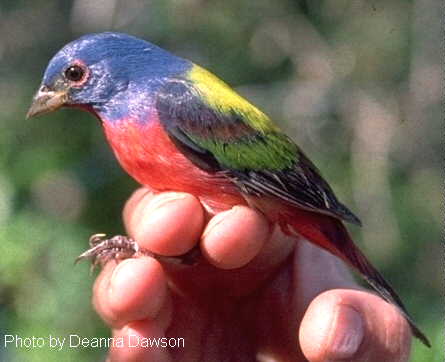
Painted BuntingPraise the the Lord, I am home again after a 5 day stay in the hospital. Thank all of you who have been praying for me while I have been fighting this infection. I have a viral respiratory infection (severe bronchitis) and it has to run it’s course. Could be several more months, so they tell me. With all their agressive treatments, I am much improved, but not well yet. At least they helped keep it from turning into pneumonia.

So, it’s back to try to do the “construction” I started some time back.

Thanks again for all your prayers. They were felt and appreciated.

Lee

Birds of the Bible – Foundation #5

The birds are now out of the Ark and on their way to becoming all the species we see today. (See Birds of the Bible – Foundation #4 for the links to the others) It would be great to know exactly which bird kinds and critter kinds came off the Ark. We know for certain that 2 kinds of birds were on board. The raven and the dove are both mentioned. (Gen 1:21, “every winged bird according to its kind”) According to Birds of the World, 8th edition, there are 233 families of birds. Also Bird Families of the World from Cornell. There are studies going on by creationists who are trying to find out what the original kinds were. It is called Baraminology and comes from “bara” which means “created” and “min” which means “kind”. That is “baramin” and the study of it is Baraminology. I have listed some interesting articles at the end about this topic.

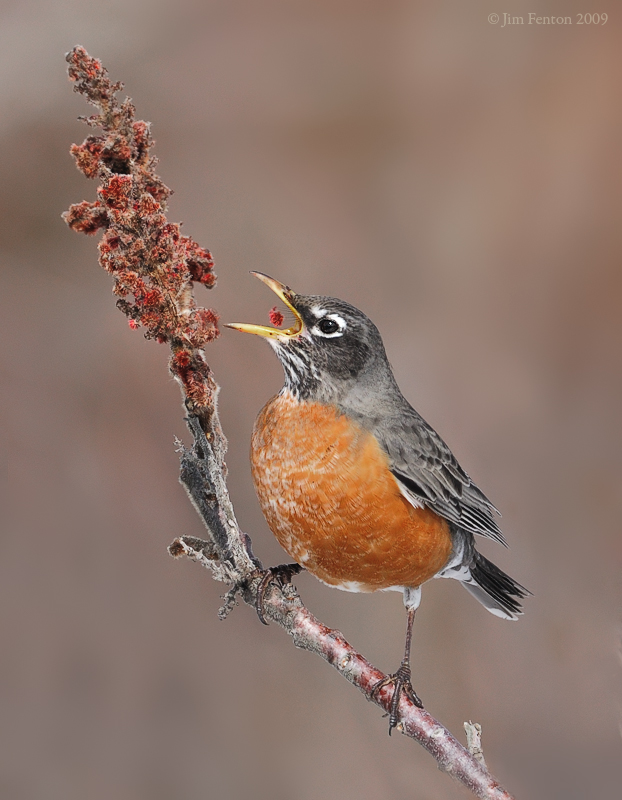
Robin Eating by Jim Fenton

Robin Eating by Jim Fenton

We have no problem with the birds interbreeding within their kind or as some call it “natural selection.” But the problem comes in with statements like this from a UCBerkeleyNews – Press Release, “Dinosaurs developed feathers some 65 to 100 million years ago and became birds, with the ostriches and emus among the first to evolve, and the ducks and chickens next. That much we know, says University of California, Berkeley, ornithologist Rauri Bowie. But when it comes to the rest of bird evolution, he adds, “nobody had any idea”- until now.”  I contend they still don’t know, because they have rejected the Creator who says He created them.

We all have the same evidence of fossils and living birds, but the difference comes with what worldview you start with. What they are finding is very interesting because of studies with the DNA of birds. The study was by The Field Museum of Chicago, which gathered “DNA from 169 species of birds representing nearly all of the world’s non-songbird families.” Because of these studies, it:

  • “shifts the relationships among today’s birds in surprising ways.”
  • “For example, parrots and songbirds turn out to be each other’s closest relatives, while falcons are only distant cousins of the other birds of prey, the hawks and eagles.”
  • “New world vultures like the turkey vulture are no longer classified with the storks, but rather, return to their more traditional placement with the hawks and eagles.”
  • And hummingbirds and swifts, long known to be closely related, are in the same group as the elusive nightjars and the whip-poor-will.”
  • “The new relationships often make a lot of sense….For example, hummingbirds, swifts and nightjars all go into torpor at night or during cold weather. It thus makes sense that they are related, rather than having evolved this trait independently.”
  • “Similarly, many songbirds… learn songs from their parents, just like many parrots, which are now revealed to be songbirds’ closest relatives.”
  • “although falcons look superficially like hawks, the new data show them to be distantly related. In line with this new phylogeny, falcons are known to have traits, such as acute ultraviolet vision, that distinguish them from hawks and other birds of prey.”

    Portraiture by Maji

    Portraiture by Maji

  • “These are just simple examples of how people are going to have to rethink the behavioral characters that have evolved,” he said. “The study has raised as many questions as it has helped to resolve.”
  • “Birds fall into three general groups: land, water and shorebirds”
  • “With this study, we learned two major things,”… “First, appearances can be deceiving. Birds that look or act similar are not necessarily related. Second, much of bird classification and conventional wisdom on the evolutionary relationships of birds is wrong.”

The Bold in the quotes are mine.

That is just an example of the remarkable things they are finding out. Sounds like a fantastic God created them and we are just finding out some of His Majesty.

You are worthy, O Lord, To receive glory and honor and power; For You created all things, And by Your will they exist and were created.  (Revelation 4:11 NKJV)

I had this article ready to go when today’s mail came. There is a great article about “Speciation and the Animals on the Ark,” by Daniel Criswell, Ph.D. in this month’s Acts and Facts from ICR. It is a little technical, but it helps explain more of what this article is about.

Article about Baraminology from Answers in Genesis by Todd Charles Wood. Bara-What?

Variation within Created Kinds” by Dr. Gary Parker

Is Natural Selection the Same Thing as Evolution?” by Georgia Purdom

From Wikipedia “Baraminology

From CreationWiki “Baraminology

When I Consider! – Eagle’s Diving Speed

Magnify the Lord

Magnify the Lord

This is the first in a new series called, “When I Consider! Please see the article, “A Closer Look at the Evidence – Kleiss“, by Richard and Tina Kleiss, for an explanation of this new series. Not only will I use information from the Kleiss’ book, but other articles also. Since our main blog is about Bird’s, this seems like a good starting place.

“Evidence From Biology”

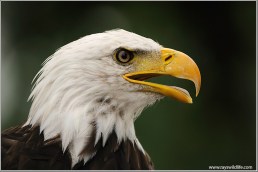
The eagle’s diving speed can exceed 100 miles per hour. At this speed, the eagle’s eyesight must be perfect in order to know exactly when to pull out of a dive. It’s eyes are designed to spot a rabbit or fish up to one mile away. The eagle also has remarkably designed wings, each covered by over 12,000 feathers. Aircraft designers are still trying to copy this engineering marvel.

Besides the ability to climb to 10,000 feet withing minutes, the parent eagle also assists its young in flight. As it flies alongside the eaglet, whirlpools of air formed by its primary feathers provide the eaglet with additional lift.

In speaking of His protective care over the nation of Israel, God states, ‘..I bare you on eagle’s wings…’ (Exodus 19:4 KJV). The Hebrew word for ‘bare’ is nacah, and its primary rood means ‘to lift.’ This is exactly what the parent eagle does to help its young in flight.

The precise selection and meaning of words used in the Bible is a testimony to the accuracy and precision of the remarkable book.

Character Sketches, Vol.III, p171-174″

The above quote is from January 28, “A Closer Look at the Evidence,” by Richard and Tina Kleiss

This series will be based on:

Psalms 8:3-9 NKJV
(3) When I consider Your heavens, the work of Your fingers, The moon and the stars, which You have ordained,
(4) What is man that You are mindful of him, And the son of man that You visit him?
(5) For You have made him a little lower than the angels, And You have crowned him with glory and honor.
(6) You have made him to have dominion over the works of Your hands; You have put all things under his feet,
(7) All sheep and oxen– Even the beasts of the field,
(8) The birds of the air, And the fish of the sea That pass through the paths of the seas.
(9) O LORD, our Lord, How excellent is Your name in all the earth!

God of Wonders DVD at Creation Moments

Creation Moments has just released a new DVD – God Of Wonders

“This brand new 85-minute DVD features Ian Taylor and many other creation science experts … and it includes some of the most breathtaking nature photography you’ve ever seen! Survey the unimaginable size of the universe and ponder the vast energy present in all matter. Examine the elegant water molecule essential for all life and discover how God combines these molecules to form beautiful and symmetrical snow crystals. Learn about the incredible complexity of DNA and the miraculous workings of the tiny seed. From the design functionality of birds to the incredible transformation of butterflies, these and many other features of creation are highlighted in this visually stunning presentation.”


I am ordered mine!

Birds of the Bible – Pelicans II

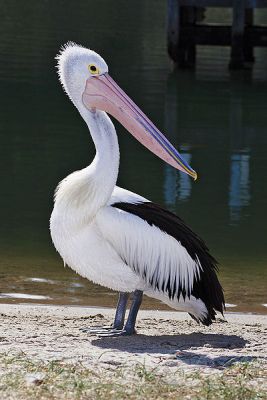
Australian Pelican

Australian Pelican

We were birdwatching at Lake Hollingsworth this week and spotted 11 American White Pelicans on the lake and also 5 Brown Pelicans hanging out with them. Over them were at least 10 or so Osprey circling hoping for some leftovers or fish to be scared up. So, this week we will revisit the “Birds of the Bible – Pelicans.”

In the first article we covered the American White Pelicans and the Brown Pelicans (our North American Pelicans), but there are six more around the world. They are  the:

Australian Pelican widespread on the inland and coastal waters of Australia and New Guinea, also in Fiji, parts of Indonesia and as a vagrant to New Zealand. Medium-sized by pelican standards: 5.3-6 ft long with a wingspan of 6–8.3 ft and weighing 9–29 lb). It is predominantly white with black along the primaries of the wings. The pale, pinkish bill is enormous, even by pelican standards, and is the largest bill in the avian world. The record-sized bill was 19.5 in long.

Dalmation Pelican It breeds from southeastern Europe through Asia to China in swamps and shallow lakes. The nest is a crude heap of vegetation. The largest of the pelicans, averaging 67 inches in length, 24-33 lbs in weight and just over 10 ft in wingspan. On average, it’s the world’s heaviest flying species. Peruvian Pelican The Peruvian birds are nearly twice the bulk of the Brown Pelican, averaging 15.4 lb in weight; they are also longer, measuring about 5 ft overall.

Great White Pelican Also known as the Eastern White Pelican or Great White Pelican, it breeds from southeastern Europe through Asia and in Africa in swamps and shallow lakes. The tree nest is a crude heap of vegetation. A large pelican, at 22 lbs, 63 in long and with a 110 inch wingspan. It differs from the Dalmatian Pelican, the only larger species of pelican, by its pure white, rather than greyish-white, plumage, a bare pink facial patch around the eye and pinkish legs.

Pink-Backed Pelicans

Pink-Backed Pelicans

Pink-backed Pelican A resident breeder in Africa, southern Arabia and Madagascar in swamps and shallow lakes. The nest is a large heap of sticks, into which 2-3 large white eggs are laid. The chicks feed by plunging their heads deep into the adult’s pouch and taking the partially digested regurgitated fish. A small pelican, but the wingspan is still around 7.9 ft with an average weight of 12 lbs. It is much smaller and duller than the Great White Pelican. The plumage is grey and white, with a pink back.

Spot-billed Pelican It breeds in southern Asia from southern Pakistan, Republic of India to Indonesia. It is a bird of large inland and coastal waters, especially shallow lakes. The nest is a heap of vegetation in a tree. A small pelican, at 49-60 in long and a weight of 9-13.2 lbs. It is mainly white, with a grey crest, hindneck and tail. Information taken from Wikipedia


The LORD will be awesome to them, For He will reduce to nothing all the gods of the earth; People shall worship Him, Each one from his place, Indeed all the shores of the nations. “You Ethiopians also, You shall be slain by My sword.” And He will stretch out His hand against the north, Destroy Assyria, And make Nineveh a desolation, As dry as the wilderness. The herds shall lie down in her midst, Every beast of the nation. Both the pelican and the bittern Shall lodge on the capitals of her pillars; Their voice shall sing in the windows; Desolation shall be at the threshold; For He will lay bare the cedar work. This is the rejoicing city That dwelt securely, That said in her heart, “I am it, and there is none besides me.” How has she become a desolation, A place for beasts to lie down! Everyone who passes by her Shall hiss and shake his fist. (Zep 2:11-15 NKJV)

“Judah had been taunted and mocked by the neighboring nations, Moab and Ammon, but God reminded them that he had “heard the taunts” (Zep_2:8), and that the taunters would be punished for their pride (Zep_2:10). At times the whole world seems to mock God and those who have faith in him. When you are ridiculed, remember that God hears and will answer. Eventually, in God’s timing, justice will be carried out. To predict the destruction of Nineveh 10 years before it happened would be equivalent to predicting the destruction of London, Tokyo, Paris, or New York. Nineveh was the ancient Near Eastern center for culture, technology, and beauty. It had great libraries, buildings, and a vast irrigation system that created lush gardens in the city. The city wall was 60 miles long, 100 feet high, and over 30 feet wide and was fortified with 1,500 towers. Yet the entire city was destroyed so completely that its very existence was questioned until it was discovered, with great difficulty, by 19th-century archaeologists. Nineveh had indeed become as desolate and dry as the desert.” (Notes from the Life Application Bible on Zephaniah 2:8-15)


See also these links:

Interesting link to Our Daily Bread about the Pathetic Pelican.

Birds of the Bible – Pelicans

Pelicans Page with Pictures and Videos

Interesting Things – A Lesson from the Stork

SmileyCentral.com

“A Lesson from the Stork

“Yea, the stork in the heaven knoweth her appointed times; and the turtle and the crane and the swallow observe the time of their coming; but my people know not the judgment of the Lord.” (Jeremiah 8:7)

The migratory behavior of birds is fascinating. If it only occurred once, we would call it a miracle. Yet we see bird migrations twice a year, so we are desensitized to the Creator-designed magnificence of these journeys.

Geographically, Israel sits center-stage among the great continents of Europe, Asia, and Africa. Many birds migrate from European and Asian winters to Africa, with the migrations reversed prior to summer. …….”

Click link to see the rest of this devotional today from Days of Praise.

Birds of the Bible – Hoopoe

By permission of William Kwong

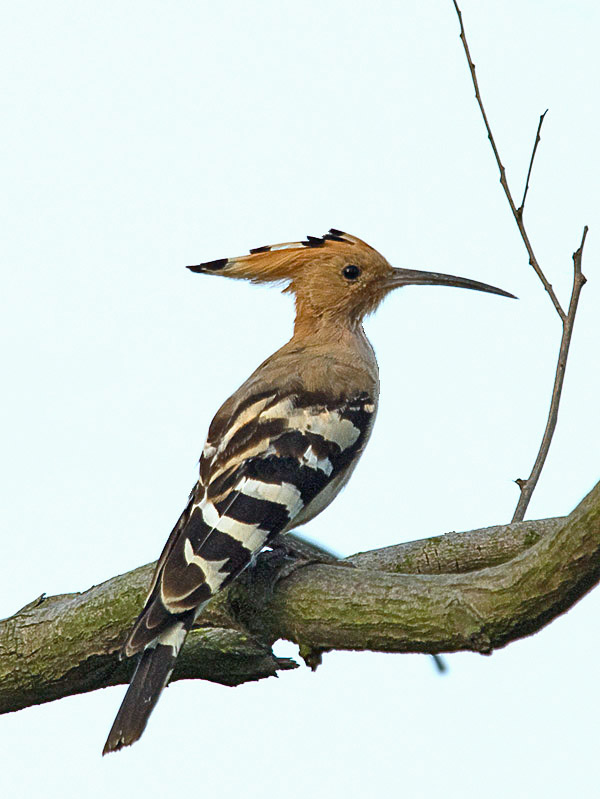
Eurasian Hoopoe By William Kwong

The Hoopoe is mentioned in the list of “unclean” things not to eat in Leviticus and Deuteronomy. I am sort of revisiting my Birds of the Bible – Lapwing which uses the same references. Depending on which copy of Scripture one uses it is translated Lapwing in some and Hoopoe in others. The Hoopoe is an interesting and pretty bird, so I will describe it in today’s blog.

the stork, the heron after its kind, the hoopoe, and the bat. (Lev 11:19 NKJV)
the stork, the heron after its kind, and the hoopoe and the bat. (Deu 14:18 NKJV)

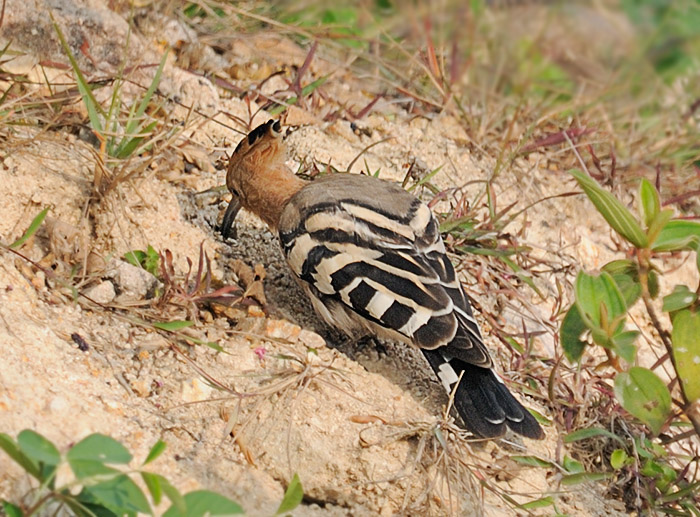
 Eurasian Hoopoe By William Kwong

Eurasian Hoopoe By William Kwong

  • They are found in Asia, Europe, and North Africa, Sub-Saharan Africa and Madagascar.
  • They migrate to the tropics in the winter.
  • In 2008, the Long-Billed Hoopoe became the national bird of Israel. See Article
  • Their diet consists of mostly worms and insects, which they find while spending most of their time on the ground.
  • “The nest is in a hole in a tree or wall. Like those of its relatives,… the nest tends to contain copious amounts of faeces and smell very foul as a protection against predators[2].”(Wikipedia)
  • “The song is a trisyllabic “oop-oop-oop”, which gives rise to its English and scientific names.”(Wikipedia)
 Eurasian Hoopoe By William Kwong

Eurasian Hoopoe By William Kwong

Links to check out:

Wikipedia – Hoopoe

Bird Families of the World – Hoopoes

William Kwong’s Gallery (Photos used with his Permission)

Hoopoe – Photos & Videos

See:

Videos of Large Formations of Birds

Just found these on the internet.

You will never believe this one. Only God could put that instinct in them! Wow!
Starlings on Otmor

Starling Magic

(Updated Aug 3) After posting these videos last night, I decided to see if this habit might be mentioned in Scripture and here is what I found:

Like birds flying about, So will the LORD of hosts defend Jerusalem. Defending, He will also deliver it; Passing over, He will preserve it.” (Isaiah 31:5 NKJV)
Then I saw an angel standing in the sun; and he cried with a loud voice, saying to all the birds that fly in the midst of heaven, “Come and gather together for the supper of the great God, (Revelation 19:17 NKJV)
Who are these who fly like a cloud, And like doves to their roosts? (Isaiah 60:8 NKJV)

Here is an interesting commentary quote from Matthew Henry:
“(4.) These converts flocking to the church shall be greatly admired (Isa_60:8): Who are these that fly as a cloud? Observe,
[1.] How the conversion of souls is here described. It is flying to Christ and to his church, for thither we are directed; it is flying like a cloud, though in great multitudes, so as to overspread the heavens, yet with great unanimity, all as one cloud. They shall come with speed, as a cloud flying on the wings of the wind, and come openly, and in the view of all, their very enemies beholding them (Rev_11:12), and yet not able to hinder them. They shall fly as doves to their windows, in great flights, many together; they fly on the wings of the harmless dove, which flies low, denoting their innocency and humility. They fly to Christ, to the church, to the word and ordinances, as doves, by instinct, to their own windows, to their own home; thither they fly for refuge and shelter when they are pursued by the birds of prey, and thither they fly for rest when they have been wandering and are weary, as Noah’s dove to the ark.
[2.] How the conversion of souls is here admired. It is spoken of with wonder and pleasure: Who are these? We have reason to wonder that so many flock to Christ: when we see them all together we shall wonder whence they all came. And we have reason to admire with pleasure and affection those that do flock to him: Who are these? How excellent, how amiable are they! What a pleasant sight is it to see poor souls hastening to Christ, with a full resolution to abide with him!”