Birds of the Bible – Wood Storks

Wood Stork (Mycteria americana) by Lee

Wood Stork (Mycteria americana) by Lee

While we were on the same birdwatching trip to Circle B (American Bittern), we encountered a Wood Stork. There are five verses in the Bible that mention the Stork:

And the stork, the heron after her kind, and the lapwing, and the bat. (Leviticus 11:19 KJV)

And the stork, and the heron after her kind, and the lapwing, and the bat. (Deuteronomy 14:18 KJV)

Where the birds make their nests: as for the stork, the fir trees are her house. (Psalms 104:17 KJV)

Yea, the stork in the heaven knoweth her appointed times; and the turtle and the crane and the swallow observe the time of their coming; but my people know not the judgment of the LORD. (Jeremiah 8:7 KJV)

Then lifted I up mine eyes, and looked, and, behold, there came out two women, and the wind was in their wings; for they had wings like the wings of a stork: and they lifted up the ephah between the earth and the heaven. (Zechariah 5:9 KJV)

Wood Stork (Mycteria americana) by Lee Landing

Wood Stork (Mycteria americana) by Lee Landing

While we were birdwatching at Circle B just before Christmas, a Wood Stork flew over and landed in a tree a good way from us. Thanks to the zoom on my camera, I was able to capture its picture. They amaze me that they are “ugly” up close, but when they fly, they are so beautiful and graceful to watch. We see them quite often here and I have been known to feed them at Lake Morton. They also fly over our house and land in our community pond.
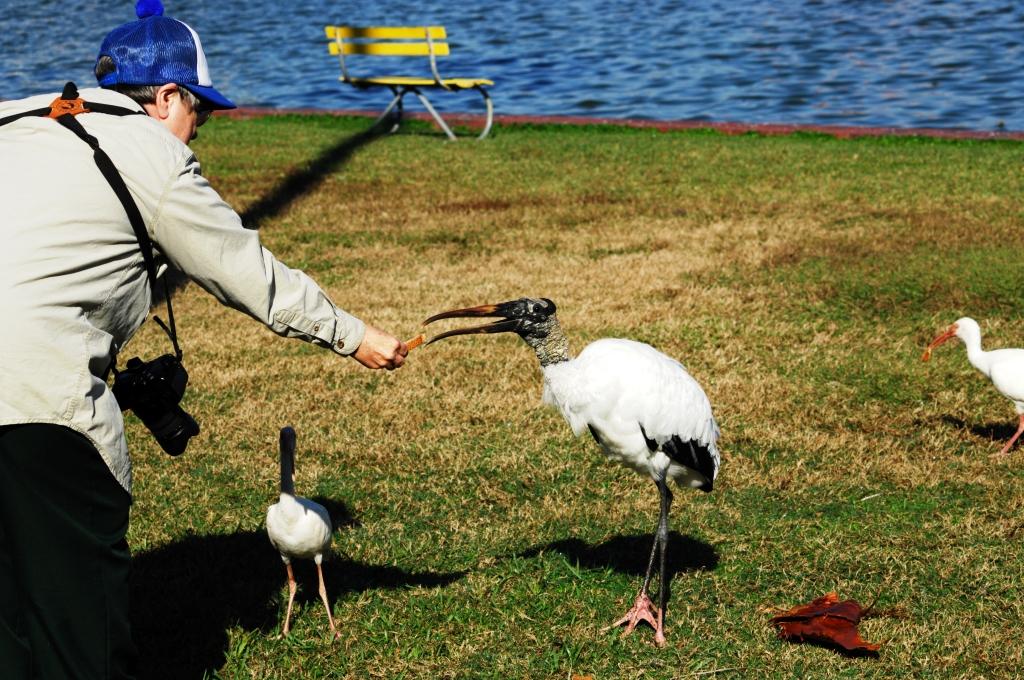
Lee feeding Wood Stork at Lake Morton by Dan

Lee feeding Wood Stork at Lake Morton by Dan 2011

As mentioned above, Storks are birds in the Bible and are members of the Ciconiidae – Storks Family. Currently there are 19 Storks in this family. The Bible does not tell which one is being mentioned, but most like one of the Storks that lived in Israel.

Our Wood Stork here is a broad-winged soaring bird that flies with its neck outstretched and legs extended. It forages usually where lowering water levels concentrate fish in open wetlands; it also frequents paddy fields. Walking slowly and steadily in shallow water up to its belly, it seeks prey, which, like that of most of its relatives, consists of fish, frogs and large insects. It catches fish by holding its bill open in the water until a fish is detected. (Wikipedia)

“Tall and long-legged, the wood stork is the largest wading bird native to America. It is white with black flight feathers, distinctive because of its dark, featherless head (down to the upper neck) and thick, down-curved bill. Wood storks fly with neck and legs extended, interrupting strong wing beats with brief glides; their wingspan is 5 1/2 feet.” (FL FWCC) Their length is 33.5–45.3 in (85–115 cm) and weigh between72.3 to 93.1 oz (2050–2640 g). (NatGeo)

*

This slideshow requires JavaScript.

*

*

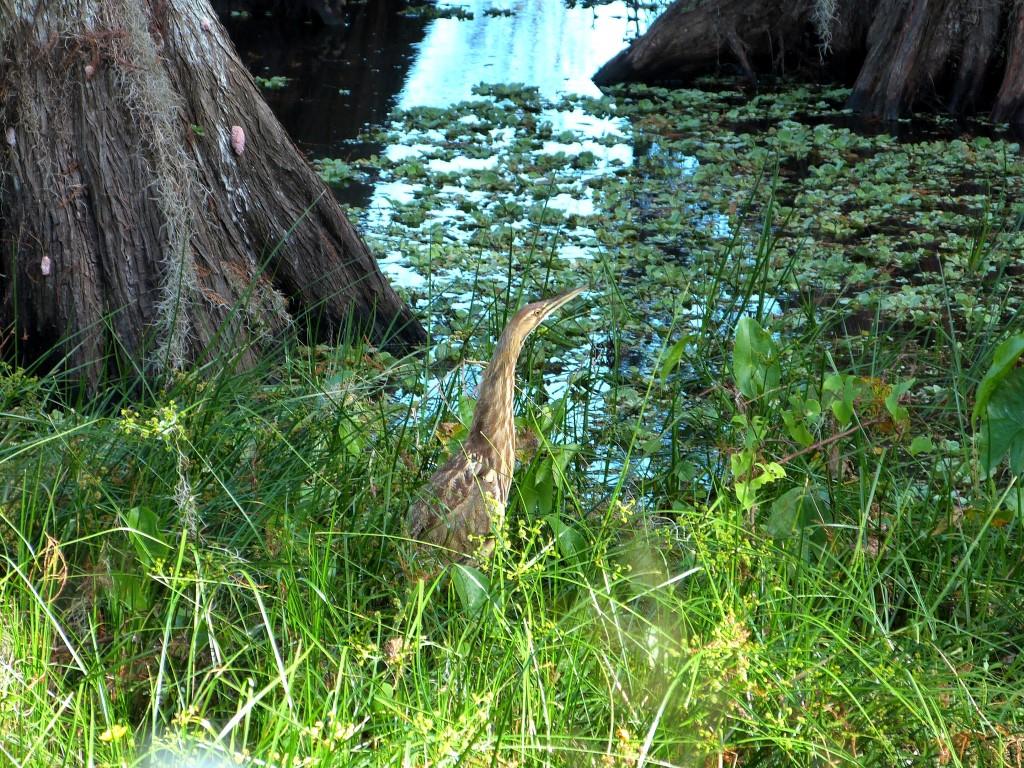
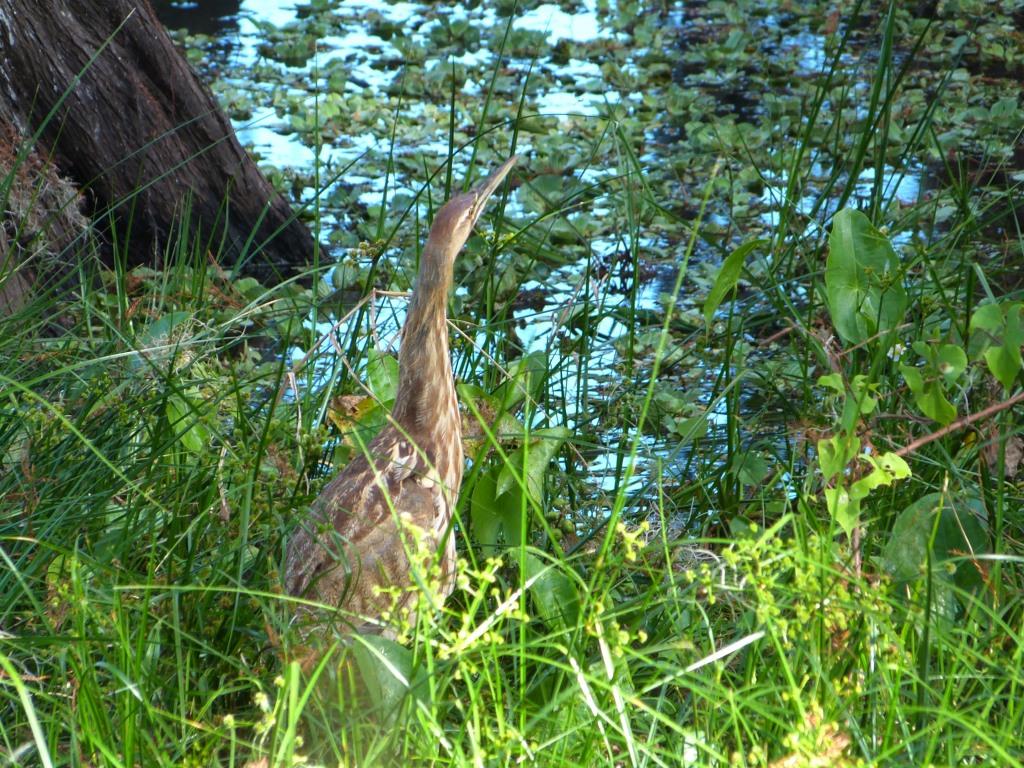
Birds of the Bible – American Bittern

American Bittern (Botaurus lentiginosus) by Lee

American Bittern (Botaurus lentiginosus) by Lee

The Bittern is found in the KJV in three verses of Scripture. Some versions translate it differently. But for the sake of this article, here are those verses:

I will also make it a possession for the bittern, and pools of water: and I will sweep it with the besom of destruction, saith the LORD of hosts. (Isaiah 14:23 KJV)

But the cormorant and the bittern shall possess it; the owl also and the raven shall dwell in it: and he shall stretch out upon it the line of confusion, and the stones of emptiness. (Isaiah 34:11 KJV)

And flocks shall lie down in the midst of her, all the beasts of the nations: both the cormorant and the bittern shall lodge in the upper lintels of it; their voice shall sing in the windows; desolation shall be in the thresholds: for he shall uncover the cedar work. (Zephaniah 2:14 KJV)

We were out at Circle B Bar Reserve just before Christmas and spotted an American Bittern. They are quite evasive and not spotted often, at least by me. That protection reminds me of several verses:

Keep me as the apple of the eye, hide me under the shadow of thy wings, (Psalms 17:8 KJV)

Deliver me, O LORD, from mine enemies: I flee unto thee to hide me. (Psalms 143:9 KJV)


This slideshow requires JavaScript.

Bitterns are members of the Ardeidae – Herons, Bitterns Family. “Although common in much of its range, the American Bittern is usually well-hidden in bogs, marshes and wet meadows. Usually solitary, it walks stealthily among cattails or bulrushes. If it senses that it has been seen, the American Bittern becomes motionless, with its bill pointed upward, causing it to blend into the reeds. It is most active at dusk. More often heard than seen, this bittern has a call that resembles a congested pump.

Like other members of the heron family, the American Bittern feeds in marshes and shallow ponds, dining on amphibians, fish, insects and reptiles.

This bittern winters in the southern United States and Central America. It summers throughout Canada and much of the United States. As a long-distance migrant, it is a very rare vagrant in Europe, including Great Britain and Ireland. This bird nests in isolated places with the female building the nest and the male guarding it. Two or three eggs are incubated by the female for 29 days, and the chicks leave after 6–7 weeks.” (From Wikipedia)

Identification Tips: (USGS)

  • Length: 23 inches Wingspan: 45 inches
  • Medium-sized wading bird
  • Dark brown upperparts
  • Underparts streaked brown and white
  • Black malar streak
  • Yellow bill with dark culmen
  • Black primaries and secondaries
  • Sometimes “freezes” with neck held upwards
  • Immatures similar to adults but lack the malar streak

American Bittern sounds from Cornell

*

*

Bible Birds – American Bittern

American Bittern (Botaurus lentiginosus) by Lee

The Bittern is found in the KJV in three verses of Scripture. Some versions translate it differently. But for the sake of this article, here are those verses:

I will also make it a possession for the bittern, and pools of water: and I will sweep it with the besom of destruction, saith the LORD of hosts. (Isaiah 14:23 KJV)

But the cormorant and the bittern shall possess it; the owl also and the raven shall dwell in it: and he shall stretch out upon it the line of confusion, and the stones of emptiness. (Isaiah 34:11 KJV)

And flocks shall lie down in the midst of her, all the beasts of the nations: both the cormorant and the bittern shall lodge in the upper lintels of it; their voice shall sing in the windows; desolation shall be in the thresholds: for he shall uncover the cedar work. (Zephaniah 2:14 KJV)

We were out at Circle B Bar Reserve just before Christmas and spotted an American Bittern. They are quite evasive and not spotted often, at least by me. That protection reminds me of several verses:

Keep me as the apple of the eye, hide me under the shadow of thy wings, (Psalms 17:8 KJV)

Deliver me, O LORD, from mine enemies: I flee unto thee to hide me. (Psalms 143:9 KJV)

This slideshow requires JavaScript.

Bitterns are members of the Ardeidae – Herons, Bitterns Family.”Although common in much of its range, the American Bittern is usually well-hidden in bogs, marshes and wet meadows. Usually solitary, it walks stealthily among cattails or bulrushes. If it senses that it has been seen, the American Bittern becomes motionless, with its bill pointed upward, causing it to blend into the reeds. It is most active at dusk. More often heard than seen, this bittern has a call that resembles a congested pump.

Like other members of the heron family, the American Bittern feeds in marshes and shallow ponds, dining on amphibians, fish, insects and reptiles.

This bittern winters in the southern United States and Central America. It summers throughout Canada and much of the United States. As a long-distance migrant, it is a very rare vagrant in Europe, including Great Britain and Ireland. This bird nests in isolated places with the female building the nest and the male guarding it. Two or three eggs are incubated by the female for 29 days, and the chicks leave after 6–7 weeks.” (From Wikipedia)

Identification Tips: (USGS)

  • Length: 23 inches Wingspan: 45 inches
  • Medium-sized wading bird
  • Dark brown upperparts
  • Underparts streaked brown and white
  • Black malar streak
  • Yellow bill with dark culmen
  • Black primaries and secondaries
  • Sometimes “freezes” with neck held upwards
  • Immatures similar to adults but lack the malar streak

American Bittern sounds from Cornell

*

*

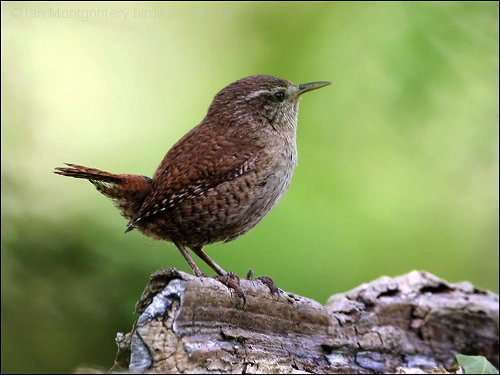
The Winter Wrens’ Dew-drop Baths

Winter Wren (Troglodytes troglodytes) by Ian

Winter Wren (Troglodytes troglodytes) by Ian

THE WINTER WRENS’ DEW-DROP BATHS

“The winter wren is really with us during the summer too,” said daddy. “But he is too shy to be near us. We can only hear him sing sometimes. When winter comes, though, he goes to people for protection and picks up the crumbs they give him.

“Yesterday he was sitting on a snow-berry bush with a tiny companion. The snow-berry bushes are full and leafy, and in the spring and summer are covered with very tiny pink blossoms. In the autumn and winter they are covered with little berries which look as if they had been made out of snow.

“‘Oh, how I dread the winter!’ said the tiny wren. ‘Just imagine how dreadful it would be if no one put any bread crumbs out for us, or no dog left us some of his dinner on a back porch.’

“‘Now,’ said Mr. Brown Wren, ‘you mustn’t think of such sad thoughts. You always [p.11]do! Someone will look after us. And maybe we’ll find a few spiders now and then in the cracks, and then well have a regular feast.’

“The next day they were back again on the snow-berry bush, and the day was much warmer. Now the wrens love to bathe above all things! Even in the winter they will go through a little sheet of ice and get into the cold, cold water underneath. For they must get their baths! And in the spring, when the tiny wrens are brought forth from their mossy nests, the first lesson they have is of bathing in some nearby brook.

“But this day it was early in the morning, the snow-berry bush was covered with dew-drops and the wrens were delighted.

“‘The sun will drive them away soon. Let’s take them while we get the chance,’ whispered Mr. Brown Wren.

“‘Yes, yes,’ said his small companion. ‘We will soon have to bathe when it is so cold. Let us have a good warm bath first.’

“And then those two little brown wrens took the dew-drops in their beaks, and dropped each one in turn on their feathers. [p.12]Then they got under some leaves full of dew-drops and shook them down over their little feathered bodies.

“After they were well covered with the dew-drops they began to shake all over just as every bird does when he takes a bath. And back they went to take another bath when this one was over. For they seemed to enjoy their last warm bath so much!

“Finally they had bathed enough, and the sun appeared strong as could be, and shining very hard. They perched still on the branches of the snow-berry bush and bathed now in the hot sun. Soon their little feathers were quite dry and they began to sing.

“And truly I think their song was one of gladness because of their dew-drop baths!”


Winter Wren (Troglodytes troglodytes) by Ian

Winter Wren (Troglodytes troglodytes) by Ian

Lee’s Addition:

My message shall drop as the rain, my speech shall distil as the dew, as the light rain upon the tender grass, and as the showers upon the herb. (Deuteronomy 32:2 AMP)

By His knowledge the depths were broken up, And clouds drop down the dew. (Proverbs 3:20 NKJV)

And who do you think is the father of rain and dew, (Job 38:28 MSG)

Another Bird Tales

From

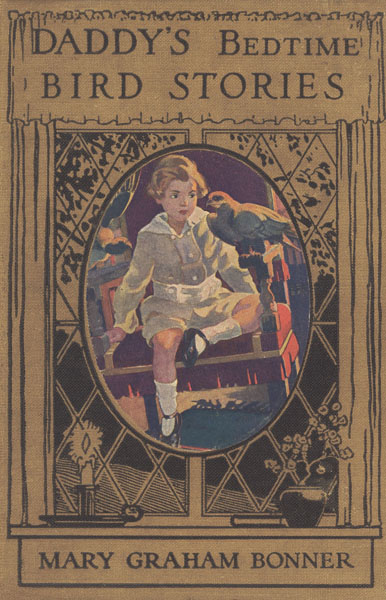
Daddy’s Bedtime Bird Stories – Gutenberg ebooks

By

Mary Graham Bonner

With four illustrations in color by
Florence Choate and Elizabeth Curtis

Daddys Bedtime Story Images


These stories first appeared in the American Press Association Service and the Western Newspaper Union.


Many of the sketches in this volume are the work of Rebecca McCann, creator of the “Cheerful Cherub,” etc.

Daddy's Bedtime Bird Stories by Mary Graham Bonner - 1917

*
Daddy’s Bedtime Bird Stories by Mary Graham Bonner – 1917

*

Links:

Painted Bunting (Passerina ciris) ©©Flickr


  Bird Tales


  Daddy’s Bedtime Bird Stories


Spanish Sparrow (Passer Hispaniolensis) female ©WikiC


  Wordless Birds


Winter Wren (Troglodytes troglodytes) by Ian


  Troglodytidae – Wrens Family


*

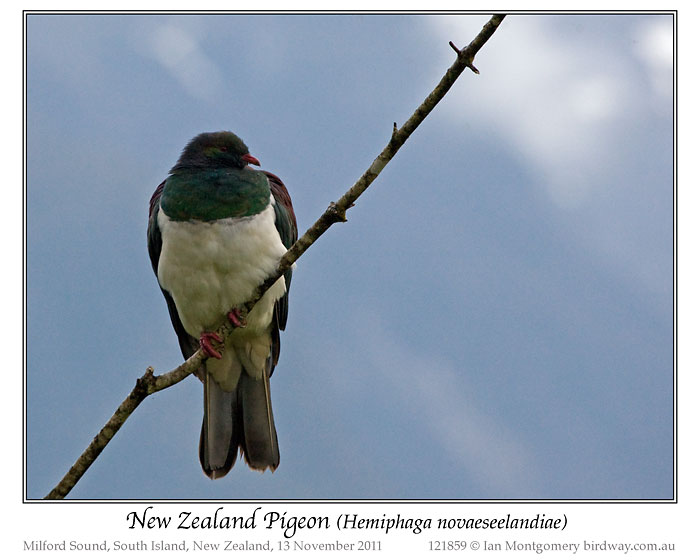
Bird of the Week – New Zealand Pigeon

New Zealand Pigeon (Hemiphaga novaeseelandiae) by Ian

Bird of the Week – New Zealand Pigeon ~ by Ian Montgomery

Newsletter ~ 12/24/13

Well, Christmas is nearly on us and I’ve put up the ‘icicle’ Christmas lights beside the almost too-warm pool (29ºC), so I thought a bird photo including some real Southern Hemisphere snow would be correspondingly inappropriate. This proved difficult as I usually avoid the snow and the best candidate, the Kea of New Zealand was bird of the week two years ago even though the snow was incidental to the story about Keas’ passion for dismantling motor vehicles.

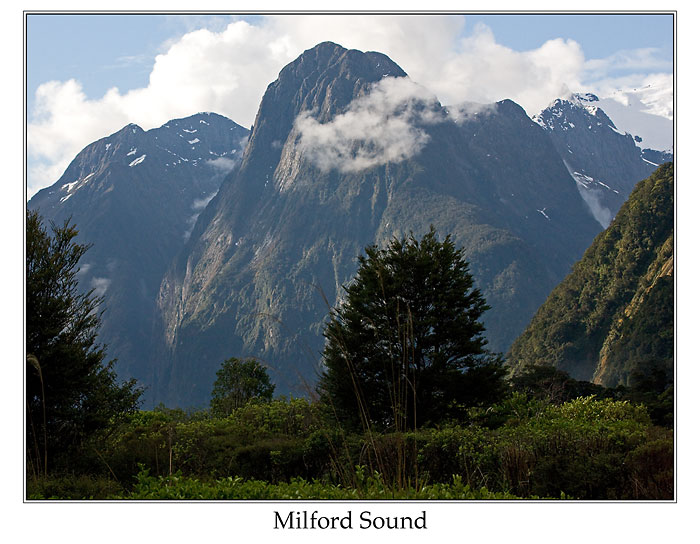
So I settled for this one of New Zealand Pigeon. The three-pronged smudge above its head is snow, believe it or not, and it’s actually the isolated three-pointed star visible above and to the right of the main tree in the second photo – taken at about the same time and place in the spectacular surroundings of Milford Sound in the Fiordland of the south west of the South Island.

New Zealand - Milford Sound by IanI was there one evening to book a place on an early cruise the next morning to search for fiordland penguins, and having done so went for a stroll and encountered various local inhabitants including Paradise Shelduck, New Zealand Pigeons and, near the car park, a Weka. the third photo shows the same pigeon on the same branch from a better angle and you can see the beautiful purple and green iridescence of the plumage contrasting with the snow-white belly. With a length to 50cm/20in and a weight up to 800g/28oz, these are large birds, as big or bigger than Imperial-Pigeons, Wompoo Fruit-Doves and Eurasian Wood Pigeons.

New Zealand Pigeon (Hemiphaga novaeseelandiae) by Ian

They’re very confiding, and this one and its mate, sitting on another branch in the same tree, just watched me as I walked around them taking photos from different angles. They look plump and gastronomically appealing, so it’s not surprising that the population declined after human settlement until protection was granted in 1921. The Norfolk Island sub-species wasn’t so lucky: it was still around in the 1830s but there have been no records since 1900.

New Zealand Pigeon (Hemiphaga novaeseelandiae) by Ian

The following morning dawned bright and sunny, last photo, and a very obliging cruise-boat captain found me a pair of nesting Fiordland Penguins within 10 minutes of leaving the jetty and took us almost alarming close so that I could get some photos: http://www.birdway.com.au/spheniscidae/fjordland_penguin/index.htm.

New Zealand - Milford Sound by Ian

Now there’s some real snow on the mountains on the left. I wish you a safe and peaceful Christmas and an enjoyable and enriching 2014.
Ian

**************************************************
Ian Montgomery, Birdway Pty Ltd,
454 Forestry Road, Bluewater, Qld 4818
Tel 0411 602 737 ian@birdway.com.au
Bird Photos http://www.birdway.com.au/
Recorder Society http://www.nqrs.org.au


Lee’s Addition:

Thanks, Ian, and Merry Christmas to you. I like the clean line between the green and the white on its breast. (Could have used it for the birds series.)

It appears that Ian gets around quite a bit lately. Since he started helping with that book, his search for certain birds has intensified. All for our benefit. We get to enjoy his great photographs of some very neat species.

I trust you enjoy reading his newsletters about his birdwatching adventures as well as I enjoy them. To see all of his articles here:

Ian’s Bird of the Week

Ian’s Doves and Pigeon Photos – Columbidae Family

New Zealand Pigeon – NZ Birds Online

New Zealand Pigeon – ARKive

New Zealand Pigeon – Wikipedia

*

Great Day at Faith Baptist – 12/15/13

Pastor Jerry

Pastor Jerry

What a fantastic day! We had our Christmas Cantata this morning and then after a great boxed lunch, we had a praise time.

Our Music Director, Assistant Pastor, Visitation Pastor, etc. was honored. Pastor Jerry Smith has been here for almost 30 years and this was the last Cantata under his direction. He is “retiring” from that part of his ministry. He is not retiring entirely, just backing off some of his duties. He is in his 70’s now.

Pastor Jerry and Shirley

Pastor Jerry and Shirley

There were many testimonies given about him and his faithfulness to the Lord and to us at the church. He has visited so many of us when we have been in the hospital. Seven years ago I had back surgery and a nerve was nicked to my legs. I lost all feeling in my legs and feet. Each day I gained more feeling in my toes. Pastor Jerry came for a visit and when I told him that I had feeling in another toe, he broke into a song. “One toe at a time, dear Jesus.” That is just typical of him. He is a great soul winner, encourager, and has a great sense of humor. We all love him.

Here are some verses that Pastor Jerry is able to claim.

According to the glorious gospel of the blessed God, which was committed to my trust. And I thank Christ Jesus our Lord, who hath enabled me, for that he counted me faithful, putting me into the ministry; (1 Timothy 1:11-12 KJV)

Our Cantata was absolutely super and honoring to Our Savior. It was “Everlasting Light” A Christmas Carol For A Dark World. Maybe in a few days, I can post some excerpts from it.

©©Bing

I have been busy getting a series of photos ready for some posts starting on December 17th. There will one a day. I have been updating a series from back in 2010. Stay tuned.

*

Sharing the Gospel and Pointing Someone to Christ in the Scripture (Pastor Smith)

*

The Brave Brown Sparrows In Winter

Sparrow on Branch ©©Bing

Sparrow on Branch ©©Bing

THE BRAVE BROWN SPARROWS IN WINTER

One Bird Seemed to be the Leader.

One Bird Seemed to be the Leader.

“You know,” said daddy, “I saw such a strange thing to-day in the city.”

“Tell us about it,” said Jack.

“What was it?” asked Evelyn, who was always interested in whatever daddy had to say.

“Well,” continued daddy, “in a tree in the park lots and lots of little sparrows were roosting. It was, of course, a perfectly bare tree without a leaf on it, and they were huddled together, keeping each other warm.

“I watched them for quite a time. There was one sparrow who looked the leader. He did most of the chirping and was apparently telling all the others what they must do and giving all sorts of directions. He chirped almost constantly for ten minutes, and then he flew down from the tree and hopped along the ground. He picked up crumb after crumb, and then when he had as many as he could carry in his beak he flew up in the tree again and left them on a branch where there was a kind of hole in which to put them. He was evidently showing all the other birds just what to do, for in a minute or two any number of them flew down to the ground and began to pick up crumbs.

“It was wonderful to see how many they could find, for I myself could hardly see any, and all the time he kept chirping to the others and telling them what to do.

“This kept up for some time, for the birds would fly back and forth, just picking up goodies and then putting them up in the tree. Meantime a lot of other birds who had stayed up in the tree were fixing them on the branch and dividing them all evenly.”

“Didn’t they eat any of them?” asked Evelyn.

“Yes. After quite awhile they all flew back to the tree again, and once more they huddled together and had the most marvelous meal. You see, it was their dinner time, and they all had it together at the same time to make it more sociable. From all the cries of joy and the noise I fancy they were having a pretty good time of it and enjoying themselves immensely. In fact, I think they almost forgot how cold it was.”

“I think it’s wonderful,” said Evelyn, “how well the birds can look after themselves, for it must be pretty hard sometimes, especially in the winter.”

“Yes,” said daddy, “it is, but these birds seemed so happy together and to be having such a good time. After dinner was over they all chased each other from one tree to another in the park and played tag and had a beautiful time. So I think really birds and animals are smart and brave to be able to look after themselves and their little ones so well.”


Sparrows in snow ©©Bing

Sparrows in snow ©©Bing


Lee’s Addition:

We enjoyed being together, and we went with others to your house, our God. (Psalms 55:14 CEV)

But do not forget to do good and to share, for with such sacrifices God is well pleased. (Hebrews 13:16 NKJV)

*

Another Bird Tales

From

Daddy’s Bedtime Bird Stories – Gutenberg ebooks

By

Mary Graham Bonner

With four illustrations in color by
Florence Choate and Elizabeth Curtis

Daddys Bedtime Story Images


These stories first appeared in the American Press Association Service and the Western Newspaper Union.


Many of the sketches in this volume are the work of Rebecca McCann, creator of the “Cheerful Cherub,” etc.

Daddy's Bedtime Bird Stories by Mary Graham Bonner - 1917

*
Daddy’s Bedtime Bird Stories by Mary Graham Bonner – 1917

*

Links:

Painted Bunting (Passerina ciris) ©©Flickr


  Bird Tales


  Daddy’s Bedtime Bird Stories


Spanish Sparrow (Passer Hispaniolensis) female ©WikiC


  Wordless Birds


*

House Sparrow (Passer domesticus)
  Emberizidae – Buntings, New World Sparrows & Allies


*
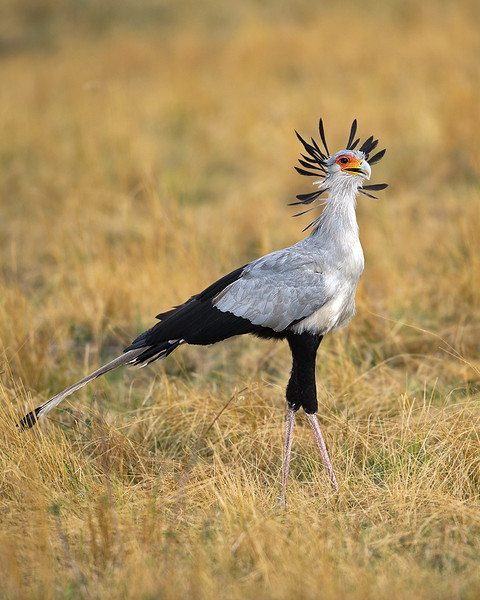
The Race Between The Secretary Birds

Secretarybird (Sagittarius serpentarius) by Africaddict

Secretarybird (Sagittarius serpentarius) by Africaddict

THE RACE BETWEEN THE SECRETARY BIRDS

Mongo Got Quite a Bit Ahead.

Mongo Got Quite a Bit Ahead.


“The secretary birds had planned to have some field races,” began daddy, “and the afternoon of the races had come. You know, the secretary birds have very, very long thin legs. Their legs are so thin that you can hardly see how it is they can support such big bodies, for the secretary birds have really fat bodies.

“Well, on the afternoon of the races they all entered, and you never saw such running in all your life! They simply went like the wind, but the chief race of all was between one bird named Sandy and one named Mongo. They were considered the fastest runners of all. They had raced often and often before and had always come in a tie. But this time Mongo had been practising [p.29]very hard and had been very careful not to eat anything to hurt his wind. Sandy had been practising every day, too, but he thought it was absurd to give up things to eat. However, Mongo had always heard that all athletes were very careful of their eating, and, as he had never been able to beat Sandy yet, he was bound he would try everything he could so as to win.

“The prize was to be a fine, great, big snake which had been captured and killed a few days before the races were to take place.”

“Do secretary birds eat snakes?” asked Evelyn.

“Yes,” said daddy; “they practically live on them.”

“I shouldn’t think that would be nice food,” added Evelyn.

“No, we don’t think so,” answered daddy, “but you know we eat bacon and like it, so probably the secretary birds think it is as funny for us to eat pigs as we do to hear of their eating snakes.”

“No,” said Evelyn thoughtfully, “I suppose not. They sound so horrid, though.”

[p.30]At that moment Jack, who was growing very impatient, not caring what the secretary birds ate, chimed in: “Daddy, please hurry and tell us who won the race. I can hardly wait to hear. I am sure Mongo did, though.”

“No,” said Evelyn; “I think Sandy did because he wasn’t such an old fuss as Mongo.”

“Well,” continued daddy, “during the race all the secretary birds shrieked in their cackling voices: ‘Go it; go it! Win, Mongo! Win, Sandy!’

“For a few moments Mongo got quite a bit ahead, but Sandy succeeded in catching up with him, and they passed by the goal side by side.

“It was a splendid race, but it showed that Mongo and Sandy were really absolutely evenly matched, so they gave a funny cackle, which meant a laugh, and each, taking an end of the prize, said, ‘We’ll all have a taste of the prize, as neither of us can win it.’

“So they all sat down to a very jolly supper party.”

Secretarybird (Sagittarius serpentarius) by Lee

Secretarybird (Sagittarius serpentarius) by Lee

*
Another Bird Tales

From

Daddy’s Bedtime Bird Stories – Gutenberg ebooks

By

Mary Graham Bonner

With four illustrations in color by
Florence Choate and Elizabeth Curtis

Daddys Bedtime Story Images


These stories first appeared in the American Press Association Service and the Western Newspaper Union.


Many of the sketches in this volume are the work of Rebecca McCann, creator of the “Cheerful Cherub,” etc.

Daddy's Bedtime Bird Stories by Mary Graham Bonner - 1917

*
Daddy’s Bedtime Bird Stories by Mary Graham Bonner – 1917

*

Links:

Painted Bunting (Passerina ciris) ©©Flickr


  Bird Tales


  Daddy’s Bedtime Bird Stories


Spanish Sparrow (Passer Hispaniolensis) female ©WikiC


  Wordless Birds


Secretarybird (Sagittarius serpentarius) with open beak©WikiC


  Sagittariidae – Secretarybird Family
*

Ian’s Bird of the Week – Bower’s Shrike-thrush

Bower's Shrikethrush (Colluricincla boweri) by Ian 1

Bower’s Shrikethrush (Colluricincla boweri) by Ian

Bird of the Week – Bower’s Shrike-thrush ~ by Ian Montgomery

Newsletter ~ 12-09-13

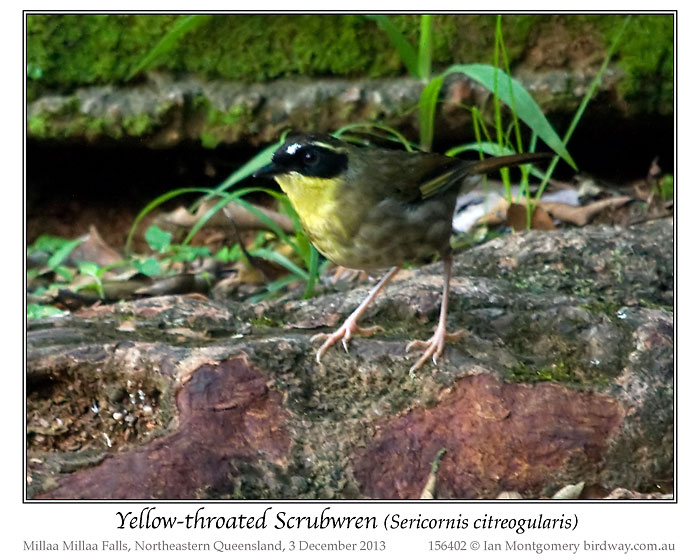
We spent several days last week camping on the Atherton Tableland at Malanda Falls Caravan Park. It’s a great caravan park incidentally as it borders on rainforest and is within walking distance of both Malanda Falls and the Conservation Park across the road. My aim was to photograph locations for the book Where to Find Birds in NE Queensland but I was of course on the lookout for any obliging birds, in particular the wet tropic endemic Bower’s Shrike-thrush and the local race of the Yellow-throated Scrubwren, both of which I’d found uncooperative in the past.

One of the spots I visited was Mobo Creek Crater about 10km along the Danbulla Forest Drive from the Gillies Highway end. I hadn’t been there before and found it a delightful spot as the path twice crosses the creek near the crater. I spent some time photographing the local resident, rather dark race of the Grey Fantail (we get the southern race here as a visitor in winter). While, I was doing so, a Bower’s Shrike-thrush came to the creek for a swim. The first photo shows her checking out a small pool from a rock in the creek.

Bower's Shrikethrush (Colluricincla boweri) by Ian 2

Bower’s Shrikethrush (Colluricincla boweri) by Ian

She then jumped into the creek and had a good swim, before jumping back out on the original rock, photos 2 and 3.

Bower's Shrikethrush (Colluricincla boweri) by Ian 3

Bower’s Shrikethrush (Colluricincla boweri) by Ian

Then a good shake, fourth photo, and a rather bedraggled but satisfied-looking bird returned to the rainforest. You can tell it’s a female from the grey bill with a pinkish tinge and the buff eye-ring, lores and eyebrow. Males have black bills and grey eye-ring, lores and eyebrow.

Bower's Shrikethrush (Colluricincla boweri) by Ian 4

Bower’s Shrikethrush (Colluricincla boweri) by Ian

Bower’s Shrike-thrush is one of the 12 species endemic to the Wet Tropics of northeastern Queensland. It is found in highland rainforest above 400m from just south of Cooktown to just north of Townsville and is reasonably common within this relatively restricted range.

Shrike-thrushes get their name from their slightly hooked shrike-like bills and their thrush-like appearance and melodious songs. Bower’s Shrike-thrush has a distinctive whistling song that sounds to me like ‘we you you cha cha cha’ and we heard them at a number of sites during our stay. They are related to Whistlers and are sometimes placed in the same family, Pachycephalidae – ‘thick-heads’ as you may remember from the Rufous Whistler bird of the week last month – or placed in their own family the Colluricinclidae.

Yellow-throated Scrubwren (Sericornis citreogularis) by Ian

Yellow-throated Scrubwren (Sericornis citreogularis) by Ian

Here, incidentally, is a male of the local race of the Yellow-throated Scrubwren that I wanted also for the book. A pair of them emerged into the car park at Millaa Millaa Falls after the last tourist buses had departed.

Best wishes
Ian

**************************************************
Ian Montgomery, Birdway Pty Ltd,
454 Forestry Road, Bluewater, Qld 4818
Tel 0411 602 737 ian@birdway.com.au
Bird Photos http://www.birdway.com.au/
Recorder Society http://www.nqrs.org.au


Lee’s Addition:

For the LORD your God is bringing you into a good land–a land with brooks, streams, and deep springs gushing out into the valleys and hills; (Deuteronomy 8:7 NIV)

He shall drink of the brook in the way: therefore shall he lift up the head. (Psalms 110:7 KJV)

Thanks again, Ian. We don’t get to see birds taking a bath that frequently. At least, not in a stream. Dippers do that, but take a dive also.

Here is the sound of the Shrike-thrush from xeno-canto. It really is neat.

As Ian mentioned in his newsletter, the Shrikethrush belong to the Pachycephalidae – Whistlers and Allies Family (IOC), which is where we have it here, or the Colluricinclidae Family. which is where Ian has it listed. He also uses Shrike-thrush, whereas the IOC uses Shrikethrush.

See:

*

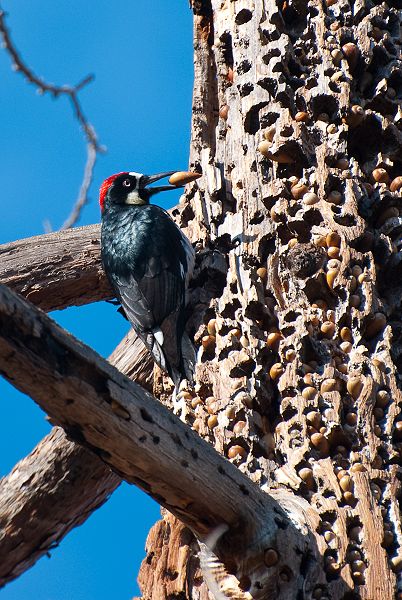
Birds of the Bible – Woodpecker & Friend’s Storehouse

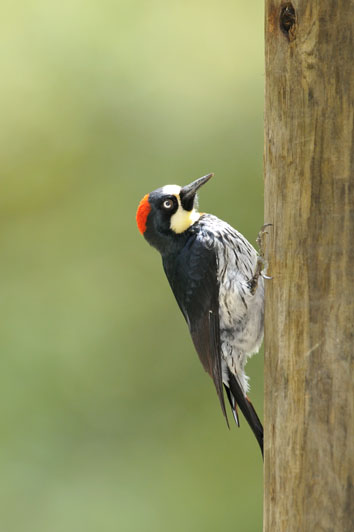
Acorn Woodpecker (Melanerpes formicivorus) by Raymond Barlow

Acorn Woodpecker (Melanerpes formicivorus) by Raymond Barlow

While working on the El Carpintero – The Woodpeckers article, many Bible verses about “gathering” and “storing” things were found. Following are some of those verses with photos. There is also a video of an Acorn Woodpecker gathering his supply.

We have used the verse about birds teaching us, so let’s see what can be learned this time about gathering and storing. (Job 12:7)

Acorn Woodpecker (Melanerpes formicivorus) with Hoard or Grainary WikiC

Acorn Woodpecker (Melanerpes formicivorus) with Hoard or Grainary WikiC

He who gathers in summer is a wise son; He who sleeps in harvest is a son who causes shame. (Proverbs 10:5 NKJV)

PIC-Pici Acorn Woodpecker Granary Tree holes ©Flickr Ornitholoco

Provides her supplies in the summer, And gathers her food in the harvest. (Proverbs 6:8 NKJV) (the ant)

Acorn Woodpecker (Melanerpes formicivorus) by Reinier Munguia

Acorn Woodpecker (Melanerpes formicivorus) by Reinier Munguia

Wealth gained hastily will dwindle, but whoever gathers little by little will increase it. (Proverbs 13:11 ESV)

Acorn Woodpecker (Melanerpes formicivorus) by Ian

Acorn Woodpecker (Melanerpes formicivorus) by Ian

Wise people store up knowledge, But the mouth of the foolish is near destruction. The rich man’s wealth is his strong city; The destruction of the poor is their poverty. The labor of the righteous leads to life, The wages of the wicked to sin. (Proverbs 10:14-16 NKJV)

Tufted Titmouse (Baeolophus bicolor) by Ray - They will store food for later use.

Tufted Titmouse (Baeolophus bicolor) by Ray – They will store food for later use.

He stores up sound wisdom for the upright; He is a shield to those who walk uprightly; (Proverbs 2:7 NKJV)

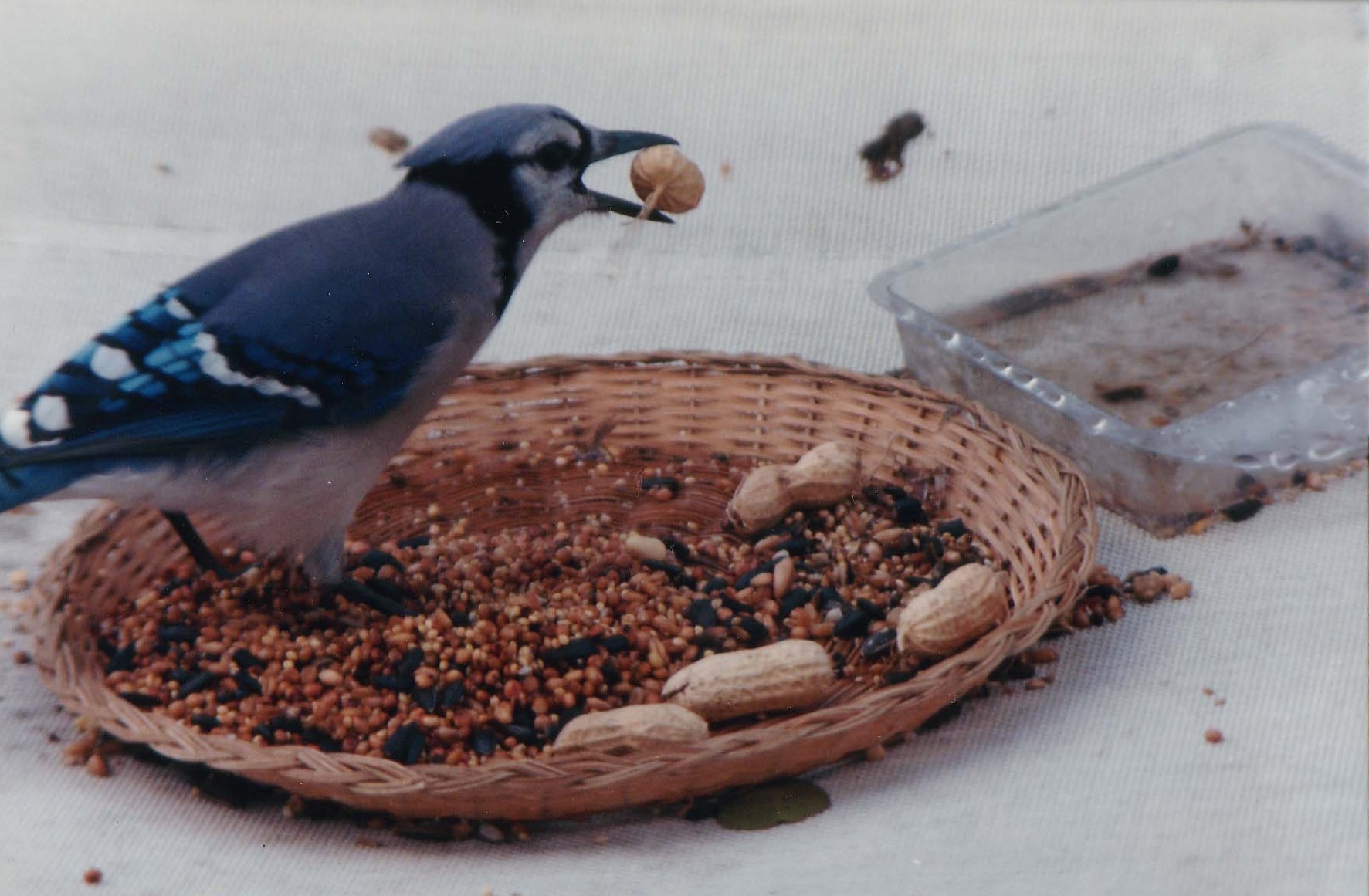
Blue Jay (Cyanocitta cristata) Collecting for Cache

Blue Jay (Cyanocitta cristata) Collecting for Cache

For they do not know to do right,’ Says the LORD, ‘Who store up violence and robbery in their palaces.’ ” (Amos 3:10 NKJV)

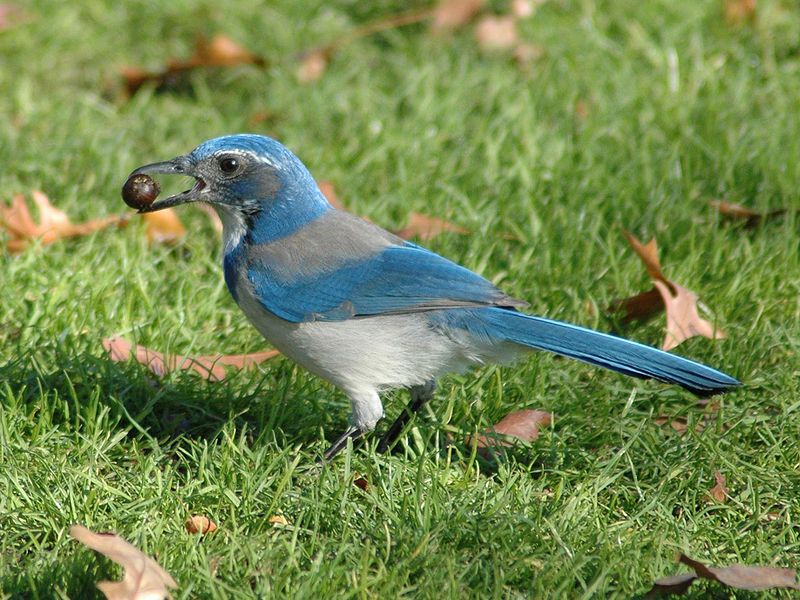
Western Scrub Jay (Aphelocoma californica) Holding an Acorn ©WikiC

Western Scrub Jay (Aphelocoma californica) Holding an Acorn ©WikiC

storing up for themselves a good foundation for the time to come, that they may lay hold on eternal life. (1 Timothy 6:19 NKJV)

Grey-headed Chickadee (Poecile cinctus) ©WikiC

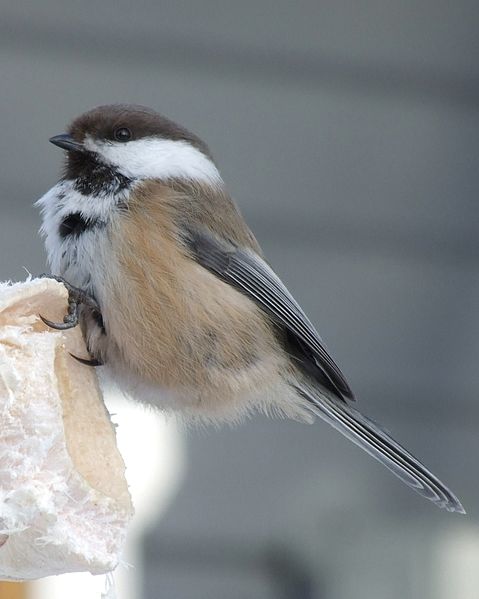
Grey-headed Chickadee or Siberian Tit (Poecile cinctus, formerly Parus cinctus) May store upto 500,000 items per year ©WikiC

*

*

*

Birds of the Bible – Dove With Gold Feathers

Golden Fruit Dove (Ptilinopus luteovirens) ©WikiC

Golden Fruit Dove (Ptilinopus luteovirens) ©WikiC

Though you lie down among the sheepfolds, You will be like the wings of a dove covered with silver, And her feathers with yellow gold.” (Psalms 68:13 NKJV)

That is an interesting verse which describes a Dove with feathers that are the color of yellowish-gold. Are there Doves like that today that we can find a photo of? Let’s see. The first photo found was the one at the top of a Golden Fruit Dove (Ptilinopus luteovirens). I see yellowish-gold, but no silver. Let me keep checking.

Wompoo Fruit Dove (Ptilinopus magnificus) by Ian

Wompoo Fruit Dove (Ptilinopus magnificus) by Ian

How about this one? What do you think? The head looks silver and I see yellowish-gold. Let’s take a few more looks at this Wompoo Fruit Dove.

 Wompoo Fruit Dove (Ptilinopus magnificus) ©WikiC

Wompoo Fruit Dove (Ptilinopus magnificus) ©WikiC

We actually saw this bird at the National Aviary in Pittsburg, PA. Here is a photo that Dan took.

Wompoo Fruit Dove (Ptilinopus magnificus) by Dan at National Aviary

Wompoo Fruit Dove (Ptilinopus magnificus) by Dan at National Aviary

What do others in their commentaries say about this verse?

Poole – As the wings of a dove covered with silver, and her feathers with yellow gold; beautiful and glorious, like the feathers of a dove, which according to the variety of its postures, and of the light shining upon it, look like silver or gold.

McGee – In this psalm it seems to have the same meaning—Israel was undecided and inactive. “Yet shall ye be as the wings of a dove”—the dove was a sacrificial bird and is a type of Christ. What a picture this gives us. Though they be negligent, though they are not moved by enthusiasm, yet the sacrifice of Christ will cover them. This psalm could actually be called the psalm of the Ascension since we have a verse that is quoted in Eph_4:8: “… When he ascended up on high, he led captivity captive, and gave gifts unto men.”

MHCC – Psalms 68:7-14 – Fresh mercies should put us in mind of former mercies. If God bring his people into a wilderness, he will be sure to go before them in it, and to bring them out of it. … Israel in Egypt among the kilns appeared wretched, but possessed of Canaan, during the reigns of David and Solomon, appeared glorious. Thus the slaves of Satan, when converted to Christ, when justified and sanctified by him, look honourable. When they reach heaven, all remains of their sinful state disappear, they shall be as the wings of the dove, covered with silver, and her feathers as gold. Full salvation will render those white as snow, who were vile and loathsome through the guilt and defilement of sin.

Treasury of David – Psa_68:13 “Though ye have lien among the pots.” Does he mean that the women at home, who had been meanly clad as they performed their household work, would be so gorgeously arrayed in the spoil, that they would be like doves, of silver wing and golden plumage?

Or, would he say that Israel, which had been begrimed in the brick-kilns of Egypt, should come forth lustrous and happy in triumph and liberty?

Or, did the song signify that the ark should be brought from its poor abode with Obed-edom into a fairer dwelling-place?

It is a hard passage, a nut for the learned to crack. … but the sense seems to be, that from the lowest condition the Lord would lift Up his people into joy, liberty, wealth, and beauty. Their enemies may have called them squatters among the pots – in allusion to their Egyptian slavery; they may have jested at them as scullions of Pharaoh’s kitchen; but the Lord would avenge them and give them beauty ‘for blackness, glory for grime. “Yet shall ye be as the wings of a dove covered with silver, and her feathers with yellow gold.” The dove’s wing flashes light like silver, and anon gleams with the radiance of “the pale, pure gold.” The lovely, changeable colours of the dove might well image the mild, lustrous beauty of the nation, when arrayed in white holiday-attire, bedecked with their gems, jewels, and ornaments of gold. God’s saints have been in worse places than among the pots, but now they soar aloft into the heavenly places in Christ Jesus.

TSK Treasury of Scripture Knowledge – Psalms 68:13 Though: That is, probably, “Though ye have laboured and lain down between the brick-kilns in Egypt – a poor, enslaved, and oppressed people, yet ye shall gradually rise to dignity, prosperity, and splendour; as a dove, which has been defiled with dirt, disordered, and dejected, by washing herself in a running stream, and trimming her plumage, gradually recovers the serenity of her disposition, the purity of colour, and the richness and varied elegance of her appearance.”

Wesley – Ye – Ye Israelites. Ye are – Tho’ you have formerly been exposed to great reproach and misery, yet God hath changed your condition. Gold – Beautiful and glorious, like the feathers of a dove, which according to the variety of its postures, and of the light shining upon it, look like silver and gold.

***

These writers are all are telling of someone who was dull from sin or slavery. The Lord reaches down and brings them out of that condition, cleans them up, and they shine like a dove with silver and gold.

Before we accept the Lord Jesus Christ as our Saviour, we are in sin, our hearts are dark. If we accept His free gift of salvation, confessing that we are sinners and believing that only He can save us, He will save us and clean us up. We will shine like the Dove. You will shine like “the wings of a dove covered with silver, And her feathers with yellow gold.”

As I have been writing this, another dove has come to mind. The Nicobar Pigeon is a bird that when it is in the shadows or shade, looks rather dull. When it gets out in the sunshine, it shines. Its feathers are iridescent.

Nicobar Pigeon in the shade by Lee at LPZ

Nicobar Pigeon in the shade by Lee at LPZ

Now let’s bring a Nicobar out into the light:

Nicobar Imperial Pigeon (Ducula nicobarica) ©Steve Wilson

Nicobar Imperial Pigeon (Ducula nicobarica) ©Steve Wilson

Nicobar Imperial Pigeon (Ducula nicobarica) Feather ©©Global Dictator

Nicobar Imperial Pigeon (Ducula nicobarica) Feather ©©Global Dictator

*

See:

*

Ian’s Bird of the Week – American (and Pacific) Golden Plover

American Golden Plover (Pluvialis dominica) by Ian 1

American Golden Plover (Pluvialis dominica) by Ian 1

Ian’s Bird of the Week – American (and Pacific) Golden Plover ~ by Ian Montgomery

Newsletter ~ 11/29/13

Before we get onto Golden Plovers, here is some good news. The Pizzey and Knight Birds of Australia Digital Edition has now been published. The Windows PC version is available from www.gibbonmm.com.au and the iPad, iPhone and iPad version is available from the iTunes store. You can check it out here: www.gibbonmm.com.au/tour/PKBA_iOS.aspx and here: https://itunes.apple.com/au/app/pizzey-knight-birds-australia/id714625973?mt=8. The Android version has not yet been published but is due before Christmas.

It has been a long time coming, but a quick look at the reviews will show why. It’s very much more than just a field guide, though even the Field Guide/Bird Guide modules set new standards with very thorough descriptions, both illustrations and photos (including many of mine) of more than 900 bird species, sounds of more than 700 species, maps showing subspecies and seasonal variation and breeding and modules for Similar Birds, Identification, My Location, My Lists and Birding Sites. Check it out for yourself!

I’ve just been down to Bowen and Ayr checking out locations and taking photos for the digital version of Jo Wieneke’s Where to Find Birds in North-east Queensland, and have visited beaches and mudflats I had waders on the brain when I was considering the choice of this week’s bird. So when I noticed in my iPad version of Pizzey and Knight, that the 2009 record of an American Golden Plover at Boat Harbour NSW – second photo – had been accepted by the BirdLife Australia Rarities Committee (Pizzey and Knight is very thorough!) I thought Aha, let’s do a comparison of Pacific and American Golden Plovers.

American Golden Plover (Pluvialis dominica) by Ian 1

American Golden Plover (Pluvialis dominica) by Ian 1

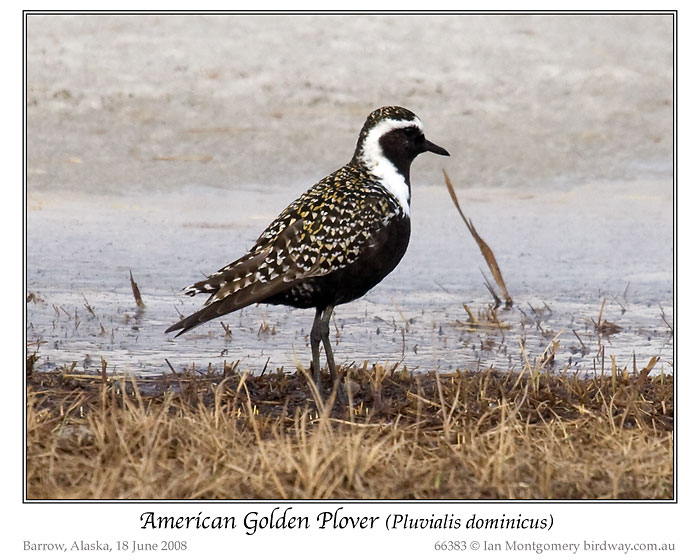
Waders in non-breeding plumage are often rather drab and very confusing for identification but some of them are sartorially quite splendid when breeding. To see Northern Hemisphere waders in breeding plumage, Australian birders need to be either lucky just before the birds leave Australia in March or follow them to their breeding grounds. I first photographed the American Golden Plovers beside an icy lake in Barrow on the northern tip of Alaska in June 2008, first photo. Gorgeous birds they are with striking black and white and gold spangled upper parts and black bellies and faces with a broad white band along the sides of the neck and upper breast.

In March the following year, I was in Sydney and visited my accountant in Sutherland at a time when there was an unconfirmed report of a non-breeding American Golden Plover at nearby Boat Harbour on the Kurnell Peninsula near Botany Bay. This bird was in a flock of about 30 Pacific Golden Plovers, the species that is the common one in Australia in the southern summer/northern winter. Non-breeding Golden Plovers are notoriously difficult to separate from one another and at that stage 5 out of 7 reports of American Golden Plovers submitted to the Rarities Committee had been rejected. Having both species together made it much easier, as one bird stood as clearly different from the others, with much greyer plumage and white rather than buff facial markings (comparing photos 2 and 4).

American Golden Plover (Pluvialis dominica) by Ian 2

American Golden Plover (Pluvialis dominica) by Ian 2

Plumage is variable, of course, and not enough for definite identification in this case. The situation was complicated by the Pacific Golden Plovers beginning to change into breeding plumage. The bird in the third photo, for example, is in nearly complete breeding plumage, though the black plumage still has grey patches. In this plumage, the most obvious field mark is the white band along the neck and breast. In the Pacific, it is narrower and much more extensive than the band in the American one and extends down the side of the lower breast to the undertail coverts.

Pacific Golden Plover (Pluvialis fulva) by Ian 3

Pacific Golden Plover (Pluvialis fulva) by Ian 3

There are differences in size too, the American being larger, heavier-billed and relatively shorter-legged but these are variable too and only reliable if you have birds in the hand and a statistically large sample. So, at the end of the day, the committee wanted to know about relative lengths of tails, primary and tertiary wing feathers of resting birds. These can be judged from photos as well as in the hand and the submitters of the rarity report included one of my photos. The wing tips of Pacific Golden Plovers do not extend much beyond the tail, but the wing tips of American ones extend about 50mm beyond it.

Pacific Golden Plover (Pluvialis fulva) by Ian 4

Pacific Golden Plover (Pluvialis fulva) by Ian 4

So, those are the lengths you need to go both literally and figuratively sometimes to identify rare birds! The Pacific Golden Plover nests mainly in northern Russia but its breeding range does extend to western Alaska and overlaps with that of the American Golden Plover, so there is no doubt that they are separate biological species. If all this seems a bit arcane, don’t worry: just enjoy the photos. Golden Plovers of any hue are lovely birds and I always enjoy seeing them.

Best wishes
Ian

**************************************************
Ian Montgomery, Birdway Pty Ltd,
454 Forestry Road, Bluewater, Qld 4818
Tel 0411 602 737 ian@birdway.com.au
Bird Photos http://www.birdway.com.au/
Recorder Society http://www.nqrs.org.au


Lee’s Addition:

A word fitly spoken is like apples of gold in pictures of silver. (Proverbs 25:11 KJV)

Thanks, Ian, for more lessons on how to identify birds, especially these two plovers. I have had the privilege of seeing the American Golden Plover, but not the Pacific one. It does look like specks of gold on their wings. The only bird mentioned with golden feathers in the Bible is the dove.

Though you lie down among the sheepfolds, You will be like the wings of a dove covered with silver, And her feathers with yellow gold.” (Psalms 68:13 NKJV)

Ian didn’t mention their songs, but here are the two from xeno-canto. Both by Andrew Spencer.

American Golden Plover – song

Pacific Golden Plover – call and song

There are actually three Golden Plovers:

See: