Ian’s Bird of the Week – Cape Petrel

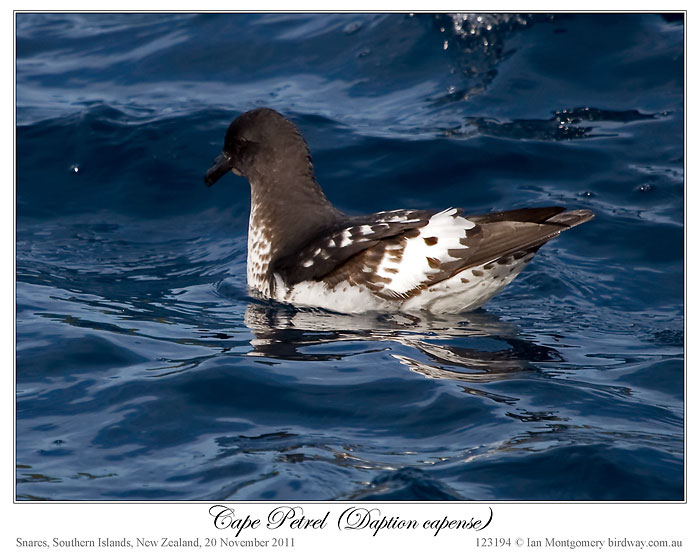
Cape Petrel (Daption capense) by Ian 1

Cape Petrel (Daption capense) by Ian 1

Ian’s Bird of the Week – Cape Petrel ~ by Ian Montgomery

My records show that no Petrel and only one Shearwater (Buller’s) has ever featured as bird of the week. That’s partly because, until recently, I didn’t have many photos of members of this family of seabirds (Procellaridae) but that has been largely corrected by recent trips to the Sub-Antarctic and Norfolk Island. Petrels and Shearwaters are often challenging birds to identify, so I’m going to start with an easy and attractive one that featured prominently on the Sub-Antarctic Islands trip last November.

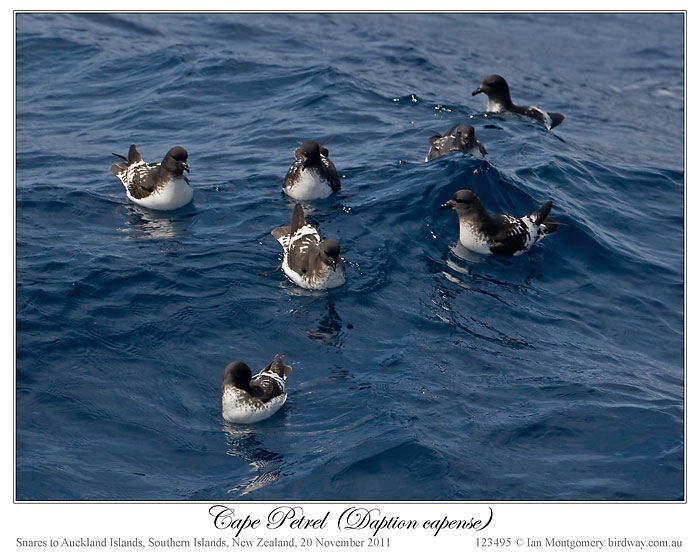
The striking chequered black and white pattern on the back and wings is unique. The white patches on the primary and secondary flight feathers are translucent and appears as ‘windows’ when seen from below in bright light, as in the second photo. We encountered Cape Petrels soon after leaving Dunedin, and as they follow ships, they were almost constant companions for most of the voyage.
Cape Petrel (Daption capense) by Ian 2

Cape Petrel (Daption capense) by Ian 2

With a length of 35-40cm/14-16in, they’re comparable in size to a domestic pigeon, though with much longer wings, and are often called Cape Pigeons. They feed on krill, small fish, etc., either by swimming buoyantly on the surface and pecking in a rather pigeon-like fashion or by snatching morsels in flight. They’ll readily feed on marine scraps left by others and often follow whales.
Cape Petrel (Daption capense) by Ian 3

Cape Petrel (Daption capense) by Ian 3

As you can guess from the name, the species was originally named from a specimen collected at the Cape of Good Hope and described by the father of taxonomy, Linnaeus, in 1758. Cape Petrels are very characteristic bird of the southern oceans right around the planet and range from the coast of Antarctica to the Tropic of Capricorn, and even reach the equator in the cold Humboldt current on the western side of South America. They occur around Australia in the southern winter but are mainly an offshore bird, unless beach-wrecked by storms. The global population is in the millions, and they can occur in large flocks, though we encountered them mainly in small numbers.
Cape Petrel (Daption capense) by Ian 4

Cape Petrel (Daption capense) by Ian 4

The nest on most of the sub-Antartic Islands around the world and on islands along the coast of Antarctica itself. There is a small colony on Macquarie Island and larger colonies on the Southern Islands of New Zealand (Snares, Auckland, Campbell, Bounty, Antipodes and Chatham). These belong to a separate race, australe, smaller than the nominate race.
Cape Petrel (Daption capense) by Ian 5

Cape Petrel (Daption capense) by Ian 5

I loved watching them soaring and wheeling around the ship, and they looked as if they enjoyed it too. I got very used to their attendance and found their familiar presence reassuring in the vast and sometimes alien and stormy remoteness of the Southern Ocean.
I have another request for moral and spiritual support (and so far you’ve never failed me :-})! I’m planning to go to Eungella National Park west of Mackay next weekend in search of the Eungella Honeyeater. I’ve never seen it before, and we need photos for the Pizzey and Knight digital project.
Best wishes
Ian

*************************************************
Ian Montgomery, Birdway Pty Ltd,
454 Forestry Road, Bluewater, Qld 4818B
Tel 0411 602 737 ian@birdway.com.au
Check the latest website updates:
http://www.birdway.com.au/#updates
**************************************************


Lee’s Addition:

And unto one he gave five talents, to another two, and to another one; to every man according to his several ability; and straightway took his journey. (Matthew 25:15 KJV)

Looks like the Petrel flew under some dropping white paint. I am sure that it helped in IDing it. Ian is correct about that unique pattern. I am amazed at how unique all the birds were created. Each has its own patterns, food requirements and places to live. Just like all of us. We each have a unique niche to find and enjoy. Thankfully, Ian has found one of his niches. He is an adventurous and fantastic photographer.

Yes, Ian, we will be praying for you as you take this next adventure to find the Eungella Honeyeater and whatever else pops up in front of your lens. Also for your safe journey.

Check out Ian’s Procellaridae family and the article about the Buller’s Shearwater.

The Procellariidae – Petrels, Shearwaters Family here.

Ian’s Bird of the Week

*

Zoo Miami’s Wings of Asia – Wow! – I

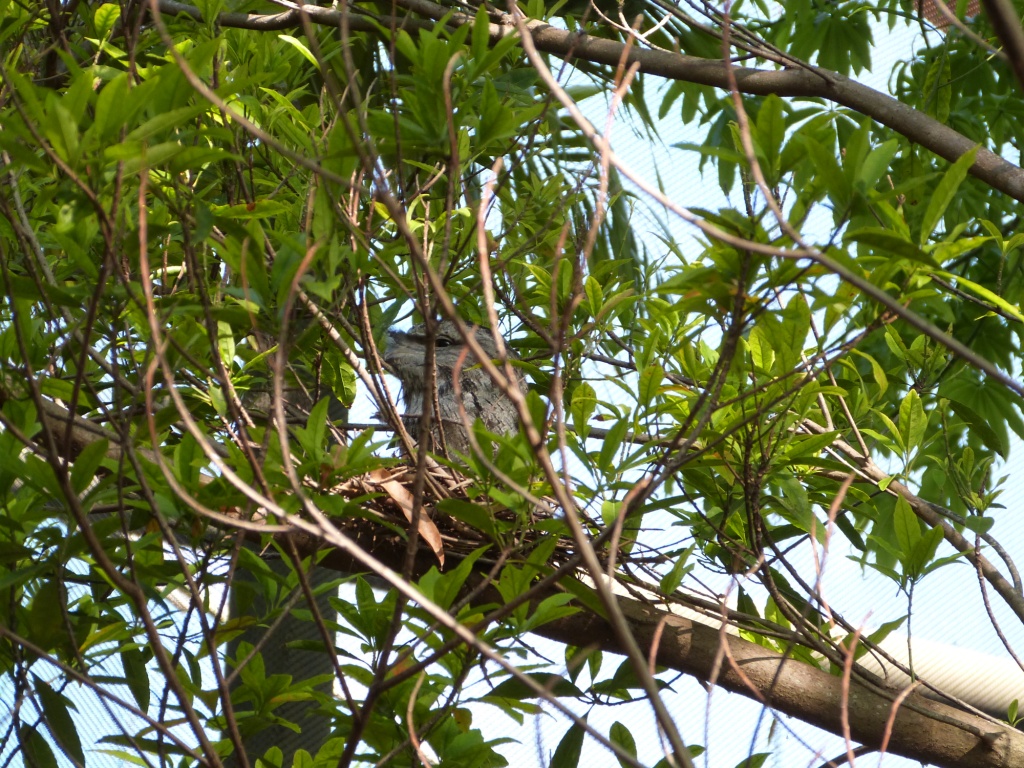
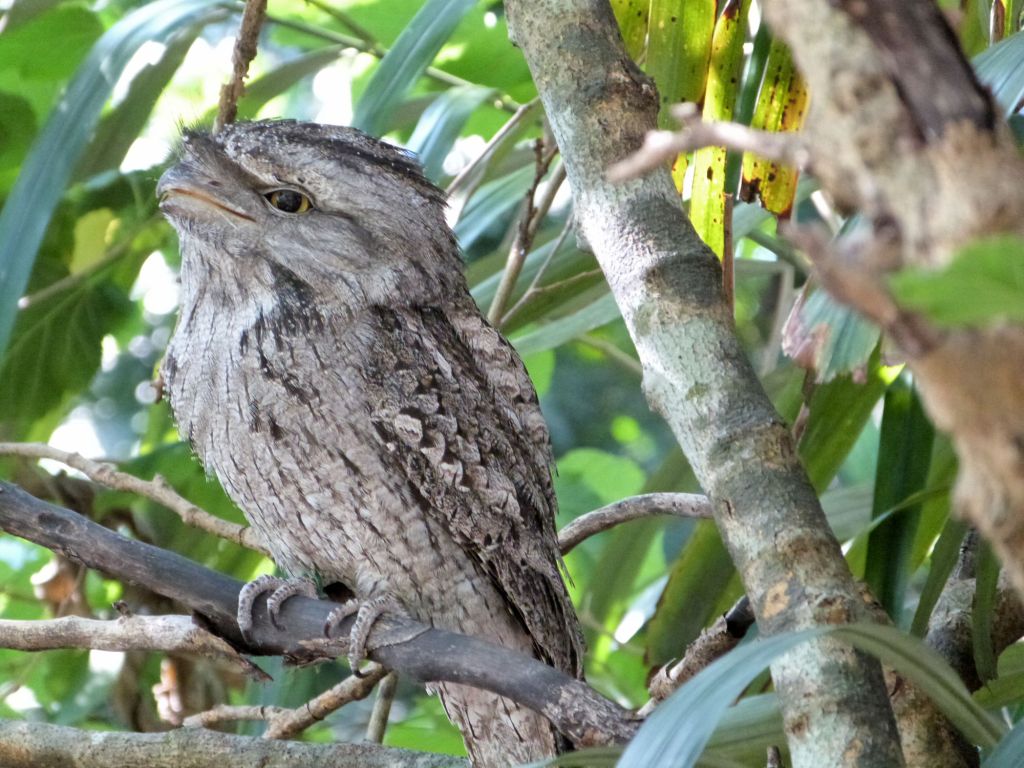
Tawny Frogmouth (Podargus strigoides) by Lee

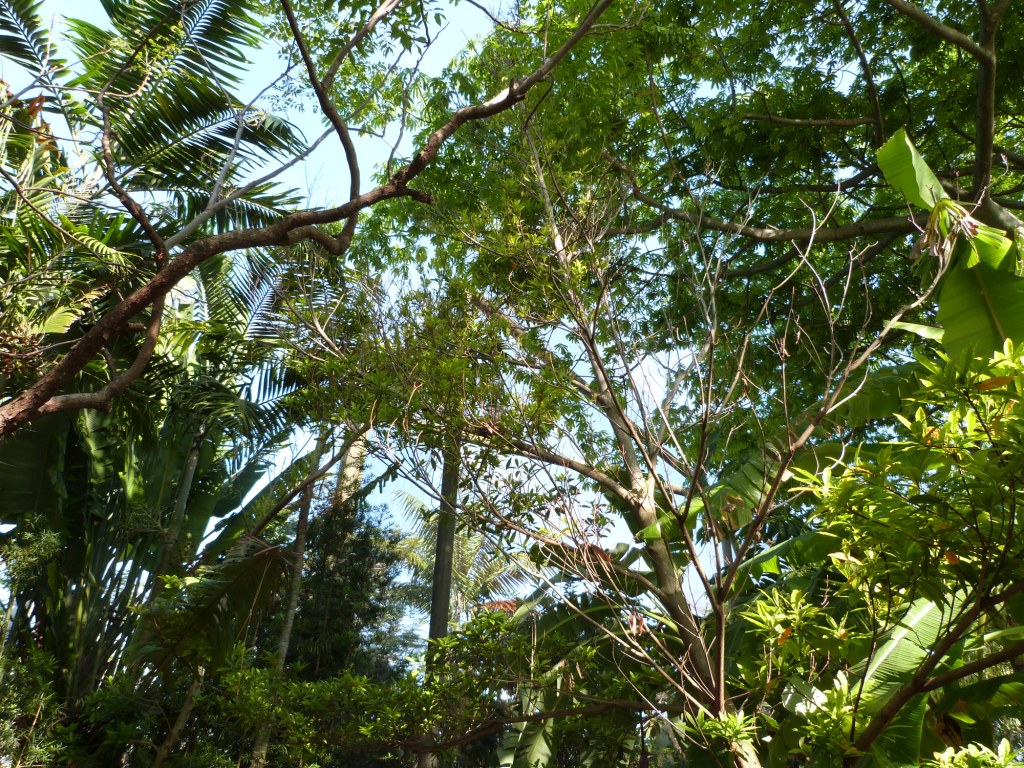
Tawny Frogmouth (Podargus strigoides) Do You See It?

We drove down to Miami this week, 200 miles, went to Zoo Miami twice and drove home. Simple statement, but what we saw was fantastic. Just the ride down allowed us to observe some of our own wildlife. Those highlights were 2 Northern Crested Caracaras (one standing along the road), a Cooper’s Hawk, a Red-shouldered Hawk, several other hawks (unknown) and a Roseate Spoonbill flying by. The rest of the birds were just our normal Grackles, Doves, Egrets, Herons and Crows.

Our goal was to see the Wings of Asia aviary at Zoo Miami or Miami Metro Zoo as I call it. The last time we were there was before Hurricane Andrew destroyed it in the early 1990’s. We lived in Tamarac then and had an annual pass to the zoo. “ Wings of Asia opened in the spring of 2003 and marked the first phase of a 20-year master plan. More than 300 exotic, rare and endangered Asian birds representing over 70 species reside in this Aviary. Covering more than 54,000 square feet, it is the largest open air Asian aviary in the Western Hemisphere.” That number is now around 85 species. About a year or so ago I became aware that the Aviary had been rebuilt and we have been trying to work it out to get there. We finally got there and my description would be, “Wow!”
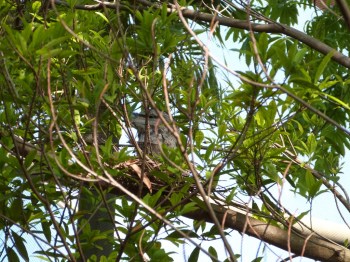
Tawny Frogmouth (Podargus strigoides) by Lee at Wings of Asia

Do You See It Yet?

All of those 85 species in there are free to fly and or swim around. Many species have 2 or more birds represented by couples, nests and young.

The staff are also very helpful and friendly. After they found out that we were really interested in the birds, they sort of took us “under their wing.” Our special thanks to Dolora, Stacie, Ezekial, Carl and the others.

Where do you begin to tell about the thrill of seeing birds that you have read about, only seen photos of, or never even heard of before? With over 10,000 birds in the world, any time you get to see them for real is exciting, even if they are at the zoo. The birds of Asia and a few from other countries were not just standing there waiting on you to look at them. No, that place is so large that you actually have to do some birdwatching. At times I felt like I was out in the field trying to find the birds. Because of the help from the staff we were able to see many more than we would have on our own.

We were able to see the Cloud Forrest and the Amazon and Beyond small aviaries. More on that later. Overall I took over 1,000 photos and not sure how many Dan took. It is going to take awhile to sort through them and put the right name on the right bird photo. We were extremely tired when we got in last night and so have not started working on them yet.
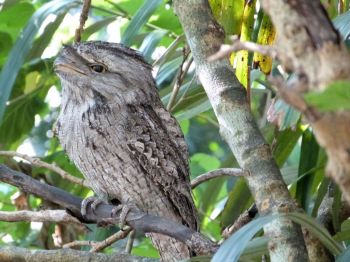
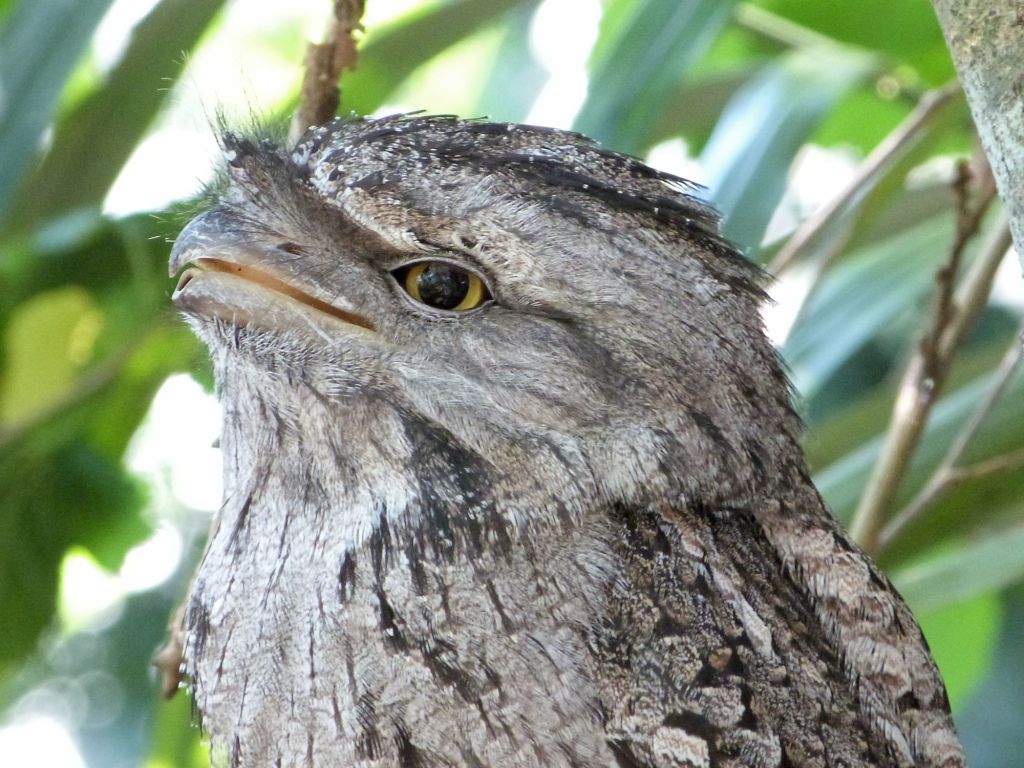
Tawny Frogmouth (Podargus strigoides) at Wings of Asia

Tawny Frogmouth (Podargus strigoides) at Wings of Asia by Lee

I did want to share one bird that was on my “most want to see” list. Again, it took the help of the keepers to point it out. I had walked under it several times on Wednesday and never saw it. The Lord has provided the Tawny Frogmouth with a fantastic protection. It looks like the bark on a tree. It also has a very big mouth and hence its “frogmouth” name. They are in the Podargidae – Frogmouth Family which is in the  Caprimulgiformes Order. I was amazed at how large it actually was because it is hard to judge size from photos.

Wikipedia says – The Tawny Frogmouth is often mistaken to be an owl. Many Australians refer to the Tawny Frogmouth by the colloquial names of “Mopoke” or “Morepork”, which usually are common alternative names for the Southern Boobook. Frogmouths are not raptorial birds.

Tawny Frogmouth (Podargus strigoides) at Zoo Miami

Tawny Frogmouth (Podargus strigoides) at Zoo Miami

Males and females look alike and are 35–53 cm (14–21 in) long. This very bulky species can weigh up to 680 grams (1.5 lbs) and, in overweight zoo specimens, up to 1400 grams (3.1 lbs). This species thus reaches the highest weights known in the Caprimulgiformes order. They have yellow eyes and a wide beak topped with a tuft of bristly feathers. They make loud clacking sounds with their beaks and emit a reverberating booming call.

Tawny Frogmouths hunt at night and spend the day roosting on a dead log or tree branch close to the tree trunk. Their camouflage is excellent — staying very still and upright, they look just like part of the branch. When feeling threatened, the Tawny Frogmouth stays perfectly still, with eyes almost shut and with bill pointed straight, relying on camouflage for protection.
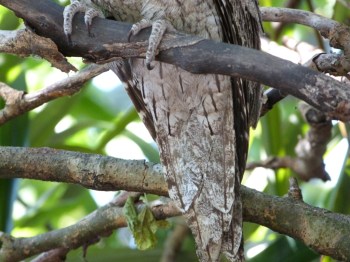
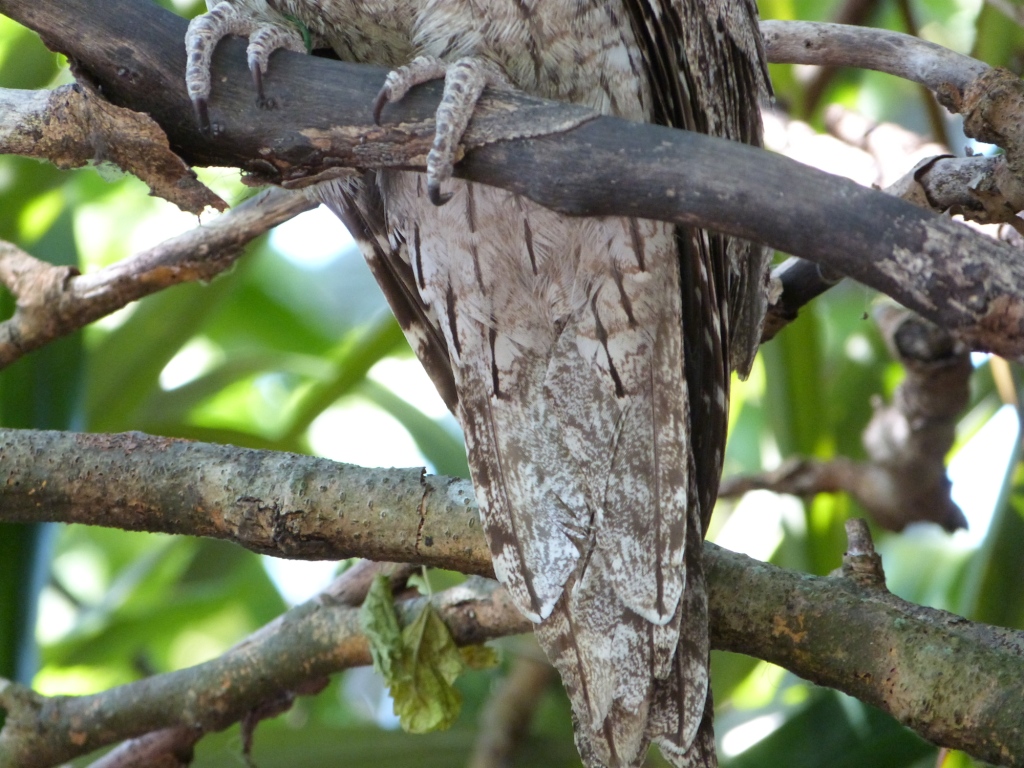
Tawny Frogmouth (Podargus strigoides) Tail

Tawny Frogmouth (Podargus strigoides) Tail

The Tawny Frogmouth is almost exclusively insectivorous, feeding rarely on frogs and other small prey. They catch their prey with their beaks rather than with their talons, another way in which they are different from owls. Owls fly around at night hunting food, but Tawny Frogmouths generally remain sitting very still on a low perch, and wait for food to come to them. They catch prey with their beaks, and sometimes drop from their perch onto the prey on the ground. The bird’s large eyes and excellent hearing aid nocturnal hunting.

Tawny Frogmouths and owls both have anisodactyl feet – meaning that one toe is facing backwards and the other three face forwards. However, owls’ feet are much stronger than the feet of the Tawny Frogmouth as owls use their feet to catch their prey. Owls are also able to swing one of their toes around to the back (with a unique flexible joint) to get a better grip on their prey. Tawny Frogmouths have fairly weak feet as they use their beaks to catch their prey. Owls eat small mammals, like mice and rats, so their bones are shorter and stronger than those of Tawny Frogmouths which usually hunt smaller prey. Tawny Frogmouths typically wait for their prey to come to them, only rarely hunting on the wing like owls.

Breeding – Tawny Frogmouth pairs stay together until one of the pair dies. They breed from August to December. They usually use the same nest each year, and must make repairs to their loose, untidy platforms of sticks. After mating, the female lays two or three eggs onto a lining of green leaves in the nest. Both male and female take turns sitting on the eggs to incubate them until they hatch about 25 days later. Both parents help feed the chicks.

I have many more adventures to share from Zoo Miami. Praise the Lord for a great trip to see more of His fantastic Creative Hand in person. Zoos are a favorite of mine along with being in the field birdwatching. The birds that they collect are many times endangered or are being threatened by lost of habitat. One of the commands that the LORD gave man was to be responsible for or have dominion over the birds and other critters. Dominion does not mean be cruel to them but to help them and Zoo are one of those places.

Then God said, “Let Us make man in Our image, according to Our likeness; let them have dominion over the fish of the sea, over the birds of the air, and over the cattle, over all the earth and over every creeping thing that creeps on the earth.” (Genesis 1:26 NKJV)

Links:

Zoo Miami – Miami, Florida

Podargidae – Frogmouth Family

*
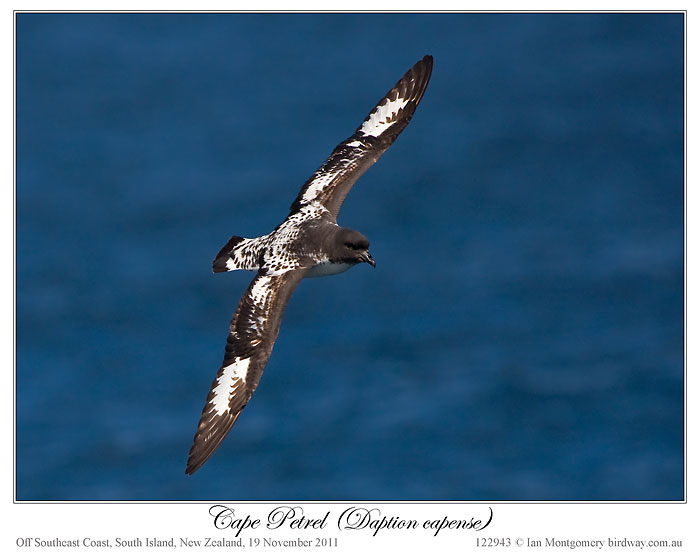
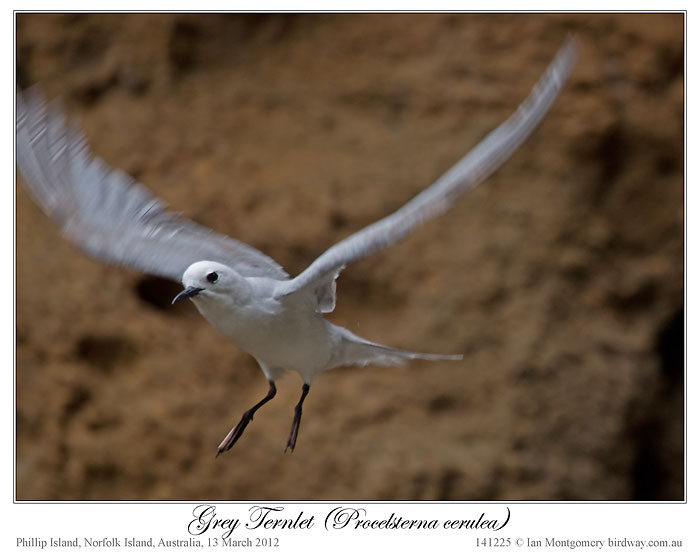
Ian’s Bird of the Week – Grey Ternlet (Noddy)

Bird of the Week – Grey Ternlet ~ by Ian Montgomery

Newsletter ~ 4/10/12
Last week we had the (Common) White Tern or White Noddy. Here is its counterpart the Grey Ternlet, often called the Grey Noddy. It is also an island species but is restricted in range to the Western and South Pacific. In the Australian regions it, like the White Tern, occurs on both Lord Howe and Norfolk Islands. Unlike the White Tern, it nests mainly on inaccessible rock cliffs and I had had only distant views of it on Lord Howe 20 years ago. The situation was similar on Norfolk Island, and the first photo, taken at Captain Cook’s Lookout, was our first view of any. This photo, I might add, was taken with a 500mm telephoto lens, so we were nowhere near them.
Grey Noddy (Procelsterna albivitta) by Ian 1

Grey Noddy (Procelsterna albivitta) by Ian 1

So we hoped that our planned boat trip to nearby Phillip Island would provide better views and photo opportunities. It was late in the nesting season, though, and when we returned to the rocky cove to be picked up by the boat, we still hadn’t seen any, even in the distance. Getting on and off the boat was an interesting exercise as there is no wharf, just a north-facing cove, sheltered in southerly winds and swell, with a slippery rock shelf, best negotiated in stockinged feet for better traction, second photo (that’s Norfolk Island in the background).
Grey Noddy (Procelsterna albivitta) by Ian 2

Grey Noddy (Procelsterna albivitta) by Ian 2

We were just getting ready to board the approaching boat, when two Grey Ternlets landed on a rocky cliff nearby, and the boat was forgotten while I dug the camera out of my backpack. The two birds were an adult and a juvenile, the adult standing over the juvenile, which has dark markings on the head, in the third photo.
Grey Noddy (Procelsterna albivitta) by Ian 3

Grey Noddy (Procelsterna albivitta) by Ian 3

I moved closer to them, but the adult flew off, leaving the youngster to its fate, fourth photo.
Grey Noddy (Procelsterna albivitta) by Ian 4

Grey Noddy (Procelsterna albivitta) by Ian 4

The adult had landed almost out of sight behind a rocky outcrop, but I got a photo of it when it took off a little later, fifth photo.
Grey Noddy (Procelsterna albivitta) by Ian 5

Grey Noddy (Procelsterna albivitta) by Ian 5

Anyway, it was time to leave the Ternlets to their own devices and get on the boat. We were to see more Grey Ternlets on the cliffs of Norfolk Island, including a flock of about 15, but we never got close to them again. It was a great ending to a very successful trip to Phillip Island and we didn’t mind too much getting rather wet from the spray on the way back to Norfolk Island, the cameras being safety stowed in a dry spot.
Best wishes
Ian
**************************************************
Ian Montgomery, Birdway Pty Ltd,
454 Forestry Road, Bluewater, Qld 4818
Tel 0411 602 737 ian@birdway.com.au
Check the latest website updates:
http://www.birdway.com.au/#updates
**************************************************

Lee’s Addition:

What scenery and what a beautiful Noddy. These Noddies or Ternlets like to nest on protected cliffs it appears.

The place where you live is safe. Your nest is on a high cliff. (Numbers 24:21a NIrV)

The Grey Noddy or Grey Ternlet (Procelsterna albivitta) is a seabird belonging to the tern family Laridae. It was once regarded as a pale morph of the Blue Noddy (Procelsterna cerulea) but is now often considered to be a separate species. It occurs in subtropical and warm temperate waters of the south Pacific Ocean.

It is 25–30 cm (9.8–12 in) long with a wingspan of 46–61 cm (18–24 in) and a weight of about 75 grams (2.6 oz). The tail is fairly long and notched. The plumage is pale grey, almost white on the head and underparts but darker on the back, tail and wings. The wings have dark tips and a white hind edge and are mainly white underneath. The eye is black and appears large due to the black patch in front of it. There is a white patch behind the eye. The thin, pointed bill is black and the legs and feet are also black apart from pale yellow webs.

It feeds in shallow water, not moving far from the breeding colonies. It gathers in large feeding flocks which can contain thousands of individuals. They feed by hovering over the water and dropping down to pick food from the surface. Plankton forms the bulk of the diet and small fish are also eaten.

Breeding takes place in colonies on rocky islands. The nest site is a sheltered rocky surface or underneath a boulder or clump of vegetation. A single egg is laid. Juvenile birds are browner than the adults and have darker, more contrasting flight feathers.

The Grey Noddy is usually silent but has a soft, purring call.

(The verse is out of context, but the nest on the cliff fit with these birds. Wikipedia cited.)

See Also:

Bird of the Week – by Ian

Birdway’s Laridae Family

Laridae – Gulls, Terns and Skimmers

Grey Noddy – Wikipedia

*

Start Birdwatching Today: The Few Tools You Need To Be A Birdwatcher

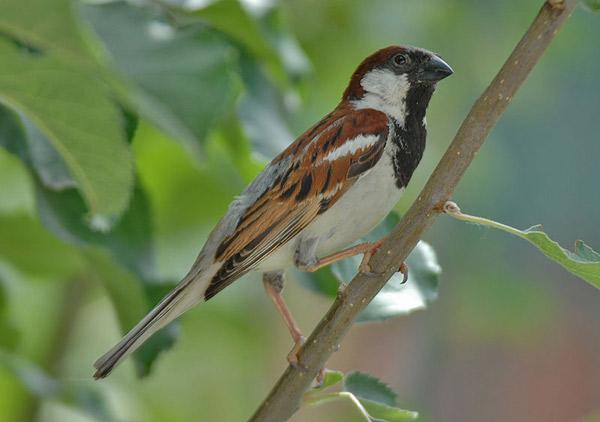
House Sparrow (Passer domesticus) by Nikhil

Surprisingly when I put “open” and “eye” into my Bible search with e-Sword to find a verse for this article, I found 49 verses that had both words. The reason for a verse with your eyes being open, is that is your first tool you need as a birdwatcher when you go birding is your eyes. Here are a few examples:

  • Gen_21:19  And God opened her eyes, and she saw a well of water; …
  • Num_22:31  Then the LORD opened the eyes of Balaam, and he saw the angel of the LORD standing in the way…
  • 2Kiing_6:17 And Elisha prayed, and said, LORD, I pray thee, open his eyes, that he may see. And the LORD opened the eyes of the young man; and he saw: and, behold, the mountain was full of horses and chariots of fire round about Elisha.
  • 2King_6:20 … that Elisha said, LORD, open the eyes of these men, that they may see. And the LORD opened their eyes, and they saw; and, behold,
  • Psa_119:18 Open thou mine eyes, that I may behold wondrous things out of thy law.
  • Mat_20:33 They say unto him, Lord, that our eyes may be opened.

I know these verses do not apply to birding or birdwatching, but I think they reveal some truths that do apply. The LORD or God opened their eyes. Would it be wrong for us to ask the Lord to open our eyes to see His marvelous creation, especially the birds. Once their eyes were opened, they saw different things. We are going to see different birds on different outings.

Also, Christ said in the Sermon on the Mount: “Look at the birds of the air:…” (Matthew 6:26 ESV)

The second “tool” that is very useful is your ears. Some people cannot see because of blindness or poor sight, but does that keep them from birding? No!  Fanny Crosby was blinded early in life, but in my opinion, she was a fantastic birder. She may not have seen, but she “heard” the birds. When I first started my research for Birds in Hymns, of the first 44 hymns I found 10 were written by Fanny Crosby! Here are two examples:

  • “Happy am I, the bird is singing” – Tried and True
  • “And the bird in the greenwood is singing with glee” – Praise the Giver of All

Listening to the sounds around you can reveal hidden treasures. Birds sing, call, alert other birds of danger, make sounds with their wings, etc. Having our ears open to their sounds can help locate them. After awhile, with a little practice, you will recognize birds just by their calls and songs. Even if you never see the bird, the avian friend can be counted on your “life list,” but that is another article.

The first two tools, Eyes and Ears, could be summarized as “Awareness.” If you are not aware of the birds, you will miss finding them. Basically, those two tools are all you need.

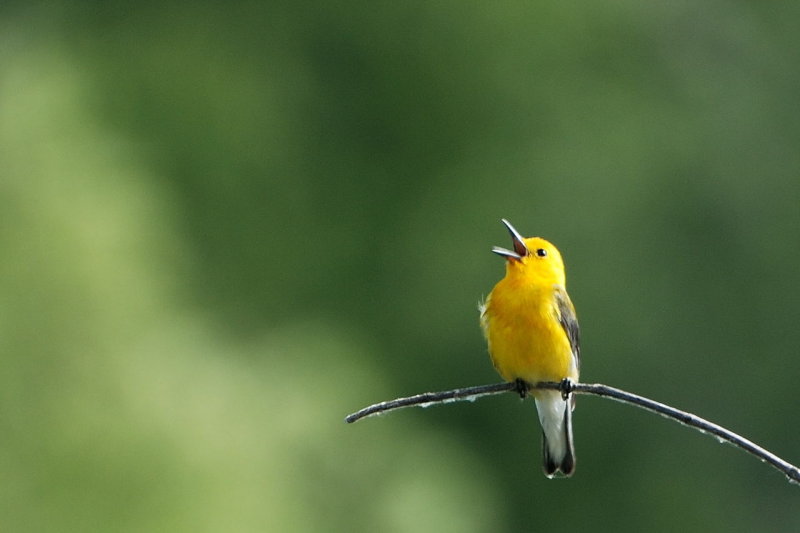
Prothonotary Warbler (Protonotaria citrea) Neal Addy Gallery

Prothonotary Warbler (Protonotaria citrea) Neal Addy Gallery

Third: To find the birds and see them closer, a pair of binoculars are very useful. It is not required, but I use mine most of the time to observe better details that help me identify the birds. There are lots of articles in books and on the internet about which pair to buy, what strength they should be, how much to pay, etc.

So what should you buy? Every birdwatcher will give you different thoughts, but here is what I have. I use a 8 X 42 lens. “The first number is the power of magnification of the binocular. With an 8×42 binocular, the object being viewed appears to be eight times closer than you would see it with the unaided eye.” “The second number in the formula (8×42) is the diameter of the objective front lens. The larger the objective lens, the more light that enters the binocular and the brighter the image.” (Bushnell) There are things like the kind of lens, coating, field of view, etc. that you can get from their site and others.

My only other advise is not to buy a 10X or larger because it is harder to hold the image steady, at least for birdwatching.

The fourth “tool” would be a small notebook to keep a list of the birds you see. Even if you don’t know what they are at first you can still make notes of what they looked like, colors, sounds, beak shape, feet, wings, time and date, and other notes about your observing the bird. Later, that will help to identify the bird. More on “Lists” in another article.

The last main tool would be a Bird Guide to find out which bird you just saw. (Again, another article) You can use the internet to assist in that also, like What Bird.

There are other tools that are useful, but when you first Start Birdwatching Today, they are not a necessity, but in time, they also become very useful. Here are a few:

  • Camera – helps with ID
  • Spotting Scope – great for birds far away
  • Audio Tapes of Birds – to learn their songs
  • Handheld Electronic Devices – helps ID in the field

We are trying to keep this series simple, at least at first, so that you realize that you can “Start Birdwatching TODAY”

*

The Series – Start Birdwatching Today

Informative Links:

*

Ian’s Bird of the Week – Common White Tern

Ian’s Bird of the Week – Common White Tern ~ by Ian Montgomery

Newsletter – 4/2/12

Another species on my photo list on Norfolk Island was the (Common) White Tern. I’d admired on Lord Howe Island more than twenty years ago, before I got seriously into bird photography. They’re only Common if you’re on a remote coral or rocky island in the Pacific, Indian and Atlantic Oceans, but the label really means ‘standard’ and reflects a split of the species, not universally recognised, into ‘Standard’ and Little White Tern. It used to have the attractive name ‘White Noddy’, until some prosaic purist decided that only terns belong the genus Anous were real Noddies.

They are unusually looking terns, with a pointy, slightly upturned bill and very white, actually translucent, feathers, usually described as ‘ethereal’. Seen against the sunlight, the effect is something like looking at an X-ray as in the second photo. In this one, you can see the bill is very thin laterally so it is shaped more like a pair of scissors.

White Terns are numerous on Norfolk Island and as they nest on the branches of Norfolk Island Pines, you see them all over the island. If you’re used to seeing terns near water, it’s initially slightly disconcerting to see them flying around in forest. Many of these are parents feeding young, but do also see pairs or small groups of birds, as in the third photo, and very pretty they are too.

In March, the breeding season is nearly over, but there are still some hungry and very bored looking chicks in the pines waiting for a feed. The single egg is laid precariously in a concavity on a branch or palm frond. Norfolk Island pines, with their horizontal limbs, are ideal for this and the recent establishment of breeding White Terns on Lord Howe Island can probably be attributed to the introduction of Norfolk Island Pines.

The fourth photo shows a nearly fledged juvenile. At this age they look like furry toys, but the slightly younger ones, that were just losing the last traces of their down, often looked quite comical. The bird in the fifth photo shows one that looks for all the world like an aged goddess of the silver screen who doesn’t believe in growing old gracefully, with faux eye-lashes, smudged mascara, thinning hair, an ancient fur coat and a grumpy expression.

Hopefully, though, it has a bright future ahead.

Best wishes
Ian<

**************************************************
Ian Montgomery, Birdway Pty Ltd,
454 Forestry Road, Bluewater, Qld 4818
Tel 0411 602 737 ian@birdway.com.au
Check the latest website updates:
http://www.birdway.com.au/#updates
**************************************************


Lee’s Addition:

What a description of the that last photos. Puts a chuckle in you. What is so amazing is that it fits.

Anyway, Terns are in the Laridae – Gulls, Terns and Skimmers Family and see Ian’s Laridae Family of photos at his Birdway site. More of his photos of the Common White Tern can be Here.

“The White Tern (Gygis alba) is a small seabird found across the tropical oceans of the world. It is sometimes known as the Fairy Tern although this name is potentially confusing as it is the common name of the Fairy Tern Sternula nereis. Other names for the species include Angel Tern and White Noddy.

Wow! Look at this from ARKive:

http://www.arkive.org/common-white-tern/gygis-alba/image-G88261.html

The White Tern is a small, all white tern with a long black bill, related to the noddies. It ranges widely across the Pacific and Indian Oceans, and also nests in some Atlantic islands. It nests on coral islands, usually on trees with thin branches but also on rocky ledges and on man-made structures. The White Tern feeds on small fish which it catches by plunge diving.

…there are costs associated with tree nesting, as the eggs and chicks are vulnerable to becoming dislodged by heavy winds. For this reason the White Tern is also quick to relay should it lose the egg. The newly hatched chicks have well developed feet with which to hang on to their precarious nesting site. It is a long-lived bird, having been recorded living for 17 years.” (Wikipedia)

Looks like the Lord, in his creation of these chicks, provided feet that can help them hold on.

All the birds of the heavens made their nests in its boughs; under its branches all the beasts of the field gave birth to their young, and under its shadow lived all great nations. (Ezekiel 31:6 ESV)

Other Links:

Common white tern  (Gygis alba) – ARKive

White Tern – Wikipedia

*

Start Birdwatching Today: Why Should I Go Outside and Stare at Birds?

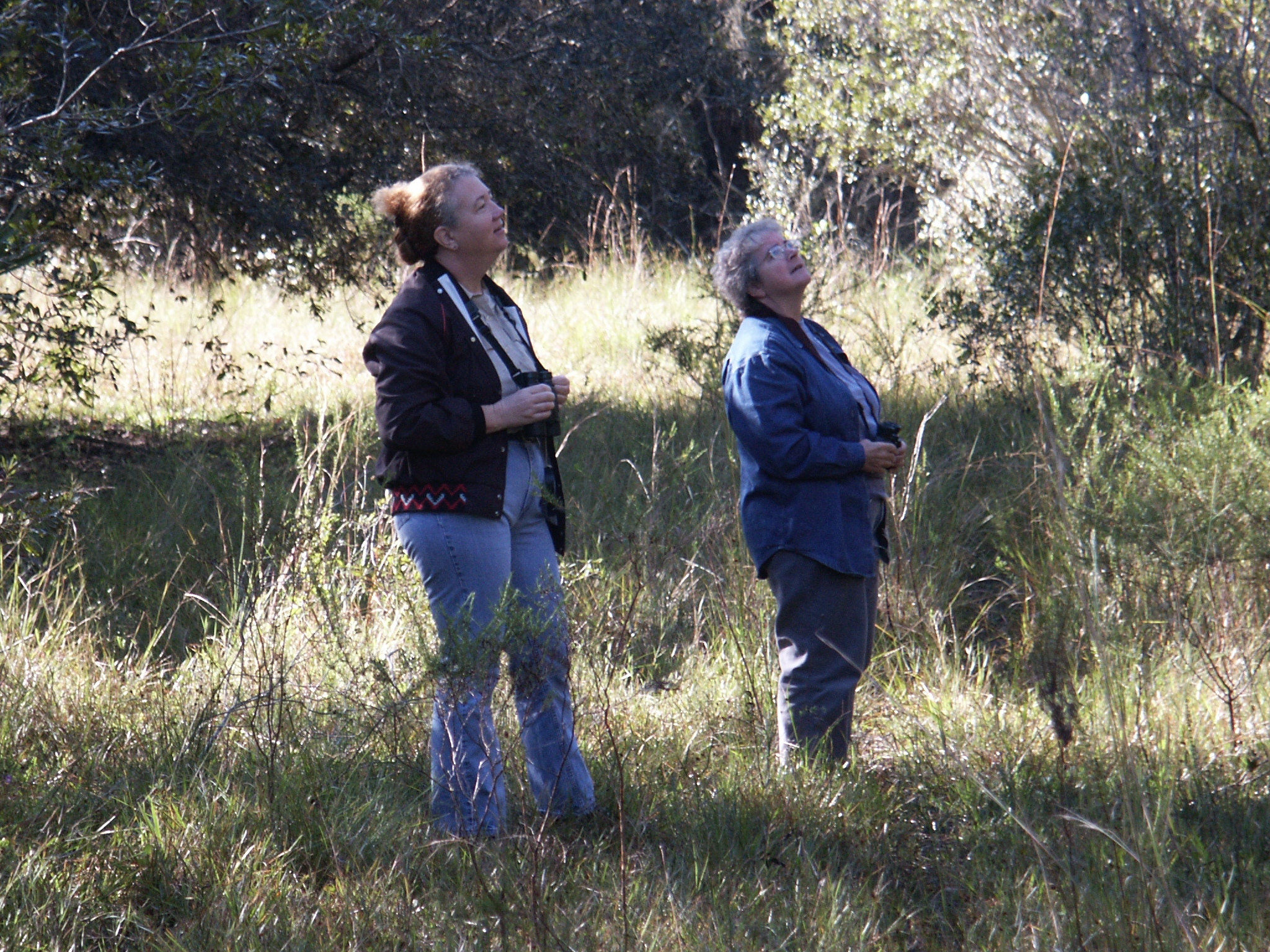
Marian (Naturalist at Avon Park Range) and Lee

Marian (Naturalist at Avon Park Range) and Lee

I almost cracked up when I read the title Stephen gave me for this blog. He gave me the suggested titles and I am suppose to write the articles. Some deal! We would like this series to be informative, but mainly to encourage all of us to “start birdwatching today” no matter our level of experience.

So, why should you go outside? Mainly, because that is where most of the birds are. Yes, there are some in cages in peoples house, but the majority are outside flying freely about waiting for you to come watch them. The birds are busy doing what the Lord designed them to do; singing, building nests, eating, finding food for their young, arguing sometimes (especially those in the Dove-Pigeon family), Why do they argue? They are actually showing dominance or defending their territory, or who knows what else. If you are not outside, you might miss all this. You can watch through your window, so even those who are ill or handicapped, can still get to enjoy the antics of our avian friends.

According to Job, you might even learn something from watching the birds:

But now ask the beasts, and they will teach you; And the birds of the air, and they will tell you; (Job 12:7 NKJV)

Who teaches us more than the beasts of the earth, And makes us wiser than the birds of heaven? (Job 35:11 NKJV)

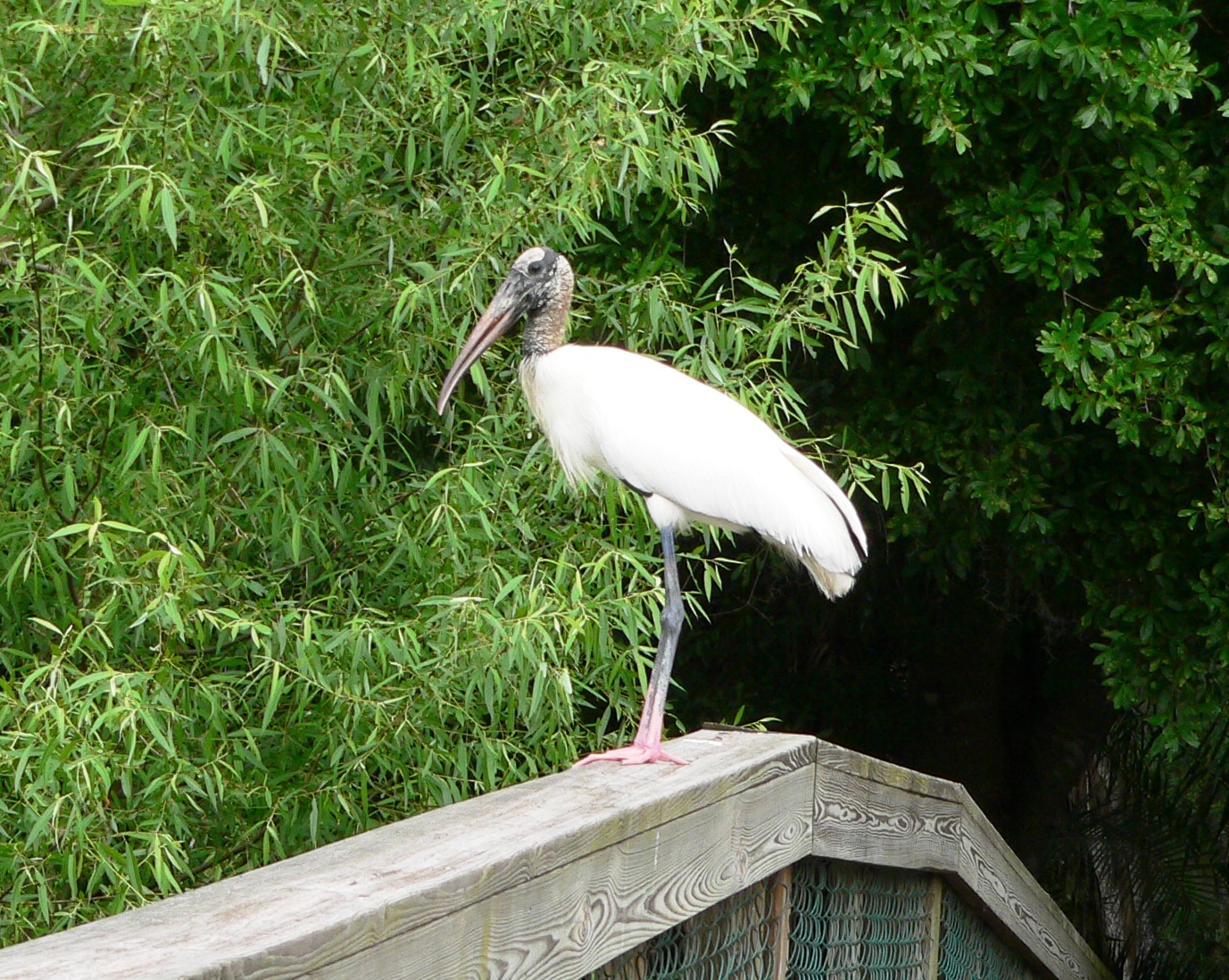
Wood Stork at S. Lake Howard Nature Park

Wood Stork at S. Lake Howard Nature Park

Stare at the birds? If you do that to a person, they get upset, but I am not sure a bird would, but then again they just might. One of the things I was taught when I first became interested in birding or birdwatching was to have “soft eyes.” If you stare at a tree or a certain area, you might see a bird. If you look at a tree, but not stare, then you can catch movement or activity in that tree that you might miss if you are only staring at one spot.

Are there times to stare? When I am really concentrating on a bird that I have already spotted, then, yes, I will stare as I try to observe details about the bird. But we will save those details for another blog.

Enough for this article. So either slide your chair or wheelchair up to the window, or go outside and stare at the birds, after you find one.

See series in Birdwatching section.

#3 *

Our Built-In Homing Device – (excerpt from Hanging Out With God)

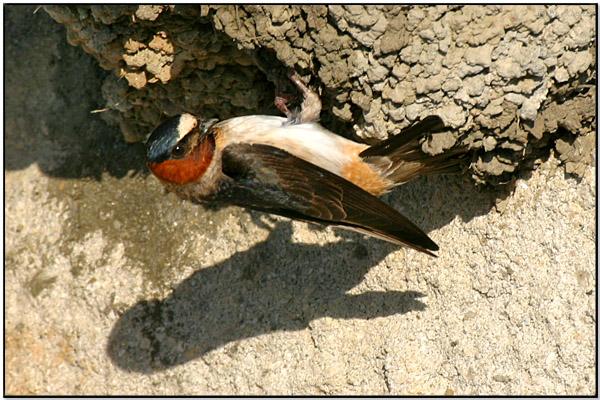
American Cliff Swallow (Petrochelidon pyrrhonota) by Daves BirdingPix

“Did you hear the bells this past Monday? The bells at San Juan Capistrano? Thousands of people did hear them, because they gathered, as they do every year, to rejoice in and celebrate the return of the beloved Swallows. These famous swallows begin their flight every year at dawn on February 18th, from the Argentinian city of Goya, and arrive at the San Juan Capistrano mission, without fail, on the morning of March 19th.

According to Argentinian magazine correspondent Enrique Bermudez, who has made a thorough study of the swallows, they fly a total of 7,500 miles one way on this astounding trip, which they have been making every year for at least 200 years…..”

See the whole article at Our Built-In Homing Device

Very Good Article – worth reading,

Lee

The Black-throated Sparrow – The Desert Dwellers

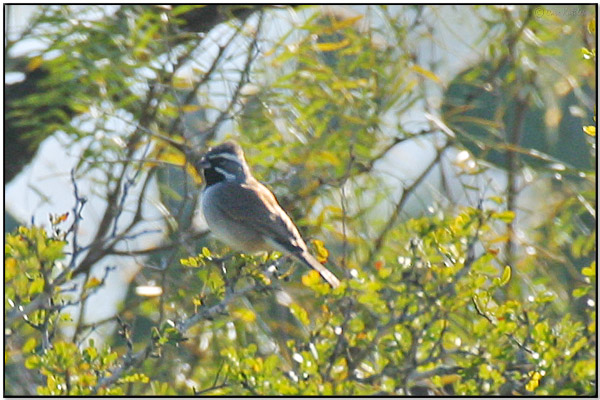
Black-throated Sparrow (Amphispiza bilineata)by Daves BirdingPix

Black-throated Sparrow (Amphispiza bilineata)by Daves BirdingPix

The Black-throated Sparrow – The Desert Dwellers ~ by a j mithra

The Black-throated Sparrow (Amphispiza bilineata) is a very distinctive small, brown bird found in open areas with scattered shrubs and trees, including deserts and semi-desert grasslands in the intermountain region in the western United States, northern Mexico, and Baja California. It is sometimes referred to as the Desert Sparrow, due to its preferred habitat of arid desert hillsides and scrub. This name usually refers to the Desert Sparrow of Africa and Asia.

  • Though this little bird chooses to dwell among the desert, it never has stopped singing has it?

Shadrach, Meshach and Abednego did just that when they were thrown into the furnace which was seven times hotter.

  • That may be the reason why the Lord who is the pillar of cloud strolled with them in the furnace that day!
  • Probably they knew the secret that our God loves to dwell among our praises.

Peter and Silas did just that when they were beaten, bruised, chained and thrown into the jail. But, still they praised and you know what happened? Their praise released not only their bondages but also of those who were with them and it also shook the jail’s floor..

  • Have you ever tried praising God in your darkest hour?

Try worshipping like Peter and Silas and you will see the light shine not just at the end of the tunnel but all around you and also over every one who is the dark around you…

I will bless the LORD at all times: his praise shall continually be in my mouth. (Psalm 34:1)

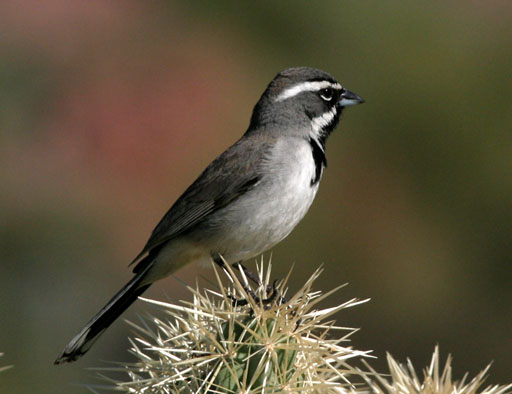
Black-throated Sparrow (Amphispiza bilineata) ©WikiC

Black-throated Sparrow (Amphispiza bilineata) ©WikiC

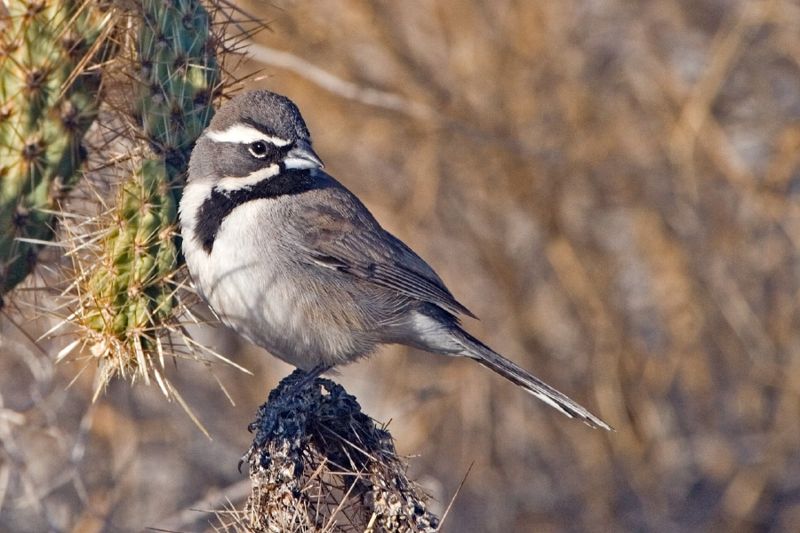
The Black-throated Sparrow is a small, gray sparrow that reaches a length of about 4.5-5.5 inches and has a distinctive black throat, with a bold white stripe above its eye and another down its cheek. The black tail is outlined in white except at the tips of the middle tail feathers. Juveniles, who retain this plumage into October, lack the black throat of adults and are lightly streaked.

Usually found in cactus and sagebrush deserts, especially on rocky slopes..

  • Sagebrush has bacteriostatic, astringent, and antioxidant properties.
  • Sagebrush kills bacteria, inhibits free radicals, and has anti-inflammatory and anti-carcinogenic actions, and so is most useful as a cleansing first aid wash for disinfecting wounds and skin irritations.
  • The leaves can be very useful in the kitchen as a means of protecting stored dried food from insects and rodents.

This maybe the reason for these little birds to choose a desert like place to live, since these plants grow among the dry desert slopes.

  • Don’t ever think that God has placed you in a dry desert to punish you..
  • He separates you so that you will turn into a better vessel that would glorify His name..

And I will bring the third part through the fire, and will refine them as silver is refined, and will try them as gold is tried: they shall call on my name, and I will hear them: I will say, Itis my people: and they shall say, The LORD is my God. (Zechariah 13:9)

Black-throated Sparrow (Amphispiza bilineata) ©WikiC

Black-throated Sparrow (Amphispiza bilineata) ©WikiC

The Black-throated Sparrow is considered to be better adapted to this type of ecosystem than any other seed-eating bird in North America. Adapted to dry habitats, Black-throated Sparrows can survive long periods of time without supplemental water, obtaining moisture from the seeds and insects that make up their diet. In the hottest part of the summer, however, supplemental water is necessary. In the winter, seeds make up the majority of their diet. During the breeding and nestling season, insects become more important. When available, berries and other fruits, as well as fresh green shoots, are also part of their diet.

  • Do you feel that God has put you in the wrong place?
  • Remember that God has created you to be unique to live where no one else can even dream of stepping in.
  • Have you forgotten that you can do all things through Christ who strengthens you?

Humble yourselves therefore under the mighty hand of God, that he may exalt you in due time: (I Peter 5:6)

They travel in small groups, though larger groups may accumulate around sources of water in the desert.

  • Right now, you and your family may not see hope and may feel like as if you are wandering through the desert.

I just want to encourage you that God does not take us to the desert to kill us but to show us that He is still care for us.

  • If God can give water to these birds in the desert, will He not give us?
  • Well, He is still able to bring everything from nothing.
  • So, congregate as a family in the presence of the Living Water and look out for a miracle which is on its way..

He turneth the wilderness into a standing water, and dry ground into watersprings. (Psalm 107:35)

Its call is high and bell-like, and its song is a fairly simple, mechanical tinkling.

  • You don’t have to be a great singer to bring God’s presence.
  • Our God is a simple God and He prefers our worship to be just simple.
  • Remember God doesn’t look for your voice; He just wants to hear your noise.
  • The wall of Jericho came down due to the noise and not the voice of Joshua and his people.

So the people shouted when the priests blew with the trumpets: and it came to pass, when the people heard the sound of the trumpet, and the people shouted with a great shout, that the wall fell down flat, so that the people went up into the city, every man straight before him, and they took the city. (Joshua 6:20)

Yours in YESHUA,
a j mithra

Please visit us at:

Crosstree

ajmithra21

More of a j mithra’s articles – Click Here

*

Birds in Hymns – Sweet Is The Memory Of Thy Grace

American Robin (Turdus migratorius) eating by Jim Fenton

American Robin (Turdus migratorius) eating by Jim Fenton

They shall abundantly utter the memory of thy great goodness, and shall sing of thy righteousness. (Psalms 145:7 KJV)

Sweet Is The Memory Of Thy Grace

Words by Isaac Watts, The Psalms of Da­vid, 1719.

Music: Her­mann, by Ni­ko­laus Her­mann, 1560

Sweet Is The Memory Of Thy Grace

Sweet is the memory of Thy grace,
My God, my heav’nly King;
Let age to age Thy righteousness
In sounds of glory sing.

God reigns on high, but not confines
His goodness to the skies;
Through the whole earth His bounty shines,
And every want supplies.

With longing eyes Thy creatures wait
On Thee for daily food;
Thy liberal hand provides their meat,
And fills their mouths with good.

How kind are Thy compassions, Lord!
How slow Thine anger moves!
But soon He sends His pardoning word
To cheer the souls He loves.

Creatures with all their endless race
Thy power and praise proclaim;
But saints that taste Thy richer grace
Delight to bless Thy Name.


See More Birds in Hymns

Words from Net Hymnal

*

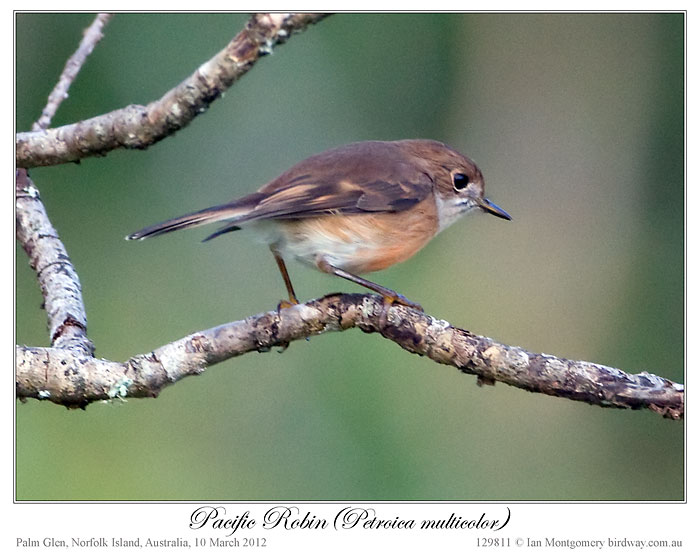
Ian’s Bird of the Week – Pacific Robin

Pacific Robin (Petroica multicolor) by Ian 1

Pacific Robin (Petroica multicolor) by Ian 1

Ian’s Bird of the Week – Pacific Robin ~ by Ian Montgomery

Newsletter – 3/25/12

The Pacific Robin was another bird that I was keen to photograph on Norfolk Island. It has only recently been split from the mainland Scarlet Robin and, until that happened, it attracted little attention. As a consequence, I had trouble sourcing photos, particularly of adult males, and getting reliable material for the description of the species for the digital version of the Australian field guide by Pizzey and Knight.

It’s not common on Norfolk Island with an estimated population of 400-500 species and its distribution is restricted to areas of native forest. Happily, there was a resident family at the place, Palm Glen, where we did regular evening vigils for the Norfolk Island Parakeet and, being more confiding than Scarlet Robins, the members of the family proved to be good subjects for photography. The first photo shows the adult male. At first glance, it looks like a small Scarlet Robin, but closer examination reveals the diagnostic lack of white on the flight feathers of the wing and the outer tail feathers: the only white on the wing is the secondary wing coverts. Another supposed difference is a smaller area of white on the forehead, but this bird at least seemed to me to show much more white, extending back to a point above  the rear of the eyes. If you’re interested, compare with http://www.birdway.com.au/petroicidae/scarlet_robin/index.htm .
Pacific Robin (Petroica multicolor) by Ian 2

Pacific Robin (Petroica multicolor) by Ian 2 Fem L-Juv R

The second photo shows the adult female, left, and the juvenile, right, posing obligingly for comparison. Both lack the obvious white forehead spot characteristic of, in fact diagnostic of, their Scarlet Robin counterparts and also lack white in the outer tail feathers. The colours are also richer and the wing stripes are a deeper buff, almost blending with the buffish-brown of the rest of the wings and back. The third photos shows the same female face-on, and the lack of the white spot is more obvious: there is only slight white scalloping.

Pacific Robin (Petroica multicolor) by Ian 3 Fem

Pacific Robin (Petroica multicolor) by Ian 3 Fem

The fourth photo is another shot of the same juvenile, showing the lack of white on the outer tail feathers.
Pacific Robin (Petroica multicolor) by Ian 4 Juv

Pacific Robin (Petroica multicolor) by Ian 4 Juv

Having noticed the large amount of white on the forehead of the male, I kept an eye out for another individual and eventually photographed this one, fifth photo, on nearby Mount Pitt. This too had a large white spot.

Pacific Robin (Petroica multicolor) by Ian 5

Pacific Robin (Petroica multicolor) by Ian 5

The Pacific Robin, as now described, is quite widely distributed on islands in the South Pacific from the Solomons in the north via Vanuata and Fiji to Norfolk Island in the south. It is quite variable in plumage and 14 races have been described. It is closely related to the Tomtit of New Zealand, the males of which vary in colour from the white-breasted (North Island), through yellow-breasted (South Island) to the complete black race on the Snares: http://www.birdway.com.au/petroicidae/tomtit/index.htm. There is clearly enough material here to keep a South-sea-island-loving taxonomist busy for at least a lifetime and I won’t say anything further except to note an interesting historical twist in the story of the splitting of the Pacific and Scarlet Robins.

Norfolk Island was settled in the same year as Sydney, 1788, and one result of that was that the Scarlet Robin was described using a Norfolk Island specimen (the type specimen) by German Naturalist Johann Gmelin in 1789 and given the specific name multicolor. When the species was split 210 years later, the rules governing taxonomy insist that this name remains with the Norfolk Island bird, so the mainland species becomes the new one and was named boodang after the SE Australian race (up till thenPetroica multicolour boodang). To avoid confusion in Australia (at the risk maybe of increasing it in the Pacific Islands) the common name Scarlet was transferred to the new species and the new name Pacific was given to the old species.

I’m sure this family of birds at Palm Glen would be astounded to learn that their kind is the subject of such intense scrutiny!

Best wishes
Ian

*************************************************

Ian Montgomery, Birdway Pty Ltd,
454 Forestry Road, Bluewater, Qld 4818
Tel 0411 602 737 ian@birdway.com.au
>Check the latest website updates:
http://www.birdway.com.au/#updates


Lee’s Addition:

He answered and said to them, “When it is evening you say, ‘It will be fair weather, for the sky is red’; (Matthew 16:2 NKJV)

Those changes aught to keep the Bird Guide writers busy keeping up with the divisions and name changing. What a gorgeous bird and fantastic photography. Thanks again, Ian, for sharing all these great birds.

It seems small in the photos, so I checked to see its size. “The Pacific Robin is a small passerine, 4.5-5.3 in (11.5–13.5 cm) long and weighing .31-.38 oz (9–11 g.) Over much of its range it is the smallest species of bird. Pretty small.

The Pacific Robin is in the Petroicidae – Australasian Robins Family. Also see Ian’s Petroicidae  Family.

“The Pacific Robin is a seasonal breeder, although the timing of the breeding season varies across its range. Information on the timing of the season is patchy or absent in many islands. On Norfolk Island the breeding season is from September to December, and in Vanuatu the season is from October to January. Parents with young have been seen in mid August in the Solomon Islands and in June through to September in Samoa. The species builds a compact nest which is a cup of plant fibres and spider webs. The outside of the nest is decorated with moss and lichen, and is therefore easily overlooked. The nest is usually set into a fork or stump on a tree branch, or on a horizontal branch.

Around two to four eggs are laid in each clutch, with two being the typical clutch size in Norfolk Island, and two to three being typical in Fiji. The eggs are dull grey or greenish, and are incubated by the female. The nests of Pacific Robins are parastised by Fan-tailed Cuckoos where the two species co-occur.” (Wikipedia)

See – Pacific Robin (Wikipedia)

*

Start Birdwatching Today: Some Background Information

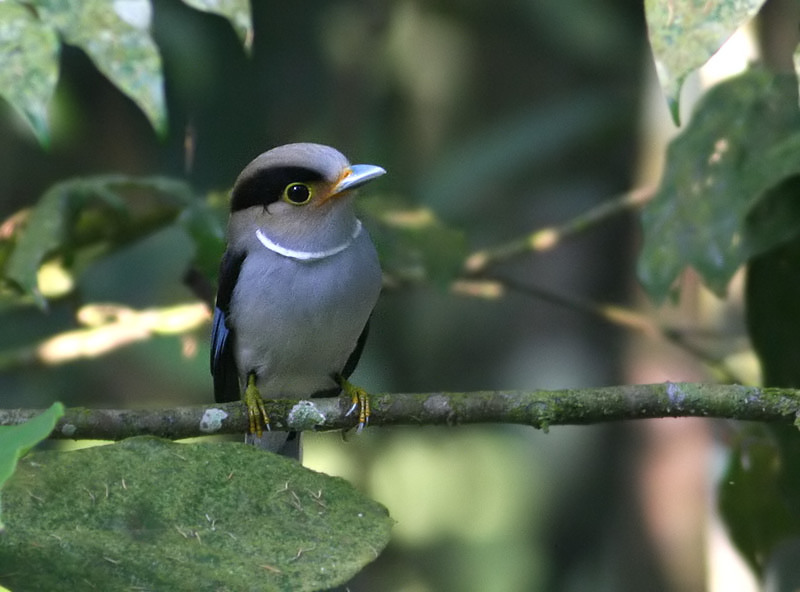
Silver-breasted Broadbill (Serilophus lunatus) by Peter Ericsson

Silver-breasted Broadbill (Serilophus lunatus) by Peter Ericsson

We know from Genesis 1 that the God created the birds, along with everything else. They were created on the fifth day. When Adam became conscience, the birds and critters were already present for him to discover and enjoy.

Then God said, “Let the waters abound with an abundance of living creatures, and let birds fly above the earth across the face of the firmament of the heavens.” So God created great sea creatures and every living thing that moves, with which the waters abounded, according to their kind, and every winged bird according to its kind. And God saw that it was good. And God blessed them, saying, “Be fruitful and multiply, and fill the waters in the seas, and let birds multiply on the earth.” So the evening and the morning were the fifth day. (Genesis 1:20-23 NKJV)

Then the LORD God brought the birds to Adam to let him give them a name.

Out of the ground the LORD God formed every beast of the field and every bird of the air, and brought them to Adam to see what he would call them. And whatever Adam called each living creature, that was its name. (Genesis 2:19 NKJV)

Psalm 111 reminds us that the things that were created are great and are to be “sought out” and enjoyed.

The works of the LORD are great, sought out of all them that have pleasure therein. His work is honourable and glorious: and his righteousness endureth for ever. He hath made his wonderful works to be remembered: the LORD is gracious and full of compassion. (Psalms 111:2-4 KJV)

Fast forward to today. If Adam was to enjoy the birds and put names on them, should we not try to discover them, enjoy them, and try to figure out what their names are?

Galah (Eolophus roseicapilla) and Dan

Galah (Eolophus roseicapilla) and Dan at Brevard Zoo

The birds are all around us, in the sky flying or gliding on the wind (currents), on the power lines, on feeders, on bushes, in trees, or singing or calling in the distant. (Sometimes they are even on cameras.)

Start birdwatching today for pleasure and realize the goodness of the Lord to us.

See series in Birdwatching section.

*

Birdwatching Trip to Circle B in March 2012

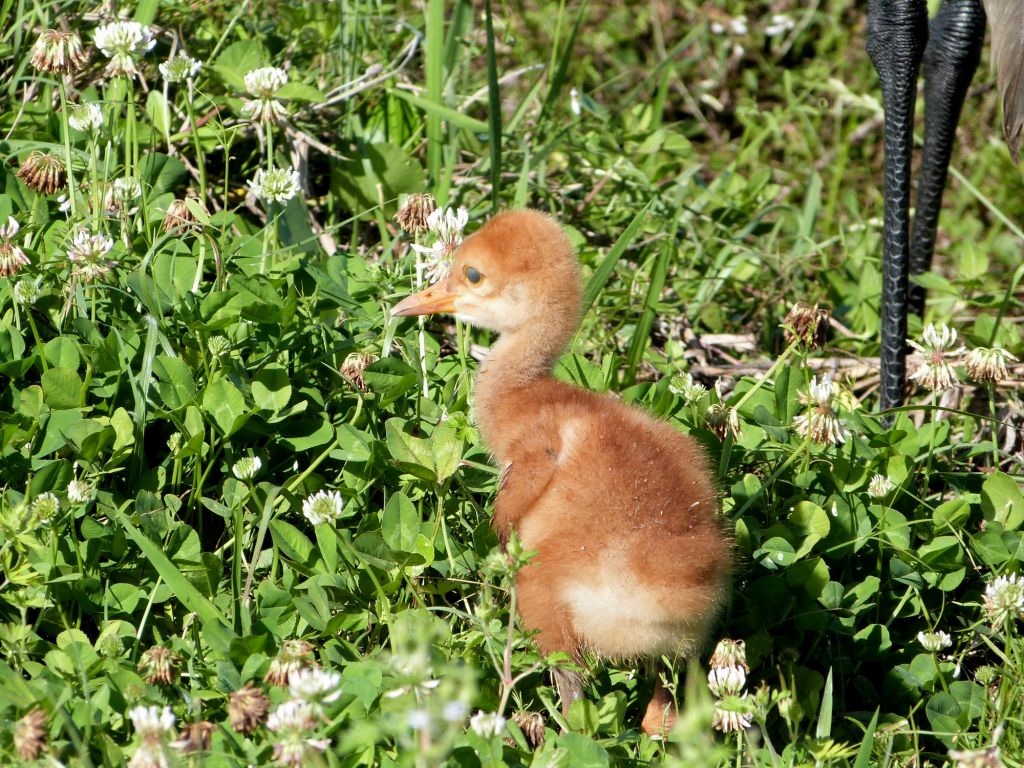
Sandhill Crane Chick at Circle B by Lee

Sandhill Crane Chick at Circle B by Lee

We had not been to Circle B recently, nor especially out to the Marsh by the windmill. Actually the windmill has lost its blades. It is a long trek out there for me, but praise the Lord, one of the workers came along with one of their vehicles and gave us a ride to the marsh. We were greeted by a group photographing Sandhill Cranes with their baby. That would have made the trip worth it alone.

Of course there were other birds awaiting our arrival. It is never boring out there. Since we had parked up by the entrance to get to the marsh, when we got out of the car and were getting our cameras and binoculars, we were greeted by the sound of a Pileated Woodpecker. When we returned, the Pileated showed off and we got some close-up shots of two of them. They were right by the pavilion and didn’t seem to mind those of us nearby.

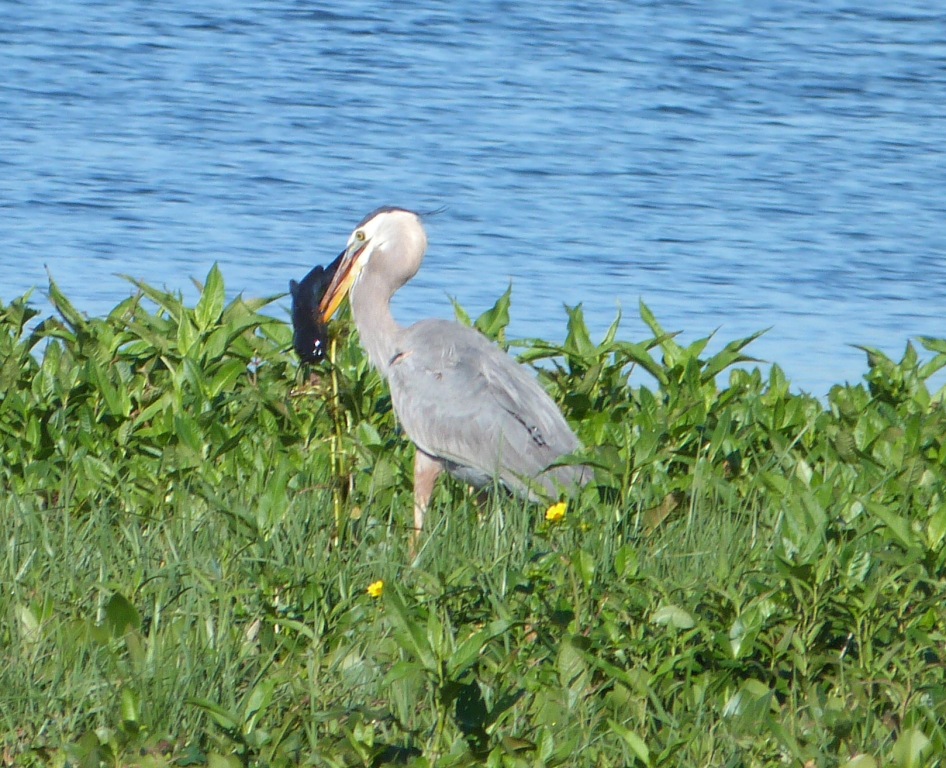
Great Blue Heron with Catfish at Circle B by Lee - cropped

Great Blue Heron with Catfish at Circle B by Lee - cropped

Another neat observation was the Great Blue Heron that caught a fish, actually a catfish. He was out from the edge a bit, but was able to zoom in on him. Took some video of it trying to kill the fish.

It is still quite dry out there as the rains have not started yet. It has been rather dry this winter. Water levels are still low.

I am including some photos and video taken out at Circle B that day. Video has segment of Great Blue with the Catfish and a close-up of the Pileated Woodpecker. Notice how he uses his tail to support himself.

This slideshow requires JavaScript.

In the beginning was the Word, and the Word was with God, and the Word was God. He was in the beginning with God. All things were made through Him, and without Him nothing was made that was made. (John 1:1-3 NKJV)

Here is the list from e-bird for that trip. (37 species total)

6
Black-bellied Whistling-Duck
2
Mallard
20
Blue-winged Teal
4
Pied-billed Grebe
5
Double-crested Cormorant
4
Anhinga
2
Great Blue Heron
1
Great Egret
1
Little Blue Heron
2
Tricolored Heron
2
Cattle Egret
7
White Ibis
5
Glossy Ibis
2
Black Vulture
4
Turkey Vulture
5
Osprey
1
Bald Eagle
1
Red-shouldered Hawk
1
American Kestrel
10
Common Gallinule
25
American Coot
3
Limpkin
3
Sandhill Crane
1
Lesser Yellowlegs
1
Laughing Gull
2
Mourning Dove
2
Red-bellied Woodpecker
2
Pileated Woodpecker
1
Blue Jay
4
Tree Swallow
1
Carolina Wren
1
Magnolia Warbler
1
Palm Warbler
1
Savannah Sparrow
1
Northern Cardinal
5
Red-winged Blackbird
10
Boat-tailed Grackle

See more Birdwatching Adventures out at Circle B Bar Reserve, Lakeland, Florida.

Wordless Birds

*