An interesting article by Donna L. O’Daniel provided the background for this blog. You can see her complete article at: Water, Water Everywhere . . . And Not A Drop To Drink. See the article for some of the more technical aspects of this.
Birds that are at sea for months and even years must have a way to quench their thirst. How can they do that? If we drink seawater, which is loaded with salt, we would be in deep trouble. Most regular birds would also suffer harm if they were to drink the salty water all the time. Birds like the Albatrosses, Petrels, Tubenoses and Shearwaters do, in fact, drink saltwater.
Laysan Albatross (Phoebastria immutabilis) by Daves BirdingPix
You would know that the Lord God, the Creator God, would have already prepared these birds for this situation. And so He did.
For My thoughts are not your thoughts, Nor are your ways My ways,” says the LORD. “For as the heavens are higher than the earth, So are My ways higher than your ways, And My thoughts than your thoughts. (Isaiah 55:8-9 NKJV)
Have you not known? Have you not heard? The everlasting God, the LORD, The Creator of the ends of the earth, Neither faints nor is weary. His understanding is unsearchable. (Isaiah 40:28 NKJV)
Northern Giant Petrel (Macronectes halli) by Dave’s BirdingPix
“Sea birds like the albatross drink freely from sea water but never seem to suffer any ill effects. They manage this because their physiology has become adapted to the sea environment. They have special glands just behind their eyes that actively pump salt out of their blood and into narrow tubes that lead into the bird’s nostril. The excess salt drips harmlessly out of the body, restoring the blood salt level back to normal.” “Seabirds can drink seawater and have salt glands inside the head that eliminate excess salt out of the nostrils.” (Internet)
Wikipedia has this to say about the Albatrosses: “Albatrosses, along with all Procellariiformes have a need to lower their salt content due to their drinking of ocean water. All birds have an enlarged nasal gland at the base of the bill, above their eyes. This gland is inactive in species that don’t require it; however the Procellariiformes do require its use. Scientists are uncertain as to its exact processes, but do know in general terms that it removes salt that forms a 5% saline solution that drips out of their nose or is forcibly ejected in some birds.“
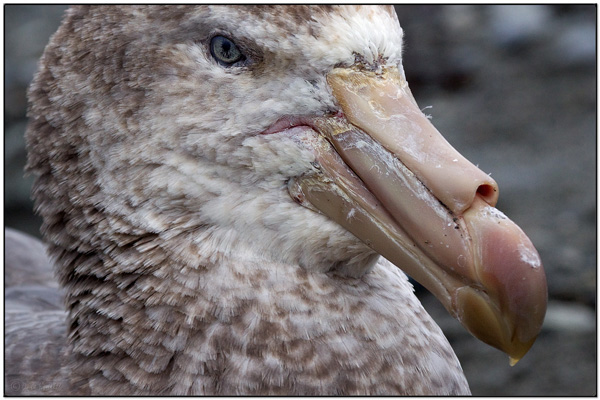
Northern Giant Petrel head close-up by Daves BirdingPix
About the Tubenoses and Shearwaters: “They also have a uniquely structured bill, with seven to nine distinct horny plates.. Finally, they have a salt gland that is located above their nasal passages and helps desalinate their body, as they drink seawater. They excrete the salty waste out their nose. As members of Procellariiformes, they share certain characteristics. First they have tubular nostrils called nariorns. This feature gives them their common name, Tubenoses. The opening to the nostril is located differently in some birds. These birds have the opening on top of the upper bill.”
For since the creation of the world His invisible attributes are clearly seen, being understood by the things that are made, even His eternal power and Godhead, so that they are without excuse, because, although they knew God, they did not glorify Him as God, nor were thankful, but became futile in their thoughts, and their foolish hearts were darkened. (Romans 1:20-21 NKJV)
Wandering Albatross (Diomedea exulans) by Ian
“The creation model for the origin of avian salt glands states that an intelligent Creator created this class of vertebrates complete with all of the complex systems within their bodies to survive in and adapt to their given environments, including salt glands to rid their bodies of excess salt. Perhaps the strongest argument in favor of the creation model for the origin of avian salt glands, aside from the lack of transitional forms in the fossil record, is one consisting of purpose and interdependence of purposeful parts.
Given the complexity of the functioning of avian salt glands, their existence by design can hardly be denied. The evidence for design that is obvious in the avian salt gland suggests a Designer who not only created the gland, but the entire animal, the earth, and the entire universe.” From Donna’s Article (see above)
And He said to me, “It is done! I am the Alpha and the Omega, the Beginning and the End. I will give of the fountain of the water of life freely to him who thirsts. (Revelation 21:6 NKJV)
And the Spirit and the bride say, “Come!” And let him who hears say, “Come!” And let him who thirsts come. Whoever desires, let him take the water of life freely. (Revelation 22:17 NKJV)
When the birds and animals came to Noah and the Ark, the “clean critters” came “seven by seven.” Noah was told in Genesis 7:1-3:
And the LORD said unto Noah, Come thou and all thy house into the ark; for thee have I seen righteous before me in this generation. Of every clean beast thou shalt take to thee by sevens, the male and his female: and of beasts that are not clean by two, the male and his female. Of fowls also of the air by sevens, the male and the female; to keep seed alive upon the face of all the earth. (Genesis 7:1-3 KJV)
Indian Scops Owl (Otus bakkamoena) pair by Nikhil Devasar
Take with you seven pairsof all clean animals, the male and his mate, and a pair of the animals that are not clean, the male and his mate, and seven pairs of the birds of the heavens also, male and female, to keep their offspring alive on the face of all the earth. (Genesis 7:2-3 ESV)
Pair of Sandhill Cranes by Mike Bader
And from the winged creatures of the heaven, of the clean, seven by seven, male and female; and from all the winged creatures of the ones not clean, two by two, male and female, to maintain seed upon all the earth. (Genesis 7:3 APG)
These verses are interesting to look at because they give two different ideas about what the LORD said to Noah. The APG (Apostolic Bible Polyglot), from which I took the “seven by seven” for the title, indicates that the birds came in as seven pairs of “clean birds” and one pair of “unclean birds.” Most of the other translations seem to indicate that all the birds came in with seven pairs.
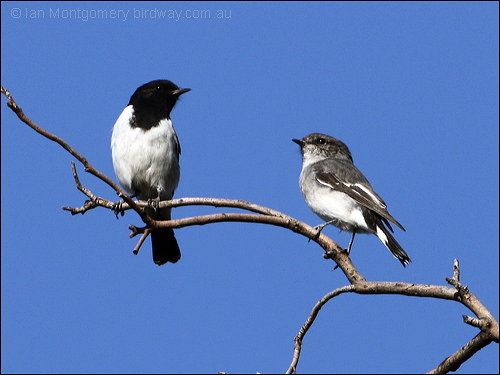
Hooded Robin (Melanodryas cucullata) by Ian
The King James and the English Standard Versions quoted above do not specify “clean or unclean”, only that there are to be seven pairs, the male and his female. I am inclined to lean toward this understanding of these verses. Birds are more fragile than the beast or land animals and that could be why the LORD would have protected them more. Also, reading the commentary by Matthew Henry about why there were more “clean than unclean”, I almost had to chuckle.
“3. Yet more of the clean were preserved than of the unclean. (1.) Because the clean were most for the service of man; and therefore, in favour to him, more of them were preserved and are still propagated. Thanks be to God, there are not herds of lions as there are of oxen, nor flocks of tigers as there are of sheep. (2.) Because the clean were for sacrifice to God; and therefore, in honour to him, more of them were preserved, three couple for breed, and the odd seventh (pair) for sacrifice, Gen_8:20. God gives us six for one in earthly things, as in the distribution of the days of the week, that in spiritual things we should be all for him. What is devoted to God’s honour, and used in his service, is particularly blessed and increased.” (Matthew Henry’s Commentary on Gen 7:2)
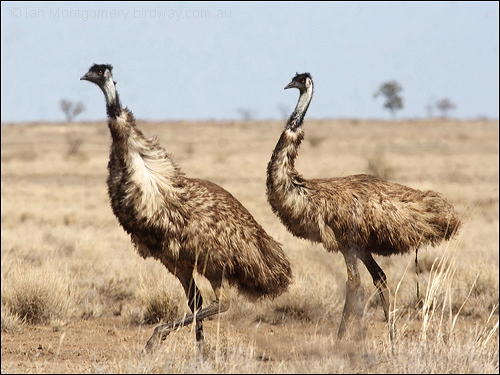
Strutting Emu (Dromaius novaehollandiae) by Ian
Digging into my e-Sword Bible Program to see about this difference, here are how the different versions describe Gen 7:3 –
Those indicating all birds and seven pairs of them:
(ASV) of the birds also of the heavens, seven and seven, male and female, to keep seed alive upon the face of all the earth.
(BBE) And of the birds of the air, seven males and seven females, so that their seed may still be living on the face of the earth.
(CEV) Also take seven pairs of every kind of bird with you. Do this so there will always be animals and birds on the earth.
(Darby) Also of the fowl of the heavens by sevens, male and female; to keep seed alive on the face of all the earth.
(DRB) But of the beasts that are unclean two and two, the male and the female. Of the fowls also of the air seven and seven, the male and the female: that seed may be saved upon the face of the whole earth.
(ERV) Get seven pairs (seven males and seven females) of all the birds. This will allow all these animals to continue living on the earth after the other animals are destroyed.
(ESV) and seven pairs of the birds of the heavens also, male and female, to keep their offspring alive on the face of all the earth.
(GNB) Take also seven pairs of each kind of bird. Do this so that every kind of animal and bird will be kept alive to reproduce again on the earth.
(GW) Also, take seven pairs of every kind of bird (a male and a female of each) to preserve animal life all over the earth after the flood.
(JPS) of the fowl also of the air, seven and seven, male and female; to keep seed alive upon the face of all the earth.
(KJV) Of fowls also of the air by sevens, the male and the female; to keep seed alive upon the face of all the earth.
(KJV-1611) Of fowles also of the aire, by seuens, the male & the female; to keepe seed aliue vpon the face of all the earth.
(LITV) And take of the fowl of the heavens by sevens, male and female, to keep alive seed on the face of the earth.
(MKJV) Also take of the fowls of the air by sevens, the male and the female, to keep seed alive upon the face of all the earth.
(NAS77) also of the birds of the sky, by sevens, male and female, to keep offspring alive on the face of all the earth.
(NASB) also of the birds of the sky, by sevens, male and female, to keep offspring alive on the face of all the earth.
(NKJV) also seven each of birds of the air, male and female, to keep the species alive on the face of all the earth.
(RV) of the fowl also of the air, seven and seven, male and female: to keep seed alive upon the face of all the earth.
(Webster) Of fowls of the air also by sevens, the male and the female; to keep seed alive on the face of all the earth.
(YLT) also, of fowl of the heavens seven pairs, a male and a female, to keep alive seed on the face of all the earth;
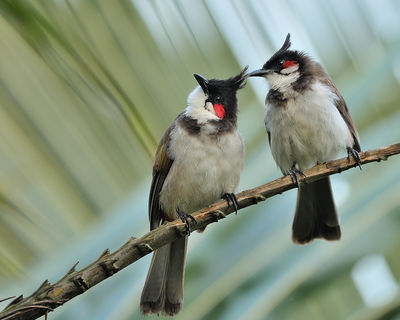
Red-whiskered Bulbul Proud Parents by TAJA
Those indicating “clean and unclean”
(APG) And from the winged creatures of the heaven, of the clean, seven by seven, male and female; and from all the winged creatures of the ones not clean, two by two, male and female, to maintain seed upon all the earth.
(Brenton) And of clean flying creatures of the sky sevens, male and female, and of all unclean flying creatures pairs, male and female, to maintain seed on all the earth.
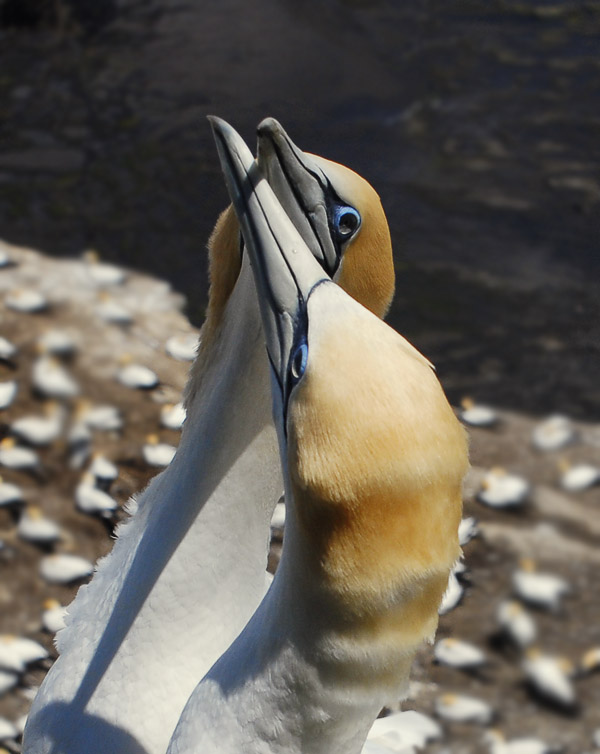
Northern Gannet (Morus bassanus) by W Kwong
All of the translations agree on two things for sure. They all agree that they came by male and female pairs. Not male and male pairs or female and female pairs. They also all agree that they were being preserved to keep the species and their future offspring alive. When they left the ark, they were told:
Then God spoke to Noah, saying, “Go out of the ark, you and your wife, and your sons and your sons’ wives with you. Bring out with you every living thing of all flesh that is with you: birds and cattle and every creeping thing that creeps on the earth, so that they may abound on the earth, and be fruitful and multiply on the earth.” So Noah went out, and his sons and his wife and his sons’ wives with him. Every animal, every creeping thing, every bird, and whatever creeps on the earth, according to their families, went out of the ark. (Genesis 8:15-19 NKJV)
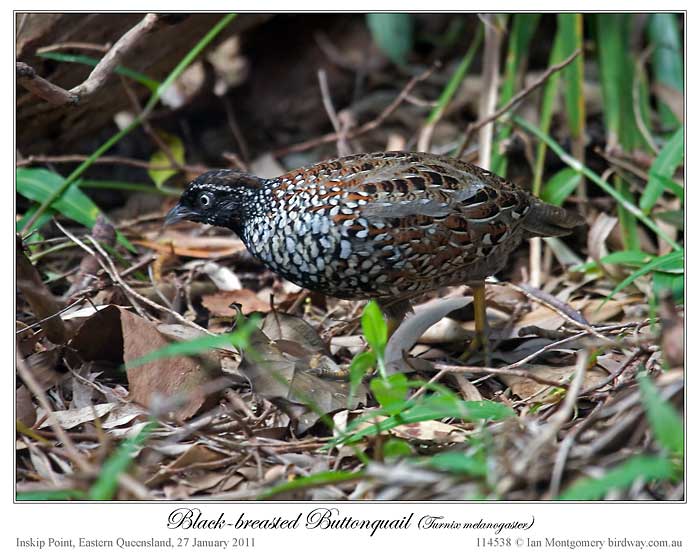
Black-breasted Buttonquail (Turnix melanogaster) by Ian
Ian’s Bird of the Week – Black-breasted Buttonquail ~ by Ian Montgomery
Newsletter – 01/30/11
I returned home from Armidale NSW by road bringing back a friend’s car that had been left at the Gold Coast south of Brisbane because of the flooding. I took the opportunity to make a detour to Inskip Point – near Rainbow Beach and Fraser Island – a known haunt of the rare Black-breasted Buttonquail, see the female in first photo.
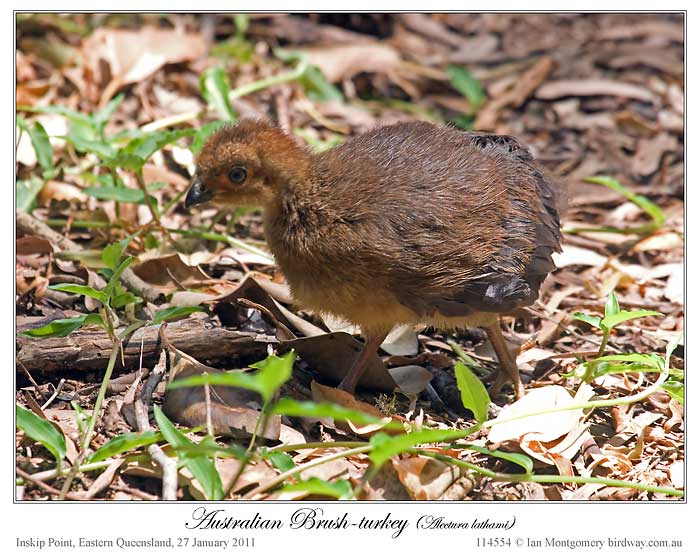
I found a pair relatively easily, though not before a few false alarms in the shape of some very young Australian Scrub-turkeys, as in the second photo, so young in fact that they were as small as the Buttonquails.
Australian Brushturkey (Alectura lathami) by Ian
Buttonquails leave characteristic circular bare patches in leaf litter called ‘platelets’ and I had stopped to examine some of these when a female Black-breasted Buttonquail ambled across the path and walked right past me. At one stage she walked towards me and I don’t think she noticed my presence. Buttonquails, like certain other eclectic groups of birds including Phalaropes and Cassowaries, have reversed sex roles with the more colourful females courting the males and the males incubating and looking after the young, so I was pleased to see the female who has a black head and black breast with moon-shaped white spots on the sides, as in the third photo.
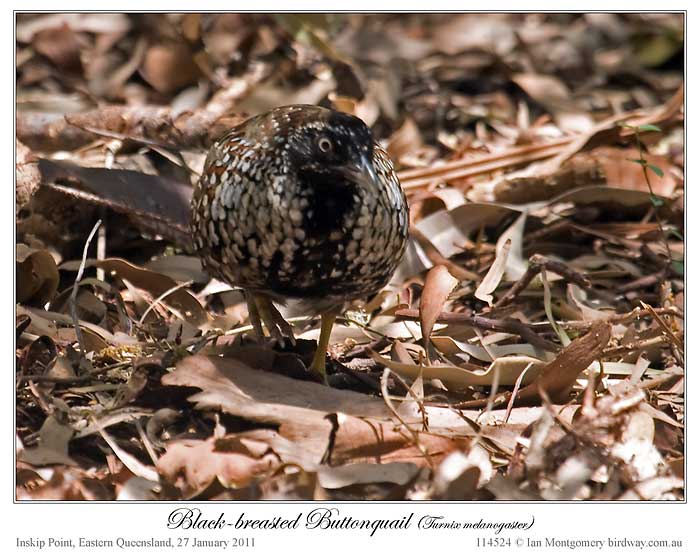
Black-breasted Buttonquail (Turnix melanogaster) by Ian
Buttonquails are not closely related to the true quails and are placed in their own family, the Turnicidae. The most obvious structural difference is the lack of a hind toe in Buttonquails, as you can see if you look carefully in the fourth photo and they are sometimes called ‘Hemipodes’, meaning half-foots. They feed on seed and invertebrates and the Black-breasted is particularly dependent on leaf litter and eats mainly invertebrates. They make the platelets by spinning around on one foot using the other to clear away the leaves; often they then reverse direction standing on the other foot so the size of the platelet matches the size of the bird. The Black-breasted is large by Buttonquail standards with the larger females being about 19cm/7.5in in length and the males 16.5cm/6.5in. I saw her drabber partner later but he didn’t want his photo taken.
Black-breasted Buttonquail (Turnix melanogaster) by Ian
There are about 16 species in total and are found in Africa, southern Spain, southern and southeastern Asia and Australia. Seven of these occur in Australia. The range of the Black-breasted is limited to coastal southeastern Queensland and northeastern NSW from Fraser Island to just north of Lismore. Its preferred habitat is open woodland and its population has suffered from habitat clearing and it is now classed as vulnerable.
I’ve put the Southern Boobooks, photographed in Armidale, on the website: Southern Boobook
As Ian said, the Buttonquails are in the Turnicidae – Buttonquail Family of the Charadriiformes Order. There are 17 members of this family. The Charadriiformes Order does not even include the New World Quail Family. Those quails are found in the Galliformes Order which also included the Brushturkeys. The Brushturkeys are part of the Magapode – Medapodiidae Family in the Galliformes Order. It has 22 members in its family.
Quails are mentioned in the Bible in four verses; Exodus 16:13, Numbers 11:31-32 and Psalm 105:40. Which kind of quail, it is not clear, but they were complaining about not having enough to eat and the LORD sent them Quail.
The people asked, and he brought quails, and satisfied them with the bread of heaven. (Psalms 105:40 KJV)
…The heavens declare the glory of God; and the firmament sheweth his handywork. Day unto day uttereth speech, and night unto night sheweth knowledge. There is no speech nor language, where their voice is not heard. (Psalms 19:1-3 KJV)
Words by Amelia A. Opie (1769-1853)
Music: Arlington – by Thomas A. Arne, 1762; arranged by Ralph Harrison, 1784
Thomas A. Arne (1710-1778)
Red-tailed Tropicbird (Phaethon rubricauda) by Bob-Nan
There Seems A Voice In Every Gale
There seems a voice in every gale,
A tongue in every flower,
Which tells, O Lord, the wondrous tale
Of Thy almighty power.
The birds, that rise on quivering wing,
Proclaim their Maker’s praise,
And all the mingling sounds of spring
To Thee an anthem raise.
Shall I be mute, great God, alone
’Midst nature’s loud acclaim?
Shall not my heart, with answering tone,
Breathe forth Thy holy Name?
All nature’s debt is small to mine;
Nature shall cease to be;
Thou gavest proof of love divine,
Immortal life to me.
Another great hymn from the past. We just returned from the second funeral of the week. For some, the death of a loved one may seem like a gale. The Lord speaks to us through our trials and gives us a comfort and peace as we go through them. That is, considering the person is in fellowship with the Savior. Both of these dear saints of the Lord, one here and one 200 miles away, were believers in the Lord Jesus Christ and their families also. They have comfort in knowing their loved ones are in the “presence of the Lord,” but they will have grief and sorrow, but the Lord will speak to them and they will come through the “Gale” they are going through. Our hearts and prayers are with both families.
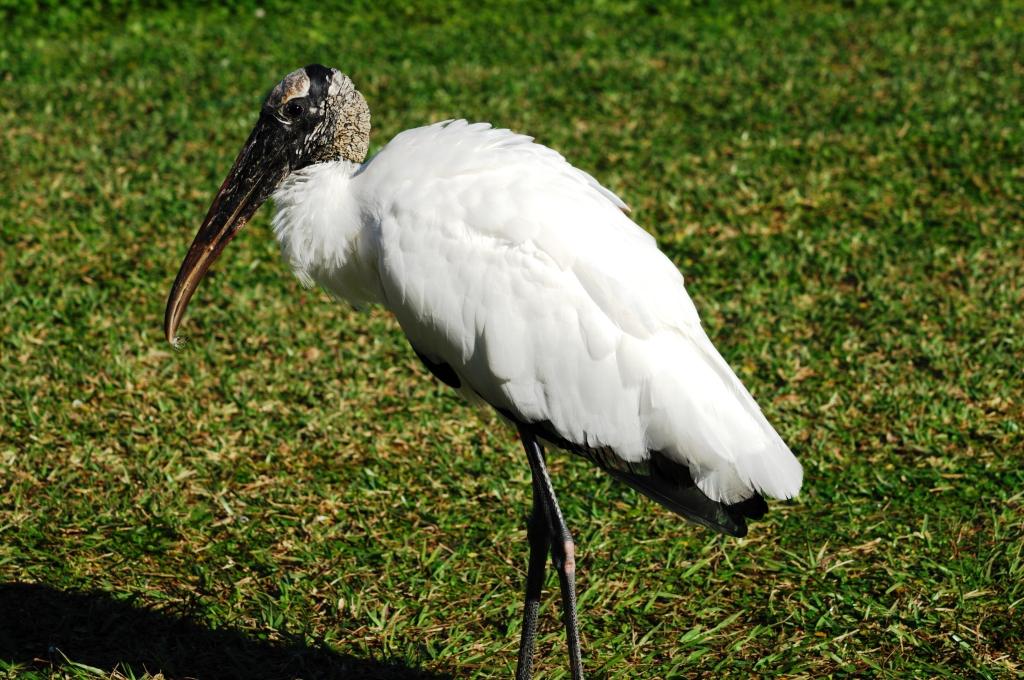
Dan and I were out birdwatching this last week several times. We have the privilege of seeing the Wood Storks quite frequently. The Birds of the Bible – Stork and the Birds of the Bible – Stork II articles have covered different aspects of the Stork. This time, the Bible passage in Job 39:13 is going to be covered.
The wings of the ostrich wave proudly, But are her wings and pinions like the kindly stork’s? (Job 39:13 NKJV)
The idea of the verse is that the Ostrich waves or flaps her wings proudly, but she lacks several things that the Stork has like the feathers and wings of a stork and nor the care for her young as the Stork show its young.
God has created them both, but they do not behave the same. Each has it’s own design and place to fill.
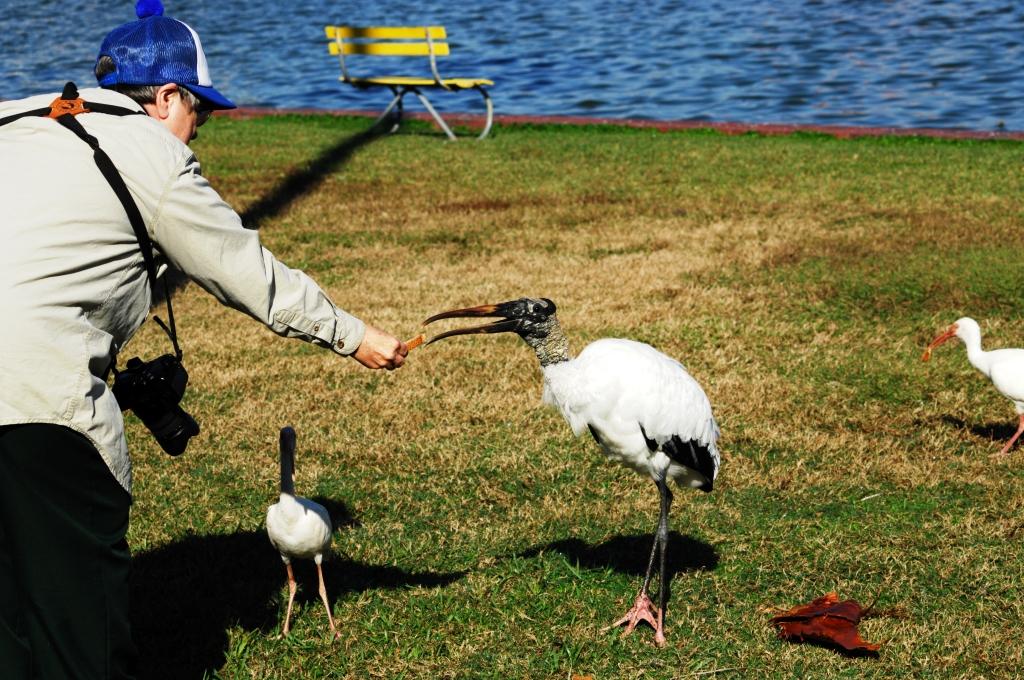
Lee feeding Wood Stork at Lake Morton by Dan Jan 2011
What is interesting is the different translations of Job 39:13. I use the e-Sword Bible program and have loaded every one of the free (English) Bibles and also have the New American Standard Bible and New King James Versions installed, which we purchased. One of the neat things you can do is select a verse and then choose “Compare” and every one of the Bible versions of that verse shows. It never ceases to amaze me that the versions can vary some times so much. This is one of those verses. (If you haven’t tried out the e-Sword Bible, it is worth loading and using and it is free for most of it. They also have the Bible in different languages.)
For now, I am going to show some of the versions that show the Stork:
(Brenton) The peacock has a beautiful wing: if the stork and the ostrich conceive, it is worthy of notice,
(Darby) The wing of the ostrich beats joyously–But is it the stork’s pinion and plumage?
(ERV) “An ostrich gets excited and flaps its wings, but it cannot fly. Its wings and feathers are not like the wings of a stork.
(GNB) How fast the wings of an ostrich beat! But no ostrich can fly like a stork.
(JPS) The wing of the ostrich beateth joyously; but are her pinions and feathers the kindly stork’s?
(LITV) The wing of the ostriches flap joyously, though not like the stork’s pinions for flight.
(MKJV) The wing of the ostrich beats joyously; though not like the stork’s pinions for flight.
(NKJV) “The wings of the ostrich wave proudly, But are her wings and pinions like the kindly stork’s?
Storks Shadowing Baby in Lakeland by Dan
Some of the other versions either mention a hawk, heron, or just the pinion and plumage of love. Ostriches are known for abandoning their young (Job 39:13-18 Birds of the Bible – Ostrich I) and the Storks are protective of their young (Stork II). The Ostriches don’t fly particularly, but the Storks have great wings and migrate good distances (Stork II).
Here are some facts about the Storks wings from various books and internet sites:
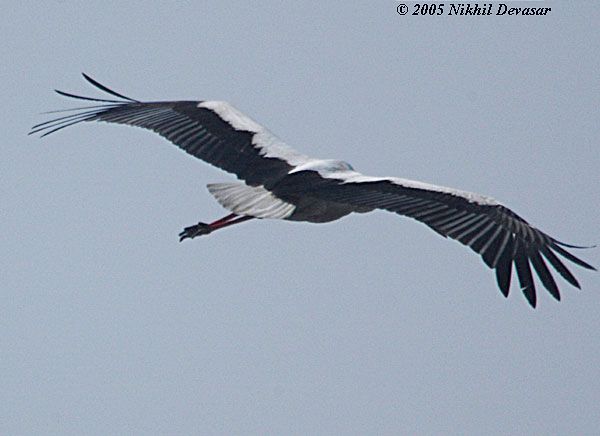
“Stork’s wings are built in a way, which allows them to take advantage of the streams of upward moving air. They are long and, compared to other birds, very wide – similar to these of vultures, condors, pelicans and the closest relatives of storks. Large wings of a stork “catch” the up going streams of air. Storks travel like gliders, taking advantage of the air movement.”
White Stork (Ciconia ciconia) by Nikhil Devasar
“Storks tend to use soaring, gliding flight, which conserves energy. Soaring requires thermal air currents. Ottomar Anschütz’s famous 1884 album of photographs of storks inspired the design of Otto Lilienthal’s experimental Gliders of the late 19th century. Storks are heavy, with wide wingspans: the Marabou Stork, with a wingspan of 3.2 m (10.5 ft), joins the Andean Condor in having the widest wingspan of all living land birds.” (Wikipedia)
“White Storks rely on the uplift of air thermals for long distance flight, taking great advantage of them during annual migrations between Europe and Sub-Saharan Africa. The shortest route south would take them over the Mediterranean, but since thermals only form over land, storks take a detour and avoid long water crossings. It has been estimated that storks metabolize the same amount of body fat to travel a distance in flapping flight as 23 times further by soaring, so they usually avoid prolonged wing flapping flight. Long flights over water may occasionally be undertaken. ”
To facilitate the sea crossing, birds from central Europe can take an eastern migration corridor, crossing the straits of Bosphorus to Turkey, traversing the Levant, and then bypassing the Sahara Desert by following the Nile, or follow a western route over the straits of Gibraltar. These corridors maximize the help from the thermals and thus save energy. The eastern route is by far the more important, with 530,000 birds taking this crossing, making this stork the second commonest migrant after the Honey Buzzard. The flocks of raptors, storks and Great White Pelicans can stretch for 200 km (125 mi). The eastern route is twice as long as the western, but storks take the same time to reach the wintering grounds by either route. Juvenile storks set of on their first southward migration in an inherited direction, but if displaced from that bearing by weather conditions, they are unable to compensate, and may end up in a new wintering location. Adults can compensate for strong winds and adjust their direction to finish at their normal winter sites, because they are familiar with the location. For the same reason, all spring migrants, even those from displaced wintering locations, can find their way back to the traditional breeding sites. Once in Africa, the storks spend the winter in savanna from Kenya and Uganda south to the Cape Province of South Africa. In these areas they congregate in large flocks which may reach a thousand individuals or more.” (Wikipedia)
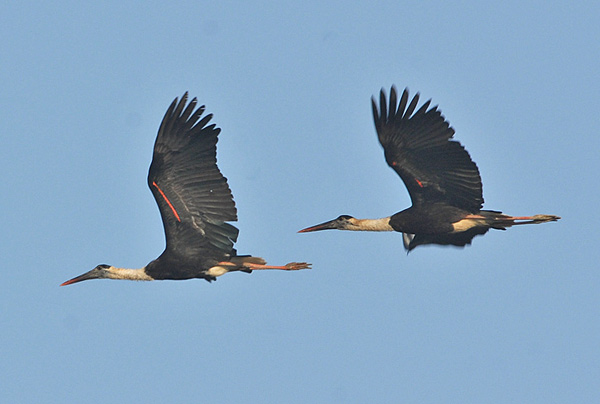
Woolly-necked Stork (Ciconia episcopus) by Nikhil Devasar
(From Matthew Henry’s Commentary) – “Job 39:13-18
The ostrich is a wonderful animal, a very large bird, but it never flies. Some have called it a winged camel. God here gives an account of it, and observes,
I. Something that it has in common with the peacock, that is, beautiful feathers (Job_39:13): Gavest thou proud wings unto the peacocks? so some read it. Fine feathers make proud birds. The peacock is an emblem of pride; when he struts, and shows his fine feathers, Solomon in all his glory is not arrayed like him. The ostrich too has goodly feathers, and yet is a foolish bird; for wisdom does not always go along with beauty and gaiety. Other birds do not envy the peacock or the ostrich their gaudy colours, nor complain for want of them; why then should we repine if we see others wear better clothes than we can afford to wear? God gives his gifts variously, and those gifts are not always the most valuable that make the finest show. Who would not rather have the voice of the nightingale than the tail of the peacock, the eye of the eagle and her soaring wing, and the natural affection of the stork, than the beautiful wings and feathers of the ostrich, which can never rise above the earth, and is without natural affection?
Ian’s Bird of the Week – Laughing Kookaburra ~ by Ian Montgomery
Newsletter – 01/23/11
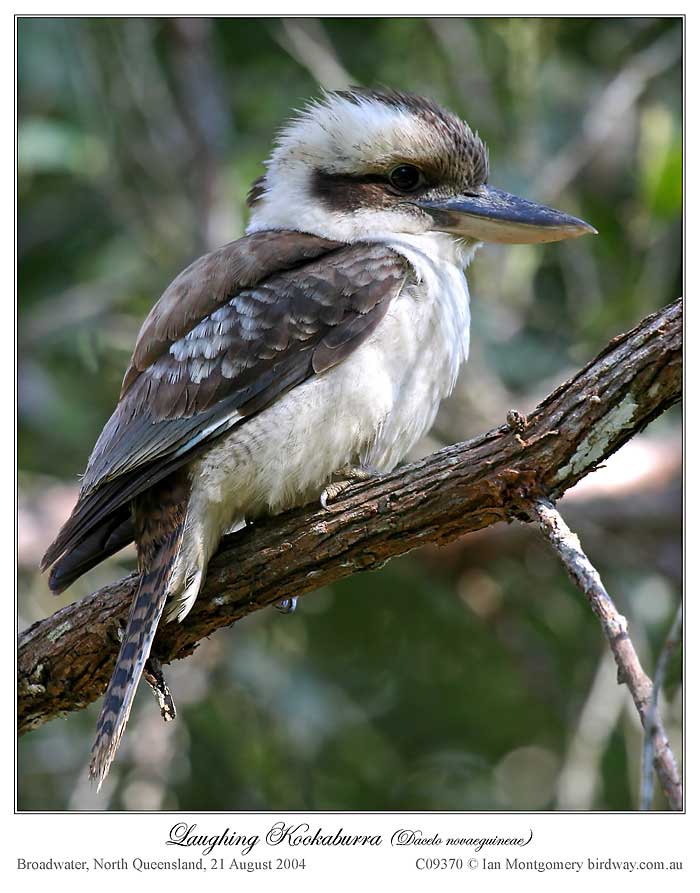
The Blue-winged Kookaburra has featured as bird of the week (twice) but, as far as I can detect, the iconic Laughing Kookaburra hasn’t, so let’s correct that using library photos. Bird photo opportunities were time-constrained during the wonderful recorder course in Armidale, NSW, though a family of roosting Southern Boobooks (which featured as bird of the week last year) gave the participants much pleasure and I’ll let you know when I’ve put the photos on the website.
Laughing Kookaburra (Dacelo novaeguineae) by Ian
Its loud cackling call is a characteristic sound of the Australian landscape (and of the sound tracks of B-grade jungle movies not set in Australia) and it’s a familiar bird in southern and eastern Australia, first photo.
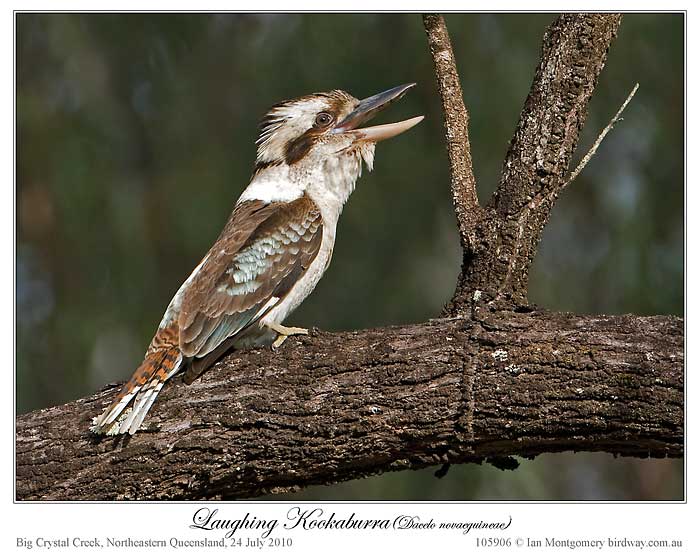
Laughing Kookaburra (Dacelo novaeguineae) by Ian
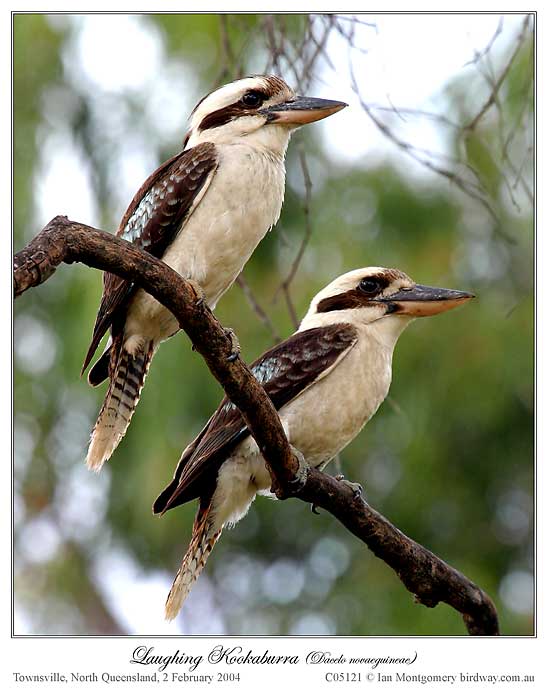
Up to 47cm/18.5in in length, it’s larger than its blue-winged cousin (length to 40cm) and by far the largest Australian Kingfisher. Unlike male blue-winged, birds of both sexes have brown tails and are not easily told apart. The third photo shows a breeding pair of Laughing Kookaburras, photographed near their nest site in a tree hollow in the botanic gardens (the Palmetum) in Townsville.
Older males can, however, be distinguished by having bluish rumps, like one making his presence very audible in the third photo. Kookaburras are very territorial and defend their territories by having calling matches and by performing circular display flights as far as the boundary of the territory. A territorial group consists of either just a breeding pair or a dominant breeding pair and several ‘helper’ birds so the calling matches can be very noisy indeed when everyone takes part.
Laughing Kookaburra (Dacelo novaeguineae) by Ian
Juvenile birds are recognisable by the pale brownish scalloped edges to the plumage, most noticeable on the back like the right hand bird in the fourth photo. This bird is barely fledged and has a very short tail.
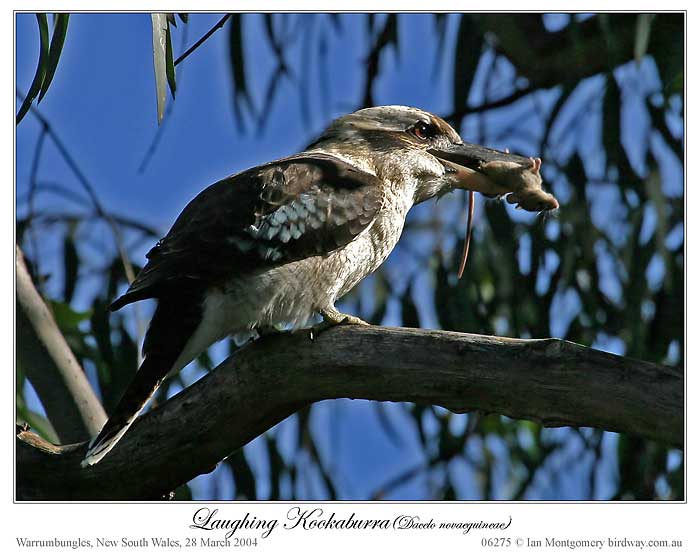
Kookaburras are carnivorous and they hunt from perches, doing long glides down to catch terrestrial prey, typically large insects and small mammals and reptiles. The bird in the fifth photo has just caught a mouse. They will immobilise their prey by beating it on the perch, and will automatically do this even when fed dead food such as strips of meat.
Laughing Kookaburra (Dacelo novaeguineae) by Ian
The original range of the Laughing Kookaburra comprised only mainland eastern Australia from the tip of Cape York in the north south to Victoria and as far west as eastern South Australia. Since european settlement it has been successfully introduced to southwestern Western Australia, Tasmania, the islands in Bass Strait and Kangaroo Island in South Australia. Unfortunately, in these areas it competes with the native wildlife for food and with species that nest in tree hollows such as Southern Boobooks.
While we were at the National Aviary last summer, we had the privilege of seeing and hearing the Kookaburra in action. Below is the video I took up there. The Kookaburras are in the Alcedinidae – Kingfisher Family of the Coraciiformes Order.
The 5 Kookaburras are the Shovel-billed, Laughing, Blue-winged, Spangled and Rufous-bellied Kookaburra.
Blessed are you who hunger now, For you shall be filled. Blessed are you who weep now, For you shall laugh. (Luke 6:21 NKJV)
The Bible says,” But ask now the beasts, and they shall teach thee; And the birds of the heavens, and they shall tell thee” Job 12:6
Birds are the most beautiful of all creations… Aren’t they? Of course they are.. If we have the heart to learn, there is indeed so much that we can learn from them; from living an organized lifestyle with what little they have and the way they take themselves and their homes and kids in times of adversities… Above all, we can learn a lot about music, about music and the most important part played by music in its life….
Birds have never been to a university. But the fact is that, most of the universities around the world are behind birds, learning new things everyday about them.
Out of all that we can learn from birds, the most amazing habit is their singing, what the birders call as bird calls of bird songs. Singing is their habit and way of living, but for us, singing is a hobby and we try to earn a living out of it… Remember God had created us to worship..
Birds are the only creations which start their day with singing and end their day with singing… You know why birds sing at dawn? It is just that they want to advertise to this world that they are still alive..
We call ourselves as Christians.. But do we really have Christ in us? How many mornings did we advertise to this world that JESUS – THE LIFE dwells in us? If we don’t sing praises in the morning, we should definitely scan our heart and soul to see if we are dead or alive. For the Bible says,
The dead praise not the LORD, neither any that go down into silence. (Psalms 115:17)
Oh! What joy they should have in their life to do so? A small Sun bird’s call can be heard as far as 300 to 400 meters. If a bird is as big as a human and if it sings,
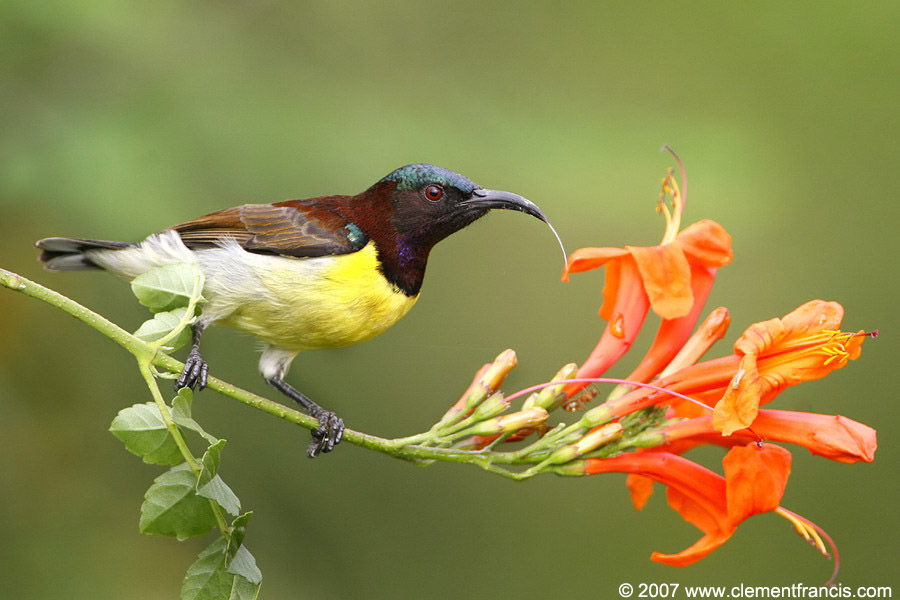
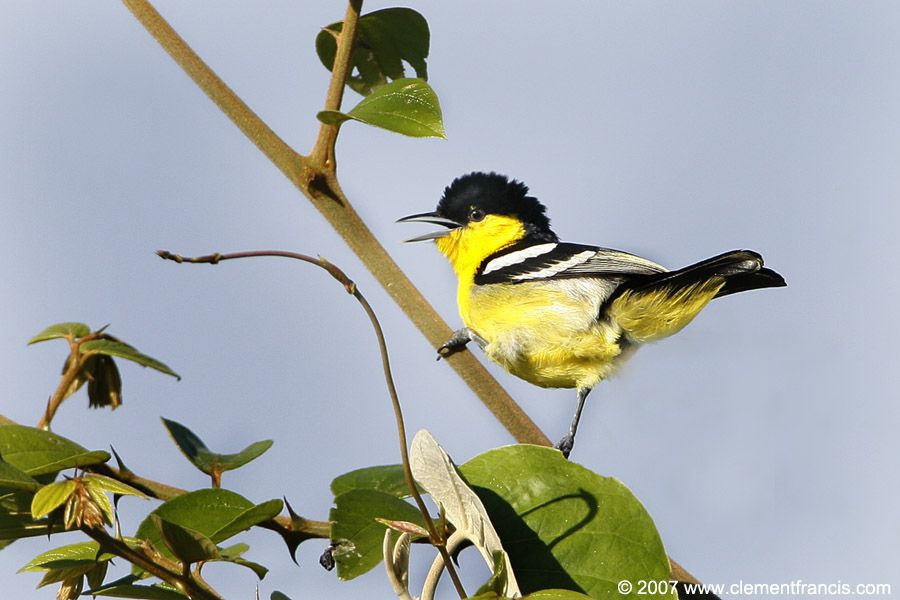
Purple-rumped Sunbird (Leptocoma zeylonica) by Clement Francis
(PURPLE-RUMPED SUNBIRD)
its song can be heard as far as 3 to 4 kilometers… Well, that is what Ornithologists say… To sing that powerful, birds need lots of energy. Hence, they need to eat very often, because birds burn lot of calories on singing…
How loud do we sing in Church? Or do we sing at all in our personal prayer? Or do we act as if we are worshiping the Lord will all our heart in Church? Bible says, “Make a joyful noise,” it did not say voice, it says NOISE. Joshua and his men made NOISE and the fort of Jericho crumbled. Let us do it the Joshua way.
Maybe their early morning singing is the reason that they are able to fly hundreds of miles every day in search of food and water and yet returns home with so much of energy to end their day with another open-air concert … There is a saying which goes like this “Laughter is the best medicine.” Birds can’t laugh… Is that why they sing to show their joy? Where there is joy, there is strength… Prophet Nehemiah knew that secret that is why he says,
….: for the joy of the Lord is your strength (Nehemiah 8:10)
Is that the reason why the birds are so strong that they can fly and we can’t? Birds never go to a doctor because they know that their music can heal them… Music has the power to heal you know?
Kind David’s music healed King Saul isn’t it? Your worship can heal people’s body, mind and soul. After all, GOD has kept life and death in our tongue. Let us use it for HIS glory..
Well, how many of us start or dare to start our day with singing? Where there is singing there is joy and where there is joy there is strength… It sounds so simple isn’t it? And it’s not just simple but, it’s powerful too… Birds know this secret and that’s why they bring so much joy through their singing…
No matter what the situation is, it is time for us to start our day with singing, for the KING is returning very soon. If we do not have the practice of singing here, we would never be able to sing in heaven along with the angels.
Birds sing in perfect pitch and perfect rhythm… Musicians use a software called “NEUNDO” for recording and the default set for the Tempo is 120 BPM (beats per minute)… The rhythm of the song of most birds is set to the tempo of 120 BPM… It sounds as if they had invented NEUNDO…Isn’t it quite astonishing or amazing or whatever you may call it? The syncopation of bird songs has intricate patterns and most of them are new to men… They sing very short phrases compared to human singing, but, their syncopation has complicated but complete rhythmic patterns…
Once as I was birding, I saw a Chestnut-headed Bee-eater
Chestnut-headed Bee-eater (Merops leschenaulti) by Nikhil Devasar
(CHESTNUT-HEADED BEE-EATER)
perched on a dry tree. Suddenly the bird flew as far as about 50 meters and flew back to the same place where it was perched with a dragon-fly stuffed into its beak.. The dragon-fly was still alive. So, the little bird whacked its beak. Tak, tak, tak, tak, tak, five times on either side on the branch where it was perched to kill the dragon-fly all in one motion… Was just wondering, why it whacked five times… Then I found that, in music a rhythmic phrase always ends on the first beat of the next bar… Don’t we sing in a funeral? That’s what the Bee-eater did? Hm
they spontaneously sing complicated rhythmic patterns like a seasoned jazz player… Most composers avoid composing on 5/8 rhythm because of its limitation and the complications involved in the execution of a song in this rhythm…
from the Macaulay’s Library of Cornell’s lab of ornithology, sing in 5/8 rhythmic pattern… I felt so small in front of this small little bird when I heard that song… How it is possible for this little bird to sing in this one of the most complicated rhythmic pattern so spontaneously?
Each individual of Oriental Magpie Robin
Oriental Magpie-Robin (Copsychus saularis) by Nikhil Devasar
(ORIENTAL MAGPIE ROBIN)
can sing more than fifteen songs per individual and each one is different… Just imagine how much competition would be there to impress upon the females?
There are birds like the Malabar Whistling Thrush,
Malabar Whistling Thrush (Myophonus horsfieldii) by Nikhil Devasar
(MALABAR WHISTLING THRUSH)
which is considered as one of the best singers of the bird community… Bird call specialists say that you would mistake its singing for a human whistling a song… But, I personally feel that, that statement shows human ego… If I sound arrogant, please forgive me for that, because, I personally feel that the song of the Malabar Whistling Thrush or any other bird on planet earth is ORIGINAL… NO COMPARISONS PLEASE… Each bird’s songs are special and they know that too.. That is why birds never get jealous of each other’s singing… Do they?
Researchers say that, if a bird doesn’t learn to sing early, the percentage of survival is minimized… This means Birds sings for survival… The mother bird feeds the chick which shouts the most first… So, the louder you sing the more you eat…
God said,
I am the LORD thy God, which brought thee out of the land of Egypt: open thy mouth wide, and I will fill it. (Psalms 81:10)
Imagine if the same rule applies for mankind, how many of us would still be alive? Most would’ve starved to death and Churches would be empty isn’t it? How long are we going to zip our mouth in the presence of the Lord? Let us open our mouth and He shall open the windows of heaven and fill us and we shall over flow..
Birds sing to attract their mate… A bird which sings the best gets the most attractive mate… If again, the same rule applies to us, scores of us would still be bachelors isn’t it? If again, we don’t sing, our eternal bridegroom would never come near us. Because, our GOD dwells among our praises..
But thou art holy, O thou that inhabitest the praises of Israel. (Psalms 22:3)
Remember, most of us prefer to sing in the bathroom rather than in the church! We sing for applause, name, fame and money. If we start applauding, each time a bird sings, I wonder if any bird could live near us, for they will fly away and never venture to sing before a man again… But, Birds sing for the sheer joy of singing… When would we learn to live like them?
has a sound which resembles the wood block, a percussion instrument, which originated from Africa… Maybe the Africans were inspired by the bird’s call… There are tales after tales that say how man was inspired by nightingales and sparrows and cuckoos for their inspiring songs…
Birds never keep singing the same old songs all through their lives… To impress upon their mates they try to outwit their male subordinates by improvising their songs time and again… After all, female birds feel that, the males which sing the most complicated songs are the ones which are capable of taking care of their families better… Is that why, great teachers like Socrates and Pythagoras taught music first before they taught mathematics and astronomy?
King David knew God’s heart that is why he says,
I will sing a new song unto thee, O God: upon a psaltery and an instrument of ten strings will I sing praises unto thee. (Psalms 144:9)
We stop teaching our kids with rhymes than music; and that too only till the kindergarten level… If only we had been singing all through our lives, this world would’ve been rid of jealousy, ego, hatred, terrorism and the list may go on and on… If Osama Bin Laden had practiced music, he would’ve been a carrying a 4-stringed Oudh – an Arabian stringed instrument plucked with the Quill of an Eagle’s feather, instead of an AK47…
Birds live in perfect harmony not only among themselves but also with the flow of nature… Once I heard a territorial call of an Indian bird called Common Iora.
Common Iora (Aegithina tiphia) by Clement Francis
(COMMON IORA)
Each one was answering one another’s territorial calls. They both were singing similar phrase. Slowly, the calls turned a bit aggressive I thought; because, one was answering before the other could finish singing its phrase. At one particular point when one overlapped the other’s call, like what we call singing cannon in music, it turned into a harmony. As a musician, I know it was perfect harmony. But, I don’t know if it was intentional or accident. All that I heard was perfect harmony. They are in harmony with time and season. Rain or shine, no matter what happens around them the birds are able to sing.
Do we find harmony at home, in school, in our office, in our church? If only we knew the power of harmony, we Christians will not have thousands of denominations. If we knew the effect of harmony, by this time every soul would have accepted Christ as their savior… If we had learned to live in harmony, this world would be a better place to live.
A home or a street or a town or a city or a state or a country which encourages and practices music will live in PERFECT HARMONY… After all music is all about harmony and perfection of body, mind and soul… Most Christian families do not have family prayer and worship.. We think that Sunday worship in Church is suffice. Unless we live in perfect harmony at home, would it be possible to have harmony in the places where we go. Well, ministry starts at home.
It is because of us trying to move against the flow of nature that the world is facing severe biological catastrophe. If only we could learn to live in harmony with nature? This world would be the same as it was in the beginning. It may be too late and too hard to live in harmony with nature right now. But, we can surely postpone the inevitable to a certain extent. This can happen only when we unite together in harmony and save earth so that they Birds can sing and sing and sing forever and ever… Come on, rain or shine, let us all learn to sing like birds at all times and live in PERFECT HARMONY with GOD and HIS creations..…
(a j mithra wrote the article and Lee supplied some photos, videos and the sounds-not all recordings match his descriptions)
I received a request to show this short documentary about a lady, Lona Hymas-Smith, who is a great woodcarving artist. After viewing the YouTube by HappyShiver, I decided to share it on our blog. She is a fantastic artist.
Lona’s niece made this video. I am sure she is very proud of her aunt’s talent. Hope you enjoy watching her at work. What a great gift the Lord has given her. Check out her website at: http://icarvum.com/
A gift is as a precious stone in the eyes of him that hath it: whithersoever it turneth, it prospereth. (Proverbs 17:8 KJV)
Oilbird or Guacharo lives in northern South America from Guyana to Peru. The Oilbird ranges locally across much northern South America and down the Andes all the way to Bolivia.
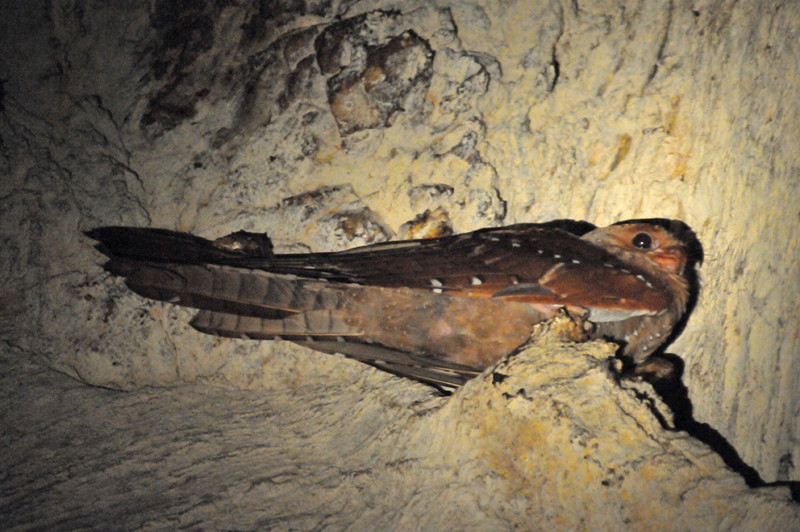
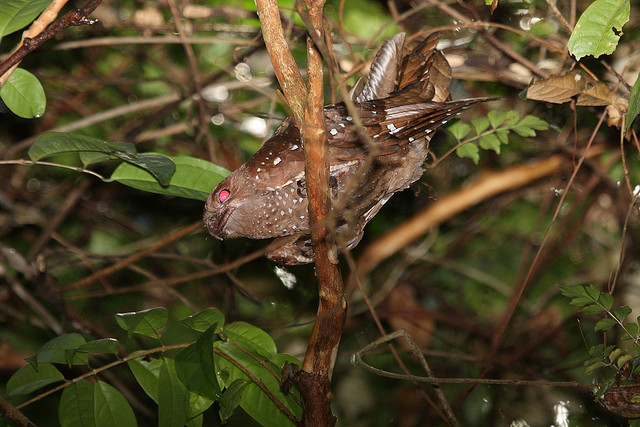
Their plumage is cinnamon brown, with small, white spots. The Oilbird presents a somewhat “hen-ish” or owlish appearance, observant and hesitant when trolling branches; puffy and somnolent when asleep. It is mainly reddish-brown with white spots on the nape and wings. Lower Oilbird parts are brownish color to neutral white. The stiff tail feathers are a rich chestnut brown spotted with white on either side.
This is a large bird at sixteen to nineteen inches with a wing span of three feet. The Oilbird’s flattened hooked bill is surrounded by dark brown bristles up to two inches long.
Oilbird (Steatornis caripensis) by Ian
It is a bird of tropical and subtropical primary forests. Colonies leave the caves at night to fly to fruiting trees. Figs are often consumed but the Trinidad population has been documented eating over 36 different kinds of fruit. The seeds of these fruit are spread widely after passing through the bird’s system, and the Oilbird is thus an important component of the tropical ecosystems. The forest depends on these fruit eaters — and other animals with similar behavior such as fruit bats — to continue in existence.
The existence of Church depends on how far and wide we sow the word of God…
God has asked us to spread the gospel over all the earth…
But, the question is have we touched lives which dwell next door or at least to the person who sits next to our table in office ? First of all, we don’t even know the person who sits next to us in church, isn’t it? We’ve been hearing a lot about brotherly love and love your neighbor as thy selves..
But, have we ever asked ourselves if we truly love our self?
Most so called believers are going through self inflicted injuries and self pity…
Maybe that is the reason we are not able to lead a fruitful life..
Our fruits are not the fruits which God expects from us…
Unless we are fruitful and our lives testify God’s work in us, we may not be able to sow seeds of faith among our fellow beings…
A good tree cannot bring forth evil fruit, neither can a corrupt tree bring forth good fruit. Every tree that bringeth not forth good fruit is hewn down, and cast into the fire. Wherefore by their fruits ye shall know them (Mathew 7:18-20)
It is a seasonal migrant, moving from breeding caves to fertile wild land fruit trees. Oilbirds plump up possibly half their body weight again before the breeding migration, an intelligent habit as caves will provide little nutrition and parents will not want to leave the nest.
Oilbird (Steatornis caripensis) by Judd Patterson
Seasonally, the oilbird lives in forests to gather nutrition and store up for breeding. Then the oilbird will migrate from the forest and woodland to within breeding areas within caves. Both parents share the task of incubating the clutch of two to four eggs for about 33 days, and the nestlings stay put for up to four months.
Oilbirds feed their young exclusively on fruit pulp. This is very unusual because an all-fruit diet would not normally provide adequate nutrition or baby birds. The young nestlings grow fat (even half as heavy again as their parents)—causing the literal downfall of many!
These birds seem to know the importance of storing nutrition for migration and breeding that’s why they provide adequate nutrition for their babies…
We as Christian parents, do we take care to nourish our children with spiritual food?
We tell them stories about the five who went to buy oil at the last minute..
But are we insisting upon our kids to get ready to meet the King?
These young oilbirds are heavier than their parents, how healthy are our children in spirituality?
I have no greater joy than to hear that my children walk in truth. (III John : 1)
The wings of the oilbird control aerial maneuvers. The Oilbird’s small feet are somewhat useless, other than for positioning and alignment to vertical surfaces. The oilbird’s hovering, twisting flight allows the bird to navigate the route and “hallways” of the caves. Oilbirds echo-locate (like bats) inside caves but use their huge eyes once they leave the communal roosts.
They apparently have excellent night vision. Rows of bristles protect the eyes both above and below. They fly with fast with primary tips widely spaced (like New World vultures) but have the ability to fly slowly or even hover. They can range quite a distance in search of fruit. Radio telemetry studies have shown their normal range per night is 40 kms (25 mi) but they have traveled as far as 150 km (93 mi) in a single night. They may find fruit by smell. These birds travel so long in a single night in search of fruits..
This reminds of how Jesus had come from heaven to earth in search of fruits from us isn’t it?
He expects us to give fruits at all seasons…
Do we have fruits to offer 24 x 7 or just seasonal?
And now also the ax is laid unto the root of the trees: therefore every tree which bringeth not forth good fruit is hewn down, and cast into the fire. (Matthew 3:10)
Studies have shown that all the fruit they eat is spicy or aromatic when ripe. Oilbirds nest in large colonies on high, rocky ledges, often a good distance into the cave. They build their cone-shape nests from a mixture of regurgitated fruit pulp, their droppings and undigested seeds. Oilbird nestlings retain food in their intestines for longer than normal, enabling them to extract all the nutrients which they need in order to thrive on fruit. For instance, they are able to extract 80% of the lipids (fats) from their diet.
We eat lots of the THE FIRST, which is the WORD OF GOD…
But, do we extract all the nutrients of THE WORD by meditating on what we read?
Do we eat THE WORD in haste? Or is it a ritual that we need to practice every day?
The Word of God has the power to heal, to cleanse, and to encourage and so on…
How do we handle it?
For the word of God is quick, and powerful, and sharper than any twoedged sword, piercing even to the dividing asunder of soul and spirit, and of the joints and marrow, and is a discerner of the thoughts and intents of the heart. (Hebrews 4: 12)
Just like bats (and many sea mammals), Oilbirds emit clicking calls in rapid succession and listen to the returning echoes. This means that, in the pitch blackness of their cave home, they can fly around without bumping into the cave walls or each other.
Oilbird (Steatornis caripensis) by Bob-Nan
At dusk, they leave the cave to find food and their echolocation system works together with their keen smell and super-sensitive vision, helping them to snatch nuts and small fruits in mid-flight without needing to land. In fact it is thought that they never perch during foraging trips, using instead their ability to hover while feeding.
The eyes of oilbirds are highly specialized for their unique lifestyle. While not apparently designed for distinguishing colour, it has recently been discovered that they are extraordinarily sensitive to light—a great advantage to a bird that ‘breaks all the rules’ by being nocturnal. This incredible light-sensitivity is achieved by each of the oilbird’s eyes having a large pupil, enabling them to gather the maximum amount of light and millions of densely packed rods, the photoreceptor cells.
God had created these birds with excellent night vision for them to travel long distance in search of food..
But, we are so privileged that we have God Himself as our light to show us the way during our dark times..
Then spake Jesus again unto them, saying, I am the light of the world: he that followeth me shall not walk in darkness, but shall have the light of life. (John 8:12)
These unique Oilbirds dwell in caves, has dolphin-like sonar, navigates like a bat, has eyes like a deep-sea fish, can hover like a kingfisher, finds its food by smell and can be boiled up to make oil…
The eyes of these birds are extremely sensitive to light and that is the reason that they are able to break all rules by being a nocturnal…
This world will see us also as very special when we are sensitive to THE LIGHT..
The light of the body is the eye: therefore when thine eye is single, thy whole body also is full of light; but when thine eye is evil, thy body also is full of darkness If thy whole body therefore be full of light, having no part dark, the whole shall be full of light, as when the bright shining of a candle doth give thee light. Take heed therefore that the light which is in thee be not darkness. (Luke 11:34-36)
What a neat bird, a j. I am also going to add this to the “Formed By Him” series. The Creator has really designed this very unique and useful bird for His Glory.
Ian’s Bird of the Week – Red-necked Phalarope ~ by Ian Montgomery
Newsletter – 01-13-11
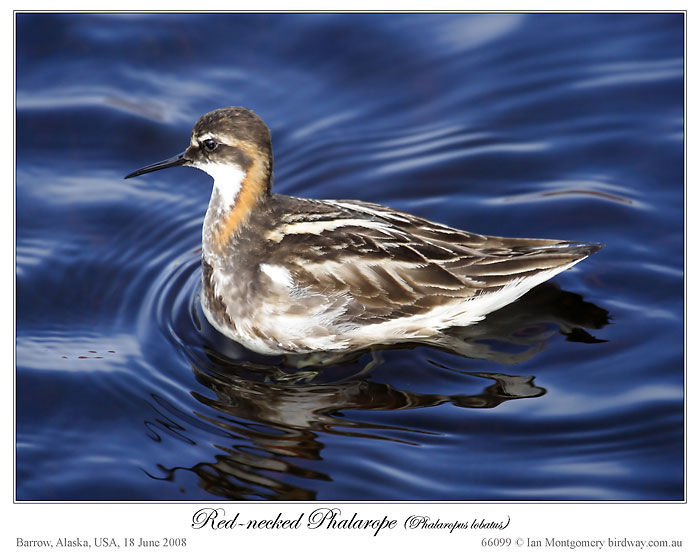
I had an inquiry from my sister, Colette, in Ireland recently about Red-necked Phalarope (some appeared in breeding plumage at a potential breeding site there last northern summer), so it was floating around in my mind yesterday when I considered what to share with you this week. It’s a dainty and interesting wader, like its cousin the Red/Grey Phalarope which featured as bird of the week after my trip to Alaska in 2008.
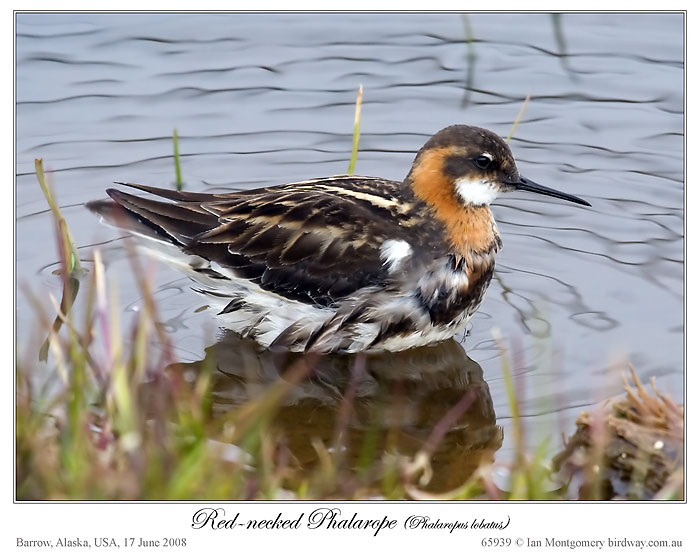
Red-necked Phalarope (Phalaropus lobatus) by Ian
The three species of Phalarope (Wilson’s is the third) breed in high latitudes in the northern hemisphere so Ireland is at the southern edge of its potential range (there was a colony of up to 50 pairs there in the early part of the 20th century). Despite their delicate appearance and toy-like behaviour when bobbing around picking up plankton from the surface of water, these are tough little birds and the Red-necked, 19cm/7.75in in length with a wing-span of 38cm/15in is the smallest of the three. Their favourite nesting sites are on small ponds in the northern tundra and outside the breeding season they are normally pelagic wandering far and wide over the oceans of the world in search of food.
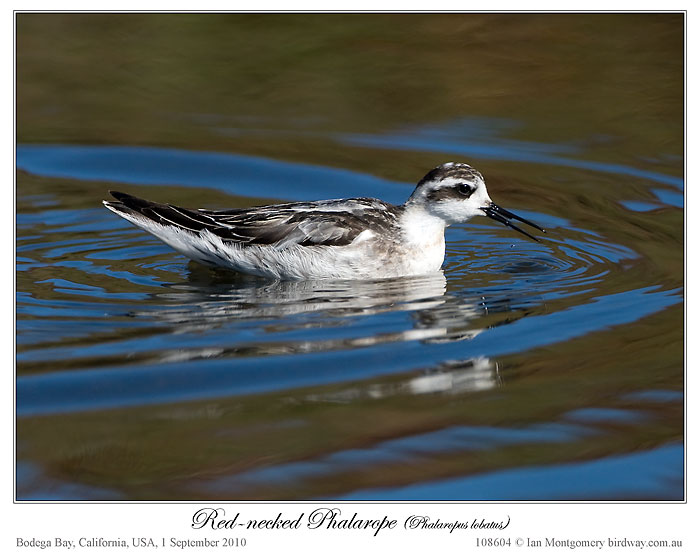
Red-necked Phalarope (Phalaropus lobatus) by Ian
Like the Red/Grey (summer/winter) Phalarope, the Red-necked shows a reversal in sex roles, with the brighter females courting the males, having multiple partners and leaving the males to incubate the eggs and look after the young. There is though to be a selective advantage in the females being able to lay as many eggs as possible in the brief breeding season of high latitudes. The first photo shows the brighter female, the second the smaller and more subdued – in more ways than one – male.
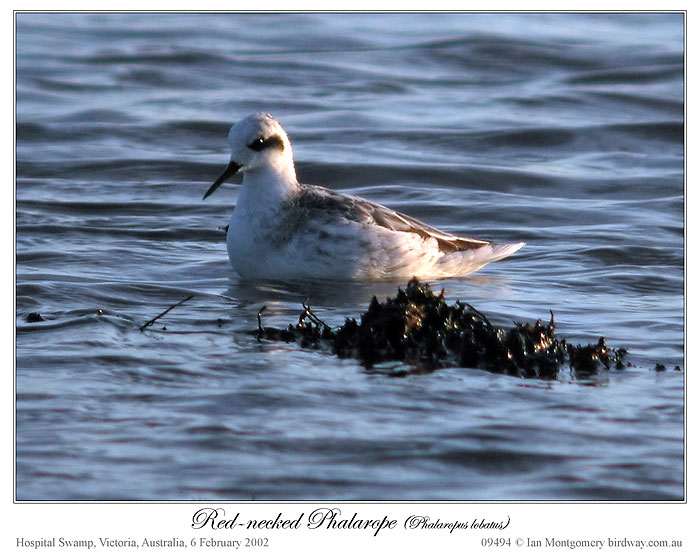
Red-necked Phalarope (Phalaropus lobatus) by Ian
In non-breeding plumage all three species have mainly grey and white plumage. The Red-necked has a black, downturned eye-patch – see the third photos – and, visible in flight, wing bars (lacking in Wilson’s) and dark underwing marking. All three species turn up rarely in Australia in the non-breeding season, particular following storms when drive them into bays for shelter or inland. The Red-necked is the least rare of the three and the fourth photo shows one that turned up on the Bellarine Peninsula south-west of Geelong, Victoria in 2002.
On the website, I’ve started altering the sequence of the next and previous family pointers of the Australian family thumbnail pages so that they follow the sequence of Christidis and Boles (2008) – rather than that of Birdlife International – and only include families that occur in Australia. The intention is to create a ‘green’ Australian zone for visitors who are interested only in Australia birds. A green background already distinguishes the Australian thumbnails and I’m adding background colours to pointer arrows and alphbetical index pages to highlight the distinction. You might like to visit the news section of the home page http://www.birdway.com.au/#news and the Australian index http://www.birdway.com.au/australianbirds.htm to see the difference and to find links to examples.
So far I’ve changed the families from Cassowaries http://www.birdway.com.au/casuariidae/index_aus.htm (the first) as far as Plovers and Lapwings http://www.birdway.com.au/charadriidae/index_aus.htm and will progressively work through the rest. That will be delayed for a week as I’m now in northern NSW en route to Armidale, flooded roads permitting, for a recorder course. Fortunately, given the floods, I had already shelved plans to drive down and flew to the Gold Coast yesterday.
Ian has introduced another neat bird. As Ian mentioned, there are three Phalaropes and all of them are here in the United States, though I have not had the privilege of seeing them.
“A phalarope is any of three living species of slender-necked shorebirds in the genus Phalaropus of the bird family Scolopacidae. They are close relatives of the shanks and tattlers, the Actitis and Terek Sandpipers, and also of the turnstones and calidrids. They are especially notable for two things: their unusual nesting behavior, and their unique feeding technique.” (These are in the Charadriiformes Order)
Two species, the Red Phalarope (Phalaropus fulicarius, called Grey Phalarope in Europe) and Red-necked Phalarope (P. lobatus) breed around the Arctic Circle and winter on tropical oceans. Wilson’s Phalarope (P. tricolor) breeds in western North America and migrates to South America. All are 6–10 in (15–25 cm) in length, with lobed toes and a straight, slender bill. Predominantly grey and white in winter, their plumage develops reddish markings in summer.”
“Red and Red-necked Phalaropes are unusual amongst shorebirds in that they are considered pelagic, that is, they spend a great deal of their lives outside the breeding season well out to sea. Phalaropes are unusually halophilic (salt-loving) and feed in great numbers in saline lakes such as Mono Lake in California and the Great Salt Lake of Utah. (from Wikipedia)
You are the salt of the earth; but if the salt loses its flavor, how shall it be seasoned? It is then good for nothing but to be thrown out and trampled underfoot by men. (Matthew 5:13 NKJV)
Salt is good, but if the salt loses its flavor, how will you season it? Have salt in yourselves, and have peace with one another. (Mark 9:50 NKJV)
Birds In Hymns – With Songs and Honors Sounding Loud – Isaac Watts
Praise the LORD! For it is good to sing praises to our God; For it is pleasant, and praise is beautiful. (Psalms 147:1 NKJV)
Words – By Isaac Watts, The Psalms of David, 1719
Music – By Bedford, William Wheale, 1729
Alternate Tune Belfield by William Gilchrist, 1895
With Songs and Honors Sounding Loud
With songs and honors sounding loud,
Address the Lord on high;
Over the heav’ns He spreads His cloud,
And waters veil the sky.
He sends His showers of blessing down
To cheer the plains below;
He makes the grass the mountains crown,
And corn in valleys grow.
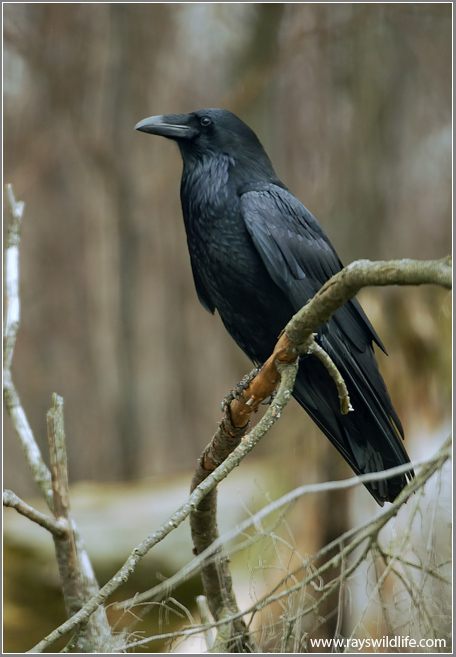
Northern Raven (Corvus corax) by Ray
He gives the grazing ox his meat,
He hears the raven’s cry;
But man, who tastes His finest wheat,
Should raise His honors high.
His steady counsels change the face
Of the declining year;
He bids the sun cut short his race,
And wintry days appear.
His hoary frost, His fleecy snow,
Descend and clothe the ground;
The liquid streams forbear to flow,
In icy fetters bound.
When from the dreadful stores on high
He pours the rattling hail,
The wretch that dares this God defy
Shall find his courage fail.
He sends His Word, and melts the snow,
The fields no longer mourn;
He calls the warmer gales to blow,
And bids the spring return.
The changing wind, the flying cloud,
Obey His mighty Word:
With songs and honors sounding loud,
Praise ye the sovereign Lord.
*************
… a Psalm of David. I will praise You, O LORD, with my whole heart; I will tell of all Your marvelous works. I will be glad and rejoice in You; I will sing praise to Your name, O Most High. (Psalms 9:1-2 NKJV)
Be exalted, O LORD, in Your own strength! We will sing and praise Your power. (Psalms 21:13 NKJV)
Be exalted, O LORD, in Your own strength! We will sing and praise Your power. (Psalms 21:13 NKJV)
Do Birds Truly Make Music? (from Creation Moments)
The flowers appear on the earth; the time of singing has come, and the voice of the turtledove is heard in our land. (Song of Solomon 2:12)
The Bible speaks of bird calls as songs, as most of us do. However, evolutionary theory has led some scientists to say that we are merely assigning human meanings to the calls of birds. They say that the bird calls have nothing to do with real music.
Common Blackbird (Turdus merula) by Ian
Ornithologists have known for some time that bird songs use the same musical scales as our music. Decades ago it was noted that some of Beethoven’s work could be heard from the European blackbird. The music was the same as the opening rondo of Beethoven’s “Violin Concert in D, Opus 61.” Since these birds pass their songs from generation to generation, Beethoven could have gotten the lilting music from the forefathers of today’s European blackbird!
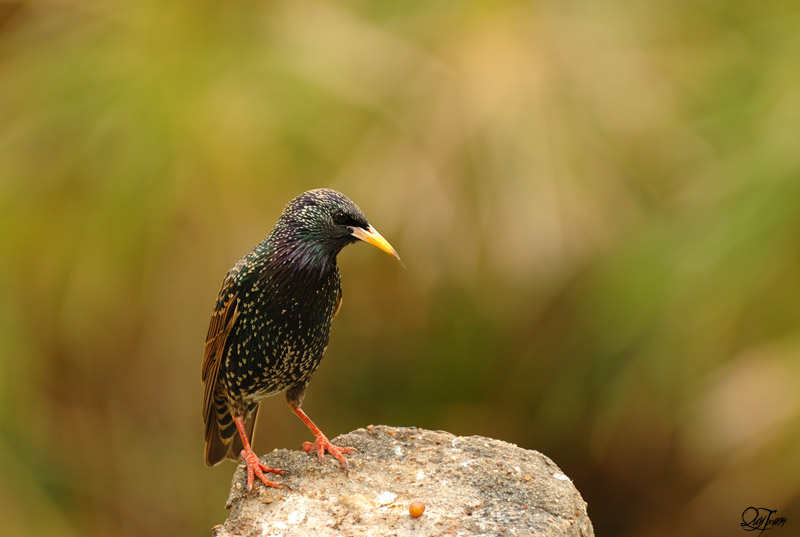
Common Starling (Sturnus vulgaris) by Quy Tran
The songs of some species, like the song sparrow, follow the form of a sonata, beginning with a strong theme, then the theme is musically played with, and for a finish, the original theme is then repeated. Mozart had a starling as a pet. Once, having heard Mozart play his “Piano Concerto in C Major,” the starling not only imitated it, but changed the sharps to flats! Mozart exclaimed, “That was beautiful!” When the starling died, Mozart held an elaborate funeral for it. Eight days later he wrote, “A Musical Joke” which contains the same elaborate structure found in starling song.
Do birds make true music, as the Bible says? Contrary to what some evolutionists say, Beethoven and Mozart certainly thought they did.
Prayer:
Lord, I thank You for the gift of music and I await the music of heaven. Amen.
Notes:
Science News, 4/15/00, pp. 252-254, “Music without Borders.”
The Cuckoo, BTW, is the most popular bird in Western music, said Baptista, and even appears in a Johann Sebastian Bach fugue — in counterpoint with a chicken!
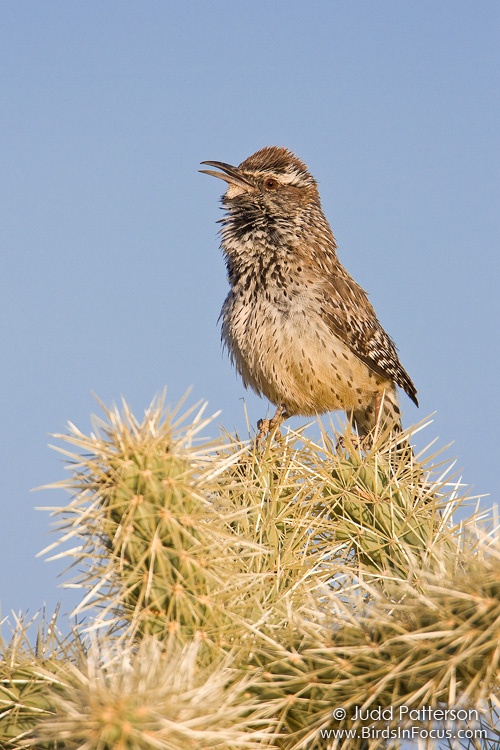
Cactus Wren (Campylorhynchus brunneicapillus) by Judd Patterson
The Canyon Wren in the Ansaborego desert of California sounds so much like Chopin that you could consider it “a student of Chopin,” Baptista said.
The rest of the avian orchestra
Beyond that two-part voice box, birds also use their bodies to make sound in other ways. Some even make instruments!
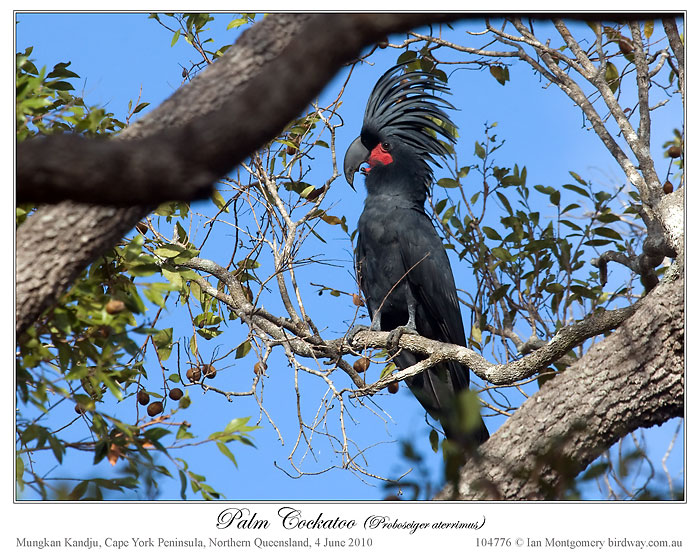
Palm Cockatoo (Probosciger aterrimus) by Ian Montgomery
While courting, the Palm Pockatoo, for example, breaks a branch, carves it into a drumstick, and bangs a hollow log as a signal to females that he’s on the prowl. Providentially, he stores the stick to use it again, said Baptista.
The European Snipe, on the other hand, dives to force wind through its feathers, which act as reeds.
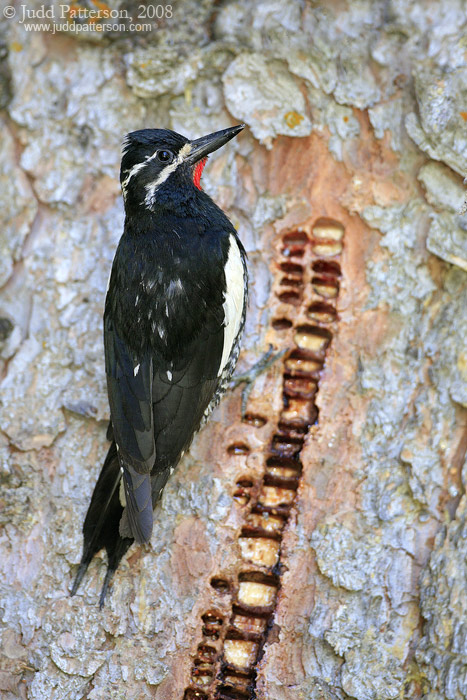
Williamson’s Sapsucker (Sphyrapicus thyroideus) by Judd Patterson
Williamson’s Sapsucker in the Sierra Nevada drums on tree trunks in specific rhythms that vary in what Baptista called “local dialects.”
The Lord has created beautiful birds and has given each their own songs and sounds. Many have listened and learned from those sounds. As you have read above, some have turned those lessons learned into beautiful music.
But now ask the beasts, and they will teach you; And the birds of the air, and they will tell you; Or speak to the earth, and it will teach you; And the fish of the sea will explain to you. Who among all these does not know That the hand of the LORD has done this, In whose hand is the life of every living thing, And the breath of all mankind? (Job 12:7-10 NKJV)
He sends the springs into the valleys; They flow among the hills. They give drink to every beast of the field; The wild donkeys quench their thirst. By them the birds of the heavens have their home; They sing among the branches. (Psalms 104:10-12 NKJV)
Song Sparrow (Melospiza melodia) by Ray
The LORD is my strength and my shield; My heart trusted in Him, and I am helped; Therefore my heart greatly rejoices, And with my song I will praise Him. (Psalms 28:7 NKJV)
Oh, sing to the LORD a new song! Sing to the LORD, all the earth. Sing to the LORD, bless His name; Proclaim the good news of His salvation from day to day. Declare His glory among the nations, His wonders among all peoples. For the LORD is great and greatly to be praised; He is to be feared above all gods. (Psalms 96:1-4 NKJV)

















 Lee's Birdwatching Adventures Plus