Kookaburra – Chattery Birds With A Merry Heart

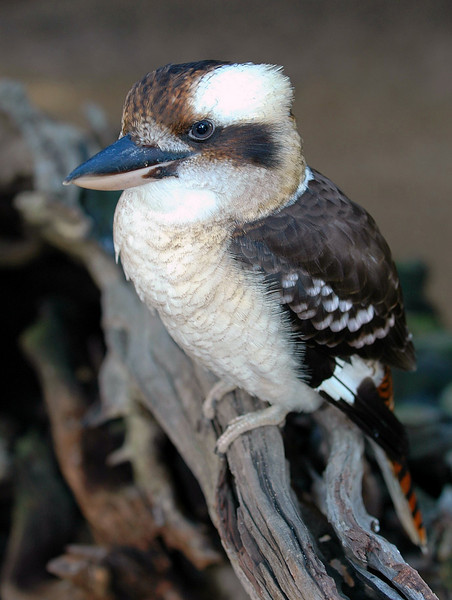
Laughing Kookaburra (Dacelo novaeguineae) by Africaddict

Laughing Kookaburra (Dacelo novaeguineae) by Africaddict

A merry heart maketh a cheerful countenance: but by sorrow of the heart the spirit is broken. (Proverbs 15:13 KJV)

Blue-winged Kookaburra (Dacelo leachii) by Ian

Blue-winged Kookaburra (Dacelo leachii) by Ian

While updating the Kingfisher pages, I came across these videos about the Kookaburras that are in the same Alcedinidae Family. Thought you might enjoy watching them.

There are five Kookaburras. The Laughing Kookaburra (Dacelo novaeguineae) is probably the most well known, but there is also a Shovel-billed Kookaburra (Clytoceyx rex), Blue-winged Kookaburra (Dacelo leachii), Spangled Kookaburra (Dacelo tyro), Rufous-bellied Kookaburra (Dacelo gaudichaud).

Kookaburras are best known for their unmistakable call, which sounds uncannily like loud, echoing human laughter — good-natured, but rather hysterical, merriment in the case of the renowned Laughing Kookaburra (Dacelo novaeguineae); and maniacal cackling in the case of the slightly smaller Blue-winged Kookaburra (D. leachii). They are generally not closely associated with water, and can be found in habitats ranging from humid forest to arid savanna, but also in suburban and residential areas near running water and where food can be searched for easily.

This video is about the Laughing Kookaburra from the Blank Park Zoo

Kookaburra calls from the Cincinnati Zoo

A merry heart doeth good like a medicine: but a broken spirit drieth the bones. (Proverbs 17:22 KJV)

Some information from internet sources

Wordless Birds

*

Pied Kingfisher – Concentrated Diver

Pied Kingfisher (Ceryle rudis) by Peter Ericsson

Pied Kingfisher (Ceryle rudis) by Peter Ericsson

While having the privilege of obtaining some photos for future blogs from Peter Ericsson’s Galleries, I obtained a few photos of the Pied Kingfisher. I thought this Kingfisher was very pretty. Then I found this amazing video from BBC Worldwide and decided to share these. Another reason, my attempts to photograph our Belted Kingfishers is never very successful. Thankfully Peter and the videographers had better success.

When the Lord created the birds, He gave them so many amazing abilities. The way the Kingfisher keeps his head so steady is absolutely fantastic.

O the depth of the riches both of the wisdom and knowledge of God! how unsearchable are his judgments, and his ways past finding out! For who hath known the mind of the Lord? or who hath been his counsellor? (Romans 11:33-34 KJV)

The Pied Kingfisher is about 7 – 10 in or 17-25 cm long with a white with a black mask, a white supercilium and black breast bands. The female has only one breast band. The crest is neat and the upperparts are barred in black. There are several subspecies. It is common throughout sub-Saharan Africa and southern Asia from Turkey to India to China. It is resident, and most birds do not migrate, other than short-distance seasonal movements. In India it is distributed mainly on the plains. It is thought to be the world’s 3rd most common kingfisher and a noisy bird.


Fish is its main diet, though it will eat other aquatic invertebrates. It usually hunts by hovering over the water to detect prey and diving vertically down bill-first to capture fish. When not foraging, they have a straight rapid flight and have been observed flying at nearly 32 mph.

Pied Kingfisher from BBC Worldwide – Shows this diving ability

In the beginning God created the heavens and the earth. The earth was without form, and void; and darkness was on the face of the deep. And the Spirit of God was hovering over the face of the waters. (Genesis 1:1-2 NKJV)

During breeding season (February to April), they make its nest in a hole excavated in a vertical mud bank about five feet above water. The nest tunnel is 4 to 5 feet long and ends in a chamber. Several birds may nest in the same vicinity. The usual clutch is 3-6 white eggs. The pied kingfisher sometimes reproduces co-operatively, with young non-breeding birds from an earlier brood assisting parents (helpers) or even unrelated older birds.

And Jesus said to him, “Foxes have holes and birds of the air have nests, but the Son of Man has nowhere to lay His head. (Matthew 8:20 NKJV)

Kingfishers “are monogamous, teritorial, and sometimes colonial.”  Courtship displays are noisy and the displays are in duet as they raise their wings or spiral in flight. Recent suggestion is that the Pied Kingfisher and the American green kingfishers are derived from an Old World species (kind), with the Pied Kingfisher or its ancestor losing the metallic colouration afterwards. The Alcedinidae Family is where the Kingfishers and Kookaburras are found. At present there are 95 of them. They belong to the Coraciiformes Order. The Order includes Rollers, Ground Rollers, Kingfishers, Todies, Motmots, and Bee-eaters.

Pied Piper up close by IndiaVideo.org

Which doeth great things past finding out; yea, and wonders without number. (Job 9:10 KJV)

Peter Ericsson is in Thailand and is a Christian photographer. His two sites are Peter Ericsson’s Photo Galleries and his blog Thaibirder . Please visit his sites for some fantastic photagraphy.

Information taken from Wikipedia,  Complete Birds of the World, and Bird

*

Birds of the Bible – Non-Protected Nest

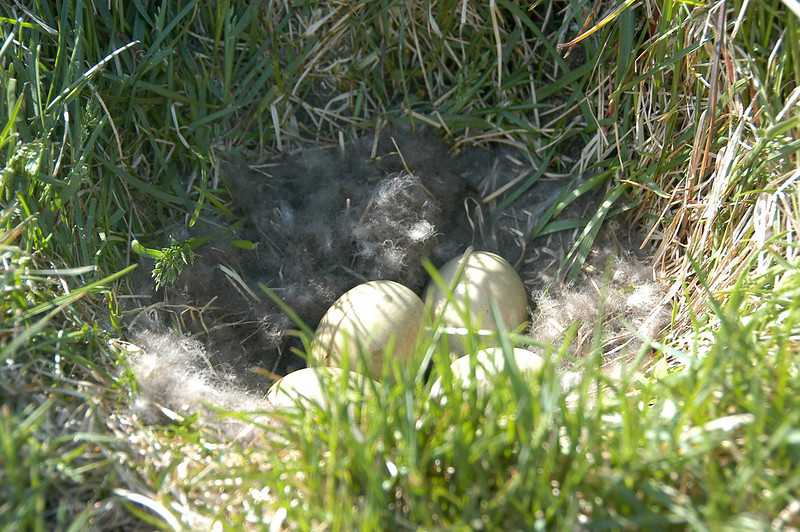
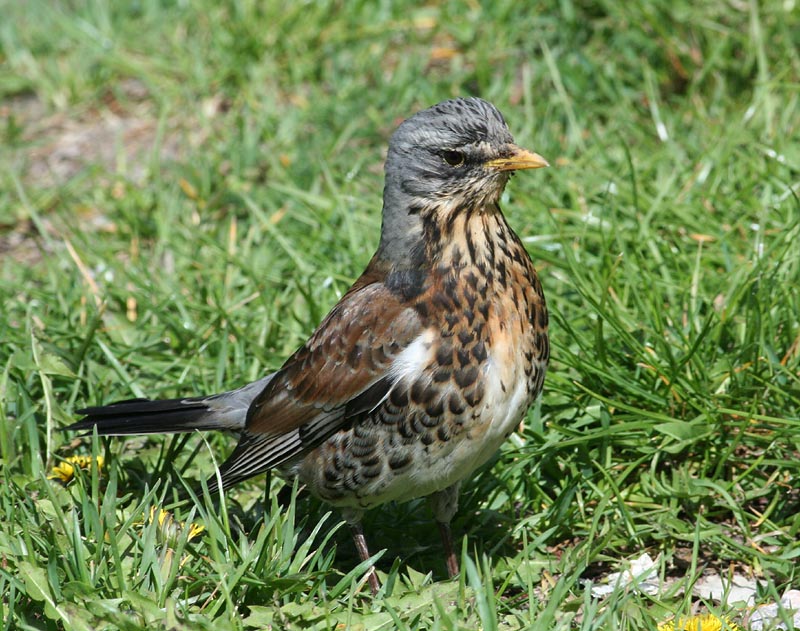
When birds have babies, they do all they can to protect them from predators. The birds spend time building and then filling their nest with eggs. The nest is protected almost constantly from the time the bird lays the eggs until the fledglings depart. That is normal behavior and the video below of the Fieldfare shows one way they do it. The video is by BBC Worldwide.

And my hand hath found as a nest the riches of the people: and as one gathereth eggs that are left, have I gathered all the earth; and there was none that moved the wing, or opened the mouth, or peeped. (Isaiah 10:14 KJV)

In the verse above, the nest has not been protected, nor has a wing been flapped to chase the aggressor away, nor did they open their mouth in peeps or chirping alarm calls. If the nest is abandoned; whether by desertion, having been chased off, or other reason, it is easy to take the eggs or chicks.

This verse is found in the book  of Isaiah and is referring to the King of Assyria. The kings pride, arrogant heart, and boastful look in his eyes cause him to state:

For he says: By the strength of my hand I have done it, and by my wisdom, for I have understanding; I remove the boundaries of peoples, and plunder their treasures; like a bull I bring down those who sit on thrones. My hand has found like a nest the wealth of the peoples; and as one gathers eggs that have been forsaken, so I have gathered all the earth; and there was none that moved a wing or opened the mouth or chirped. (Isaiah 10:13-14 ESV)

Common Eider (Somateria mollissima) nest by Bob-Nan

Common Eider (Somateria mollissima) nest by Bob-Nan

I like what Albert Barnes Notes On The Bible says,
“Isa 10:14
And my hand hath found, as a nest
– By a beautiful and striking figure here, the Assyrian monarch is represented as describing the ease with which he had subdued kingdoms, and rifled them of their treasures. No resistance had been offered. He had taken them with as little opposition as a rustic takes possession of a nest, with its eggs or young, when the parent bird is away.
Eggs that are left – That is, eggs that are left of the parent bird; when the bird from fright, or any other cause, has gone, and when no resistance is offered.
Have I gathered all the earth – That is, I have subdued and plundered it. This shows the height of his self-confidence and his arrogant assumptions.
That moved the wing – Keeping up the figure of the nest. There was none that offered resistance; as an angry bird does when her nest is about to be robbed.
Or opened the mouth – To make a noise in alarm. The dread of him produced perfect silence and submission.
Or peeped – Or that chirped – the noise made by young birds; the note at Isa_8:19. The idea is, that such was the dread of his name and power that there was universal silence. None dared to resist the terror of his arms.”

Shall the axe boast over him who hews with it, or the saw magnify itself against him who wields it? As if a rod should wield him who lifts it, or as if a staff should lift him who is not wood! (Isaiah 10:15 ESV)

Living Application Study Bible – “The ax – How absurd is it, for thee, who art but an instrument in God’s hand, to blaspheme thy Lord and master, who has as great power over thee, as a man hath over the ax wherewith he heweth?”

Fieldfare (Turdus pilaris) by Peter Ericsson

Fieldfare (Turdus pilaris) by Peter Ericsson

Gill’s Exposition – “Shall the axe boast itself against him that heweth therewith?…. Hitherto are the words of the Assyrian monarch; and here begin the words of the prophet, rebuking him for his pride, and deriding his vain boasting, in attributing that to himself, to his wisdom and power, who was but an instrument, which belonged to God, the sole Governor and wise orderer of all things; which was all one as if an axe should ascribe the cutting down of trees to itself, and insist on it that the man that cut with it had no share in the action, nor was it to be ascribed to him; than which nothing is more absurd. The sense is, that the king of Assyria, in taking cities, and conquering kingdoms, and adding them to his own, was only an instrument in the hand of God, like an axe in the hand of one that hews down trees; and therefore it was vain and ridiculous to take that to himself which belonged to the Lord, on whom he depended as an instrument, as to motion, operation, and effect; from whom he had all power to act, all fitness for it, and efficacy in it, as the axe has from the person that makes and uses it, or any other instrument”

It is interesting to try to find out what is behind the verses we read about the birds in the Bible. God uses many illustrations of things around us to teach us His Truth. In these verses, self-pride, arrogance and denying Who is in control of our lives.

Hear ye, and give ear; be not proud: for the LORD hath spoken. (Jeremiah 13:15 KJV)

Wordless Birds
*

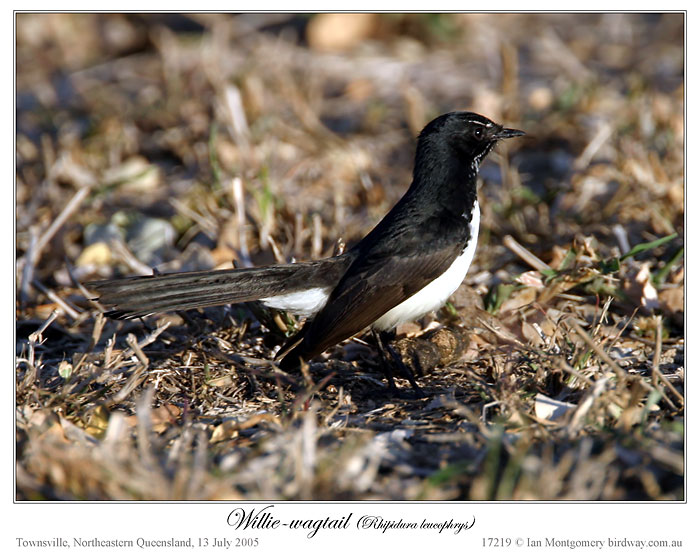
Ian’s Bird of the Week – Willie Wagtail

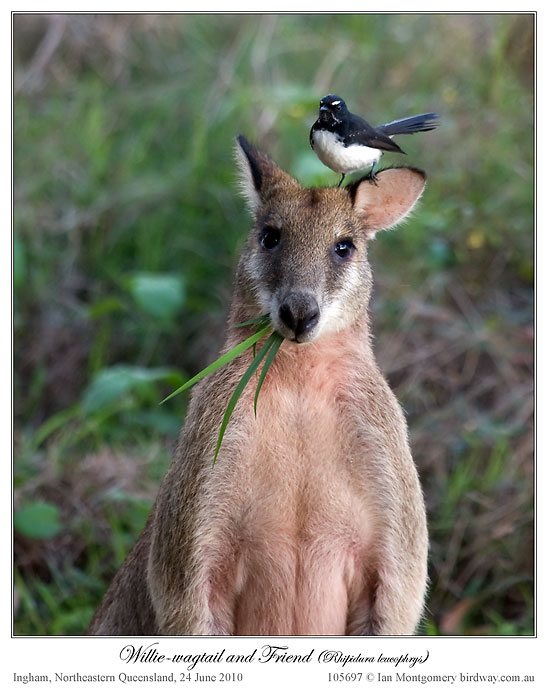
Willie Wagtail (Rhipidura leucophrys) on Wallaby by Ian Montgomery

Willie Wagtail (Rhipidura leucophrys) on Wallaby by Ian

Ian’s Bird of the Week – Willie Wagtail ~ Ian Montgomery

Newsletter – 06-30-10

Very common birds like Willie-wagtails often get overlooked in the Bird of the Week in the pursuit of the rare and exotic. It takes the unusual antics of a particular individual to get noticed, such as this Willie-wagtail, perched cheekily on the head of an Agile Wallaby at Tyto Wetlands near Ingham last week.

Perhaps ‘unusual’ isn’t strictly true, as Graham Pizzey’s Field Guide to the Birds of Australia describes the behaviour of this species as: ‘bold, perky; watches from low branches, fence-posts … backs of farm-animals’. The wallaby might be offended at being described as a mere farm-animal, though this one seems to be doing its best to imitate a country yokel by chewing grass and assuming a dopey expression.

Willie Wagtail (Rhipidura leucophrys) on Wallaby by Ian Montgomery

Willie Wagtail (Rhipidura leucophrys) on Wallaby by Ian

The Willie-wagtail is a popular and widespread species, occurring in a very wide range of habitats throughout Australia. It is absent from southern Tasmania and, for reasons not understood, curiously uncommon in the Townsville district, where the second photo was taken. It gets its name from its habit of fanning its tail and swinging it from side to side, (and spreading its wings) apparently to disturb the insects on which it feeds.

Back at the website, I’m continuing the task of updating all the family thumbnail pages. I’ve finished the first 100 families with only about 40 of the Passerine (perching bird) families to complete. Along the way, I’ve also added some new photos including ones of the following species:

Tawny Frogmouth
Burrowing Owl
Dollarbird
Red-backed Kingfisher
Yellow-billed Kingfisher

Best wishes,
Ian

Ian Montgomery, Birdway Pty Ltd,
454 Forestry Road, Bluewater, Qld 4818
Phone: +61-7 4751 3115
Preferred Email: ian@birdway.com.au
Website: http://birdway.com.au


Lee’s Addition:

I see Ian has a nice sense of humor. Love his description of the Wallaby. Neat little bird, thanks, Ian, for another great Bird of the Week.

Ian mentioned the birds as being “bold, perky; watches.” That brought to mind a few verses:

In the day when I cried out, You answered me, And made me bold with strength in my soul. (Psalms 138:3 NKJV)
The wicked flee when no one pursues, But the righteous are bold as a lion. (Proverbs 28:1 NKJV)
The eyes of the LORD are in every place, Keeping watch on the evil and the good. (Proverbs 15:3 NKJV)
Watch, stand fast in the faith, be brave, be strong. (1 Corinthians 16:13 NKJV)

The Wagtail is in the Rhipiduridae Family which includes all the Fantails, one Wagtail and one Silktail. The Order is the Passeriformes.

Below is a video of a Willie Wagtail on a rock, calling and waging tail, by Nick Talbot.

The Futuristic Whip-poor-wills….

The Futuristic Whip-poor-wills…. – by a j mithra

Whip-poor-will (Caprimulgus vociferus) by BirdsInFocus

Whip-poor-will (Caprimulgus vociferus) by BirdsInFocus

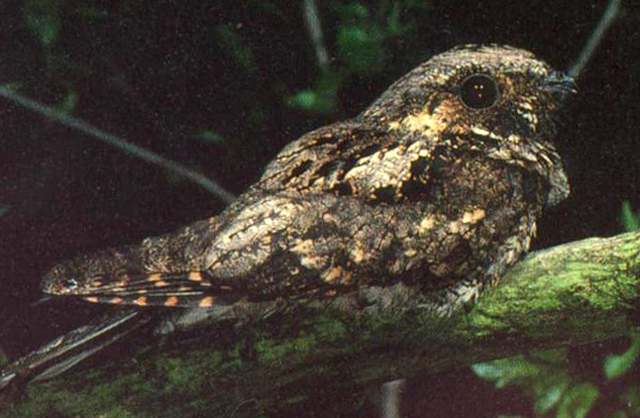
Whip-poor-wills belong to an unusual family of birds called nightjars – because their loud repetitive songs “jar” the silence of the night – or goatsuckers – because of a superstition that these birds fly into farmyards during the night and drink milk from the livestock.

The name Whip-poor-will and that of many other nightjars – approximates what the bird seems to say.

Whip-poor-wills are thought to migrate individually; however, they are so well synchronized that they tend to arrive in the same place at the same time, giving the impression that they are traveling in flocks. Migrating alone yet arriving at the same place, at the same time.. Amazing!

Though each one of us a journeying alone on life’s highway, all of us are on the verge of migrating forever to the same place at the same time… The Universe is about to close down soon..

Are we getting ready for migration?

And if I go and prepare a place for you, I will come again, and receive you unto myself; that where I am, there ye may be also. (John 14:3)

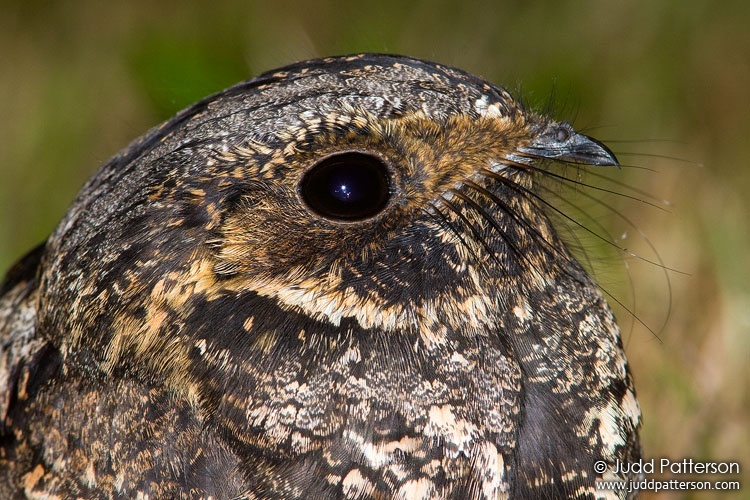
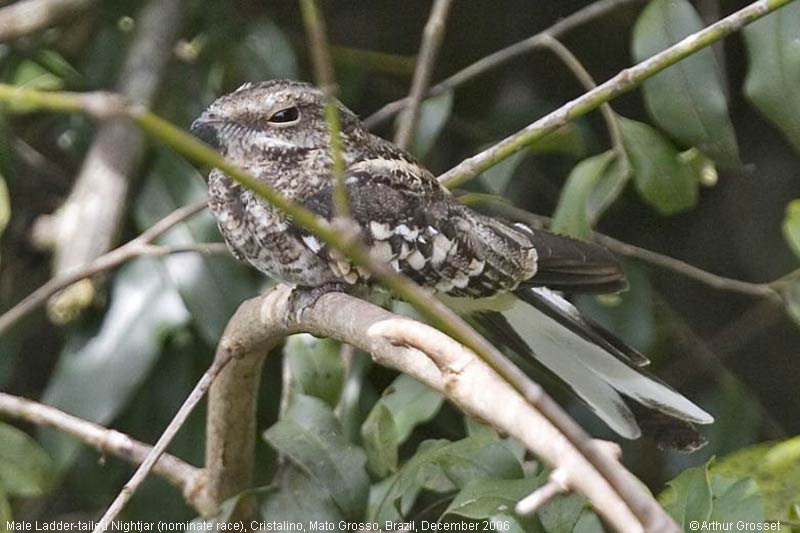
Ladder-tailed Nightjar (Hydropsalis climacocerca) ©AGrosset

Ladder-tailed Nightjar (Hydropsalis climacocerca) ©AGrosset

Nightjars have a structure in the eye called the tapitum lucidum. This structure holds tiny oil droplets that allow the retina of the eye to absorb more light, giving the birds superior vision at low light levels. This makes it possible for nightjars to hunt for the abundant insects that appear at dusk and dawn, and on moonlit nights— they watch for flying insects silhouetted against the backdrop of the night sky.

Nightjars have rictal bristles—long stiff bristles that form a comb overhanging the side of the upper beak. The purpose of rictal bristles is uncertain but they may protect the birds’ eyes from large struggling insect prey, or they may function as a net to help catch insects.

The Common Poorwill uses torpor to hibernate through the winter. This bird can lower its body temperature and suspend activity for more than three months when the weather is cold and insects are scarce…

GOD calls us as the Light of the World… But sadly, most people are still in the dark, not able to see THE LIGHT…

The light of the body is the eye: if therefore thine eye be single, thy whole body shall be full of light. ( Mathew 6: 22 )

Whip-poor-will (Caprimulgus vociferus) ©RonAusting

Whip-poor-will (Caprimulgus vociferus) ©RonAusting

Whip-poor-will breeding coincides with the full moon in late spring, when insects are plentiful and hunting is easy. The female lays eggs around the time of the full moon when she is well fed and healthy; the eggs hatch about 10days before the next full moon, when it’s easy for the adult birds to catch insects to feed their young; and the young birds are independent by the next consecutive full moon, when it’s easy for them to find their own food.

  • Some go for it when they think that they are not ready for a baby…
  • Some go for it due to pressure from their spouses…
  • Some go for it when they find that, their professional growth may come to a halt..
  • There are still some in countries like India, who go for it, if the baby is found to be a girl….

That “IT” is what people call as Abortion? Sadly, we human live in a system where Abortion is legal in most countries…

Here the decision of rearing a chick does seem to have been taken by the female bird… But the so called human beings treat Women like incubators…

How dare we take the rights in our hands to stop GOD’s creation?

Do birds use contraceptives or go for an abortion? Birds seem to have control over the timing of birth of their offspring. It is a shame that we don’t have control, or can we call it self-control?

These Birds are so concerned about their offspring’s future, even before they lay eggs.. Whereas we plan after the child is born… Even GOD had created our every need much before we entered our mother’s womb…

Lo, children are an heritage of the LORD: and the fruit of the womb is his reward.” (Psalm 127:3 )

Raising children is a ministry which GOD had given to parents…
Raising them for HIS glory or aborting HIS reward is our choice…
Let GOD give us wisdom to make the right choice at the right time..

Have a blessed day!

Your’s in YESHUA,
a j mithra

Please visit us at: Crosstree


Lee’s Addition:

Whip-poor-wills say there name and that is one reason it is call that.

Whip-poor-wills are of the Caprimulgidae family which includes Nightjars, Nighthawks, Poorwills, Pauraque, and the Chuck-wills-widow. These are all part of the Caprimulgiformes Order. That Order includes the Nightjars, Frogmouths, Oilbird, and Potoos.

Whip-poor-will (Caprimulgus vociferus) -xeno-canto.com

The Bird With The Broken Wing

Our soul is escaped as a bird out of the snare of the fowlers: the snare is broken, and we are escaped. (Psalms 124:7 KJV)

Words: He­ze­ki­ah But­ter­worth (1839-1905).

Music: Dan­i­el B. Town­er, 1919

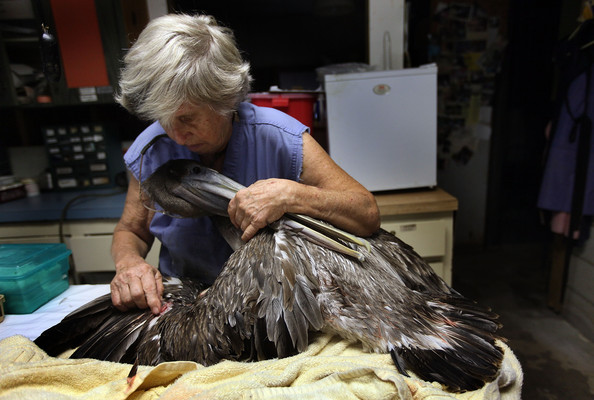
The Bird With The Broken Wing

Broken Wing of Pelican-Florida Keys Wild Bird Rehab Center

Broken Wing of Pelican-Florida Keys Wild Bird Rehab Center

I walked in the woodland meadows,
Where sweet the thrushes sing,
And found on a bed of mosses,
A bird with a broken wing;
I healed its wing, and each morning
It sang its old sweet strain,
But the bird with the broken pinion,
Never soared as high again,
Never soared as high again.

I found a young life broken
By sin’s seductive art,
And, touched with a Christlike pity,
I took him to my heart;
He lived with a nobler purpose,
And struggled not in vain,
But the life that sin had stricken,
Never soared as high again,
Never soared as high again.

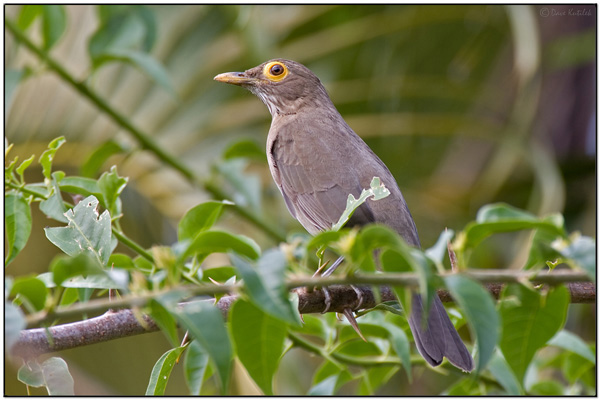
Bare-eyed Thrush (Turdus tephronotus) by Daves BirdingPix

Bare-eyed Thrush (Turdus tephronotus) by Daves BirdingPix

But the bird with the broken pinion
Kept another from the snare,
The life that sin had stricken,
Raised another from despair;
Each loss has its own compensation,
There’s healing for each pain,
But the bird with the broken pinion
Never soared as high again,
Never soared as high again.


Now I rejoice, not that you were made sorry, but that your sorrow led to repentance. For you were made sorry in a godly manner, that you might suffer loss from us in nothing. For godly sorrow produces repentance leading to salvation, not to be regretted; but the sorrow of the world produces death.
(2 Corinthians 7:9-10 NKJV)

This hymn reminds me of a story I have heard numerous times about the effects of sin in our lives. We may repent, but the scars are still there. I found a copy, it’s a little long, but I hope you’ll read it.

“That was a significant, story of the man who gave his little son a hammer and some nails, and told him that whenever he did anything that was wrong he might drive one of the nails into the barn door. The boy was honest and diligent too, and in a few days he came to his father saying that the last nail was in its place well driven down. ” And now,” said the father, “whenever you do any specially good deed, you may draw out one of the nails.” This pleased the son. He was as diligent in goodness now as he had been in badness before. He carried his little sister over the rough places, and then went and drew a nail. He sawed some wood for a poor widow and drew another nail. He ran on willing errands for his mother that he might have a chance to draw more nails. In a few days the last one was removed, and he came with pride to tell his father.

“What, all drawn so soon?” said the father.

” Every one,” responded the son.

” Let us go and see,” said the father.

” Come, then,” said the son, and he led the way. ” See, see,” said the eager boy, ” there is not a nail left in the door, and I assure you that I did something good for every nail I drew.”

” I am glad, my dear son,” said the father, ” that the task of removing them is so quickly done, but then,” continued he sadly, ” don’t you see how you have marred and injured the door? The nails are gone, but the scars remain.” (A. J. Paterson)

The Gospel Message

*

The Black Skimmer – The Graceful Flier…

The Black Skimmer – The Graceful Flier… ~ by a j mithra

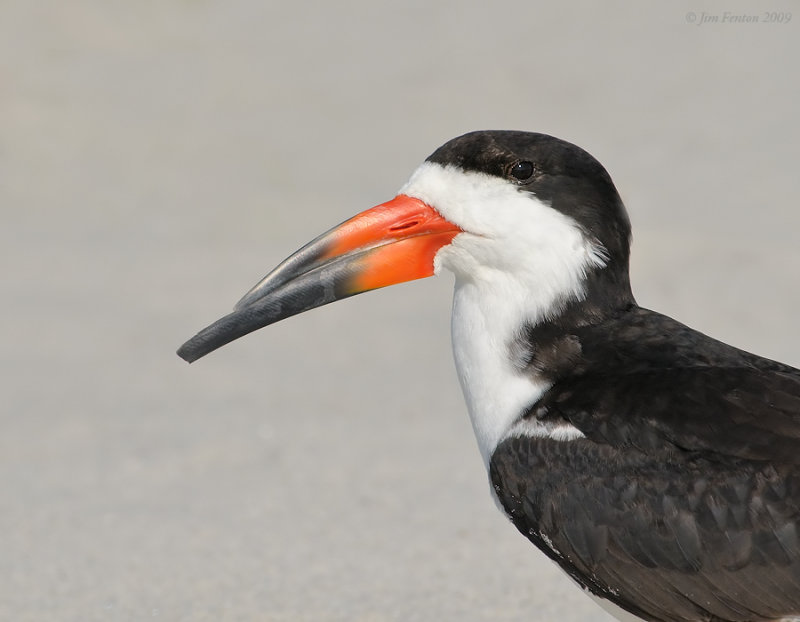
Black Skimmer (Rynchops niger) by J Fenton

Black Skimmer (Rynchops niger) by J Fenton

The Black Skimmer, Rynchops niger, is a tern-like seabird, one of three very similar birds species in the skimmer family. It breeds in North and South America.

Northern populations winter in the warmer waters of the Caribbean and the tropical and subtropical Pacific coasts, but the South American races make only shorter movements in response to annual floods which extend their feeding areas in the river shallows.

The Black Skimmer breeds in loose groups and its referred habitats include sandy or gravelly bars and beaches, shallow bays, estuaries, and salt marsh pools. The remarkable bill of the Black Skimmer sets it apart from all other American birds.

The Black Skimmer is the only American representative of the skimmer family. The other two, rather similar, species are the African Skimmer and the Indian Skimmer (by Nikhil). All use the same unusual feeding method.

Black Skimmer (Rynchops niger) by Quy Tran

Black Skimmer (Rynchops niger) by Quy Tran

The Black Skimmer is the only bird species in the United States that has a larger lower mandible than upper mandible. The large red and black bill is knife-thin and the lower mandible is longer than the upper. The bird drags the lower bill through the water as it flies along, hoping to catch small fish. At hatching, the two mandibles are equal in length, but by fledging at four weeks, the lower mandible is already nearly 1 cm longer than the upper. Its use of touch to catch fish lets it be successful in low light or darkness.

Do you feel that your looks are not as good as the others? Do you feel that God could have created you a bit taller or fairer?

  • God has never done a mistake, but still, we had crucified Him…
  • If Joseph had not landed into the prison, he would not have become The Prime Minister of Egypt…
  • If Naaman had not suffered from leprosy, He would not have known the real God…
  • If Zachcheaus had benn born tall, He too wouldn’t have know God…
  • God has a purpose in the way He had created us…

If these birds had equal mandible, they would’ve perished, for they would not have known how to fish…

You are unique and God did not create any one like you and He is faithful to finish the work He had started in you…

Being confident of this very thing, that he which hath begun a good work in you will perform it until the day of Jesus Christ: (Philippians 1:6)

Black Skimmer (Rynchops niger) by AestheticPhotos

Black Skimmer (Rynchops niger) by AestheticPhotos

Skimmers have a light graceful flight, with steady beats of their long wings. They feed usually in large flocks, flying low over the water surface with the lower mandible skimming the water (in order of importance) for small fish, insects, crustaceans and molluscs caught by touch by day or especially at night. They spend much time loafing gregariously on sandbars in the rivers, coasts and lagoons they frequent. Although the Black Skimmer is active throughout the day, it is largely crepuscular (active in the dawn and dusk) and even nocturnal….

These birds seem to know that fish come to the surface of the water in large numbers during night…

That is the reason, they leave alone their younger ones at night, and forage during the night, flying low, skimming the water with their lower mandibles..

It is good to start the day reading the word of God.. But, how many of us read the Bible before going to bed? Do we carry the lamp during the day, or during the night? When darkness surrounds you and you have lost your way. Just read the Bible..

Thy word is a lamp unto my feet, and a light unto my path. (Psalm 119:105)

Do you know that night prayers are more powerful? That is the reason God asks us to watch and pray…

Jesus Himself had set an example of praying all through the night before He chose His twelve disciples….

And it came to pass in those days, that he went out into a mountain to pray, and continued all night in prayer to God. And when it was day, he called unto him his disciples: and of them he chose twelve, whom also he named apostles; (Luke 6:12,13)

Black Skimmer (Rynchops niger) by Ian

Black Skimmer (Rynchops niger) by Ian

Are you in the midst of decision making, which you think may change your life? Just do what Jesus did…

Pray all night, without ceasing…

Have a blessed day!

Your’s in YESHUA,
a j mithra

Please visit us at: Crosstree


Lee’s Addition:

The Skimmers are in the Laridae Family of Gulls, Terns & Skimmers. They are part of the Charadriiformes Order.

When you watch skimmers, it is neat to watch the trail or path they leave in the water. That brings to mind several passages about paths:

Thus saith the LORD, which maketh a way in the sea, and a path in the mighty waters; (Isaiah 43:16 KJV)
Thou wilt shew me the path of life: in thy presence is fulness of joy; at thy right hand there are pleasures for evermore. (Psalms 16:11 KJV)
Teach me thy way, O LORD, and lead me in a plain path, because of mine enemies. (Psalms 27:11 KJV)
Make me to go in the path of thy commandments; for therein do I delight. (Psalms 119:35 KJV)
Thy word is a lamp unto my feet, and a light unto my path. (Psalms 119:105 KJV)
Enter not into the path of the wicked, and go not in the way of evil men. (Proverbs 4:14 KJV)
Ponder the path of thy feet, and let all thy ways be established. (Proverbs 4:26 KJV)

Keith made a video of a Black Skimmer flying about and dipping its beak. Its head pulls downward as it grabs a fish.

*

Birds of the Bible – Purifying Bird

Below is an interesting passage of Scripture.

Eurasian-collared Dove in Israel

Eurasian-collared Dove in Israel

The LORD spoke to Moses, saying, “This shall be the law of the leprous person for the day of his cleansing. He shall be brought to the priest, and the priest shall go out of the camp, and the priest shall look. Then, if the case of leprous disease is healed in the leprous person, the priest shall command them to take for him who is to be cleansed two live clean birds and cedarwood and scarlet yarn and hyssop. And the priest shall command them to kill one of the birds in an earthenware vessel over fresh water. He shall take the live bird with the cedarwood and the scarlet yarn and the hyssop, and dip them and the live bird in the blood of the bird that was killed over the fresh water. And he shall sprinkle it seven times on him who is to be cleansed of the leprous disease. Then he shall pronounce him clean and shall let the living bird go into the open field. (Leviticus 14:1-7 ESV)

It seems that when a person was declared clean from their leprosy, that a purification needed to be performed. The same was true for the house. They gathered two birds and then the priest would kill one bird, but the second was set free after he took “the cedarwood and the hyssop and the scarlet yarn, along with the live bird, and dip them in the blood of the bird that was killed and in the fresh water and sprinkle the house seven times.” The live bird was then taken out side the city and turned loose.

When you first read that passage, you wonder what it is all about. The live bird being turned loose with blood on it? Some of the commentators have helped explain the significance of this. Here are some of their thoughts:

House Sparrow (Passer domesticus) Female by Nikhil

Matthew Henry – Lev 14:1-9  – The priests could not cleanse the lepers; but when the Lord removed the plague, various rules were to be observed in admitting them again to the ordinances of God, and the society of his people. They represent many duties and exercises of truly repenting sinners, and the duties of ministers respecting them. If we apply this to the spiritual leprosy of sin, it intimates that when we withdraw from those who walk disorderly, we must not count them as enemies, but admonish them as brethren. And also that when God by his grace has brought to repentance, they ought with tenderness and joy, and sincere affection, to be received again. Care should always be taken that sinners may not be encouraged, nor penitents discouraged. If it were found that the leprosy was healed, the priest must declare it with the particular solemnities here described. The two birds, one killed, and the other dipped in the blood of the bird that was killed, and then let loose, may signify Christ shedding his blood for sinners, and rising and ascending into heaven. The priest having pronounced the leper clean from the disease, he must make himself clean from all remains of it. Thus those who have comfort of the remission of their sins, must with care and caution cleanse themselves from sins; for every one that has this hope in him, will be concerned to purify himself.

Gill – “and shall let the living bird loose into the open field; as a token of the freedom of the leper, and that he was at liberty to go where he pleased: the Misnic doctors say, when he came to let go the living bird, he did not turn its face neither to the sea, nor to the city, nor to the wilderness, as it is said, “but he shall let go the living bird out of the city into the open field”, as in Lev. 14:53;… this may be a figure of the resurrection of Christ from the dead, and of his justification upon it, as the head and representative of his people, and of their free and full discharge from guilt, condemnation, and death, through him, and of his and their being received up into heaven, and whither their hearts should be directed, in affection and thankfulness for their great deliverance and salvation; see 1Timothy 3:16. ”

Hill Pigeon (Columba rupestris) by Nikhil Devasar

Clarke – “Shall let the living bird loose – The Jews teach that wild birds were employed on this occasion, no tame or domestic animal was used. Mr. Ainsworth piously conjectures that the living and dead birds were intended to represent the death and resurrection of Christ, by which an atonement was made to purify the soul from its spiritual leprosy. The bird let loose bears a near analogy to the scapegoat. See Leviticus 16.”

They all seem to see the cleansing as not only for the current situation, by also, representing the future sacrifice of Christ for our sins and the cleansing (forgiveness of sin) that comes from His shed blood. I praise the Lord that He has given His life for us and that we no longer have to go through sacrifices like they did prior to Christ. I am sure the animals and birds also feel blessed.

Consequently, he is able to save to the uttermost those who draw near to God through him, since he always lives to make intercession for them. For it was indeed fitting that we should have such a high priest, holy, innocent, unstained, separated from sinners, and exalted above the heavens. He has no need, like those high priests, to offer sacrifices daily, first for his own sins and then for those of the people, since he did this once for all when he offered up himself. For the law appoints men in their weakness as high priests, but the word of the oath, which came later than the law, appoints a Son who has been made perfect forever. (Hebrews 7:25-28 ESV)

The Gospel Message

See more Birds of the Bible

*

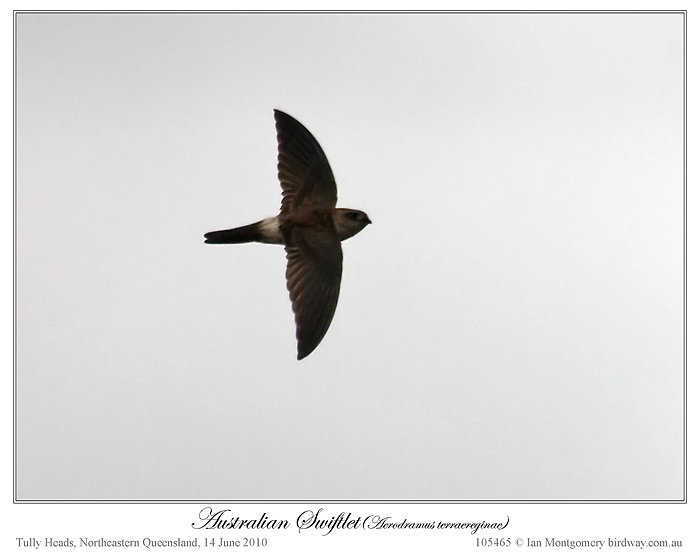
Ian’s Bird of the Week – White-rumped/Australian Swiftlet

White-rumped Swiftlet (Aerodramus spodiopygius) by Ian Montgomery

White-rumped Swiftlet (Aerodramus spodiopygius) by Ian

Ian’s Bird of the Week – White-rumped/Australian Swiftlet ~ by Ian Montgomery

Newsletter ~ 6-22-10

Swifts, true to their name, are a challenge to photograph but these White-rumped/Australian Swiftlets (more about names later) were feeding low over of a group of smallish trees, which helped.

These tiny birds (11-12cm/4.3-4.7in in length) are resident in Australia unlike their larger cousins, the Fork-tailed Swift and White-throated Needletail, and usually remain fairly close to their breeding caves. They are reasonably common in their restricted range of coastal northeastern Australia from the far north of New South Wales to Cape York in northern Queensland. Their sedentary nature is reflected in the existence of a paler race in the Chillagoe region of northeastern Queensland, only 130 km from the coast as the swift flies and much closer to the Atherton Tableland, where the nominate race is found.

Some species of swiftlet, including this one, use echo-location like bats to find their way around in caves, emitting a metallic clicking noise. There are about 26 species of swiftlet in Asia and Oceania, but only some if these echo-locate. Originally, they were (nearly) all put in the same genus Collocalia but in 1970, those species that use echo-location were moved to a separate genus Aerodramus. The White-rumped Swiftlet, Collocalia spodiopygius, was renamed Aerodramus spodiopygius.

White-rumped Swiftlet (Aerodramus spodiopygius) by Ian Montgomery

White-rumped Swiftlet (Aerodramus spodiopygius) by Ian

This was the start of a bumpy ride in the naming of these Australian swiftlets, which were then considered the same species as similar birds found in Micronesia and Polynesia. Recent DNA analysis supported the split into Aerodramus, but also suggested that the Australian birds (races terraereginae and chillagoensis) were sufficiently different to be treated as a separate species. Christidis and Boles (2008) support this recognition of the Australian Swiftlet, now named Aerodramus terraereginae. Meanwhile, Birdlife International has adopted neither the original split of Collocalia nor the recognition of the new species. So, we now have the confusion situation where both the English and Scientific names differ. So you could have someone from Birdlife International birdwatching in Queensland and saying ‘there is a White-rumped Swiftlet, Collocalia spodiopygius’ to Les Christidis who might respond, ‘looks like an Australian Swiftlet, Aerodramus terraereginae, to me!’.

And while we’re at it, terraereginae isn’t such a great name anyway, as It, whatever ‘It’ is, also occurs in northern New South Wales. Let me quote from an article in Wikipedia discussing the strengths of Linnaean taxonomy: ‘it can be used to organize the different kinds of living organisms, simply and practically. Every species can be given a unique (and hopefully stable) name, as compared with common names that are often neither unique nor consistent from place to place and language to language’. Hmmmm.

Back at the website, I hope I’ve finally reformatted all the pages that were causing problems in early versions of Internet Explorer. If you come across any that I’ve missed, please let me know (gently). I’ve resumed updating the family index pages and species galleries.

Best wishes,
Ian

Links:
White-rumped Swiftlet
Fork-tailed Swift
White-throated Needletail

Ian Montgomery, Birdway Pty Ltd,
454 Forestry Road, Bluewater, Qld 4818
Phone: +61-7 4751 3115
Preferred Email: ian@birdway.com.au
Website: http://birdway.com.au


Lee’s Addition:

Ian is having the same problems I am trying to keep up with the renaming and splitting and lumping of species. Keeps you busy when you have a website. Anyway, it is always interesting to see what bird Ian is going to expose us to each week. Hope you enjoy his newsletters as well as I do.

Even the stork in the heavens Knows her appointed times; And the turtledove, the swift, and the swallow Observe the time of their coming. But My people do not know the judgment of the LORD. (Jeremiah 8:7 NKJV)

The White-rumped (ex-Australian) Swiftlet (Aerodramus spodiopygius) is in the Apodidae Family. The Swiftlets, Swifts, Spinetails, Needletails, and Palm Swifts make up the family.

The Apodiformes Order includes the Aegothelidaes (Owlet-nightjars), Hemiprocnidaes (Treesifts), Apodidaes (Swifts), and the Trochilidaes (Hummingbirds).

So then, my beloved brethren, let every man be swift to hear, slow to speak, slow to wrath; (James 1:19 NKJV)

*

LoUiSiAnA oh LoUiSiAnA….

LoUiSiAnA oh LoUiSiAnA…. ~ by a j mithra

a j mithra has completed another video about the plight of the birds in Louisiana. Here is what he wrote on YouTube:

“The care and help shown by some amazing souls to clean and release the oil birds, inspired me to do this video… Though we live far away from Louisiana, on the other side of the globe, I still feel that, though not directly but indirectly I am also the reason for the disaster… We all have a part in the restoration of nature.. I have done what I could… What about you? Have you planned to do something for Louisiana? If you are not able to, at least you can pray and raise prayer warriors… Isn’t it?”

A righteous man regardeth the life of his beast: but the tender mercies of the wicked are cruel. (Proverbs 12:10 KJV)

Also, he writes:

God asked Noah to take in every species with him in the Ark. For God knew that man’s survival is based on wild life.. If Noah had not taken them into the Ark, he wouldn’t have had a Raven or a Dove to check the water level.. Balaamt wouldn’t have had a donkey to speak to him.. Moses wouldn’t have met God in the burning bush while shepherding his flock… Samson wouldn’t have had a donkey’s jaw bone to kill thousand enemies…Elijah would have starved without a raven to feed him…Well, even our Lord Jesus wouldn’t have had a manger and He wouldn’t have had the chance of going for a donkey ride…

God wanted man to take care of wild life and that is why some of His commandments are as follows…

In like manner shalt thou do with his ass; and so shalt thou do with his raiment; and with all lost thing of thy brother’s, which he hath lost, and thou hast found, shalt thou do likewise: thou mayest not hide thyself. Thou shalt not see thy brother’s ass or his ox fall down by the way, and hide thyself from them: thou shalt surely help him to lift them up again.” (Deuteronomy 22:3-4)

If a bird’s nest chance to be before thee in the way in any tree, or on the ground, whether they be young ones, or eggs, and the dam sitting upon the young, or upon the eggs, thou shalt not take the dam with the young: But thou shalt in any wise let the dam go, and take the young to thee; that it may be well with thee, and that thou mayest prolong thy days. ” Deuteronomy 22:6-7

Pelican caught in the Oil Spill

Pelican caught in the Oil Spill


Every church in every nation is trying hard to reach as many souls as possible for the extension of God’s kingdom before this earth ceases to exist,,, If only the church could take initiative to create an awareness of the importance of preserving nature and if only the believers take part in it, we may not be able to stop this earth from destruction but we can postpone the inevitable.. Through which, we can reach more souls for the extension of God’s kingdom.. Will the church take their next step if not their first step towards restoration of nature?

Well, we may not have Biblical evidence to support my views.. I don’t care if someone says that it is not Biblical to postpone the closing down of the earth.. It is just out of selfishness and the thirst to reach more dying souls before the end of life on earth made me think this way…

When we all raise to restore the wild life, God would surely call us righteous.. Cos, God says, “A righteous man regardeth the life of his beast:… (Proverbs 12:10.)

Who knows? Maybe God may change His mind when two or more are gathered in His name for a righteous cause.. I would like to remind everyone about how Abraham stood before the Lord when God came down to destroy Sodom (Genesis Chapter 18) Let us take care of the wildlife like never before….

Regards,
Your’s in YESHUA,
a j mithra

Please visit us at: Crosstree

*

White-eyes – Zosteropidae Family

Silvereye (Zosterops lateralis) by Ian

Silvereye (Zosterops lateralis) by Ian

I find the White-eyes fascinating little birds that have such a neat visible eye. The Lord has created another bird kind that has been obeying the command that it was given.

So God created great sea creatures and every living thing that moves, with which the waters abounded, according to their kind, and every winged bird according to its kind. And God saw that it was good. And God blessed them, saying, “Be fruitful and multiply, and fill the waters in the seas, and let birds multiply on the earth.” (Genesis 1:21-22 NKJV)

Cape White-eye (Zosterops pallidus) by Ian

Cape White-eye (Zosterops pallidus) by Ian

The white-eyes are small passerine birds native to tropical, subtropical and temperate Sub-Saharan Africa, southern and eastern Asia, and Australasia. White-eyes inhabit most tropical islands in the Indian Ocean, the western Pacific Ocean, and the Gulf of Guinea. Discounting some widespread members of the genus Zosterops, most species are endemic to single islands or archipelagos. The Silvereye, Zosterops lateralis, naturally colonised New Zealand, where it is known as the “Wax-eye” or Tauhau (“stranger”), from 1855. The Silvereye has also been introduced to Hawaii as well as the Society Islands in French Polynesia.

White-eyes are mostly of undistinguished appearance, the plumage being generally greenish olive above, and pale grey below. Some species have a white or bright yellow throat, breast or lower parts, and several have buff flanks. As their common name implies, many species have a conspicuous ring of tiny white feathers around their eyes. The scientific name of the group also reflects this latter feature, being derived from the Ancient Greek for “girdle-eye”. They have rounded wings and strong legs. Like many other nectivorous birds, they have slender, pointed bills, and brush-tipped tongues. The size ranges up to 15 cm (6 in.) in length.

Matthew 6:26 says, “…yet your heavenly Father feeds them.” He has made a special tongue for them to accomplish this feat.

(YouTube by Ichiro0402Nakano)

All the species of white-eyes are sociable, forming large flocks which only separate on the approach of the breeding season. They build tree nests and lay 2-4 unspotted pale blue eggs. Though mainly insectivorous, they eat nectar and fruits of various kinds. The Silvereye can be a problem in Australian vineyards, through piercing the grape allowing infection or insect damage to follow.

The White-eyes were in the Timaliidae (Babblers) Family but now are in the Zosteropidae (White-eyes) Family. (They are  constantly shuffling the families around and it is hard to maintain the web pages.) At the present time the Yuhinas and Babblers are not in with them. One thing that has kept this busy is that the White-eyes have been diversifying with rapid speciation.

“…the scientists suggest, white-eyes form new species rapidly because of their sociability, ability to survive in a variety of habitats, and a short time between generations relative to other birds. Some white-eye species may also have minimized further dispersal and gene flow by becoming sedentary over the course of evolution, similar to historically dispersive human populations that ‘settled down,’ the researchers said. “Our results indicate that high rates of diversification may have as much to do with a species’ ‘personality’ as they have to do with more classical geographic or geological drivers of ‘speciation,’ Filardi said.” (From National Geographic)

According to National Geographic’s Complete Birds of the World, the Silver-eye has migrated across 1,250 miles of open sea from between southeast Australia to Tasmania, New Zealand. That is quite a feat for birds that are only 3-6 inches long. Again, God has created much ability in these little birds.

Behold, the eye of the LORD is on those who fear Him, On those who hope in His mercy, (Psalms 33:18 NKJV)

Below is a video by Keith Blomerley of a Cape White-eye.

Birds of the World – Zosteropidae Family

*

Macaw – The Beautician

Macaw – The Beautician – by a j mithra
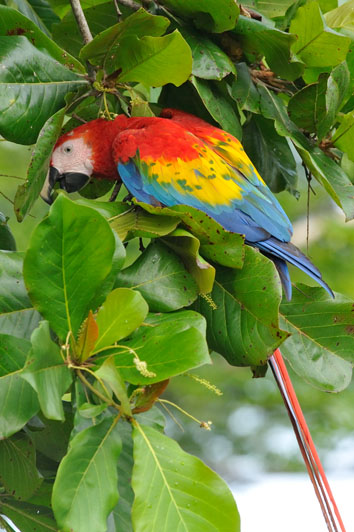
Geophagy, or the phenomenon of eating mineral bound clay is not exclusive to macaws. Even Australian Cockatoos have been documented to seek out clay for medicinal and remedial purposes.

Over the centuries the ancients have known of the healing properties of the so-called, edible clays. Civilizations as culturally diverse as the Essenes, Chinese, Mayans and Anasazi practiced clay healing. In the southwestern deserts of the USA and Mexico, fabled medicine men regularly trekked up to 100 miles to their prized caches of living clay….

GOD remembers that HE created us from dust…

That is the reason that JESUS used clay to create a fresh pair of eyes for a blind man…

He answered and said, A man that is called Jesus made clay, and anointed mine eyes, and said unto me, Go to the pool of Siloam, and wash: and I went and washed, and I received sight. (John 9:11)

Today, clay is being rediscovered not only for mud baths and facials, but also as a topical application for a plethora of human skin problems including: acne, sunburn, Eczema, Psoriasis, and warts, coupled with internal usage, usually 650 mg of 30 – 60 mesh material in capsules or tablets, taken twice daily, in-between meals, steady testimonials stream-in to beauticians, practitioners and health consultants alike, about the reduction of wrinkles, sun spots, varicose veins, and heavy metal accumulations in the vital organs. Several physicians have gone on-record commenting about the positive affects clay, particularly montmorillonite, has had on temperament, and the psychology of certain troubled individuals.

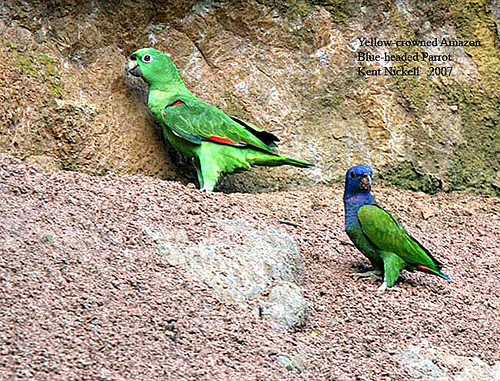
Macaws eat clay from certain river banks from morning 6 am till about 11 am..

Like how some of us spend hours with the beautician and at the gym, yearning to look young and beautiful..

How many hours, or minutes do we spend with the eternal Beautician? Look what happened to Moses after spent 40 days with GOD in Mount Sinai…

And when Aaron and all the children of Israel saw Moses, behold, the skin of his face shone; and they were afraid to come nigh him. (Exodus 34:30)

Looks like GOD owns a beauty parlor too…Isn’t it?
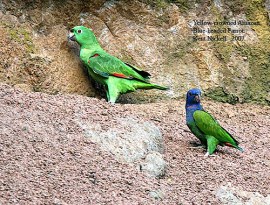
Yellow-crowned Amazon, Blue-headed Parrot by Kent Nickell

Yellow-crowned Amazon, Blue-headed Parrot by Kent Nickell

Now you have to decide if you really need to go to the beautician, or stay still at home and worship the LORD, so that, the eternal beautician would start beautifying your body, mind and soul..

It is almost axiomatic that behind every illness, malady or deformity, there is a mineral deficiency of one type or another. One of the finest clays for parrots and people alike, is montmorillonite. It is used in pet foods, human supplementation, for livestock and extensively in agriculture. Every member of the food chain benefits from it. Montmorillonite is rich in silicon, one of the most prevalent elements found in the heart and key to the structural integrity of plants and bones because of the synergy it creates with calcium and phosphorous….

Here are some beauty tips,

But he answered and said, It is written, Man shall not live by bread alone, but by every word that proceedeth out of the mouth of God. (Matthew 4:4)

It (HIS commandments) shall be health to thy navel, and marrow to thy bones. (Proverbs 3:8)

It also contains an impressive amount of oxygen, about 50%, due to all of the various oxides found in the clay’s other minerals. On the other hand air is only about 21% oxygen…

If clay contains oxygen, we, whom GOD took from the clay should have oxygen which gives life..

Do we really have JESUS – THE LIFE – THE OXYGEN?

For God so loved the world, that he gave his only begotten Son, that whosoever believeth in him should not perish, but have everlasting life. (John 3:16)

Galah (Eolophus roseicapilla) by Ian

Galah (Eolophus roseicapilla) by Ian

The benefits of clay licking enhanced fertility, increased survival rate of young, fewer psychological abnormalities due to stress,  malnutrition, confinement and lack of natural sunlight, more beautiful appearance over all and healthier birds. The Macaws seem to know the importance of clay to live a wrinkle free life…

How many have overcome spiritual deficiency, through our lives? If GOD had taken us from the miry clay, it means, that we should have the qualities of clay? Do others get strengthened through our lives? Do we heal people by our words? Do we bring stress on others’ lives, or give everyone a wrinkle free life? GOD has created, called and commissioned us to heal and not hurt…

How are we?

Out of the same mouth proceedeth blessing and cursing. My brethren, these things ought not so to be. (James 3:10)

Heal the sick, cleanse the lepers, raise the dead, cast out devils: freely ye have received, freely give.” (Matthew 10:8)

Have a blessed day!

Your’s in YESHUA,
a j mithra

Please visit us at: Crosstree


Lee’s Addition:
The Parrots are in the Psittacidae Family and the Galah is from the Cacatuidae Family (Cockatoos). There is one more family, the Strigopidae (New Zealand Parrots). All three families make up the Psittaciformes Order.

The Gospel Message