Ian’s Bird of the Week – Little Tern

Little Tern (Sternula albifrons) by Ian

Little Tern (Sternula albifrons) by Ian

Newsletter: 2-7-2010

Little Tern (Sternula albifrons) by Ian

Little Tern (Sternula albifrons) by Ian

The Little Tern is one of two tiny species of Tern found in Australia, the other being the very similar Fairy Tern. In breeding plumage, as in the first photo, the Little Tern is distinguished by having black lores forming a line through the eyes connecting the black cap to the yellow bill and it the bill usually has a black tip. Both species are of a similar size with a length of 20-28cm/8-11in. This bird was photographed in Queensland in October and would have been a member of the local breeding population.

In non-breeding plumage, as in the second photo, both species have white lores but the Little Tern has black primaries and a black bill while the Fairy Tern has grey primaries and a black-tipped bill with a yellowish base. This bird was photographed in New South Wales in January, so it is probably a member of the Asian breeding population that spends the northern winter in Australia. This bird is fishing by hovering in a characteristic posture with the tail bent sharply downwards.

Little Tern (Sternula albifrons) by Ian

Little Tern (Sternula albifrons) by Ian

The third photo was taken two seconds after the second photo, and the bird is taking flight again after an unsuccessful dive. An average Little Tern weights only about 50g./2oz. so it must have hit the water with tremendous impact. It is fishing, as is typical, in shallow water – the whitish reflection in the background is the surf breaking farther out.

The Little Tern has a widespread distribution through Eurasian, Africa and Australasia. In Australia it occurs in northern, eastern and southern coastal areas from Broome to the Yorke Peninsula and in Tasmania. In contrast, the Fairy Tern occurs mainly in western and southern areas of Australia, but the ranges do overlap in Victoria, South Australia and northern Western Australia.

Recent additions to the website include photos of:
Australasian Darter
Chestnut Teal
Rufous Night-Heron
Dusky Woodswallows
Glossy, Australian White and Straw-necked Ibises

Best wishes,
Ian

Ian Montgomery, Birdway Pty Ltd,
454 Forestry Road, Bluewater, Qld 4818
Phone: +61-7 4751 3115
Preferred Email: ian@birdway.com.au
Website: http://birdway.com.au


Lee’s Addition:

On the same day Jesus went out of the house and sat by the sea. (Matthew 13:1 NKJV)

The Little Tern is in the Laridae Family of the  Charadriiformes Order. This family, Laridae, not only has Terns, but also Noddys, Skimmers, Gulls, and Kittwakes. There are 102 birds in the family. As far a birdwatching goes, that family gives me more fits on trying to ID them. But as small as those Little Terns and the Fairy Terns, I might be able to ID them. But it is a long way to go to see if I could. Good thing Ian is down there to take their photos so we can enjoy them up here.

“This bird breeds on the coasts and inland waterways of temperate and tropical Europe and Asia. It is strongly migratory, wintering in the subtropical and tropical oceans as far south as South Africa and Australia.

The Little Tern breeds in colonies on gravel or shingle coasts and islands. It lays two to four eggs on the ground. Like all white terns, it is defensive of its nest and young and will attack intruders.

Like most other white terns, the Little Tern feeds by plunge-diving for fish, usually from saline environments. The offering of fish by the male to the female is part of the courtship display.

This is a small tern, 21-25 cm long with a 41-47 cm wingspan. It is not likely to be confused with other species, apart from Fairy Tern and Saunders’s Tern, because of its size and white forehead in breeding plumage. Its thin sharp bill is yellow with a black tip and its legs are also yellow. In winter, the forehead is more extensively white, the bill is black and the legs duller. The call is a loud and distinctive creaking noise.” (Wikipedia)

Video of a Little Tern feeding fish to its chicks at the beach by Pedro Rubio

Little Stern from World Bird Guide

Shoebill – Balaenicipitadae Page Updated

Shoebill by Dan

Shoebill by Dan

We went to the Lowry Park Zoo this week and were able to get some photos of the Shoebill. What an interesting bird. I was amazed at how large they really are. My shots were through a fence, but Keith’s video was taken in a swamp.

Shoebills are in the Balaenicipitadae Family of the Pelicaniformes Order.

“The Shoebill, Balaeniceps rex, also known as Whalehead, is a very large stork-like bird. It derives its name from its massive shoe-shaped bill.

The Shoebill is a very large bird. The adult is 115-150 cm (45-64 in) tall, 100-140 cm (40-60in) long, 230-260 cm (91-125 in) across the wings and weighs 4 to 7 kg (8.8-15.5 lbs). The adult is mainly grey while the juveniles are browner. It lives in tropical east Africa in large swamps from Sudan to Zambia.”

Interesting Articles about the Shoebill

Shoebill by African Bird Club

Shoebill – Wikipedia

Birds of the Bible – Sunbittern

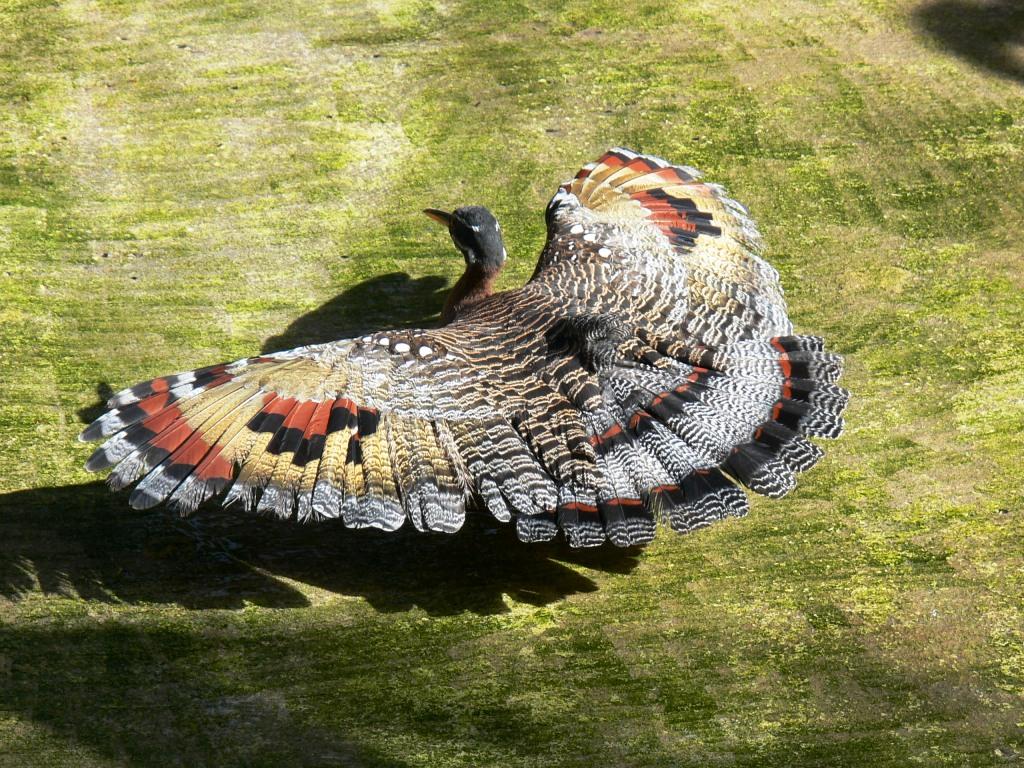
Sunbittern (Eurypyga helias) by Lee at Lowry Park Zoo 2-4-10

Sunbittern (Eurypyga helias) by Lee at Lowry Park Zoo 2-4-10

Let them praise the name of the LORD: for his name alone is excellent; his glory is above the earth and heaven. (Psalms 148:13 KJV)

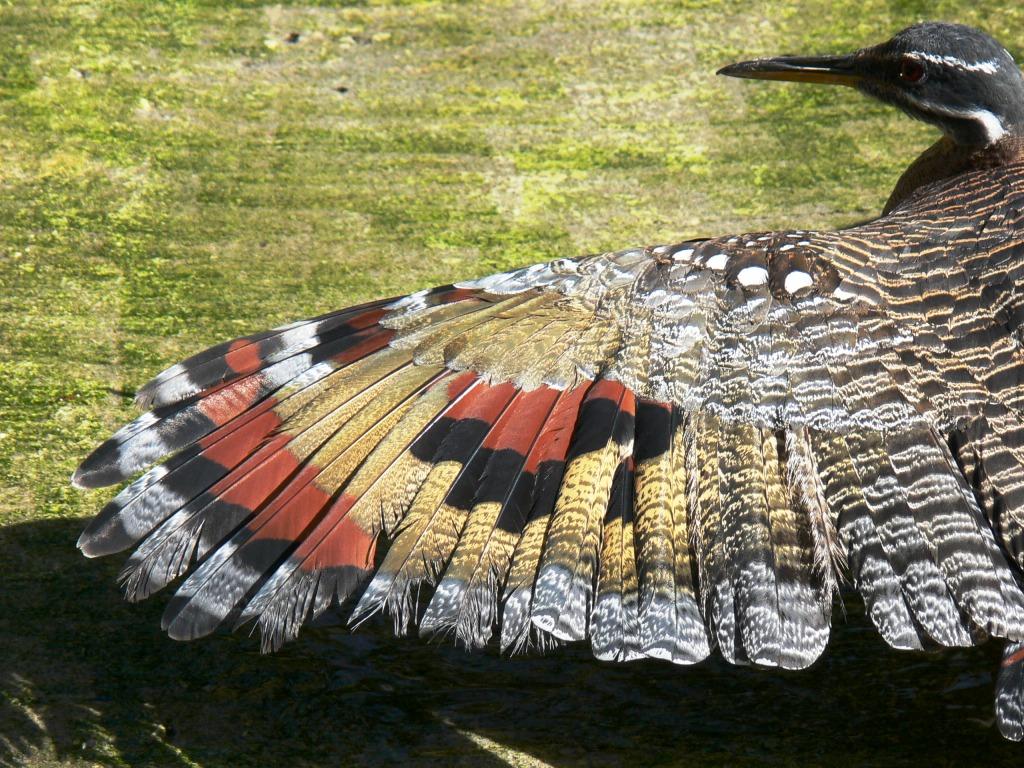
Today, Dan and I went to the Lowry Park Zoo in Tampa, Florida. I was thrilled to see some of the birds in person that I have been entering into the Birds of the World section. This Sunbittern caught my attention when he spread its wings out into the beautiful display shown below. I could not but think of the Lord’s magnificent creative power, details, and love that He gave His creatures. No, this bird is not specifically named in the Bible, but God’s Glory sure is.

Sunbittern (Eurypyga helias) by Lee at Lowry Park Zoo

Sunbittern (Eurypyga helias) by Lee at Lowry Park Zoo

The Sunbittern is similar to a heron or bittern because it has a long straight pointed bill, long legs and a thin neck, but it is in the Eurypygidae family of the Eurypygiformes Order. Most likely they are of the same “kind”, but they like to separate them and then declare “convergent evolution” caused them to develop the “same but different.” They totally deny creation by our Creator God.

They are 17-19 inches (43-48 cm) and have “soft, lax flight feathers, which account for the species being almost silent in flight.” (Bird the Definitive Guide, p.208) They make their nests with leaves, grass, mud and she usually lays 2 eggs. Both parents feed the chicks. “Remarkably, the young molt directly into adult plumage, while still in the nest, which is extremely unusual…” They leave in 3-4 weeks. The wings are spread for displaying (to win their sweetheart’s attention) or for defense (to make them look larger), but the Lord also lets them spread their wings so we can enjoy them and behold His Creative designs.

O LORD, how manifold are thy works! in wisdom hast thou made them all: the earth is full of thy riches. (Psalms 104:24 KJV)

Sunbittern (Eurypyga helias) Left Wing by Lee at Lowry Park Zoo

Sunbittern (Eurypyga helias) Left Wing by Lee at Lowry Park Zoo

All photos can be clicked-on to enlarge.

Cracidae – Chachalacas, Curassows and Guans – Updated

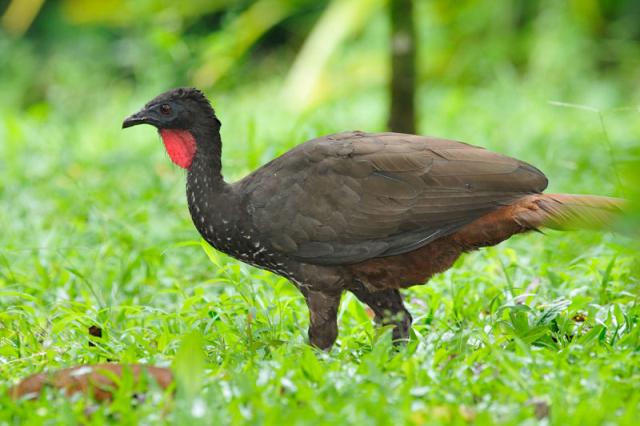
Crested Guan (Penelope purpurascens) by Reinier Munguia

Crested Guan (Penelope purpurascens) by Reinier Munguia

I have been updating the Cracidae Family page which includes Chachalacas, Curassows and Guans. They are in the Galliformes Order. That Order not only includes the Cracidaes, but also the Megapodidae (Megapodes), the Numidae (Guineafowl), Odontophoridae (New World Quails) and the Phasianidae (Pheasants, Fowl & Allies).

The Cracidae family are chicken-like birds which are medium to large. They are Neotropical, in that you find them from South California and South Texas down through Mexico, Central and South America. We encountered our first bird in the family at Santa Ana Wildlife Refuge in south Texas. We saw the Plain Chachalaca. (That is the only one in the family we have seen outside of zoos and photos).

Birdwatching – Late January 2010

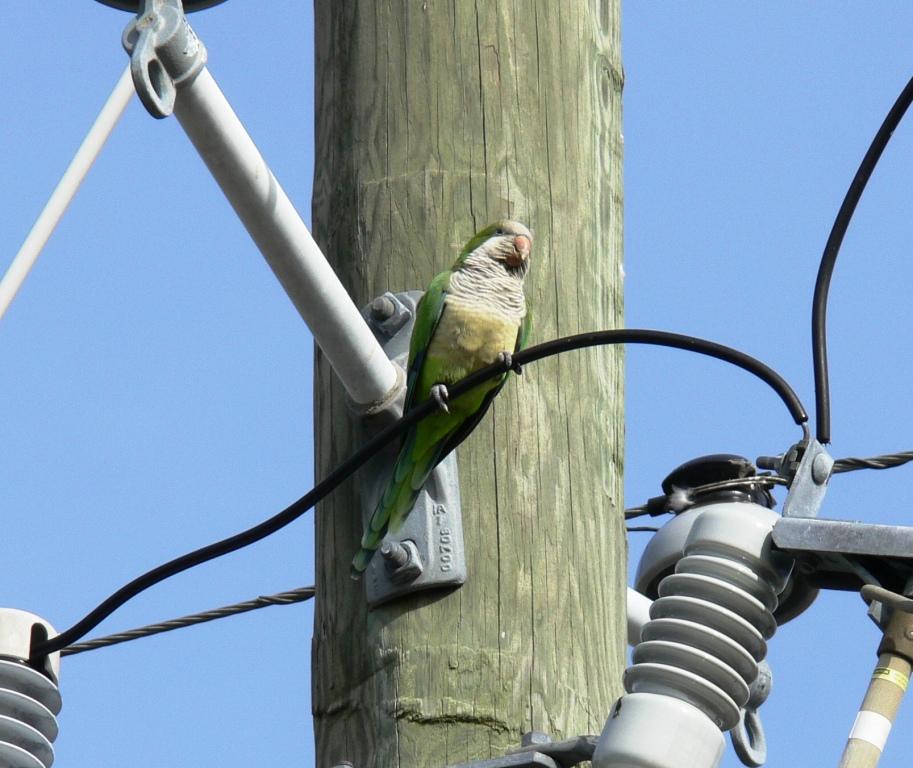
Monk Parakeet (myiopsitta-monachus) by Lee

Monk Parakeet (myiopsitta-monachus) by Lee

The last two days have been interesting for birdwatching. I have been sick and we finally were able to get out to see the birds. Today, while getting the mail out of the box, we looked up and saw 3 Sandhill Cranes with a Whooping Crane flying by. Wow! We have been seeing 1 Whooping Crane in with lots of Sandhills lately on the way to Bartow on the same hill side. But to have it fly over our house was amazing. They were headed toward that hill which is about 1.5 miles south of us. (Old Bartow Road)

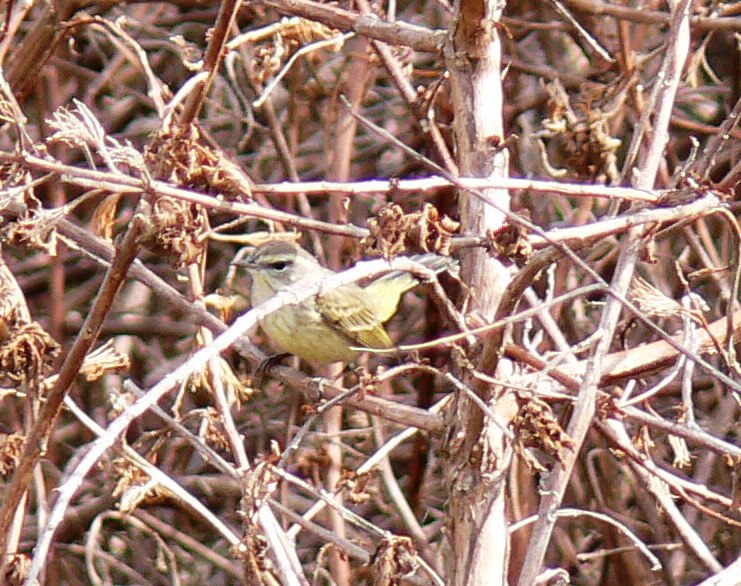
Palm Warbler - yellow

Palm Warbler - yellow

Yesterday, Dan wanted to check out something on his camera, so we took our cameras and stopped by South Lake Howard Nature Park again. I think he was having “cabin fever” more than me. Most of what we saw were the normal birds for there, only less of them. They cleaned out an area and planted grass, but that “improvement” has not been welcomed by the birds. (nor us birdwatchers either)

What we saw were: Boat-tailed and Common Grackles, White and Glossy Ibises, Anhingas, a White-winged Dove, Monk or Quaker Parakeets building their nests-Condo on the power pole, Palm Warblers (yellow), many Tree Swallows, the Bald Eagle on the tower, Osprey, Turkey Vultures, White Pelicans flying by, Fish Crows, Tri-colored and Little Blue Herons, Eastern Phoebe, Cattle Egrets, and others.

These are mine and Dan’s photos.

*

This slideshow requires JavaScript.

*

Birds of the Bible – Vulture Eyesight

Turkey Vulture at Circle B by Lee

Black Vulture (New World Vulture) at Circle B by Lee

In the first Birds of the Bible – Vulture the fact that the vulture was on the “unclean list” and possible why they were on that list. Now, I would like to explore another verse:

There is a path which no fowl knoweth, and which the vulture’s eye hath not seen: (Job 28:7 KJV)

This is found in a passage that is talking about finding gold and silver underground, as in mining underground. In the darkness, no matter how superb their eyes are, they are ineffective in darkness.

We know that the Lord created everything and what amazing capabilities the eye has.

The hearing ear, and the seeing eye, the LORD hath made even both of them. (Proverbs 20:12 KJV)

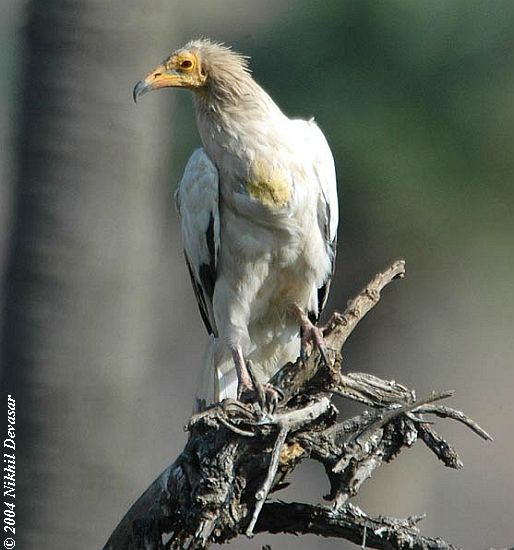
Egyptian Vulture (Neophron percnopterus) by Nikhil

Egyptian Vulture (Neophron percnopterus) {Old World} by Nikhil

“The vulture has a very keen eye, and, like the eagle, can see what is on the ground, even when it is very high in the air. This is referred to in the book of Job. “There is a path which no fowl knoweth, and which the vulture’s eye hath not seen.” It often happens in those countries that almost as soon as an ox, or a horse, or any other large animal has been killed, great multitudes of vultures will gather around, though not one could be seen in the sky before. they seem to fly down from every part of the heavens, and begin to pull and struggle for the flesh of the animal; until in the course of a few hours nothing is left but the bones. We read in Isaiah, “There shall the vultures be gathered, every one with her mate.” This must have been written by one who had seen these birds coming together, as they do in great flocks or companies.” (From The Vulture, Bible Study Tools)

“Vultures have keen eyesight. It is believed they are able to spot a three-foot carcass from four miles away on the open plains. In some species, when an individual sees a carcass it begins to circle above it. This draws the attention of other vultures that then join in.” (From Animals Vulture)

Old World Vultures (Accipitridae) unlike the New World Vultures (Cathartidae), do not have agood sense of smell and therefore do find their carcasses by sight or watching other birds to see what they are doing and have found to eat. Some of the species eat collectively while others use “kleptoparasitism” (stealing from others).

The Lord has created all the birds and has given them fantastic abilities that let them adapt to their role (carrion eaters) He has made for them. How well do we adapt to the ministries or jobs we have to do, even if it is only “taking out the trash?”

Whatsoever thy hand findeth to do, do it with thy might; for there is no work, nor device, nor knowledge, nor wisdom, in the grave, whither thou goest.  (Ecclesiastes 9:10 KJV)

See also:
Vulture Pages

Ian’s Bird of the Week – Bassian Thrush

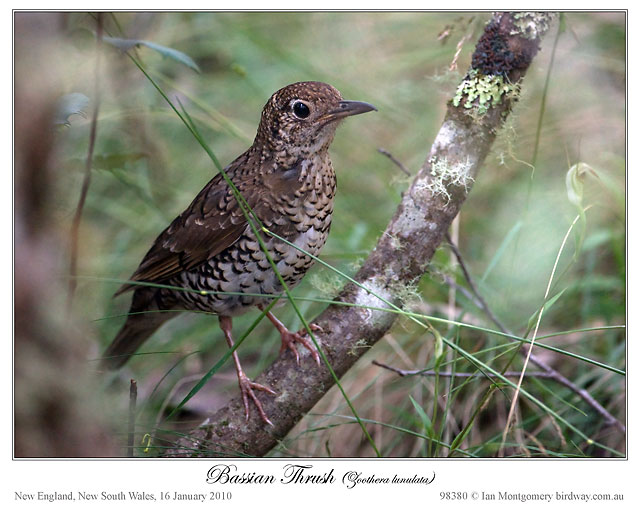
Bassian Thrush by Ian

Bassian Thrush by Ian

Newsletter: 1/28/2010

Here’s another bird from the forest of New England, NSW, the Bassian Thrush.

In the Northern Hemisphere, thrushes feature among the best known and most melodious birds of gardens and woodland, such as the Eurasian Blackbird, Song Thrush and Mistle Thrush and the (North) American Robin. They are so popular that two have been successfully introduced into southeastern Australia: the Blackbird (widespread in southeastern Australia including Tasmania) and the Song Thrush (Melbourne and Geelong).

Ask a non-birder in Australia about native Thrushes, however, and you’d probably draw a blank. In fact there are two on the mainland and a third, the Island Thrush, on Christmas Island. The two mainland ones, the Bassian and the Russet-tailed Thrushes, are very similar and are secretive inhabitants of dense forest, the Bassian in eastern and southern Australia from the Atherton Tableland in northeastern Queensland to Tasmania and the Mount Lofty Ranges in South Australia. The Russet-tailed has a more limited distribution in northeastern Queensland and southeastern Queensland and northeastern New South Wales. The ranges of the two species overlap without interbreeding, but they have been treated as separate species and distinct from the Eurasian Scaly Thrush only since 1983 (Ford, J. http://www.publish.csiro.au/paper/MU9830141.htm ).

Bassian Thrush	(Zoothera lunulata) by Ian

Bassian Thrush (Zoothera lunulata) by Ian

In the photographs, this bird can be identified as Bassian by the less rufous colour of the back, particularly the rump and tail, slight longer tail and stronger half-moon patterns on the back. Probably the best field mark are the outer tail feathers which in flight are conspicuously whiter in the Russet-tailed and, if all else fails, altitude comes to the rescue as the Russet-tailed isn’t usually found above 750 metres (this one was at 1,500m). Their songs differ too: the Bassian is rather like the Eurasian Blackbird in tone, while the Russet-tailed has a clear two-note whistle. Unfortunately, neither species is very vocal. It’s probably not surprising that it took so long to separate the species! The name Bassian, I assume, refers to the East Bassian bioregion of coastal southeastern Australia and Tasmania.

Until a couple of centuries ago, the Eurasian Blackbird was a secretive bird of forests until it discovered the delights of gardens and became accustomed to humans. Maybe the same is happening with the Bassian Thrush. This one was near a picnic area and much less shy than normal, and they do turn up in gardens sometimes.

Links:
Eurasian Blackbird
Song Thrush
Mistle Thrush
American Robin
Island Thrush

Additions to the website include:
More photos of last week’s Superb Lyrebird
Crested Tern
Papuan Frogmouth
Green Pygmy-Goose
Forest Raven

Best wishes,
Ian

Ian Montgomery, Birdway Pty Ltd,
454 Forestry Road, Bluewater, Qld 4818
Phone: +61-7 4751 3115
Preferred Email: ian@birdway.com.au
Website: http://birdway.com.au


Lee’s Addition:

(Referring to Springs in the valleys):

By them the birds of the heavens have their home; They sing among the branches.
(Psalms 104:12 NKJV)

The Bassian Thrush is in the Turdidae Family of the Passerformes Order. The family not only includes the Thrushes, but also the Rufous Thrushes, Whistling Thrushes, Ground Thrushes, Bluebirds, Solitaires, Nightingale-Thrushes, Veery, American Robin, Cochoas, Shortwings, and Alethes and others. Quite a large family (183) to say the least.

Updated the Alcidae – Auks Family Page

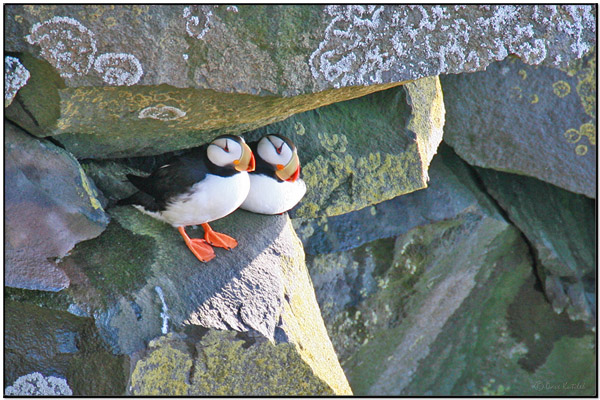
Horned Puffin (Fratercula corniculata) by Daves BirdingPix

Horned Puffin (Fratercula corniculata) by Daves BirdingPix

I have just update the Alcidae – Auks Family page in Lee’s Birds of the World section. The family includes Auks, Murres, Razorbill, Guillemots, Murrelets, Auklets, and Puffins.

The Alcidae family is in the Charadriiiformes Order

Birds Displaying

And God blessed them, saying, “Be fruitful and multiply, and fill the waters in the seas, and let birds multiply on the earth.” (Genesis 1:22 NKJV) (Displaying helps)

Here are some more birds displaying. Yesterday the Superb Lyrebird was doing his displaying in Ian’s Bird of the Week.

This video is from BBC wildlife and shows the Bulwer’s Pheasant, Temmincks Tragopan, Himalayan Monal, (Argus Pheasant) – Great Argus, Peacock, all pheasants and the (African) Long-tailed Widowbird.

~ by BBC Wildlife

The Plumed Bird of Paradise is another bird trying to impress the females with his displaying. (They are also known as six-plumed birds of paradise, due to their six head quills. These birds were featured prominently in the BBC series Planet Earth.)

The King Bird of Paradise – the smallest of the family.

Ian’s Bird of the Week – Displaying Superb Lyrebird

Superb Lyrebird #1

Superb Lyrebird #1

Newsletter: 1/21/2010

From the obscure last week (Yellow-legged Flyrobin (Flycatcher) to the iconic this week, a male Superb Lyrebird displaying in an Antarctic Beech forest last Monday in New England, northern NSW – what could be more appropriate after the recorder-playing course in Armidale?

The first photo (above) you can see the display posture of the lyrebird with the long tail feathers bent forwards over the head. The tail feathers are of three types. The two, large, outer left-most ones are called ‘lyrates’ and are about 60cm/24in long. The lyrates have club-shaped ends, are grey and rufous above and silvery and rufous below with a ladder pattern. The two innermost ones, to the right of the lyrates in the photo, are slender ‘guard-plumes’, while the remaining 12 lacy ‘filamentaries’ are blackish above and silvery or grey below (depending on the race).

Superb Lyrebird #2

Superb Lyrebird #2

In the display, the male first raises the tail feathers vertically and it is in this position that the eponymous lyre shape is assumed by the lyrates. The feathers are then brought forward over the head (second photo) and spread sideways to the fullest extent possible. In the third photo, the bird is facing the camera but the head and body are completely hidden – the ultimate masked ball costume. Lyrebirds are all-round performers – not content with just a gorgeous display, he sings vigorously and beautifully, vibrating the filamentaries to make them shimmer. Lyrebirds are famous mimics, historically of other birds in the forest, but nowadays of mechanical devices too. This one was mainly mimicking Crimson Rosellas. At the height of the display, he dances back and forward in time to a percussive phrase rendered as ‘tuggerah tuggerah tug’ by Pizzey and Knight.

Superb Lyrebird #3

Superb Lyrebird #3

There was a female present during the 25 minutes that I watched the display. The male seemed absorbed to the point of being in a trance, letting me approach with in a few metres. The female was warier and moved away eventually, and only then did the male appear to notice my presence and strode off into the forest. The whole scene was like an amazing ballet, the Antarctic Beech forest providing a mossy, enchanted set that reminded me of cloud forest in Ecuador and, during the display, a swamp wallaby went bouncing by, adding to the sense of unreality.

I’m back home in Bluewater now and can resume adding photos to the website.

Best wishes,

Ian

Ian Montgomery, Birdway Pty Ltd,

454 Forestry Road, Bluewater, Qld 4818

Phone: +61-7 4751 3115

Preferred Email: ian@birdway.com.au

Website: http://birdway.com.au


Lee’s Addition:

And God blessed them, saying, “Be fruitful and multiply, and fill the waters in the seas, and let birds multiply on the earth.” (Genesis 1:22 NKJV) (Displaying helps)

Do not curse the king, even in your thought; Do not curse the rich, even in your bedroom; For a bird of the air may carry your voice, And a bird in flight may tell the matter. (Ecclesiastes 10:20 NKJV) (Mimicry)

Thanks again, Ian, for showing this magnificent Lyrebird. This has been a favorite of mine since I did the Interesting Things – Lyre Bird, but since I love this YouTube video by – David Attenborough, I am going to re-post it here.


The Lyrebirds are in the Menuridae Family in the Passeriformes Order. There are two, the Superb Lyrebird (Menura novaehollandiae) and the Albert’s Lyrebird (Menura alberti).

“The Superb Lyrebird (Menura novaehollandiae) is a pheasant-sized songbird, approximately 100cm long, with brown upper body plumage, grayish-brown below, rounded wings and strong legs. It is the longest and third heaviest of all songbirds.

The polygamous male is the bearer of the most elegant of all tails. The tail has sixteen feathers, with the two outermost being lyre-shaped. Next within are two guard plumes and twelve long, lace-like feathers, known as filamentaries. Seven years is required for the tail to fully develop. During courtship display, the tail is fanned forward beyond his head to form a silvery white canopy.

One of the two lyrebirds in the family Menuridae, the other being the much rarer Albert’s Lyrebird, the Superb Lyrebird has a wide vocal range and extraordinary ability to accurately mimic sounds. The female lays a single egg and builds a domed nest above ground.

An Australian endemic, the Superb Lyrebird can be found in the forest of southeastern Australia, from southern Victoria to southeastern Queensland. The diet consists mainly of small animals found on forest floor or from rotting logs.


Albert's Lyrebird (Menura alberti) ©Peter Ellis

Albert's Lyrebird (Menura alberti) ©Peter Ellis

The Albert’s Lyrebird (Menura alberti) is a pheasant-sized songbird, approximately 90cm long, with brown upper body plumage and rich chestnut below. It is very similar with the Superb Lyrebird in its habits. This bird also mimics other species sounds.

The rarer of the two species of lyrebirds, the Albert’s Lyrebird lacks the elegant lyre-shaped tail feathers of the Superb Lyrebird. It also builds platforms by trampling down dense vegetation for courtship display instead of scratch up mounds. The diet consists mainly of insects found on forest floor and from rotting logs.

Named after Prince Albert, the Prince Consort of Queen Victoria of the United Kingdom, Albert’s Lyrebird is inhabiting and endemic to subtropical rainforests of Australia, in a small area on the state border between New South Wales and Queensland.

Birds of the Bible – Johannesburg, South Africa

Since I have written about the Birds of the Bible that our missionaries in Niami, Niger, WA and Paraiba, Brazil, it is now time to see what our missionary down in Johannesburg, SA might possible see.

Checking the internet for the birds in that area, I was able to get a list of sorts. Since all birds were created by the Lord, I decided to show more than just the named ones.

So God created the great sea creatures and every living creature that moves, with which the waters swarm, according to their kinds, and every winged bird according to its kind. And God saw that it was good. And God blessed them, saying, “Be fruitful and multiply and fill the waters in the seas, and let birds multiply on the earth.” And there was evening and there was morning, the fifth day. (Genesis 1:21-23 ESV)

So they have been multiplying and here are some of those in the Johannesburg area.

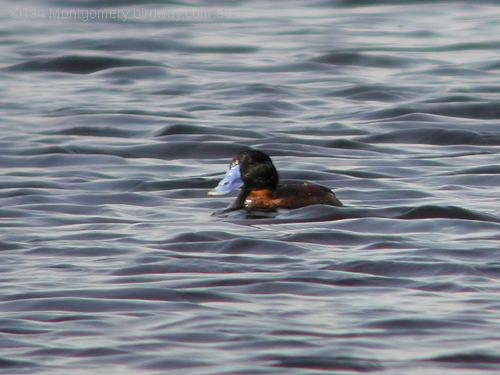
Maccoa Duck (Oxyura maccoa) by Ian

Maccoa Duck (Oxyura maccoa) by Ian

Con Joubert Bird Park
The Con Joubert Bird Park can be found on Desert Road in residential Randfontein and contains a permanent pan with a good bird hide. One can walk around the pan on the inside of the perimeter fence (1/2hr). Species to be seen include, Maccoa Duck, Black-necked Grebe, Little Grebe, Cape Shoveler, African Purple Swamphen, Red-knobbed Coot and Common Moorhen. Lesser Swamp-Warbler, African Reed-Warbler and African Reed-Warbler may be seen in the reedbeds and sometimes Ruff, Wood Sandpiper and Little Stint occur in summer.


Northern Farm (Diepsloot)
This nature reserve is one of Johannesburg’s best kept secrets, with over 300 recorded species.

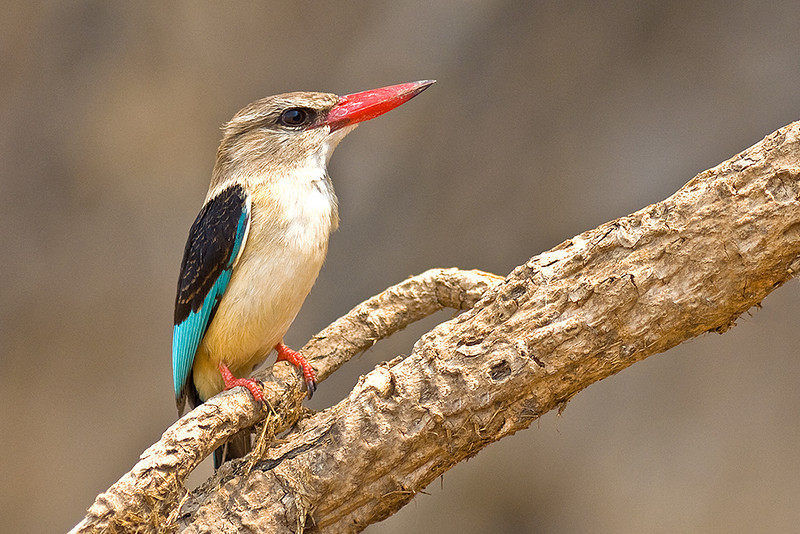
Brown-hooded Kingfisher (Halcyon albiventris) by Africaddict

Brown-hooded Kingfisher (Halcyon albiventris) by Africaddict

Yellow Wagtail, Goliath Heron, Little Bittern, Cape Longclaw, Red-capped Lark, African Fish-Eagle, African Goshawk, Osprey, African Purple Swamphen, Green-backed Heron, African Black Duck, Black-winged Pratincole and African Spoonbill. African Snipe, Red-chested Flufftail, Bar-throated Apalis, Lesser Striped Swallow, Black Crake, Chestnut-backed Sparrowlark, Maccoa Duck, Cape Shoveler and Southern Pochard are found as well. There are several other species that are hard to find in urban Johannesburg like the Orange-breasted Waxbill. Giant Kingfisher, Pied Kingfisher, Malachite Kingfisher and Brown-hooded Kingfisher are also resident in the reserve. The summer migrants also include Sedge Warbler, Great Reed-Warbler, African Reed-Warbler, Amur Falcon and Steppe Buzzard. White Stork are also seen over wintering in the reserve too.


Korsman Bird Sanctuary

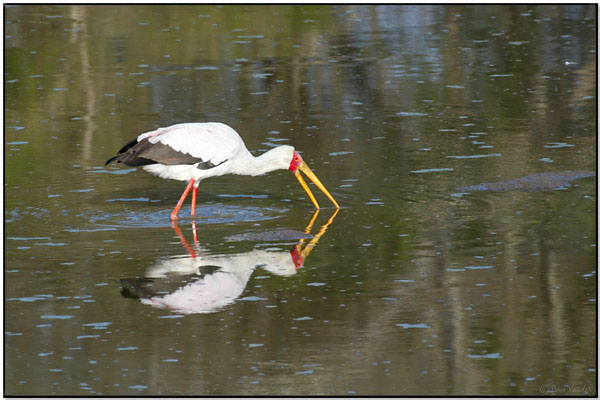
Yellow-billed Stork (Mycteria ibis) by Daves BirdingPix

Yellow-billed Stork (Mycteria ibis) by Daves BirdingPix

This sanctuary is often prolific with a variety of waterfowl. The hides are no longer accessible, but good views are available from “The Drive”, a 2km circular road which surrounds the pan. A spotting scope is recommended, as the area is fenced. Notable visitors are Black Heron, Greater Flamingo, Lesser Flamingo and Great Crested Grebe. There are several active heronries with Goliath Heron, African Spoonbill, Black-headed Heron, Grey Heron, Great Egret, Reed Cormorant and Little Bittern. The reedbeds and their edges should be actively searched for African Purple Swamphen, Black Crake, African Rail, Little Bittern and roosting Black-crowned Night-Heron. The open stretches of the pan almost always have Spur-winged Goose, Red-billed Teal, and numbers of Egyptian Goose and Yellow-billed Duck. A central island supports a colony of White-breasted Cormorant. The shore edges often hide Glossy Ibis, Hadeda Ibis and African Sacred Ibis. Black-winged Stilt and Pied Avocet are regulars and during the wader migration there are sometimes irregular visits from Wood Sandpiper, Common Sandpiper and Eurasian Curlew sandpiper. Spotted Thick-knee hide in the surrounding grasslands.


Florence Bloom bird Sanctuary
Florence Bloom Bird Sanctuary is found within Delta Park, with the entrance at the intersection of Road No.3 and Road No.5 in Victory Park. Species to be seen on the dam include African Black Duck, Little Grebe, Red-knobbed Coot and Common Moorhen. The surrounding reeds and trees is host to Willow Warbler, Great Reed-Warbler, Little Rush-Warbler and Tawny-flanked Prinia. Little Sparrowhawk, European Bee-eater, Red-throated Wryneck and African Palm-Swift have also been spotted.


Krugersdorp Game Reserve
The habitat is mainly grassveld with small dams and reedbeds at the northern-most end. The vast areas of open grassland in the reserve provide the visitor the opportunity to observe many of the grassland species of Gauteng. A densely wooded valley runs through the reserve and includes a selection of bushveld birds. Approximately 200 species have been recorded. There is a good network of roads and walking is not permitted, so one has to bird from the car.

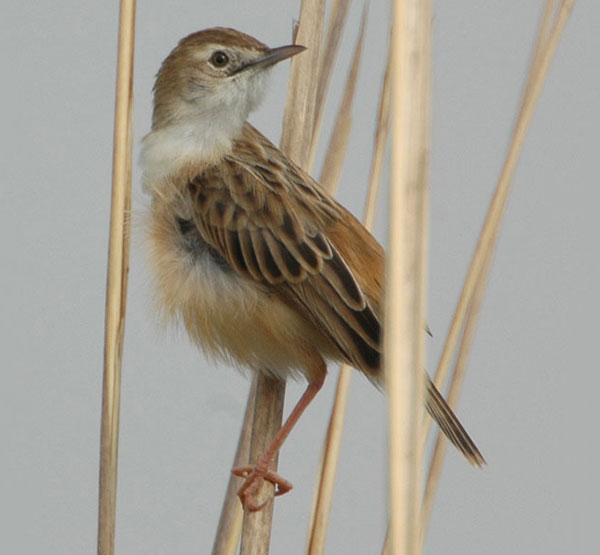
Zitting Cisticola (Cisticola juncidis) by Nikhil

Zitting Cisticola (Cisticola juncidis) by Nikhil

Birding
1) Grassveld areas include most of the reserve and the following species may occur; Wing-snapping Cisticola, Cloud Cisticola, Desert Cisticola, and Zitting Cisticola, Rufous-naped Lark, Ant-eating Chat and African Pipit. Several pairs of Southern Black Korhaan can be seen while the more secretive Kurrichane Buttonquail also occur. In summer Montagu’s Harrier have been recorded quartering over the grasslands.
2) The reedbeds house Southern Red Bishop, White-winged Widowbird, Red-collared Widowbird and Cape Grassbird.
3) The dam usually has Black-headed Heron, Cattle Egret, Glossy Ibis and African Sacred Ibis around it, with Yellow-billed Duck, White-faced Duck, Red-knobbed Coot and Egyptian Goose.
4) An exiting new feature is a large walk through aviary which boasts a wide variety of species. The aviary is built into an old quarry and provides natural vegetation for the birds.


Rondebult Bird Sanctuary, Germiston (Too numerous to list.)

Hamerkop (Scopus umbretta) by Africaddict

Hamerkop (Scopus umbretta) by Africaddict

Walter Sisulu National Botanical Garden
The Walter Sisulu National Botanical Garden is an outstanding birding locality close to the urban centre of Johannesburg. The relatively small area, virtually surrounded by urban development, is managed by the National Botanical Institute (NBI) and includes a diverse array of habitat types which ranges from steep cliffs surrounding a magnificent waterfall to open scrubland and riverine woodland. Several short walks run through the garden and the surrounding natural areas. The JCI Geological Trail has recently been developed and gives visitors the opportunity to not only walk along the Roodekrans Ridge and in the Nature Reserve portion of the garden, but also to learn something about the fascinating geology of the area. Guided tours can be arranged for groups. Information brochures, a map and a bird list are available at the gate or NBI office. A morning’s birding in the garden during summer can easily produce a list of 70 species. A total of 230 species have been recorded in the garden.
Birding
1) The Verreauxs’ Eagle is an icon of the area and attract visitors from all over. Generations of Verreauxs’ Eagle have bred on the steep cliff face next to the waterfall for many years. This is definitely one of the best sites in the country to view these masters of the african skies.

These pictures were taken by John Kormendy on trips to Johannesburg and Cape Town. Fantastic shots.
http://chandra.as.utexas.edu/~kormendy/southafricabirds.html