Birdwatching Adventure – May 2013

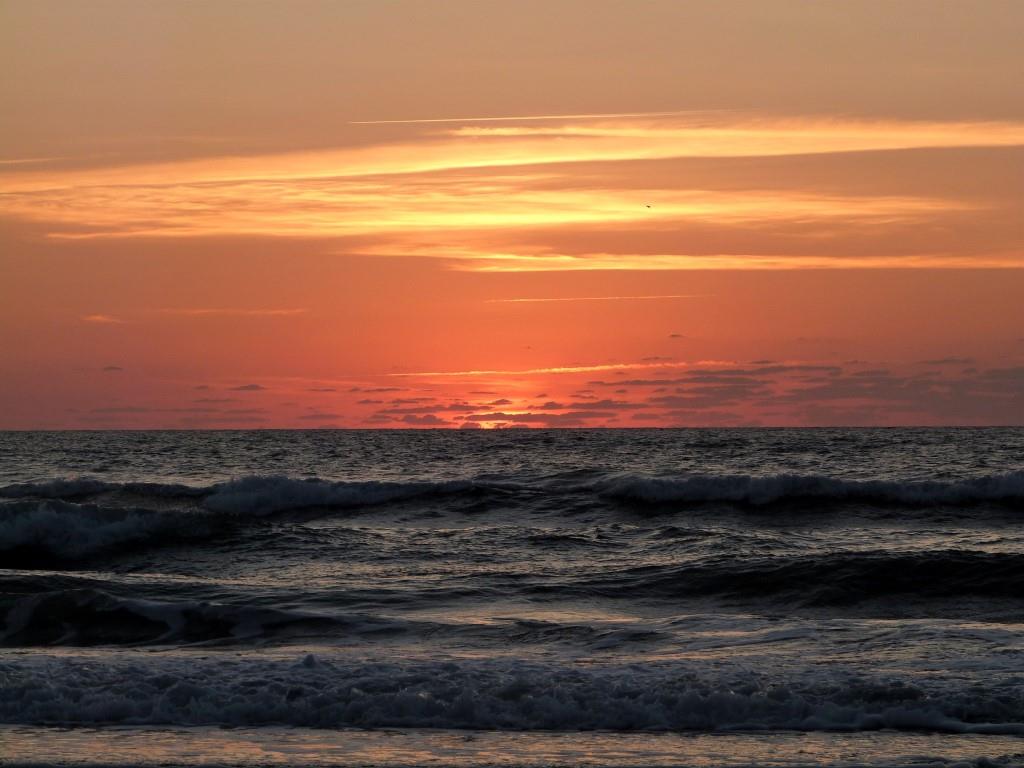
Sunrise at Patrick AFB by Lee

Sunrise at Patrick AFB by Lee

And they rose up early in the morning, and the sun shone upon the water, … (2 Kings 3:22a KJV)

We just got back from a spontaneous three day trip down to the Palm Beach Zoo, (Palm Beach, FL) and up to the Viera Wetlands (Viera, FL) and then back home yesterday. As we rode along and since I haven’t been driving because of my eye situation, I kept a list of the birds along the way. The list below was the ones I reported to e-Bird. This includes the birds that were at the Zoo, but not captives. Our loop took us down US 27 and then back up I-95, through Orlando and back across I-4 to Winter Haven. Not a bad list. The ones in bold were special finds. In fact, the Northern Rough-winged Swallow and Bank Swallow were added to my life list. I am now at 245 on their list. The list was kept for each county we went through. (It gave me something to do while riding.)

Black-bellied Whistling-Duck
Muscovy Duck (Domestic type)
Indian Peafowl (Domestic type)
Wood Stork
Magnificent Frigatebird
Double-crested Cormorant
Anhinga
Brown Pelican
Least Bittern
Great Blue Heron
Great Egret
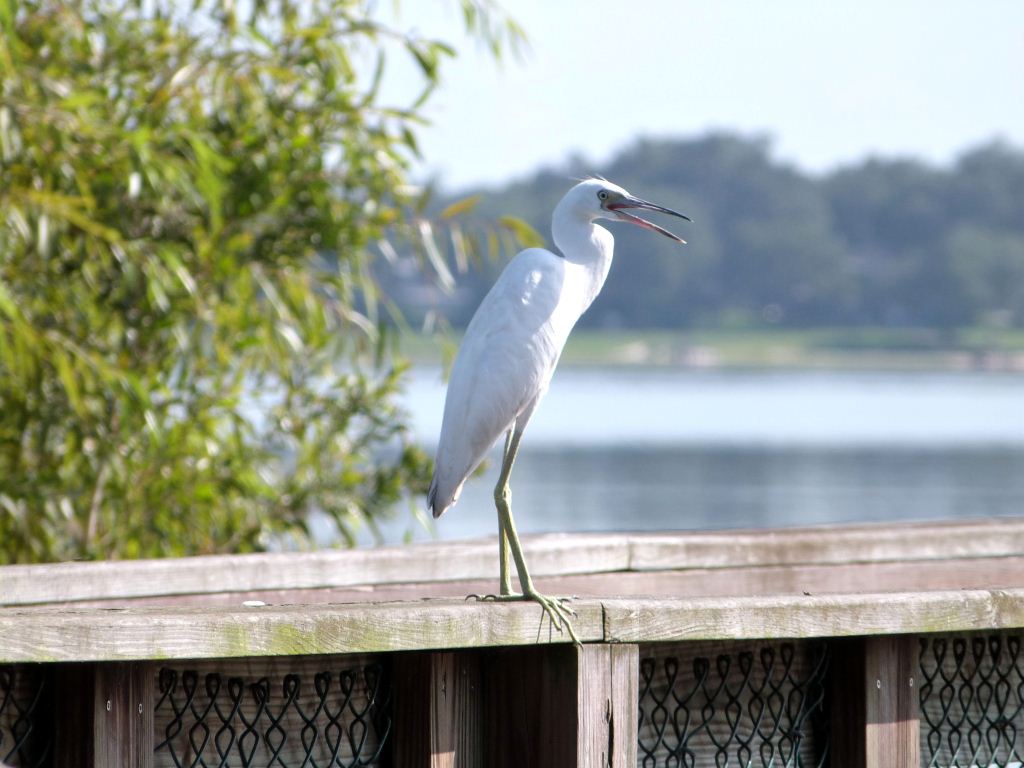
Little Blue Heron
Tricolored Heron
Cattle Egret
Black-crowned Night-Heron
White Ibis
Glossy Ibis
White-faced Ibis
Black Vulture
Turkey Vulture
Osprey
Swallow-tailed Kite
Bald Eagle
Red-shouldered Hawk
Common Gallinule
American Coot
Sandhill Crane
Ruddy Turnstone
Sanderling
Rock Pigeon
Eurasian Collared-Dove
Mourning Dove
Belted Kingfisher
Red-bellied Woodpecker
Crested Caracara
American Crow
Fish Crow
Northern Rough-winged Swallow
Bank Swallow
Northern Mockingbird
European Starling
Northern Cardinal
Red-winged Blackbird
Common Grackle
Boat-tailed Grackle
House Sparrow
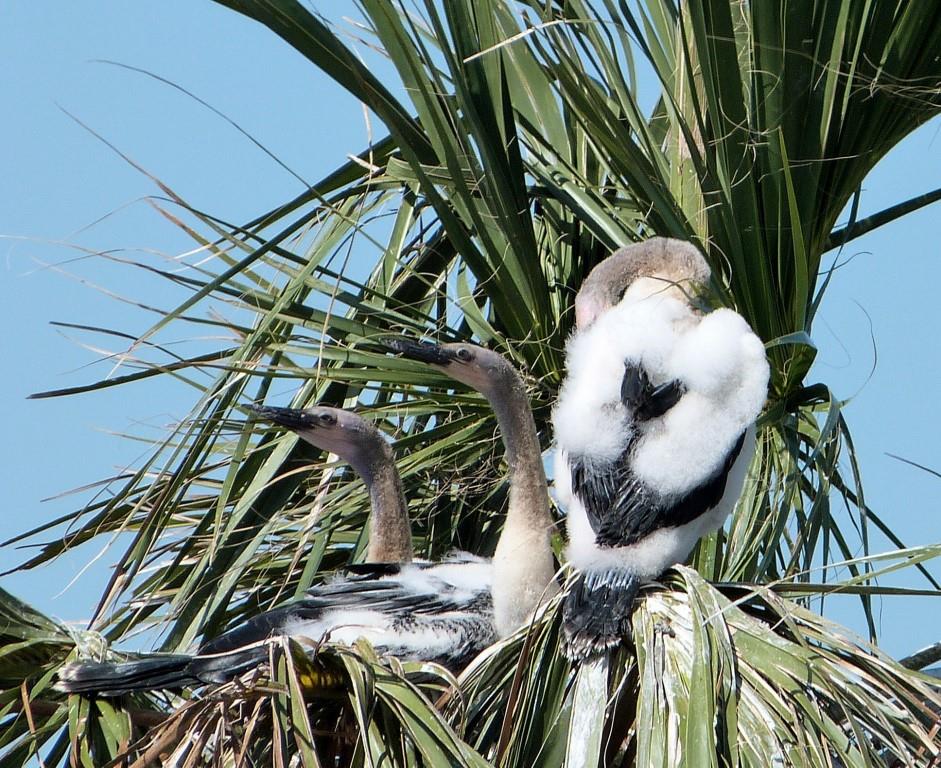
Anhinga (Anhinga anhinga) Immatures at Viera Wetland by Lee

Anhinga (Anhinga anhinga) Immatures at Viera Wetland by Lee

The Viera Wetlands count is included with those above, but is the individual count just for Viera. That actually was a birdwatching destination and e-Bird likes it counted separately. It is one of our favorites over on the east side of Florida. Unfortunately, it has apparently been dry over there, plus most of the Winter Birds have gone back north. So, the birding wasn’t as plentiful as normal. Here is the list of the birds we saw.  We stopped there in the afternoon on Wednesday and then visited it again Thursday before heading home. We saw 23 species altogether .

Species Name 15-May 16-May
Black-bellied Whistling-Duck 2
Anhinga 9 6
Brown Pelican 2
Least Bittern 1
Great Blue Heron 8 6
Great Egret 10 14
Little Blue Heron 1 1
Tricolored Heron 1 1
Cattle Egret 11 15
White Ibis 7 7
Glossy Ibis 2 7
White-faced Ibis 1
Turkey Vulture 1 15
Osprey 2
Common Gallinule 5 13
American Coot 8 4
Belted Kingfisher 1
Red-bellied Woodpecker 2
Crested Caracara 1
Fish Crow 1 2
Red-winged Blackbird 10 12
Common Grackle 3
Boat-tailed Grackle 18 22

*

Northern Crested Caracara (Caracara cheriway) at Viera Wetlands by Lee

Northern Crested Caracara (Caracara cheriway) at Viera Wetlands by Lee

The Crested Caracara was the best find. We had taken our photos and had stopped at the exit to put our cameras away. Dan had his in the trunk and mine was bagged when I look up and there he was right by us on the ground. Needless to say, we scrambled to get the camera back out, hoping we wouldn’t scare it off. As you can see, we got the photos of him.

I will save the Palm Beach Zoo birds and photos until another post. I took over 700, so it might take a day or two.

Great Blue Heron (Ardea herodias) Watching young nearby by Lee at Viera Wetlands

Great Blue Heron (Ardea herodias) Watching young nearby at Viera Wetlands

Here is what is being watched so closely:

Great Blue Heron (Ardea herodias) Young by Lee at Viera Wetlands

Great Blue Heron (Ardea herodias) Young at Viera Wetlands

See:

Viera Wetlands

e-Bird Home Page

Wordless Birds

*
Seeing Pink at Circle B Bar Reserve

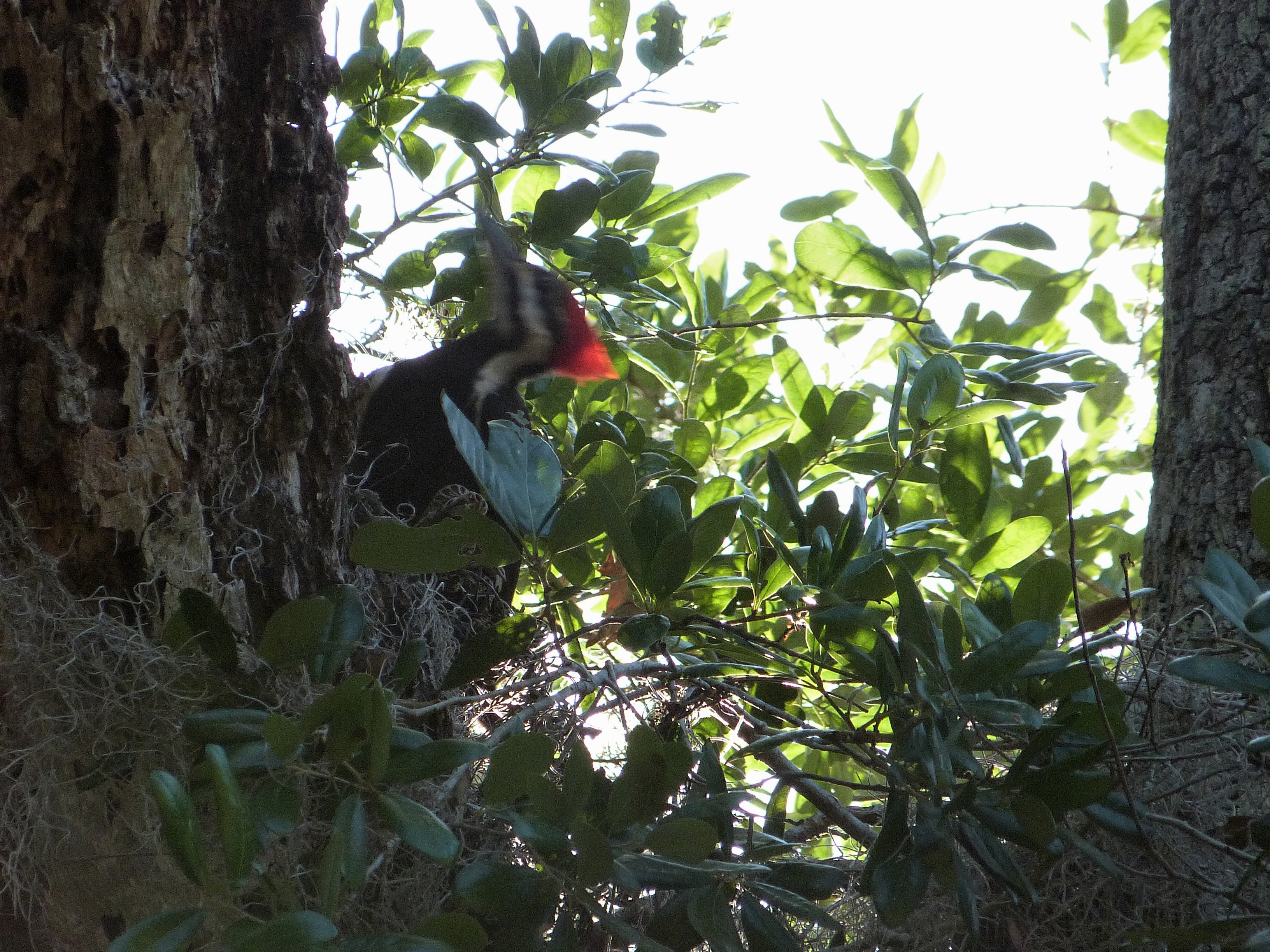
Pileated Woodpecker by Lee at Circle B

Pileated Woodpecker by Lee at Circle B 4-9-2013

Then God said, “Let the waters abound with an abundance of living creatures, and let birds fly above the earth across the face of the firmament of the heavens.” So God created great sea creatures and every living thing that moves, with which the waters abounded, according to their kind, and every winged bird according to its kind. And God saw that it was good. And God blessed them, saying, “Be fruitful and multiply, and fill the waters in the seas, and let birds multiply on the earth.” (Genesis 1:20-22 NKJV)

We spent  a short time at Circle B Bar Reserve today and thought it would be the same old-same old. Well, it wasn’t. A lady we ran into said the same thing I was thinking, “I wasn’t expecting much today.”

When we got out of the car, I spotted a bird landing in the tree nearby which turned out to be a Pileated Woodpecker. That got me excited  right away.

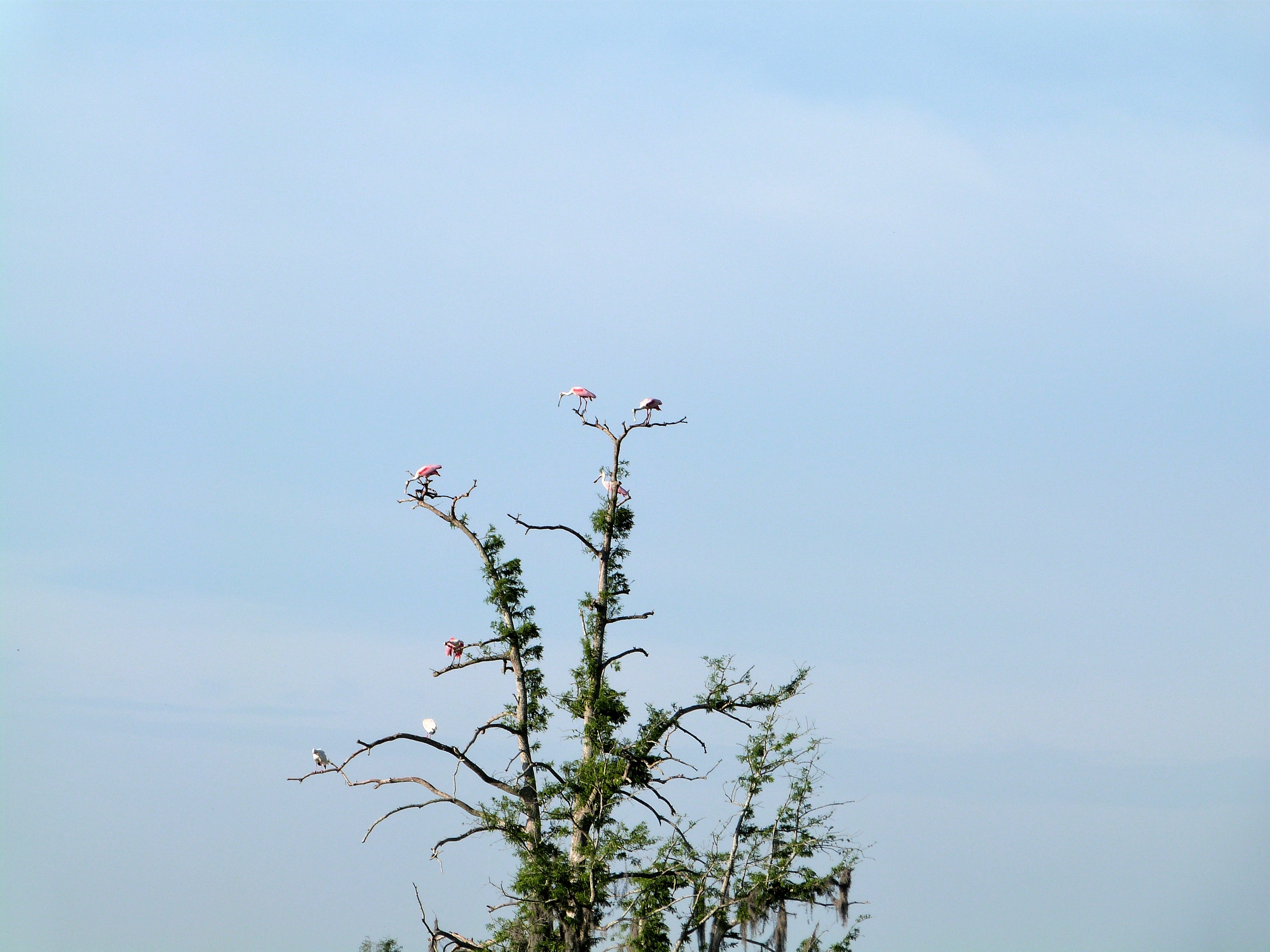
As soon as we turned the corner to head to the marsh, which is extremely dry because there has not had much rain all winter, I saw “Pink.”

Roseate Spoonbill Tree

Roseate Spoonbill Tree

I am putting a Slideshow here so you can see why I got so excited. It turned out to be a fantastic birdwatching adventure today. Ignore some of the blurred photos, but were inserted to help tell the story of this adventure. The Roseate Spoonbills are spotted out there, but I have never seen so many and so close as today. They kept landing on that tree as you will see and it built up until there were 15 of them in that tree.

Not only did we see the Pileated Woodpecker and the Roseate Spoonbills, but we saw quite a few others also. They are included in the slideshow also. Enjoy!

This slideshow requires JavaScript.

To See these photos in a Gallery – Click Here

Other Birdwatching Trips

*

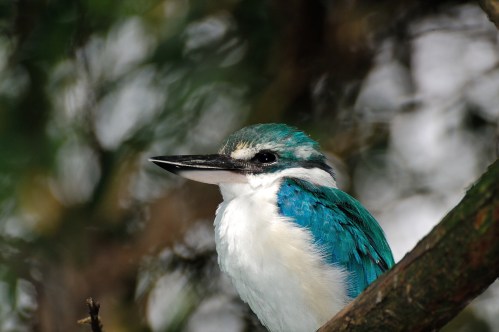
Birdwatching at the Jacksonville Zoo by Dan’s Pix

 White-collared Kingfisher by Dan's Pix

Collared Kingfisher by Dan’s Pix

As soon then as they were come to land, they saw a fire of coals there, and fish laid thereon, and bread. Jesus saith unto them, Bring of the fish which ye have now caught. Jesus saith unto them, Come and dine. And none of the disciples durst ask him, Who art thou? knowing that it was the Lord. (John 21:9-12 KJV)

We went on a trip last year and we stopped by the Jacksonville Zoo on the way. Dan recently posted his favorite photos of the zoo on his webpage, Dan’s Pix. I place my photos up on line right away, but he takes time to get them just right before they are posted. That is why his are so much better and the fact that he uses much better photography gear than I do.

I trust you will enjoy them.

Dan at Work at Jacksonville Zoo

Dan at Work at Jacksonville Zoo

Feel free to check out his other great photos – Dan’s Pix home page.

*

Birdwatching Eagles on Communications Tower

Third to arrive

Third to arrive

Doth the eagle mount up at thy command, and make her nest on high? (Job 39:27 KJV)

But they that wait upon the LORD shall renew their strength; they shall mount up with wings as eagles; they shall run, and not be weary; and they shall walk, and not faint. (Isaiah 40:31 KJV)

Last night we went on my first birdwatching adventure since my eye surgery. After an article was shown to me, by a friend, we had to check it out. And it is only about 3 miles from our house.

Here is the article’s link: Eagles Making a Home on Sheriff’s Communications Tower

First Eagle Chased off by Grackle-crop

First Eagle Chased off by Grackle

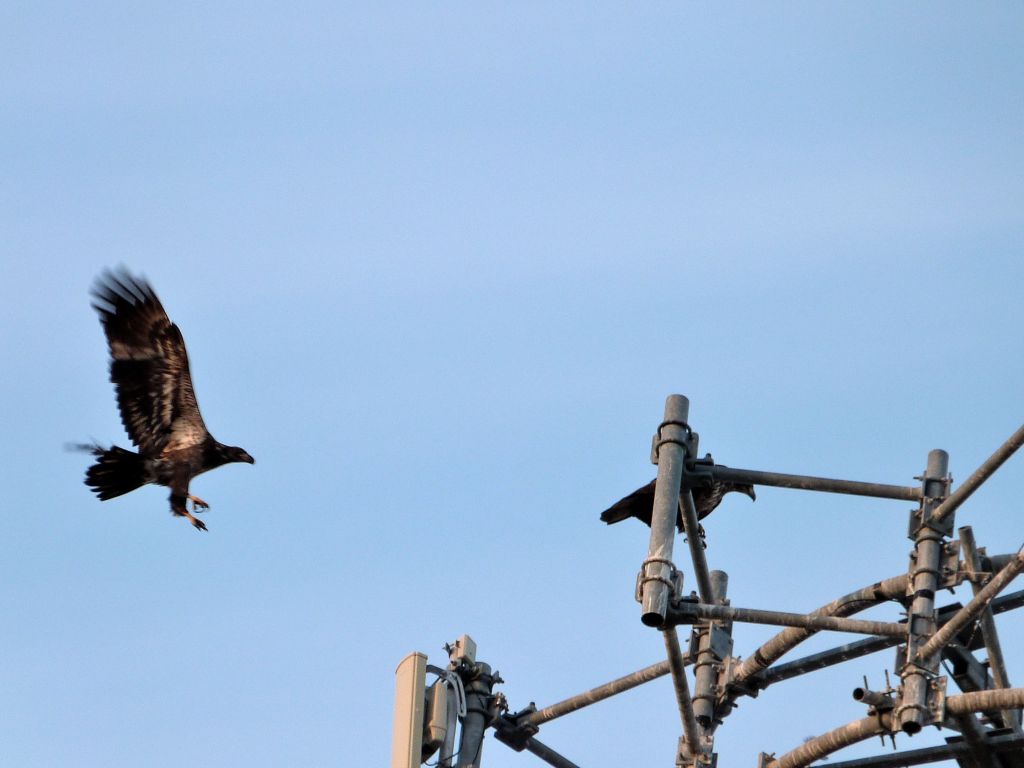
We arrived around 4:30 pm and we had other birdwatchers coming to see the event. At first there were quite a few Boat-tailed Grackles up on the tower. When the first young Eagle arrived, they promptly chased him off.

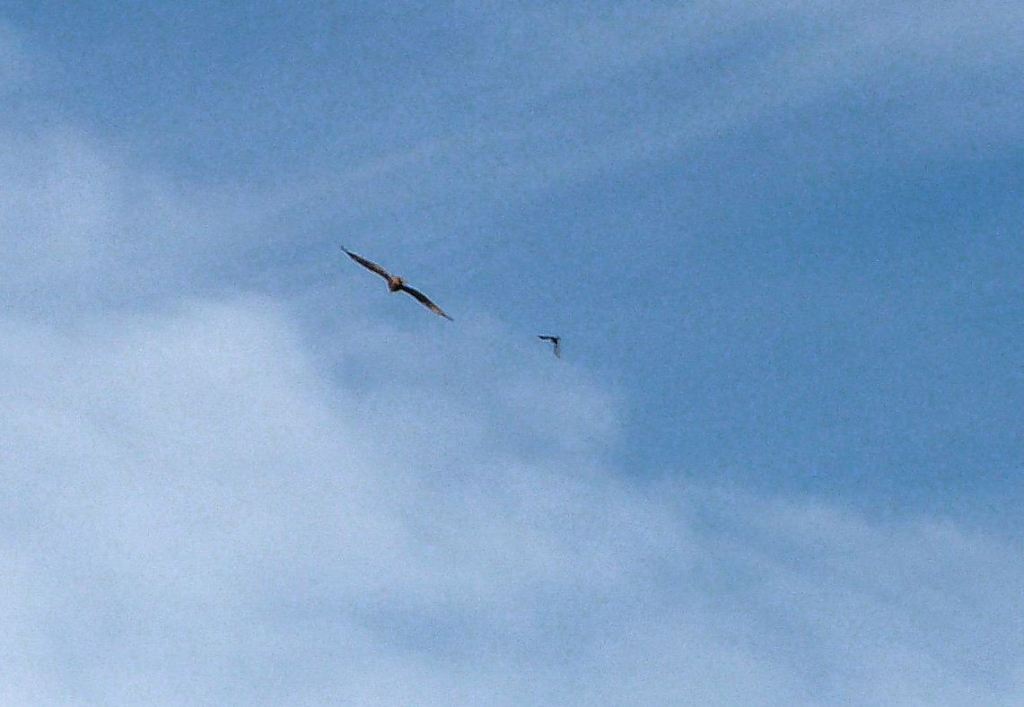
When the second Eagle came in, he landed and the Grackles decided it was time to leave. From there on, the mostly young eagles came in one or two at a time. Wow! I have never seen that many Bald Eagles together at one time. By the time we left there were 25 that had come to the tower. When one landed, as the article said, they would start greeting each ofter. The lady standing by us keep coming up with stories they might be telling, like; “How was your day?”, “You should see the large fish that I caught”, “Went over to …..” It was fun.

 The setting Sun

The setting Sun

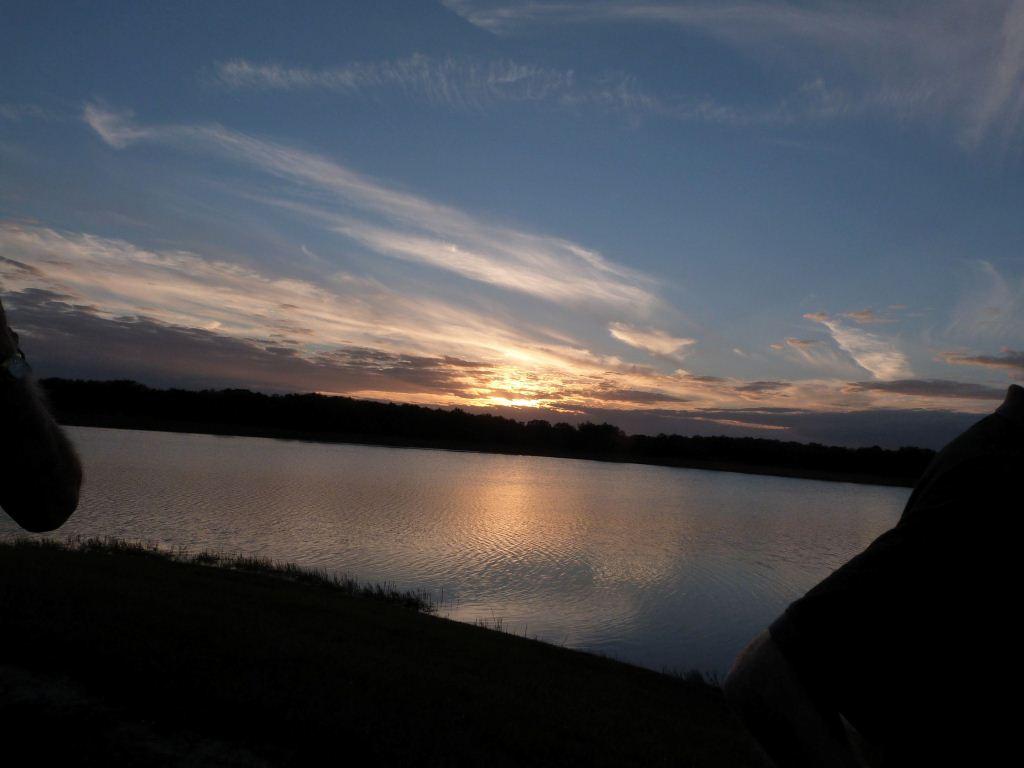
We also saw 2 Sandhill Cranes, 12 Lesser Scaups on the pond, 2 Killdeer, 4 White Ibises flying by and of course the Grackles. It was a nice evening and we watched the sun set over the pond.

The Tower with 20 Bald Eagles

The Tower with 20 Bald Eagles

And they answered and said unto him, Where, Lord? And he said unto them, Wheresoever the body is, thither will the eagles be gathered together. (Luke 17:37 KJV)

The tower is 190 feet tall and we were standing back quite a bit. I know my eye is blurry, but considering how zoomed in these photos are, I think they are not bad. Shot several videos trying to get the sound of their greetings, but every one was talking during them. We were all as excited as the Eagles to see each other and have their chats.

What an event.

Here is the tower as we saw it without the aid of the camera.

The Tower without zoom

The Tower without zoom

Bald Eagles are of course one of our Birds of the Bible with at least 34 verses mentioning them. They belong to the Accipitridae – Family (Kites, Hawks & Eagles).

I will have more photos and video later.

*

Birdwatching – South Lake Howard Nature Park 7-28-12

Black-Crowned Night Heron at S Lk Howard

Black-Crowned Night-Heron at S Lk Howard

We spent about 25 minutes at the South Lake Howard Nature Park seeing what was around. I was trying to learn how to take photos “right-eyed” (See Anniversary and Other Things). Dan can shut one eye or the other, winking, but I can’t. I only can close the right eye. When I try to wink with the left eye, both eyes go shut. Oh, well, no one is perfect. Glad we stopped by the park to practice my new “technique.”

Little Blue Heron immature

Little Blue Heron immature

We were walking on the boardwalk on the Lake Howard side and spotted a Tricolored Heron and an immature Little Blue Heron. Just as we pulled up the cameras, a Black-crowned Night-Heron popped up on the rail between us and them. Wow! He was very close and we were able to get its photo. Dan kept getting closer to get better shots and the Heron just stayed there until I got too close. Most times we see a Night-Heron, they are hidden in the grass or not really visible. After he left, another Little Blue hopped up on the rail. An Anhinga was in a tree and one of the birds flew to a tree.

Red-winged Blackbird female

Red-winged Blackbird female

When we crossed the road to the pond side, we spotted a Great Blue Heron perched on a tree. The Osprey was up on the Tower checking out the normal Bald Eagles’s domain. I am including the 17 species that I turned in to the eBird.org listing service. It is a nice way to keep track of your birdwatching adventures here in America. It is only for our birds. Not sure if other countries have something like it or not.

Trust in the LORD, and do good; so shalt thou dwell in the land, and verily thou shalt be fed. Delight thyself also in the LORD; and he shall give thee the desires of thine heart. (Psalms 37:3-4 KJV)

Enjoy the Slideshow.

This slideshow requires JavaScript.

South Lake Howard Nature Park, Polk, US-FL
Jul 28, 2012 9:00 AM – 9:25 AM
Protocol: Traveling
0.5 mile(s)
17 species (+1 other taxa)
Muscovy Duck (Domestic type) 3
Great Blue Heron 1
Great Egret 3
Little Blue Heron 2
Tricolored Heron 1 Juvenile 1
Black-crowned Night-Heron 1
White Ibis 5
Black Vulture 1
Osprey 1
Common Gallinule 3
Limpkin 1
Mourning Dove 2
Monk Parakeet 4
Blue Jay 2
Fish Crow 1
Northern Mockingbird 1
Red-winged Blackbird 3
Boat-tailed Grackle 2
*

Birdwatching at Lake Morton and S. Lake Howard

With all that has been going on lately, we have not had much time or chance to go visit the birds. When Tropical Storm Debby came by, she dropped quite a bit of rain in the area. Some “true” birdwatchers were out and about seeing some really neat birds that were blown off course. We played the “fair weather” birders and stayed indoor where it was dry. Some areas had 12-15 inches, but we had about 6 inches of rain here at the house.

On the 28th we stopped by Lake Morton, in Lakeland, on the way to an errand. We took the cameras and knew the local birds would be there. Not too many surprises other than I counted over 30 Mute Swans. This is even with all the eggs that were stolen from the nests. Also, I found several Wood Ducks swimming around, an immature Wood Stork, and three “Aflac” Mallard Ducks sitting in the shade of a park bench.

On the 2nd, last evening, we took our cameras with us and spent a few minutes taking photos of the flooding at South Lake Howard Nature Park. The water has receded some from earlier. At one point last week, the “island” was under water completely. We saw it then, but didn’t have a camera with us as we drove by.

Decided to share some of the photos of the two visits. We saw – Mute and Black Swans, Wood Ducks and Wood Storks, Mallards, Ospreys, Laughing Gulls, Great Egret, Anhingas, Red-winged and Boat-tailed Blackbirds, Mourning Doves, Rock Pigeons, White Ibises, Great Blue Heron, Limpkins, Muscovy Ducks, Common Gallinules, and heard Monk Parakeets and a Red-bellied Woodpecker. Not bad for about 30 minutes at Morton and 10 minutes at the Nature Park. Some of the photos are just of the water. Trees are standing in water that normally are on dry ground.

He is like a man which built an house, and digged deep, and laid the foundation on a rock: and when the flood arose, the stream beat vehemently upon that house, and could not shake it: for it was founded upon a rock. (Luke 6:48 KJV)

*

All photos are by me. Dan hasn’t showed me his yet. Bummer, his are always better. If you know what kind of Gull that is, leave a comment, please. I think they are young and I am not the best at IDing them.

This slideshow requires JavaScript.

*

Birdwatching at MacDill AFB, May 2012

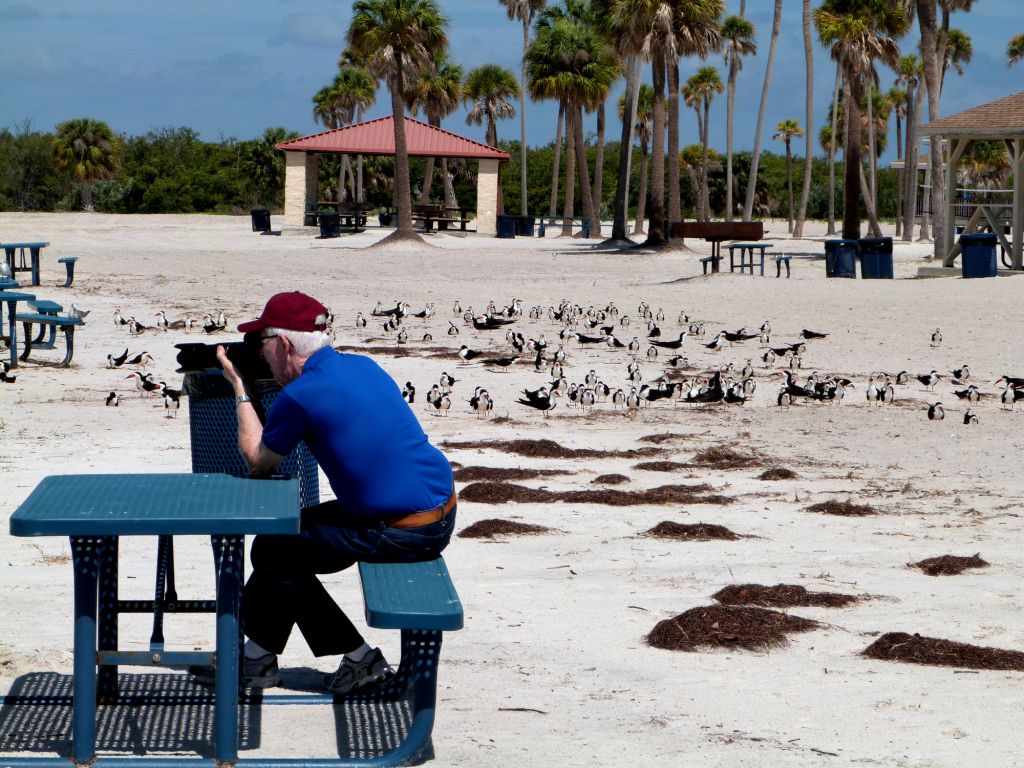
Dan and Black Skimmers

Dan and Black Skimmers

Today, Dan and I had to run over to Tampa for a couple of errands. We stopped by the MacDill AF Base to see how the birds were faring out on their beach on Tampa Bay. When we were there a month or so ago, there were lots of shorebirds. Since there have been many of reports lately from the Listing Service of migrants passing through the state, we thought we would take a look. Tampa is about 45 miles to the west of us and closer to the Gulf of Mexico. We didn’t have the time to go on over to the gulf.

Yellow-crowned Night Heron

Yellow-crowned Night Heron

Our biggest surprise, and the only one, was a pair of Yellow-crowned Night Herons along one of the canals. Down at the beach, we only found the usual Skimmers, Laughing and Ring-billed Gulls, two kinds of Terns; Royal and Sandwich, Turnstones, Willet, White Ibises, and the proverbial Brown Pelicans flying by in formation. A little disappointing, but enjoyable none the less. Even when I only see one bird, I enjoy my birdwatching adventures. I assume most of the birds have already passed by or they were not in much of a beach mood today.

Ruddy Turnstone

Ruddy Turnstone

Even though few species seen today, aren’t they all amazing to watch? I am always amazed at the variety of birds that we get the pleasures of watching.

Which doeth great things past finding out; yea, and wonders without number. (Job 9:10 KJV)

White Ibis

White Ibis

And

Some of the birds at the beach

Some of the birds at the beach Laughing Gulls, Royal Terns and Black Skimmers

I also shot a video of some of the birds at the shore. There are Black Skimmers, which I think are cute walking around, Royal Terns, Sandwich Tern and Laughing Gulls relaxing together.

*

*

One other bird spotted out my back window a few days ago was this House Finch. All winter the normal House Finches and some orange variant ones visited the feeders. This one seems to have combined the two together. Thought it was rather different and wanted to share it. It was shot through the window and screen, so not the best shot.

Interesting House Finch at feeder

Interesting House Finch at feeder

*

Zoo Miami’s Wings of Asia – Wow! – II

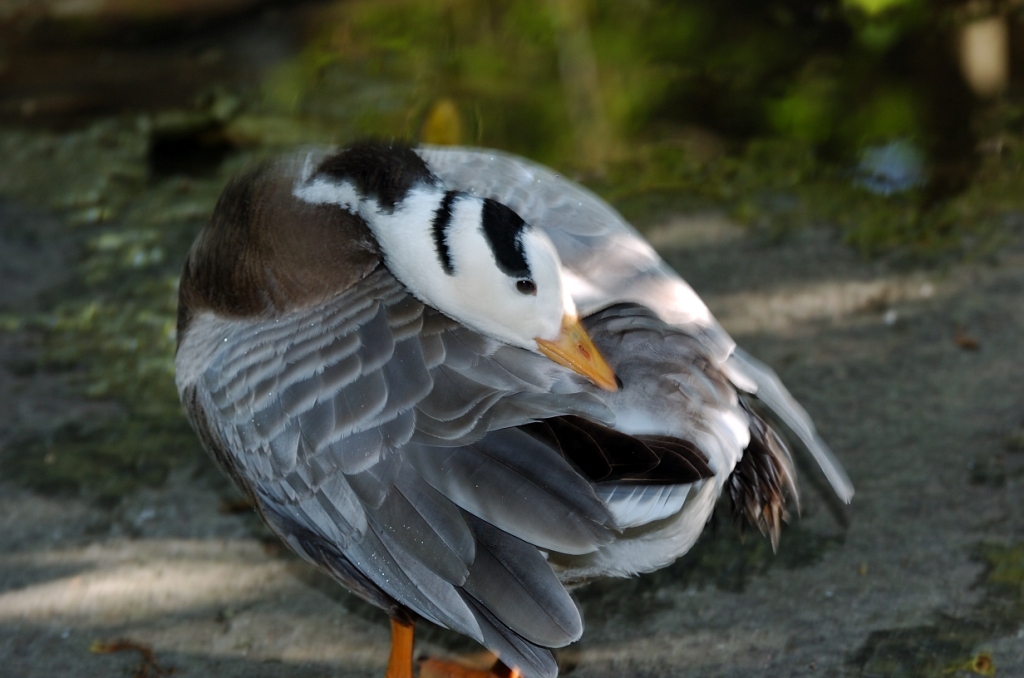
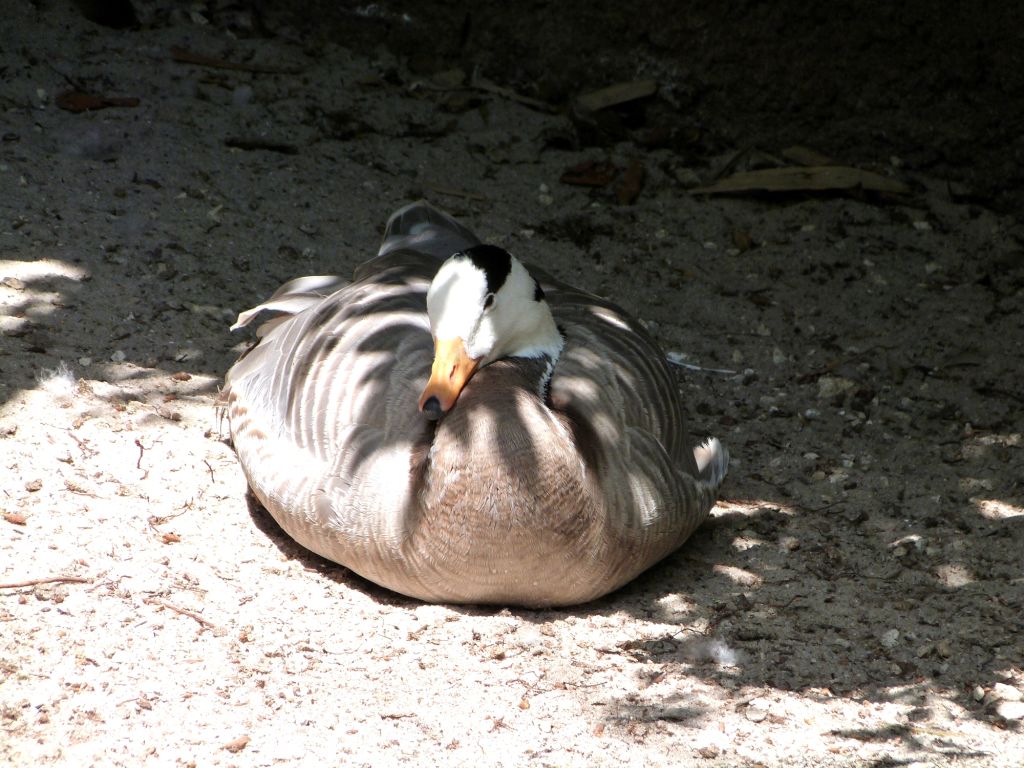
Bar-headed Goose (Anser indicus) by Dan at Zoo Miami

Bar-headed Goose (Anser indicus) by Dan at Zoo Miami

In Zoo Miami’s Wings of Asia – Wow! – I our trip their was introduced. Now to continue with our adventure there. I am still sorting photos, but I have most of the water birds figured out.

First, here are two quotes about the aviary from Zoo Miami’s website. “Brilliantly colored pheasants, hornbills, pigeons and many other birds show off their shimmering, iridescent plumage in a large, lush free-flight enclosure that provides them with unencumbered flight. Tiny and large birds swoop overhead, perch on branches and even strut and stroll right by visitors. The air is alive with bird activity, beautiful birdsongs, trickling brooks and waterfalls.” They said that so much better than I could, but it is so true.

“The bird collection is quite diverse with rare, colorful species that sing attractive songs and make unusual vocalizations. Some of the birds are cranes, rails, mynahs, parrots, pheasants, thrushes, fruit-pigeons, barbets and woodpeckers. The birds, vastly different in size, range from 10-gram (.35 oz) Japanese white-eyes to 7000-gram (15.4 lb) sarus cranes…  Many of these species are rare in zoo collections, and some can only be seen at Zoo Miami as part of our participation in wildlife conservation breeding initiatives such as the Species Survival Program.”

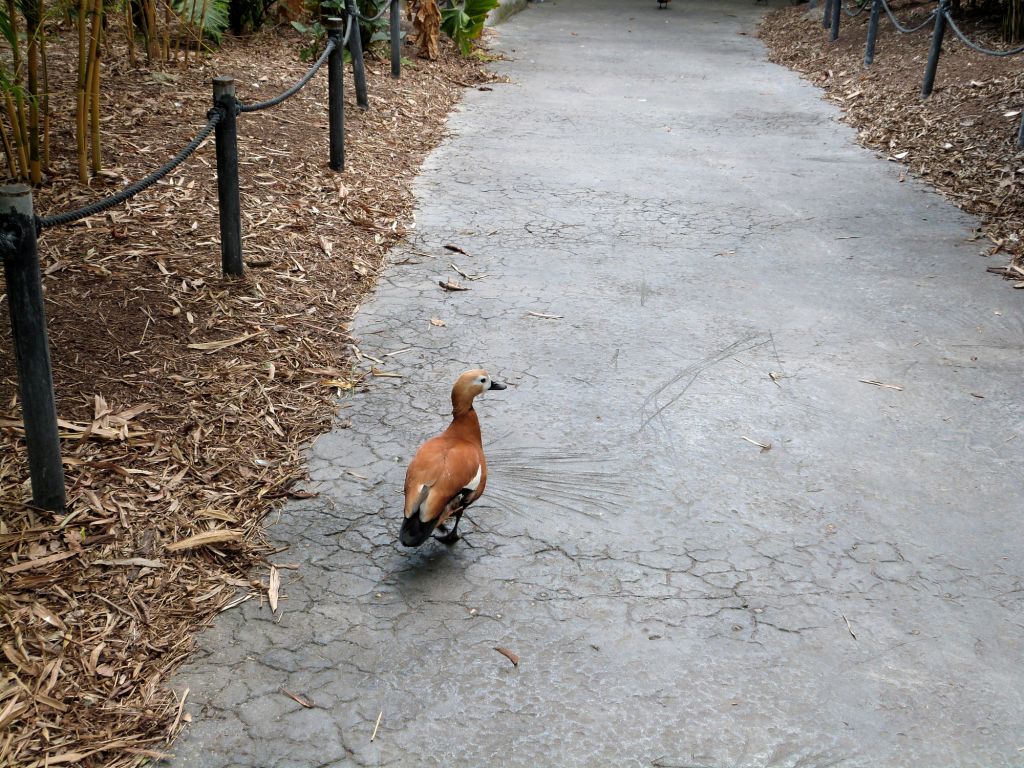
Ruddy Shelduck (Tadorna ferruginea) Zoo Miami by Lee

Ruddy Shelduck (Tadorna ferruginea) Zoo Miami by Lee

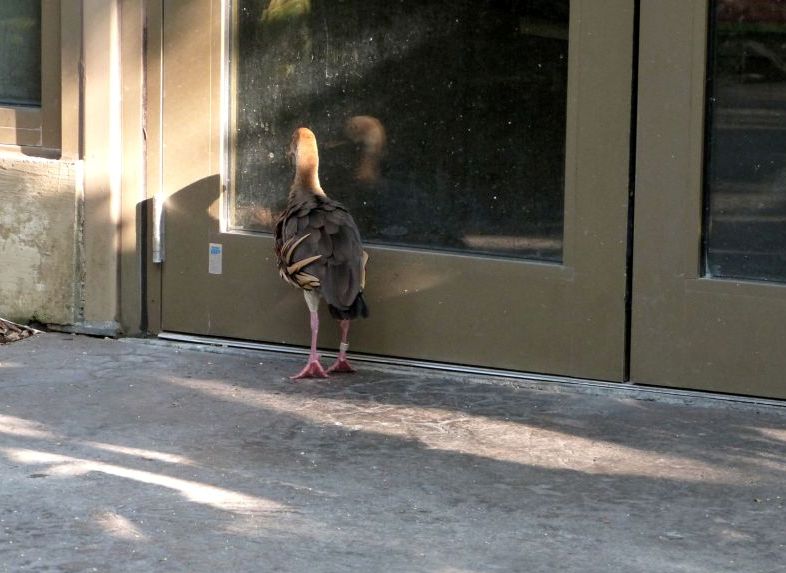
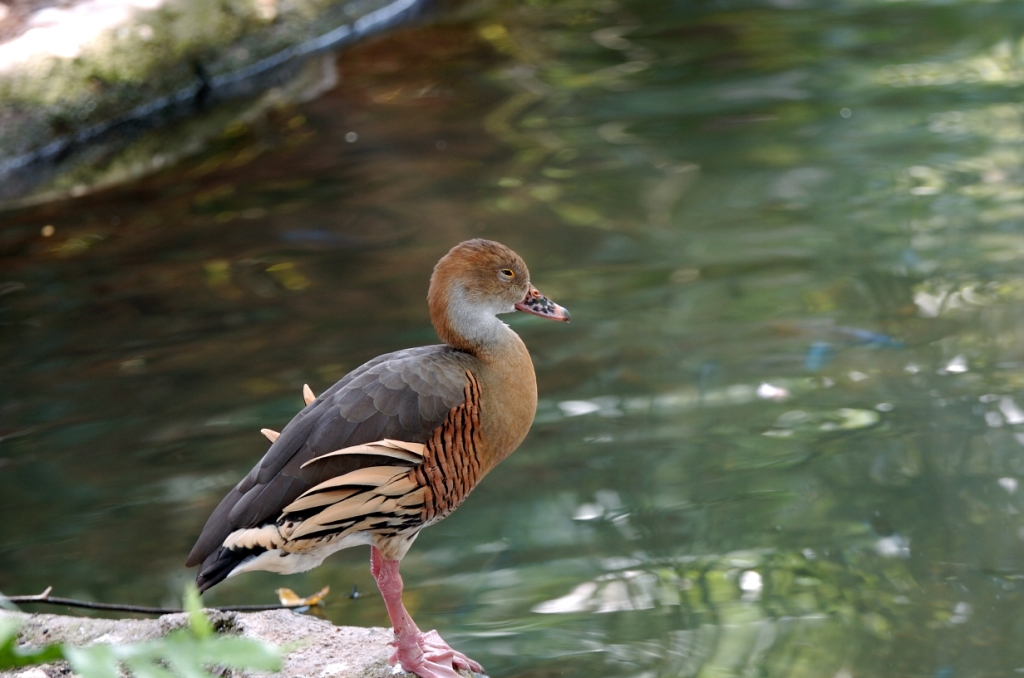
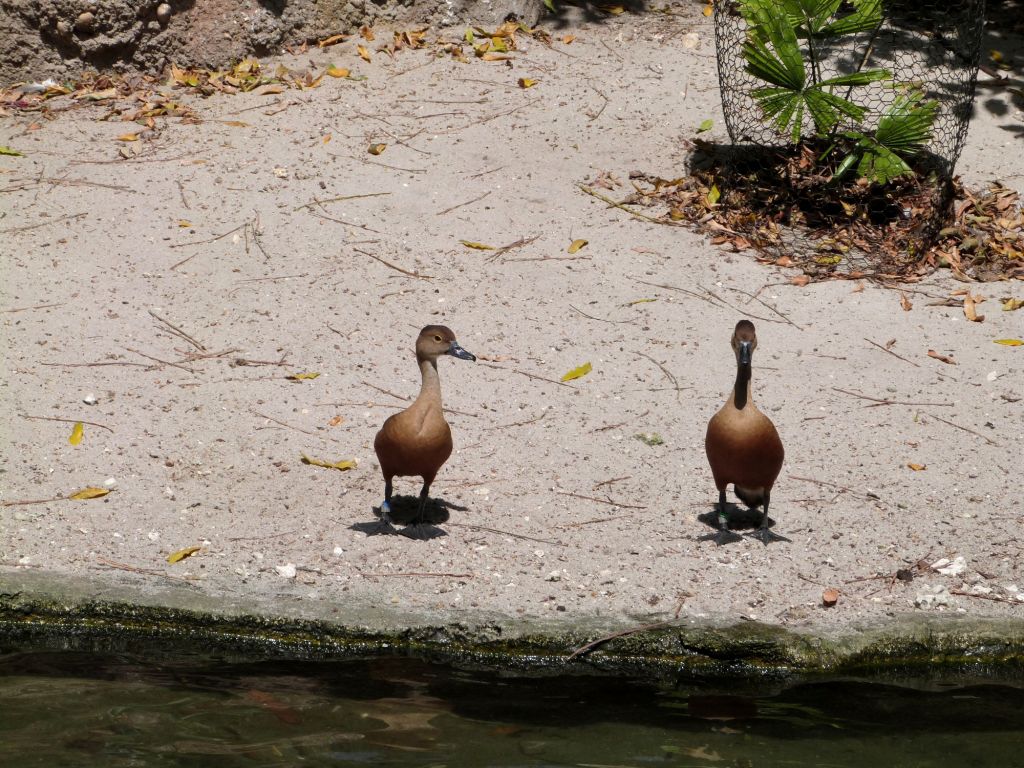
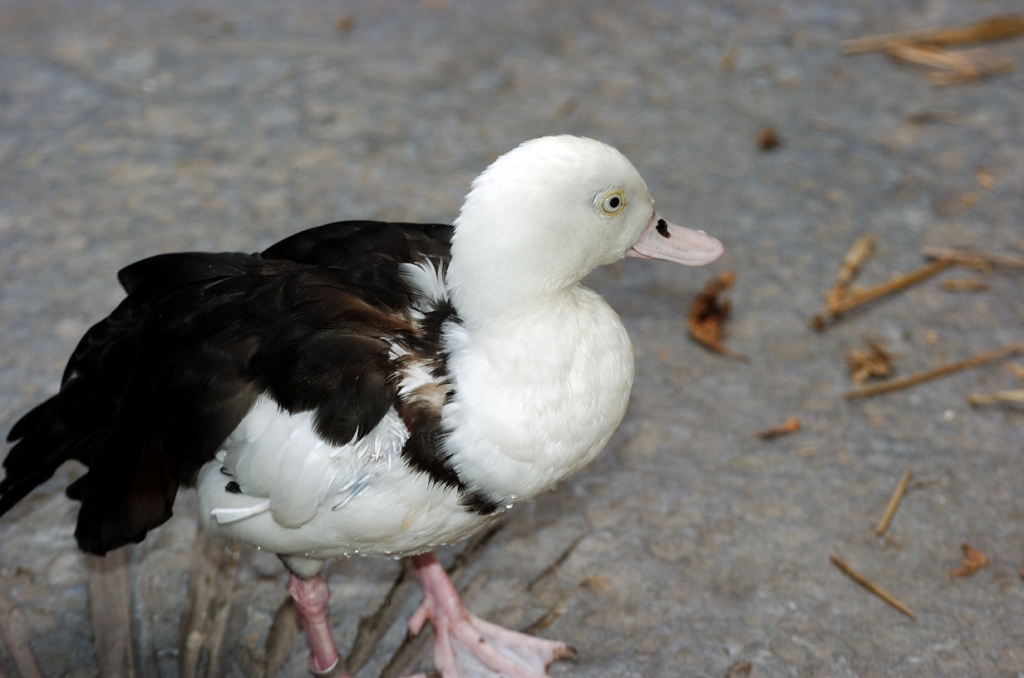
Strut some of them do! I’ll save the cranes for another article, but the Ruddy and Raja Shelducks were strolling all around. The Plumed Whistling Duck was checking out the entry door. Maybe looking for a way out or to see if the next visitors were on the way. Why would he want to leave such a fantastic surrounding?

Plumed Whistling Duck (Dendrocygna eytoni) Zoo Miami by Lee

Plumed Whistling Duck (Dendrocygna eytoni) Zoo Miami by Lee

Just in the Anatidae – Ducks, Geese & Swans Family there were 18 species that we were able to see and photograph. In addition there were 6 members of that family we found around the zoo (Amazon & Beyond and Cloud Forrest). Some we have seen previously, but most were ones not seen by us. Here is a list of those with a link to a photo and a slide show at the bottom. I am starting with these because they are the some of the first you encounter when you enter the aviary. By wandering around on the paths you actually arrive at three different heights with different bird species hanging out. More on that later.

Bar-headed Goose (Anser indicus) Zoo Miami by Lee

Bar-headed Goose (Anser indicus) Zoo Miami by Lee

The Bar-headed Goose’s picture was selected because of its behavior. I am featuring it because the Bar-headed Goose is thought to be one of the world’s highest flying birds, having been heard flying across Mount Makalu (the fifth highest mountain on earth at 8,481 metres (27,825 ft)) and apparently seen over Mount Everest (8,848 metres (29,029 ft), although this is a second hand report). This incredibly demanding migration has long puzzled physiologists and naturalists: “there must be a good explanation for why the birds fly to the extreme altitudes […] particularly since there are passes through the Himalaya at lower altitudes, and which are used by other migrating bird species” quoted from Black & Tenney (1980). In fact bar-headed geese is now believed that they do take the high passes through the mountains. The challenging northward migration from lowland India to breed in the summer on the Tibetan Plateau is undertaken in stages, with the flight across the Himalaya (from sea-level) being undertaken non-stop in as little as seven hours. Surprisingly, despite predictable tail winds that blow up the Himalayas (in the same direction of travel as the geese), bar-headed geese spurn these winds, waiting for them to die down overnight, when they then undertake the greatest rates of climbing flight ever recorded for a bird, and sustain these climbs rates for hours on end.

The Bar-headed Goose is known to be well equipped for this incredibly challenging migration. It has a slightly larger wing area for its weight than other geese, which is believed to help the goose fly at high altitudes. Studies have found that they breathe more deeply and efficiently under low oxygen conditions. The haemoglobin of their blood has a higher oxygen affinity than that of other geese. Again we see a well designed avian creation by its Creator. The Lord knew the conditions and heights it would need to cross to reach the feeding grounds provided for it.

Also, to every beast of the earth, to every bird of the air, and to everything that creeps on the earth, in which there is life, I have given every green herb for food”; and it was so. (Genesis 1:30 NKJV)

I know all the birds of the mountains, And the wild beasts of the field are Mine. (Psalms 50:11 NKJV)

The Bar-headed Goose migrates over the Himalayas to spend the winter in parts of India (from Assam to as far south as Tamil Nadu. The winter habitat of the Bar-headed Goose is cultivated fields, where it feeds on barley, rice and wheat, and may damage crops. Birds from Kyrgyzstan have been noted to stopover in western Tibet and southern Tajikistan for 20 to 30 days before migrating further south. Some birds may show high wintering site fidelity.

The bird is pale grey and is easily distinguished from any of the other grey geese of the genus Anser by the black bars on its head. It is also much paler than the other geese in this genus. In flight, its call is a typical goose honking. The adult is 71–76 centimetres (28–30 in) and weighs 1.87–3.2 kilograms (4.1–7.1 lb). (Wikipedia)

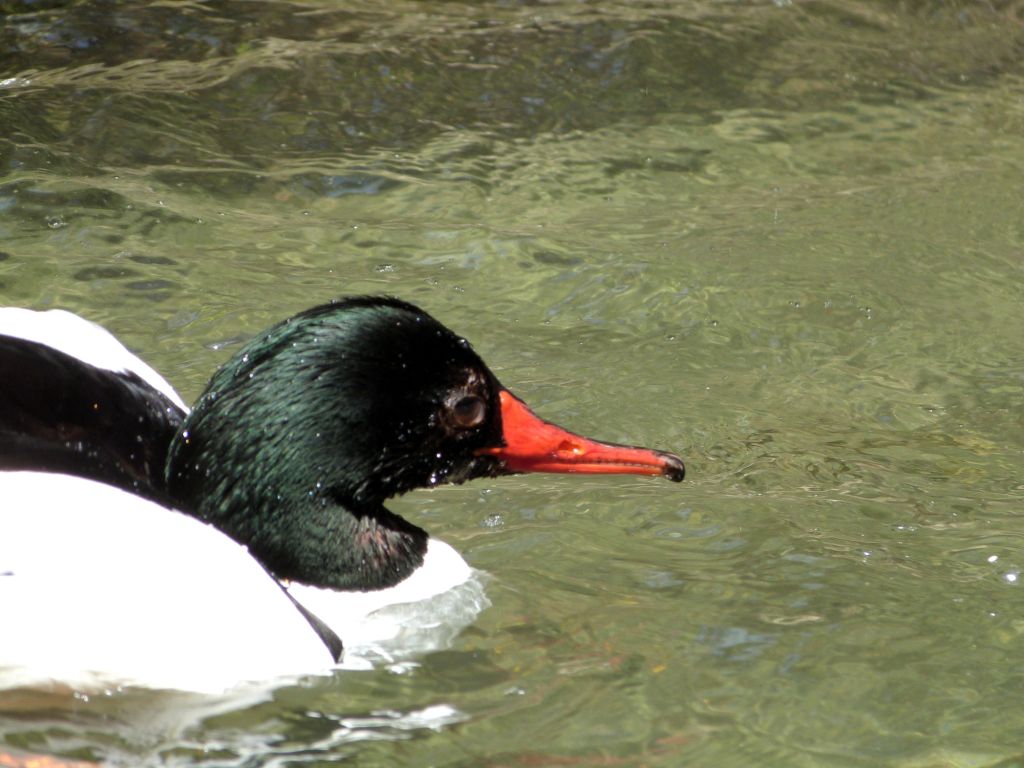
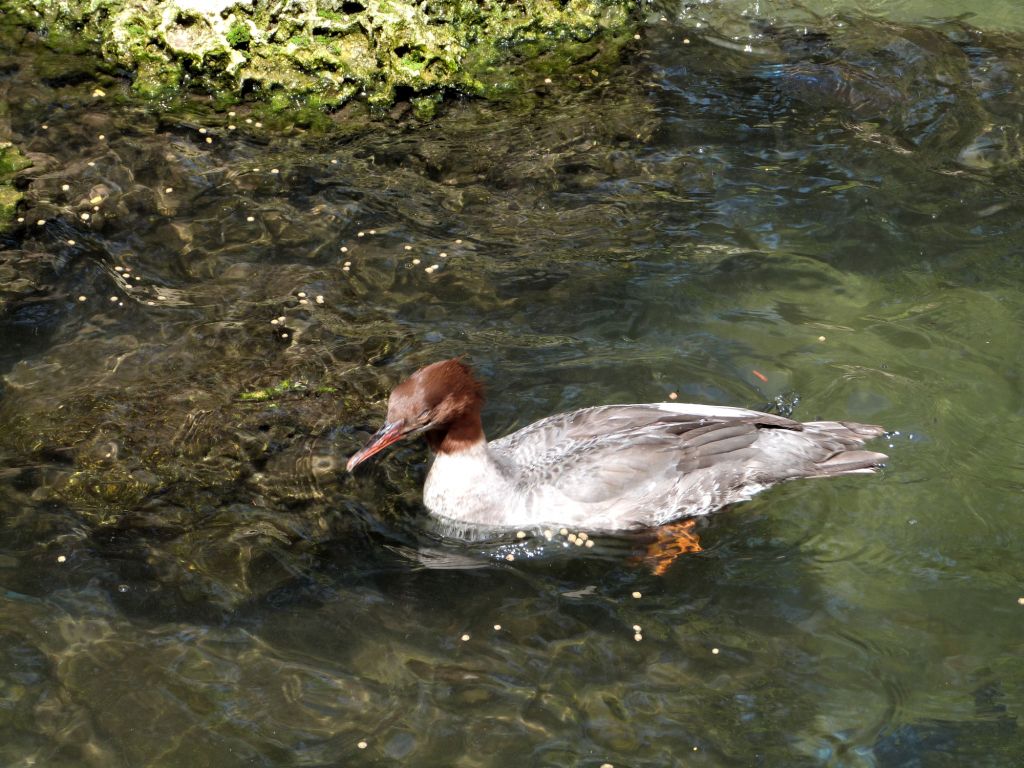
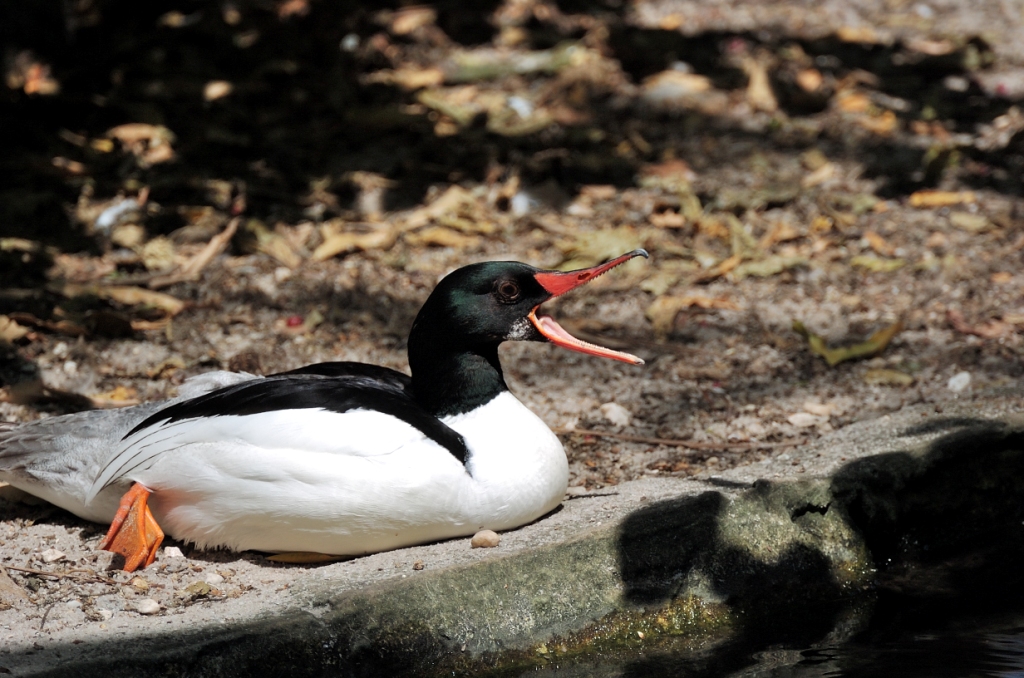
One more tale to tell. The Common Merganser had just eaten and he started flipping his feet like crazy. He was splashing water everywhere. I suppose he was happy. I finally turned the video on and caught part of it. He even chased the White-headed Duck around.


The name in (parenthesis) at the front is the name the zoo uses. I use the I.O.C. World Bird Names here on the blog. These are in taxonomic order.

White-faced Whistling Duck (Dendrocygna viduata) Amazon and Beyond
Plumed Whistling Duck (Dendrocygna eytoni) – Dan’s
(Javan) Lesser Whistling Duck (Dendrocygna javanica) – Dan’s
Bar-headed Goose (Anser indicus) – Dan’s
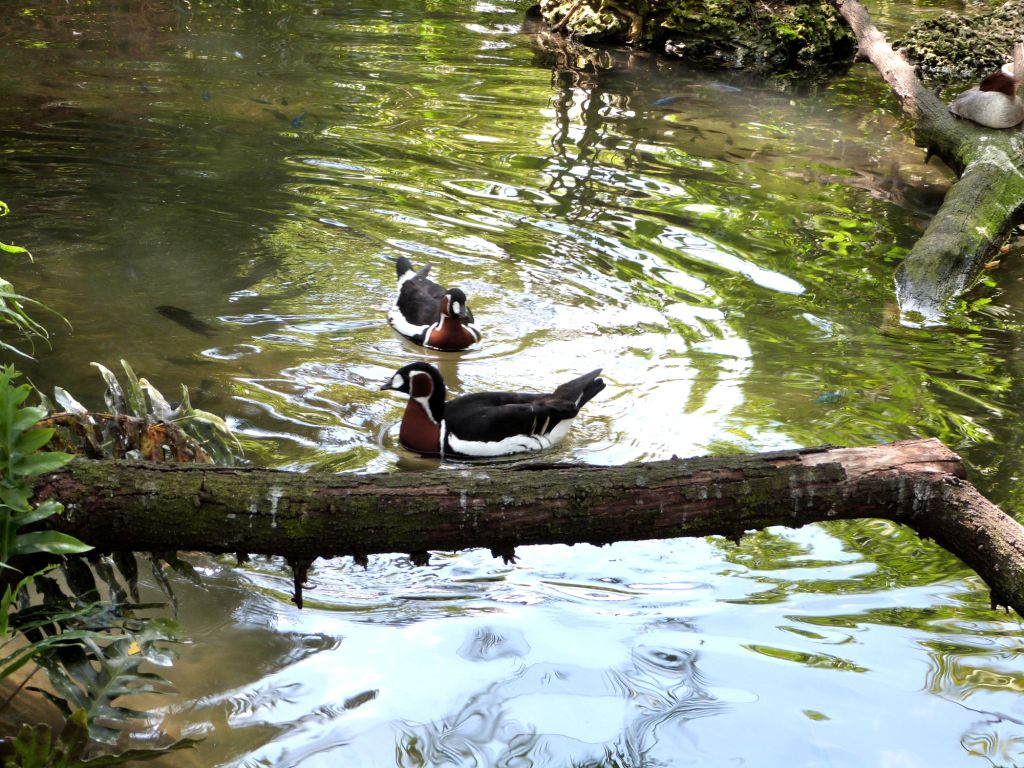
Red-breasted Goose (Branta ruficollis)
Coscoroba Swan (Coscoroba coscoroba) Amazon and Beyond
Raja Shelduck (Tadorna radjah) – Dan’s
Ruddy Shelduck (Tadorna ferruginea) – Dan’s
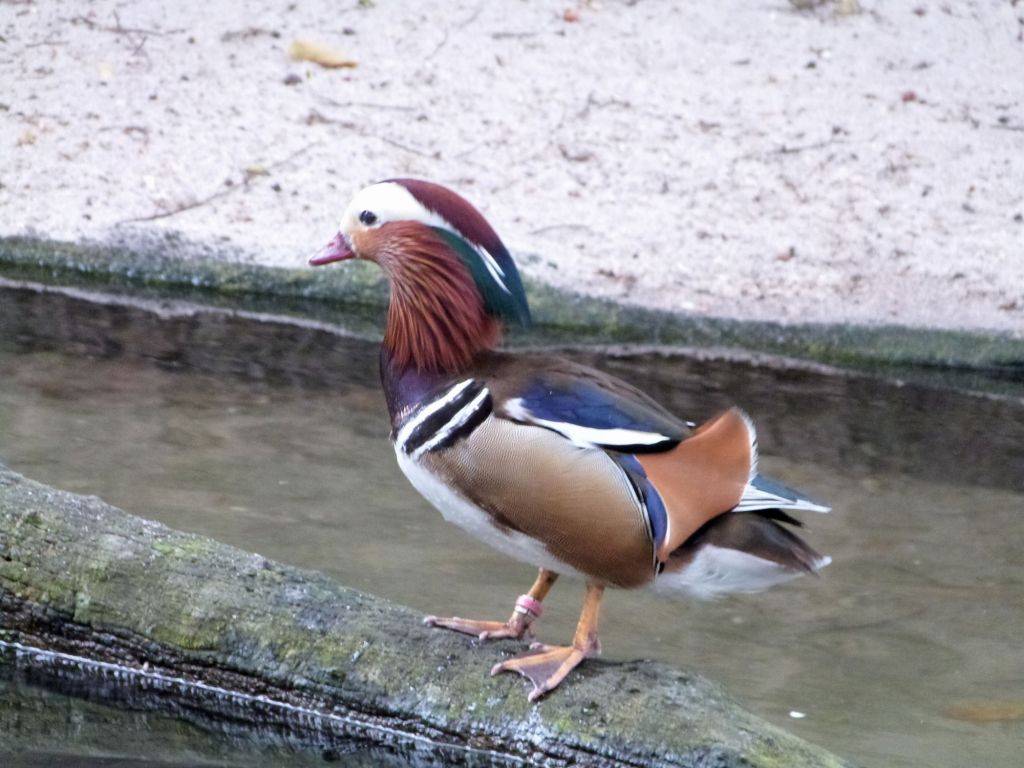
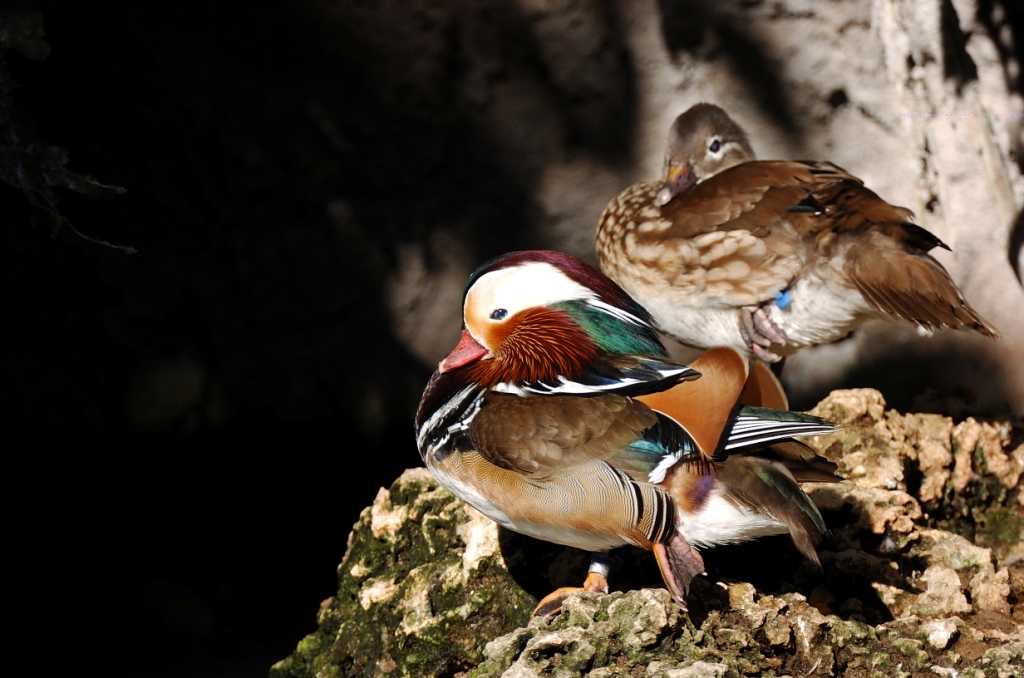
Mandarin Duck (Aix galericulata) – Male – Dan’s
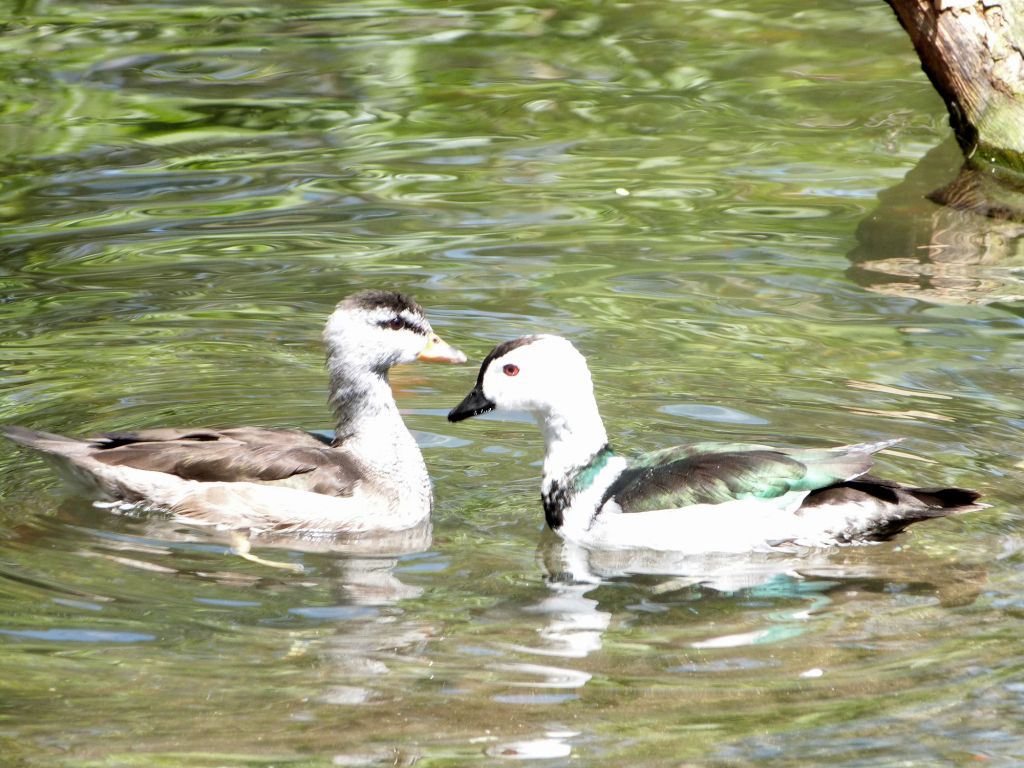
(Pygmy Goose) Cotton Pygmy Goose (Nettapus coromandelianus)
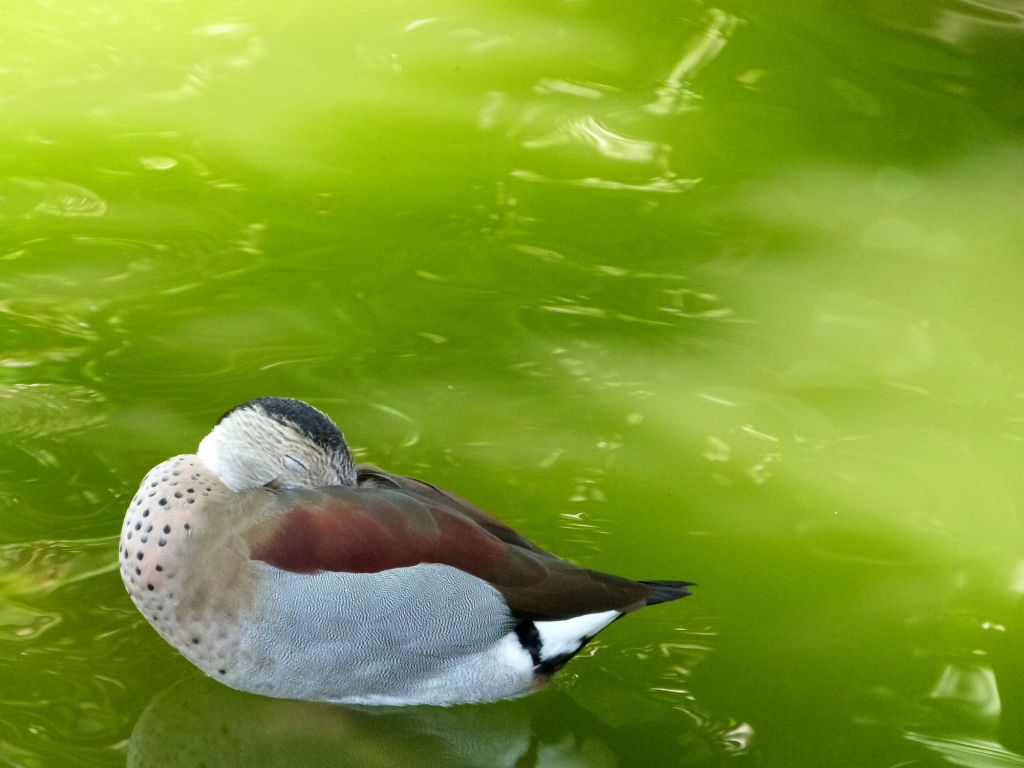
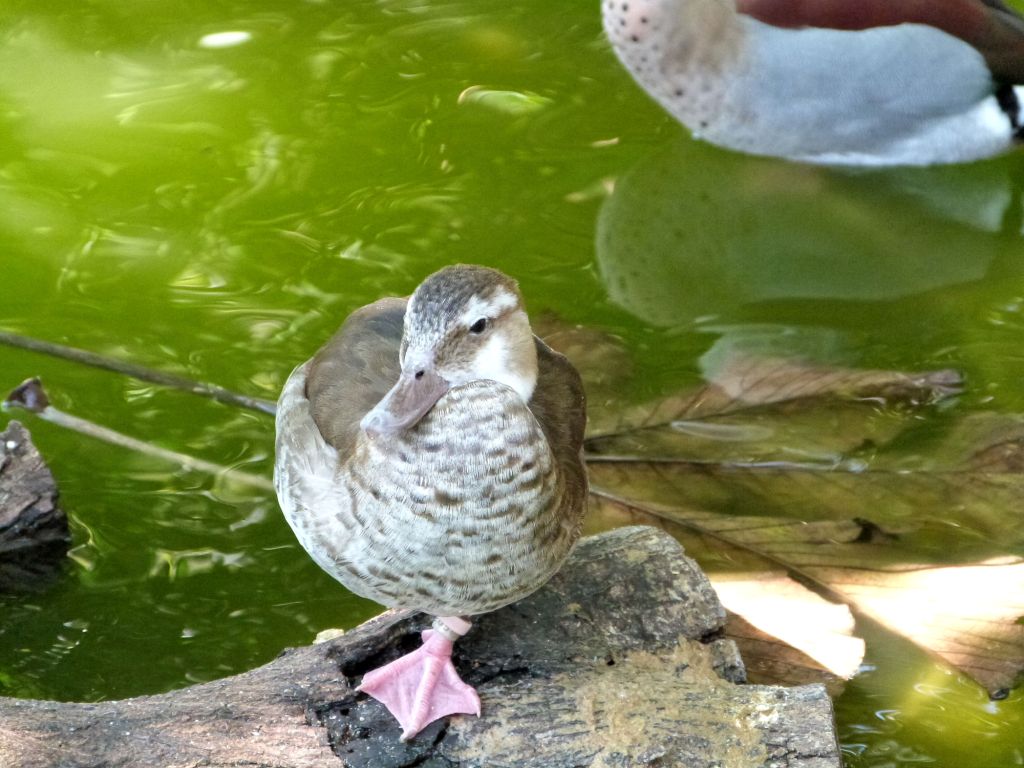
Ringed Teal (Callonetta leucophrys) Male – Female – Dan’s Amazon and Beyond
Bronze-winged Duck (Speculanas specularis) Sign (Saw, but no photo) Amazon and Beyond
Eurasian Wigeon (Anas penelope) (Saw, but no photo)
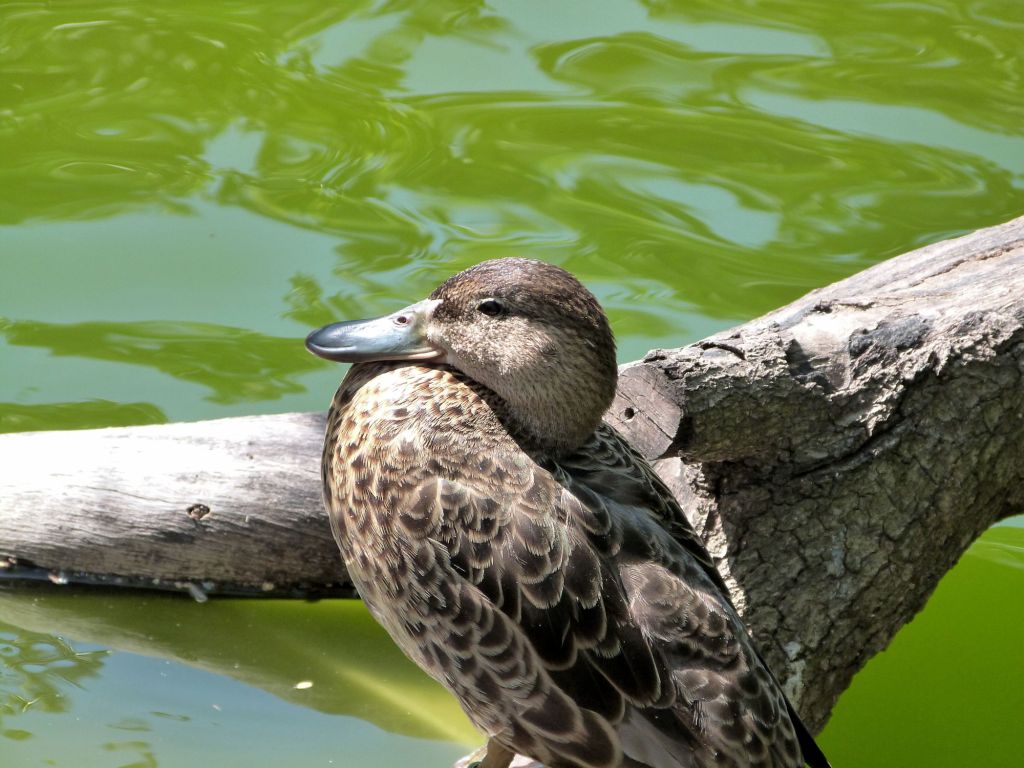
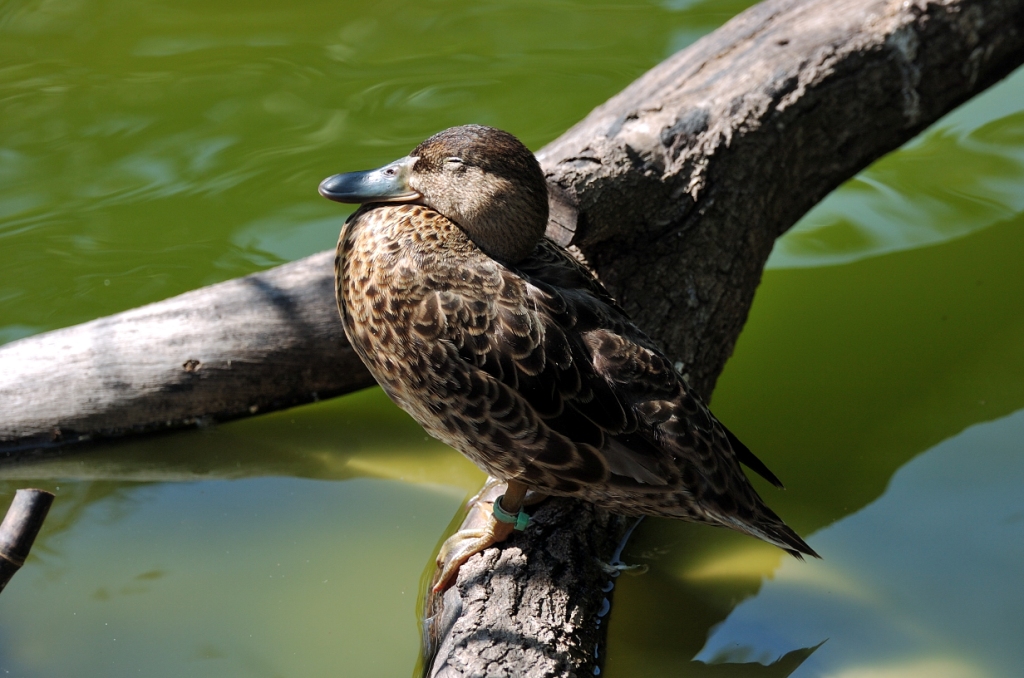
Blue-winged Teal Female (I think) – Dan’s Amazon and Beyond
Northern Shoveler (Anas clypeata) Dan’s
Sunda Teal (Anas gibberifrons)
Northern Pintail (Anas acuta) (proof)
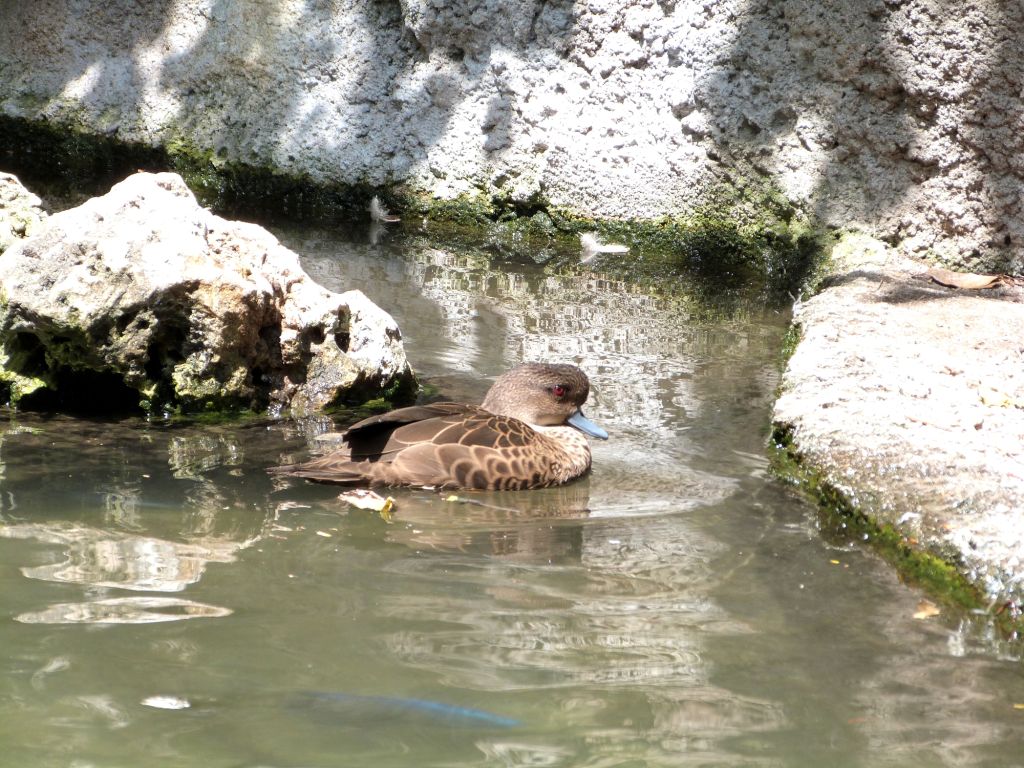
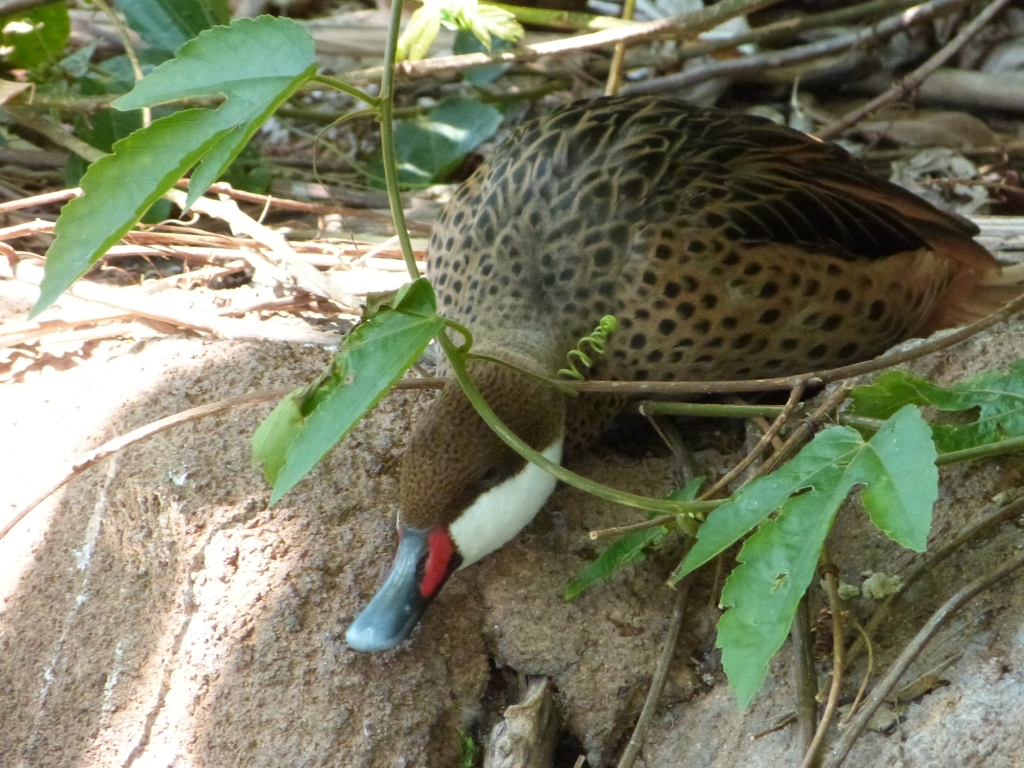
White-cheeked Pintail (Anas bahamensis) Amazon and Beyond
Baikal Teal (Anas formosa)
Red-crested Pochard (Netta rufina) – Dan’s
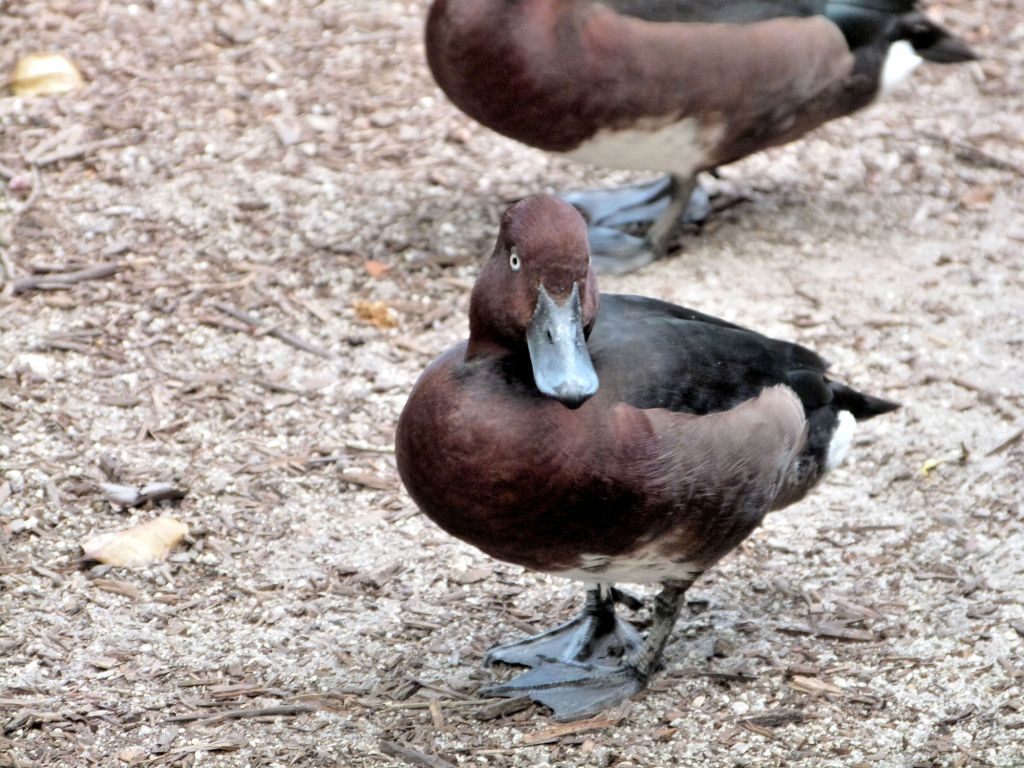
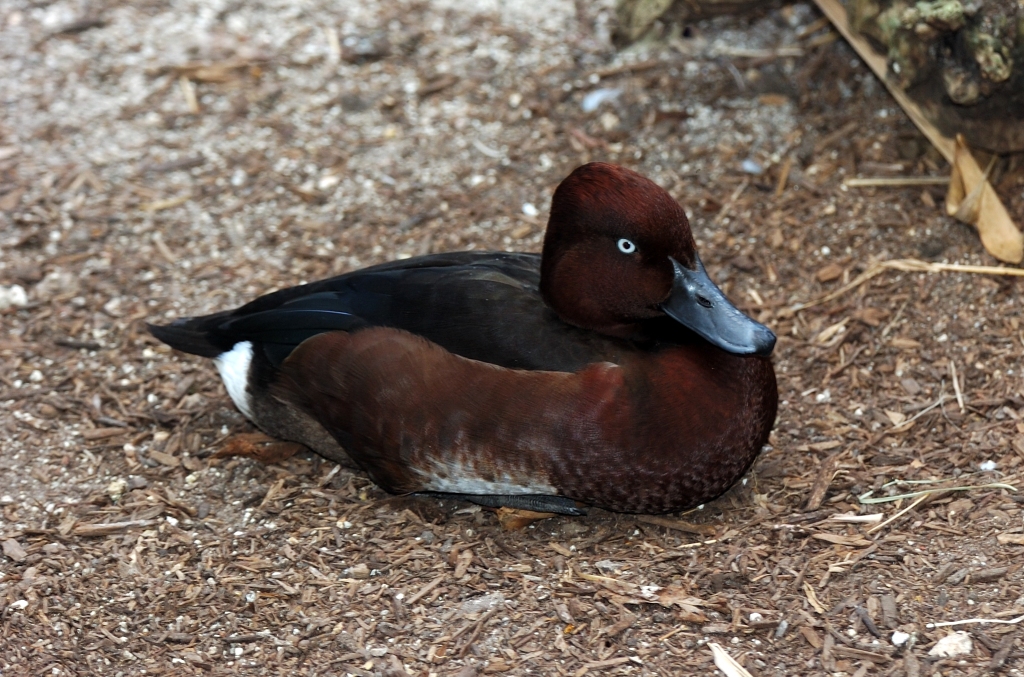
(Common White Eye) Ferruginous (Aythya myroca) – Dan’s
Common Merganser (Mergus merganser) Male – Female – Dan’s
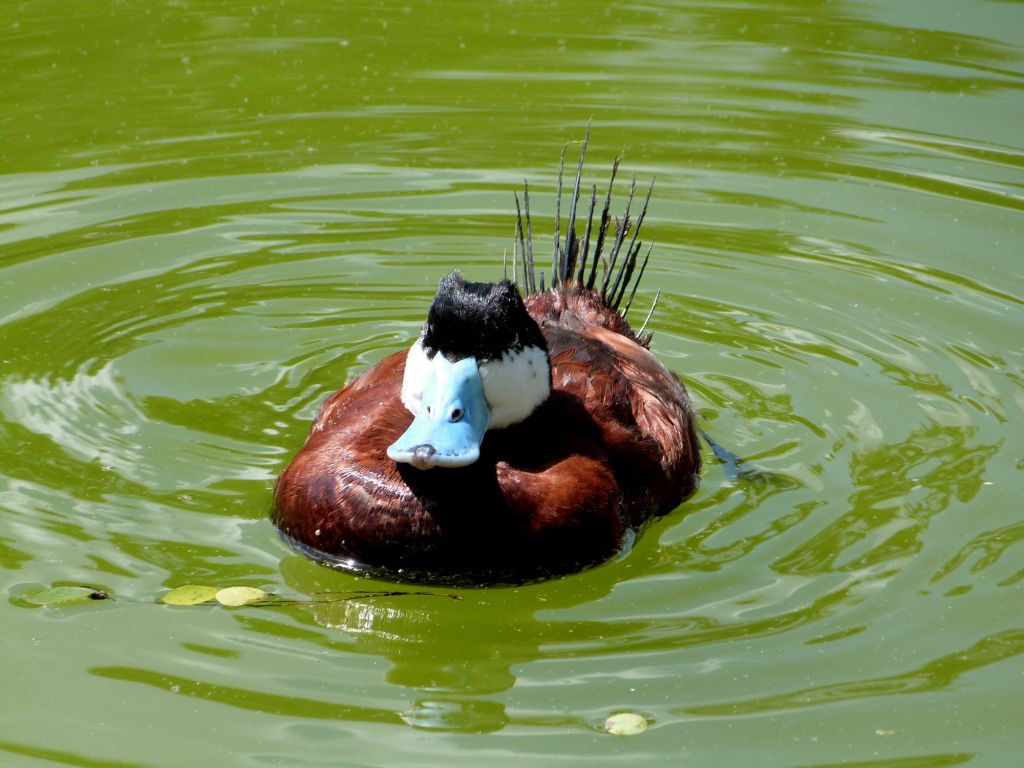
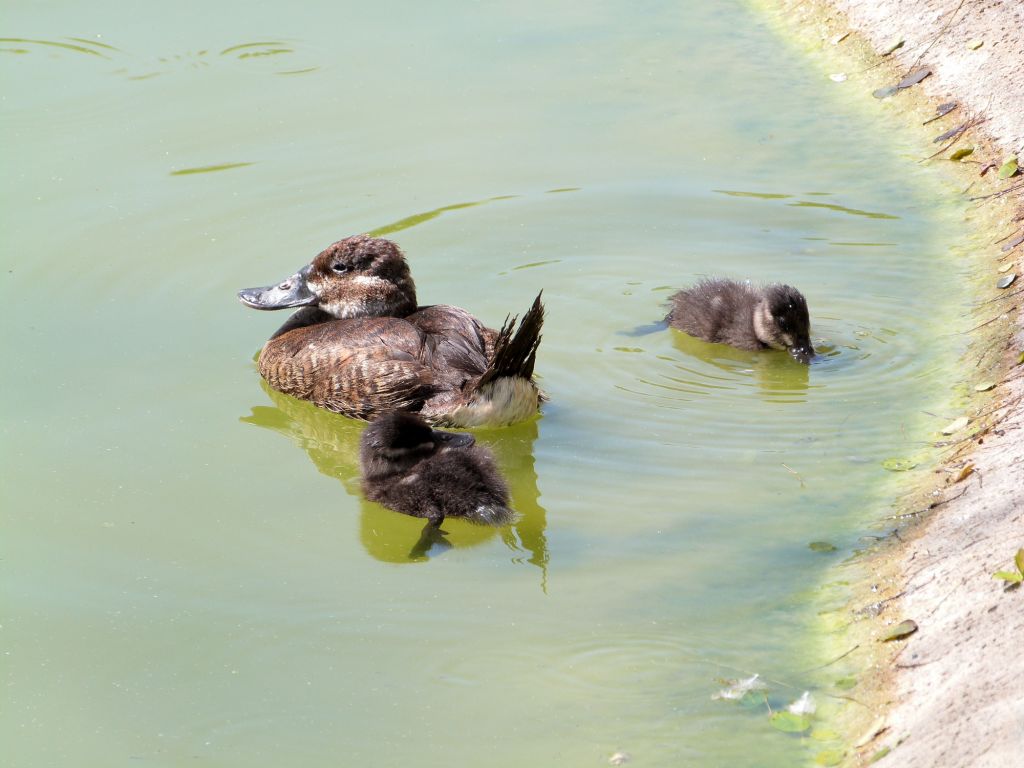
Ruddy Duck (Oxyura jamaicensis) Male – Female & young – Dan’s
White-headed Duck (Oxyura leucocephala)

This slideshow requires JavaScript.

*

Links:

Zoo Miami’s Wings of Asia – Wow! – I

Bar-headed Goose – Wikipedia

Zoo Miami – Miami, Florida

Wings of Asia – Aviary

Anatidae – Ducks, Geese & Swans Family

Zoo Miami’s Wings of Asia – Wow! – I

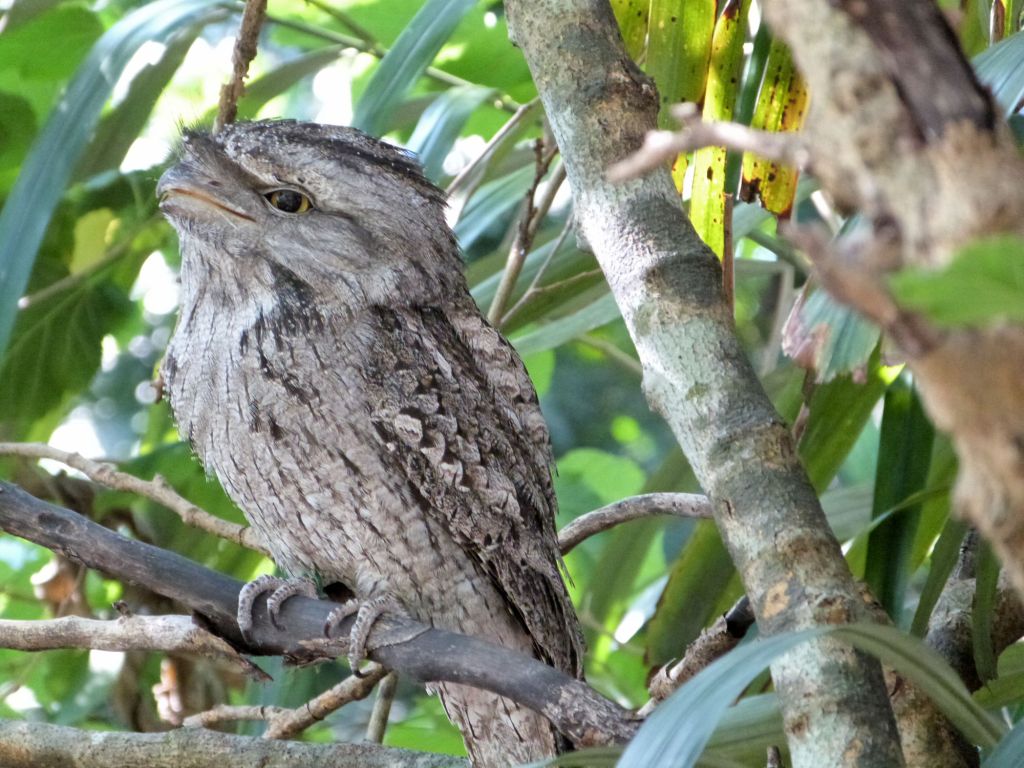
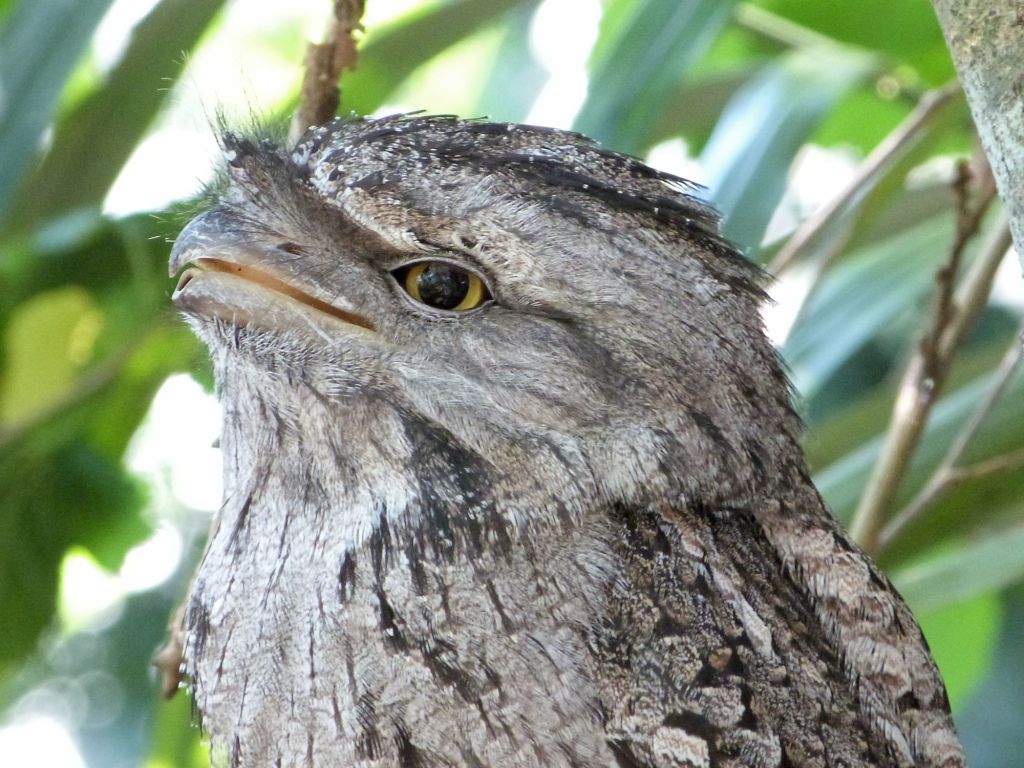
Tawny Frogmouth (Podargus strigoides) by Lee

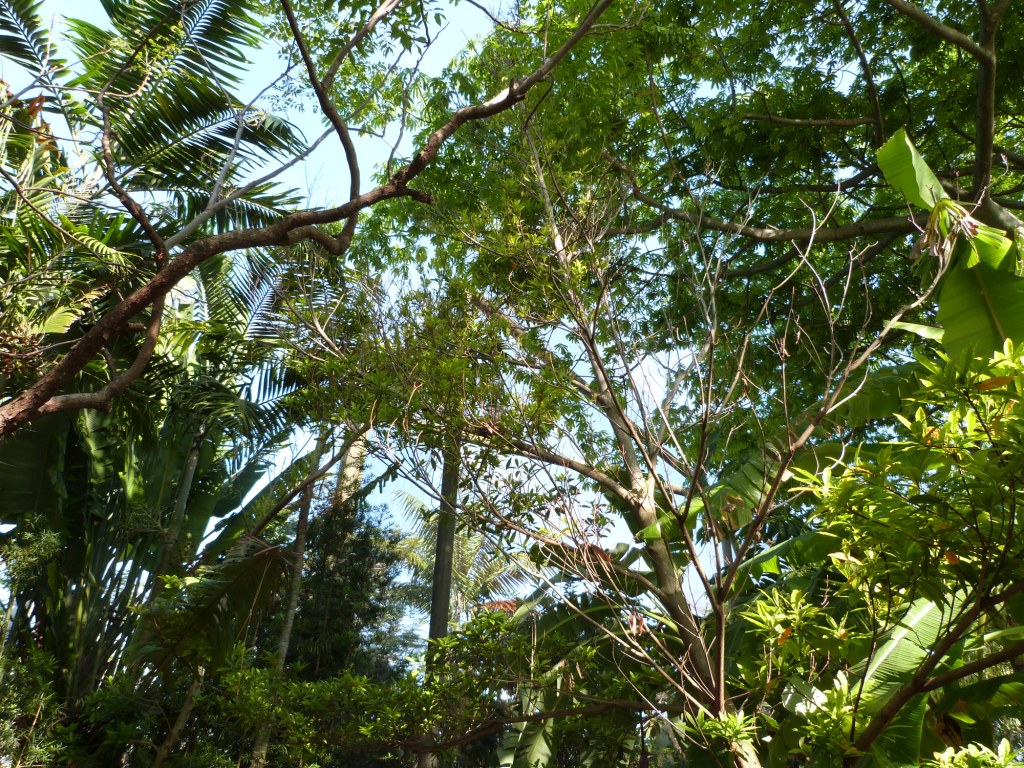
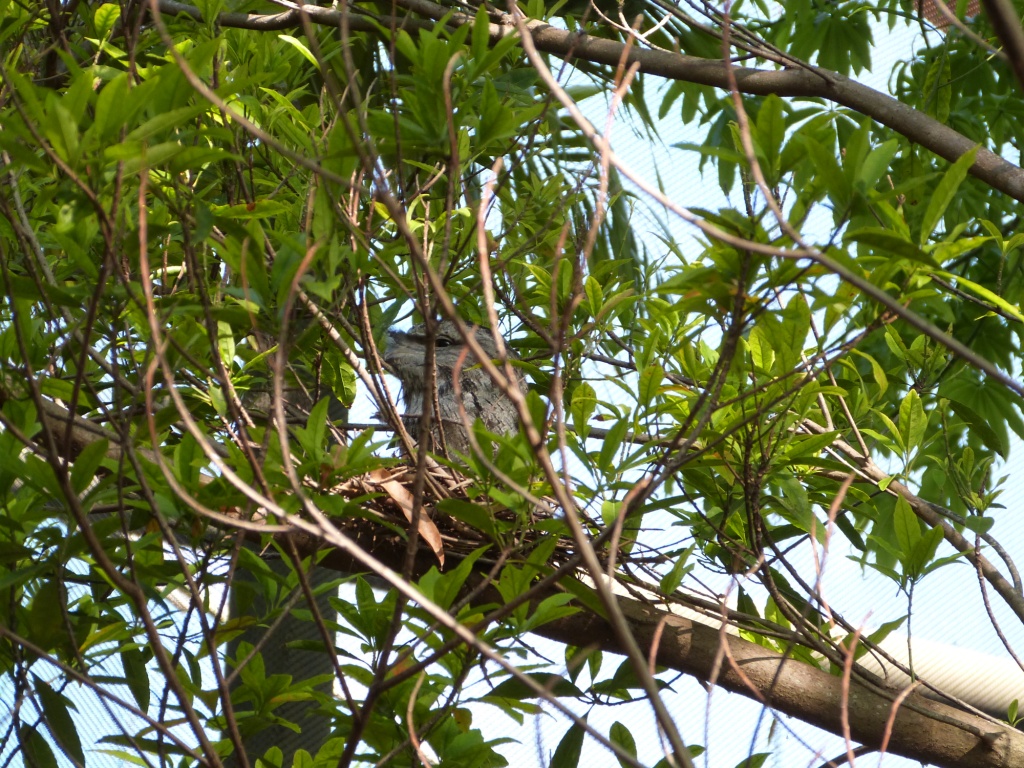
Tawny Frogmouth (Podargus strigoides) Do You See It?

We drove down to Miami this week, 200 miles, went to Zoo Miami twice and drove home. Simple statement, but what we saw was fantastic. Just the ride down allowed us to observe some of our own wildlife. Those highlights were 2 Northern Crested Caracaras (one standing along the road), a Cooper’s Hawk, a Red-shouldered Hawk, several other hawks (unknown) and a Roseate Spoonbill flying by. The rest of the birds were just our normal Grackles, Doves, Egrets, Herons and Crows.

Our goal was to see the Wings of Asia aviary at Zoo Miami or Miami Metro Zoo as I call it. The last time we were there was before Hurricane Andrew destroyed it in the early 1990’s. We lived in Tamarac then and had an annual pass to the zoo. “ Wings of Asia opened in the spring of 2003 and marked the first phase of a 20-year master plan. More than 300 exotic, rare and endangered Asian birds representing over 70 species reside in this Aviary. Covering more than 54,000 square feet, it is the largest open air Asian aviary in the Western Hemisphere.” That number is now around 85 species. About a year or so ago I became aware that the Aviary had been rebuilt and we have been trying to work it out to get there. We finally got there and my description would be, “Wow!”

Tawny Frogmouth (Podargus strigoides) by Lee at Wings of Asia

Do You See It Yet?

All of those 85 species in there are free to fly and or swim around. Many species have 2 or more birds represented by couples, nests and young.

The staff are also very helpful and friendly. After they found out that we were really interested in the birds, they sort of took us “under their wing.” Our special thanks to Dolora, Stacie, Ezekial, Carl and the others.

Where do you begin to tell about the thrill of seeing birds that you have read about, only seen photos of, or never even heard of before? With over 10,000 birds in the world, any time you get to see them for real is exciting, even if they are at the zoo. The birds of Asia and a few from other countries were not just standing there waiting on you to look at them. No, that place is so large that you actually have to do some birdwatching. At times I felt like I was out in the field trying to find the birds. Because of the help from the staff we were able to see many more than we would have on our own.

We were able to see the Cloud Forrest and the Amazon and Beyond small aviaries. More on that later. Overall I took over 1,000 photos and not sure how many Dan took. It is going to take awhile to sort through them and put the right name on the right bird photo. We were extremely tired when we got in last night and so have not started working on them yet.

Tawny Frogmouth (Podargus strigoides) at Wings of Asia

Tawny Frogmouth (Podargus strigoides) at Wings of Asia by Lee

I did want to share one bird that was on my “most want to see” list. Again, it took the help of the keepers to point it out. I had walked under it several times on Wednesday and never saw it. The Lord has provided the Tawny Frogmouth with a fantastic protection. It looks like the bark on a tree. It also has a very big mouth and hence its “frogmouth” name. They are in the Podargidae – Frogmouth Family which is in the  Caprimulgiformes Order. I was amazed at how large it actually was because it is hard to judge size from photos.

Wikipedia says – The Tawny Frogmouth is often mistaken to be an owl. Many Australians refer to the Tawny Frogmouth by the colloquial names of “Mopoke” or “Morepork”, which usually are common alternative names for the Southern Boobook. Frogmouths are not raptorial birds.

Tawny Frogmouth (Podargus strigoides) at Zoo Miami

Tawny Frogmouth (Podargus strigoides) at Zoo Miami

Males and females look alike and are 35–53 cm (14–21 in) long. This very bulky species can weigh up to 680 grams (1.5 lbs) and, in overweight zoo specimens, up to 1400 grams (3.1 lbs). This species thus reaches the highest weights known in the Caprimulgiformes order. They have yellow eyes and a wide beak topped with a tuft of bristly feathers. They make loud clacking sounds with their beaks and emit a reverberating booming call.

Tawny Frogmouths hunt at night and spend the day roosting on a dead log or tree branch close to the tree trunk. Their camouflage is excellent — staying very still and upright, they look just like part of the branch. When feeling threatened, the Tawny Frogmouth stays perfectly still, with eyes almost shut and with bill pointed straight, relying on camouflage for protection.

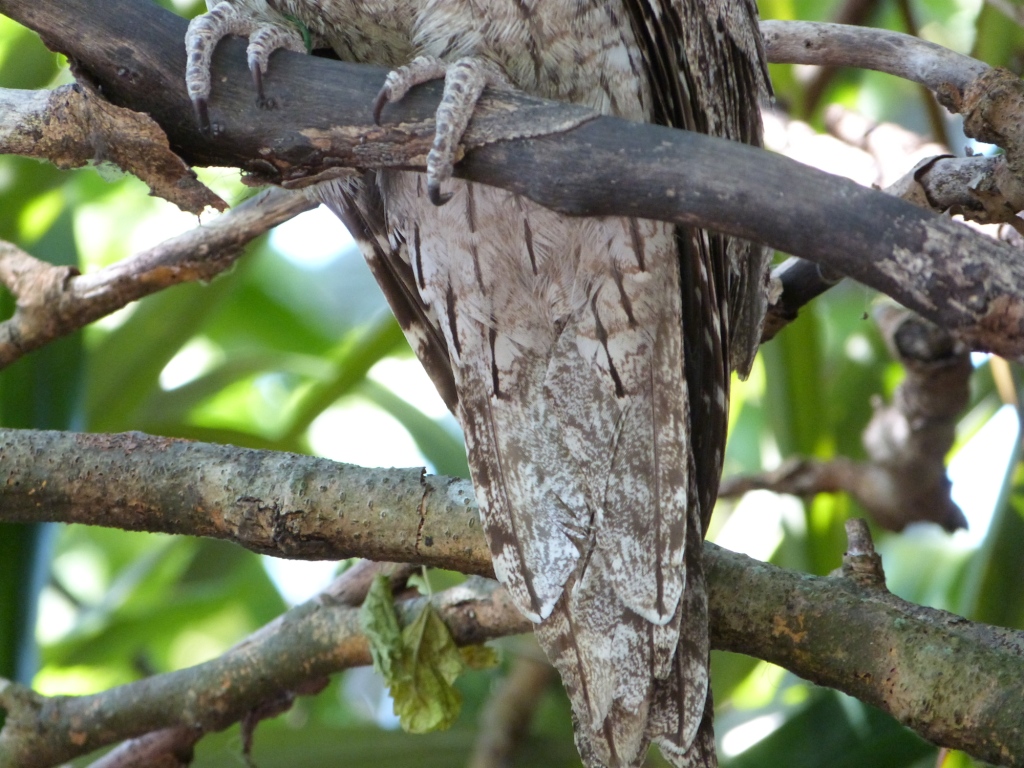
Tawny Frogmouth (Podargus strigoides) Tail

Tawny Frogmouth (Podargus strigoides) Tail

The Tawny Frogmouth is almost exclusively insectivorous, feeding rarely on frogs and other small prey. They catch their prey with their beaks rather than with their talons, another way in which they are different from owls. Owls fly around at night hunting food, but Tawny Frogmouths generally remain sitting very still on a low perch, and wait for food to come to them. They catch prey with their beaks, and sometimes drop from their perch onto the prey on the ground. The bird’s large eyes and excellent hearing aid nocturnal hunting.

Tawny Frogmouths and owls both have anisodactyl feet – meaning that one toe is facing backwards and the other three face forwards. However, owls’ feet are much stronger than the feet of the Tawny Frogmouth as owls use their feet to catch their prey. Owls are also able to swing one of their toes around to the back (with a unique flexible joint) to get a better grip on their prey. Tawny Frogmouths have fairly weak feet as they use their beaks to catch their prey. Owls eat small mammals, like mice and rats, so their bones are shorter and stronger than those of Tawny Frogmouths which usually hunt smaller prey. Tawny Frogmouths typically wait for their prey to come to them, only rarely hunting on the wing like owls.

Breeding – Tawny Frogmouth pairs stay together until one of the pair dies. They breed from August to December. They usually use the same nest each year, and must make repairs to their loose, untidy platforms of sticks. After mating, the female lays two or three eggs onto a lining of green leaves in the nest. Both male and female take turns sitting on the eggs to incubate them until they hatch about 25 days later. Both parents help feed the chicks.

I have many more adventures to share from Zoo Miami. Praise the Lord for a great trip to see more of His fantastic Creative Hand in person. Zoos are a favorite of mine along with being in the field birdwatching. The birds that they collect are many times endangered or are being threatened by lost of habitat. One of the commands that the LORD gave man was to be responsible for or have dominion over the birds and other critters. Dominion does not mean be cruel to them but to help them and Zoo are one of those places.

Then God said, “Let Us make man in Our image, according to Our likeness; let them have dominion over the fish of the sea, over the birds of the air, and over the cattle, over all the earth and over every creeping thing that creeps on the earth.” (Genesis 1:26 NKJV)

Links:

Zoo Miami – Miami, Florida

Podargidae – Frogmouth Family

*

Birdwatching Trip to Circle B in March 2012

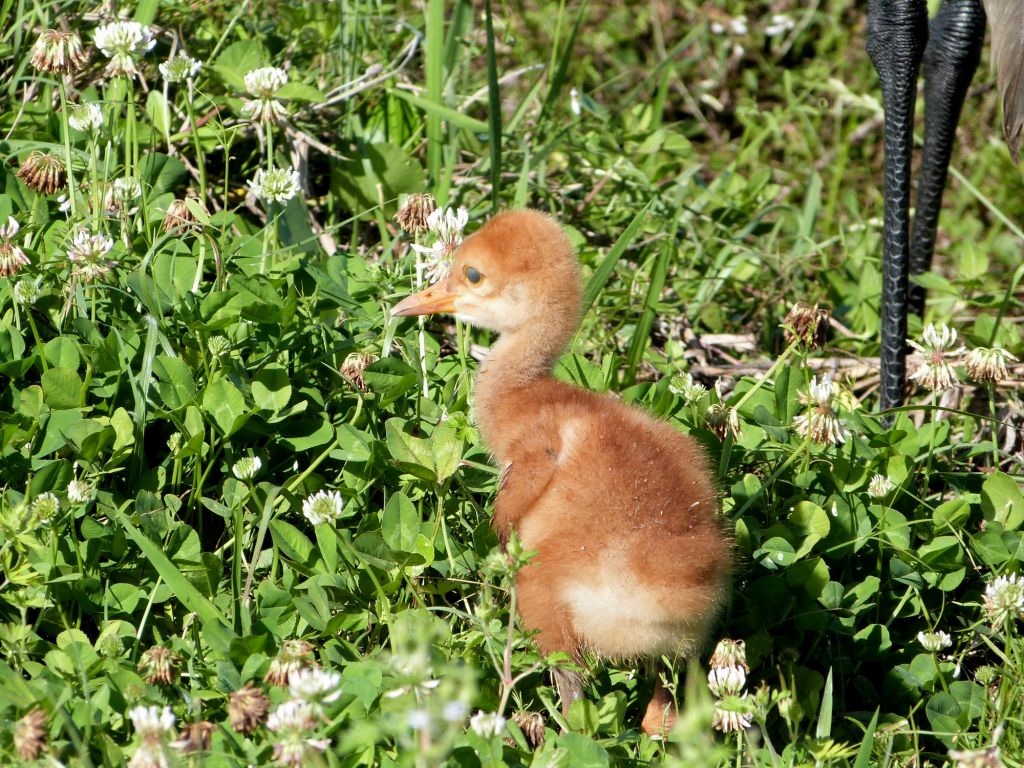
Sandhill Crane Chick at Circle B by Lee

Sandhill Crane Chick at Circle B by Lee

We had not been to Circle B recently, nor especially out to the Marsh by the windmill. Actually the windmill has lost its blades. It is a long trek out there for me, but praise the Lord, one of the workers came along with one of their vehicles and gave us a ride to the marsh. We were greeted by a group photographing Sandhill Cranes with their baby. That would have made the trip worth it alone.

Of course there were other birds awaiting our arrival. It is never boring out there. Since we had parked up by the entrance to get to the marsh, when we got out of the car and were getting our cameras and binoculars, we were greeted by the sound of a Pileated Woodpecker. When we returned, the Pileated showed off and we got some close-up shots of two of them. They were right by the pavilion and didn’t seem to mind those of us nearby.

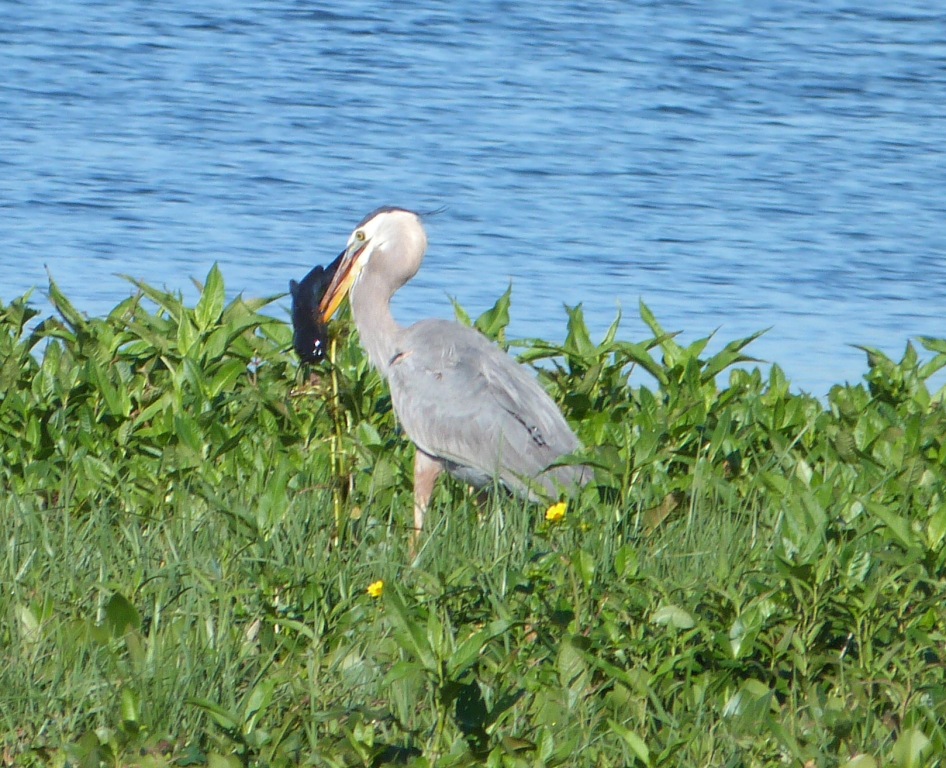
Great Blue Heron with Catfish at Circle B by Lee - cropped

Great Blue Heron with Catfish at Circle B by Lee - cropped

Another neat observation was the Great Blue Heron that caught a fish, actually a catfish. He was out from the edge a bit, but was able to zoom in on him. Took some video of it trying to kill the fish.

It is still quite dry out there as the rains have not started yet. It has been rather dry this winter. Water levels are still low.

I am including some photos and video taken out at Circle B that day. Video has segment of Great Blue with the Catfish and a close-up of the Pileated Woodpecker. Notice how he uses his tail to support himself.

This slideshow requires JavaScript.

In the beginning was the Word, and the Word was with God, and the Word was God. He was in the beginning with God. All things were made through Him, and without Him nothing was made that was made. (John 1:1-3 NKJV)

Here is the list from e-bird for that trip. (37 species total)

6
Black-bellied Whistling-Duck
2
Mallard
20
Blue-winged Teal
4
Pied-billed Grebe
5
Double-crested Cormorant
4
Anhinga
2
Great Blue Heron
1
Great Egret
1
Little Blue Heron
2
Tricolored Heron
2
Cattle Egret
7
White Ibis
5
Glossy Ibis
2
Black Vulture
4
Turkey Vulture
5
Osprey
1
Bald Eagle
1
Red-shouldered Hawk
1
American Kestrel
10
Common Gallinule
25
American Coot
3
Limpkin
3
Sandhill Crane
1
Lesser Yellowlegs
1
Laughing Gull
2
Mourning Dove
2
Red-bellied Woodpecker
2
Pileated Woodpecker
1
Blue Jay
4
Tree Swallow
1
Carolina Wren
1
Magnolia Warbler
1
Palm Warbler
1
Savannah Sparrow
1
Northern Cardinal
5
Red-winged Blackbird
10
Boat-tailed Grackle

See more Birdwatching Adventures out at Circle B Bar Reserve, Lakeland, Florida.

Wordless Birds

*

Another Visit To Lowry Park Zoo – March 2012

Demoiselle Crane (Grus virgo) Preening by Lee

Demoiselle Crane Preening by Lee at LPZoo

Dan and I were able to get in a small visit to the Lowry Park Zoo in Tampa a few days ago. Our goal was to go to the Sulawesi, Free-Flight and the Lorikeet Landing Aviaries. Most of the birds we saw were busy preening that day. Probably the most feather fluffing seen by so many birds on the same day, by us at least. It was difficult to get a good photo of them.

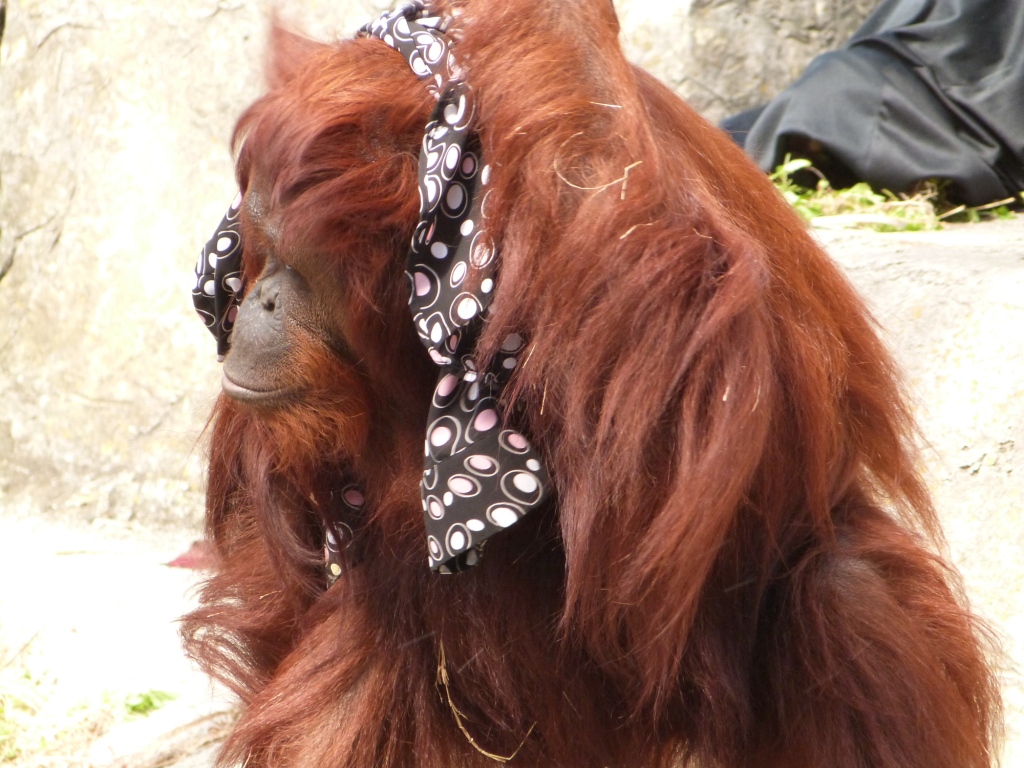
Bornean Orangutan at LPZoo 3-8-12

Bornean Orangutan at LPZoo 3-8-12

Never the less, it is always enjoyable to watch and observe their behaviors. Actually there were a couple of Bornean Orangutans displaying a behavior of covering their heads with cloths that can be quite funny. In the past, we have also seen them use cardboard as coverings.

Bornean Orangutan at LPZoo 3-8-12

Bornean Orangutan at LPZoo 3-8-12

Back to birdwatching. One of the highlights was getting to see the juvenile Sulawesi Hornbill maturing. The beak colors have not started developing yet.

Sulawesi Hornbill (Penelopides exarhatus) LPZoo 3-8-12

Sulawesi Hornbill (Penelopides exarhatus) LPZoo 3-8-12

“As this youngster ages the colors of the adult will become more pronounced. The Sulawesi Hornbill (Penelopides exarhatus), also known as the Sulawesi Tarictic Hornbill, Temminck’s Hornbill or Sulawesi Dwarf Hornbill, is a relatively small, approximately 45 cm (17.7 in) long, black hornbill. The male has a yellow face and throat, and black-marked yellowish-horn bill. The female has an all black plumage and a darker bill.

An Indonesian endemic, the Sulawesi Hornbill is distributed in the tropical lowland, swamps and primary forests of Sulawesi and nearby islands, from sea-level to altitude up to 1,100 metres. There are two subspecies of the Sulawesi Hornbill.

The Sulawesi Hornbill is a social species that lives in groups of up to 20 individuals. It is believed that only the dominant pair breeds, while the remaining members of the group act as helpers. The diet consists mainly of fruits, figs and insects. The female seals itself inside a tree hole for egg-laying. During this time, the male and helpers will provide food for the female and the young.” (Wikipedia)

Here is the adult male that was standing nearby the two youngsters.

Sulawesi Hornbill (Penelopides exarhatus) LPZoo 3-8-12 by Lee

Sulawesi Hornbill (Penelopides exarhatus)LPZoo by Lee

Below are some of the photos taken on this trip to the Zoo. It was another enjoyable day to observe the Lord’s creation up close.

The works of the LORD are great, sought out of all them that have pleasure therein. (Psalms 111:2 KJV)

This slideshow requires JavaScript.

*

Updating the Slideshows – Report # 2

As previously reported, the Slide.Com is closing down as of March 6th. Unfortunately I have used a lot of the Slideshows from them on this site. I am busy kicking up dust behind the scenes and decided to share links to the articles as I get some of them finished. At least you will know I have not been “goofing off.” Besides that, many of these were produced sometime back and deserve a reminder of our many birds the Lord has created for His Glory and pleasure. Trust you like the new Slideshows that are being installed. They are taking a great effort on my part to learn the new procedure, but after quite a few mistakes, maybe I can get them out quicker now.

The works of the LORD are great, sought out of all them that have pleasure therein.(Psalms 111:2 KJV)

Having made known unto us the mystery of his will, according to his good pleasure which he hath purposed in himself: (Ephesians 1:9 KJV)

For it is God which worketh in you both to will and to do of his good pleasure. (Philippians 2:13 KJV)

Thou wilt shew me the path of life: in thy presence is fulness of joy; at thy right hand there are pleasures for evermore. (Psalms 16:11 KJV)

Thanks for your patience and your visits to this website. While I am working away, I am enjoying seeing articles that I had forgotten about.

Completed:

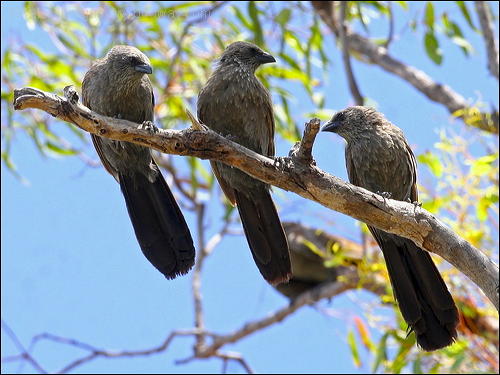
Apostlebird (Struthidea cinerea) by Ian

Apostlebird (Struthidea cinerea) by Ian

Birds of the Bible – Names of Birds

*

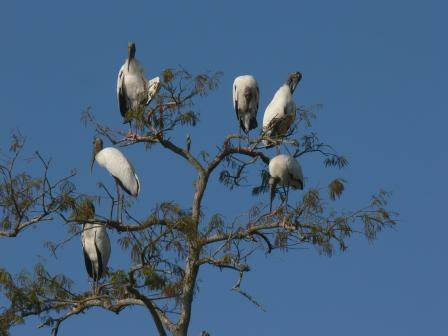
Wood Storks in Top of Tree by Lee

Birdwatching at Circle B Bar Reserve – October

Red-legged Seriema (Cariama cristata) by Lee at Lowry Park Zoo

Red-legged Seriema (Cariama cristata) by Lee

Birdwatching at the Lowry Park Zoo 2/15/11

Sandhill Cranes - Adult and Juvenile in yard 8/27/10

Sandhill Crane Juveniles in Backyard

Sandhill Crane "colts"

Sandhill Crane "colts"

Sandhill Crane “Colt” Birdwatching

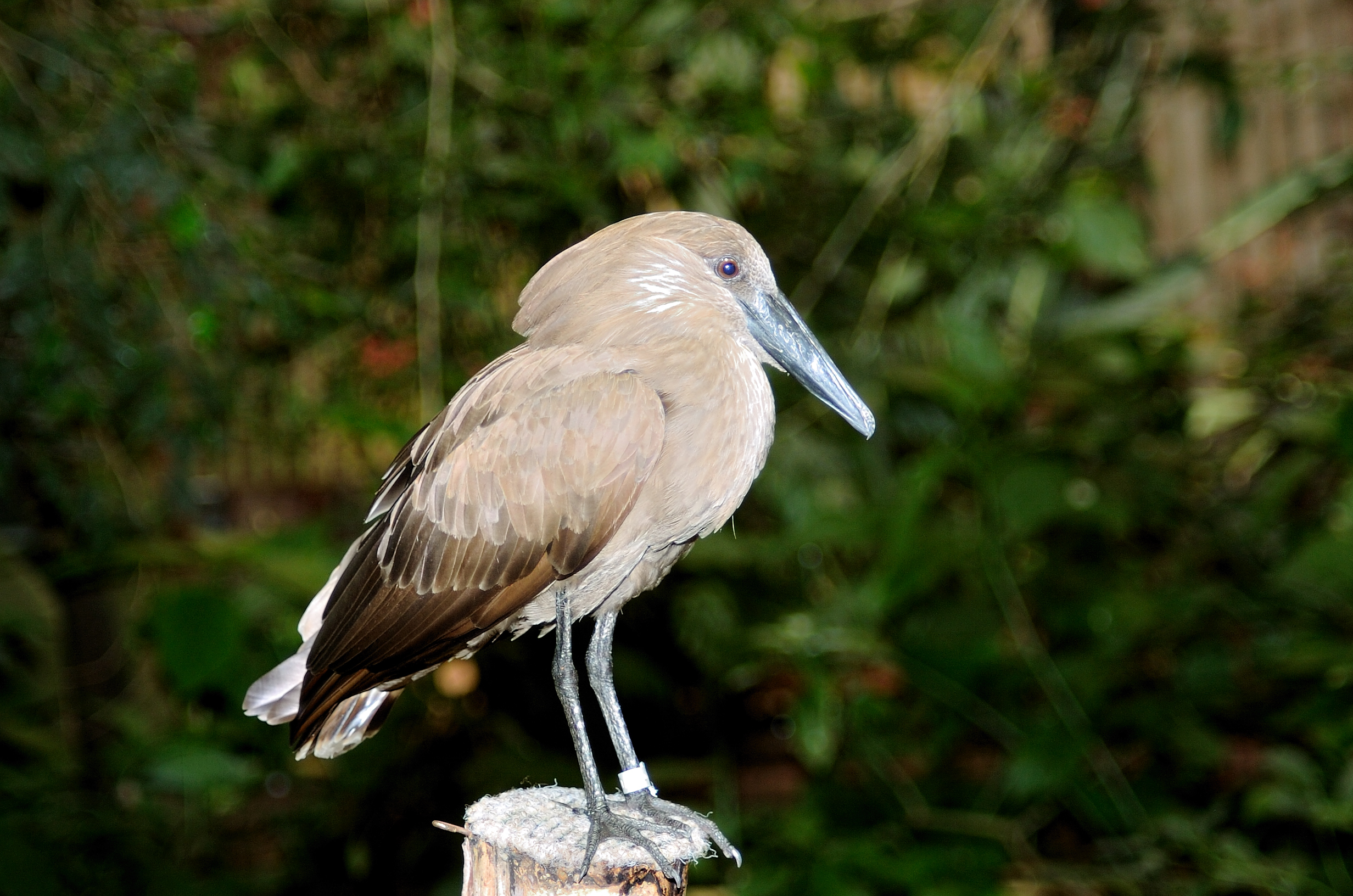
Hamerkop (Scopus umbretta) at NA by Dan

Hamerkop (Scopus umbretta) at National Aviary by Dan

Birds of the Bible – Tamed

*