Birdwatching Trip to Viera Wetlands – February 2-3, 2012

Alligator on bank at Viera Wetlands

Alligator on bank at Viera Wetlands

We enjoyed our visit to Viera Wetlandslast week. Good thing we went then, because we are both sick this week. (Not from the trip.) But we are on the mend. “The wetlands are a popular site for birders, photographers, and eco-tourists.  The entire wetland system is accessible by automobile, making the site popular among those who find the rigors of hiking trails and summer temperatures daunting.  Even better, viewing the site from one’s automobile serves to screen visitors from birds and widlife, enhancing the experience.” They have 4 Cells and a Lake which have a berm around them. You drive on the berm and that gets you right up to the birds. (If they cooperate)

This was not our first visit to the wetlands, but it is 100 miles from home, so it is not something we do frequently. Other than a few different birds we have almost the same ones right here at the Circle B Bar Reserve (only 4 miles from home).

Here is a list of the birds turned in to eBird for the two days we visited the wetlands:

Hooded Merganser (Lophodytes cucullatus) with Hood up by Lee

Hooded Merganser (Lophodytes cucullatus) with Hood up

Mottled Duck
Blue-winged Teal
Northern Shoveler
Ring-necked Duck
Hooded Merganser
Pied-billed Grebe
Wood Stork
Double-crested Cormorant
Anhinga Viera Wetlands
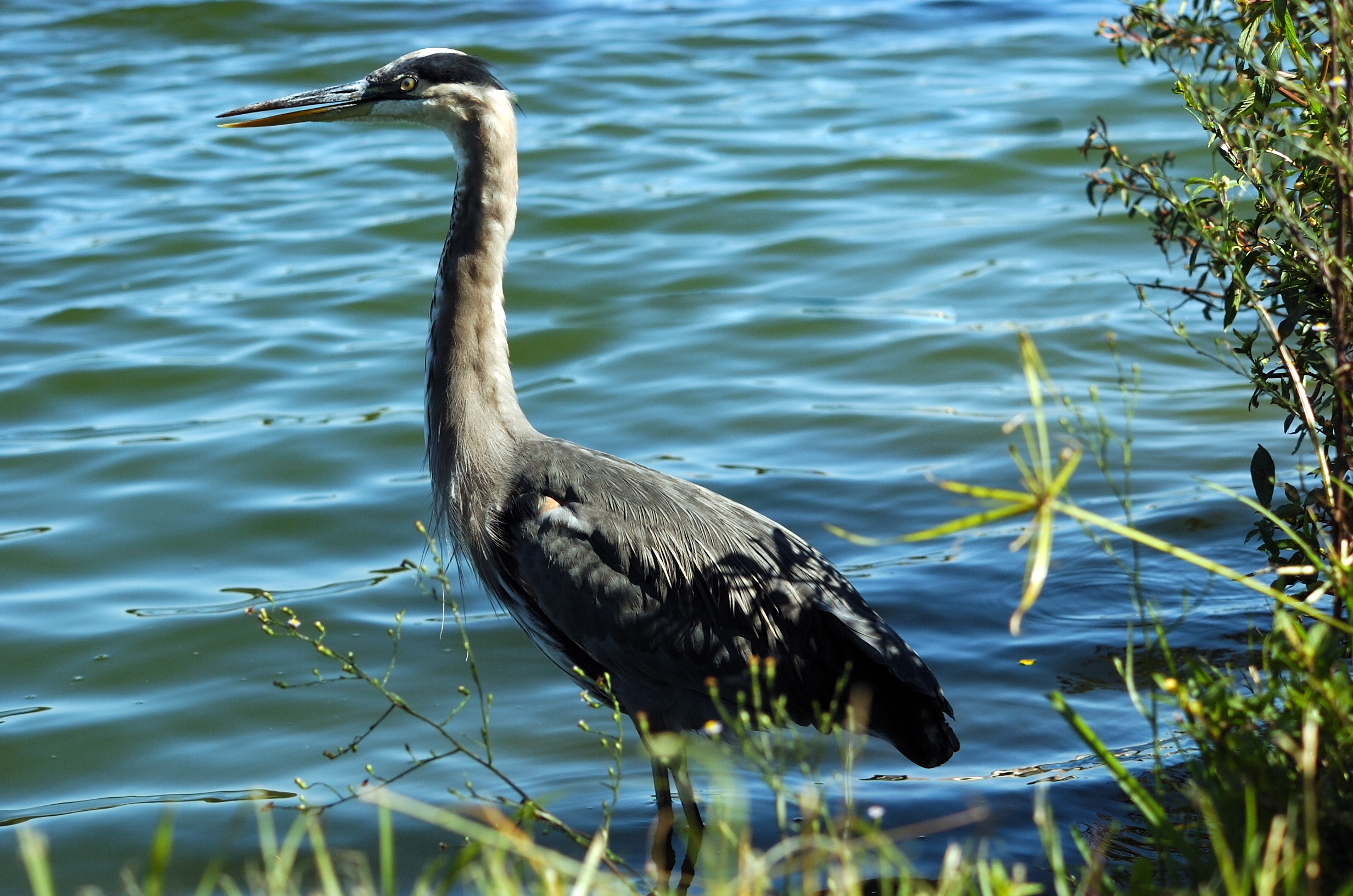
Great Blue Heron
Great Egret
Snowy Egret
Little Blue Heron
Tricolored Heron
White Ibis
Glossy Ibis
Black Vulture
Turkey Vulture
Osprey
Northern Harrier
Crested Caracara

Savannah Sparrow (Passerculus sandwichensis) by Lee at Viera Wetlands

Savannah Sparrow (Passerculus sandwichensis) by Lee at Viera Wetlands

Common Gallinule
American Coot
Limpkin
Sandhill Crane
Caspian Tern
Royal Tern
Belted Kingfisher
Fish Crow
Purple Martin
Tree Swallow
House Wren
European Starling
Palm Warbler
Yellow-rumped Warbler
Savannah Sparrow
Red-winged Blackbird
Eastern Meadowlark
Boat-tailed Grackle

39 total birds seen that I can identify. If I include the rest of the birds spotted there in Brevard County including the wild birds at the Zoo and Beach, then the count goes to 52. The additional birds include the Brown Pelican, Black and Turkey Vultures, Red-shouldered Hawk, Eurasian Collared Dove, Mourning Dove, Red-bellied and Downy Woodpeckers, Pine Warbler, Northern Cardinal and Brown-headed Cowbird. Other than the Caracara, Sanderling, and Ruddy Turnstone, I have seen the rest in Polk County, where we live.

Does that mean, I wouldn’t go back, NO WAY! I love going over there to the Wetlands because every time you go, there are different birds waiting for you to discover them. That is what birdwatching is all about. Also, Brevard County has the Merritt Island Wild Life Refuge and other great birding places.

There had to be well over 1,000 American Coots out there. What amazed me was how they would all huddle together in long streams of them. This was just one of the smaller groups. Some were hundred of Coots long.
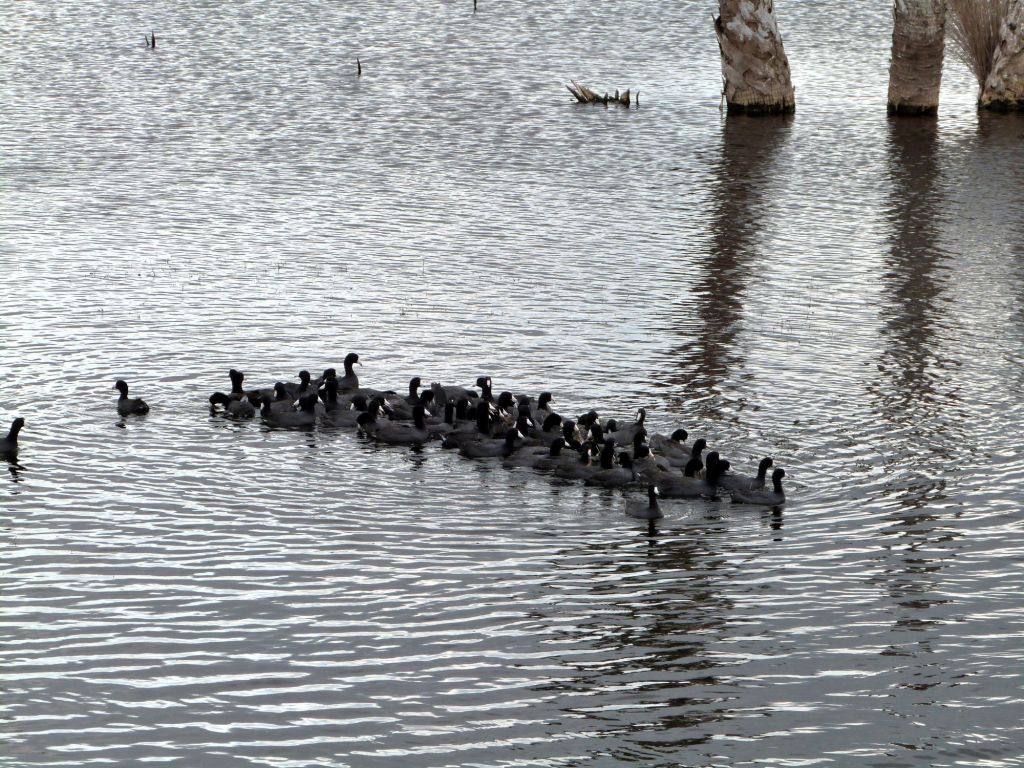
American Coots at Viera Wetlands

American Coots at Viera Wetlands

I am not sure what this Coot did, but it appears the Northern Shovelers are escorting him out of their area.

Coot Surrounded by Shovelers at Viera Wetlands

Coot Surrounded by Shovelers at Viera Wetlands

Managed to get a close-up of a Boat-tailed Grackle sitting on a sign.

Boat-tailed Grackle (Quiscalus major) at Viera by Lee

Boat-tailed Grackle (Quiscalus major) at Viera by Lee

It seemed a little dryer than on previous visits. Looks like they could use some rain. It does make an effect on what birds are present by the water levels. Was a great visit.

I know all the birds of the mountains, And the wild beasts of the field are Mine. (Psalms 50:11 NKJV)

*
Birdwatching Adventure to Brevard Zoo in Viera, FL

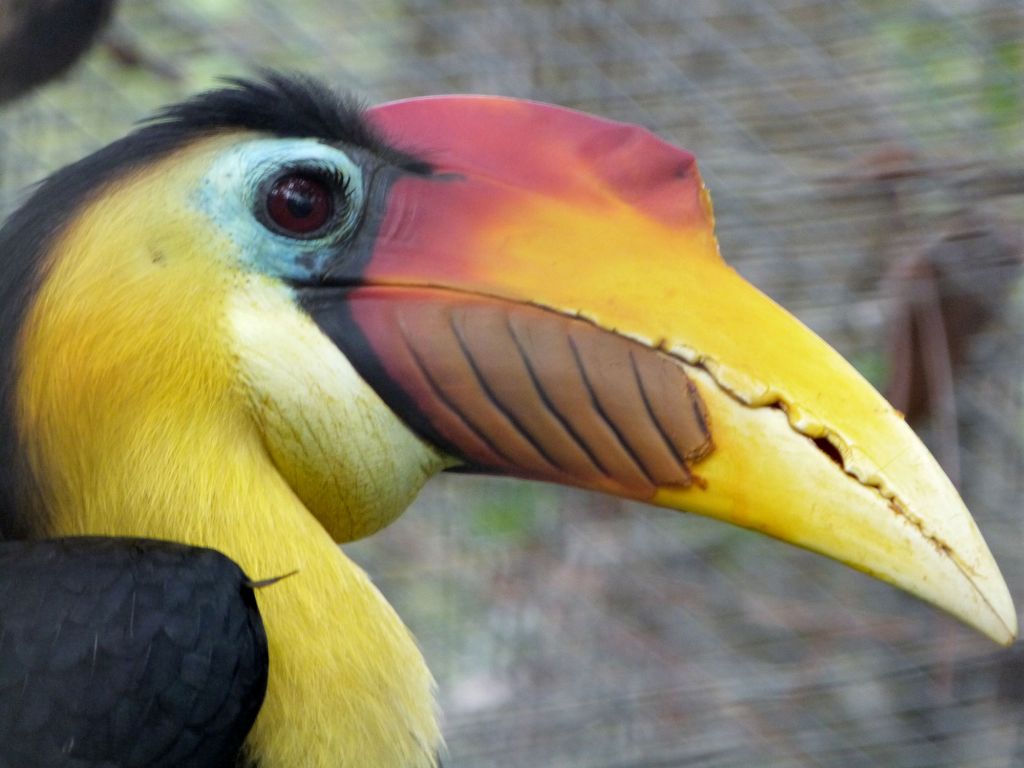
Wrinkled Hornbill (Aceros corrugatus) Brevard Zoo by Lee

Wrinkled Hornbill (Aceros corrugatus) Brevard Zoo by Lee

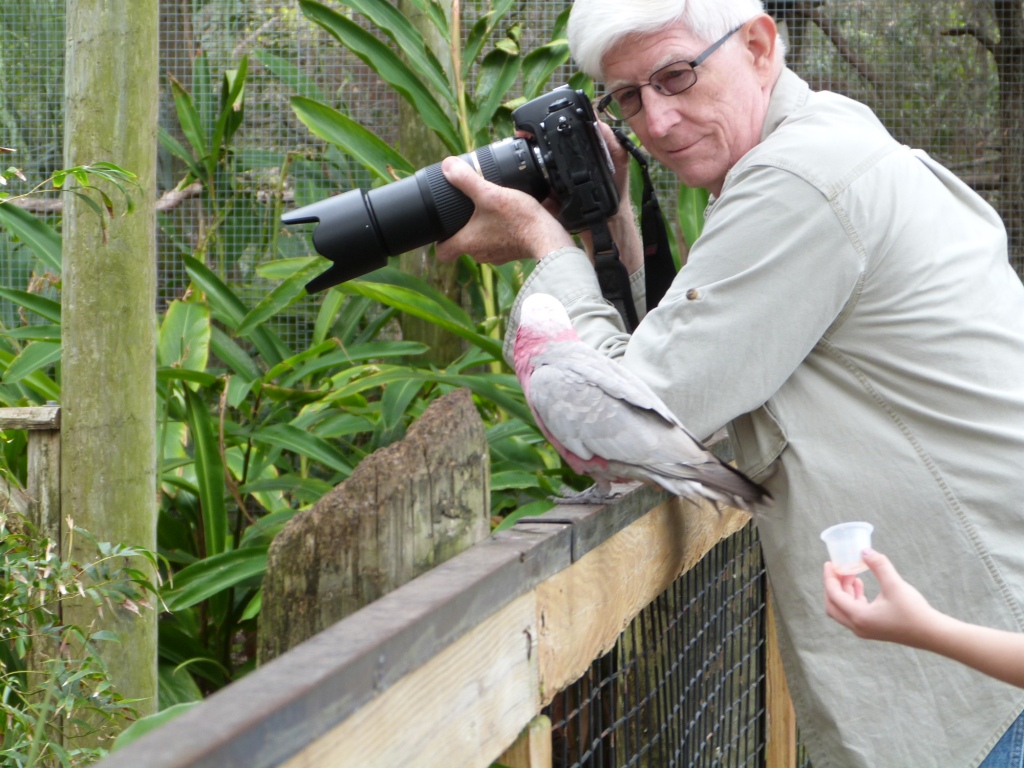
We had a delightful and interesting visit to the Brevard Zoo in Viera (Melbourne), Florida on Friday the 3rd. We were over there also visiting Viera Wetland (2nd & 3rd) (article to come) and also went to the Atlantic shore for a few minutes that evening (the 2nd). Some of the highlights were that Galah landing on Dan’s camera. See Just Back From A Birdwatching Adventure – Viera. Luckily I had my own camera and was able to “capture the moment.” What was so interesting about that Galah is that he (or she) had become intrigued by Dan’s camera. A child tried to offer it some of the liquid they sell to feed the birds, but no, the camera was more interesting. (This picture is not good, but it show the action)

 Galah (Eolophus roseicapilla) trying to off juice.

Galah (Eolophus roseicapilla) trying to off juice.

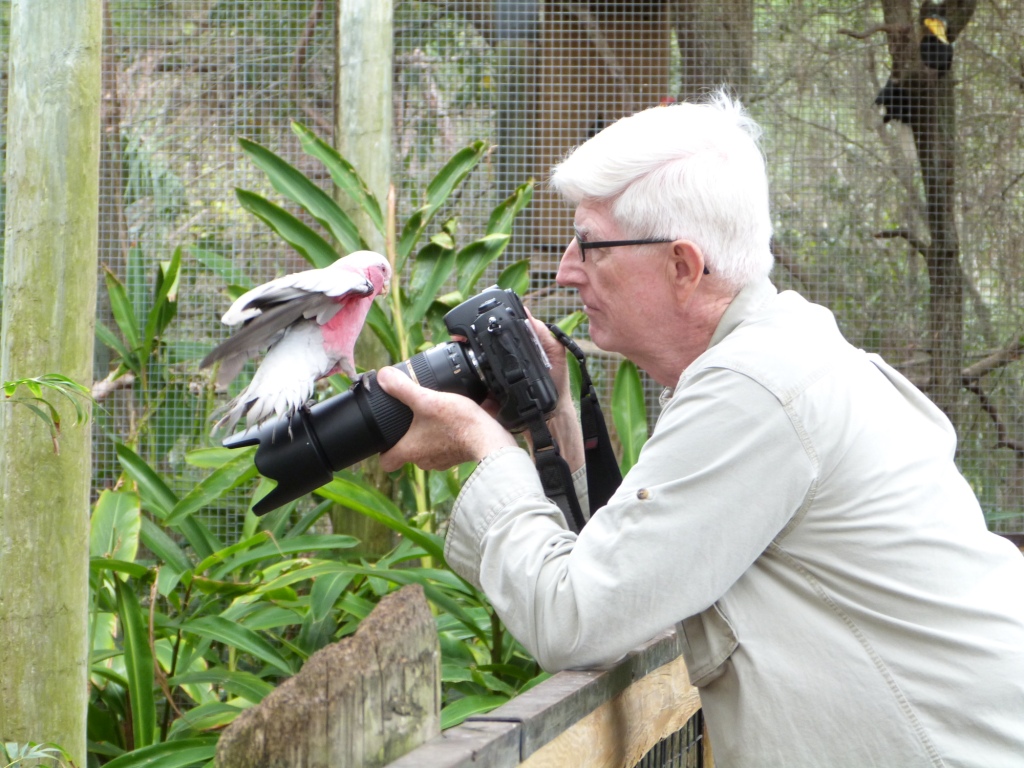
Then the Galah hopped up on his camera.

Galah (Eolophus roseicapilla) Hopping on the camera

Galah (Eolophus roseicapilla) Hopping on the camera

What a gorgeous color and nice bird.
Galah (Eolophus roseicapilla) Cockatoo - Brevard Zoo

Galah (Eolophus roseicapilla) Cockatoo – Brevard Zoo

In that same area I got a great picture of a Laughing Kookaburra. Couldn’t get it to laugh, but I tried. Sure the others around thought I was nuts, but who cared.
Laughing Kookaburra (Dacelo novaeguineae) Brevard Zoo by Lee

Laughing Kookaburra (Dacelo novaeguineae) Brevard Zoo by Lee

The photo at the top was a challenge to photograph. My camera is a point and shoot on program mode. Do you know how many fantastic photos I have taken of fences, wires, cages, limbs, grass, etc. instead of the bird or whatever?
White-crested Turaco (Tauraco leucolophus) with fencing.

White-crested Turaco (Tauraco leucolophus) with fencing.

With some patience and lots of tries, I can get a little better shot.
White-crested Turaco (Tauraco leucolophus) Through the fence somewhat.

White-crested Turaco (Tauraco leucolophus) Through the fence somewhat.

Here is the list of wild birds I turned in to eBird:
Walking around the Zoo – these are the wild birds freeloading at the zoo – 16 species
Mallard (Domestic type) 10
Great Blue Heron 2
White Ibis 18
Black Vulture 6
Turkey Vulture 1
American Coot 2
Eurasian Collared-Dove 1
Mourning Dove 2
Red-bellied Woodpecker 3
Downy Woodpecker 2
Fish Crow 7
House Wren 2
Pine Warbler 1
Yellow-rumped Warbler 2
Yellow-rumped Warbler (Myrtle) 1
Northern Cardinal 2
Boat-tailed Grackle 50
Besides all of those of course we saw the residents of the Zoo. All total, counting the wild birds we saw 48 of God’s wonderfully created birds. Some of them were absolutely fantastic. Even the ugly ones were wonderfully created for their purposes and place in the overall plan the Lord has for them.

For the invisible things of him from the creation of the world are clearly seen, being understood by the things that are made, even his eternal power and Godhead; so that they (we) are without excuse: (Romans 1:20 KJV)

 **Due to my site being hacked, some of the photo links were removed**
Birds observed at Brevard Zoo:
Total observations: 48
English name Scientific name
1 Southern Cassowary Casuarius casuarius
2 Emu Dromaius novaehollandiae
3 Wild Turkey Meleagris gallopavo
4 Black-bellied Whistling Duck Dendrocygna autumnalis
5 West Indian Whistling Duck Dendrocygna arborea
6 Coscoroba Swan Coscoroba coscoroba
7 Black Swan Cygnus atratus
8 Raja Shelduck Tadorna radjah
9 White-cheeked Pintail Anas bahamensis
10 American Flamingo Phoenicopterus ruber
11 Chilean Flamingo Phoenicopterus chilensis
12 Marabou Stork Leptoptilos crumeniferus
13 American White Ibis Eudocimus albus
14 Scarlet Ibis Eudocimus ruber
15 Roseate Spoonbill Platalea ajaja
16 Great Blue Heron Ardea herodias
17 Black Vulture Coragyps atratus
18 King Vulture Sarcoramphus papa
19 Bald Eagle Haliaeetus leucocephalus
20 Red-shouldered Hawk Buteo lineatus
21 Red-tailed Hawk Buteo jamaicensis
22 Northern Crested Caracara Caracara cheriway
23 American Coot Fulica americana
24 Black Crowned Crane Balearica pavonina pavonina
25 Sandhill Crane Grus canadensis
26 Blue Crane (Stanley) Grus paradisea
27 Masked Lapwing Vanellus miles
28 Eurasian Collared Dove Streptopelia decaocto
29 Mourning Dove Zenaida macroura
30 Galah Eolophus roseicapilla
31 Cockatiel Nymphicus hollandicus
32 Rainbow Lorikeet Trichoglossus moluccanus
33 Hyacinth Macaw Anodorhynchus hyacinthinus
34 Blue-and-yellow Macaw Ara ararauna
35 Scarlet Macaw Ara macao
36 Golden Parakeet Guaruba guarouba
37 White-crested Turaco Tauraco leucolophus
38 Laughing Kookaburra Dacelo novaeguineae
39 Wrinkled Hornbill Aceros corrugatus
40 Southern Ground Hornbill Bucorvus leadbeateri
41 Red-bellied Woodpecker Melanerpes carolinus
42 Downy Woodpecker Picoides pubescens
43 Fish Crow Corvus ossifragus
44 House Wren Troglodytes aedon
45 Yellow-rumped Warbler Dendroica coronata
46 Myrtle Warbler Dendroica coronata
47 Boat-tailed Grackle Quiscalus major
48 Northern Cardinal Cardinalis cardinalis

There were other animals at the zoo, but our main focus was on the birds. It is a very nice landscaped zoo and the over-all appearance was great. The critters all seemed to be well taken care of. It is definitely worth a visit to the Brevard Zoo if you are in that area. It is actually listed as being at 8225 North Wickham Road, Melbourne, FL 32940. Update: 2/11/12  –  Dan just posted his photos on his photography website. His photos at –  Dan’s Pix –  are much better than mine, of course, he has a better camera. Will be doing an article on our visit to the Viera Wetlands soon. *

Just Back From A Birdwatching Adventure – Viera

Galah (Eolophus roseicapilla) Cockatoo - Brevard Zoo

Galah (Eolophus roseicapilla) Cockatoo - Brevard Zoo

Deck thyself now with majesty and excellency; and array thyself with glory and beauty. (Job 40:10 KJV)

Dan and I took off yesterday and drove to Viera, Florida, which is about 30 miles south of Titusville. We birded Viera Wetlands, which is a prime birding spot in Florida, yesterday and then for awhile this morning. After that we went to the Brevard Zoo for about 3 hours and then drove back home this afternoon. It is 101 miles over there and only takes about 1 1/2 hours to drive it. It is interstate or toll road all the way.

That trip is the reason there has not been a blog posted in the last few days. I now have over 140 email messages to go through and 800 photos to sort.

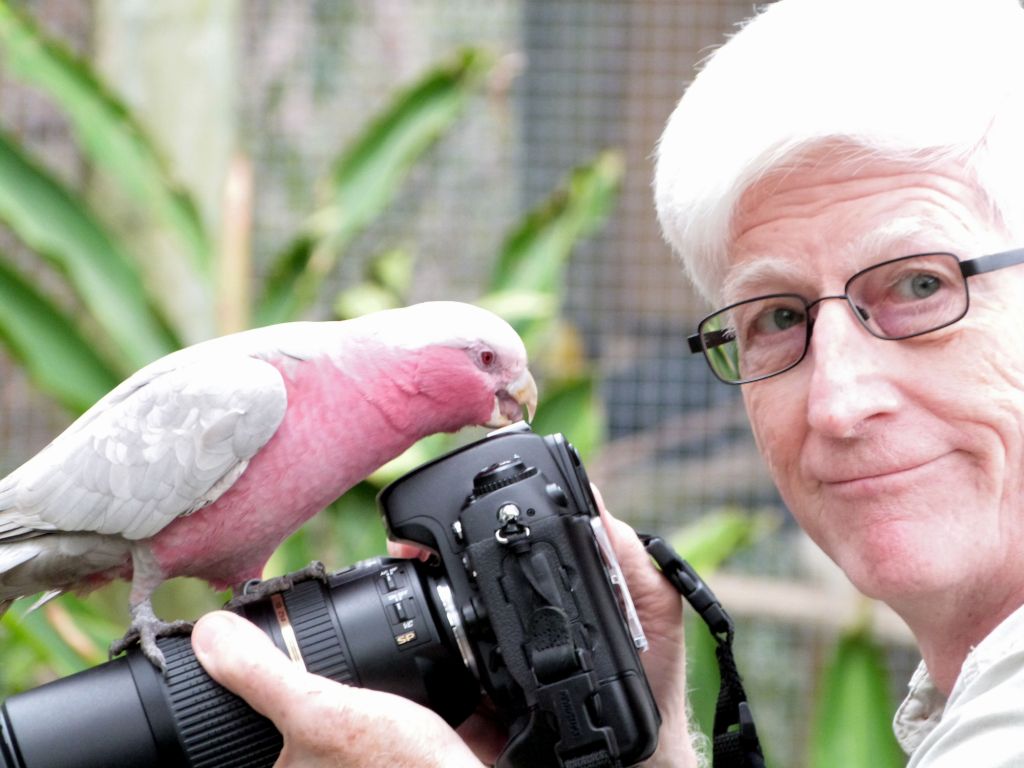
Galah (Eolophus roseicapilla) and Dan

Galah (Eolophus roseicapilla) and Dan

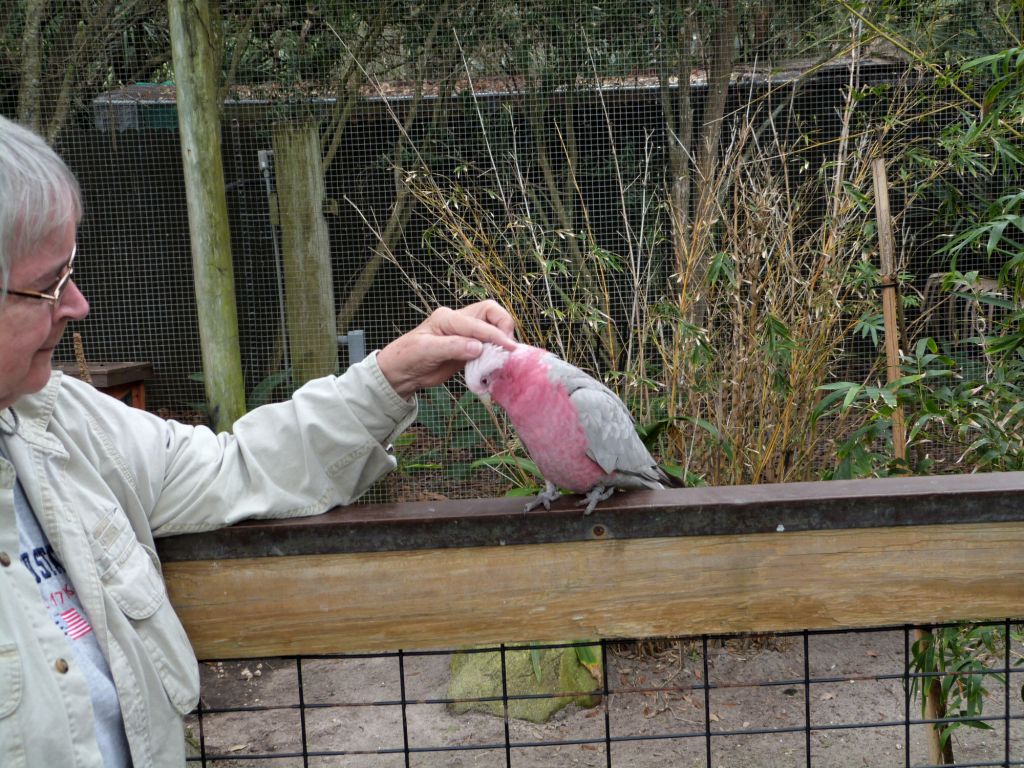
Just as something to share, today at the Zoo, a Galah, in the Cockatoo family, hopped up on Dan’s camera and I was able to take a couple of neat photos I want to share. Ian has photos of the Galah and I was anxious to see one. I never dreamed that we would get this close to one. I even rubbed it’s head for awhile. Wow! What beauty and colors the Lord has given His Creation.

Galah (Eolophus roseicapilla) and Dan

Galah (Eolophus roseicapilla) and Dan

The Galah is in the Cacatuidae – Cockatoos Family.

“The Galah ( /ɡəˈlɑː/), Eolophus roseicapilla, also known as the Rose-breasted Cockatoo, Galah Cockatoo, Roseate Cockatoo or Pink and Grey, is one of the most common and widespread cockatoos, and it can be found in open country in almost all parts of mainland Australia.

Galah and Lee - Brevard Zoo

Galah and Lee - Brevard Zoo

It is endemic on the mainland and was introduced to Tasmania, where its distinctive pink and grey plumage and its bold and loud behaviour make it a familiar sight in the bush and increasingly in urban areas. It appears to have benefited from the change in the landscape since European colonisation and may be replacing the Major Mitchell’s Cockatoo in parts of its range.
The term galah is derived from gilaa, a word found in Yuwaalaraay and neighbouring Aboriginal languages.” (Wikipedia)

More of the trip in future posts.

*

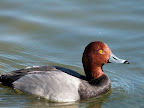
Redhead at Lake Morton – 1-20-12

*

Saturday we headed over to Lakeland for some errands and took the cameras along. We stopped by Lake Morton to see who was there. Turned out to be quite a few interesting birds and got our third “Life Bird” of the year. This time I even was able to video it. There was a couple feeding the birds cracked corn and bread. They had quite a menagerie around them. They came from all over the Lake and we just stood there and photographed away. In amongst the Ring-necked Ducks was this Redhead. We searched all the birds, but he was the only Redhead to be found.

“The Redhead (Aythya americana) is a medium-sized diving duck, 14.5 in (37 cm) long with an 33 in (84 cm) wingspan.
The adult male has a blue bill, a red head and neck, a black breast, yellow eyes and a grey back. The adult female has a brown head and body and a darker bluish bill with a black tip.

The breeding habitat is marshes and prairie potholes in western North America. Loss of nesting habitat has led to sharply declining populations.

Females regularly lay eggs in the nests of other Redheads or other ducks, especially Canvasbacks. Redheads usually take new mates each year, starting to pair in late winter.

Following the breeding season, males go through a molt which leaves them flightless for almost a month. Before this happens, they leave their mates and move to large bodies of water, usually flying further north.

They overwinter in the southern and north-eastern United States, the Great Lakes region, northern Mexico and the Caribbean.

These birds feed mainly by diving or dabbling. They mainly eat aquatic plants” (Wikipedia)

For every kind of beast and bird, of reptile and creature of the sea, is tamed and has been tamed by mankind. (James 3:7 NKJV)

The people feeding these birds were practically proving this verse. Even the Great Blue Heron has come out to feed in the past.

Here is a list of all the birds I listed with eBird.org for 1-20-2012 at Lake Morton.

My Lake Morton List

Mute Swan 20 (Not even counting ones on north side of lake)
Black Swan 1
Muscovy Duck (Domestic type) 5
Mallard (Domestic type) 30 (Also at least 7 White Pekin type ducks)
Redhead 1

Ring-necked Duck 15


Ruddy Duck 1


American White Pelican 3
Great Blue Heron 1
Great Egret 2
White Ibis 18
Turkey Vulture 1
Bald Eagle 1


American Coot 40
Limpkin 2
Ring-billed Gull 10
Rock Pigeon 5
Tree Swallow 10
Boat-tailed Grackle 11

See also:

The whole Lake Morton Album

Redhead (duck) – Wikipedia

Sharing The Gospel

*

Birdwatching Adventure – Circle B Bar Reserve – 1/16/12

Sora (Porzana carolina) by Lee at Circle B

Sora (Porzana carolina) by Lee at Circle B

Dan and I went over to Circle B Bar Reserve on Monday, January 16th. We had a great time birding and we got to view a “Life Bird.” (This one is for real.) See the photo above. “Life Birds” are what you call a bird species the first time you see one. We now have 3 life birds this year. The Sora seen here is the second one for the year. The first one was a Hooded Grebe on Saturday. and I spotted a third one today, a Redhead, at Lake Morton.

The Sora is a bird in the Rails, Crakes & Coots – Rallidae Family. They are 7.9-9.8 in (20-25 cm) and weigh about 1.4-4 oz (49-112 g). So they are not a large bird. I found it among the Common Gallinule and that is what help me realize that it was different and smaller. Been looking for a Sora for months out at Circle B. Knew they were there, just never found one.

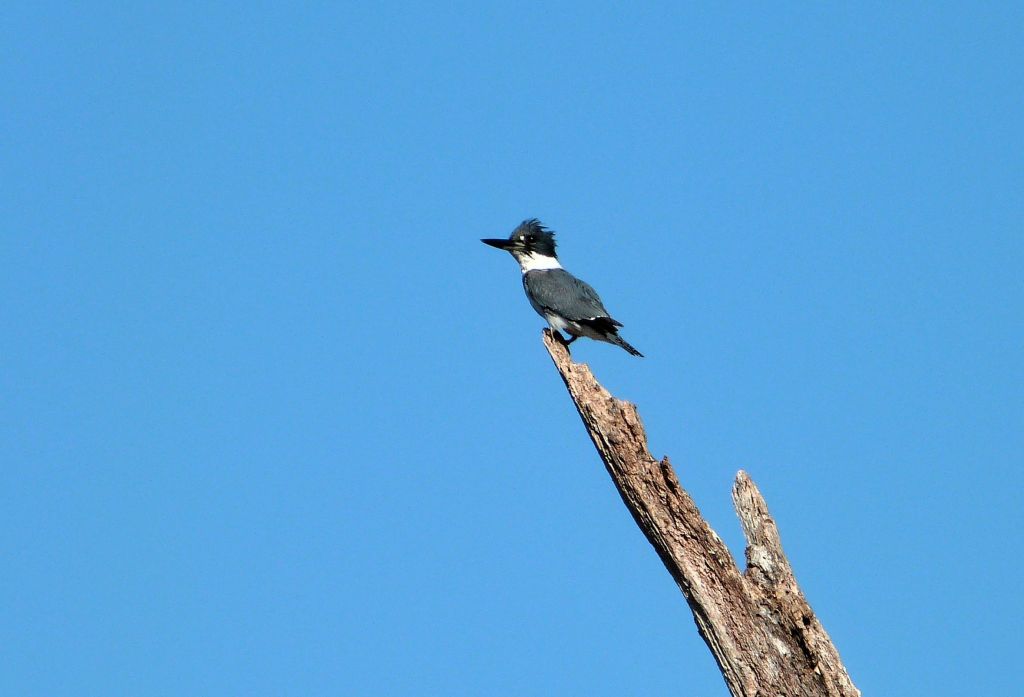
Belted Kingfisher (Megaceryle alcyon) by Lee Circle B

Belted Kingfisher (Megaceryle alcyon) by Lee Circle B

Another highlight of our trip was finding 2 Belted Kingfishers, close-up and personal. They are hard to photograph, but this time they were showing off right in front of us. They were hovering and then diving for their food. Was great to watch them. They are in the Kingfisher – Alcedinidae Family. They are medium sized, actually we both were surprised they are as large as they are. They always appear to have a very short squatty neck. They are 11–13.8 in (28–35 cm), weigh 4.9–6 oz (140–170 g) and have a 19-22 in (48-58cm) wingspan.

Belted Kingfisher (Megaceryle alcyon) by Lee Circle B

Belted Kingfisher (Megaceryle alcyon) by Lee Circle B

Let all those who seek You rejoice and be glad in You; And let those who love Your salvation say continually, “Let God be magnified!” (Psalms 70:4 NKJV)

We also spotted several Alligators.

Here is the list that I turned in to eBird.org:

37 species total

Black-bellied Whistling-Duck 20
Mottled Duck 2
Ruddy Duck 2
Double-crested Cormorant 2
Anhinga 1
Great Blue Heron 2
Great Egret 3
Little Blue Heron 2
Cattle Egret 15
Turkey Vulture 50
Osprey 1
Northern Harrier 1
Common Gallinule 10
American Coot 20
Sandhill Crane 6
Killdeer 1
Mourning Dove 5
Tree Swallow 30
Northern Mockingbird 1
Palm Warbler 3
Yellow-rumped Warbler 1
Boat-tailed Grackle 5

Wordless Birds

*

Birdwatching Adventure for January 7, 2012

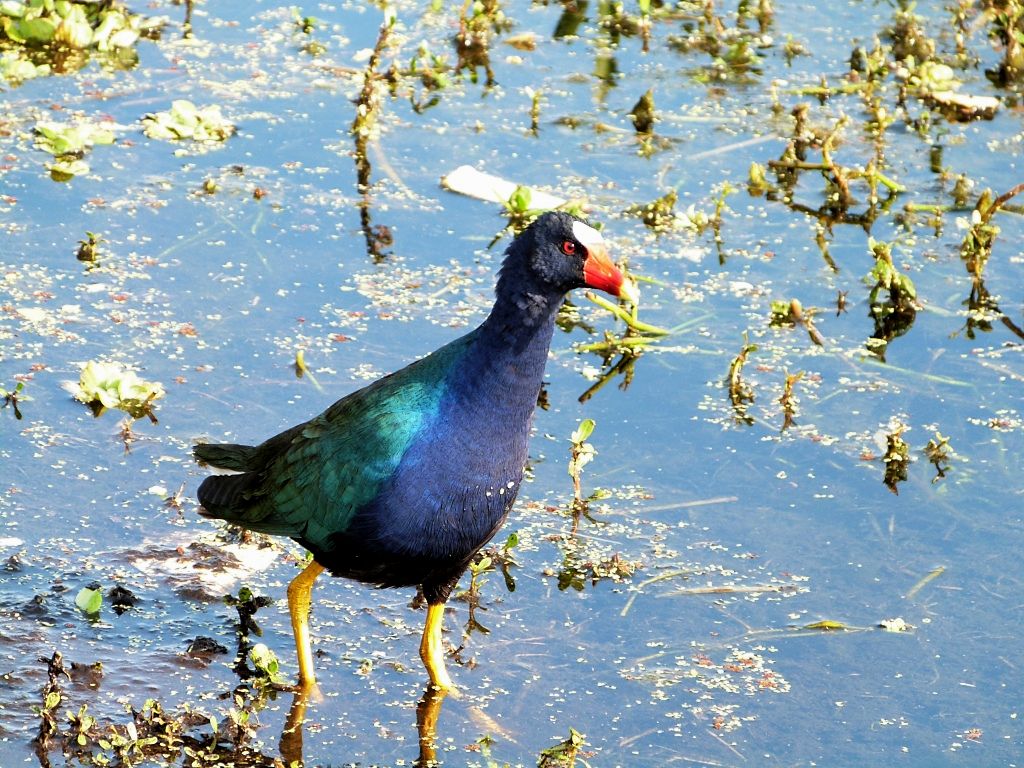
Purple Gallinule by Lee at Lake Parker 1-7-12

Purple Gallinule by Lee at Lake Parker 1-7-12

In the last 10 days, Dan and I have finally been able to go birdwatching. We have had three birding trips right here in Polk County.

Twice we went up to Lake Parker Park in Lakeland. We went on the 7th and again on the 14th of January. The 7th was our 1st adventure of 2012. Here is a list of what I turned in to ebird.org which is a listing service that was launched in 2002 by the Cornell Lab of Ornithology and National Audubon Society to track birds. Here is the list for the January 7, 2012:

Comments: Along shore on way to park and in park
26 species (+1 other taxa)
Mallard (Domestic type) 8
Ring-necked Duck 3
Pied-billed Grebe 4
Double-crested Cormorant – Immature 4
Anhinga 5
Great Blue Heron 2
Great Egret 2
Snowy Egret 3
Cattle Egret 1
White Ibis 10
Glossy Ibis 4
Roseate Spoonbill 1
Turkey Vulture 1
Osprey 4
Red-shouldered Hawk 1
Purple Gallinule 3
Common Gallinule 5
American Coot 7
Ring-billed Gull 20
Caspian Tern 1
Belted Kingfisher 1
Downy Woodpecker 1
Blue-gray Gnatcatcher 5
Palm Warbler 1
Pine Warbler 3
Yellow-rumped Warbler 2
Boat-tailed Grackle 20
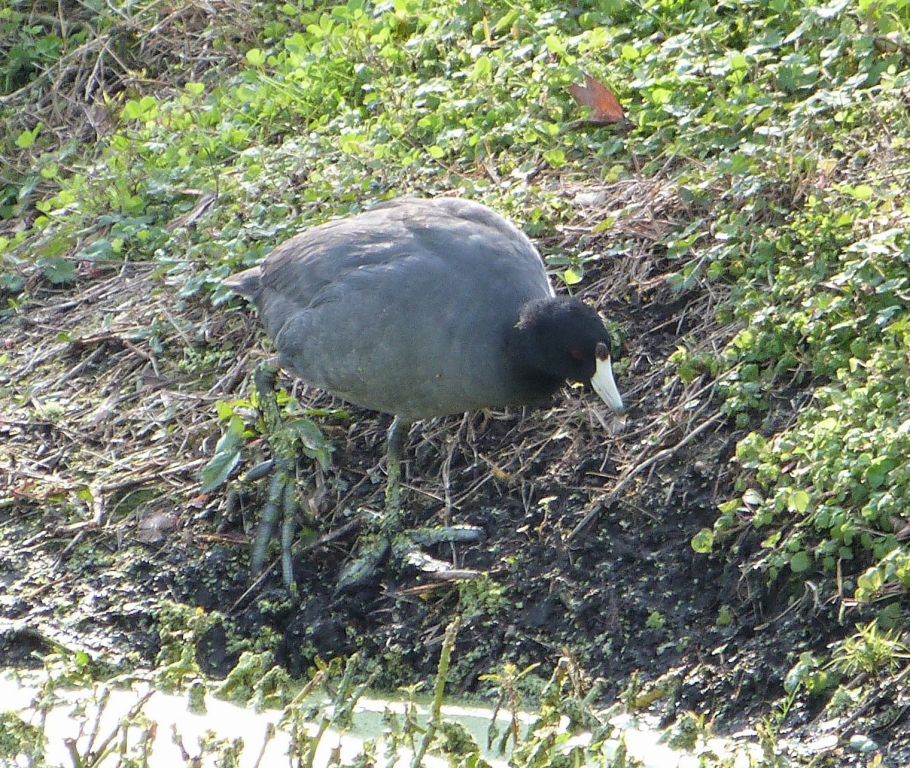
American Coot showing feet by Lee LPkr

American Coot showing feet by Lee LPkr

American Coots have an amazing foot structure. It’s not what you would expect but has lobed toes rather than webbed feet. Photos of foot on Google Search

Which doeth great things past finding out; yea, and wonders without number. (Job 9:10 KJV)

I also turned in the birds I saw coming and going to the park, which is 10 miles from our house:
9 species
Black Vulture 5
Turkey Vulture 10
Sandhill Crane 3
Rock Pigeon 4
Eurasian Collared-Dove 10
Mourning Dove 1
Fish Crow 50
Boat-tailed Grackle 5
House Finch 2
Palm Warbler cropped by Lee LPP

Palm Warbler (Mistaken Pipit) by Lee LPP

All in all, it was a great birding day. The highlight was getting a new bird for my life list of birds seen. (Update This Pipit turned out to be a Palm Warbler, NOT a life bird: We spotted an American Pipit along the shore before we arrived at the park.) We stopped because Dan had spotted a Roseate Spoonbill. The county had a fair sized alligator pinned up right there also.

Last year I saw 2 “life birds” but it took all year to find them. I am writing this on the 17th and I already have 2  to tell you about, but I will save those for the next articles.
*

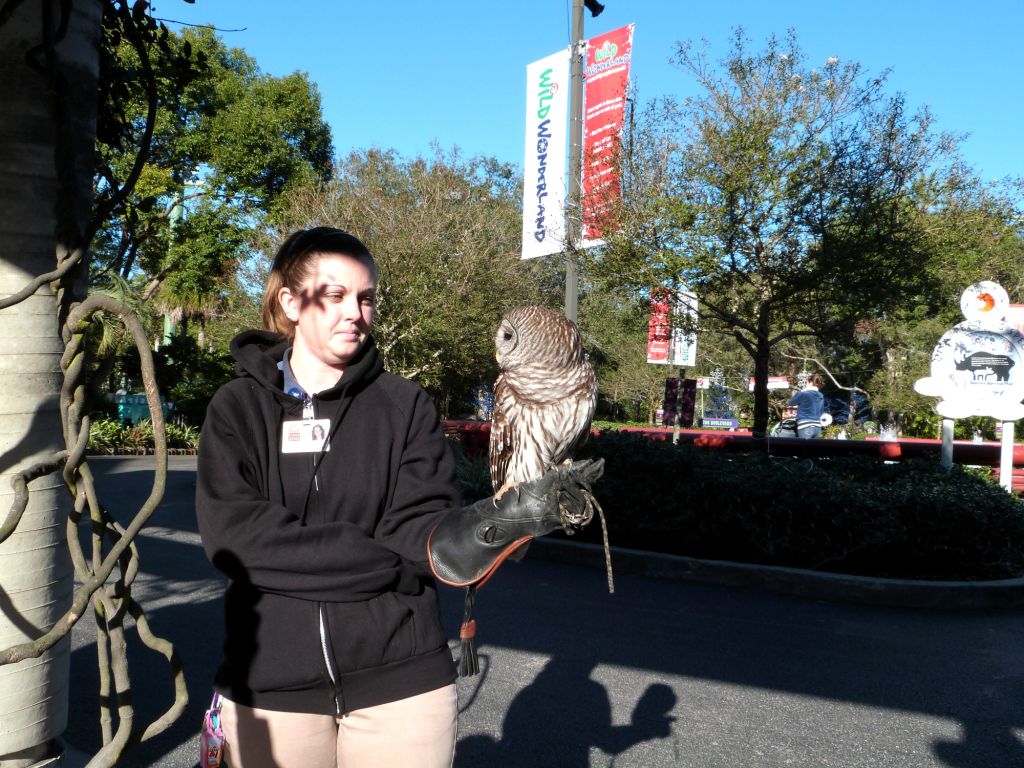
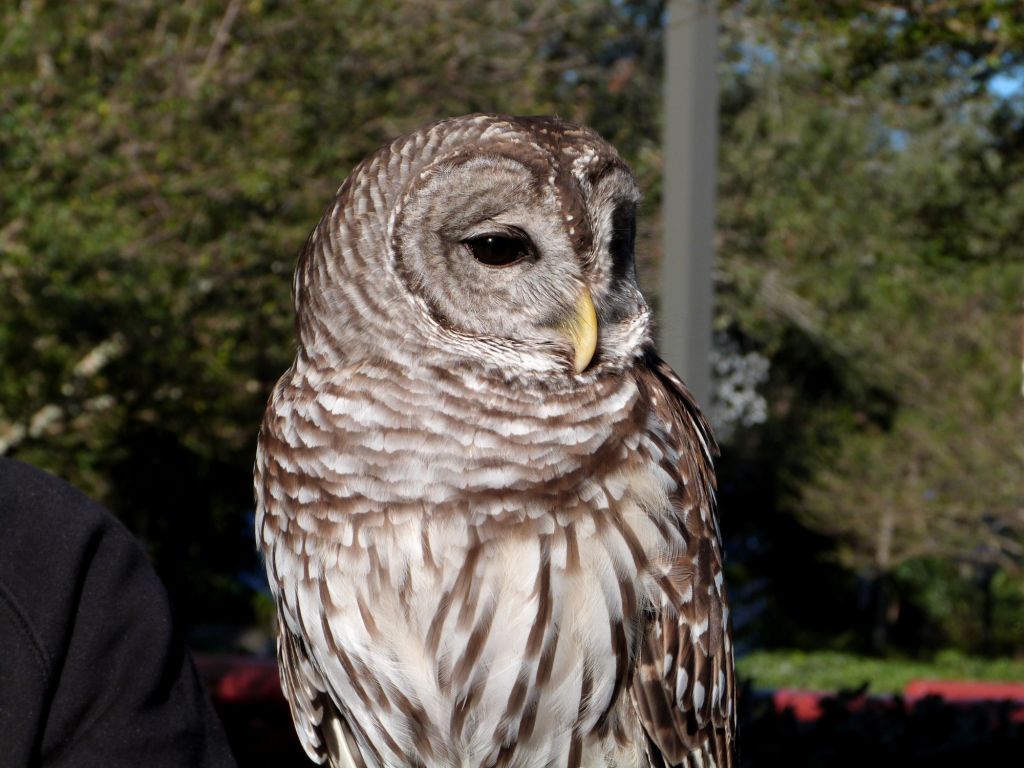
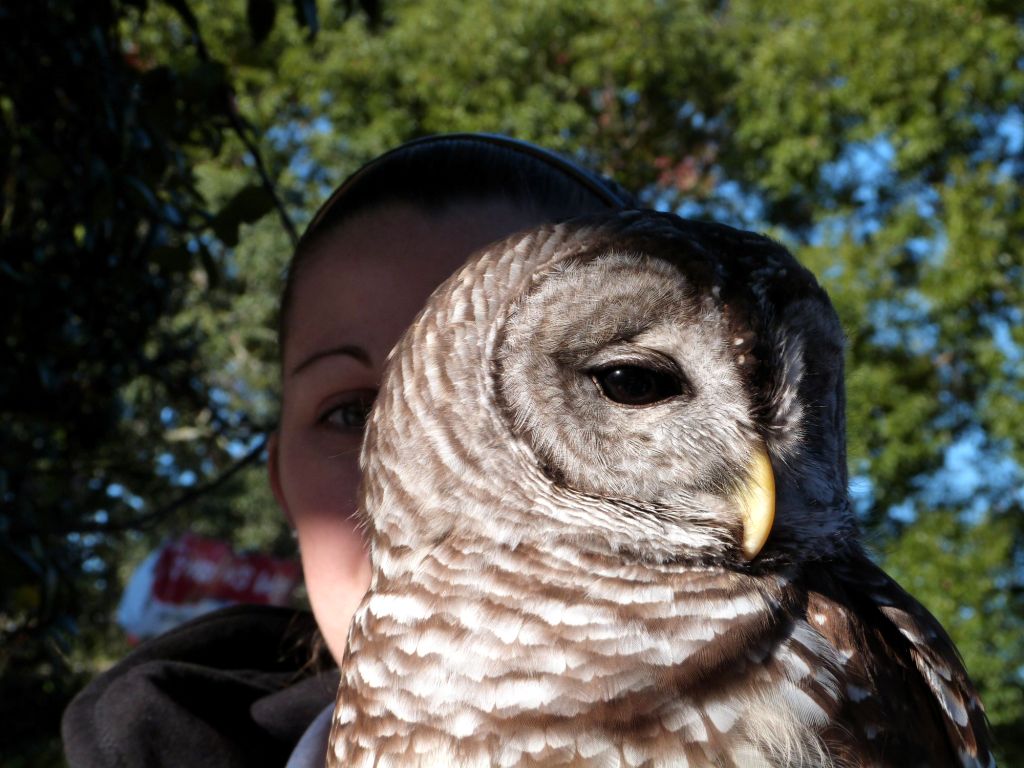
Barred Owl at Lowry Park Zoo Today

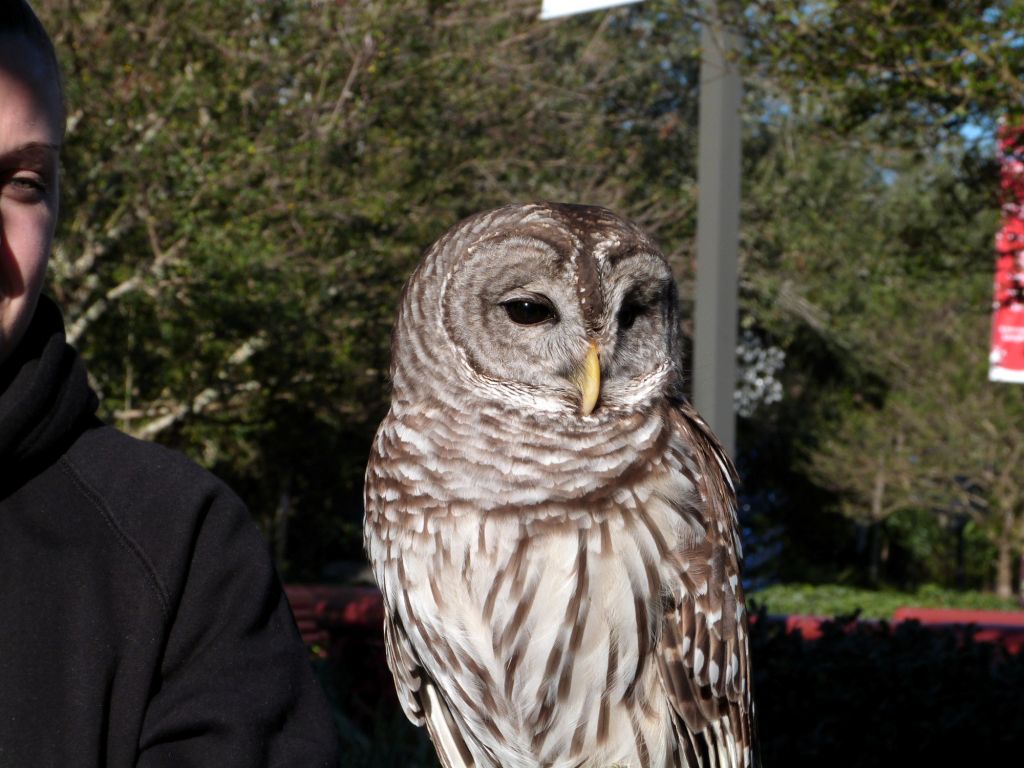
Northern Barred Owl (Strix varia) LPZ by Dan 2014

Northern Barred Owl (Strix varia) LPZ by Dan 2014

Northern Barred Owl (Strix varia) LPZ by Lee

Northern Barred Owl (Strix varia) LPZ by Lee

And thorns shall come up in her palaces, nettles and brambles in the fortresses thereof: and it shall be an habitation of dragons, and a court for owls. (Isaiah 34:13 KJV)

Dan and I went over to the Lowry Park Zoo/Zoo Tampa in Tampa again today. I was wanting to check out my Christmas present of a new camera. Enjoying learning to use it and retaking a lot of photos of birds to compare the old ones with the new ones on this camera. (It is still a point-and-shoot, but it has an improved “program mode.” Dan is our good photographer.)

But when we entered the zoo, we were met by one of the zookeepers holding a beautiful Barred Owl. We had not encountered this Owl in our previous trips. While sharing some of the photos, I thought you might like to learn a little about them.

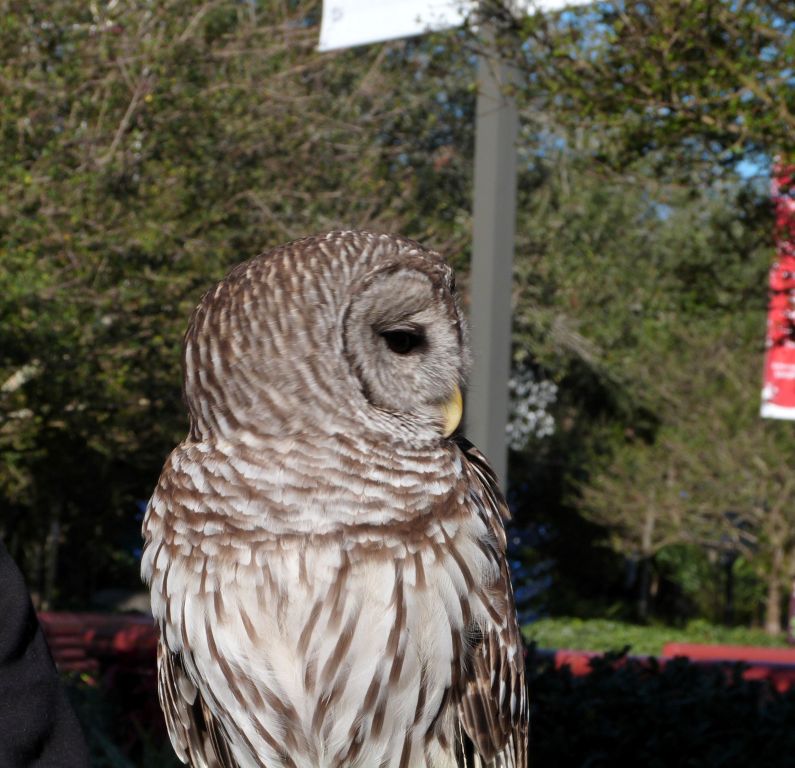
Northern Barred Owl (Strix varia) LPZ by Lee

Northern Barred Owl (Strix varia) LPZ by Lee

Facts from the U.S. Geological Service

Identification Tips:

  • Length: 17 inches Wingspan: 44 inches
  • Sexes similar
  • Rather large owl
  • Dark eyes and yellow bill
  • Back brown, mottled with pale spots and dark bars
  • Underparts pale with long, brown streaks
  • Chest pale with brown barring
  • Face pale with dark concentric rings surrounding eye

Similar species:

The Spotted Owl is most similar, but can be separated with attention to its barred, not streaked, underpart coloration. Short-eared Owl is similar in size, but is not barred on the chest nor is as heavily streaked below, does not share the concentric rings in the facial disks, has yellow eyes and a dark bill, and is found in quite different habitat. Great Gray Owl is superficially similar, but much larger, gray rather than brown below, and has differently patterned underparts.”

Northern Barred Owl (Strix varia) LPZ by Lee

Northern Barred Owl (Strix varia) LPZ by Lee

“The Barred Owl (Strix varia) is a large typical owl native to North America. It goes by many other names, including Eight HooterRain OwlWood Owl, and Striped Owl, but is probably best known as the Hoot Owl based on its call.

The usual call is a series of eight accented hoots ending in oo-aw, with a downward pitch at the end. The most common mnemonic device for remembering the call is “Who cooks for you, who cooks for you all.” It is noisy in most seasons. When agitated, this species will make a buzzy, rasping hiss. While calls are most common at night, the birds do call during the day as well.” (Wikipedia)

(From xeno-canto.org)

Northern Barred Owl (Strix varia) LPZ by Lee

Northern Barred Owl (Strix varia) LPZoo by Lee

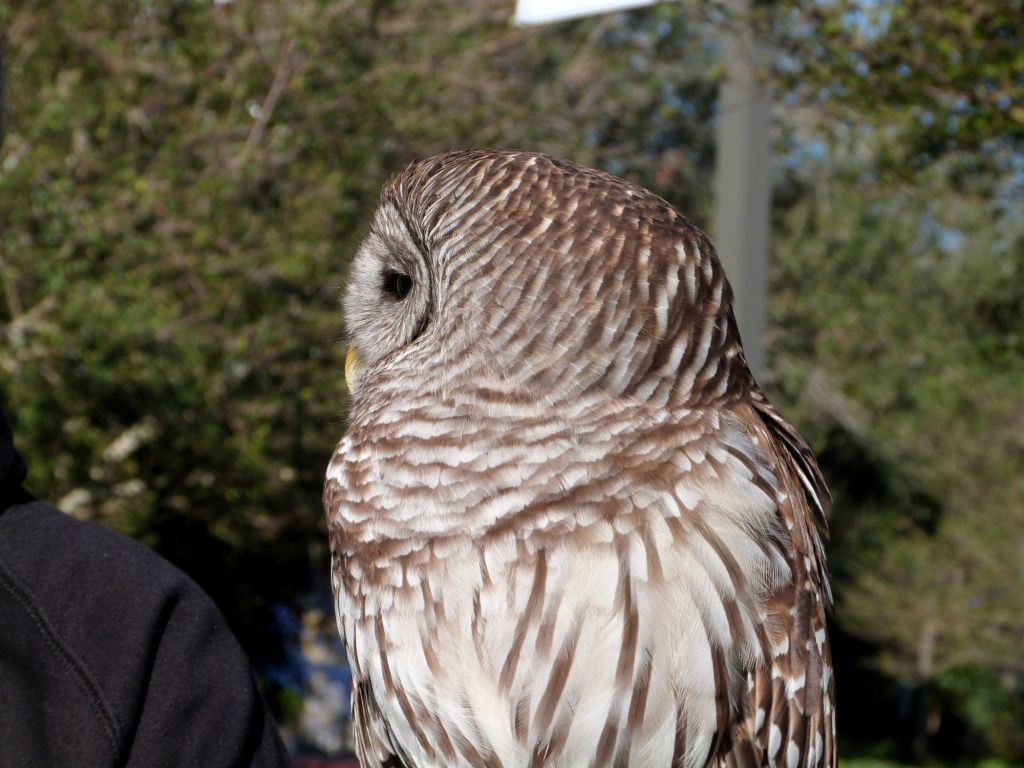
Looking the other way. No, they cannot turn their heads all the way around. Notice also that this owl does not have ear tufts like some owls.

Northern Barred Owl (Strix varia) LPZ by Lee - Side of head

Northern Barred Owl (Strix varia) LPZ by Lee – Side of head

“Breeding habitats are dense woods across Canada, the eastern United States, and south to Mexico; in recent years it has spread to the western United States. Recent studies show suburban neighborhoods can be ideal habitat for barred owls. Using transmitters, scientists found that populations increased faster in the suburban settings than in old growth forest. The main danger to owls in suburban settings is from cars. The increased offspring offset the death rate due to impacts from cars and disease.”

The Barred Owl’s nest is often in a tree cavity, often ones created by pileated woodpeckers; it may also take over an old nesting site made previously by a red-shouldered hawk, cooper’s hawk, crow, or squirrel. It is a permanent resident, but may wander after the nesting season. If a nest site has proved suitable in the past they will often reuse it as the birds are non-migratory. In the United States, eggs are laid from early-January in southern Florida to mid-April in northern Maine, and consist of 2 to 4 eggs per clutch. Eggs are brooded by the female with hatching taking place approximately 4 weeks later. Young owls fledge four to five weeks after hatching. These owls have few predators, but young, unwary owls may be taken by cats. The most significant predator of Barred Owls is the Great Horned Owl. The Barred Owl has been known to live up to 10 years in the wild and 23 years in captivity.” (Wikipedia)

Northern Barred Owl (Strix varia) LPZ by Lee

Northern Barred Owl (Strix varia) LPZ by Lee

“Owl” is mentioned 8 times in the King James Bible and “Owls” is mentioned 6 times. So that makes our friend here a “Bird of the Bible” and of course a “Bird of the World.” Owls are another of the Lord’s great creations.

It was a great birdwatching day at the Zoo. Cool, but the sun was bright and no clouds. I had some other great finds today, but will save them for later.

References to check out:

*

Birdwatching at Lake Morton – October 21, 2011

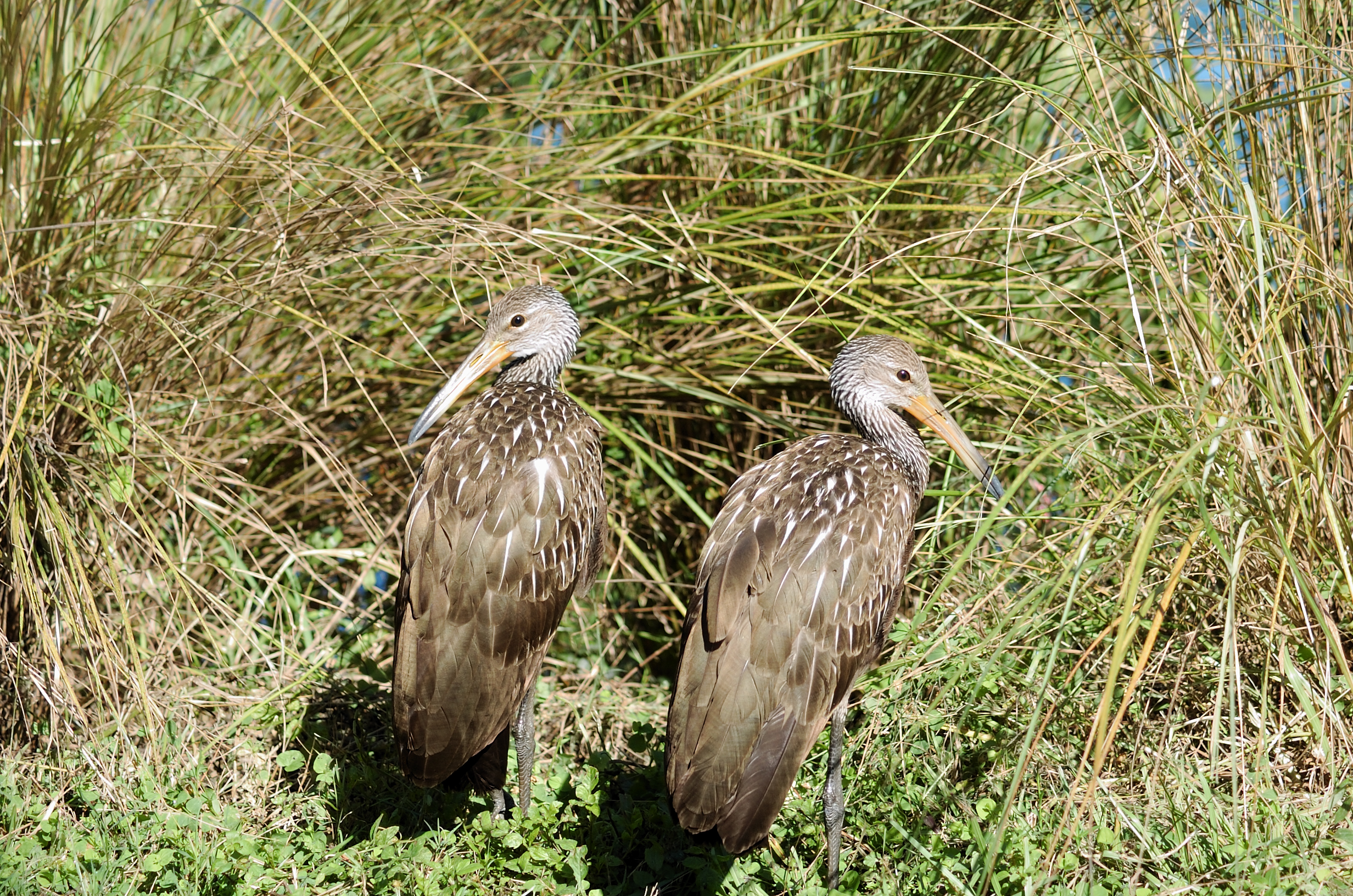
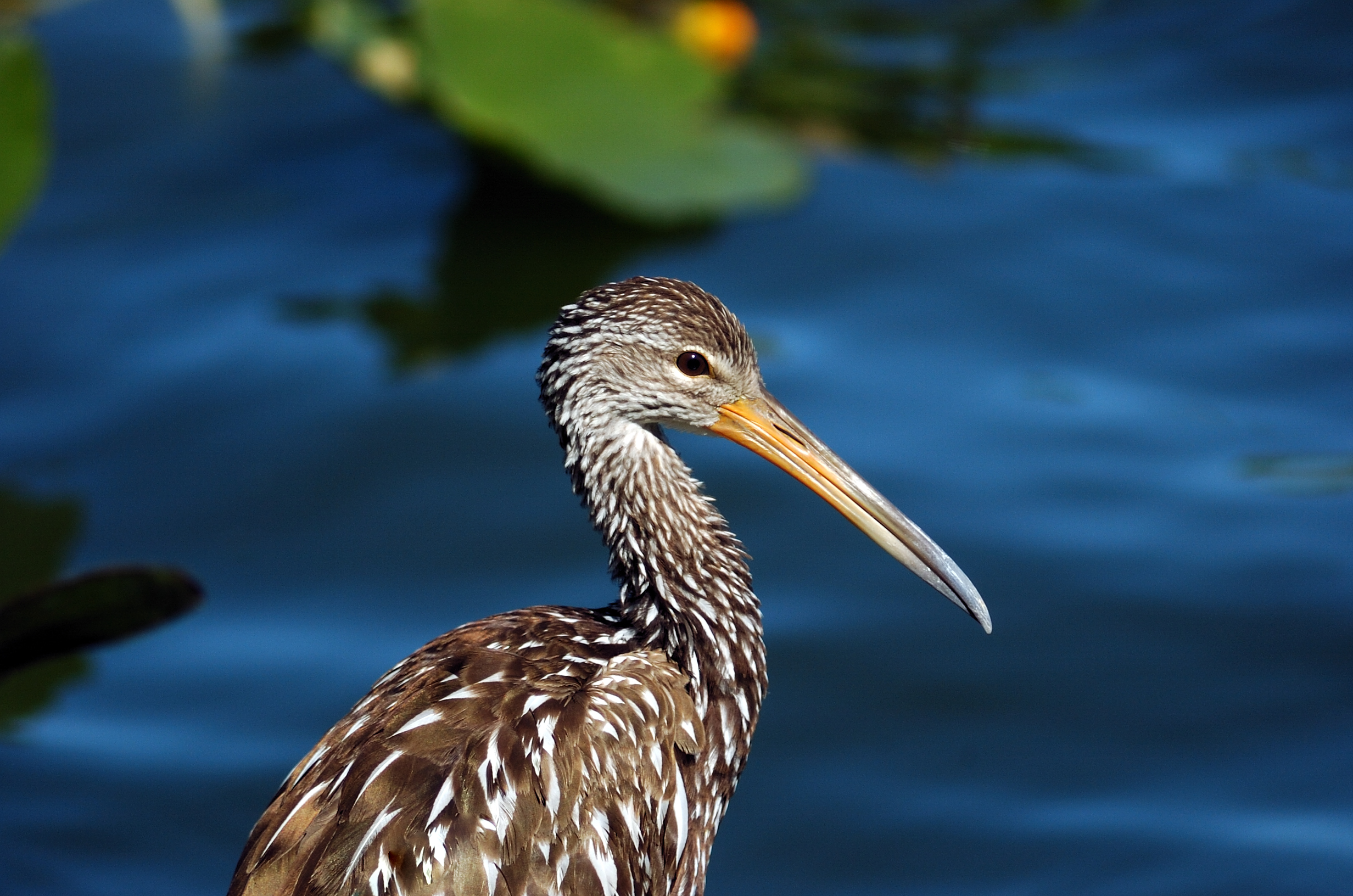
Limpkin (Aramus guarauna) Juveniles by Dan at Lake Morton

Limpkin (Aramus guarauna) by Dan at Lake Morton

Today Dan and I went by Lake Morton for just a short while. We were on our way to have lunch and do some shopping. It was a great day without a cloud in the sky. The temperature was a pleasant 63° (17.2º C).

When we were last there, there were 5 young Limpkins and I want to see how they had grown. We spotted 4 of them sunning themselves. They have lost that fuzz on their heads and the spots are becoming quite distinguished. Dan took a great picture of one of them closeup.

Limpkin (Aramus guarauna) Juvenile by Dan at Lake Morton

Limpkin (Aramus guarauna) by Dan at Lake Morton

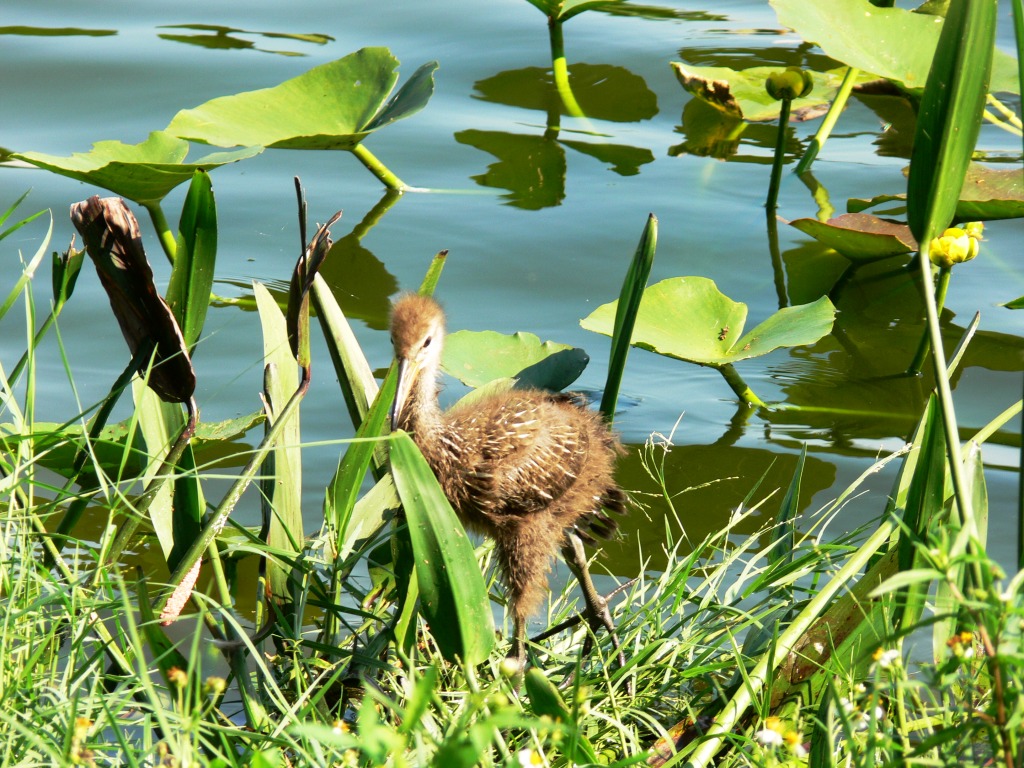
I can tell by their faces that they are still young. Here is a photo of one when it still had its fuzz.

Limpkin baby taken 9-12-11 by Lee

Limpkin (Aramus guarauna) baby taken 9-12-11 by Lee

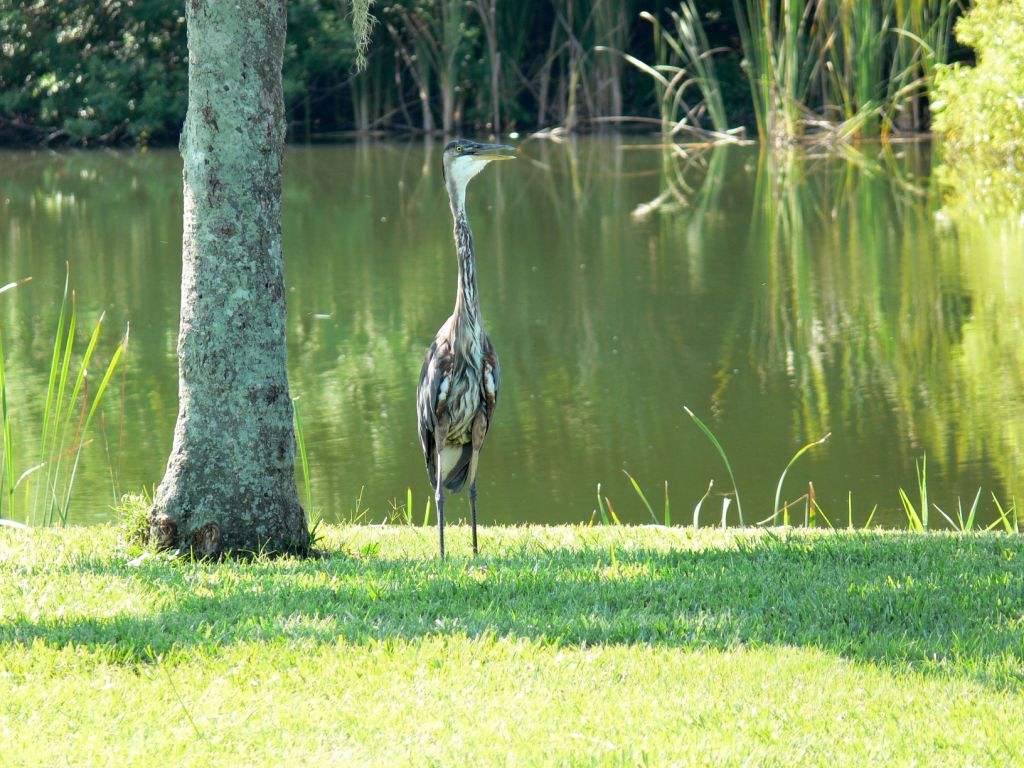
A Great Blue Heron decided to be friendly and came walking toward me while I was feeding some of the ducks. When I tossed him some food, he ate it and kept coming closer. I kept tossing it food and it kept coming closer. What a delight! If I were brave, I would have tried to hand feed him (or her). As I have said in other blogs, this is only one of two places we feed the birds in this area.

Great Blue Heron (Ardea herodias) by Dan at Lake Morton

Great Blue Heron (Ardea herodias) by Dan at Lake Morton

What did we see today? Besides the 4 Limpkin youngsters and the Great Blue Heron, we spotted Black and Turkey Vultures, a Great Egret, Anhingas, more Great Blue Herons and a Snowy Egret. Those were seen on the way to Lake Morton in Lakeland. At the lake we saw 15-20 Coots (they are back), 3 Wood Storks, 15-20 Mallards, 10 “Aflac” Ducks, Muscovy Ducks, a Great Egret, Laughing Gull, 7 Mute Swans, 2 Black Swans, Boat-tailed Grackle and 10 Ring-necked Ducks (they are back). Our winter visiting birds are finally returning.

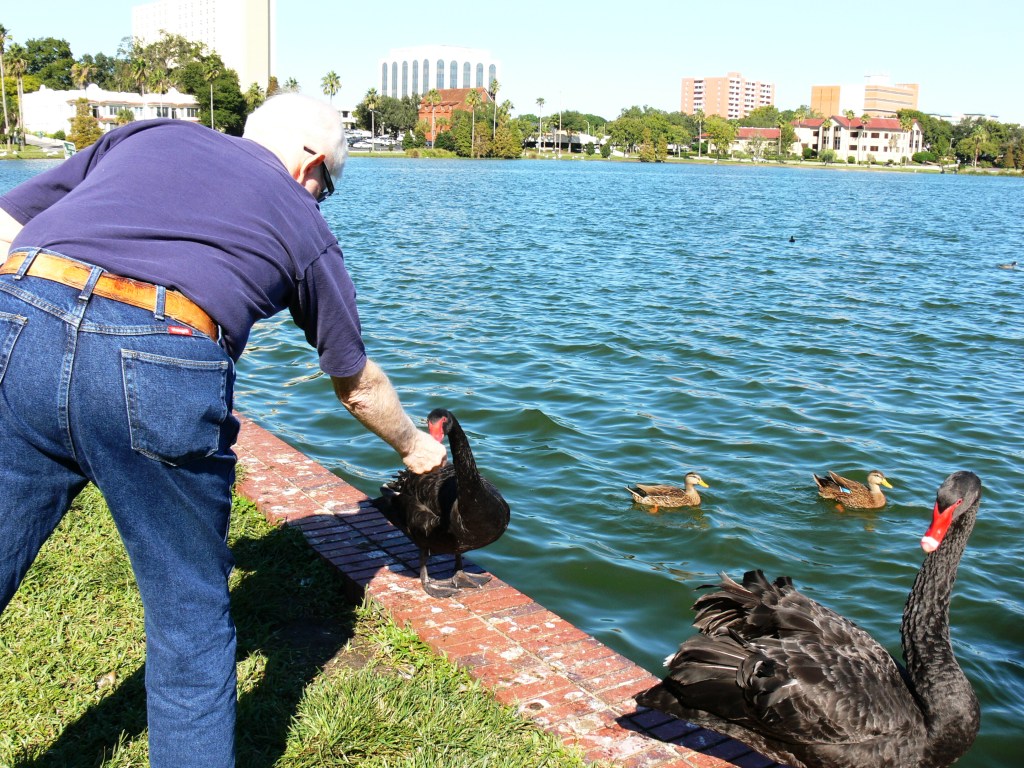
 Dan feeding a Black Swan at Lake Morton

Dan feeding a Black Swan at Lake Morton

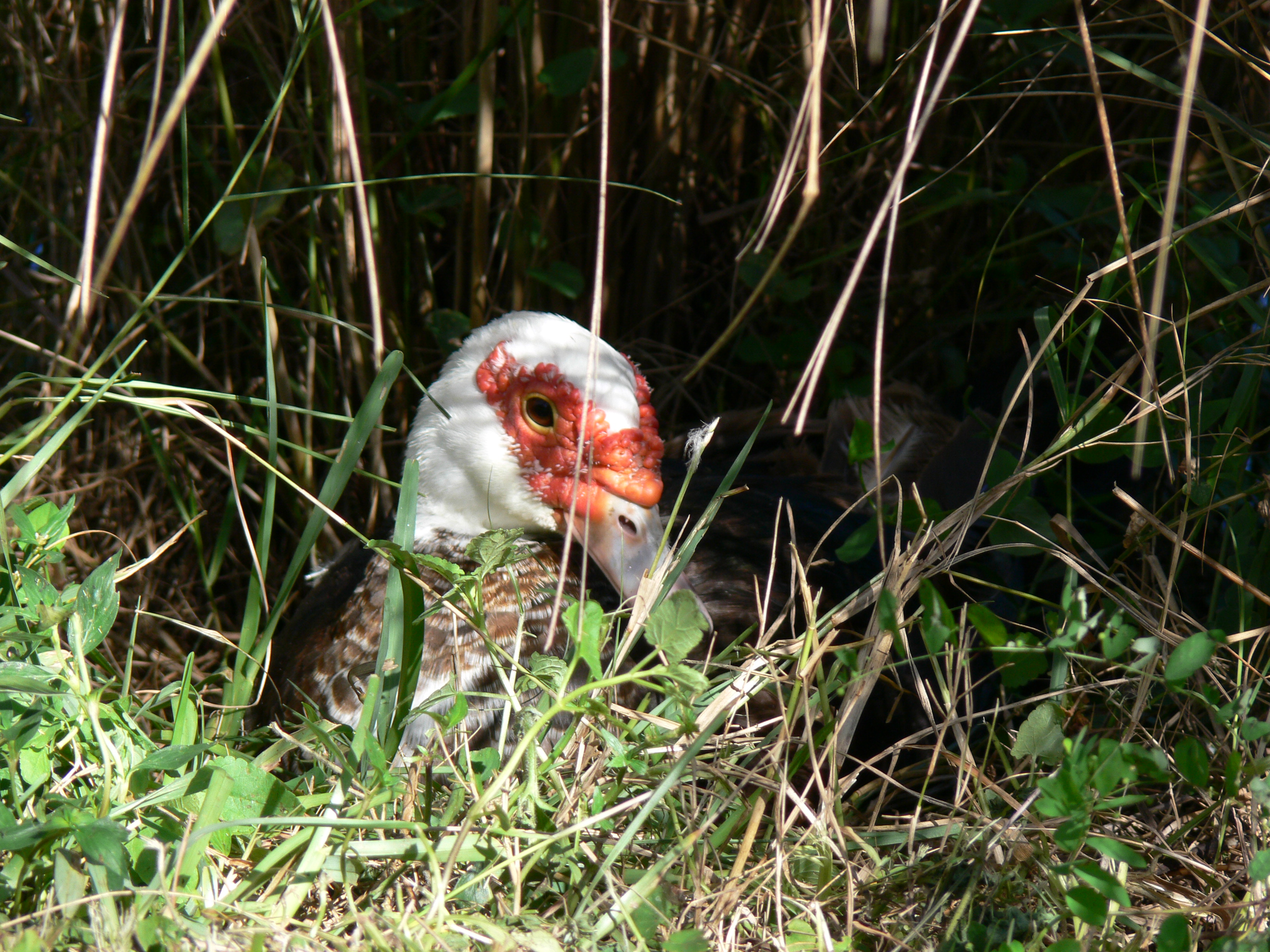
I caught Dan feeding one of the Black Swans. Then I found a Muscovy Duck sitting on a nest with the male standing guard in front. To me, they seem “not so pretty”, but the Lord created all the birds and I am sure His Eye is on the Muscovy as well as it is on the Sparrow.

Muscovy Duck (Cairina moschata)

Muscovy Duck on nest at Lake Morton by Lee

I know all the birds of the mountains, And the wild beasts of the field are Mine. (Psalms 50:11 NKJV)

What a perfect day for birding and even though we weren’t there long, the Lord let us see His Creation again, up close and enjoy them.

This was the LORD’s doing; It is marvelous in our eyes. This is the day the LORD has made; We will rejoice and be glad in it. (Psalms 118:23-24 NKJV)

*
Birdwatching – Lowry Park Zoo – 10-06-2011

I know all the birds of the hills, and all that moves in the field is mine. (Psalms 50:11 ESV)

Today, Dan and I went to the Lowry Park Zoo again. The birds were quite active and the visitors were few which made birdwatching even more fun. We spent most of our time in the Aviary just inside the entry. The weather was very comfortable, for a change. The summer heat is finally breaking and the humidity has started dropping also.

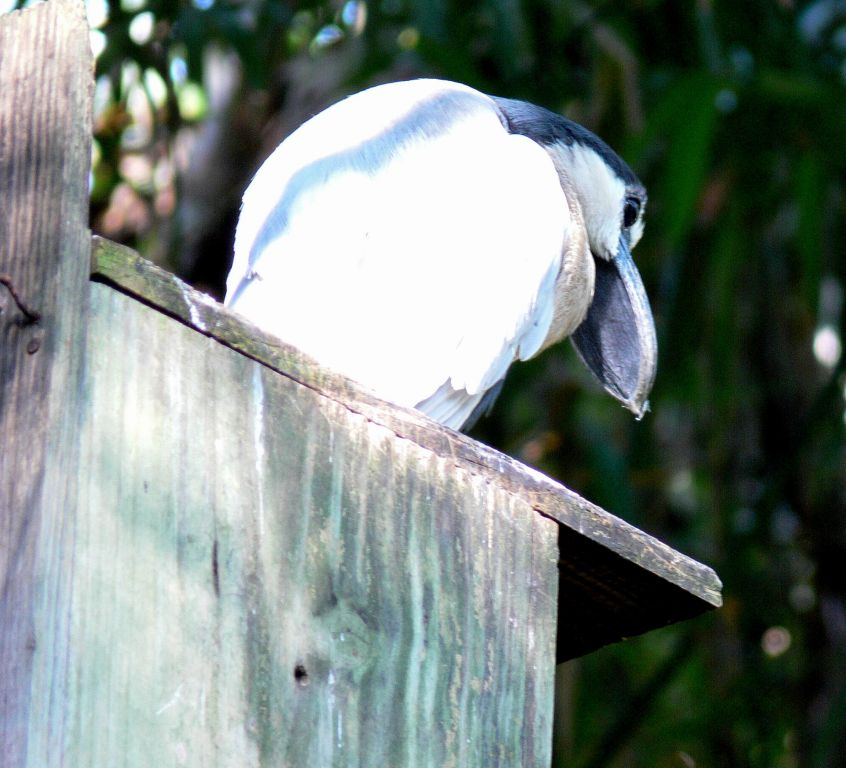
Boat-billed Heron (Cochlearius cochlearius) by Lee at LPZoo

Boat-billed Heron (Cochlearius cochlearius) by Lee at LPZoo

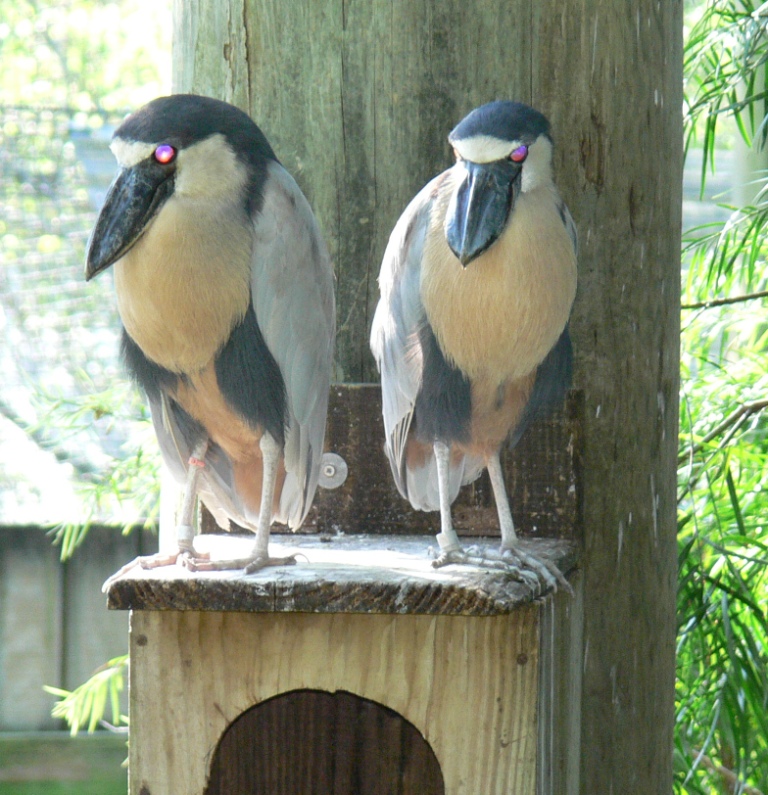
We were greeting by one of my favorite birds there, the Boat-billed Heron. This time I was able to get a photo up under that neat boat-shaped bill of his (or hers). The picture of the bird is not good, but the bill came out okay. There are two that hang out together most of the time. There are others in the aviary, but these two sweethearts always grab my attention. This next photo shows the pair and also the top of those beaks. My flash gave them the “red-eye.”

Boat-billed Heron (Cochlearius cochlearius) by Lee at LPZoo

Boat-billed Heron (Cochlearius cochlearius) by Lee at LPZoo

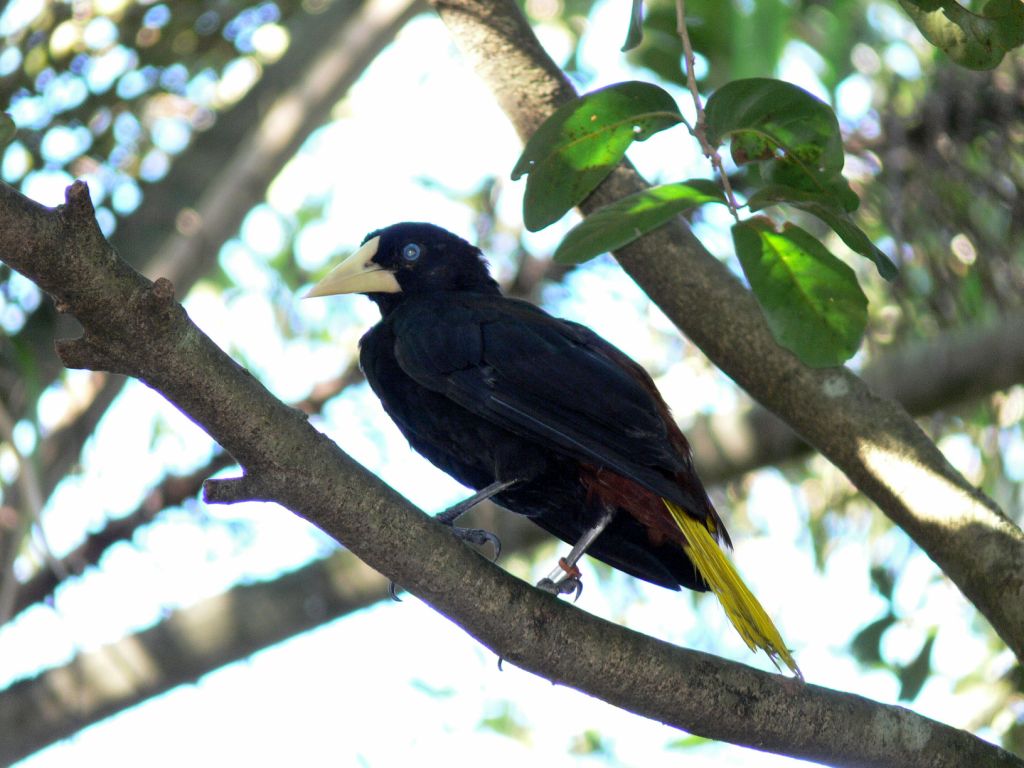
Another bird that is hard to get a decent photo of is the Crested Oropendola. They like to stay up in the trees, but this one is a fair shot. (This one is for you, Pastor Pete)

Crested Oropendola (Psarocolius decumanus) at LPZ

Crested Oropendola (Psarocolius decumanus) at LPZ by Lee

Then as we walked over into the second section, we were greeted by the Red-Legged Seriemas. You could hear them well outside the aviary. As you watch the video, you will see and hear them carrying on. Actually after checking with Wikipedia, this is their “singing.” Here is what they have to say about this:

“The song has a quality described as “a cross between ‘the serrated bark of a young dog and the clucking of turkeys'”.[3] At the loudest part of the song, the bird has its neck bent so its head is touching its back. Both members of a pair as well as young down to the age of two weeks sing; often one member of a family starts a song just as another finishes, or two sing simultaneously. The song can be heard several kilometres away; in Emas National Park, Brazil, in 1981–1982, observers often heard four Red-legged Seriemas or groups singing at once.[4]

The full song consists of three sections:

  1. Repeated single notes at constant pitch (1,200 to 1,300 Hz) and duration but increasing tempo
  2. Repeated two- or three-note subphrases of slightly higher pitch with increasing tempo
  3. Subphrases of up to 10 notes, shorter ones rising in pitch and longer ones falling, two-subphrase combinations increasing in number of notes and tempo and then decreasing in tempo.”

Check it out for yourself:

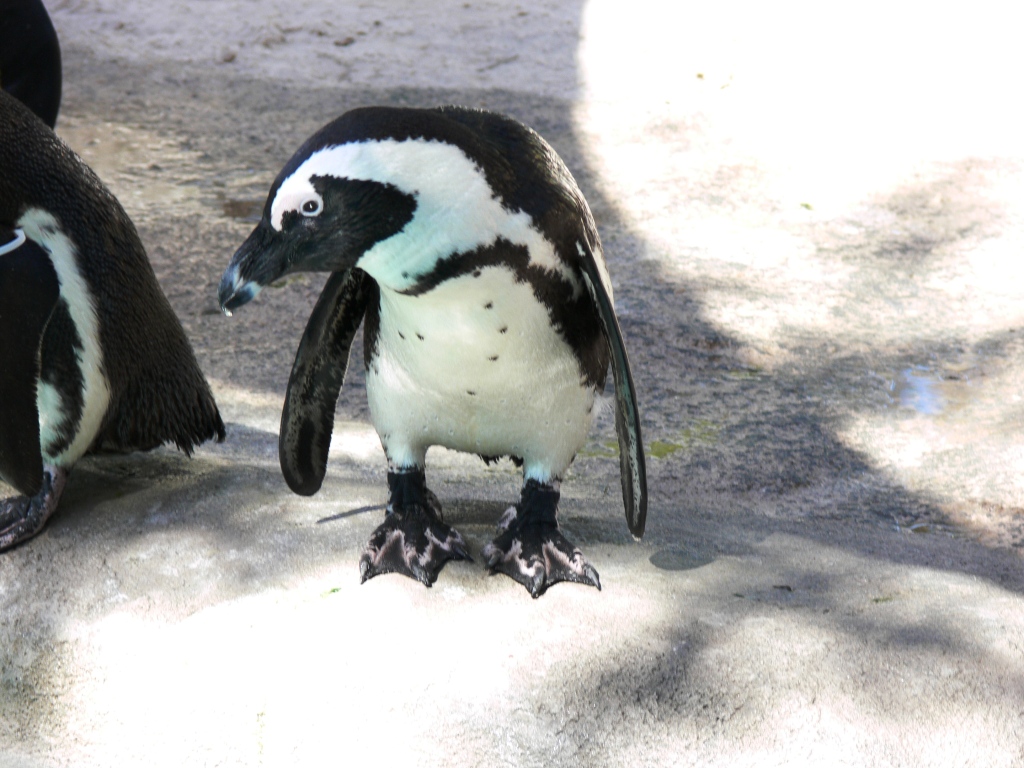
We also stopped by the African Penguins and I took this Foot shot of a Penguin. Thought it was interesting.

Penguin with cool feet

Penguin with cool feet

It was a nice enjoyable visit and we needed a break. God’s creative work was on display through all of these neat birds.

All photos can be clicked on to enlarge them.

*

Birdwatching – Lakes Hollingsworth and Morton in September

Ladies feed the birds at Lake Hollingsworth

Ladies feed the birds at Lake Hollingsworth

Dan and I finally found a little time to go birdwatching, and since I was sore from a fall, decided to just go to Lake Hollingsworth and Lake Morton in Lakeland, Florida. Neither require a lot of walking, but we can always find something worth looking at. Both lakes had some great finds.

Lake Hollingsworth had the usually Mallards, White Ibises, Boat-tailed Grackles, Common Moorhens, “Aflac” Ducks being fed by a couple of ladies. We heard several Blue Jays, Red-bellied Woodpecker, and a Red-shouldered Hawk. A flock of about 50 Fish Crows made their noisy flight over and around for several minutes. We also saw a Great Egret, Osprey, Wood Storks, Great Blue Herons, Cormorant, Limpkin and a Purple Gallinule.

The best find was to watch an Anhinga trying to stay cool. I video taped the bird vibrating its throat. Birds do not have sweat glands, so this is one of the ways they cool down. It actually wasn’t too hot, 79°, but the humidity was at 85%. We all were warm. Below is some of that video.

And he cried and said, Father Abraham, have mercy on me, and send Lazarus, that he may dip the tip of his finger in water, and cool my tongue; for I am tormented in this flame. (Luke 16:24 KJV)

After that we drove about a mile north to Lake Morton. Again, the birds were gathered around a family feeding them. (These are the only two places we go locally where they feed wildlife.) This time the Mallards, White Ibises, and Boat-tailed Grackles were joined by 8 Wood Storks, Gulls, and Common Grackles. Also spotted were Mute Swans, a Black Swan, Wood Ducks, Red-bellied Woodpecker, some sort of Tern and a Snowy Egret showing off his yellow feet.

The prize here was finding a family of Limpkins. The mom, dad, and 5 juveniles were in the tall grass by the lake. Tried to get photos through the grass, but as you know, that can be a challenge. I turned my camera on to video and took the following:

All in all, the Lord provided a great day for birdwatching and let His creation of birds be seen. What would life be like without the neat things the Lord has provided to make our journey so enjoyable. All we have to do is look around us and observe.

*
Birdwatching at Circle B Bar Reserve – 7/22/11

Where the birds make their nests: as for the stork, the fir trees are her house. (Psalms 104:17 KJV)

I was making a video of a Tricoloered Heron out at Circle B  when I caught this interesting sight. I zoomed out to get a view of the pond and as I zoomed back in on the bird, he and I both were surprised to see what was heading toward us. The Heron decided to get his feet out of the water, go stand on a rock, and I decided to stop the video when the alligator started out of the water in my direction.

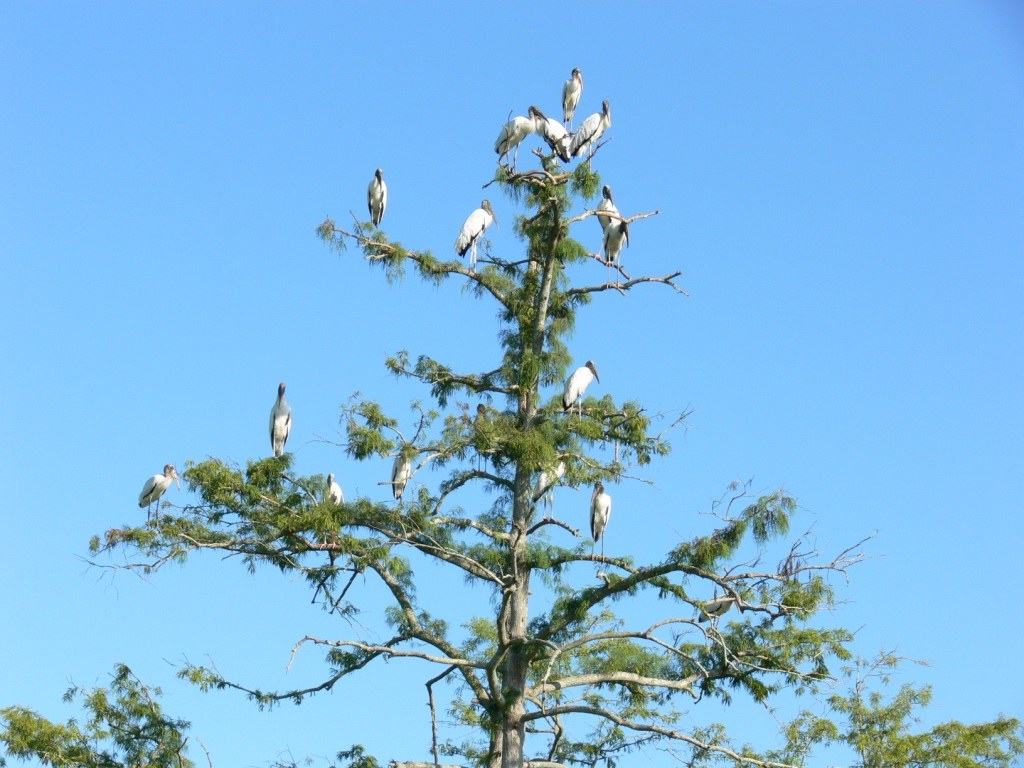
Wood Stork Tree at Circle B - 7-22-11

Wood Stork Tree at Circle B - 7-22-11 by Lee

Where the birds make their nests: as for the stork, the fir trees are her house. (Psalms 104:17 KJV)

Circle B Bar Reserve is always fun to bird watch. You never know what might be there. We had been somewhat disappointed in the number of birds and were heading back when I spotted the Heron. The most numerous birds out there were all the Wood Storks up in the trees. We still managed to see 21 birds on a clear, 79 degree morning. Here is a list of the birds spotted or heard.

Black-bellied Whistling Ducks – 9
Great Egrets – 25+
Cattle Egrets – 5
Tricolored Heron – 3
Great Blue Herons – 3
Limpkin – 1
Double-crested Cormorants – 5
Anhingas – 2
Wood Storks – 100+
Moorhens -15+
Red-shouldered Hawk – 1
Black Vultures and Turkey Vultures, mixed – 50+
Mourning Doves – 2
Red-bellied Woodpecker – 1
Red-headed Woodpecker – 1
Boat-tailed Grackles – 10
Common Grackles – 5
Blue Jays 2
Uncertain Wren – heard -1
Cardinal – 2

Black-bellied Whistling Duck in Tree at Circle B by Lee

Black-bellied Whistling Duck in Tree at Circle B by Lee

When we left there, we decided to check out Saddle Creek Park since we already had our cameras and binoculars. We got there around 9:40 and it was already 86 degrees by then. Seventeen species of birds decided to let us count them. Most of the birds were the same kind we had seen at the Circle B, but we did pick up some White Ibises, a Fish Crow, Little Blue Heron and Tufted Titmouse.

Great Blue Heron Juvenile at Saddle Creek by Lee

Great Blue Heron Juvenile at Saddle Creek by Lee

That list was (in the order they were spotted); Cattle Egrets, Blue Jays, Boat-tailed Grackles, Anhinga-female, Moorhens, Great Egret, Fish Crow, Common Grackles, Great Blue Herons, White Ibises, Tricolored Heron, Great Blue Heron-juvenile, Ospreys, Little Blue Heron, Anhinga, Double-crested Cormorants, Black Vultures and the Tufted Titmouse.

Always enjoy watching God’s Creation even when they are the same ones we see often. Then again, we have lots of human friends that we enjoy visiting with over and over also.

*

Birdwatching at Lowry Park Zoo – May 2011

Great Argus (Argusianus argus argus) (Great Malay Argus P) by Lee at LPZ

Great Argus (Argusianus argus argus) (Great Malay Argus Pheasant) by Lee at LPZ

Dan and I were able check out the birds again at the Lowry Park Zoo in Tampa, FL last Friday. We went to a few of the aviaries we haven’t been in for awhile. We went to the Sulawesi Aviary and saw the Magpie Goose, Masked Lapwing, Great Malay Argus Pheasant , Victorian Crowned Pigeon (SSP), Mandarin Duck, Sulawesi Tarictic (Temminck’s) Hornbill, Demoiselle Crane, Great Malay Argus, Javan Pond Heron and the (Green-naped) Pheasant Pigeon, with the Bar-headed Goose just outside.

Sulawesi Hornbill (Penelopides exarhatus) by Lee LPZ

Sulawesi Hornbill (Penelopides exarhatus) by Lee LPZ

From there we stopped by Lorikeet Landing to see many Lorikeets being feed by visitors. There the Green-naped, Swainson’s, Weber’s and Rainbow Lorikeets carry on with lots of noisy calls (all of these are subspecies of the Rainbow).

Lorikeet being feed by youngster at Lowry Pk Zoo

Lorikeet being feed by youngster at Lowry Pk Zoo

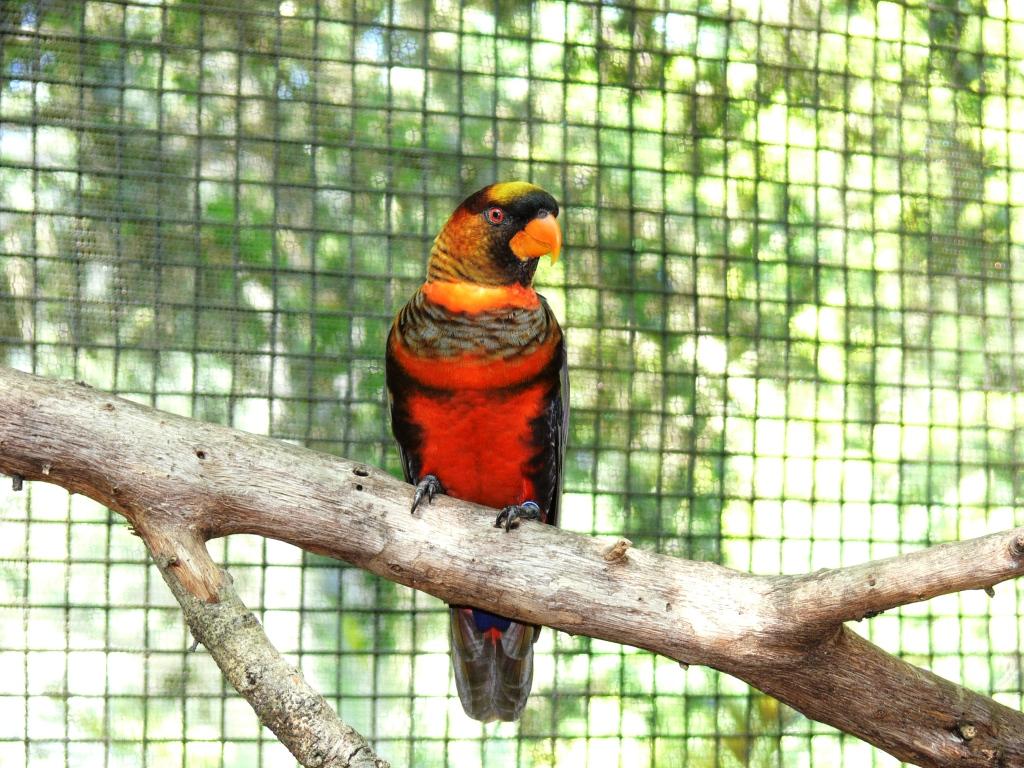
They also have Dusky Lory, Violet-crested Turaco, and Green-winged Teals.

Dusky Lory (Pseudeos fuscata) by Lee at LPZoo

Dusky Lory (Pseudeos fuscata) by Lee at LPZoo

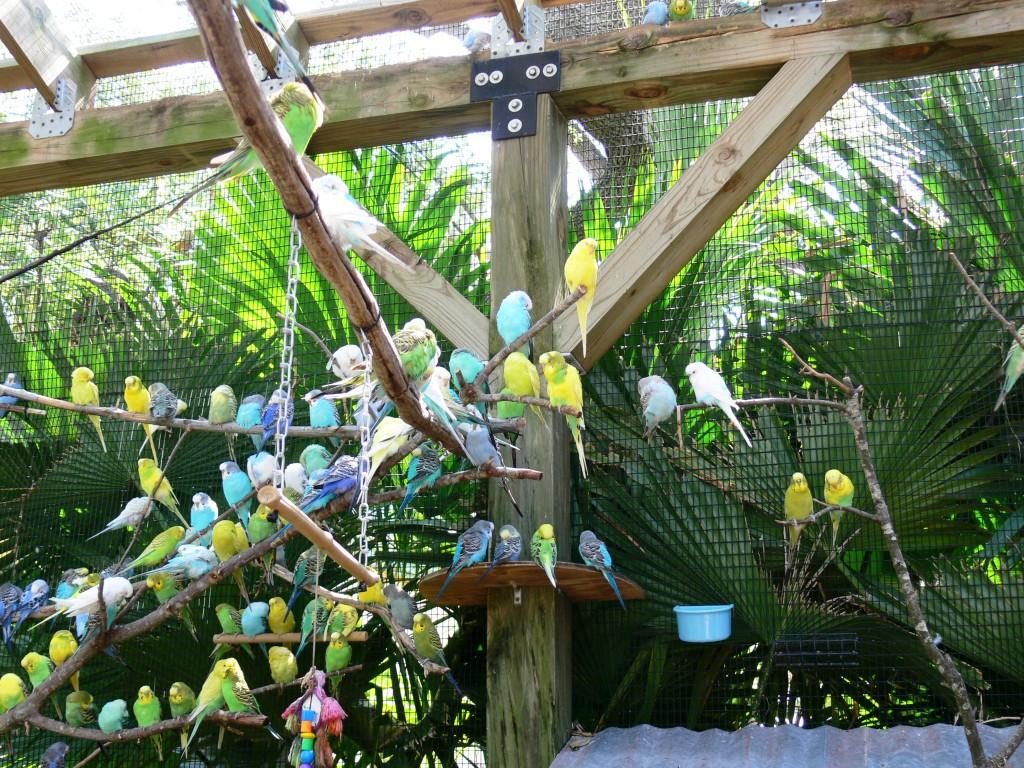
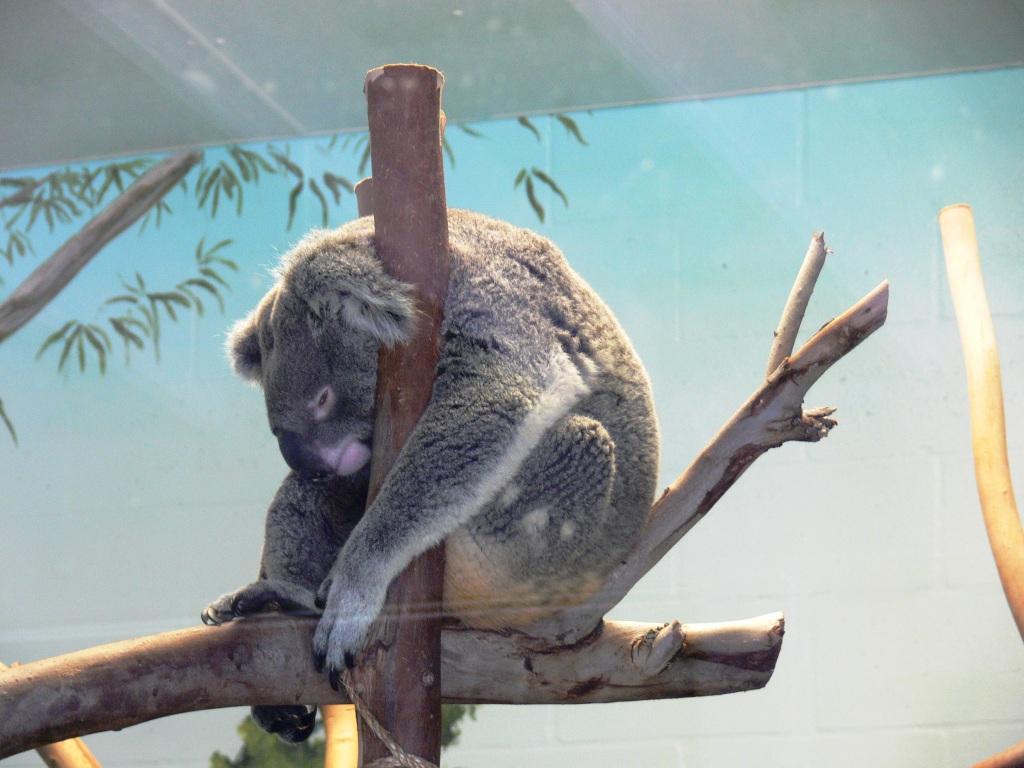
The Wallaroo Station (Australian) greets you with the Palm Cockatoo, Silky, Australorp and Buff Orphington Chickens. Then just inside you can view the sleepy Koala (whoops, that not a bird, but it was in a tree) and the Emu. The Malayan Flying Fox exhibit had those bats, plus the Magpie Goose, Rosy Starlings, Long-billed Corella (new for me), and Red-tailed Black Cockatoo. The Bali Myna was busy singing and showing off for its mate and then we entered the Budgerigar Aviary. Wow! They were everywhere.

Budgerigar (Melopsittacus undulatus) by Lee LPZ

Budgerigar (Melopsittacus undulatus) by Lee LPZ

We saw more, but will save that for another article. It was enjoyable as usual as we watched the Lord’s Creative Hand through these fantastic birds.

The works of the LORD are great, sought out of all them that have pleasure therein. His work is honourable and glorious: and his righteousness endureth for ever. (Psalms 111:2-3 KJV)

I have also been updating some more of the photos for:
Life List of All Birds We Have Seen

Koala by Lee LPZ

Koala by Lee LPZ

*