A Song Greater Than The Nightingale’s Song – by April Lorier

A Song Greater Than The Nightingale’s Song
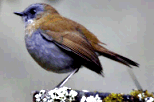
Nightingale

Nightingale

Who hasn’t heard Manhattan Transfer sing A Nightingale Sang In Berkeley Square? And did you know it was a Nightingale that inspired Tchaikovsky when he was composing his Humoresque opus 10-2? Even my grandson knows about the beauty of the Nightingale’s Song from Hans Christian Andersen’s story The Nightingale. In short, the Nightingale’s Song is a sound of pure beauty with quite a reputation. Ever heard a greater song?

Nightingales are named so because they frequently sing at night as well as during the day. The name means ‘night songstress’. As is usual, it is the male who sings, not the female. He does so with ulterior motives: to attract a mate.

The male nightingale is known for his singing, to the extent that human singers are sometimes admiringly referred to as nightingales; the song is loud, with an impressive range of whistles, trills and gurgles. Its song is particularly noticeable at night because few other birds are singing. This is why its name (in several languages) includes “night”.

Singing at dawn, during the hour before sunrise, is assumed to be important in defending the bird’s territory. Nightingales sing even more loudly in urban or near-urban environments, in order to overcome the background noise.

I know an even more beautiful song that helps me overcome the background noise of life. It’s God’s Song! Did you know God sings? The Bible says so!

In Zephaniah 3:17 it says:

The Lord your God is with you,
He is mighty to save.
He will take great delight in you,
He will quiet you with His love,
He will rejoice over you with singing.

Oh! What an awesome thought! The Creator of all nature thinks I’m so special, and takes such delight in me that He sings lullabies to quiet me with His love! It is an intimacy that surpasses the mother-child intimacy, and I depend upon it many nights. I even sing back to Him and drift off to a peaceful, natural sleep. During the most troubled times of my life, it’s been the only way I could sleep.

Me singing to my Heavenly Father is one thing; but knowing He rejoices over me with singing is just too awesome to comprehend. No wonder I love Him so much!

(c) 2009 April Lorier

For since the creation of the world God’s invisible qualities—his eternal power and divine nature—have been clearly seen, being understood from what has been made, so that men are without excuse. Romans 1:20

Supplied by and reprinted with permission of April Lorier.

More of April’s Articles

*


Birds of the Bible – Speckled Bird

Mine heritage is unto me as a speckled bird, the birds round about are against her; come ye, assemble all the beasts of the field, come to devour. (Jeremiah 12:9 KJV)

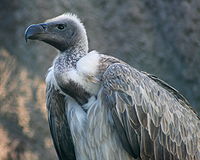
White-backed Vulture

White-backed Vulture

In Jeremiah chapter 12, the LORD was stating that because Israel had turned to other gods instead of the God of Israel (the LORD), that He was bringing  judgment. The people had bowed down to other gods and then brought some of that worship and intermingled it with the true worship of God. The House of God was “speckled” or of mixed beliefs.

John Wesley’s Explanatory Notes – “The birds round about – It is usual for other birds to flock about a strange coloured bird, such as they have not been used to see.”

Ruppell's Vulture

Ruppell's Vulture

Matthew Henry’s Concise Commentary – “God’s people had been the dearly-beloved of his soul, precious in his sight, but they acted so, that he gave them up to their enemies. Many professing churches become like speckled birds, presenting a mixture of religion and the world, with its vain fashions, pursuits, and pollutions. God’s people are as men wondered at, as a speckled bird; but this people had by their own folly made themselves so; and the beasts and birds are called to prey upon them. The whole land would be made desolate. But until the judgments were actually inflicted, none of the people would lay the warning to heart. When God’s hand is lifted up, and men will not see, they shall be made to feel. Silver and gold shall not profit in the day of the Lord’s anger. And the efforts of sinners to escape misery, without repentance and works answerable thereto, will end in confusion.”

Jamieson, Fausset, and Brown Commentary – “speckled bird — Many translate, “a ravenous beast, the hyena”; the corresponding Arabic word means hyena; so the Septuagint. But the Hebrew always elsewhere means “a bird of prey.” The Hebrew for “speckled” is from a root “to color”; answering to the Jewish blending together with paganism the altogether diverse Mosaic ritual. The neighboring nations, birds of prey like herself (for she had sinfully assimilated herself to them), were ready to pounce upon her.”

Hartlaub's Bustard

Hartlaub's Bustard

From Clarke -Dahler translates the whole verse thus: –
“Birds of prey! inundate with blood my heritage.
Birds of prey! come against her from all sides.
Run together in crowds, ye savage beasts!
Come to the carnage!”

According to those above, it seems that the bird must have been either spotted or multi-colored. The bird is a:
“speckled bird” in the KJV, MKJV, Webster
“speckled bird of prey” in the ASV, Darvy, NASB, RV
“speckled vulture” in the NKJV
“speckled fowl” in the YLT
“colorful bird of prey” in the GWV
“brightly colored bird” – BBE
“hawk” – CEV
“hyena’s lair” – ESV
All these variances make it hard to show a picture, but the ones shown are guesses.

Also, the application should give those today a stern warning about bringing the “worldly practices and beliefs” into our church services. I see it today in churches that do things that are clearly taught against in God’s Word, the Bible. Many things could be named, but one that disturbes this writer alot is the denial of God’s Creation of this world. More and more supposed Christian leaders are teaching different theories to “blend” the world’s theory of evolution with the Lord’s clear teaching in Genesis.

But there were also false prophets among the people, even as there will be false teachers among you, who will secretly bring in destructive heresies, even denying the Lord who bought them, and bring on themselves swift destruction. (2 Peter 2:1 NKJV)


See also:
Great Speckled Bird
The Great Speckled Bird (song) from Wikipedia

Interesting Birds – Hoatzin

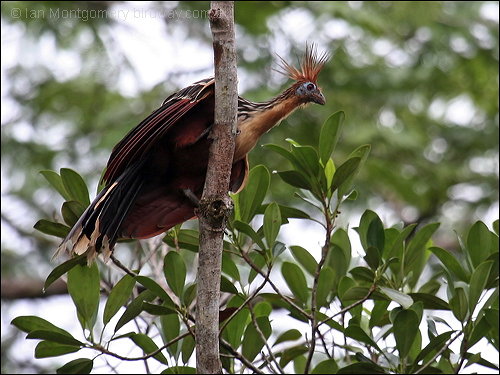
Hoatzin by Birdway

Hoatzin by Birdway

The Birds of the Bible usually cover the birds specifically mentioned by name in the Bible, but because of variation within the “kinds”, I decided to start covering some of their “Relatives.” The latest DNA-DNA and other testing have put the Hoatzin in the Cuckoo (Cuculiformes-cuckoos and relatives) family, but that data is being questioned at at present, they aren’t sure where to place it. For now, I stuck it with the Cuckoos. See Birds of the Bible – Cuckoo. (In IOC status it is in the Opisthocomidae Family)

The South American Hoatzin (pronunced hoh-AT-sin), is another of the Lord’s birds that keep evolutionist confused. Most birds eat berries or insects, but the Hoatzin, eats like a cow!

Is anything too hard for the LORD? (Gen 18:14 NKJV)

“The Hoatzin has one more odd characteristic that scientists find the most puzzling of all. Ninety five percent of its diet is leaves. It’s the only bird known to digest its food the same way cows and other ruminants do. Just like ruminants, the Hoatzin uses bacteria to break down the plant material it eats in a special chamber above its stomach.

Hoatzin by Birdway's Ian Montgomery

Hoatzin by Birdway’s Ian Montgomery

How do evolutionists explain this oddity? As one evolutionary scientist who has studied the Hoatzin for decades said, “Hoatzins don’t seem to follow the rules of evolution.” While he admitted to being creative in being able to come up with evolutionary explanations for creatures, he said that he was never able to arrive
at an evolutionary explanation for the Hoatzin’s digestive arrangement.

This leads us to glorify God for one more aspect of His creative work. In creating the Hoatzin, He was able to design a creature that defies any explanation humans might try to invent to deny that He is the Creator. Truly the creation declares His handiwork! (from Creation Moments, World’s Strangest Bird)

“The Hoatzin live in the backwater swamps of the Amazon and Orinco basins in South America.” They eat flowers, fruits, leaves of many marshland plants. The vegetable matter is fermented in their foregut like a cow, sheep, kangaroos and deer, while they sit around digesting their food.

“The Hoatzin chick features a rare anatomical feature — two claws on each budding wing which help it grip branches and clamber about awkwardly. This feature has been compared to Archaeopteryx, the fossil proto-bird, and lend a antediluvian background to what is already a really weird bird. Hoatzins live in family groups and small aggregations (up to 40 birds) and are social throughout the year.
During breeding birds occupy densely packed exclusive territories, sometimes up to 28 nests in one tree. They are noisy and often vocalize in unison with a collection of hoarse cries, grunts, growls and hisses. ” (from Hoatzin, Bird families of the World, see below)

Hoatzin by Ian

Hoatzin by Ian

The birds are pheasant-sized at about 25 inches with a long neck and small head. It’s face is unfeathered with maroon eyes, and its head is topped by a spiky, rufous crest. The bird is also called “stickbird” because of the bird’s manure-like odor, caused by the digestive system.

Though conspicuous, even attractive, at close range due to its bizarre shape and striking colors, unwary and a poor flier, it is not considered endangered. In fact, its survival seems to be more assured than that of many other endemics of its range. In Brazil, tribal people sometimes collect the eggs for food, and the adults are occasionally hunted, but in general this is rare, as it is reputed to have a bad taste. While its preferred habitats, mangrove and riverine forest, are disappearing fast in some regions, it is less threatened than terra firme forest, which is the primary target for deforestation in the Amazon. The Hoatzin therefore remains fairly common in a large part of its range.

Links about the Hoatzin:
Bird eats like a cow!
Hoatzin at Wikipedia
Hoatzin at Bird Families of the World

Hoatzins, Guyana’s National Bird aka the Stink Bird

Updated 12/17/09

From BereanBeacon

Birds of the Bible – Favorites

Finch at Creation Museum (through glass)

Finch at Creation Museum (through glass)

While on vacation, I showed some family and friends this blog, and took them to some of my favorite articles and videos. Putting out a rushed article (which is due today) would not be good, instead, I am going to share the links to my favorites. If you are new to the blog or just pop in every now an then, you may have missed these. I go back to them every now and then, just because I enjoy them.

Birds of the Bible – Eagles” the article and then scroll down to the African Eagle fishing video.

Amazing Free-Flying Bald Eagle “Challenger

Birds of the Bible – Owls” especially the last video with the Burrowing Owls

Birds of the Bible – Under His Wings

Birds of the Bible – For His Pleasure” and “For His Pleasure II

Plus there are many more favorites, but this will do for now. Going back and reviewing things is good for us. Just like the Bible, it never gets exhausted and you find new things each time you read it.

The heart of the prudent getteth knowledge; and the ear of the wise seeketh knowledge. (Pro 18:15 KJV)
The heart of him who has understanding seeks knowledge, But the mouth of fools feeds on foolishness. (Pro 15:14 NKJV)

Back from Vacation

Then He said to them, “Come away, all of you, to a quiet place, and rest awhile.” For there were many coming and going, so that they had no time even for meals. (Mar 6:31 WNT)

Duck Lake - Robbins AFB, GA

Duck Lake - Robbins AFB, GA

Dan and I have been on vacation, and are back now. Guess I will have to get busy and write some more articles. Between traveling and having computer problems that knocked me off the Internet, I haven’t been able to do much. Thanks to other’s articles and what few I could get up, we have kept things sort of running.

Zonkey at Creation Museum

Zonkey at Creation Museum

We went to Indiana to visit family, the Creation Museum in Kentucky, then Ohio to visit a friend, and friends in Georgia. We were suppose to be “birdwatching” our way home, but the heat indexes were in the 100+ degree range. The birds were hiding and so were we. So, we came home four days early.

I “birdwatched” from the car as Dan drove us up and back. I did keep a list. On the way up, several birds that hit my fancy (because we don’t get to see them often) were: Swallow-tailed Kites, American Crows, Cardinals, Robins, Purple Martins, and a Red-tailed Hawk. On the way home – a Kestrel, lots of Eastern Meadowlarks, a Hairy and Downy Woodpeckers and Bluebirds at a park (Blue Lick Battlefield SRP in Kentucky)

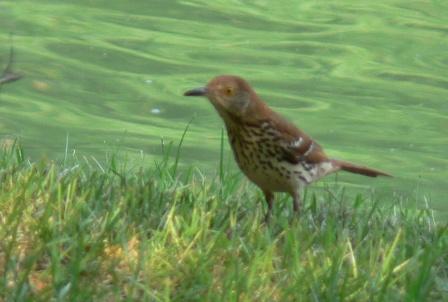
Brown Thrasher - Robbins AFB, GA

Brown Thrasher - Robbins AFB, GA

The best “birdwatching” we got to do was at Robbins AFB in Georgia.  They have a Duck Lake where we were able to see the most birds. Here is what we saw or heard there on the 27th of June: Eastern Pewee, Hairy and a Downy Woodpecker, Mockingbirds, Cardinals, Carolina Wren, Blue Jays, White Breasted Nuthatch, Mourning Doves, Red-bellied Woodpecker, Tufted Titmouse, House Sparrows, Great Egret, Brown Thrasher, Brown Headed Cowbird, Red-headed Woodpecker, Little Blue Heron, Rock Pigeons, Brown Thrush, Cattle Egrets and several I am trying to ID. It is very wooded around the lake and made for great birding.

Birds of the Bible – Niami, Niger, West Africa

Our missionaries in Niami, Niger, encounter different Birds of the Bible than our missionary in Brazil, that I wrote about last week.

These are some of the different birds mentioned in the Bible that they might see in Niger that we don’t see here. Some do not have pictures, so this is not a complete list. All of these pictures are from the Niger, Africa list of birds from Wikipedia.

This slideshow requires JavaScript.

Avibase Checklist of Birds – Niger

*

When I Consider – Guillemot

I know all the birds of the hills, and all that moves in the field is mine. (Psalms 50:11 ESV)

When I Consider!

When I Consider!

“Evidence From Biology”

“Every feature and function of a bird’s body testifies to design. From the moment they lay their eggs to their yearly migrations across the globe, birds provide eloquent testimony to their Creator.

Guillemot - Wikipedia

Guillemot – Wikipedia

While most birds  have been given instincts to build strong nests to protect their eggs, the guillemot does not build any nest. Instead, guillemots simply lay their eggs on bare windswept rocks. Their eggs are shaped in such a way, however, that when the wind blows, they spin in place, instead of rolling off the rocks. Who programmed  the guillemots to form their eggs exactly the right shape in order to survive in their harsh environment, whereas other sea birds produce ordinary shaped eggs and build nests to protect these eggs?

How do hundreds of species of birds migrate thousands of miles every year at the right time and to the right place? Every fall the American Golden Plover youngsters make an astounding 3,000 mile flight across the Pacific Ocean from Alaska to the island of Hawaii, with no parent to guide them. They fly through the darkness, clouds, and storms, and land at the correct destination. Their bodies are so effecient that they only burn ounces of body weight on this incredible 3,000 mile flight. Who designed their bodies with this extraordinary efficiency, taught these birds to navigate, and gave them the desire to make this journey?”

Above quote from June 11th’s A Closer Look at the Evidence by Richard and Tina Kleiss, with info from Myths and Miracles, p32, CEA Update Newsletter (Summer/95)

Below from Wikipedia

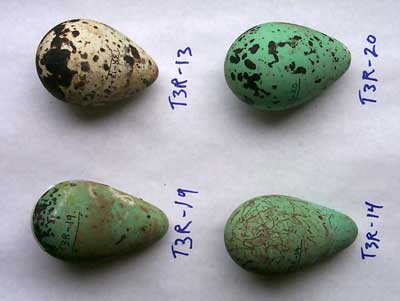
Guillemot Eggs

Guillemot Eggs

“Common Guillemot eggs are large (around 11% of female weight), and are pointed at one end. There are a few theories to explain their pyriform shape:

  1. If disturbed, they roll in a circle than fall off the ledge.
  2. The shape allows efficient heat transfer during incubation.
  3. As a compromise between large egg size and small cross-section. Large size allows quick development of the chick. Small cross-sectional area allows the adult bird to have a small cross-section and therefore reduce drag when swimming.”

Birds of the Bible – Paraiba, Brazil

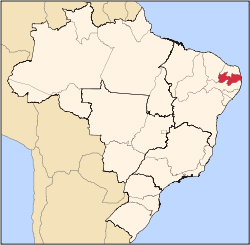
Paraiba state in Brazil

Paraiba state in Brazil

Because one of our men left for Brazil to become a missionary and we already have a missionary there, I was wondering if they might see different Birds of the Bible than we see up here in North America. So, this is the result of that search. The first thing I found out is that “Brazil has one of the richest bird diversities in the world, with more than 1700 species of birds, about 57% of the bird species recorded for all of South America. That fact was enough to make me realize I might be busy for awhile doing this. With the help of “Avibase – the world bird database” I was able to narrow the list down to Paraiba, a State, in Brazil, which is the area of both our missionaries.

Technically all birds are mentioned in the Bible because the Lord created them on the fifth day of creation. The list here is only of the “named” kinds in the Bible.

*

  • Quails – Spot-winged Wood-Quail
  • Cormorants – Neotropic Cormorant (here)
  • Bitterns – Pinnated Bitterns
  • Heron – Cocoi, Tricolored (here), Little Blue (here),  Striated, Black-crowned and Yellow-crowned Night-Herons (here), Boat-billed Heron, Rufescent Tiger-Herons, and Zigzag Heron
  • Storks – Wood Stork (here) and Jabiru
  • Vultures – American Black and Turkey (here), Lesser Yellow-headed Vulture, Andean Condor, King Vulture
  • Osprey – Osprey (here)
  • Kites – Gray-headed, Swallow-tailed (here), Pearl, White-tailed (here), Snail (here), Slender-billed, Double-toothed, Plumbeous Kites
  • Hawks – Tiny, Sharp-shinned, Bicolored , Crane, White-necked, Mantled, Rufous Crab-Hawk, Great Black-Hawk, Savanna,  Harris’s , Black-collared, Gray, Roadside, Short-tailed (here), White-tailed (here), Zone-tailed (here)
  • Eagles – Black-chested Buzzard-Eagle, Crested, Harpy, Black-and-white Hawk-Eagle, Black Hawk-Eagle, Ornate Hawk-Eagle
  • Falcons Family – Laughing, Barred Forest-Falcon, Lined Forest-Falcon, Collared Forest-Falcon, American Kestrel (here), Aplomado and Peregrine Falcon (here), Bat Falcon and Orange-breasted Falcon, Southern and Yellow-headed Caracara
  • Lapwings – Pied and Southern Lapwing
  • Doves – Eared, Scaled, White-tipped (here), and Grey-fronted Doves
  • Ground-Doves – Common, Plain-breasted, Ruddy (here), Picui, Blue
  • Quail-Doves – Violaceous and Ruddy (here)
  • Pigeons – Rock (here), Picazuro, Pale-vented
  • Cuckoos – Yellow-billed Cuckoo, Pearly-breasted Cuckoo, Mangrove Cuckoo, Dark-billed Cuckoo, Squirrel Cuckoo, Little Cuckoo, Guira Cuckoo, Striped Cuckoo,
  • Owls – Barn Owl (here), Great Horned (here), Mottled, Crested, Spectacled, Burrowing (here), Buff-fronted, Striped Owls
  • Screech Owls – Tropical
  • Pygmy-Owls – Ferruginous Pygmy-Owl
  • Nighthawks and Nightjars – Short-tailed Nighthawk, Least Nighthawk, Least Nighthawk,  Lesser Nighthawk (here), Common Nighthawk (here), Nacunda Nighthawk, Common Pauraque, Ocellated Poorwill, Rufous Nightjar, Little Nightjar, Scissor-tailed Nightjar, Pygmy Nightjar
  • Swifts – White-collared (here), Biscutate, Fork-tailed Palm-Swift and Lesser Swallow-tailed Swift
  • Swallows – Brown-chested Martin, Gray-breasted Martin;  White-winged, Blue-and-white, Southern Rough-winged, Collared Sand Martin/Bank Swallow (here), Barn (here) Swallows
  • Sparrows – Pectoral, Saffron-billed, Grassland, Rufous-collared and House (here) Sparrows

Birds of the Bible that are missing in Paraiba, Brazil are the Cranes, Hoopoe, Partridge, Peacock, Pelicans, Ravens, Swan, Pelicans. At least from what I can find out so far.

Birds of the Bible – Study Tips

When the Birds of the Bible were introduced in February, 2008, “Introduction to Birds of the Bible“, the goal was to acquaint you with each bird that is mentioned in the Bible and for you to learn of God’s great handiwork in their creation. These blogs have grown greatly since then.  I would like to share some of the methods that I use to produce these articles and to study God’s Word.

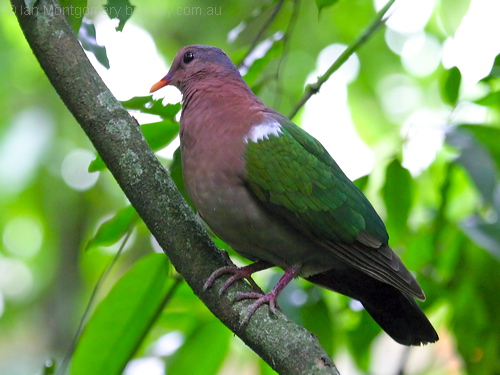
Emerald Dove by Birdway

Emerald Dove by Birdway

As you are reading along in your Bible, you may come across the mention of a particular bird (or any other topic)  in a verse. You see a bird and are wondering whether it is mentioned in Scripture. Your curiosity is caught and you want to find out more. What do you do?

  • As a “birdwatcher,” you can pull our your handy bird handbooks like: Peterson Field Guide for Birds, Smithsonian Field Guide to the Birds, The Sibley Guide to Birds, etc.
  • As an “internet birdwatcher,” you can “Google” that bird and get instant information (more than you can ever read) and learn many interesting things.
  • As a “Bible birdwatcher,” you can look in your concordance for references to that bird and if you have a Bible software program, such as “e-Sword” (free), you can search for the bird.
  • Also as a “Bible birdwatcher,” you may want to see why the bird is mentioned and what applications can be made by that passage of Scripture used. I like to use the Topical references, like Nave’s Topical Bible and Torrey’s New Topical Textbook. That is one reason that they are available here to help in the study of the “Birds of the Bible.” The ones here are different in that I put a picture of the bird on its page.

But now ask the beasts, and they will teach you; And the birds of the air, and they will tell you; (Job 12:7 NKJV)

This verse has been quoted many times in these blogs and we have tried to apply it to the lessons to be learned. Also, there are many other verses that give encouragement to study God’s Word.

These were more noble than those in Thessalonica, in that they received the word with all readiness of mind, and searched the scriptures daily, whether those things were so. (Acts 17:11 KJV)
Study to shew thyself approved unto God, a workman that needeth not to be ashamed, rightly dividing the word of truth. (2 Timothy 2:15 KJV)

As you study about the birds (or whatever in the Bible), I trust you will:

Let the word of Christ dwell in you richly in all wisdom; teaching and admonishing one another in psalms and hymns and spiritual songs, singing with grace in your hearts to the Lord. (Colossians 3:16 KJV)

Birds of the Bible – For His Pleasure II

Oh, the depth of the riches both of the wisdom and knowledge of God! How unsearchable are His judgments and His ways past finding out!  (Romans 11:33 NKJV)

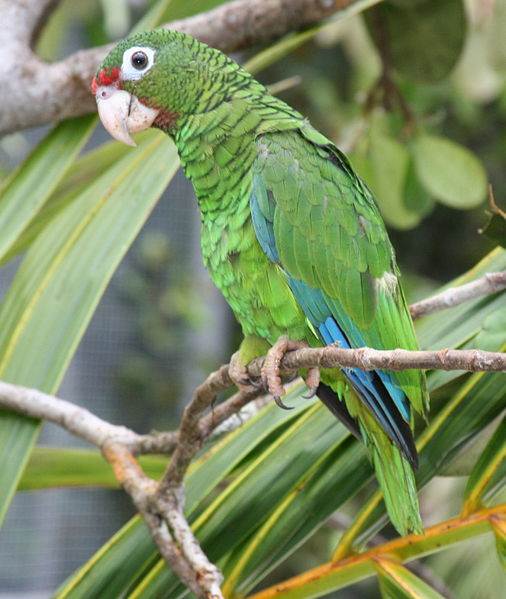
Puerto Rican Parrot

Puerto Rican Parrot

Last week the “Birds of the Bible – For His Pleasure”  that I wrote was about the Lord’s Handiwork with the colors and markings of the Birds. This time, how the Lord designed their bill or beak will be considered.

It is truly amazing to observe the birds around us. They come in all kinds of sizes, shapes and colors. Have you really noticed their bills or beaks. God has designed them with various shaped bills, different length, and uses for them. Depending on what niche they fill, they have just the perfect bill for that food that they need to partake of. Some times the food that they consume is not available and they either adapt to what is available, they move on to find that food, or they become endangered or extinct. Let’s look at some of the variety of bills and the birds attached to them.

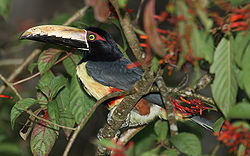
Collared Aracari

Collared Aracari

Toucan – “The colorful, giant bill, which in some large species measure more than half the length of the body, is the hallmark of toucans. Despite its size it is very light, being composed of bone struts with little solid material between them. The bill has forward-facing serrations resembling teeth,” which is used for eating fruit. “It does aid in their feeding behavior (as they sit in one spot and reach for all fruit in range, thereby reducing energy expenditure)…Also, the beak allows the bird to reach deep into treeholes to access food unavailable to other birds, and also to depredate suspended nests built by smaller birds.”

Hummingbird with beak in flower

Hummingbird with beak in flower

Hummingbirds – Their thin long bills are used for collecting nectar and to protect their split tongues.

Egrets and Herons – They have long pointed bills that can be used to spear the fish they catch. They also catch them by a quick closing of the beak.

Woodpeckers – Their beaks are use to peck and tear off the bark of trees to catch bugs hidden there.

Pelican – They have a big beak with a pouch that they can hold the fish they catch.

Gnatcatcher – A very fine and small beak helps them catch gnat and other tiny insects.

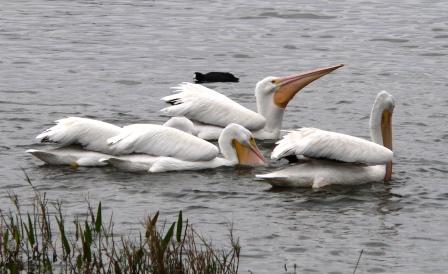
American White Pelicans at Lake Hollingsworth

American White Pelicans at Lake Hollingsworth

Sparrows and similiar – They have a cone shape bill that allows them to crack open seeds.

Parrots – Have even a bigger cone like beak that can open larger seeds and nuts.

Spoonbills – Have what looks like a spoon for a bill. They use it to swing back and forth in the water and have a very sensitive touch that will snap the paddles together when something gets in between them. Video

Bird Beaks from Wikipedia

Bird Beaks from Wikipedia

The list goes on and on and you will find in each case, that the bill and the bird match-up shows the infinite wisdom of our God and the Lord Jesus Christ, the Creator of them all.

As Christians, we also each have some niche that the Lord wants us to fill. He has given us the talents, abilities, gifts, etc. to do that task or ministry. Our problem sometimes is the will to do His Will with what He has provided for us. Again, let us learn from watching the birds and how they use what was designed for them.

See also: Beak from Wikipedia

Eye of the Beholder – Anhinga

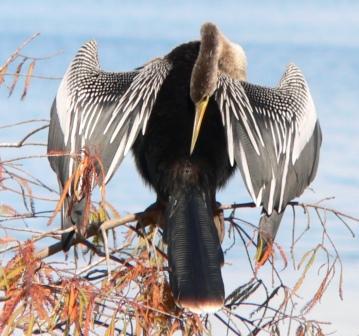
Anhinga Outstretched by Dan

Anhinga Just out of the Water by Dan

The Anhinga (Anhinga anhinga) is a interesting bird to watch here in Florida. They are very easy to spot with their outstretched wings. It is harder to spot them when they are in the water and swimming with only their heads stuck out. This is where the nickname, “Snake Bird,” comes from. We were watching them the other day when we visited Lake Hollingsworth and it reminded me of some verses.

1. The Anhinga must be tired after all that diving and is quite water-logged (heavy-laden) and needs to rest while its wings dry out. The Anhinga does not have an oil gland like most birds and must dry its feathers before it can get airborne again. The Lord designed it this way so that it can dive deep to catch fish, which is about 99% of its prey. If the feathers are oily, the bird has a tendancy to pop back up to the surface.
“Come to Me, all who are weary and heavy-laden, and I will give you rest. Take My yoke upon you and learn from Me, for I am gentle and humble in heart, and YOU WILL FIND REST FOR YOUR SOULS.” (Matthew 11:28-29 NASB)

Anhinga Dryed at Lake Hollingsworth

Anhinga Dryed at Lake Hollingsworth

For us, we can come to the Lord when things are “getting us down” and He will give us rest. When we pray and ask the Lord to help us and we leave the burden with Him, our souls are refreshed and we feel rested.

2. When the Anhinga first comes out of the water, they look all black and you do not see the white in its feathers. As the feathers dry, the color lightens up, and eventually the white shows up.
“Come now, and let us reason together, saith the LORD: though your sins be as scarlet, they shall be as white as snow; though they be red like crimson, they shall be as wool.” (Isaiah 1:18 KJV)
The Wordless Book song that Child Evangelism uses:

My heart was black with sin,
Until the Savior came in.
His Precious Blood I know,
Will wash me whiter than snow.
And in God’s Word I’m told
I’ll walk the streets of gold.
I’ll read my Bible and pray,
And Grow in Him every day!

Other Eye of the Beholder blogs