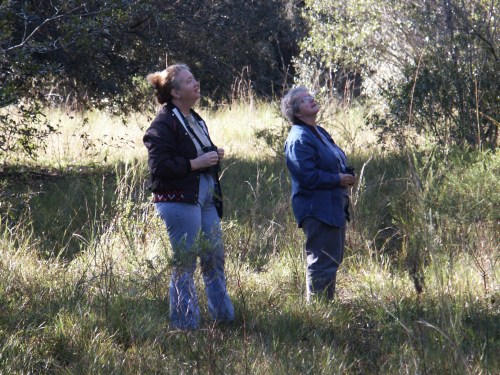
Marian (Naturalist at Avon Park Range) and Lee 2004
I beseech you therefore, brethren, by the mercies of God, that you present your bodies a living sacrifice, holy, acceptable to God, which is your reasonable service. And do not be conformed to this world, but be transformed by the renewing of your mind, that you may prove what is that good and acceptable and perfect will of God. (Romans 12:1-2 NKJV)
Well here we are at the end of 2012 and the beginning of 2013. Wow! What a fast year, now we get to renew ourselves and start afresh with a new list of birds for the year.
What will it be? The first one you sight. Will it be an old familiar friend or something new to you? Let us know what you see. Please leave a comment and tell us your first bird of 2013. You might even tell us your last bird of 2012. As I write this, it is only 9:00 am on Dec 31st, but some of you around the world are all ready celebrating the new year.
When you leave your bird sighted, tell us at least where you are, even if it is only your country. If you don’t see Comments on the page, click the Leave a Comment at the end of the article and it will take you to the full article.
I am excited to read about your first (and last) birds from around the world. I will post mine as soon as I spot them in the morning.
The WordPress.com stats helper monkeys prepared a 2012 annual report for this blog. (Lee’s Birdwatching Adventures Plus)
Here’s an excerpt:
About 55,000 tourists visit Liechtenstein every year. This blog was viewed about 380,000 times in 2012. If it were Liechtenstein, it would take about 7 years for that many people to see it. Your blog had more visits than a small country in Europe!
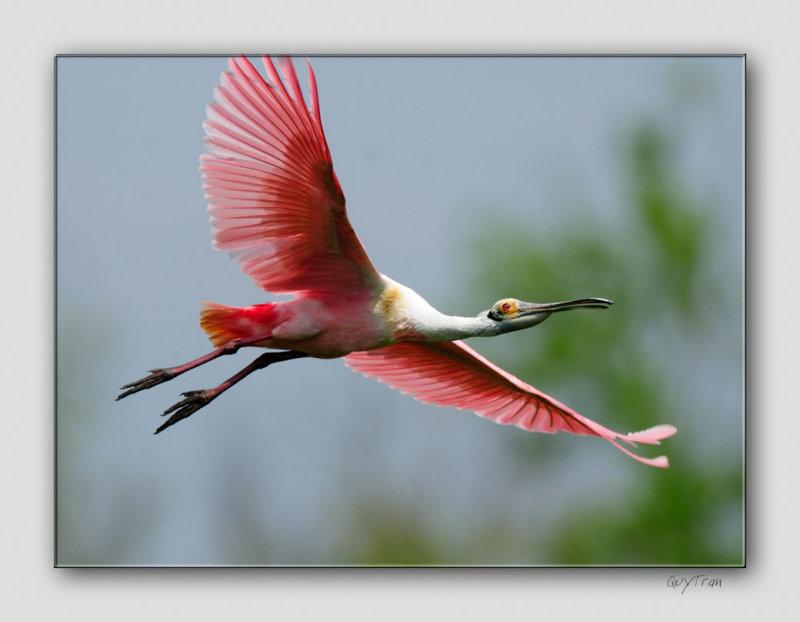
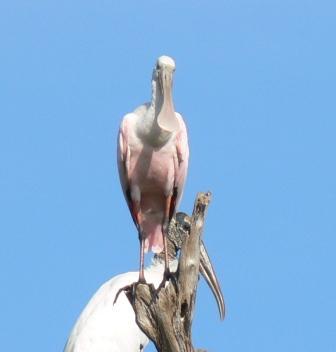
The Roseate Spoonbill is a member of the Threskiornithidae – Ibises, Spoonbills Family. We see them quite often in this area, especially in the Fall and Winter time. I am always thrilled when we come upon them in our birdwatching adventures. Their cousins, Ibises, are a Bird of the Bible.
Then God said, “Let the waters abound with an abundance of living creatures, and let birds fly above the earth across the face of the firmament of the heavens.” So God created great sea creatures and every living thing that moves, with which the waters abounded, according to their kind, and every winged bird according to its kind. And God saw that it was good. And God blessed them, saying, “Be fruitful and multiply, and fill the waters in the seas, and let birds multiply on the earth.” So the evening and the morning were the fifth day. (Genesis 1:20-23 NKJV)
Since the Lord created all the birds, this is one of His neater creations, at least in my opinion. Their spoon-shaped bill is sort of unique to the birds. There are actually five other Spoonbills besides the Roseate.
The Roseate Spoonbill is 28–34 in (71–86 cm) long, with a 47–52 in (120–133 cm) wingspan and a weigh 2.6–4.0 lb (1.2–1.8 kg). The legs, bill, neck and spatulate bill all appear elongated. Adults have a bare greenish head (“golden buff” when breeding) and a white neck, back, and breast (with a tuft of pink feathers in the center when breeding), and are otherwise a deep pink. The bill is grey. There is no significant sexual dimorphism.
Like the American Flamingo, their pink color is diet-derived, consisting of the carotenoid pigment canthaxanthin. Another carotenoid, astaxanthin, can also be found deposited in flight and body feathers. The colors can range from pale pink to bright magenta, depending on age and location. Captive Spoonbill are fed their normal diets, plus some include juices made from carrots.
Unlike herons, spoonbills fly with their necks outstretched. They alternate groups of stiff, shallow wingbeats with glides.
Spoonbills feeding in a pond by the school. Cloudy day. Not the best, but you can see their eating behavior. Taken by me.
This species feeds in shallow fresh or coastal waters by swinging its bill from side to side as it steadily walks through the water, often in groups. The spoon-shaped bill allows it to sift easily through mud. It feeds on crustaceans, aquatic insects, frogs, newts and very small fish ignored by larger waders. In the United States a popular place to observe Roseate Spoonbills is “Ding” Darling National Wildlife Refuge in Florida. (Also at Circle B Bar Reserve as you can see by the list below of some of my sighting on e-Bird) Roseate Spoonbills must compete for food with Snowy Egrets, Great Egrets, Tricolored Herons, and American White Pelicans.
We came upon a group of them roosting at Ding” Darling National Wildlife Refuge. It was the first time I had seen that many in one place and so close to us.
Roseate Spoonbills at Ding Darling NWR – Dan at work.
The Roseate Spoonbill nests in shrubs or trees, often mangroves, laying 2 to 5 eggs, which are whitish with brown markings. Immature birds have white, feathered heads, and the pink of the plumage is paler. The bill is yellowish or pinkish.
What prompted writing about one of the bird friends I always enjoy seeing, is an article about the Roseate Spoonbill in one of my latest additions of BirdWatching. It’s a great magazine and I am not condemning it. I am used to “reading around the evolutionary influences” in articles about birds. But I was offended by this remark, “It’s hard not to look at the Roseate Spoonbill in the Everglades and think, ‘What happened here:’ Amid the herons and cormorants, the spoonbill seems like an evolutionary hiccup, a failed experiment.”
One, the Roseate Spoonbill is far from an “evolutionary hiccup!” It hasn’t evolved, it was created by a loving all knowing Creator, that knew exactly what He was doing. Two, it definitely was not a “failed experiment.” The way the bill is designed and the sensitivity of its touch is amazing. The Lord promised to provide for all His creatures as well as His own people. Nor are we “hiccups.” We are all created by him, but there are differences and varieties in the birds just as there is in our talents and abilities.
I know all the birds of the mountains, And the wild beasts of the field are Mine. (Psalms 50:11 NKJV)
Look at the birds of the air, for they neither sow nor reap nor gather into barns; yet your heavenly Father feeds them. Are you not of more value than they? (Matthew 6:26 NKJV)
All the birds of the heavens made their nests in its boughs; Under its branches all the beasts of the field brought forth their young; And in its shadow all great nations made their home. (Ezekiel 31:6 NKJV)
(Wikipedia and other internet resources consulted)
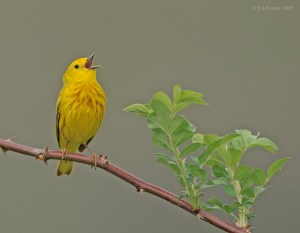
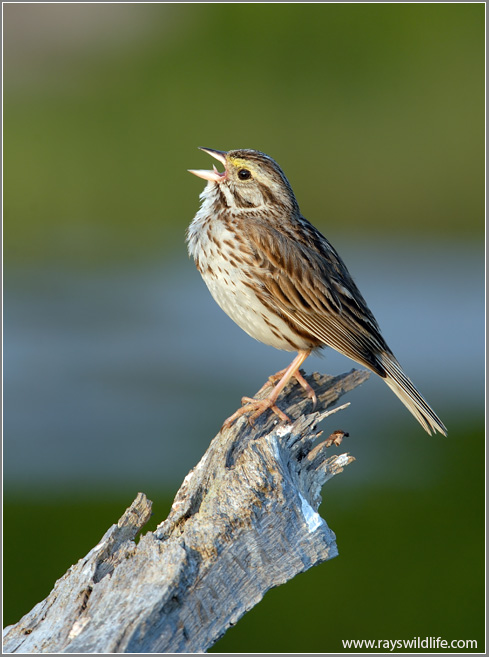
American Yellow Warbler (Dendroica aestiva) singing by J Fenton
My lips shall greatly rejoice when I sing unto thee; and my soul, which thou hast redeemed. (Psalms 71:23 KJV)
Birds in Christmas Hymns
Words by Henry J. van Dyke, 1907. Van Dyke wrote this hymn while staying at the home of Harry A. Garfield at Williams College, Massachusetts. It was first published in the Presbyterian Hymnal in 1911. It also appeared in the Poems of Henry van Dyke, 1911. Van Dyke wrote:
“These verses are simple expressions of common Christian feelings and desires in this present time—hymns of today that may be sung together by people who know the thought of the age, and are not afraid that any truth of science will destroy religion, or any revolution on earth overthrow the kingdom of heaven. Therefore this is a hymn of trust and joy and hope.”
Music: Hymn to Joy, from the 9th Symphony of Ludwig van Beethoven; adapted by Edward Hodges, 1824
Joyful, Joyful, We Adore Thee
Joyful, joyful, we adore Thee, God of glory, Lord of love;
Hearts unfold like flowers before Thee, opening to the sun above.
Melt the clouds of sin and sadness; drive the dark of doubt away;
Giver of immortal gladness, fill us with the light of day!
All Thy works with joy surround Thee, earth and heaven reflect Thy rays,
Stars and angels sing around Thee, center of unbroken praise.
Field and forest, vale and mountain, flowery meadow, flashing sea, Singing bird and flowing fountain call us to rejoice in Thee.
Thou art giving and forgiving, ever blessing, ever blessed,
Wellspring of the joy of living, ocean depth of happy rest!
Thou our Father, Christ our brother, all who live in love are Thine;
Teach us how to love each other, lift us to the joy divine.
Mortals, join the happy chorus, which the morning stars began;
Father love is reigning o’er us, brother love binds man to man.
Ever singing, march we onward, victors in the midst of strife,
Joyful music leads us sunward in the triumph song of life.
Who, being in the form of God, thought it not robbery to be equal with God: But made himself of no reputation, and took upon him the form of a servant, and was made in the likeness of men: (Philippians 2:6-7 KJV)
Words by Emily E. Elliott, 1864. This hymn was first used at St. Mark’s Church in Brighton, England, where Elliott’s father was rector. In 1870, it was published in the Church Missionary Juvenile Instructor, which Elliott edited.
Music: Margaret, Timothy R. Matthews, 1876
Birds in Christmas Hymns
Thou Didst Leave Thy Throne
Thou didst leave Thy throne and Thy kingly crown,
When Thou camest to earth for me;
But in Bethlehem’s home was there found no room
For Thy holy nativity.
Refrain
O come to my heart, Lord Jesus, There is room in my heart for Thee.
Heaven’s arches rang when the angels sang,
Proclaiming Thy royal degree;
But of lowly birth didst Thou come to earth,
And in great humility.
Refrain
O come to my heart, Lord Jesus, There is room in my heart for Thee.
The foxes found rest, and the birds their nest In the shade of the forest tree;
But Thy couch was the sod, O Thou Son of God,
In the deserts of Galilee.
Refrain
O come to my heart, Lord Jesus, There is room in my heart for Thee.
Thou camest, O Lord, with the living Word,
That should set Thy people free;
But with mocking scorn and with crown of thorn,
They bore Thee to Calvary.
Refrain
O come to my heart, Lord Jesus, There is room in my heart for Thee.
When the heavens shall ring, and the angels sing,
At Thy coming to victory,
Let Thy voice call me home,
Saying Yet there is room,
There is room at My side for thee.
My heart shall rejoice, Lord Jesus,
When Thou comest and callest for me.
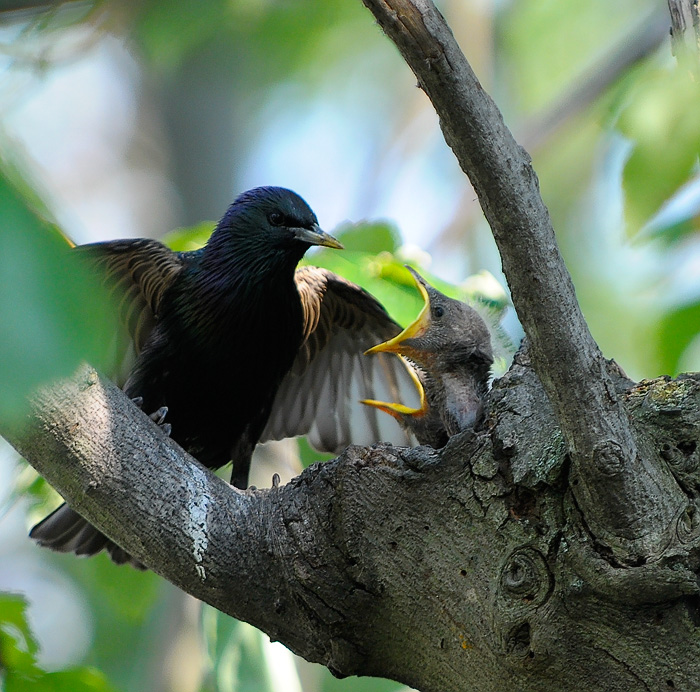
Protection and feeding at the nest by Anthony
Emily E. Elliott (1836-1897) – Emily’s father was Edward Bishop Elliott, Rector of St. Mark’s Church in Brighton, and her aunt was hymnist Charlotte Elliott. For six years, Emily served as editor of The Church Missionary Juvenile Instructor.
Timothy R. Matthews (1826-1910) – Son of the rector of Colmworth, Matthews attended the Bedford Grammar School and Gonville and Caius College, Cambridge (MusB 1853). Ordained the same year, he became private tutor to the family of Rev. Lord Wriothesley Russell, a canon of St. George’s Chapel, Windsor Castle, where he studied under the organist, George Elvey, subsequently a lifelong friend.
Matthews served as Curate (1853-1859) and Curate-in-Charge (1859-1869) of St. Mary’s Church, Nottingham. During this time he founded Nottingham’s Working Men’s Institute. In 1869, he became Rector at North Coates, Lincolnshire. He retired in 1907 to live with his eldest son at Tetney vicarage.
Matthews edited the North Coates Supplemental Tune Book and The Village Organist. He composed Morning and Evening Services, chants and responses, and earned a reputation for simple but effective hymn tunes, writing over 100. William Howard requested six tunes from him for a children’s hymnal, and Matthews completed them within a day. Matthews also composed a Christmas carol and a few songs. His sons Norton and Arthur Percy were also known as hymn tune composers.
Ian’s Bird of the Week – Mistletoebird ~ by Ian Montgomery
Newsletter ~ 12/23/12
As an ex-pat, I’ve never really got used to a hot Christmas in Australia. Here we sing carols about open sleighs, holly and ivy and the shops decorate their windows with fake snow, but it all seems a little contrived when the temperature is 31.4ºC/88.5ºF, the average maximum daily temperature for December in Townsville. We do, however, have mistletoe – lots of of growing on Eucalyptus trees – and, even better, Mistletoebirds, so I’ve chosen it as our Christmas bird of the week. It has featured as bird of the week before (August 2003 and June 2004) but originality is not a conspicuous feature of Christmas.
What were you doing under the Mistletoe on Christmas Day 2007? I was photographing the male Mistletoebird in the first photo gorging on a luscious Christmas lunch of Mistletoe berry. They’re tiny birds (9.5-11cm/3.75-4.3in) but have huge appetites, mistletoe berries not being very nutritious but they do the mistletoe a service by depositing rapidly-digested seed-containing excreta on the branches of the host trees. They’ll also eat the fruit of other plants (the fruits in photos 2 and 3 are not mistletoe), nectar and insects.
Mistletoebird (Dicaeum hirundinaceum) by Ian 2
The males are striking with their Christmassy red breasts and vents, and blackish-blue iridescent backs and the specific name hirundinaceum means ‘swallow-like’, Hirunda being the generic name for typical swallows. The females (third photo) are a more subtle grey, but have reddish vents.
Mistletoebird (Dicaeum hirundinaceum) by Ian 3
Mistletoebirds build exquisite pouch-shaped hanging nests and the fourth photo shows the young take after their parents in continually wanting food. Their nests are similar to those of Sunbirds and they are often placed in the same family Nectarinidae. Mistletoebirds are actually Flowerpeckers (Dicaeum) and are sometimes put in their own family, the Dicaeidae.
Mistletoebird (Dicaeum hirundinaceum) by Ian 4
Being so unChristmassy here, I find that it sneaks up me un-noticed. Last year, all my Christmas cards arrived late, so my New Year Resolution was to not send any more and the money saved is going to the Australian Wildlife Conservancy, which I think has the best record for conservation and reserve management in Australia. So, I wish you an electronic Very Peaceful Christmas and a Lovely New Year. Just remember the Mistletoebird and its appetite when you contemplate the third helping of Christmas pudding tomorrow!
Ian
**************************************************
Ian Montgomery, Birdway Pty Ltd,
454 Forestry Road, Bluewater, Qld 4818
Tel 0411 602 737 ian@birdway.com.au
Check the latest website updates: http://www.birdway.com.au/#updates
Lee’s Addition:
How appropriate is Ian’s photos of a neat little bird that loves Mistletoe. Thanks, Ian, and Merry Christmas to you also.
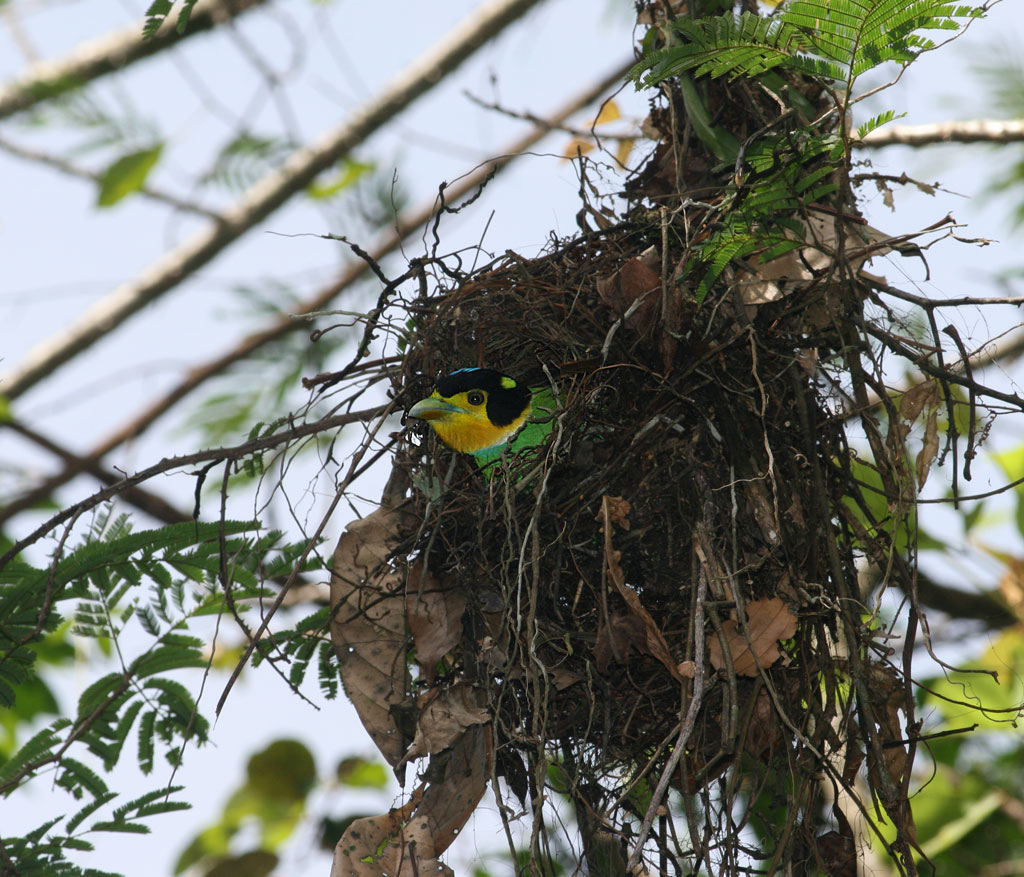
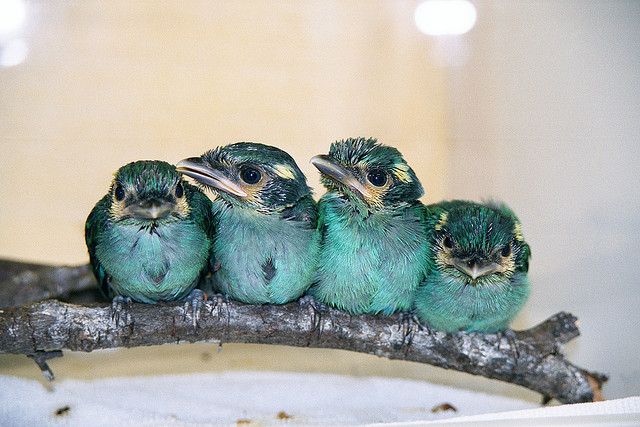
Long-tailed Broadbill (Psarisomus dalhousiae) in nest by Peter Ericsson
And when they were come into the house, they saw the young child with Mary his mother, and fell down, and worshipped him: and when they had opened their treasures, they presented unto him gifts; gold, and frankincense, and myrrh. (Matthew 2:11 KJV)
Music: St. Petersburg, attributed to Dmitri S. Bortniansky (1751-1825), 1825
Birds in Christmas Hymns
The Day The Christ-Child’s Tender Eyes
The day the Christ-child’s tender eyes
Unveiled their beauty on the earth,
God lit a new star in the skies
To flash the message of His birth;
And wise men read the glowing sign,
And came to greet the Child divine.
Low kneeling in the stable’s gloom,
Their precious treasures they unrolled;
The place was rich with sweet perfume;
Upon the floor lay gifts of gold.
And thus adoring they did bring
To Christ the earliest offering.
I think no nimbus wreathed the head
Of the young King so rudely throned;
The quilt of hay beneath Him spread
The sleepy kine beside Him owned;
And here and there in the torn thatch
The sky thrust in a starry patch.
Oh, when was new-born monarch shrined
Within such canopy as this? The birds have cradles feather lined;
And for their new babes princesses
Have sheets of lace without a flaw,
His pillow was a wisp of straw!
He chose this way, it may have been,
That those poor mothers, everywhere,
Whose babies in the world’s great inn
Find scanty cradle-room and fare,
As did the Babe of Bethlehem,
May find somewhat to comfort them.
Mute Swan on Nest at Lake Morton by Dan
May Riley Smith (1842-1927) – Smith attended the Tracey Female Institute in Rochester, and the Collegiate Institute in Brockport, New York. She married Albert Smith of Springfield, Illinois, in 1869; they were living in New York state in 1910. Her works include:
The Gift of Gentians, 1882
The Inn of Rest, 1888
Sometime and Other Poems, 1892
Dmitri S. Bortniansky (1751-1825) – Bortniansky’s musical career began in the church choir. As a young man, he studied with Baldassare Galuppi (il Buranello) in St. Petersburg. In 1769, Bortniansky followed Galuppi to Italy (with the help of a stipend from Russian Empress Catherine) to work in opera. His productions included Creonte (1776), Alcide (1778), and Quinto Fabio (1778). After returning to Russia, he became master of the court choir in St. Petersburg. In 1796, he was appointed director of the czar’s court chapel and a councilor of state. In addition to his other duties, he composed liturgical music, and wrote operas with French texts: La fête du seigneur (1786), Le faucon (1786), and Le fils-rival (1787). After his death, his work spread to Prussia, where his music appeared in Altpreußische Agende (Old Prussian Agenda) in 1829. His tune St. Petersburg/Wells is a traditional closing piece for the Großer Zapfenstreich (ceremonial tattoo) in German military music.
Christmas brings joy to every heart,
Sets old and young rejoicing,
What angels sang once to all on earth,
Oh, hear the children voicing.
Bright is the tree with lights aglow, Like birds that perch together,
The child that holdeth Christmas dear
Shall keep these joys forever.
Joy comes to the all the world today,
To halls and cottage hasting,
Come, sparrow and dove, from roof tree tall,
And share our Christmas feasting.
Dance, little child, on mother’s knee,
The lovely day is dawning,
The road to paradise is found
The blessèd Christmas morning.
Once to this earth our Savior came,
An infant poor and lowly,
To open for us those gardens fair
Where dwell His angels holy.
Christmas joy He bringeth us,
The Christ child King of heaven,
“To every little child,” He saith,
“Shall angel wings be given.”
Glory to God in the highest, and on earth peace, good will toward men. (Luke 2:14 KJV)
Words & Music by William H. Havergal (1793-1870), alt.
Birds in Christmas Hymns
The Worcester Christmas Carol
How grand and how bright
That wonderful night,
When angels to Bethlehem came!
They burst forth like fires,
They struck their gold lyres,
And mingled their song with the flame.
The shepherds were mazed,
The pretty lambs gazed
At darkness thus turned into light:
No voice was there heard
From man, beast or bird,
So sudden and solemn the sight.
And then, when the sound reechoed around,
The hills and the dales all awoke:
The moon and the stars
Stopped their fiery cars,
And listened while Gabriel spoke:
I bring you, said he,
From the glorious Three,
Good tidings to gladden mankind;
The Savior is born,
But He lies forlorn
In a manger, as soon you will find.
At mention of this,
(The source of all bliss,)
The angels sang loudly and long;
The soared to the sky,
Beyond mortal eye,
But left us the words of their song:
All glory to God,
Who laid by His rod,
To smile on the world through His Son:
And peace be on earth,
For this wonderful birth
Wonderful conquests has won;
And good will to man,
Though his life’s a span,
And his thoughts so evil and wrong;
Then pray, Christians, pray;
But let Christmas day
Have your sweetest and holiest song.
Here are Havergal’s original lyrics for stanzas where, due to irregularities in meter, they do not fully fit the music:
I bring you, said he,
From the glorious Three,
Good tidings to gladden mankind;
The Savior is born,
But He lies all forlorn
In a manger, as soon you will find.
…
All glory to God,
Who laid by His rod,
To smile on the world through His Son:
And peace be on earth,
For this wonderful birth
Most wonderful conquests has won;
And good will to man,
Though his life’s but a span,
And his thoughts so evil and wrong;
Then pray, Christians, pray;
But let Christmas day
Have your sweetest and holiest song.
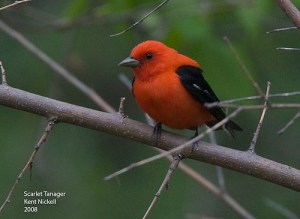
Scarlet Tanager (Piranga olivacea) by Kent Nickell
William H. Havergal (1793-1870) – The epitaph on Havergal’s white marble tomb reads:
The Rev. William Henry Havergal, M.S.,
Vicar of Shareshill and Hon. Canon of Worcester Cathedral.
Died at Leamington, 19th April 1870, aged 77.
Curate 7, and Rector 13 years, of this parish, 1822 to 1843.
A faithful minister in the Lord (Eph. Vi. 21).
Havergal was educated at Merchant Taylors School St. Edmund’s Hall, Oxford (BA 1815, MA 1819). He was ordained a deacon in 1816, and priest in 1817. He held three rectorships: Astley, Worcestershire (1829); St. Nicholas, Worcester (1842); and Shareshill, near Wolverhamptom (1860). Hymnist Frances Havergal was his daughter.
*
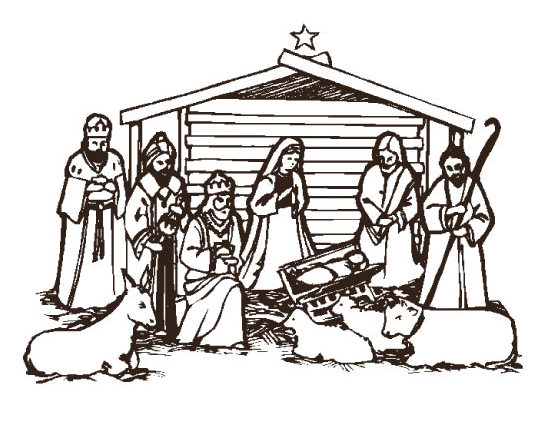
So it was, that while they were there, the days were completed for her to be delivered. And she brought forth her firstborn Son, and wrapped Him in swaddling cloths, and laid Him in a manger, because there was no room for them in the inn. (Luke 2:6-7 NKJV)
Words: Unknown author, 12th Century; translated from French to English by an anonymous translator.
Music: Orientis Partibus, medieval French melody
Birds in Christmas Hymns
The Friendly Beasts
Jesus, our Brother, strong and good,
Was humbly born in a stable rude,
And the friendly beasts around Him stood,
Jesus, our Brother, strong and good.
“I,” said the donkey, shaggy and brown,
“I carried His mother uphill and down,
I carried His mother to Bethlehem town;
I,” said the donkey, shaggy and brown.
“I,” said the cow, all white and red,
“I gave Him my manger for His bed,
I gave Him hay to pillow His head;
I,” said the cow, all white and red.
“I,” said the sheep with curly horn,
“I gave Him my wool for His blanket warm,
He wore my coat on Christmas morn;
I,” said the sheep with curly horn.
“I,” said the dove, from the rafters high,
“I cooed Him to sleep that He should not cry,
We cooed Him to sleep, my mate and I;
I,” said the dove, from the rafters high.
Thus all the beasts, by some good spell,
In the stable dark were glad to tell
Of the gifts they gave Emmanuel,
The gifts they gave Emmanuel.
And she brought forth her firstborn son, and wrapped him in swaddling clothes, and laid him in a manger; because there was no room for them in the inn. (Luke 2:7 KJV)
Words & Music: 15th Century – This Endris Night
Birds in Christmas Hymns
This Endris Night
This endris night I saw a sight
A star as bright as day;
And ever among a maiden sung,
Lullay, by by, lullay.
This lovely lady sat and sung,
And to her Child did say:
My Son, my Brother, Father, dear,
Why liest Thou thus in hay?
My sweetest bird, thus ’tis required,
Though Thou be King veray;
But nevertheless I will not cease
To sing, By by, lullay.
The Child then spake in His talking,
And to his mother said:
“Yea, I am known as Heaven-King,
In crib though I be laid.
For angels bright down to Me light:
Thou knowest ’tis no nay:
And for that sight thou may’st delight
To sing, By by, lullay.
“Now, sweet Son, since Thou art a king,
Why art Thou laid in stall?
Why dost not order thy bedding
In some great kingès hall?
Methinks ’tis right that king or knight
Should lie in good array:
And then among, it were no wrong
To sing, By by, lullay.
“Mary mother, I am thy Child,
Though I be laid in stall;
For lords and dukes shall worship Me,
And so shall kingès all.
Ye shall well see that kingès three
Shall come on this twelfth day.
For this behest give Me thy breast
And sing, By by, lullay.
“Now tell, sweet Son, I Thee do pray,
Thou art my Love and Dear—
How should I keep Thee to Thy pay,
And make Thee glad of cheer?
For all Thy will I would fulfill—
Thou knowest well, in fay;
And for all this I will Thee kiss,
And sing, By by, lullay.
“My dear mother, when time it be,
Take thou Me up on loft,
And set Me then upon thy knee,
And handle me full soft.
And in thy arm thou hold Me warm,
And keep Me night and day,
And if I weep, and may not sleep,
Thou sing, By by, lullay.
“Now sweet Son, since it is come so,
That all is at Thy will,
I pray Thee grant to me a boon,
If it be right and skill,—
That child or man, who will or can
Be merry on my day,
To bliss Thou bring—and I shall sing,
Lullay, by by, lullay.
___
Some of the archaic terms require explanation: This endris night: The other night, a few nights ago Veray: True Light: Alight No nay: Undeniable Methinks: I think Pay: Satisfaction Fay: Faith Boon: Favor Skill: Reasonable
*
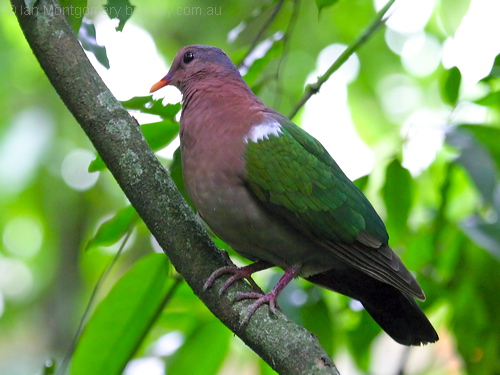
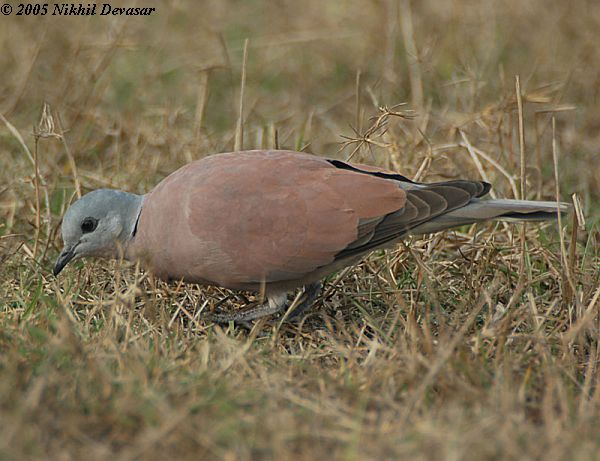
Red Turtle Dove (Streptopelia tranquebarica) by Nikhil Devasar
Ian’s Bird of the Week – Green Catbird ~ by Ian Montgomery
Newsletter – 12/18/12
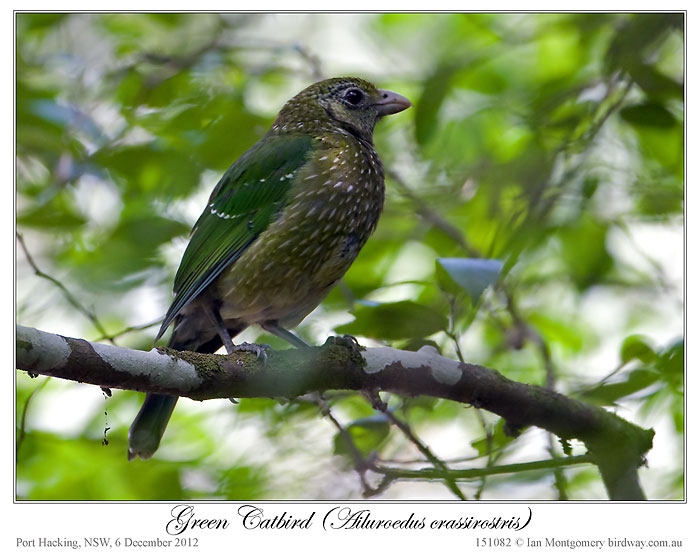
My trip to Sydney produced another bird on my wanted list that I had taken only poor photos of before, the Green Catbird. It’s not rare or, given its calls, hard to find in its favourite habitat of temperate and sub-tropical rainforest, but most birds apart from things like Brush-Turkeys are hard to photograph in rainforest. It’s call is not as one might expect a gentle miaowing but more like a cat being given an injection at the vets or those rude sounds make with balloons and as such, is one of the delights of east coast rainforest.
Australian Catbirds, unrelated to American Catbirds, are members of the Bowerbird family. Unlike their flamboyant cousins, they form pair-bonds and the males help in domestic chores like nest-building. So, eschewing wild mating behaviour, they don’t build wonderful bowers or collect flashy toys. Everything has its price, one supposes, but the call is some compensation. At 24-32cm/10-13in in length, they’re comparable in size to Satin Bowerbirds and, if silent in foliage, can be confused with female or immature members of that species.
Green Catbird (Ailuroedus crassirostris) by Ian 2
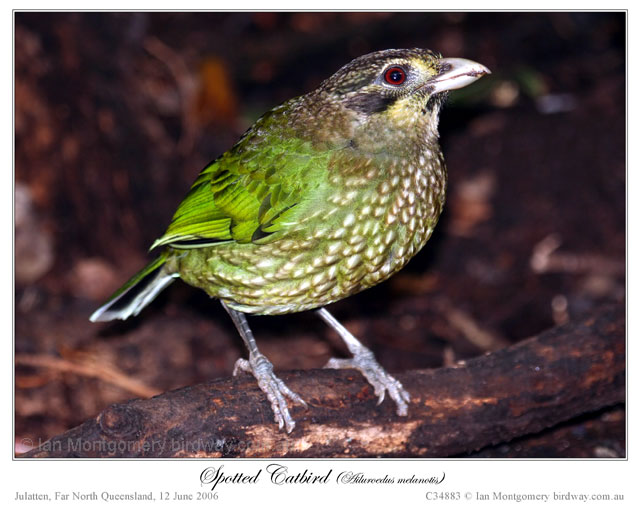
The generic name Ailuroedus comes from the Greek ailouros for cat and odos for a singer, which is stretching the definition of singer slightly, but maybe singing embraces yodelling. The range of the Green Catbird extends from the south coast of New South Wales (Narooma) to near Gladstone on the central coast of Queensland. In tropical Queensland it is replaced by the very similar-looking and similar-sounding Spotted Catbird which featured as Bird of the Week in 2006 (below).
Green Catbird (Ailuroedus crassirostris) by Ian 3
The ‘Spotted’ presumably refers to the stronger markings on the breast as the Green Catbird has more obvious white spots on the back (second photo) but the main difference is the darker markings on the face of the Spotted Catbird. As their ranges don’t overlap, distinguishing between them isn’t an issue. The Spotted Catbird extends from Paluma Range National Park, near Bluewater where I live to Cooktown and there is a separate population, recognised as a different race with darker face markings, on Cape York (e.g. Iron Range). In the past, both Green and Spotted were treated as a single species and some of the splitters would like to make the Cape York race a full species, another tick I suppose. There are other races of the Spotted in New Guinea and another species, the White-eared Catbird, A. buccoides.
Best wishes
Ian
**************************************************
Ian Montgomery, Birdway Pty Ltd,
454 Forestry Road, Bluewater, Qld 4818
Tel 0411 602 737 ian@birdway.com.au
Check the latest website updates: http://www.birdway.com.au/#updates










 Lee's Birdwatching Adventures Plus