Golden Bowerbird by A. J. Mithra

Golden Bowerbird

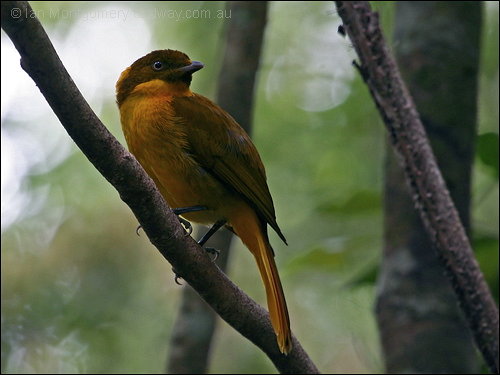
Though the Golden Bowerbird
is the smallest
of all the bower species,
it builds a bower,
consisting of at least
two columns,
each consisting of sticks
arranged around a sapling.
This can be up to
3m/10ft in height,
to attract its female..
The female builds its nest
only above 900m/3,000ft..

Golden Bowerbird (Prionodura newtoniana) by Ian

Golden Bowerbird (Prionodura newtoniana) by Ian

God used a small girl
to bring healing
in to Naaman’s life..
God used
David the Shepherd boy
to bring down the giant…

God used
a little boy
to feed the multitudes…

God always uses
small people
to bring great revival..

He turns the smallest
into the greatest..

Why?
Cos, their hopes n(r)ests
in the Lord who dwells
high above in the heaven…

Who is like unto the LORD our God, who dwelleth on high, (Psalms 113:5 KJV)

Have a blessed day!

Your’s in YESHUA,
A. J. Mithra at Crosstree

Click to see more of A. J.’s articles


See Also:

Bowerbird (Malaconotidae – Bushshrikes) Family of the Passeriformes Order
Ian’s Bird of the Week – Golden Bowerbird
Birds in Hymns – Go Out, My Heart, and Seek Delight


Family#126 – Ptilonorhynchidae
*

Introducing Another Guest Author – A. J. Mithra

A. J. has offered some of his articles for publishing here. He is a music teacher and an amateur birder. He and his family like to sing and worship the Lord together. They live in Chennai, India. He is a worship leader and an evangelist. One of his main burdens is to encourage people to worship not just when everything is fine, but to worship and serve the Lord even during the darkest and toughest times. He also has a passion to help youngsters and kids to know the Lord through nature. “Above all, I would like to be introduced as a worshiper of Yeshua.”

A. J. has many short sayings, poems, and articles that are going to be made available to use. He and I are both thanking the Lord for letting us work together on this. We both want to honor the Lord through what we are doing. By telling about the fantastic birds which the Lord has created, and being challenged, we trust our readers will receive not only knowledge, but a blessing.

Below are two examples of his writings:

Spiritual Catastrophe

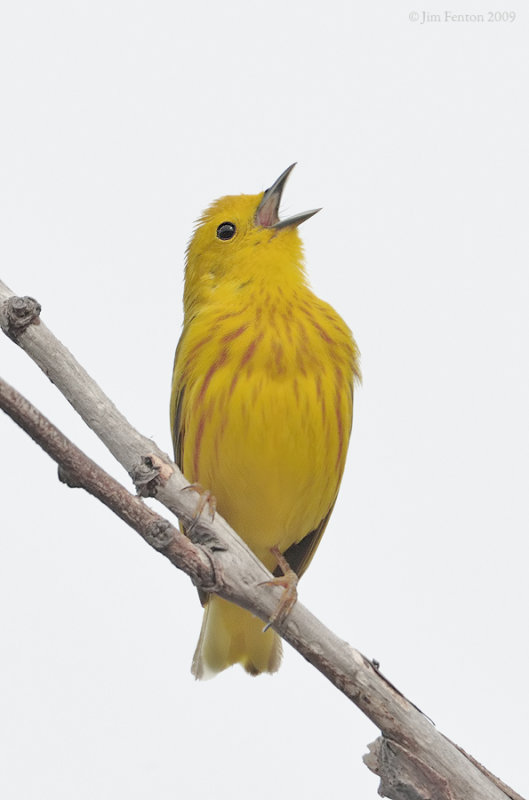
Good ground - American Yellow Warbler (Dendroica aestiva) by J Fenton

American Yellow Warbler (Dendroica aestiva) by J Fenton

If birds
don’t sing,
they wouldn’t find
a mate
and
if they don’t find a mate,
there would be
no reproduction…
If there is no reproduction,
there would a major
Ecological disaster…
If we don’t worship,
the presence of the LORD
wouldn’t be there,
If the presence of the LORD
is missing,
the church would be empty,
If the churches are empty
there would be a
Spiritual catastrophe…

DO THEY?

If they do not eat well
they would surely die
the night before…

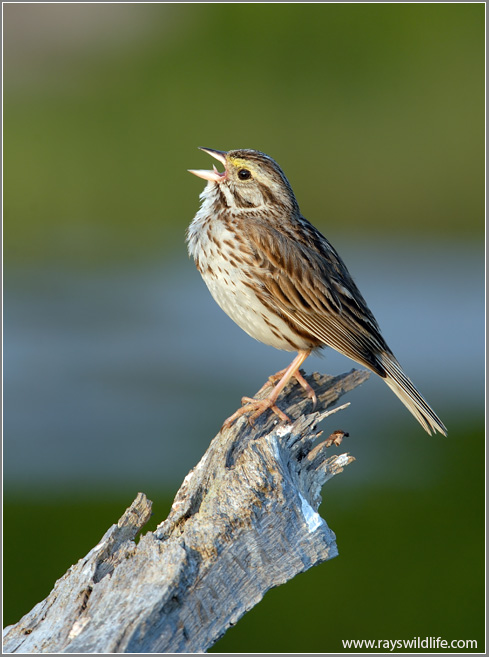
Savannah Sparrow singing by Ray

Savannah Sparrow singing by Ray

That’s why,
the birds sing at dawn,
to advertise to the world
that,
they are still alive
and that,
they are ready to face
another tough day ahead
in life…

Each new morning,
most of us grumble at the thought of
facing another hectic day..

If only we sing unto the LORD
at all times,
life would be far more beautiful
than what it is now..

After all, the joy of the LORD
Is our strength isn’t it?

Well,
Did you sing for the LORD
this morning?
Why I ask you this
is cos,
those who are dead never sing..

Do they?

For You, O LORD, have made me glad by what You have done, I will sing for joy at the works of Your hands. (Psalms 92:4 NASB)


To see more of A. J.’s articles – Click Here

Ian’s Bird of the Week – Golden Bowerbird

Golden Bowerbird (Prionodura newtoniana) by Ian

Golden Bowerbird (Prionodura newtoniana) by Ian

Newsletter – 02-28-2010

Searching for a suitable Bird of the Week, I found that the Golden Bowerbird hasn’t, I don’t think, featured as BOW before. That’s a serious omission which we’ll now rectify. It’s serious because all bowerbirds are special, the Golden Bowerbird is particularly gorgeous, its a local specialty and it’s survival is of real concern in the case of global warming.

The adult male Golden Bowerbird is golden-yellow below and glossy golden-olive above, with a yellow erectile patches on the nape and crown. The rarely-seen female is, in comparison, a rather drab olive-brown (there’s a photo of one on the Birdway website, link below). With a length of 23-25cm/9-10 in, it’s the smallest of the Australian Bowerbirds but, as compensation, it builds the biggest bower. It is found only in highland rainforest in the wet tropics of northeastern Queensland from Mount Elliott near Townsville north to Mount Cook near Cooktown. It nest only above 900m/3,000ft, but moves lower in winter. A good place to see them is near Paluma, about one hour’s drive from where I live.

Golden Bowerbird (Prionodura newtoniana) at bower by Ian

Golden Bowerbird (Prionodura newtoniana) at bower by Ian

Most Australian Bowerbirds, such as the Satin Bowerbird, build ‘avenue’ bowers consisting of two parallel walls of twigs on a display platform. The Golden Bowerbird builds a ‘maypole’ bower, consisting of at least two columns, each consisting of sticks arranged around a sapling. This can be up to 3m/10ft in height but more typically is about 1m high like the one in the photo. Between the saplings is a branch used as a display perch and the male bird decorates this with lichens and rainforest flowers, often orchids. The bowers are often incorrectly referred to as ‘nests’, but the bowers are built and maintained by the males to attract females for mating and the females build their own nests. If the male bowerbird disappears, the bower will be taken over by another male so a particular site remains in use used decades.

The concern about global warming arises because their habitat consists of islands of highland rainforest in a sea of coastal lowlands. If warming eventuates, the boundaries of the highland rainforest may rise in altitude and the islands may ultimately disappear. The Golden Bowerbird has iconic status here, but other species would be affected too, such as the Mountain Thornbill. Consequently, Paluma Range has been classified as an Important Bird Area (IBA) and monitoring of the bowers of Golden Bowerbirds is undertaken by Birds Australia North Queensland.

Best wishes,
Ian

Links:
Golden Bowerbird
Satin Bowerbird
Mountain Thornbill
Birds Australia North Queensland

Recent additions to Website include photos of:
Spotted Bowerbird
Superb Fruit-Dove
Little Bronze-Cuckoo
Australian Brush-Turkey
Australian Bustard
Long-tailed Finch

Ian Montgomery, Birdway Pty Ltd,
454 Forestry Road, Bluewater, Qld 4818
Phone: +61-7 4751 3115
Preferred Email: ian@birdway.com.au
Website: http://birdway.com.au


Lee’s Addition:

Bowerbirds are in the Ptilonorhynchidae family of the Passeriformes order.

Who teaches us more than the beasts of the earth And makes us wiser than the birds of the heavens?’ (Job 35:11 NASB)


Ptilonorhynchidae
*

Wordless Birds

American Yellow Warbler (Dendroica aestiva) by J Fenton

American Yellow Warbler (Dendroica aestiva) by J Fenton

This GOLD bird reminds us of Heaven. The Bible tells us Heaven has a street of gold! But the best part about Heaven is that God, who created you and me, lives there. The Bible, God’s Word, says: “God so loved the world that He gave His only begotten Son, that whosoever believeth in Him should not perish but have everlasting life.” — John 3:16 Jesus, God the Son, is in Heaven preparing a place for all who put their trust in Him. (John 14:2-3) God is holy and perfect. He cannot allow anything in Heaven that is less than perfect, so there’s one thing that can never be in Heaven. Can you think of what that might be?

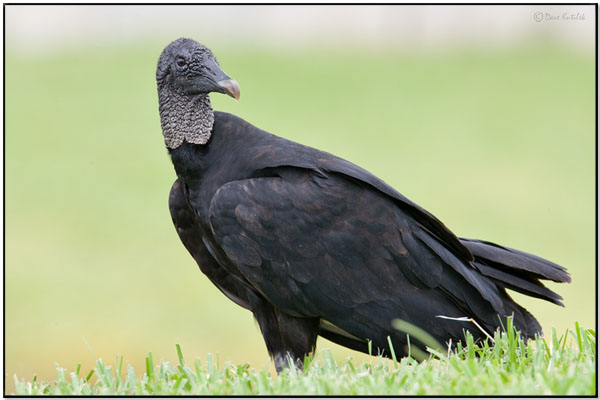
Black Vulture (Coragyps atratus) by Daves BirdingPix

Black Vulture (Coragyps atratus) by Daves BirdingPix

It is sin! That is what this DARK bird reminds us of. Sin is anything you think, say, or do that does not please God, like lying, cheating, being selfish, or hurting others. The Bible says: “All have sinned and come short of the glory of God.” — Romans 3:23 That means everyone, big or little, young or old! No matter where you live or who you are, you have sinned. Everyone is born with a “want to” to do wrong. God says that sin must be punished (Romans 6:23), and the punishment for sin is to be separated from God forever in a place of suffering….a place called Hell. But God has a wonderful plan so that you will not have to be punished for your sin!

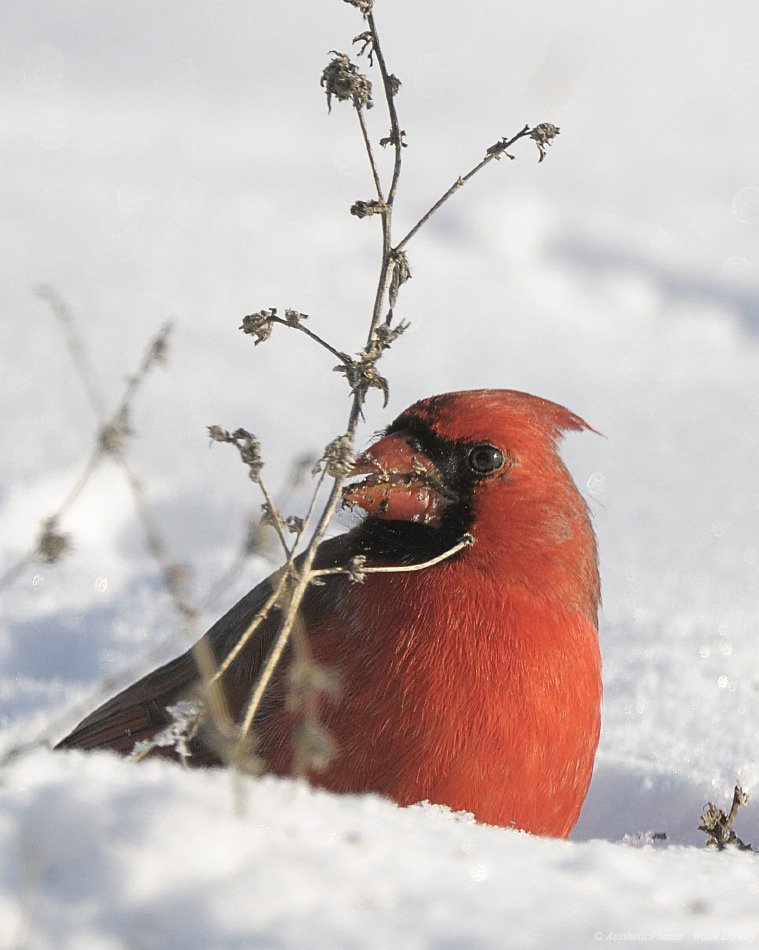
Cardinal by Aestheticphotos

God sent Jesus Christ, His perfect Son, to be born as a little baby. Jesus lived a perfect life….He never sinned. When He was grown, wicked men nailed Him to a cross. This bird is RED reminding us of Jesus’ blood. The Bible says that without the giving of blood there can be no forgiveness of sin (Hebrews 9:22). So Jesus Christ willingly died to take your sin punishment. “…Christ died for our sins according to the Scriptures; and that He was buried, and that He rose again the third day, according to the Scriptures.“— 1 Corinthians 15:3-4 Now, because of what Jesus has done for you, you can have your sins forgiven. Read on to see how!

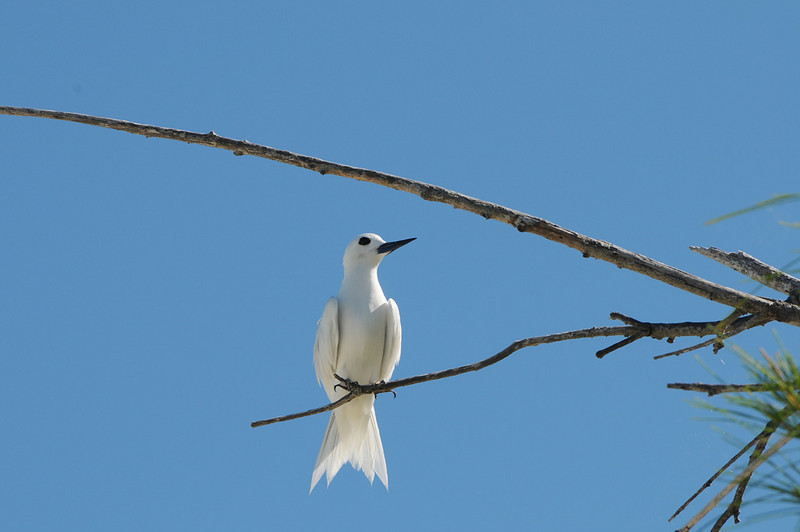
Fairy Tern (Sternula nereis) by Bob & Nan

The Bible says: “As many as received Him, to them gave He power to become the sons of God, even to them that believed on His name.” — John 1:12 The WHITE bird reminds us of a CLEAN heart. How can you have a clean heart? A = Admit to God you are a sinner and want to turn away from those sins. B = Believe in Jesus Christ, that He is God’s perfect Son who died for your sin, was buried, and rose again. C = Call on Him to save you from your sin. Would you like to do that right now? He has promised to hear, and once you are His child, He will never leave you (Hebrews 13:5). Take a moment and talk to God right now. It will change your life forever. Only one more color! What can it mean?

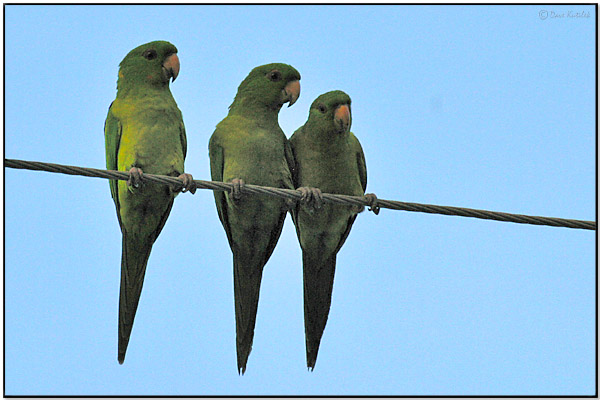
Green Parakeet (Aratinga holochlora) by Daves BirdingPix

The GREEN bird stands for things that grow. When you ask God to forgive you and save you, you become His child. God wants you to get to know Him better and to grow to become more like Him. These four things will help you grow:

1. PRAY (talk to God every day)
2. READ & OBEY THE BIBLE (to know what He says, then do it)
3. TELL OTHERS ABOUT JESUS
4. GO TO A BIBLE-BELIEVING CHURCH (where you can learn more about pleasing Him)

As a child of God, if you should sin again, stop and tell Him about it. He promises in His Word… “If we confess our sins, He is faithful and just to forgive us our sins and to cleanse us from all unrighteousness.” — 1 John 1:9 Ask God to help you live a life to please Him! Share the Good News of this story with someone else.


The Wordless Book has been used for many years by CEF (Child Evangelism Fellowship). These words are from CEF.


The Gospel Message

The Wordless Book
Story of the Wordless Book

Once you receive Jesus as your Savior, then you have joy and peace in your heart.

Whom having not seen, ye love; in whom, though now ye see him not, yet believing, ye rejoice with joy unspeakable and full of glory: Receiving the end of your faith, even the salvation of your souls. (1 Peter 1:8-9 KJV)

This bird’s singing reminds us of the joy a Christian has in their heart after salvation and it spills out in a song and hopeful in telling others of what Christ did in their hearts.

Interesting Birds – Fairywrens of Australia & New Guinea

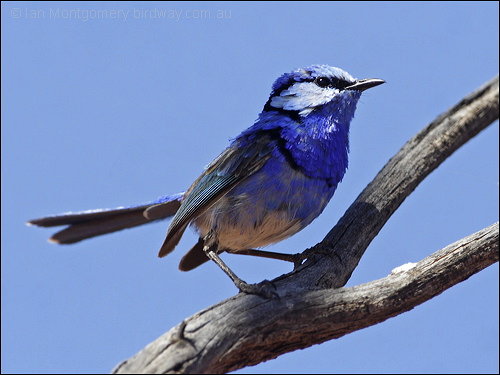
Variegated Fairywren (Malurus lamberti) by Ian

Variegated Fairywren (Malurus lamberti) by Ian

Thinking

I know all the birds of the mountains, and the wild beasts of the field are Mine. (Psalm 50:11)

To listen – Fairywrens by Creation Moments

Splendid Fairywren (Malurus splendens) by Ian

Splendid Fairywren (Malurus splendens) by Ian

There are 13 species of a brightly plumed little songbird known as the fairy wren. The birds are found in Australia and New Guinea. So colorful are their feathers that the various species go by names like “superb,” “splendid” and “lovely.” However, even more noteworthy is the birds’ unusual behavior.

A male courting a female will bring her a flower petal. The petal usually matches his color or is a deeply contrasting color. Normally a perky little bird with an upright tail, when courting he lowers his tail and creeps around close to the ground. As he twists his body back and forth, he puffs out his cheek feathers. If the female accepts his courting, she builds their nest alone, lining it with bright parrot feathers. While they mate for life, they are not known for fidelity to their mates. When mature, females will go off on their own, but males may stay with their parents for a year or more. Their main duty is to guard the family nest. If danger approaches the nest, the guard will puff up his wings, lower his tail and scuttle through dry grass, pretending to be a mouse. The idea is to lure the predator away from the nest.

Lovely Fairywren (Malurus amabilis) by Ian

Lovely Fairywren (Malurus amabilis) by Ian

The beauty and unusual behavior of these little birds testifies to more than God’s creativity and love for beauty. They remind us of the beauty that was lost to God’s creation when it was tainted by man’s sin. Thankfully, some of that beauty that was lost can return to our lives through the forgiveness of sins that is found in Jesus Christ.

Prayer: Dear Father, I thank You for the beauty of Your creation and for giving me the forgiveness of sins in Jesus Christ. Amen.

References: Natural History, 11/94, pp. 56-62, “Faithful Philanderers

Copyright © 2010 Creation Moments, Inc., PO Box 839, Foley, MN  56329, www.creationmoments.com.


The Fairywrens are in the Maluridae – Australasian Wrens Family which is part of the Passeriforms Order. They are like in the true wrens (Troglodytidae family) in their shape and the way they cock their long tail. The Maluridae family not only includes the Fairywren, but also the Emu-wren and Grasswren. They range from 5-7.5 in (12-19 cm) to 8-8.5 in (20-22 cm). Most have a short, fine bill, while the Grasswren’s is a little thicker.

Superb Fairywren by Keith Blomerly

Birds of the Bible – Names of Birds

Out of the ground the LORD God formed every beast of the field and every bird of the air, and brought them to Adam to see what he would call them. And whatever Adam called each living creature, that was its name. So Adam gave names to all cattle, to the birds of the air, and to every beast of the field… (Genesis 2:19-20a NKJV)

Common Kingfisher by Phil Kwong

It would be nice to know which birds Adam named and what he named them. Today, the birds we see around the world are variations from those original bird kinds. The names that they now have are different, but, if Adam were to name the birds living today, do you think he might use these current names on the birds?

Below are some bird names that have caught my attention and you can almost visualize something about them:

A  – Amazon, Antbird, Antpitta, Antshrike, Antvireo, Antwren, Apostlebird, Awlbill
B  – Babbler, Bamboowren, Barbtail, Barbthroat, Bare-eye, Barwing, Baywing, Bee-eater, Bellbird, Berryeater, Berrypecker, Bird-of-paradise, Bishop, Blackbird, Blackcap, Blackeye, Black-headed, Blackstart, Blackthroat, Bleeding-heart, Bluebill, Bluewing, Bluebird, Bluebonnet, Bluetail, Bluethroat, Boatbill, Bowerbird, Brilliant, Bristlebill, Bristlebird, Broadbill, Bronzewing, Brushrunner, Bushbird, Bush-hen
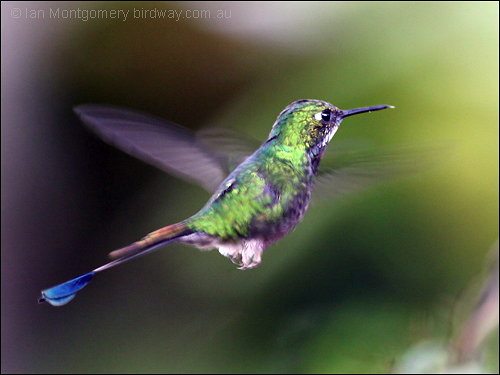
Booted Racket-tail (Ocreatus underwoodii) by Ian

Booted Racket-tail (Ocreatus underwoodii) by Ian

C  – Canvasback, Cardinal, Catbird, Chat, Chatterer, Cicadabird, Comet, Conebill, Cowbird, Creeper, Crestentchest, Crimsonwing, Crossbill, Cuckoo
D  – Darkeye, Darter, Dipper, Dollarbird, Dove
E  – Earthcreeper, Emerald
F  – Fairy, Fairy-bluebird, Fairywren, Fantail, Fieldwren, Figbird, Finfoot, Fireback, Firecrest, Firecrown, Fire-eye, Firefinch, Firetail, Firethroat, Flamecrest, Flatbill, Flicker, Flowerpecker, Flowerpiecer, Flufftail, Flycatcher, Foliage-gleaner, Forktail, Friarbird, Frigatebird, Frogmouth, Fruitcrow, Fruiteater, Fruithunter
G  – Gnatcatcher, Gnatwren, Go-away-bird, Goldcrest, Goldenback, Goldeneye, Goldenthroat, Goldfinch, Grassbird, Grassquit, Grasswren, Greytail, Groundcreeper, Groundpecker, Guineafowl
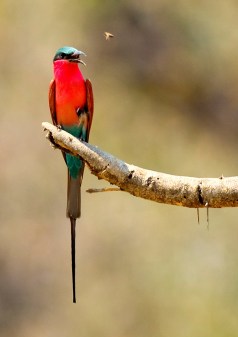
Carmine BeeEater by Marc at Africaddict

Carmine BeeEater (Merops nubicus or nubicoides) by Marc at Africaddict

H  – Hardhead, Helmetcrest, Helmetshrike, Hermit, Hillstar, Hobby, Honeybird, Honeycreeper, Honeyeater, Honeyguide, Hookbill, Hornbill, Hummingbird
J  – Jewel-babbler, Jewelfront, Junglefowl
K  – Kingbird, Kingfisher, Kite, Knot,
L  – Laughingthrush, Leafbird, Leaftosser, Longbill, Longclaw, Longtail, Lovebird
M  – Marshbird, Metaltail, Mockingbird, Monarch, Morepork, Mountaingem, Mourner, Mousebird, Mudnester
N  – Needletail, Nighthawk, Nunbird, Nutcracker, Nuthatch
O  – Oilbird, Openbill, Ovenbird, Oxpecker, Oystercatcher
P  – Palmchat, Palmcreeper, Pewee, Pilotbird, Pintail, Prickletail, Puffback, Puffbird, Puffleg
R  – Racket-tail, Rail, Razorbill, Recurvebill, Redhead, Redwing, Rockfinch, Rockfowl, Rockjumper, Rockrunner, Rockwarbler, Rockwren, Roller, Rushbird
S  – Sabrewing, Saddleback, Sanderling, Sandgrouse, Sandpiper, Sapphire, Sapphirewing, Sapsucker, Screamer, Screech, Scrubbird, Scrubfowl, Scrubtit, Scrubwren, Secretarybird, Seedcracker, Seedeater, Sheathbill, Shieldbill, Shoebill, Shortwing, Shoveler, Sicklebill, Silktail, Silverbird, Skimmer, Snowcock, Snowfinch, Softtail, Solitaire, Spadebill, Spatuletail, Spiderhunter, Spinebill, Spinetail, Spoonbill, Standardwing, Starfrontlet, Starthroat, Stilt, Stichbird, Straightbill, Streamcreeper, Streamertail, Stubtail, Sugarbird, Sunangel, Sunbeam, Sunbird, Sunbittern, Sungem, Surfbird, Swift
T  – Tailorbird, Tattler, Thicketbird, Thick-knee, Thistletail, Thornbill, Tinkerbird, Trainbearer, Treecreeper, Treehunter, Treepie, Treerunner, Treeswift, Trembler, Triller, Tropicbird, Trumpeter, Tuftedcheek, Tyrant
U  – Umbrellabird
V  – Violetear, Visorbearer
W  – Wagtail, Wallcreeper, Warbler, Waxbill, Waxwing, Weaver, Weebill, Wheatear, Whipbird, Whistler, White-eye, Whiteface, Whitethroat, Whitetip, Widowbird, Winter, Wiretail, Woodcock, Woodcreeper, Woodhen, Woodhaunter, Woodpecker, Woodstar
Y  – Yellowbrow, Yellowhammer, Yellowlegs, Yellowthroat

The slide show has just some of the Passerines (Song Birds) whose names might have been easy. I’ll save the non-Passerines for later. Tried not to use too many colors because that is also for other blogs.

*

This slideshow requires JavaScript.

*


See Also:
Bird Name Challenges
Variation within Created Kinds
Species and Kinds
Explaining Diversity within Created Kinds

*
Ian’s Bird of the Week – Olive-backed Oriole

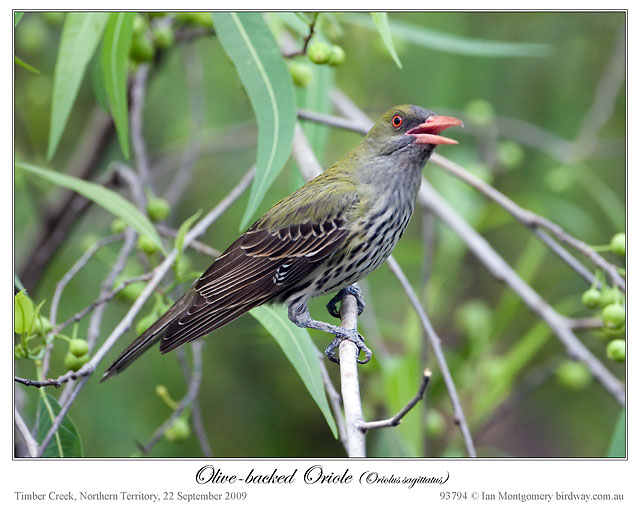
Olive-backed Oriole (Oriolus sagittatus) by Ian

Olive-backed Oriole (Oriolus sagittatus) by Ian

Newsletter 2-19-2010

I’ve just revised the galleries for the Australian Orioles, so here is the Olive-backed Oriole. It’s less colourful than its Australian relatives, the Green/Yellow Oriole and the Australasian Figbird, but it’s an attractive bird all the same and one that I always enjoy seeing. The first photo shows a young adult. It has the characteristic green and grey plumage, red eye and pink bill of the adult, but the wing feathers still have buff, rather than white, edges. The contrasting white background and black streaks of the breast look smart, and the black streaks look as if they’ve been skillfully painted on by an oriental potter.

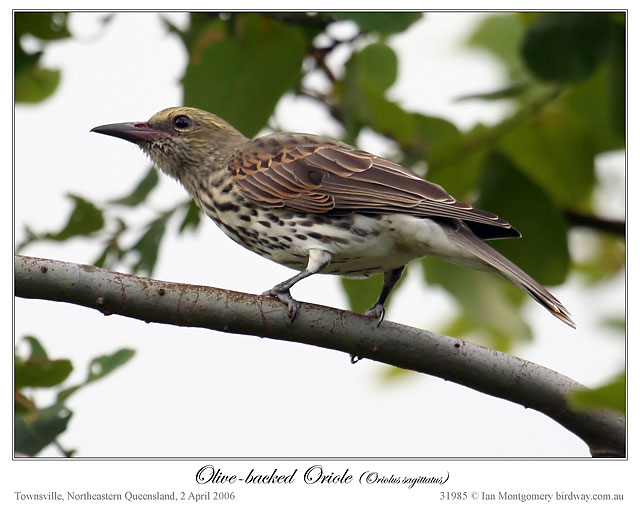
Olive-backed Oriole (Oriolus sagittatus) Y by Ian

Olive-backed Oriole (Oriolus sagittatus) Y by Ian

The second photo shows a juvenile bird with brownish back and wings and dark eyes and bill. It’s just beginning to acquire adult plumage with a greenish tinge developing on the head.

The Olive-backed Oriole is quite widespread in northern, eastern and south-eastern Australia occurring from Broome in the west through the top half of the Northern Territory and through almost all of Queensland, New South Wales and Victoria. It’s resident in the north but a breeding migrant in the south east, returning to northern Australia in the winter. It is well camouflaged and rather unobtrusive when feeding on fruit in foliage, but it has a loud, musical call, often rendered as ‘orrie, orrie-ole’, that is a characteristic sound of open woodlands.

Other additions to the website include:

Green/Yellow Oriole

Female Magnificent Riflebird

Brown Falcon

Spotted Bowerbird

Best wishes,

Ian

Ian Montgomery, Birdway Pty Ltd,

454 Forestry Road, Bluewater, Qld 4818

Phone: +61-7 4751 3115

Preferred Email: ian@birdway.com.au

Website: http://birdway.com.au


Lee’s Addition:

The Olive-backed Oriole is in the Oriolidae Family of the Passeriformes Order. These are considered the Old World Oriole family, whereas the Icterus Family has the New World Orioles.  The Oriolidae family not only has Orioles, but also Figbirds.

Green Figbird (Sphecotheres viridis) by Ian

Australasian Figbird (Sphecotheres vieilloti) by Ian

“The orioles are a family of Old World passerine birds. The family Oriolidae comprises the figbirds in the genus Sphecotheres, and the Old World orioles in the genus Oriolus.[1] Several other genera have been proposed to split up the genus Oriolus. For example, the African black-headed species are sometimes placed in the genus Baruffius. The family is not related to the New World orioles, which are icterids, family Icteridae. The family is distributed across Africa, Europe, Asia down into Australia. The few temperate nesting species are migratory, and some tropical species also show seasonal movements.

The orioles and figbirds are medium sized passerines, around 20–30 cm in length, with the females only slightly smaller than the males.[1] The beak is slightly curved and hooked, and, except in the figbirds, as long again as the head. The plumage of most species is bright and showy, although the females often have duller plumage than the males do. The plumage of many Australasian orioles mimics that of friarbirds (a genus of large honeyeaters), probably to reduce aggression against the smaller orioles.[2]

Green Oriole (Oriolus flavocinctus)  by Ian

Green Oriole (Oriolus flavocinctus) by Ian

Orioles are arboreal and tend to feed in the canopy.[1] Many species are able to survive in open forests and woodlands, although a few are restricted to closed forest. They are opportunistic omnivores, with the main components of their diet being fruit, berries, and arthropods.

Orioles are monogamous, breeding in territorial pairs (although the Australasian Figbird, and possibly also the other figbirds, breed in loose colonies).[1] Nesting sites may be chosen near aggressive species such as drongos, shrikes or friarbirds, which confer a degree of protection. The nest is a deep woven cup suspended like a hammock from a branch. They usually lay two or three eggs, but as many as six have been recorded.” (From Wikipedia)

The trees of the LORD are watered abundantly, the cedars of Lebanon that he planted. In them the birds build their nests; the stork has her home in the fir trees. (Psalms 104:16-17 ESV)

Birds of the Bible – Birds of the Air

Osprey by Kathleen of Shekinah Photography

Osprey by Kathleen of Shekinah Photography

Kathleen, a Christian photographer, has given permission to use some of her photos on the blog. She also has a blog called the “Birds of the Air.”

Looking into that phrase in e-Sword, the English Standard Version (ESV) shows 21 occurrences of “birds of the air.” Surprisingly most of them have to do with the “birds of the air” showing up to eat the carnage of men as a result of judgment or disease. See Deuteronomy 28:26; I Samuel 17:44, 17:46; Jeremiah 7:33, 15:3, 16:4, 19:7, 34:20. 4:25 and 9:10 speak of the birds of the air fleeing away.

White-backed Vulture (Gyps africanus) by Africaddict

White-backed Vulture (Gyps africanus) by Africaddict

Rizpah spread sackcloth over the bodies of Saul and Jonathan and “And she did not allow the birds of the air to come upon them by day, or the beasts of the field by night” in 2 Samuel 21:10.

Job 28:20,21 says, “From where, then, does wisdom come? And where is the place of understanding? It is hidden from the eyes of all living and concealed from the birds of the air.”

Eastern Yellow Robin (Eopsaltria australis) on nest by Ian

Eastern Yellow Robin (Eopsaltria australis) on nest by Ian

In the New Testament the “birds of the air” is used in different ways. Matthew 6:25 lets us know that the birds of the air “neither sow nor reap nor gather into barns, and yet your heavenly Father feeds them. Are you not of more value than they? “ Matthew 8:20 and Luke 9:58 reminds of that the birds have nest, but the Son of Man has nowhere to lay His head. The parable of the mustard seed in Matthew 13:32, Mark 4:32 and Luke 13:19 tell of the plant growing up and the birds making nests in it and enjoying its shade.

The last references to birds of the air appear in Acts 10:12 and 11:6. Peter had a sheet descend with all kinds of animals, reptiles, and birds in it. This was to teach Peter and others that Jew and Gentile believers alike are equal in God’s sight.

Mr and Mrs Wood Duck by Lee

Mr and Mrs Wood Duck by Lee

What I like about the “birds of the air” is that none of the birds are mentioned by name. That gives lots of future articles for “Bird of the Bible” that can include any of the birds that our Lord has created.

So God created the great sea creatures and every living creature that moves, with which the waters swarm, according to their kinds, and every winged bird according to its kind. And God saw that it was good. (Genesis 1:21 ESV)

The Gospel Message

Placing your mouse over the Green verses will pop them out.

Intelligence of Parrots – by April Lorier

The Intelligence of Parrots

Snickers and Mama

These were two of my birds. The blue one is ‘Mama’ and the red one is ‘Snickers’. When they were alive, I heard opera all day long. Parrots are surprisingly intelligent and have strong personalities. But they were not created in the image of God. Why? Because they do not have the spiritual capacity for a relationship with the Creator of the Universe. Only humans are triune beings: body, soul (mind, will, emotions), and spirit.

Researchers at Purdue University are demonstrating that parrots are capable of intelligent communication. Their carefully designed experiments have convinced even skeptics that the two parrots under study are not just giving conditioned responses. Their results are challenging the accepted scientific knowledge about animal intelligence and the evolutionary claim that intelligence is one of the traits that separate us from animals.

The parrots’ names are Griffin and Alex. Researchers can show Alex two triangles, one red and one green. They ask what’s different about them. Alex will answer, “Color.” When asked what’s similar about them, he will answer, “Shape.” If there is nothing similar, Alex even understands the concept of nothing. Asked what’s similar about the shapes, he will answer, “None.” Researchers say that about five percent of the time someone will mistakenly tell Alex that he has given a wrong answer when he has not. Alex, however, insists that his answer is right until the questioner discovers the mistake. (Funny!)

Both parrots can identify a wide range of objects. Both parrots are even picking up words they have not been systematically taught and are using them correctly. Once, when Griffin was having trouble pronouncing a new word, Alex turned to him and said, “Speak clearly.”

Evolutionists are now having to rethink the idea that intelligence separates us from animals. The fact that we were created in God’s image to have a spiritual relationship with Him is what really separates us from the animals.

References: Discover, 1/00, “Polly Want a PhD?” Creation Moments 2008

2010 Christian Nature

He who instructs the nations, shall He not correct, He who teaches man knowledge? Psalm 94:10

Reprinted with permission of April Lorier

See more of April’s articles.

*

Ian’s Bird of the Week – Chestnut Teal

Chestnut Teal (Anas castanea)by Ian

Chestnut Teal (Anas castanea)by Ian

Graham Pizzey has neat descriptions in his field guide (Pizzey and Knight: Field Guide to the Birds of Australia). This is what he says about the Chestnut Teal: ‘Male: elegant small duck with bottle-green head, rich chestnut body, white flank-mark, black stern’. The females, who do all the incubation and often nest on the ground, are, in contrast well camouflaged. The males, do, however, help to look after the ducklings.

Chestnut Teal (Anas castanea) Male by Ian

Chestnut Teal (Anas castanea) Male by Ian

It is a southern species, so it was good to encounter these ones in New South Wales in January. They are abundant in Tasmania and common in southeast and southwestern Australia but occur only as vagrants north of the Tropic of Capricorn.

The female is very similar to both sexes of the closely related and more widespread Grey Teal, but is distinguished by darker colouration and the Grey teal has a diagnostic whitish neck and lower face. To complicate identification, the male Chestnut Teal moults after breeding into the ‘eclipse’ plumage which looks like the female and retains this plumage from February to April. Eclipse plumage occurs almost universally in those duck species which have brightly coloured males.

Chestnut Teal (Anas castanea) Female by Ian

Chestnut Teal (Anas castanea) Female by Ian

Recent additions to the website include photos of:

Common Tern
Greater Sand Plover
Blue-faced Honeyeater
Little Curlew
Comb-crested Jacana

Best wishes,
Ian

Ian Montgomery, Birdway Pty Ltd,
454 Forestry Road, Bluewater, Qld 4818
Phone: +61-7 4751 3115
Preferred Email: ian@birdway.com.au
Website: http://birdway.com.au


Lee’s Addition:

Teals are in the Anatidae Family (Ducks) of the Anseriformes Order. The other two families in the Order are the Anhimidae – Screamers and the Anseranatidae – Magpie Goose.

Teals are “any of about 15 small ducks of the genus Anas (family Anatidae), found on the six major continents and many islands. Within the divisions of true duck species, the teal belong in the dabbling duck group. Many of the teal are popular as game birds, the best known being the Holarctic green-winged teal (A. crecca), a bird about 33–38 centimetres (13–15 inches) in length, usually found in dense flocks. The small blue-winged teal (A. discors) breeds across Canada and the northern United States and winters south of the U.S” (Britannica Online)

If you come across a bird’s nest in any tree or on the ground, with young ones or eggs and the mother sitting on the young or on the eggs, you shall not take the mother with the young. (Deuteronomy 22:6 ESV)

See Also:
Chestnut Teal – DSE Australia
Chestnut Teal – Wikipedia
Chestnut Teal Anas castanea – World Bird Guide

Second Anniversary of Blog

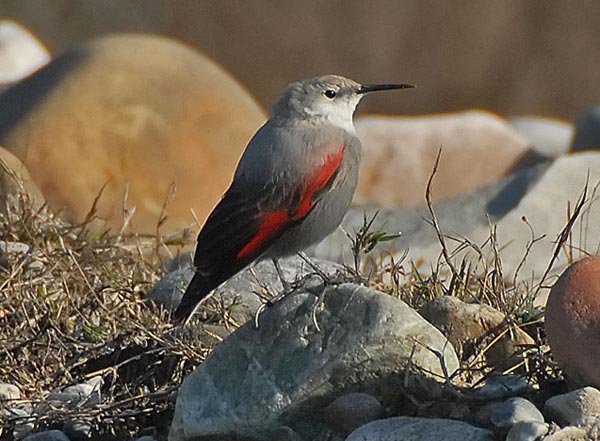
Wallcreeper (Tichodroma muraria) by Nikhil

Wallcreeper (Tichodroma muraria) by Nikhil

The Lord has continued to bless our efforts with this blog. If you read over last years blog, “Happy One Year Anniversary!“, you will see how it began. During this last year there have been more additions. April Lorier gave permission to use some of her articles as did Donna Watkins. Their articles are found in the Guest Authors section. Then Ian Montgomery, one of the photographers we are using, gave permission to turn his Bird of the Week newsletter into a blog series.

Speaking of photographers, the list of their links in the sidebar is growing. I am very thankful for each one of them that has given permission for their photos and videos to be used on the blog. There are now two videographers included in the list. The fantastic work of all of them has greatly enhanced this blog.

Savannah Sparrow singing by Ray

Of course, Dan and I continue to go out birdwatching, when we can. Those articles are spread throughout. I had started three different blogs, but decided to incorporate them back into Lee’s Birdwatching Adventures Plus, this main blog. The “PLUS Index” contains the Creation articles, “References” contains Nave’s and Torrey’s Topical studies, and “Birds – World” contains the Birds of the World. There are other sections for the Birds in Hymns, Birdwatching, etc. The “Birds of the Bible” articles, which is what started the idea of this blog, are reproduced on the only other blog I maintain. The Birds of the Bible blog only has those articles. I almost stopped it, but readers wanted it to continue. It is doing well and has now had 13,733 pages visited so far. (Stopped it in 2013) This main blog had its 84,000th page visited last night. (Those numbers are for 1.5 years) Thanks to all of you who have visited this site.

Those numbers were not mentioned to boast, but to give credit were it is due. The Lord is the One who gave me the ideas and the ability to do this. He is the One who created all these birds that we get the privilege to write about and show the photos and videos of them doing what He created them to do. Through the internet, these words and photos go to places we would never get to. There, they provide information, encouragement, and blessings to those who view these pages. (At least, that is what the readers tell us.) He, the Lord Jesus, is the One who gets the credit.

O LORD, how manifold are thy works! in wisdom hast thou made them all: the earth is full of thy riches. (Psalms 104:24) I will sing unto the LORD as long as I live: I will sing praise to my God while I have my being. My meditation of him shall be sweet: I will be glad in the LORD. (Psalms 104:33-34 KJV)